Cracker Building Renovation/NOMAL
Cracker 大楼改造/ NOMAL
改造策略的创新性:该项目最引人注目的亮点在于其对历史建筑的改造策略。面对建成于1966年、结构 deteriorated,且已超出场地边界的建筑,设计团队没有选择推倒重建,而是选择在现行法规的约束下,通过精细的结构加固、柱子重建以及对薄弱楼层的拆除与重建,最大程度地保留了建筑的历史痕迹。这种策略不仅体现了对历史文脉的尊重,也巧妙地规避了新建建筑在容积率、使用限制等方面的诸多难题,以更经济、更可持续的方式实现了建筑的焕新。这种对于既有建筑的审慎处理,值得在城市更新项目中广泛借鉴。
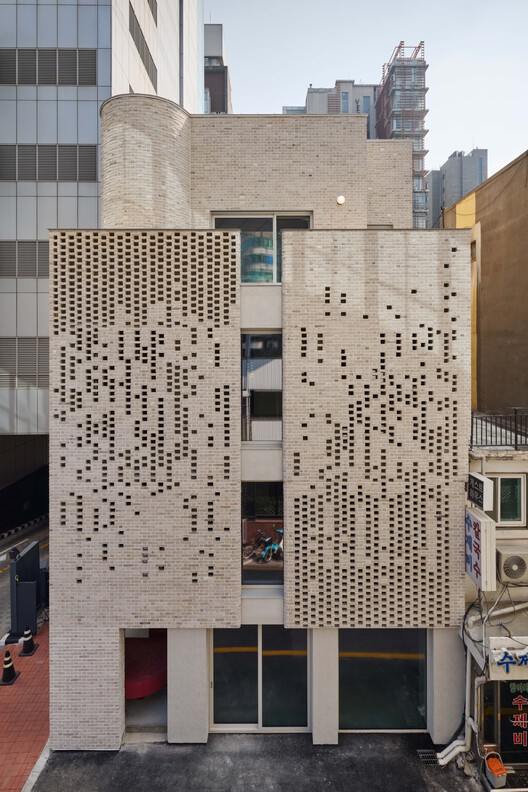
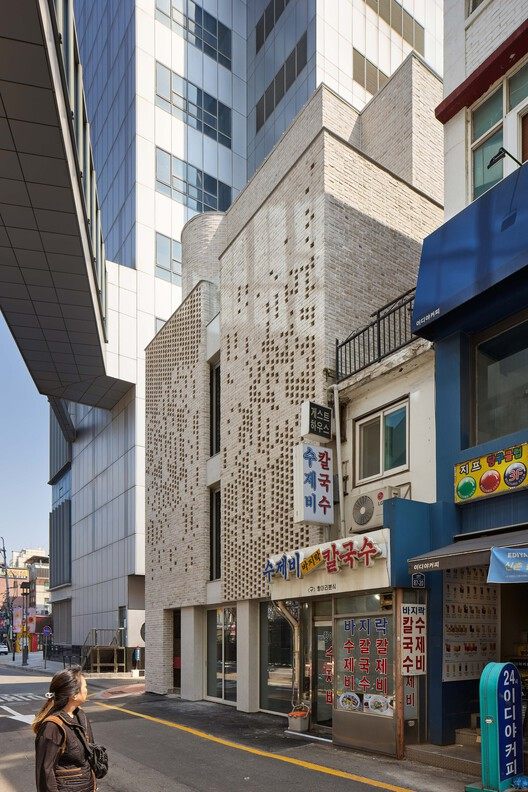
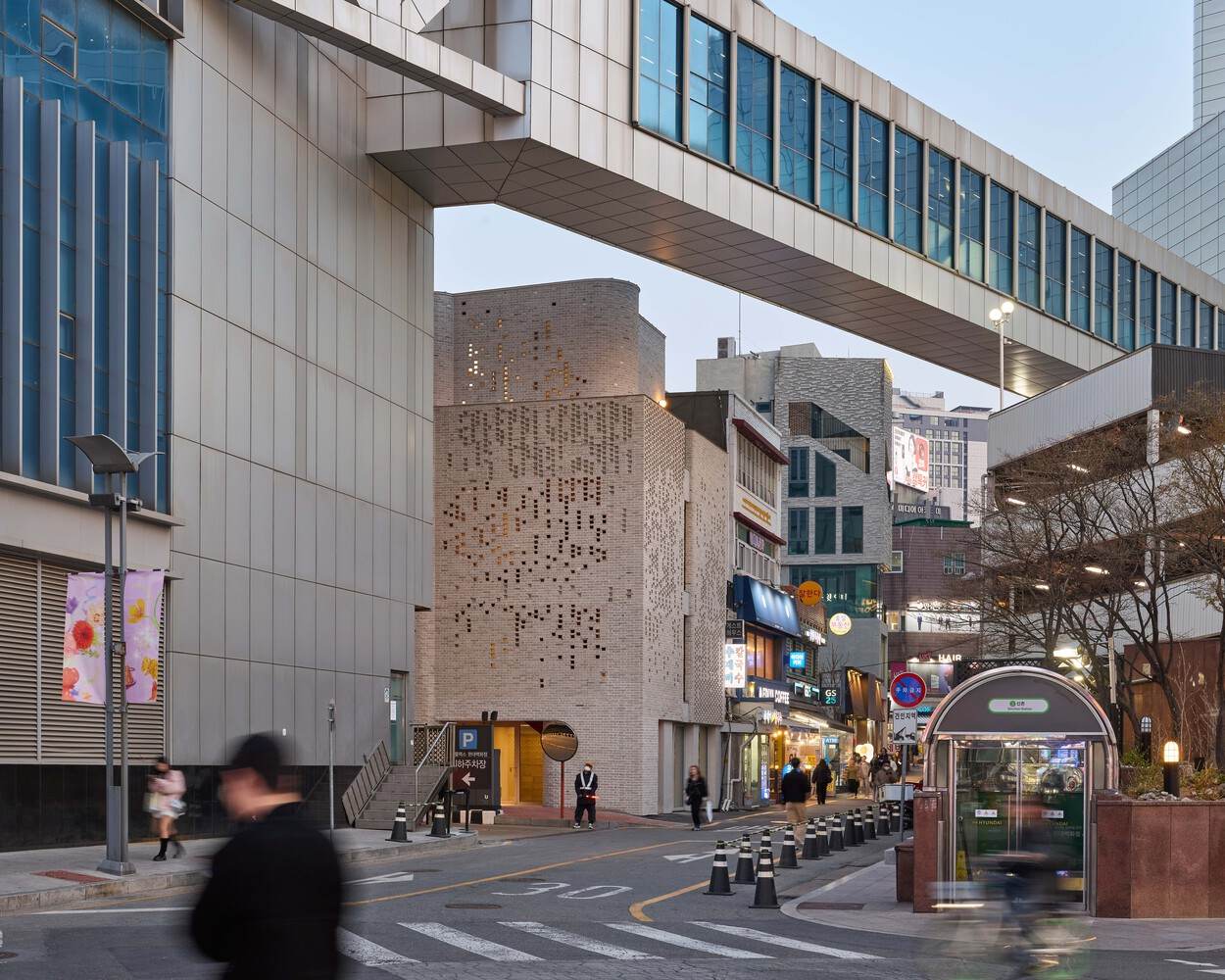
文化传承的深度解读:项目将建筑视为重塑新村文化身份的媒介,是对建筑价值的升华。它不仅关注建筑的物理修复,更深入挖掘新村的历史文化背景。通过穿孔砖立面的设计,将音乐可视化工具的图案融入其中,将曾经辉煌的摇滚文化以视觉形式呈现,唤醒人们对新村文化记忆的追溯。这种设计语言不仅是对历史的回应,也是对新一代文化的对话,赋予建筑更深层次的文化内涵。这种将建筑设计与社区文化紧密结合的思路,使得项目不仅仅是一个物理空间,更是一个承载记忆、激发活力的文化场所。
空间与功能的巧妙融合:在有限的空间内,设计团队实现了功能与美学的完美结合。建筑的三个开间被巧妙划分为内部空间和垂直交通,最大化了空间利用率。三四层作为住宿空间,在满足采光需求的同时,通过穿孔砖立面巧妙地控制了光线进入,并减少了对邻近建筑的视觉干扰。这种对建筑内部空间、立面细节的精细化处理,充分体现了设计师对材料特性的理解和对光影的掌控,实现了功能与美学的统一,也为旧建筑的改造提供了新的思路,展示了建筑师在城市更新中的创造力和远见。
© Roh Kyung
© Roh Kyung
This building was completed in 1966 and is located in Sinchon gu, Seoul. It was built during a period of rapid urbanization. The aerial photos taken by Kim Han Yong in the same year showed that most of the Han River area was undeveloped at that time, and the city was changing its appearance at an unprecedented speed driven by rapid construction. The history of the building over the past fifty years is unknown, but its condition has deteriorated significantly. Four of its eight columns exceed the boundary of the site, and this now four story building was originally just a two-story building built on independent foundations. Later, a third layer of brick masonry structure and a fourth layer of lightweight steel structure were added, making the entire building structure precarious, like a Jenga tower (a game of stacking wooden blocks layer by layer, if the wooden blocks are removed improperly, the entire tower will collapse).
这栋建筑于 1966 年竣工,位于首尔新村区,建造于城市化快速推进的时期。金汉龙(Kim Han-Yong)同年拍摄的航拍照片显示,汉江区域当时大多尚未开发,而城市在快速建设的推动下,正以前所未有的速度改变着城市面貌。该建筑过去五十年的历史不详,但如今其状况已严重恶化。其八根柱子中有四根超出了场地边界,而且这座如今四层的建筑最初只是一座建在独立地基上的两层小楼。后来,又加建了第三层砖砌结构和第四层轻型钢结构,使得整座建筑结构岌岌可危,如同积木塔(Jenga tower,一种层层堆叠木块的游戏,移除木块时若操作不当,整个塔就会倒塌)。
© Roh Kyung
Although new construction may be a more efficient choice from a structural and technical perspective, current building regulations make this approach impractical. The restrictions on plot ratio, usage, and parking requirements make large-scale renovation the only option. The main construction tasks include reinforcing the existing foundation, removing four columns beyond the property boundary and rebuilding them on site, demolishing and rebuilding the structurally weak third and fourth floors, and ensuring the safety of the entire construction process. At the same time, the goal is not only to make physical improvements, but also to reimagine this building as a space that reflects the historical and cultural background of the new village.
尽管从结构和技术角度而言,新建建筑或许是更高效的选择,但现行建筑法规使得这一方案不可行。容积率限制、用途限制以及停车要求使得大规模翻新成为唯一选择。主要的建筑任务包括加固现有地基,移除超出产权边界的四根柱子并在场地内重建,拆除并重建结构薄弱的第三层和第四层,以及确保整个施工过程的安全。同时,目标不仅是进行物理上的改善,还要将这座建筑重新构想为一个反映新村历史和文化背景的空间。
© Roh Kyung
From the 1970s to the 1990s, Xincun was a center of cultural exchange, where university life, artists, and social movements intersected, giving birth to new ideas and creative aesthetics. However, in 1991, rock cafes were labeled as "decadent culture" and suppressed, and the cultural vitality of the area began to decline. At the beginning of the 21st century, the process of gentrification accelerated, with large chain stores and commercial complexes settling in one after another. Small independent shops and cultural venues are gradually disappearing, and the once unique cultural identity of Xincun has become blurred. As vacancy rates rise, many artists and creators have relocated to Hongdae, while Xincun has transformed into an area dominated by chain stores and nightlife venues. To this end, local businesses have made various efforts to revitalize the cultural spirit of the region, and this project is part of this extensive attempt.
从 20 世纪 70 年代到 90 年代,新村是文化交流的中心,大学生活、艺术家和社会运动在此交汇,孕育出新的思想和创意审美。然而,1991 年,摇滚咖啡馆被贴上“颓废文化”的标签并遭到打压,该区域的文化活力开始消退。到 21 世纪初,绅士化进程加速,大型连锁店和商业综合体纷纷入驻。小型独立店铺和文化场所逐渐消失,新村曾经独特的文化身份变得模糊。随着空置率上升,许多艺术家和创作者迁至弘大(Hongdae),而新村则转变为以连锁店和夜生活场所为主的区域。为此,当地商家开展了各种努力以重振该区域的文化精神,本项目便是这一广泛尝试的一部分。
© Roh Kyung
The owner has been operating in the new village for many years and has witnessed this transformation firsthand. The goal is not just to renovate an old building, but to contribute to the cultural revival of the new village by creating a space that can inspire and attract people's renewed attention. Although a single building may not be able to drive comprehensive urban revitalization, it is hoped that it can become a symbolic and practical starting point for change in the region.
业主在新村经营多年,亲眼见证了这一转变。目标不仅仅是翻新一栋老旧建筑,而是通过打造一个能够激发并吸引人们重新关注的空间,为新村的文化复兴做出贡献。虽然单栋建筑可能无法推动全面的城市复兴,但希望它能成为该区域内一个具有象征意义和切实作用的变革起点。
轴测图
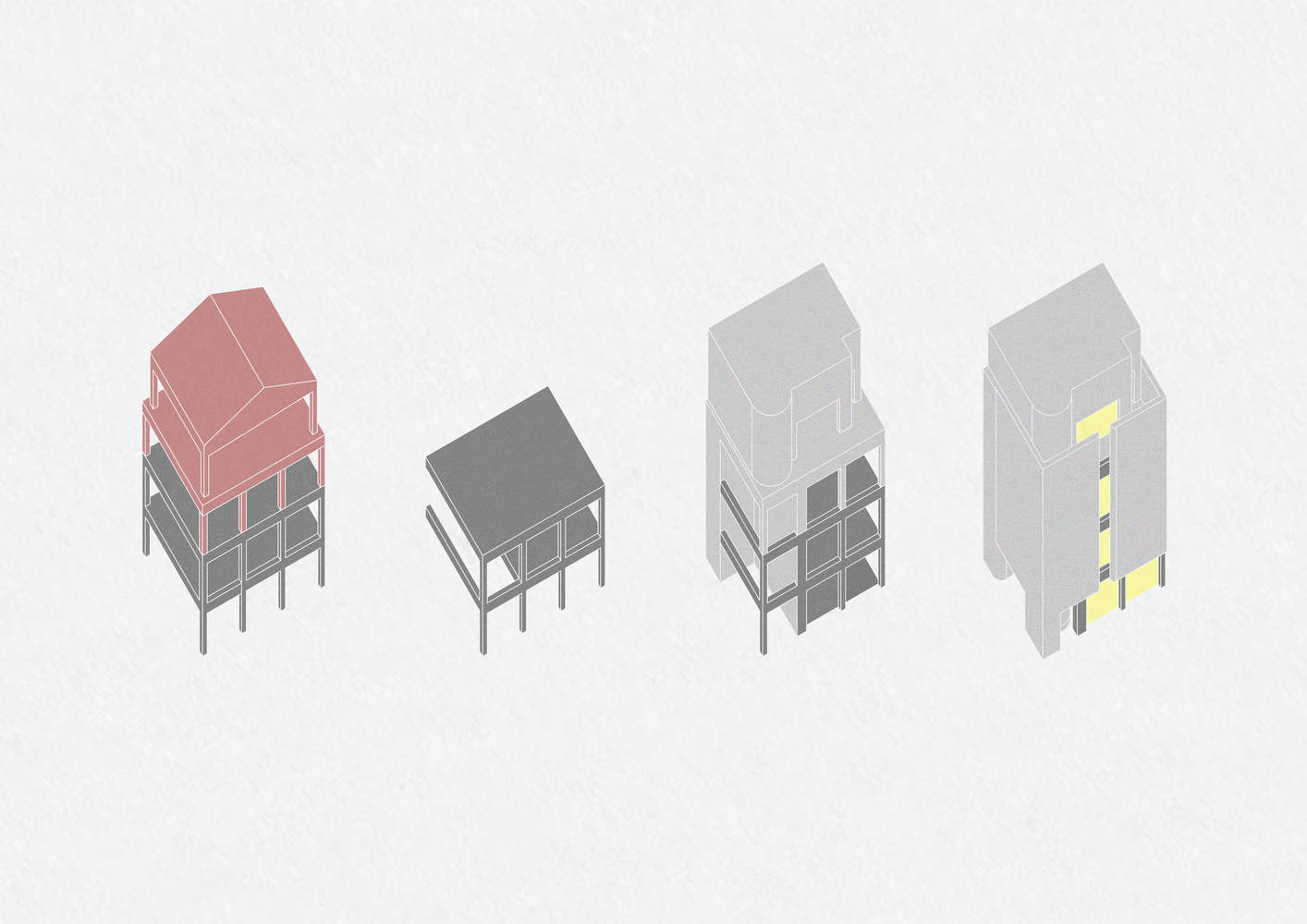
分析图
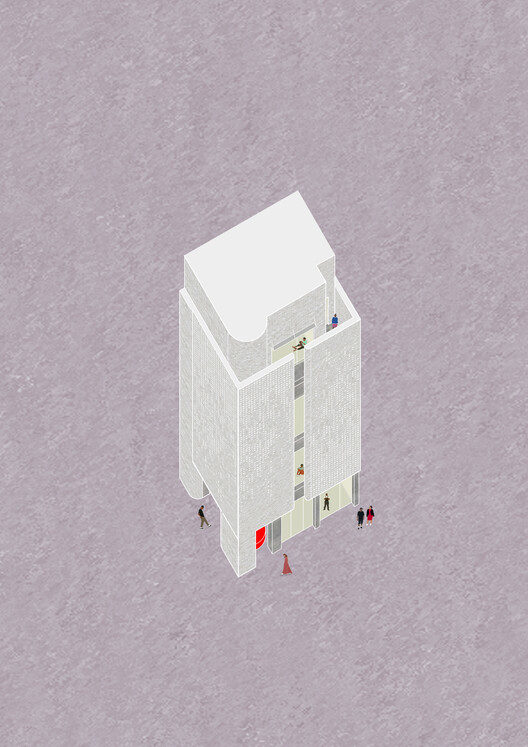
In order to better utilize the existing structure, two of the three bays in the building have been transformed into interior spaces, while the remaining bay is used for vertical transportation and is equipped with elevators and staircases. The facade design also draws on the material characteristics of the original building, with bricks as the iconic element.
为了更好地利用现有结构,建筑的三个开间中有两个被改造成了内部空间,而剩下的一个开间则用于垂直交通,设有电梯和楼梯间。立面设计也借鉴了原建筑的材料特色,以砖块作为标志性元素。
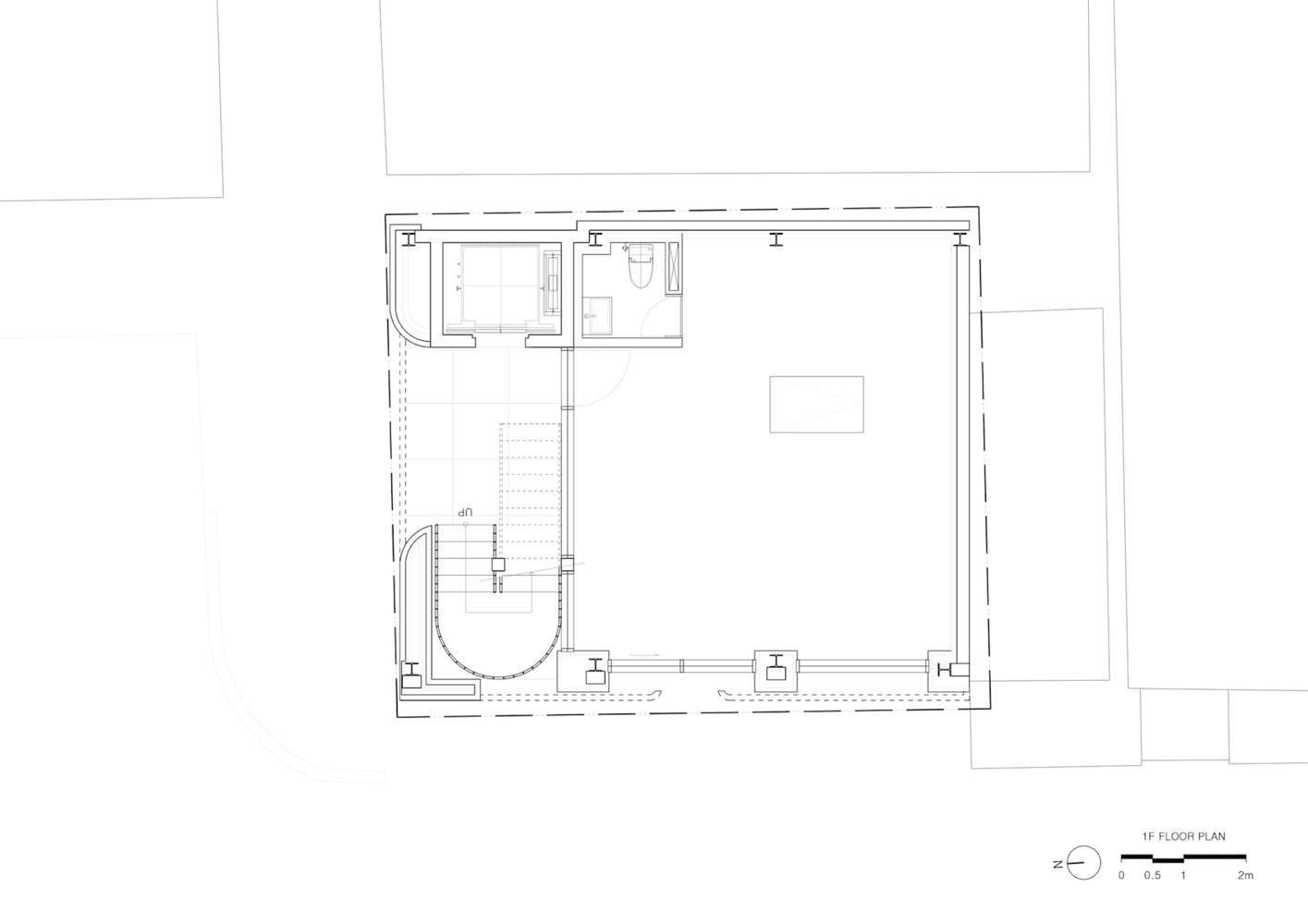
一层平面图
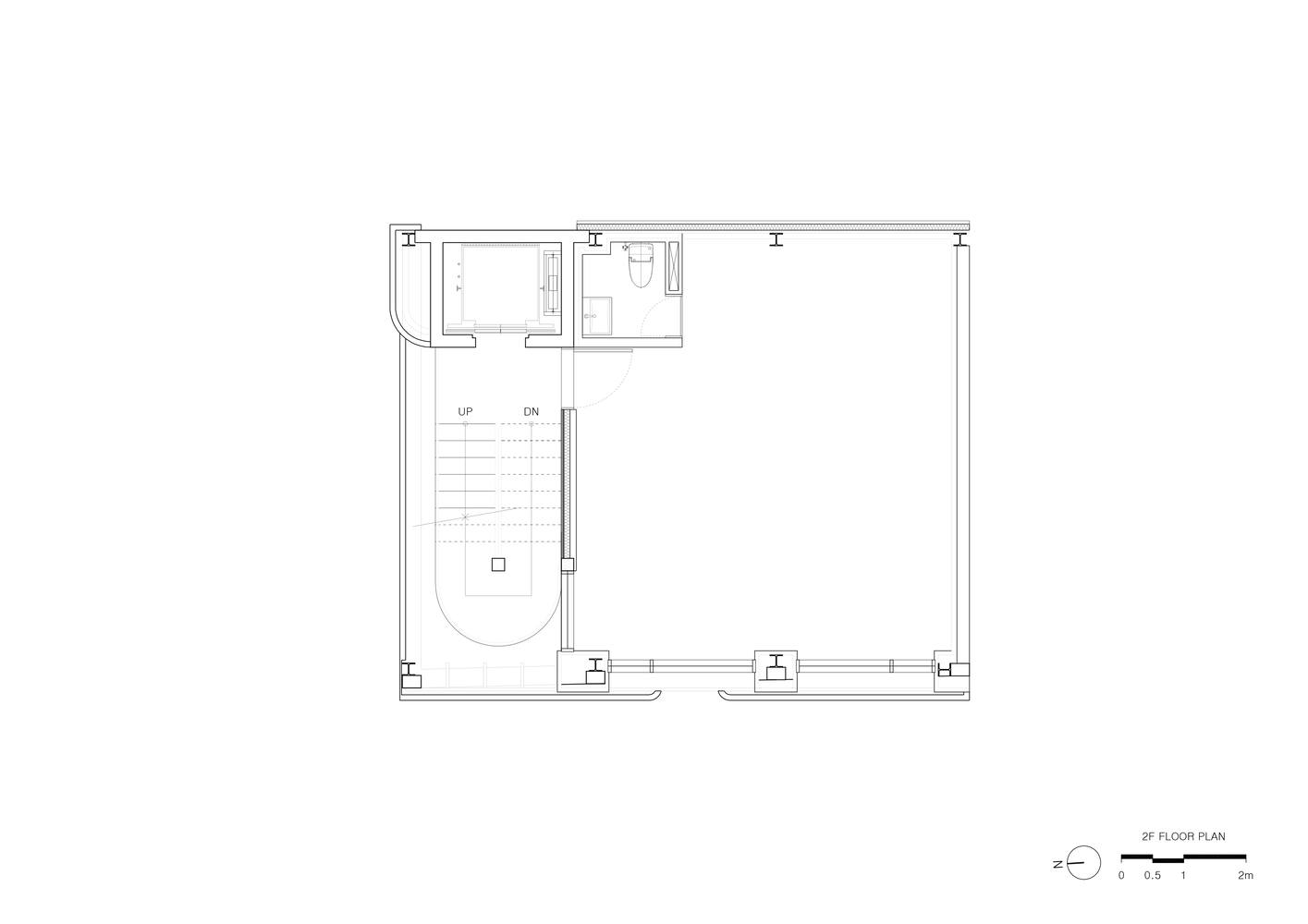
二层平面图
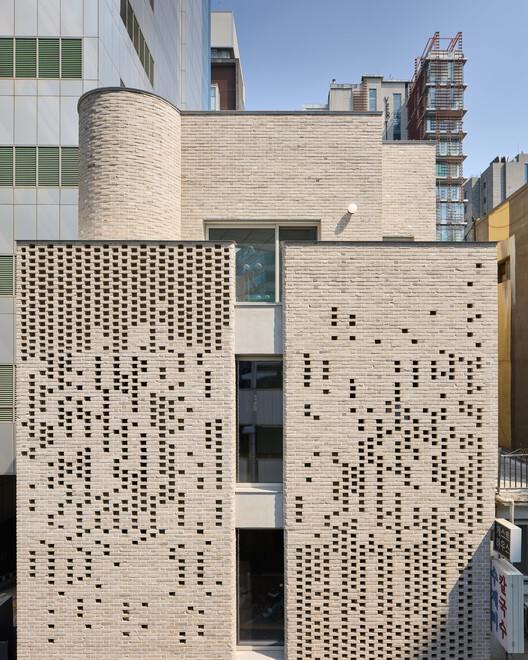
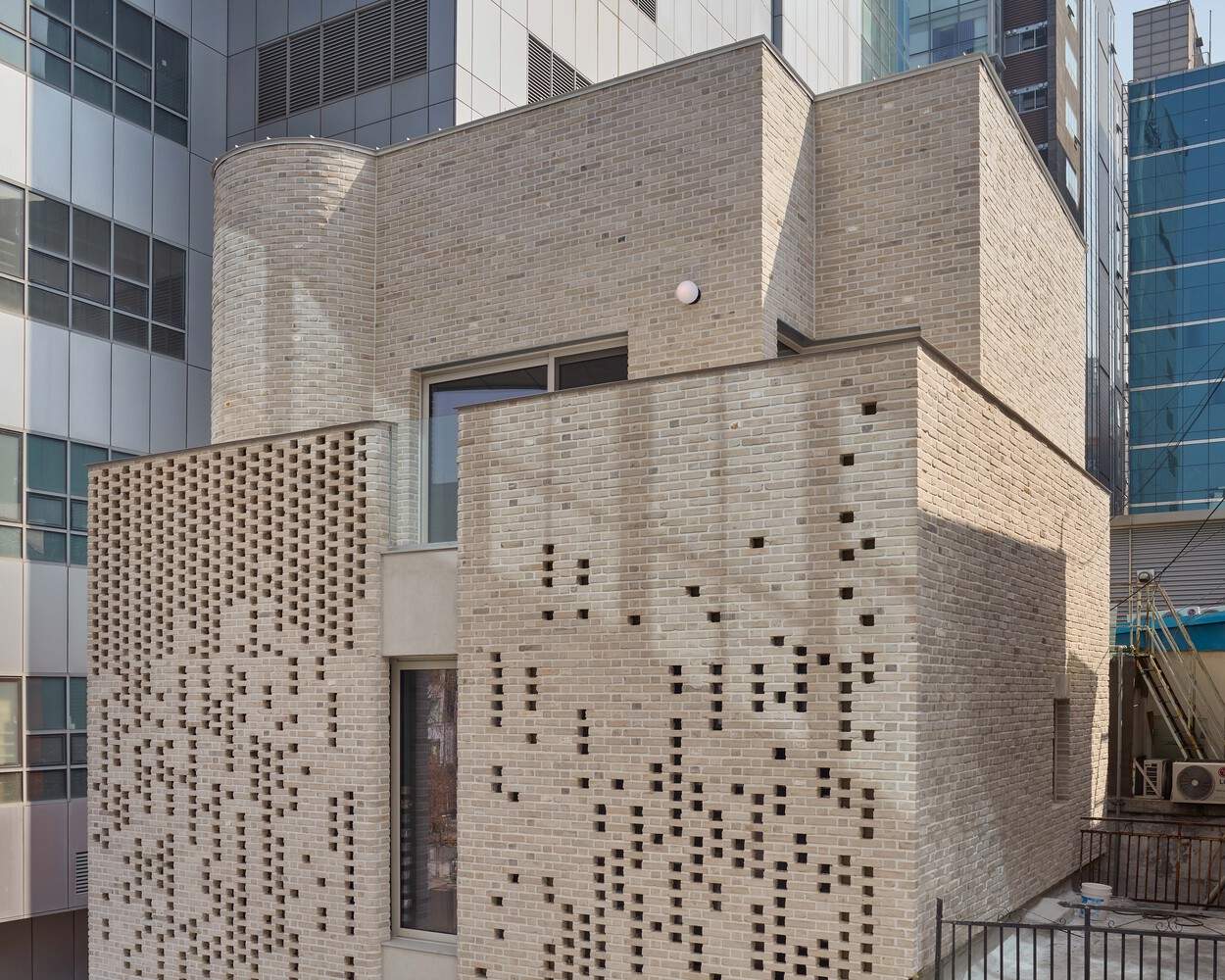
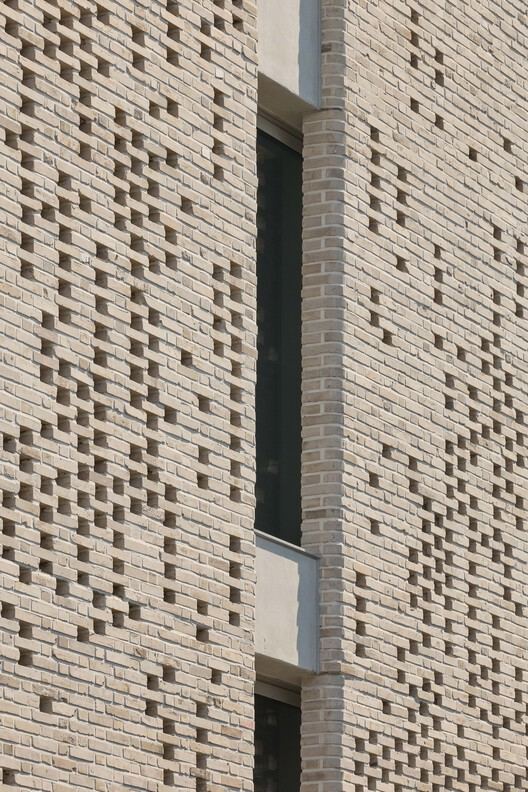
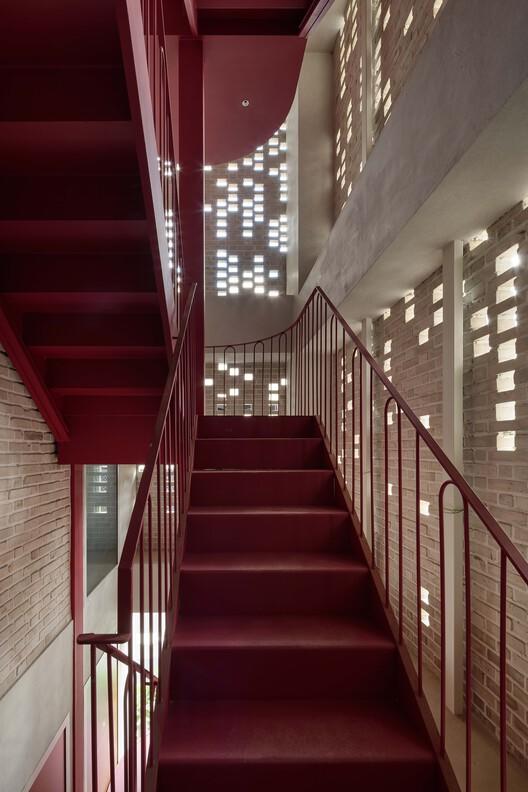
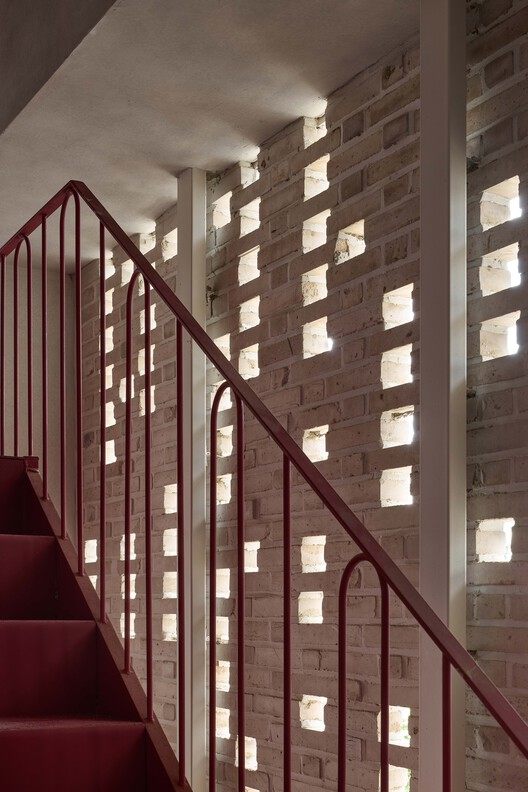
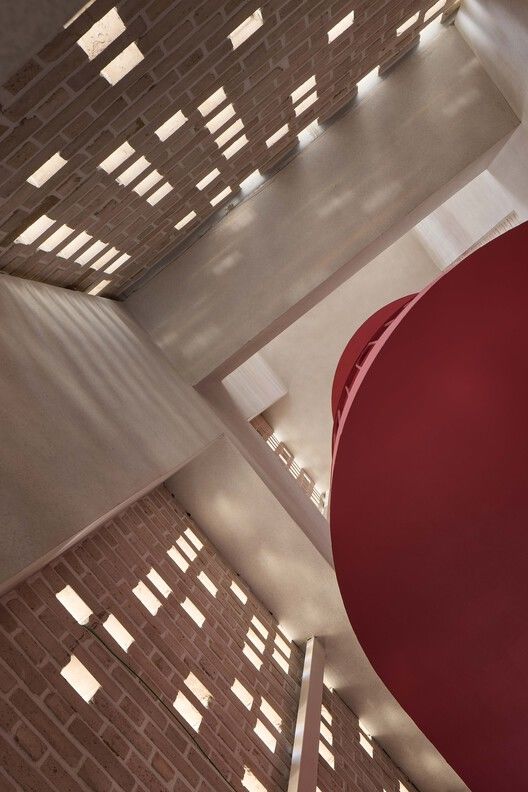
For the three and four floors designed for accommodation purposes, the challenge lies in balancing two conflicting needs: minimizing visual interference to adjacent buildings while ensuring sufficient sunlight. The solution is to use perforated brick facades, allowing natural light to penetrate during the day and allowing the building to shine outward at night, creating dynamic interaction between the inside and outside.
对于设计为住宿用途的三层和四层,挑战在于平衡两个相互冲突的需求:尽量减少对邻近建筑的视觉干扰,同时确保充足的日照。解决方案是采用穿孔砖立面,白天让自然光透入,夜晚则让建筑向外发光,创造出内外之间的动态互动。
© Roh Kyung
© Roh Kyung
© Roh Kyung
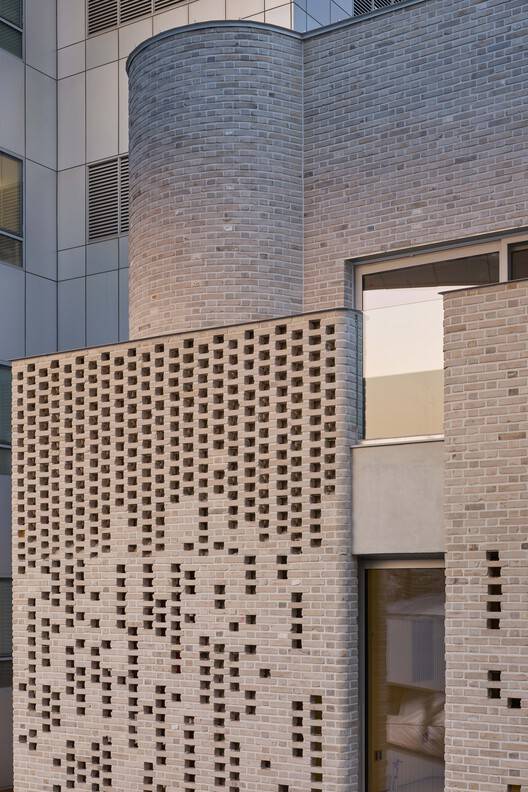
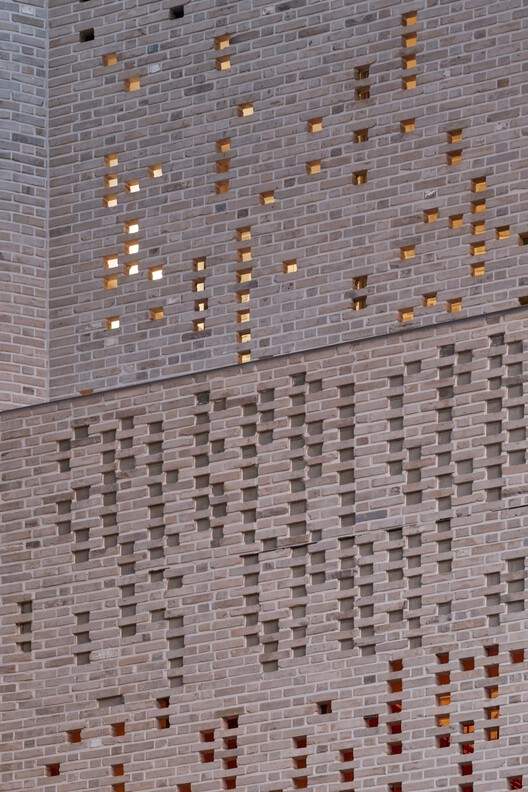
For the older generation, music remains an important cultural memory of Xincun, while for the younger generation, this memory has mostly faded away. This project explores methods of conveying music perception through architectural elements. Considering the contemporary emphasis on visual experience, the pattern inspiration for perforated bricks comes from digital music visualization tools. The purpose is to preserve memories through form and leave visual traces of the cultural identity of the new village.
对于老一辈人来说,音乐仍是新村重要的文化记忆,而对于年轻一代来说,这种记忆已大多淡去。本项目探索了通过建筑元素传达音乐感知力的方法。考虑到当代对视觉体验的重视,穿孔砖的图案灵感来源于数字音乐可视化工具。目的是通过形式保留记忆,为新村的文化身份留下视觉痕迹。
© Roh Kyung
© Roh Kyung
This project is not just about restoring an old building, but about reinterpreting the cultural heritage of the new village in a contemporary way and establishing connections with the new generation. Although the building retains some of the vibrant commercial features of the area, its orderly facade and clear spatial layout aim to re-establish the position of the new village as a place of cultural exchange. Perhaps a single building cannot promote the comprehensive regeneration of the new village, but at least this project aspires to be the starting point of change and a small but meaningful component in shaping the new urban cultural identity.
本项目不仅仅是修复一栋老旧建筑,而是以当代方式重新诠释新村的文化遗产,并与新一代建立联系。虽然该建筑保留了该区域部分充满活力的商业特色,但其有序的立面和清晰的空间布局旨在重新确立新村作为文化交流之地的地位。或许单栋建筑无法推动新村的全面再生,但至少,本项目渴望成为变革的起点,成为塑造新的城市文化身份过程中一个虽小却有意义的组成部分。
© Roh Kyung