Wooden Farmhouse Heritage Renewal Project/Maximilian Hartinger Architekt
木结构农舍遗产更新项目 / Maximilian Hartinger Architekt
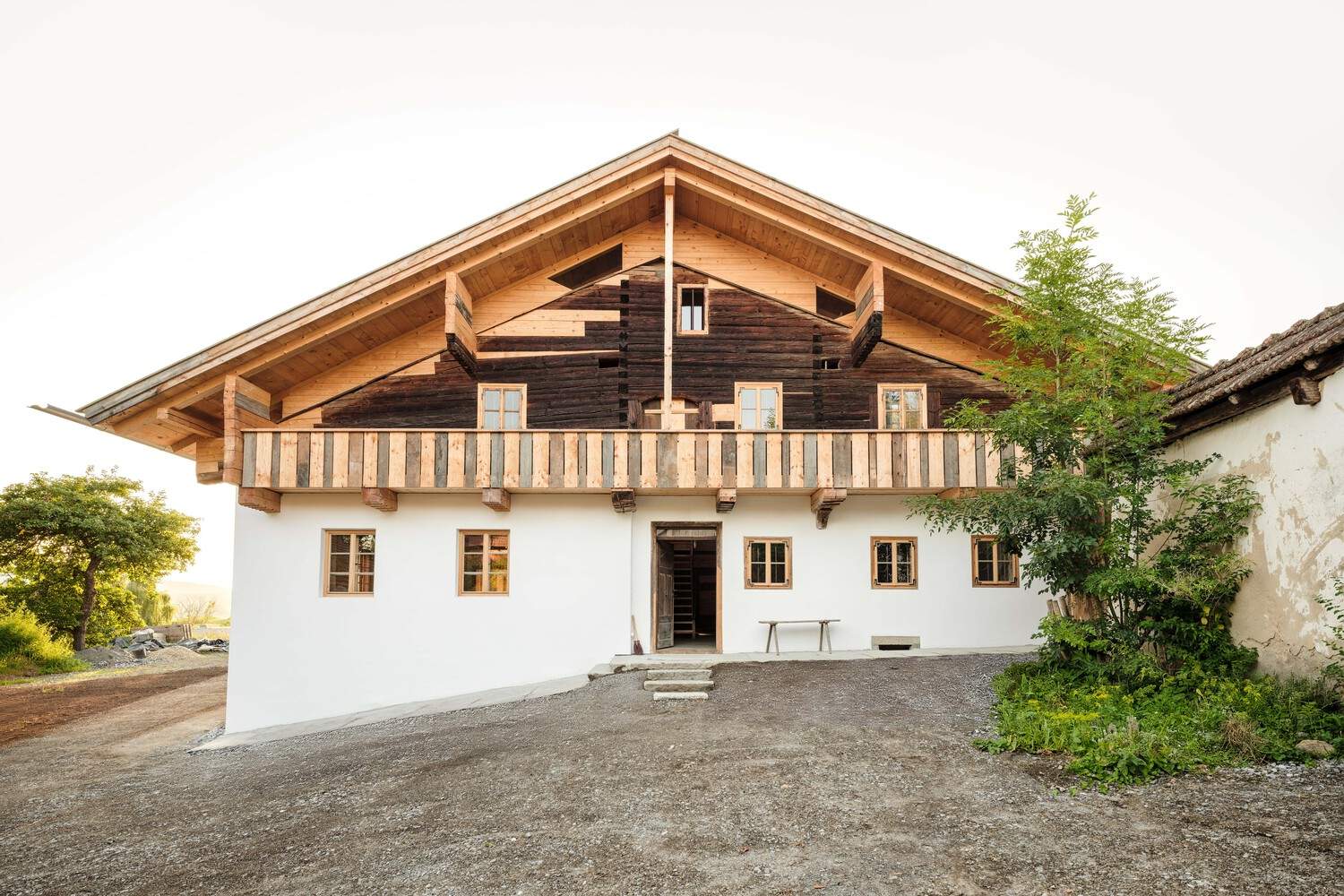
项目亮点:该项目最令人钦佩之处在于其对遗产的尊重与创新结合。面对被“专家”断定无法修复的古老农舍,建筑师并未选择推倒重建,而是深入研究建筑的历史与现状,并大胆尝试,最终赋予了这座建筑新的生命力。项目不仅保留了农舍的原始风貌,还通过巧妙的设计手法,改善了其居住功能和采光条件。这种对历史文脉的尊重,对传统工艺的传承,以及对新技术的运用,共同构成了该项目的核心价值。项目的成功,也为类似历史建筑的修复提供了宝贵的经验。
设计精髓:该设计的精髓在于“嵌入”策略的巧妙运用。建筑师并非简单地修补或重建,而是将现代的房间大小的体块嵌入到原有的木结构中,既加固了建筑,又形成了隔热层,还承担了屋顶荷载。这种巧妙的融合,既保留了农舍的历史感,又满足了现代居住的需求。此外,新体块的几何形状和明亮表面,对改善上层空间的采光起到了关键作用。这种以最小的干预实现最大化功能提升的设计理念,体现了建筑师对细节的精准把握和对建筑本质的深刻理解。
项目启示:此项目所传递的启示远超建筑本身,它证明了勇气、承诺与专业知识能够战胜困难,将看似“无法修复”的建筑转化为具有生命力的遗产。项目强调了传统技艺与现代技术的结合,以及家庭成员、工匠、邻居等多方参与的重要性。它呼吁在建筑设计中保护现有建筑,确保专业知识的运用,并鼓励对历史建筑进行深入的考量。项目不仅为建筑师提供了借鉴,也为遗产保护和乡村振兴提供了可行的模式,展现了建筑作为文化载体的巨大潜力,具有深远的社会意义。
© Simon Burko
© Simon Burko
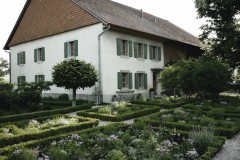
Heritage protection has formed its own unique project story ecosystem, which has urgent practical significance for today's architectural debates and initiatives. This special story begins with a family in the northern part of Passau abandoning their historic farmhouse. At that time, my grandmother was the last person in the family to live here for many generations. After she moved out, the house was severely damaged due to water seepage, decay, and poor foundation. Consulting with 'experts' to assert that this building is irreparable has left the family deeply affected and frustrated.
遗产保护形成了自身独特的项目故事生态圈,这些故事对当今的建筑争论与倡议有着迫切的现实意义。这一特殊故事始于帕绍市北部一户人家弃置了他们的历史农舍。当时,家中祖母是家族多代人中最后一位居住于此的人,她搬离之后,房屋便已因渗水、腐朽以及地基不佳而严重受损。咨询“专家”断言此建筑已无法修复,这让这家人深受打击、倍感沮丧。
© Simon Burko
© Simon Burko
© Simon Burko
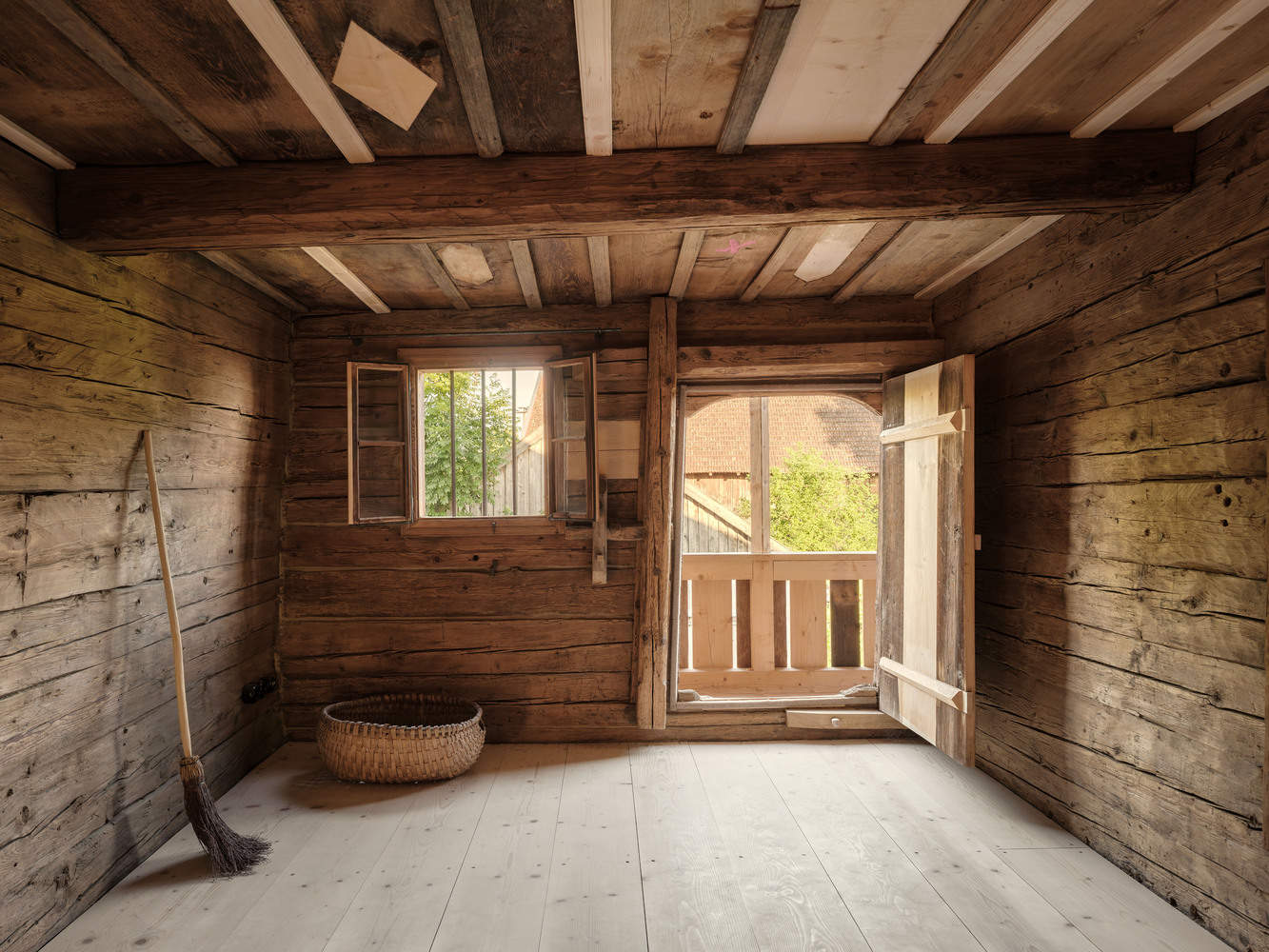
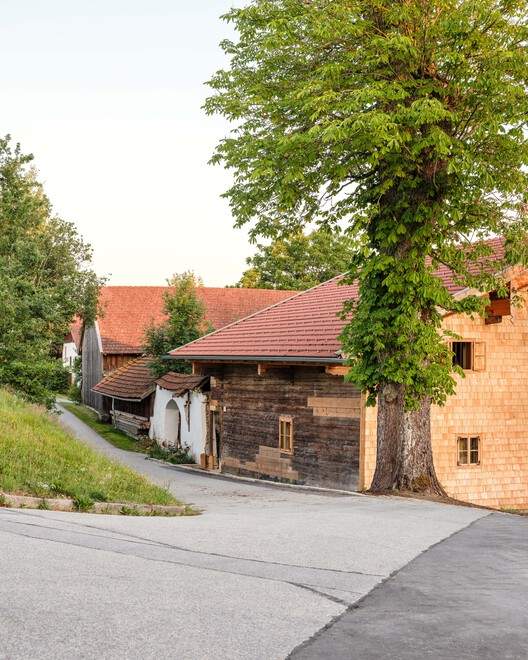
The new plan stems from the enthusiasm of the new family members (daughter-in-law) and the support of the heritage conservation department. According to dendrochronological research, the building was built in 1600/1601, which is extremely ancient in this region. After centuries of reconstruction and destruction, many distinctive details still remain, bearing witness to the long and complex history of this building. Although the house has been damaged, its spaciousness and potential are still clearly visible. The upstairs and attic have never been inhabited and are only used for storing crops and other items.
新的计划源自新家庭成员(儿媳)的热情以及遗产保护部门的支持。树木年代学研究显示,该建筑建于1600/1601年,在这一地区,这一年代极为古老。历经数个世纪的改建与损毁,仍有许多特色细节仍得以留存,见证了这座建筑漫长而复杂的历史。尽管房屋已遭破坏,但其空间宽敞与潜力仍清晰可见。楼上及阁楼从未住人,仅用作储存庄稼和其他物品。
© Simon Burko
© Simon Burko
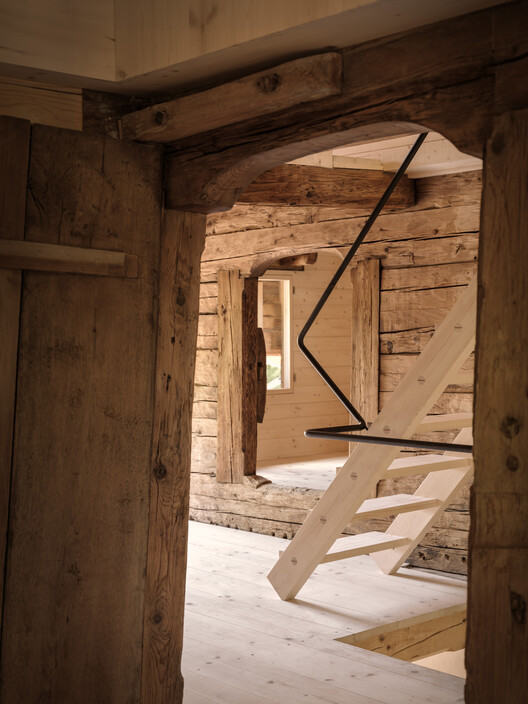
The biggest challenge comes from accumulated intervention behaviors in the past. Around 1800, the bottom wooden structure was replaced with bricks and stones, which was quite common in the region at that time. Due to the lack of a stable foundation, the house has settled nearly half a meter down the mountain and is noticeably tilted. In the mid-20th century, although the roof was raised, the means were rudimentary, the structure was insufficient, and the fragile structure led to further deformation and damage. However, as part of the architectural history, this intervention measure will also be preserved.
最大挑战源自过往累积的干预行为。约1800年,底层部分原木结构被替换为砖石,这在当时该地区颇为常见。由于缺乏稳固地基,房屋向山下沉降了近半米,明显倾斜。20世纪中期,屋顶虽被抬高,但手段简陋,结构不足,脆弱的结构导致了进一步的变形和损坏。然而,作为建筑历史的一部分,这一干预措施也将被保留。
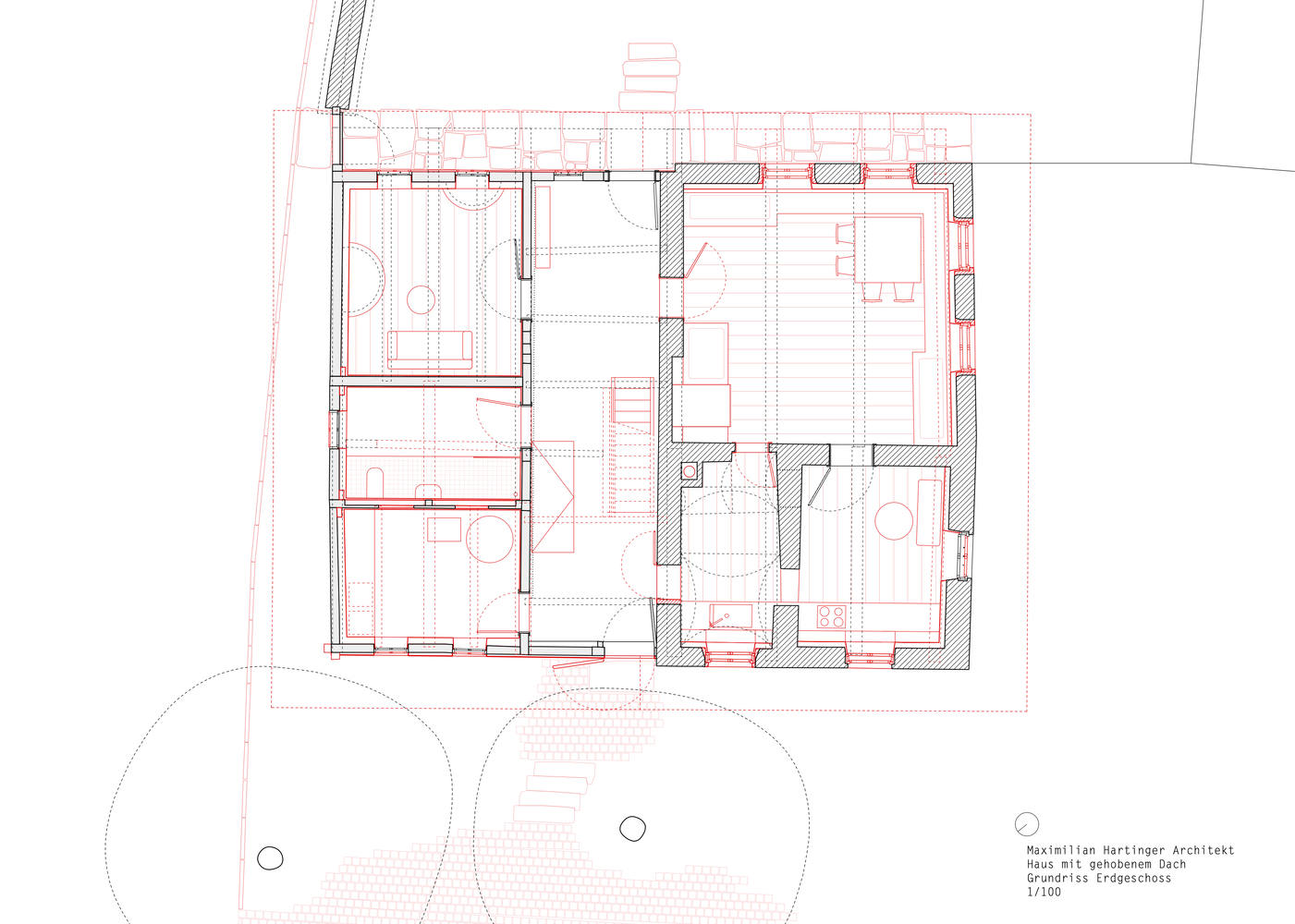
一层平面图
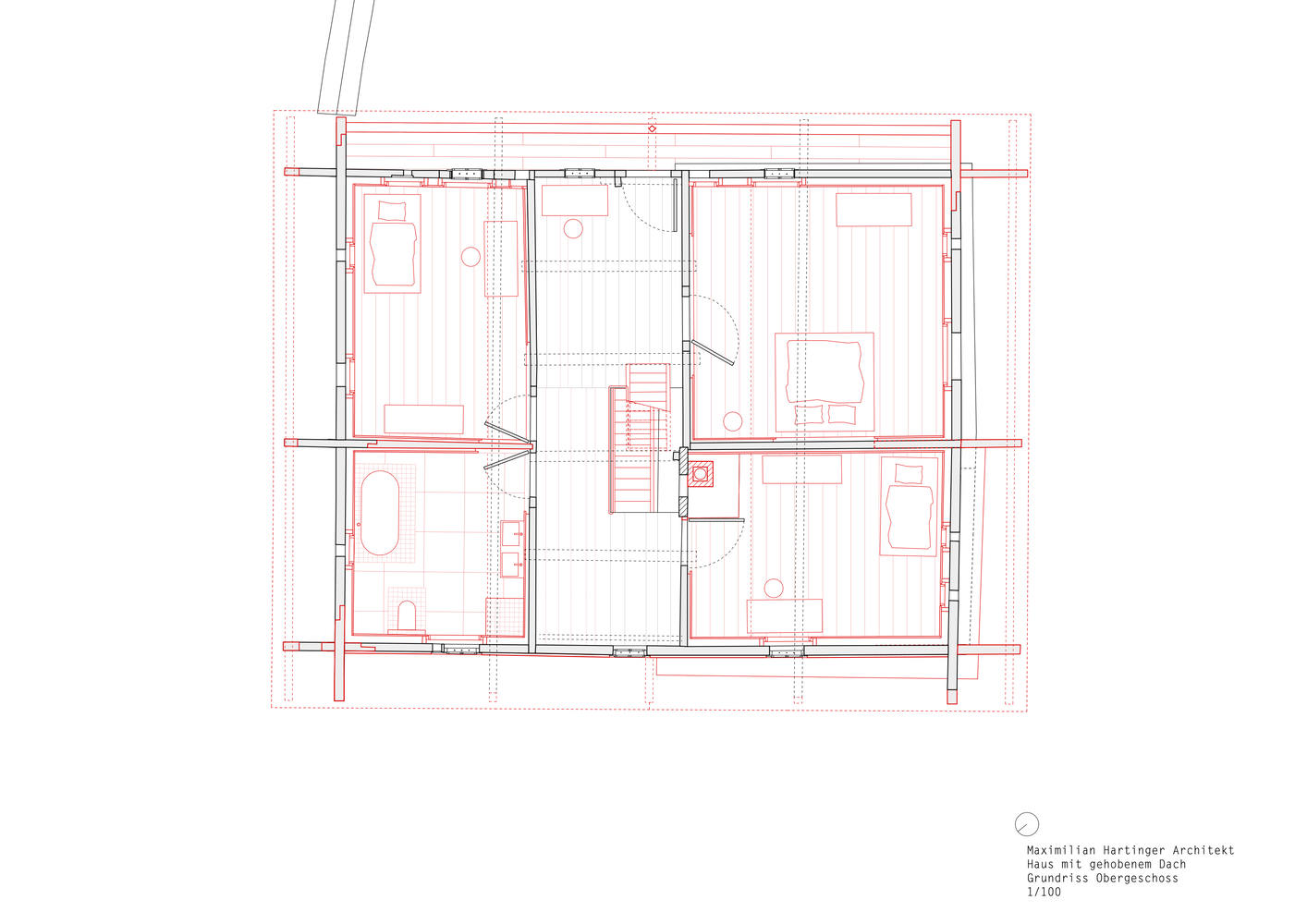
二层平面图
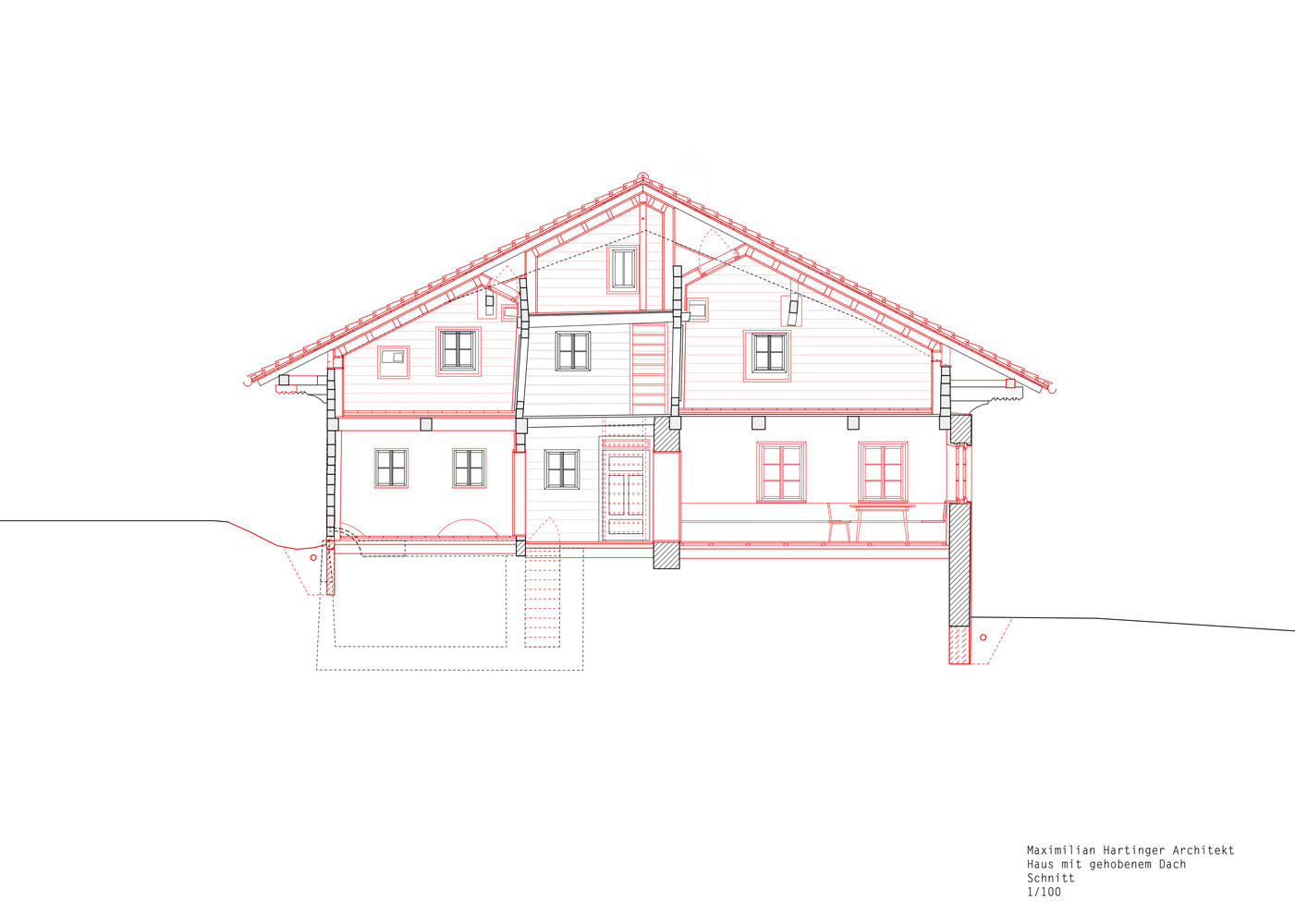
剖面图
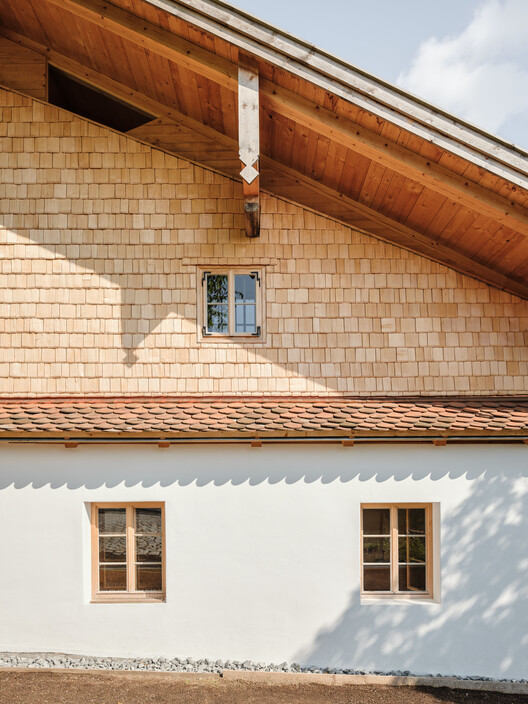
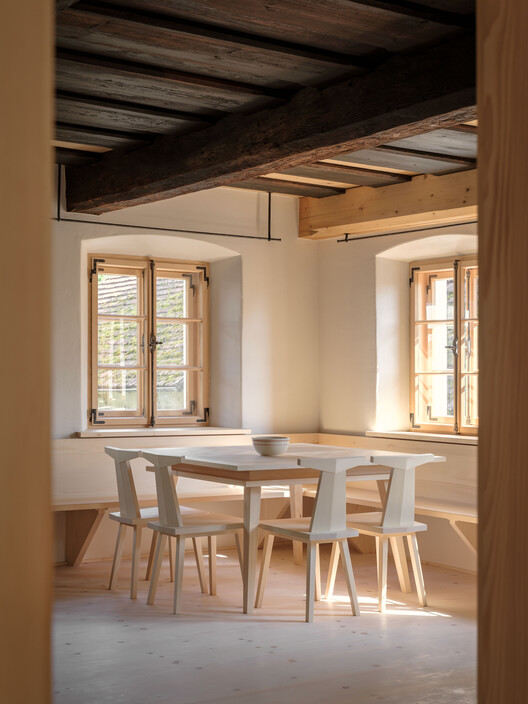
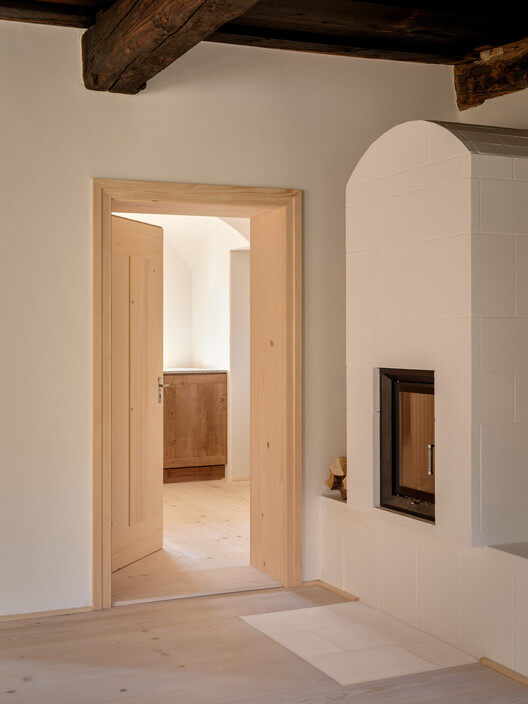
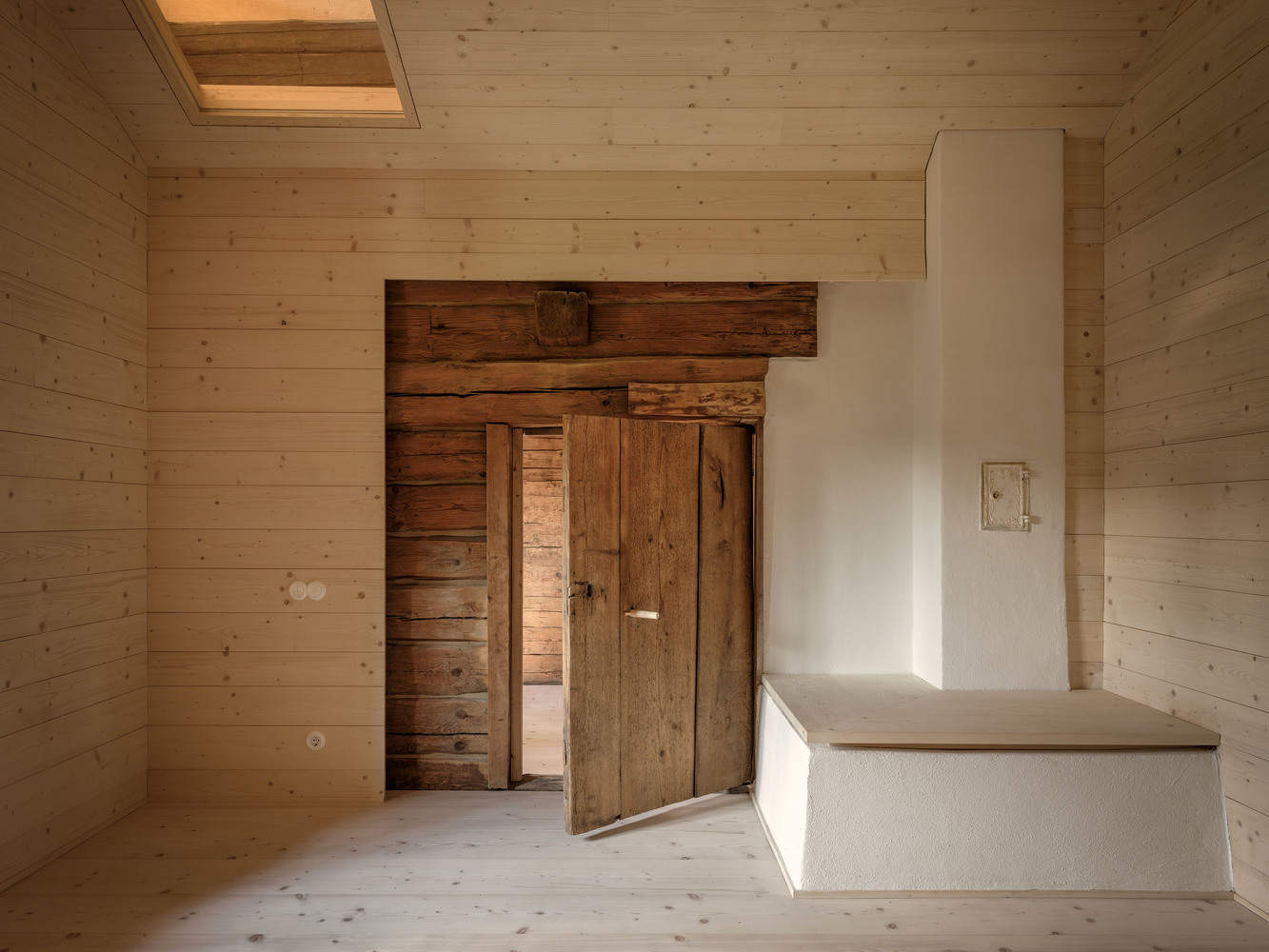
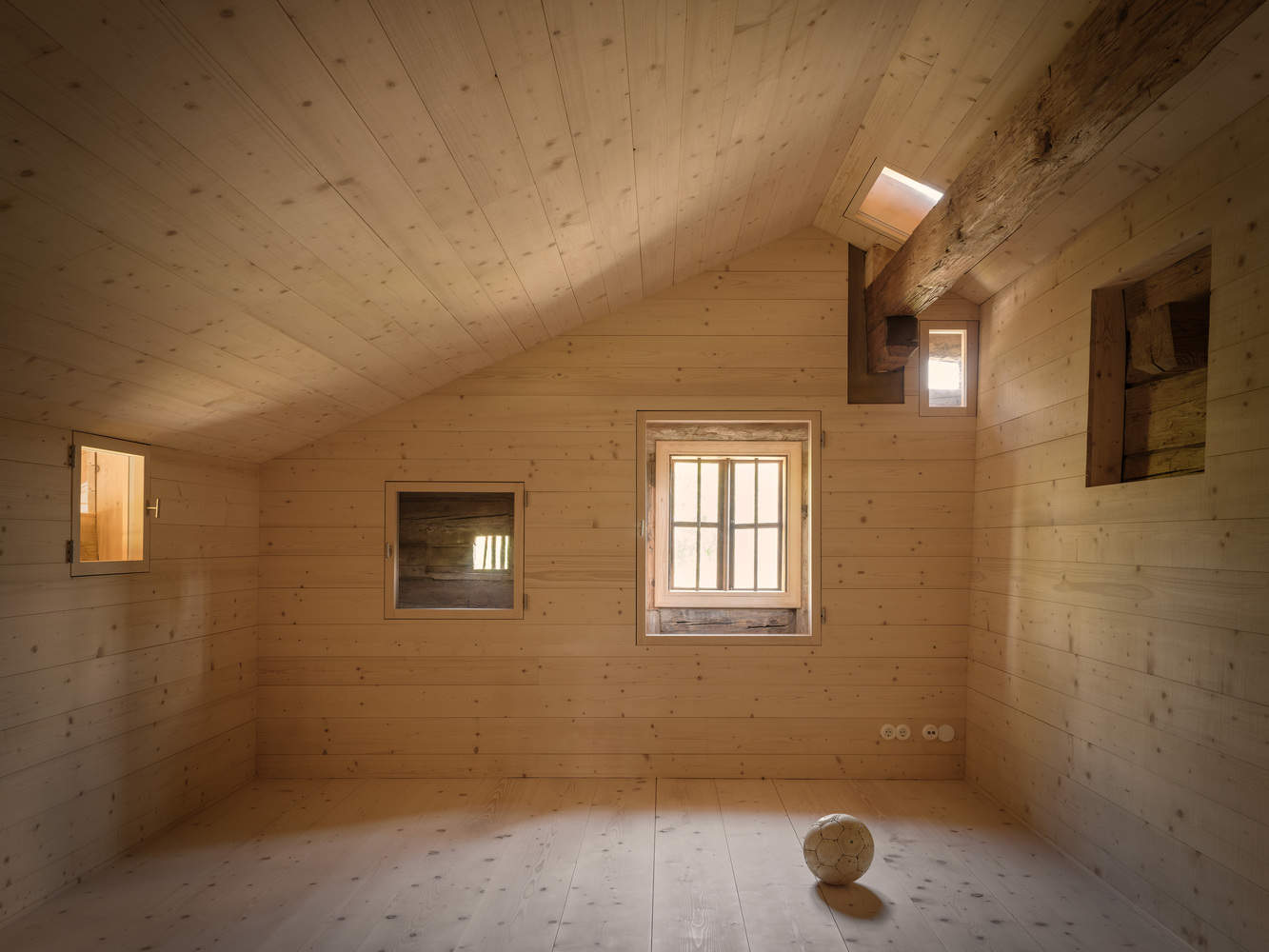
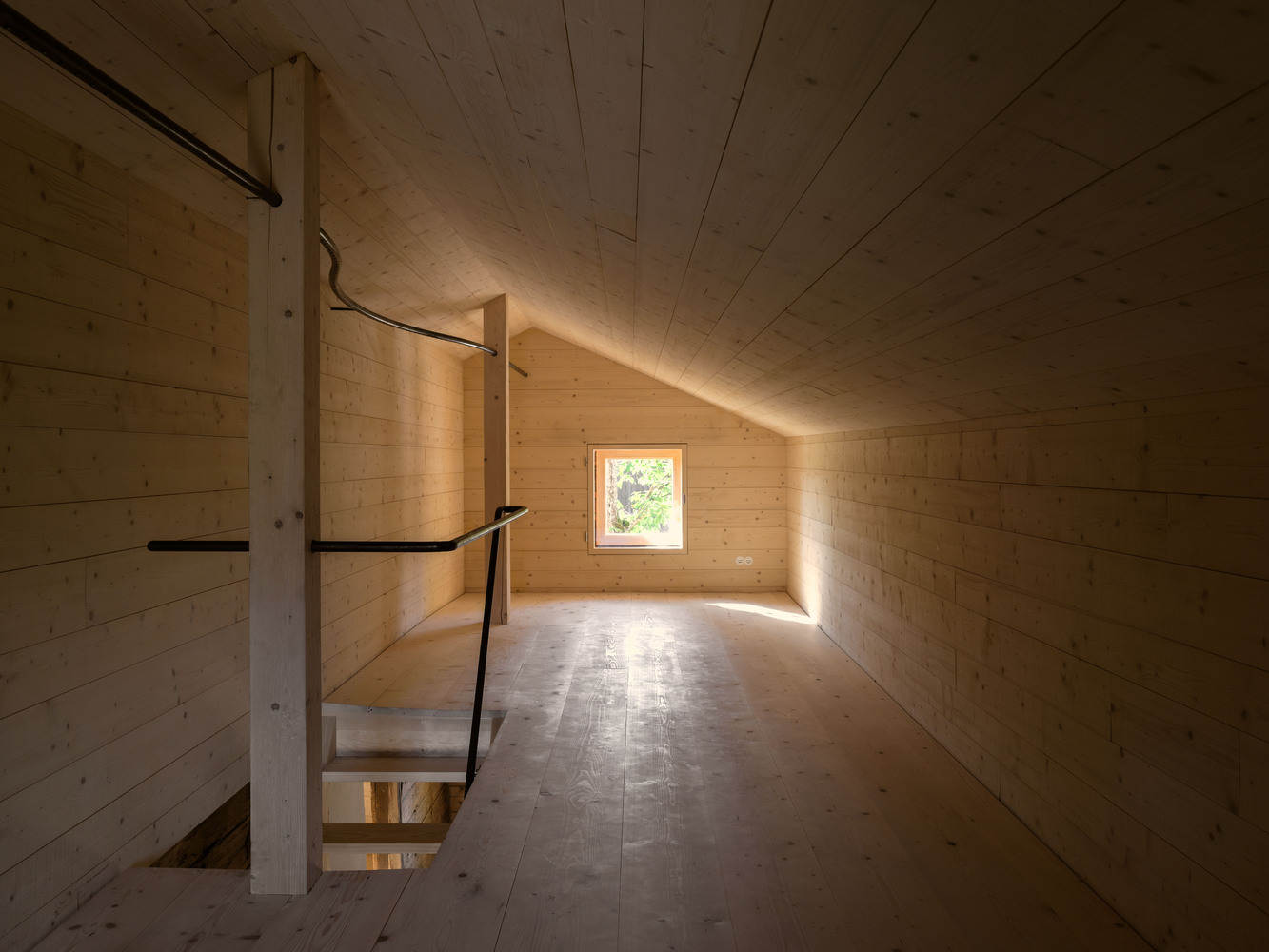
The key design measure is to embed multiple precisely adapted room sized blocks into the existing wooden structure. These blocks have multiple functions, including reinforcing buildings, forming insulation shells (especially in elevated roof areas), and bearing roof loads that historical structures can no longer support. Meanwhile, their geometric shape and bright surface improve the previously dim upper level lighting.
关键设计举措是在现有原木结构中嵌入多个精准适配的房间大小的体块。这些体块有多种作用,既能加固房屋、形成隔热外壳(特别是在抬高的屋顶区域),又能承载历史结构已无法支撑的屋顶荷载。同时,它们的几何形状和明亮表面改善了原本昏暗的上层采光。
© Simon Burko
© Simon Burko
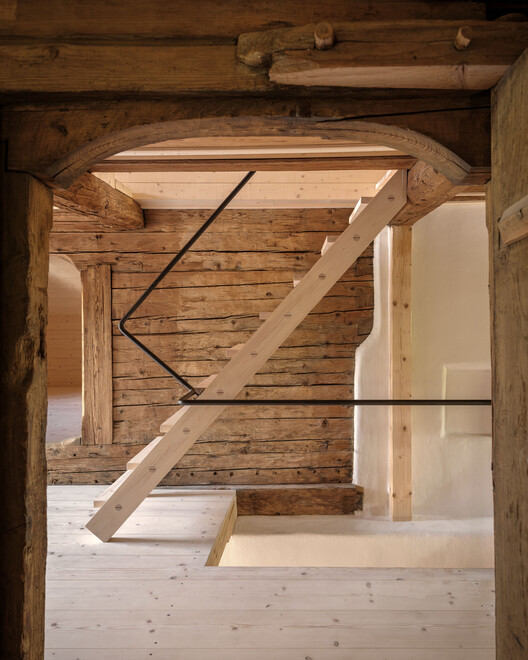
The restoration work relies on traditional techniques and materials, which are rediscovered through experimentation and the expertise of craftsmen with historical knowledge. Family and friends have made significant contributions through their own labor. They mix clay plaster and paint, apply lime and oil-based finishes bonded with casein, lay lime mortar, forge iron details, and use clear varnish firing method to protect metals. Granite is sourced from local quarries, while most of the wood comes from the family owned forest.
修复工作依赖传统技艺与材料,这些技艺与材料通过实验和具备历史知识的工匠的专长得以重新发现。家人和朋友通过亲手劳作做出了重大贡献,他们调制黏土灰泥与涂料,涂抹酪蛋白粘结的石灰和油性饰面,铺设石灰砂浆,锻造铁艺细节,还用清漆烧制法保护金属。花岗岩取自当地采石场,大部分木材则来自家族自有森林。
© Simon Burko
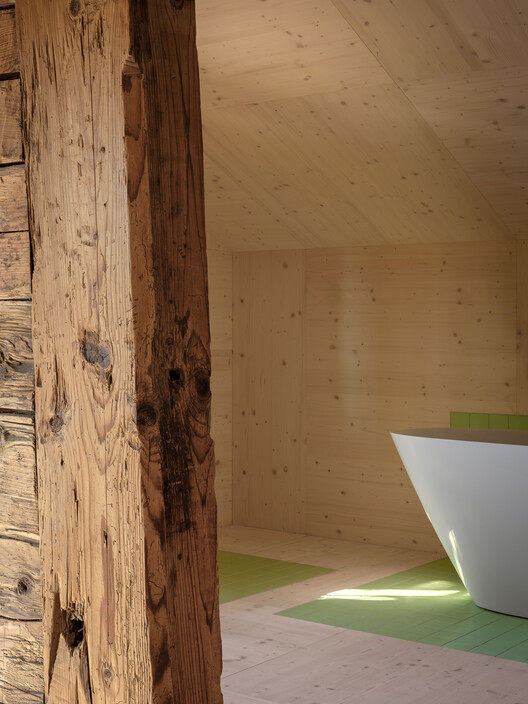
Over time, old and new will merge through the traces of time and use, providing a home for future generations until they face maintenance issues again. I hope that the other buildings on the farm can also be restored and reused with the same enthusiasm.
随着时间推移,新旧将通过岁月痕迹和使用痕迹融为一体,为子孙后代提供一个家园,直到再次面临维修问题。希望农庄其余建筑也能以同样的热忱得到修复与再利用。
© Simon Burko
This project can be regarded as a model for the transformation of architecture. Courage and commitment can overcome doubts about so-called 'irreparable' buildings. Knowledge, materials, and skills still exist, and as long as effort is put in, risks remain controllable. Challenging projects can ignite the enthusiasm of participants and attract the attention of observers, whether they are craftsmen, neighbors, or institutions. The basic requirement is to first protect existing buildings from demolition and ensure that genuine professional knowledge becomes an indispensable part. Heritage protection has long proven that such practices can and must become the norm.
该项目堪称建筑转型所需的典范。勇气与承诺能够克服对所谓“无法修复”建筑的怀疑。知识、材料与技艺依然存在,只要付出努力,风险仍可控。富有挑战性的项目能激发参与者的热情,吸引观察者(无论是工匠、邻居还是机构)的目光。基本条件是,必须首先保护现有建筑免遭拆除,并确保真正的专业知识成为不可或缺的一部分。遗产保护早已证明,此类做法能够也必须成为常态。
© Simon Burko