Yueyang Hualing Port Tourist Terminal Visitor Center/Wang Hui | Urban Practice
岳阳华菱港旅游码头游客中心 / 王辉|都市实践
设计策略与场地文脉的深度融合:该项目最引人注目的亮点在于其对场地文脉的深刻理解和巧妙利用。设计并未孤立地进行建筑创作,而是深入研究了岳阳的历史文化背景,特别是岳阳楼、洞庭湖和君山岛构成的“黄金旅游三角”关系。通过将码头重新引入,设计师重新激活了水上旅游路线,并将游客中心定位为联系历史文化与自然风光的关键节点。更重要的是,项目巧妙地利用了原有的工业遗址,通过对现有建筑的改造和新结构的植入,保留了工业时代的记忆,并与现代设计语言形成了对话,创造了独特的空间叙事。这种尊重历史、融合未来的设计策略,使得游客中心不仅是一个功能性建筑,更是一个承载文化记忆的场所。
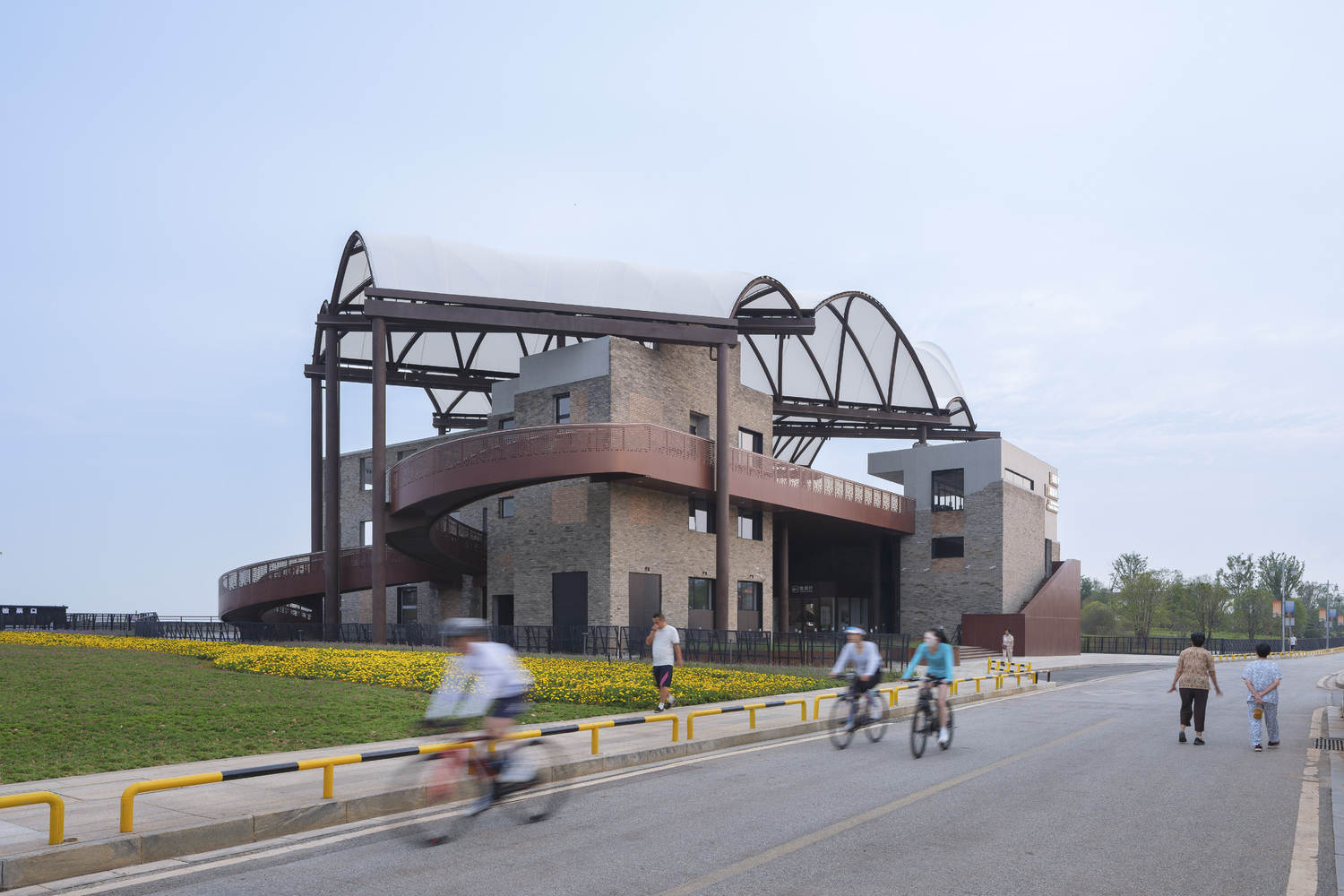
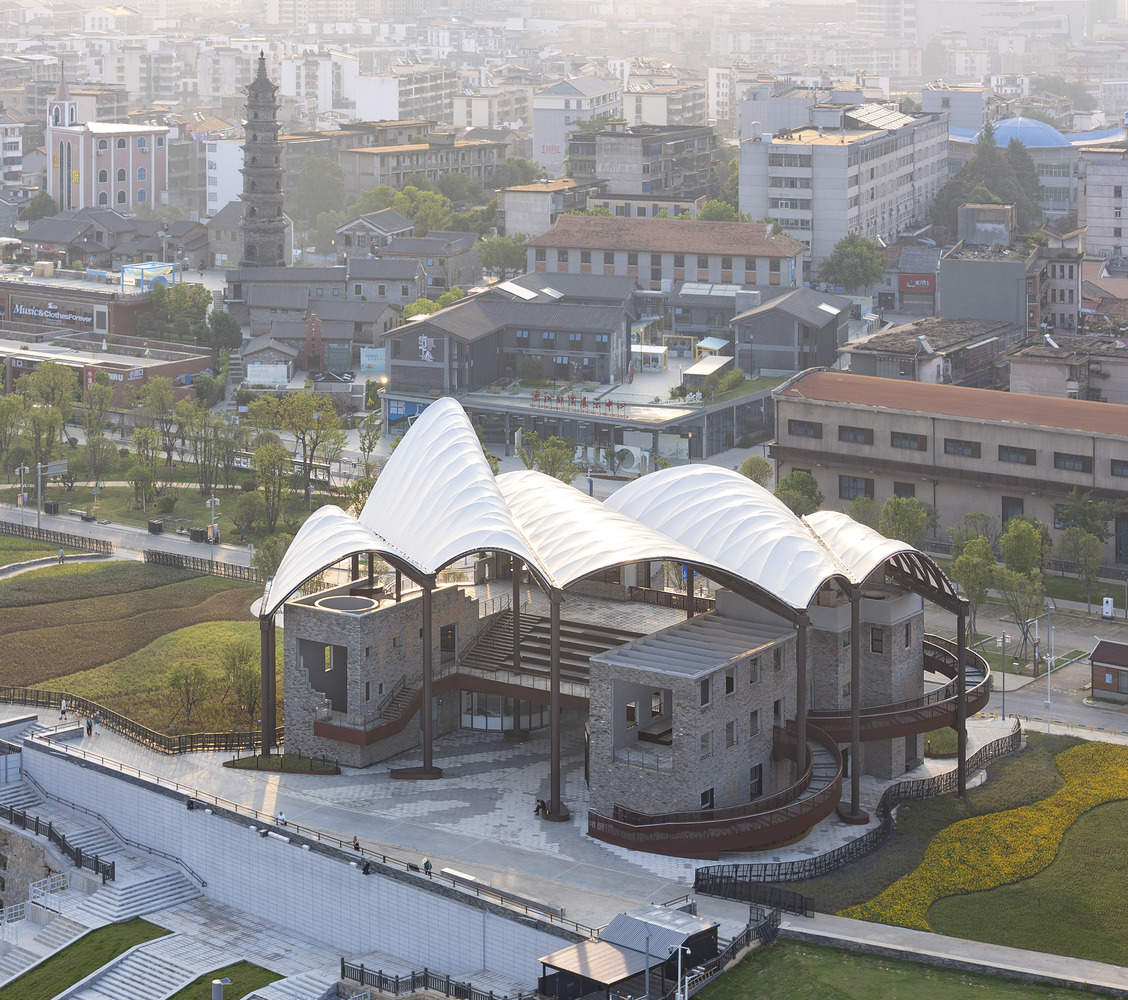
建筑形态与结构设计的创新与协调:项目的精髓体现在其独特的建筑形态和结构设计上。为了应对岳阳的梅雨天气和炎热夏季,设计师选择了象征风帆的张拉膜作为棚顶,既提供了遮蔽功能,又赋予了建筑独特的视觉形象。结构设计的创新之处在于,将棚架设计成连续筒拱,如同一个聚落,与周边的环境形成了和谐的对话。同时,以慈氏塔为核心的放射状拱形结构,使得建筑轮廓线在四个立面上都呈现出变化,并与周围的山体、古塔等元素相互呼应,创造了与历史对话、拥抱未来的新地标。这种创新性的结构设计,既满足了功能需求,又赋予了建筑独特的艺术性和象征意义,使得整个项目在视觉上具有极强的吸引力。
空间体验与功能布局的完美结合:项目在空间体验和功能布局方面展现出卓越的设计水平。设计通过将消防楼梯浪漫化,并将其转化为建筑剖面的切割刀,创造了令人惊喜的上层空间。废墟化的二三层空间被改造为公共厅堂,并引入景观,增加了举办小尺度活动的灰空间,从而改变了候船模式,使等候变成了享受。此外,建筑内部的路径设计,例如受限的封闭登楼空间和不受限的开放观景平台,营造了丰富的空间层次和多样的体验。这种对空间体验的极致追求,以及对功能布局的巧妙安排,使得游客中心成为一个既实用又充满趣味的场所,为游客带来了难忘的旅程体验,并提升了整个区域的活力与吸引力。
© TAL
© TAL
From the architect. At the end of 2018, Yueyang Port Industrial Site Park officially opened, retaining memory elements of the industrial era such as gantry cranes, railway tracks, tower cranes, and warehouse structures, coexisting with historical districts and future cities. To the west of the ecological park is Dongting Lake, and to the east are attractions such as Yueyang Tower Scenic Area, Bianhe Street, and Dongting South Road Scenic Area, forming the most important public space resource in the core historical and cultural area of Yueyang. The only drawback is that although the old port area occupying the golden coastline has undergone thorough deindustrialization, the site park without commercial development is overly ecological and lacks nearby water service facilities. Although this shortcoming has been criticized by citizens, it is difficult to carry out any construction beyond the red line in this completely demolished park through artificial planning. The Tourism Development Conference has brought an opportunity to further enhance the Yueyang Port Industrial Heritage Park with special policies for urban renewal.
来自建筑师。2018 年底,岳阳港工业遗址公园正式开放,保留了龙门吊、铁轨、塔吊、仓库架构等工业时代的记忆元素,与历史街区和未来城市共存。生态公园西面洞庭湖,东邻岳阳楼景区、汴河街、洞庭南路风貌区等景点,形成了岳阳历史文化核心区域中最重要的公共空间资源。美中不足的是占据黄金岸线的老港区虽然去工业化非常彻底,但不进行商业开发的遗址公园又过分生态,竟然没有邻近水体的服务设施。虽然这种短板被市民诟病,但人为的规划已很难再在这片拆得干干净净的公园里做任何超越红线的建设,而旅发大会则带来了用城市更新的特殊政策对岳阳港工业遗址公园进行再提升的机遇。
© TAL
© TAL
The first thing to break the deadlock is that the dock has returned. Yueyang Tower, Dongting Lake, and Junshan Island are the three major elements that make up the local scenery: the tower overlooking the lake, the lake reflecting the tower, the island in the lake, and the island embellishing the lake. The landscape painting composed of buildings, lakes, and islands is a golden tourism triangle. The water journey from Yueyang Tower to Junshan Island is the best way to experience Dongting Lake from historical culture to natural scenery, from static viewing to dynamic viewing, and the tourist pier is the necessary infrastructure to package these three together. Coincidentally, there is a former cargo dock in the middle of the park that can be easily converted into a yacht and tourist dock. Through the floating bridge, 22 small yacht berths and 15 medium-sized yacht berths can be arranged. Even if shipping is not open now, the U-shaped floating bridge swaying gently with the water waves has already filled the emotional value of people boarding and exploring Dongting Lake.
首先破局的是码头又回来了。岳阳楼、洞庭湖、君山岛是构成地方风景的三大要素:楼观湖,湖映楼,湖中有岛,岛点缀湖。楼-湖-岛三者所构成的山水画卷,是一个黄金旅游三角。从岳阳楼到君山岛的水上旅程,是从历史文化到自然风光、从静态观赏到动态体验洞庭的最佳方式,而游客码头是将这三者共同打包的必要基础设施。恰巧在公园中部有一个原先的货运码头,可以很容易改造为一个游艇和游客码头,通过浮桥可以安排 22 个小型游艇泊位与 15 个中型游艇泊位,即使现在航运没有开启,随水波轻晃 U 型浮桥,也已拉满了人们登船遨游洞庭湖的情绪价值。
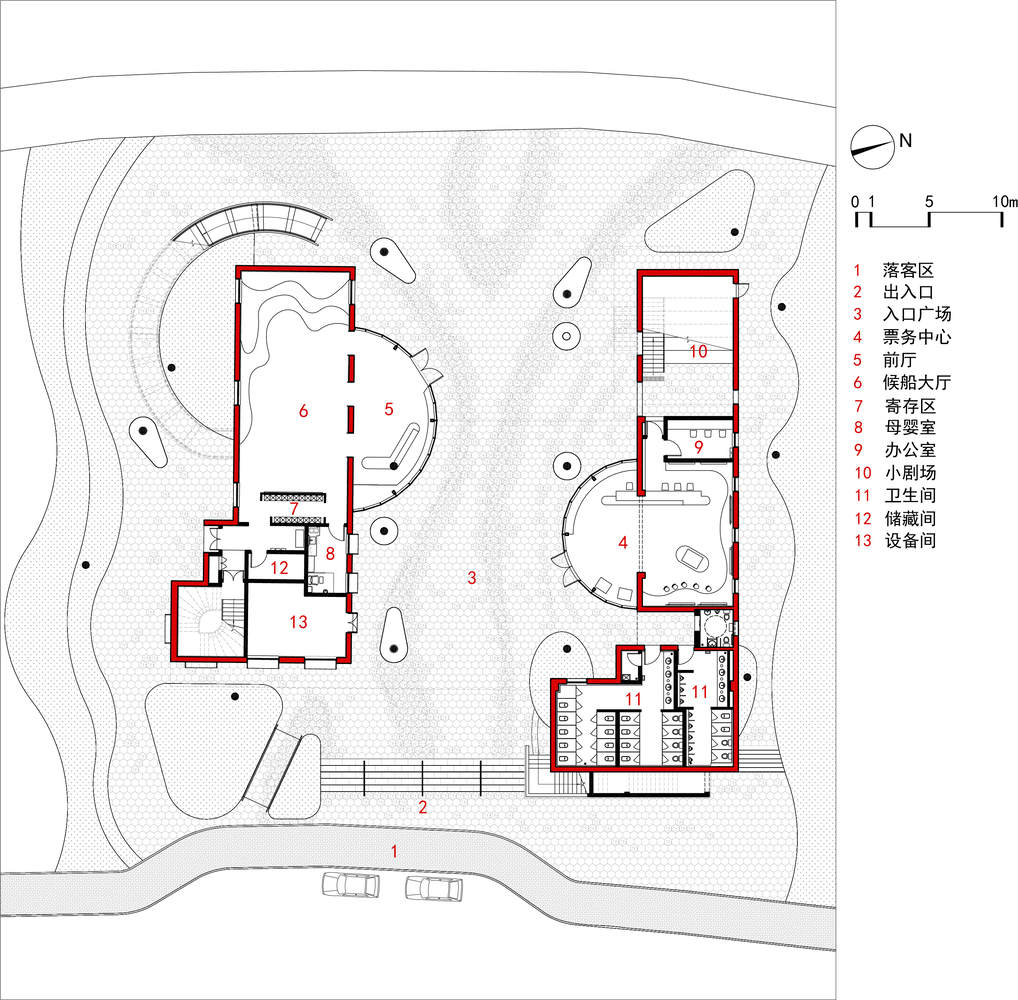
平面图
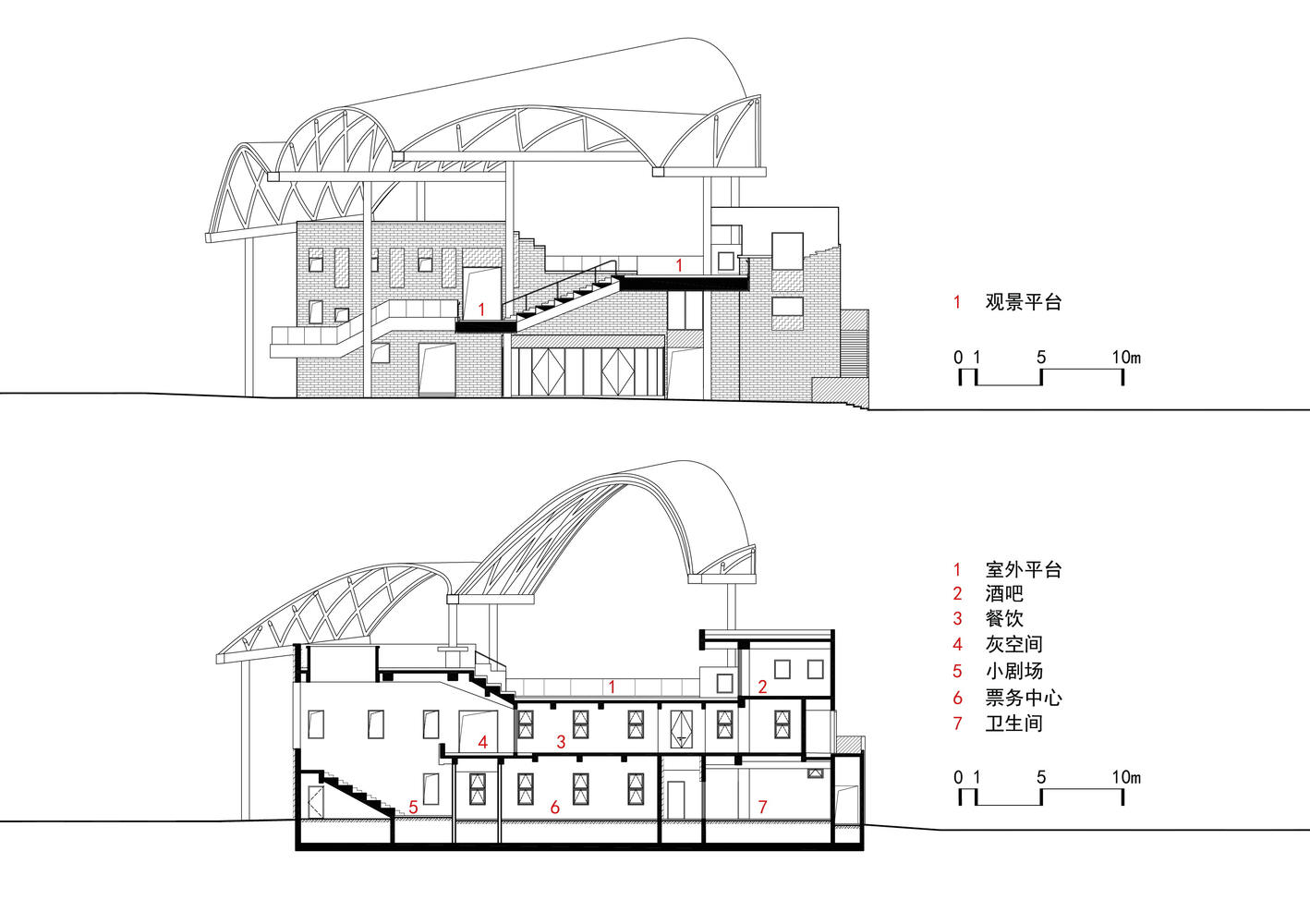
The first floor area of the two small buildings basically meets the functional requirements of tourist centers such as ticket offices, waiting halls, and bathrooms. Using a wide staircase connecting the second and third floors, the two buildings are connected, forming a moderately sized gateway from the road to the dock, as well as an outdoor space with supporting functions upstairs. You can sit down and quietly enjoy the sunrise and sunset of Dongting Lake, which is full of scenery.
两栋小楼的首层面积,基本上满足了售票处、等候厅、卫生间等游客中心的功能要求。用一个连接二层和三层的宽台阶将两个建筑连接,既形成了尺度合宜的从马路走向码头的门户,也形成了楼上的配套功能的户外空间,可以坐下来静静观赏洞庭湖的朝晖夕阴、气象万千。
© TAL
© TAL
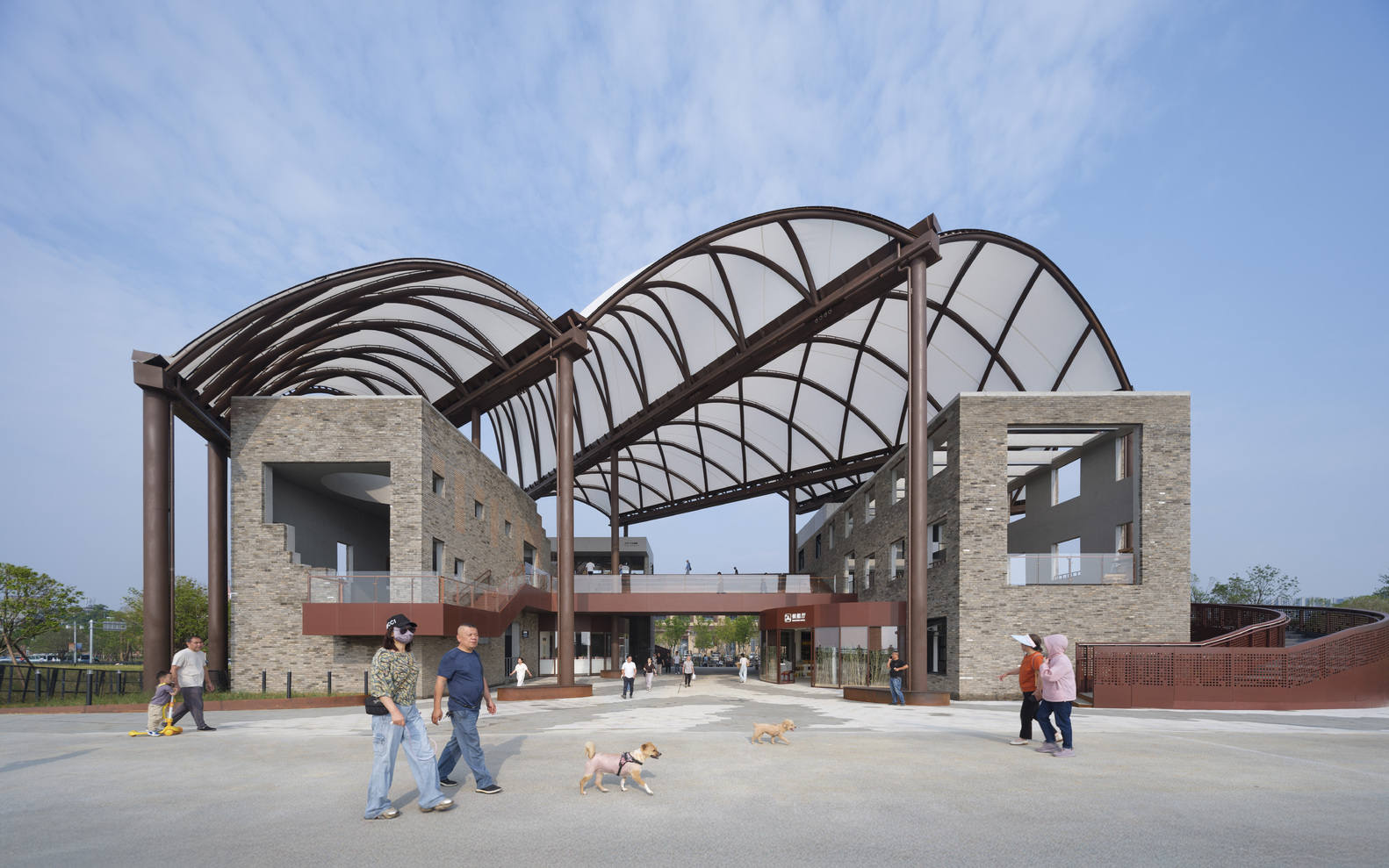
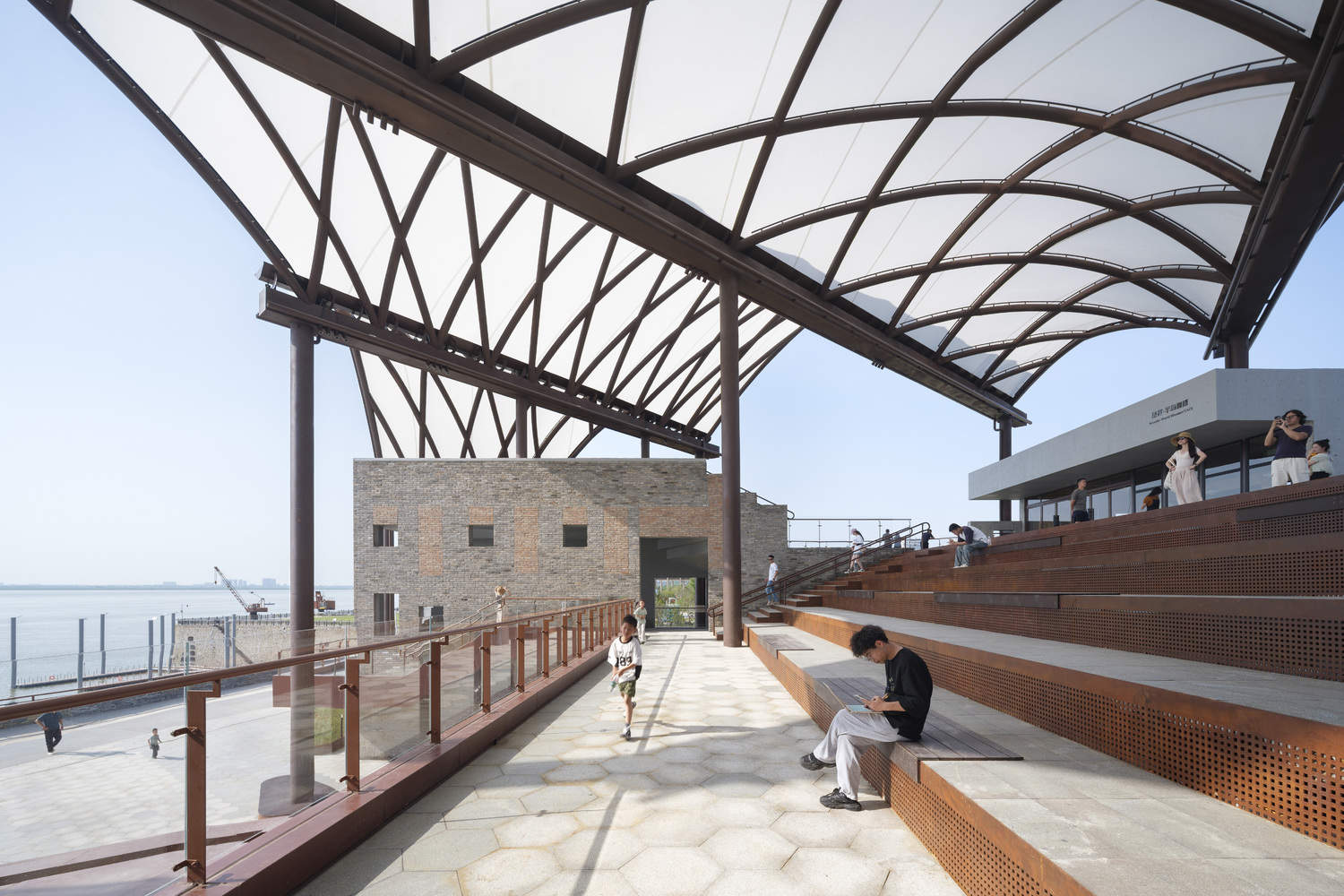
At the turn of spring and summer in Yueyang, where there is plum rain and hot and humid summers, it is essential to have outdoor platform shelters; Moreover, looking at the dock from the lake, the outlines of the two buildings were originally unremarkable. Therefore, using the tension film symbolizing the sail as a canopy naturally became a choice. The inspiration for the structural selection of the trellis came from an accidental observation of the site. On the south wall of the sunken dock on the lake shore, there is a viewing platform in the ruins park, and a set of art installations have been specially placed. Looking at the two preserved buildings from this point, if the middle part of the north building is slightly broken, it will perfectly encircle the Cishi Tower at the core of the building. On this basis, if the Cishi Pagoda is framed with an arched ceiling, it forms a dialogue across time and space between this Song Dynasty lighthouse and the current dock!
在春夏之交有梅雨、夏季炎热潮湿的岳阳,户外平台的遮蔽设施非常必要;加之从湖面看码头,原来两栋建筑的轮廓线毫无标志性,这样,用象征着风帆的张拉膜做个棚顶自然而然成为一种选择。棚架的结构选型灵感来源于一个偶然的场地观察。在凹进湖岸的码头南壁,遗址公园有一处观景平台,且特意放了一组艺术装置。从这个点去看两栋保留建筑,如果把北侧的一栋中部破掉一点,正好把慈氏塔环报在建筑核心。在此基础上,假若再用拱形天棚把慈氏塔框住,则形成了这个宋代灯塔和当下码头之间跨越时空的对话!
© TAL
From the perspective of environmental texture, large stretch films can be very eye-catching. Referring to the surrounding blocks, there are both large warehouses and small residential buildings, and the undulating terrain makes their roofs arranged in a disorderly and mixed manner. On the one hand, the trellis is designed as a continuous tube arch, which, when combined, looks more like a settlement; On the other hand, with the Cishi Tower as the core, the arch is arched with radiation, and the overall outer boundary projection is basically controlled within the original building range, resulting in contour lines with changes on all four facades. On this basis, through repeated consideration of the relationship with inherent environmental elements such as mountains, ancient pagodas, and shorelines, a new landmark of Dongting Lake that engages in dialogue with history and embraces the future has emerged on the surface of the lake.
从环境肌理上看,大片的张拉膜会非常刺眼。参考周边街区既有大仓库、又有小民居,起伏的地势又使它们的屋顶鳞次栉比、无序混搭,棚架一方面被设计成连续筒拱,组合起来更像个聚落;另一方面以慈氏塔为核心用放射线起拱,整体外边界投影又基本上控制在原建筑范围内,从而带来四个立面都有变化的轮廓线。在此基础上,通过反复推敲与山体、古塔、岸际等固有环境要素的关系,一个对话历史、拥抱未来的洞庭新地标跃然出现在湖面之上。
© TAL
© TAL
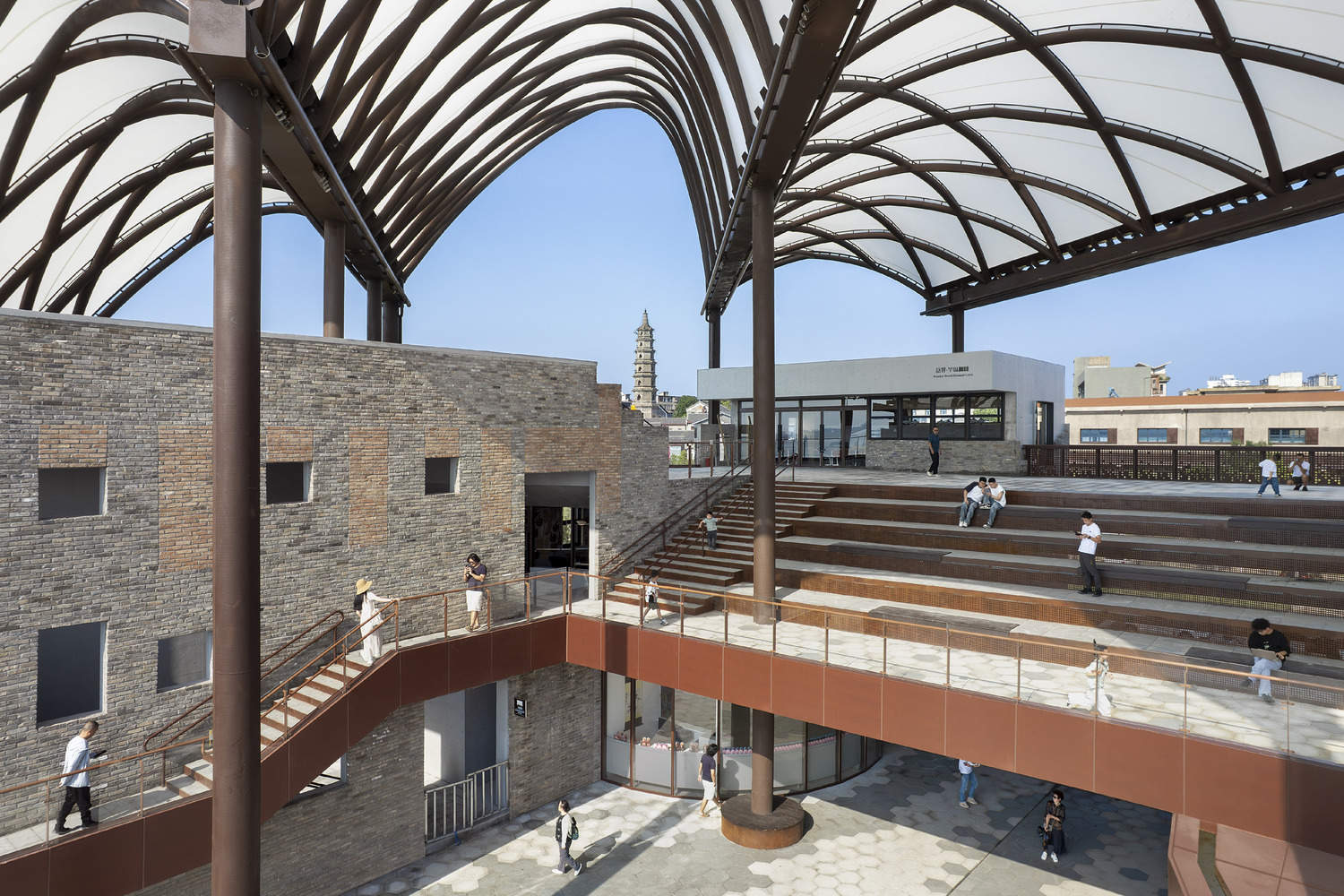
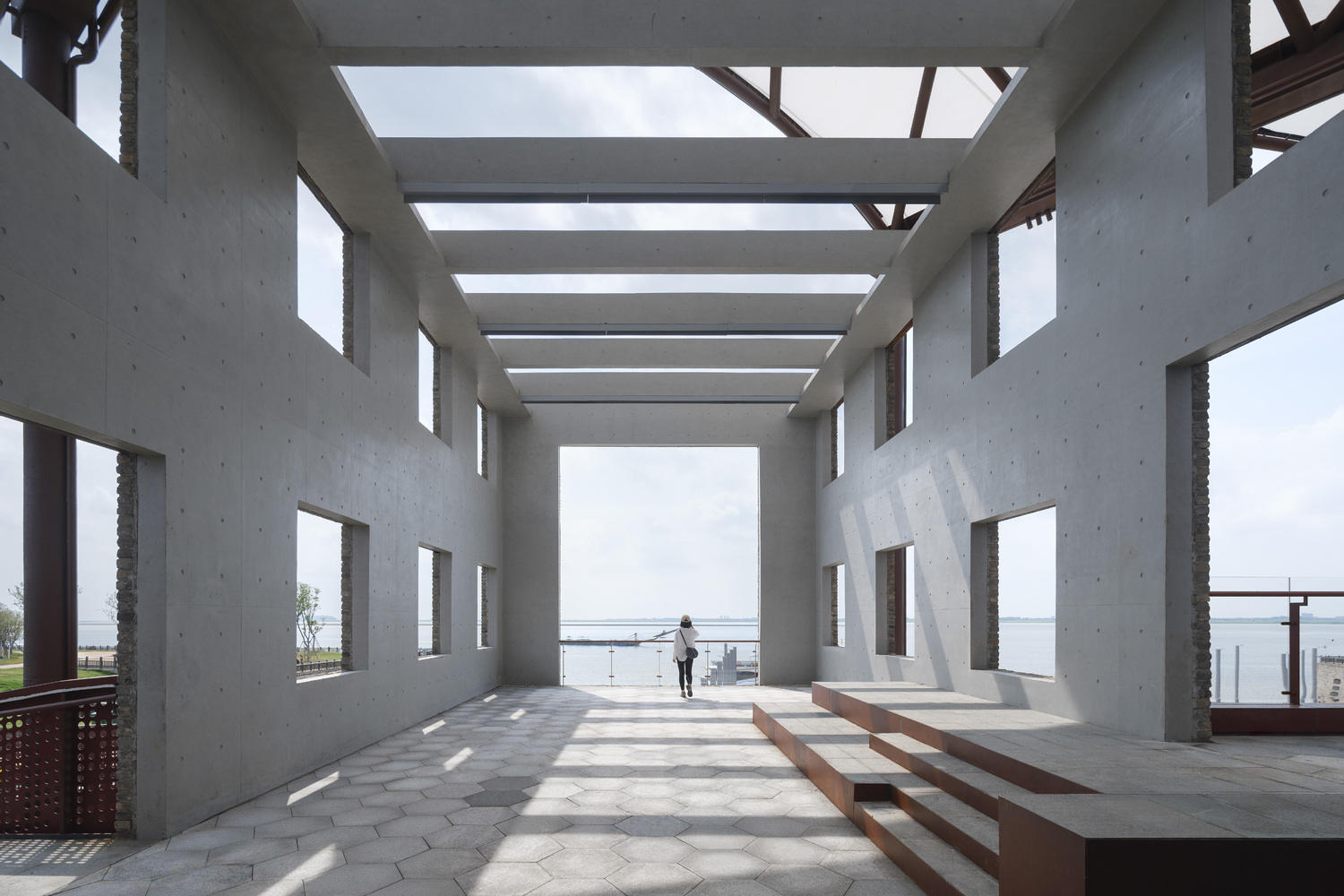
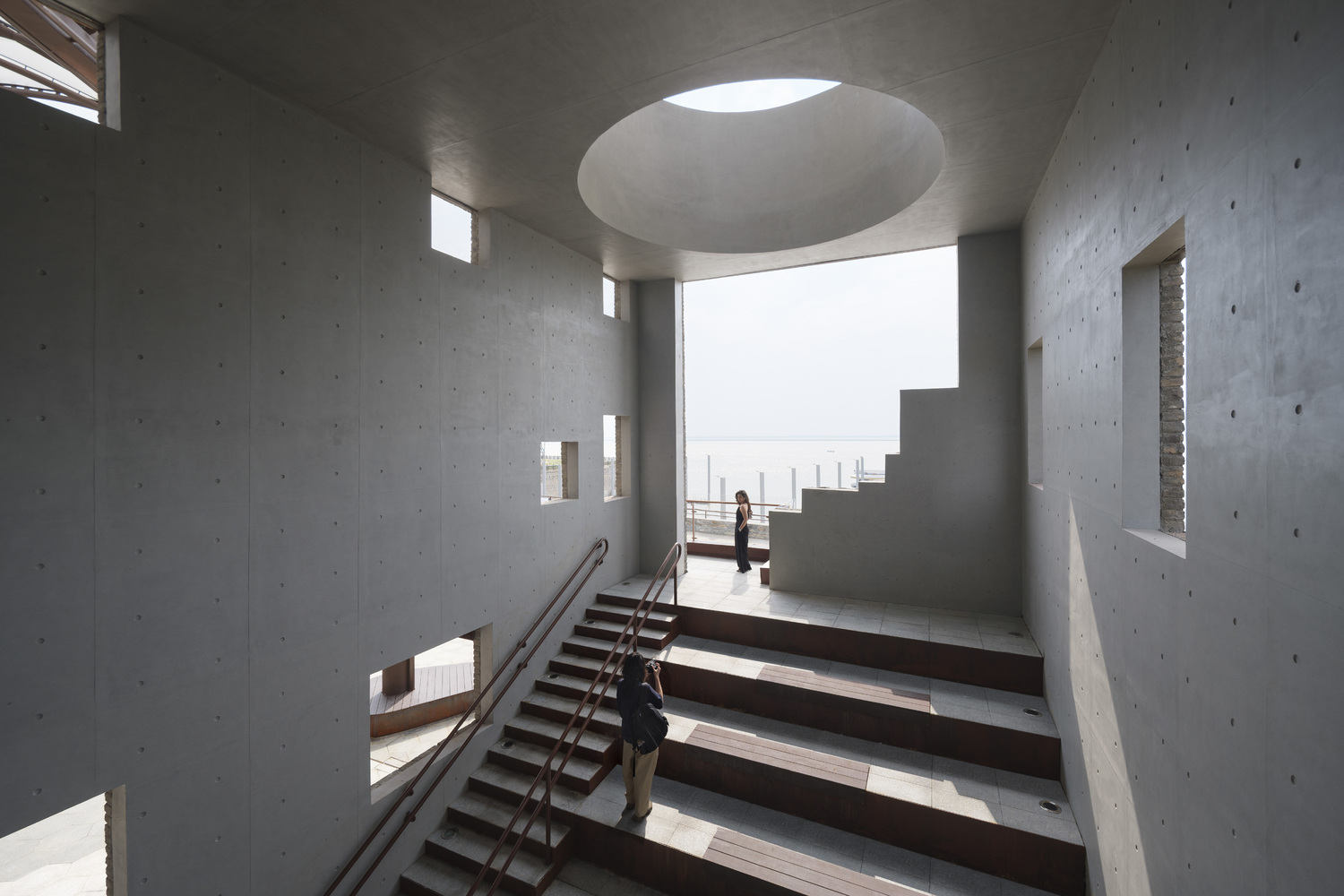
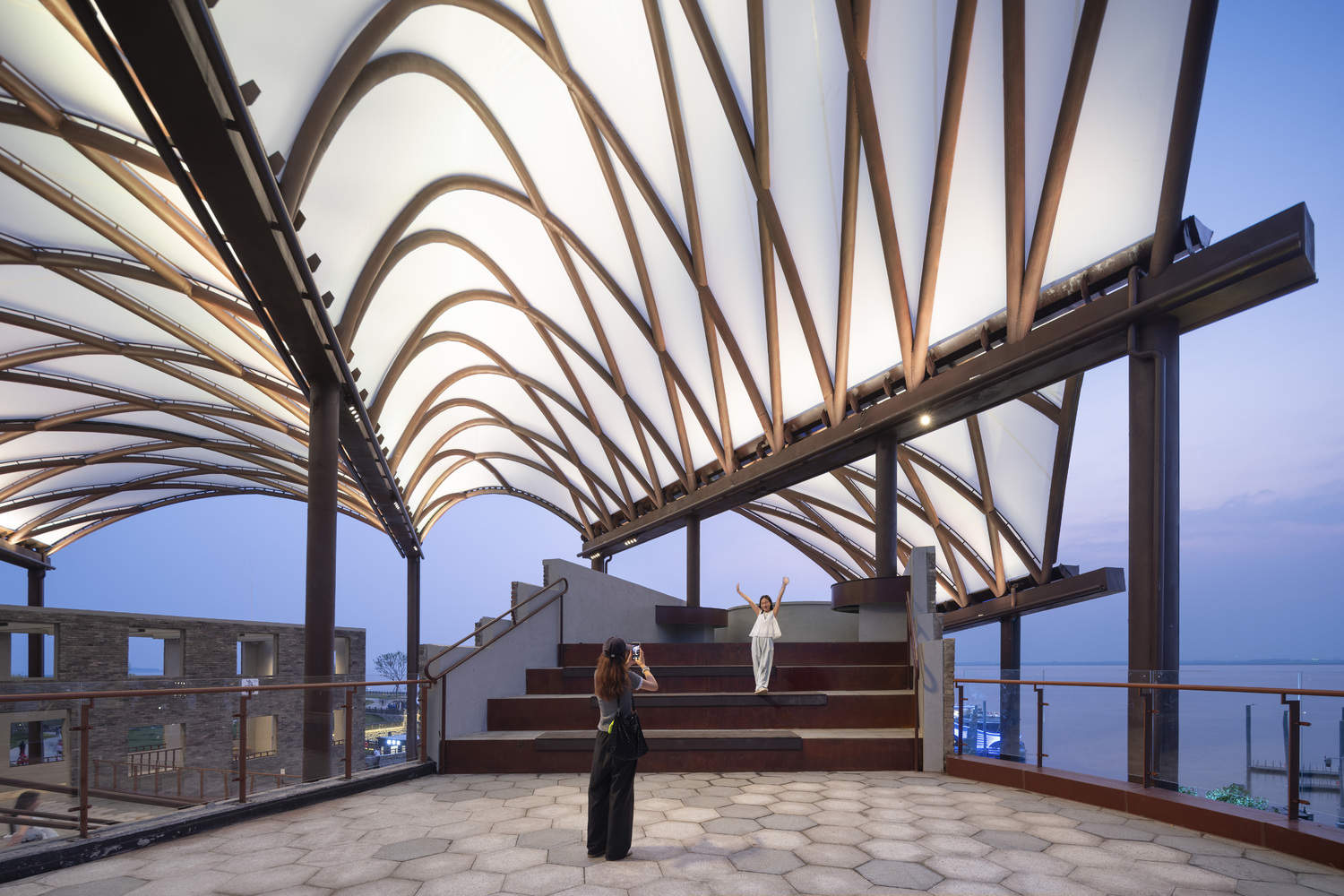
Obviously, the rich and charming public spaces and service facilities on the upper level have greatly changed the mode of waiting for ships, turning waiting into enjoyment. How to reach the upper space has become a potential design highlight. By romanticizing fire staircases and turning them into cutting knives for building profiles, the ruins of the original second and third floors facing the lake are transformed into public halls, bringing in scenery and adding two grey spaces for small-scale events. These spaces have brought endless surprises to this small settlement.
显然,上层丰富和有情调的公共空间和服务设施大大地改变了候船的模式,使等候变成了享受。如何到达上层空间成为了潜在的设计亮点。通过浪漫化消防楼梯,让它们成为建筑剖面的切割刀,把原建筑二、三层朝湖的空间废墟化为公共厅堂,引景入室,又增加了两个可以举办小尺度活动的灰空间。这些空间为这个不大的聚落带来了层出不穷的惊喜。
© TAL
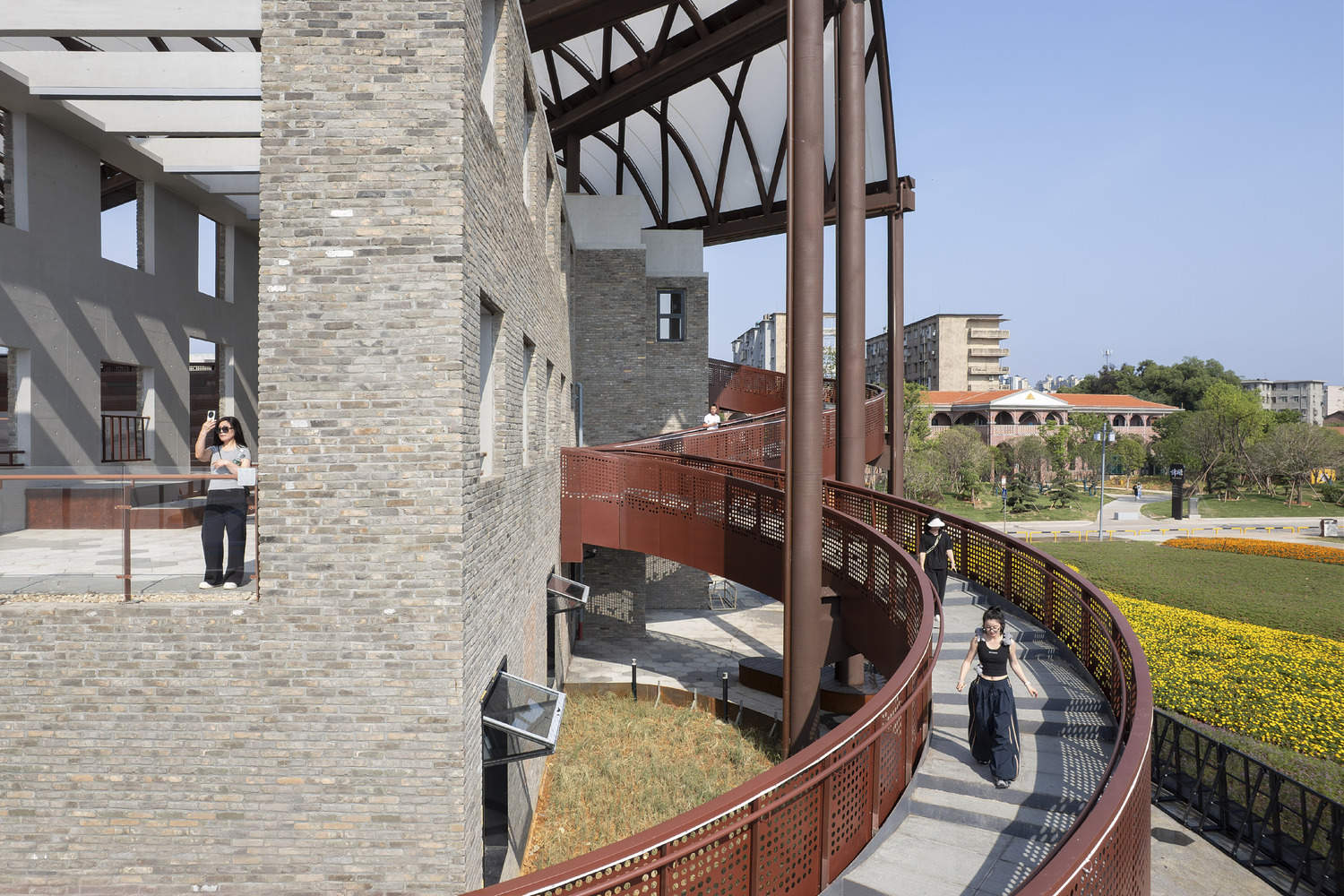
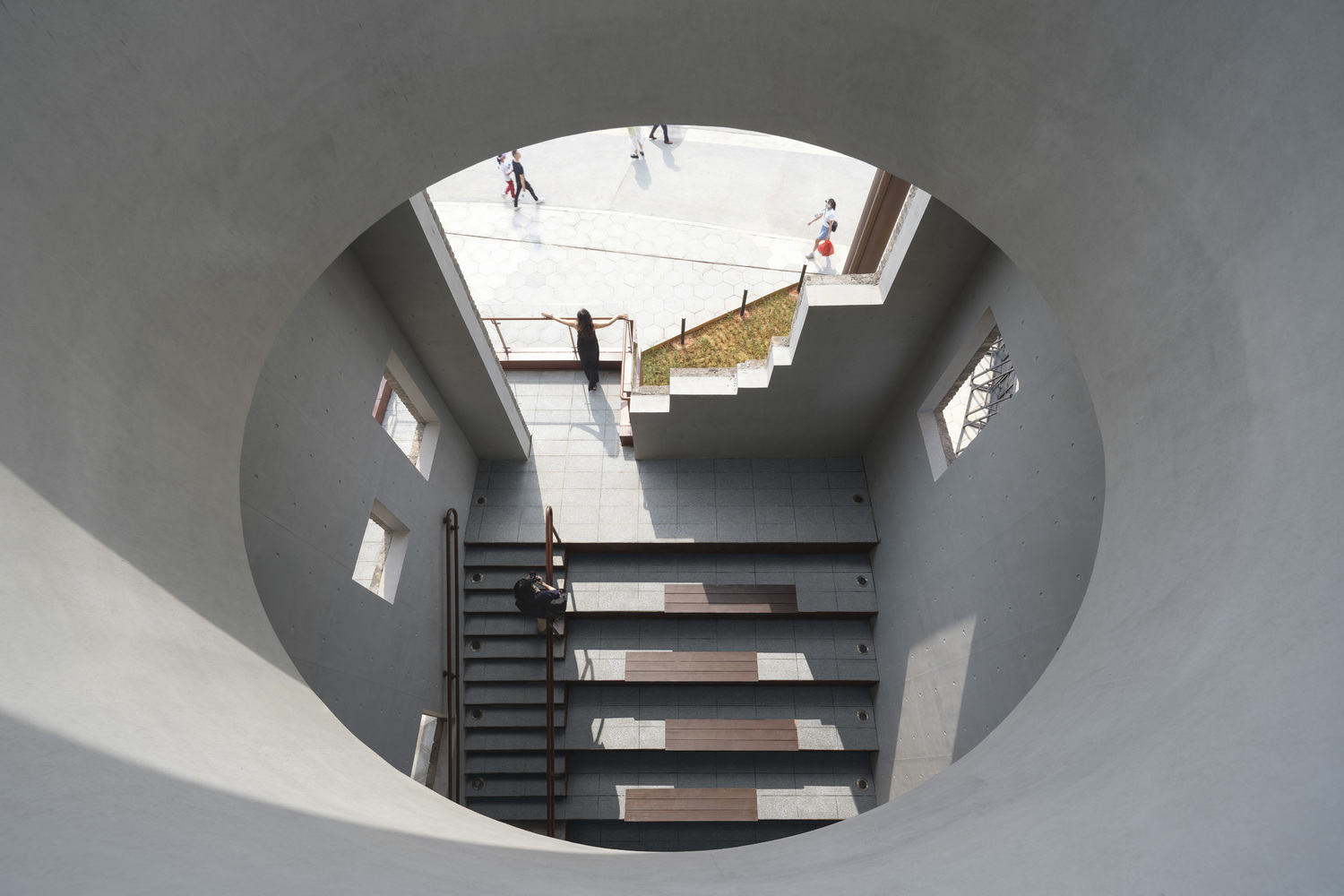
Due to the restrictions of the Wenbao Line on the north side, the path to climb the tower is hidden inside the building, forming a small theatrical space that is more enclosed. The south side is not restricted and can be freely indulged. Two semi-circular staircases can be released outside the building, allowing you to overlook the ruins park and lake on the south side from the railing. The rest platform between the second and third floors of the staircase is a social space open to the lake.
北侧由于受文保线的限制,登楼的行进路径藏在建筑内侧,形成一个小的戏剧空间,更加封闭些。南侧不受限,可以自由放纵,在建筑之外放飞两条半圆弧楼梯,可以凭栏眺望南侧的遗址公园和湖面。楼梯二、三层间的休息平台是向湖面敞开的社交空间。
剖面图
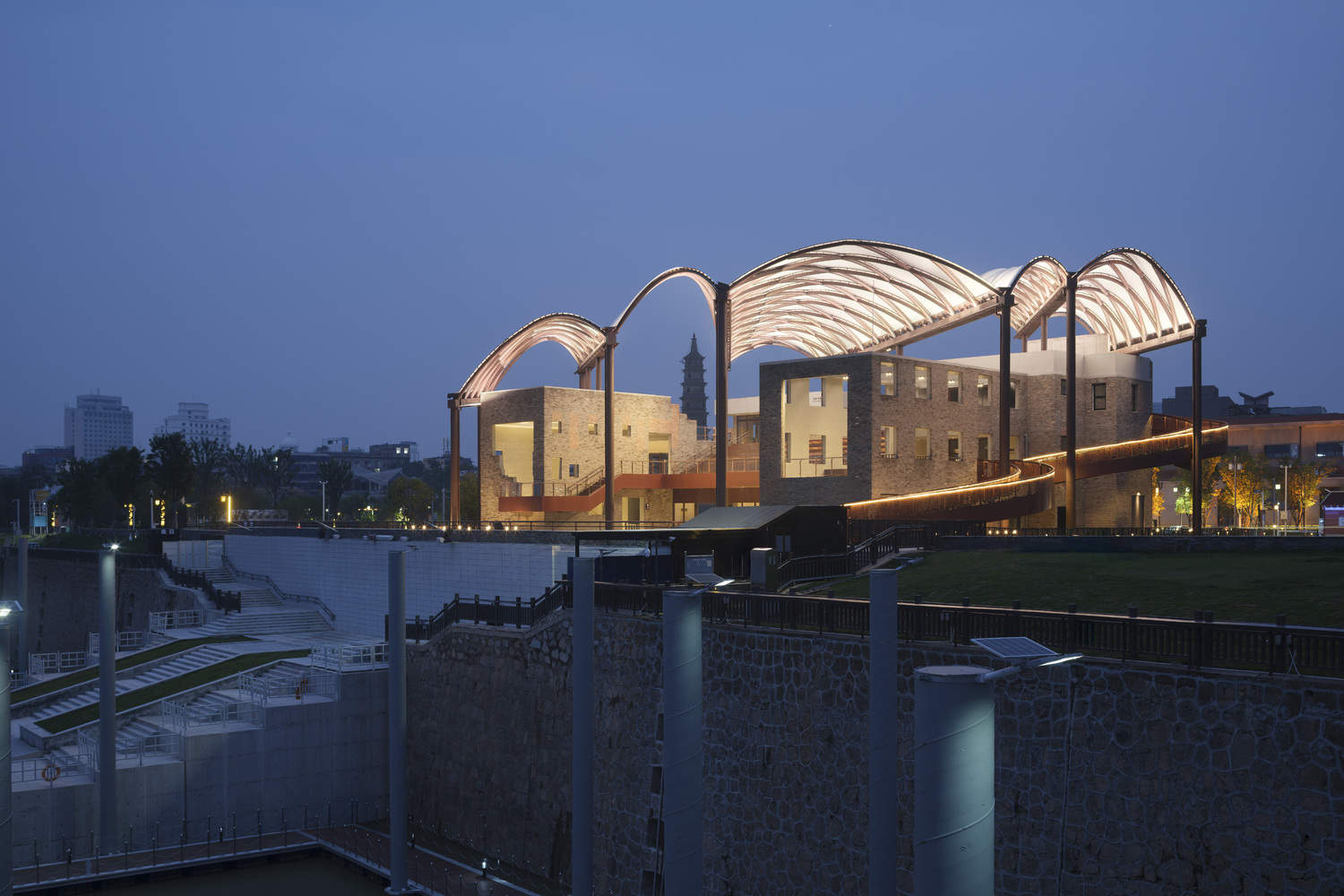
The steel structure of the stairs and scaffolding, as well as the reinforced concrete walls, bring back the so-called industrial style, which is full of modernity and forms a dialogue between old and new with the ruins of the old brick walls, bringing back the absent industrial era of this area through a new aesthetic. A fully functional visitor center not only serves shipping, but also fills in the missing supporting functions in the heritage park, while also bringing the possibility of exhibitions, displays, and activities. It is not only a window of service, but also a tourist attraction in itself, recycling and reusing residual industrial heritage, realizing the original intention of the heritage park to "preserve history and face the future", allowing tourists to immerse themselves in the historical weight and dramatic sense of time and space travel of the site. On a higher level, this tourist center is also a cultural installation with strong narrative capabilities, serving as a spiritual symbol of Yueyang's urban transformation. On the one hand, it enhances the pride and sense of belonging of citizens, and on the other hand, it allows tourists to see a Yueyang that not only has historical heritage but also modern development vision.
楼梯和棚架的钢结构,以及加固后的混凝土墙,又带回了所谓的工业风,既有十足的现代感,又和废墟化的老砖墙形成新旧对话,通过新美学带回来了这个片区缺席的工业时代。功能完善的游客中心不仅仅服务于航运,也补齐了在遗址公园缺失的配套功能,同时还带来了展览、展示、活动的可能。它不仅是服务的窗口,本身也是一个旅游景点,循环再利用残留的工业遗产,实现了遗址公园“保留历史、面向未来”的初心,让游客能沉浸式地感受到场地的历史厚重感与时空穿越般的戏剧感。在更高的维度上,这个游客中心也是一个具有强大叙事能力的文化装置,是岳阳城市转型的一个精神象征,一方面提升了市民的自豪感和归属感,另一方面也让游客看到了一个不仅有历史底蕴、更有现代发展眼光的岳阳。
© TAL
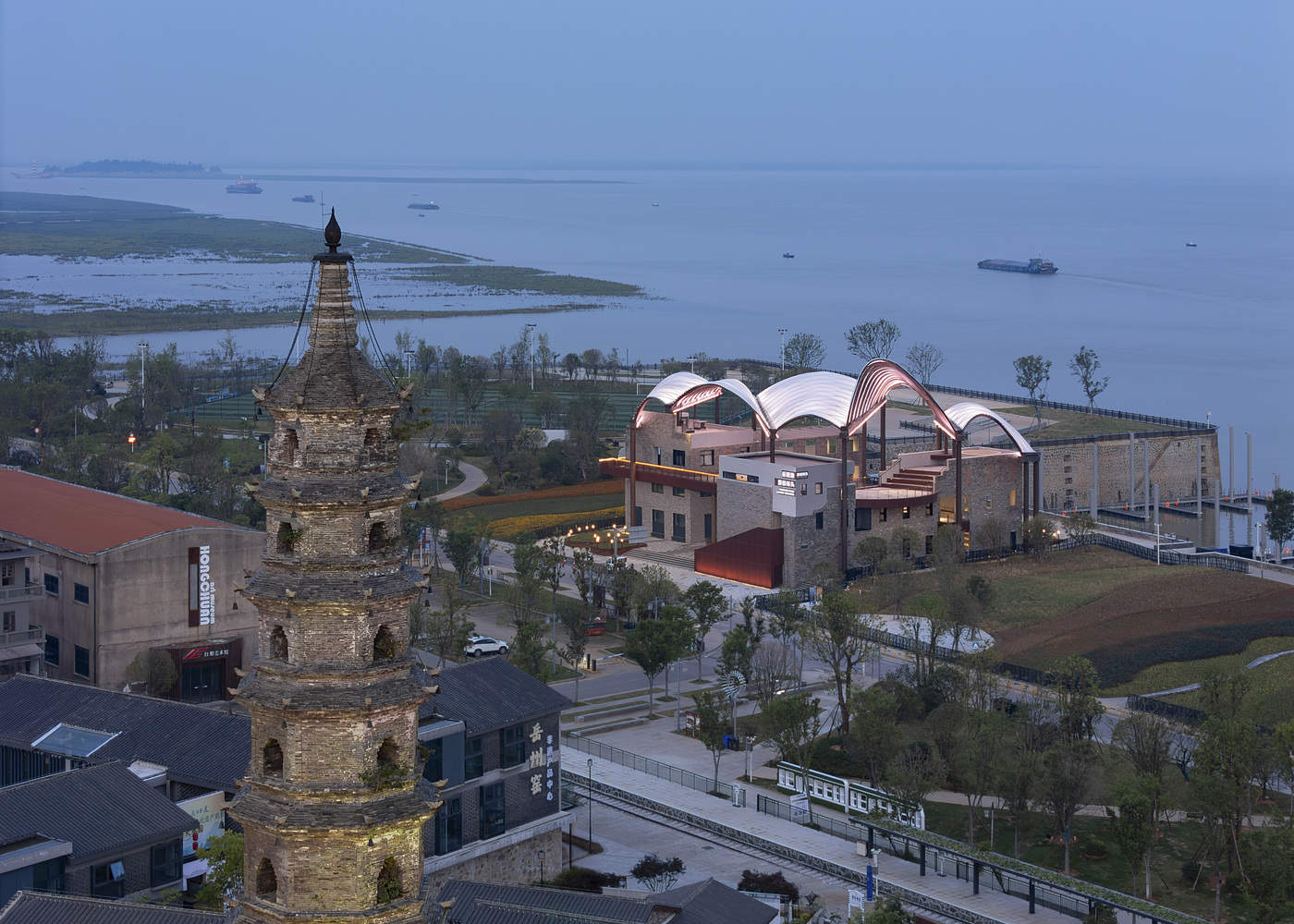
More meaningfully, the design of the tourist center not only did not destroy the historical environment of the Cishi Tower, but also provided a profound perspective for viewing and understanding the Cishi Tower through the current design language. They are no longer two isolated scenic spots, but together form a spatial narrative that tells the story of the integration of Yueyang Lake City. At the same time, this localized key node renovation has activated the vitality of the entire area and driven the development of the southern part of the dock ruins park.
更有意义的是,游客中心的设计不仅没有破坏慈氏塔的历史环境,反而通过当下的设计语言,为观赏和理解慈氏塔提供了一个富有深度的视角。它们不再是两个孤立的景点,而是共同构成了一个讲述岳阳湖城一体的空间叙事。同时,这个在地化的关键节点改造,激活了整个片区的活力,并带动了码头遗址公园南部的发展。
© TAL