Nanjing University Kindergarten Renovation/Shelving Studio
南京大学幼儿园改造 / 间架工作室
空间结构的巧妙重塑: 南京大学幼儿园的改造项目最引人注目的亮点在于其对园区空间结构的巧妙重塑。设计师引入了风雨连廊系统,巧妙地连接了原本分散的建筑和设施,化零为整。 这一设计不仅提供了遮风挡雨的功能,更重要的是,它对园区外部空间尺度进行了精细的调节,构建了更符合儿童尺度的空间层次。同时,连廊与建筑的融合也赋予了空间流动性和趣味性,如北廊分隔了人流和后勤流线,南廊围合出活动展亭,这些细节都体现了设计者对幼儿活动需求的深刻理解和对空间使用的精心考量。
建筑单体的精细改造与升级: 项目的精髓体现在对既有建筑的精细化改造与升级。尤其值得称道的是对二号楼的改造。在满足结构安全的前提下,设计师将原有砖混结构替换为钢筋混凝土框架结构,为后续的空间拓展提供了可能。 走廊的拓宽、天窗的设计、以及楼梯位置的调整,都体现了对幼儿园安全性和使用舒适度的重视。 通过这些改造,建筑不再仅仅是满足基本功能的容器,而是成为了一个更安全、更舒适、更具互动性的活动场所。这种对细节的关注和对建筑性能的提升,是项目成功的重要保障。
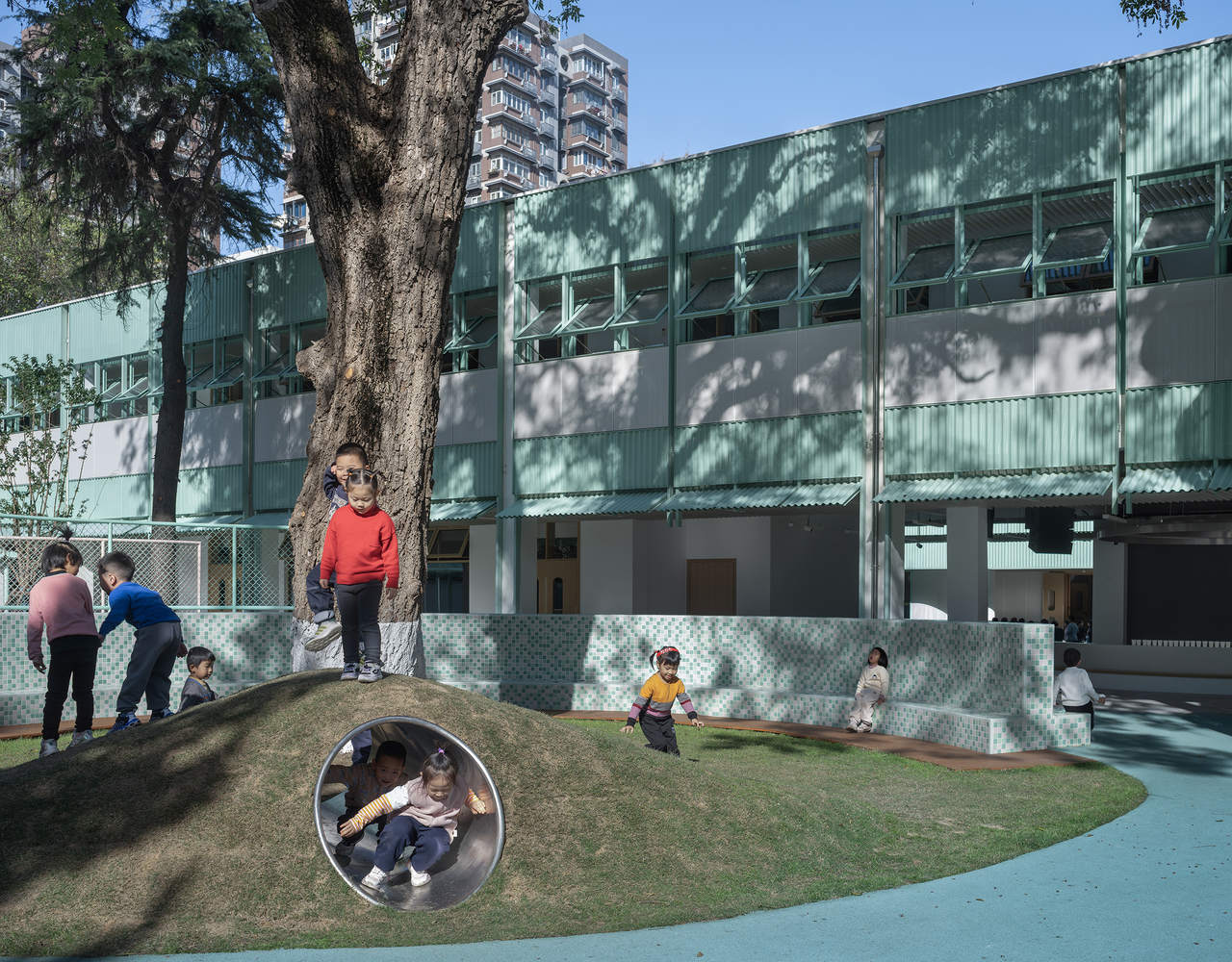
场地与景观的有机结合: 项目在场地与景观的结合上展现了卓越的设计能力。设计师充分利用了现有的树木资源,结合弧形矮墙,围合出不同尺度的活动区域。 建筑的弧形元素与景观的呼应,以及风雨连廊对空间边界的限定,都使得原本消极的边缘地带焕发了活力。 水池、沙坑、种植园地等自然元素的融入,更是为孩子们创造了探索和学习的场所。 整个设计将建筑、景观和儿童活动需求紧密结合,创造了一个充满活力、富有教育意义、并与自然和谐共生的幼儿园环境,体现了对幼儿成长环境的深刻理解和人文关怀。
© 侯博文
© 侯博文
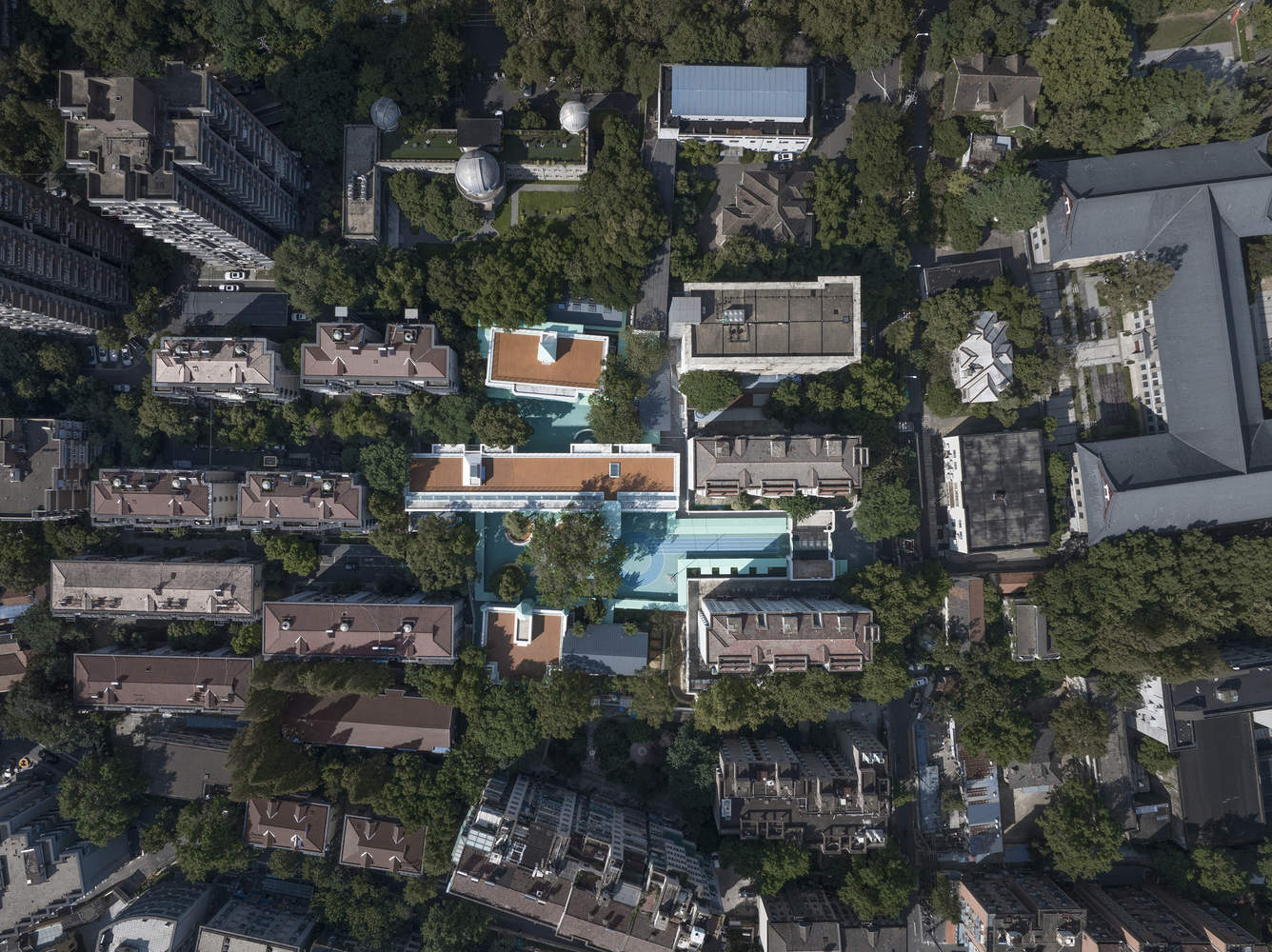
Nanjing University Kindergarten is a public kindergarten that recruits students from the society. It is located on the west side of Nanda Gulou Campus, adjacent to the campus' North Park 'across Pingping Lane. To the north of the kindergarten is the School of Engineering Management at Nanjing University (including the former Astronomy Building), to the east is the international student dormitory, and to the west and south are social residential areas. The main body of the park is located in the hinterland of the street, only connected to the entrance of Pingping Lane through a narrow strip of land between the student apartments on the east side. Since its establishment in 1953, the park has undergone multiple expansions and expansions. During this process, there were many issues with space and usage due to the lack of overall planning. Moreover, some buildings in the park have undergone structural testing and are no longer able to meet safety standards. Therefore, this renovation and update not only requires a reorganization and integration of the spatial structure of the park, but also requires reinforcement and renovation of the buildings in the park.
南京大学幼儿园是一所面向社会招生的公立幼儿园。它位于南大鼓楼校区西侧,与校区“北园”隔平仓巷而邻。幼儿园北侧为南大工程管理学院(包括原天文楼),东侧为留学生公寓,西、南侧为社会性居住小区。园区主体处于街廓腹地,仅通过东侧学生公寓间的狭长用地与平仓巷入口连通。自 1953 年建园以来,园区经过多次拓展、扩建而成。在此过程中,由于缺乏整体的规划,而存在空间、使用上的诸多问题。并且,部分园舍建筑经结构检测已无法达到安全标准。因此,本次改造更新既需要重新梳理、整合园区空间结构,又需要对园舍建筑进行加固、改造。
© 侯博文
© 侯博文
Reorganization of Park Space Structure
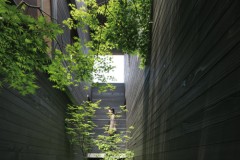
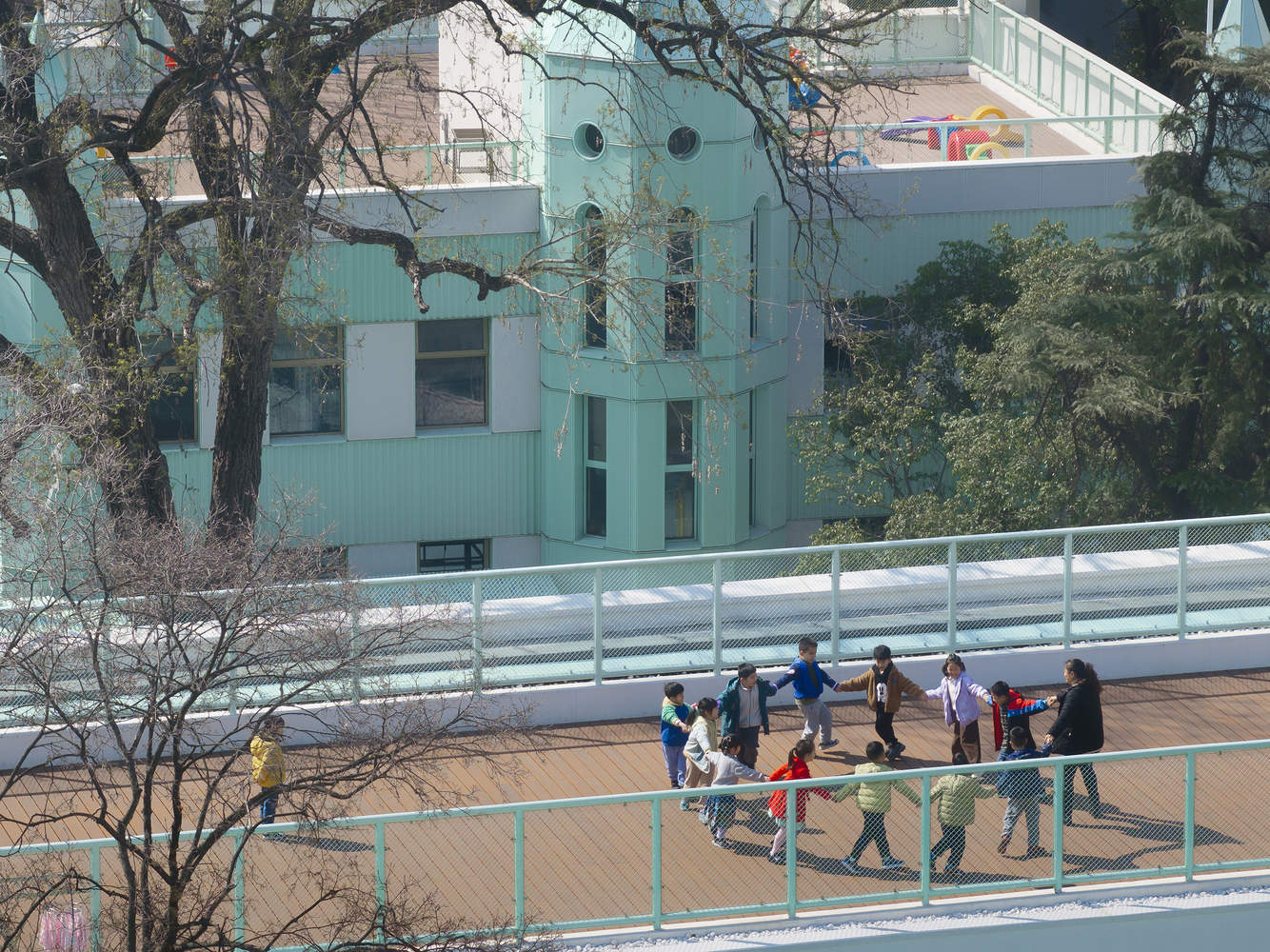
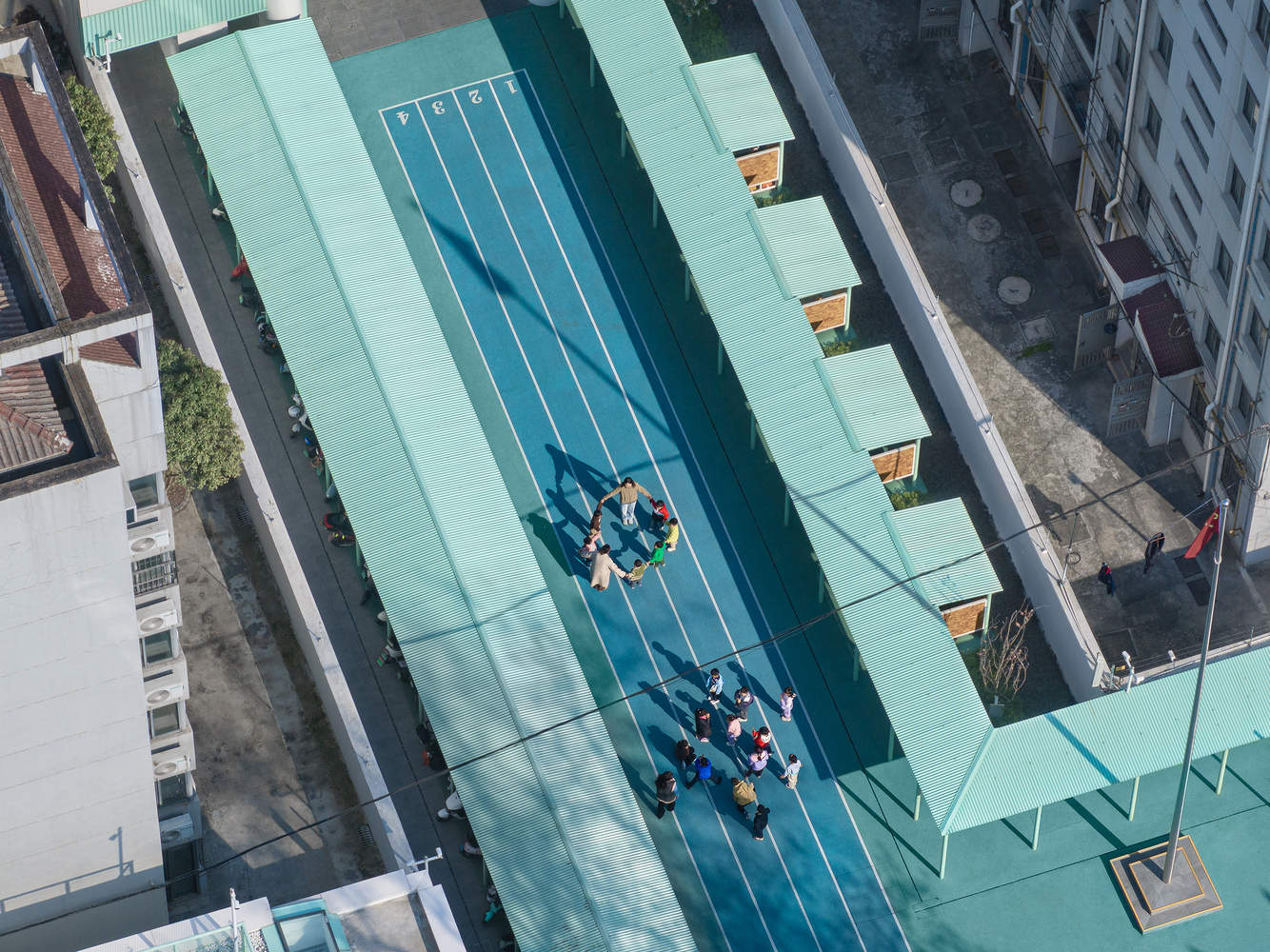
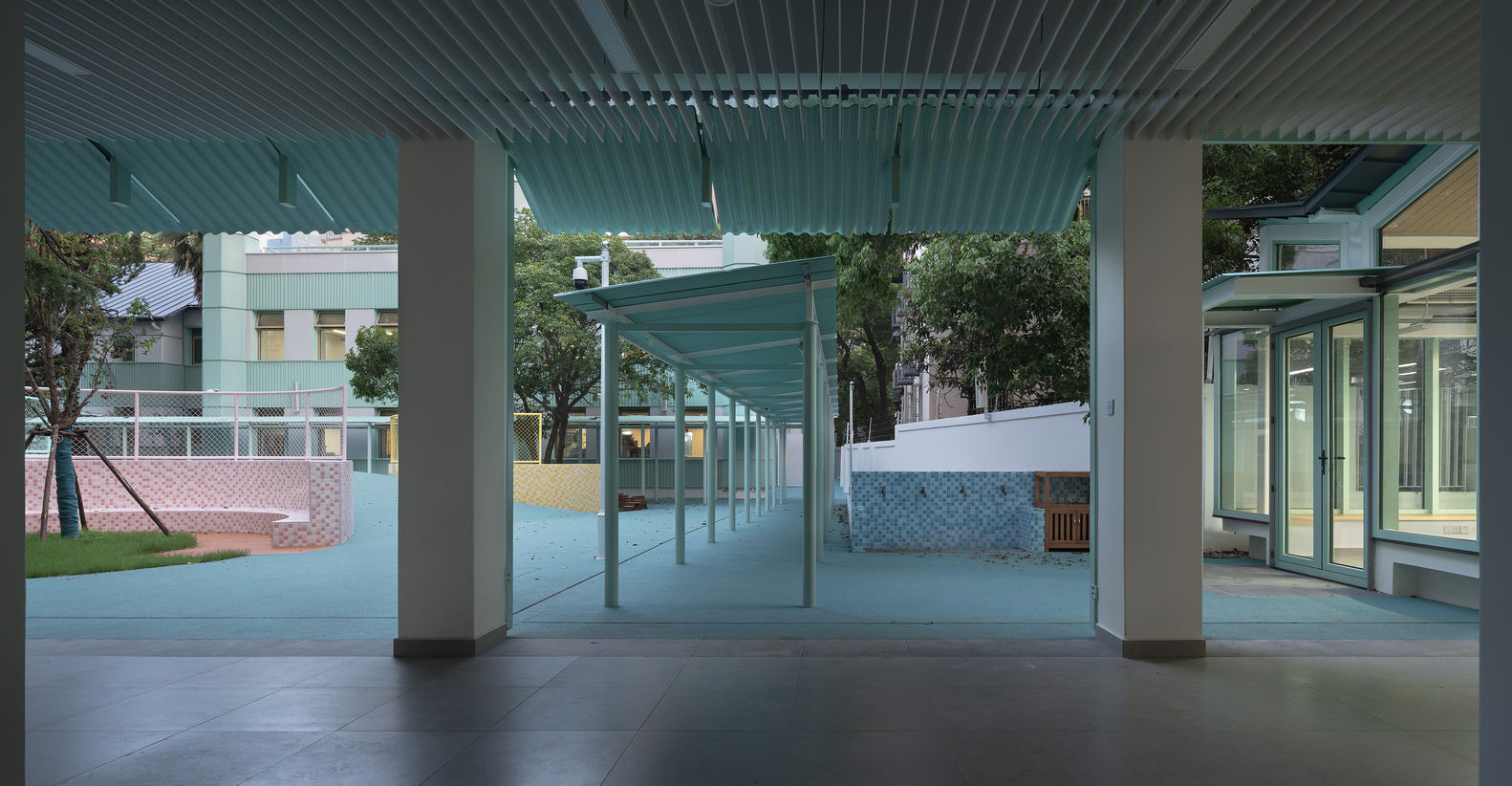
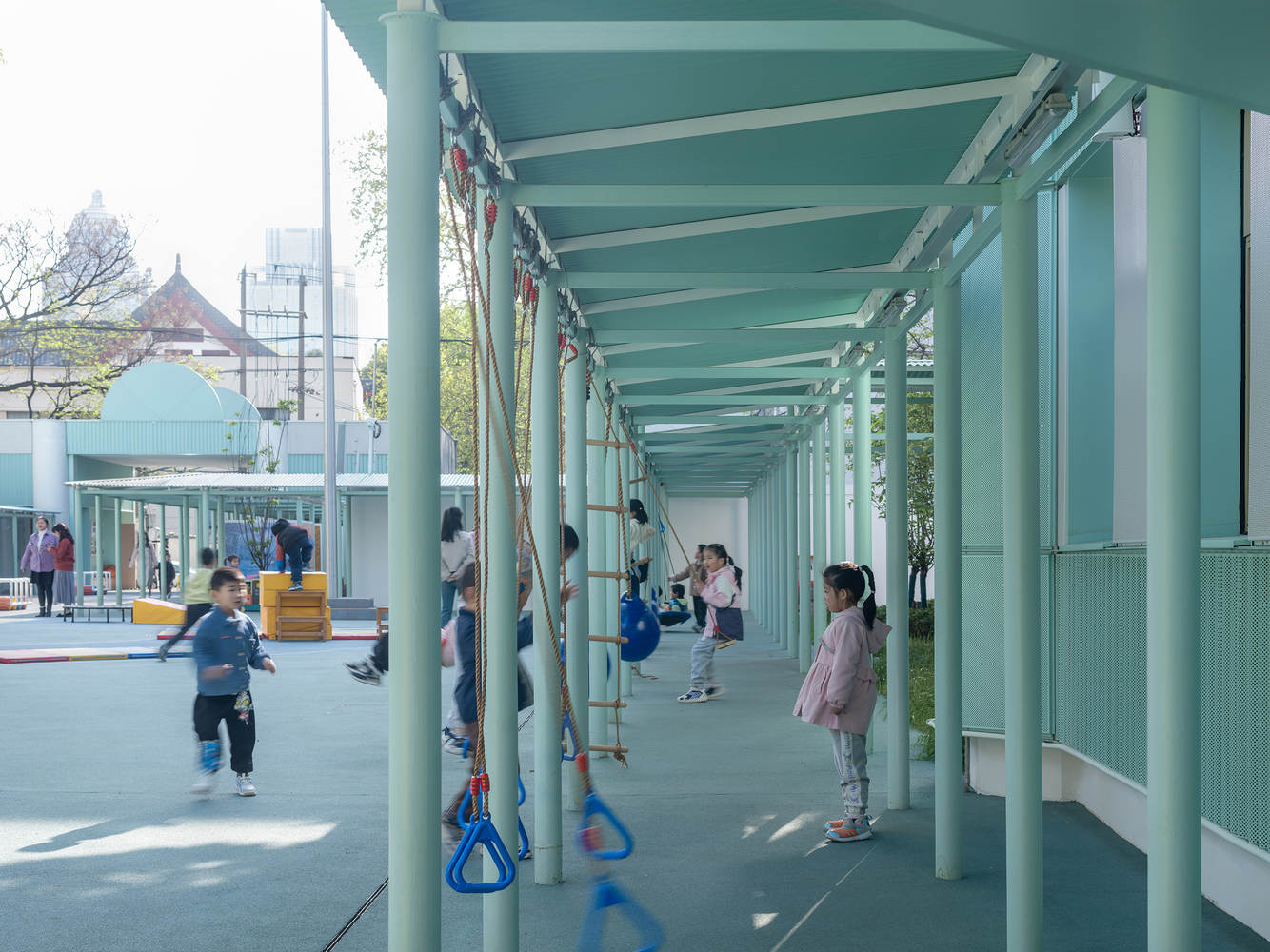
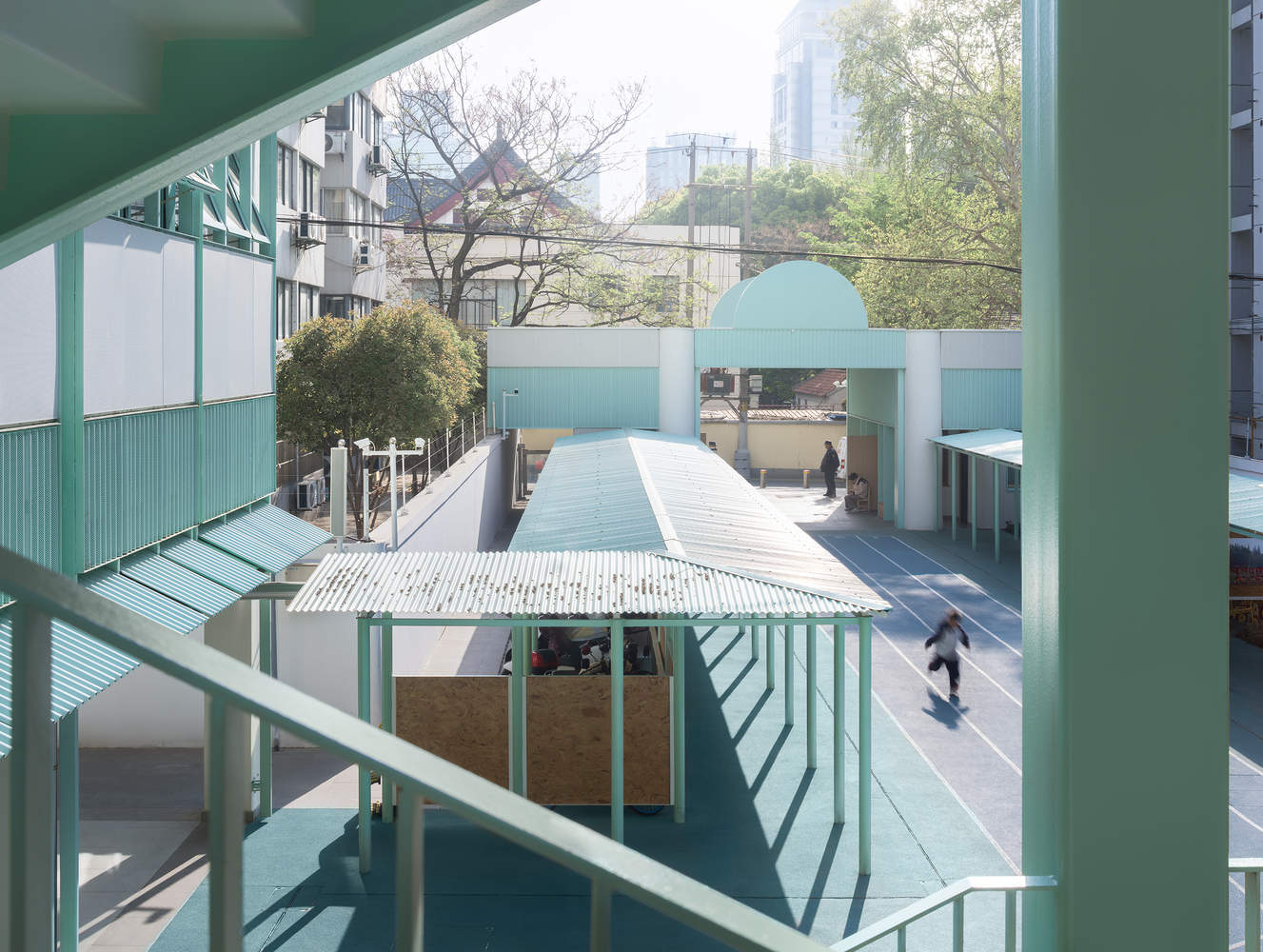
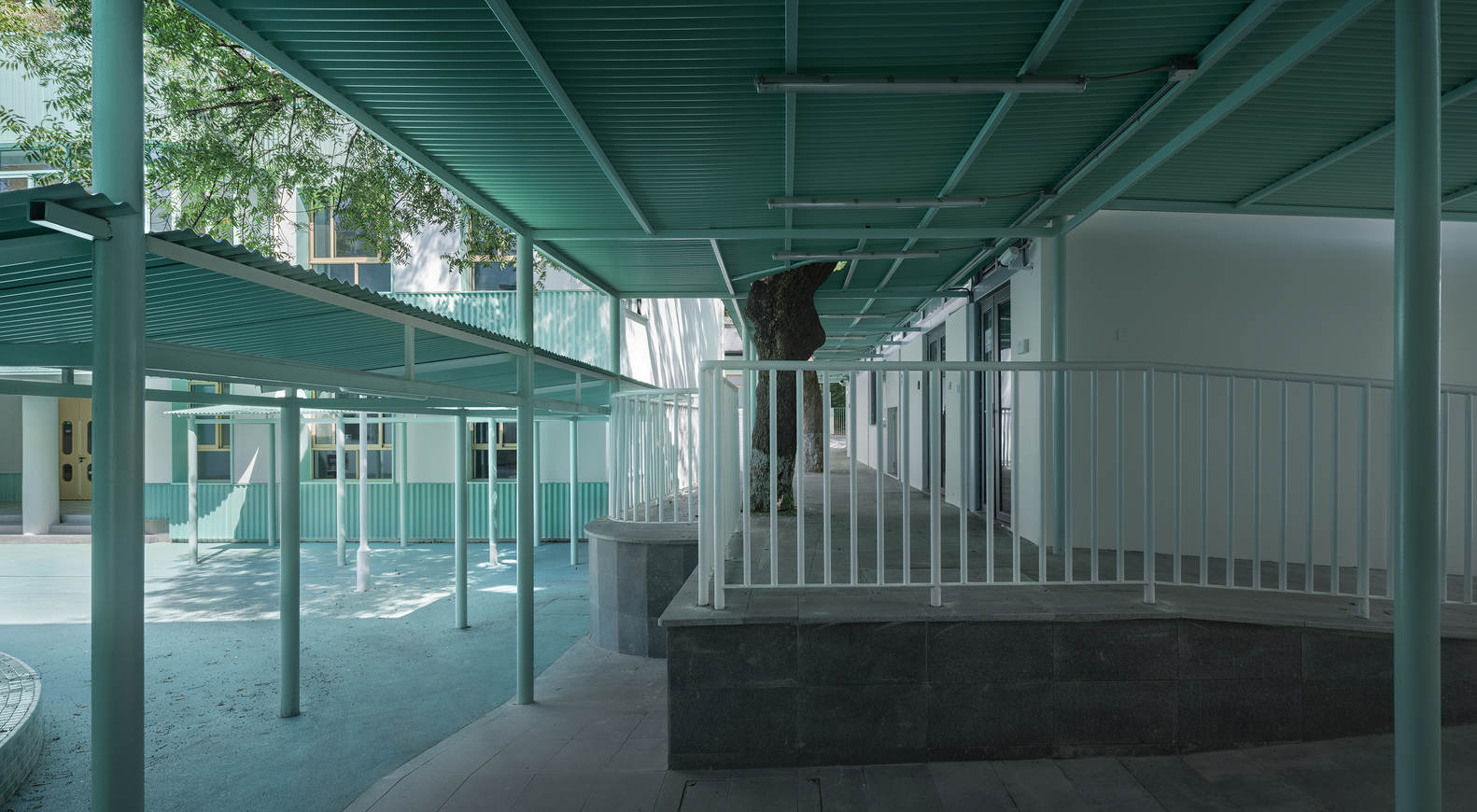
The design team has incorporated a wind and rain corridor system into the park, connecting various buildings and service facilities, and linking the originally heterogeneous and scattered parts of the park into a whole.. In addition to providing shade and shelter, the corridor system also plays a regulating role in the external spatial scale of the park, adding a near human scale spatial hierarchy to the overall park. Among them, there are newly opened doorways on the south and north wings of the gatehouse, which serve as the two endpoints of the wind and rain corridor system, leading north to Building 2 and Building 1, and south to Building 4 and Building 3. Transform the narrow space between the main entrance and the main body of the park into a pilot space of appropriate scale for entering the park. The North Corridor separates the flow of children entering the kindergarten and the logistics service flow through OSB boards, while also serving as an exhibition wall; The southern corridor surrounds four exhibition pavilions and can also serve as a temporary storage area for activity equipment.
园区空间结构重整
设计团队在园区内置入一套风雨连廊系统,串联各栋园舍及服务设施,将原本异质、散乱的园区各部分联系成一个整体。除了具有遮阳避雨的功能,连廊系统也对园区外部空间尺度起到了调节作用,为园区整体增加了一个近人尺度的空间层次。其中,门卫楼南、北两翼各有新开的门洞,作为风雨连廊系统的两个端点,分别向北引向 2 号楼、1 号楼,向南引向 4 号楼、3 号楼。将主入口与园区主体之间的狭长空间,转换成尺度适宜的入园先导空间。北廊通过 OSB 板分隔幼儿入园流线和后勤服务流线,同时作为展墙;南廊则围合出 4 个展亭,也可作为活动器械的临时收纳处。
© 侯博文
分析图
© 侯博文
Renovation of individual buildings in the park
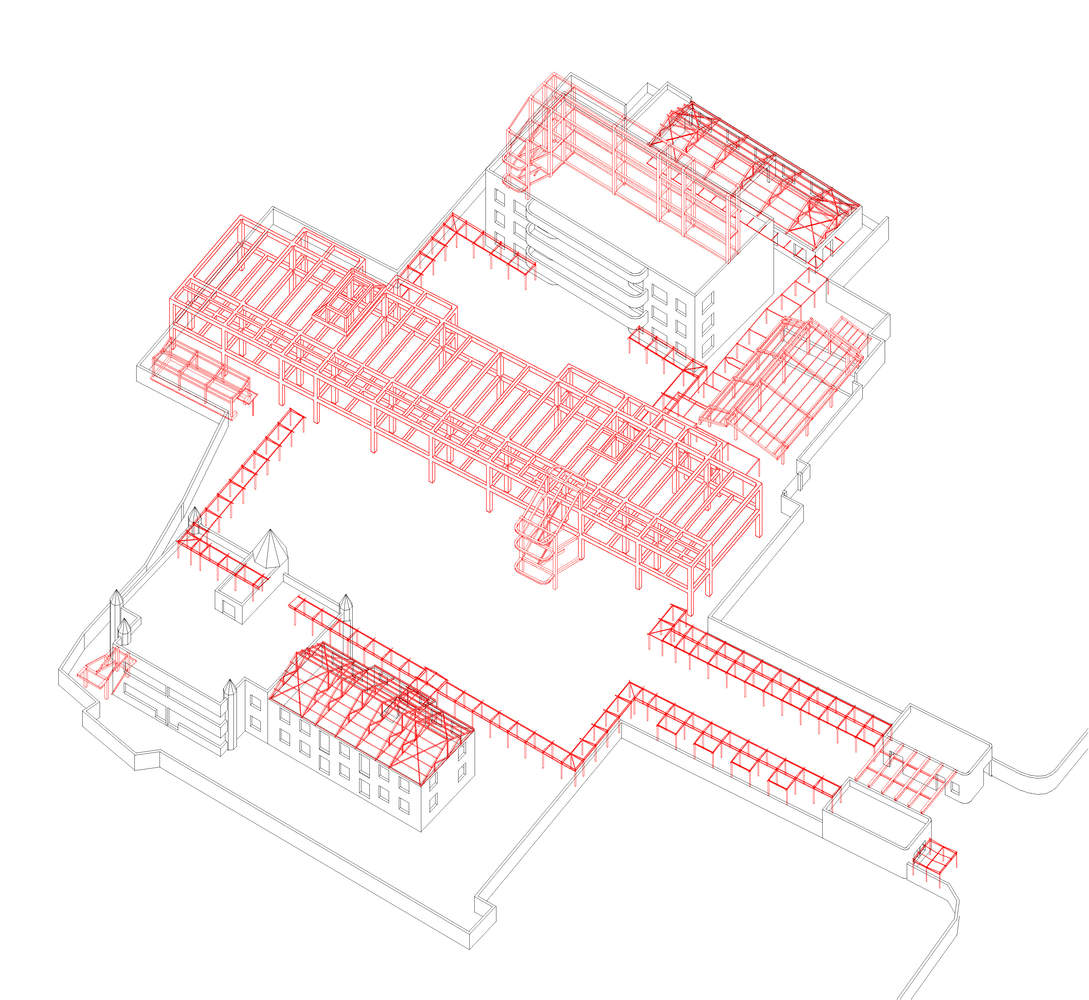
Among the buildings in the park, Building 2, built in the 1970s, has the largest scale and the highest intensity of use, and can be regarded as the main building of the park. However, its building quality is poor and the space is not suitable, which cannot match its importance.. Therefore, this renovation has the greatest impact on Building 2. The main body of Building 2 only retains some walls, and its structural system has been replaced from the original brick concrete structure to a reinforced concrete frame structure to meet the safety requirements of kindergarten structures.
园舍单体改造
在园舍建筑中,70 年代建造的 2 号楼规模最大,使用强度最高,可被视为园区主楼,然而其建筑质量较差,空间亦不适用,无法与其重要性相匹配。因此,本次改造对2号楼的改造力度最大。2 号楼本体仅保留部分墙体,将其结构体系从原砖混结构替换为钢筋混凝土框架结构,使之符合幼儿园结构安全要求。
© 侯博文
© 侯博文
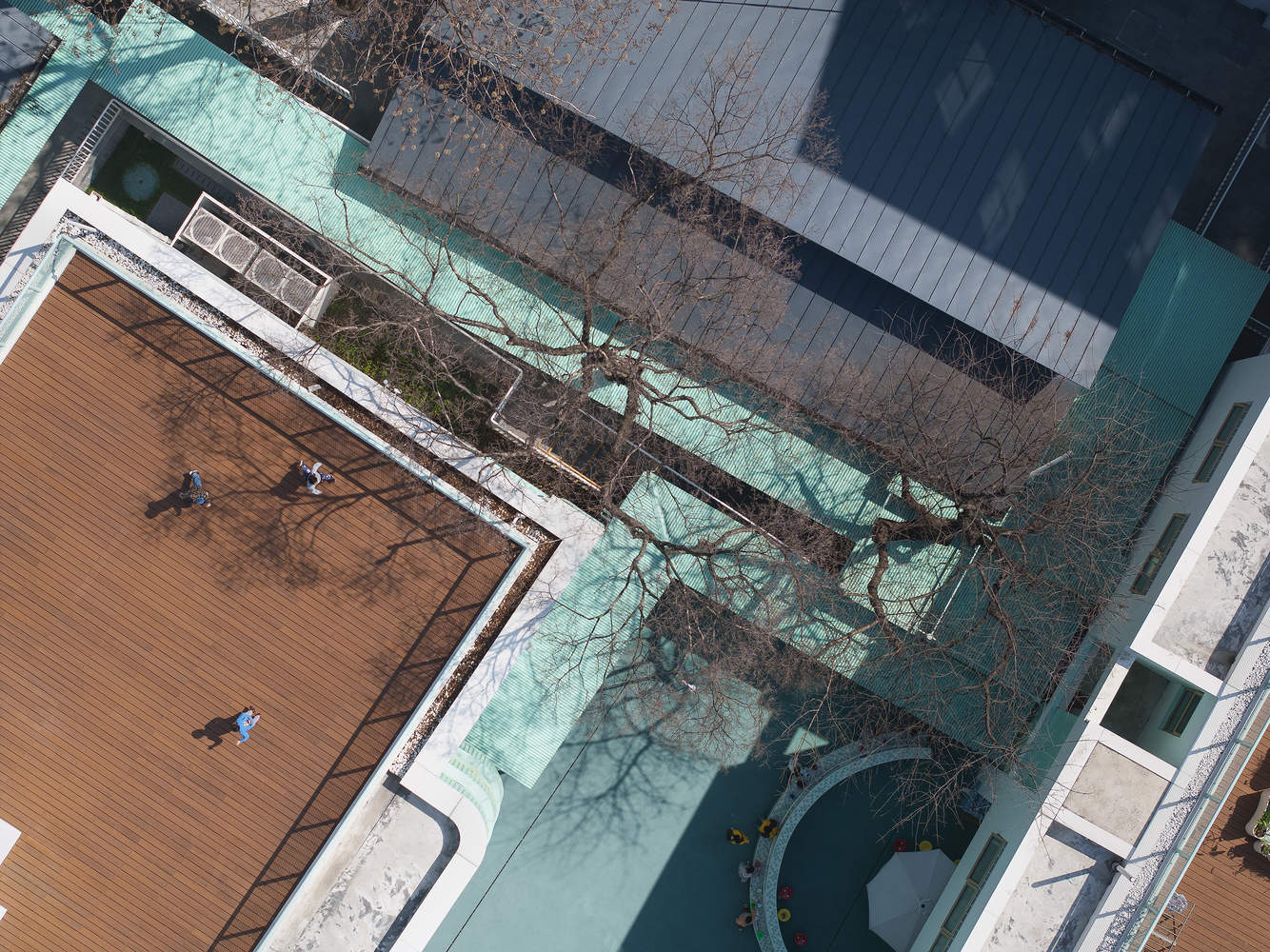
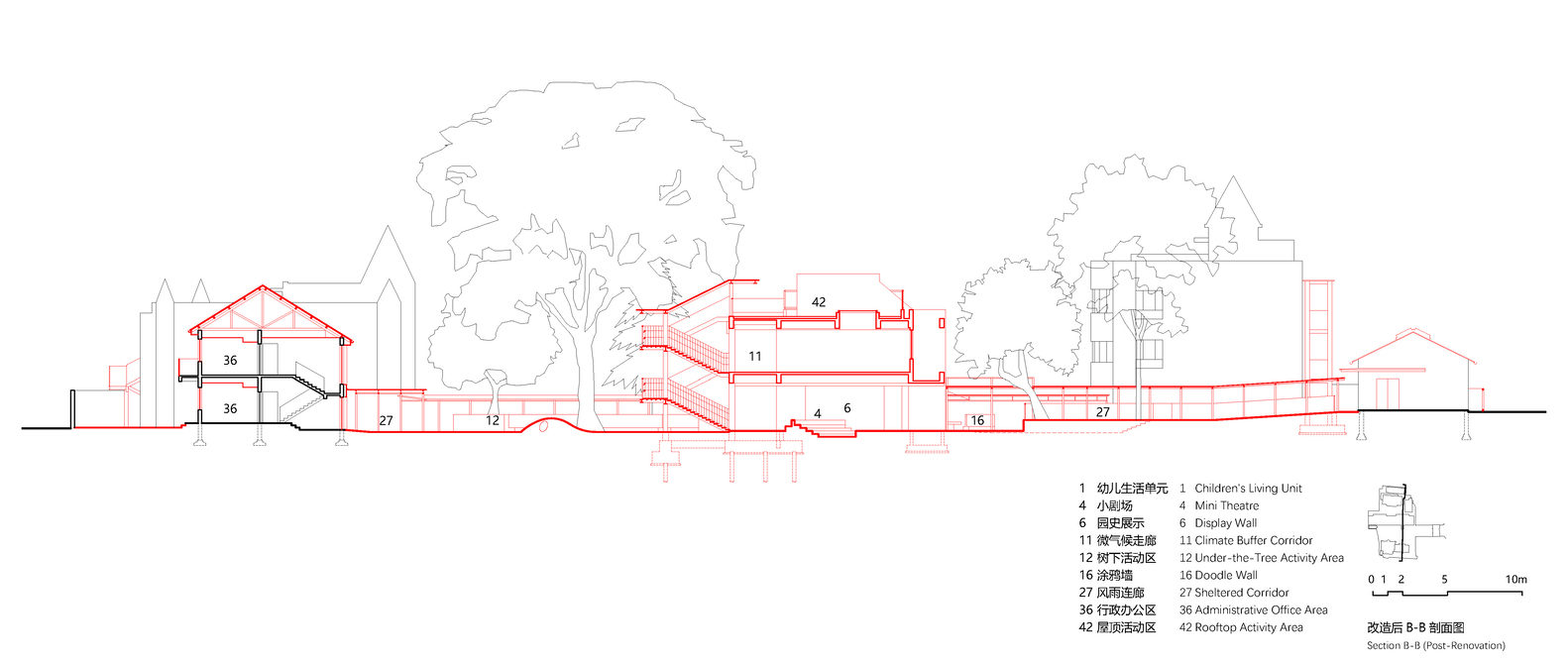
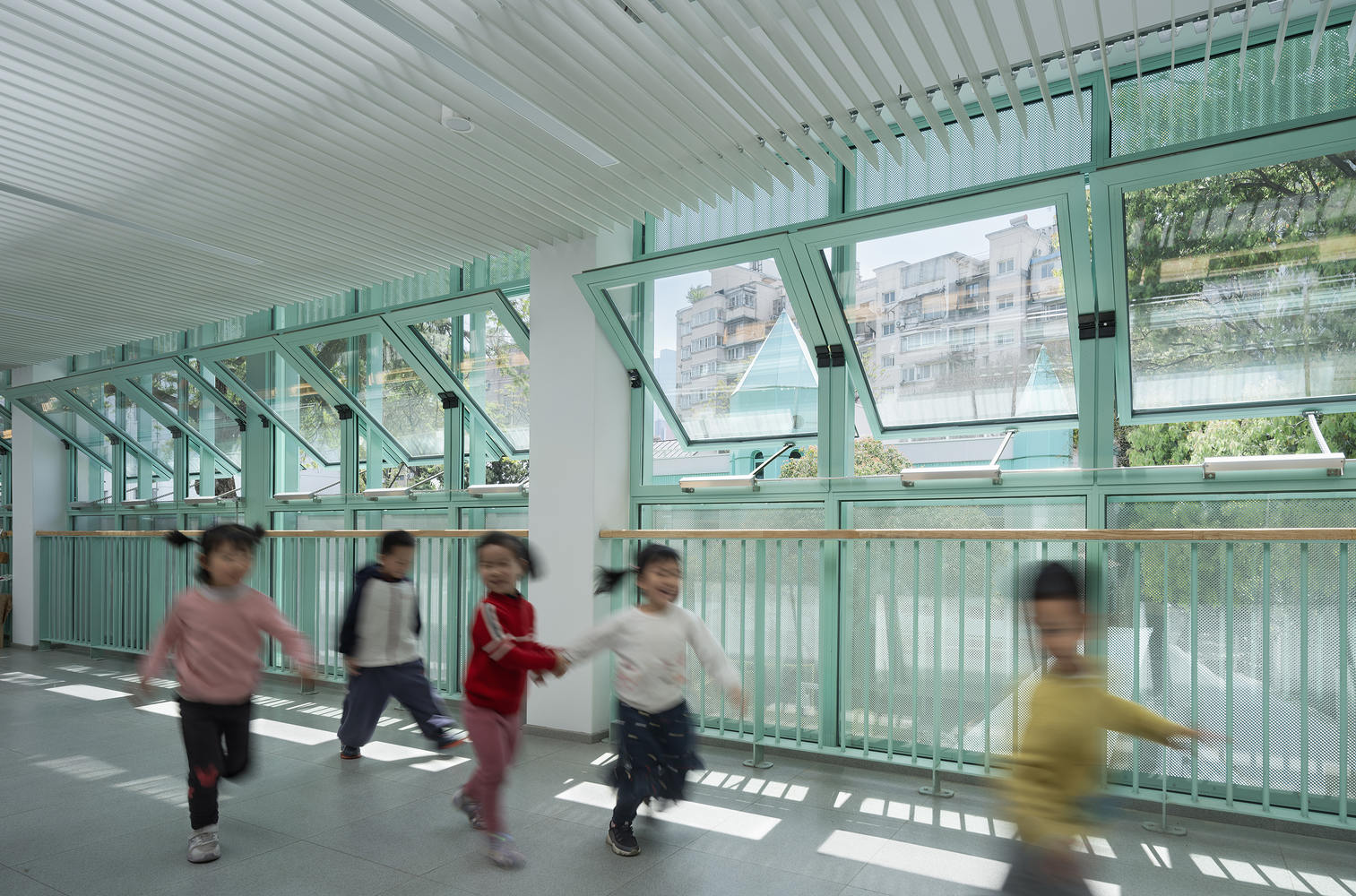
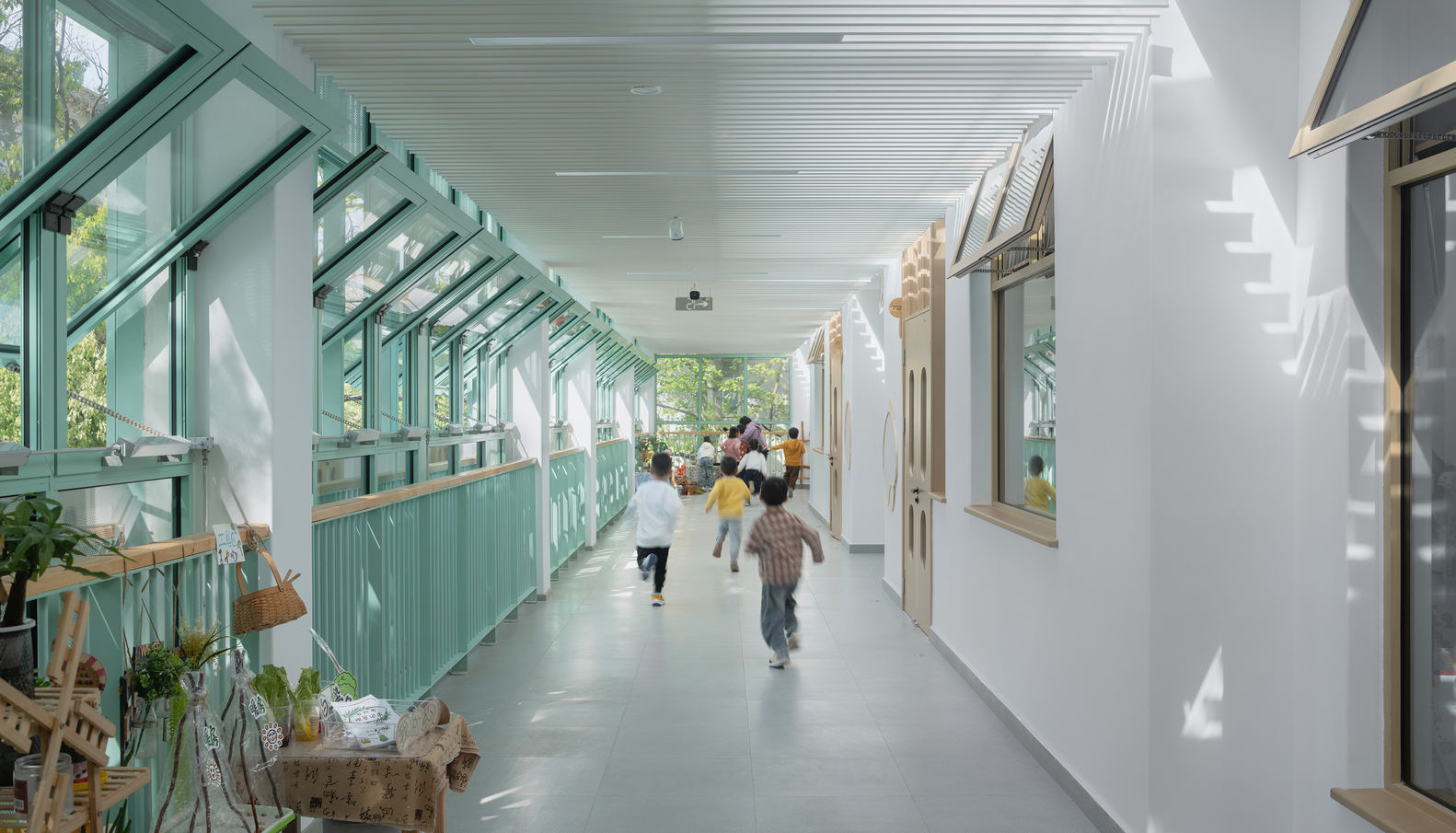
Structural replacement enables spatial expansion and transformation. Expand the outer corridor of the 2nd floor of Building 2 from a 1.2-meter-wide cantilever to a 2.8-3.2-meter-wide colonnade, which meets the evacuation requirements of the kindergarten and can also serve as an extension of the living unit activity space. The outer side of the corridor adopts a semi enclosed enclosure interface, which can serve as a climate buffer space for living units.
结构替换使空间扩展和转换成为可能。将 2 号楼 2 层外走廊从 1.2 米净宽的挑廊,拓宽至 2.8 米至 3.2 米宽的柱廊,使其既符合幼儿园疏散要求,又可额外作为生活单元活动空间的延伸。该走廊外侧采用半封闭围护界面,可作为生活单元的气候缓冲空间。
© 侯博文
© 侯博文
© 侯博文
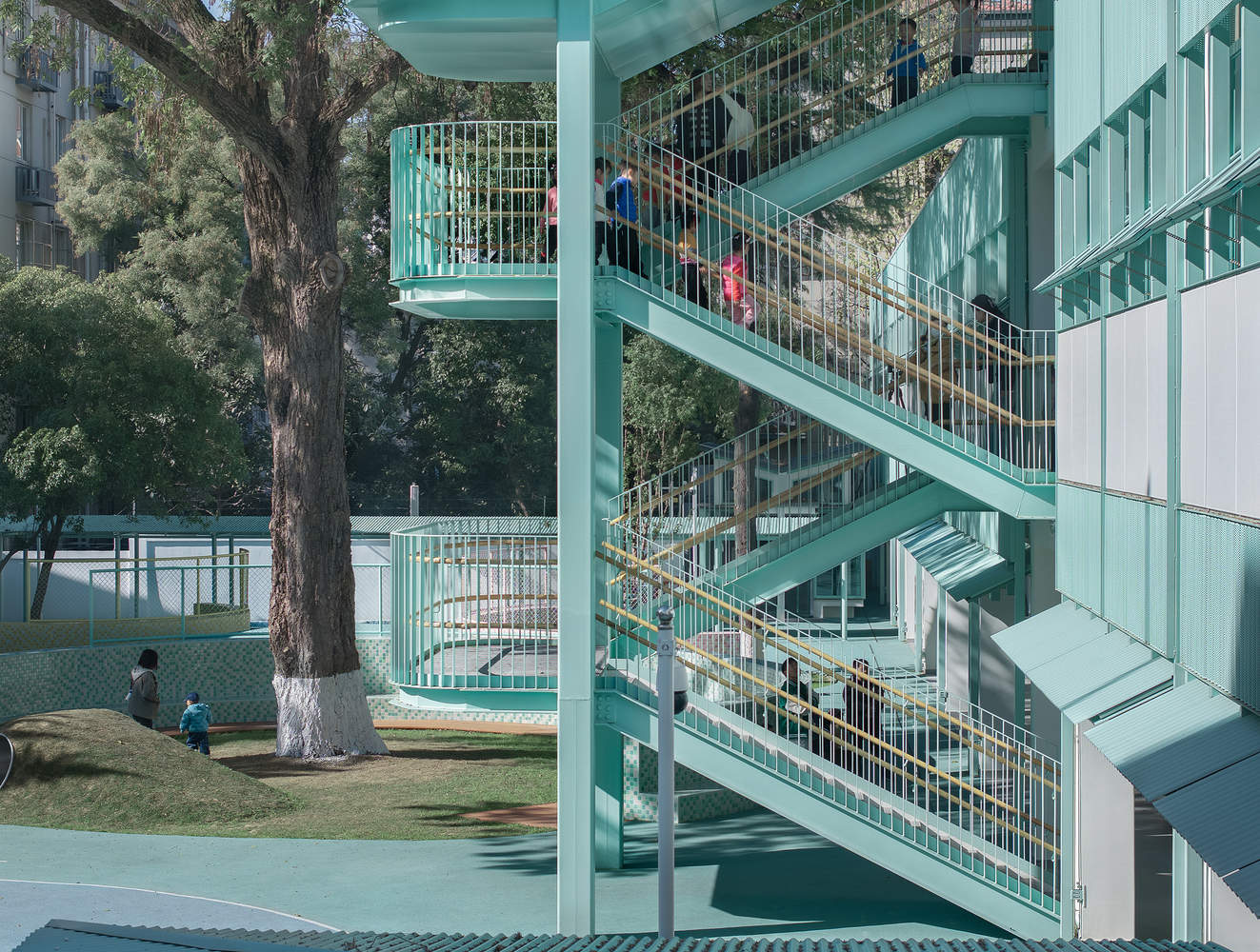
The corridor facade and roof are equipped with mid hung windows and skylights that run through the entire space. By opening and closing them, the microclimate inside the corridor can be adjusted. In summer, opening suspended windows and some skylights can provide good ventilation; On the contrary, winter can produce a "warm corridor" effect. The skylight is located on the side of the living unit, which can supplement indoor lighting. The aluminum alloy hanging pieces on the corridor ceiling adjust the skylight lighting to soft and gentle light. In addition, the division of living units and the location of stairwells will be adjusted, and the staircase originally located in the middle of Building 2 will be divided into one on the east and one on the west side to meet evacuation regulations. Two staircases are located inside and outside the corridor to adapt to different weather conditions and connect with the park's wind and rain corridor system.
走廊立面、屋面设有纵贯整个空间的中悬窗和天窗,通过其开闭,可对走廊内的微气候进行调节。夏季,开启悬窗和部分天窗,可获得良好的通风;反之,冬季可产生“暖廊”效应。天窗设置在靠生活单元一侧,可补充室内采光,走廊吊顶的铝合金垂片将天窗采光调节成柔和的光线。另外,调整生活单元的开间划分和楼梯间的位置,将原本位于 2 号楼中部的楼梯调整为东、西侧各一部,以满足疏散规范要求。两部楼梯分别位于走廊内、外侧,以适应不同的气候情况,并且与园区风雨连廊系统相衔接。
© 侯博文
剖面图
© 侯博文
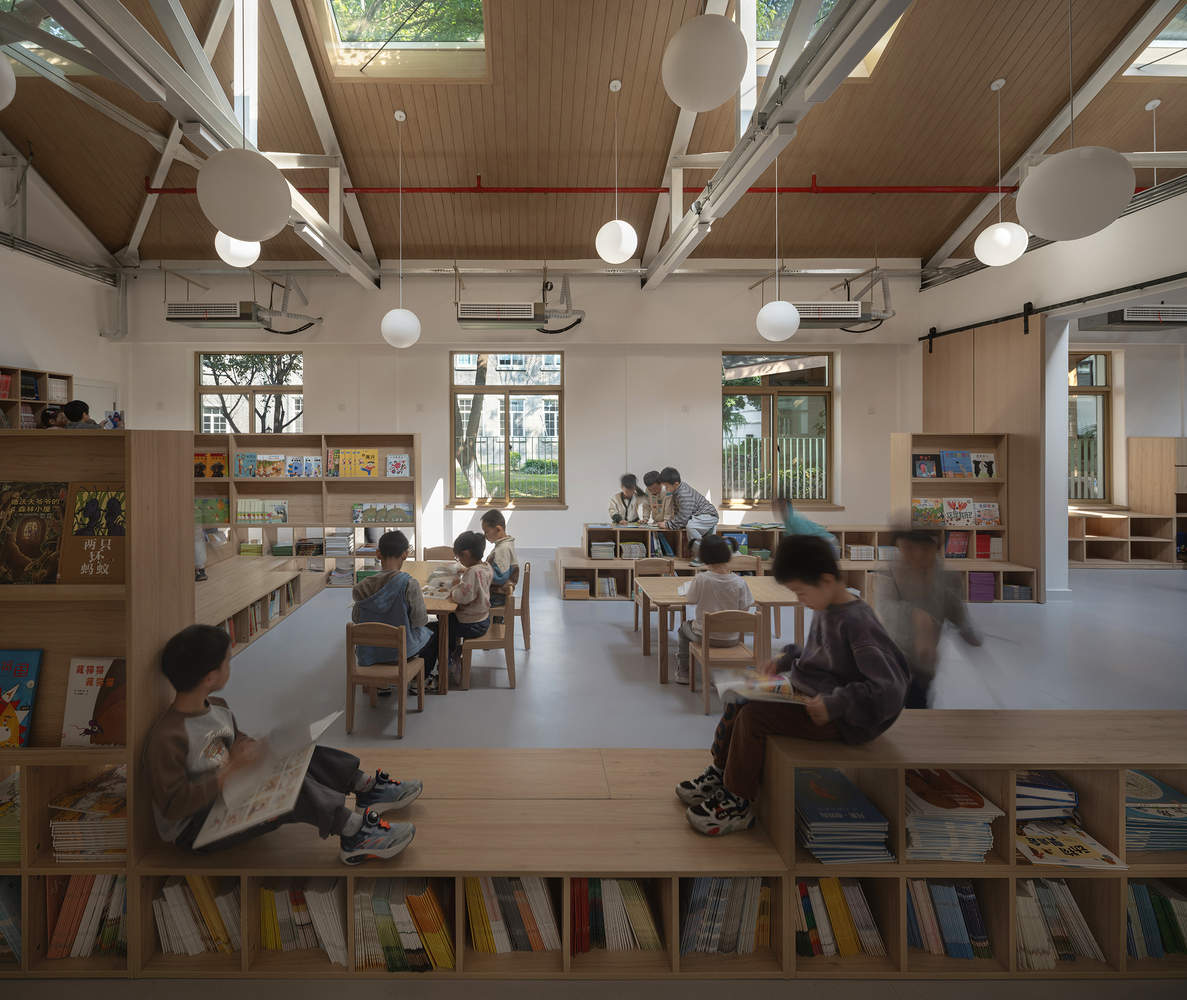
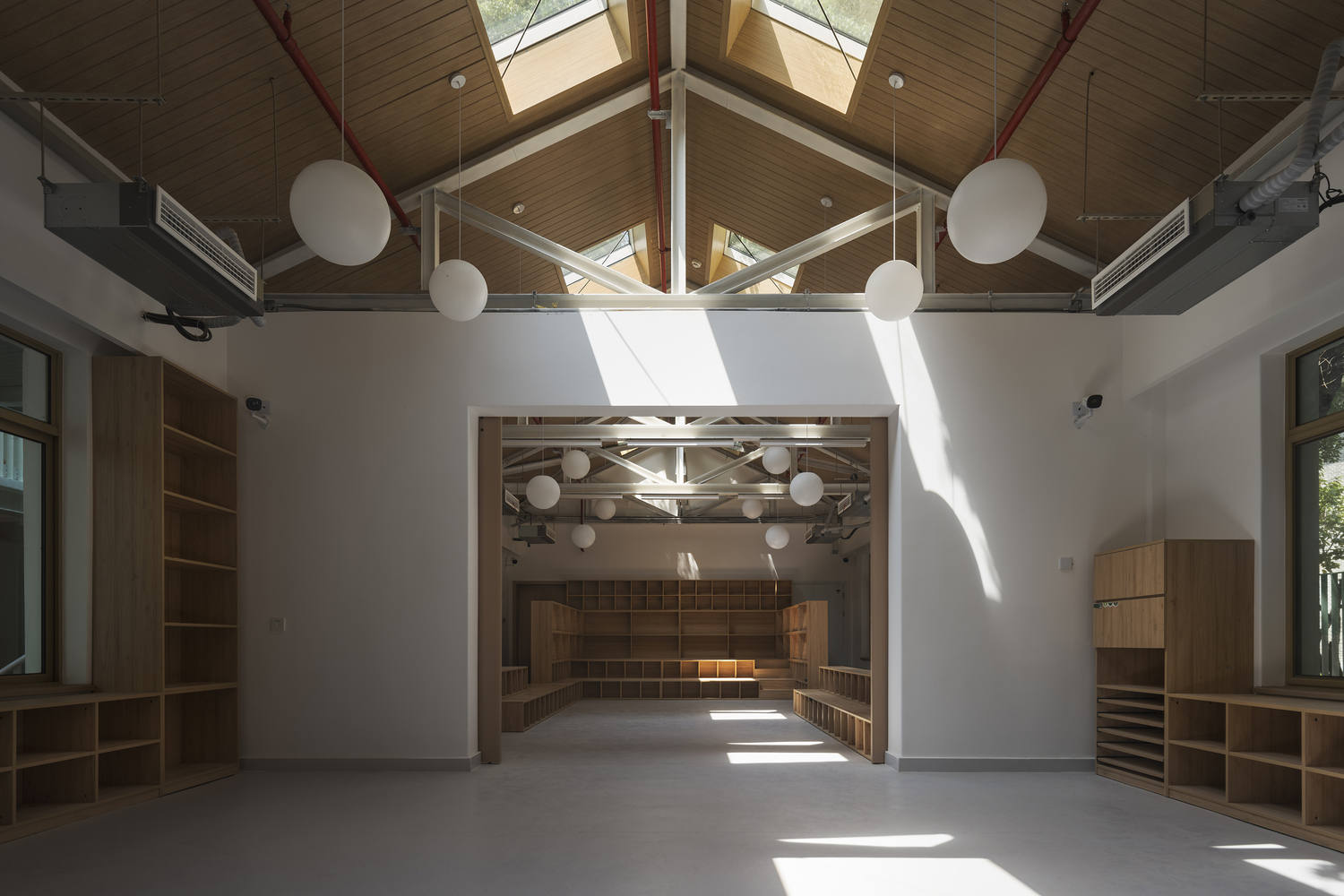
1. Building 3 and the gatehouse are early childhood education buildings built in the 1990s, with a semi brick concrete and semi frame structure. This renovation will strengthen their structures and improve building performance such as insulation, heat insulation, ventilation, and lighting. 1. Add one steel structure evacuation staircase to each of Building 3. The original "Science Room" and Building 4 were mixed structure buildings with brick load-bearing walls and wooden roof trusses. In this renovation, while reinforcing the brick masonry structure, the wooden roof frame will be replaced with a steel roof frame. Add skylights to the roof of the "Science Room" to make it suitable for teaching content such as reading and art. Add eaves below the original eaves on the east and south sides of the "Science Room", connecting with the Wind and Rain Corridor and the evacuation passage of Building 1.
The original "Construction Activity Room" and "Equipment Room" were simple shanties that could no longer be used. In this renovation, they will be dismantled and rebuilt. Among them, the original "construction activity room" has been replaced with a steel structure kitchen; Replace the original "equipment room" with a steel structure teacher's lounge. 1. The facades of buildings 2 and 3 facing the main activity area are equipped with perforated aluminum panel curtain walls, giving visual continuity to the main space interface and echoing the metal wave board roof of the wind and rain corridor.
1、3 号楼及门卫楼为上世纪 90 年代建造的幼教建筑,为半砖混、半框架结构。本次改造对它们进行结构加固,并同时改善保温、隔热、通风和采光等建筑性能。1、3 号楼各增设一部钢结构疏散楼梯。原“科学室”、4 号楼为砖承重墙、木屋架混合结构房屋。本次改造在加固砖砌体结构的同时,将木屋架替换为钢屋架。“科学室”屋面增设天窗,使之适用于阅览、美术等教学内容。“科学室”东、南侧在原有檐口以下增加披檐,与风雨连廊和 1 号楼疏散通道衔接。
原“建构活动室”、“器材室”为简易搭建的棚屋,已无法继续使用,本次改造中将它们拆除重建。其中,原“建构活动室”替换为钢结构厨房;原“器材室”替换为钢结构教师休息室。1、2、3 号楼朝向主要活动场地的立面,采用穿孔铝板幕墙,赋予主要空间界面视觉连续性,并与风雨连廊的金属波浪板屋面相呼应。
© 侯博文
© 侯博文
Venue and Landscape
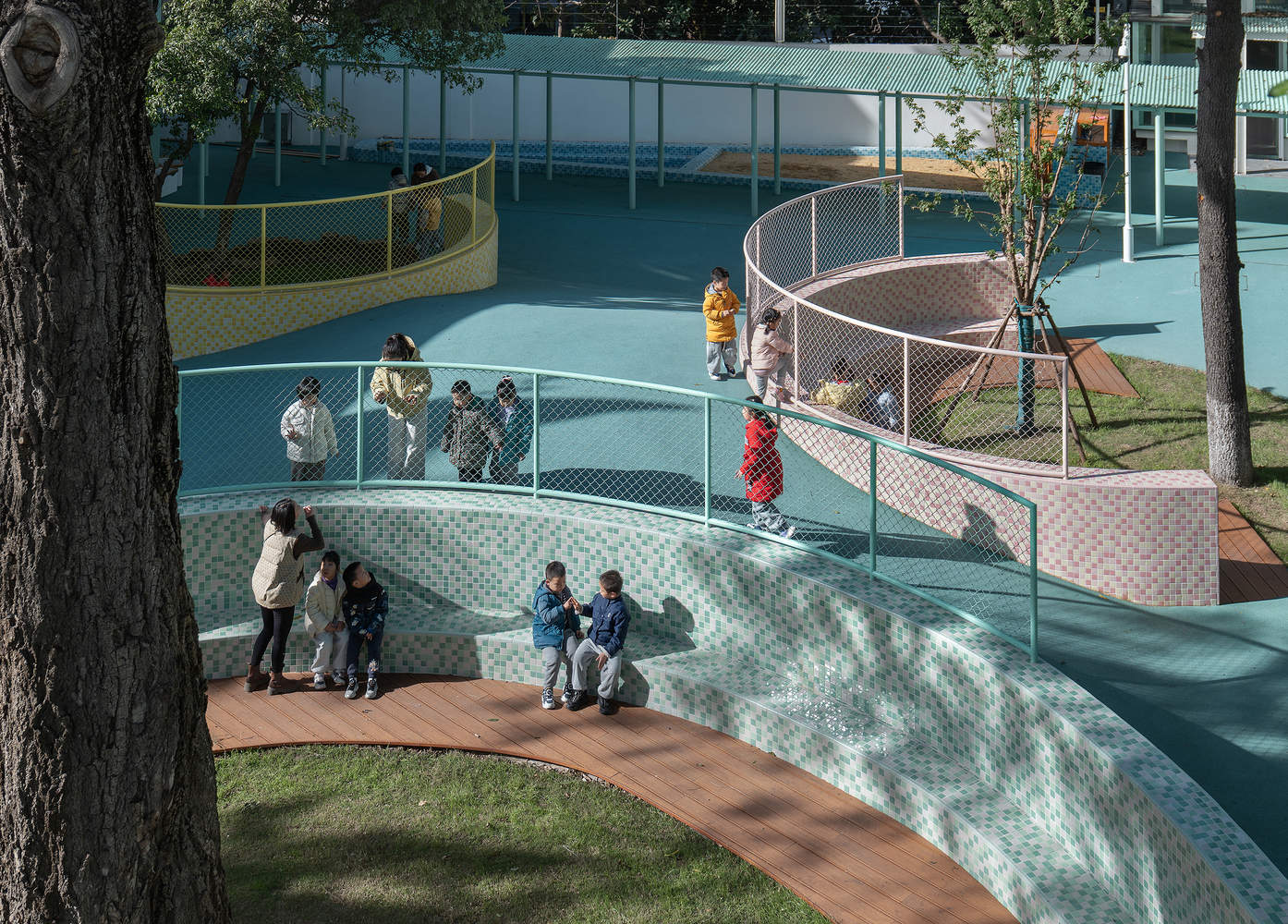
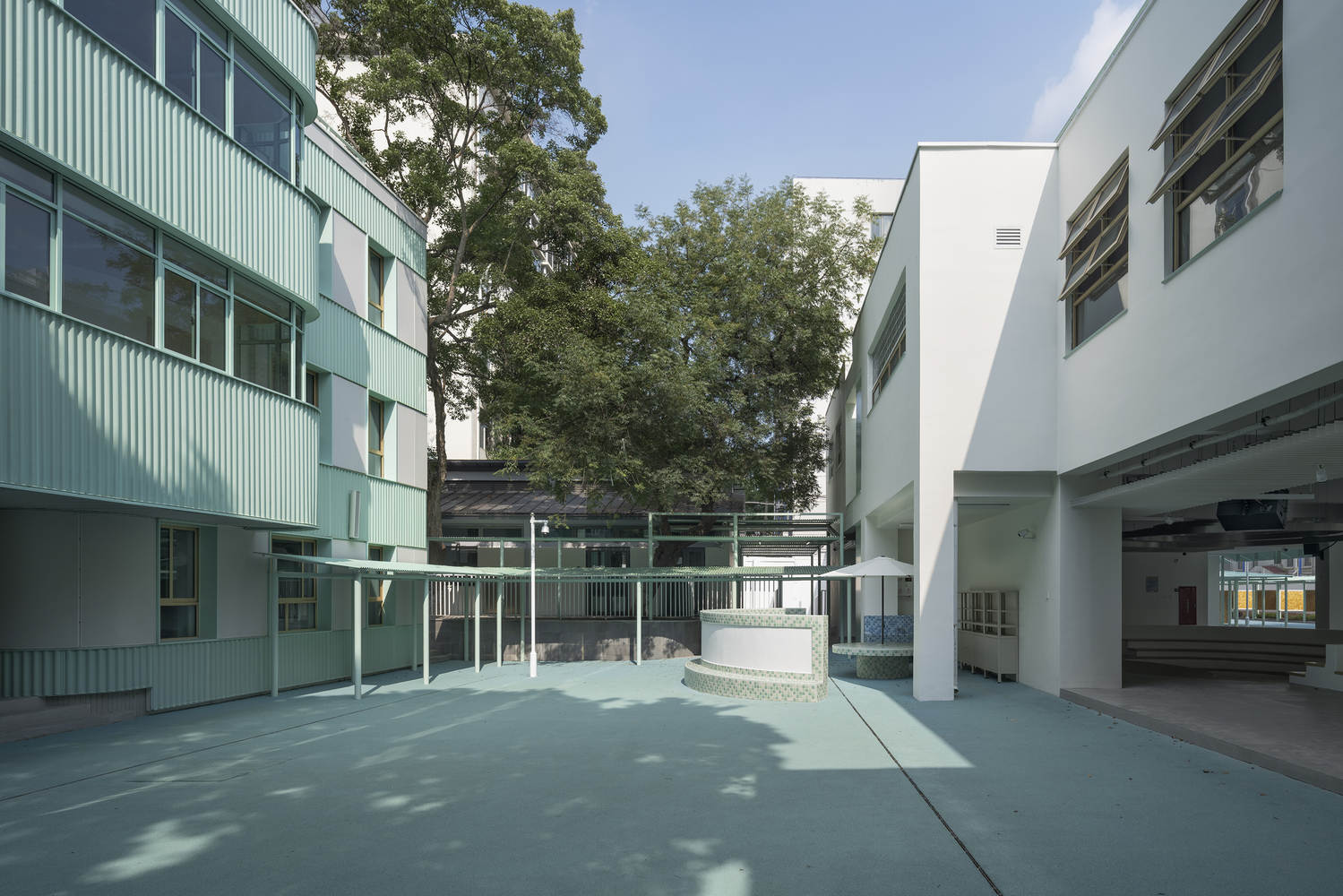
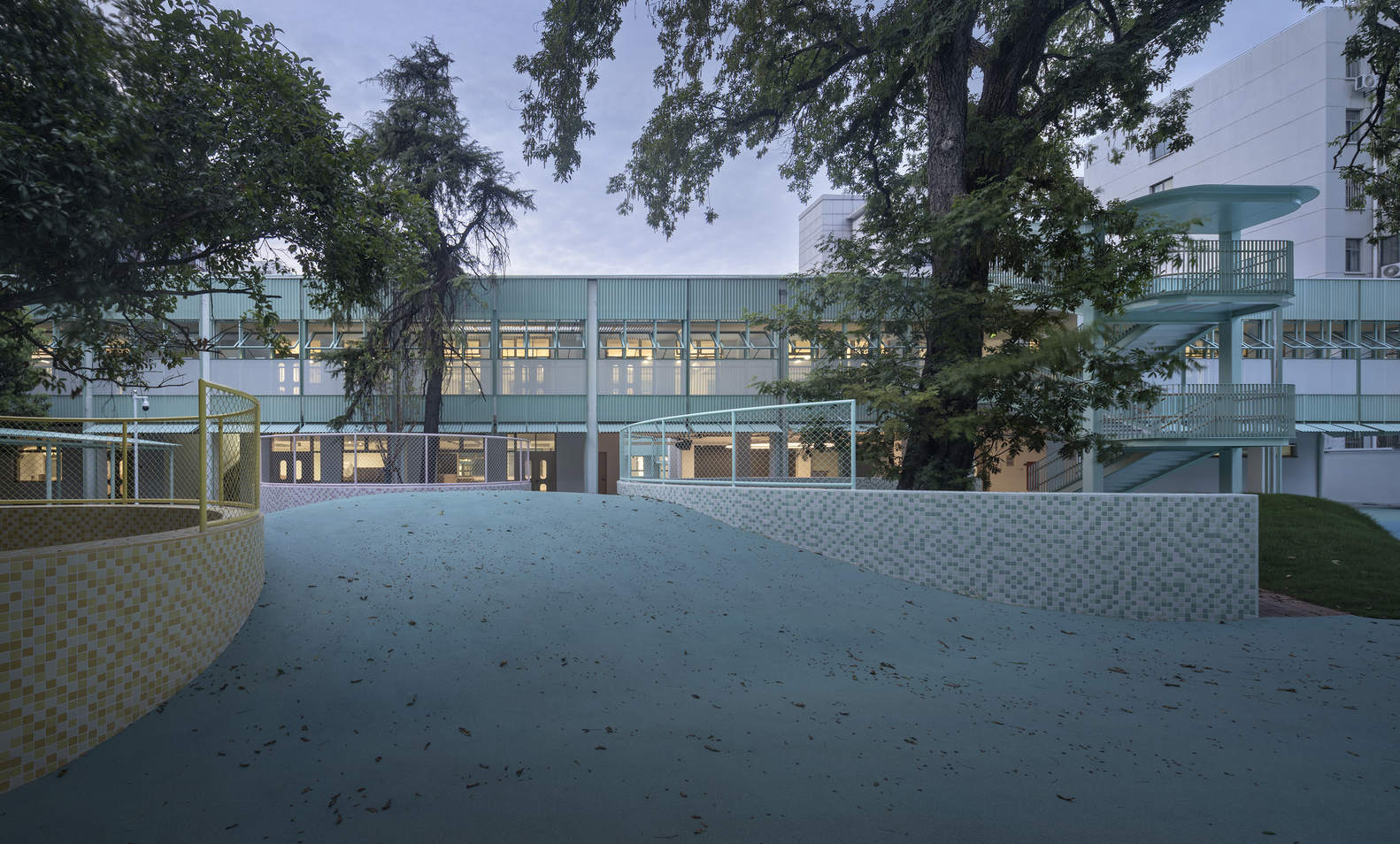
Combining the existing tall trees in the park, use curved low walls to enclose different scales of activity areas under the trees.. Part of the construction waste is used to fill the artificial terrain of the slope activity area, and the surrounding curved low walls serve as retaining walls. The elevated space on the ground floor of Building 2 is equipped with a sunken small theater. The curved low wall on the outside of the grandstand, the curved exhibition wall behind the multi-functional room stage on the west side, the curved graffiti wall in the outdoor handmade area behind the small theater screen, and the curved low walls in various activity areas under the trees form a connection between architectural and landscape elements. The previously passive area on the edge of the park has become active due to the connection and limitation of wind and rain corridors, and natural educational sites such as ponds, sand pits, planting and breeding gardens have been set up. The wind and rain corridor can be regarded as a covered activity area, and its structure can serve as a "support" for additional activity facilities.
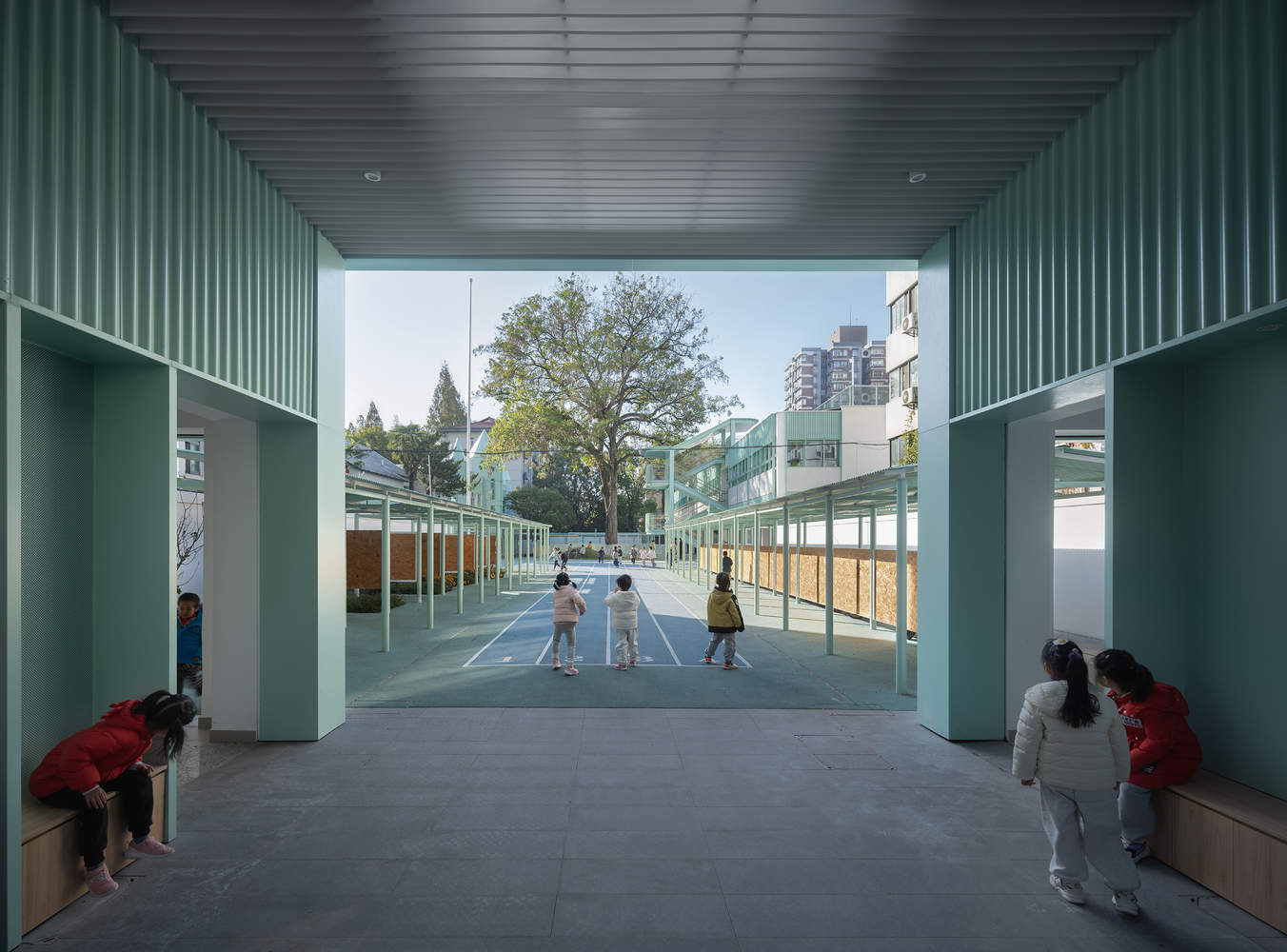
The huge maple and poplar trees on the south side of Building 2 have important spiritual significance for the park. Entering the park from the main entrance of Guanping Lane, facing the landscape of tall maple and poplar trees, has a commemorative significance. After the renovation, the entrance hall space will be further opened, and the width of the transition space into the park will be narrowed by the limitation of the wind and rain corridors on both sides. In addition, the symmetry of the wind and rain corridors and the guidance of the runway on the ground emphasize this spatial sequence.
场地与景观
结合园内原有的高大树木,用弧形矮墙围合出尺度不同的树下活动区域。部分建筑渣土被用于填充坡地活动区的人工地形,周边的弧形矮墙正好成为挡土墙。2 号楼底层架空空间,设置有下沉的小剧场,其看台外侧的弧形矮墙、西侧多功能室舞台背后的弧形展墙、小剧场屏幕背后户外手作区的弧形涂鸦墙,与各处树下活动区的弧形矮墙,形成了建筑、景观要素之间的关联。原来园区边缘的消极地带,由于风雨连廊的串联和限定而变得积极,设置了水池、沙坑、种植和饲养园地等自然教育场地。风雨连廊可以被视为有覆盖的活动场地,其构架可以作为附加活动设施的“支撑体”。
2 号楼南侧巨大的枫杨树,对于该园具有重要的精神性意义。从平仓巷主入口进入园区,正对高大枫杨树的景观,具有纪念性意味。改造后,入口门厅空间将进一步开敞,而入园过渡空间的宽度由两侧风雨连廊的限定而收窄,再加上风雨连廊的对称性,以及地面上跑道的导向性,都强调了这一空间序列。
© 侯博文
© 侯博文
© 侯博文
Conclusion
As mentioned above, in the continuous response and solution to practical problems, architects actively or passively handle the "integration" and "separation" of space and structure, and constantly adjust the spatial scale.. As a result, the park presents a continuous space formed by local connections, which combines the stability and sense of belonging of local places with the fluidity and freedom of the overall space. Architects believe that the ambiguity and readability of this environment can become the original scenery for children's understanding of the world.
结语
如上所述,在对现实问题的不断应对和解决中,建筑师主动或被动地对空间和构架进行“合”与“分”的处理,并对空间尺度不断做出调节。从而,园区整体呈现出“由局部相互接续所形成的连续空间”,兼具局部场所(place)的稳定感、归属感,与整体空间(space)的流动性、自由感。建筑师相信,这种环境的多义与可读,可以成为幼儿对世界认知的原初风景。