PIKOH Art High School/BOT Architektuurcollectief+Import Export Architecture
PIKOH 艺术中学 / BOT architektuurcollectief + Import Export Architecture
空间布局与功能组织的创新:PIKOH艺术中学在空间设计上展现了卓越的创新性。设计团队巧妙地利用场地高差,通过室内外楼梯串联不同的教学楼,打破了传统走廊的束缚,创造了丰富的非正式交流空间。这种设计不仅回应了PIKOH开放、灵活的教学理念,更促进了学生之间的互动与合作。尤其是“学习巢”和“创新单元”的组织方式,将理论教室与艺术工作室置于同一层面,鼓励跨学科交流,体现了对现代教育模式的深刻理解。这种以“论坛”为核心的多功能公共空间设计,为学生提供了多元的活动场所,增强了建筑的活力和吸引力。
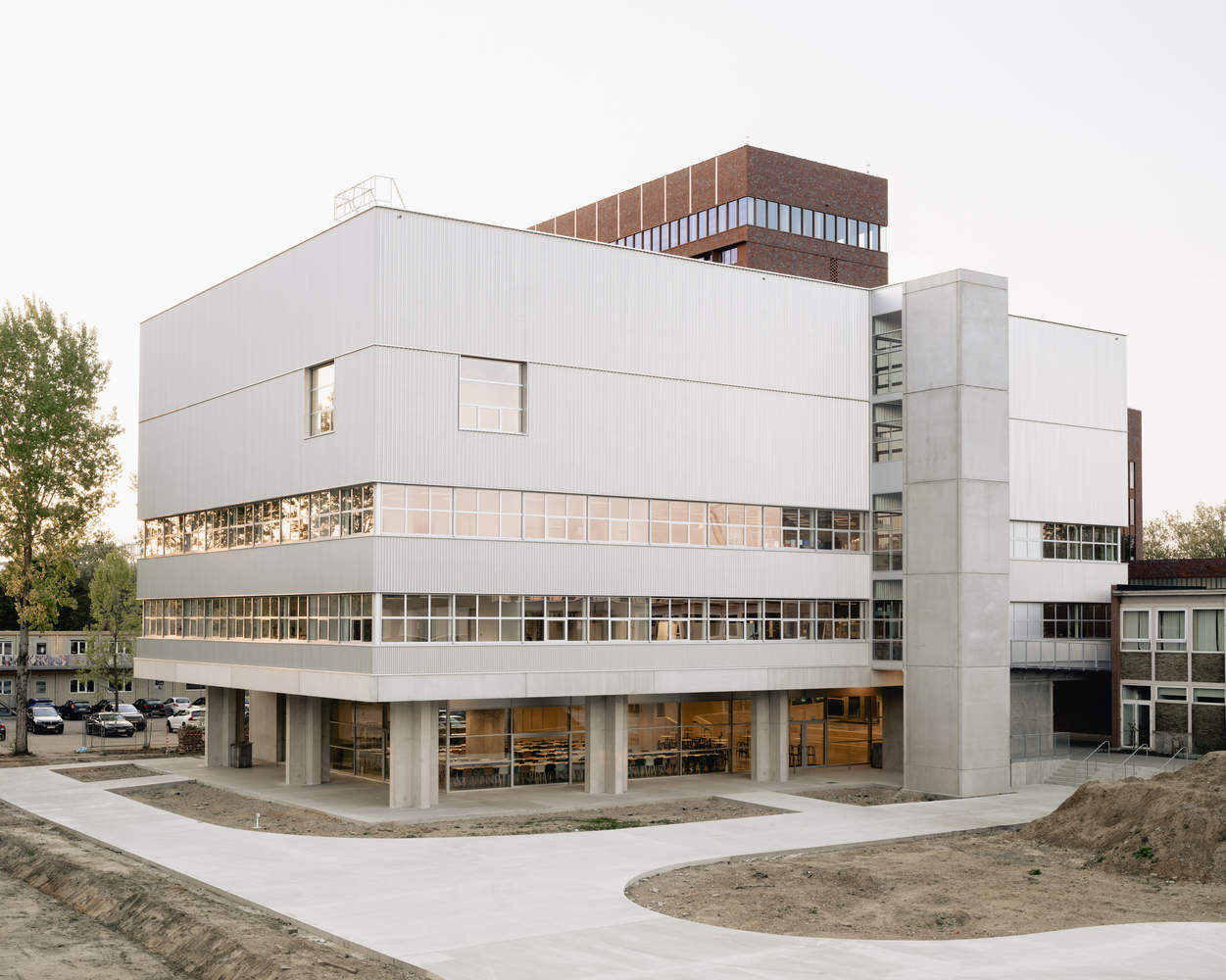
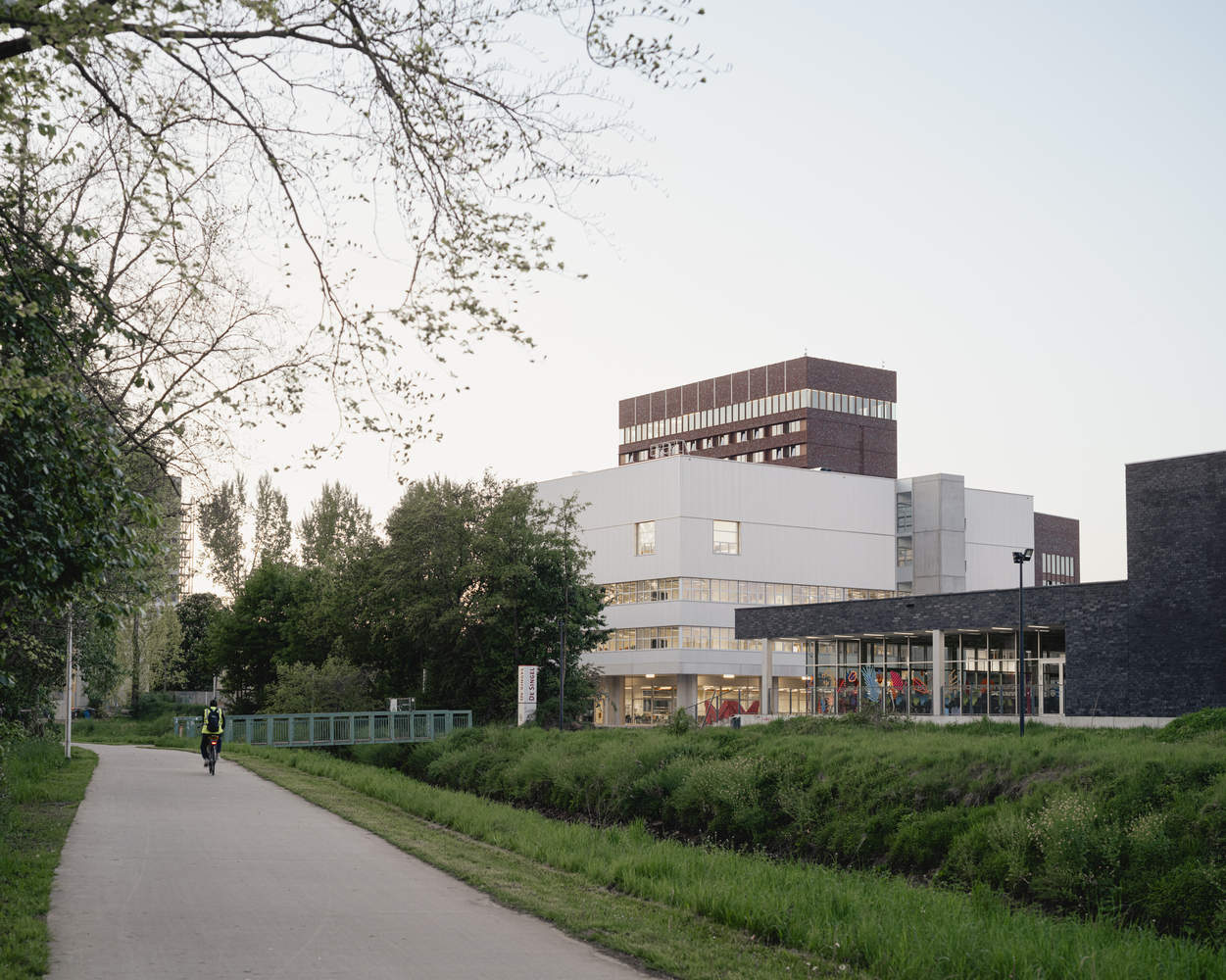
建筑与环境的和谐统一:该项目在建筑与环境的融合方面表现出色。设计者将建筑体量巧妙地布置在场地边缘,预留出开阔的绿色操场,与周边的德梅尔河和Kapermolen公园形成良好的互动。通透的首层设计,使建筑与公园、操场无缝连接,增强了空间的开放性和通透性。建筑外立面采用铝板和水平窗带,在绿意的映衬下呈现出独特的光影效果。水平窗带的设计不仅提供了全景视野,更强化了建筑与环境之间的视觉联系。这种对自然光线的充分利用,以及对周围环境的尊重,使得PIKOH艺术中学成为一个与环境和谐共生的建筑典范。
材料、结构与立面的独特表达:PIKOH艺术中学的建筑语言简洁而富有特色。设计灵感源于工业化艺术家工作室,注重建筑的实用性和适应性。独特的混凝土十字柱为建筑赋予了鲜明的识别度,也体现了结构的力与美。外立面采用铝板,在光线下呈现微妙的变化,与周围的绿植形成对比,营造出富有韵律感的视觉效果。1x1米模数的水平窗带,不仅保证了室内充足的采光,也为建筑赋予了统一的秩序感。这种对材料的精准运用,以及对结构和立面的独特表达,使得PIKOH艺术中学成为一个具有鲜明个性和艺术感染力的建筑作品。
© Jeroen Verrecht
© Jeroen Verrecht
PIKOH Art School, located in Hasselt, Belgium, provides secondary education in visual arts, media arts, and performing arts. With the rapid expansion of school scale, new school buildings have emerged to accommodate teaching space for grades one to five, equipped with classrooms, workshops, restaurants, multifunctional halls, sports halls, and administrative office areas. This project is part of the overall renovation plan for the Elfde Linie urban campus, inspired by the American campus model.
位于比利时哈瑟尔特的 PIKOH 艺术中学,提供视觉艺术、媒体艺术及表演艺术的中等教育。随着学校规模的迅速扩张,新建校舍应运而生,用于容纳一至年级的教学空间,并配备教室、工作坊、餐厅、多功能厅、体育馆及行政办公区。该项目是“Elfde-Linie”城市校区整体改造计划的一部分,其灵感来源于美式校园模式。
© Jeroen Verrecht
© Jeroen Verrecht
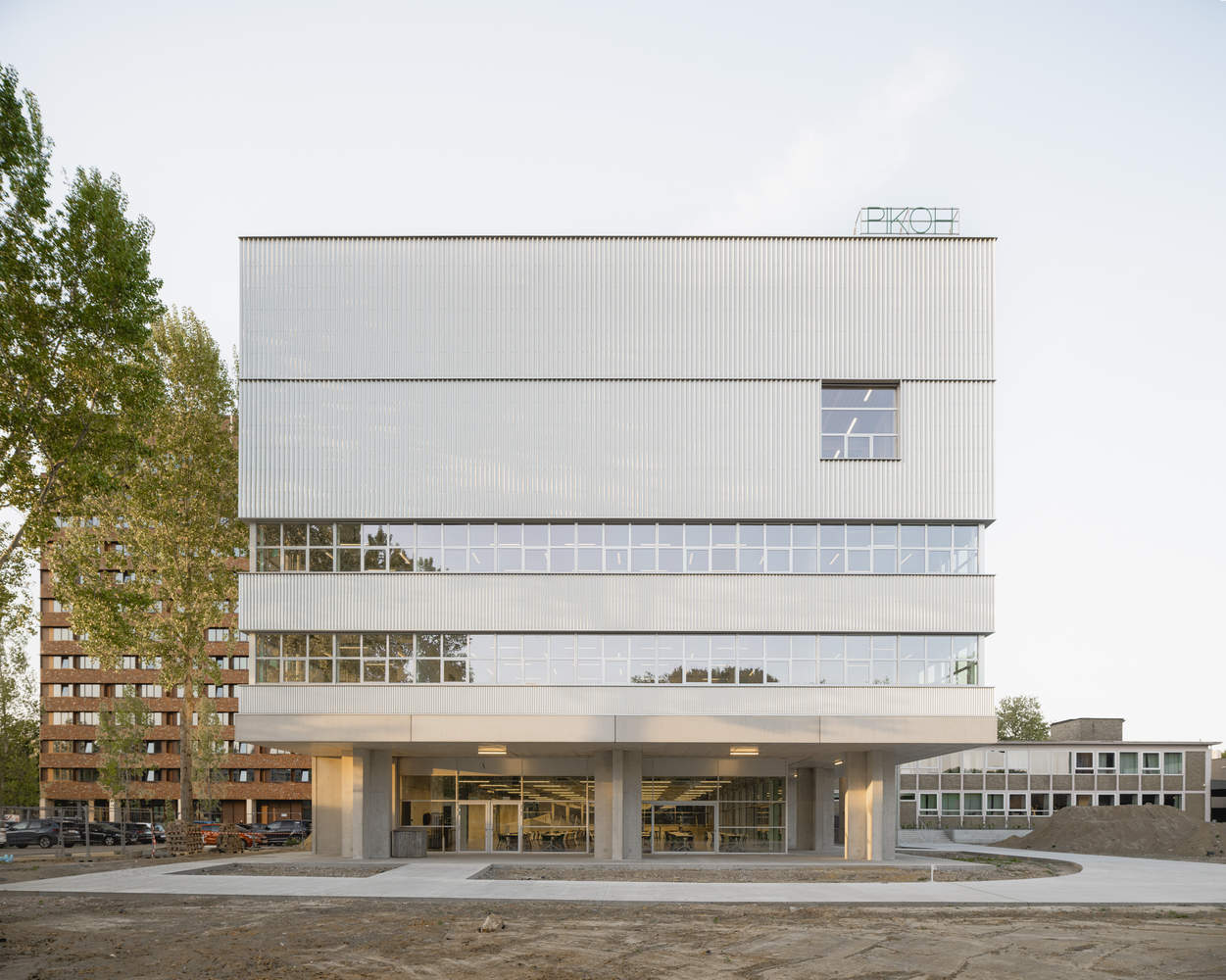
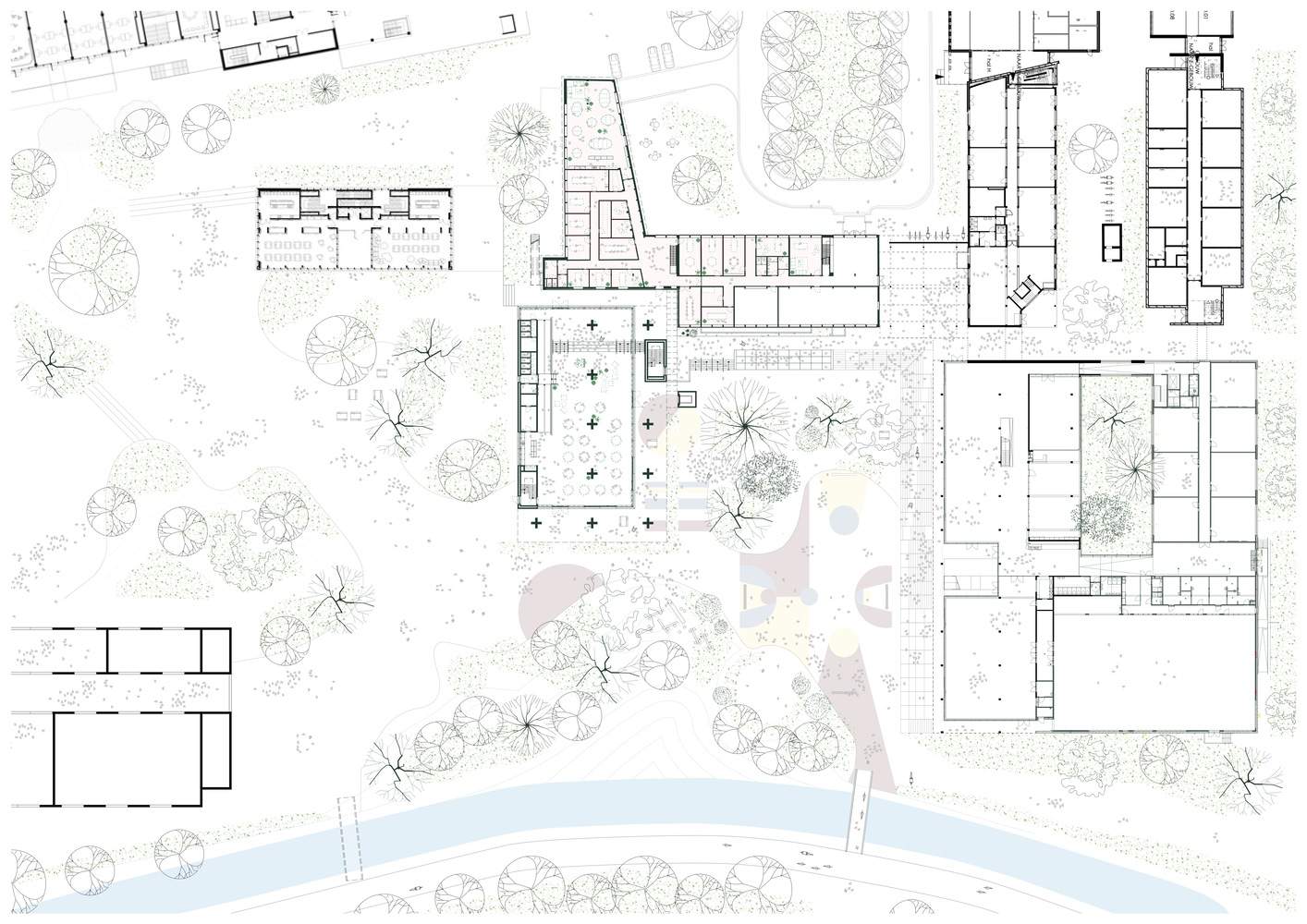
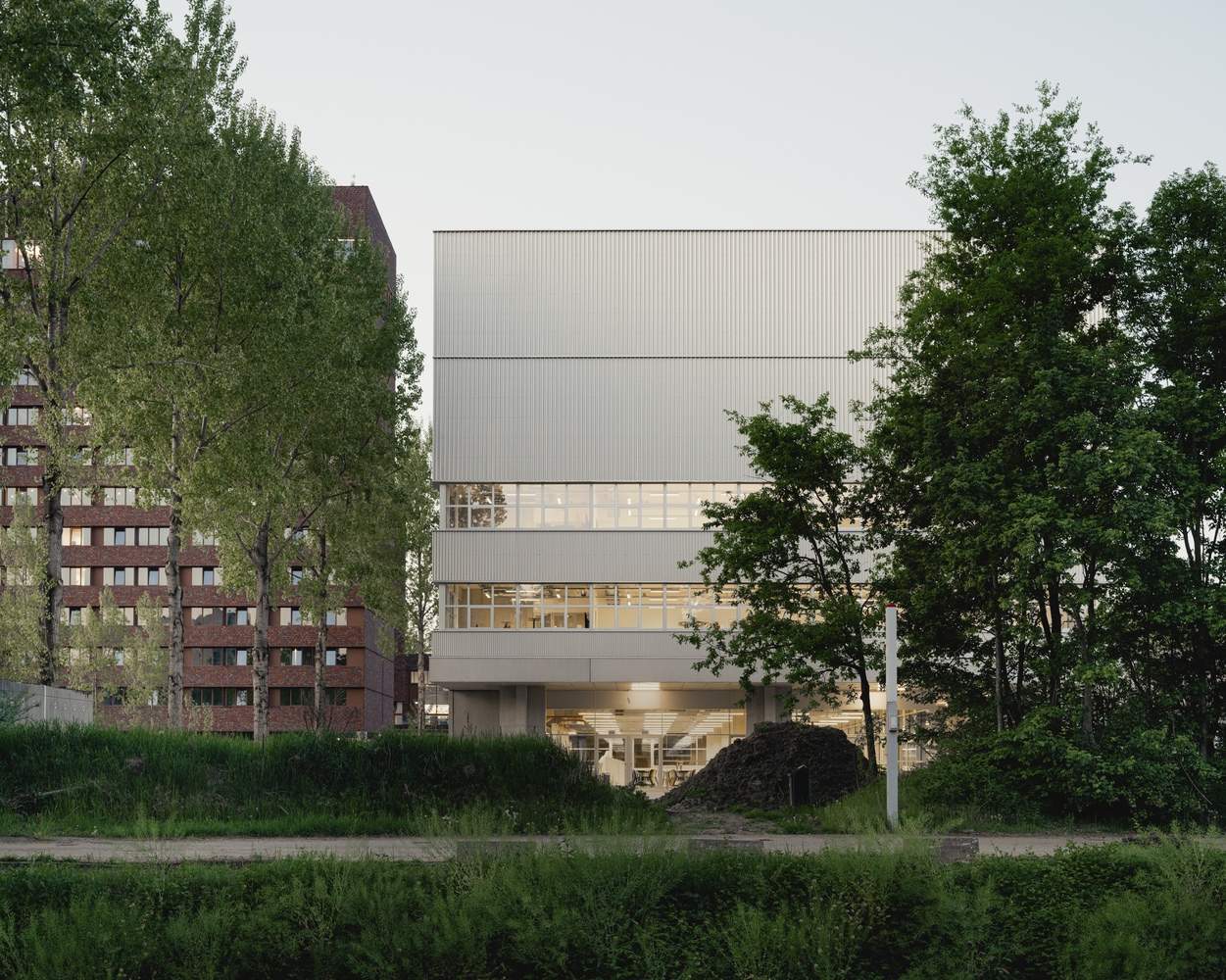
The adjacent Demer River and Kapermolen Park serve as natural anchor points for the site. The new school building adopts a compact and clear five story volume, strategically arranged at the edge of the site, about 40 meters away from the river, thus leaving space for an open green playground.
毗邻的德梅尔河(Demer River)与Kapermolen公园成为场地的自然锚点。新校舍采取紧凑清晰的五层体量,战略性地布置在场地边缘,距离河流约40米,从而为一片开阔的绿色操场留出了空间。
Site Plan
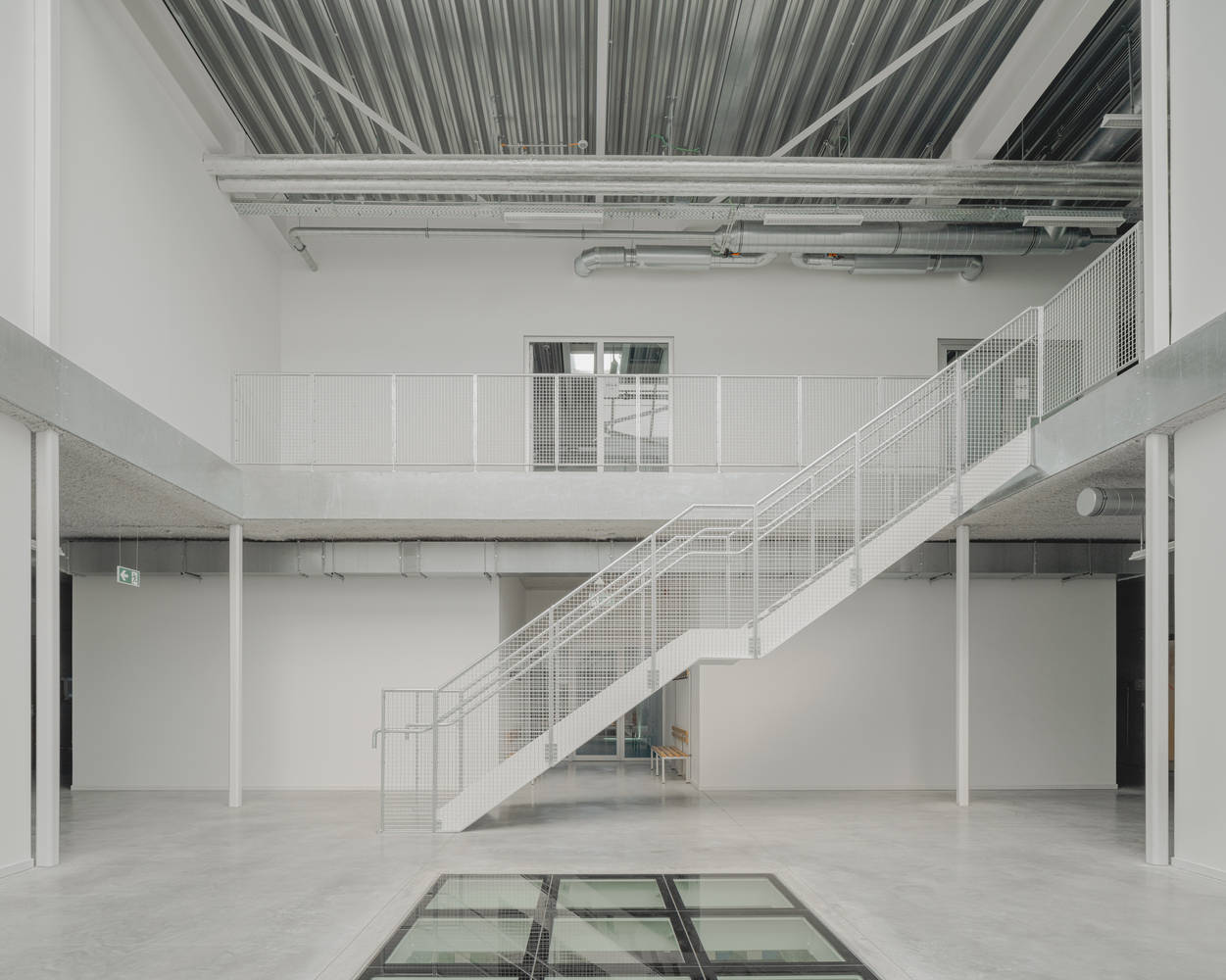
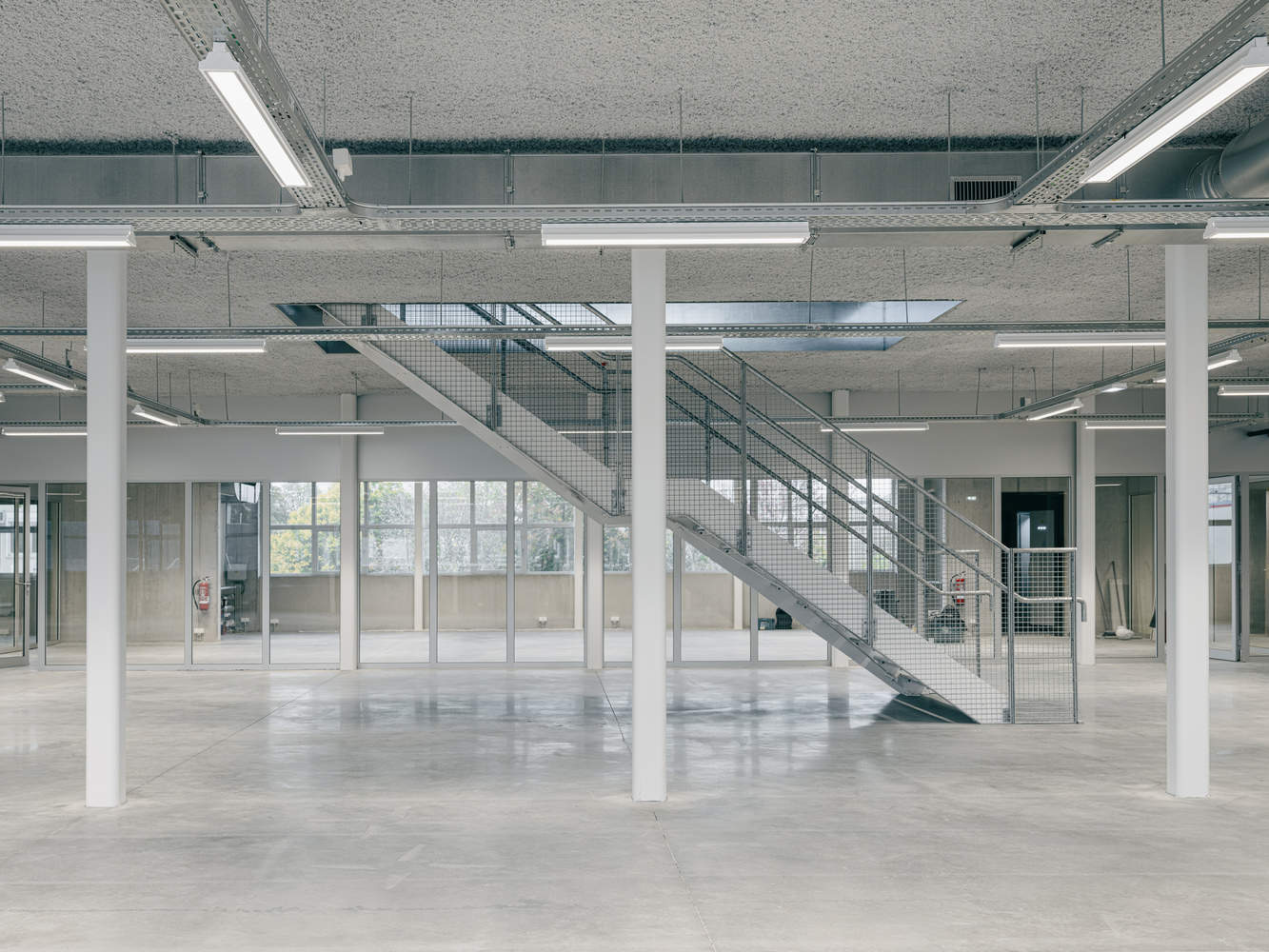
The design fully utilizes the height difference of the site, connecting different teaching buildings with a series of indoor and outdoor stairs, while forming rich informal communication spaces. The architectural space responds to PIKOH's educational philosophy: an open and flexible blended learning environment filled with natural light, without traditional corridors.
设计充分利用了场地的高差,以一系列室内外楼梯串联不同的教学楼,同时形成丰富的非正式交流场所。建筑空间回应了 PIKOH 的教育理念:一个充满自然光线、开放而灵活的混合学习环境,没有传统意义上的走廊。
© Jeroen Verrecht
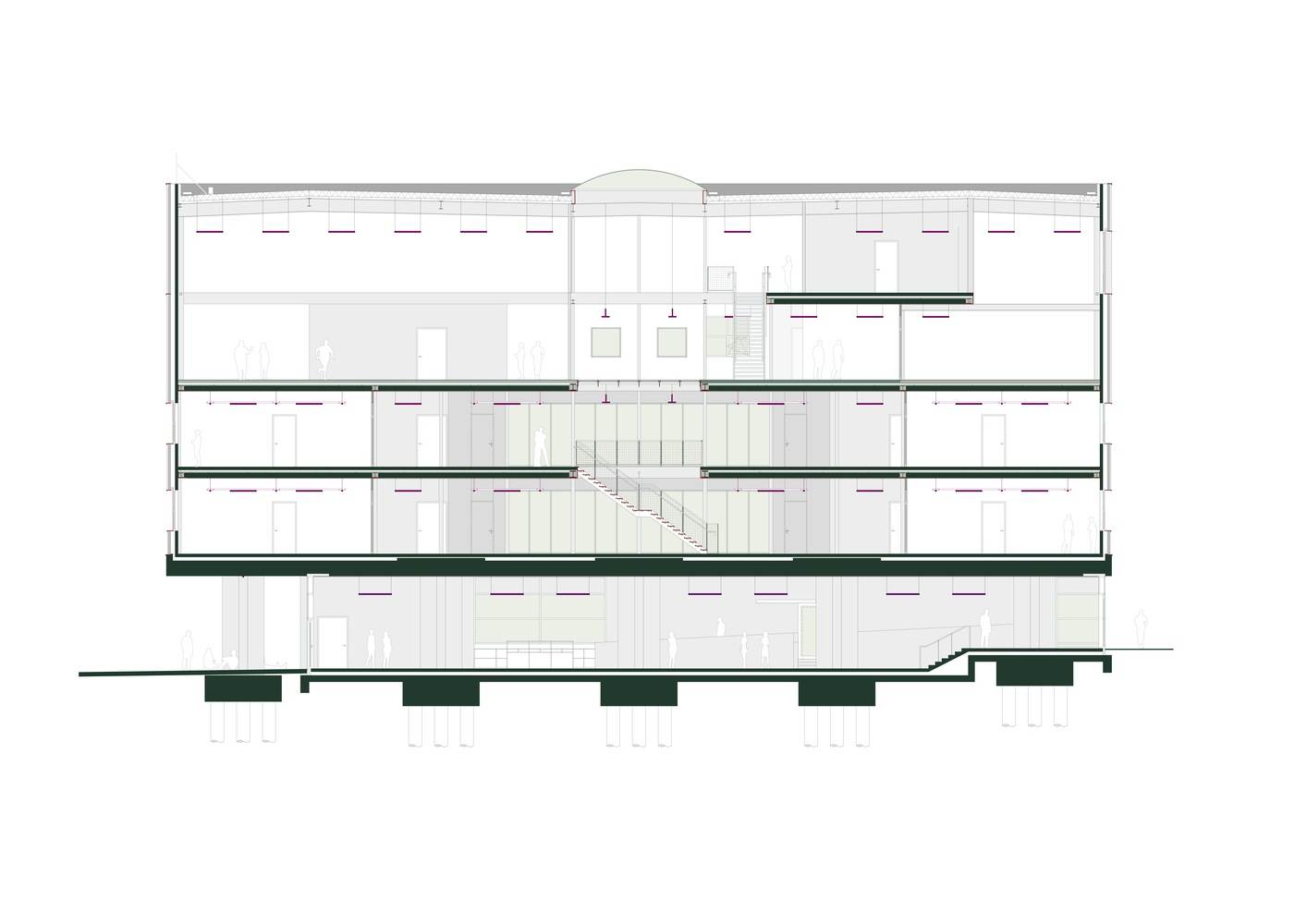
Theoretical classrooms and art studios are set up on the same level to promote interaction between disciplines. The interior of the floor is organized in the form of "learning nests": every three classrooms form a unit, distributed at both ends of the floor. The "Innovation Unit" on the south side supports interdisciplinary joint teaching, while the north side is equipped with more traditional learning spaces.
理论教室与艺术工作室被设置在同一层面,促进学科间的互动。楼层内部以“小巢”(learning nests)的方式组织:每三个教室形成一个单元,分布在楼层的两端。南侧的“创新单元”支持跨学科联合教学,北侧则布置较为传统的学习空间。
Section A
On the vertical facade, transparent technology workshops and open art studios are arranged along the street side, enhancing visibility and interactivity. The core of architecture is a"forum"- a multifunctional public space that can serve as a meeting point, exhibition area, open studio, or discussion venue. An open plan libre creates a dynamic learning landscape, allowing functions to flow freely within it, bringing a smooth student experience.
在纵向立面上,透明的技术工坊与开放的艺术工作室被布置在沿街一侧,强化了可视性与交流感。建筑的核心是一个“论坛” —— 多功能的公共空间,可作为会面点、展览区、开放工作室或讨论场所。开放式平面(plan libre)营造出动态的学习景观,让功能在其中自由流动,带来流畅的学生体验。
© Jeroen Verrecht
© Jeroen Verrecht
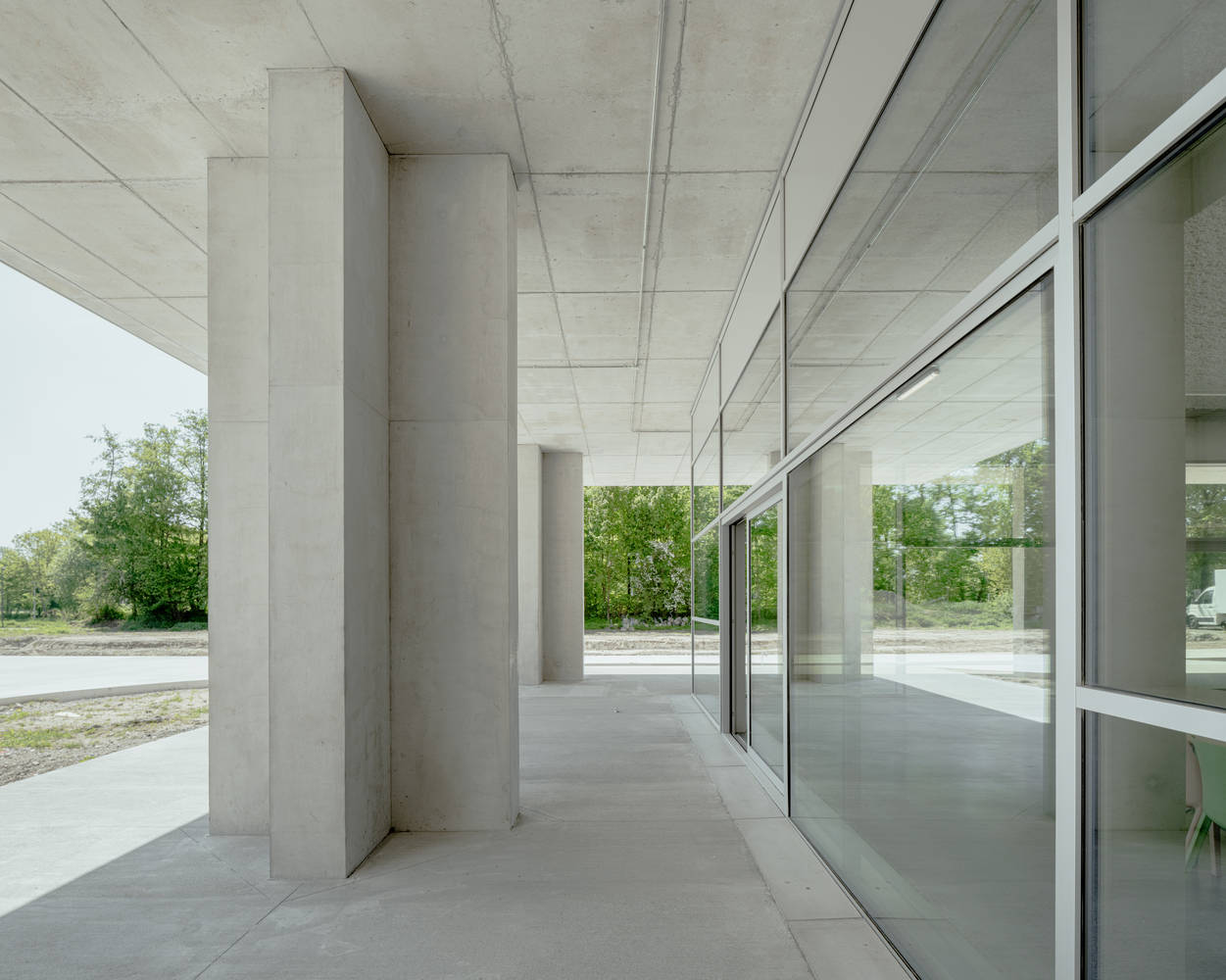
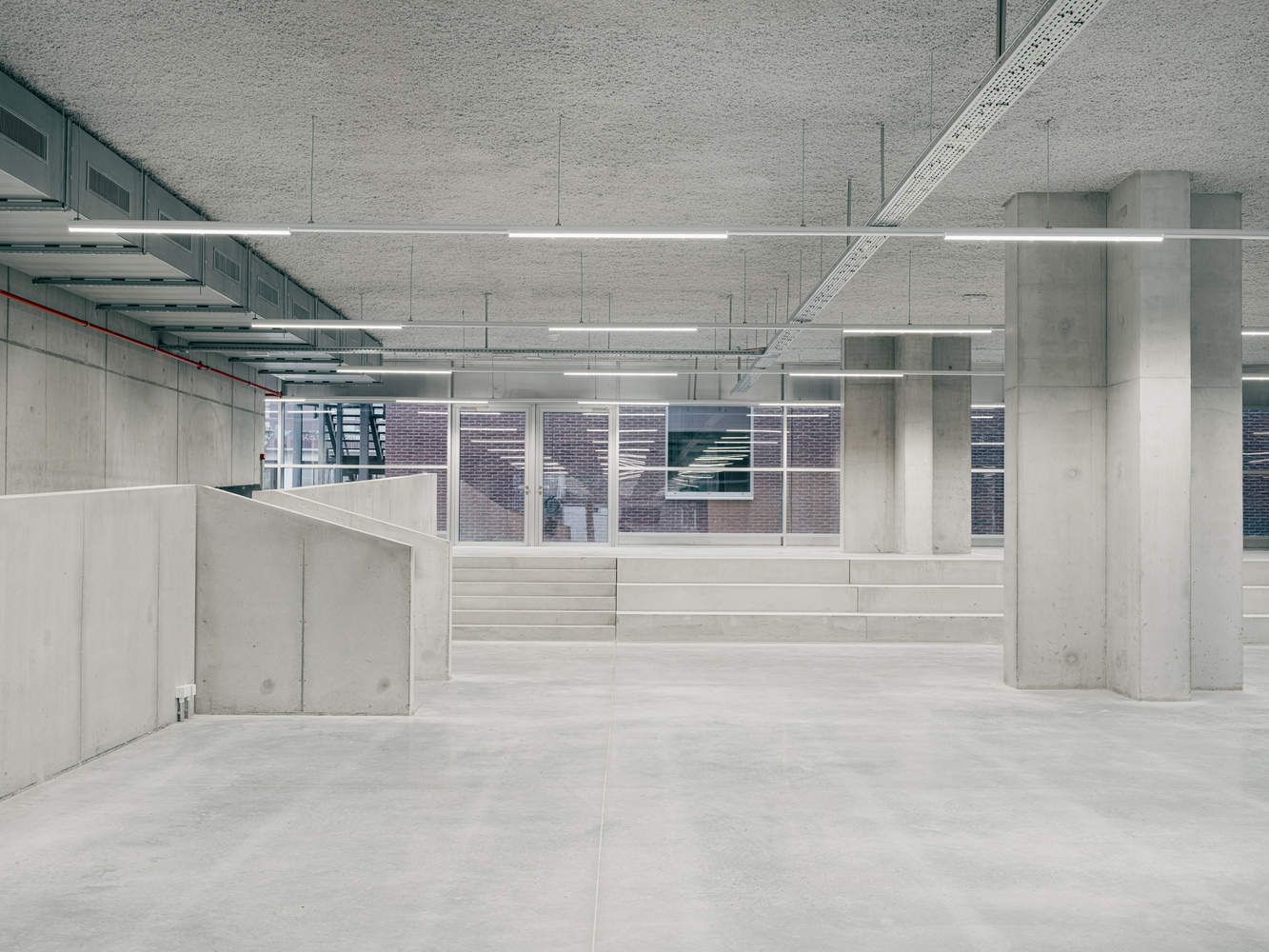
The upper space of the building accommodates venues such as sports, dance, and drama, arranged around the central "square". The design inspiration comes from a typical industrial artist studio: simple, sturdy, and highly adaptable. The transparent first floor opens up to the park and playground, and the unique concrete cross columns give the building a distinct identity. The aluminum facade shimmers against the backdrop of greenery, while the horizontal window strip based on a 1x1 meter module provides a panoramic view, further enhancing the connection between the building and the environment.
建筑的上层空间容纳了体育、舞蹈与戏剧等场所,围绕中央的“广场”布局。设计灵感源于典型的工业化艺术家工作室:简洁、坚固且高度适应性。通透的首层向公园与操场敞开,独特的混凝土十字柱为建筑赋予了鲜明的识别度。铝板外立面在绿意的映衬下泛起微光,而基于 1x1米模数的水平窗带则提供了全景视野,进一步强化了建筑与环境的联系。
© Jeroen Verrecht