University of Science and Technology of China Campus Learning Garden/Hemu Building
中国科学技术大学中校区学习园地 / 合木建筑
设计理念的城市化视角:此项目最令人印象深刻之处在于其对城市与校园关系的深刻理解和巧妙处理。项目没有孤立地考虑建筑本身,而是将其置于城市和校园的整体规划框架下,将建筑打造为连接城市道路与校园的重要枢纽。通过撤除围墙,打造开放入口,并创造性的设计口袋公园,项目不仅解决了校园用地紧张的问题,更主动地融入了城市公共空间,为周围居民提供了休憩场所。这种设计策略体现了对城市文脉的尊重,也赋予了建筑更广泛的社会意义,使其超越了单一功能的限制,成为联系校园与城市的桥梁。
空间设计的创新与融合:在空间设计上,该项目展现出卓越的创新能力。曲线的建筑体量打破了传统建筑的边界感,增加了空间的流动性和活力。建筑的架空设计,使得底层空间与城市道路保持了视觉上的连贯性,行人可以自由穿行于建筑下方,通往校园的各个区域。而架空地面形成的微下沉空间,则成为一个充满吸引力的聚集点,为师生提供了舒适的交流和学习场所。此外,二层通透的设计,结合光井的运用,将室内景观与城市绿化完美融合,创造了一种独特而富有诗意的空间体验,使建筑成为校园中一道靓丽的风景线。
技术与美学的完美结合:在技术实现层面,该项目充分展现了设计师解决问题的能力。在既有下穿通道上方建造新建筑是一项极具挑战性的任务,项目通过借用隧道两侧支护桩作为基础,巧妙地解决了这一难题,确保了结构的安全性。同时,项目在结构设计上精益求精,18米跨度的工字钢大梁和吊柱结构,既保证了空间的开阔性,又实现了建筑的美观。夜晚,当灯光亮起时,建筑仿佛一座灯塔,点亮了校园的轴线,将建筑的功能性与视觉美学完美结合。这种对技术与美学的极致追求,使得该项目成为了一个具有创新性、可持续性和影响力的建筑案例。
© 魏溦
© 是然建筑摄影
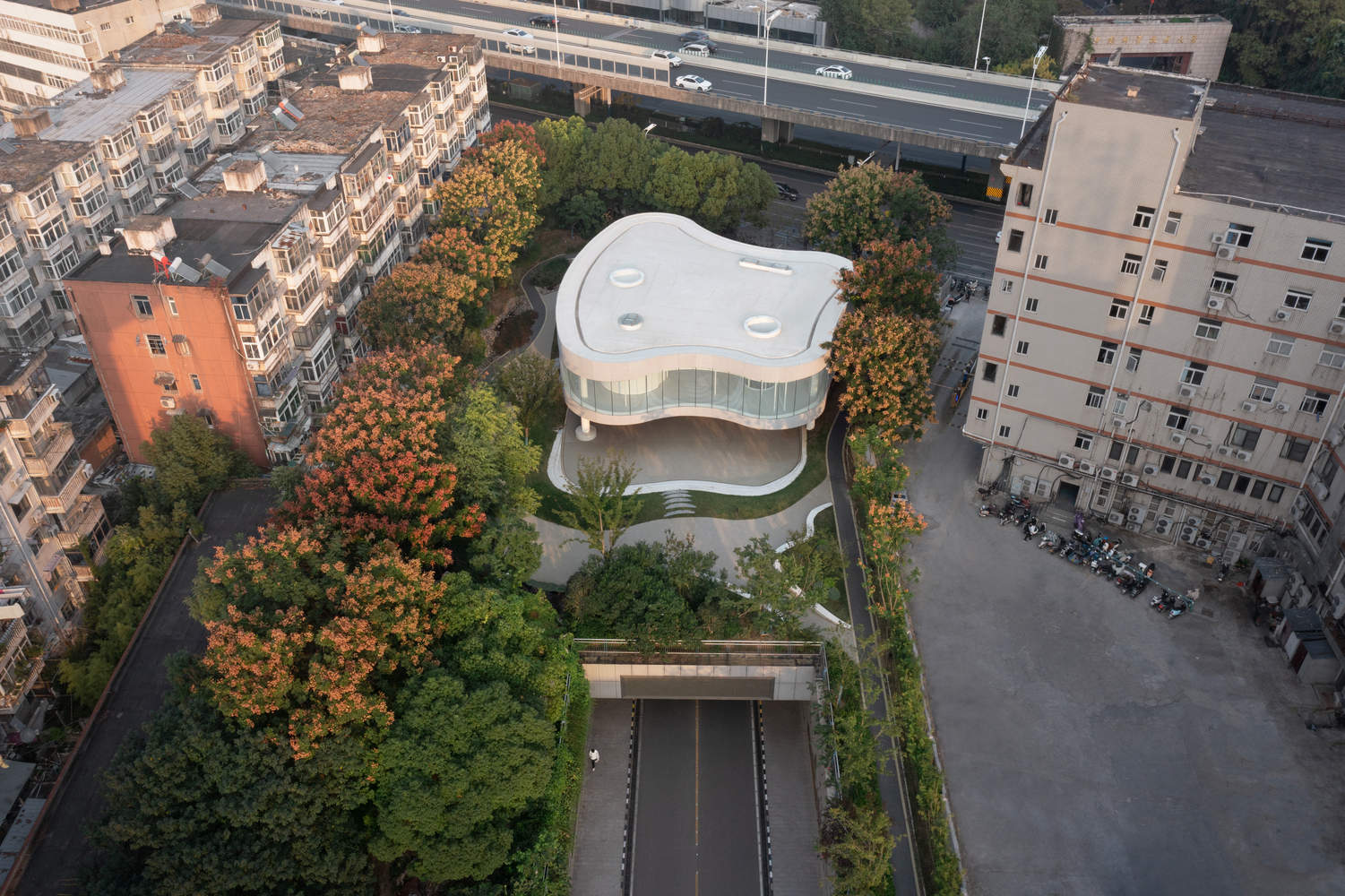
This project is located in the middle campus of the University of Science and Technology of China. The university hopes to provide students with a multifunctional learning and communication space in the face of land shortage, so the "Forgotten Corner" at the east end of the campus has been selected as the construction base (Figure 1. Base location). The base is surrounded by walls on the east, south, and north sides, with commercial buildings on the south side and residential buildings on the north side. The east side is adjacent to an elevated urban main road, and there is a underpass connecting the east and middle campuses located below the site (Figure 3. Base Scope).
本项目位于中国科学技术大学中校区,校方希望在用地紧张的情况下为学生提供多功能的学习和交流空间,因此选取了校区东端的“遗忘角落”作为建设基地(图1.基地位置)。基地东、南、北三面被围墙环绕,南侧为商业楼,北侧为住宅楼,东侧邻近带高架的城市主干道,并有一条连接东、中校区的下穿通道位于用地下方(图3.基地范围)。
© 是然建筑摄影
© 是然建筑摄影
Starting from the overall planning of the city and campus, the project takes advantage of the opportunity to incorporate functional buildings and site construction, and sets this area as the connection point between the central campus and the eastern city road - the newly added entrance and exit of the central campus, which facilitates the daily travel of teachers and students. From the perspective of spatial resource allocation, removing the fence, retreating the control boundary, creating an open entrance area, and providing a pocket park for daily leisure for surrounding residents.
项目从城市与校园的整体规划出发,通过借助这次置入功能性建筑和场地营造的机会,流线上将此处设定为中校区与东侧城市道路的连接点 —— 新增的中校区出入口,方便师生的日常出行。从空间资源分配的角度上,撤除围墙,退后管控边界,创建一个开放的入口区,也为周围居民提供了日常休闲的口袋公园。
© 是然建筑摄影
© 魏溦
© 魏溦
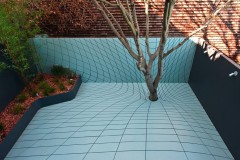
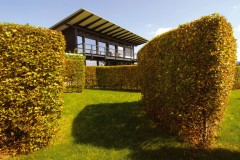
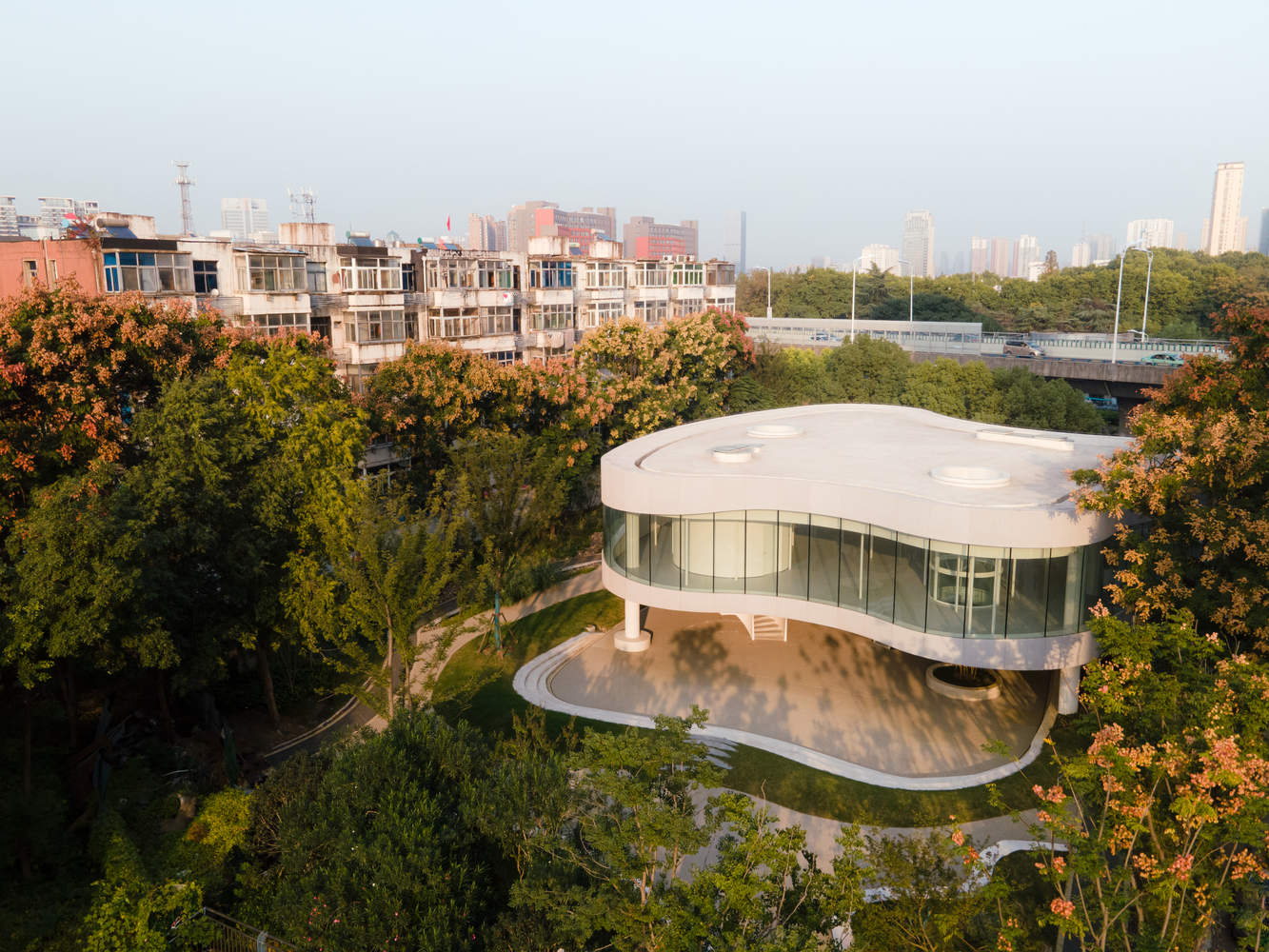
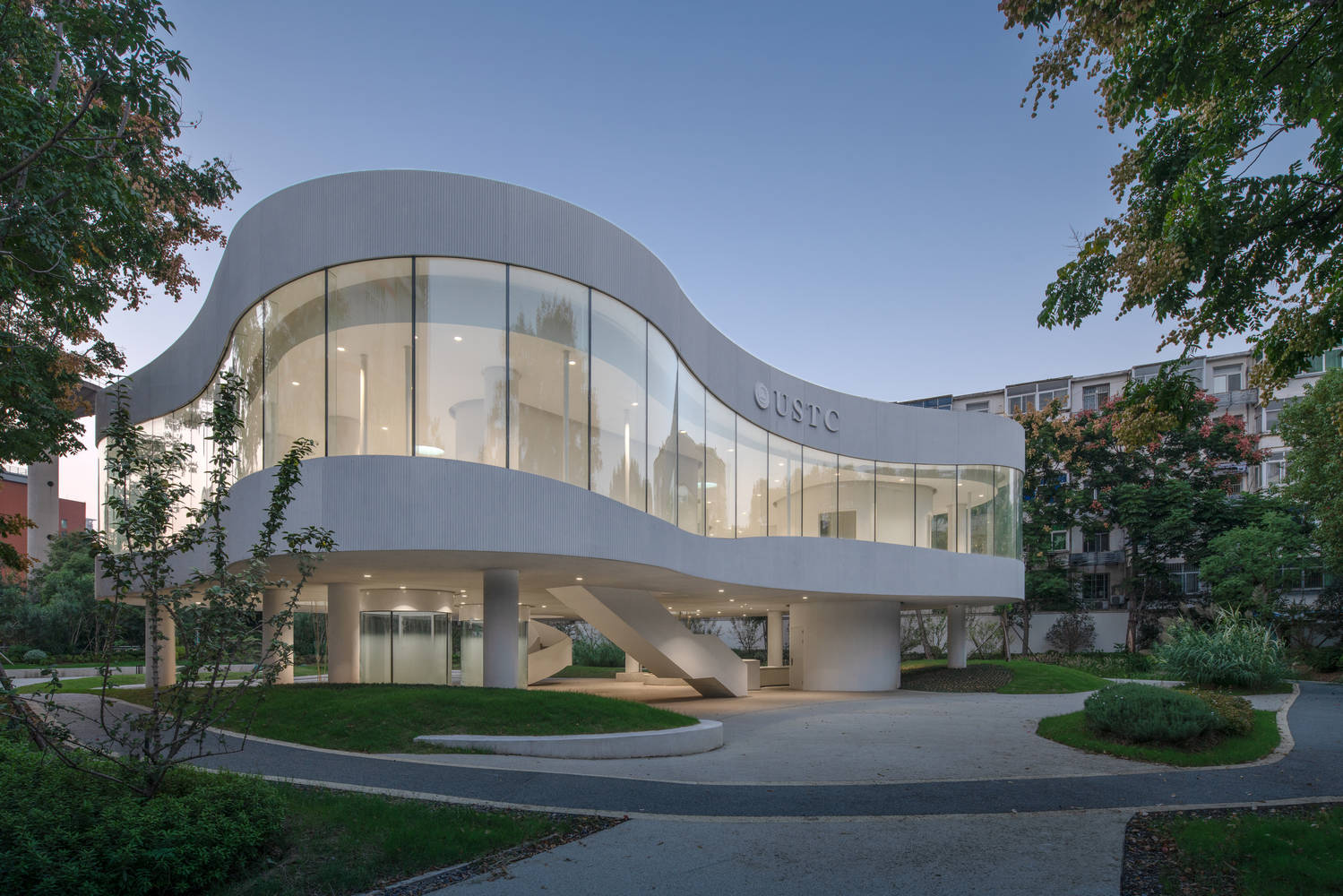
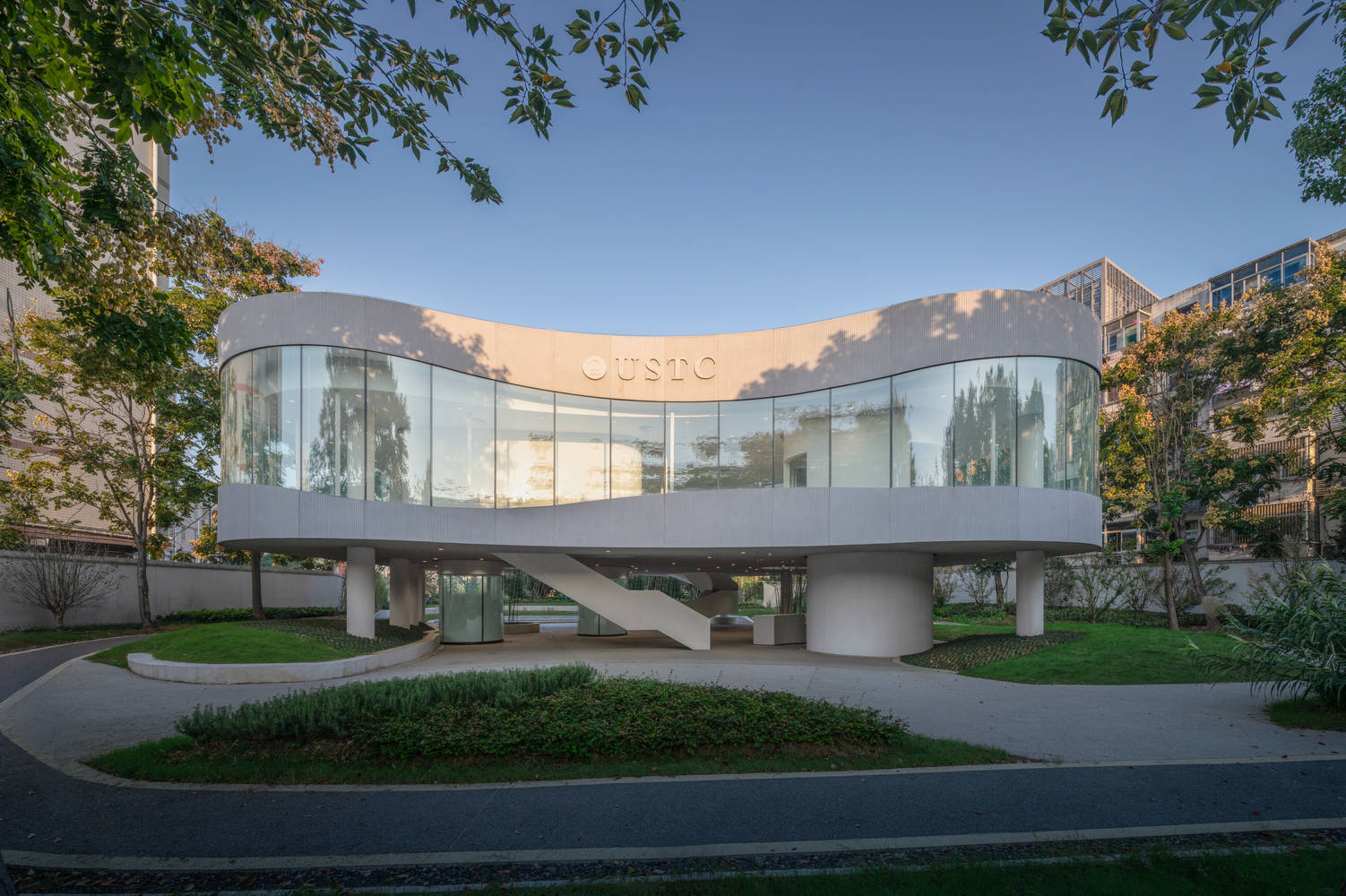
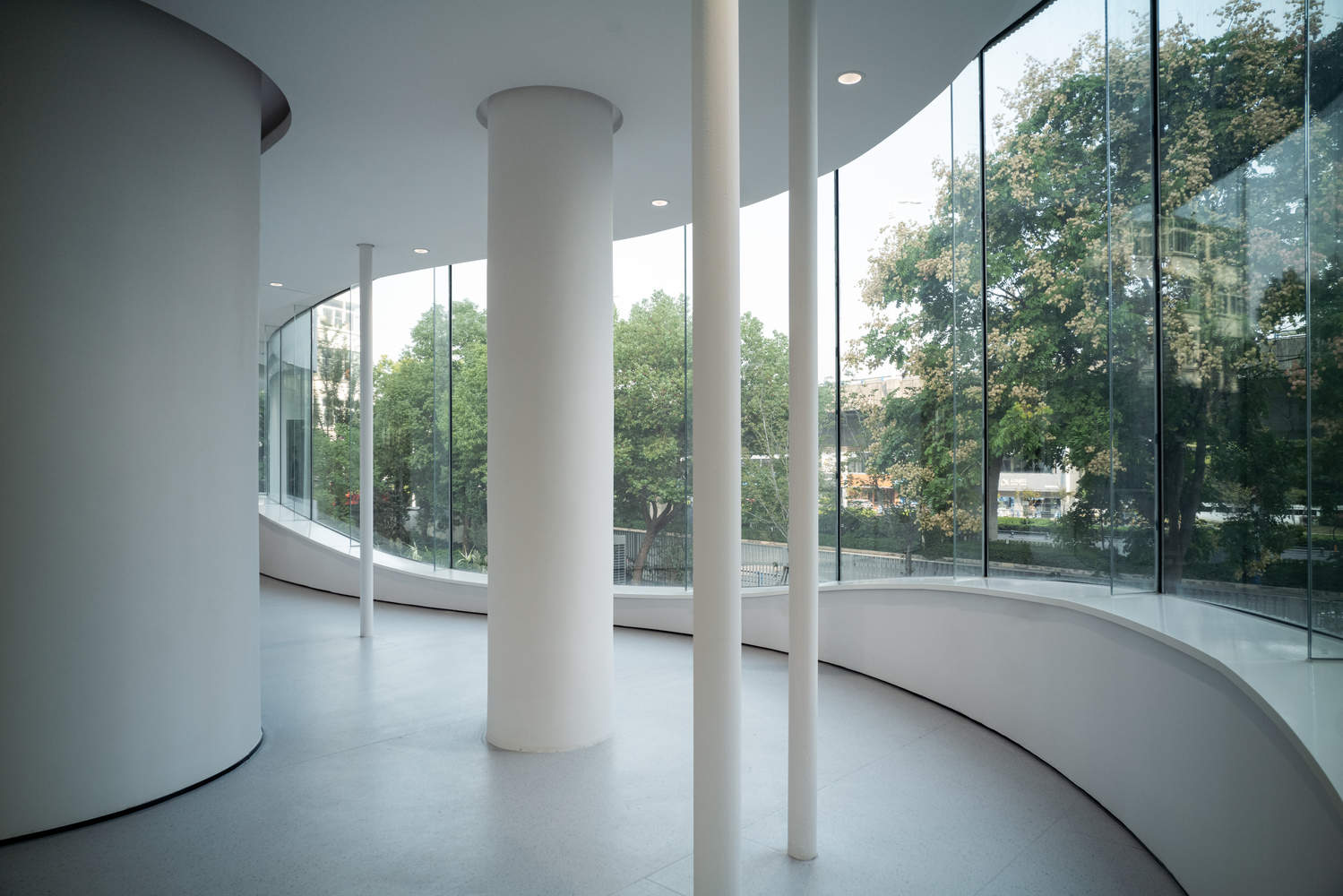
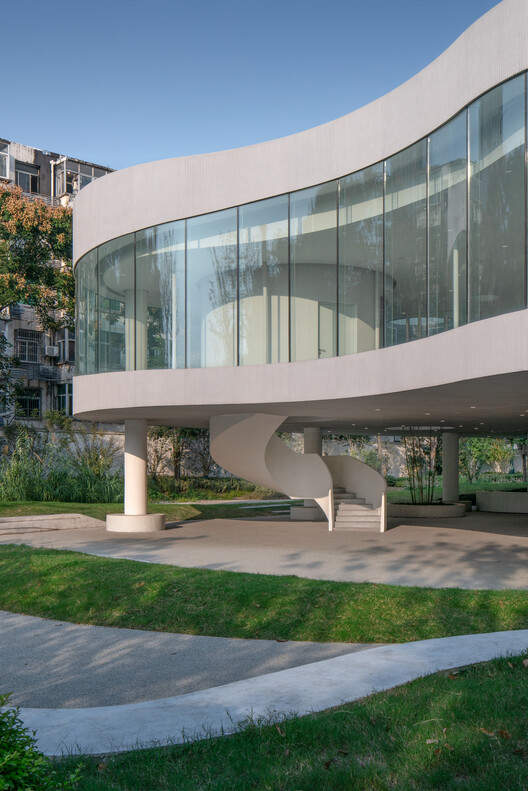
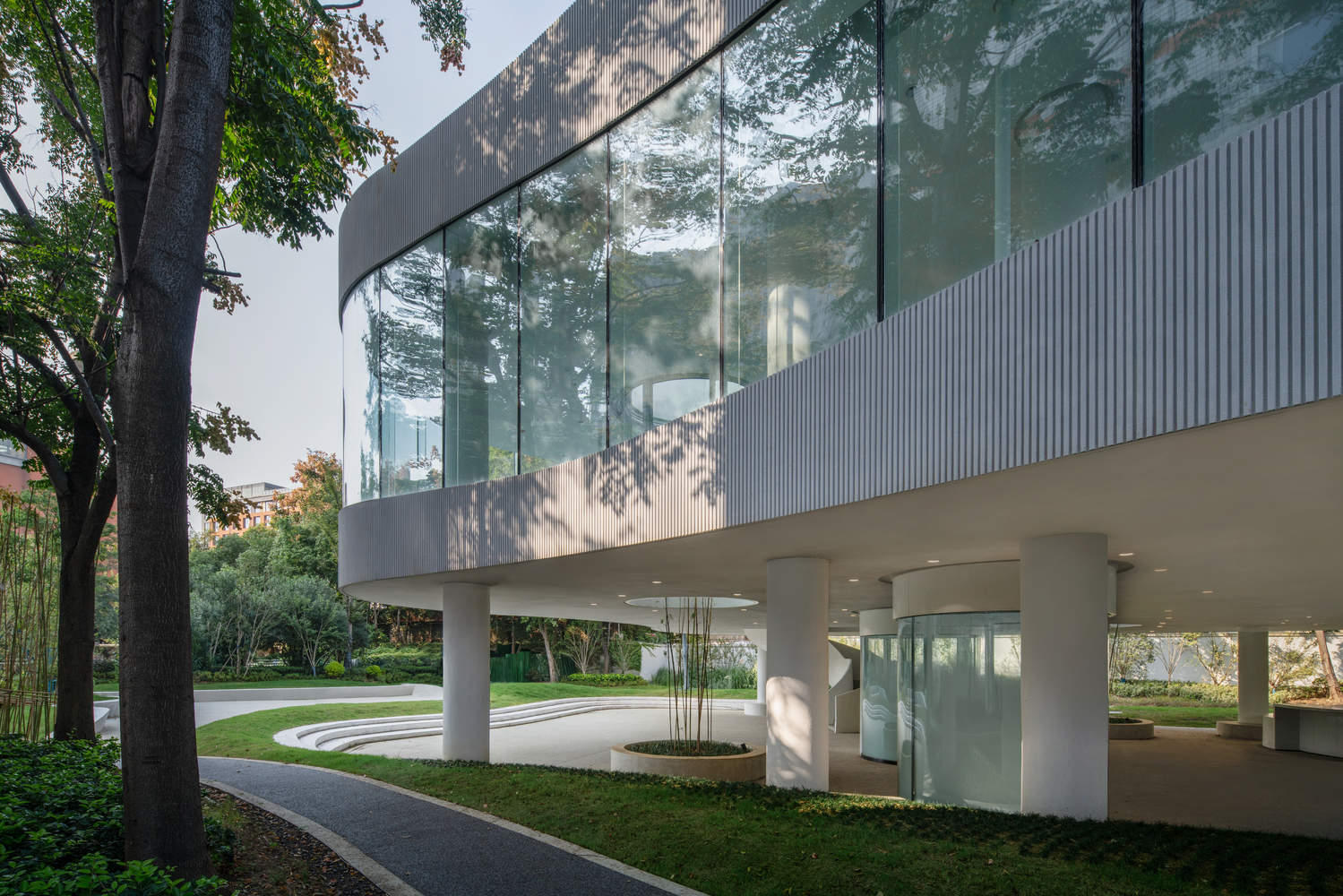
In terms of architectural design, a curved volume with a planar contour was adopted, making the gaps in the boundary area more dynamic and enhancing the fluidity of the space. The building volume is elevated and elevated, while the ground floor maintains continuity with the city roads. The building is like a giant pavilion in the environment, and pedestrians can pass under the building and reach the western end of the site, overlooking the campus. The slightly sunken elevated ground becomes a gathering point in the green environment.
建筑设计上,采用了平面轮廓为曲线的体量,使得边界区域的空隙变得更加有活力,提升了空间的流动性。建筑体量抬升并架空,底层保持与城市道路的连贯性,建筑在环境中犹如一个巨型的亭子,行人可以从建筑下方通行,并到达场地西端,眺望校园。微下沉的架空地面成为绿色环境中的聚集点。
© 是然建筑摄影
剖面图
© 是然建筑摄影
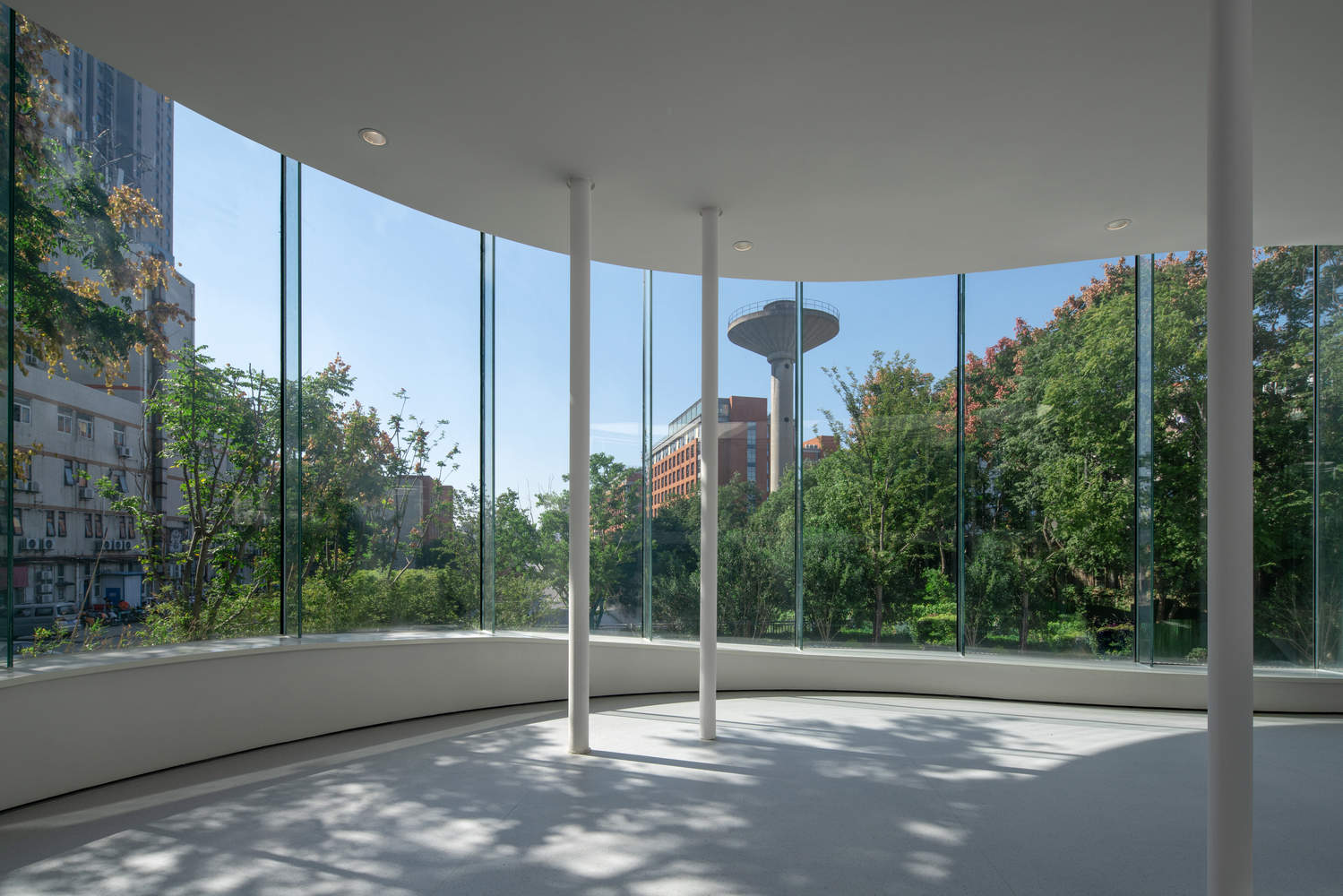
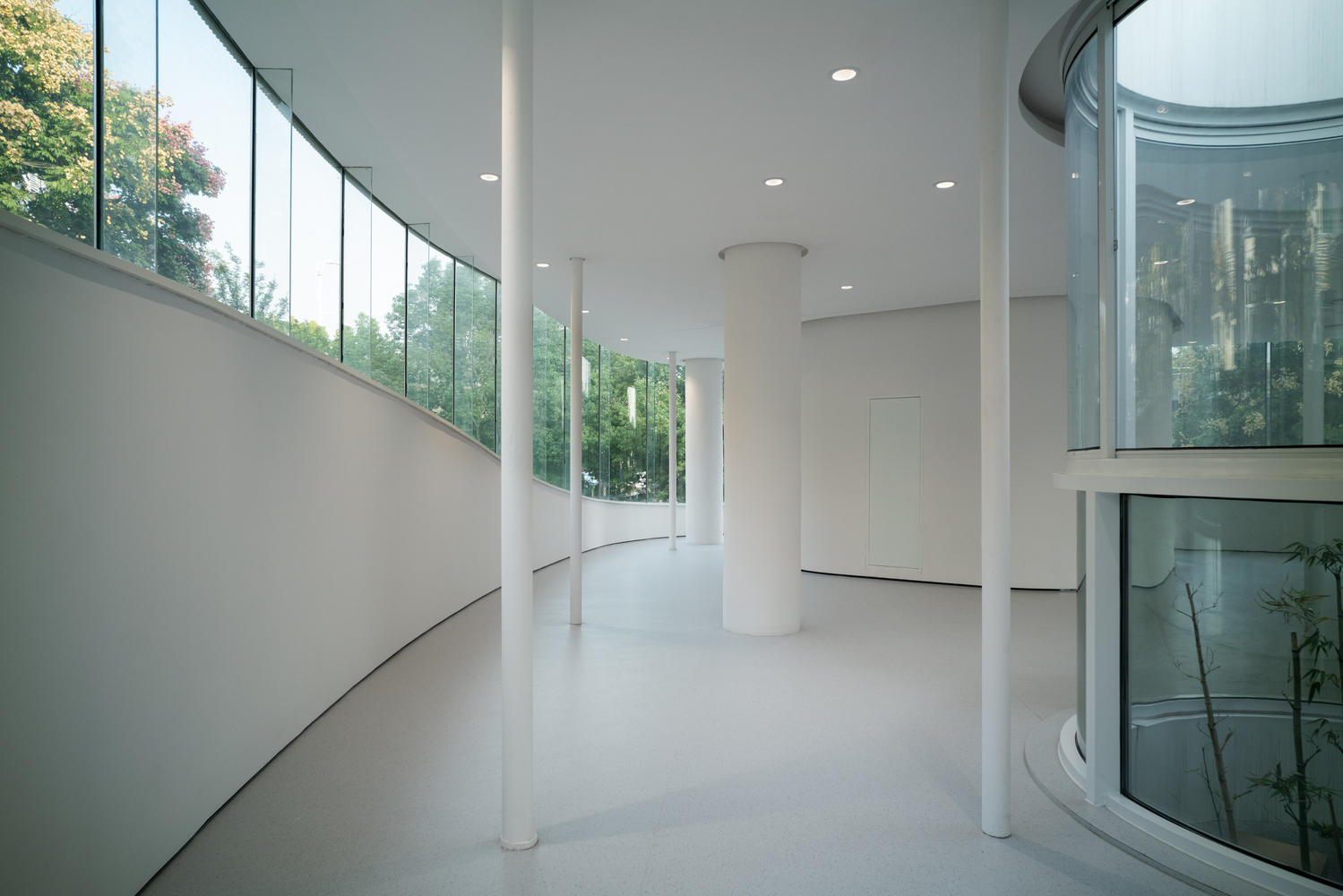
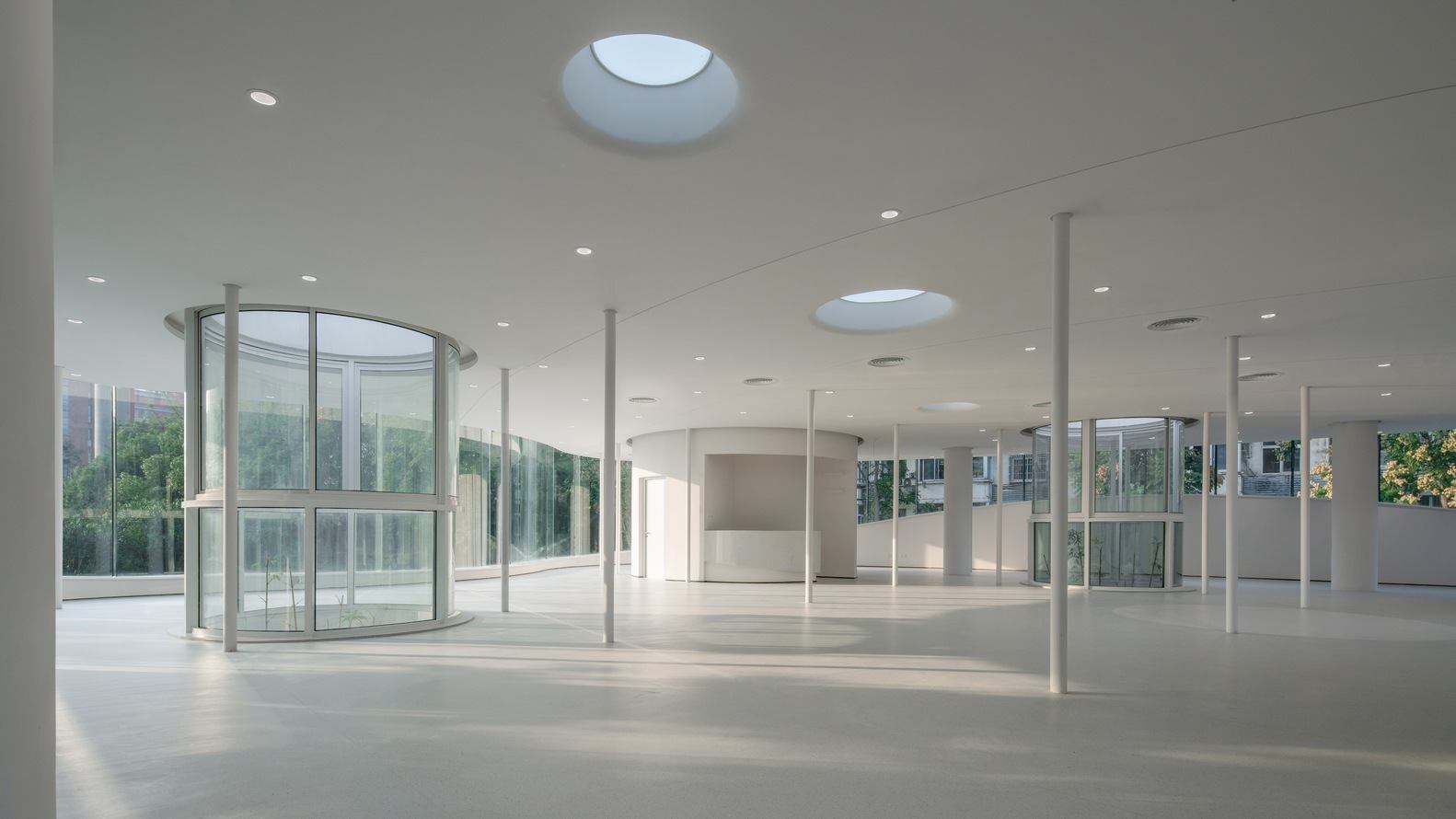
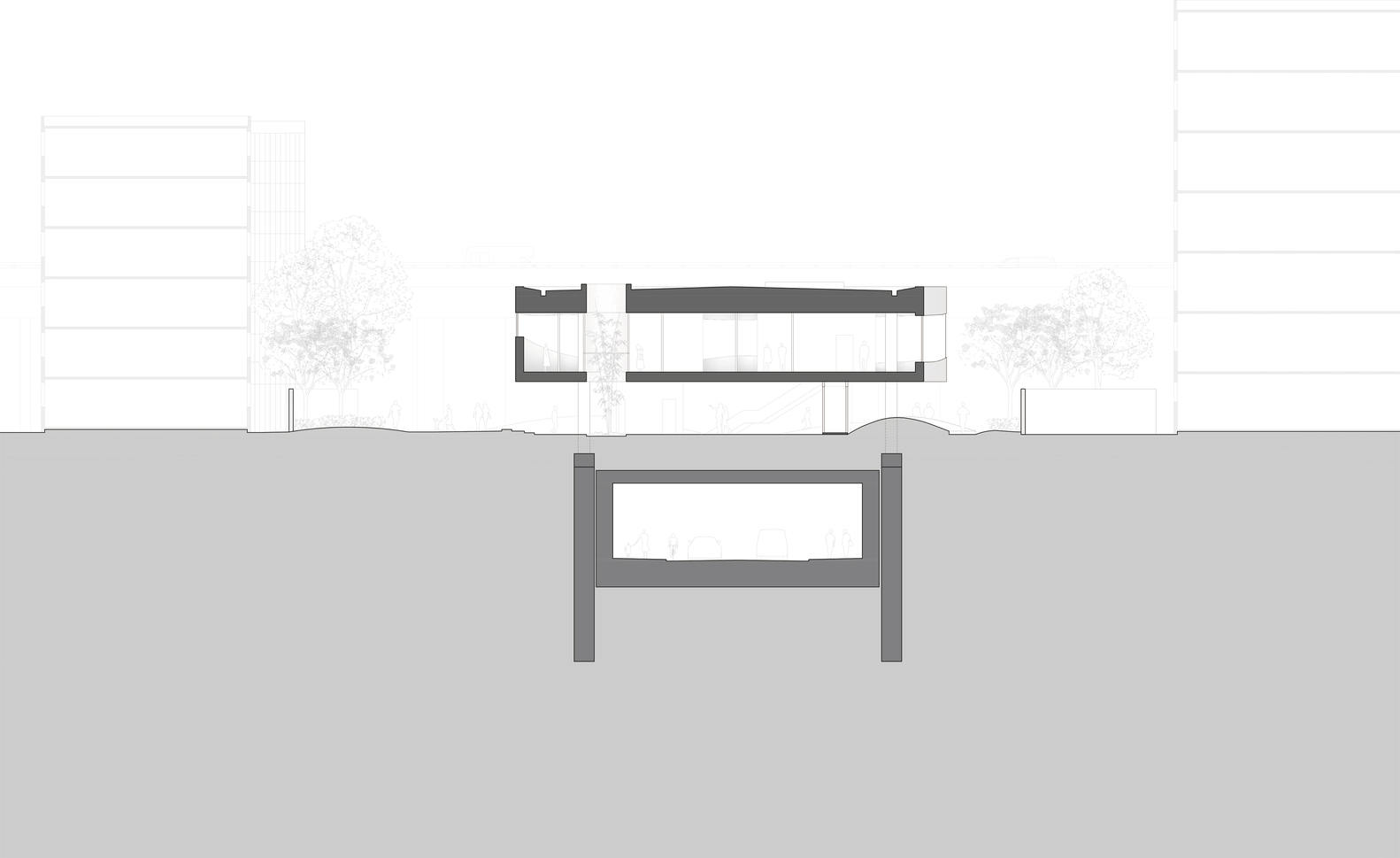
In terms of technical implementation, the primary challenge is how to construct new buildings above existing underpasses. By borrowing support piles on both sides of the tunnel as the foundation for the new building, disturbance to the soil is reduced and structural safety is ensured. The first floor is equipped with a capsule self-study room and equipment management room, while the second floor is an open learning space supported by four I-beam beams at the top, with a span of over 18 meters. The suspended column structure maintains spatial transparency. The design concept of the structure is highly integrated with urban and spatial strategies.
在技术实现上,如何在既有的下穿通道上方建设新建筑是首要难题。通过借用隧道两侧支护桩作为新建筑的基础,减少对土壤的扰动,确保结构安全。首层设置胶囊自习室和设备管理房,二层则为开放式学习空间,顶部由 4 根工字钢大梁支撑,跨度超过 18 米,吊柱结构保持了空间通透性。结构的设计概念与城市策略、空间策略高度整合。
© 魏溦
© 是然建筑摄影
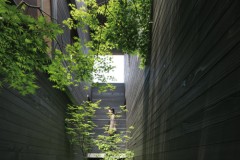
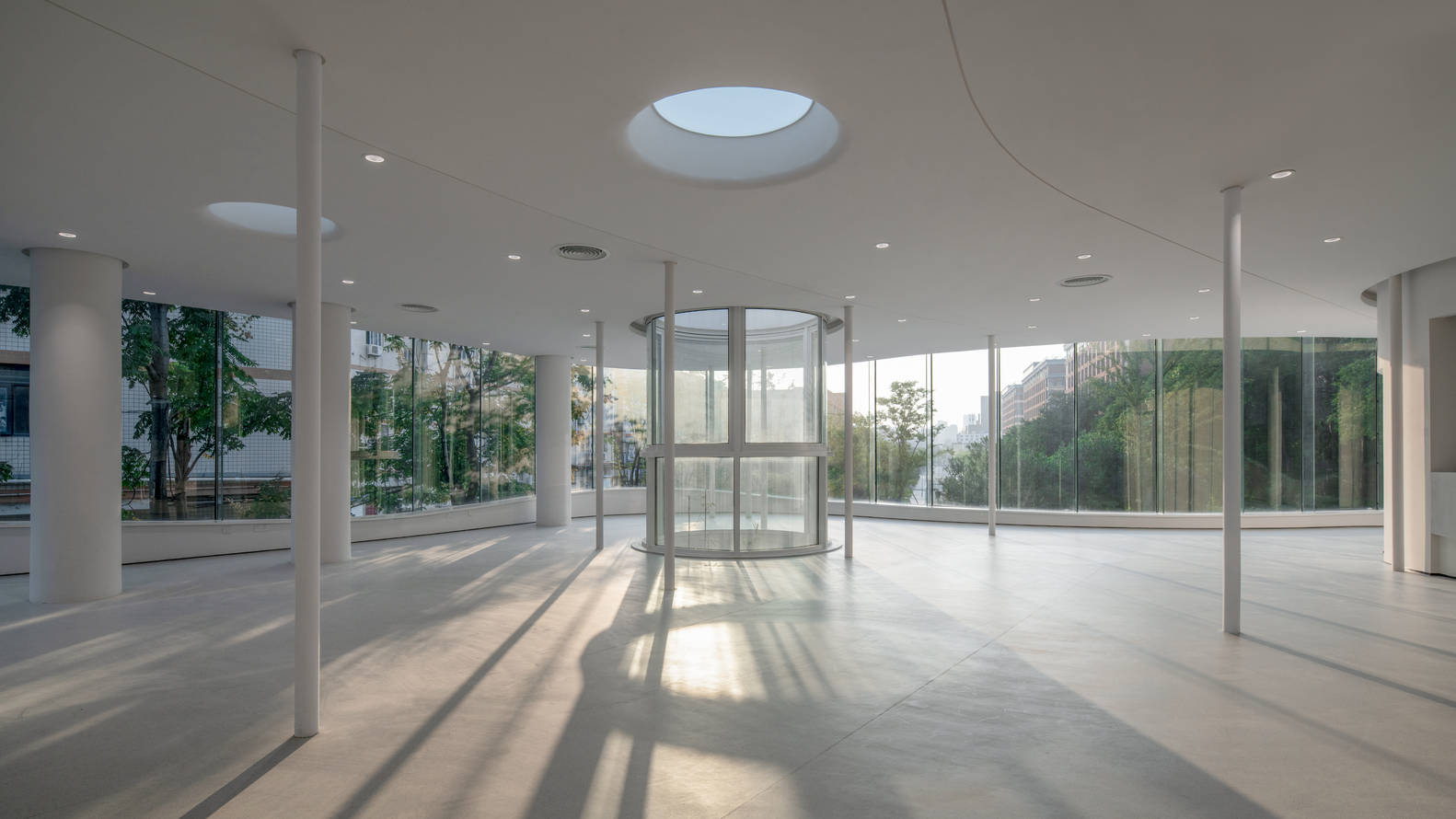
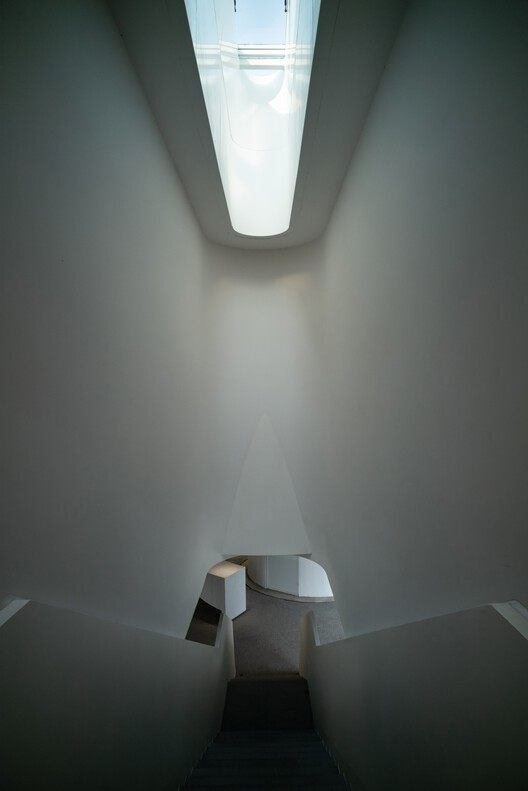
Two light wells on the second floor of the building absorb sunlight from the top; The continuous glass on the exterior divides the second floor into upper and lower parts, blending the indoor landscape with urban greenery, like a landscape pavilion at a high place. At night, the lights are lit up, the learning scene is vivid, and it becomes a landmark lighthouse of the campus axis.
建筑二层两个光井摄取来自顶部的阳光;外立面连续的玻璃将二层分为上下两部分,室内景观与城市绿化交融,犹如身处高处的景观亭。夜晚,灯光点亮,学习场景生动,成为校园中轴线的标志性灯塔。
© 是然建筑摄影