Shenzhen Art School/Yuan Plan Architectural Firm
深圳美术学校 / 源计划建筑师事务所
项目亮点:高密度下的垂直空间利用:本项目最引人注目的亮点在于其对高密度校园用地的巧妙应对。面对紧张的用地限制,设计者并未采用传统的水平展开方式,而是大胆地采用了垂直叠加的设计策略。通过将教学楼、宿舍和体育场地进行垂直叠加,极大地提高了空间利用率,有效地解决了高密度带来的挑战。这种设计不仅在功能上满足了校园的需求,更在视觉上创造了独特的空间体验,为学生提供了多样化的活动场所。此外,悬空的体育场在为校园提供遮荫的同时,也为城市公共绿化向校园延伸提供了可能,体现了设计师对城市环境的积极回应。
设计精髓:人文关怀与场所精神的重建:该项目的精髓在于其对校园场所精神的深刻理解和重建。设计者并未将校园视为冰冷的建筑集合体,而是将其定位为孕育人文精神的场所。通过引入人文地理学的视角,结合对珠三角传统地方景物的回应,设计者试图在现代化的校园中重塑人与自然、建筑与环境的和谐关系。这种设计理念体现在对街道层面的尊重、对生态绿化系统的运用以及对“绿色殿宇”的构筑上,旨在为学生创造一个充满精神归属感和文化氛围的学习环境。项目试图在效率至上的城市中,为学生提供一个可以自由游历,感受空间变化和自然环境的独特体验。
技术创新:结构与空间叙事的完美结合:在技术层面,该项目展示了结构与空间叙事的完美结合。通过对结构系统的精巧设计,设计者创造了校园内部丰富的空间层次和独特的视觉体验。垂直空间被划分为三个层次,每个层次都拥有独立的结构逻辑,同时又相互贯通。结构部件在开放空间中被巧妙地展现,成为校园内外的空间标识,增强了空间的辨识度和场所感。这种结构与功能的结合,使得校园既具有统一性,又富有变化,为学生提供了多样化的活动和交流空间,实现了建筑与艺术的完美融合。
© 张超
© 张超
Vertical Stacking of High Density Campus Sites
As one end of Shenzhen's linear urban development, Luohu's early urban planning and construction did not take the relationship between the city and the natural environment as the starting point of design, but simply and roughly completed modern functional and transportation planning. Buildings and urban living spaces were arranged on the land according to the needs of functionality and efficiency, and nature was only the background board of the artificial city.. People (regardless of individual differences such as age, identity, gender, background, etc.) and their activities are only functional objects of efficiency planning in this operation.
高密度校园场地的垂直叠加
罗湖作为深圳线性城市发展的一端,其早年城市规划建设并没有把城市与自然环境的关系作为设计的出发点,而是简单、粗略地完成了充满现代性的功能和交通规划,按照功能和效率的需求把建筑和城市生活空间阵列于土地之上,自然仅为人造城市的背景板。人(不管年龄、身份、性别、背景等个体差异)和人的活动在这种操作中也只属效率规划的功能对象而已。
© 吴嗣铭
模型照片
© 吴嗣铭
The concept of systematizing the governance of human social organizations in the name of rationality and efficiency originates from the idea of separating from traditional society after the Western Enlightenment. Urban planning and architectural planning view urban construction systems as complex mechanical operations, while nature and tradition are seen as obstacles to modernization and are being cleared. The communities and streets in it deviate from their rightful human appearance, appearing cold and uninteresting. The newly built campus space, like the city, is gradually alienated in the high-speed socio-economic development, becoming a part of the social machine system and losing its place spirit and spatial significance.
这种将人类社会组织以理性和效率的名义进行系统化治理的观念源自西方启蒙以后与传统社会切割的观念,城市规划和建筑规划上将城市建造系统当作复杂的机械运作看待,自然和传统被视为现代化的障碍而进行清理。当中的社区和街道背离其应有的人性面貌,显得冰冷而无趣。新建的校园空间和城市一样在高速社会经济发展中被逐渐异化,成为社会机器系统的一环而失去其场所精神和空间意义。
© 吴嗣铭
© 吴嗣铭
© 吴嗣铭
We attempt to introduce the perspective of human geography into two projects located in the newly-built urban area of Futian, Hongling Experimental Primary School and Hongling Middle School New Art and Sports Center, to initiate a reflection and challenge of the efficiency oriented spatial paradigm in Shenzhen city. These two campus designs to some extent restore the traditional local scenery of the Pearl River Delta, which integrates people, land, scenery, and architecture, thus achieving the reconstruction of the campus as a place for nurturing humanistic spirit. In the old district of Luohu, the standardized urban area that was once built on highways has undergone decades of evolution and now carries relatively stable streets and community life. Coupled with years of vegetation growth, their scale is relatively livable and charming compared to other newly developed urban areas. This also makes us feel that new campuses should be respected and responded to with goodwill at the street level.
我们在红岭实验小学和红岭中学新艺体中心两个位于福田新建城区的项目试图引入人文地理学的视角,发起对深圳城市唯效率论空间范式的反思和挑战。这两所校园设计中在某种程度上恢复珠三角传统的人、地、景、筑一体的地方景物传统,从而实现校园作为养育人文精神之所的场所重建。而到了罗湖旧区,曾经高速兴建的标准化城区经历数十年的演变后如今也装载了相对稳定街道和社区生活,加上植被多年的生长,它们的尺度相对其他新开发的城区显得宜居和迷人。这点也让我们觉得新建校园在街道层面也应对此给予尊重及善意回应。
© 吴嗣铭
© 张超
© 张超
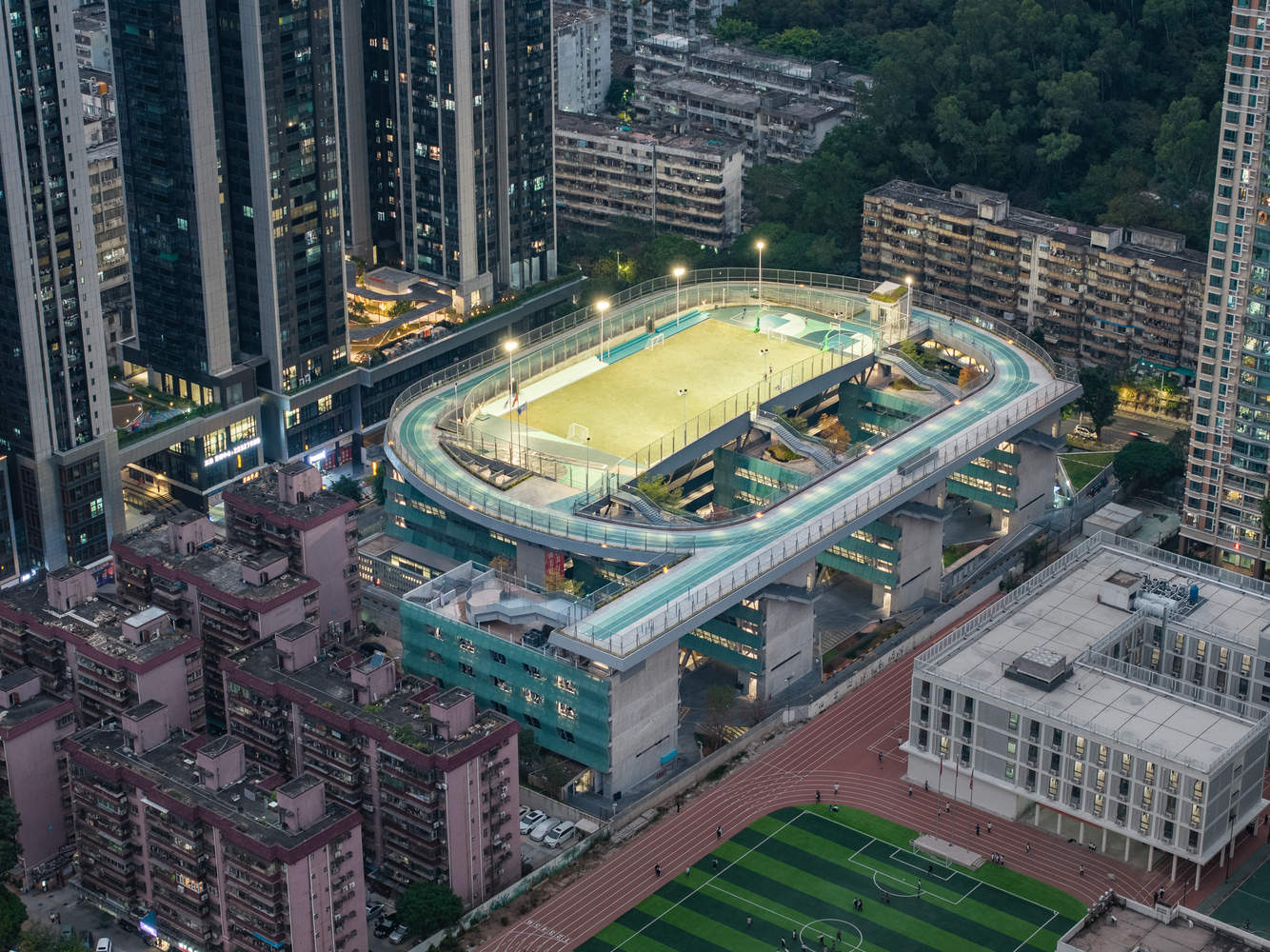
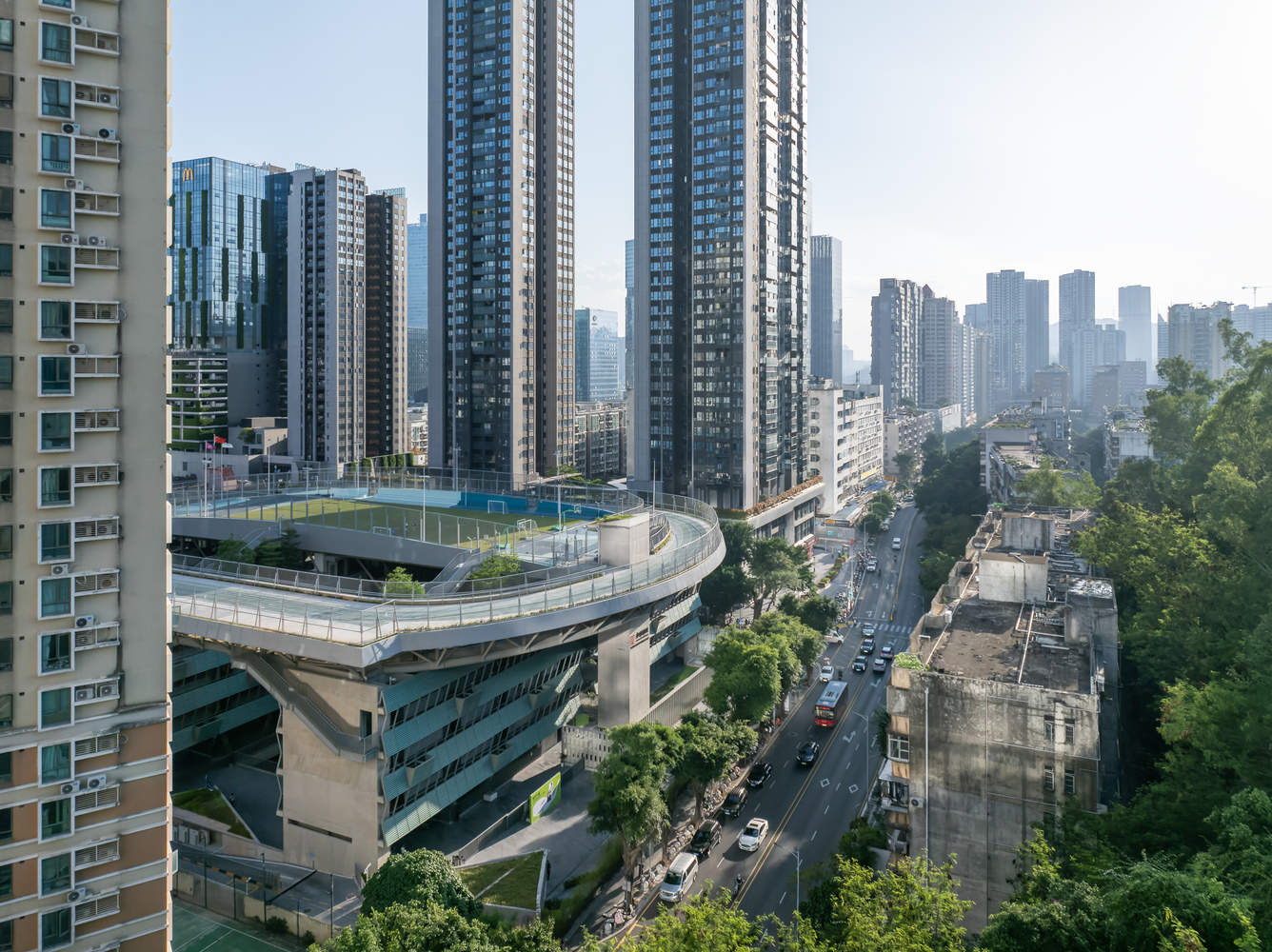
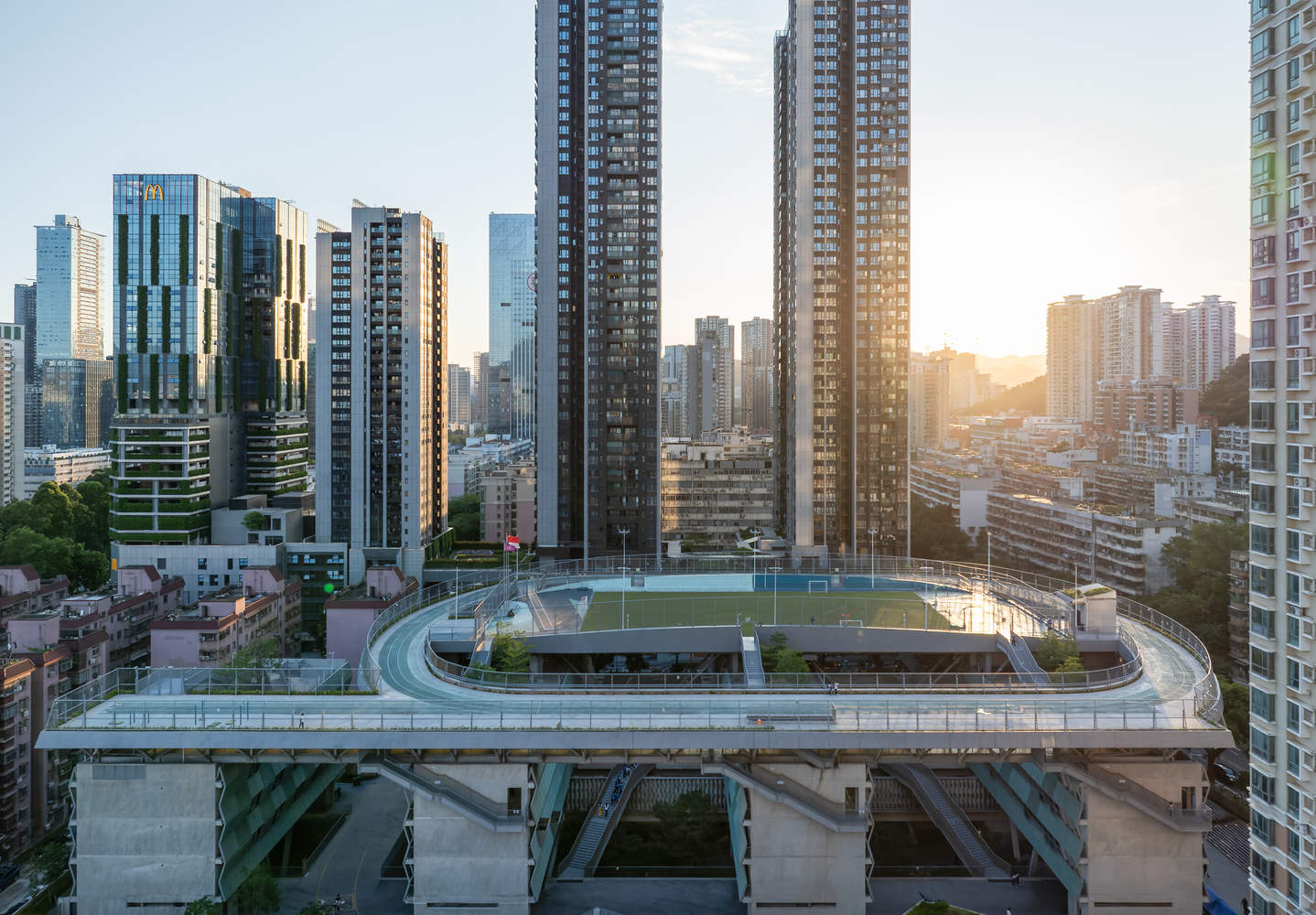
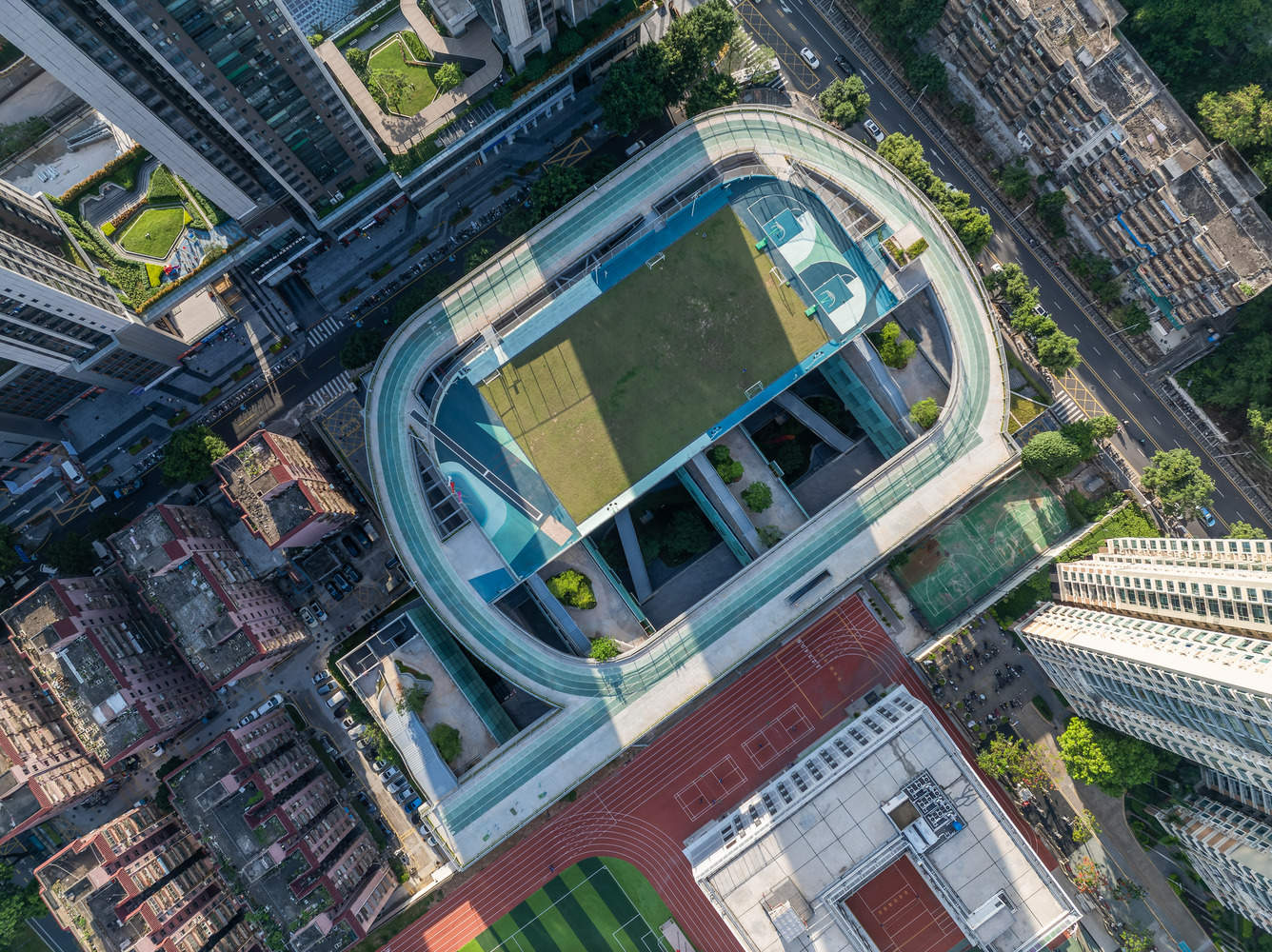
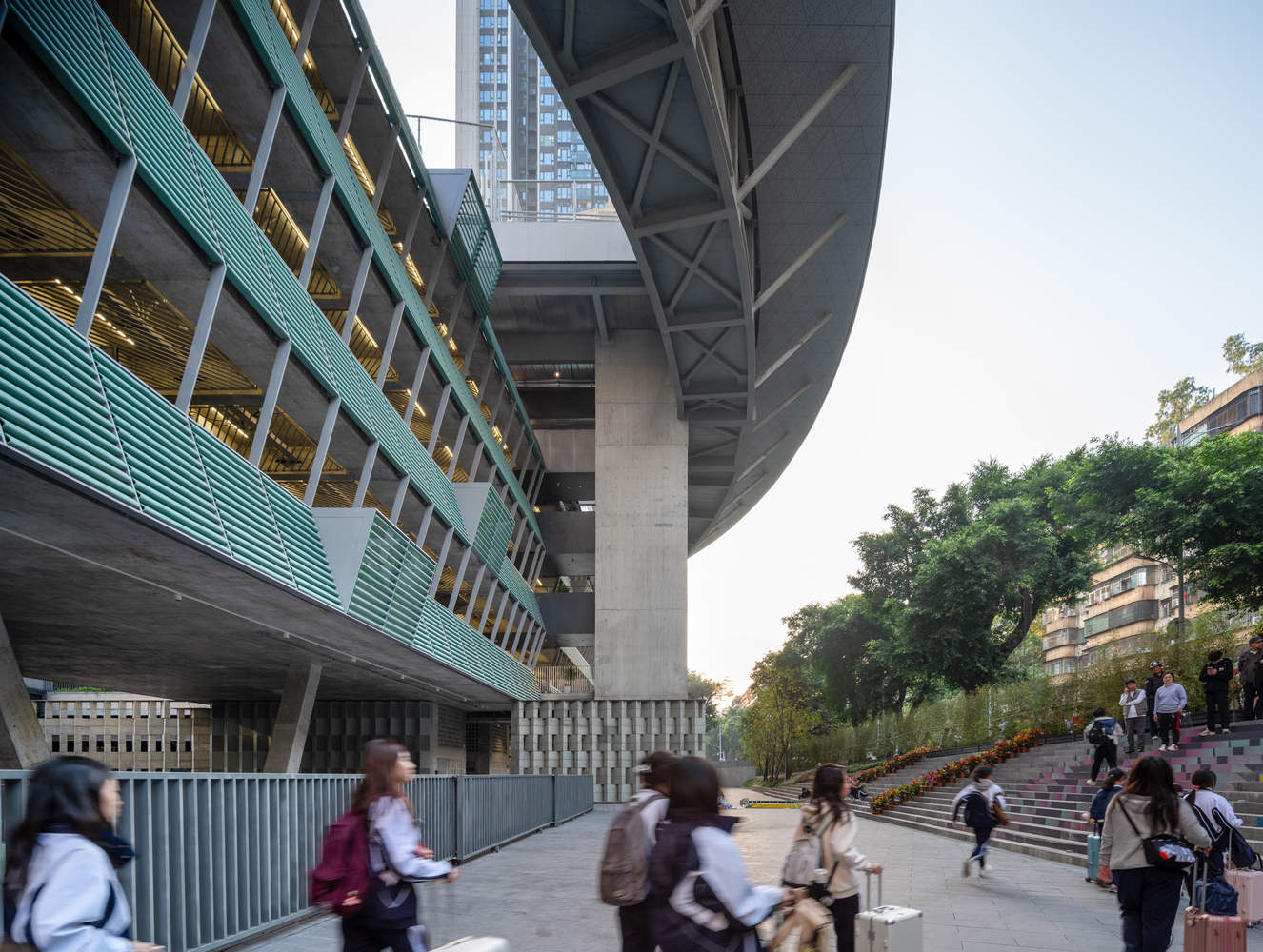
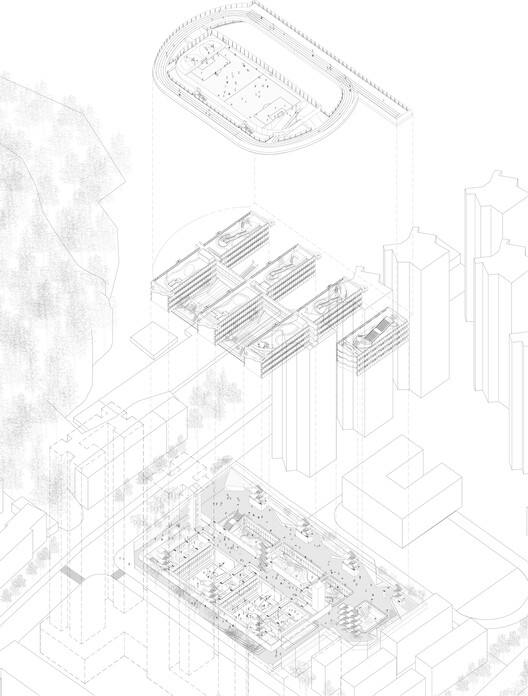
The campus land is extremely tight, and the plot ratio of the task book is as high as 3.0. The campus's strong drainage plan can only accommodate circular runways less than 200 meters long, and the remaining space becomes extremely tight for the teaching and residential buildings of Class 24 high schools. In order to cope with the high-density challenge of the venue, we have transformed the traditional mode of horizontal juxtaposition of teaching rooms and sports venues into a vertical stacking method.
校园用地异常紧张,任务书的容积率高达 3.0。校园的强排方案均只能放下小于 200 米环形跑道,且剩余空间对于 24 班高中的教学和居住用房而言变得异常紧张。为了应对场地的高密度挑战,我们将传统教学用房与体育场地水平并置的模式转换成垂直叠加的方式。
© 张超
© 吴嗣铭
© 吴嗣铭
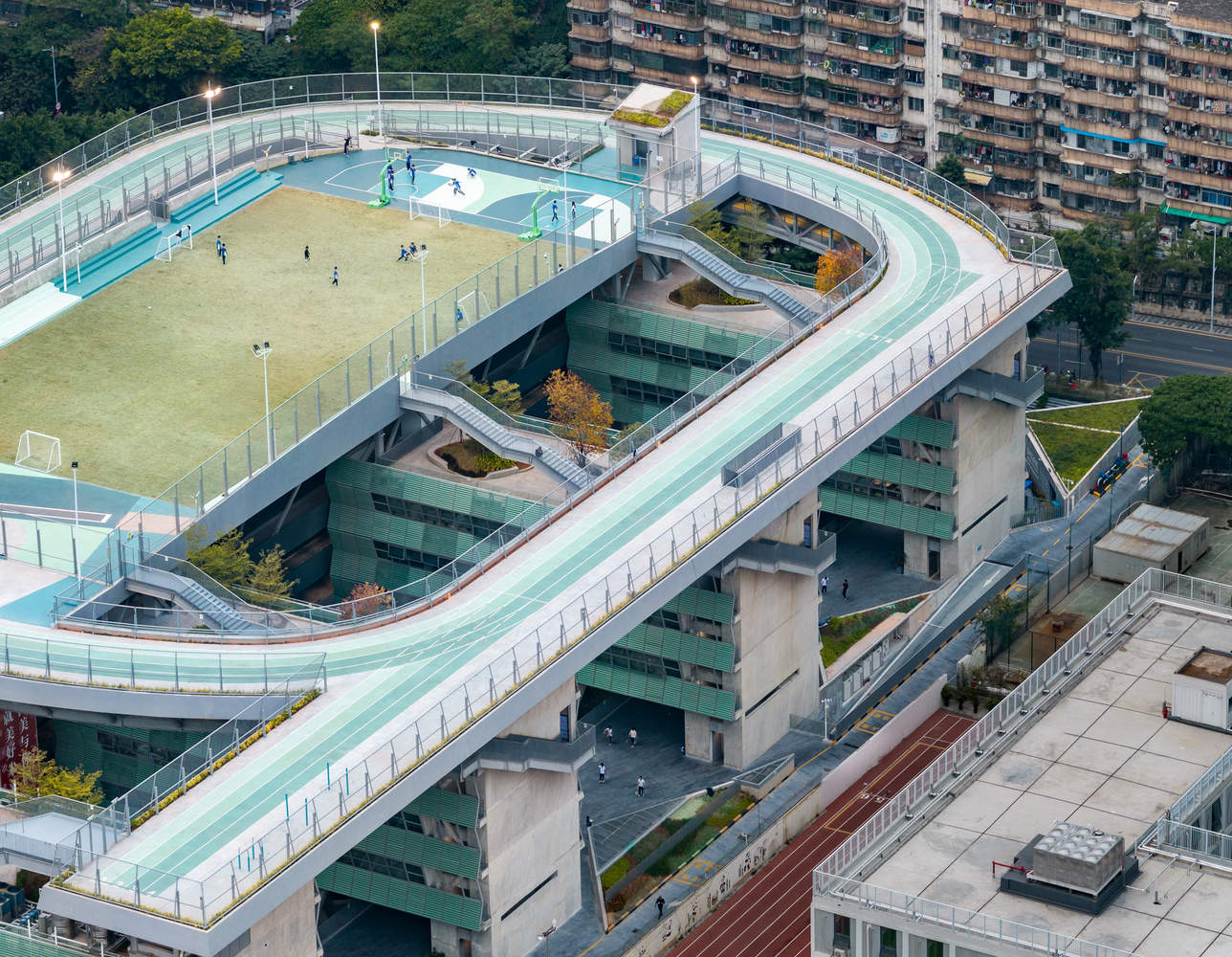
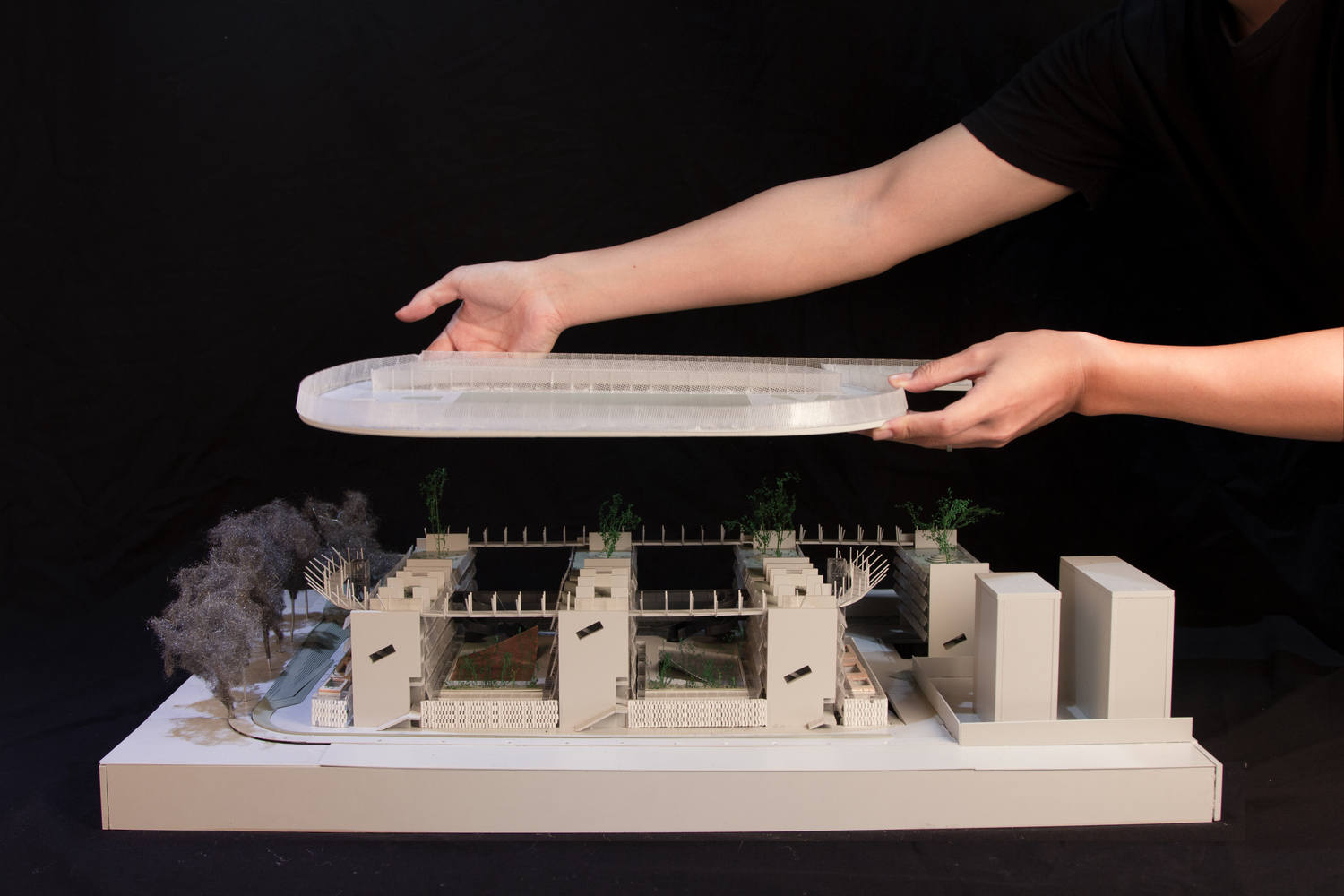
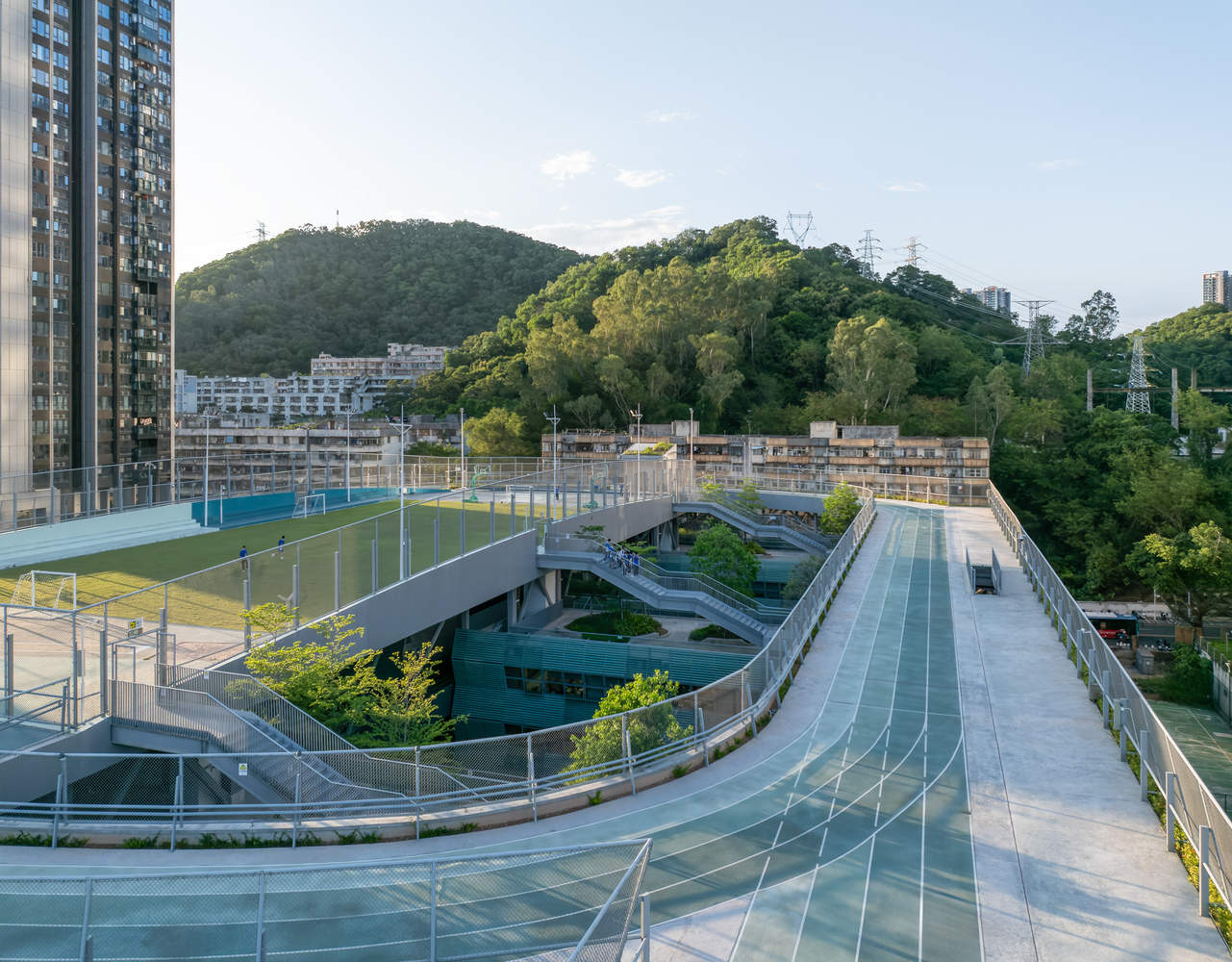
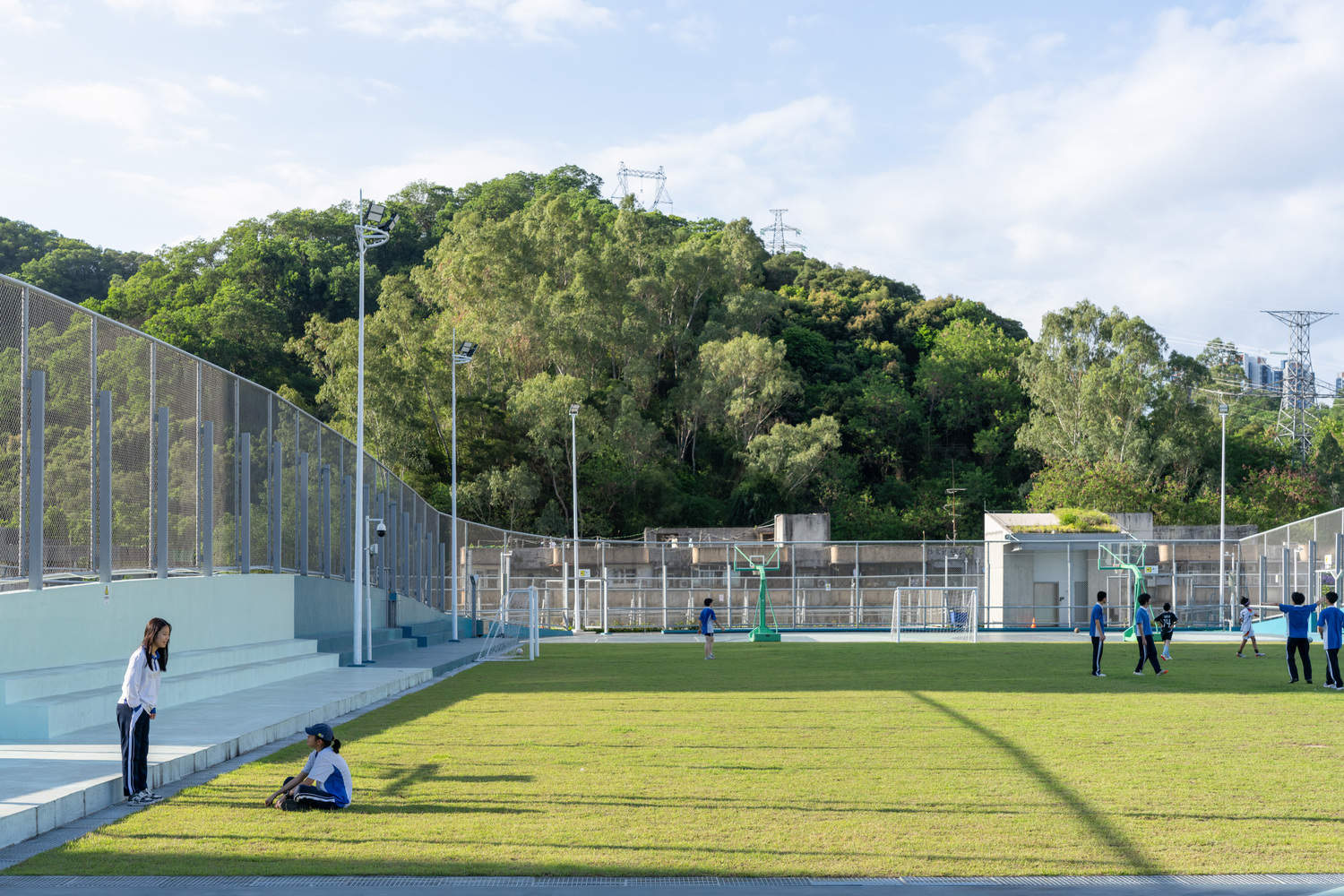
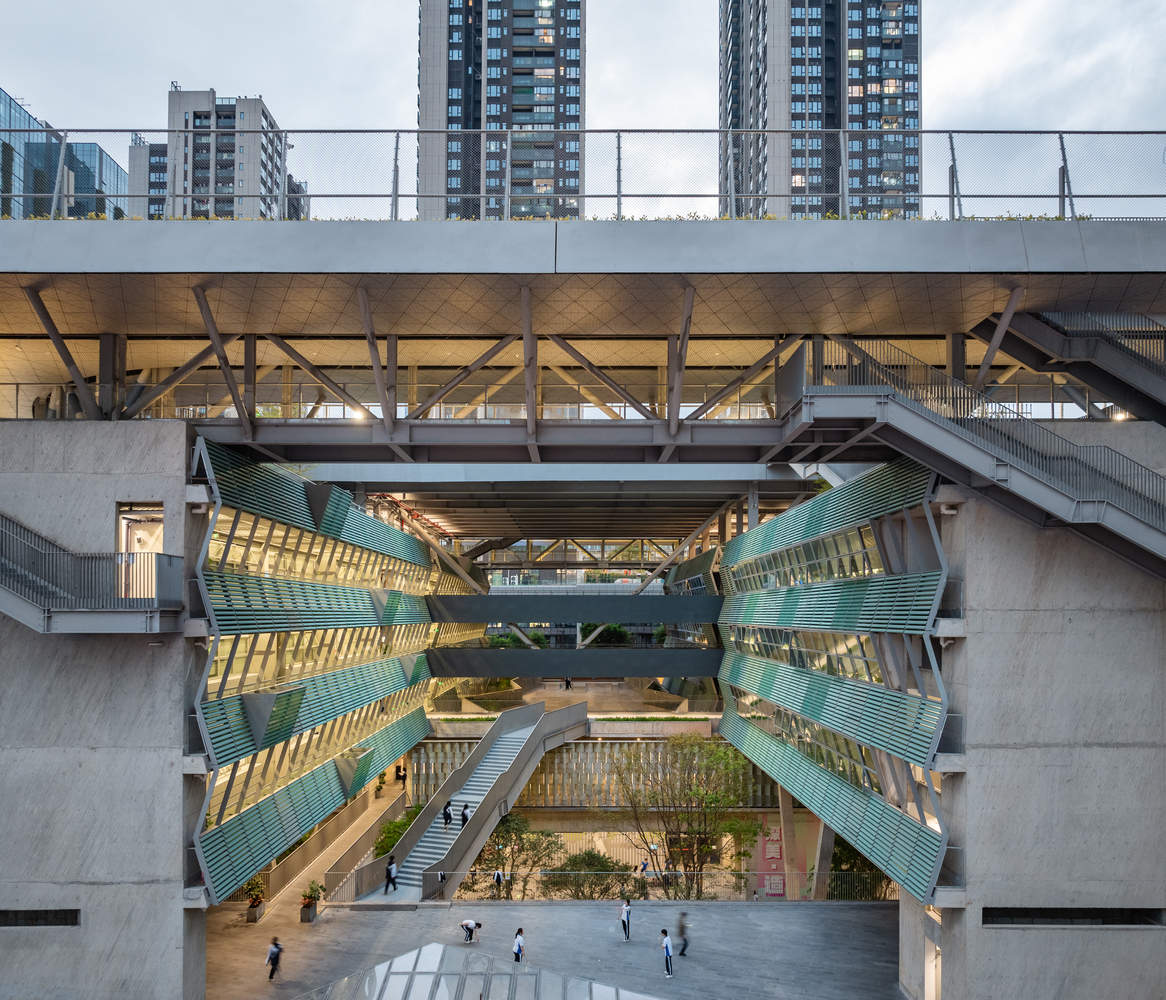
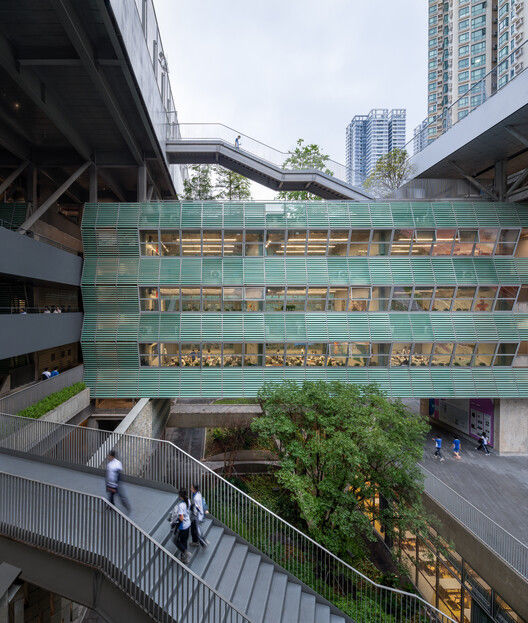
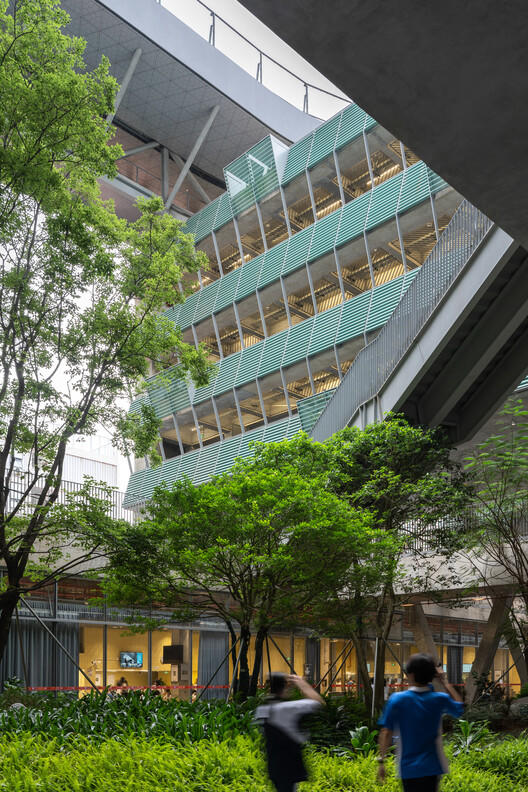
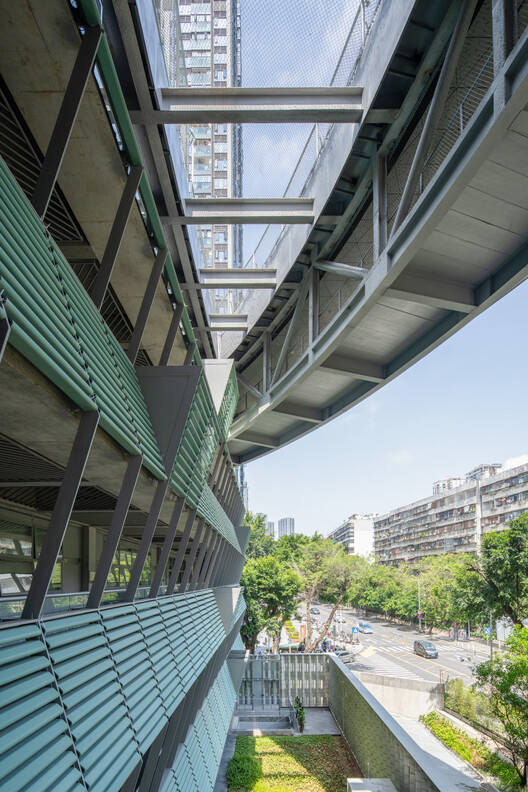
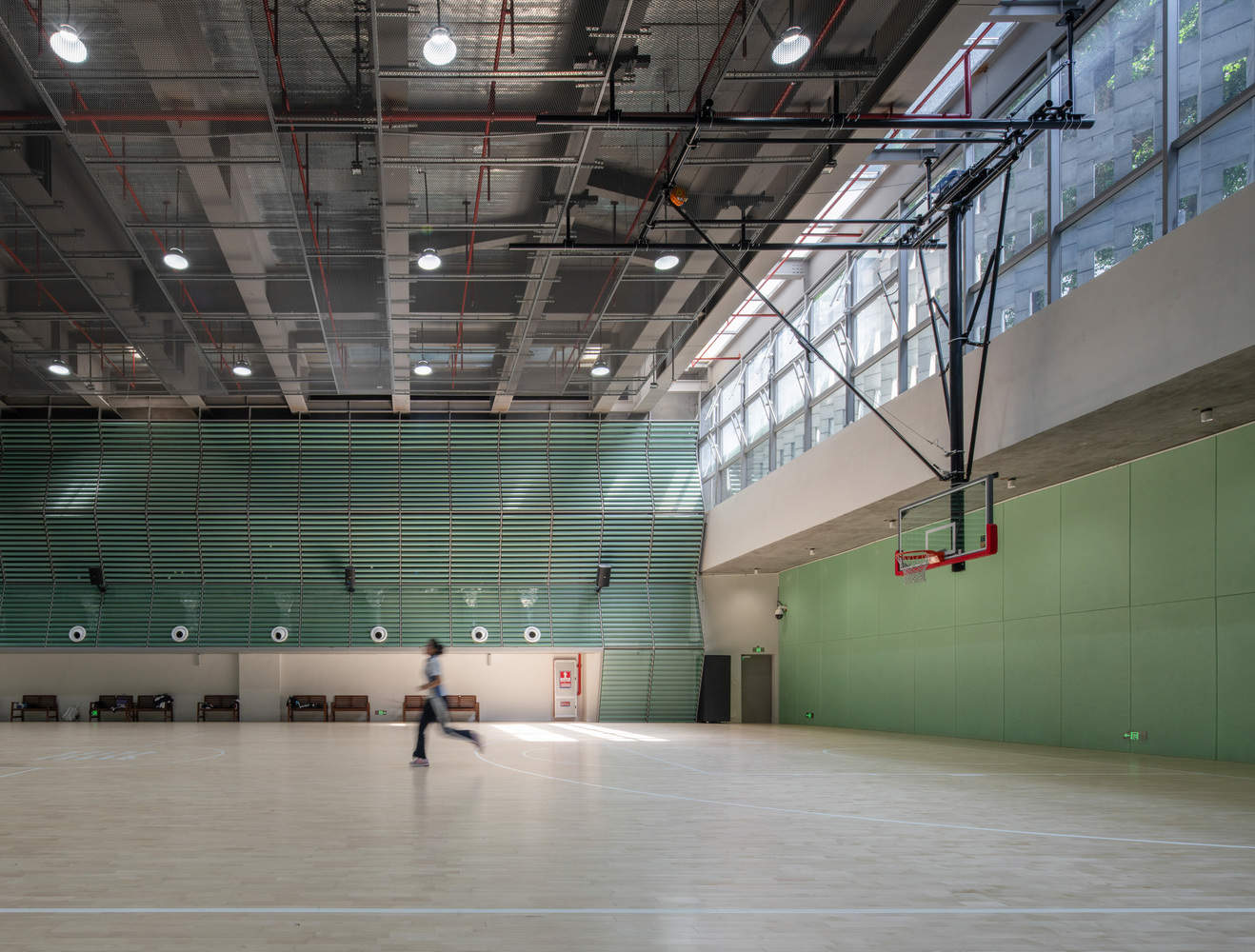
A sports field with a nearly 300 meter circular running track and a 115 meter straight running track, plus a true grass field, is suspended on top of a 5-story teaching building, providing a huge shading space for the entire campus and responding to the future possibility of urban public greening extending to the campus brought by the green walled park on the north side at the geographical level. The teaching and dormitory buildings are integrated into the existing urban fabric in a relaxed and rational manner, forming a pleasant three-dimensional campus courtyard together with the vertical rectangular sunken courtyard.
一片拥有接近 300 米环形跑道和 115 米直跑道外加真草球场的体育地盘被悬置于 5 层教学用房之上,为整个校园提供了一个巨大的遮荫空间,且以此在地理学层面回应北侧绿树成荫的围岭公园所带来的城市公共绿化向校园延伸的未来可能。教学和宿舍用房放松而理性地融入现有城市肌理,与纵向的矩形下沉庭院共同构成一组宜人的立体校园院落。
© 张超
Campus has become the spiritual palace of an efficient city
We believe that urban campus should not only be a technical response to its functions, but also an important public space node of the city, a space for urban monuments and even memorials.. As a contemporary super city, Shenzhen has not completely whitewashed the original Lingnan geographic system. There are still large stretches of rolling hills and green spaces between Luohu and Longgang urban areas, which constitute an important ecological system in the super city.
校园成为效率城市的精神殿宇
我们认为,城市校园不应只是对功能的技术性回应,它应是城市的重要的公共空间节点,应是城市记认物甚至纪念物的空间。深圳作为当代的超级城市,它并未将原有的岭南地理系统完全白板化。在罗湖与龙岗城区之间仍然有着大片连绵的丘陵绿地,它们构成了超级城市中的重要生态性系统。
© 张超
爆炸轴测图
© 张超
And the building's base is located exactly on the south side of the system. And this provides us with a source of geomorphology for spatial commemoration in this new campus. We attempted to introduce an ecological greening system, viewing the campus as an extension of this greening system in the city, and using it as the urban foundation for the three-dimensional campus space concept. Ultimately, we constructed the "Green Hall" in the old city of Luohu, which symbolizes the spiritual public space attributes of the campus. In efficiency oriented cities like Shenzhen, traditional spiritual spaces have been largely eliminated. We hope that public buildings such as campuses can become spatial nodes for reshaping the spirituality and publicness of the new urban community, giving modern cities the opportunity to have their spiritual belonging like traditional societies.
而建筑的基地刚好位于该系统的南侧。而这为我们在这个新校园的空间纪念提供了地貌学的源泉。我们尝试将生态绿化系统引入,将校园视作该绿化系统的在城市中的延伸,并以此作为立体校园空间构想的都市学根基,最终构筑了这幢罗湖老城当中的“绿色殿宇”,“殿宇”的称谓象征校园精神性公共空间属性。在深圳此类效率至上的城市中,传统精神空间基本被消灭。我们希望类似校园一类公共建筑能成为重塑新城市共同体中的精神性和公共性的空间节点,让现代城市也有机会如传统社会一样拥有它们的精神归属地。
© 张超
© 吴嗣铭
© 张超
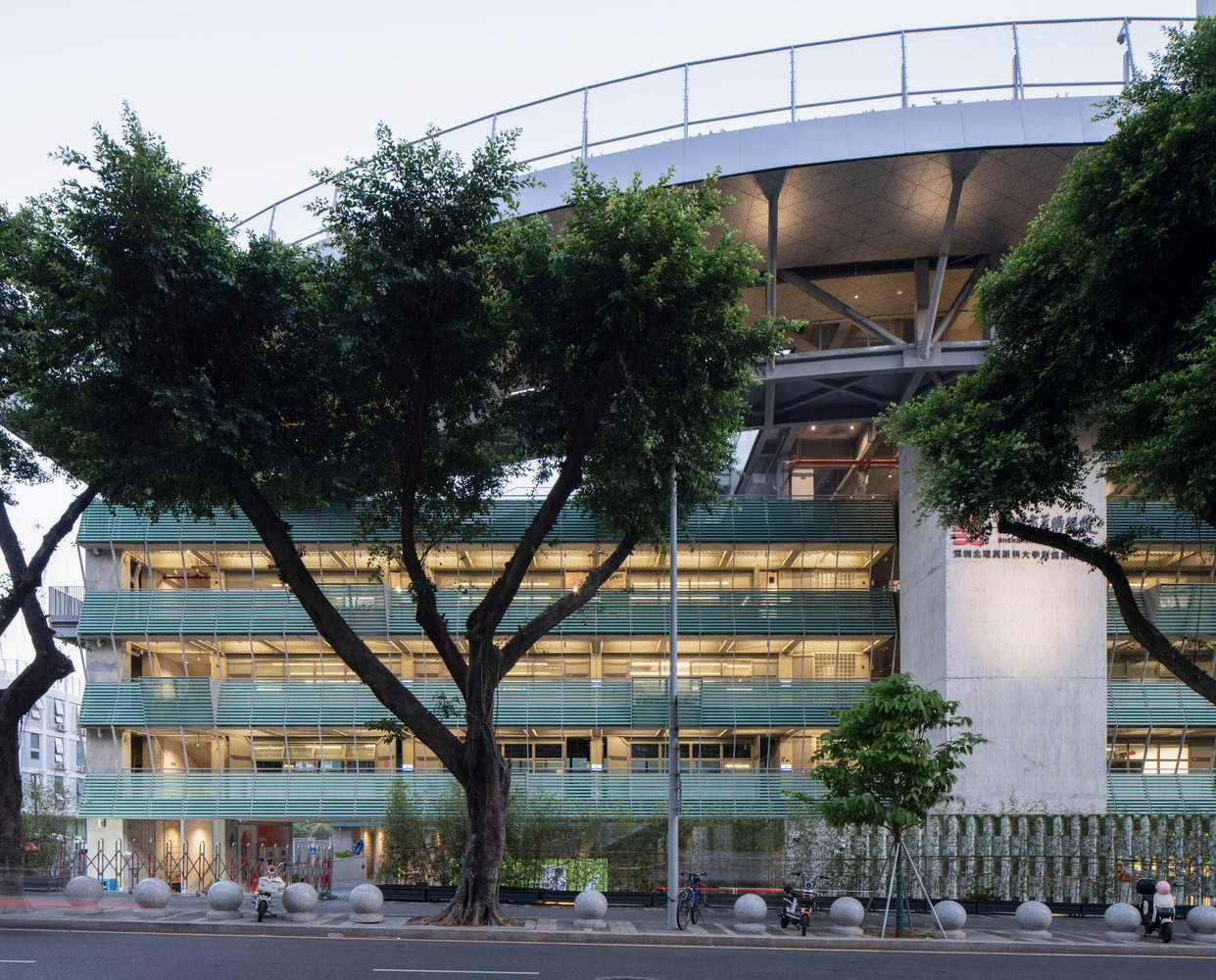
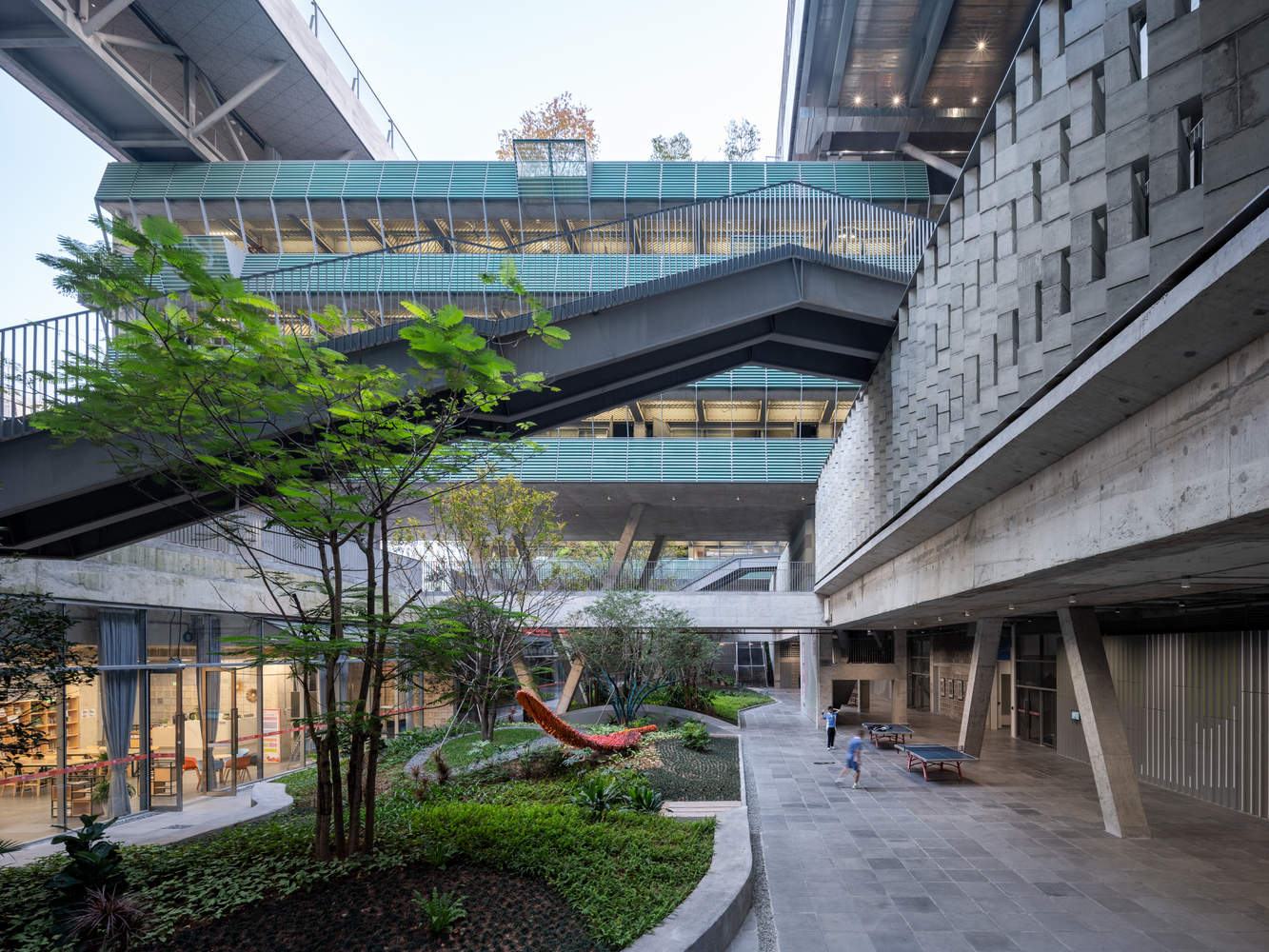
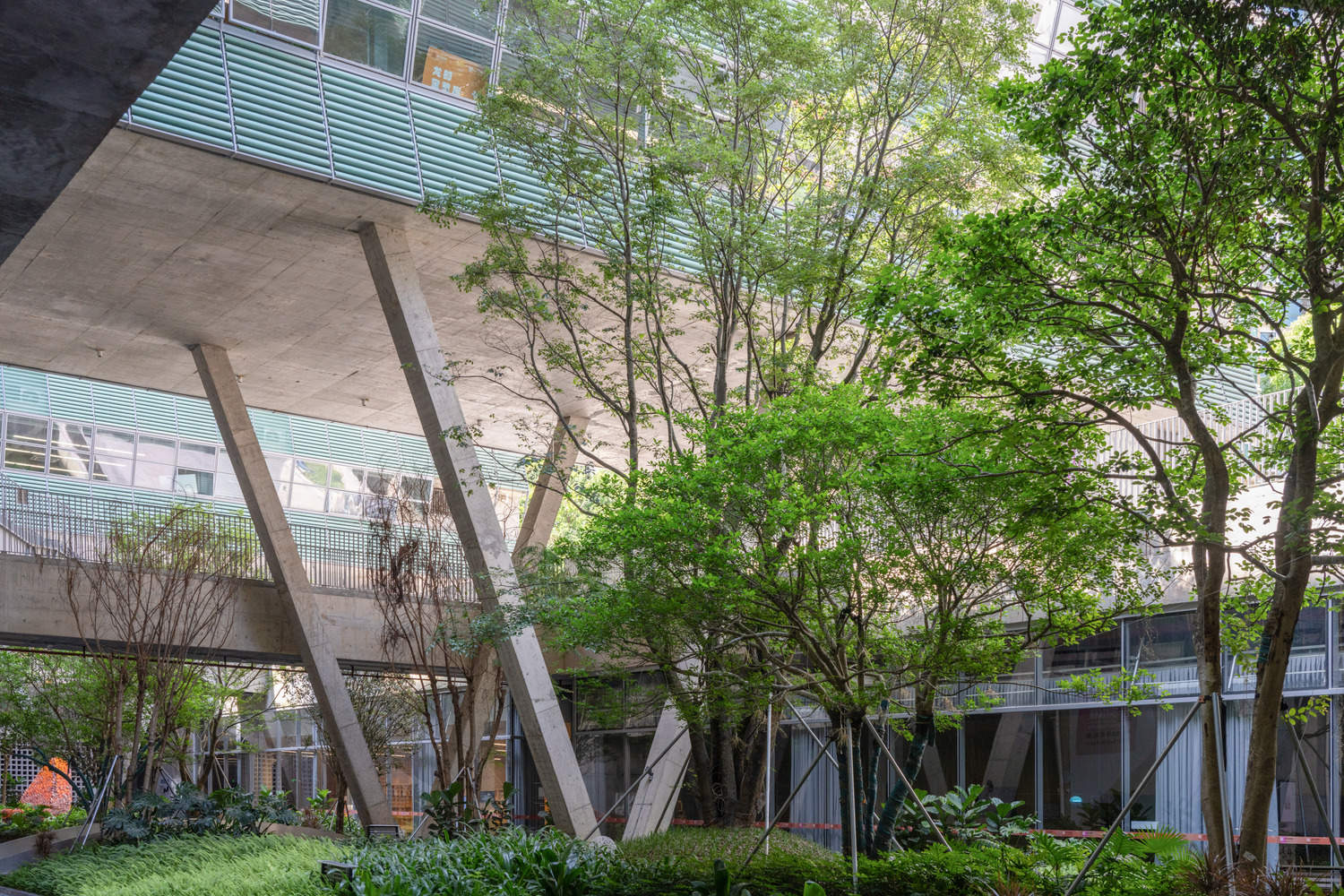
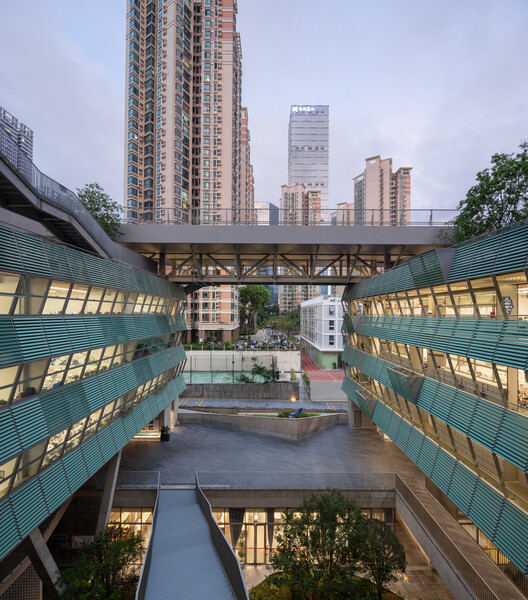
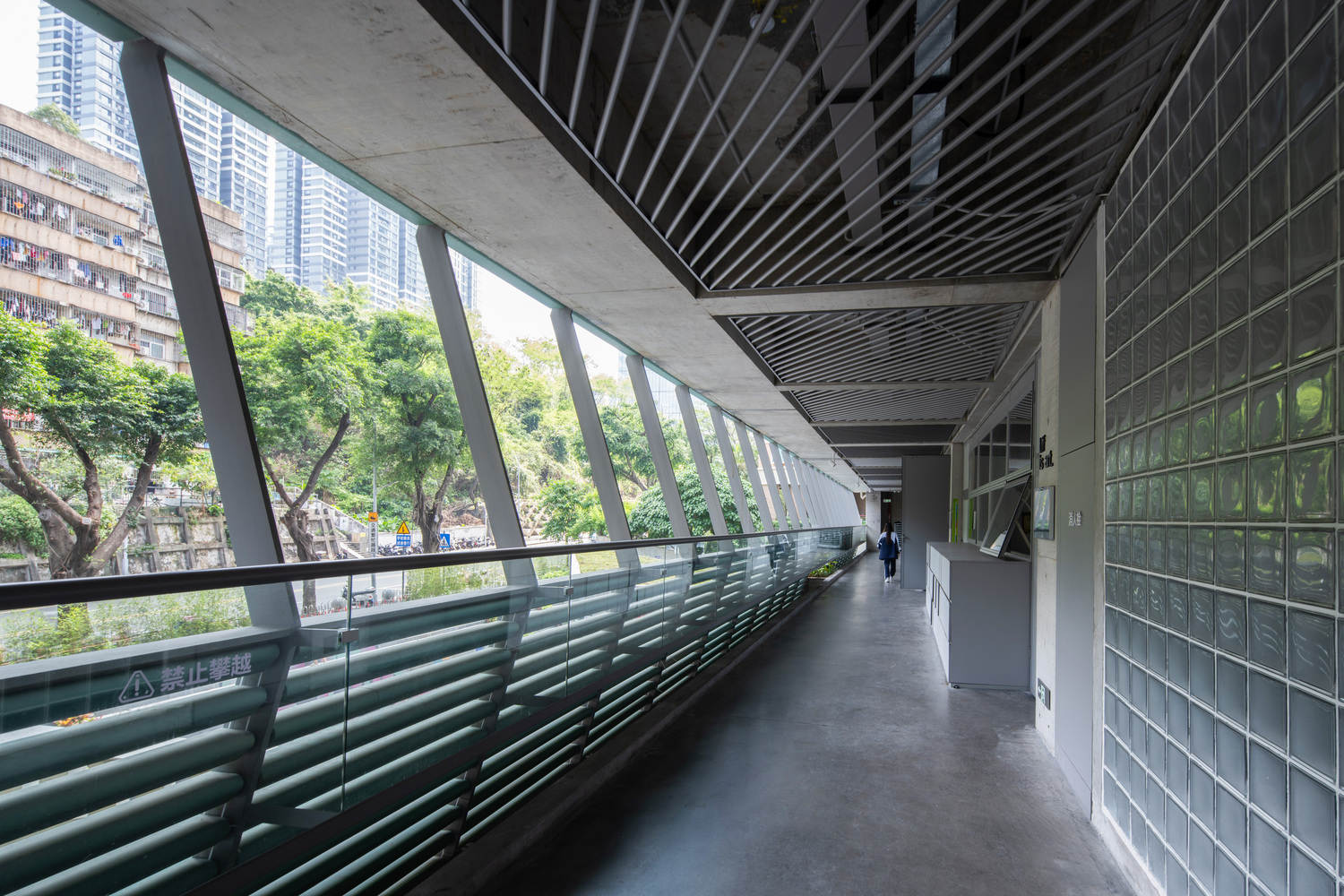
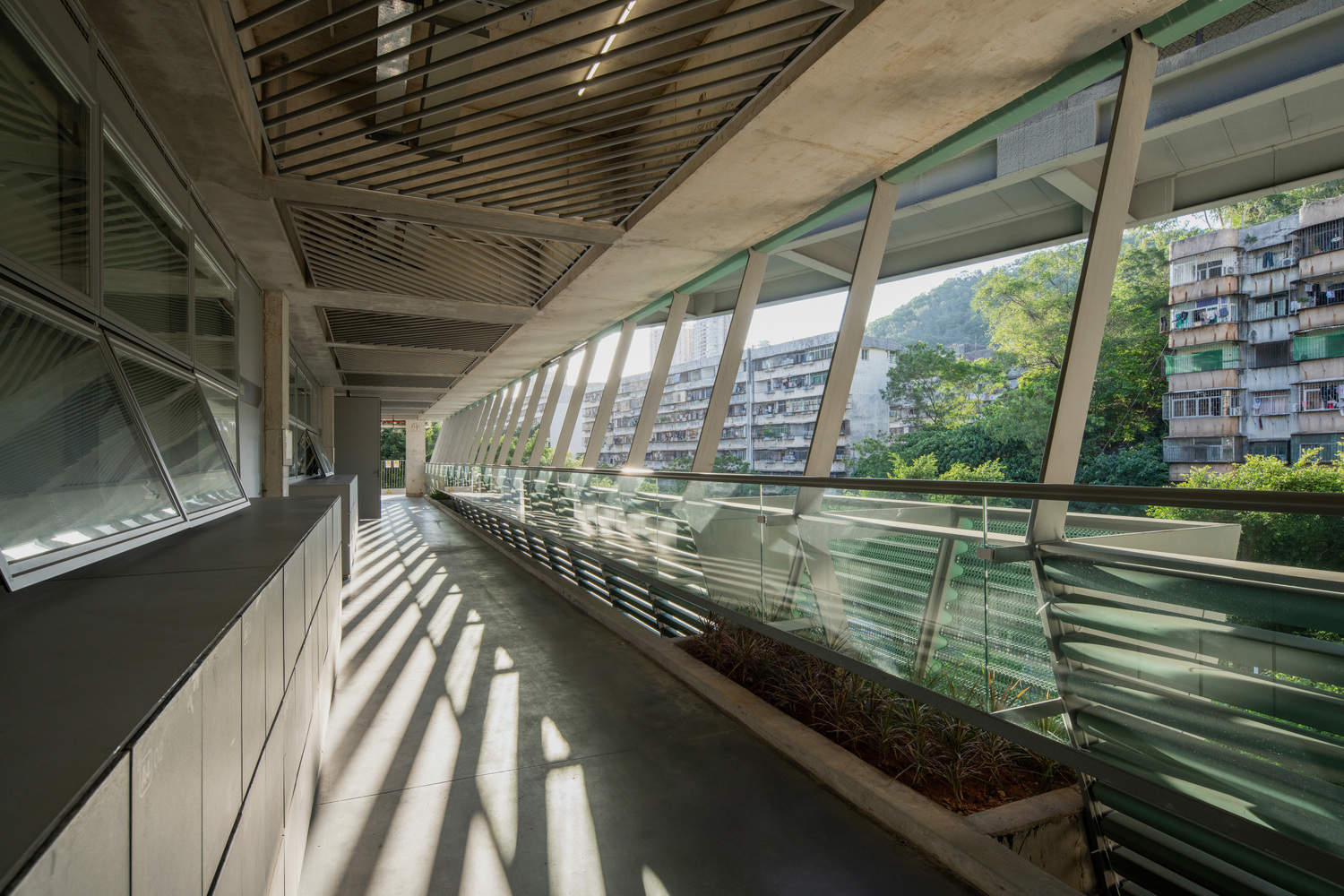
The realization of the spiritual space of the urban "palace" in art schools relies on the construction of spatial narrative vocabulary (morphology) within the campus, and the way to construct vocabulary is through structural systems. The vertical space of the campus is divided into three levels, with the bottom being a sunken pedestal below positive and negative zero. It includes an underground parking lot on the negative second floor and campus public facilities surrounding the sunken garden on the negative first floor. There are three levels of rationally arranged teaching and living spaces in the middle, and an aerial track and field open to the sky at the top. All three of them are elevated spaces that blend with green gardens, adapt to the Lingnan climate, and allow users to freely travel within them.
美术学校城市“殿宇”精神空间的实现依仗校园内部的空间叙事语汇(morphology)的构筑,而构筑语汇的途径是结构系统。校园竖向空间上分为三个层次,最底下是正负零以下的下沉式基座,它包括负二层的地下停车场和负一层环绕下沉庭园的校园公共设施。中间为 3 层的理性布置的教学空间和居住空间,顶上则是向天空开放的空中田径场。它们三者之间均为与绿化庭园相融、适应岭南气候及使用者在其中可自由游历的架空空间。
© 吴嗣铭
© 吴嗣铭
© 吴嗣铭
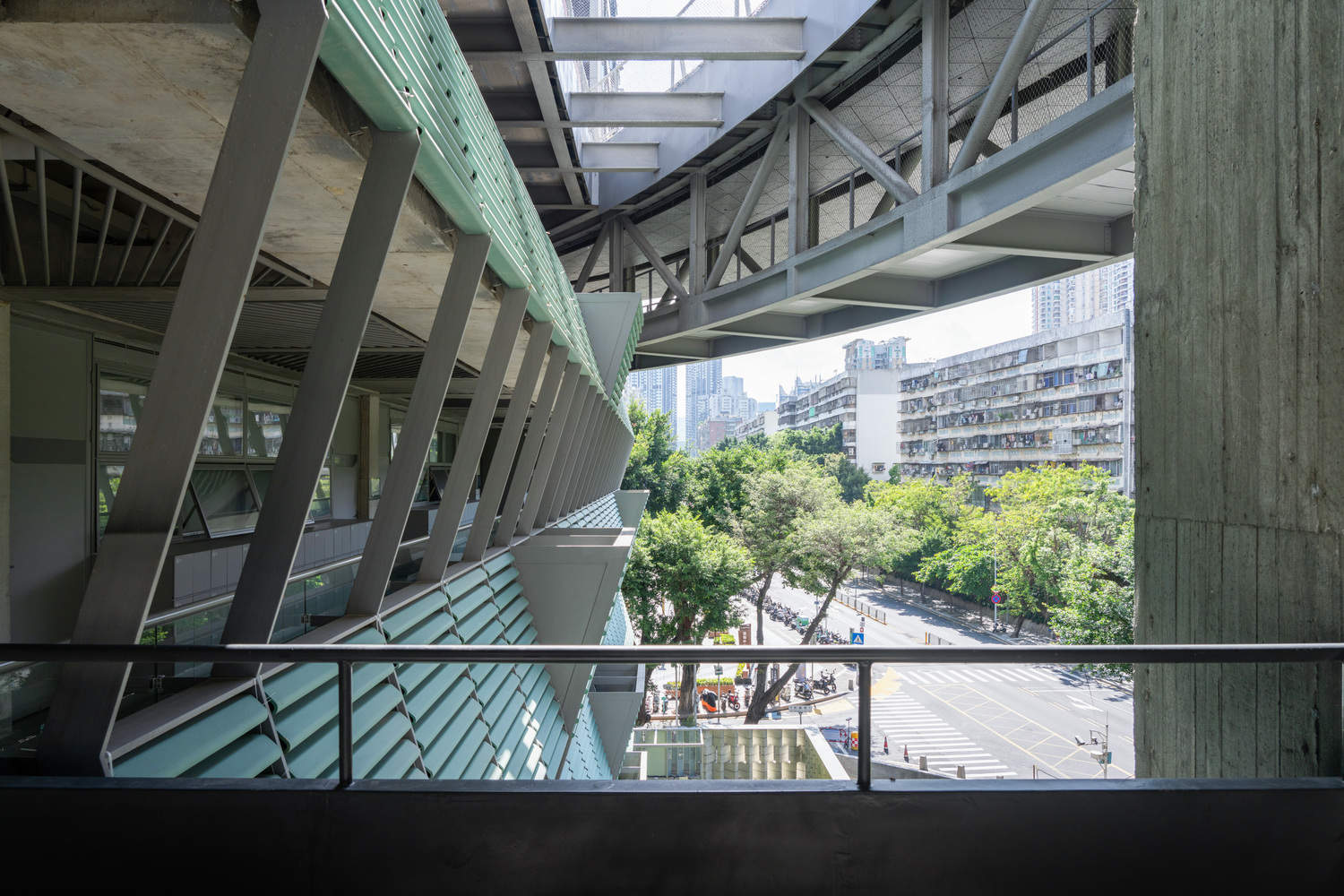
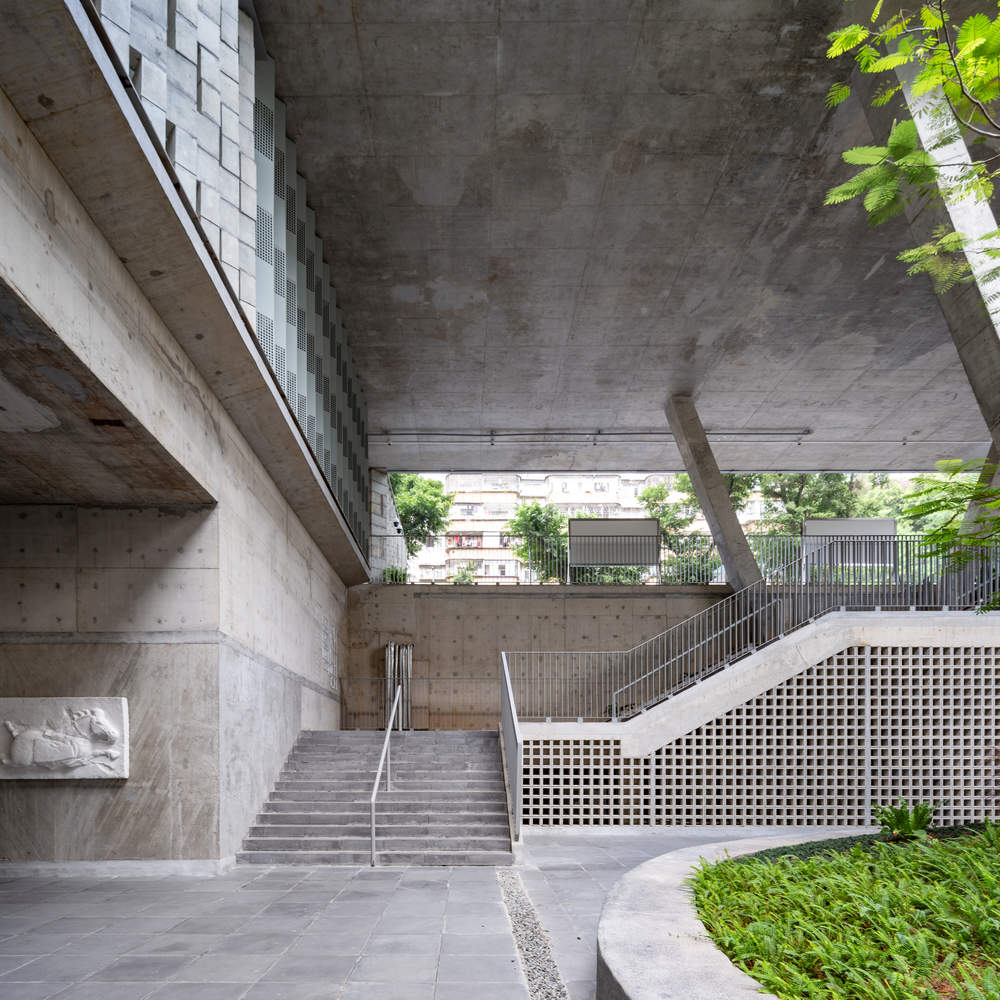
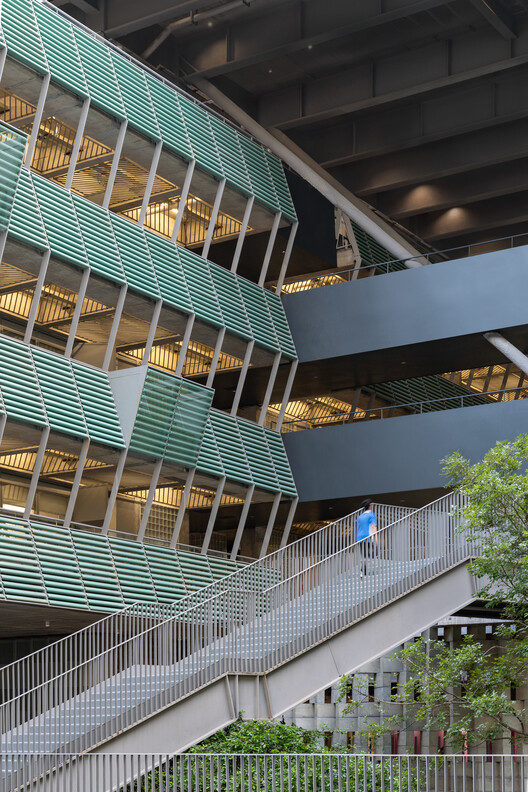
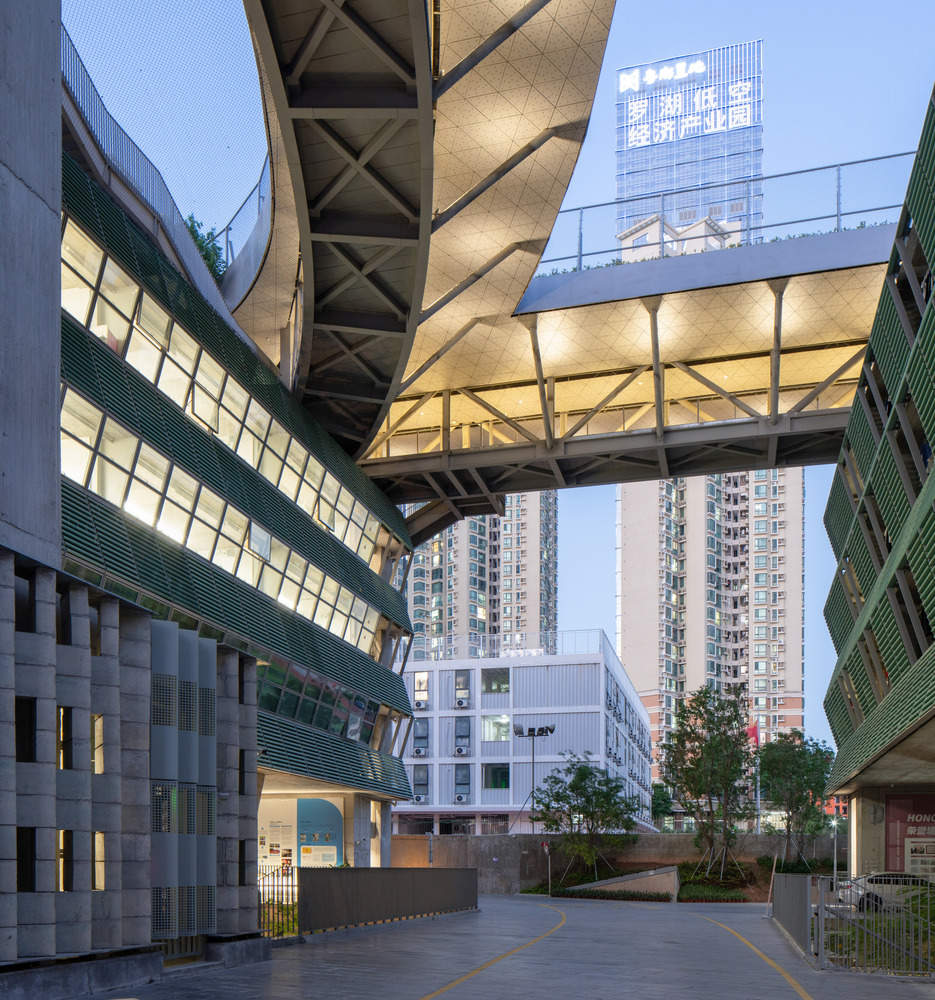
The three spatial levels each have their own structural layout logic, and their structural parts are connected and continued vertically, while obtaining independence through different levels of structural transformation in open areas. The interconnected parts of the structure are hidden by specific functional spaces, while the transformed structural components are displayed in open spaces, becoming spatial identifiers for both the interior and exterior of the campus. The vertical unity and variation, combined with the different elevations of the courtyard and the spatial hierarchy inside and outside, make the campus experience both consistent and varied.
三个空间层次各自有自己的结构布置逻辑,它们的结构部分地上下贯通延续,又在开放部位进行不同层次的结构变换而获得独立性。结构贯通部分被具体的功能空间所隐藏,而转换的结构构件则被展现于开放空间当中,成为校园内部和外部的空间标识。竖向的统一与变化,加上不同标高的围院与内外的空间层次让校园体验既自洽、又富于变化。
© 吴嗣铭