Jiuyao Kindergarten/Zhubo Design, Futian District, Shenzhen
深圳市福田区九曜幼儿园 / 筑博设计
空间构思的独特性与创新:九曜幼儿园的设计最令人印象深刻的是其对“小世界,小宇宙”的独特诠释。在极其有限的用地条件下,设计师并没有采取常规的堆叠模式,而是巧妙地运用了“十字”这一古老而普世的符号作为空间的基本骨架。通过对十字形结构的旋转和叠加,打破了单调重复的空间模式,营造出丰富多样的空间层次。这种旋转不仅在外观上产生了虚实相间的视觉效果,更在内部营造了不同楼层之间既相似又不同的体验,激发了孩子们对空间方位的探索。这种设计理念是对传统幼儿园设计的一次大胆突破,展现了设计师对儿童空间体验的深刻理解。
设计理念的深度与文化内涵:该项目的精髓在于其设计理念所蕴含的深厚文化内涵。设计师将“十字”这一横跨东西方文化、贯穿古今的符号巧妙地融入设计,赋予了幼儿园空间更深层次的意义。这种设计选择并非随意为之,而是源于对宇宙、对人类感知世界的深刻思考。通过十字结构的旋转,设计师试图打破孩子们对事物规律的固化认知,引导他们从空间经验中获得更开放的视角。这种设计理念超越了纯粹的建筑层面,更关注于对儿童认知模式的培养,体现了设计师对教育与空间的融合的深刻理解。设计将简单的几何语言与深刻的文化内涵巧妙结合,赋予了幼儿园独特的灵魂。
空间体验的营造与细节处理:项目的亮点在于对空间体验的极致追求。通过十字结构的旋转和叠加,设计师创造了包括架空层、阳台、露台等多种类型的空间,丰富了孩子们在幼儿园内的活动体验。不同楼层教室窗外的景观差异,以及穿梭于中庭的楼梯所带来的方位感变化,都极大地提升了空间的趣味性和互动性。此外,项目对细节的处理也值得称赞,看似简单的形体语言和纯净的白色,营造出一种简洁而富有想象力的氛围。这种设计手法在有限的空间内实现了视觉上的最大化延伸,激发了孩子们的好奇心和探索欲望。整个设计在有限的条件下,创造了无限的空间可能性,充分体现了设计师卓越的专业素养。
© ACF
© ACF
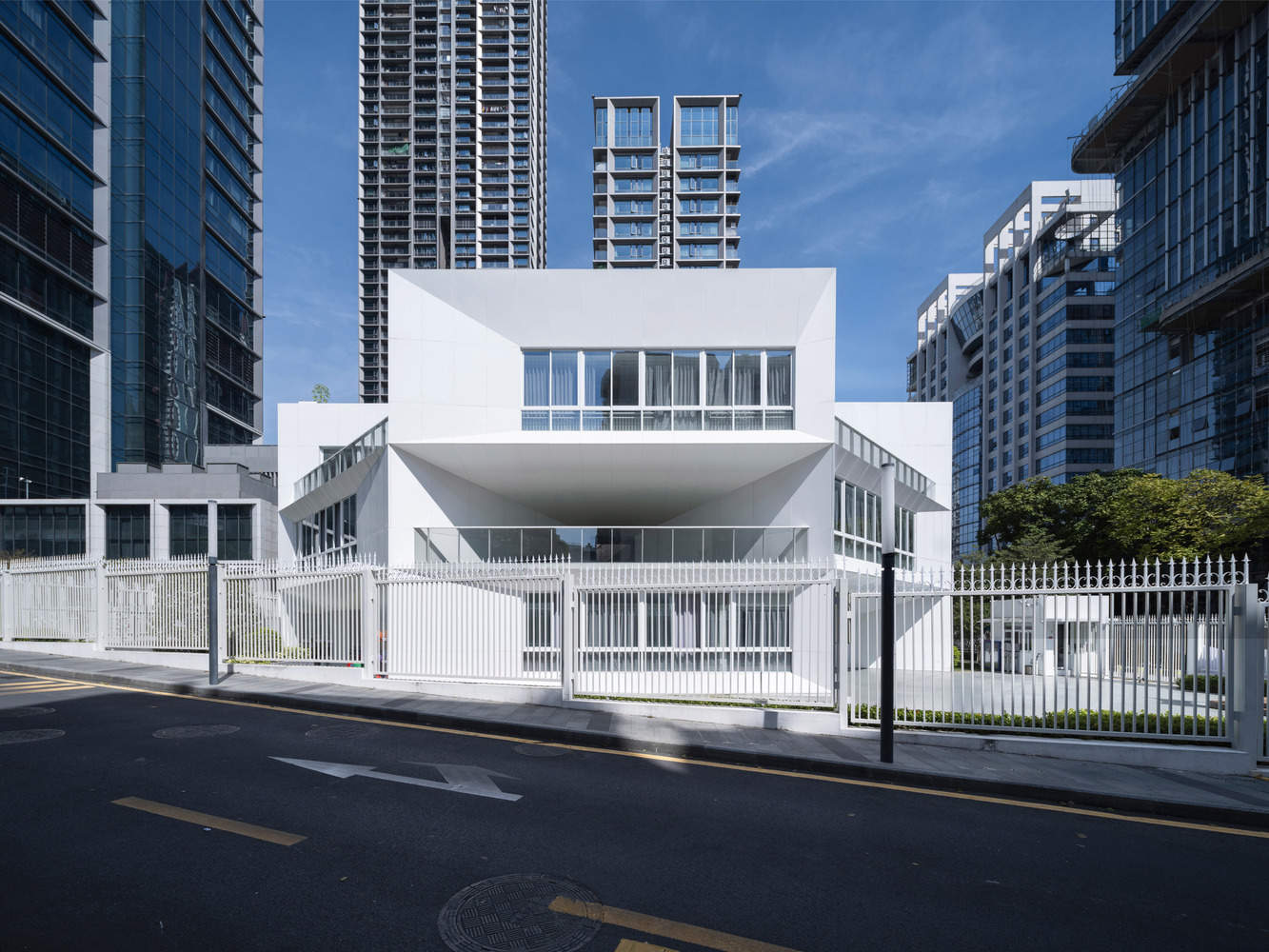
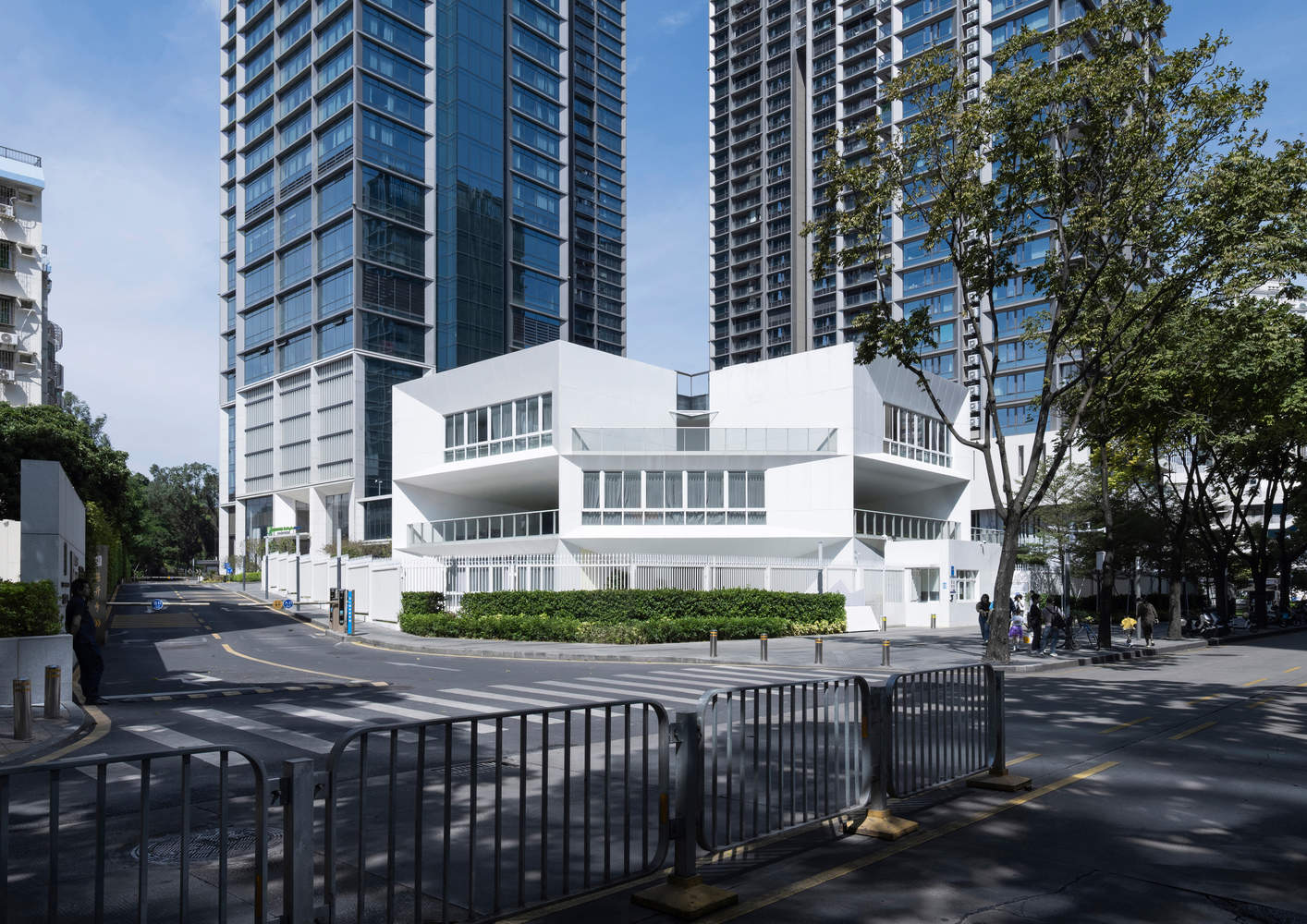
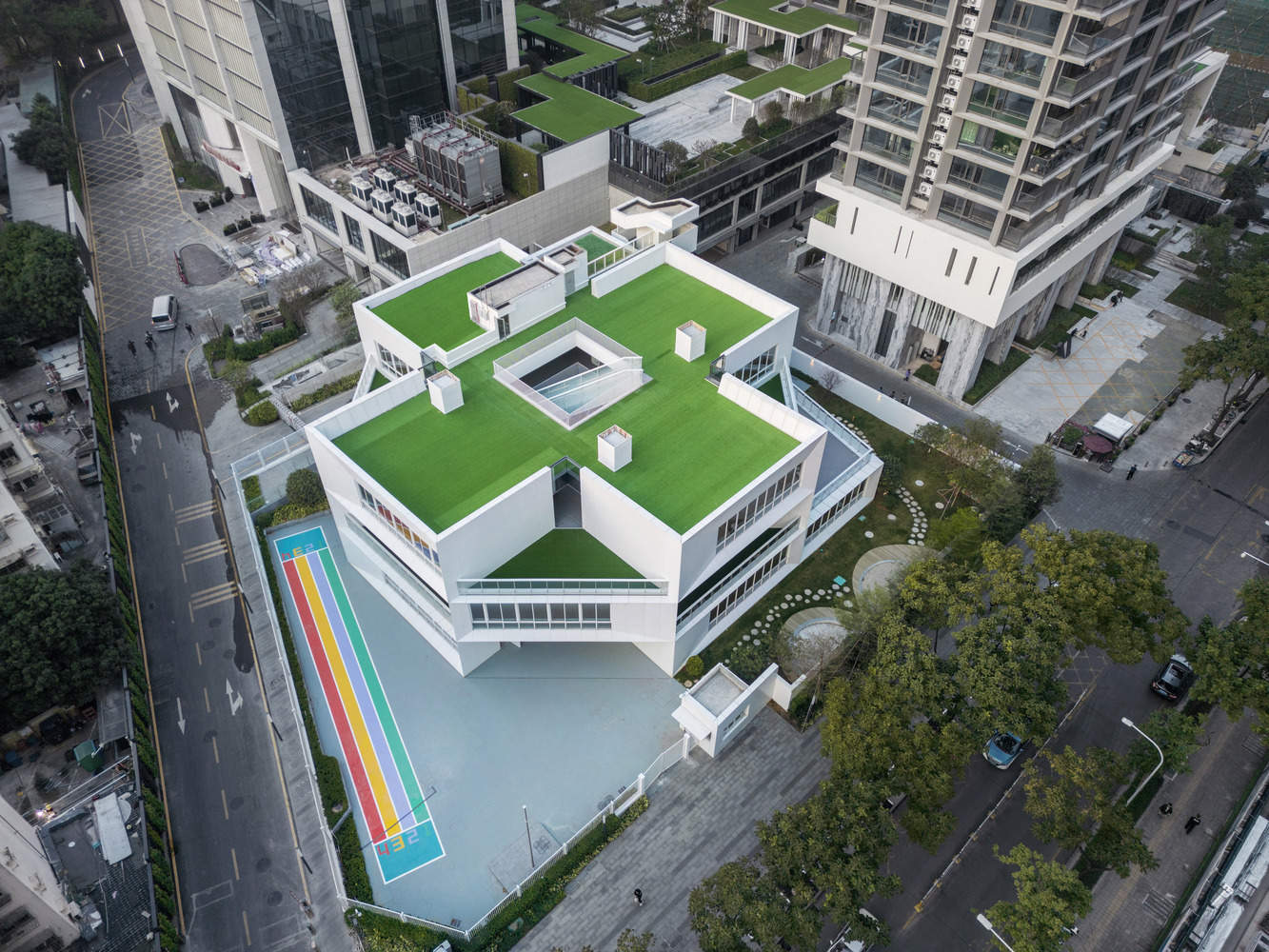
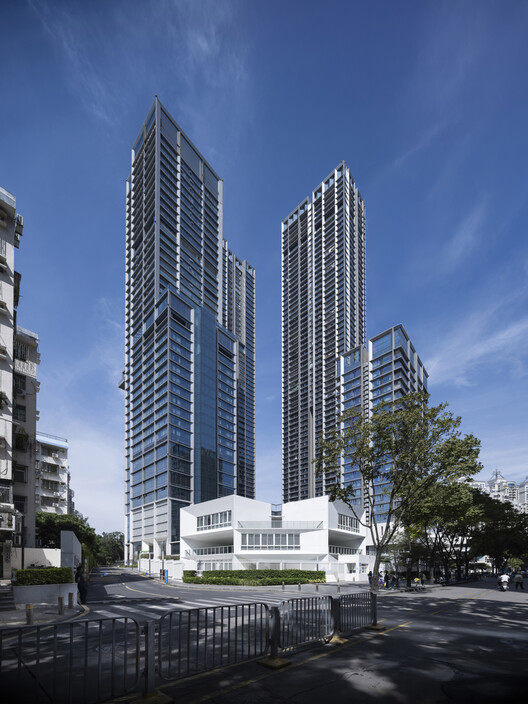
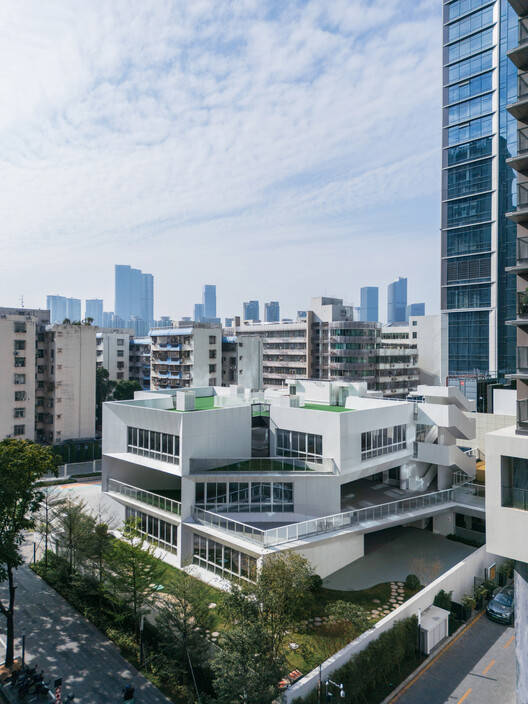
The project is located at the corner of a super high-rise project site on the south side of a golf course in Futian District, Shenzhen. The construction land is very tight, so there is not much extra space left if basic functions are included. Although the space in this kindergarten is small, we still hope to create a simple and interesting space for the children.
项目位于深圳市福田区高尔夫球场南侧一个超高层项目用地的转角处。建设用地非常紧张,把基本的功能落进去就没有太多余地了。虽然这个幼儿园空间狭小,但我们还是希望给孩子们创造一个简单有趣的空间。
© ACF
分析图
© ACF
We believe that kindergarten should be a 'small world, small universe' for children, rather than a 'prison' for them. But how can we fit a 'little universe' into a small kindergarten?
我们觉得,幼儿园应该是孩子们的一个“小世界,小宇宙”,而不是看管孩子的“监狱”。可是,如何才能把一个“小宇宙”装进在小小的幼儿园呢?
© ACF
© ACF
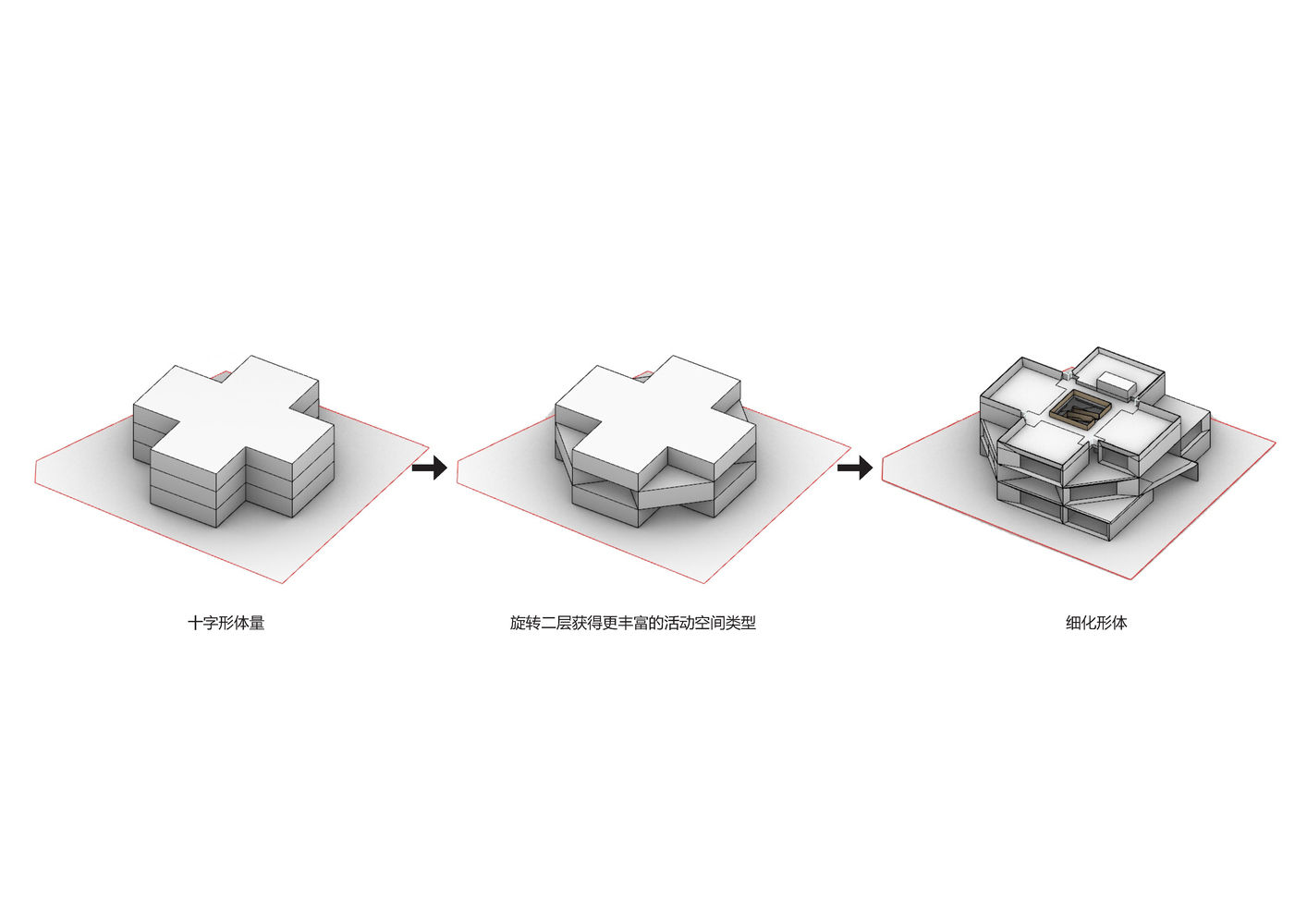
We think of an ancient symbol - the cross. The ancient Romans believed that the structure of the universe was simplified to a cross, representing the four most basic directions perceived by humans. After 1600, Descartes invented the Cartesian coordinate system, quantifying the entire world. The Cartesian coordinate system can also be seen as a cross; China also has a similar idea, where the Eight Trigrams point to eight directions, which is a combination of a cross rotated 45 degrees to form a meter shaped character, used to describe the direction of the world.
我们想到一个古老的符号 —— 十字。古罗马人认为,宇宙的结构简化到最后就是一个十字,代表了人感知到的最基本的四个方向。1600 年后笛卡尔发明了笛卡尔坐标系,把整个世界都量化了,笛卡尔坐标系也可以看作是一个十字;中国也有类似的思想,八卦指向八个方位,就是将一个十字旋转 45° 叠加而成的米字,藉此来描述世界的方位。
© ACF
© ACF
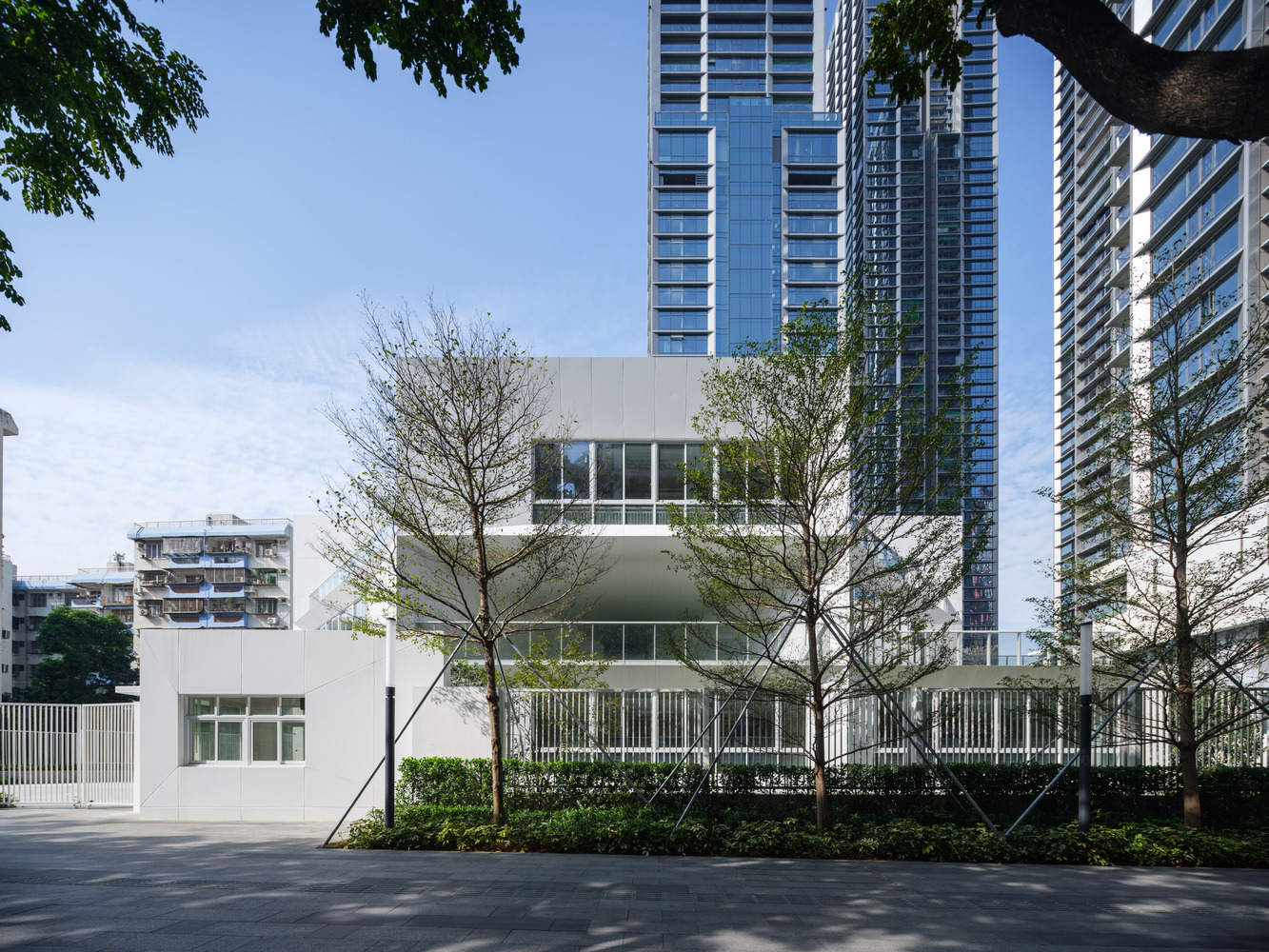
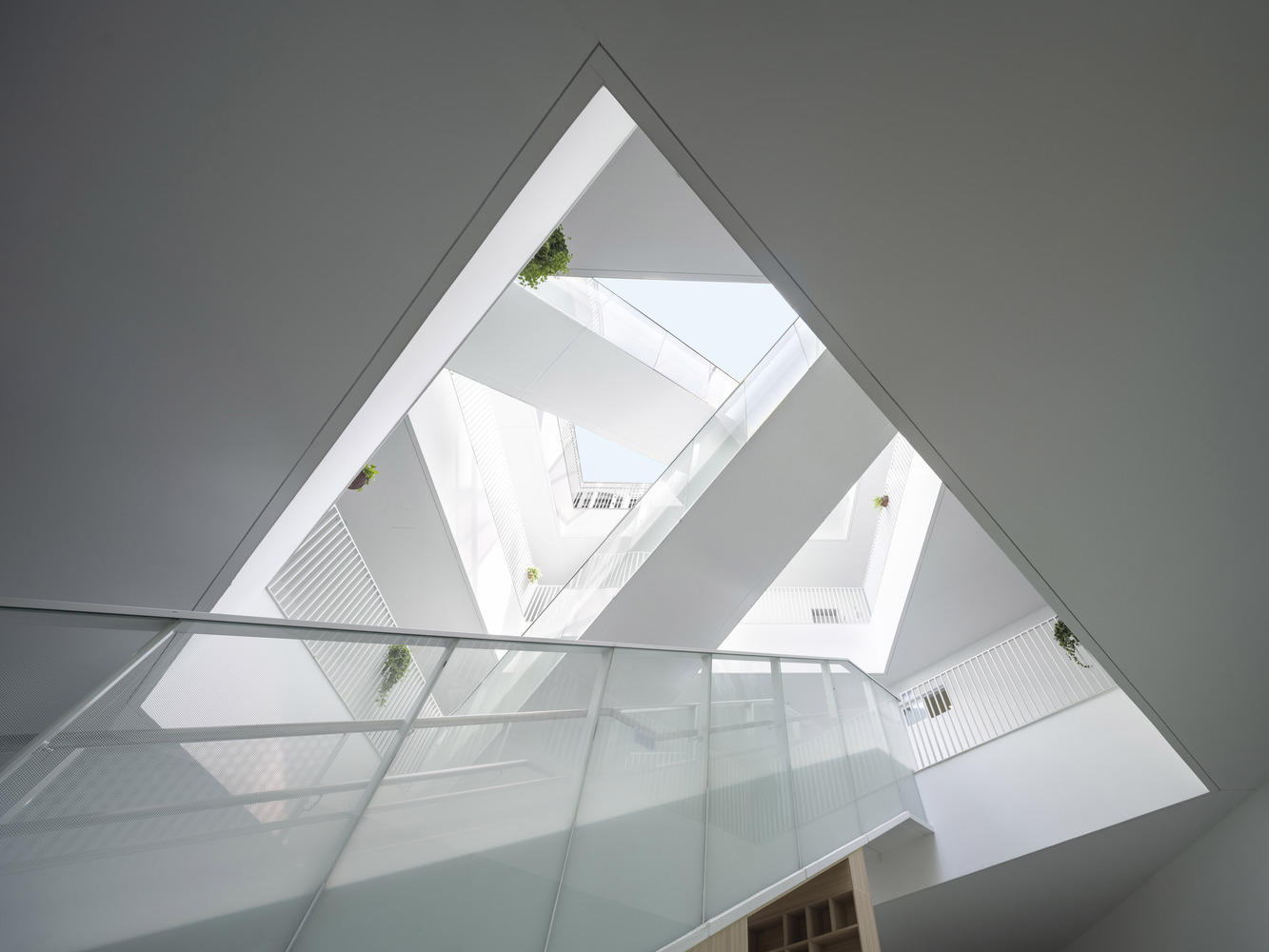
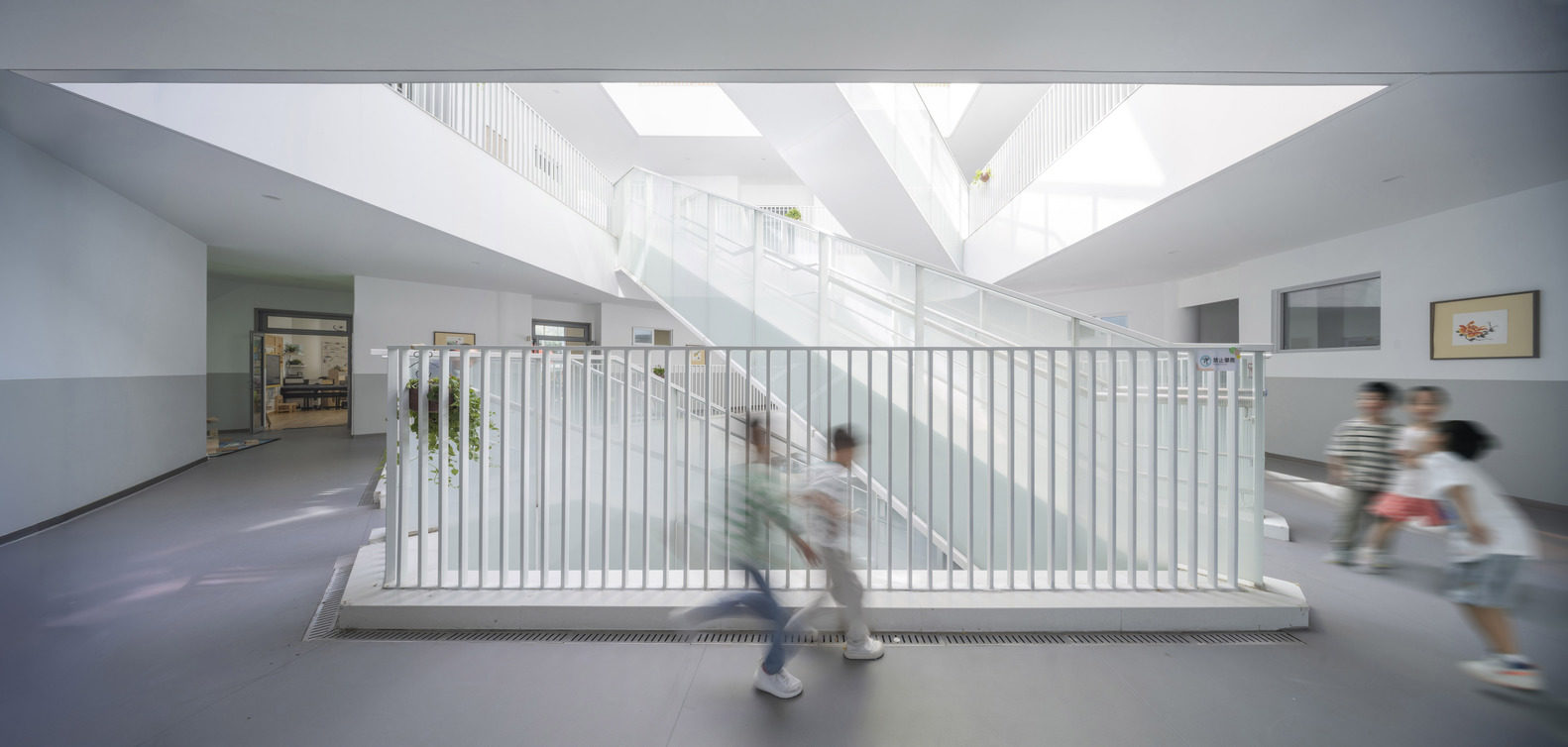
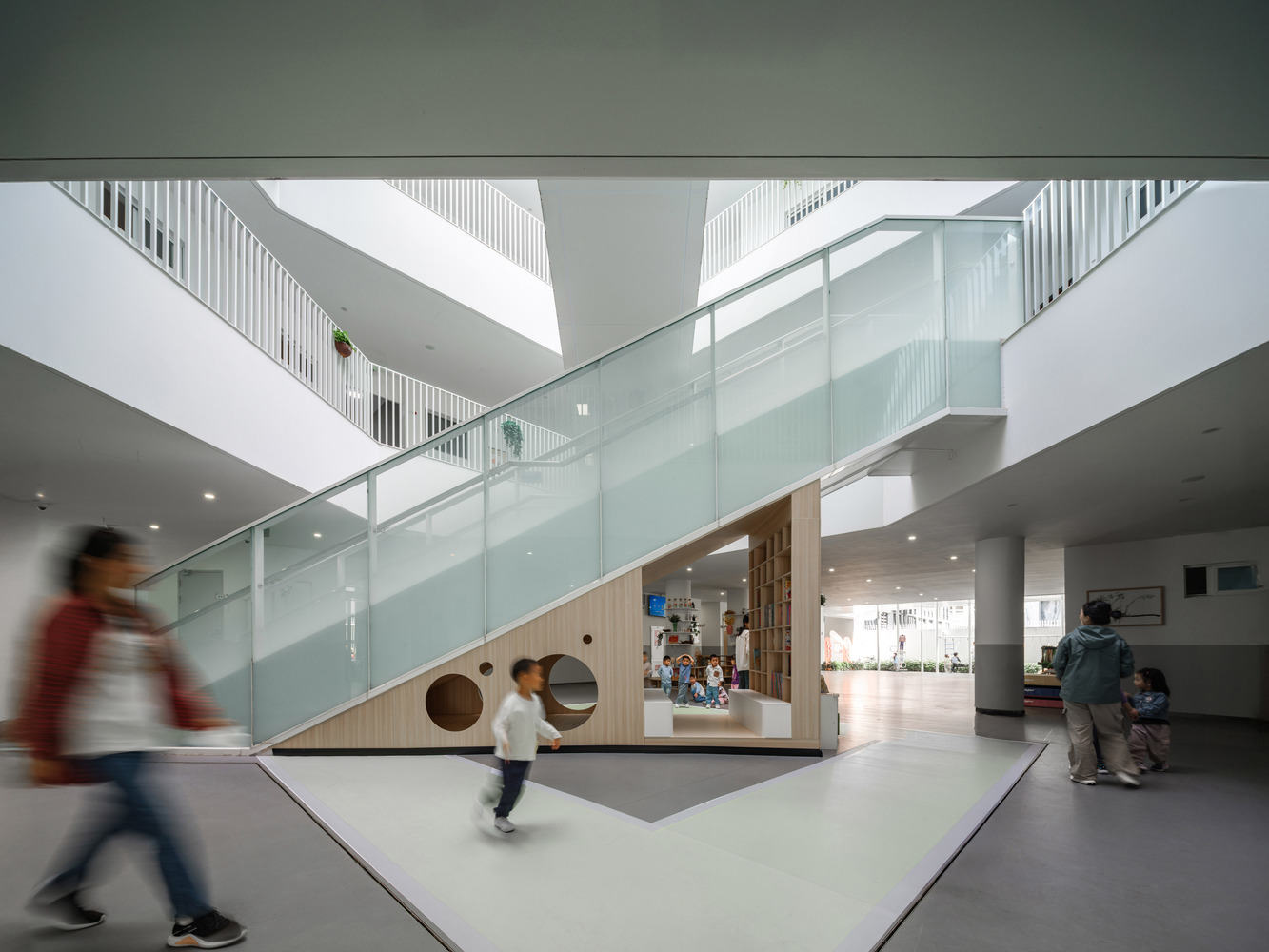
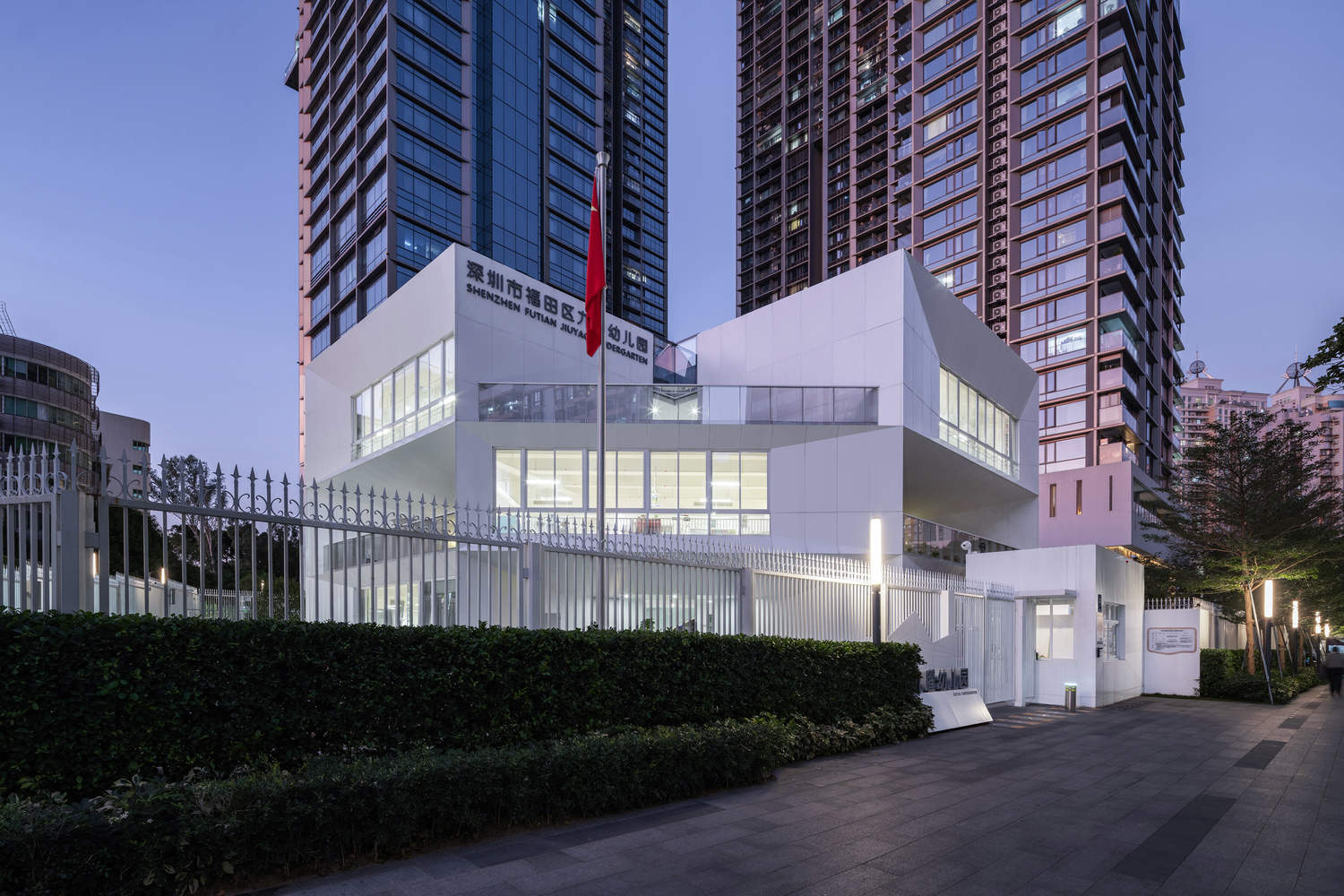
So, we also used a cross as the basic skeleton of the space to process it into a standard layer, and each layer was rotated 45 ° like a Rubik's cube and stacked together. Due to this rotation, the originally simple replication relationships between each layer have become rich and diverse, creating a visual effect of virtual and real alternation on the outside, as well as some "corner by corner" spaces. As a result, different types of spaces were derived, including an elevated first floor, a balcony on the second floor, a terrace on the third floor, and a roof. Although the internal structure appears the same for each layer individually, the rotation of the orientation between each layer creates a feeling that is both similar and different. The scenery outside the classroom windows on different floors is different, and the staircase passing through the atrium constantly changes its orientation, forming different dialogue relationships with the corridor, further enriching the experience inside the building, and even bringing some small challenges to children's spatial orientation.
于是,我们也采用十字作为空间的基本骨架加工成一个标准层,并且每层都像拧魔方一样将其旋转 45° 后摞在一起。由于这个旋转,本来每层之间简单复制的关系变得丰富多样,在外部产生了虚实相间的视觉效果,以及一些 “边边角角”的空间。从而衍生出首层的架空层,二层的阳台,三层的露台,及屋顶等不同的空间类型。而内部的结构虽然单独看每层都一样,但由于各层之间方位的旋转,产生了既相似又不同的感觉。不同层的教室窗外的风景不一样,而穿越中庭的楼梯,也不断改变着方位,与走廊形成不同的对话关系,进一步丰富了建筑内部的体验,甚至给孩子们带来一些空间方位感上的小小的挑战。
© ACF
The cities where children live in their daily lives, especially in residential areas, are basically layers of replicated spatial relationships; Even though some kindergartens have exaggerated shapes and bright colors from the outside, the spatial structure of each floor is still monotonous and repetitive. The original intention of our design is to break this monotony through a rotating motion, using seemingly simple body language and pure white colors to create a simple yet rich world for children, subtly changing their fixed cognition of the laws of things, and allowing them to gain a more open perspective from spatial experience.
小孩子日常生活的城市,尤其是住宅,基本上都是层层复制的空间关系;即便一些幼儿园从外观看有夸张的造型和鲜艳的色彩,各个楼层的空间结构仍是单调重复的。我们设计的初衷,就是希望通过一个旋转的动作打破这种单调,用看似最简单的形体语言和洁白的颜色给孩子们营造一个简单又丰富的世界,潜移默化地改变他们对事物规律的固化认知,让他们从空间经验中获得更开放的视角。
© ACF
This open spatial relationship can be achieved by simply using a simple cross shaped space through layers of rotation and stacking. But this simple cross space is also linked to ancient wisdom that transcends the differences between the East and the West, spanning thousands of years of time. The above is the little mystery we have hidden in this small kindergarten.
这个开放的空间关系只是用简单的十字形空间通过层层的旋转叠加就可以实现。但这个简单的十字空间却又是链接着跨越东西方差异,穿越千年时光的古老智慧。以上就是我们藏在这个小小幼儿园里的小小玄机。
© ACF