Leiden University Lecture Hall/Civic Architects
莱顿大学演讲厅 / Civic Architects
项目亮点:这座位于莱顿大学的演讲厅改造项目,其最大的亮点在于对原有现代主义建筑的巧妙再利用和升级。Civic Architects 并非简单地推倒重建,而是深入研究了原建筑的设计理念,并将其与现代社会的需求相结合。例如,保留了“飞碟楼”的标志性外观,同时通过新的材料和结构,使其与周围环境的联系更加紧密。新设计的立面、楼梯以及室内空间,都体现了对功能性、可持续性和用户体验的深刻理解。改造过程中,施工与学术活动的协调,也体现了设计团队对细节的把控,确保了项目的顺利进行,值得借鉴。
设计理念的精髓:项目的精髓在于对“功能主义”的重新定义和实践。不再是强调建筑的独立性和封闭性,而是将建筑与环境、气候、用户紧密联系起来。通过对立面和结构的优化,增强了建筑与周围环境的互动,例如,将维护走道改造成功能性阳台环,改变了立面的角度,使得建筑内外视野更加通透,体现了对周围环境的尊重。内部设计也充分考虑了用户的需求,例如,设置了可以俯瞰校园广场的休息区,创造了更舒适和人性化的学习和交流空间。这种以人为本、可持续的设计理念,是该项目最核心的价值体现。
可持续设计策略:项目在可持续设计方面展现了出色的策略,例如,将单层玻璃窗更换为具有热缓冲功能的冬季花园,有效提高了建筑的能源效率,降低了运营成本。此外,建筑对不同方位的阳光和昼夜季节的变化做出了针对性的设计,例如,在南侧和东侧设置了被动加热但主动通风的冬季花园,创造了舒适的室内环境。这些设计细节不仅体现了对环境的尊重,也提升了建筑的实用性和用户体验。这种将可持续性融入设计细节的设计理念,为类似建筑的改造提供了很好的范例,值得在未来的项目中借鉴和推广。
© Stijn Bollaert
© Stijn Bollaert
The first university in the Netherlands was founded in Leiden in 1575. This college, with its historical architecture, has become a familiar scenic spot in this historic city center. Little known is that the school's "Gorlaeus" architectural complex was built in the second half of the 20th century, marking the rise of a modern knowledge park outside the city center: today's Leiden Bio Science Park.
荷兰第一所大学于 1575 年在莱顿创立。这所学院凭借其历史建筑,成为这座历史悠久的市中心中一道熟悉的风景线。鲜为人知的是,该校的“戈尔劳斯”(Gorlaeus)建筑群建于 20 世纪后半叶,标志着市中心外一座现代化知识园区的兴起:即如今的莱顿生物科学园(Leiden Bio Science Park)。
© Stijn Bollaert
© Stijn Bollaert
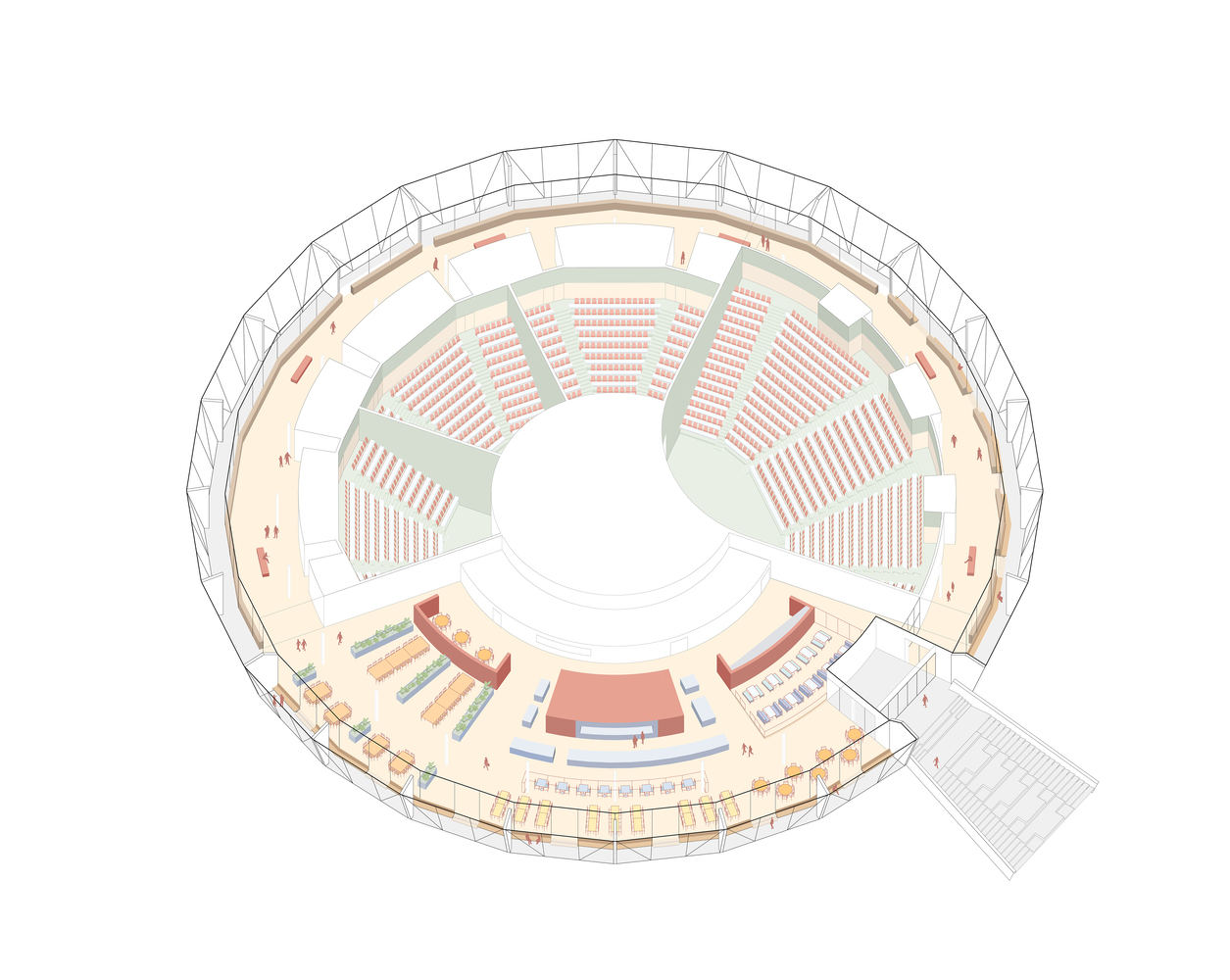
The Gorlos Lecture Hall Building, also known as the "Flying Disc Building," has been renovated and transformed into an energy-efficient education and conference center, featuring work and study spaces, a restaurant that can accommodate 400 people, and four lecture rooms with 250 to 700 seats. Civic provides both architectural and interior design services, drawing inspiration from the striking modernist style exhibited by the original architects Drexhage, Sterkenburg, Bodon, and Venstra (DSBV).
戈尔劳斯演讲厅大楼,也被称为“飞碟楼”,现已被改造和翻新为一个节能的教育与会议中心,内设工作和学习空间、一个可容纳 400 人的餐厅,以及四个拥有 250 至 700 个座位的演讲室。Civic 公司同时提供了建筑和室内设计服务,其设计灵感源自原始建筑师德雷克斯哈格(Drexhage)、斯特肯伯格(Sterkenburg)、博东(Bodon)和文斯特拉(Venstra)(简称 DSBV)所展现的引人注目的现代主义风格。
分析图——概览
Gorlos architecture showcases typical features of modernist university architecture, such as elevated main floors and glass curtain walls. However, through its unique structural aesthetics and exaggerated detail handling, it surpasses the conventional and simplistic appearance typically associated with this style. This concept of "super functionality" has been reinterpreted as the starting point in recent renovations. In this transformation, the concept of "functionality" has been updated to a contemporary expression: a functionalism that places more emphasis on connecting with the environment, climate, and users, rather than emphasizing autonomy.
戈尔劳斯建筑展现了现代主义大学建筑的典型特征,如抬高的主层和玻璃幕墙。然而,它通过独特的结构美学和夸张的细节处理,超越了这一风格通常所关联的通用且简朴的外观。这种“超功能性”的理念在最近的改造中被重新诠释为起点。在这一蜕变中,“功能性”的概念已更新为当代语境下的表达:一种更注重与环境、气候和用户相连接的功能主义,而非强调自主性。
© Stijn Bollaert
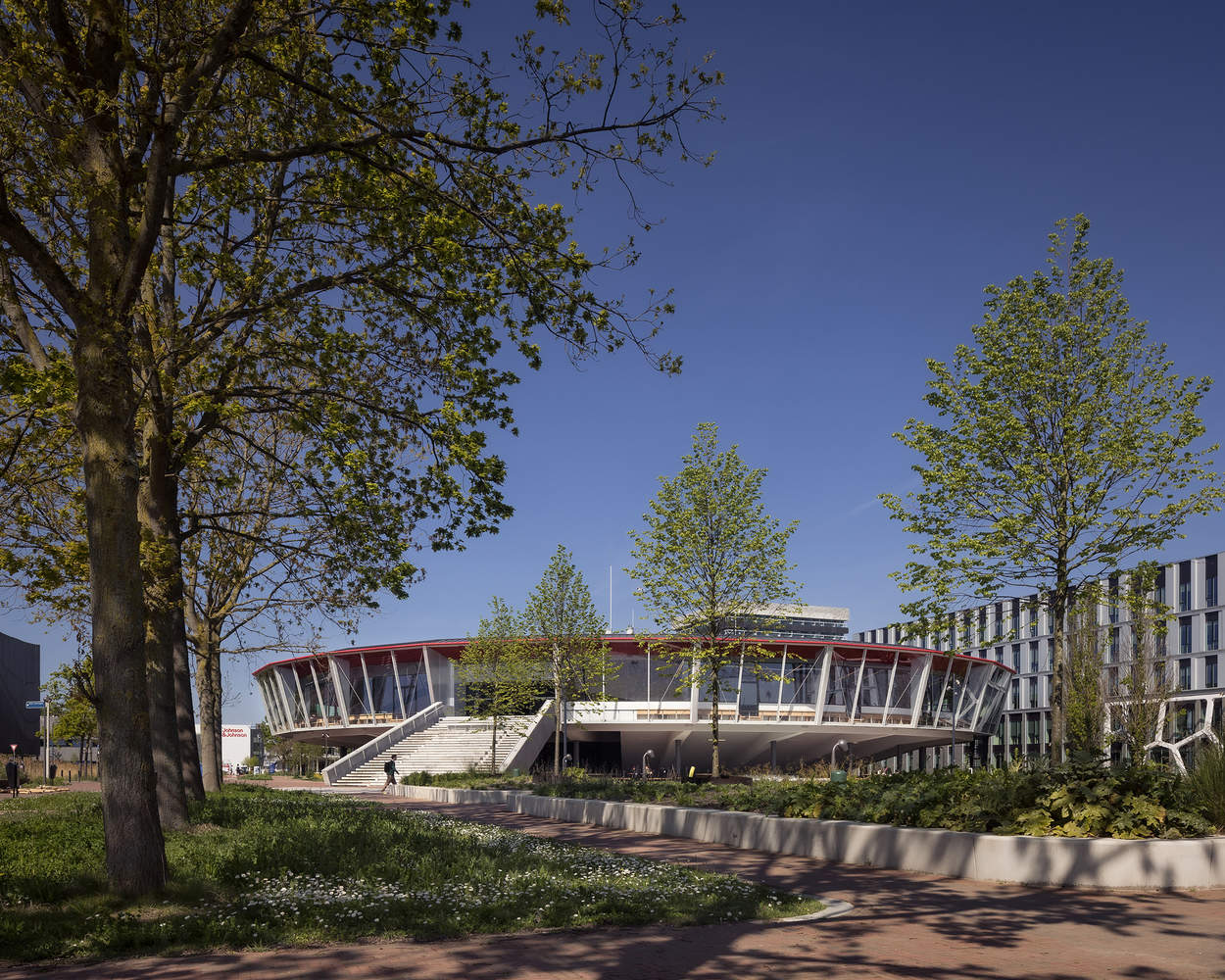
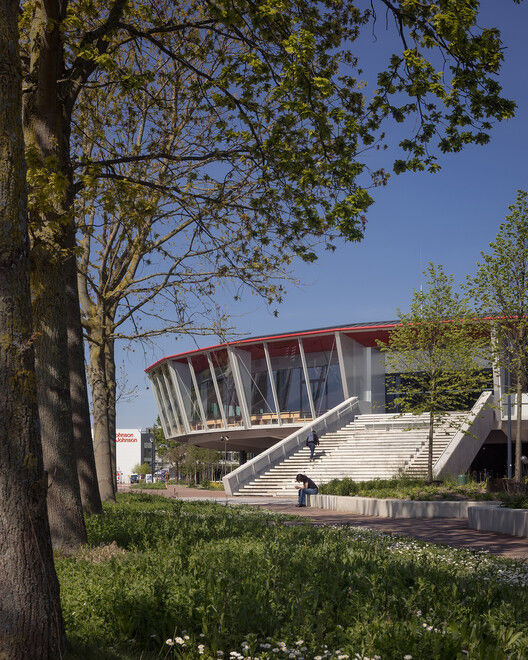
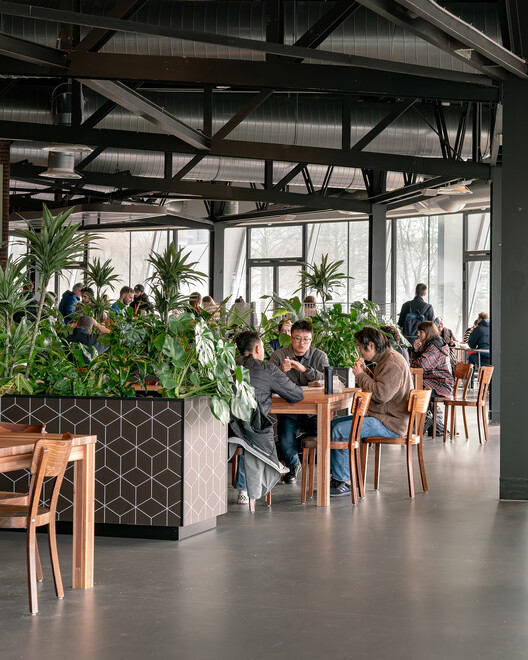
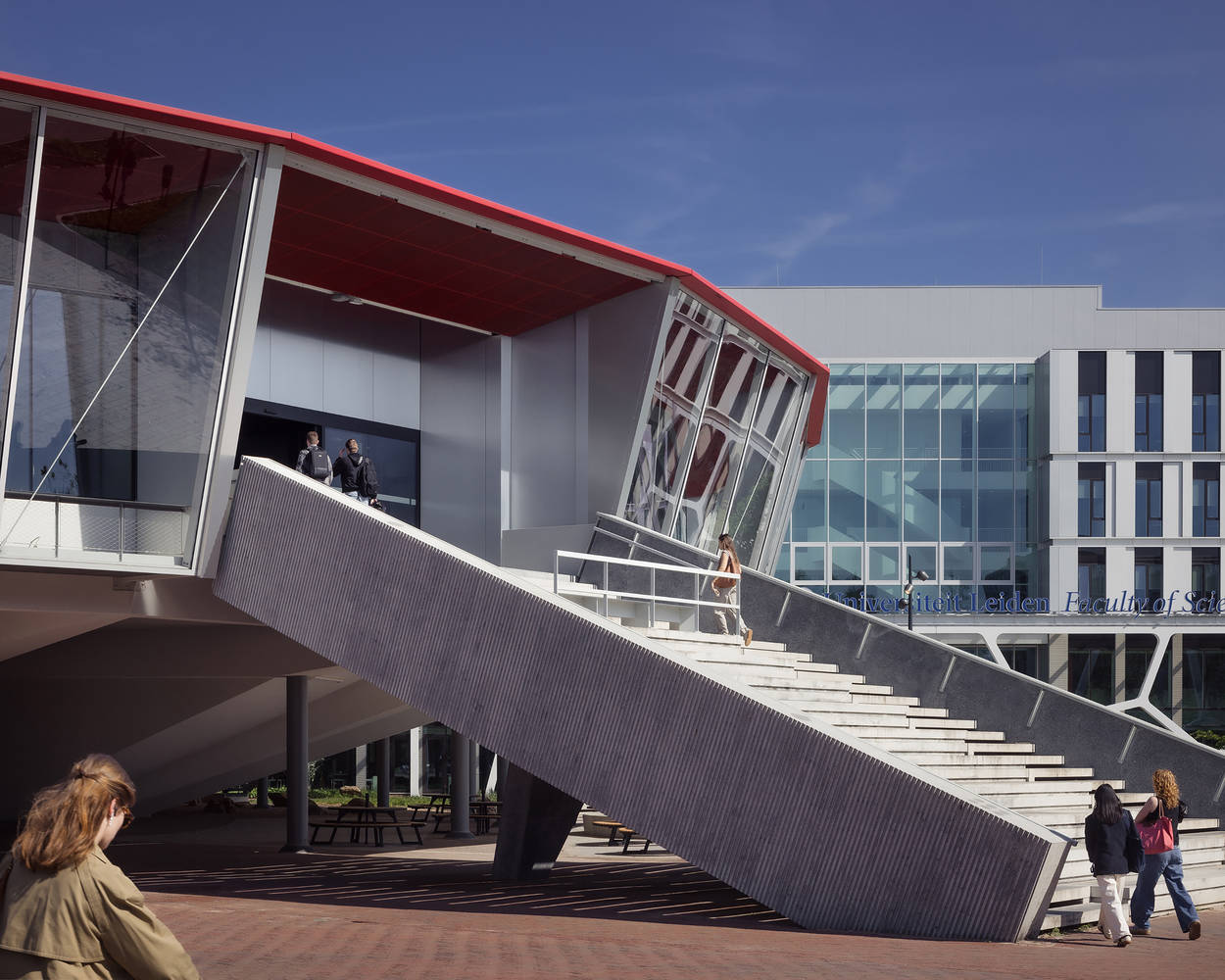
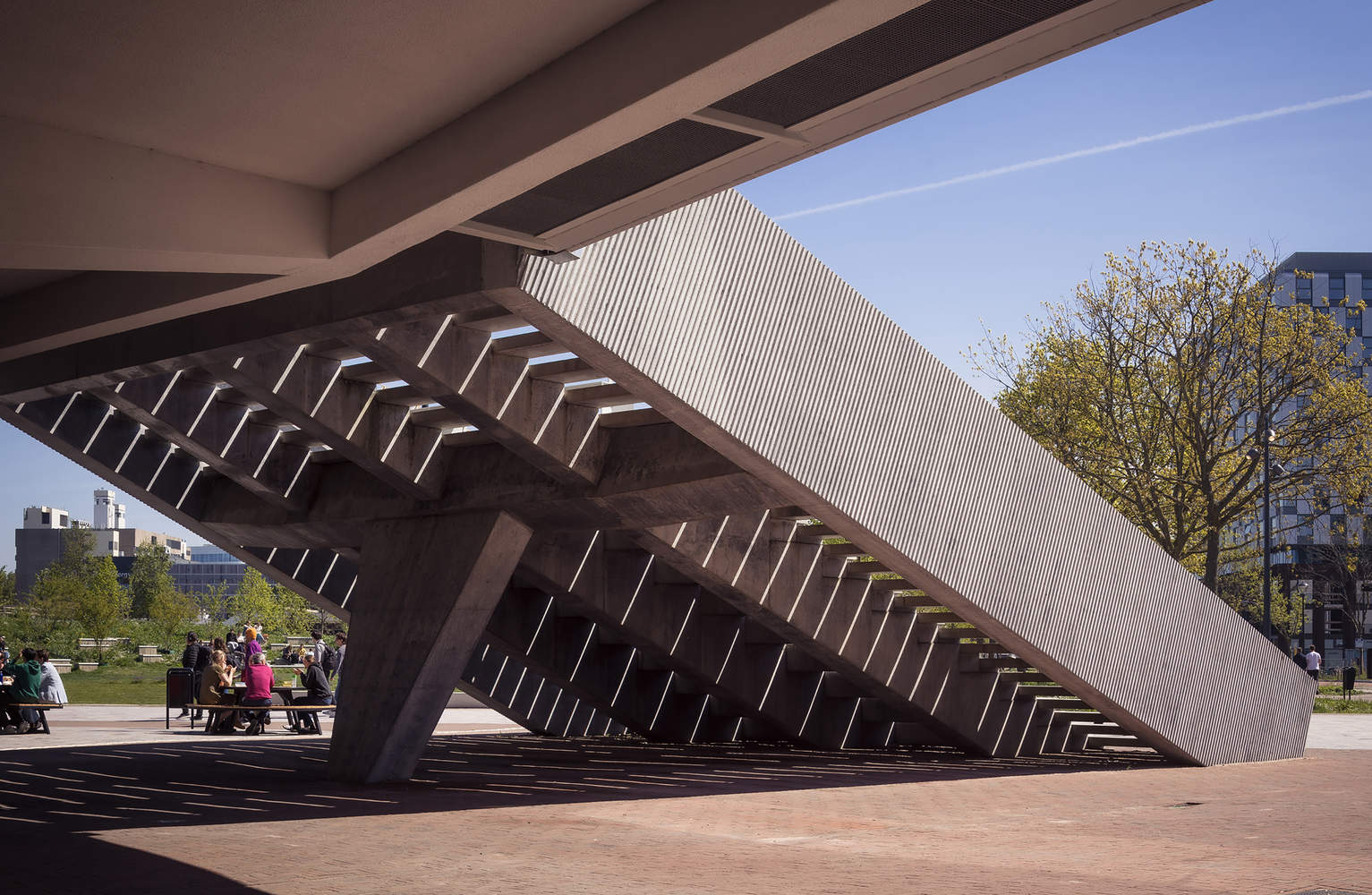
The ancillary buildings that originally formed the entrance have been demolished to make the building more free in its surrounding environment and ensure access to nearby facilities. The high-rise public functional area, which was once isolated from campus life, is now directly connected to the ground through a new staircase. This marks the birth of a new main entrance from the central axis of the campus square, which is clearly visible and easy to access for all users. From a distance, the staircase echoes the exaggerated scale of the existing concrete structure. Upon closer inspection, the small pebbles and intricate milling patterns give it a more tangible texture. The spacious staircase has also become an outdoor gathering place for students, overlooking the newly renovated campus square and park. The upper platform is connected to a corridor ring that leads to the lecture hall from two directions and overlooks the campus. One side leads to a panoramic restaurant, which features work, meeting, and study areas, as well as spaces for exhibitions, meetings, and ceremonies.
原先构成入口的附属建筑已被拆除,以使建筑在其周边环境中更加自由,并确保通往附近设施的通道。曾经与校园生活疏离的高层公共功能区,如今通过一座新楼梯直接与地面相连。这标志着从校园广场中央轴线处的新主入口的诞生,该入口对所有用户而言都清晰可见且易于进入。从远处看,楼梯与现有混凝土结构的夸张尺度相呼应。走近细看,小卵石和精致的铣削图案赋予了它更实在的质感。宽阔的楼梯也成为了学生们的户外聚会场所,可俯瞰焕然一新的校园广场和公园。上层平台与一条走廊环相连,该走廊环可从两个方向通往演讲厅,并可俯瞰校园。一侧通向一个全景餐厅,餐厅内设有工作、会议和学习区域,同时也可作为展示、会议和仪式的空间。
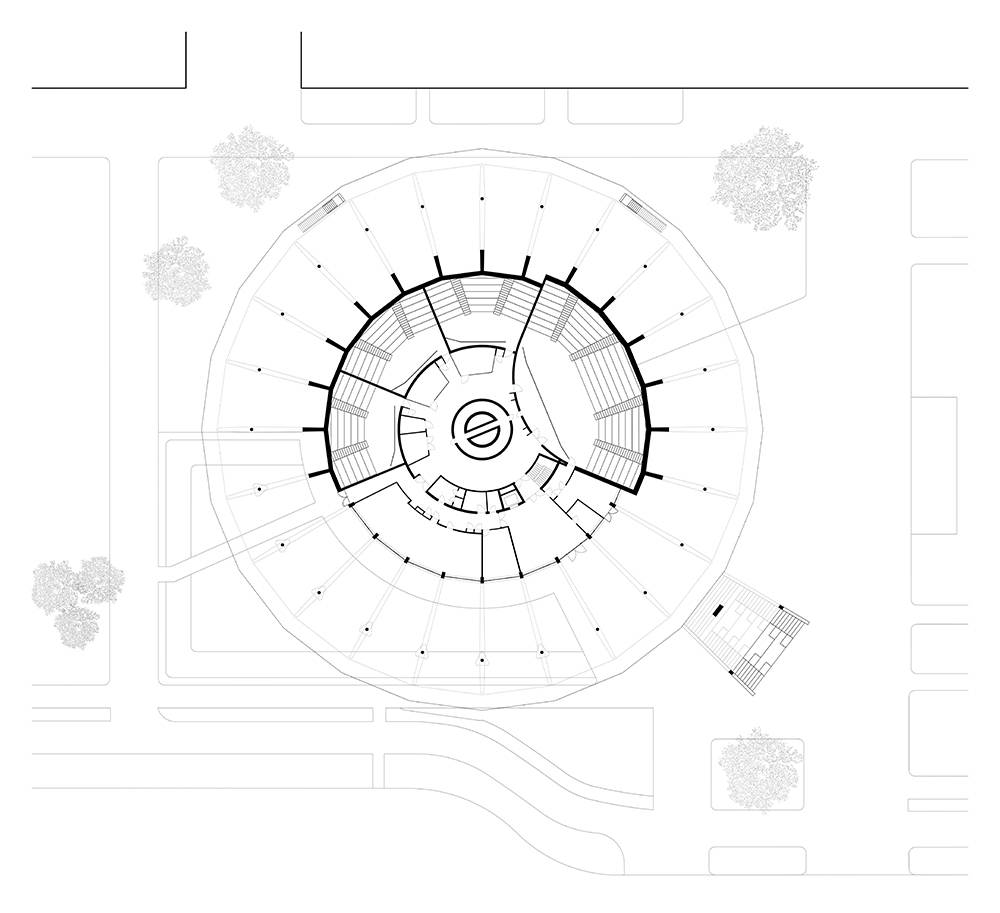
一层平面图
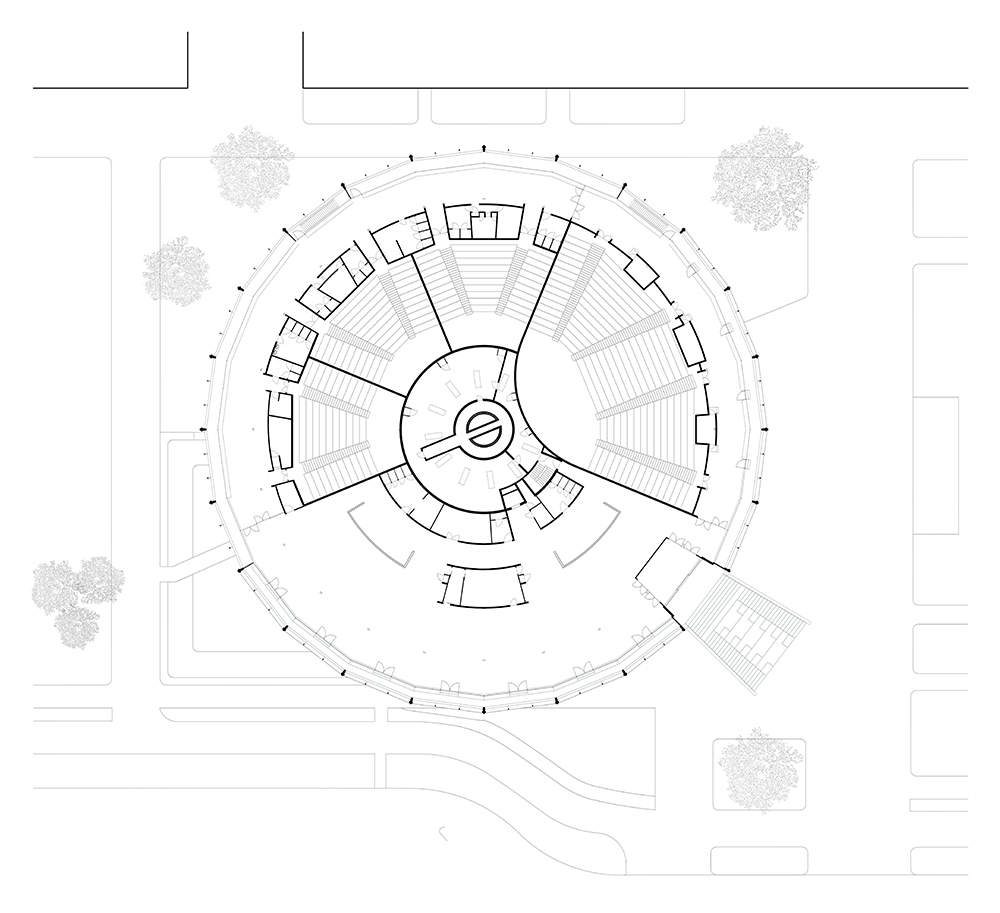
二层平面图
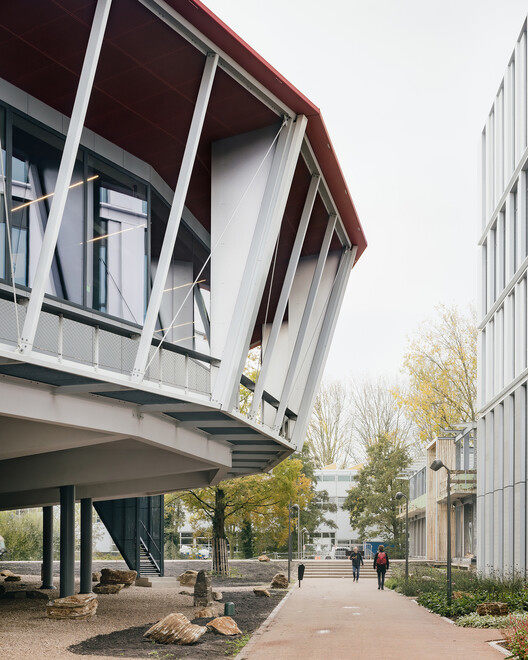
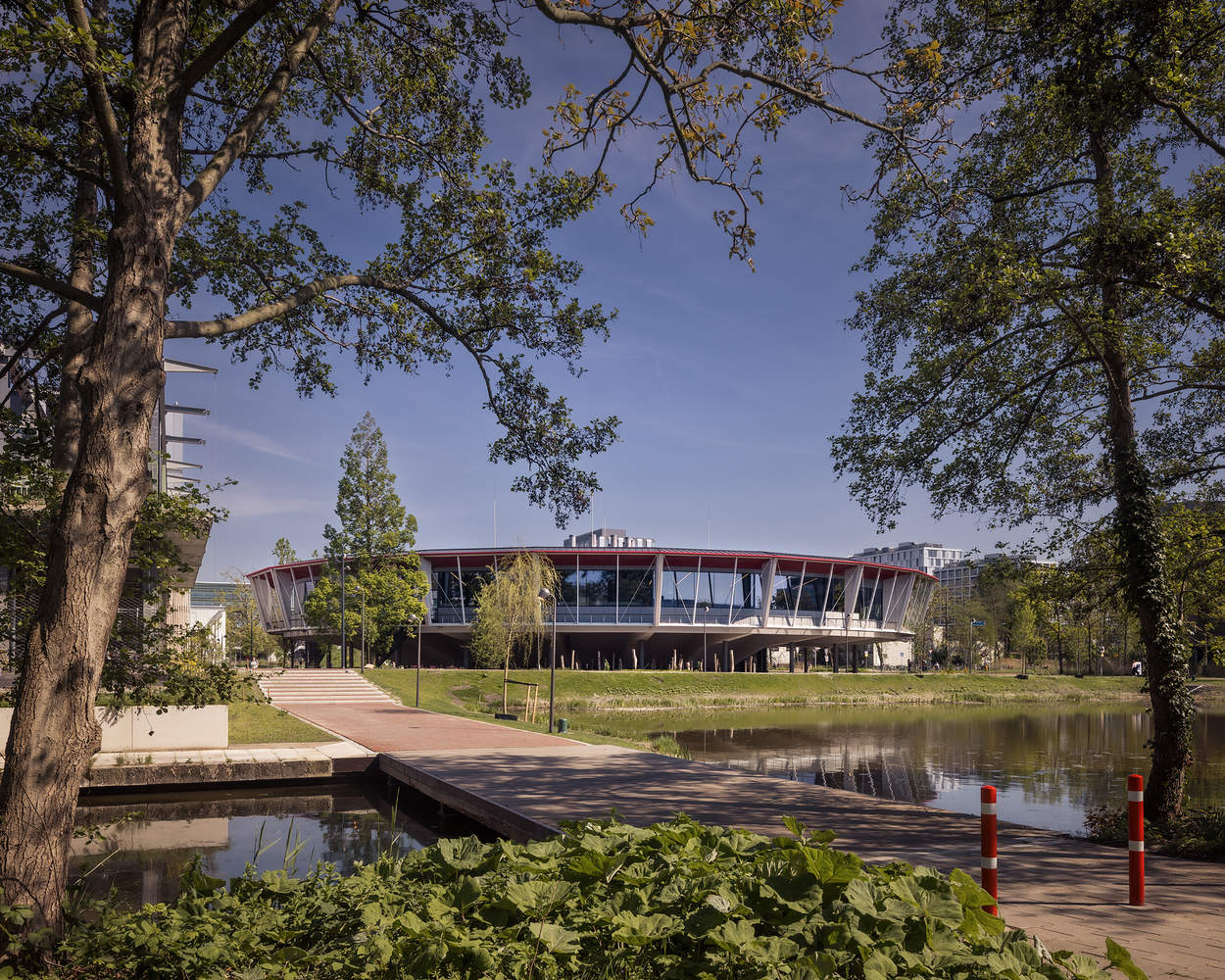
Another key renovation is to transform the maintenance walkway into a functional balcony ring with a new form. The upward sloping facade angle that once gave the building a defensive appearance has now been mirrored downward sloping to enhance the visual connection between the building and its surrounding environment. Nowadays, passersby can not only see the reflection of the sky in the glass, but also the campus itself, and the new angle makes it easier to look from the inside out. The circular facade enhances the iconic features of the building, allowing it to retain its nickname with dignity.
另一项关键改造是将维护走道转变为具有新形式的功能性阳台环。曾经赋予建筑防御外观的向上倾斜的立面角度,现已被镜像向下倾斜,以加强建筑与其周边环境的视觉联系。现在,路人不仅能在玻璃中看到天空的倒影,还能看到校园本身,而新的角度也使得从内部向外看更加容易。圆形立面增强了建筑的标志性特征,使其能够有尊严地保留其昵称。
© Stijn Bollaert
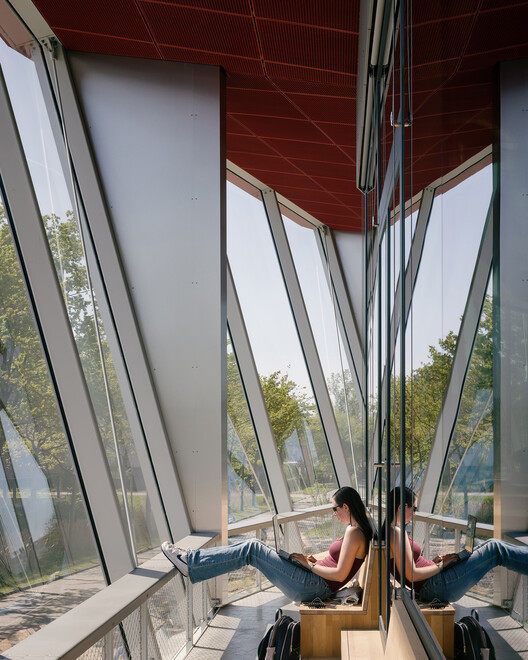
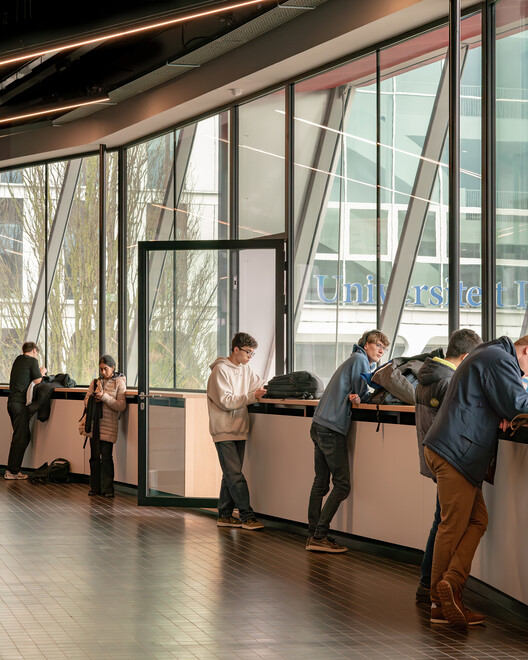
The original facade design of DSBV may seem uniform, but in reality, each part has made different responses based on its environment and sunlight. This early climate adaptation method inspired energy conservation protection for the opposite. The single-layer glass steel window frame has been replaced by a circle of greenhouses or winter gardens with thermal buffering function. The different main parts of the circular facade are designed differently to respond to the orientation of the sun and the rhythm of the day and night seasons. On the south and east sides, the winter garden with passive heating but active ventilation provides additional functional space: a seat edge overlooking the campus square and a series of benches connected to the dining area. Users can enjoy the scenery, socialize, or use their laptops while drinking coffee before or after class. On the north and west sides, window cleaning walkways with sunshades are set up to reduce the heating of the corridors due to solar energy. They also incorporated new emergency staircases.
DSBV 原始立面设计看似统一,但实际上每个部分都根据其环境和阳光做出了不同的响应。这种早期的气候适应性方法启发了对立面的节能保护。单层玻璃的钢制窗框已被一圈具有热缓冲功能的温室或冬季花园所取代。环形立面的不同主要部分设计各异,以响应太阳方位和昼夜季节的节奏。在南侧和东侧,被动加热但主动通风的冬季花园提供了额外的功能空间:一个俯瞰校园广场的座椅边缘和一系列与餐厅相连的长椅。用户可以在课前或课后边喝咖啡边欣赏风景、社交或使用笔记本电脑。在北侧和西侧,设置了带有遮阳篷的擦窗走道,以减少走廊因太阳能量而升温。它们还融入了新的紧急楼梯。
© Stijn Bollaert
© Stijn Bollaert
Due to its central role as the largest lecture hall in the university, the building remained in use during the construction period. The progress of phased demolition and reconstruction has been carefully coordinated with the academic calendar. A specific construction logistics method makes this possible: segments 10 meters wide and 6 meters high are assembled one by one on site and suspended as a whole from the outside between existing radial truss structures. Each construction phase corresponds to a corridor segment that serves a lecture room, so only one lecture room is out of use in each phase, while other lecture rooms can always be accessed from one side of the corridor ring.
由于该建筑作为大学最大演讲厅的核心作用,它在施工期间仍保持使用。分阶段逐步拆除和重建的进度与学术日历进行了精心协调。一种特定的施工物流方法使这成为可能:10 米宽、6 米高的分段在现场逐一组装,并从外部整体悬吊在现有的径向桁架结构之间。每个施工阶段都对应于一个走廊分段,该分段服务于一个演讲室,因此每个阶段只有一个演讲室停止使用,而其他演讲室始终可以从走廊环的一侧进入。
© Stijn Bollaert