Suzhou University Future Campus Phase I Planning/Daily Construction Design
苏州大学未来校区Ⅰ期规划 / 日建设计
空间组织与功能融合: “苏州大学未来校区”的项目在空间组织上展现了卓越的规划能力。核心区域的“City”回廊式建筑巧妙地融合了图书馆、礼堂等公共功能,并通过不同院系和年级的使用,形成了一个极具吸引力的交流空间。这种设计理念打破了传统校园的封闭性,鼓励学生跨学科交流和互动,营造出开放、活跃的学术氛围。中央广场的设置更是点睛之笔,它不仅是学术活动和庆典的场所,也成为了校园精神生活的象征,体现了设计者对校园文化建设的深刻理解。
自然环境的融入与可持续发展: 项目充分利用了吴江地区丰富的自然资源,将自然景观融入校园设计。生活区“Village”的设计,通过丰富的绿植打造出宜人的居住环境,让学生在学习之余也能享受大自然的宁静。此外,桥梁、建筑和河岸景观的设计巧妙地利用了水资源,为学生提供了亲近自然的场所。更值得称道的是,项目强调了可持续发展理念,通过引入自然景观、促进交流和互动,旨在打造一个促进大学与地区共同发展的开放式校园,体现了对未来教育模式的深刻思考。
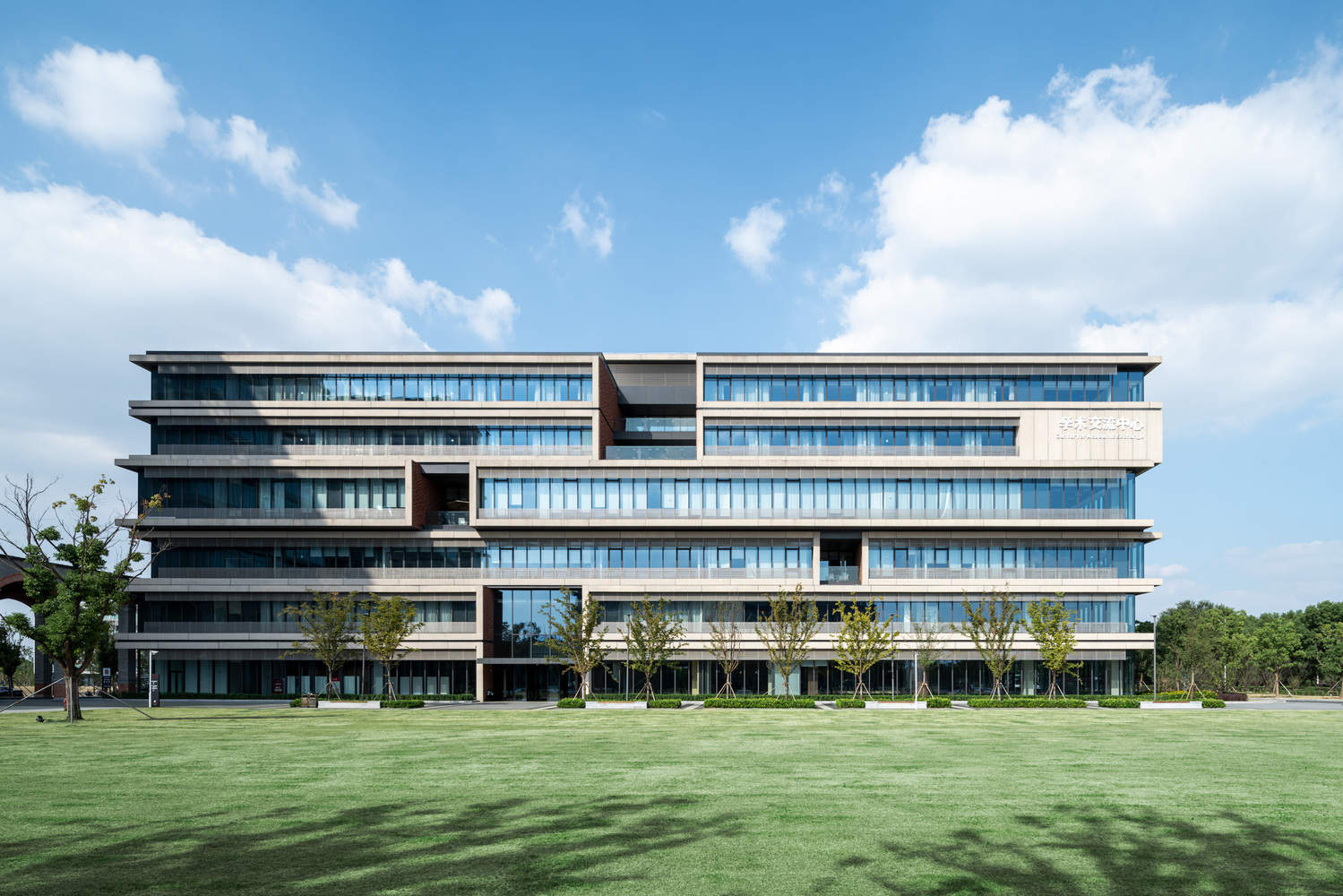
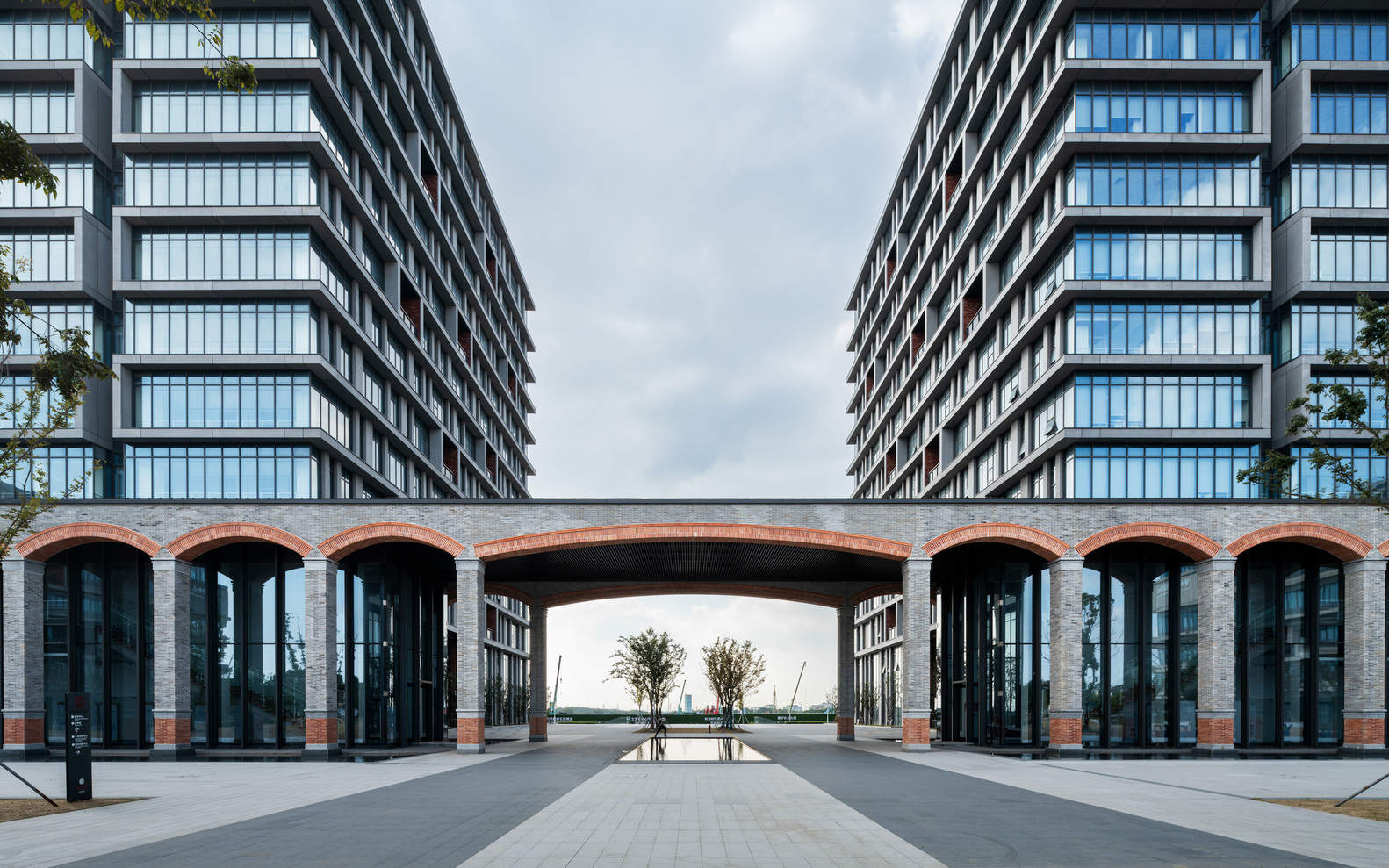
轴线、建筑形态与文化内涵: “苏州大学未来校区”的设计在轴线规划上独具匠心,通过“光轴”和“绿轴”的设置,将校园与周边环境紧密联系起来。建筑设计方面,项目一期采用了砖块作为主要材料,延续了苏州大学的整体风格,同时,面向广场的建筑设计灵感来源于中国书法,以“书本叠放”的造型,并在“书本”间设置露台作为交流空间,这种设计巧妙地融合了文化元素与功能需求。这些设计细节不仅提升了校园的视觉美感,更赋予了校园深厚的文化内涵,展现了设计师对建筑与文化结合的深刻理解。
© Mintwow
© Mintwow
Project Overview
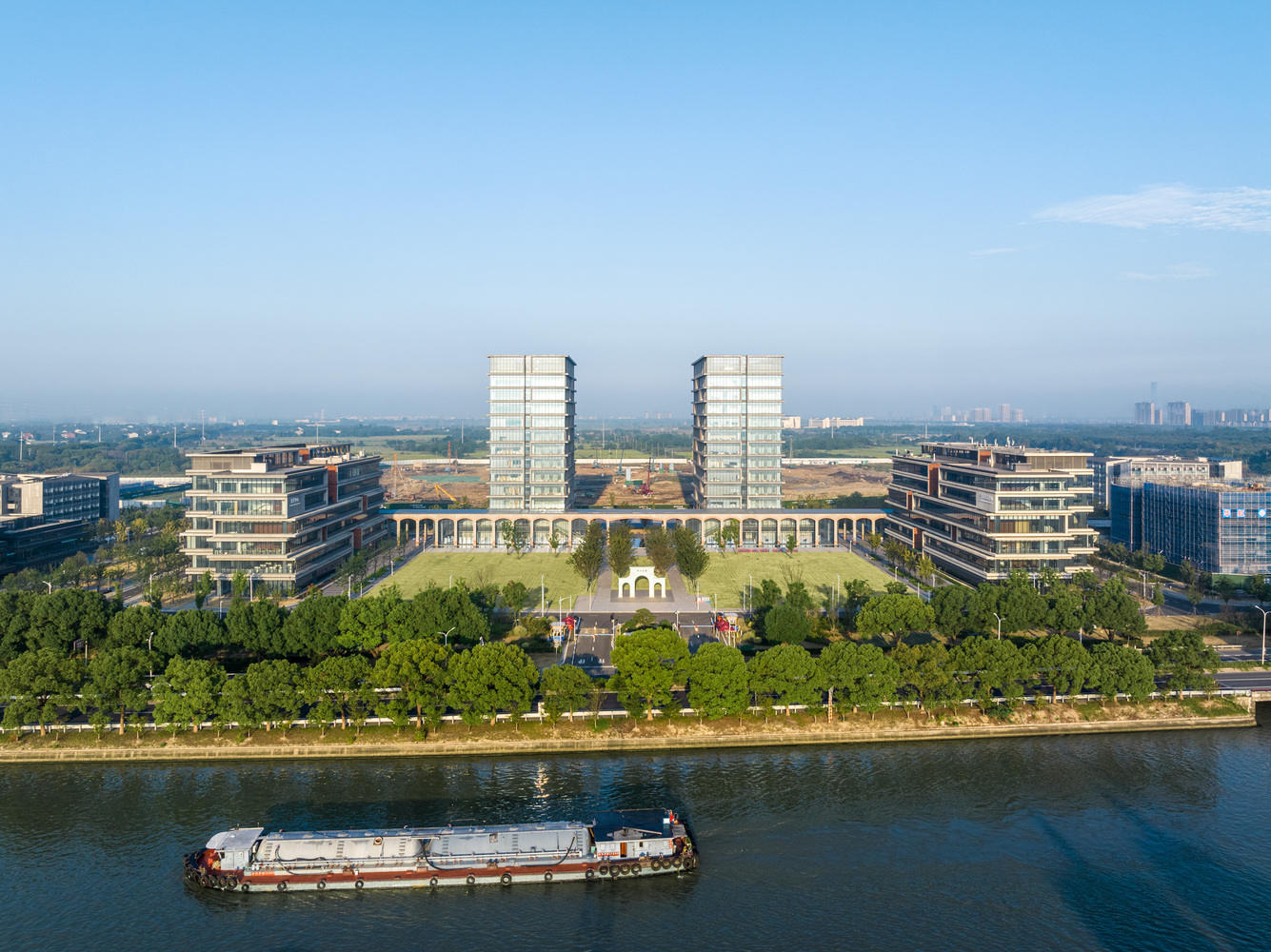
"Suzhou University Future Campus" is an educational base planned to achieve the "trinity" of talent cultivation, scientific research, and industrial cultivation. The campus is located in Wujiang District, Suzhou City, about 30km south of the main campus. It is adjacent to the Beijing Hangzhou Grand Canal to the east and the Natural Park to the north. The Phase I project was completed in 2022.
项目概览
“苏州大学未来校区”是为实现人才培养、科学研究、产业培育“三位一体”而规划的教育基地。该校区位于苏州市内主校区以南约 30km 处的苏州市吴江区,东临京杭大运河,北接自然公园,于2022年完成了Ⅰ期工程。
© Mintwow
Center and Surrounding
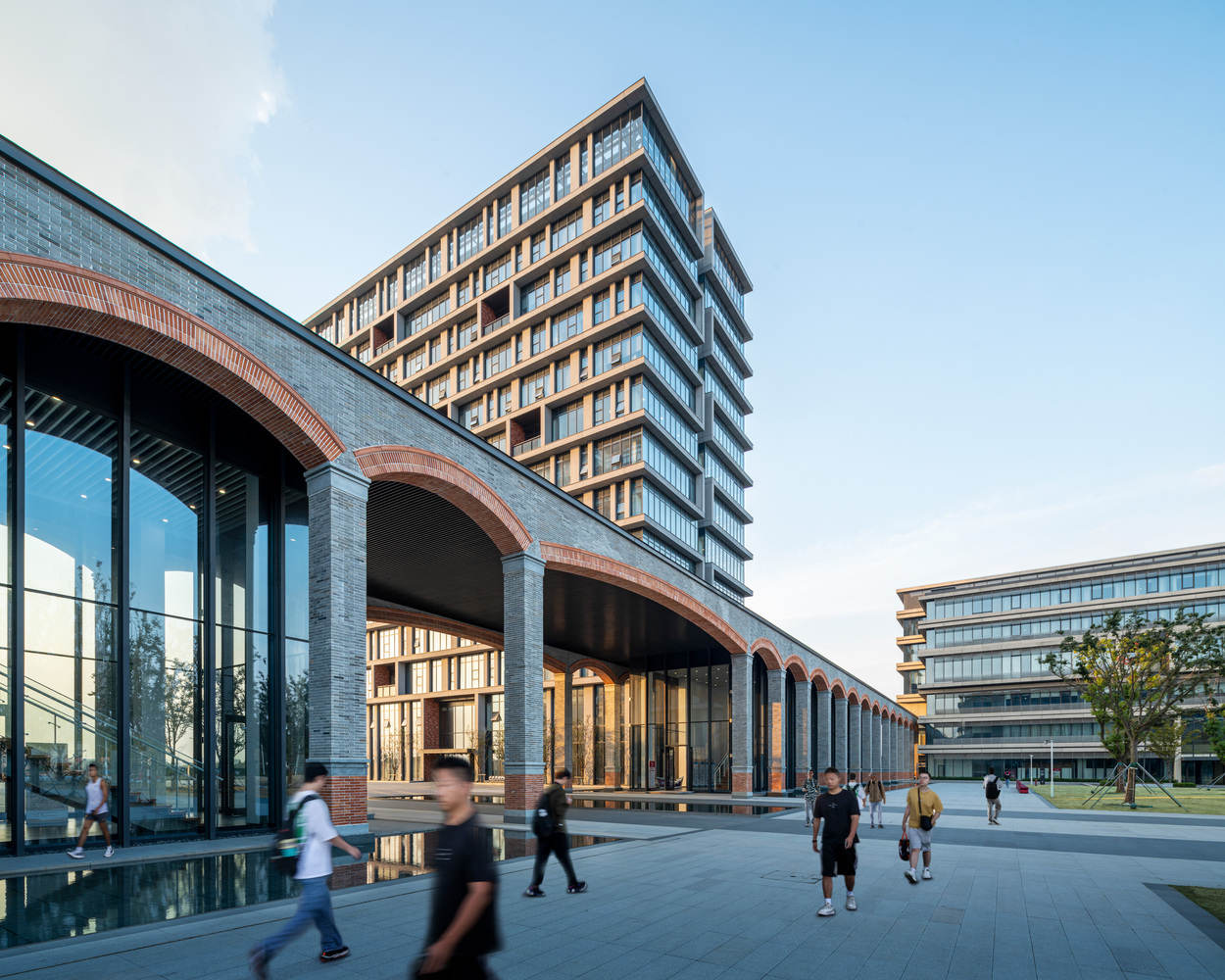
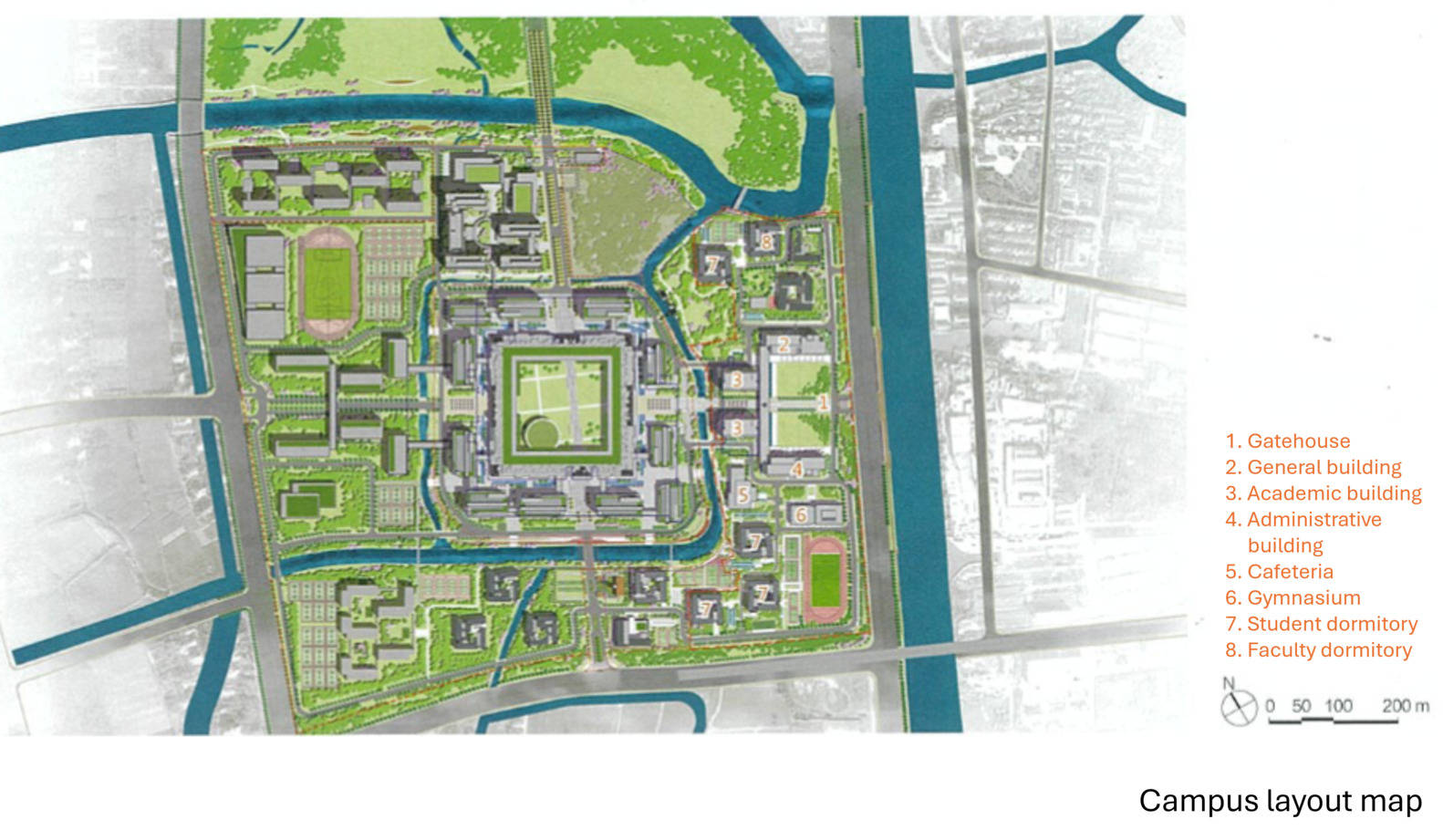
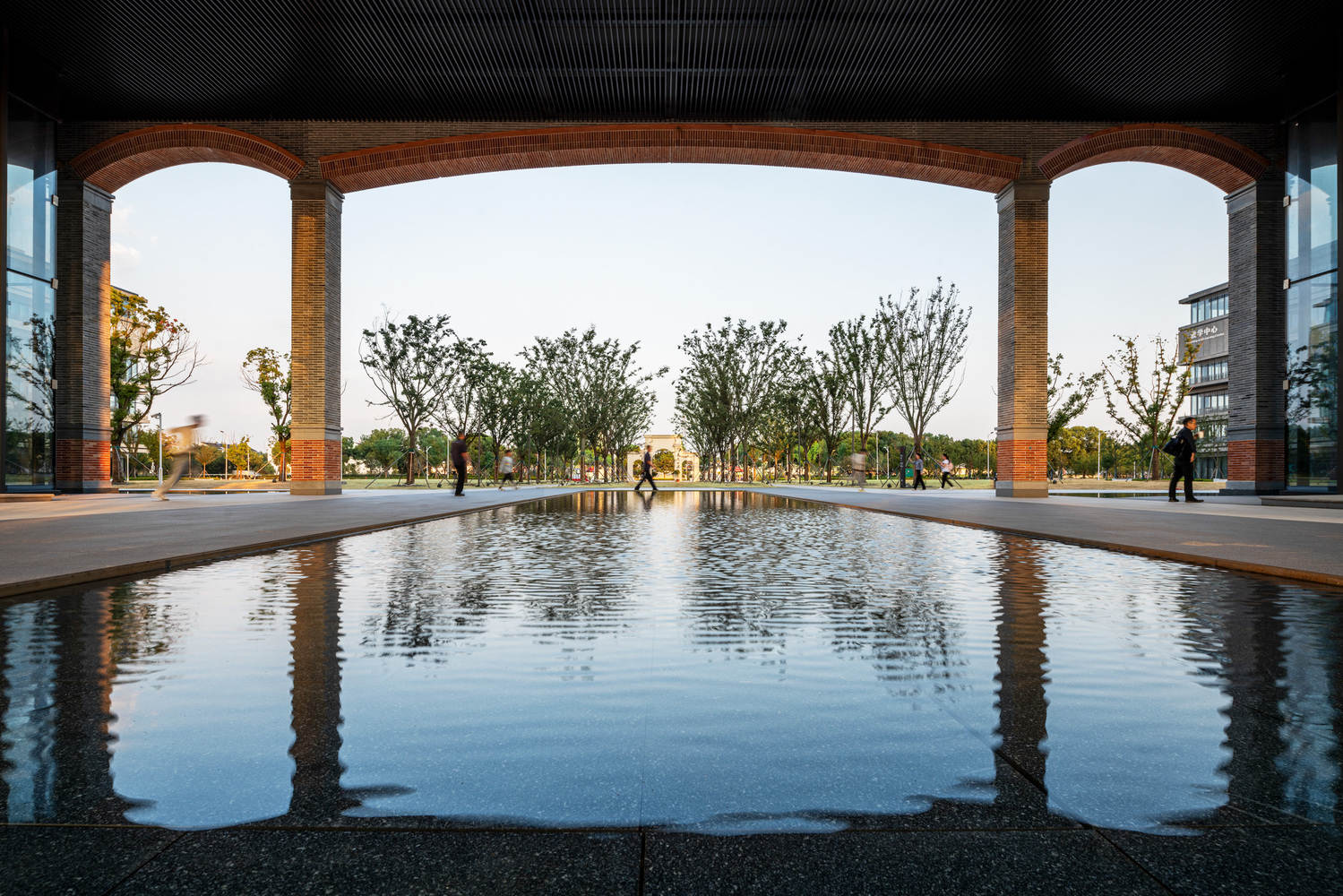
The 400m × 400m corridor style building called "City" is located in the center of the campus, which gathers public functions such as libraries and auditoriums. Through the use of different departments and grades, it forms a communication space that attracts people naturally like a magnet.. Our goal is to create a campus that promotes cross disciplinary innovation, connecting new fields of engineering across disciplines and departments. The outdoor square located in the center of Fangcheng serves as a place for students to hold academic and celebration activities, and has become a symbol of campus spiritual life.
中心与周边
设于校园中央名为 “City” 的 400m×400m 回廊式建筑,集中了图书馆和礼堂等公共功能,通过不同院系和各年级的使用,形成了一个像磁铁一样吸引人群自然聚集的交流空间。我们的目标是创建一个促进交叉创新的校园,跨越学科和院系将新工学领域连接起来。位于方城中心的户外广场,作为学生举办学术和庆典活动的场所,成为校园精神生活的象征。
© Mintwow
© Mintwow
The living area "Village" scattered in the forest outside the campus is created with rich green plants to create an environment that can switch between different living states. In addition, the bridges, buildings, and riverbank landscapes designed on campus utilizing the abundant water resources of Wujiang provide students with a place to get close to nature and experience the ecological charm. The "Campus for Realizing Ideas" created in this free and open environment that can feel the characteristics of Wujiang region has gathered numerous innovative talents who share the same belief and are committed to promoting the sustainable development of universities and the region.
分散在校园外围森林中的生活区“Village”,用丰富的绿色植物打造出可切换生活状态的环境。此外,校园内利用吴江丰富水资源设计的桥梁、建筑和河岸景观,为学生提供了亲近自然、体验生态魅力的场所。在这个能够感受到吴江地区特色的自由开放环境中创造出的“实现理念的校园”, 聚集了众多创新人才,他们怀着同样的信念,致力于推动大学与地区共同持续发展。
总平面图
Two axes
Based on the relationship between nature, city, and campus, two axes have been set within the campus.. The 'optical axis' starts from the east gate of the campus where the sun rises, passes through connecting buildings, departmental buildings, sports halls, and dormitories, and extends all the way to the west gate where the sun sets, forming the axis of campus life. The north-south "green axis" integrates the landscape environment of the site into the campus by connecting the roadside trees of the wetland on the south side and the scenic park on the north side.
两条轴线
基于自然、城市和校园的关系,在校区内设定了两条轴线。“光轴”从太阳升起的校园东门开始,经过连接楼、院系楼、体育馆和宿舍,一直延伸到太阳落下的西门,形成校园生活的轴线。南北方向的“绿轴”通过连接南侧湿地和北侧风景公园的行道树,将场地的景观环境融入校园。
© Mintwow
© Mintwow
Phase I Plan
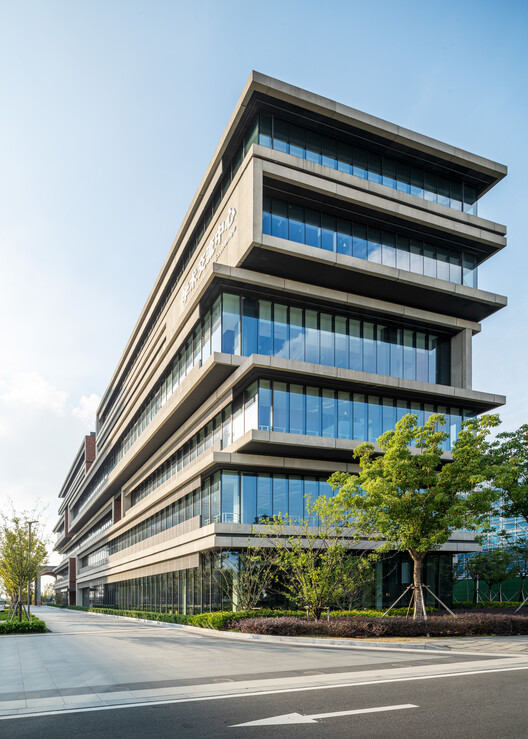
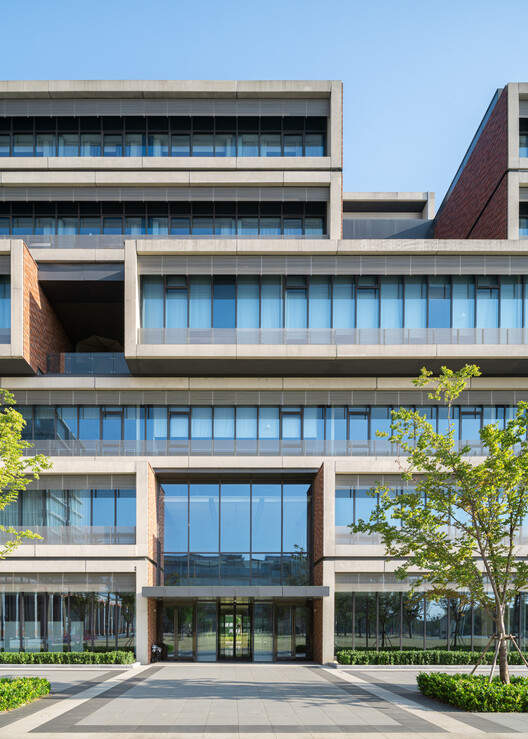
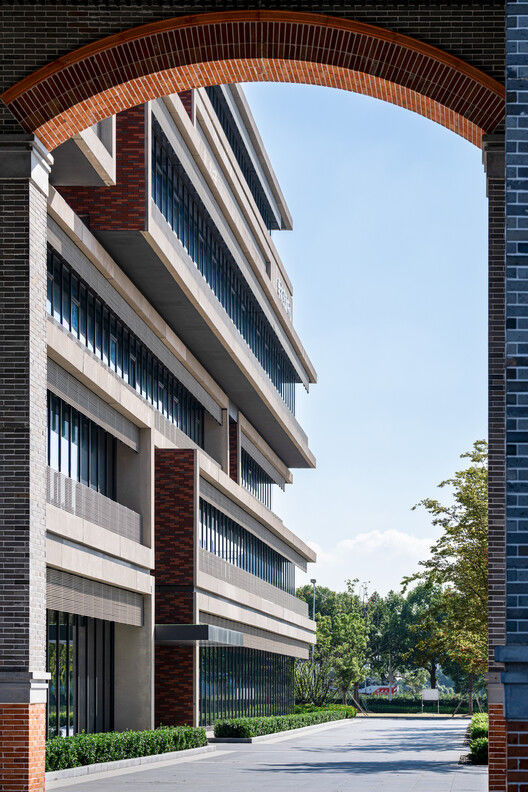
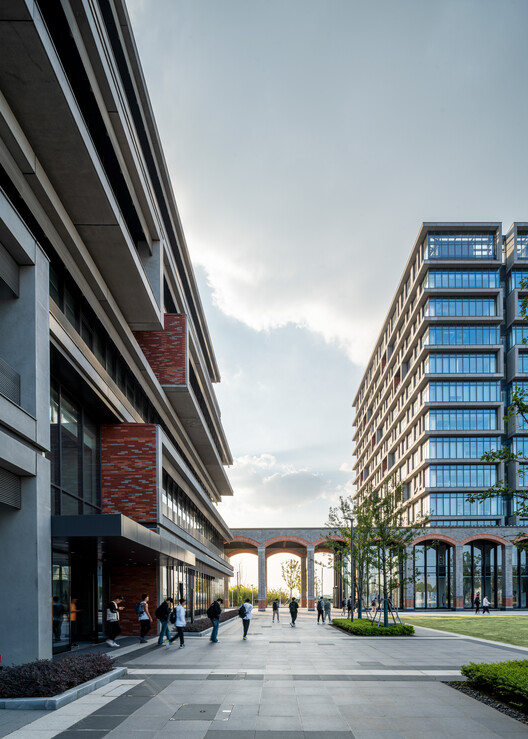
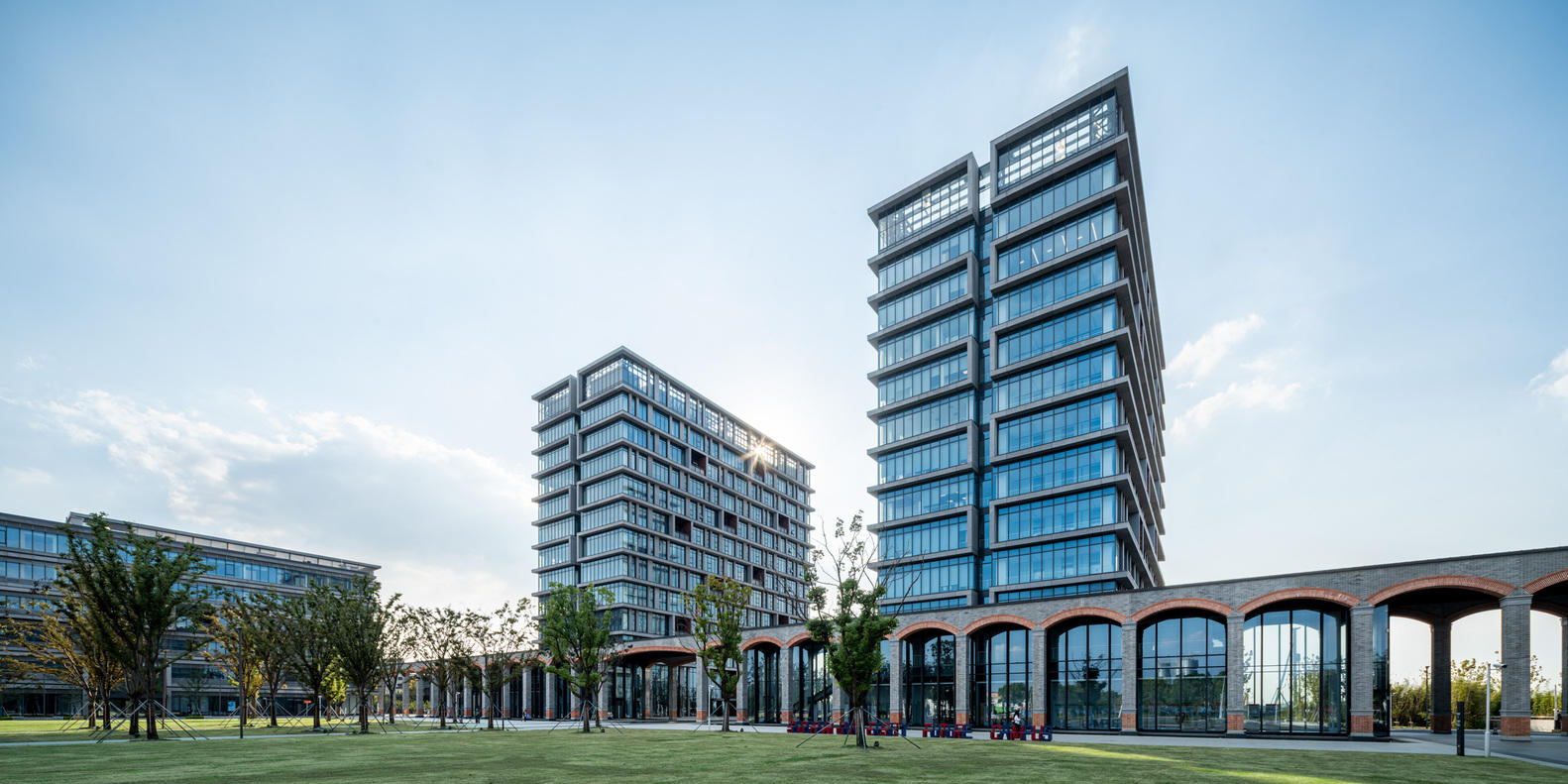
The Phase I Plan has completed the construction of a "comprehensive building" and a "college building" consisting of educational, research, office, conference, and guest accommodation facilities, as well as connecting buildings connecting these. There are also canteens, sports halls, and student and teacher dormitories in the surrounding area.. The building uses bricks as building materials, following the color tone and texture of our school in Suzhou city. In addition, the design inspiration for the four buildings facing the entrance square (the comprehensive building, the administrative building, and the two college buildings) comes from the famous Chinese calligrapher Ouyang Xun's famous saying, "Standing up for learning is first, and standing up for learning is based on reading." They adopt a "stacking of books" shape and set up a terrace between the "books" as a communication space.
Ⅰ 期规划
Ⅰ 期规划完成了由教育、研究、办公、会议和宾客住宿设施构成的“综合楼”和“学院楼”,以及连接这些的连接楼,周边还建有食堂、体育馆以及学生和教师宿舍。建筑以砖块为建材沿袭了苏州市内本校的色调与质感。另外,面向入口广场的 4 栋建筑(综合楼、行政楼和2栋学院楼),其设计灵感来自于中国著名书法家欧阳询的名言“立身以立学为先,立学以读书为本”,采用“书本叠放”的造型,并在“书本”间设置了露台作为交流空间。
© Mintwow
© Mintwow
Future Education
The future campus is designed with the concept of "people, green, and water".. Introducing the greenery and canals of the surrounding parks into the campus, the greenery and water not only nourish mental health, but also create an environment that can focus on learning and research. As a platform for scholars, experts, students, and even local society, it aims to achieve a "future education" of mutual learning, growth, and development through communication and daily dialogue style interaction.
未来教育
未来校区以“人、绿、水”为设计理念。将周围公园的绿意和运河引入校园内,绿化与水体在滋养心灵健康的同时,还创造出能够专注于学习和研究的环境。作为学者、专家、学生乃至当地社会的平台,旨在通过交流和日常对话式的互动,实现相互学习、成长和发展的“未来教育”。
© Mintwow