GATE M West Coast Dream Center Building 1 and Building 3/HCCH Dust Collection Building
GATE M 西岸梦中心 1 栋 3 栋 / HCCH 合尘建筑
设计理念的精髓: 项目最引人入胜之处在于其对上海城市语境的深刻理解和回应。 建筑师没有拘泥于“整体无菌”的设计理念,而是选择拥抱城市中不可避免的碎片化和即兴性。这种设计策略体现在对旧工业遗址的再利用、新旧建筑的巧妙结合以及文化与商业的融合上。 项目强调在有限的条件下,通过“最小干预、最大效果”的原则,实现了对现有建筑的改造,同时最大限度地保留了其历史印记,并赋予其新的生命力。这种设计思维是对城市更新的积极探索,展现了建筑师对城市肌理的尊重和对未来发展的思考。
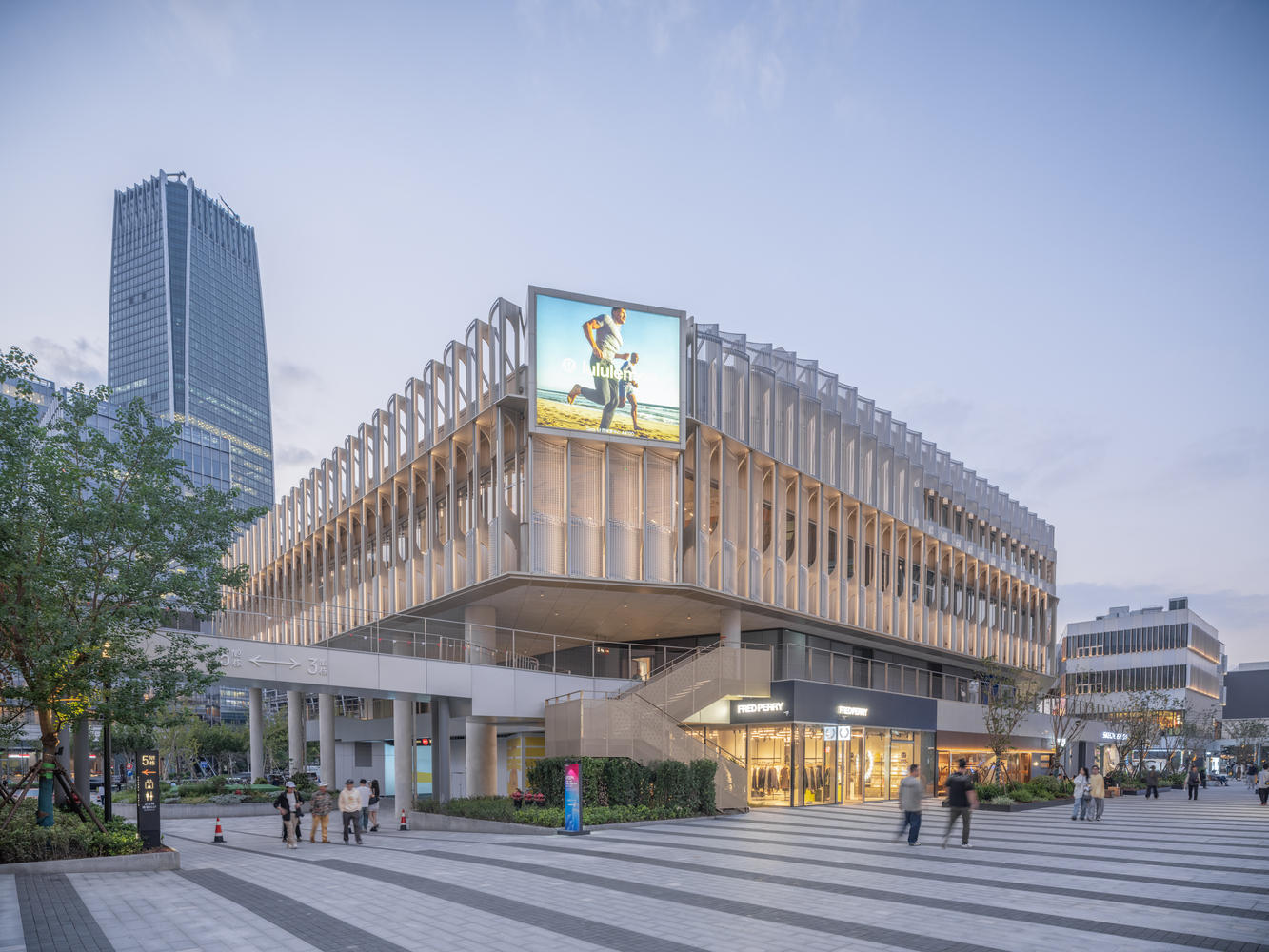
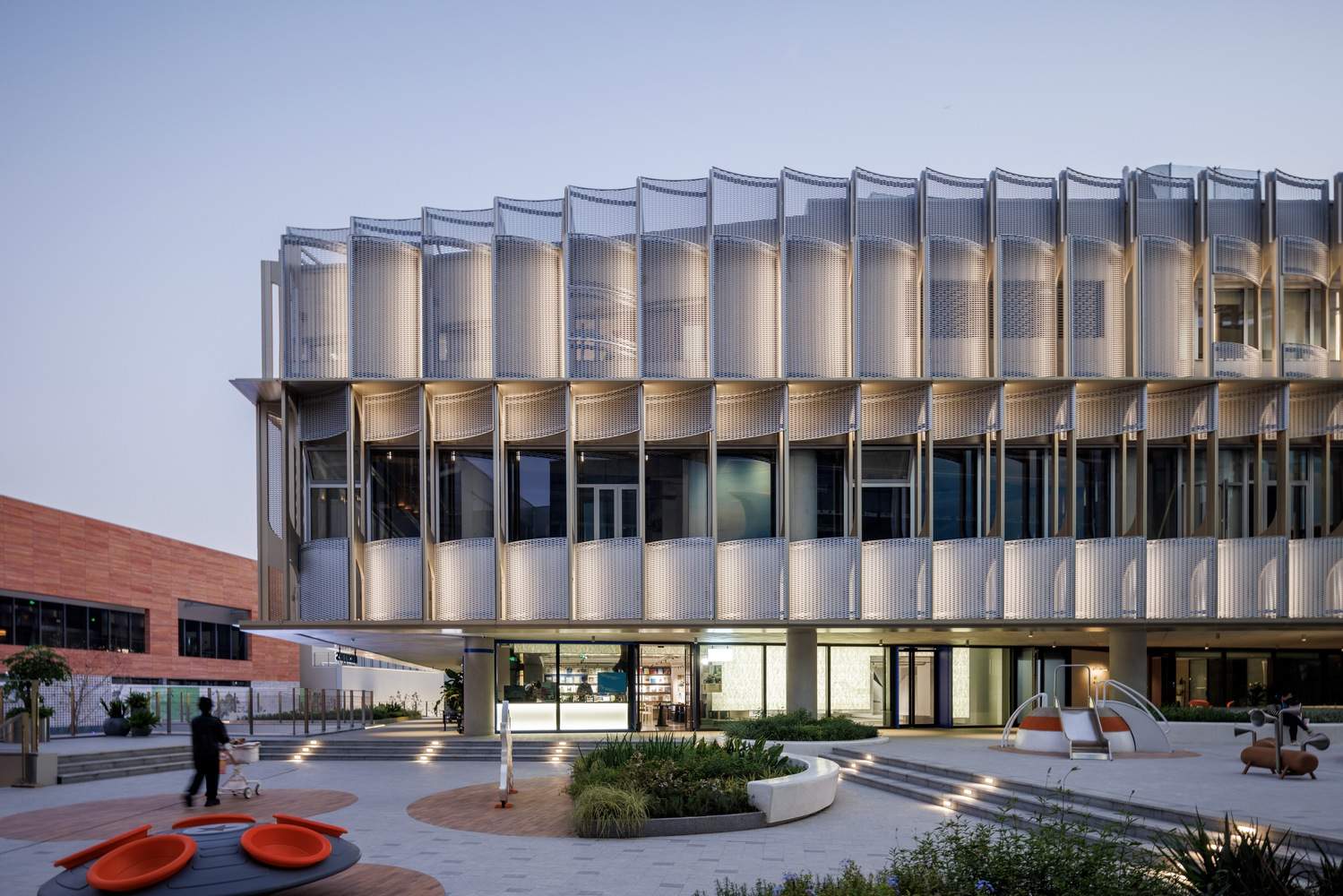
建筑材料与立面设计的亮点: 项目在建筑材料的选择和运用上展现出卓越的专业水准。 尤其是对铝材料的巧妙运用,通过肌理、色彩和透明度的微妙变化,实现了建筑立面的丰富性和层次感。银色鳞片状的立面设计,在光线下呈现出富有韵律的视觉效果,与周边环境形成对话。金色建筑的暖色调和曲线设计,则与周边的西岸大剧院形成视觉呼应,构建了和谐的整体氛围。 这种材料的巧妙运用和立面设计的精细考量,不仅提升了建筑的美学价值,也增强了其在城市景观中的辨识度,实现了建筑与环境的完美融合。
空间组织的创新与城市尺度的呼应: 在空间组织方面,项目同样体现出其创新性和对城市尺度的精准把握。 通过增加平台和楼梯连接,最大限度地打开外围界面,增强了街区在各个标高的步行连续性和空间开放度。 建筑师不仅关注建筑单体的设计,更注重建筑与周边环境的互动。 项目将建筑与庆典广场、步行内街等公共空间有机结合,实现了从高雅艺术到文娱商业的过渡。 建筑师在设计中充分考虑了建筑与城市的关系,让建筑在不同尺度下展现出多样的层次和风味,使得整个项目成为一个充满活力和吸引力的城市地标。
© 田方方
© 刘国威
The West Bund Dream Center is a new cultural and commercial landmark along the Xuhui Riverside in Shanghai, originally the site of the Shanghai Cement Factory. After nearly a decade of changes, the project has finally become the original and exquisite appearance of today's river breeze brushing the face and bustling crowds. The renovation of the North District of the West Coast Dream Center is coordinated by Dashe Architecture. Among them, Hechen Architecture designed Building 1 and Building 3 on Yanlongteng Avenue.
西岸梦中心是上海徐汇滨江的文化商业新地标,原为上海水泥厂旧址。项目历经近十年变迁,最终成为今日江风拂面、人群熙攘,原始兼具精致的模样。西岸梦中心北区改造由大舍建筑统筹。其中,合尘建筑设计了延龙腾大道的 1 栋和 3 栋。
© 刘国威
© 田方方
For us, the interesting thing about this project is that, in addition to the old and new combination, reuse of industrial sites, and combination of culture and commerce, it reflects the skills of mediation and integration in Shanghai's constantly rewritten and fragmented urban environment. Designers need to break free from the mindset of 'overall sterility' and allow for diversity and improvisation. The project ultimately presents a state of fluidity that lies between natural occurrence and strict control.
对我们来说,该项目的有趣之处在于,除了新旧结合、工业遗址再利用、文化结合商业等老生常谈之外,它体现了在上海不断被重写的、片段化的都市环境中调解与融合的技巧。设计者需要摆脱对“整体无菌”的思维定势的束缚,允许多元和即兴的产生。项目最终呈现出一种介于自然发生和严格把控之间,具有流动性的状态。
© 刘国威
© 刘国威
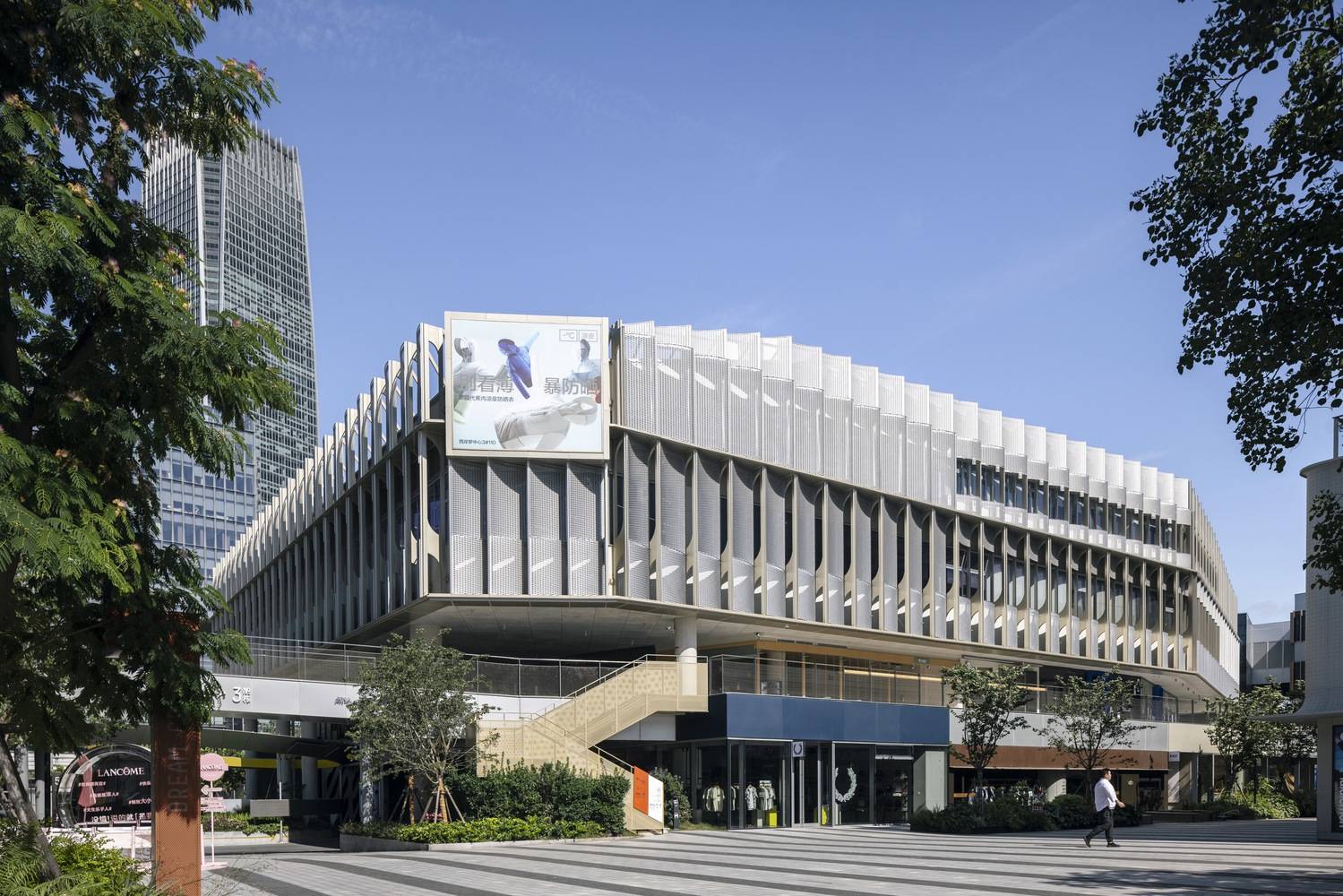
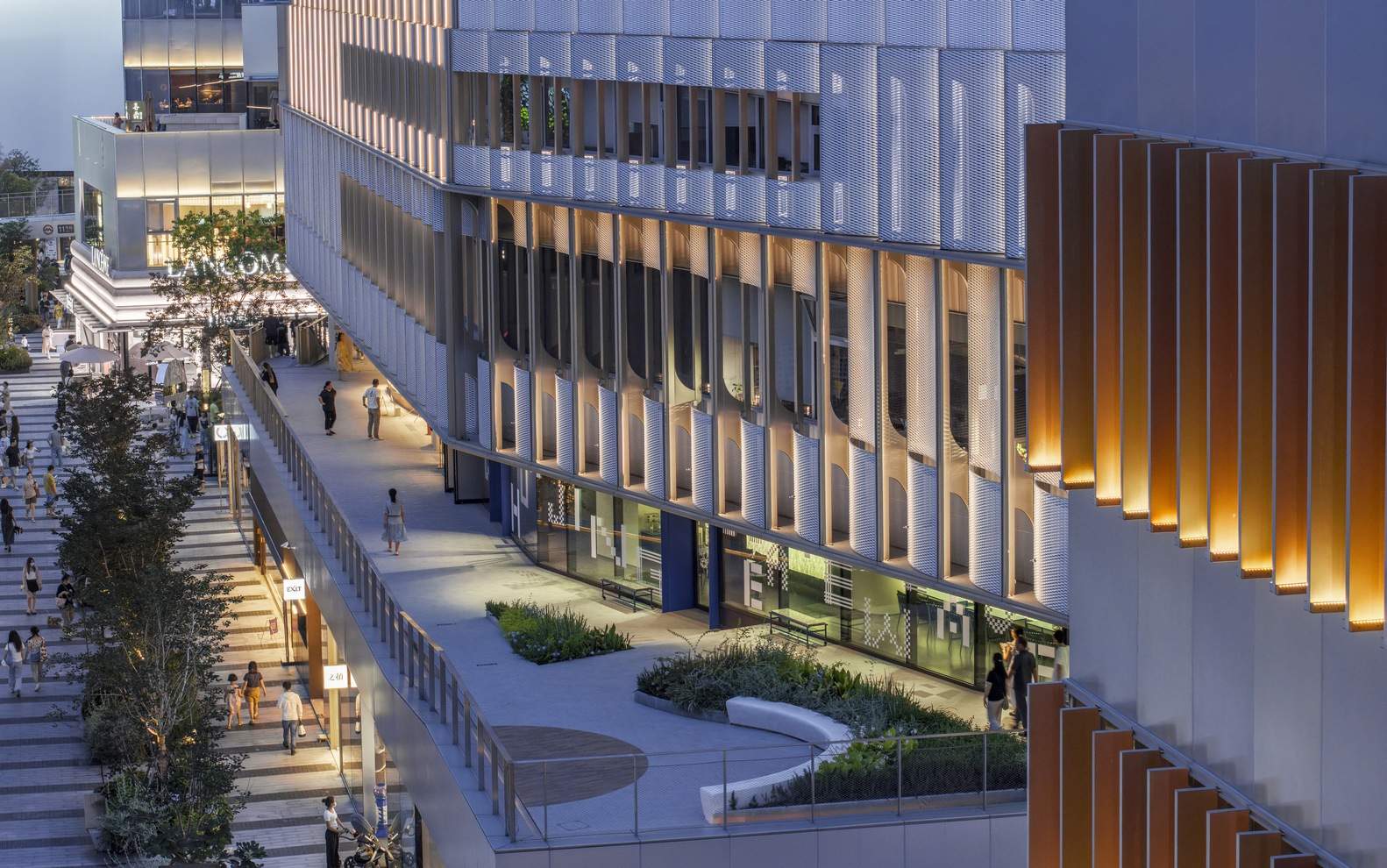
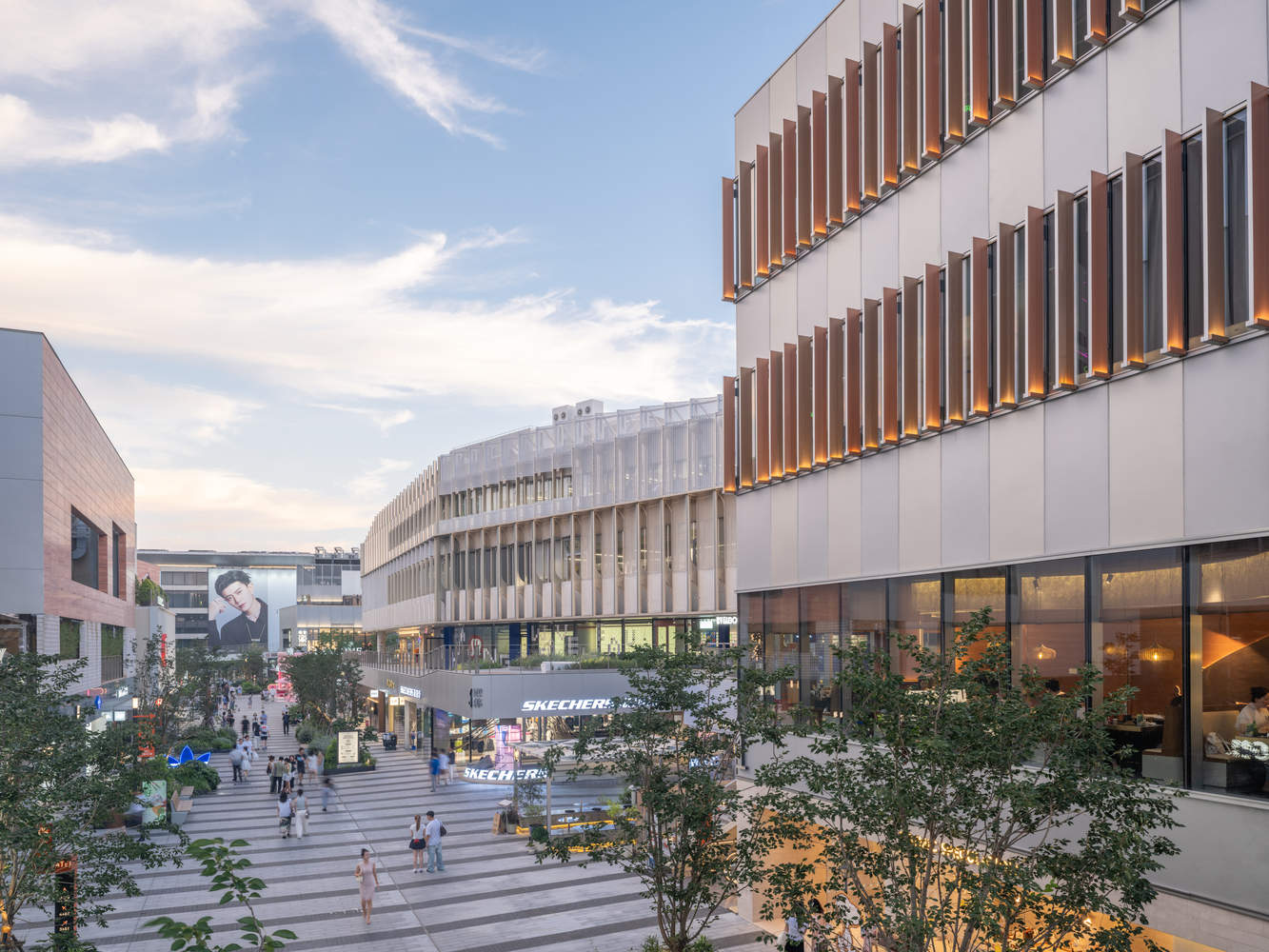
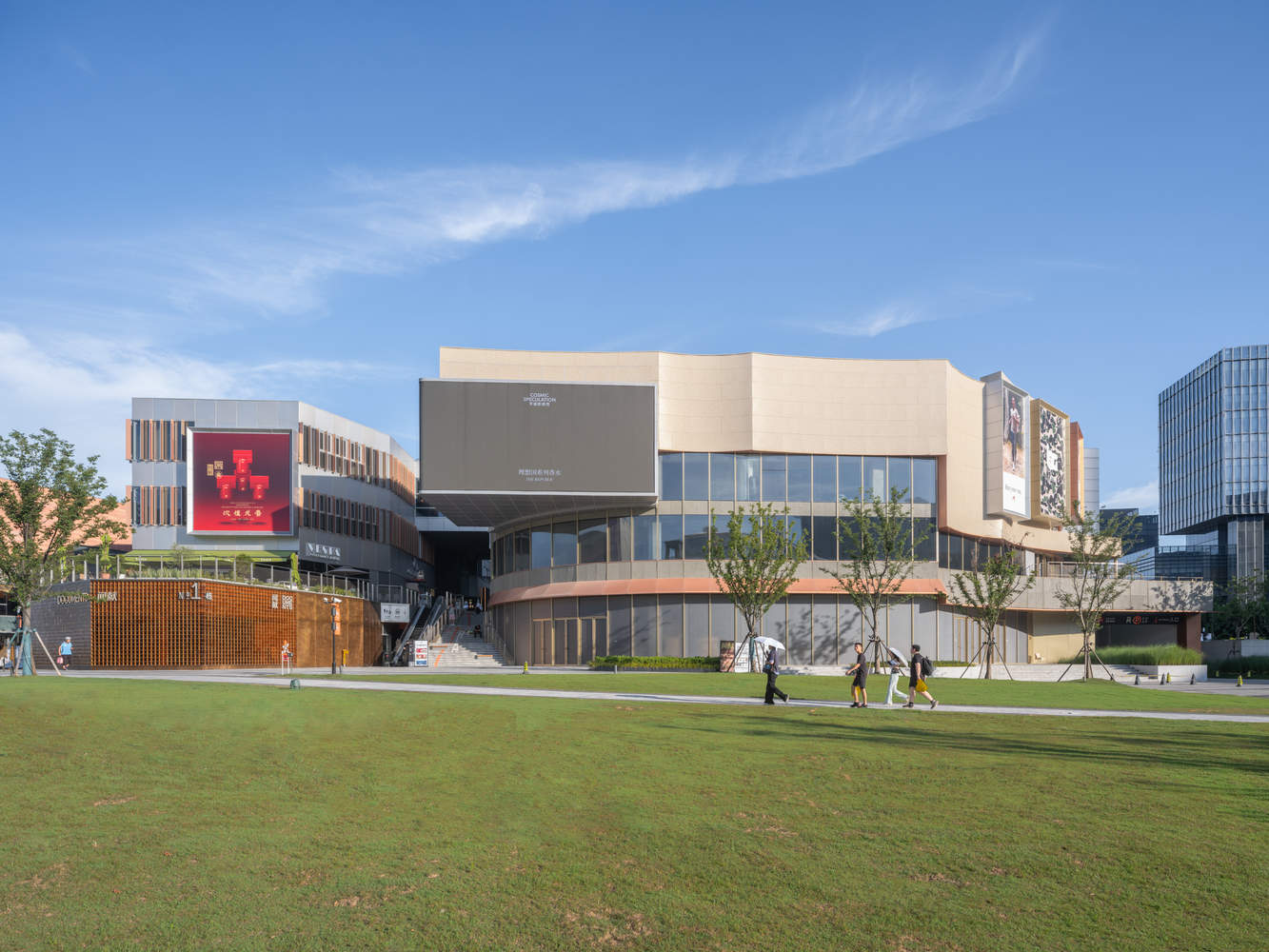
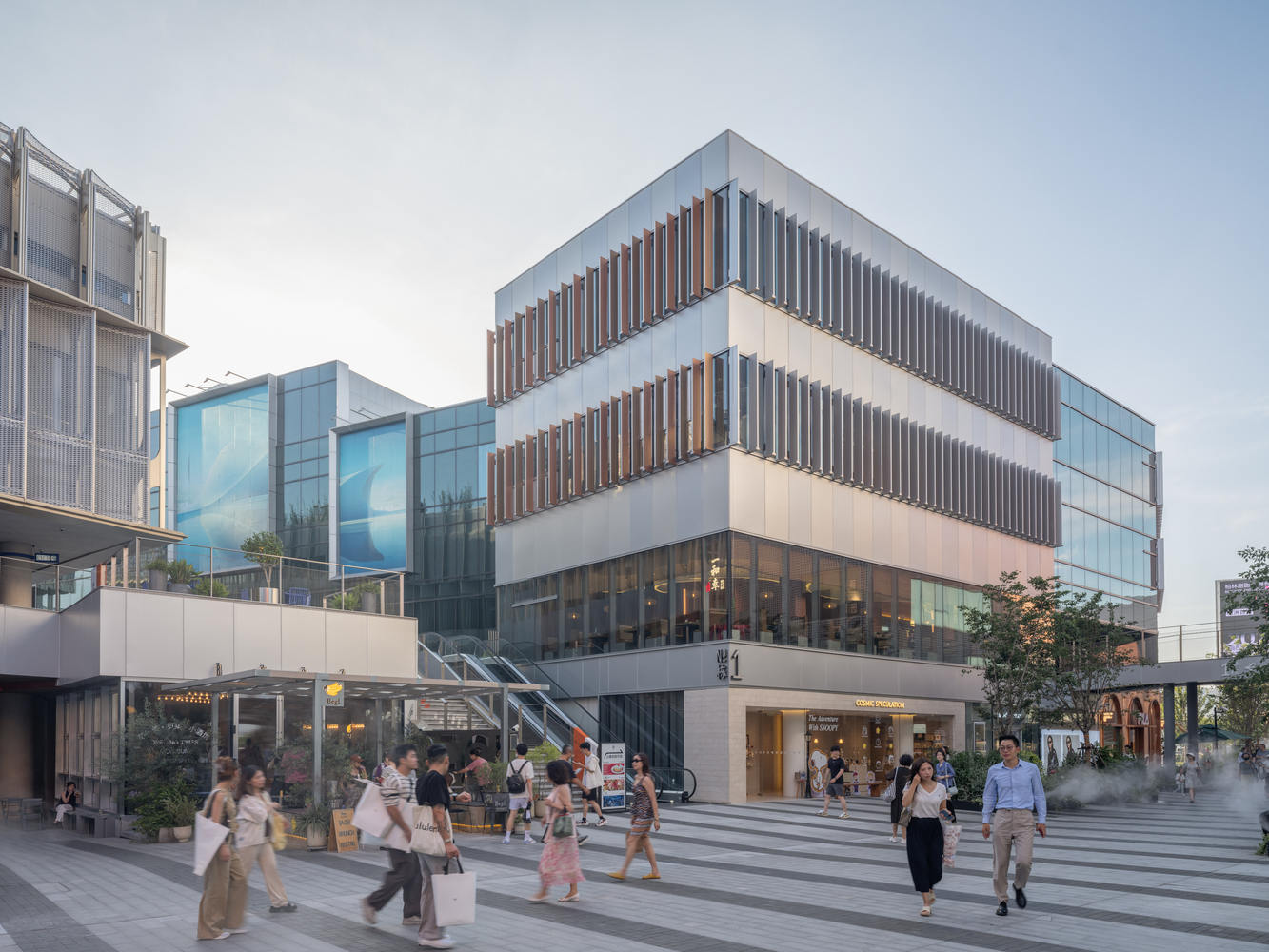
Building 1 and Building 3 have a long unfolding surface facing Longteng Avenue. Its northern end, along with the Dome Art Center and the West Bund Grand Theater (designed by SHL), enclose the Celebration Square, while its eastern side forms a lively pedestrian inner street with the Binjiang Colorful Box Cluster (designed by the main building). It is the starting point of the area and also links the transition from high art to entertainment and commerce along the west bank of the river from north to south.
1 栋 3 栋拥有面向龙腾大道绵长的展开面。其北端与穹顶艺术中心、西岸大剧院(由 SHL设计)共同围合出庆典广场,东侧与滨江彩色盒子组团(由大舍建筑设计)形成生动的步行内街。它是片区的起点,也链接了西岸滨江由北至南、由高雅艺术向文娱商业的过渡。
© 田方方
© 田方方
Building 1 and Building 3 have been renovated into self enclosed performance buildings, which still need to undertake high-frequency nighttime performance functions and cultural salon activities after renovation. The heavy volume of the original state and the enclosed black box pose challenges on how to enhance the richness and transparency of the facade.
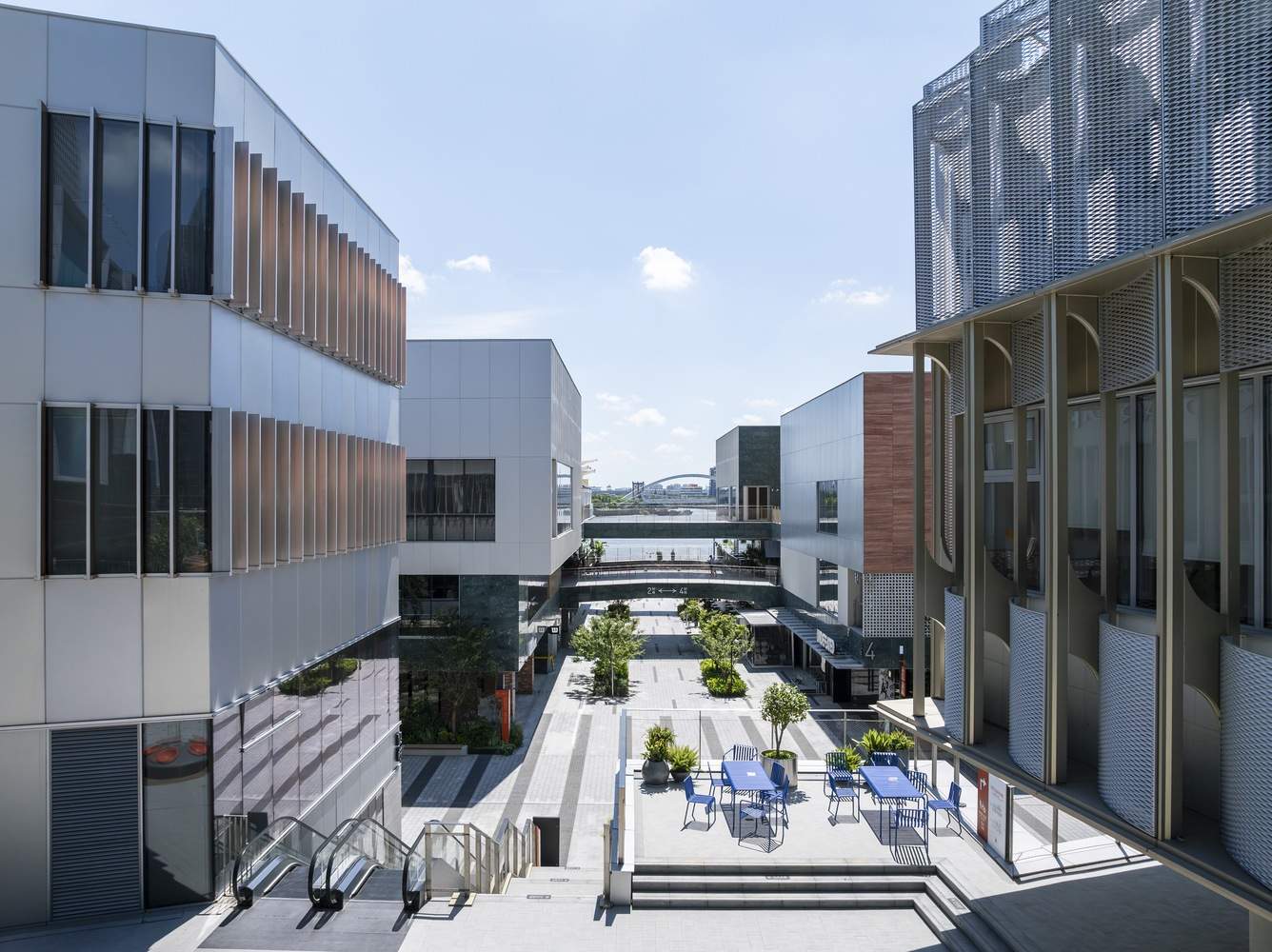
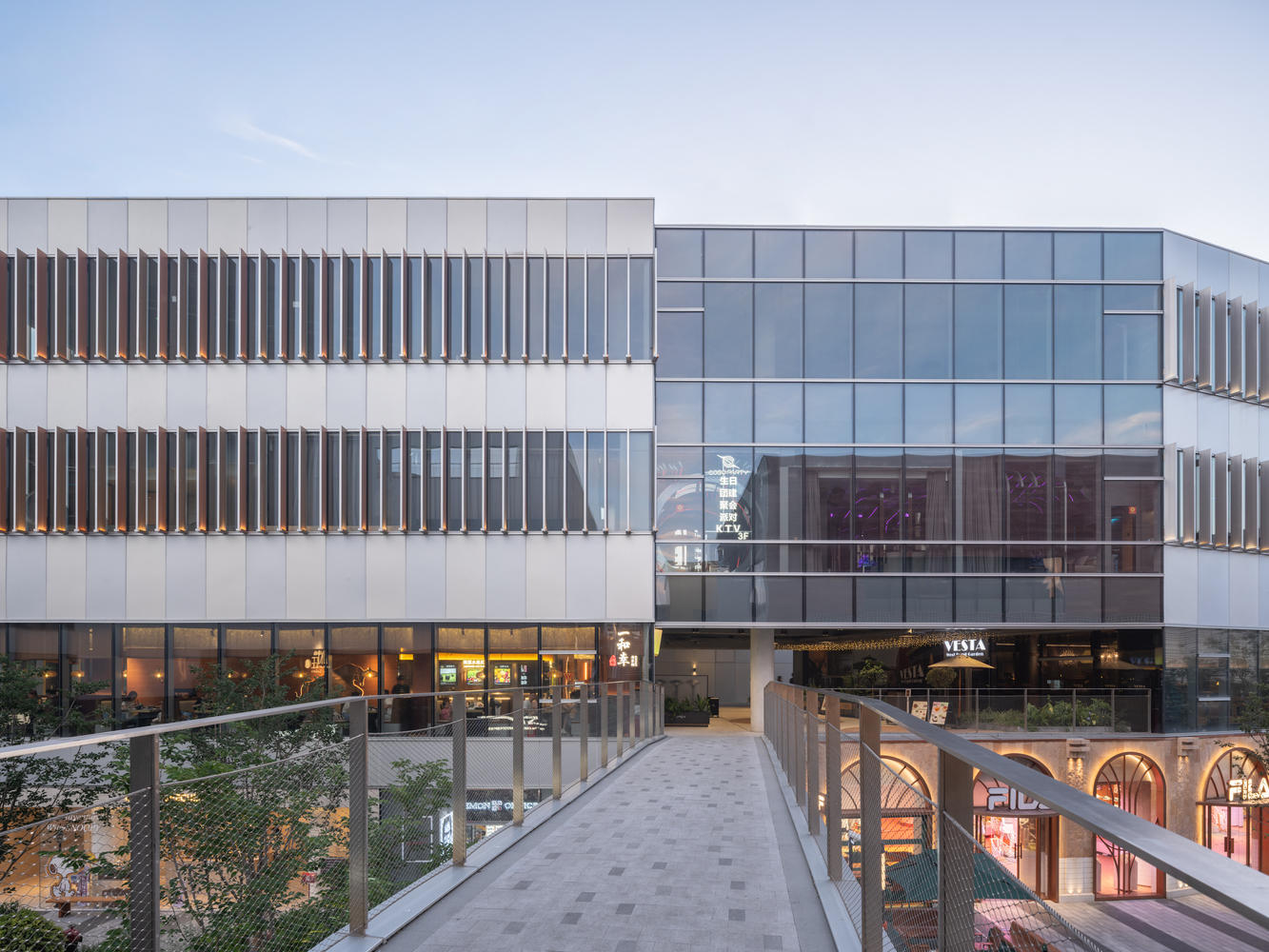
The transformation is based on the principle of minimal intervention and maximum effect. Avoid making changes to existing civil structures while optimizing flow lines and adapting to current standards. By opening up the peripheral interface as much as possible, increasing platform and staircase connections, we aim to enhance the pedestrian continuity and spatial openness of the block at various elevations. The two buildings almost exclusively use aluminum as a single material, achieving a balance between renovation costs and visual richness through subtle combinations of texture and color.
1 栋和 3 栋改造自封闭式观演建筑,在更新后仍需承担高频次的夜间演艺功能和文化沙龙活动。原状的沉重体量和封闭黑盒,都对如何增强立面的丰富度和透明性提出了挑战。
改造基于最小干预、最大效果的原则。在优化流线和适应现行规范之外,避免对既有土建结构的改动。通过尽可能打开外围界面、增加平台和楼梯连接,来提升街区在各个标高的步行连续性和空间开放度。两栋楼建筑几乎只使用了铝这单一材料,通过肌理与色彩的微妙组合,实现改造成本与视觉丰度的平衡。
© 刘国威
© 刘国威
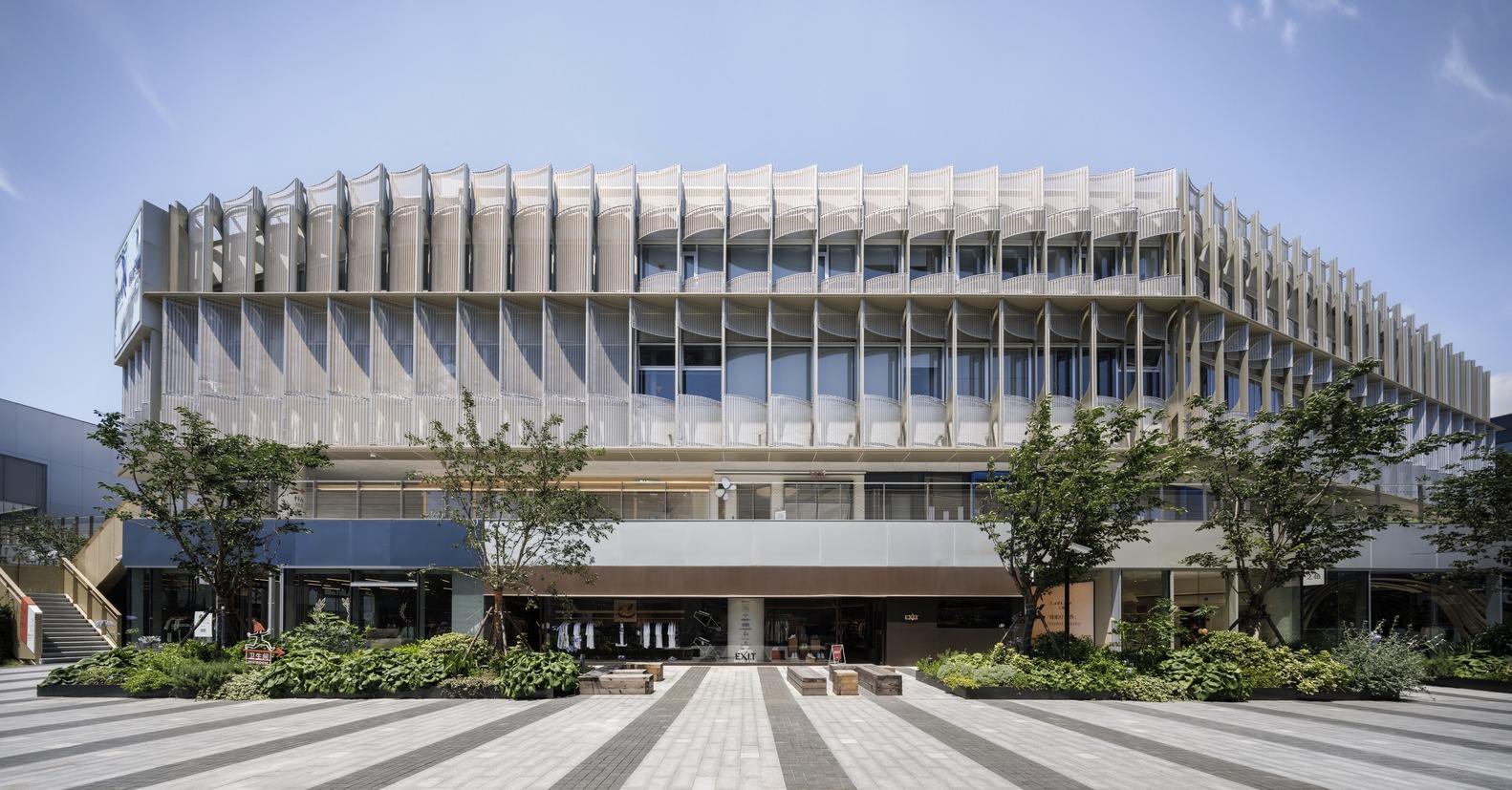
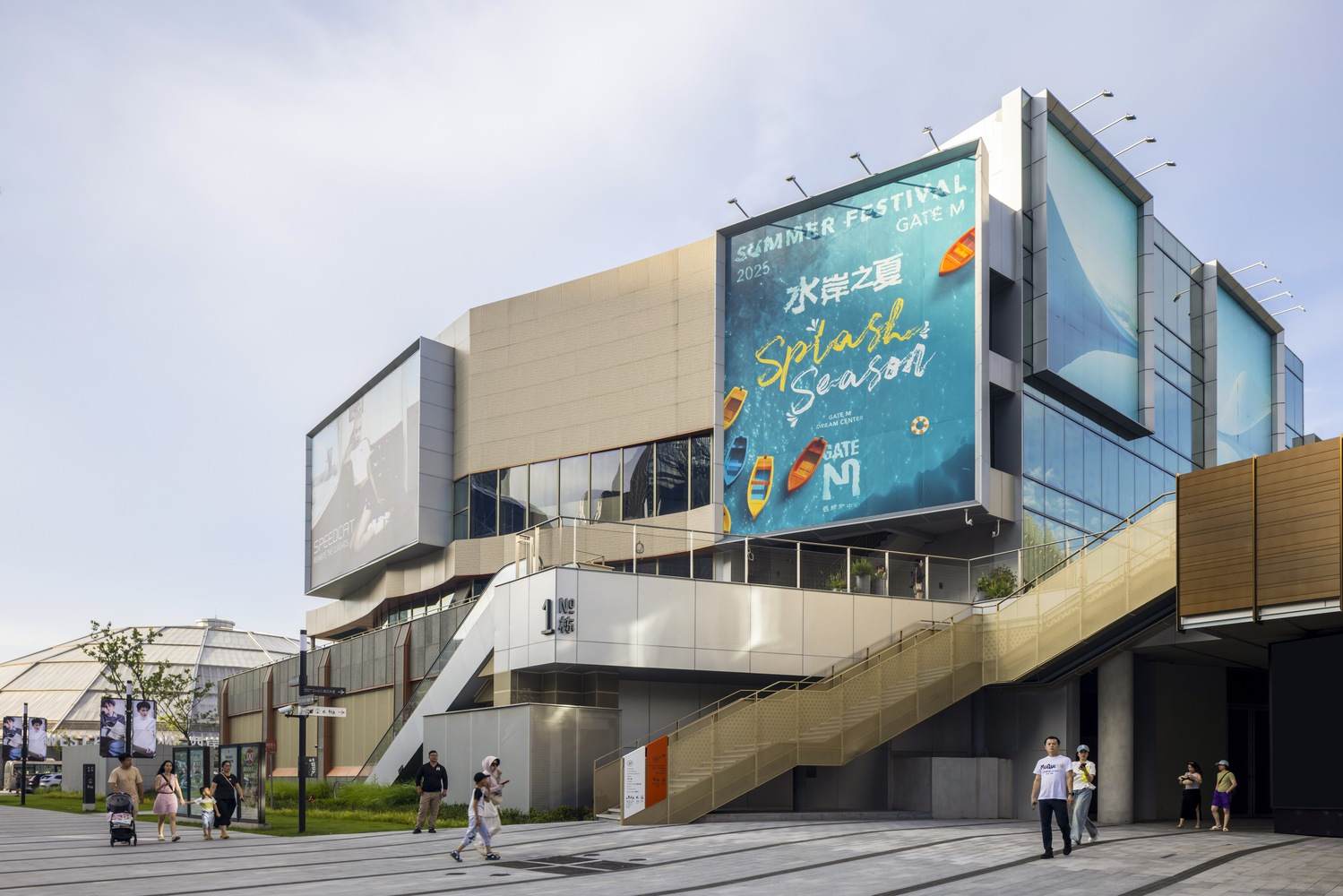
The two buildings adopt a combination of one gold and one silver, creating a contrasting and complementary, rich and unified impression of the neighborhood through changes in material transparency and the combination of heating and cooling. By using curved undulations at different scales in terms of volume and form, the monotony of the entity is eliminated, and the waterfront atmosphere of the architectural cluster is echoed.
两栋建筑采用一金一银的组合,通过材料透明度的变化和冷暖搭配,给人以对比而互补、丰富而统一的街区印象。在体量和形式上通过不同尺度上的弧形起伏,消除实体的单调感,并呼应建筑集群的滨水氛围。
© 刘国威
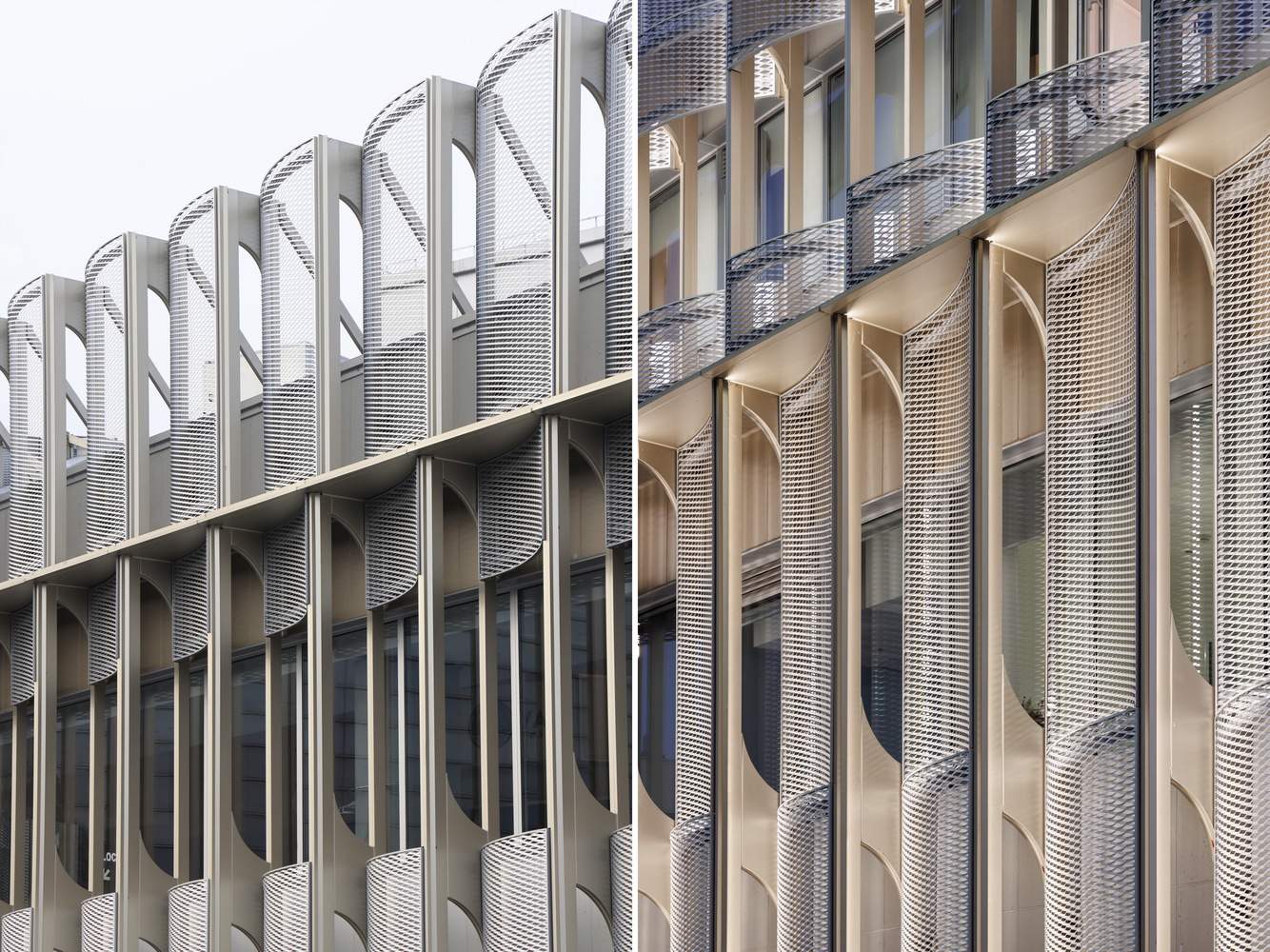
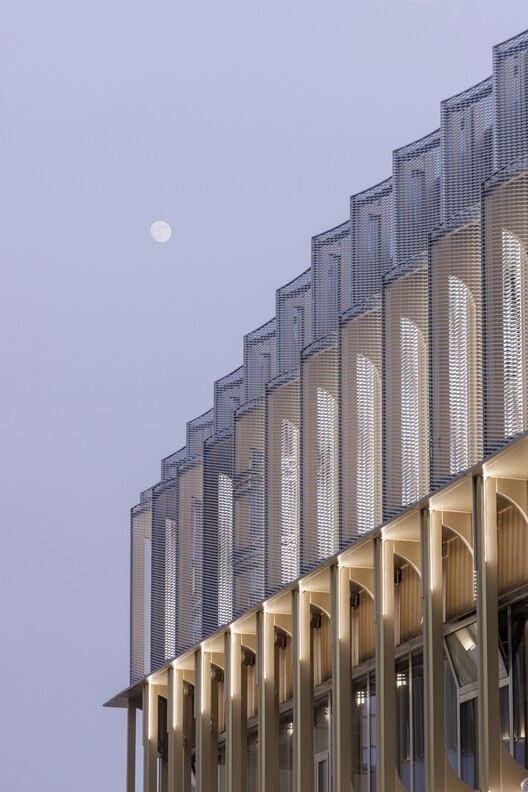
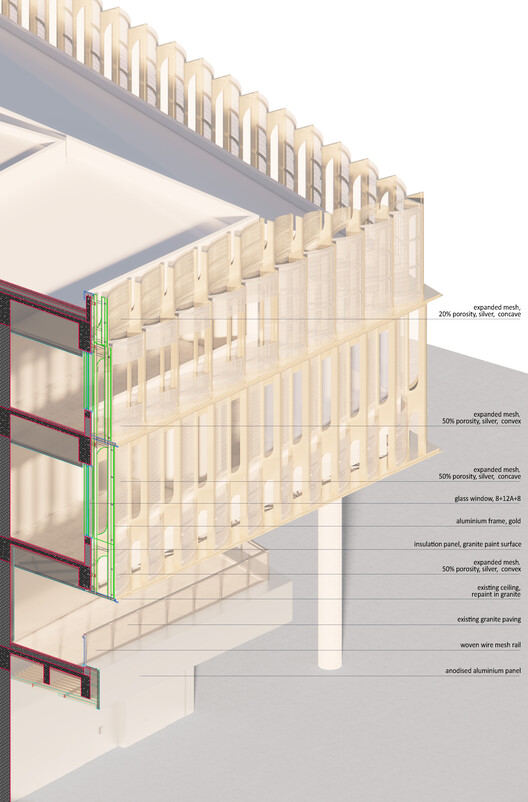
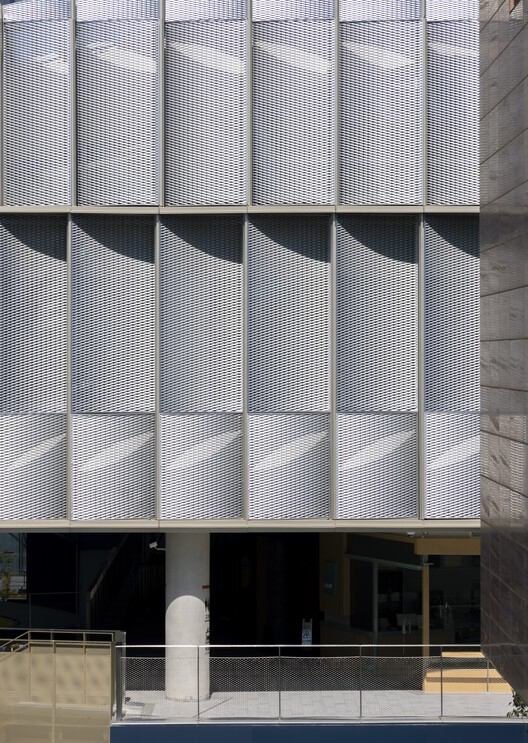
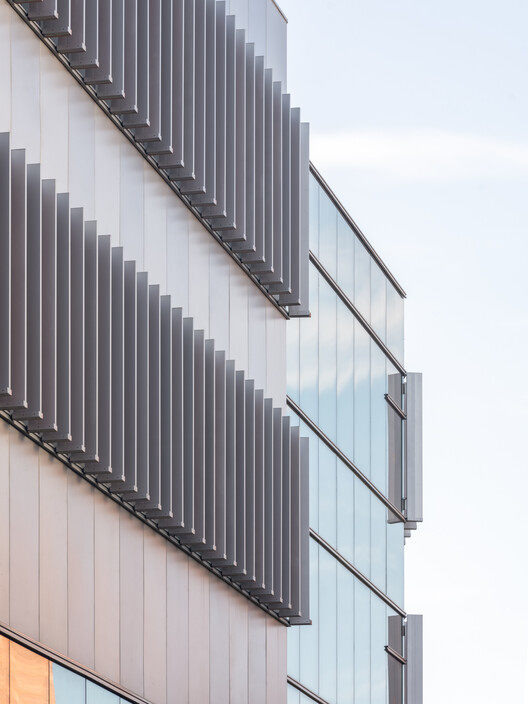
Building 3 is a long building covered in silver scales. Using cool tones and short curved lines that flip back and forth, achieve a layered effect on a monotonous long interface. The design attempts to approach from two aspects. Firstly, open horizontal long windows around the building using the most economical window wall system to establish a dialogue with the city. Secondly, a scale shaped metal extension mesh unit that overhangs outward is used to lightly cover the entire building.
3 栋是一栋长长的、被银色鳞片覆盖的建筑。采用冷色调和正反翻转的短弧线,在单调的长界面上实现富有层次的效果。设计试图从两方面切入。首先以最经济的窗墙体系延建筑四周打开横向长窗,建立与城市的对话。其次采用向外悬挑的鳞片状的金属延展网单元轻巧覆盖整个建筑。
© 刘国威
大样图
© 刘国威
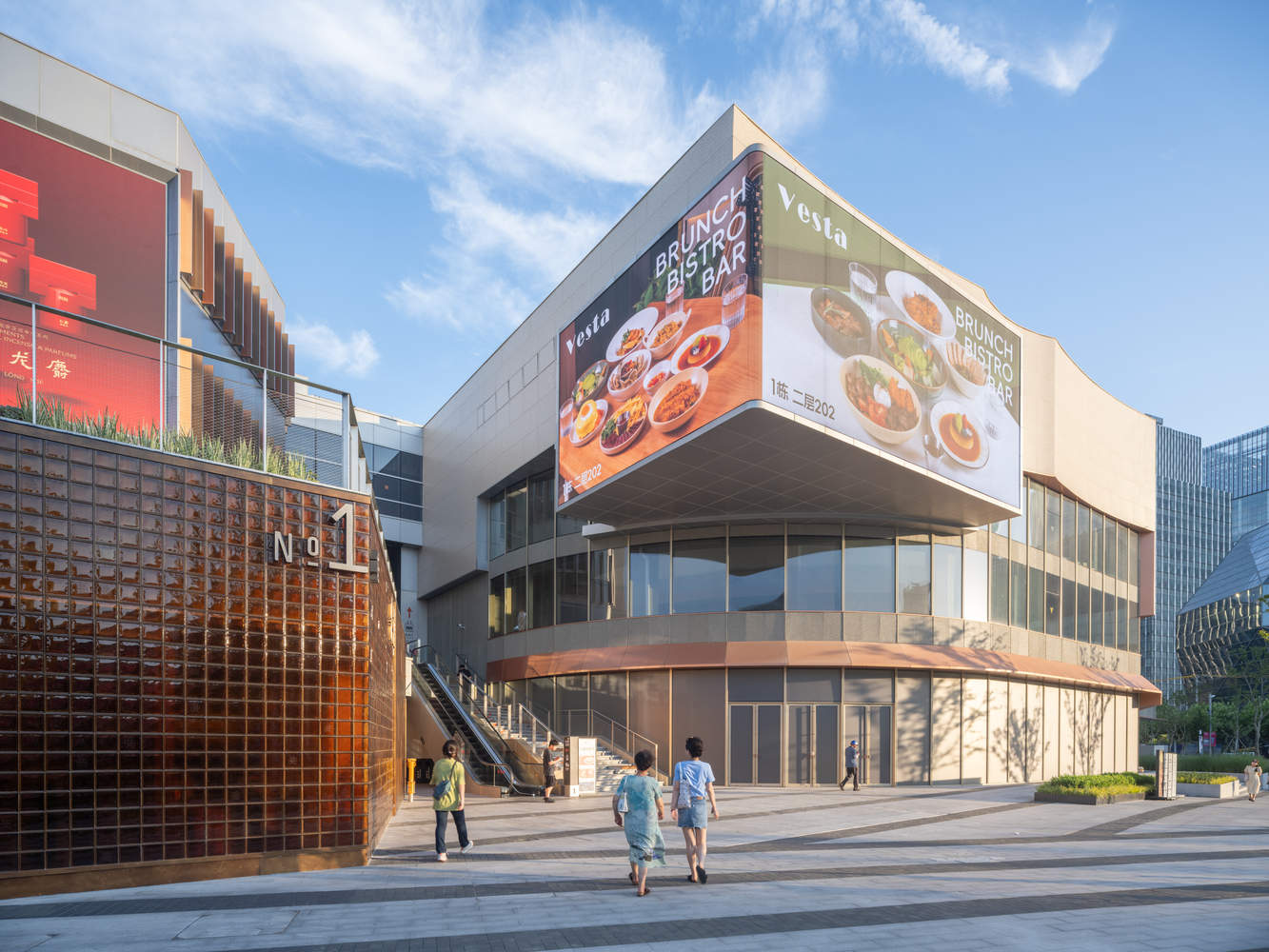
They change direction, advance and retreat, and transparency with elevation, and their expressions change with the movement of sunlight. This concise single node can flexibly adapt to multiple issues such as embedded parts, window positions, insulation thickness, and flooding. The simple driving force for solving practical problems and the elegant lightness of decoration coexist here. The renovation of Building 1 is quite difficult. The original building structure is disorderly, and it is required at the planning level to completely preserve the original state of the billboards. The focus of Building 1's work is to organize its various elements and establish relationships with its surroundings, seeking a balance between collage and integrity. The new skin adopts warm tones and soothing long curves, forming a dialogue with the diagonal West Coast Grand Theater. Add 3D naked eye LED at the corner of the main entrance, combined with the landscape staircase, to indicate the originally unclear entrance.
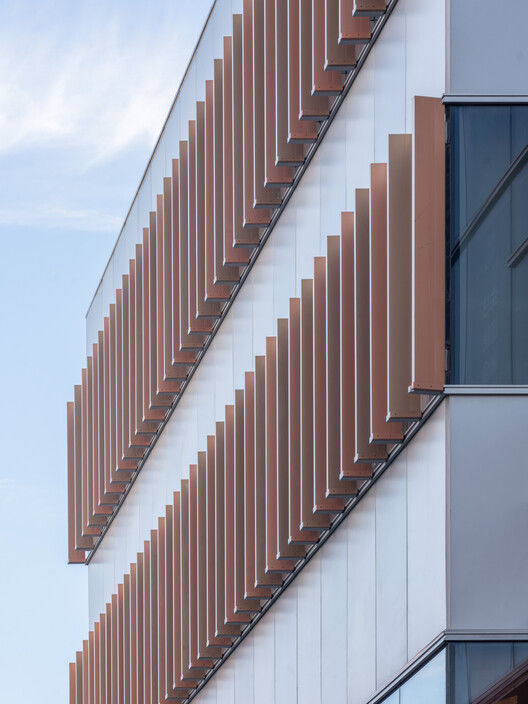
The facade changes subtly between the golden gradients: golden vertical, red copper canopy, edge closing, light gold foam aluminum with transparent back, beige stone grain aluminum plate, and double-sided two-color vertical louvers together constitute the brilliant blue moment along the river.
它们随标高变换着方向、进退和透明度,随阳光移动变幻着表情。这个简明的单一节点,可以灵活适应既有埋件、开窗位置、保温厚度、泛光等多重问题。朴素的解决实际问题的推动力和装饰又不失典雅的轻盈感在此共存。1 栋的改造难度较大。原有建筑构成杂乱,且在规划层面要求完全保留原状广告牌。1 栋的工作重心在于梳理自身的各个要素并建立与周围的关系,在拼贴感和整体性之间寻求平衡。新表皮采用暖色调和舒缓的长弧线,与对角的西岸大剧院形成对话。主入口转角处增设 3D 裸眼 LED,结合景观大台阶,提示出原本不够明确的入口。
立面在金色的梯度间微妙变化:金色竖挺、红铜色雨棚和收边、背透光的浅金泡沫铝、米色石纹铝板,双面双色竖向百叶共同构成江边流光溢彩的蓝调时刻。
© 田方方
© 田方方
Building 1 and Building 3 not only showcase themselves and engage in dialogue with each other, but also attempt to connect with the entire Dream Center and the West Coast area, allowing the buildings to showcase diverse levels and flavors at various distances and scales. This project urges architects to embrace the complexity of the city with a more open mindset, in addition to thinking about capital "architecture", and to respond to and utilize the changes and impacts brought by commercial iteration to the building itself.
1 栋和 3 栋在展现自身和相互对话之余,都试图与整个梦中心和西岸大片区产生链接,让建筑在各个距离和尺度下展现多样的层次和风味。这一项目敦促建筑师在思考大写的“建筑”之外,以更开放的心态去拥抱都市的复杂性,应对并利用商业迭代带给建筑本体的流变与冲击。
© 田方方
© 田方方