Dockyard mixed use office building/Tchoban Voss Architekten
船坞混合功能办公大楼 / Tchoban Voss Architekten
项目亮点:该项目最令人瞩目的亮点在于其对历史文脉的尊重与现代可持续理念的完美结合。建筑师在设计中巧妙地融合了原有工业港口的元素,如通过连廊的黑色玛瑙色镜面不锈钢板装饰,向紧邻水边的建筑群落致敬。同时,项目在选址上,巧妙呼应了周边历史建筑的高度,体现了对城市肌理的尊重。更重要的是,项目采用了可持续的混合木结构承重体系,以及大面积的玻璃幕墙,既保证了室内采光,又最大限度地减少了人工照明的使用,在外观与功能上都体现了可持续发展的理念。
项目精髓:该项目的精髓在于其创新的能源概念和对可持续建筑的极致追求。建筑采用了包括再生混凝土、绿色复合梁等多种可持续材料,并在屋顶上安装了太阳能混合集热器和光伏模块,结合地热能和环境空气,构建了创新的能源系统,从而实现零净能耗运营。尤其值得称赞的是,项目充分利用了废弃货运隧道,将其改造为冰蓄能设施,不仅提高了能源效率,也赋予了原有建筑新的生命力。这些都体现了建筑师在可持续发展方面的远见卓识,以及对环保理念的深刻理解。
设计手法:设计手法上,项目巧妙地运用了建筑语言,营造了富有节奏感和层次感的立面。例如,面向施普雷河的南立面通过错位凸出的飘窗设计,形成富有韵律的视觉效果。西、北、东三侧的玻璃立面部分采用内凹式阳台,同样以两层为间隔错落布置,非透光立面区域则采用悬挂式折叠铝板包裹,从而进一步强化了立面层次感。此外,项目在室内设计和艺术品的选择上,也体现了对细节的极致追求,例如大堂天花板下的艺术装置,都为建筑增添了独特的魅力。
© HG Esch
© HG Esch
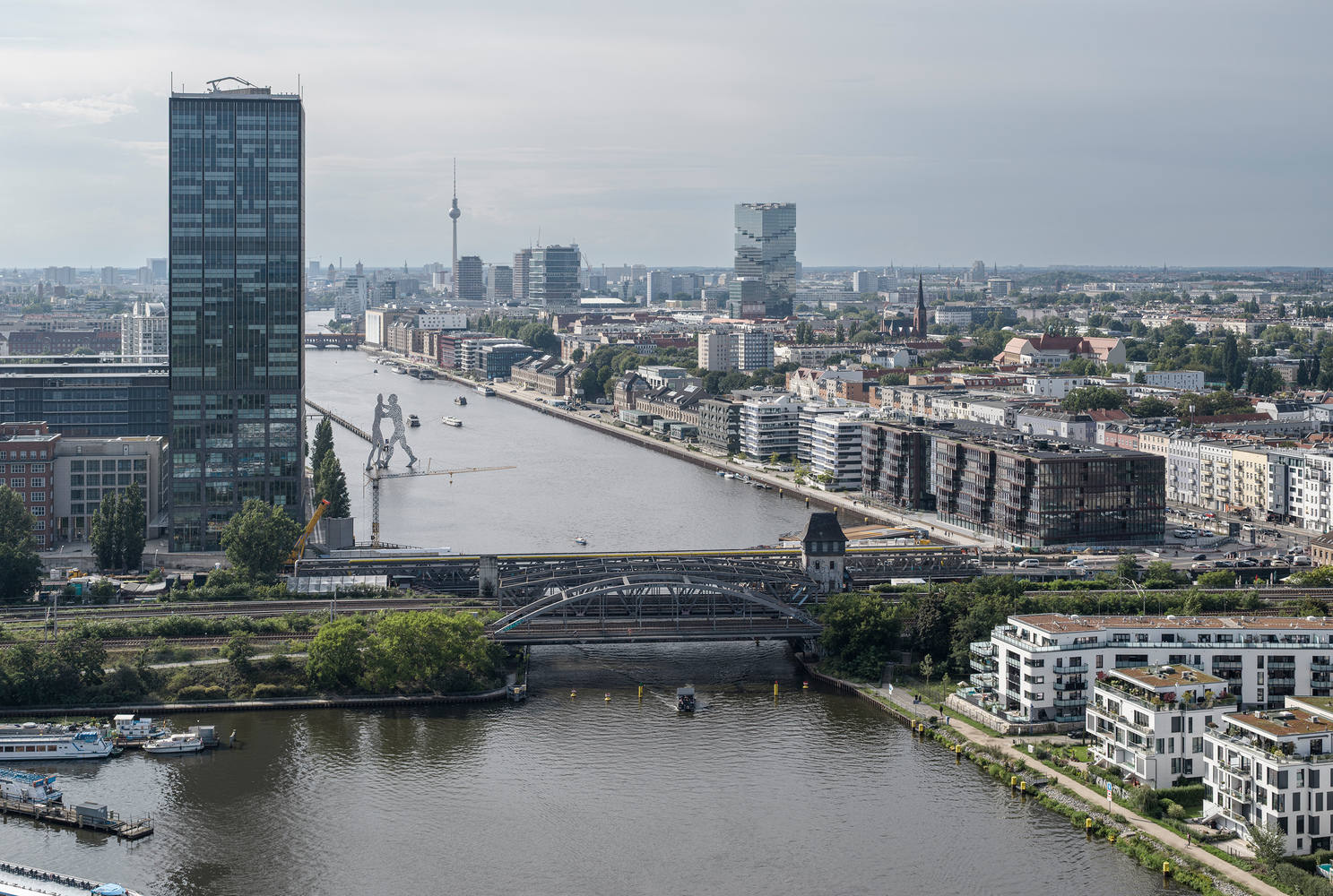
From the architect. At the beginning of the 20th century, Osthafen Port in Berlin was one of the largest industrial ports in the city. This place was originally used for the transportation and storage of goods. Along Stralauer Allee, on the banks of the Spree River between Oberbaumbr ü cke Bridge and Treptower Park, there stands a three story administrative building (with a cafeteria inside) and multiple storage buildings and warehouses. Nowadays, modern office and residential buildings have added a new style to this area. Media, fashion, and creative companies have all set their sights on the unique location around MediaSpree. At the beginning of the 21st century, TCHOBAN VOSS architectural firm developed a master plan for new construction and further development in the Osthafen port area, incorporating historical buildings into the plan.
来自建筑师。20 世纪初,柏林的奥斯特哈芬港(Osthafen,即东港)是该市最大的工业港口之一。这里原用于货物的运输与仓储,沿施特劳劳尔大街(Stralauer Allee)、位于奥伯鲍姆桥(Oberbaumbrücke)与特雷普托公园(Treptower Park)之间的施普雷河(Spree)河岸,矗立着一座三层高的行政楼(内设食堂)以及多座仓储建筑和仓库。如今,现代办公楼与住宅楼为这片区域增添了新的风貌。媒体、时尚及创意企业纷纷看中了“媒体施普雷区”(MediaSpree)周边这一独特地段。21 世纪初,TCHOBAN VOSS 建筑事务所为奥斯特哈芬港地区的新建项目与进一步开发制定了一项总体规划,将历史建筑也纳入了规划之中。
© HG Esch
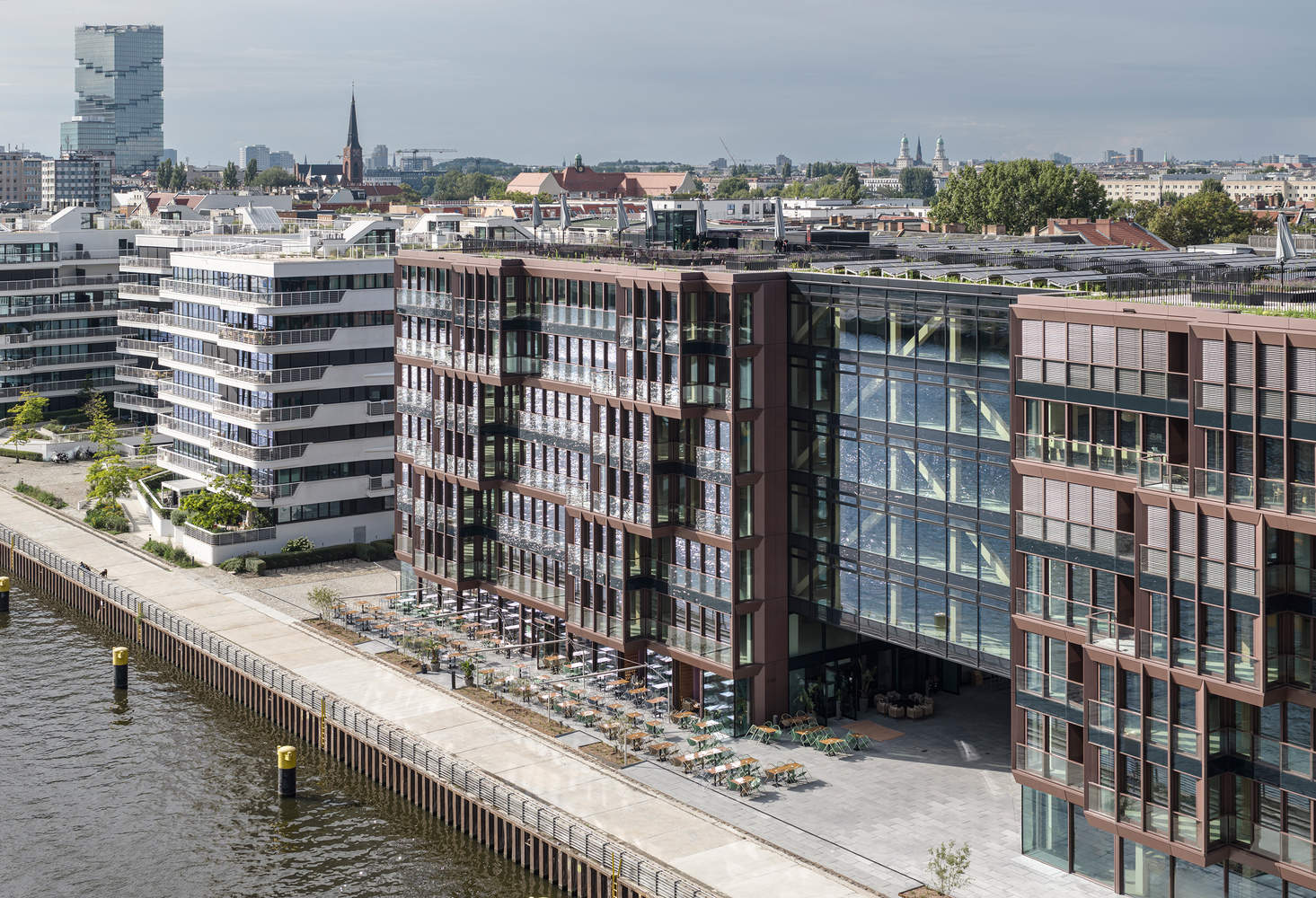
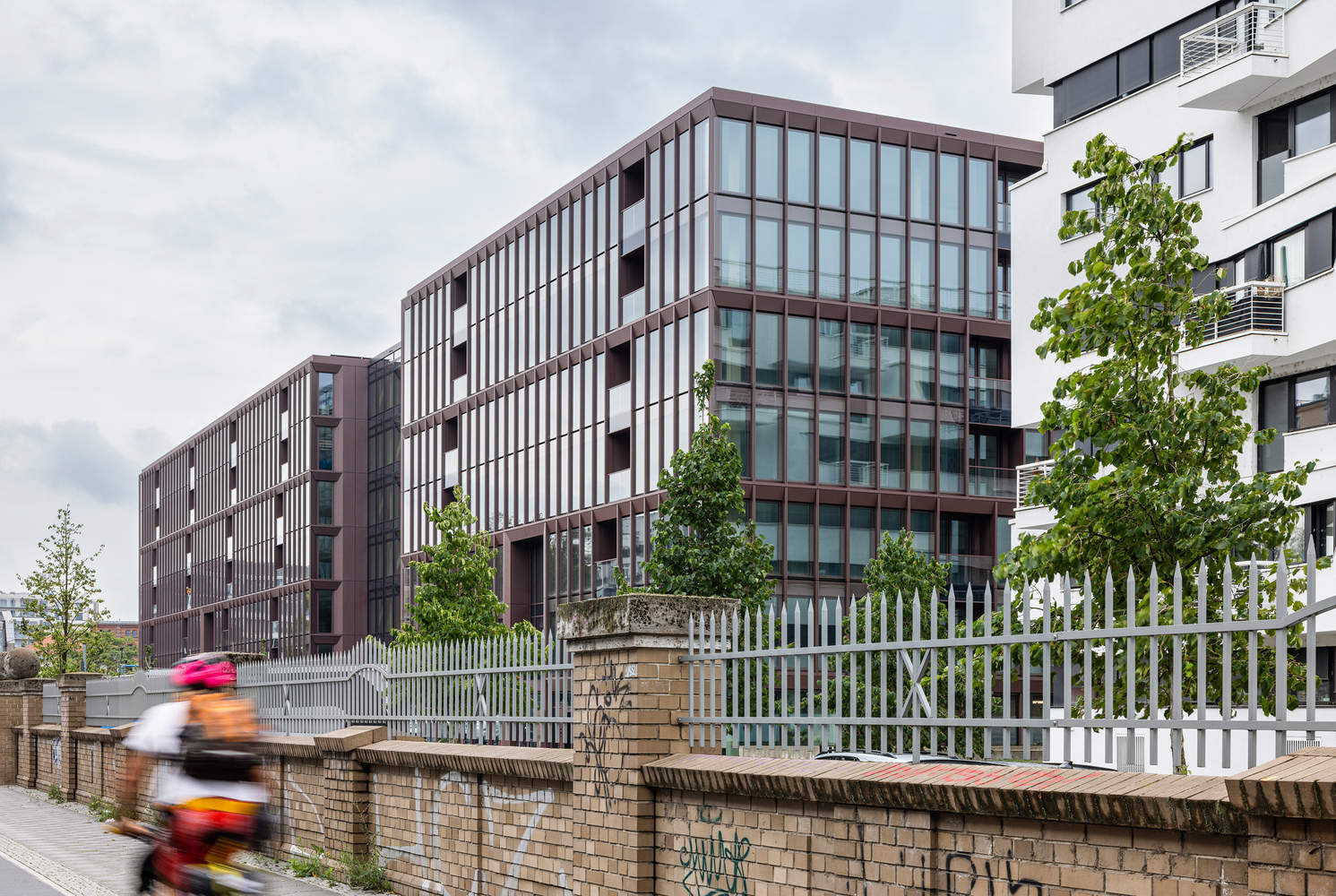
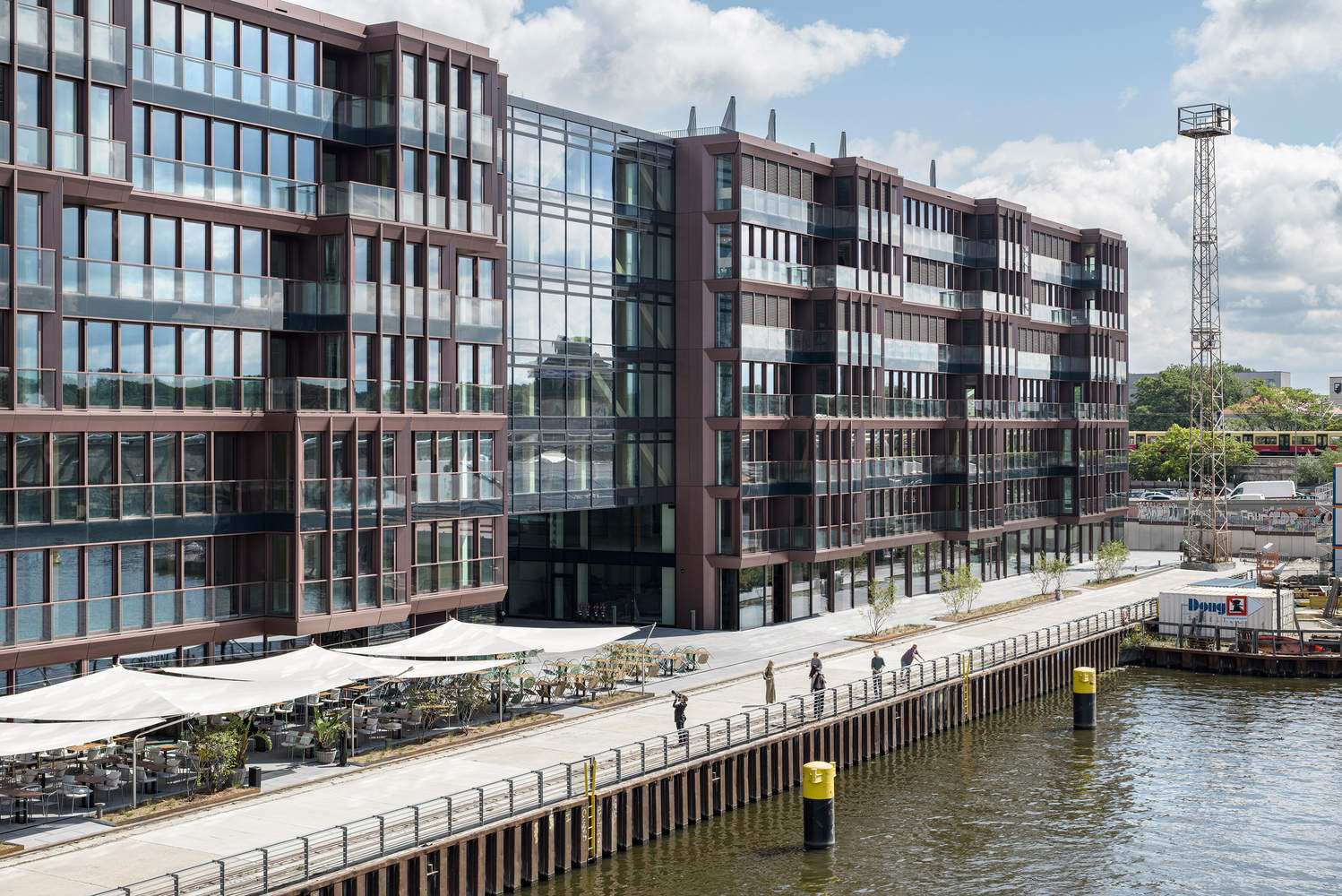
TCHOBAN VOSS architectural firm supervised the construction of the NHOW Hotel in Berlin, known for its high reflectivity aluminum cladding cantilever structure, which cleverly reflects the shimmering water surface of the Spree River; In addition, the firm also designed the eye-catching Coca Cola headquarters building and the vibrant residential project "The White" (whose architectural style is reminiscent of cruise ships and yachts). At the eastern end of the area, there is a plot of land with an area of 13400 square meters (15-16 Straulauer Strasse), which was the last undeveloped land in the area before the shipyard project was launched. Nowadays, a modern seven story office building with an underground parking lot has been constructed using a sustainable and environmentally friendly hybrid wood structure construction method. The building at the eastern end of the Donggang area is slightly higher than adjacent buildings, and this design echoes the slightly higher building complex at the western end of the trail - the historic egg refrigerated warehouse, the protected building "Spreespeicher", and the Berlin nhow Music Lifestyle Hotel.
TCHOBAN VOSS 建筑事务所监督了柏林 nhow 酒店的建造工作 —— 该酒店以其高反射率的铝制包层悬臂结构而闻名,这一设计巧妙地映照出施普雷河波光粼粼的水面;此外,该事务所还设计了引人注目的可口可乐总部大楼,以及充满活力的住宅楼项目“The White”(其建筑风格令人联想到游轮与游艇)。在该区域的东端,有一块面积达 13400 平方米的地块(施特劳劳尔大街 15-16 号),在船坞项目启动前,它一直是此地最后一块未开发的土地。如今,这里采用可持续且环保节能的混合木结构建造方法,建成了一座现代化的七层办公大楼,并配有地下停车场。东港区域东端的这栋建筑,其高度略高于相邻建筑,这一设计与步道西端稍高的建筑群 —— 历史悠久的鸡蛋冷藏仓库、受保护建筑“施普雷仓储楼”(Spreespeicher)以及柏林 nhow 音乐生活方式酒店 —— 形成了呼应。
© HG Esch
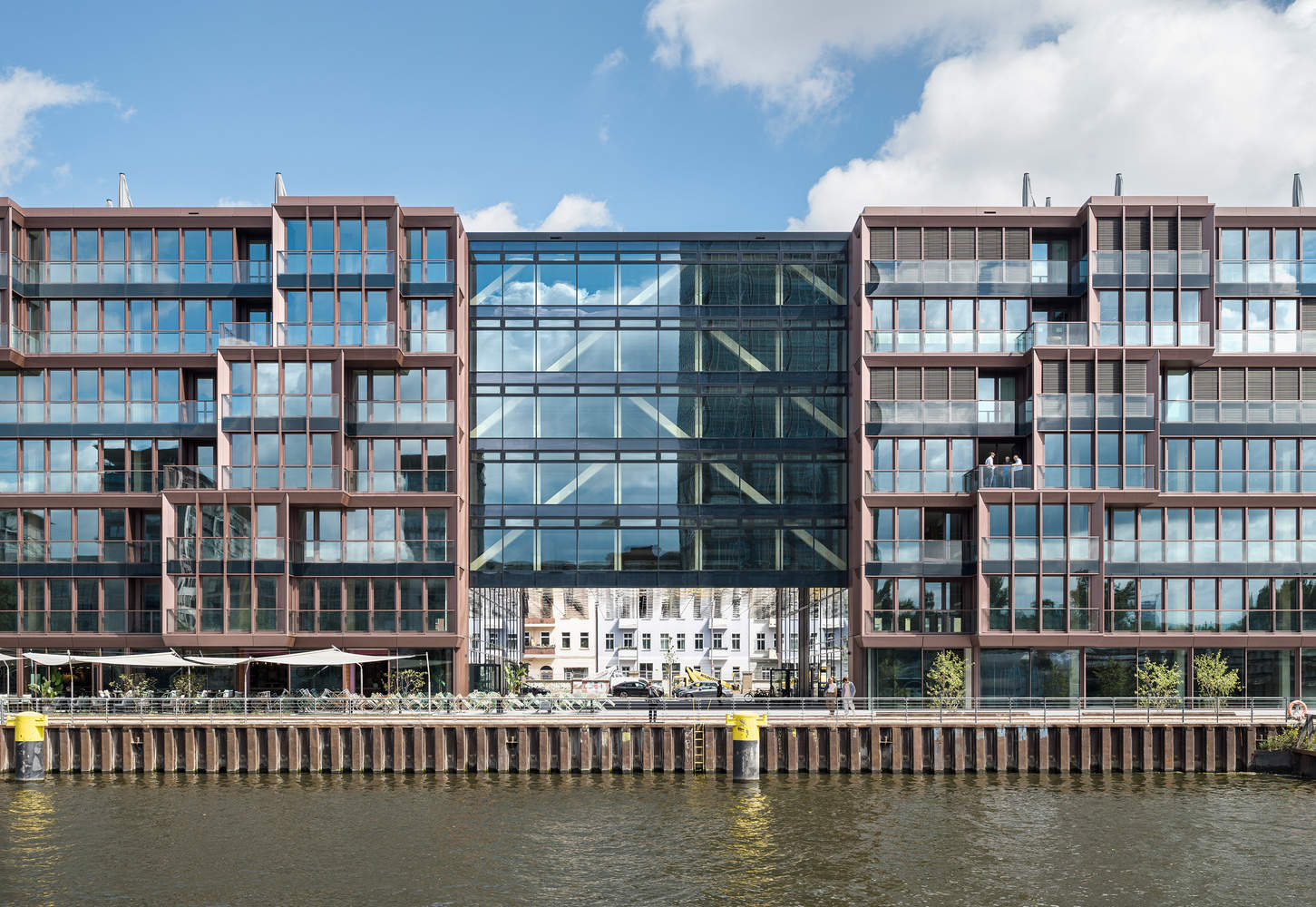
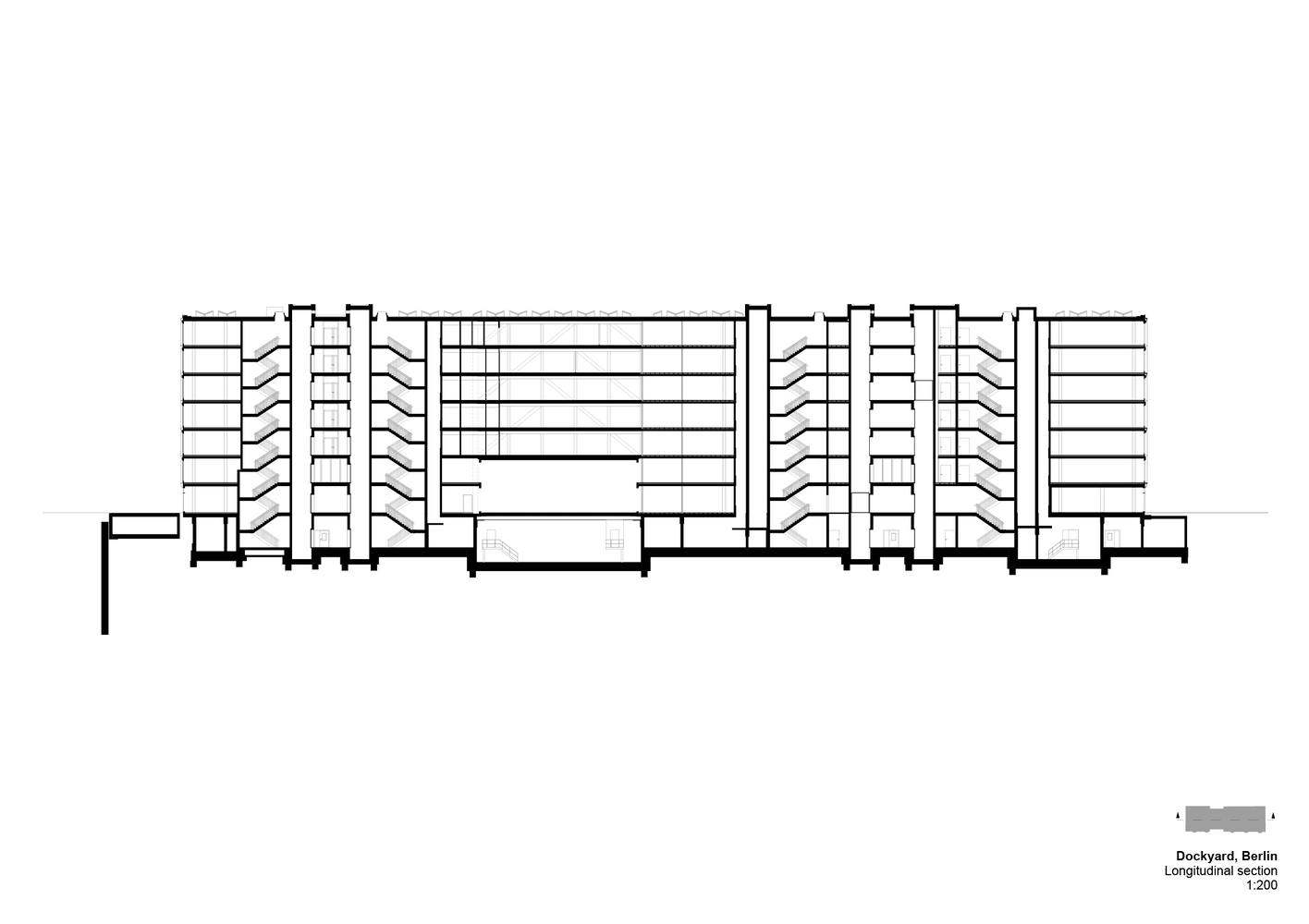
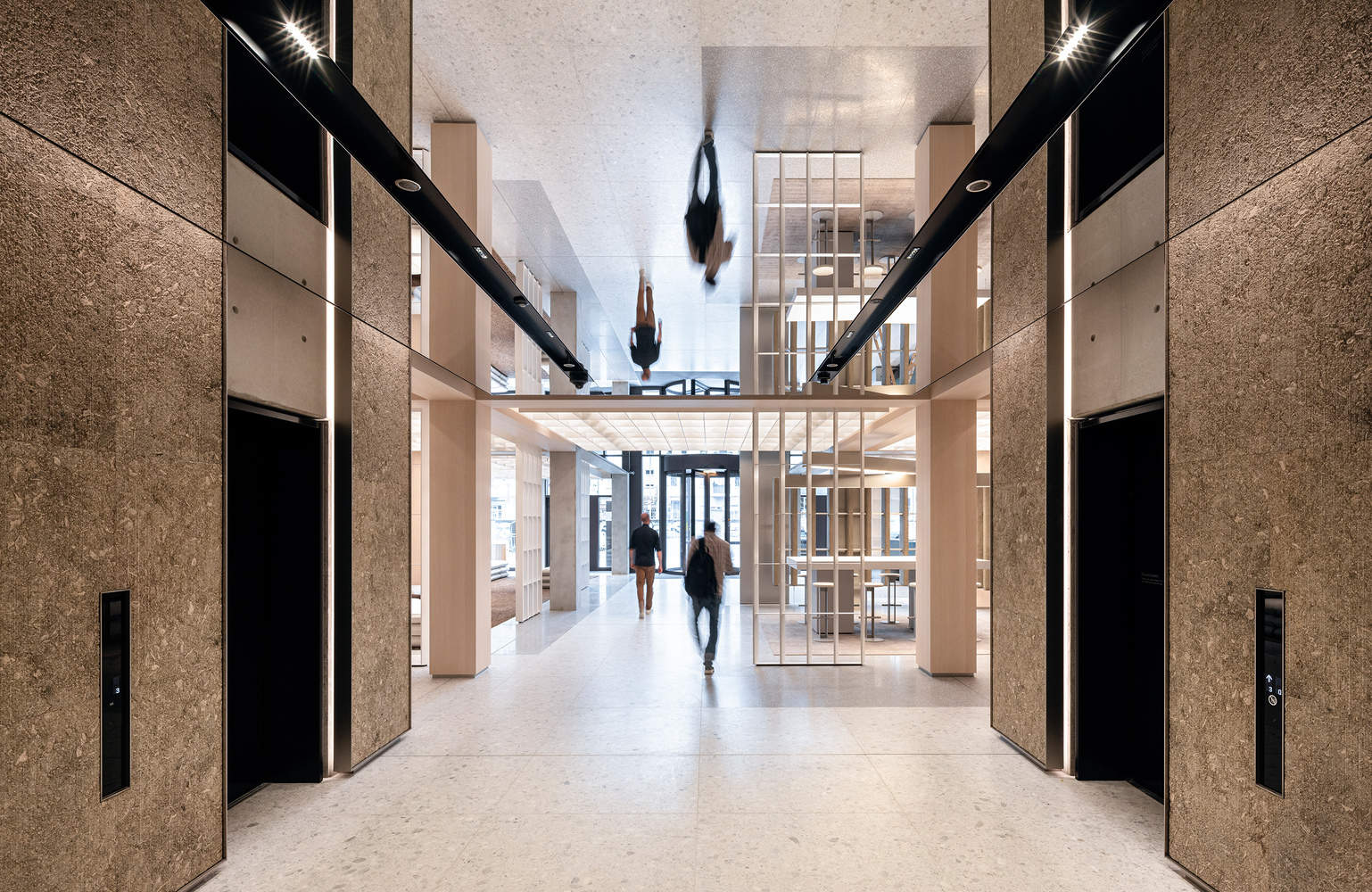
The shipyard project consists of a square building and a rectangular building, connected by a glass corridor structure, with trusses made of sustainably constructed oak wood visible inside the corridor. The bottom two floors of the corridor structure serve as an open column free passage, with one side offering views of the Spree River towards Kreuzberg and the other side showcasing the historical architectural style of Stralauer Allee. The ceiling of the passage is decorated with black agate colored mirrored stainless steel panels, creating a flowing reflective effect - paying tribute to the architectural community adjacent to the water. The project adopts a sustainable mixed wood structural load-bearing system, cleverly integrating the advantages of wood and concrete to achieve the optimal utilization of material properties. The dock project is designed as a framework structure to achieve maximum flexibility in space utilization. The two main parts of the building, starting from the first floor and the corridor structure from the second to the sixth floor, both use wooden concrete composite floor slabs. DELTABEAM is used in the mixed floor area ® Green composite beam. The load-bearing structure of this five story corridor does not use steel beams at all, but is arranged through diagonal trusses to form channels between various areas. The basement and first floor slabs are all constructed with reinforced concrete.
船坞项目包含一座方形建筑与一座矩形建筑,二者之间由一座玻璃连廊结构相连,连廊内可见由可持续建造的山毛榉木制成的桁架。连廊结构的底层两层作为开放式无柱通道,一侧可眺望克罗伊茨贝格(Kreuzberg)方向的施普雷河景致,另一侧则可观赏施特劳劳尔大街(Stralauer Allee)上的历史建筑风貌。通道天花板采用黑色玛瑙色镜面不锈钢板装饰,营造出流动的反射效果 —— 以此向紧邻水边的建筑群落致敬。该项目采用可持续的混合木结构承重体系,巧妙融合木材与混凝土的优势,实现材料性能的最优化利用。船坞项目设计为框架结构,以实现空间利用的最大灵活性。建筑两大主体部分从首层起,以及连廊结构从二层至六层,均采用木混凝土组合楼板。混合楼板区域使用了 DELTABEAM ® 绿色复合梁。这座五层连廊的承重结构完全未使用钢梁,而是通过斜向桁架布局,在各个区域之间形成通道。地下室与首层的楼板则全部采用钢筋混凝土建造。
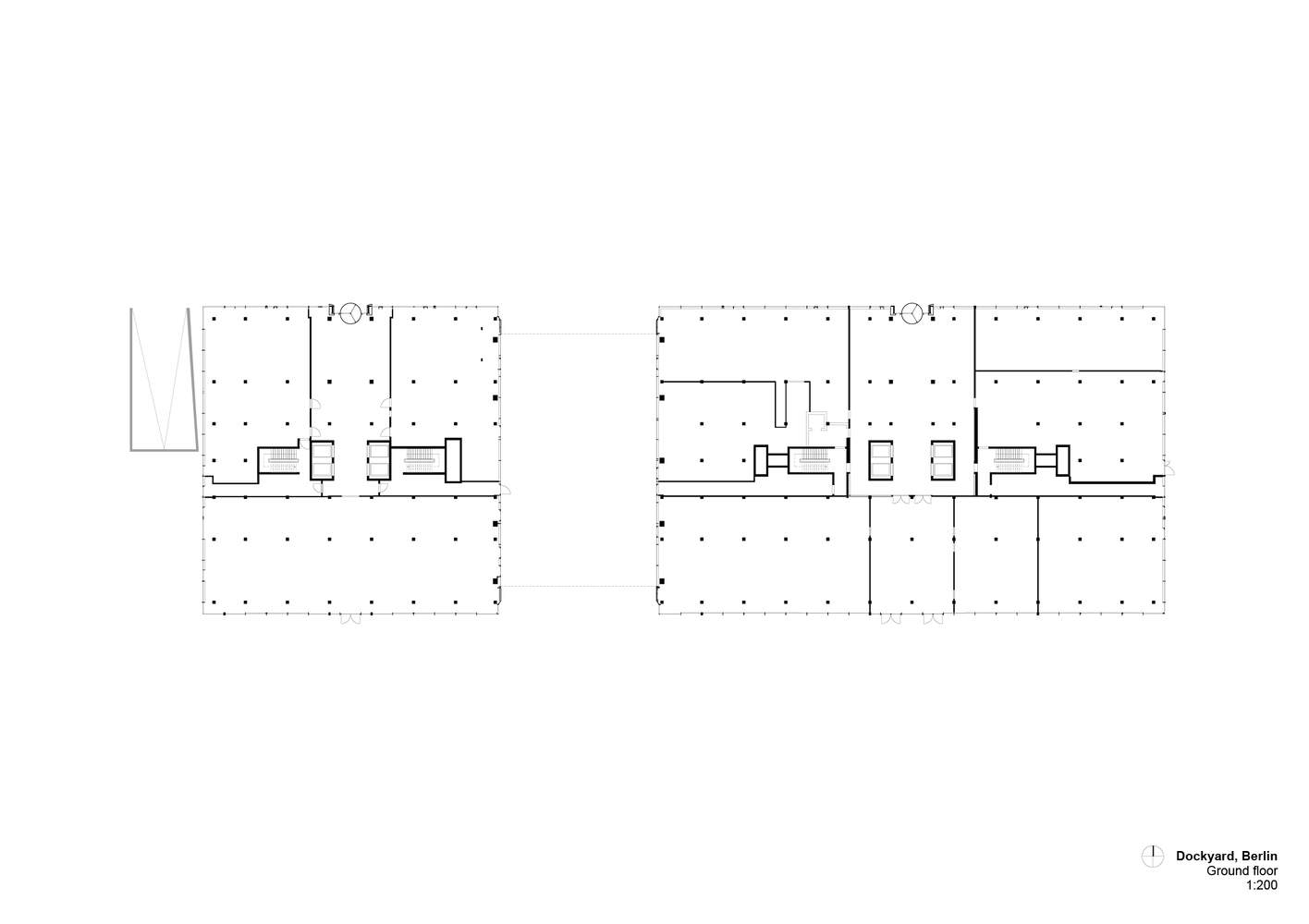
一层平面图
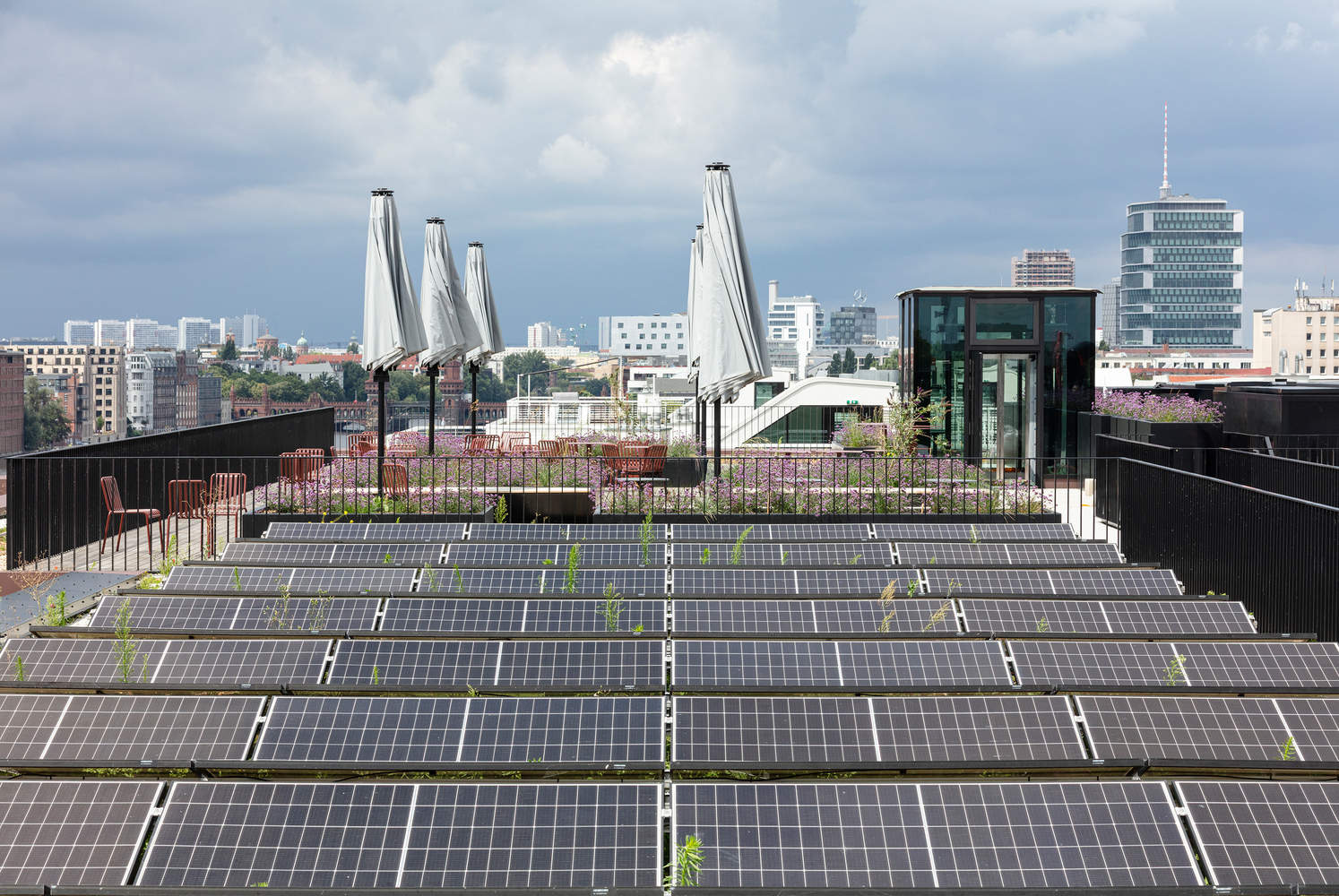
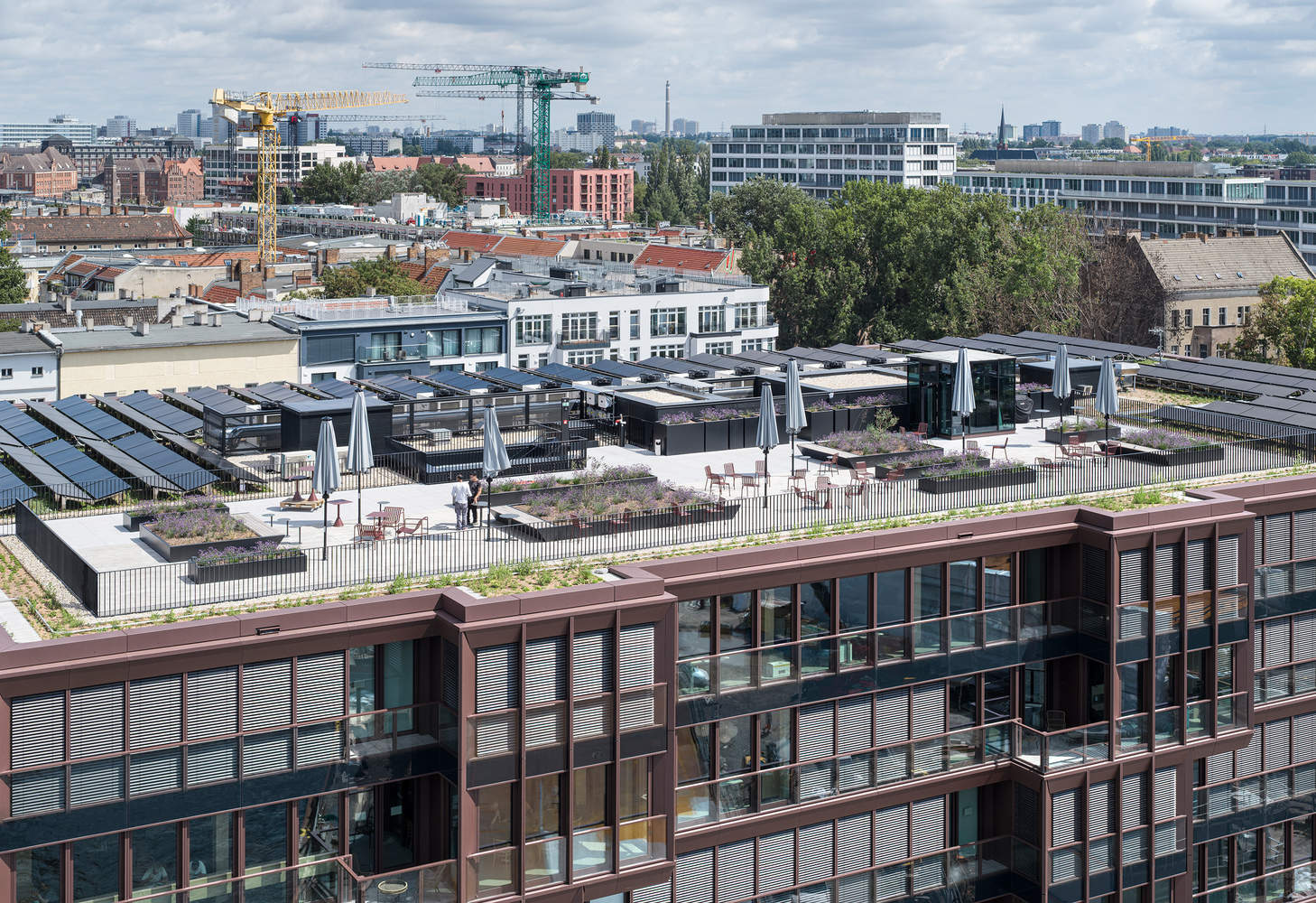
The roof is extensively covered with green plants. Both parts of the building have rooftop terraces with seating, offering panoramic views of the Spree River towards the Wrangel community in the Kreuzberg district. Two rooftop terraces are connected by a skybridge spanning over the corridor structure. People can reach the terrace through stairs or two accessible glass elevators. Both parts of the building have independent ground level entrances, which adopt a three story porch form. Part of the double layered lobby has a net height of 6.90 meters, with a transparent and bright space that is impressive. The entrance of the building is located on the north side of the complex facing Stralauer Allee. Horizontal transportation is achieved through two core staircases and accessible elevators. The basement is equipped with an underground parking lot that can accommodate 81 parking spaces, of which 9 are accessible parking spaces. All parking spaces are equipped with electric vehicle charging facilities.
屋顶大面积铺设了绿植。建筑的两部分均设有带座椅的屋顶露台,可尽览克罗伊茨贝格区(Kreuzberg)弗兰格尔社区(Wrangelkiez)方向的施普雷河全景。两座屋顶露台通过一座横跨连廊结构上方的天桥相连。人们可通过楼梯或两部无障碍玻璃电梯抵达露台。建筑的两部分均设有独立的底层入口,入口采用三层门廊形式。部分双层大堂净高达 6.90 米,空间通透明亮,令人印象深刻。建筑入口位于朝向施特劳劳尔大街(Stralauer Allee)的建筑群北侧。水平交通通过两处楼梯核心筒和无障碍电梯实现。地下室设有可容纳 81 个车位的地下停车场,其中 9 个为无障碍车位。所有车位均配备电动汽车充电设施。
© HG Esch
© HG Esch
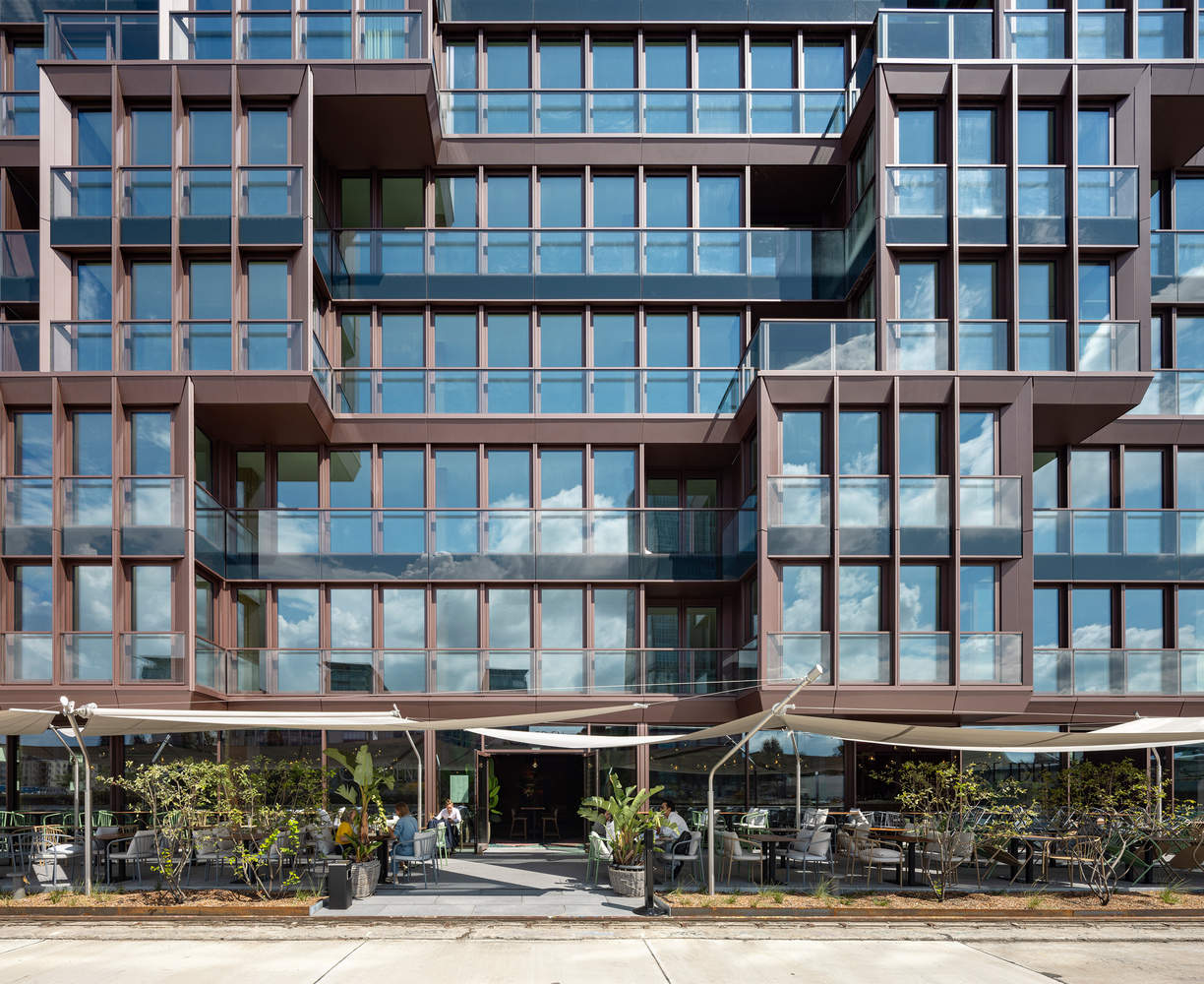
The main facade of the first to sixth floors of the building adopts a glass unit curtain wall system, with eaves and pilasters set in modules of two floors. Large area glass curtain walls ensure sufficient natural lighting indoors, effectively compensating for the lack of lighting caused by building depth, thereby minimizing the use of artificial lighting. The south facade facing the Spree River is designed with staggered and protruding bay windows every two layers to create a sense of rhythm, and a balcony is located below the bay windows. The glass facades on the west, north, and east sides adopt concave balconies (loggias), which are also arranged in a staggered manner at intervals of two floors. The non transparent facade area is wrapped in suspended folded aluminum panels to further enhance the sense of hierarchy in the facade. The facades of the office areas from the first to the sixth floors are horizontally separated by continuous eaves, with a section divided every two floors; Vertically set column lines along each extension axis. The facade of the corridor structure adopts a large-span exposed frame glass curtain wall system, with glazed glass panels at the junction of the ceiling and the building side.
建筑首层至六层的主立面采用玻璃单元式幕墙系统,以两层为模数设置檐口与壁柱线条。大面积玻璃幕墙确保室内获得充足自然采光,有效弥补建筑进深带来的采光不足,从而最大限度减少人工照明使用。面向施普雷河的南立面通过每两层错位凸出的飘窗设计形成韵律感,飘窗下方设有阳台。西、北、东三侧的玻璃立面部分采用内凹式阳台(loggias),同样以两层为间隔错落布置。非透光立面区域采用悬挂式折叠铝板包裹,进一步强化立面层次感。首层至六层办公区域的立面以连续檐口为水平分隔,每两层划分一个段落;纵向沿各扩展轴线设置壁柱线条。连廊结构的立面采用大跨度明框玻璃幕墙系统,在天花板与建筑侧面的交接处设有彩釉玻璃面板。
剖面图
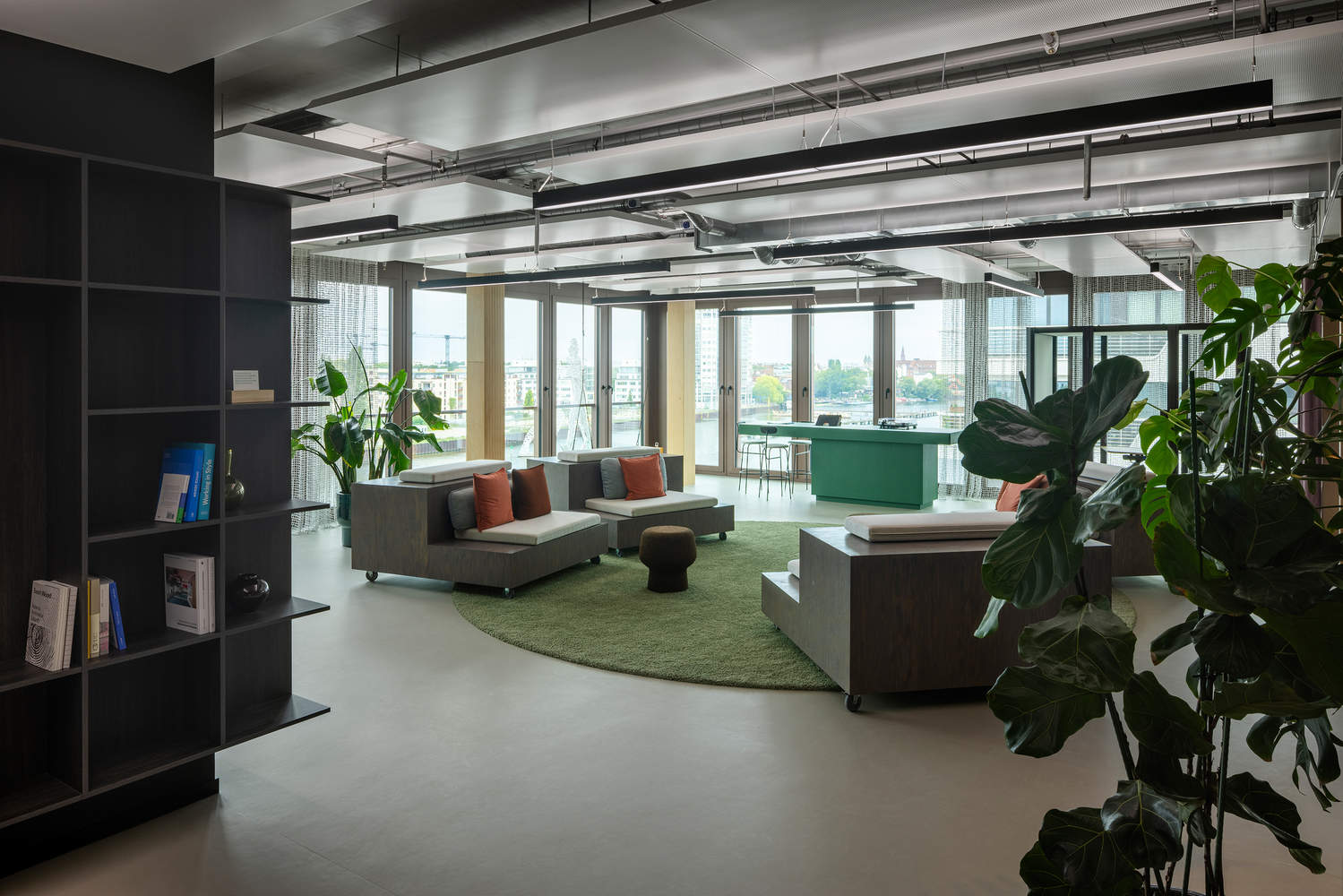
Both parts of the building are planned to be used as office space, with office areas distributed from the first to sixth floors. The selected layout grid design enables the open space to be flexibly divided into independent small offices or open plan office areas according to specific needs, fully meeting all the requirements of modern office buildings. The first floor of the west office building will have a dining area, while the first floor of the east office building will be equipped with a conference area with flexible discussion space. In addition, the project also plans a pleasant outdoor green area with seats overlooking the trail landscape along the Spree River.
建筑的两部分均规划用作办公空间,办公区域分布在首层至六层。所选的布局网格设计使开放空间能够根据具体需求灵活划分为独立小办公室或开放式办公区,充分满足现代办公楼的所有要求。西侧办公楼的首层将增设餐饮区,东侧办公楼的首层则配备带有灵活研讨空间的会议区。此外,项目还规划了宜人的室外绿化区域,设有座椅,可俯瞰施普雷河沿岸的步道景观。
© HG Esch
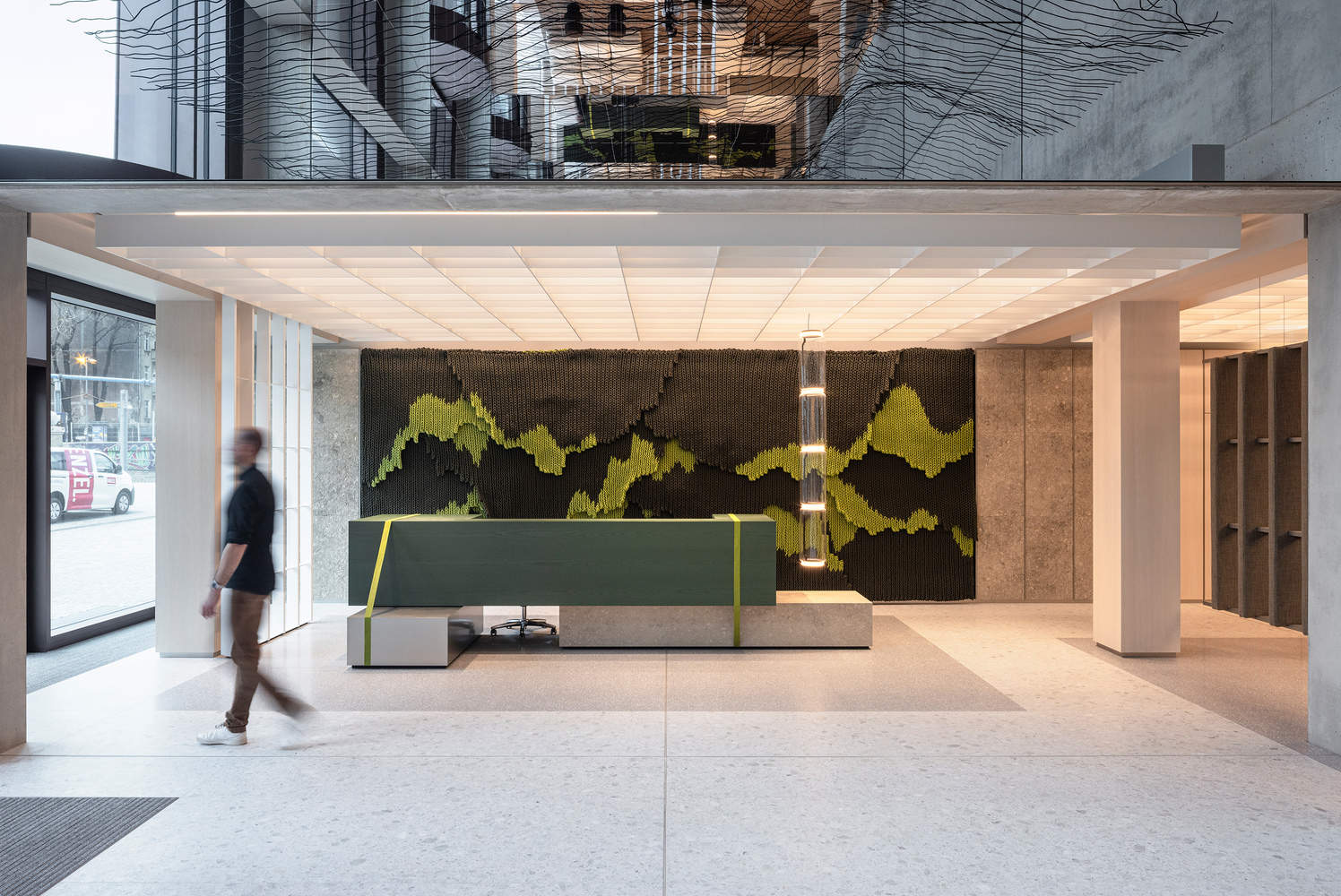
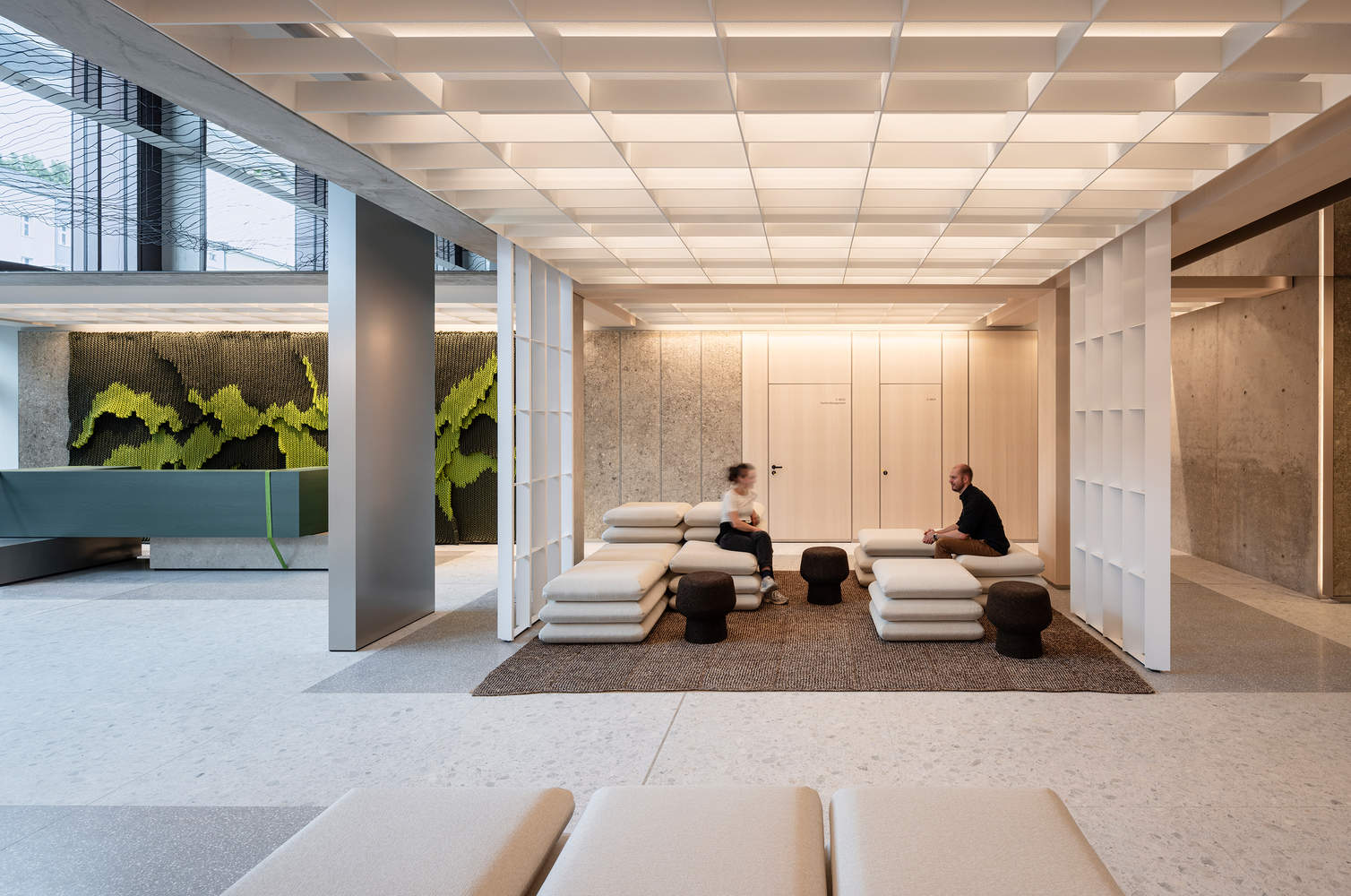
The lobby, marketing display area, and signage system are all designed by Ippolito Fleitz Group. The art installation under the lobby ceiling was created by Julius von Bismarck and is called 'Die Luft muss man sich wegdenken'. The nylon artwork behind the reception desk was created by Korean artist Kwanghuo Lee. On the walls of the transformer room outside the building complex, there are also graphic art works designed by Katrin Bremermann displayed.
大堂、营销展示区及标识系统均由伊波利托·福莱茨集团(Ippolito Fleitz Group)设计。大堂天花板下的艺术装置由尤利乌斯·冯·比斯马克(Julius von Bismarck)创作,名为《须将空气抽离想象》(Die Luft muss man sich wegdenken)。接待台后方的尼龙艺术作品出自韩国艺术家李光浩(Kwangho Lee)之手。建筑群外的变压器房墙面上,还展示有卡特琳·布雷默曼(Katrin Bremermann)设计的图形艺术作品。
© HG Esch
The lobby, marketing display area, and signage system are all designed by Ippolito Fleitz Group. The art installation under the lobby ceiling was created by Julius von Bismarck and is called 'Die Luft muss man sich wegdenken'. The nylon artwork behind the reception desk was created by Korean artist Kwanghuo Lee. On the walls of the transformer room outside the building complex, there are also graphic art works designed by Katrin Bremermann displayed.
大堂、营销展示区及标识系统均由伊波利托·福莱茨集团(Ippolito Fleitz Group)设计。大堂天花板下的艺术装置由尤利乌斯·冯·比斯马克(Julius von Bismarck)创作,名为《须将空气抽离想象》(Die Luft muss man sich wegdenken)。接待台后方的尼龙艺术作品出自韩国艺术家李光浩(Kwangho Lee)之手。建筑群外的变压器房墙面上,还展示有卡特琳·布雷默曼(Katrin Bremermann)设计的图形艺术作品。
© HG Esch
© HG Esch
The hybrid structure fully utilizes the energy advantages of the materials used, such as recycled concrete. Due to the large heat capacity of concrete, the temperature rises slowly in summer, thereby reducing the energy consumption required for building cooling. In places where concrete is replaced with significantly more sustainable materials, the ecological balance is improved due to low carbon dioxide emissions. DELTABEAM ® More than 95% of the components in the green composite beam are recycled steel, and the entire project used a total of 800 tons of "green" steel. Only by achieving sustainable operation can a building be truly sustainable. To achieve zero net energy consumption operation without using fossil fuels, the dock project relies on green renewable energy sources such as solar energy, geothermal energy, and ambient air to meet energy demand. One of the largest ice storage facilities in Germany is a core and efficient component of this integrated energy concept. As a result, an abandoned freight tunnel at Osterhafen Port has been effectively utilized. By transforming the tunnel into a new function and preserving its inherent grey energy, it has made a positive contribution to the ecological and energy balance of the building. Water releases energy when it freezes. Therefore, this 1.6 million liter ice storage container can be used for heating in winter and for building cooling in summer, and can temporarily store building waste heat, even producing hot water throughout the year. The roof of the shipyard project is equipped with 1250 square meters of solar hybrid collectors and 300 square meters of photovoltaic modules, which can not only be used for heating but also for power generation. The generated electricity is also used for the operation of heat pumps in building heating and cooling circuits, in addition to other purposes. The combination of all these energy sources forms an innovative energy concept, making the entire operation process of this office facility compliant with LEED zero carbon certification requirements and achieving climate neutrality.
混合结构充分利用了所用材料的能源优势,例如再生混凝土。由于混凝土热容量大,在夏季升温缓慢,从而降低了建筑制冷所需的能耗。而在用这种显著更可持续的材料替代混凝土的地方,得益于二氧化碳排放量低,生态平衡得到改善。DELTABEAM ® 绿色复合梁的成分中,超过 95% 为再生钢材,整个项目共使用了 800 吨“绿色”钢材。建筑只有实现可持续运营,才是真正的可持续。为在不使用化石燃料的情况下实现零净能耗运营,船坞项目依托太阳能、地热能和环境空气等绿色可再生能源来满足能源需求。德国最大的冰蓄能设施之一是这一综合能源理念的核心且高效组成部分。为此,奥斯特哈芬港的一条废弃货运隧道得到了有效利用。通过将隧道改造为新功能,保留了其蕴含的灰色能源,为建筑的生态和能源平衡做出了积极贡献。水在结冰时会释放能量。因此,这座 160 万升的冰蓄能容器可在冬季用于供暖,夏季用于建筑制冷,并可临时储存建筑余热,甚至能全年生产热水。船坞项目的屋顶上安装了 1250 平方米的太阳能混合集热器和 300 平方米的光伏模块,不仅可用于制热,还能发电。所发电力除其他用途外,还用于建筑供暖制冷回路中的热泵运行。所有这些能源的组合形成了一种创新的能源理念,使这座办公设施的整个运营过程符合 LEED 零碳认证要求,实现了气候中性。
© HG Esch
The project has been awarded WiredScore Platinum certification and is currently applying for LEED Platinum certification. It is also preparing for LEED Zero Carbon certification, German Sustainable Building Certification System (BEG) 55 Energy Efficiency Standard certification, and WELL Platinum certification.
该项目已荣获 WiredScore 铂金级认证,目前正申请 LEED 铂金级认证,同时还在筹备 LEED 零碳认证、德国可持续建筑认证体系(BEG)55 能效标准认证以及 WELL 铂金级认证。
© HG Esch