Shenzhen CITIC International Building/GMP Architects
深圳中信国际大厦 / gmp Architects
项目亮点:地标性的城市设计与功能性考量:深圳中信国际大厦最引人注目的特质在于其对城市文脉的深刻理解和对高密度环境的巧妙回应。项目选址于深圳城市主轴上的重要节点,以楔形基地回应多重城市界面,展现出其作为城市地标的潜质。建筑师巧妙地将高密度的办公空间与公共开放空间、融合式绿地相结合,体现了对城市可持续发展的思考。建筑的功能性也考虑周全,裙房设置餐饮零售等公共功能,提升了城市活力,而空中花园的设计则在满足休憩需求的同时,也实现了对气候的被动式调节,体现了设计对使用者体验和环境效益的双重关注。
项目精髓:形态与功能的完美融合:该项目巧妙地将建筑形态与功能需求融为一体。建筑主体由四个高低错落的体量构成,塑造了富有动感的城市天际线,并与周围环境和谐共生。更令人印象深刻的是空中花园的设计,它不仅是供人们休憩的场所,更是联系室内外空间的纽带。通过绿植、遮阳设计和自然通风等手段,空中花园改善了局部微气候,提升了建筑的舒适性和可持续性。开放式办公空间和可开启的窗户也体现了对使用者个性化需求的尊重。这种对细节的关注,使得建筑在满足功能需求的同时,也创造了令人愉悦的体验。
设计亮点:对城市肌理和可持续发展的积极回应:该项目最核心的价值在于其对深圳城市肌理的尊重和对可持续发展理念的积极实践。建筑师没有孤立地设计一座孤立的建筑,而是将其融入城市环境,与周边建筑、景观形成互动。通过对场地特征的解读,建筑师塑造了富有特色的立面,并利用垂直凹槽强化了建筑的竖向肌理。空中花园的设置是该项目可持续设计理念的集中体现,它不仅提升了建筑的舒适度,也减少了能源消耗,降低了对环境的影响。这种设计理念体现了建筑师对城市、对环境、对人的高度责任感,为未来城市建筑提供了有益的借鉴。
© CreatAR Images
© CreatAR Images
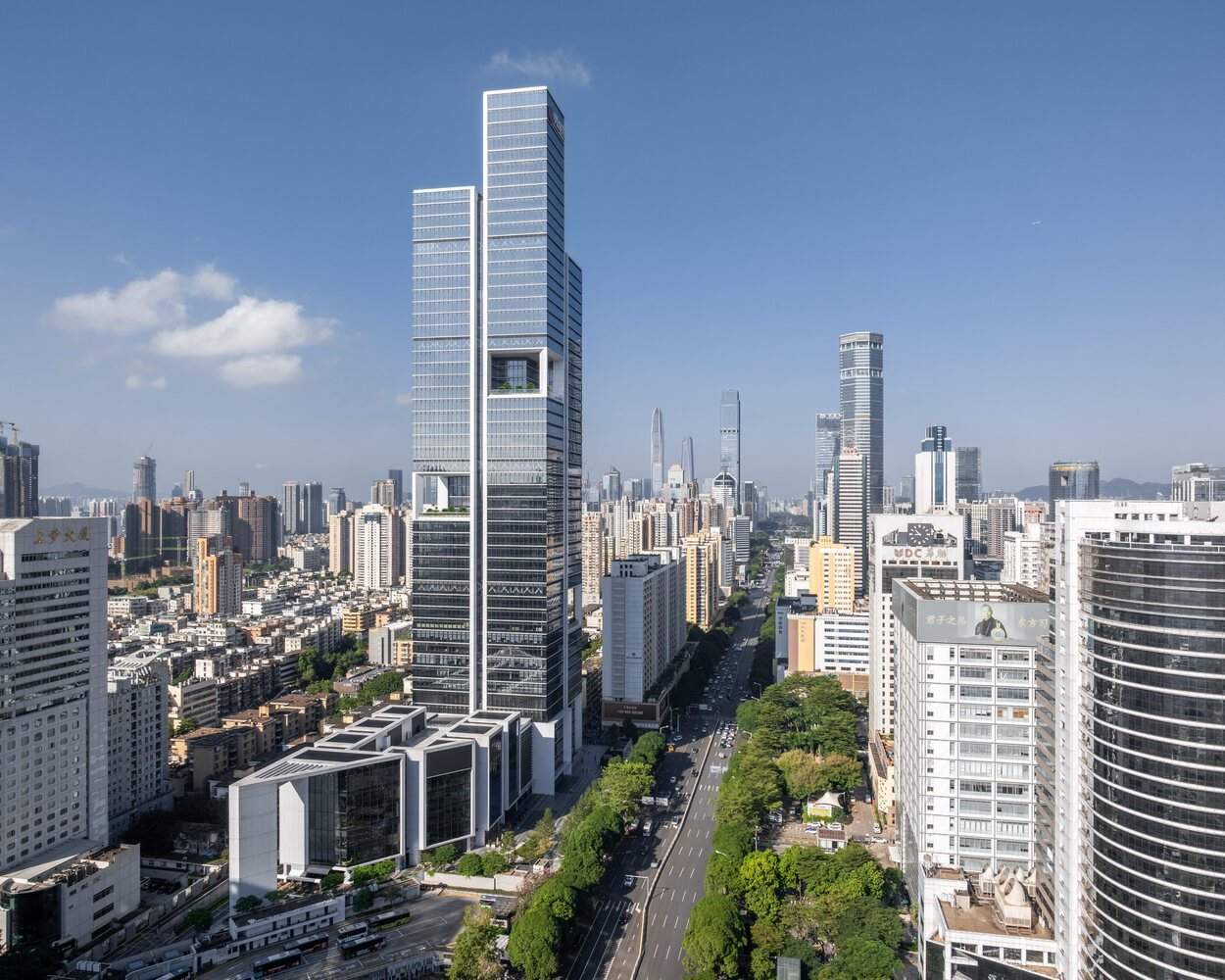
Luohu District in Shenzhen is in the stage of intensive urban renewal and development. In the process of urban transformation, the CITIC International Building designed by GMP Feng Gekang, Marg and Partner Architects has been erected on the last piece of land along Shennan Middle Road. This 258 meter high office tower combines high-density urban space with public open spaces and integrated green spaces. The main user of the building is CITIC Group, a large enterprise with international business in the fields of finance, industry, and infrastructure.
深圳罗湖区处于密集化城市更新发展阶段。在这一城市转型过程中,由 gmp·冯·格康,玛格及合伙人建筑师事务所设计的中信国际大厦已在深南中路沿线最后一块建筑用地上拔地而起。这座高 258 米的办公塔楼将高密度的城市空间与公共开放空间及融合式绿地相结合。建筑的主要使用方中信集团是一家在金融、工业和基础设施等领域拥有国际业务的大型企业。
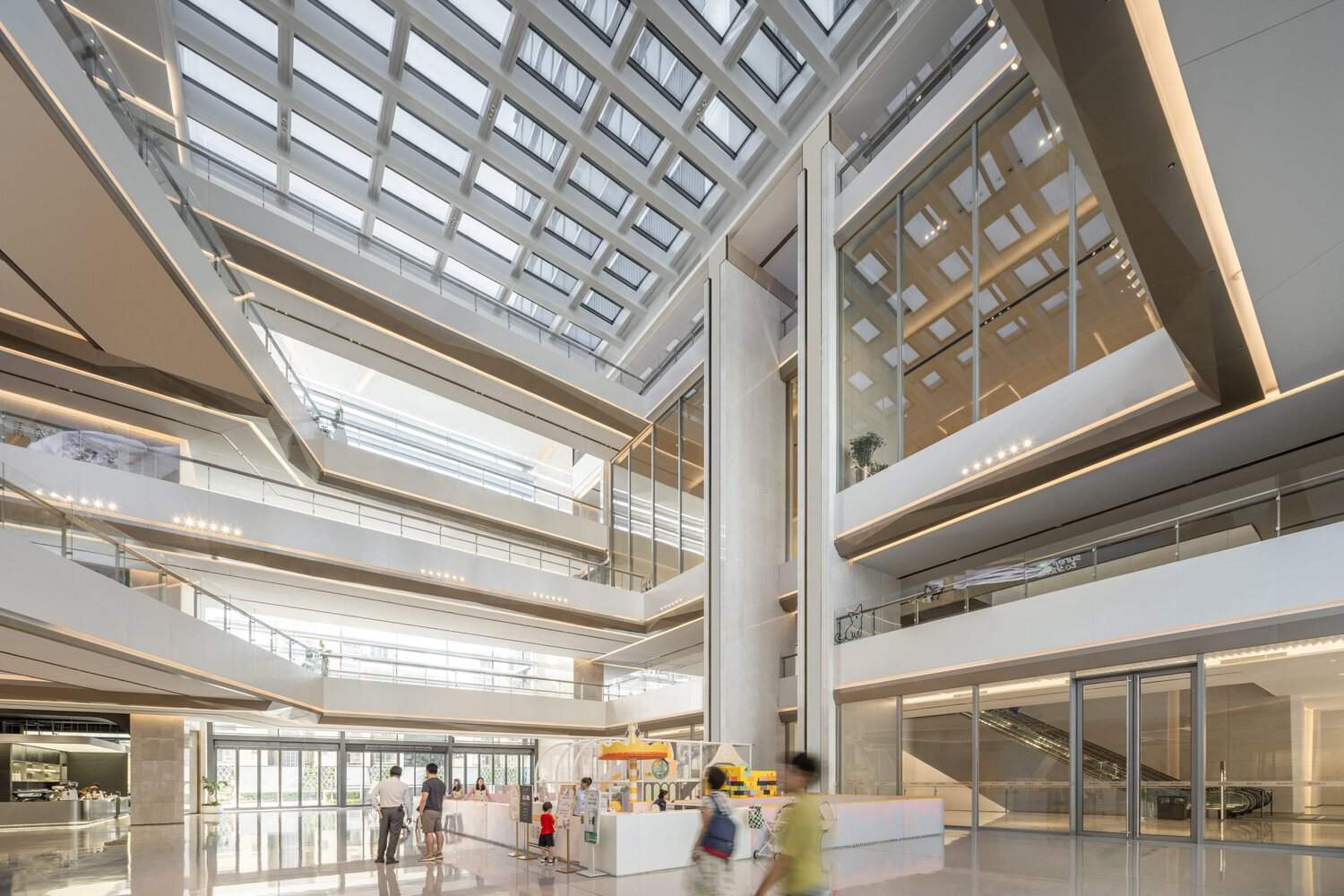
© CreatAR Images
This high-rise building is located at an important node on the east-west Shennan Avenue, the main axis of Shenzhen city. It plays a significant guiding role as a precise embedded urban landmark in the high-density urban structure of Shenzhen. The wedge-shaped base on which the building is built is located at the intersection of multiple urban interfaces: it is adjacent to the high-density tower cluster in Futian District on the west side, and the line of sight crosses the commercial buildings in Luohu on the north side, extending to the distant mountainous landscape; And to the south, it crosses the Shenzhen River and the natural landscape of the New Territories in Hong Kong, forming a visual extension.
这座高层建筑坐落于深圳城市主轴 —— 东西向深南大道的重要节点,在深圳高密度的城市结构中作为一个精准嵌入的城市地标发挥着显著的导向作用。建筑所依托的楔形基地处于多重城市界面的交汇点:其西侧毗邻福田区的高密度塔楼集群,北侧视线越过罗湖的商务楼宇,延伸至远处的山地景观;而南向则穿过深圳河与香港新界的自然地貌形成视觉的延展。
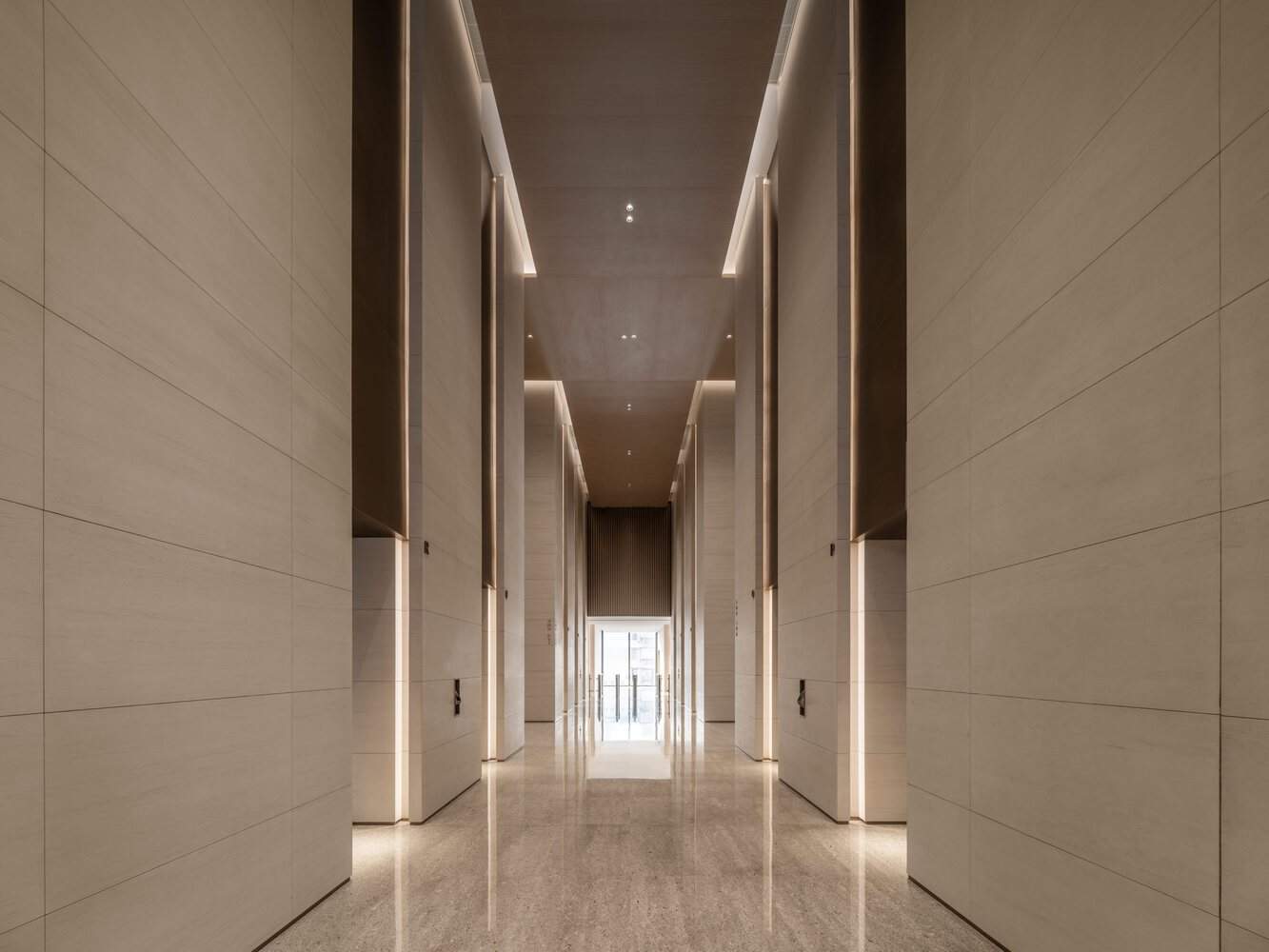
© CreatAR Images
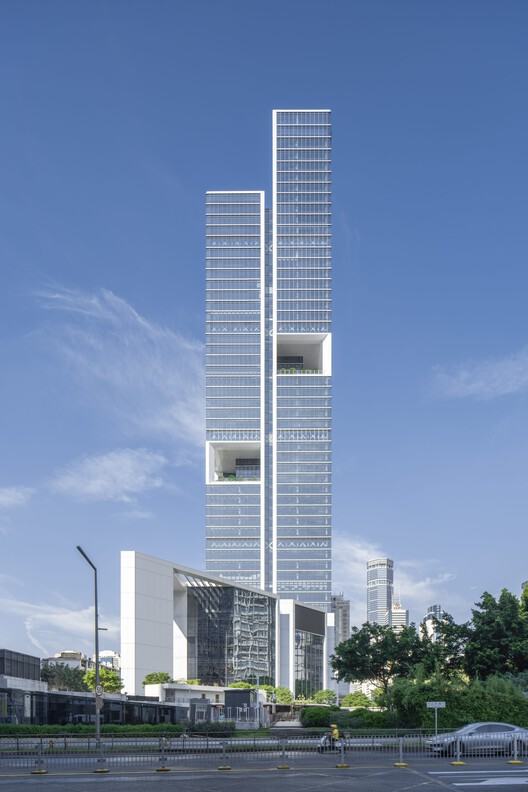
The architectural design responds to the geographical features of the site and expresses them as the core of the design: the main body of the building is composed of four high and low, slender proportions, forming a dynamic urban skyline. The green roof extends the open space of the building and enhances its integration with the surrounding environment. The podium is a four story building with public functions such as catering and retail, enhancing the vitality of the urban space. The facade of the tower echoes the vertical texture of the office tower through vertical grooves, while introducing a detailed expression of human scale.
建筑的造型回应了场地的地理特征,并将其作为设计核心加以表达:建筑主体由四个高低错落、比例修长的体量构成,形成富有动感的城市天际线。绿化屋顶延伸了建筑的开放空间,增强了其与周边环境的融合。裙房为四层体量,设置有餐饮、零售等公共功能,增强城市空间活力。塔楼立面通过垂直方向的凹槽,呼应了办公塔楼的竖向肌理,同时引入了近人尺度的细部表达。
© CreatAR Images
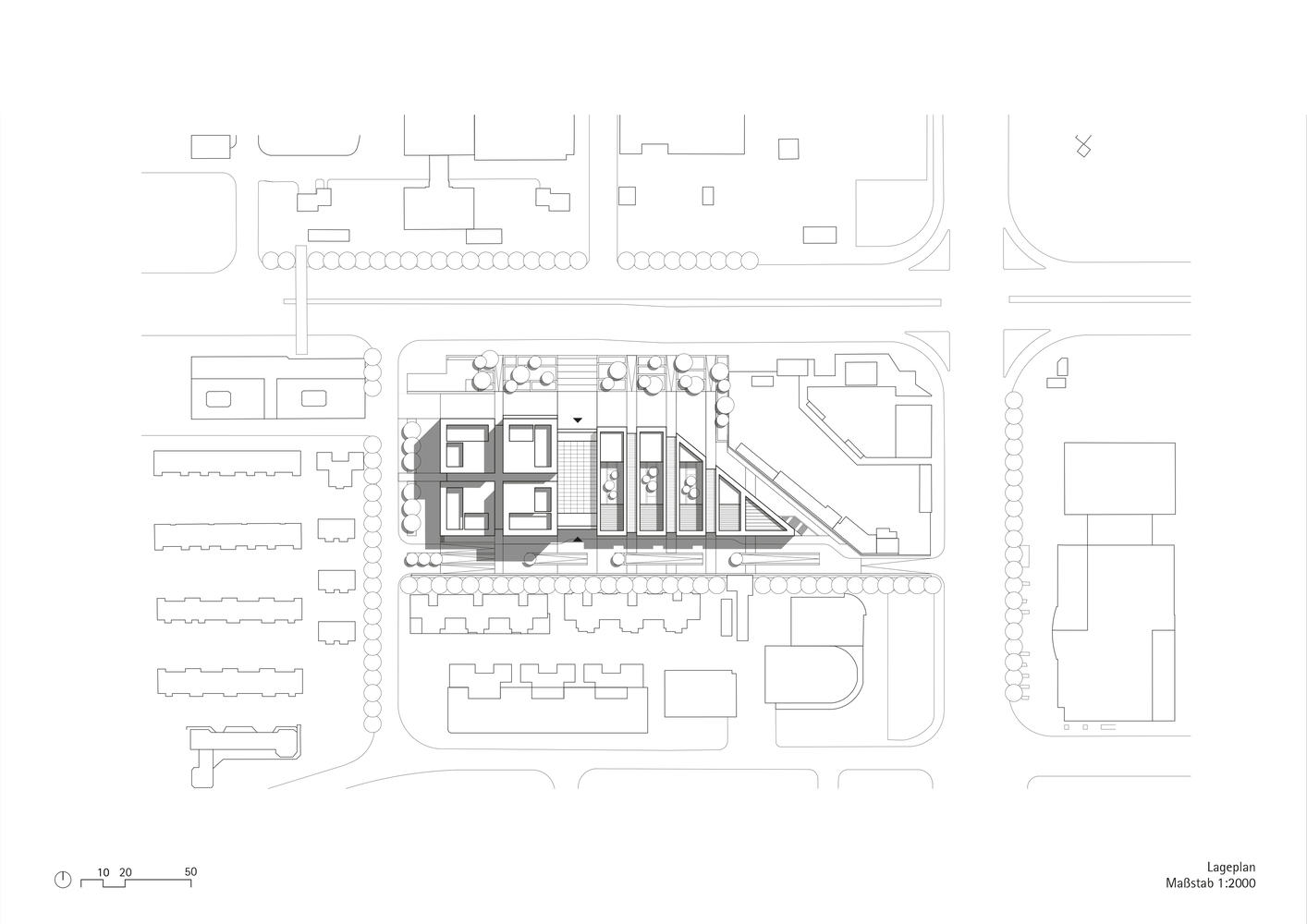
总平面图
© CreatAR Images
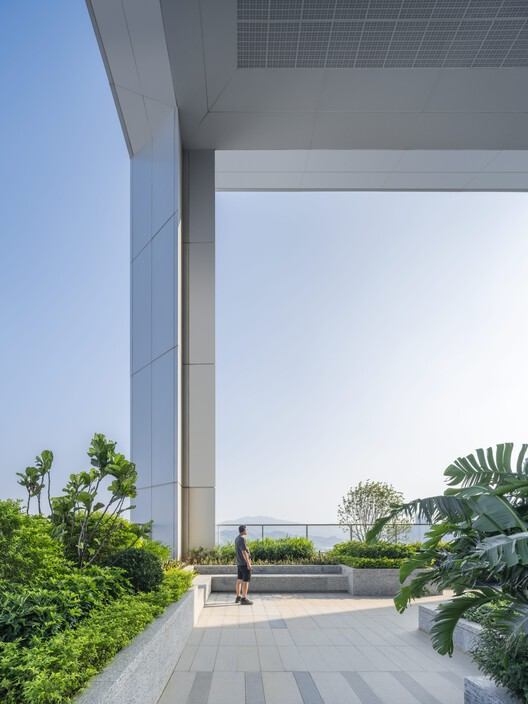
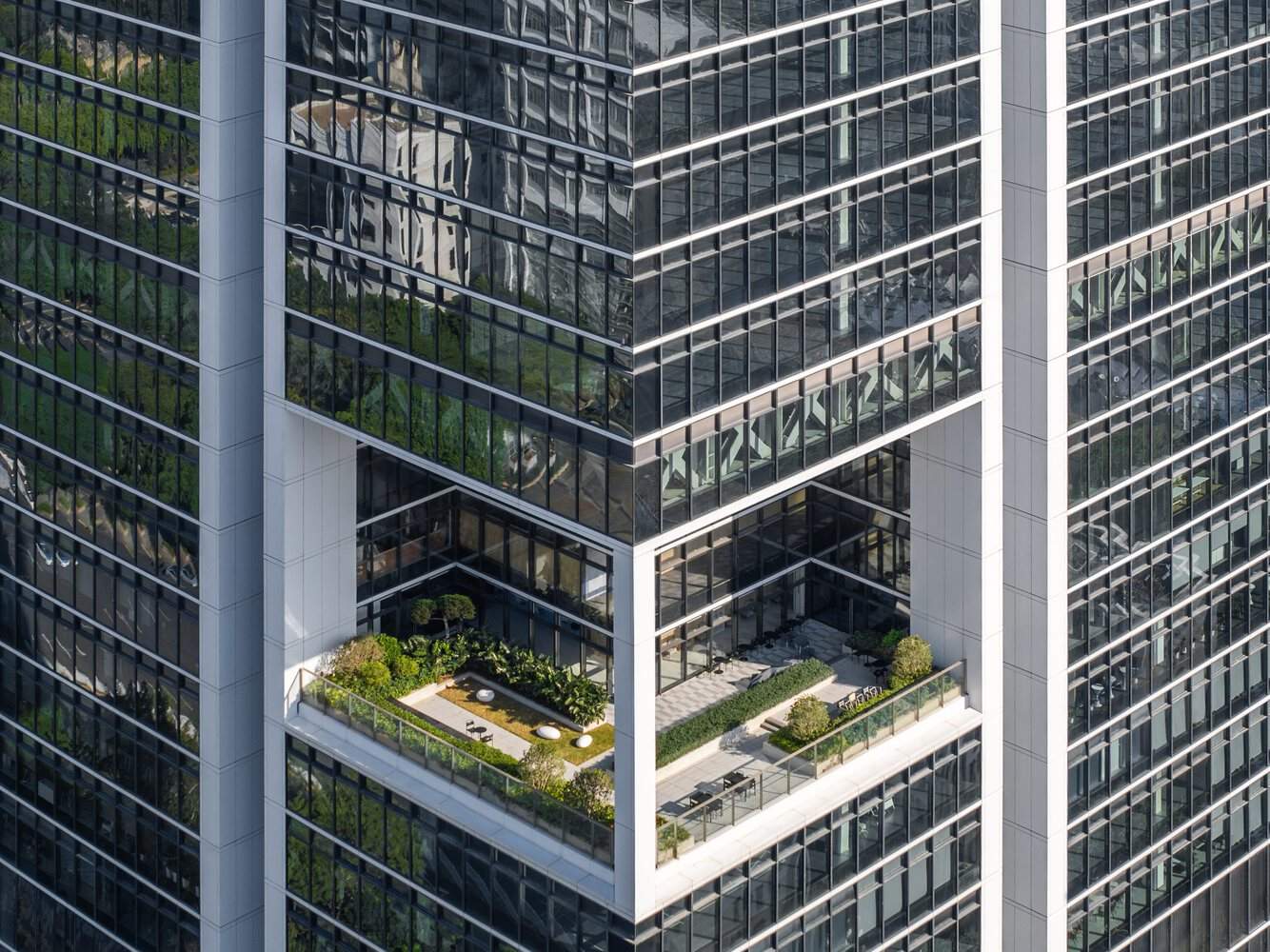
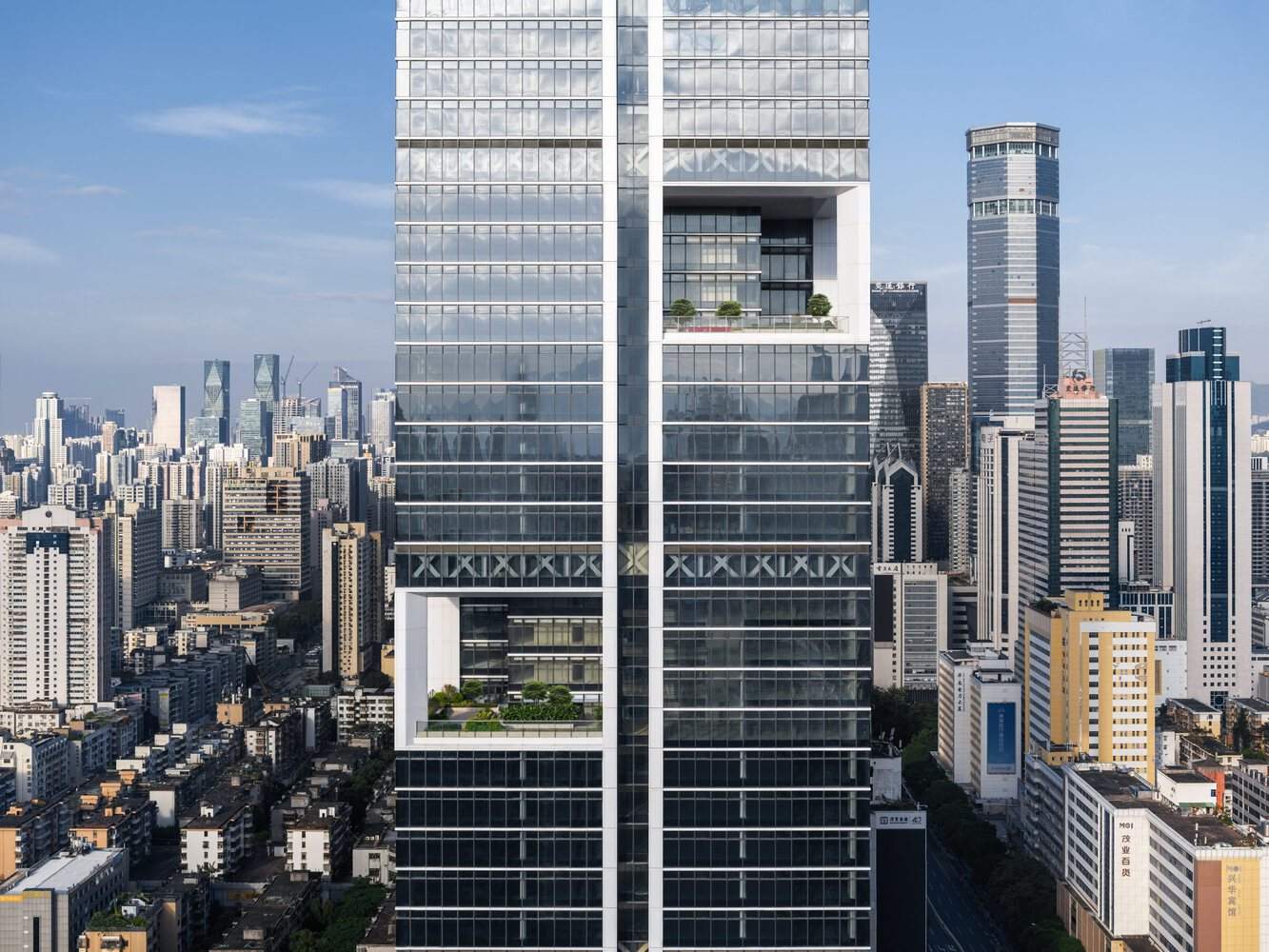
The carefully designed four story high concave terrace further subdivides the building volume and opens up views in four directions. These spaces are designed as' sky gardens', creating a pleasant environment through greenery for office workers to take short breaks or engage in informal communication during their daily work. These lingering spaces not only promote interaction between people, but also provide users with a quiet retreat. The adjacent open atrium organically connects the sky garden with the office area, achieving the integration of internal and external spaces in both visual and functional aspects. At the same time, the intervention of horizontal space in the vertically organized tower structure enhances social connections and community atmosphere between different office units and employees.
精心设置的四层高内凹式露台进一步细分了建筑体量,同时向四个方向敞开视野。这些空间被设计为“空中花园”,通过绿化营造出宜人的环境,供办公人员在日常工作中短暂休憩或进行非正式交流。这些逗留空间不仅促进人与人之间的互动,也为使用者提供了静谧的退隐场所。与之相邻的开放式中庭将空中花园与办公区域有机连接,在视觉和功能层面实现内外空间的融合。同时,横向空间在竖向组织明确的塔楼结构中的介入,增强了不同办公单元及员工之间的社交联系与社区氛围。
© CreatAR Images
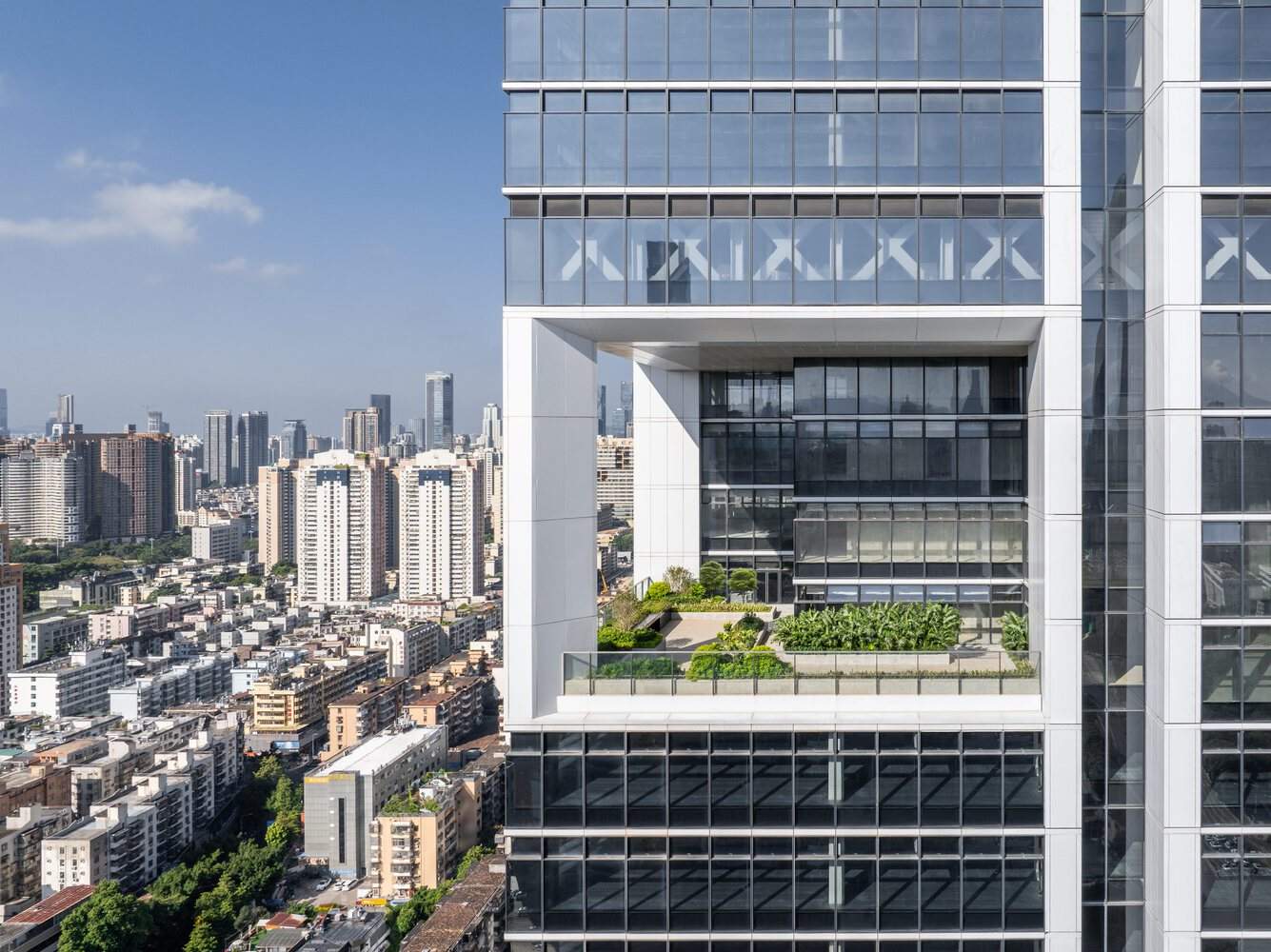
The "sky garden" also plays a positive role in passive climate regulation of buildings: through vegetation greening, shading design, and natural ventilation, it effectively improves local microclimate. The open design office space is equipped with openable horizontal window sashes, allowing users to flexibly adjust the indoor climate environment according to their personal needs.
“空中花园”同样在建筑的被动式气候调节中发挥了积极作用:通过植被绿化、遮阳设计与自然通风,有效改善了局部微气候。开放式设计的办公空间配备可开启的水平窗扇,用户能够根据个人需求灵活调节室内气候环境。
© CreatAR Images