Helvetia Basel Campus/Herzog&de Meuron Architecture Firm
巴塞尔 Helvetia 园区 / 赫尔佐格 & 德梅隆建筑事务所
© Maris Mezulis
© Maris Mezulis
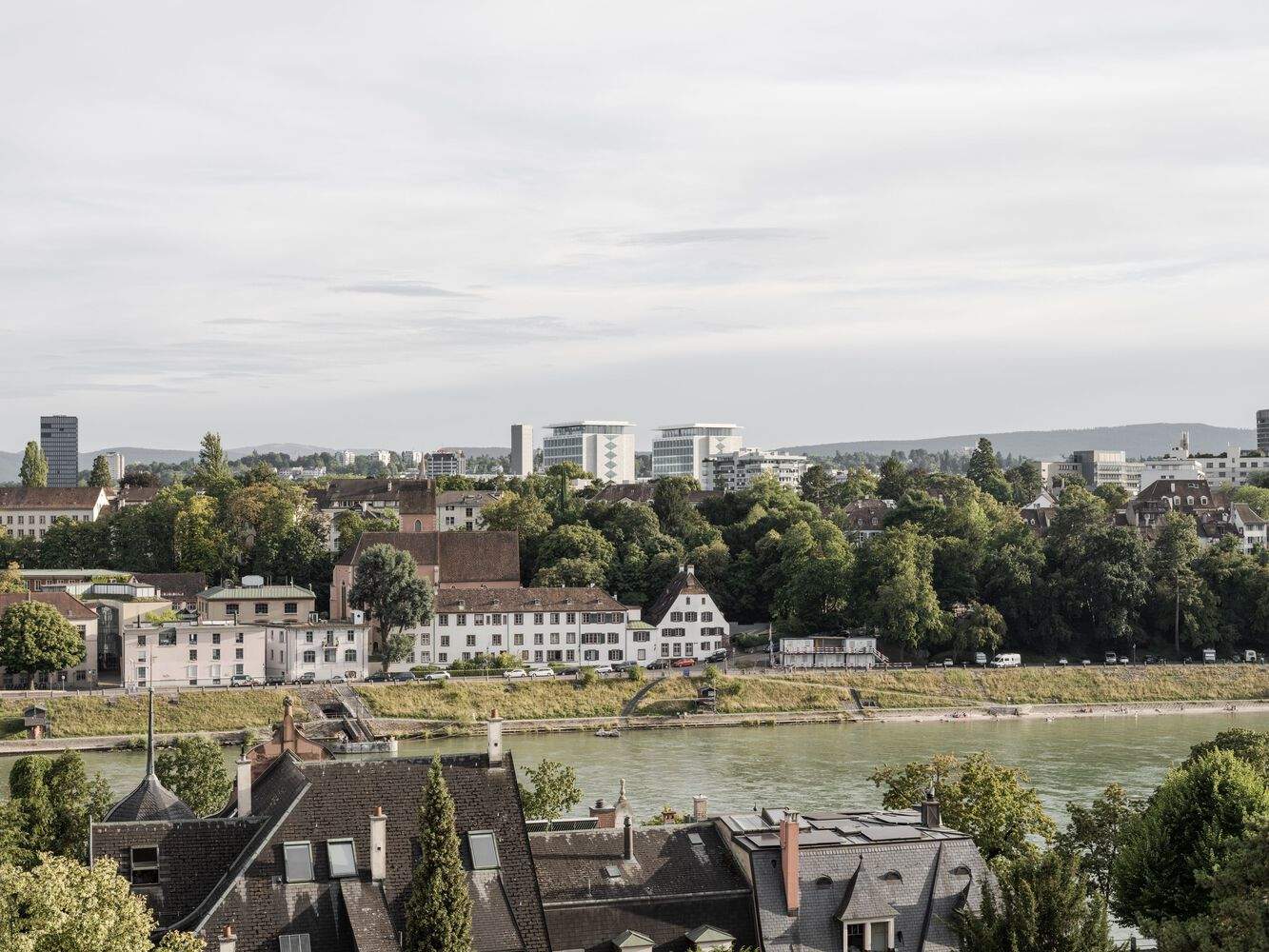
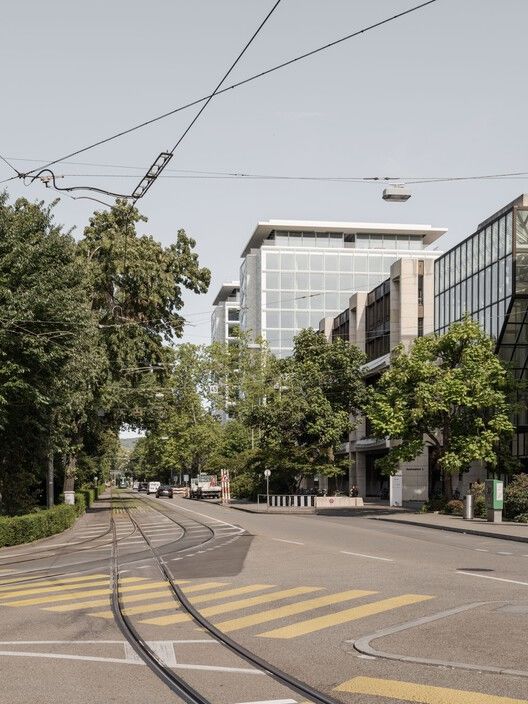
Basel city center, Herzog& De Meuron Architects has created a new identity for Helvetia Insurance Group in Switzerland, located in a strategic location between Aeschenplatz and the historic St. Alban quarter. The project will be completed in four phases, with three new buildings and three renovated buildings forming a park that showcases the Helvetia brand in a unique, clear, and highly recognizable style. This unified appearance is due to the simple and white themed architectural design at the scale of urban blocks; On a larger scale, the two towers - one renovated and one newly built - establish distinct visual identities in the surrounding area dominated by low rise buildings. This project provides workspace, gathering place, and supporting facilities for all Helvetia employees stationed in Basel. At the same time, the caf é, Art Foyer, rooftop terrace, and auditorium are all open to the public for daily use and event hosting. A spacious public park in the center of the campus block connects the building to the existing green avenue in the Saint Alban district, while also opening up the park to the city.
巴塞尔市中心,赫尔佐格 & 德梅隆建筑事务所为瑞士 Helvetia 保险集团在艾斯琴广场(Aeschenplatz)与历史悠久的圣阿尔班区(St. Alban quarter)之间这一战略要地,打造一个全新形象标识。该项目分四个阶段完工,届时三座新建建筑和三座翻新建筑将共同构成一个园区,以独特、清晰且极具辨识度的风格展现 Helvetia 品牌。这种统一的外观得益于城市街区尺度下简约、以白色为主调的建筑设计;在更大尺度上,两座塔楼——一座翻新、一座新建——在周边以低层建筑为主的区域中,树立起鲜明的形象标识。该项目为所有驻巴塞尔的 Helvetia 员工提供了工作空间、聚会场所和配套设施,同时,咖啡馆、艺术展厅(Art Foyer)、屋顶露台和礼堂均向公众开放,供日常使用和举办活动。校园街区中心的一座宽敞的公共公园,将建筑与圣阿尔班区现有的绿色林荫大道相连,同时向城市敞开园区。
© Maris Mezulis
© Maris Mezulis
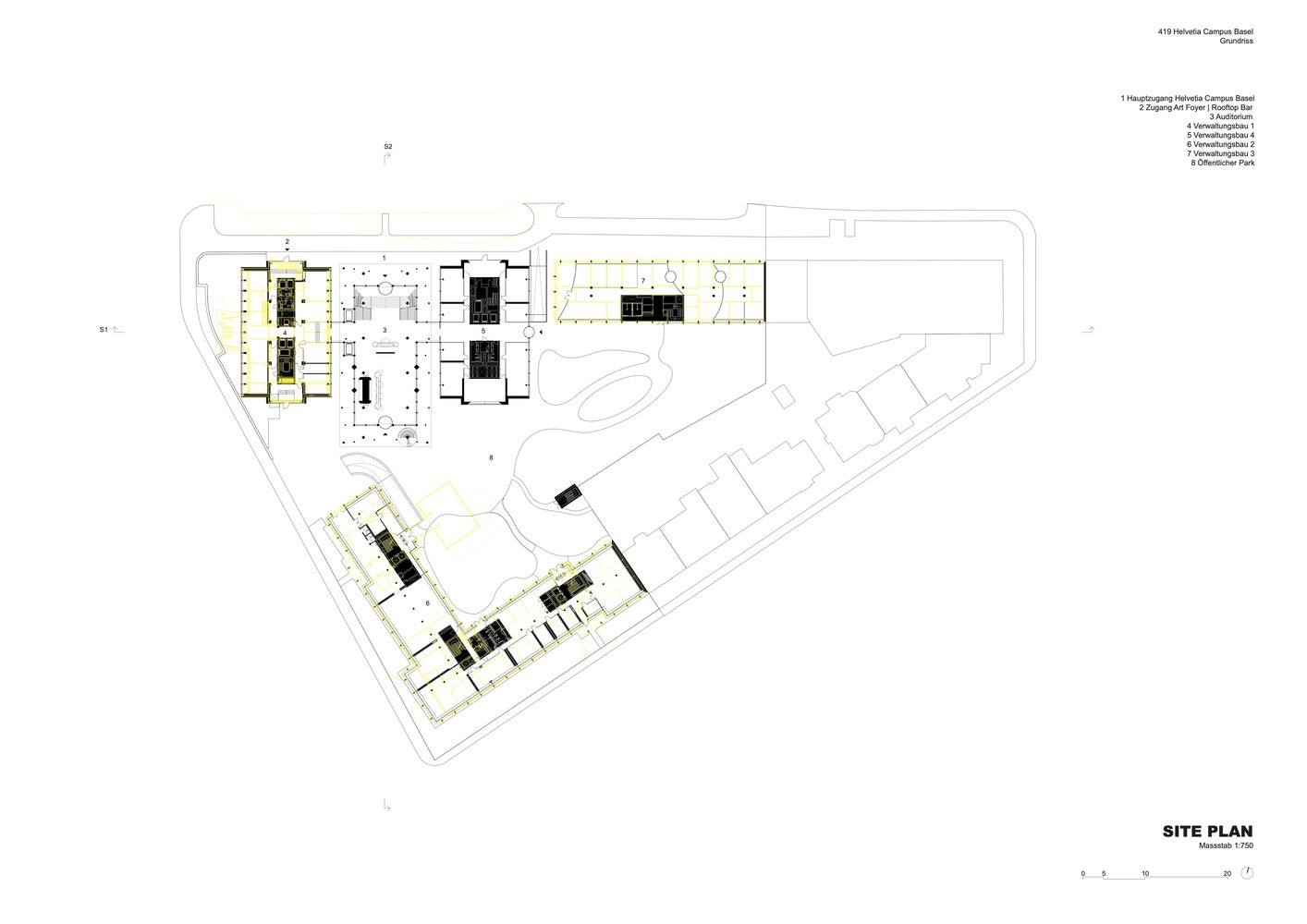
Overall planning scheme. Since the 1950s, the development trends of the buildings at Helvetia Group's Basel headquarters in Switzerland have varied, with increasing building density in the central area and increasingly blurred boundaries in the surrounding areas; All existing building structures urgently need renovation. In order to create a spacious public park designed by Vogt Landscape Architects, some later added buildings in the internal courtyard, such as conferences and restaurants, have been demolished to make room. The rearrangement of different functions has resulted in the concentration of office functions in the southern block, while residential functions have been relocated to the northern side, directly opposite the park on the St. Alban Anlage tree lined road.
总体规划方案。自20世纪50年代以来,瑞士 Helvetia 集团巴塞尔总部的各栋建筑发展态势各异,中心区域建筑密度不断增加,周边区域的边界也愈发模糊;所有现有建筑结构均亟待翻新。为腾出空间打造一座由沃格特景观设计公司(Vogt Landscape Architects)设计的宽敞公共公园,内部庭院中一些后期增建的建筑,如会议及餐厅,被予以拆除。不同功能的重新布局,使得办公功能集中于南侧街区,居住功能则迁移至北侧,正好与圣阿尔班林荫路(St. Alban-Anlage)上的园区隔路相对。
总平面图
In order to integrate and reuse existing buildings as much as possible, this master plan divides the reconstruction process into four stages, with the first and largest stage now completed: renovating and vertically expanding the office tower from the 1950s, while constructing a "twin" building of the same height and footprint; Build a new central auditorium building with a clearly visible entrance area; Create a new type of public park that echoes the spacious historical park in the north; Renovation and expansion of the administrative building from the 1960s; Renovation and expansion of the administrative building from the 1970s; Dismantle the administrative building on the northern site and construct a new apartment building overlooking the park on the original site.
为尽可能多地整合并再利用现有建筑,该总体规划方案将重建过程划分为四个阶段,其中首个也是规模最大的阶段现已完工:对 20 世纪 50 年代的办公塔楼进行翻新与垂直扩建,同时新建一座高度和占地面积与之相同的“孪生”建筑;新建一座中央礼堂建筑,打造出清晰可见的入口区域;打造一座与北部宽阔的历史公园相呼应的新型公共公园;对 20 世纪 60 年代的行政大楼进行翻新与扩建;对 20 世纪 70 年代的行政大楼进行翻新与扩建;拆除北部场地的行政大楼,并在原址新建俯瞰公园的公寓楼。
© Maris Mezulis
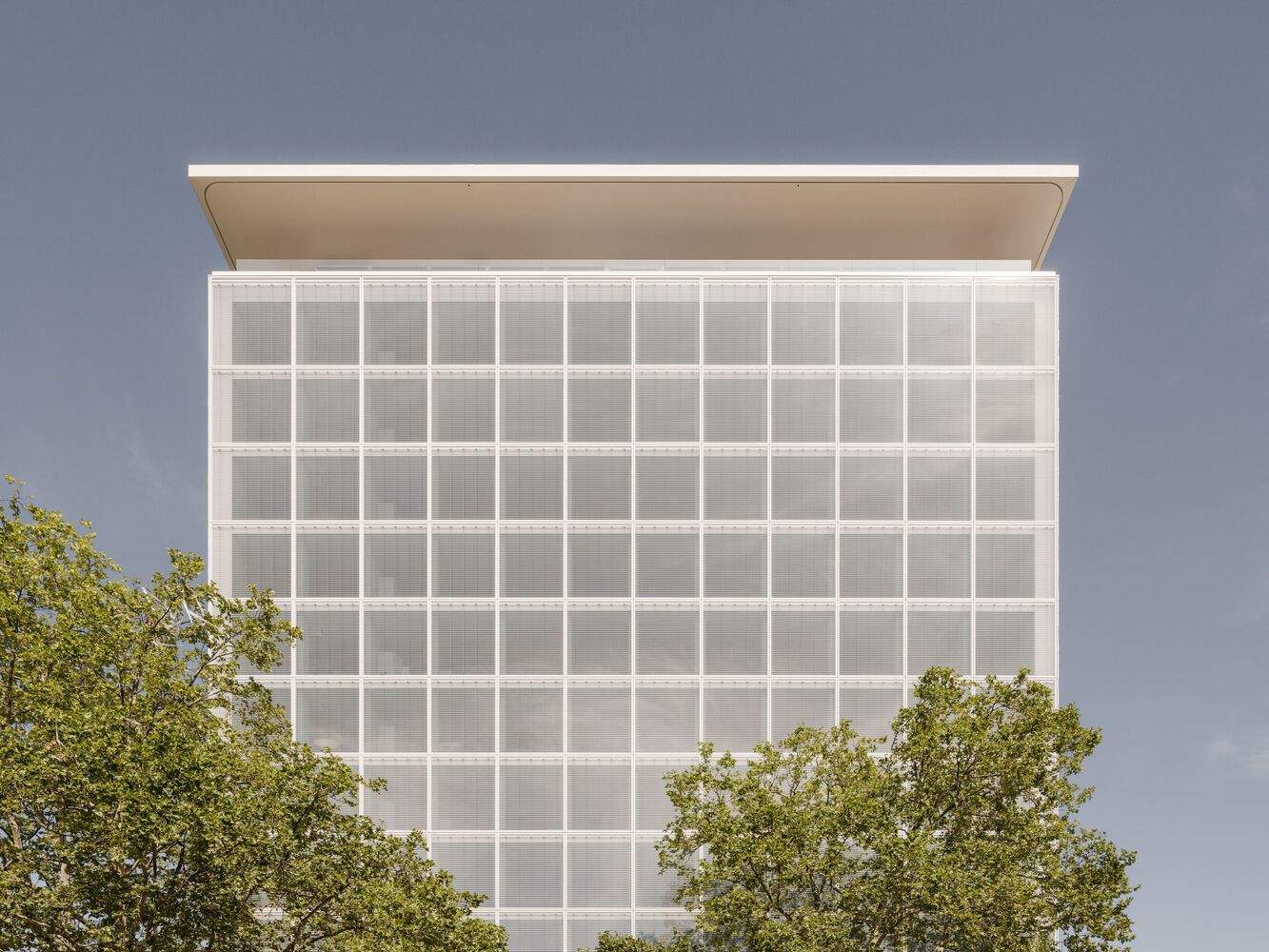
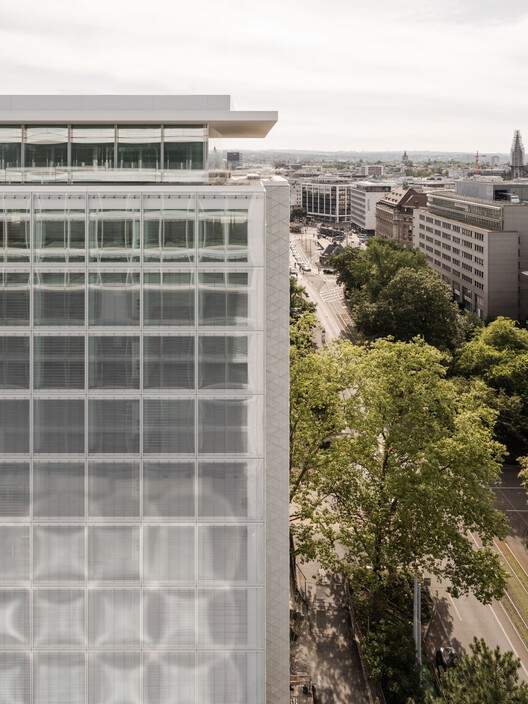
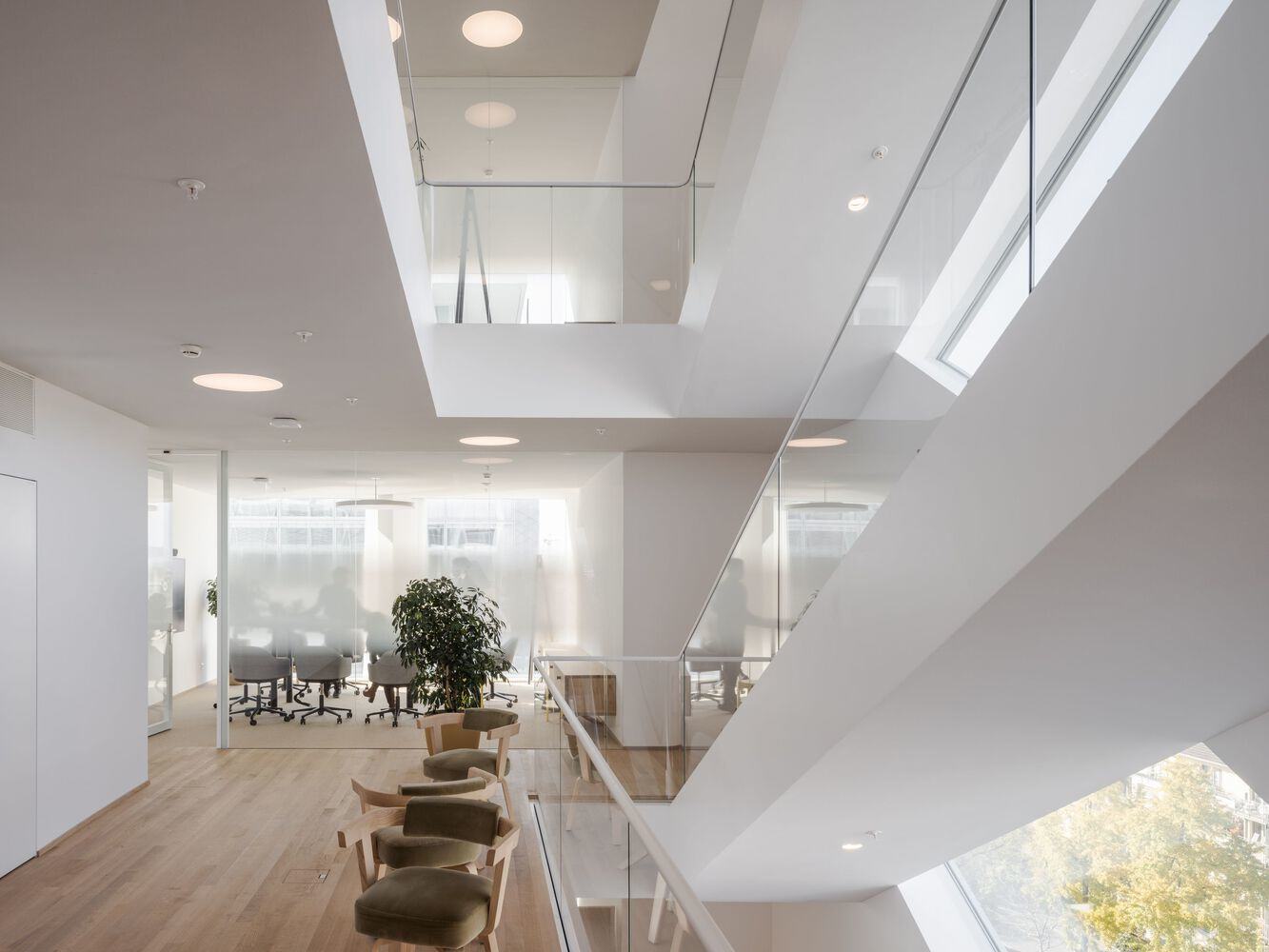
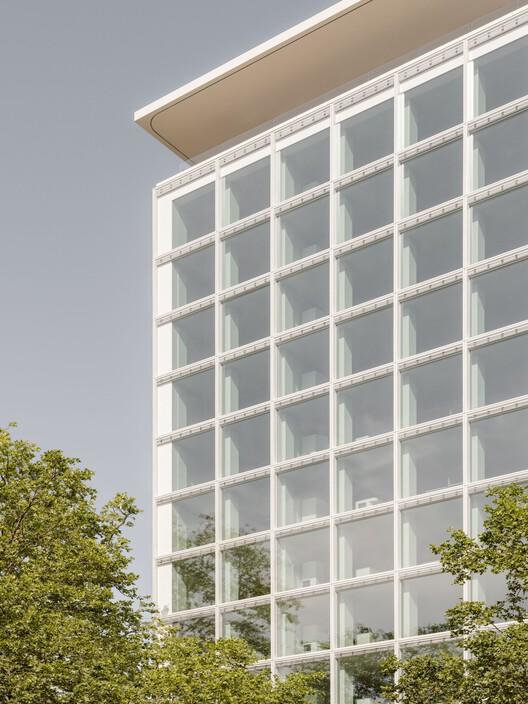
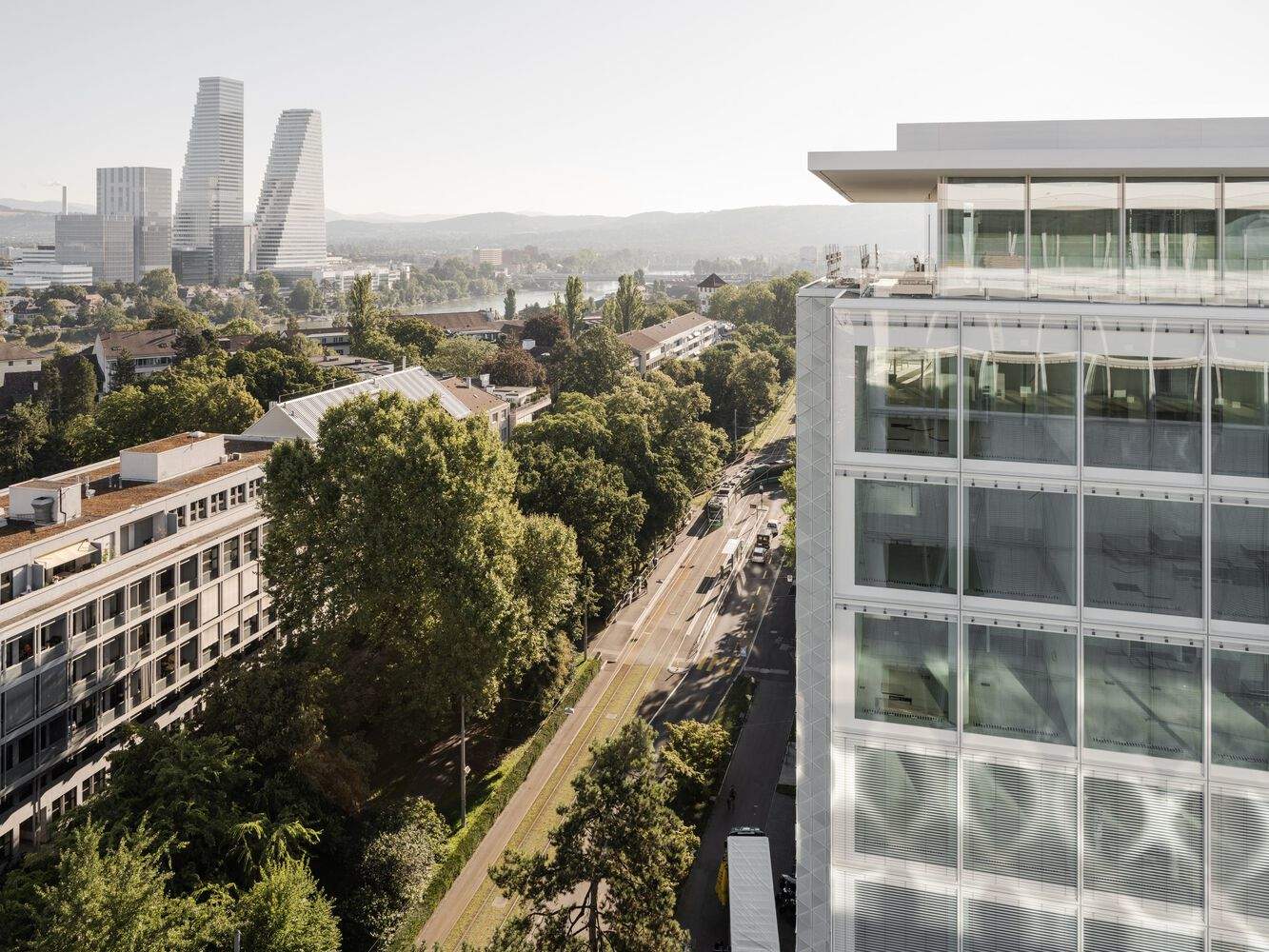
The Twin Towers. The existing office tower is the first building on the site, originally constructed by Patria Insurance Company in the 1950s. This tower does not exist in isolation, but is adjacent to a similarly proportioned high-rise building of the National Zeitung newspaper (which was later replaced by a low rise office building originally built by the Swiss Bank Corporation). Inside the tower, different types of workspaces and gathering spaces complement each other, encouraging collaborative work and meeting the need for flexibility. The spacious overhanging eaves and stepped facades on the top floors of the two towers evoke the architectural language style of that era.
双塔。现有的办公塔楼是该场地上的首栋建筑,最初由巴特里亚保险公司(Patria Insurance Company)于 20 世纪 50 年代建造。这座塔楼并非孤立存在,而是与比例相近的《国家报》(National-Zeitung)高层建筑相邻(后《国家报》高层建筑被一座原本为瑞士银行公司 Swiss Bank Corporation 建造的低层办公楼所取代)。塔楼内部,不同类型的工作空间和聚会空间相得益彰,鼓励开展协作办公,并满足灵活性的需求。两座塔楼顶层宽大的外挑屋檐和后退式立面,令人联想起那个时代的建筑语言风格。
© Maris Mezulis
© Maris Mezulis
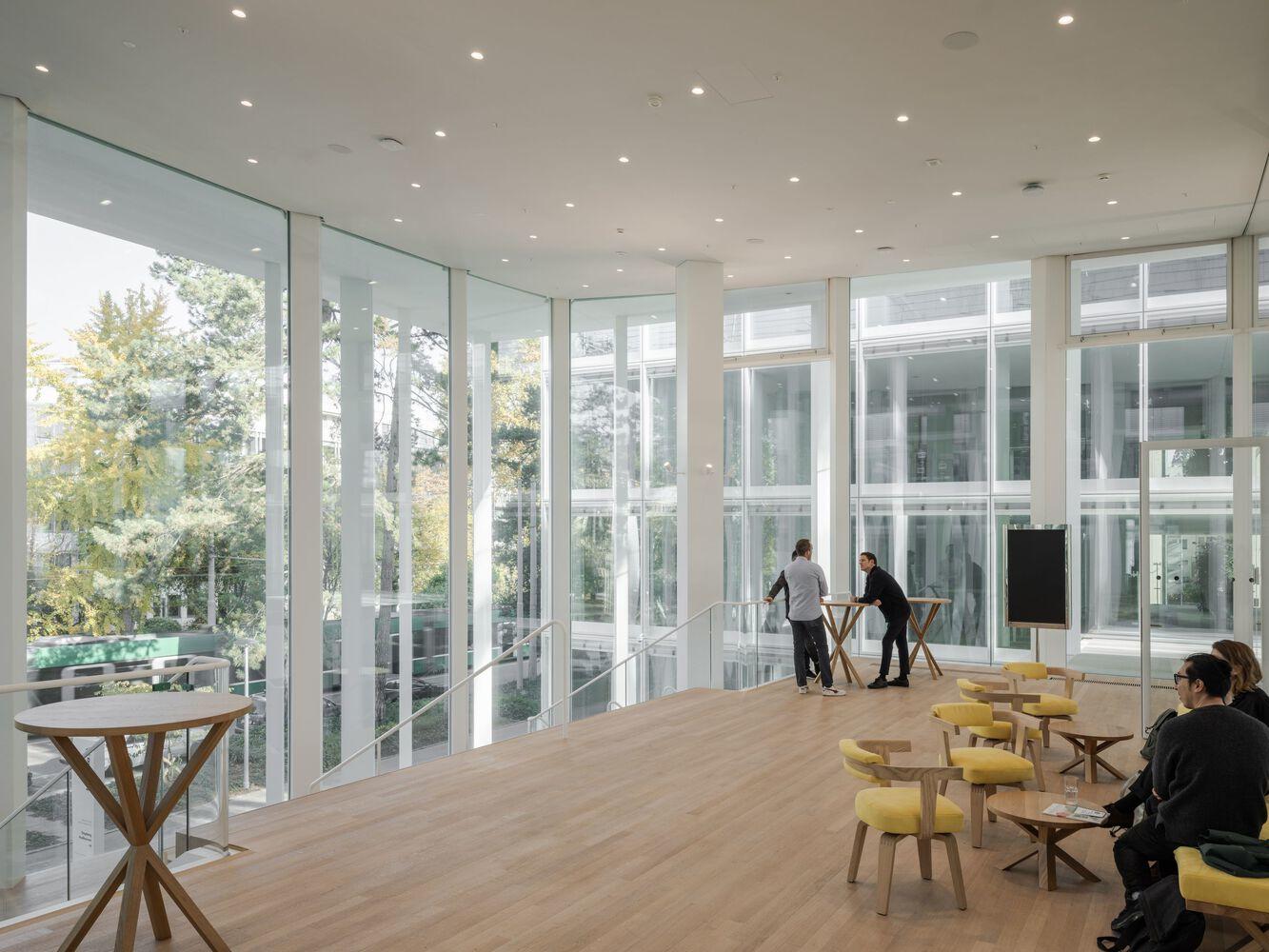
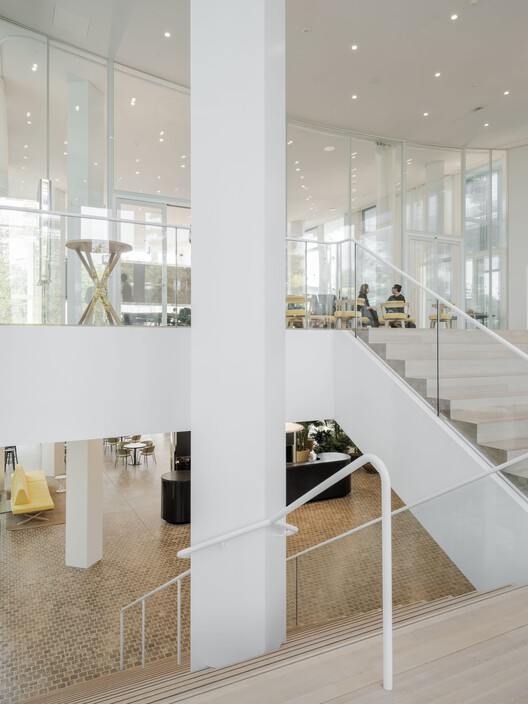
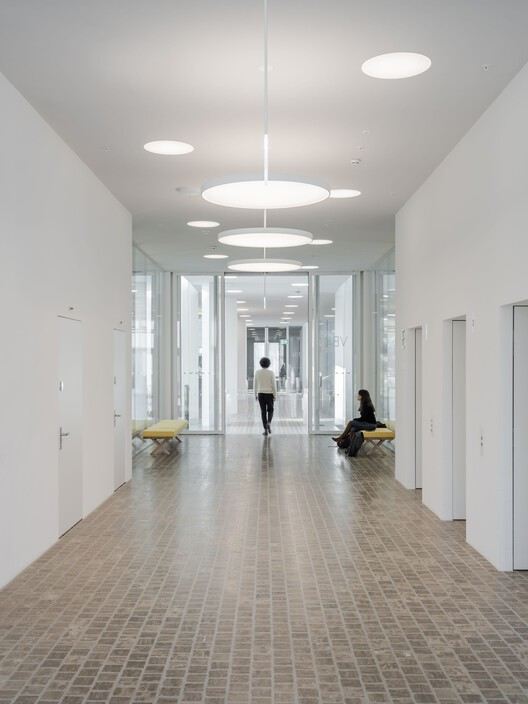
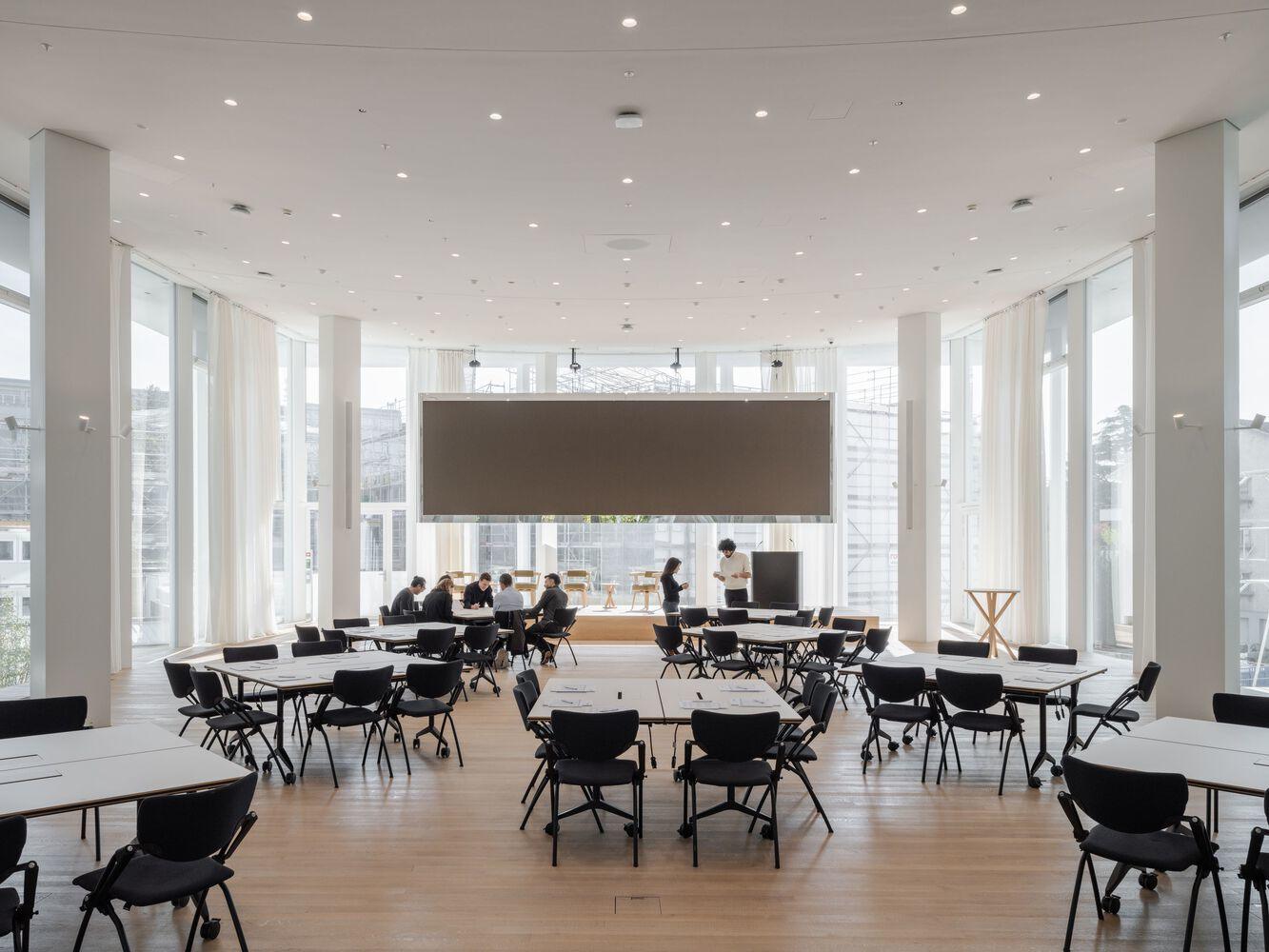
auditorium. The auditorium is an open and connected building - like an indoor square with a large curved roof. The outdoor space is paved with natural stone, and this paving style continues into the interior. People can directly enter the park through the reception area and also access other buildings within the park. A tree lined avenue connecting two towers runs through the auditorium. Employees and visitors can access the public auditorium, which can accommodate up to 300 people, through a spacious central staircase leading to the green space of St. Alban Anlage. A spiral staircase added to the outdoor area provides a direct passage between the park and the auditorium.
礼堂。礼堂是一座开放且具有连接功能的建筑——宛如一个带有大型弧形屋顶的室内广场。室外空间采用天然石材铺就,这种铺装风格延续至室内,人们可通过接待区直接步入公园,也能通往园区内的其他建筑。一条连接两座塔楼的林荫大道贯穿礼堂。员工和访客可通过一座宽敞的中央楼梯前往可容纳多达300人的公共礼堂,这座楼梯通向圣阿尔班林荫路(St. Alban-Anlage)的绿地。室外区域增设的一座螺旋楼梯,在公园与礼堂之间提供了直接通道。
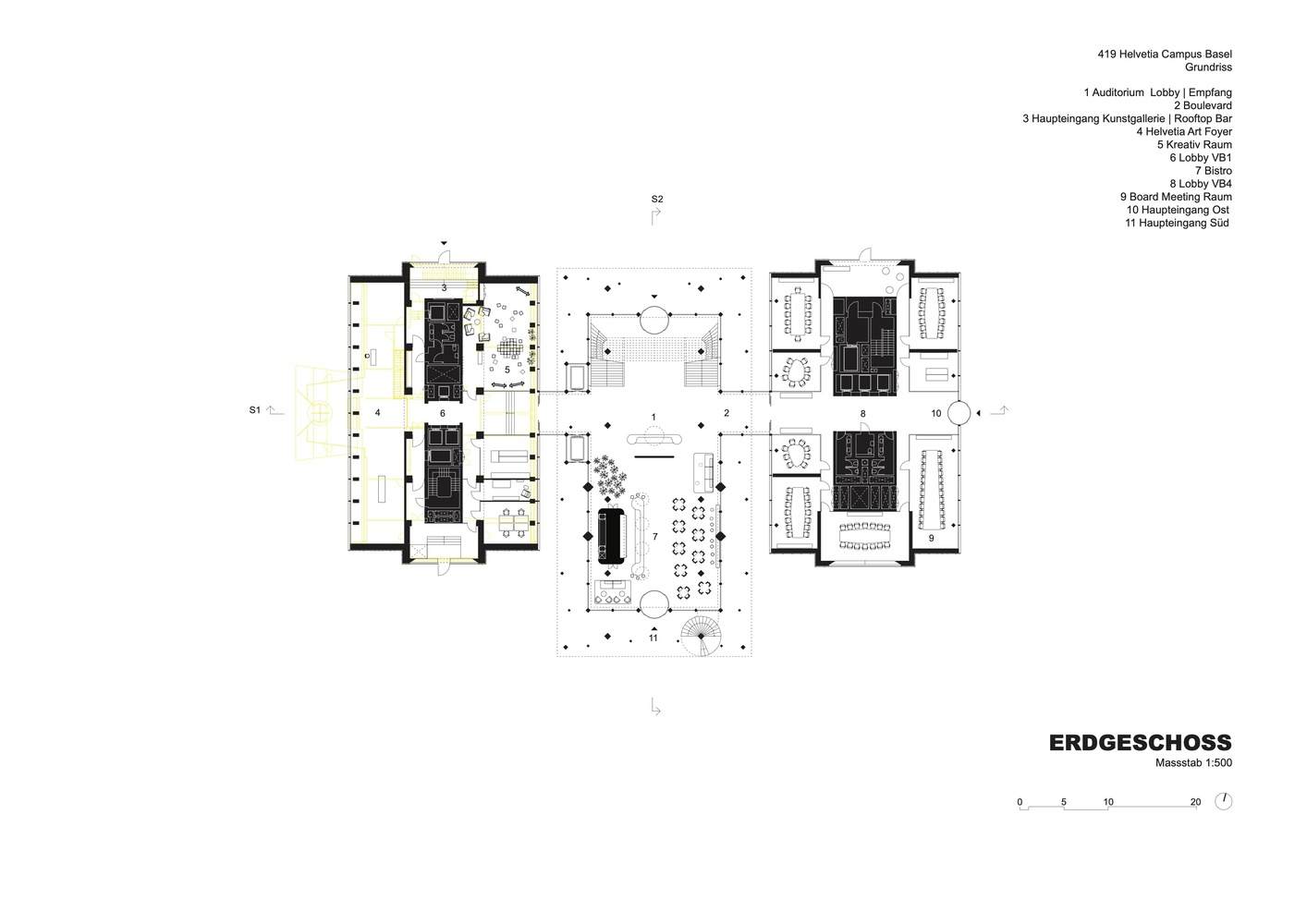
一层平面图
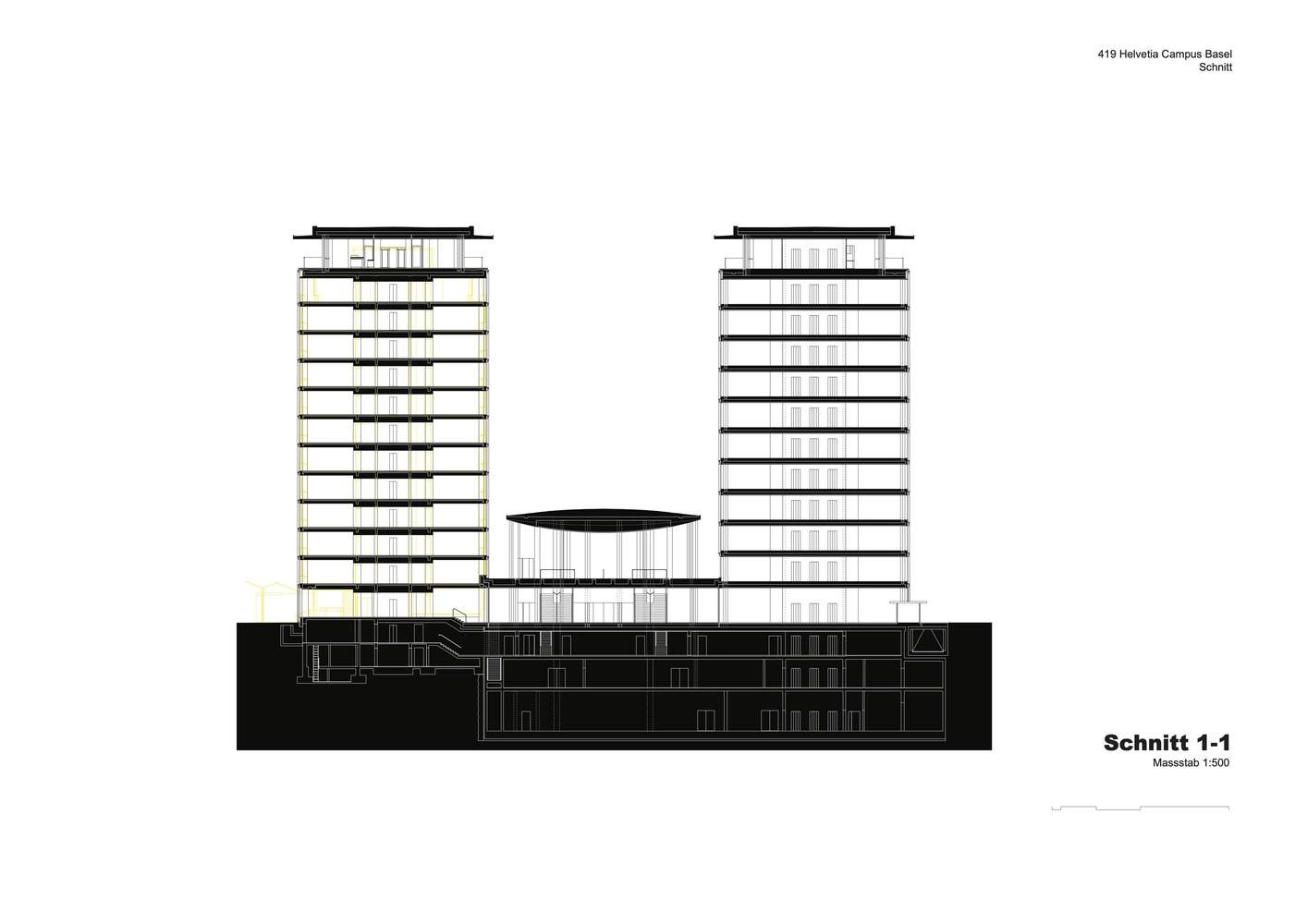
剖面图
Curtain wall. The curved roof of the auditorium is supported by several slender diamond shaped columns. The large glass facade panels set between the columns are inwardly tapered compared to the roof edge above. In sharp contrast to the structured and transparent facade of the auditorium, the glass curtain walls of the two towers are made of industrial flat glass and custom-made cast glass bricks inspired by centuries of traditional craftsmanship in the Veneto region. The east and west facades of the tower adopt a closed cavity facade design, ensuring that light can penetrate the full depth of the building and achieve maximum lighting. These facade elements are all efficient prefabricated components that can be quickly installed on site. The three-layer structure consists of an outer layer of glass, a movable sunshade, and insulated glass, allowing the operation of the sunshade to be independent of wind and temperature effects, while also facilitating facade maintenance.
幕墙。礼堂的弧形屋顶由若干纤细的菱形立柱支撑。立柱之间设置的大型玻璃立面面板,相较于上方的屋顶边缘呈内缩状。与礼堂结构化、通透的立面形成鲜明对比的是,两座塔楼的玻璃幕墙由工业平板玻璃与借鉴威尼托地区数百年传统工艺定制的铸造玻璃砖共同打造而成。塔楼东西立面采用封闭式腔体立面设计,确保光线能够穿透建筑全深,实现最大程度的采光。这些立面元素均为高效预制件,可在现场快速安装。其三层结构由外层玻璃、可移动遮阳板和隔热玻璃组成,使得遮阳板的操控可独立于风力和温度影响,同时便于立面维护。
© Maris Mezulis
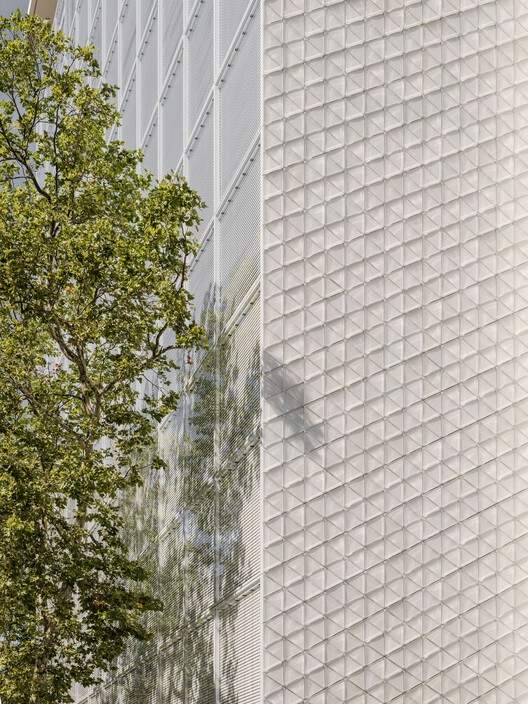
The calculation of the transmittance and reflectance of glass, as well as the additional measures taken to strengthen bird protection, were jointly determined through consultation with the Bird Issues Professional Center (Fachstelle f ü r Vogelfragen) under the Basel Park and Landscape Management Department. The north and south facades of the tower showcase a unique style through large vertically stacked diamond shaped windows. The design inspiration for these windows comes from the diagonal staircase extending behind the northern ends of two towers. The facade itself is covered with 24000 triangular cast glass bricks. Based on the weather conditions and different time periods of the day, these curved glass bricks give the facade a sense of layering and dynamic beauty. Glass bricks are arranged in diamond shapes composed of eight triangles, and their arrangement is randomly generated by a computer to present a rich and interesting combination effect on the entire facade.
玻璃的透光率与反射率计算,以及为加强鸟类保护而采取的额外措施,均是与巴塞尔公园与园林管理部门下属的鸟类问题专业中心(Fachstelle für Vogelfragen)共同协商确定的。塔楼南北立面通过大型垂直堆叠的菱形窗户展现出独特风貌。这些窗户的造型灵感源自两座塔楼北端后方呈对角线延伸的楼梯。立面本身覆盖着 24,000 块三角形铸造玻璃砖。根据天气状况和一天中的不同时段,这些弧形玻璃砖为立面赋予了层次感与灵动之美。玻璃砖以八个三角形组成的菱形为单位,通过计算机随机生成排列方式,使整个立面呈现出丰富有趣的组合效果。
© Maris Mezulis
© Maris Mezulis
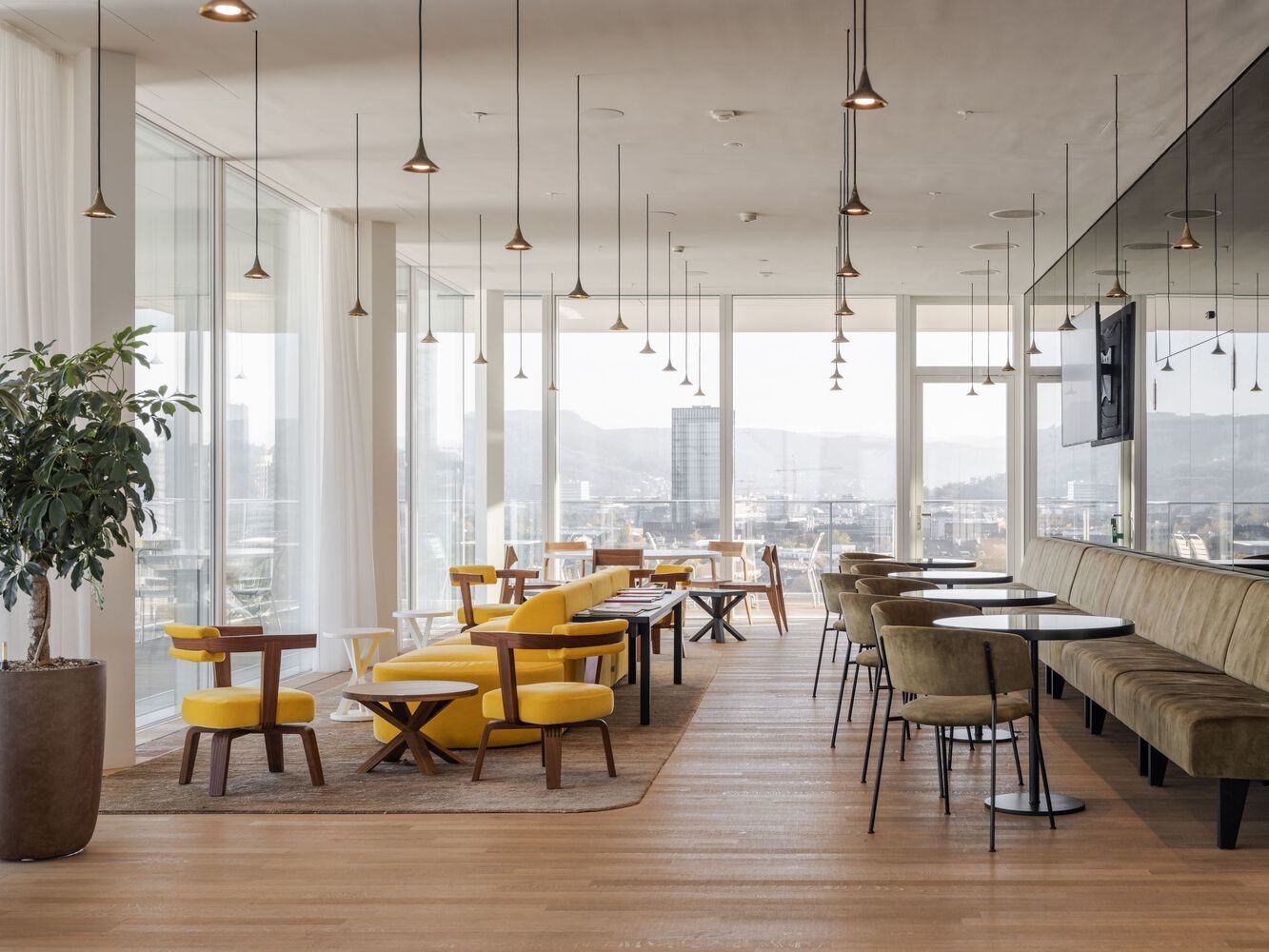
Sustainable development. The Helvetia Group park located in the central area of Switzerland is built based on sustainable urban planning concepts and is closely connected to the public transportation network. Most existing buildings can be integrated and utilized; The reuse of existing office towers alone saves a considerable proportion (over 80%) of grey energy (referring to the energy consumed during the production, transportation, and construction of building materials), which would be required if a new building of the same scale were to be constructed. At the same time, the project emphasizes the ease of disassembly and reuse of various components, such as the facade design of the tower. The two new buildings constructed in the first phase - the corridor style auditorium and the second office tower - were built according to the standards of the German Sustainable Building Council (DGNB) and the Swiss Sustainable Real Estate Council (SGNI), and have been awarded platinum certification. The nearly 900 square meter large-scale photovoltaic system installed on the roofs of three buildings can meet a considerable part of the power demand of the park. The newly built 3500 square meter public park in the center of the block will help promote biodiversity and create a pleasant microclimate environment. The characteristic of the park being open to the public is reflected in its transparent and pleasant architectural design, from the spacious shaded park, the Helvetia art exhibition hall with irregular exhibitions on the ground floor, the auditorium available for private rental, to the rooftop caf é open to the public on the existing tower roof, all of which invite visitors to stop and linger.
可持续发展。位于中心地段的瑞士 Helvetia 集团园区基于可持续的城市规划理念打造,且与公共交通网络紧密相连。大部分现有建筑得以整合利用;仅对现有办公塔楼的再利用,就节省了可观比例(超80%)的灰色能源(指建筑材料生产、运输及施工等过程中消耗的能源),若新建同等规模的建筑则需消耗这些能源。与此同时,项目注重各构件易于拆解和再利用,例如塔楼的立面设计。首期建设的两座新建筑——连廊式礼堂和第二座办公塔楼,均按照德国可持续建筑委员会(DGNB)和瑞士可持续房地产委员会(SGNI)的标准建造,并荣获铂金级认证。三座建筑屋顶上安装的近900平方米大型光伏系统,可满足园区相当一部分的用电需求。街区中心新辟的3500平方米公共公园,有助于促进生物多样性,营造宜人的微气候环境。园区向公众开放的特性,体现在通透宜人的建筑设计中,从宽敞的遮荫公园、底层设有不定期展览的 Helvetia 艺术展厅、可供私人租用的礼堂,到现有塔楼屋顶上向公众开放的屋顶咖啡馆,无一不邀请着访客驻足流连。
© Maris Mezulis
© Maris Mezulis
Art. The renovated tower has a Helvetia art exhibition hall on the ground floor, which is open to the public and serves as a showcase for the city. It provides a highly exposed public display platform for artists and artworks from collections and recently purchased collections. There is a large video wall installed at the entrance of the main auditorium to showcase Helvetia's rich collection of video art works. In addition, all 21 office floors are equipped with rotating displays of artworks. The two customized works created by artist James Turrell upon invitation are both exclusive installations for the venue: "Diamond Glass" (2023) is a lighting installation located in the entrance lobby of the existing tower, welcoming visitors to the Helvetia Art Gallery and rooftop caf é, and directly echoing the architectural facade design; After nightfall, the larger lighting installation "Night Raion" (2024) lights up the overhanging eaves of the two towers, creating a dialogue atmosphere between the park and the city.
艺术。改造后的塔楼底层设有 Helvetia 艺术展厅,这一面向公众开放的艺术展览空间宛如面向城市的“橱窗”。它为艺术家及来自馆藏和新近购藏的艺术作品提供了一个极具曝光度的公共展示平台。主礼堂入口处安装有一块大型视频墙,用于展示 Helvetia 丰富馆藏中的视频艺术作品。此外,全部 21 层办公楼层均设有轮换展示的艺术品。艺术家詹姆斯·特瑞尔(James Turrell)受邀创作的两件定制作品均为场地专属装置:《钻石玻璃》(Diamond Glass,2023年)是位于现有塔楼入口大堂的一处灯光装置,迎接前来Helvetia艺术展厅和屋顶咖啡馆的访客,且直接呼应了建筑立面设计;夜幕降临后,规模更大的灯光装置《夜之盛装》(Night Raiment,2024年)则点亮两座塔楼的外挑屋檐,在园区与城市之间营造出对话氛围。
© Maris Mezulis