Mireya and Tony's Home/Vora Arquitectura
米雷娅和托尼的家 / Vora Arquitectura
© Adrià Goula
© Adrià Goula
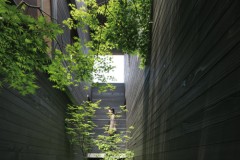
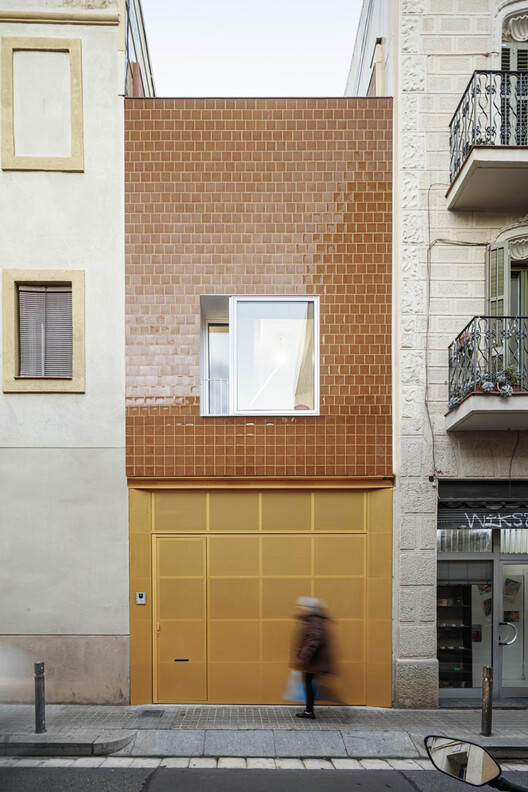
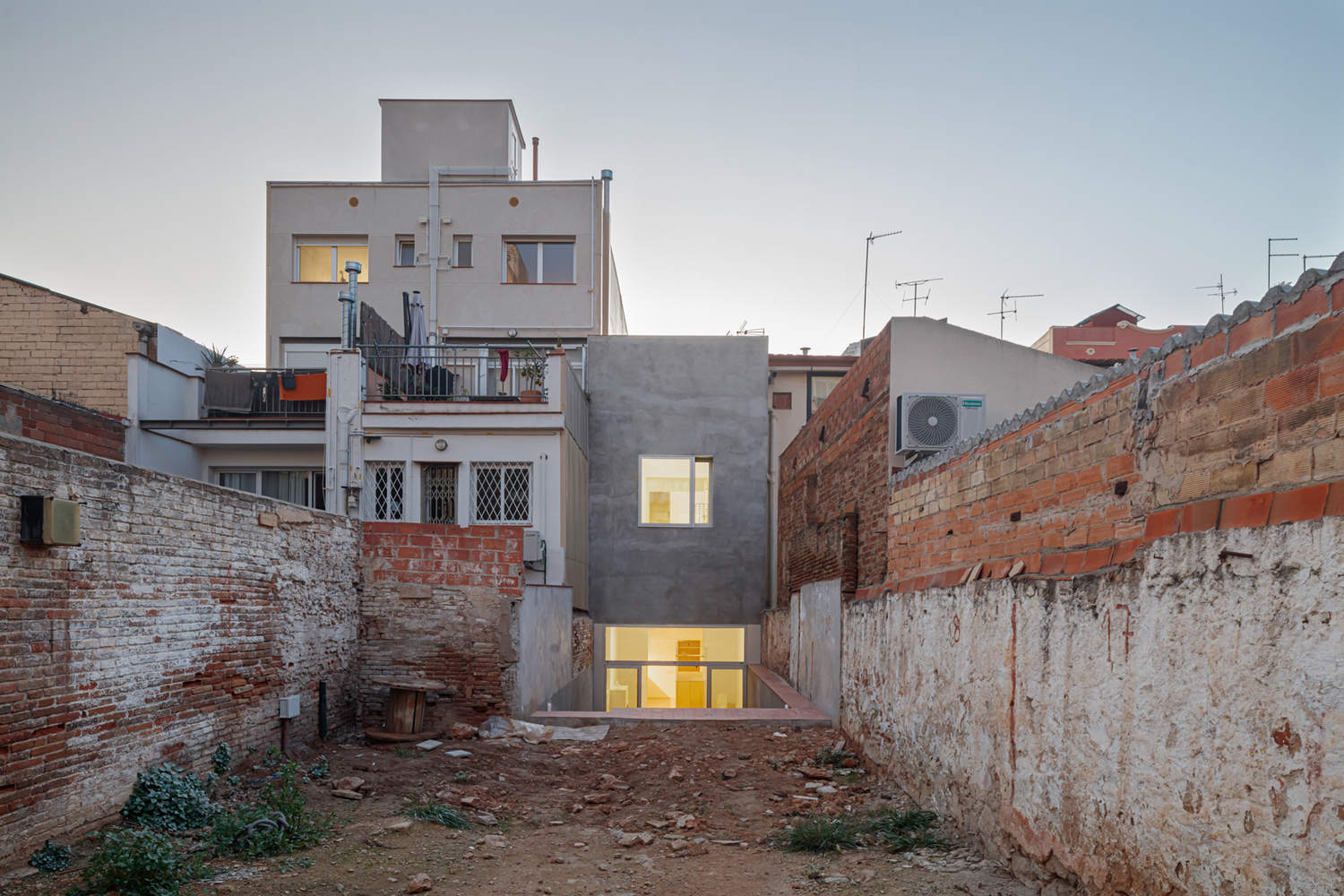
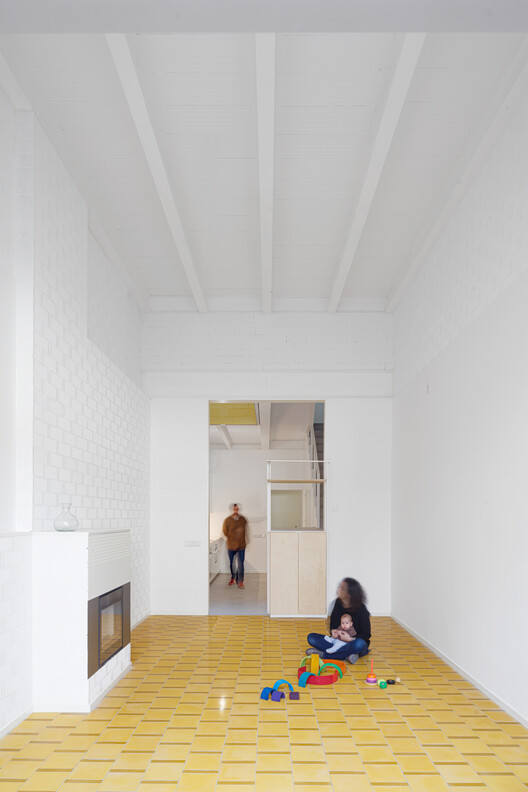
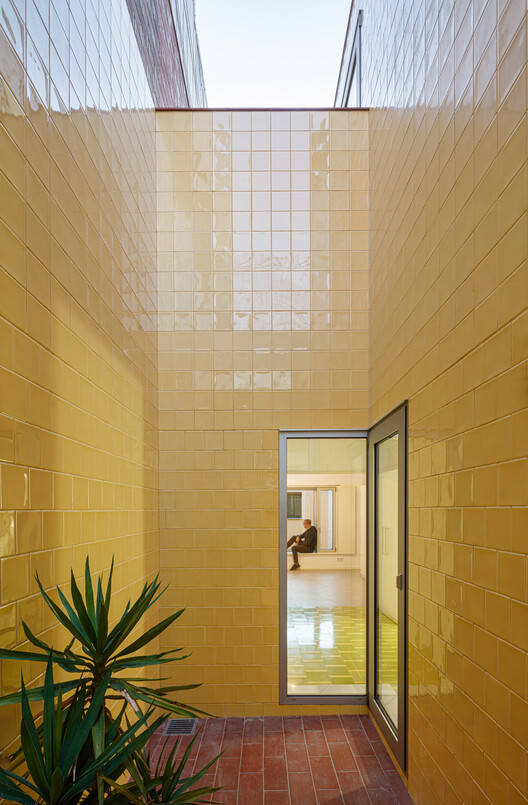
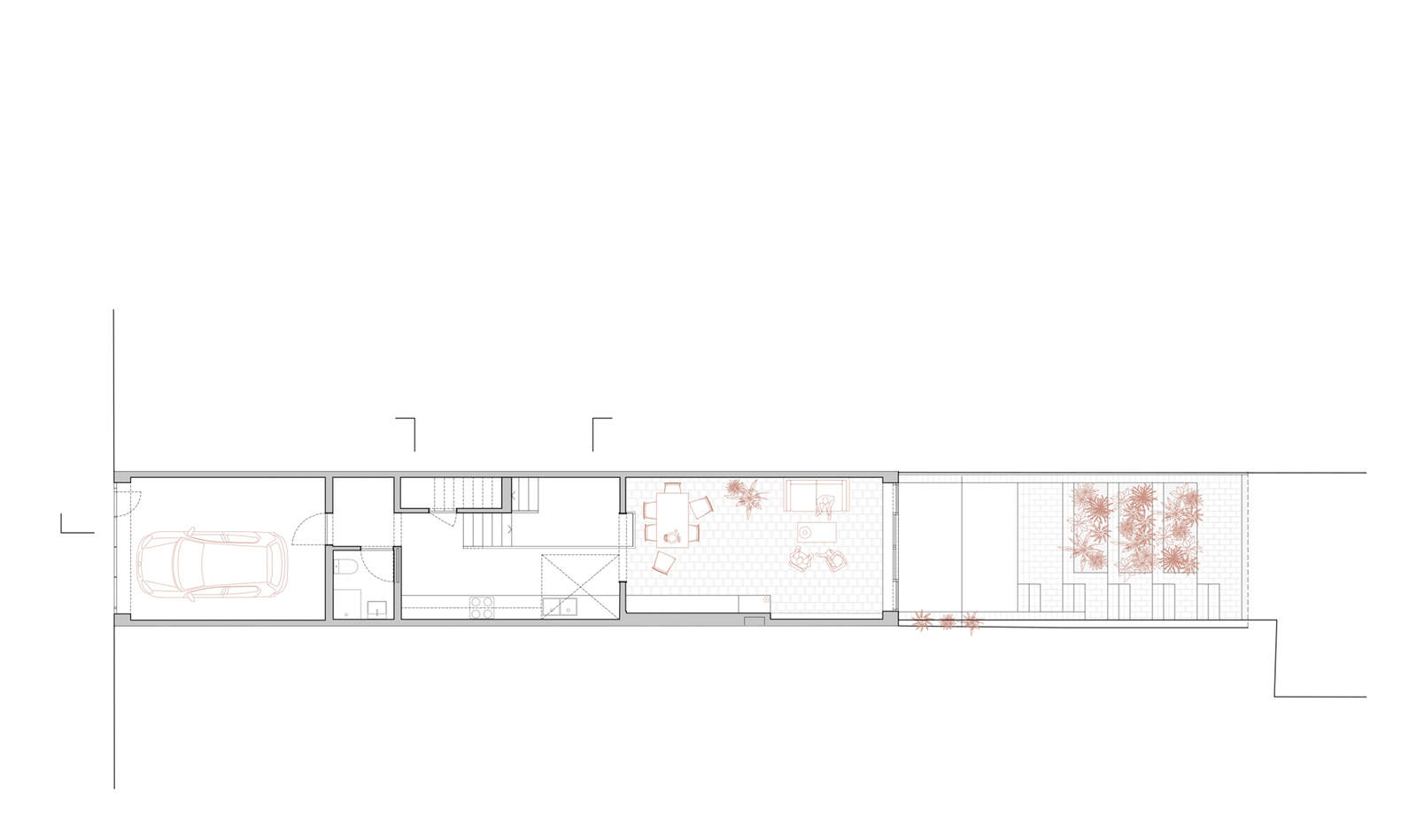
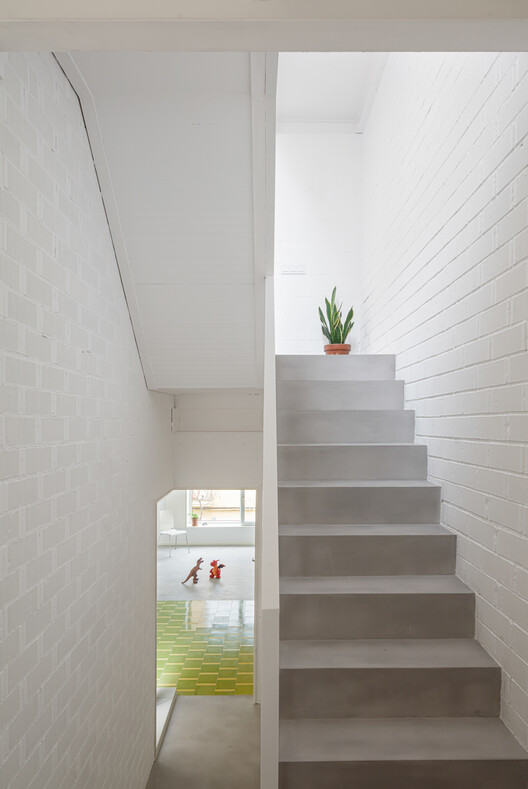
This house is located on a narrow and deep plot of land between two shared walls, with a width of only 3.6 meters. Due to the large depth of the plot, the design introduces natural light into the ground floor through a central courtyard and a double layered elevated space. Due to space limitations, the stairs are arranged vertically in the center, echoing the courtyard, and directly connecting each floor from the middle platform, eliminating the need for corridors. As a result, two different indoor heights are formed on the ground floor: the street facing side is the regular height, and the back side is one and a half floors high, leading to the rear garden.
这栋房屋坐落于两堵共墙之间一块狭长深邃的地块上,宽度仅 3.6 米。因地块纵深较大,设计通过中央庭院和双层挑高空间将自然光引入底层。受空间限制,楼梯纵向居中布置,与庭院相呼应,直接从中间平台连接各楼层,省去了走廊。由此,底层形成两种不同室内高度:临街一侧为常规高度,后侧则为一层半高度,通向后方花园。
© Adrià Goula
The space is arranged in a serial form, connected by structural frameworks. The entrance of the house first passes through the garage, then through the entrance porch, and enters the central open kitchen, which is directly connected to the stairs. Storage spaces such as refrigerators, freezers, and storage rooms are cleverly placed below the first staircase platform. The back side is a tall living room, which leads directly to the garden at the back of the building.
空间以串联形式布局,由结构框架相连。房屋入口先经车库,再穿过入口门廊,进入中央开放式厨房,厨房与楼梯直接相通。冰箱、冰柜及储藏室等收纳空间巧妙安置于首个楼梯平台下方。后侧为挑高客厅,直通建筑后方的花园。
© Adrià Goula
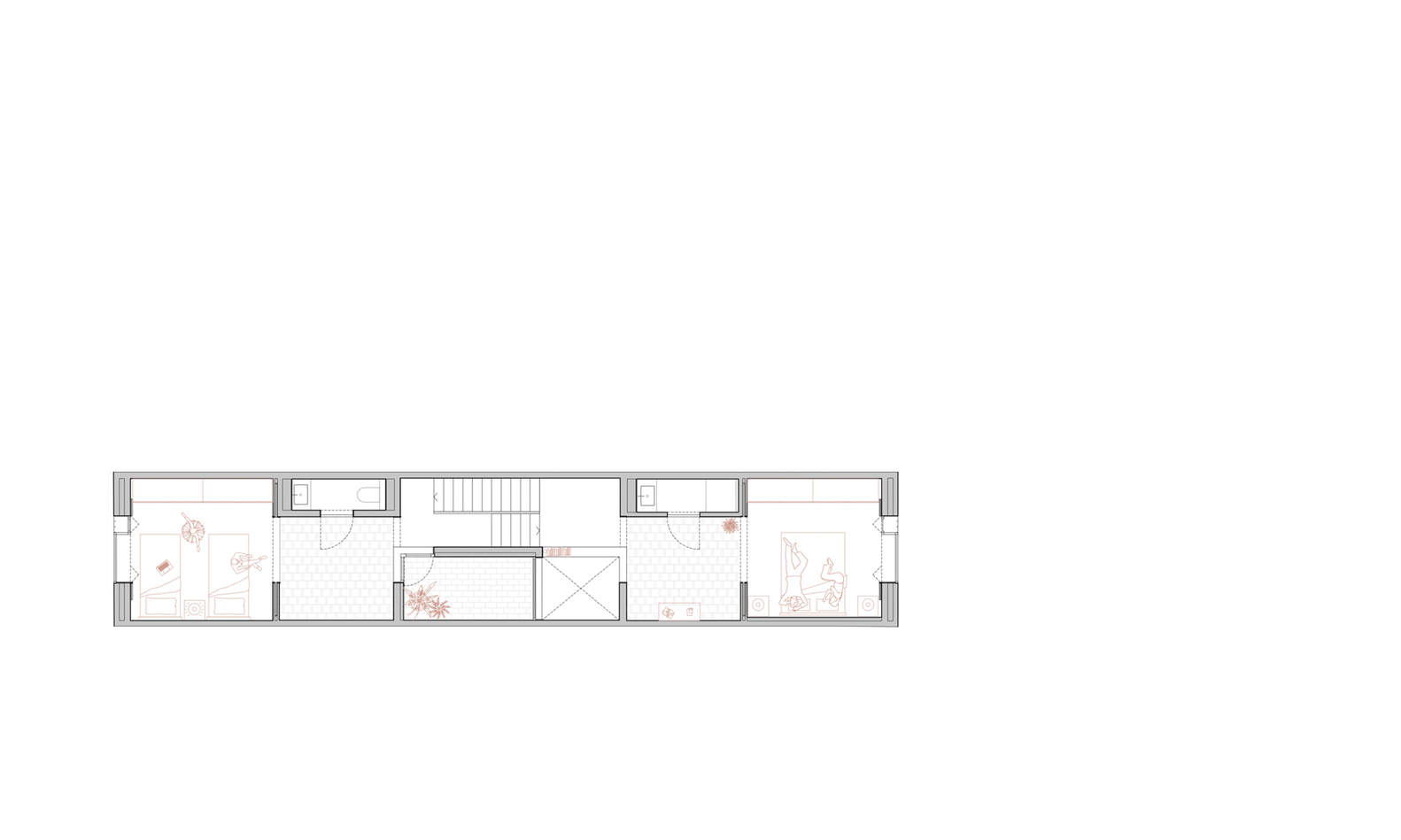
The first platform of the staircase has been expanded, forming a "balcony" above the living room. This space serves as a temporary work reading area, maintaining visual connectivity with daily family life. The first floor is symmetrically distributed in a stepped layout, with two connected rooms on each side - the bedroom facing the facade, and the entertainment or work area connected to a small bathroom serving as the front hall.
楼梯首个平台被扩大,在客厅上方形成一处“阳台”。该空间作为临时工作阅读区,与家庭日常生活保持视觉连通。首层以阶梯式布局对称分布,两侧各设两间相连房间 —— 卧室朝向立面,娱乐或工作区与一间作为前厅的小型浴室相连。
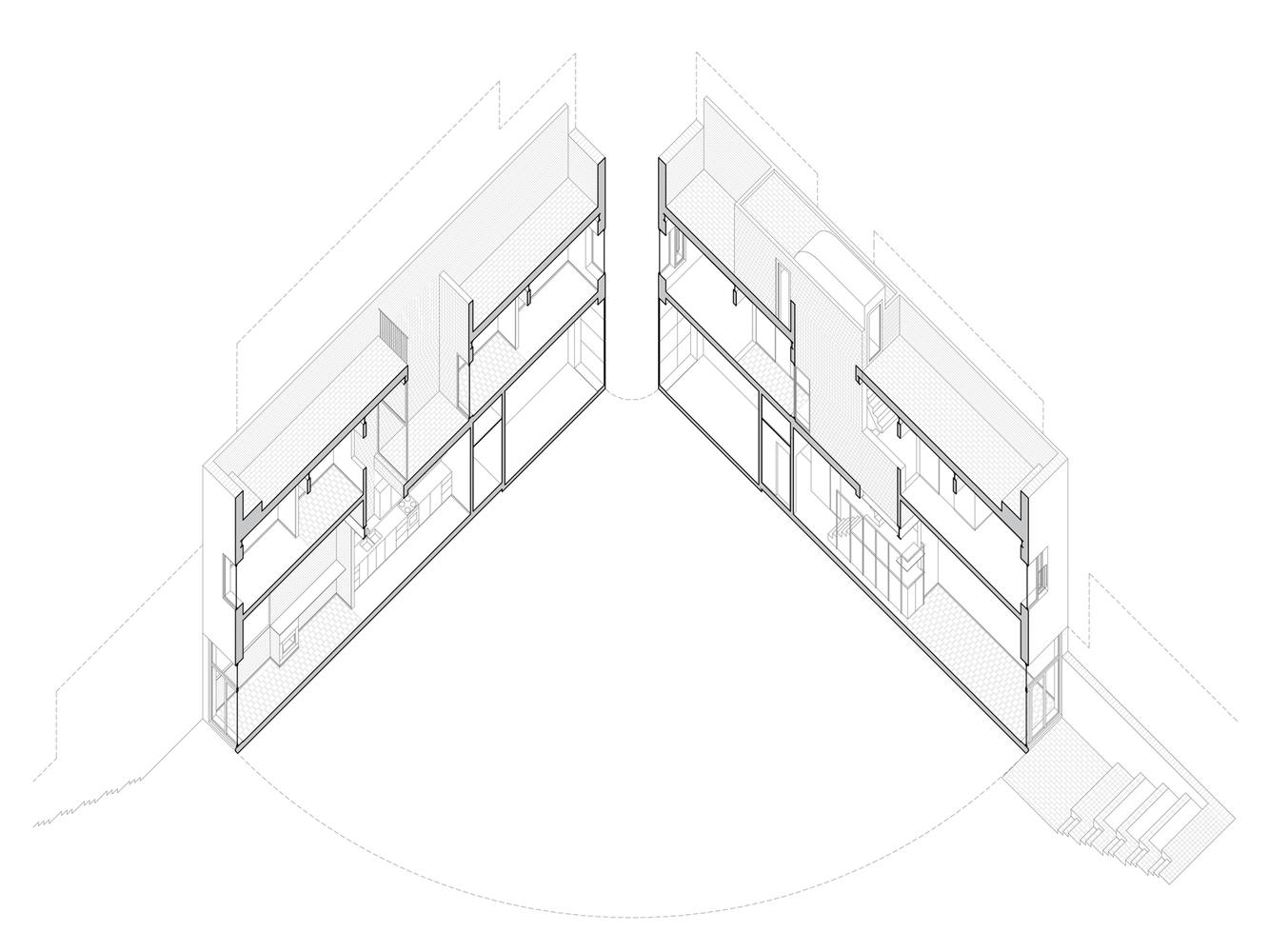
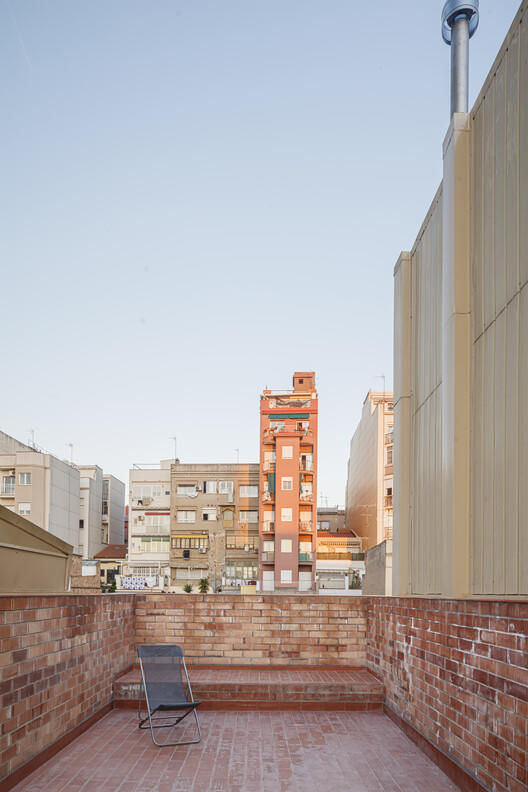
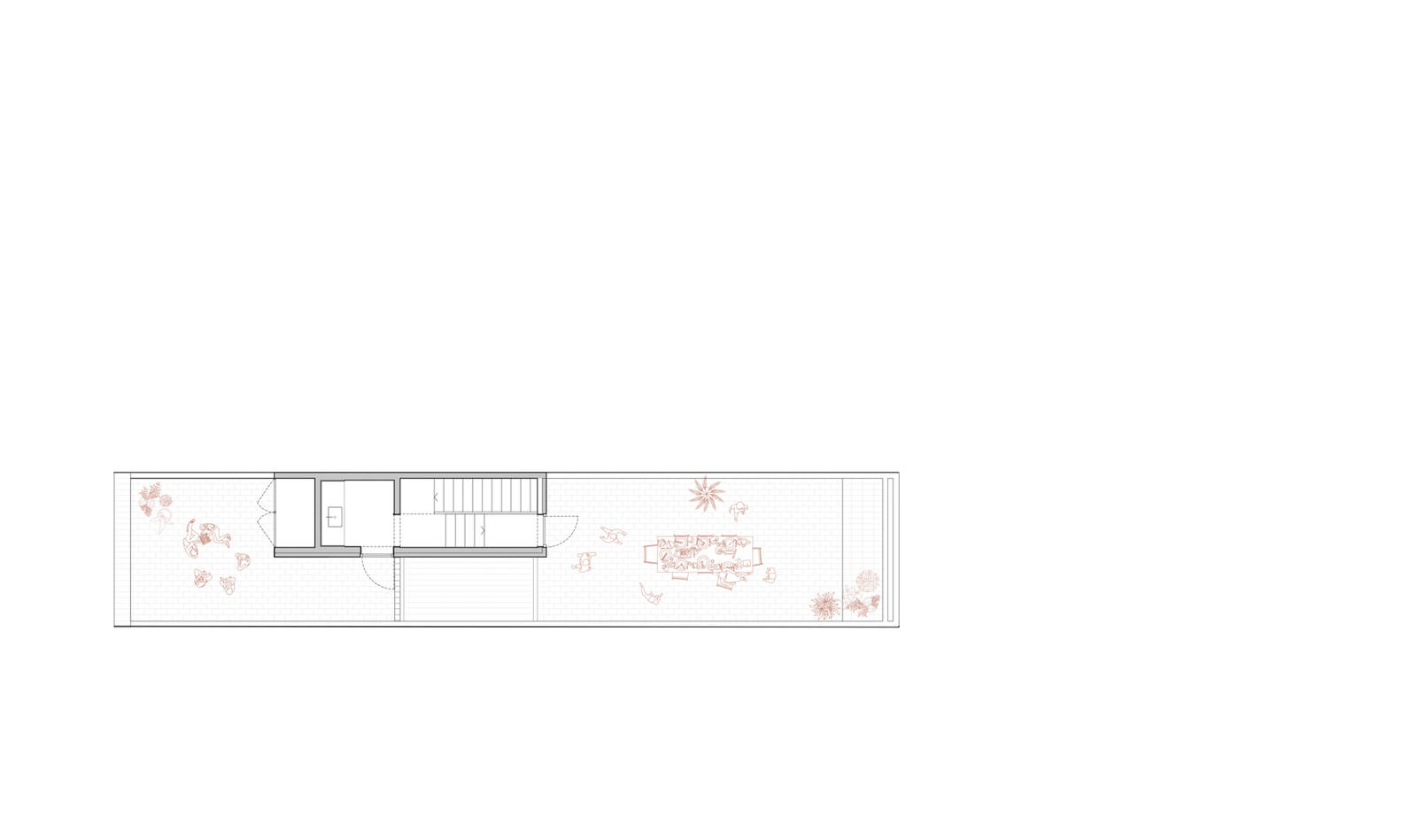
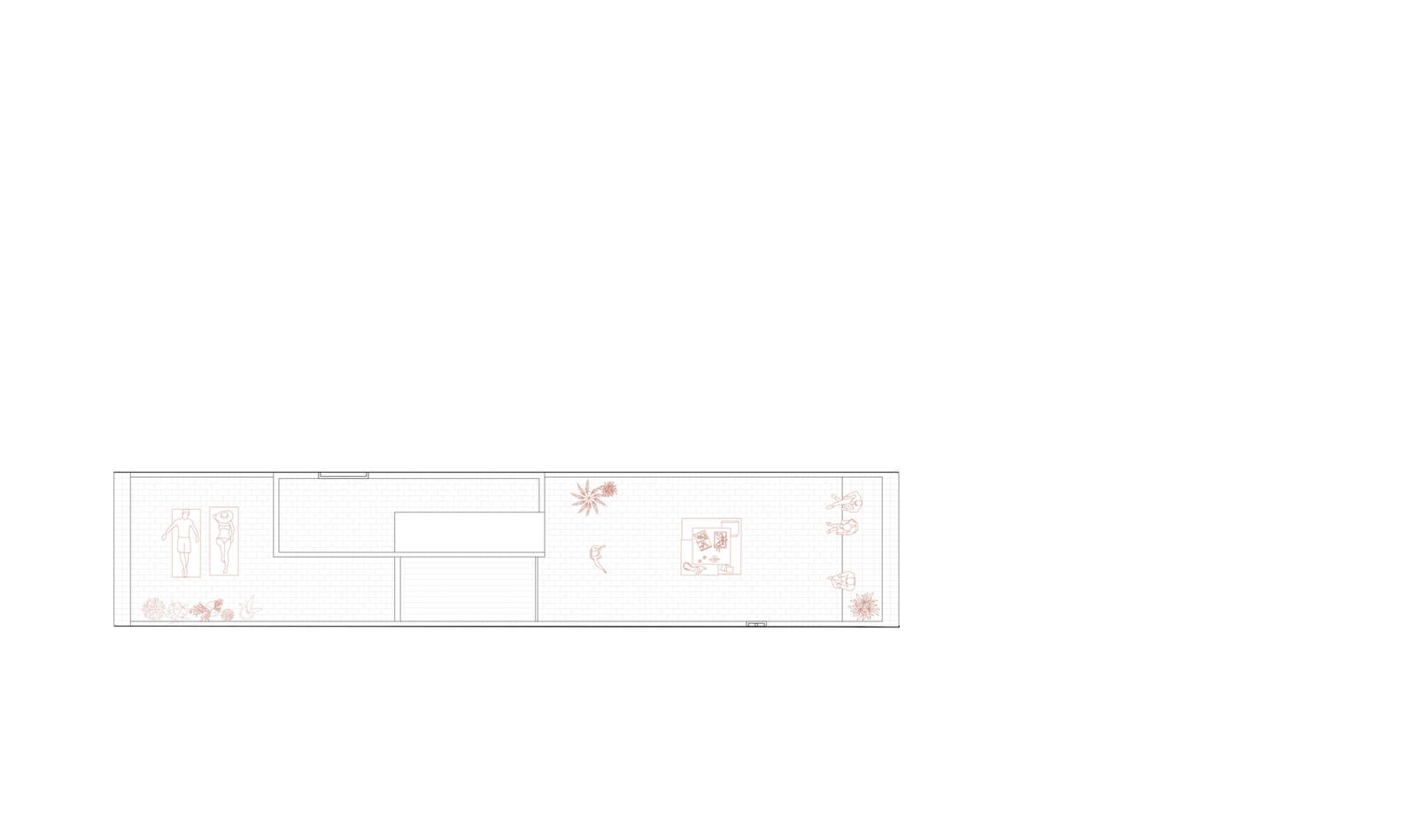
Due to the width limitation of the staircase, the bathroom is divided into two parts on each half floor: a shower room on one side and a bathroom on the other side. The rooftop terrace, as an extension space of the house, is an indoor uncovered area surrounded by high walls. The terrace is divided into two parts with the courtyard and stairs as the center, continuing the half story design. A slightly higher platform in the rear overlooks the backyard.
浴室因楼梯宽度限制,在每半层分为两部分:一侧设淋浴间,另一侧设卫生间。屋顶露台作为房屋的延伸空间,是一个由高墙环绕的室内无顶区域。露台以庭院和楼梯为中心一分为二,延续半层设计。后方一处略高的平台可俯瞰后花园。
© Adrià Goula
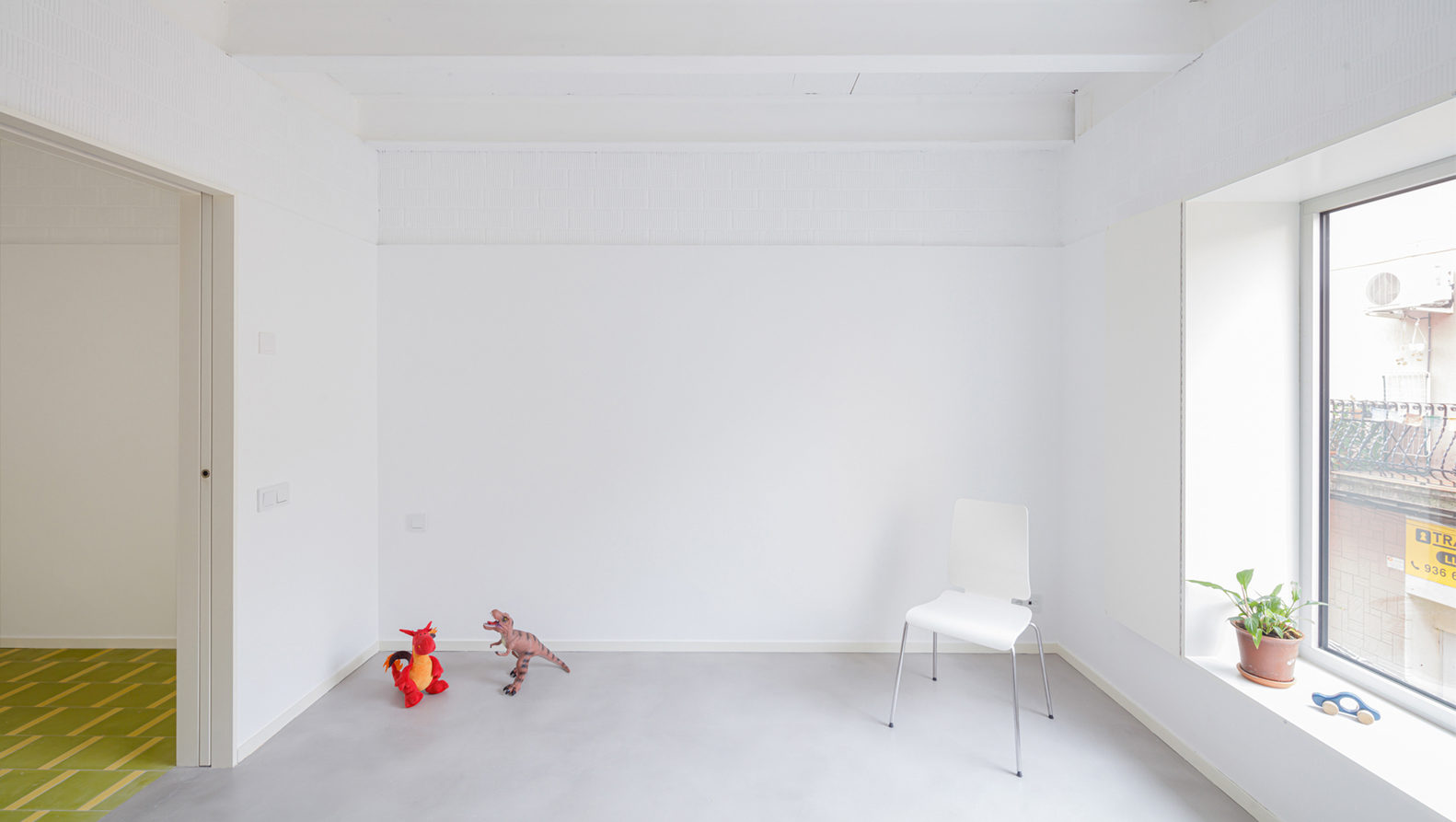
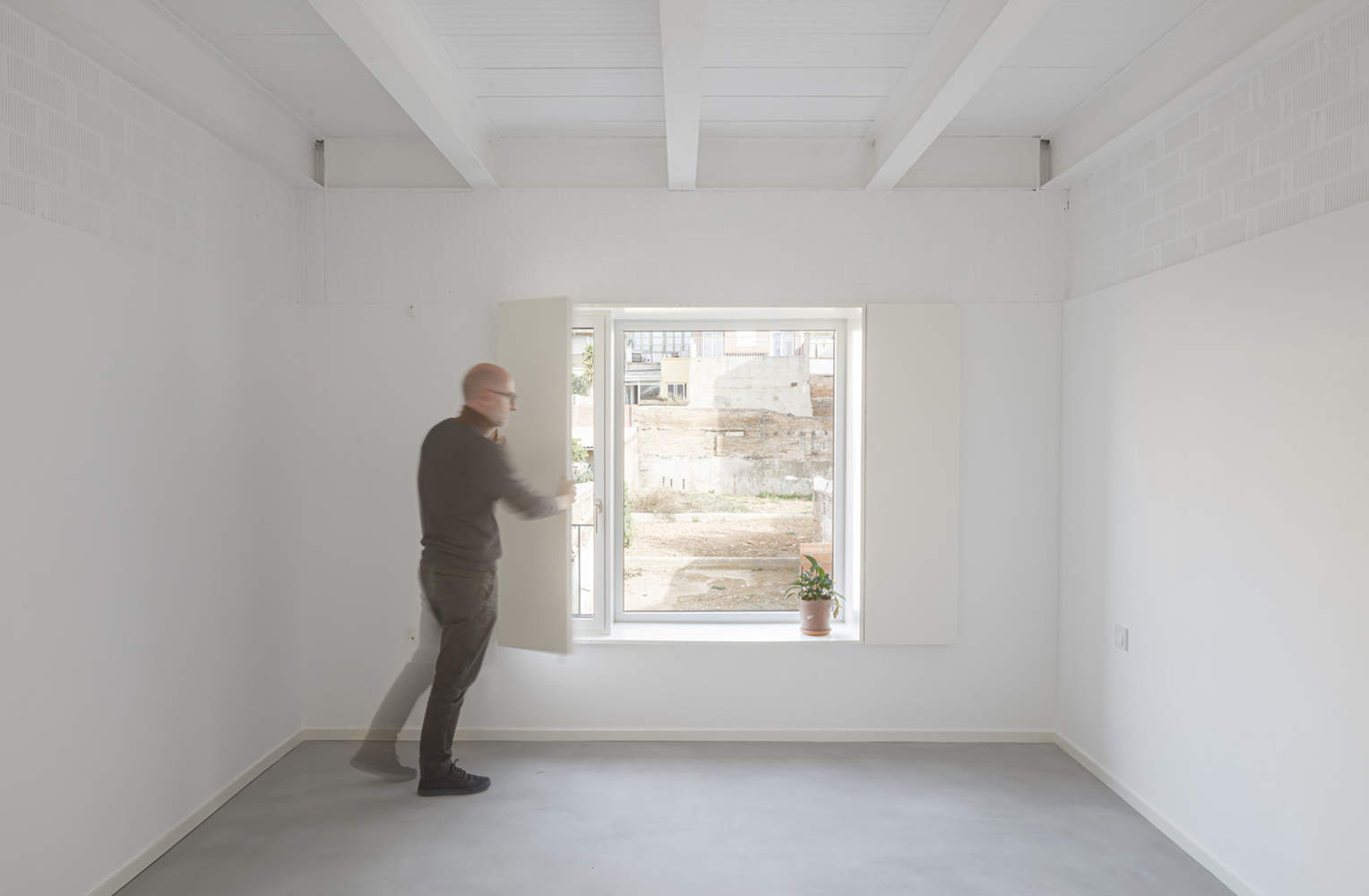
The bottom level has a transparent and open relationship with the outside world, while the first level utilizes the thickness of the facade through two large deep window frames. These "nested windows" are divided into two staggered parts: narrow windows that are flush with the internal plane, used for ventilation and leading to small balconies within the thickness of the facade; The wide fixed glass window is flush with the outside and serves as a viewing window seat.
底层与外界关系通透开放,而首层则通过两扇大型深窗框景,充分利用了立面的厚度。这些“嵌套窗”分为两个错位部分:窄窗与内部平面齐平,用于通风并通向立面厚度内的小型阳台;宽幅固定玻璃窗则与外部齐平,作为观景窗座。
© Adrià Goula
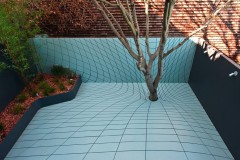
The use of materials is concise and unified. The walls and roof are made of decorative ceramics, and the lower part is plastered and painted white as a whole. The ground is mainly made of micro cement material, and some rooms are paved with two-color mosaic tiles (whole piece and quarter piece splicing). Glazed ceramic tiles are laid on both the street facing facade and the interior courtyard walls. The ceramic tiles extend from the courtyard to the interior, passing through a double layered elevated space all the way to the kitchen, guiding and reflecting sunlight.
材料运用简洁统一。墙体与屋顶采用饰面陶瓷,下部抹灰并整体粉刷为白色。地面主要为微水泥材质,部分房间铺设双色马赛克瓷砖(整块与四分之一块拼接)。临街立面与内部庭院墙面均铺设釉面陶瓷砖。从庭院延伸至室内的瓷砖,经双层挑高空间一直铺至厨房,引导并反射阳光。
The structural system is synthesized in a regular manner and mixed materials are used. A bidirectional frame structure is composed of four horizontal portal frames. Steel columns are located at both ends to open the overall width, and two brick buttresses support the central two portal frames. Therefore, the main beam runs horizontally through the building plan. The floor slab adopts a lightweight structure, supported by four ceramic plate modules of 7-meter-long steel beams, and covered with a concrete compression layer at the top. The rhythm of steel beams constitutes the overall geometric shape of the house. In the central courtyard and staircase area, three H-shaped main beams are supported on brick buttresses to support the courtyard enclosure walls and complex upper structures (courtyard, double decker space, staircase).
结构体系合成规整,采用混合材料。由横向四榀门式框架构成双向框架结构。钢柱位于两端以打开整体宽度,两处砖砌扶壁支撑中央两榀门式框架。因此,主梁横向贯通建筑平面。楼板采用轻型结构,由 7 米长的钢梁支撑四块陶瓷板模块,顶部覆盖混凝土受压层。钢梁的节奏构成了房屋的整体几何形态。在中央庭院和楼梯区域,三根 H 形连接的主梁架于砖砌扶壁之上,支撑庭院围护墙及复杂的上部结构(庭院、双层空间、楼梯)。
© Adrià Goula
Therefore, although the common wall is a brick structure, it does not bear weight. Its thickness is sufficient to conceal pipeline facilities and maintain a clear and tidy space. One of the shared walls is an existing stone wall that is shared with neighboring houses, and is visible indoors. The upper part is continued with ceramic tiles. The main facade adopts a double-layer ceramic brick thick wall, with an air chamber and insulation layer in the middle, forming a deep window effect. The internal courtyard enclosure structure is made of single-layer ceramic panels and covered with SATE insulation layer.
因此,尽管共墙为砖砌结构,但并不承重。其厚度足以隐藏管线设施,保持空间通透整洁。其中一堵共墙为与邻宅共用的既有石墙,室内保留可见,上部以陶瓷砖续建。主立面采用双层陶瓷砖厚墙,中间设空气腔与隔热层,形成深窗效果。内部庭院围护结构则采用单层陶瓷板,外覆SATE保温层。
管线设施隐藏于楼板与墙体厚度之中。气候控制采用地暖系统,夏季辅以吊扇,无需空调系统。
© Adrià Goula