Manlitai/Magical Architecture Research Laboratory
满栗台 / 神奇建筑研究室
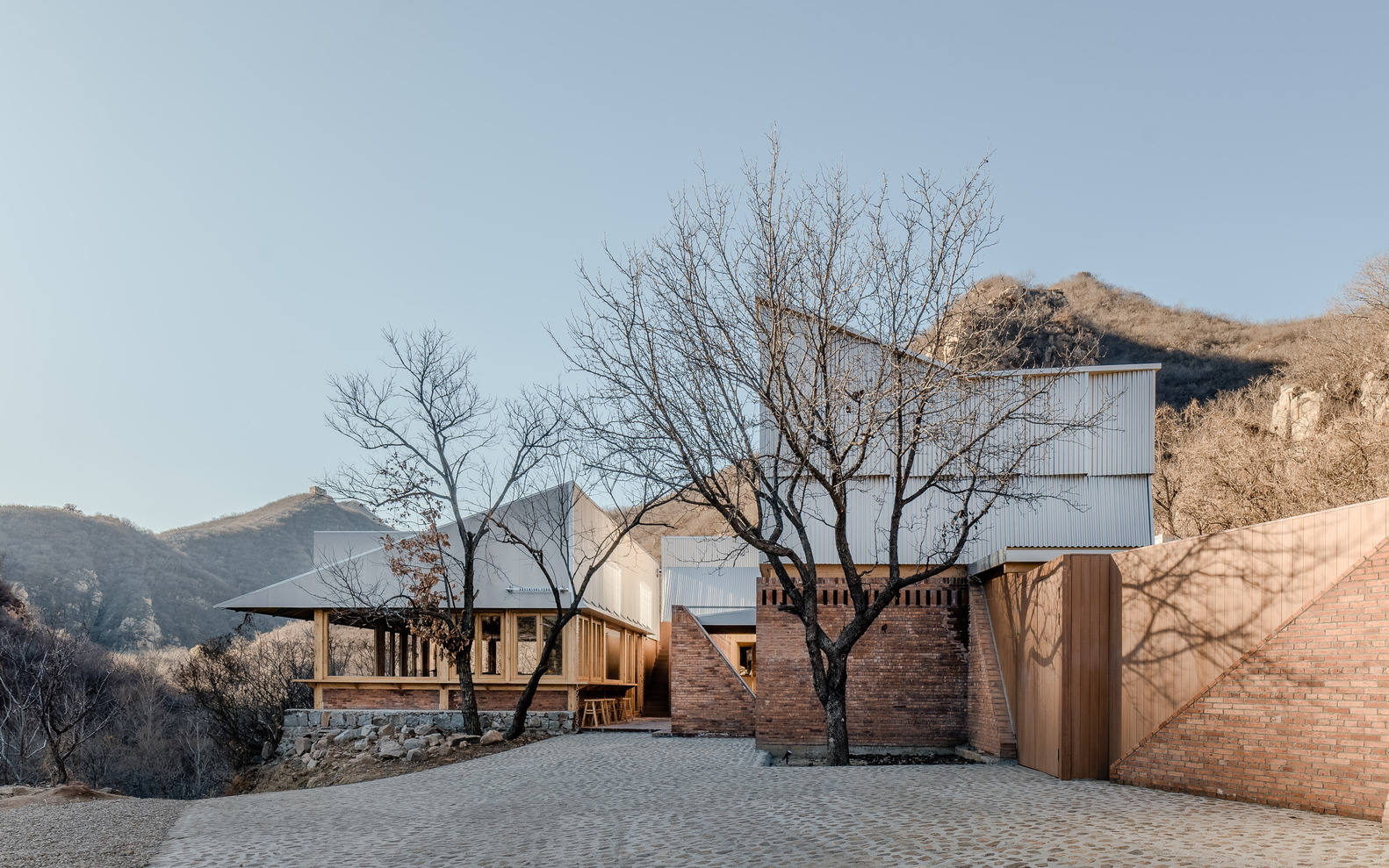
项目亮点:顺应自然的“改建”策略:该项目最显著的亮点在于其“改建”的设计策略,而非全新建造。设计师深入研究了原有工棚,这些工棚在恶劣环境下,展现了对地形、光照、风向的精准把握,并融入对栗子树的珍视。这种对现有结构的尊重和利用,不仅节约了资源,更巧妙地保留了场所的历史痕迹,将建筑融入环境,而非突兀地竖立其中。这种“向工棚学习”的设计理念,使得建筑与自然环境和谐共生,体现了对场地文脉的深刻理解和尊重。
项目精髓:材料与建造的诗意表达:项目的精髓在于其对材料和建造的诗意化表达。建筑师巧妙地运用木材、旧红砖、金属波纹板等材料,创造出既当代又具有历史感的建筑。木结构的选择回应了山地建设的限制,而木框架和木剪力墙的组合,以及“包裹”的设计手法,赋予了建筑独特的质感。旧红砖的使用,更是将建筑与周围环境紧密联系,创造了一种“遗迹”的氛围,体现了对时间和历史的敬意。这种对材料的巧妙运用,赋予了建筑独特的个性和韵味。
项目精髓:文化意境与在地性的完美融合:该项目不仅关注建筑本身,更注重与文化和历史的融合。设计师将“满栗台”命名为“台”,赋予其观看风景和介入环境的双重功能,呼应了中国古典建筑的意境。设计中巧妙地融入了对范宽、李世倬等历史人物和作品的解读,将建筑与在地文化紧密结合,赋予了建筑丰富的内涵。项目最终呈现的效果,是对人与自然、历史与当下、艺术与生活的完美融合,充分展现了建筑师对场地、文化和艺术的深刻理解和创造力。
© Yumeng Zhu
© Yumeng Zhu
From the architect. At the beginning of the 15th century, Huanghua Town, under the jurisdiction of Changping Prefecture, was busy building the Great Wall everywhere. In the unnamed valley near Xishuiyu, people carved out a platform halfway up the mountain and transported countless rough cut yellow stones up. It is speculated that a barrier will be built here to seal off the valley. But for some unknown reason, the project stopped, and Huangshi was just scattered and piled up into a stone ridge. In the following hundreds of years, many chestnut trees were planted here, and people lived and worked in the dense shade. Every autumn, the round and hundred mile valley was covered with fluffy chestnut shells. In 2019, when we arrived here, there was a construction team stationed on the platform. They had built three or four sheds, and various building materials and equipment were scattered all over the ground. However, amidst the chaos, dozens of old chestnut trees still thrive. The largest one requires three people to embrace.
来自建筑师。15世纪初的一段时间,昌平州下辖的黄花镇到处忙着修筑长城。在西水峪附近的无名溪谷中,人们在半山腰辟出一片平台,把无数粗凿的黄石运了上来。据推测,这里似乎要建造一道封闭溪谷的隘墙。但不知什么原因,工程停了,黄石只是散乱得堆成一道石垄。其后的几百年,这里种上了许多栗子树,人们在浓荫下生活劳作,每年秋天,方圆百里的谷地,都会被毛绒绒的栗壳覆盖。2019年,我们来到这里时,平台上驻扎着一支基建队,他们搭盖了三四间工棚,各种建筑材料和设备满地都是。不过凌乱之间,几十棵老栗子树依旧繁茂。最大的一棵,需要三个人才能环抱。
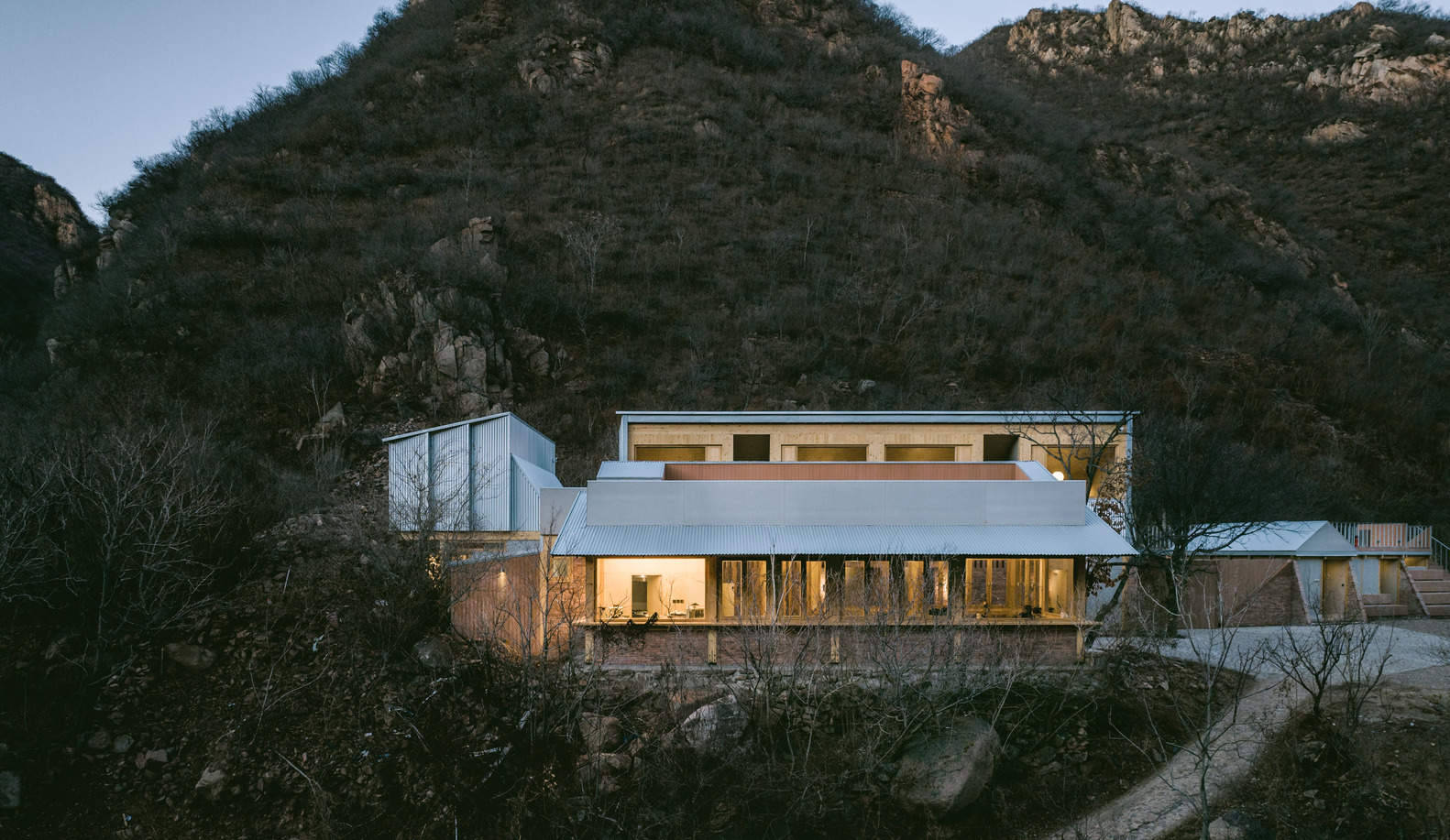
© Yumeng Zhu
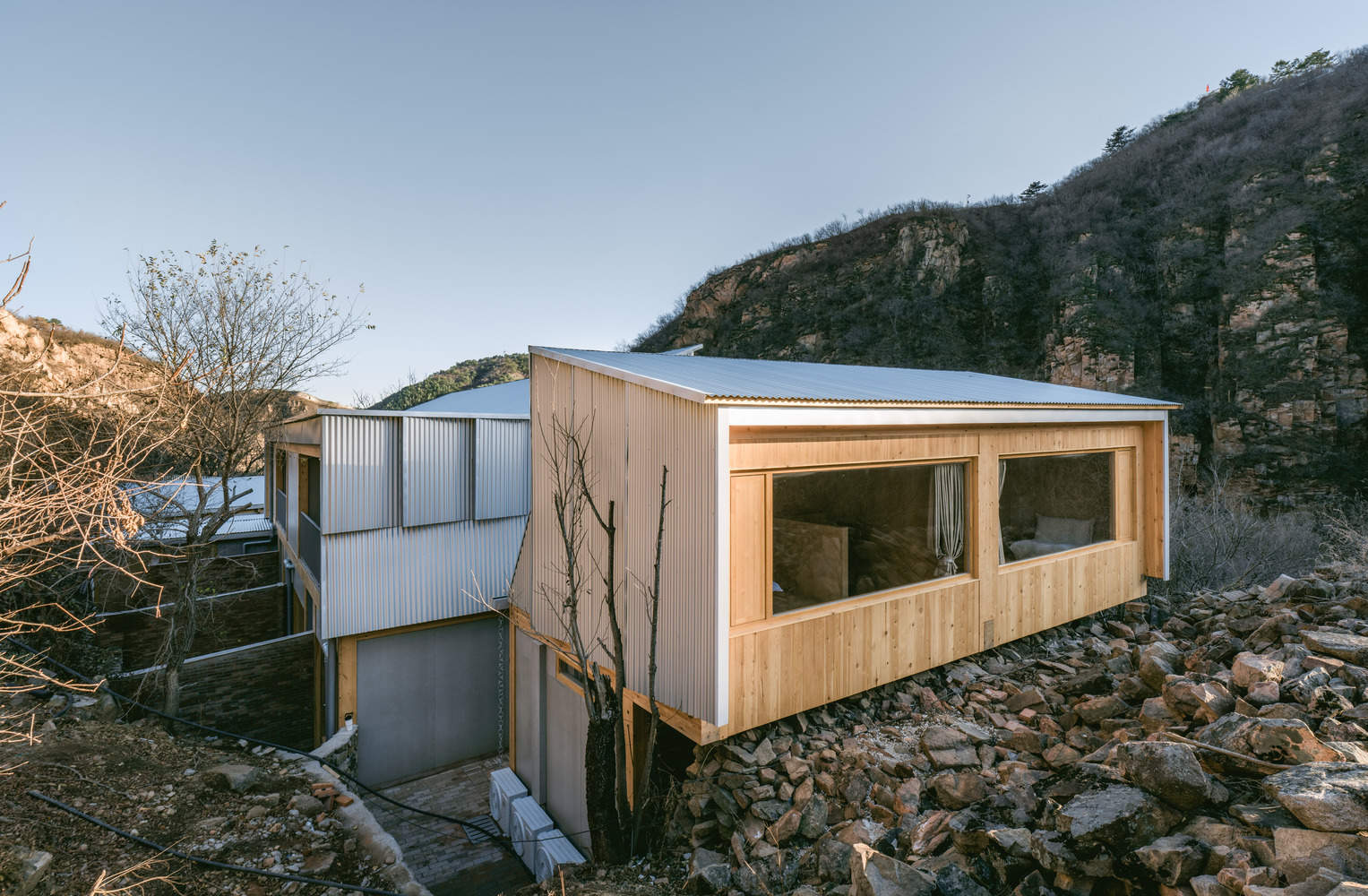
© Yumeng Zhu
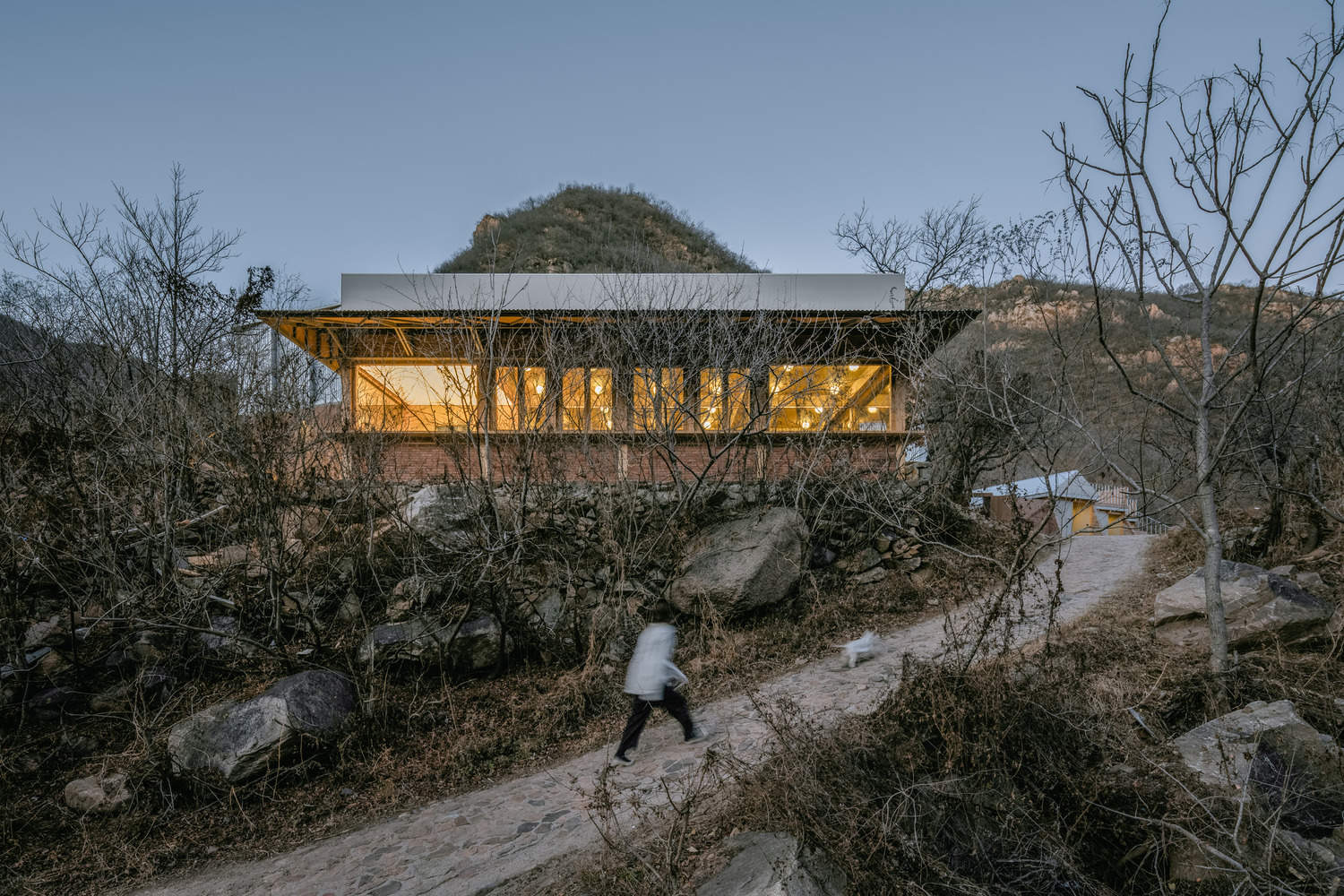
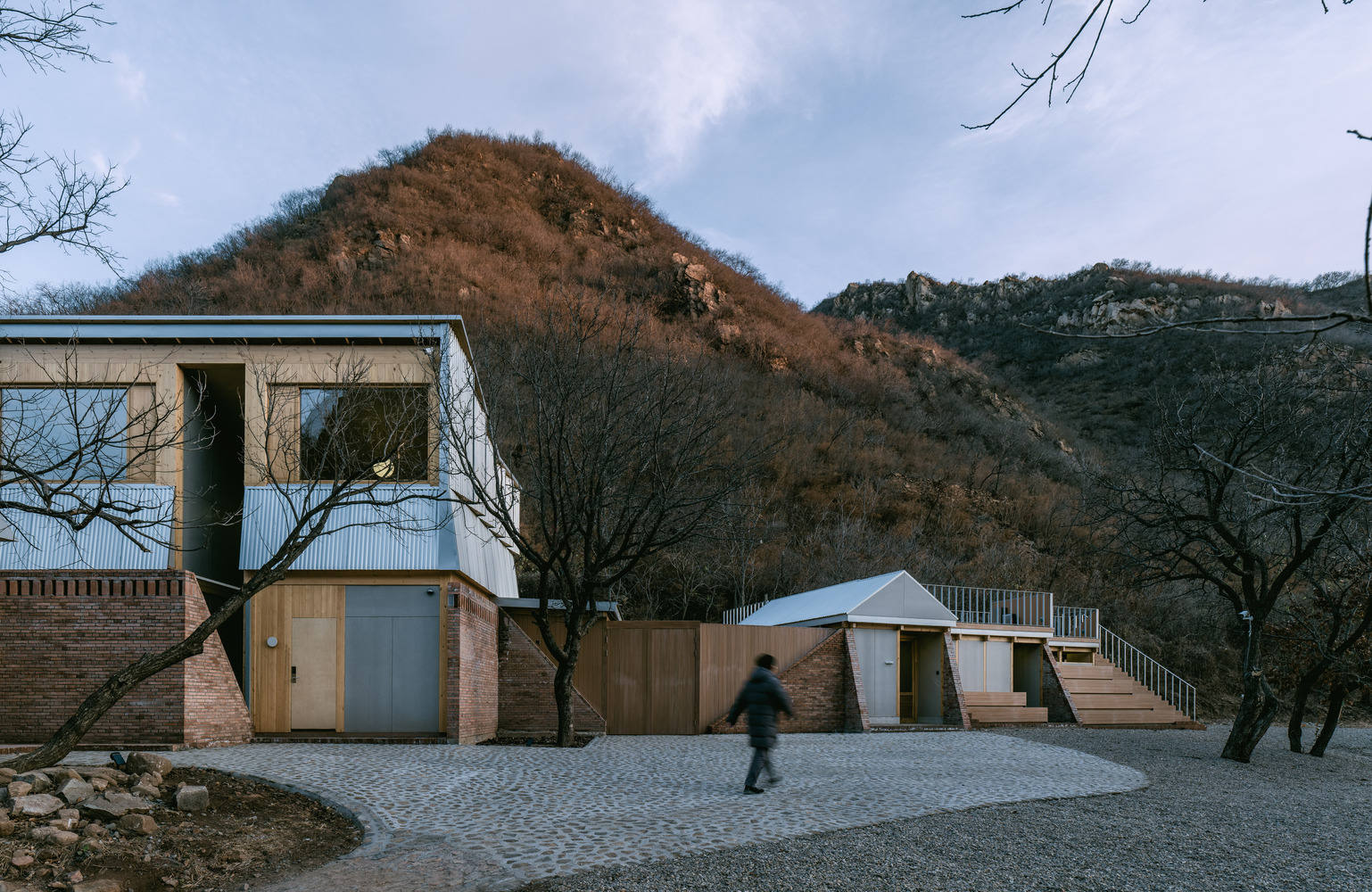
Learn from the Work Shed -The owner hopes to open up a campsite here, using steps and installing several sets of tents.. In order to serve the campsite, some fixed facilities need to be built on the platform. However, due to construction limitations, these makeshift sheds that were set up arbitrarily in the early years have already locked in the outline of the new building. For architects who want to freely sketch blueprints, this news is discouraging. But upon closer examination of these sheds, it was discovered that the workers were the experts in mountain living. They know where to find a solid foundation, where to welcome more sunshine, and where to avoid the howling mountain winds. And they cherish the chestnut trees on stage very much, with their work sheds hidden among the trees.
向工棚学习 - 业主希望在这里开辟一片营地,利用梯级台阶,安设若干组帐篷。为了服务营地,台上还需要建些固定设施但由于建设的限制,这些早年随意搭设的工棚,已经锁死了新建筑的轮廓。对于想自由勾画蓝图的建筑师,这个消息令人沮丧。但仔细了解这些工棚后,发现工人们才是山地生活的行家。他们懂得哪里基础稳固,哪里能迎接更多阳光,哪里又能躲避呼啸的山风。而且他们很珍惜台上的栗子树,工棚都穿插隐蔽在林木之间。
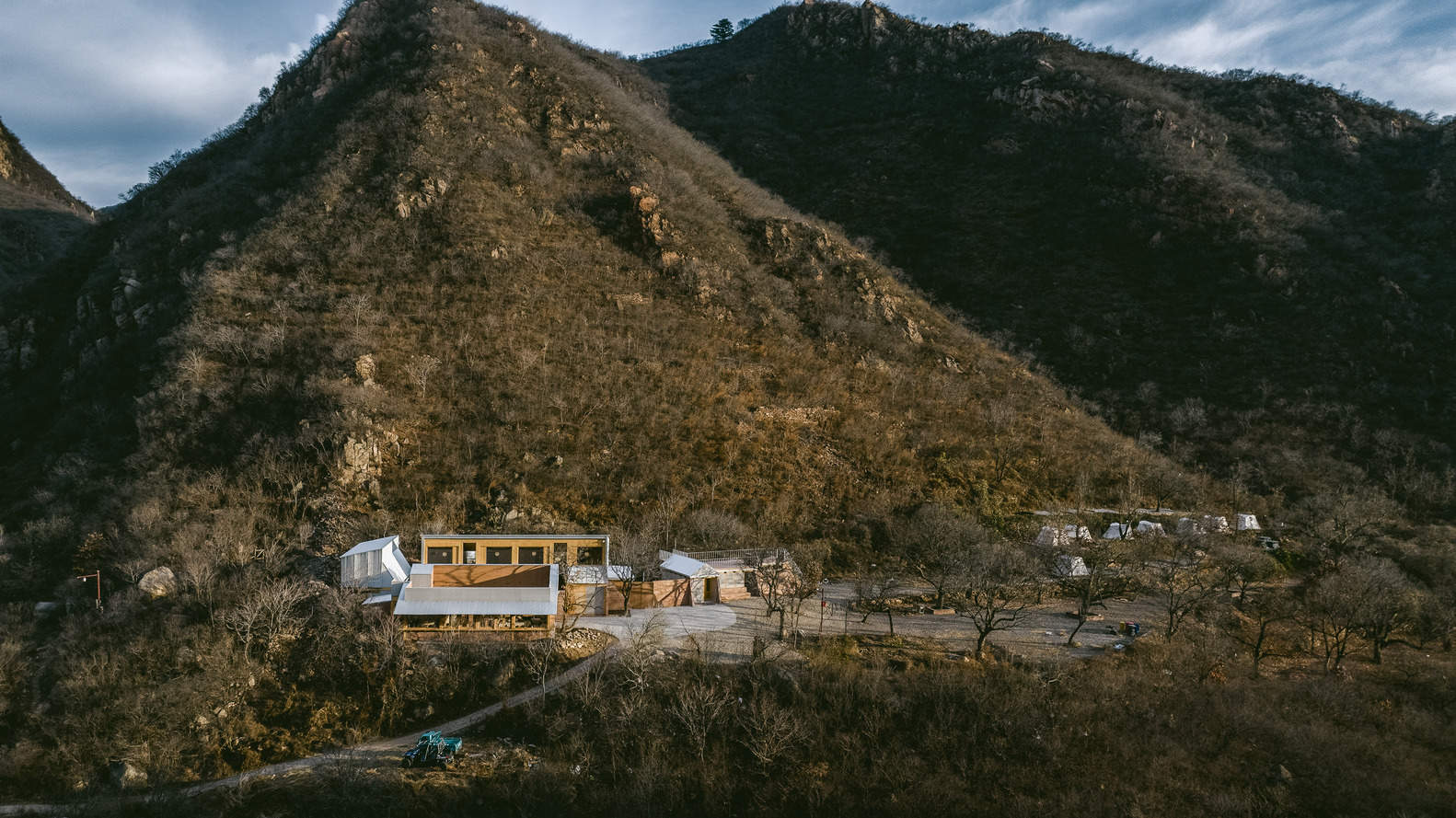
© Yumeng Zhu
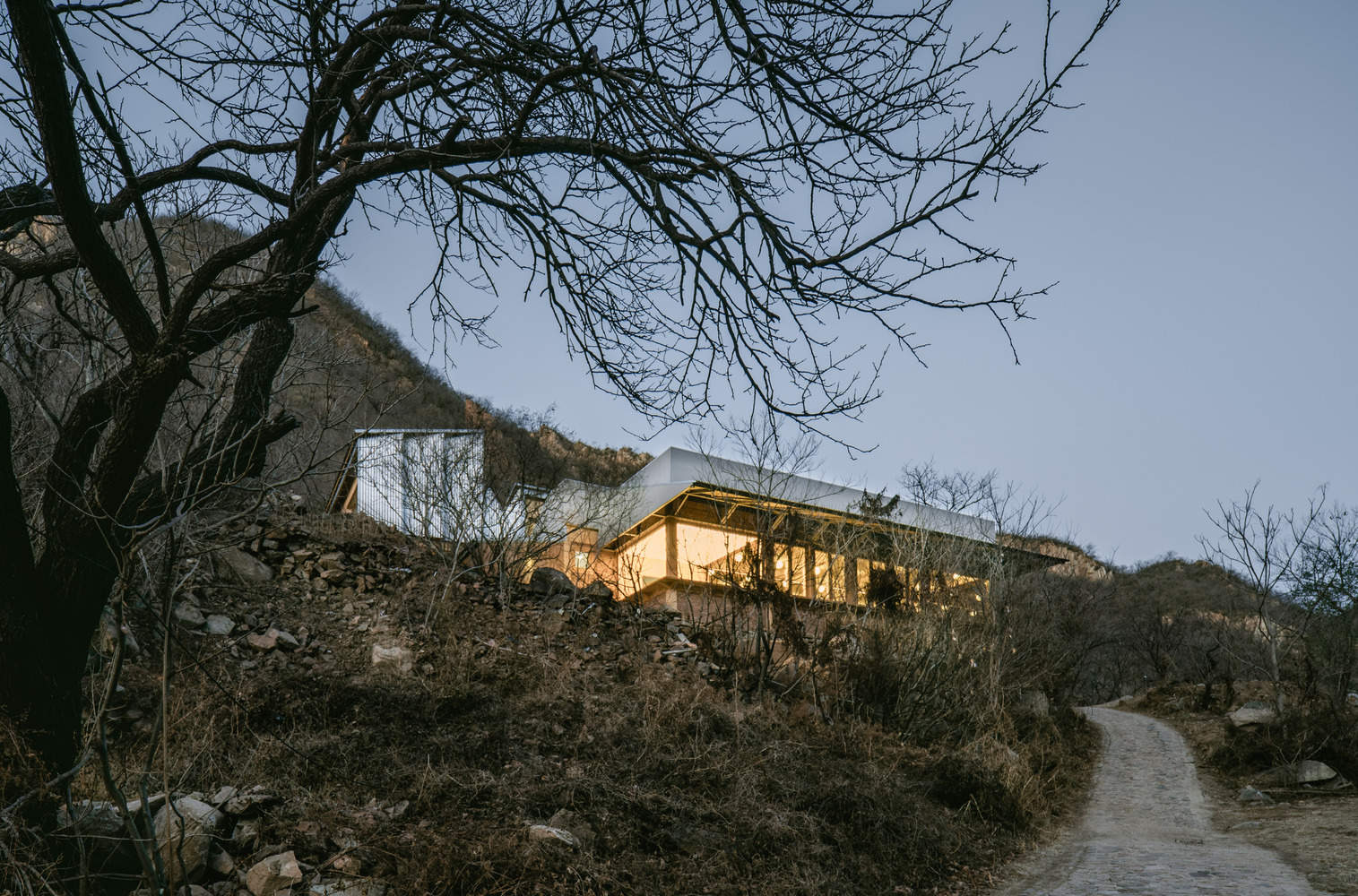
© Yumeng Zhu
We followed this idea and reconstructed the venue. The scene of chestnut shells falling here in autumn is the most touching, which is a rare display of abundant appearance in Yanshan. We call the new building "Man Li Tai". 'Tai' is a vague architectural type in ancient China, which can be a place for people to view scenery or a way for people to get involved. We want to re-establish the connection between people and scenery between the traces of the original work shed.
我们顺着这个思路,重新建构起场地。秋季这里落满栗壳的景象最为动人,那是燕山难得展示出的丰盈面貌,我们便将新建筑称为“满栗台”。“台”是中国古代一个含义模糊的建筑类型,它可以是人们观看风景的场所,也能是人们介入其中的方式。我们想在原有工棚的痕迹之间,重新建立人与风景的联系。
© Yumeng Zhu
平面图
© Yumeng Zhu
To some extent, the construction of these sheds is quite arbitrary, such as the roof, which only conforms to the direction of rain and snow and chooses the most convenient drainage slope; For the materials, they were also rudimentary and used leftover materials from other projects to piece together the facade. But these shortcuts have achieved unexpected lightness and simplicity, shaping some of the free characteristics of mountain architecture. There are many things worth learning here. Therefore, we prefer to refer to the entire project as' renovation '.
某种程度上讲,这些工棚的建造颇为随意,譬如屋面,只是顺应雨雪来向,选择了最方便的排水坡度;对于材料也因陋就简,利用其他工程的余料便拼凑出了立面。但这些权宜却获得了意外的轻盈与简约,塑造出一些山地建筑的自由特质。这里有很多东西值得学习。因此整个工程我们更愿称其为“改建”。
© Yumeng Zhu
© Yumeng Zhu
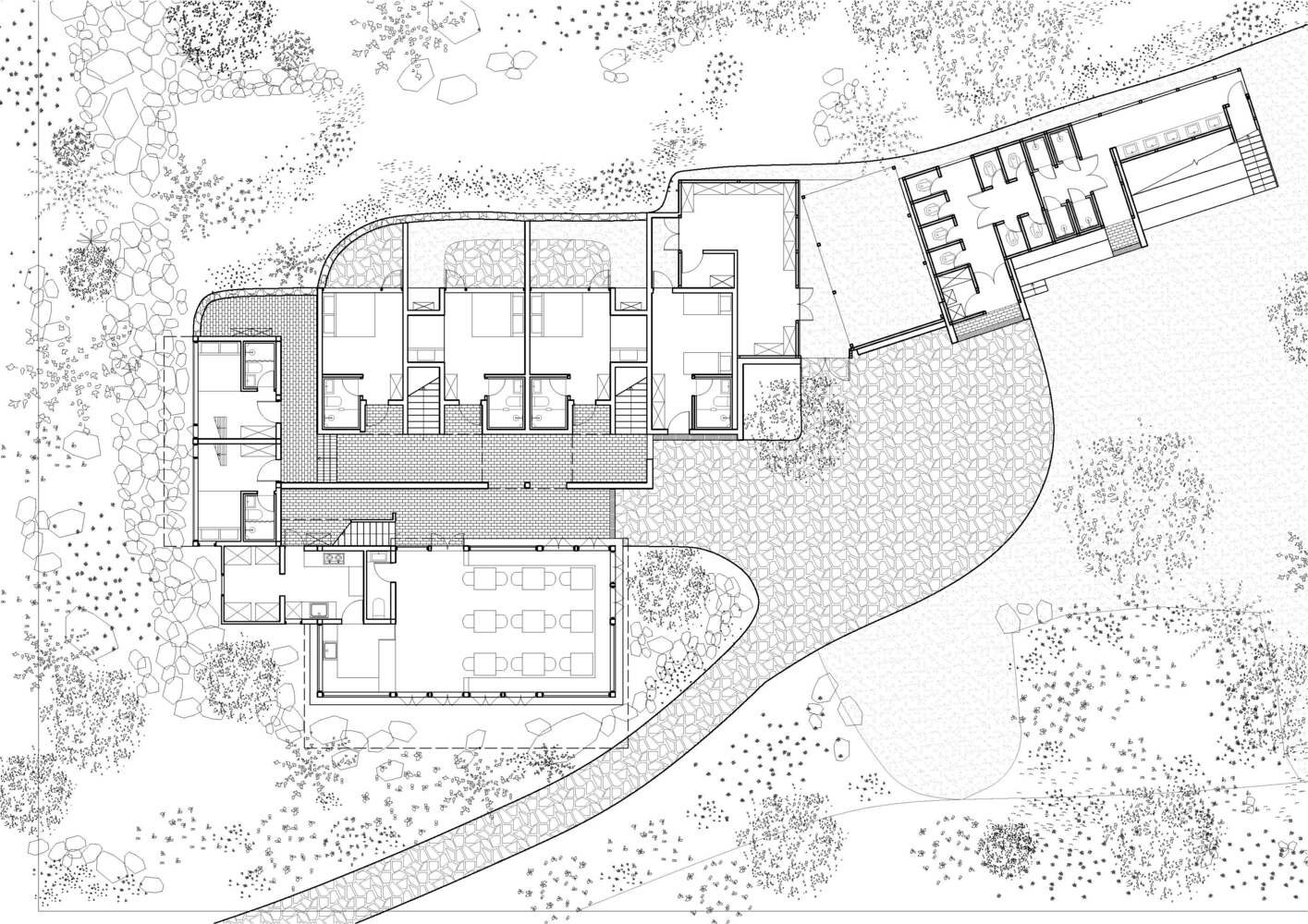
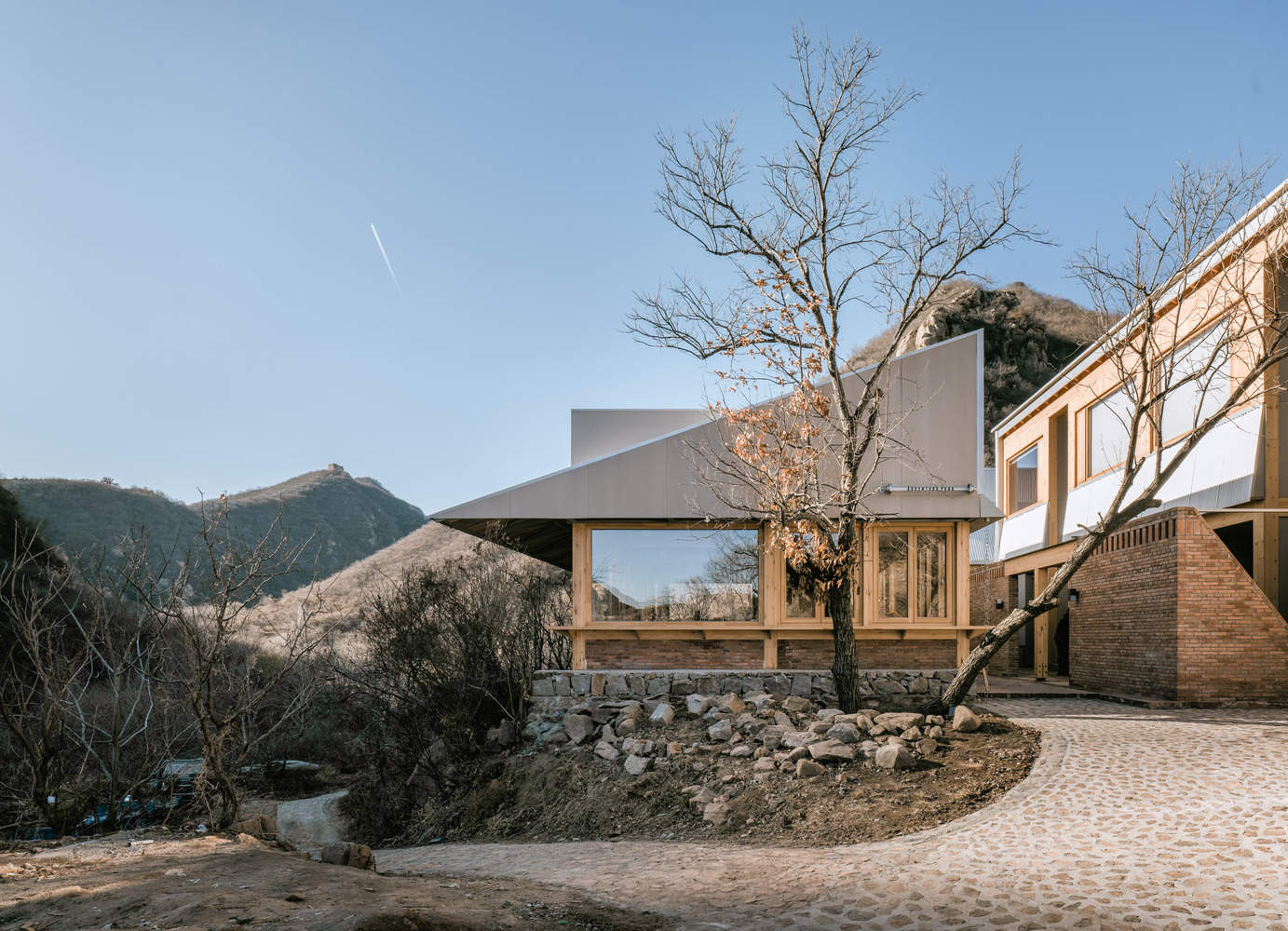
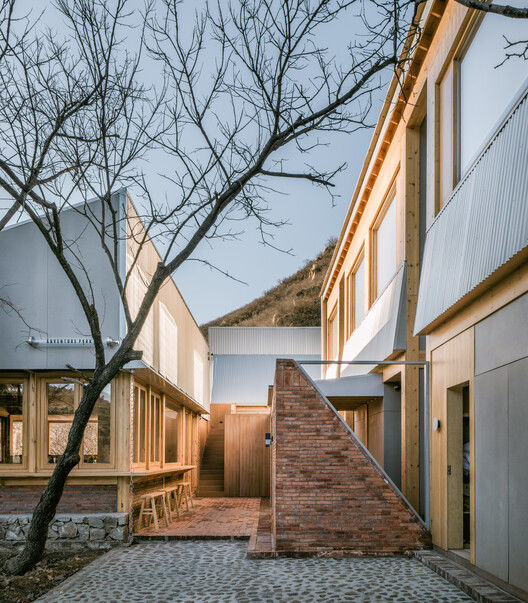
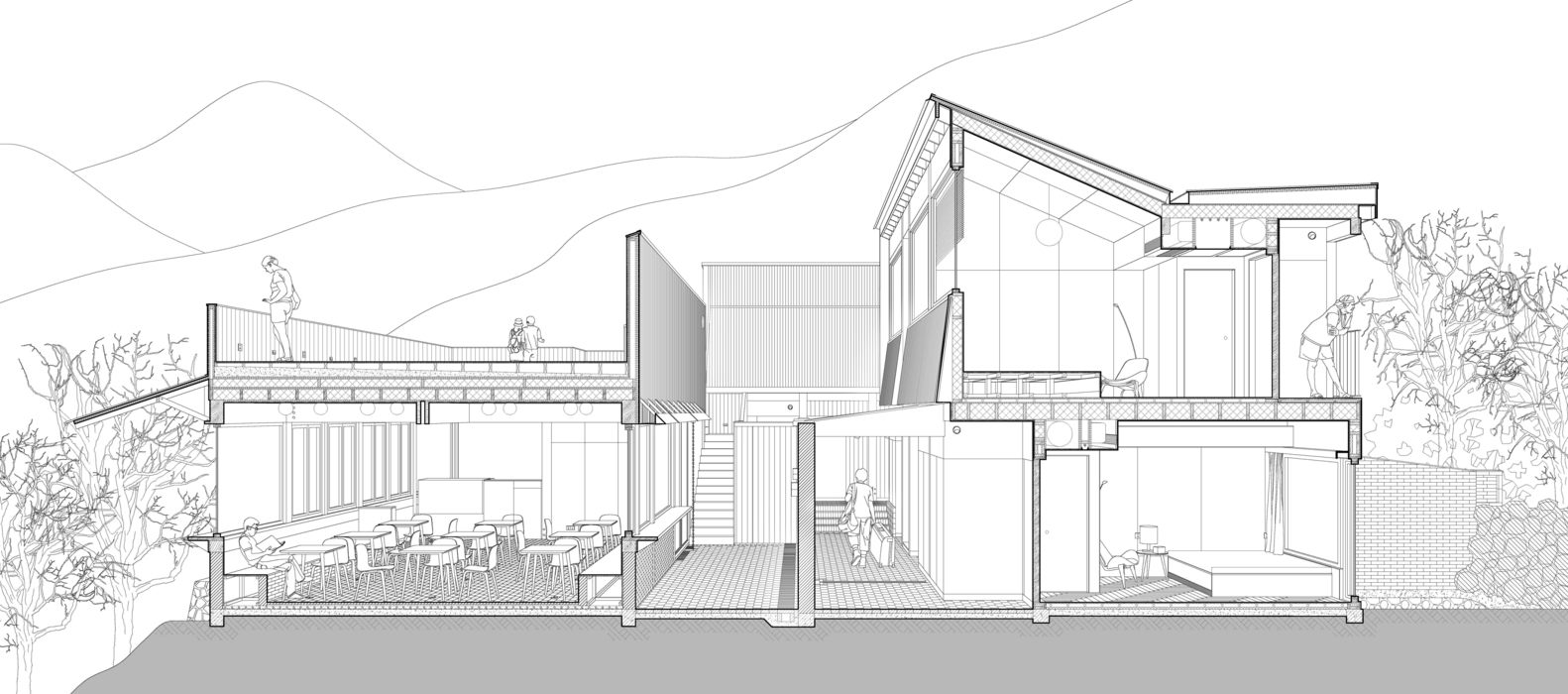
Wooden Buildings and New Relics -Due to construction limitations in mountainous areas, the entire building was constructed using wood. In a relatively small volume, we combined the use of wooden frames and wooden shear walls.. We intentionally avoided the formal language of traditional wooden structures in the wooden frame section. For example, we used an even number of openings on the plane, and the facade also presented an asymmetric shape. The eaves section abandoned wooden structures in favor of a lighter and more realistic steel structure.
木造物与新遗迹 - 由于山地的建设限制,整组建筑选择用木材建造,不大的体量中,我们组合使用了木框架和木剪力墙两种形式。木框架部分我们有意避开了传统木构的形式语言,比如,平面上采用了偶数开间,立面也呈现非对称的形制,挑檐部分则放弃了木构,以更轻便和真实的钢结构去实现。
© Yumeng Zhu
剖面图
© Yumeng Zhu
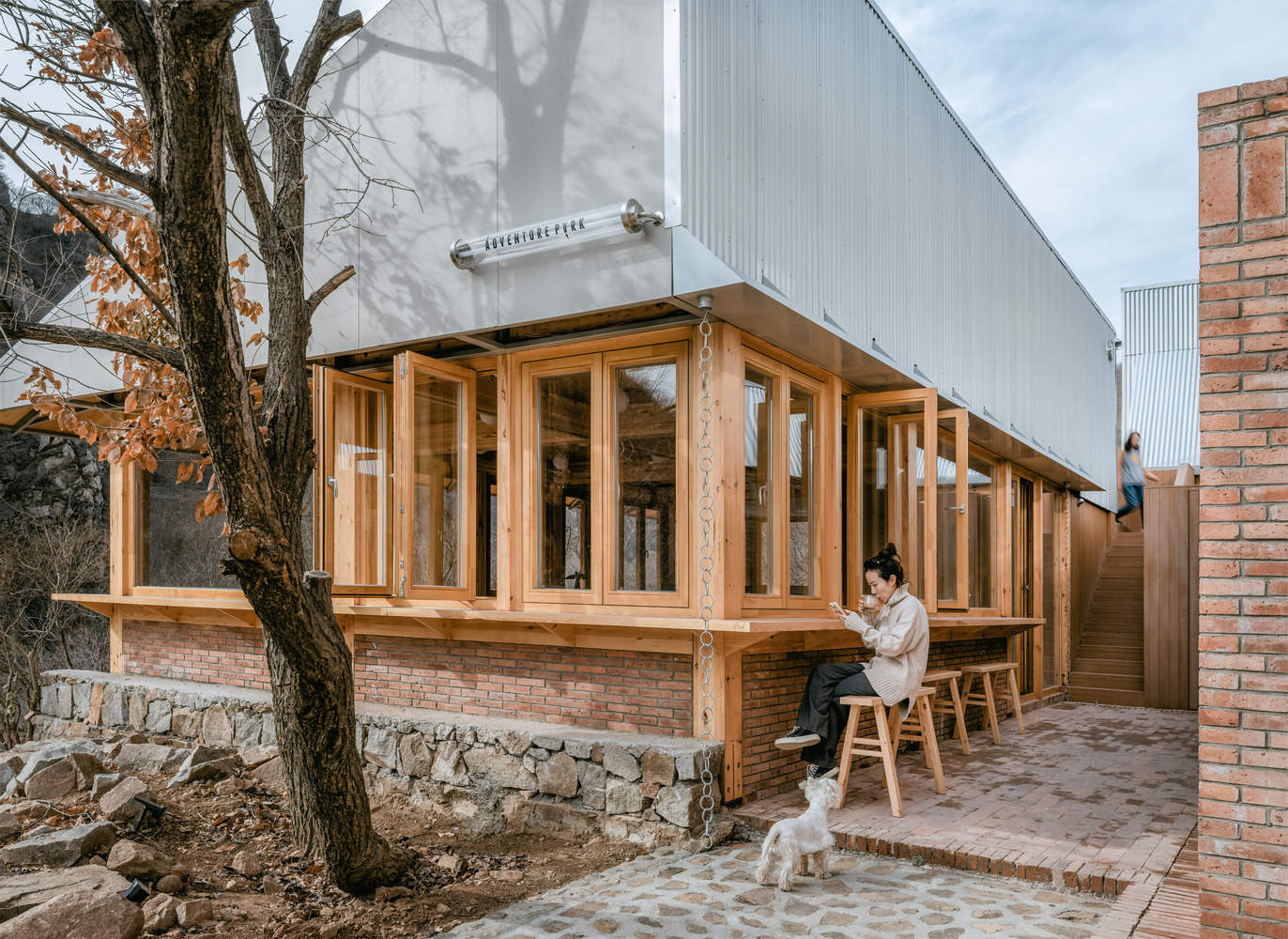
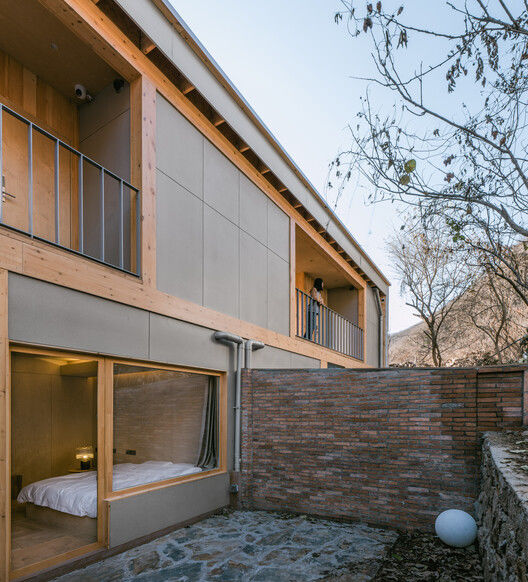
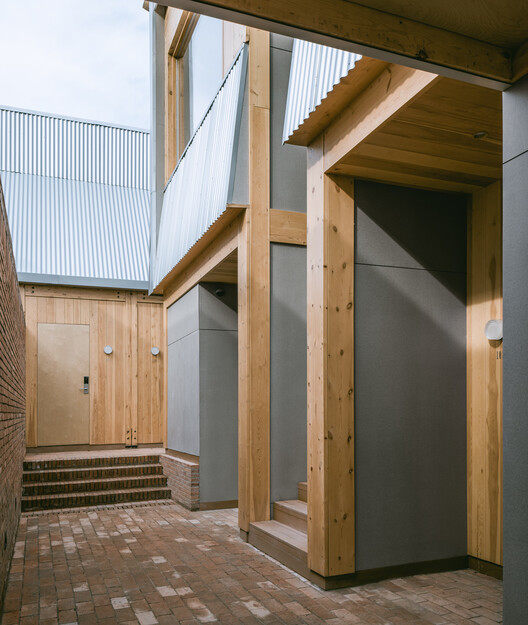
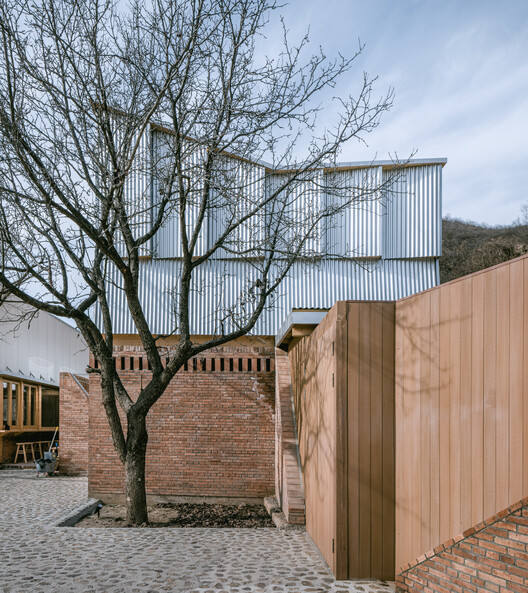
The wooden shear wall section focuses on showcasing the logic behind the action of "wrapping", allowing the building to gain a corresponding sense of weight within the wrapping. The upper roof was reshaped with metal corrugated panels to enhance the appearance of the building. Its details draw inspiration from the formal language of the original workshop, making this wrapping more in line with the material's own construction context.
木剪力墙部分,则着力展示“包裹”这一动作自身的逻辑,让建筑在包裹中获得对应的重量感。上部的屋面用金属波纹板重塑了建筑的外观。它的细部借鉴了原工棚的形式语言,让这种包裹更符合材料自身的建构脉络。
© Yumeng Zhu
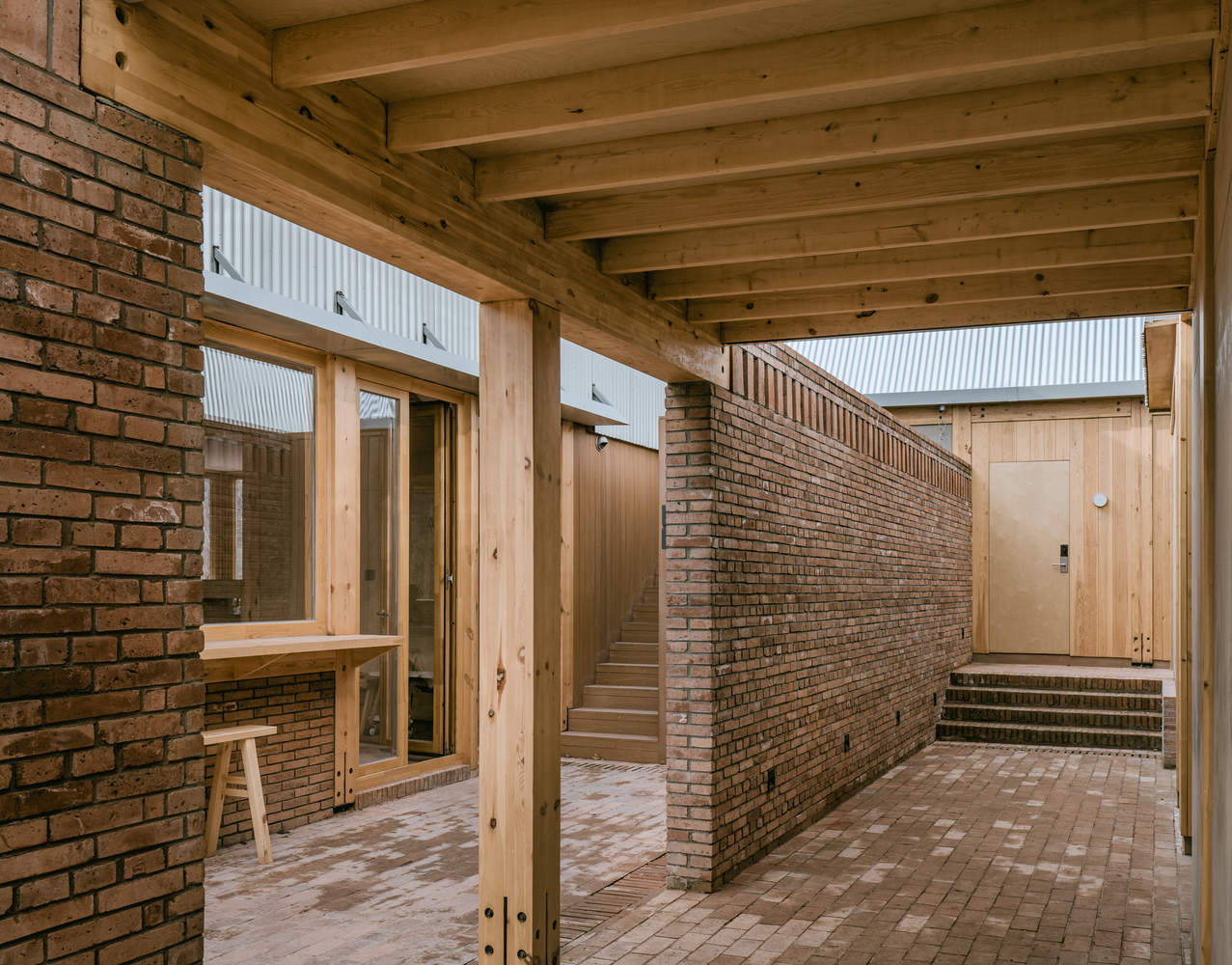
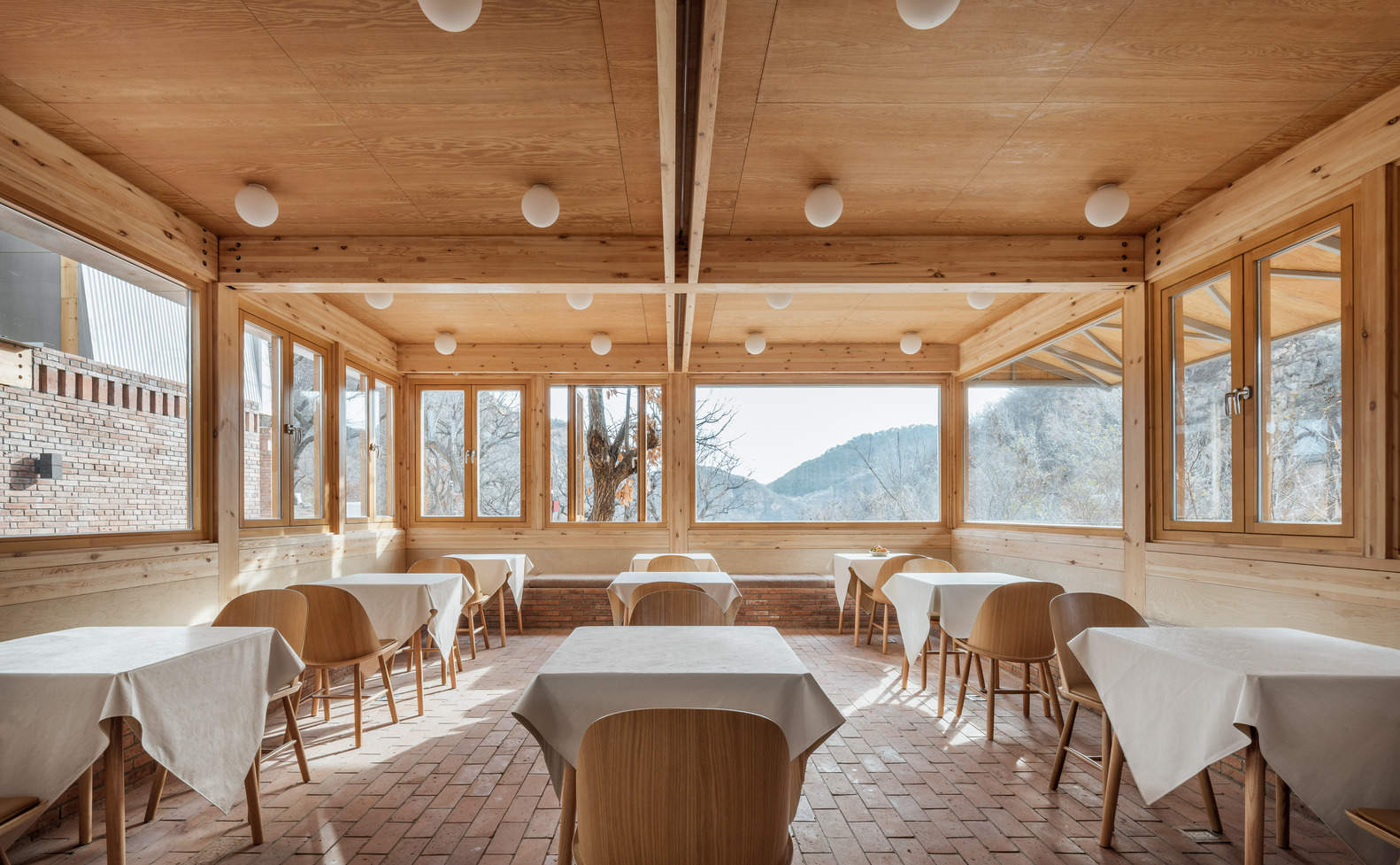
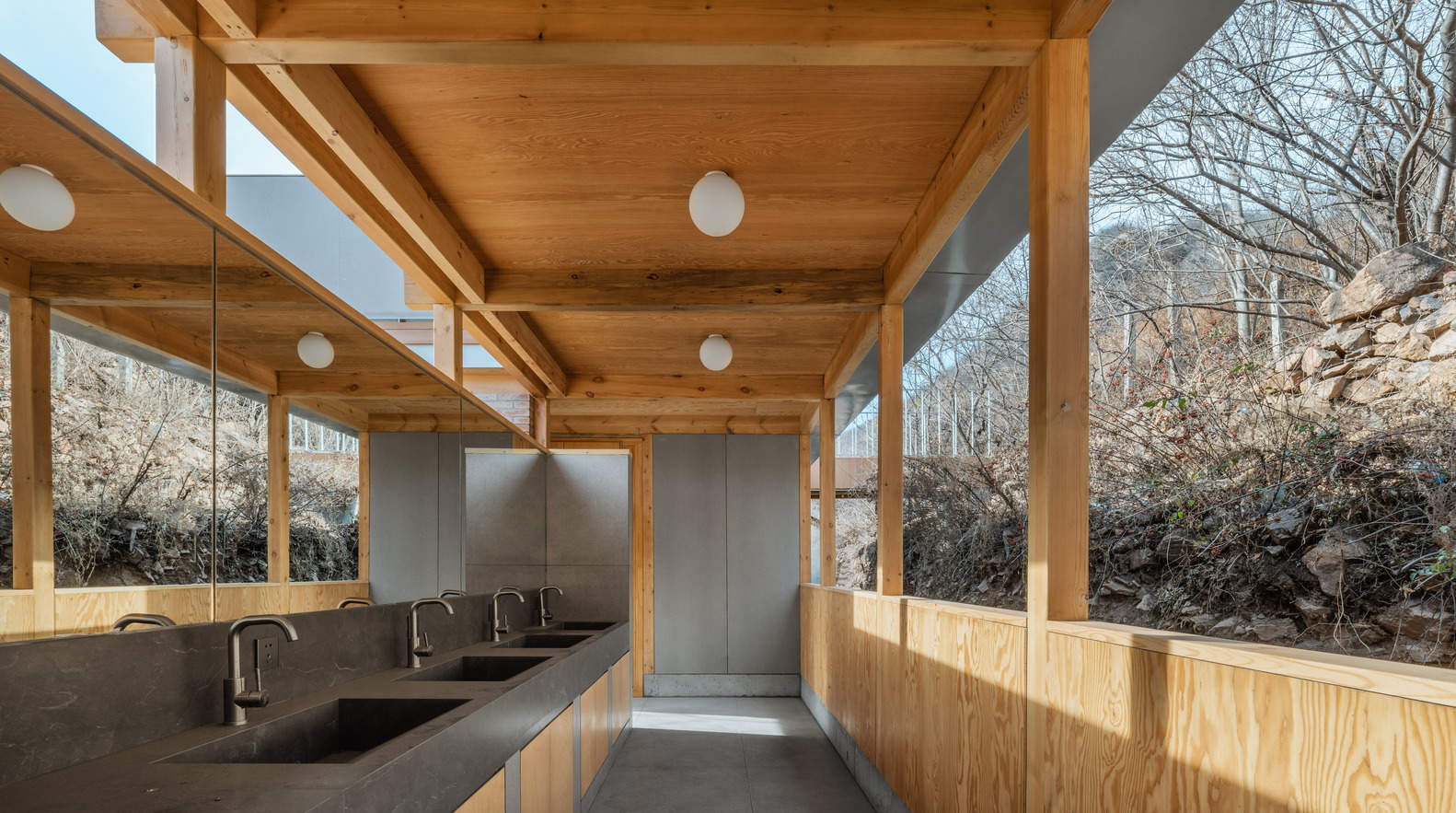
We hope that 'Man Li Tai' is a contemporary wooden creation, and its contemporary technological features are its base color. When this was still a work shed, workers would pick up some yellow stones from the old stone pile to build the lower threshold wall and the footholds of the house. During the renovation process, we used old red bricks dismantled from surrounding villages and towns to integrate unrelated building units on one floor. Various sloping walls have reshaped the contours of the buildings, lingering between the terraces and trees, forming an artificial layer that is different from wooden houses, giving them a certain commemorative value and forming a "relic" belonging to this era.
我们希望“满栗台”是属于当代的木造物,当代的技术特征是它的底色。当这里还是工棚时,工人们会从老石堆上捡拾一些黄石去砌筑下槛墙和房子的勒脚。改建过程中,我们用周边村镇拆卸下来的旧红砖,将互不相连的建筑单体,在一层整合起来。各类斜墙重新妆点了建筑的轮廓,盘桓在台地和林木之间,形成了一个与木屋异质的人工层次,让它们获得了某种纪念性,形成了属于这个时代的“遗迹”。
© Yumeng Zhu
© Yumeng Zhu
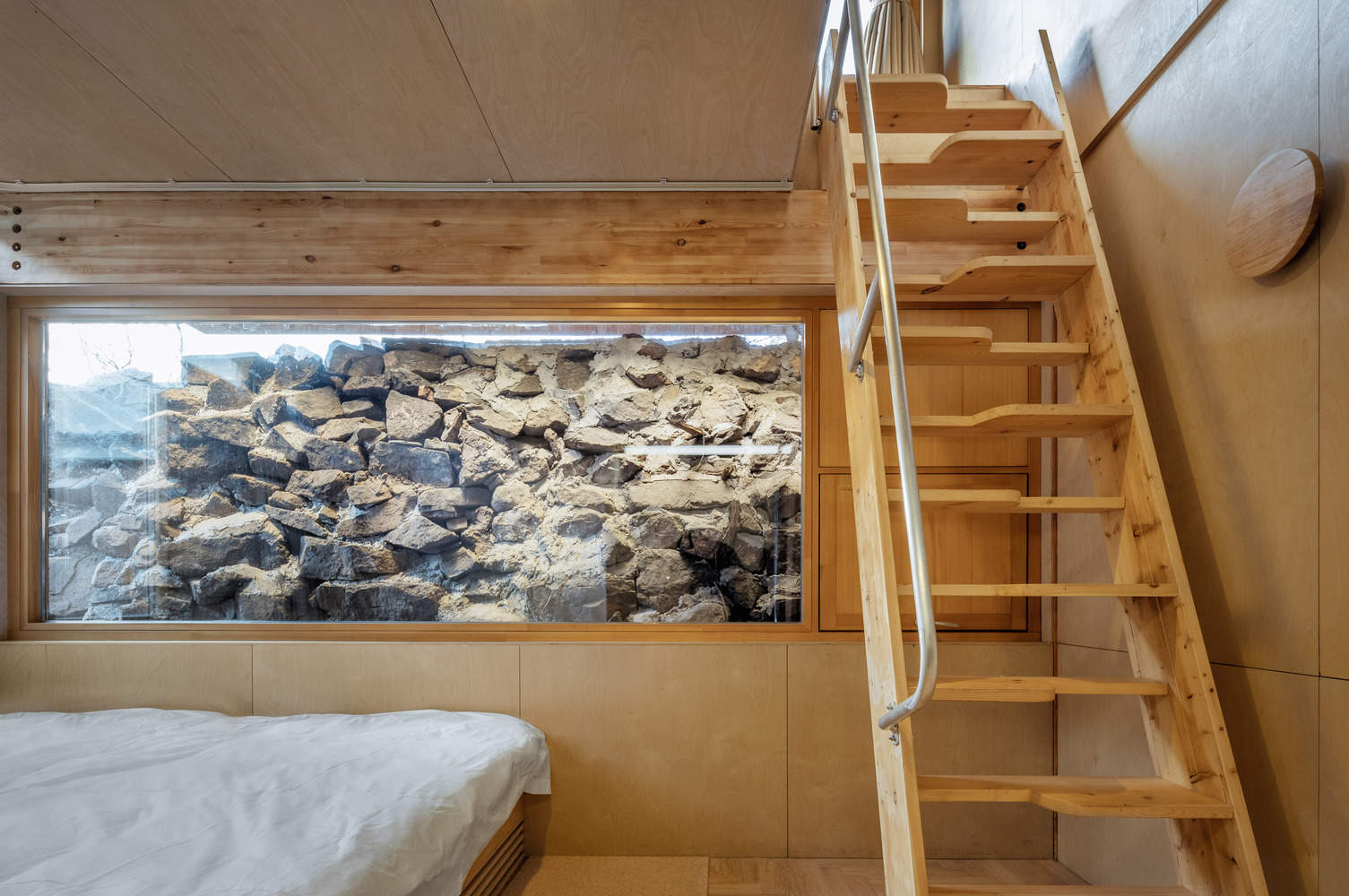
Refactoring the Artistic Intent -Over a thousand years ago, the painter Fan Kuan pondered over the mountains and rivers of the north in winter and painted the "Snowy Scenery and Cold Forest" painting. Ten centuries later, a similar scene appeared in a valley in the corner of Yanshan Mountain. Rather than saying it was intentionally arranged, it's better to thank the craftsmen who built the shed in the first place, as they found the most suitable composition position for the building. Artistic conception is a description of imagination, and more importantly, a viewing habit that condenses countless experiences. We hope that the form of the building is new, but the pattern of integration with the land is familiar.
重构画意 - 一千多年前,画家范宽默想着冬季的北方山川,画下了《雪景寒林图》。十个世纪后,燕山角落的某道溪谷的中,出现了类似的场景。与其说是有意布置,不如去感谢当初建造工棚的工匠,他们为建筑找到了最合适的构图位置。画意是一种对想象力的描述,更是一种凝结了无数经验的观看习惯。我们希望建筑的形式是新的,但与土地结合的模式却是令人熟悉的。
© Yumeng Zhu
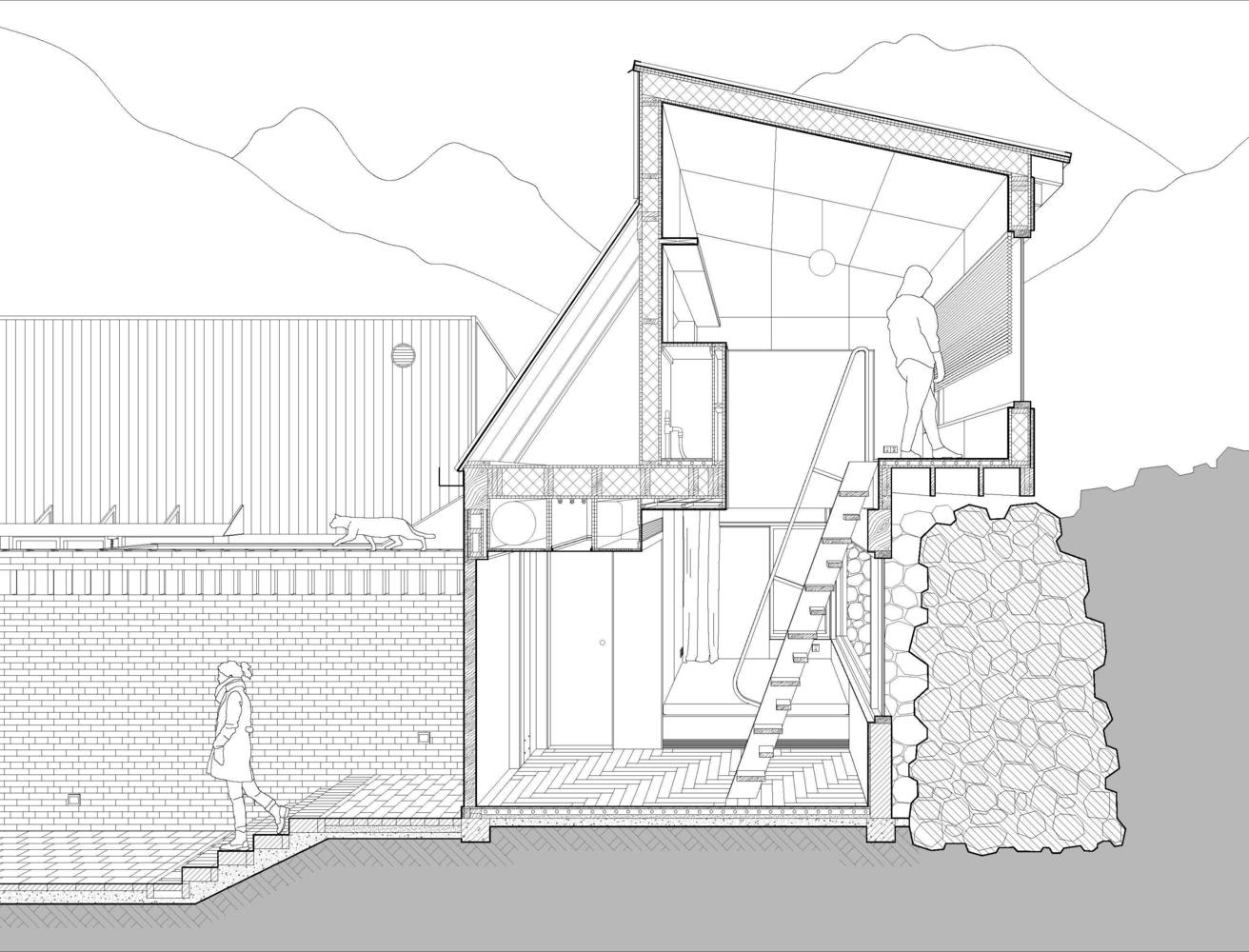
剖面图
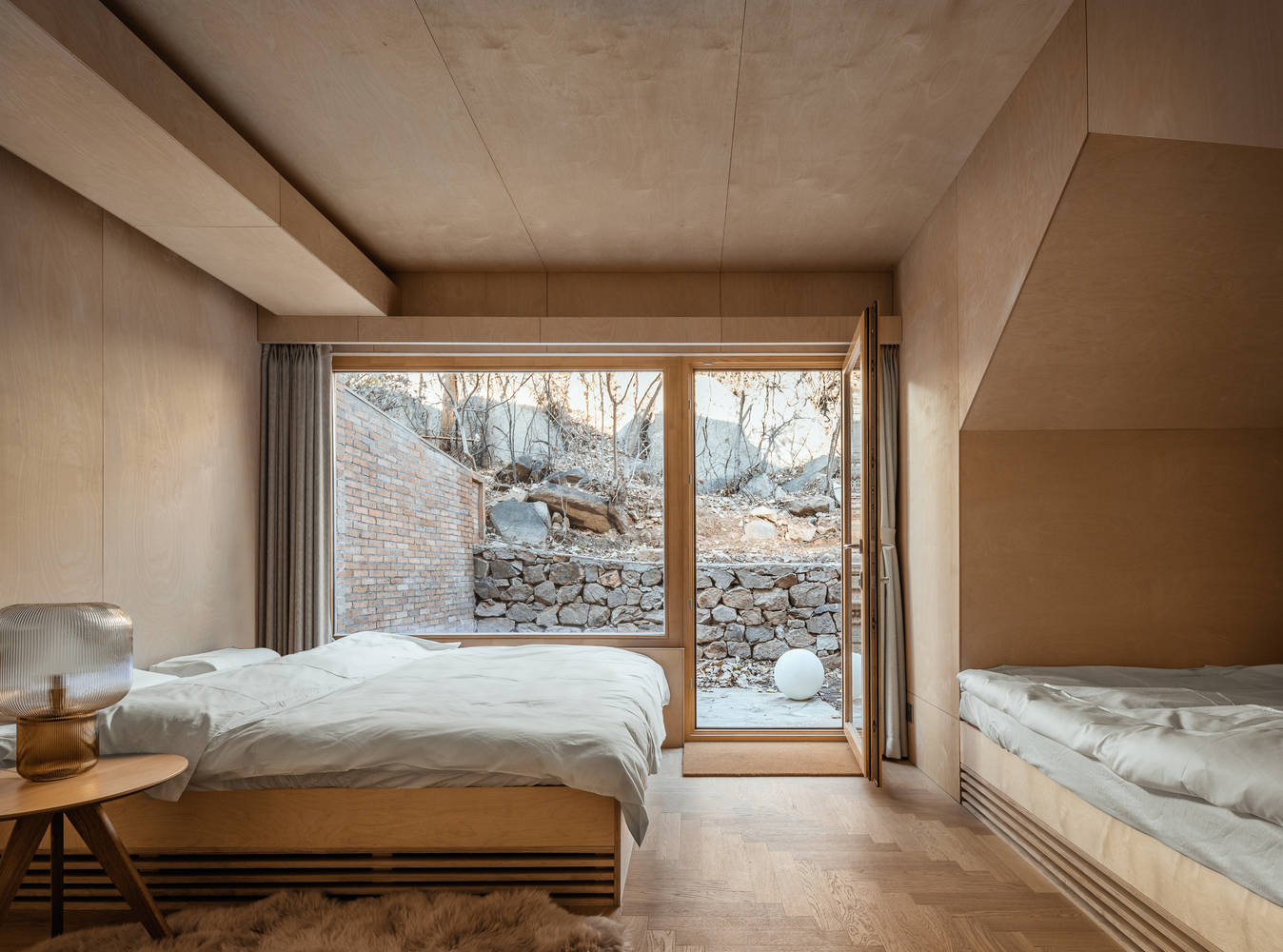
© Yumeng Zhu
I really like the Qing Dynasty painter Li Shizuo's "Observing Painting". The literati in the painting raised their glasses high, attempting to drink with the person depicted in the painting. The painter arranged two groups of characters that were originally on the same plane on a tilted upward axis, forming a slight upward view. I think this is a wonderful way to enjoy the scenery. In the space of Manli Terrace, we have buried many such relationships. In fact, before Li Shizuo was born, the poet Nalan Xingde had been gazing at the scenery around him like this. It is interesting that he was likely to have visited the Huanghua City area in 1680. It is said that his duty is to herd horses for the court. He must have been to this valley under the Full Chestnut Terrace before, and the chestnut forest at the mountainside should be even more lush than what we have seen.
我很喜欢清代画家李世倬的《观画图》。画中文士高举酒杯,试图与画中人对饮。画家将原本在处在同一平面的两组人物,安排在一道倾斜向上的轴线上,形成轻微的仰视。我觉得这是很妙地观看风景的方法。在满栗台的空间中,我们埋设了许多这类关系。其实,在李世倬出生之前,词人纳兰性德便这样去注视身边的风景了。有趣的是,他极可能在 1680 年来到过黄花城一带。据说他的职责是为朝廷牧马。想来满栗台下这道溪谷,他应是到过的,而山腰间的栗子林,他见到的应该比我们见到的更为繁茂。
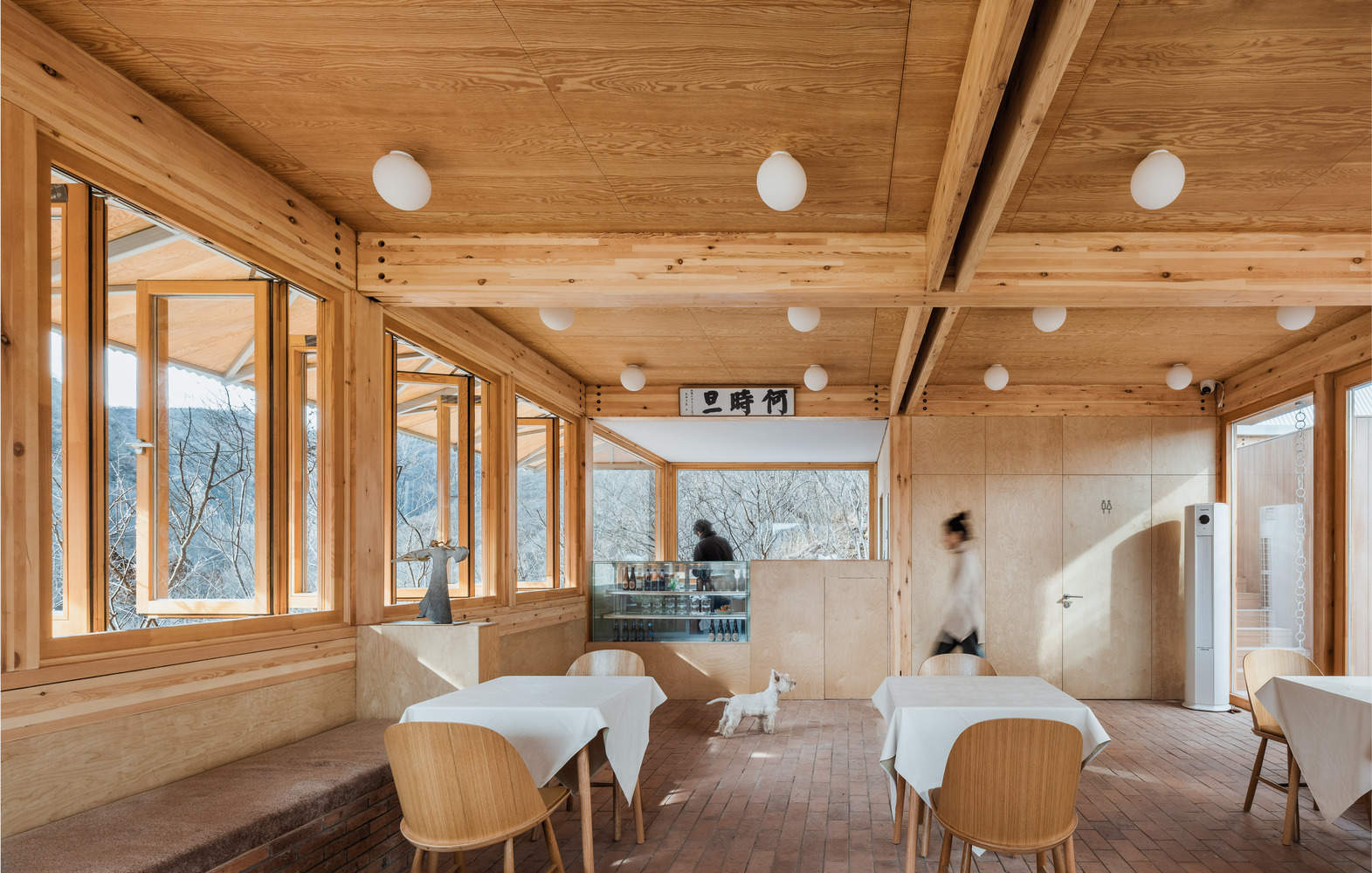
© Yumeng Zhu
That year, at dawn in early winter, he wrote the famous song "Dot the Crimson Lips, Early Look at Huanghua City": On the fifth day of the night, the cold light shone, and the snow covered the stack. What is the limit of the west wind? Let's start by putting on our clothes. Amidst this vastness, I cannot help but sigh at my growth. When will Xiaoxing scatter, flying geese in the flat sand.
就在那年,一个初冬的拂晓,他写下了那首著名的《点绛唇·黄花城早望》:五夜光寒,照来积雪平于栈。西风何限,自起披衣看。对此茫茫,不觉成长叹。何时旦,晓星欲散,飞起平沙雁。
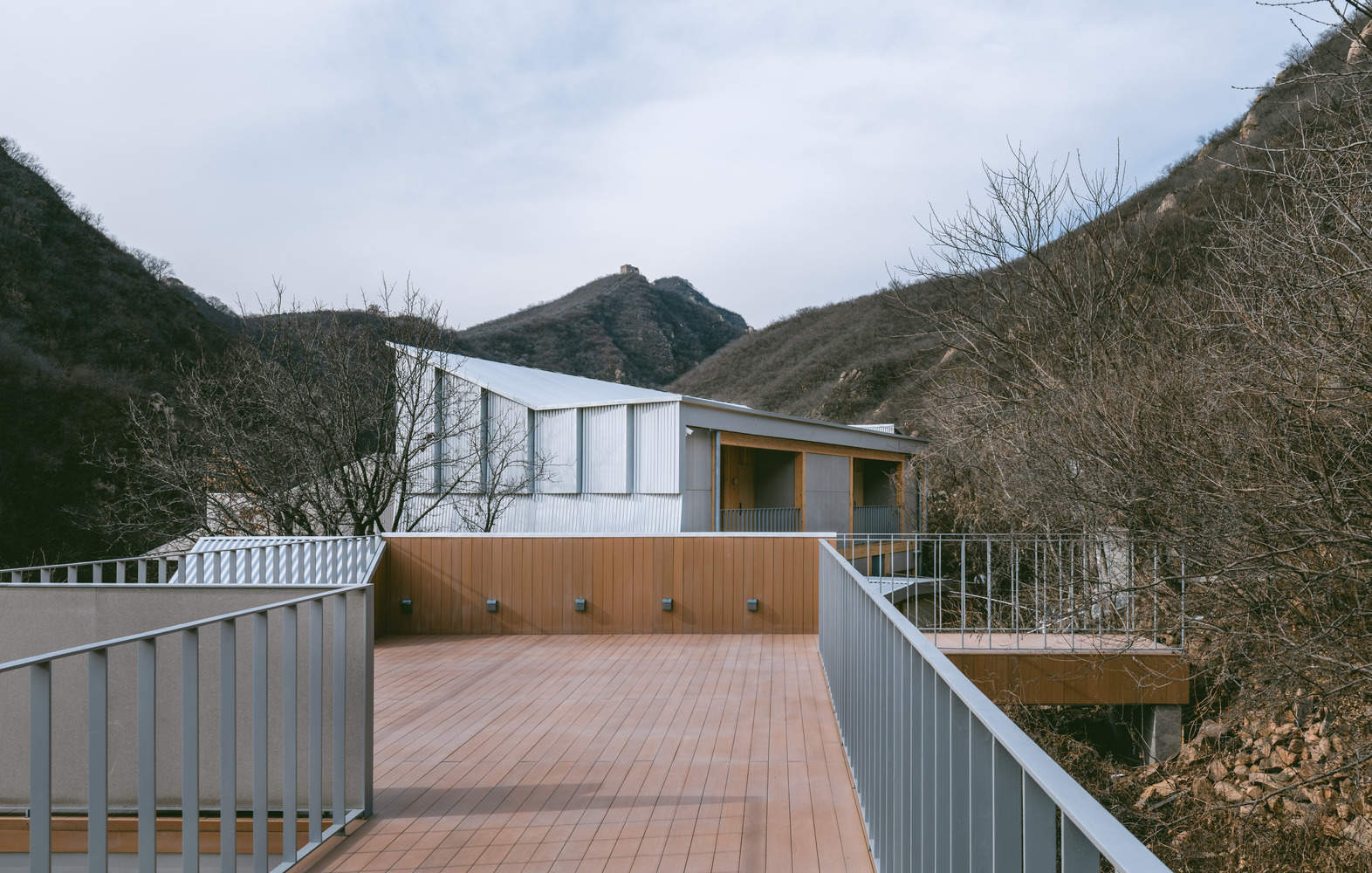
© Yumeng Zhu
I have also waited for dawn on Manli Terrace, but have never witnessed geese flying up from a sandbank in the distance. I sometimes wonder how the 26 year old poet would react if he had accidentally caught a glimpse of this house among the mountain paths that morning
我也在满栗台上等待过黎明,却从未目睹远处沙洲上飞起的大雁。我有时会想,如果那个清晨,二十六岁的词人在山径间偶然瞥见了这座房子,他会是怎样的反应呢…
© Yumeng Zhu