Shenzhen Nantou Hybrid Building/Mengyan | Urban Practice
深圳南头杂交楼 / 孟岩|都市实践
项目亮点:历史的对话与共生:该项目最引人瞩目的在于其对历史的尊重和对城市肌理的敏感。设计师没有选择彻底推翻重建,而是选择保留了原有建筑的复杂性和时代痕迹。通过“杂交”的手法,将不同时期的建筑元素融合在一起,形成了独特的视觉语言。这种“叠加而非替代”的策略,不仅保留了建筑的历史记忆,也赋予了建筑新的生命力。项目在城市更新中,展现了一种更为包容和可持续的策略,避免了千篇一律的城市风貌,更注重原住民的生存状态和社区活力。
设计精髓:内部的雕琢与公共空间的创新:项目的精髓在于对内部空间的改造和对公共空间的再塑造。设计师通过“内部雕镂贯通”的手法,打通了原本独立的楼栋,创造了流畅的垂直动线。红色钢结构插件的巧妙运用,不仅提供了新的结构支撑,也形成了独特的空间体验,人们可以在楼缝间穿行,感受建筑的复杂性和趣味性。此外,屋顶花园的设置,也为高密度的城市环境提供了一处难得的休憩空间,实现了建筑与自然的和谐共生,体现了对城市居民生活品质的关注。
核心价值:文化传承与社会责任:“杂交楼”项目不仅仅是一个建筑改造项目,更是一次关于城市更新、文化传承和社会责任的实践。项目通过对南头古城的深入研究,以及对原有建筑的尊重,实现了历史文脉的延续。同时,项目也积极回应了社会需求,为高密度的城市环境提供了新的公共空间类型。它在倡导“城市共生”理念的同时,也为未来城中村的更新提供了可行的方案,激发了社区活力,提升了居民的归属感。这种兼顾历史、文化、社会和环境的综合考量,是该项目最具价值的地方。
© 张超
© 张超
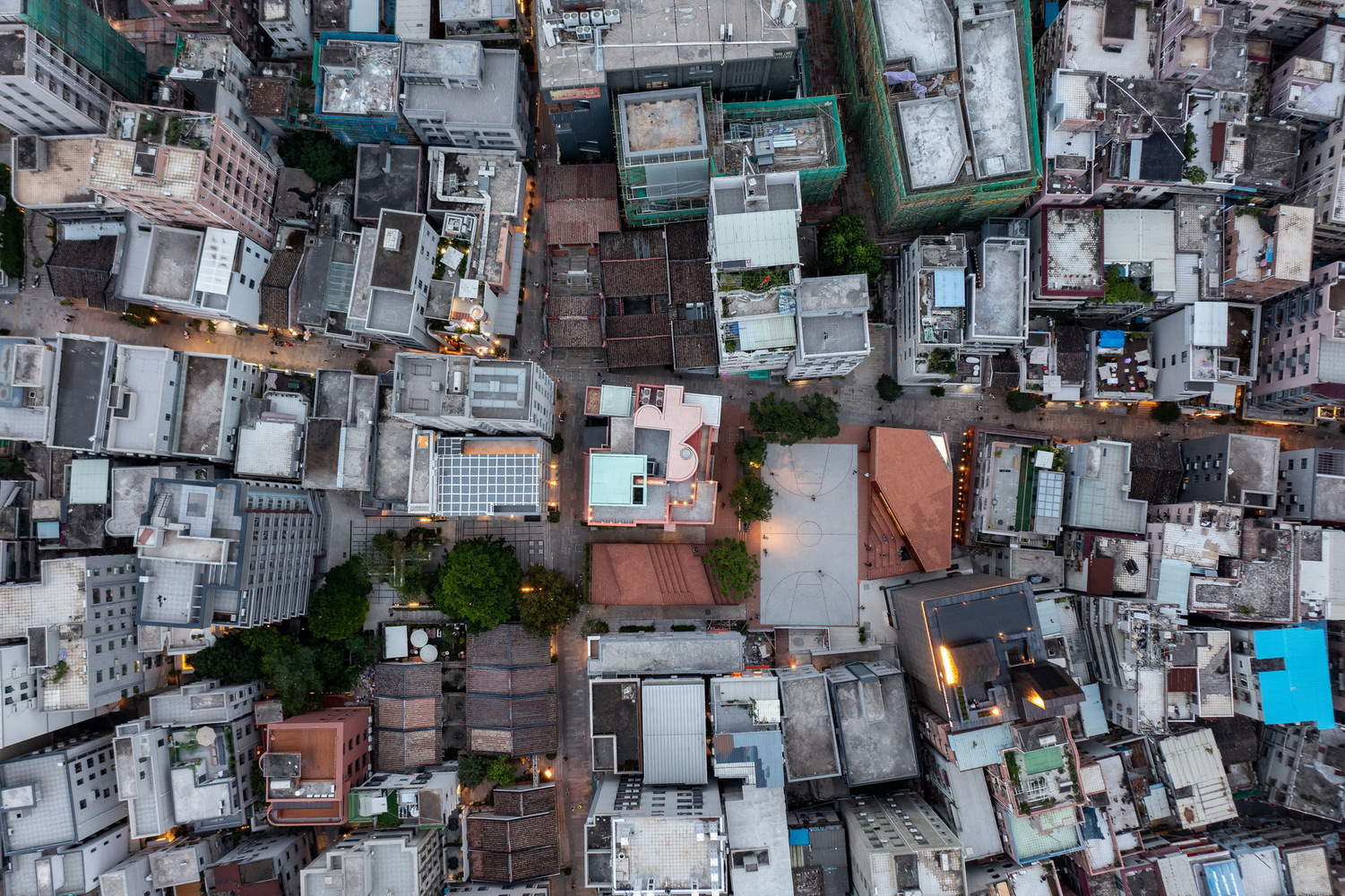
Nantou, a millennium old hidden ancient city and a vibrant urban village, has been intertwined between the grand national narrative of Shenzhen Hong Kong relations and the fragmented daily life for over 20 years. In early 2016, Urban Practice intervened in the spatial research of Nantou Ancient City. After in-depth historical literature and on-site research, Nantou was selected as a city sample that has accumulated the spatial and cultural heritage of various periods in Shenzhen. A development model was proposed that is guided by intervention implementation, gradually activated from point to surface, and promoted the revitalization of the ancient city through cultural activities.
南头,一座消隐的千年古城和鲜活城中村的共生体,20余年来一直被夹杂在深港关系的宏大国家叙事和细碎的日常生活之间。2016年初,都市实践介入南头古城空间研究,经过深入的历史文献和现场调研,将南头作为沉淀了深圳各个时期的空间和文化遗产的城市样本,提出了以介入实施为导向、由点及面渐进式激活、以文化活动促进古城复兴的发展模式。
© 张超
© 张超
In 2017, Urban Practice, as the chief curator, introduced the "Shenzhen Hong Kong City/Architecture Biennale" to Nantou Ancient City, integrating spatial transformation and exhibition integration, and initiating the protection and renewal of Nantou Ancient City. In 2019, I was invited to re-enter Nantou Ancient City and implement the concept of "urban symbiosis" in the renovation practice of hybrid buildings. This demonstrates a progressive update strategy that preserves historical layering and stacking rather than substitution.
2017年都市实践作为总策展人将“深港城市建筑双城双年展”引介到南头古城,将空间改造和展览植入合体,开启了南头古城的保护与更新。2019年受邀再次进入南头古城,把“城市共生”的理念贯彻于杂交楼的改造实践。展示了保留历史层积、叠加而非替代的渐进更新策略。
© 张超
© 张超
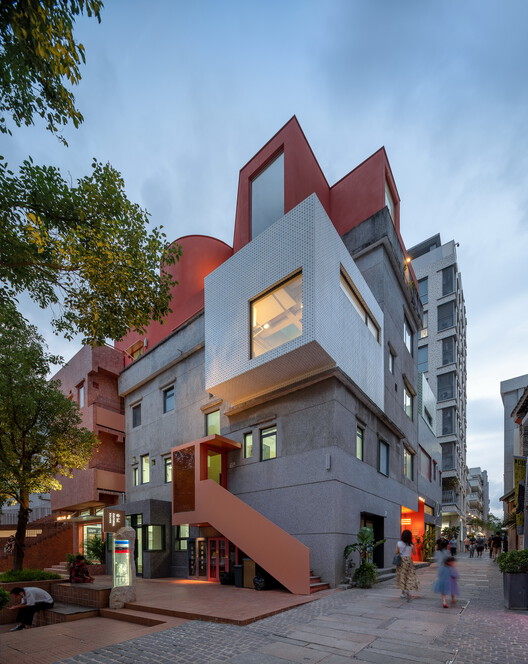
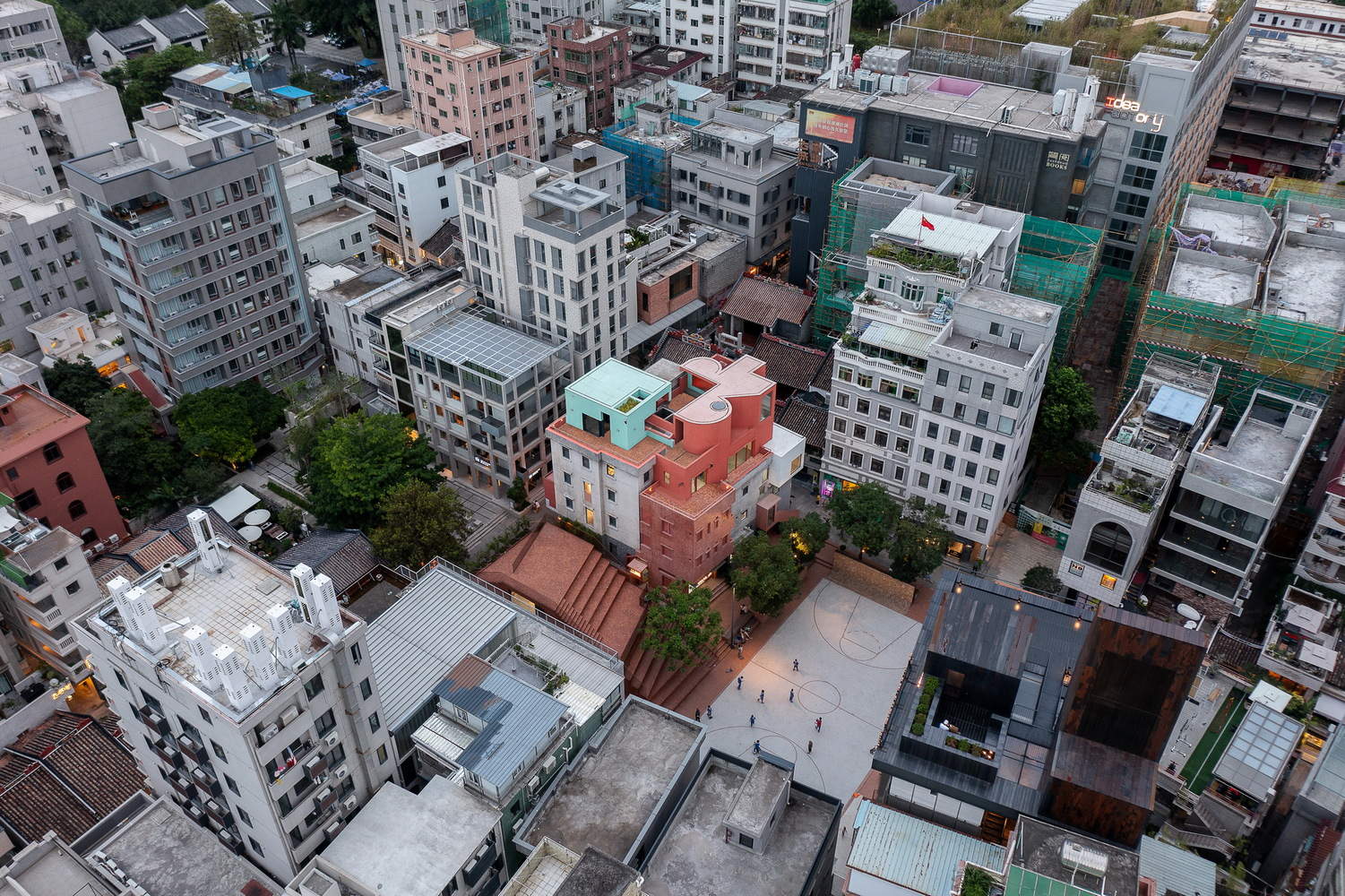
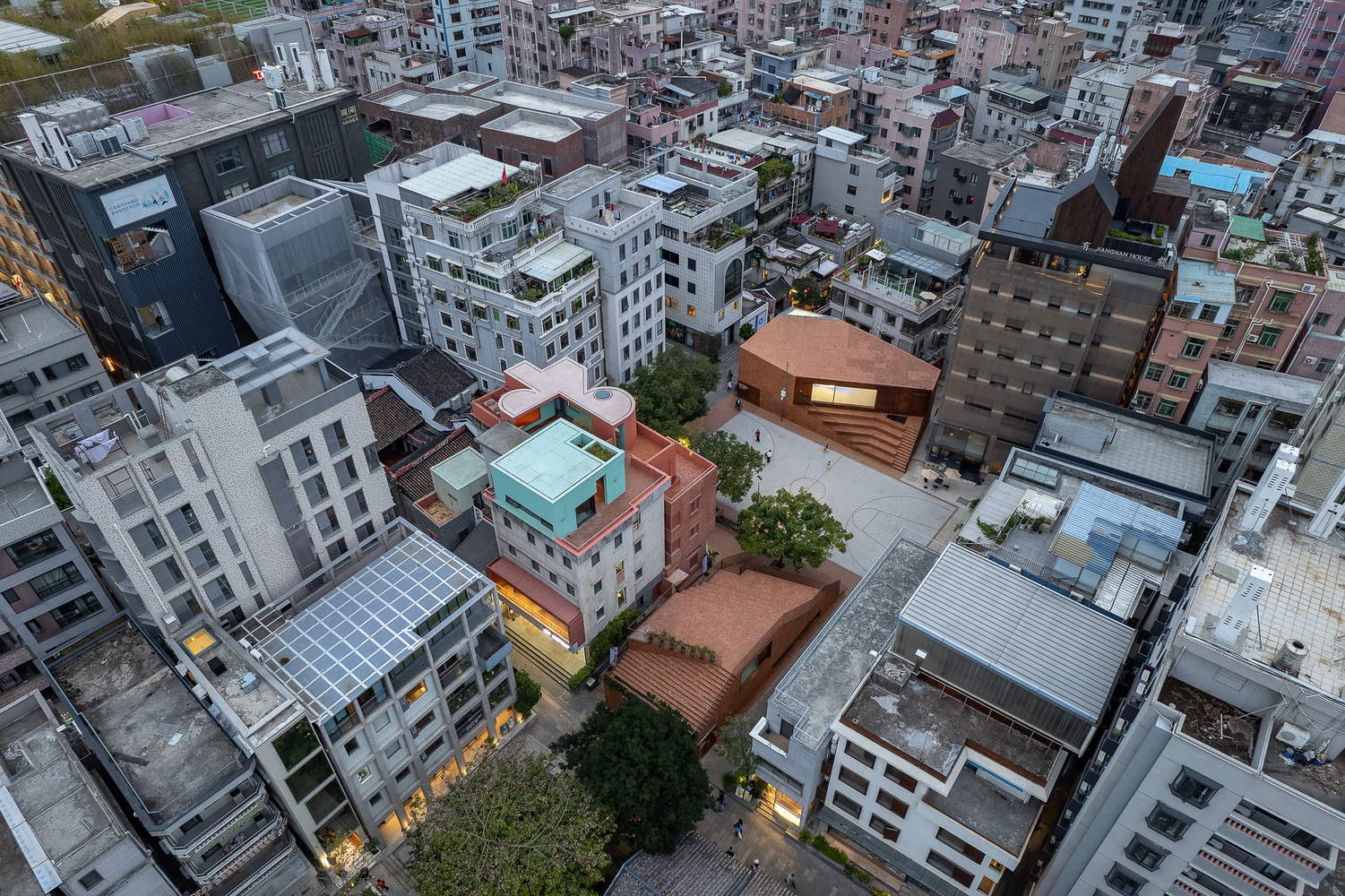
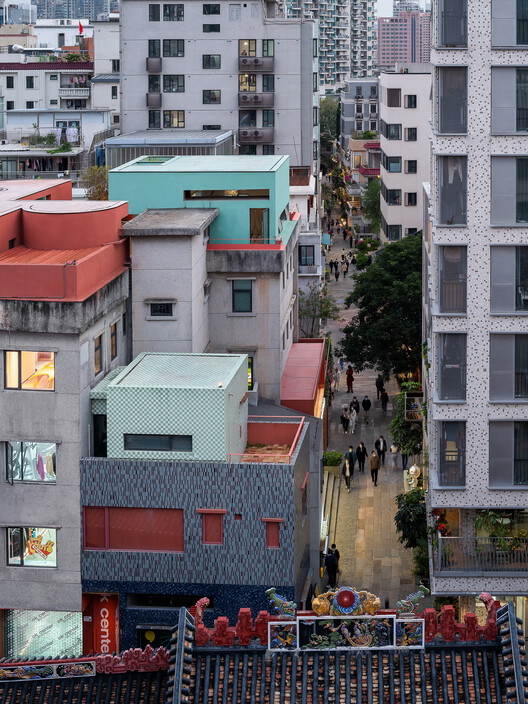
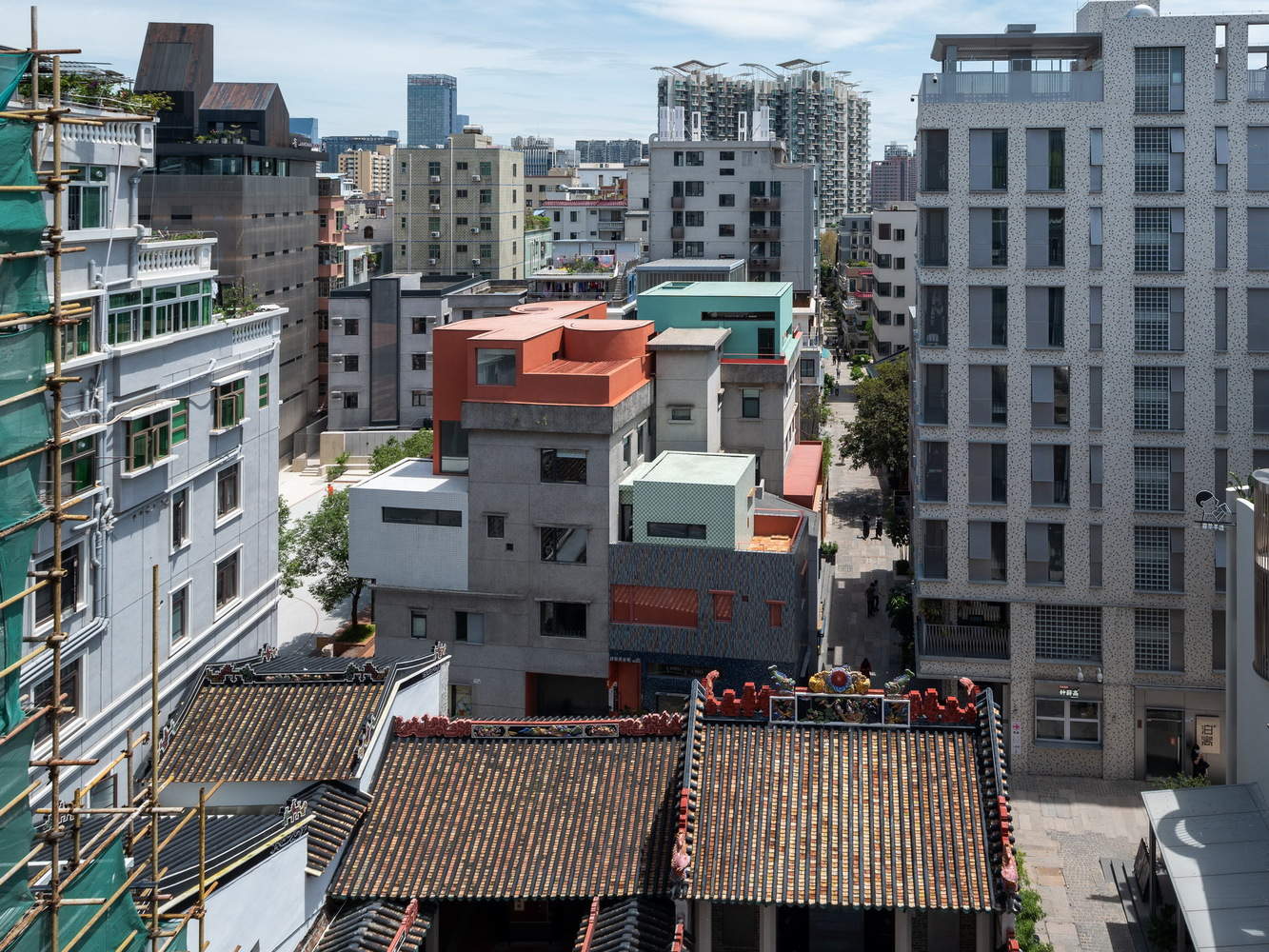
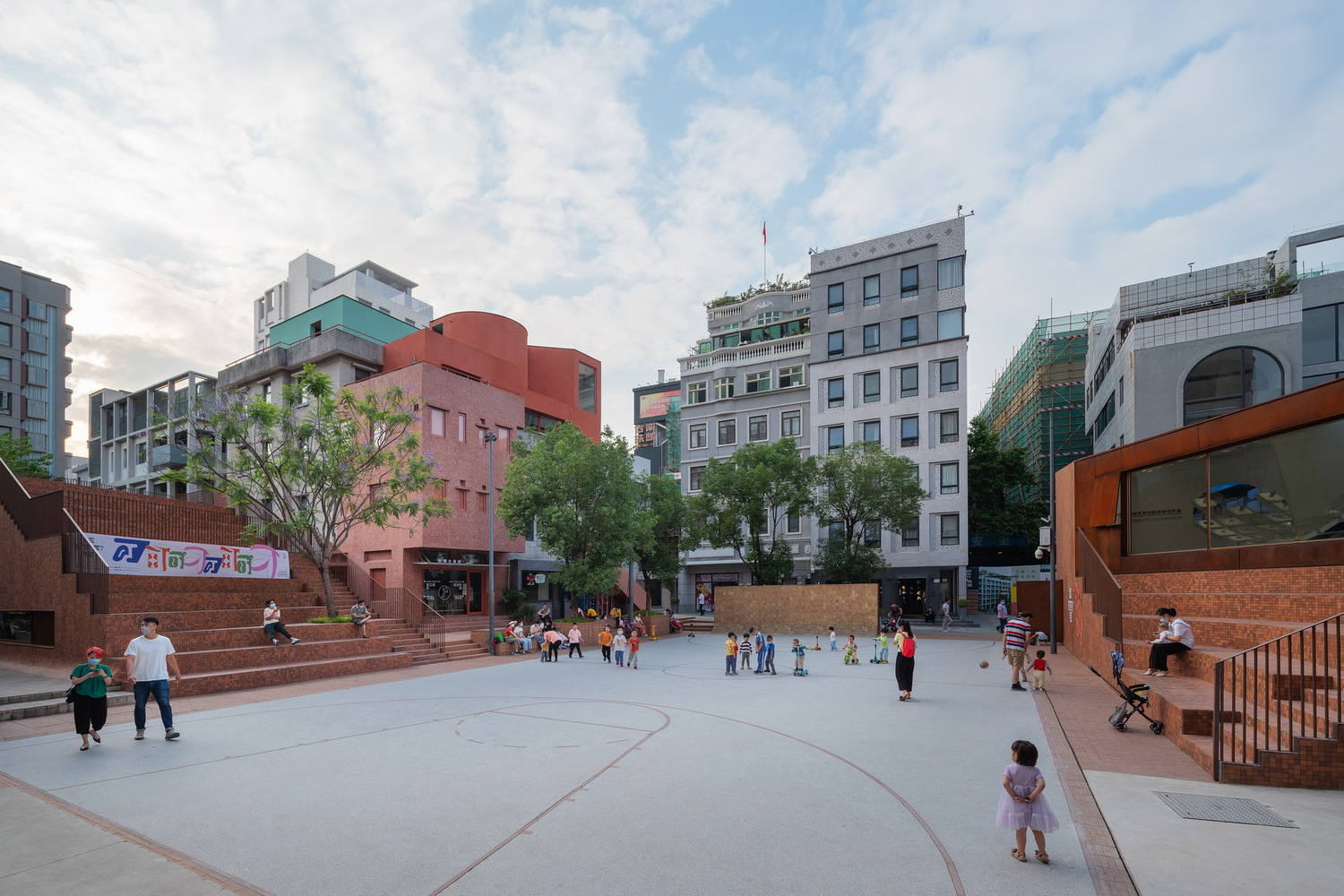
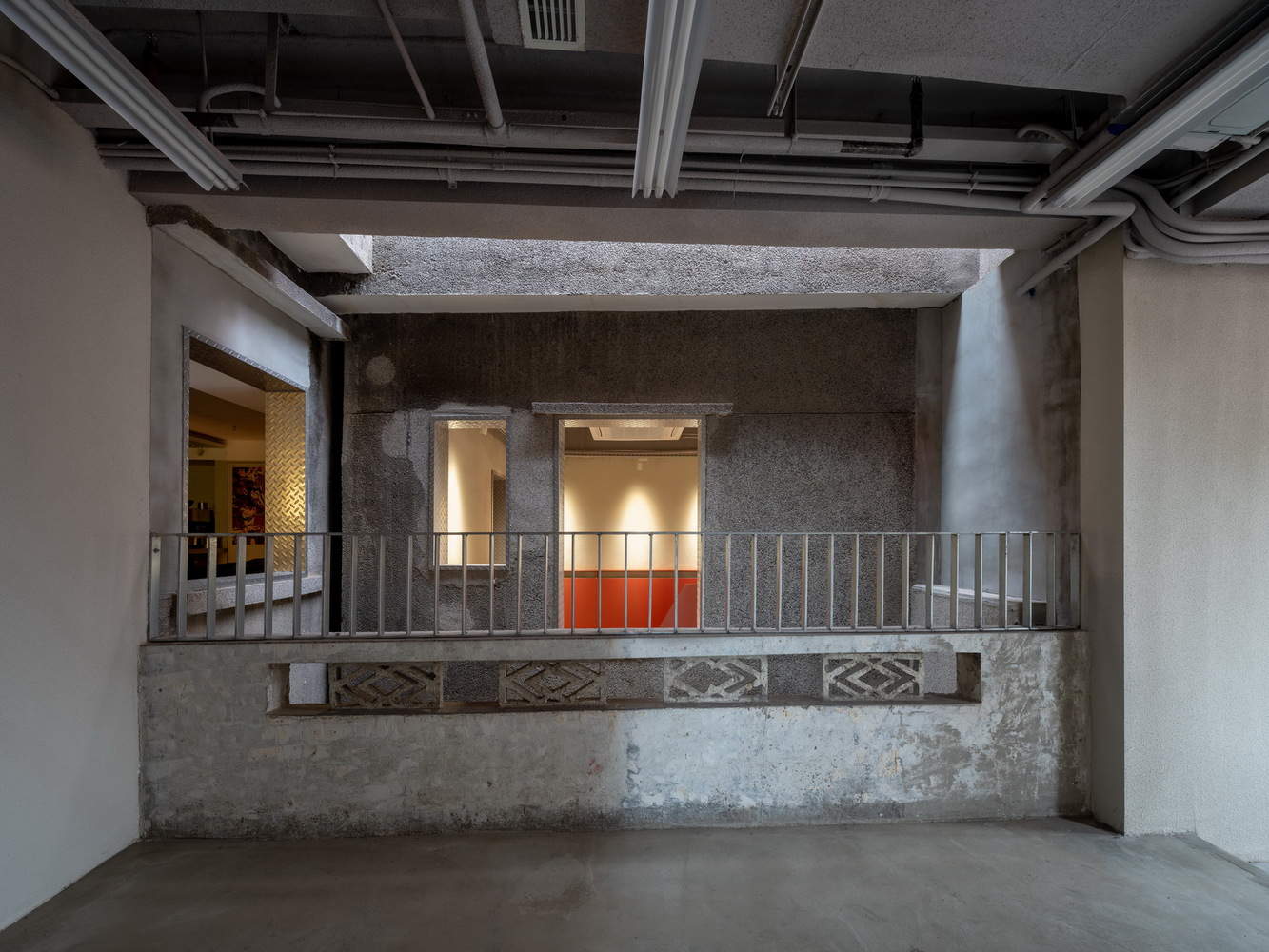
The "Hybrid Building" is located in Baode Square, the center of Nantou Ancient City. It is a cluster of five independent buildings, built in different periods with different materials, structures, and styles. The renovation design preserves the complexity, contradictions, and conflicts of the existing buildings. Through internal carving and reconstruction, the exterior has been reshaped, and years of additions and material changes have been recorded. The top also features a new volume with a continuous curve, one solid and one virtual, hiding a small rooftop garden.
“杂交楼" 位于南头古城中心报德广场,是五栋独立楼房簇拥而成的建筑组团,建造于不同时期,材料、结构、风格各异。改造设计保存了现有建筑的复杂、矛盾与冲突。经过内部雕镂贯通,外部重新型塑,经年的加建改造、材料更替被记录,顶部还并置了一直一曲、一实一虚的新体量,隐藏了一个屋顶小园。
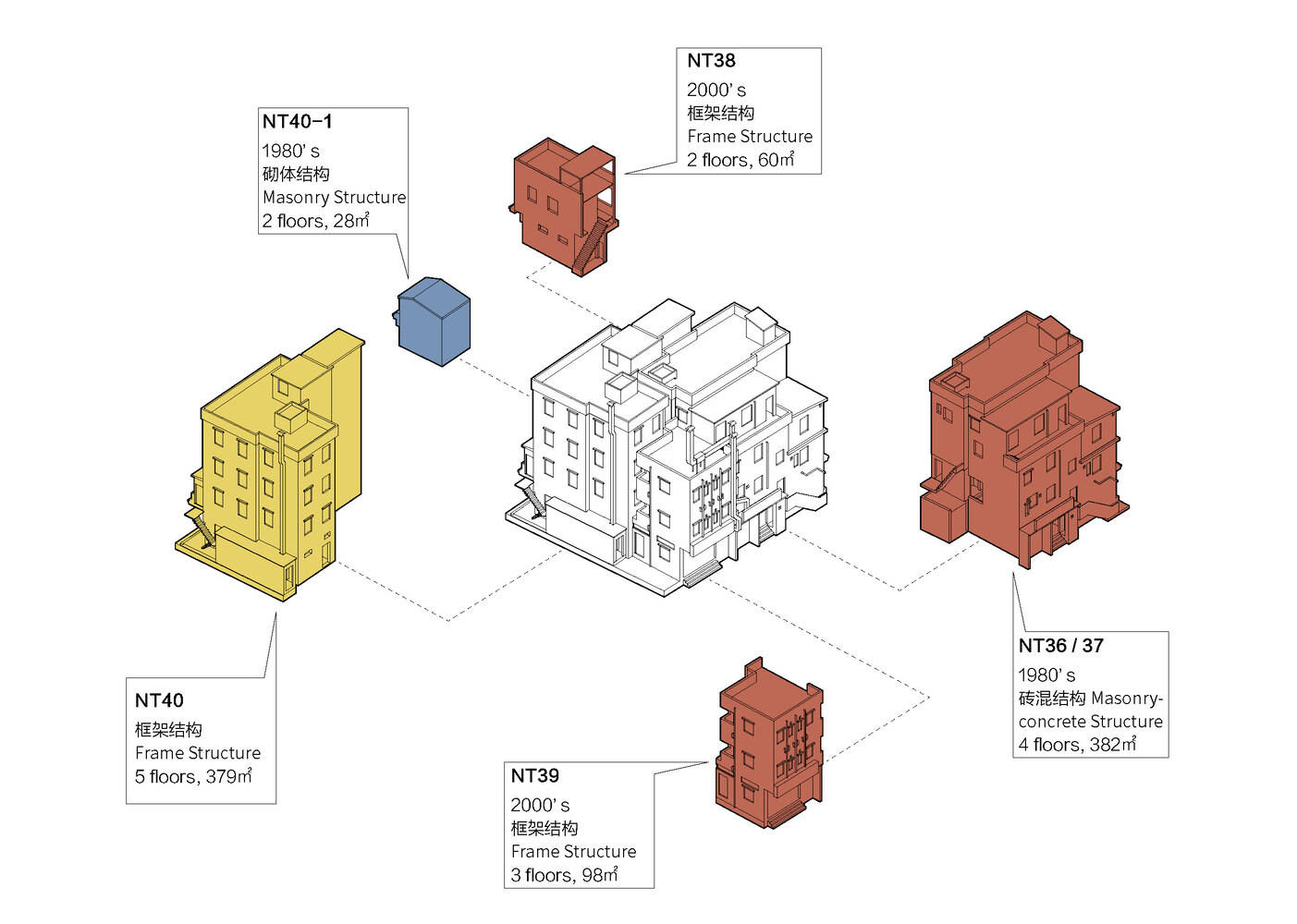
原建筑空间组成
© 张超
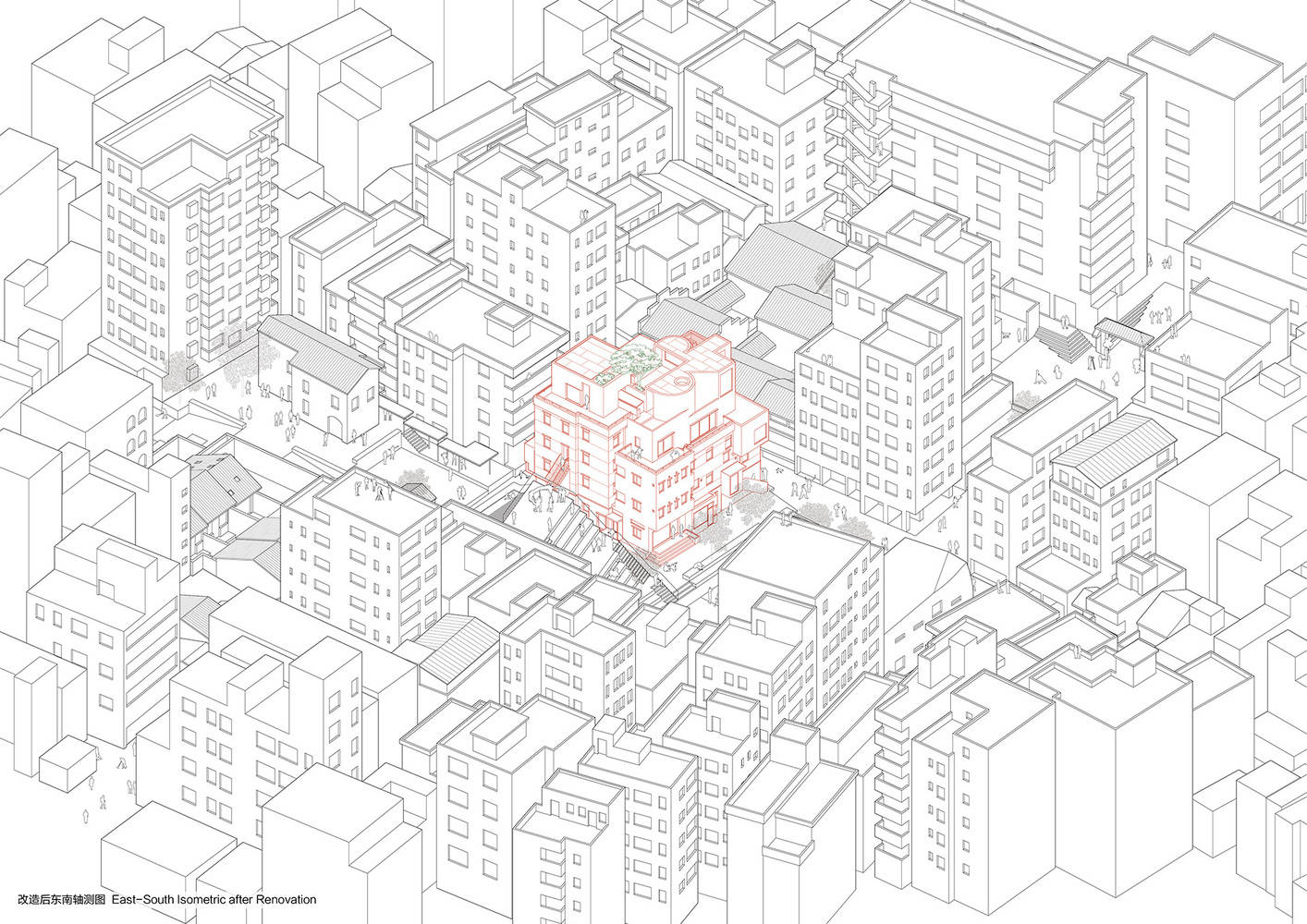
改造后东南轴测图
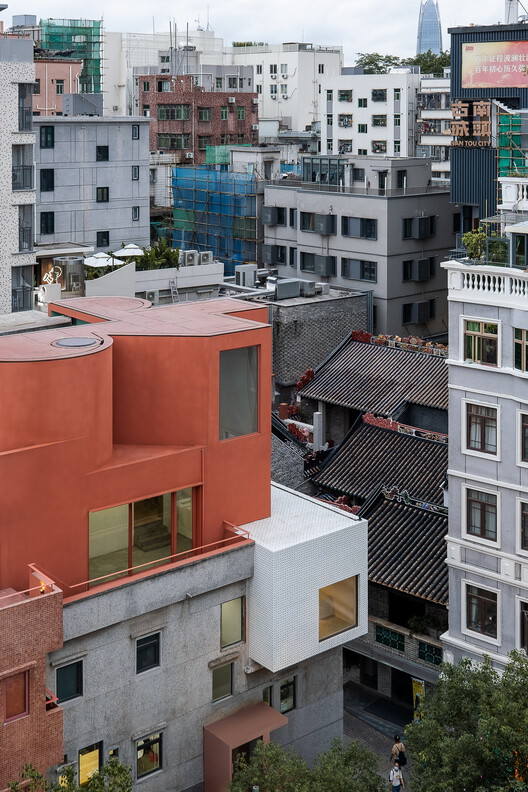
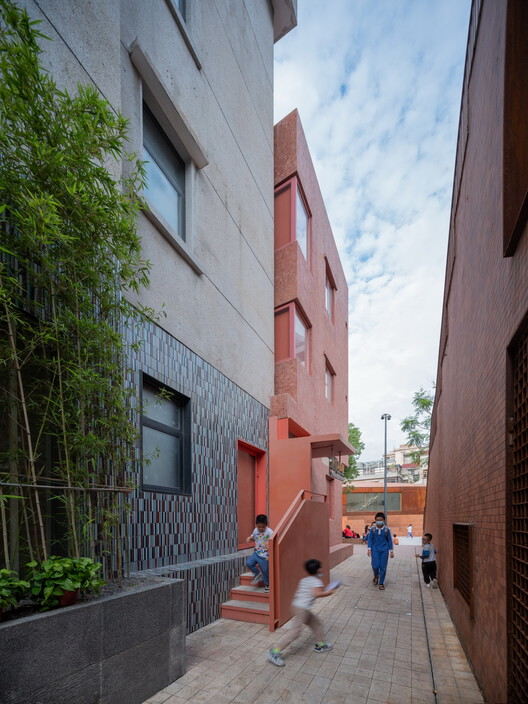
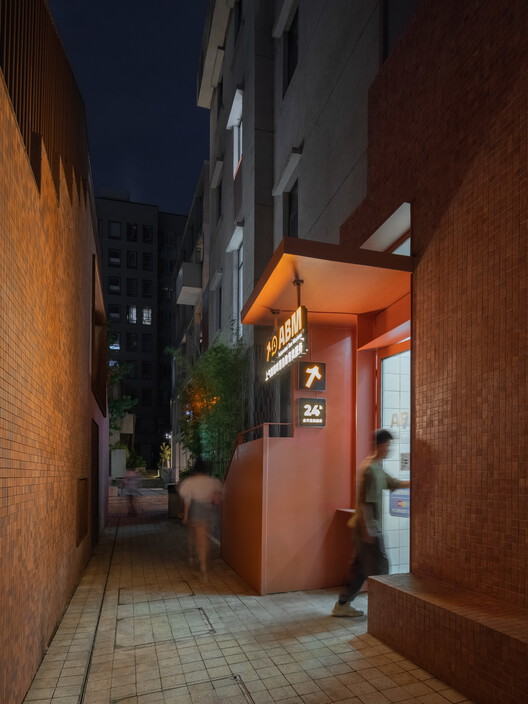
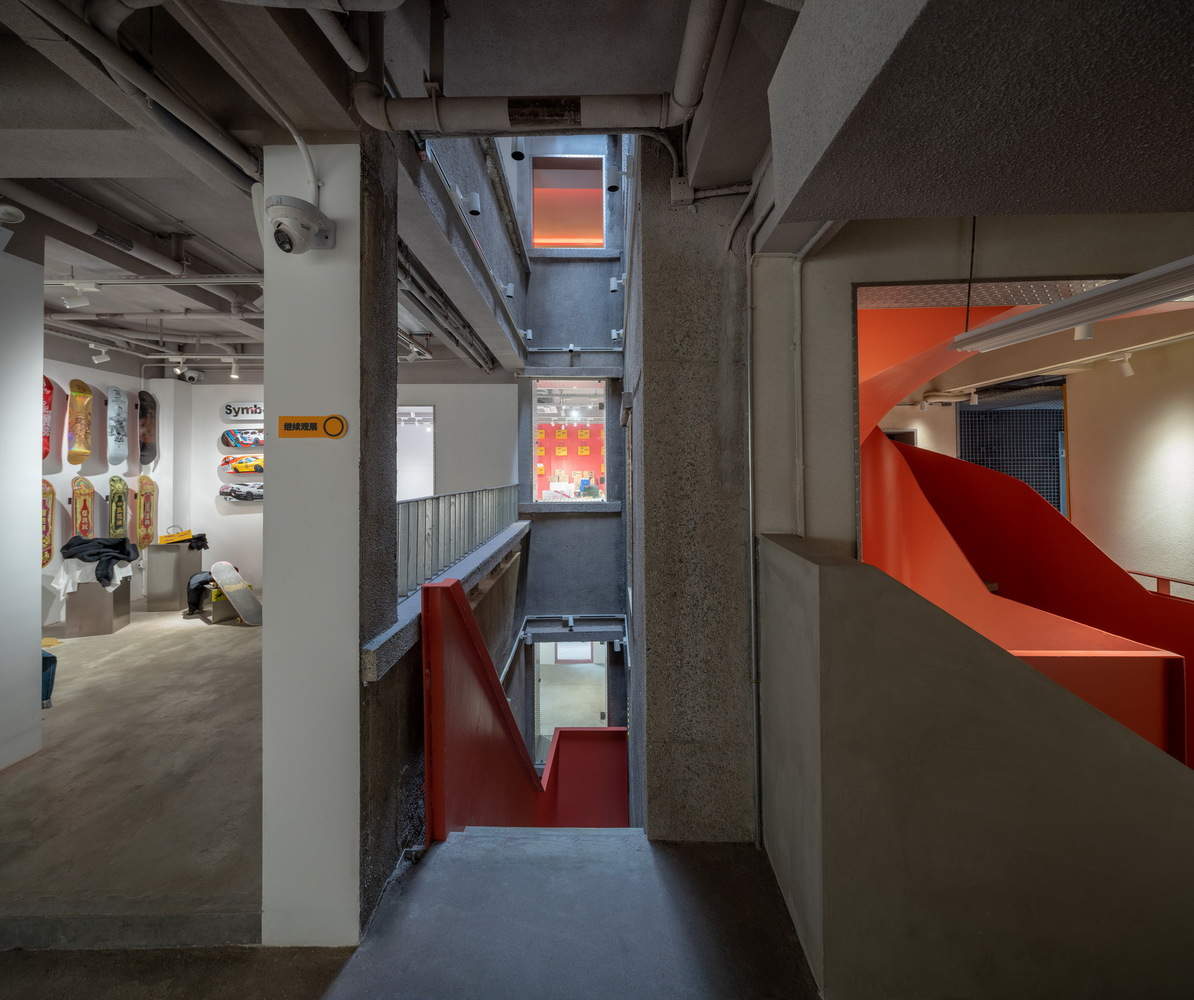
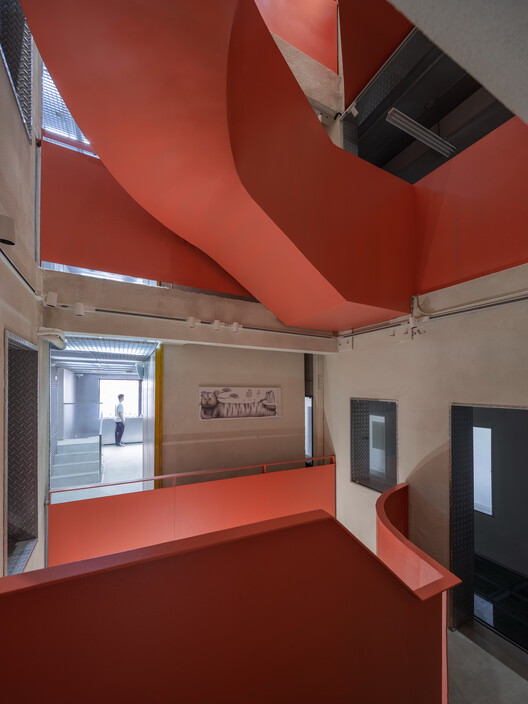
The exterior walls of each of the five buildings define the boundaries of independent property rights and play a key structural role. The renovation design retained the original exterior walls, removed the internal partition walls, and replaced the arbitrarily added parts with serious structural problems. The central part is hollowed out and equipped with elevators and stairs, and the public space extends from the traffic core to the outside of the building on each floor. The red steel components act like plugins, turning into lobbies, canopies, balconies, bridges, and stairs, penetrating through the old exterior walls of the building, providing people with a unique experience of walking through the gaps between the buildings. Skylights are added to the gaps between the buildings to introduce sunlight directly to the ground floor, making it a comfortable indoor space.
五栋建筑各自的外墙定义了独立产权的边界,并起到关键的结构作用。改造设计保留了原有外墙,拆除内部隔墙,置换了结构问题严重的随意加建部分。中心部分挖空植入电梯及楼梯,公共空间在每层从交通核延伸至建筑的外部,红色钢构件如同插件一样变成了门厅、雨棚、阳台、连桥、楼梯,从建筑旧有外墙中穿出,带给人们在楼缝间穿行的独特体验,楼栋之间的缝隙加天窗引入天光直达底层地面,成为舒适的室内空间。
© 张超
© 张超
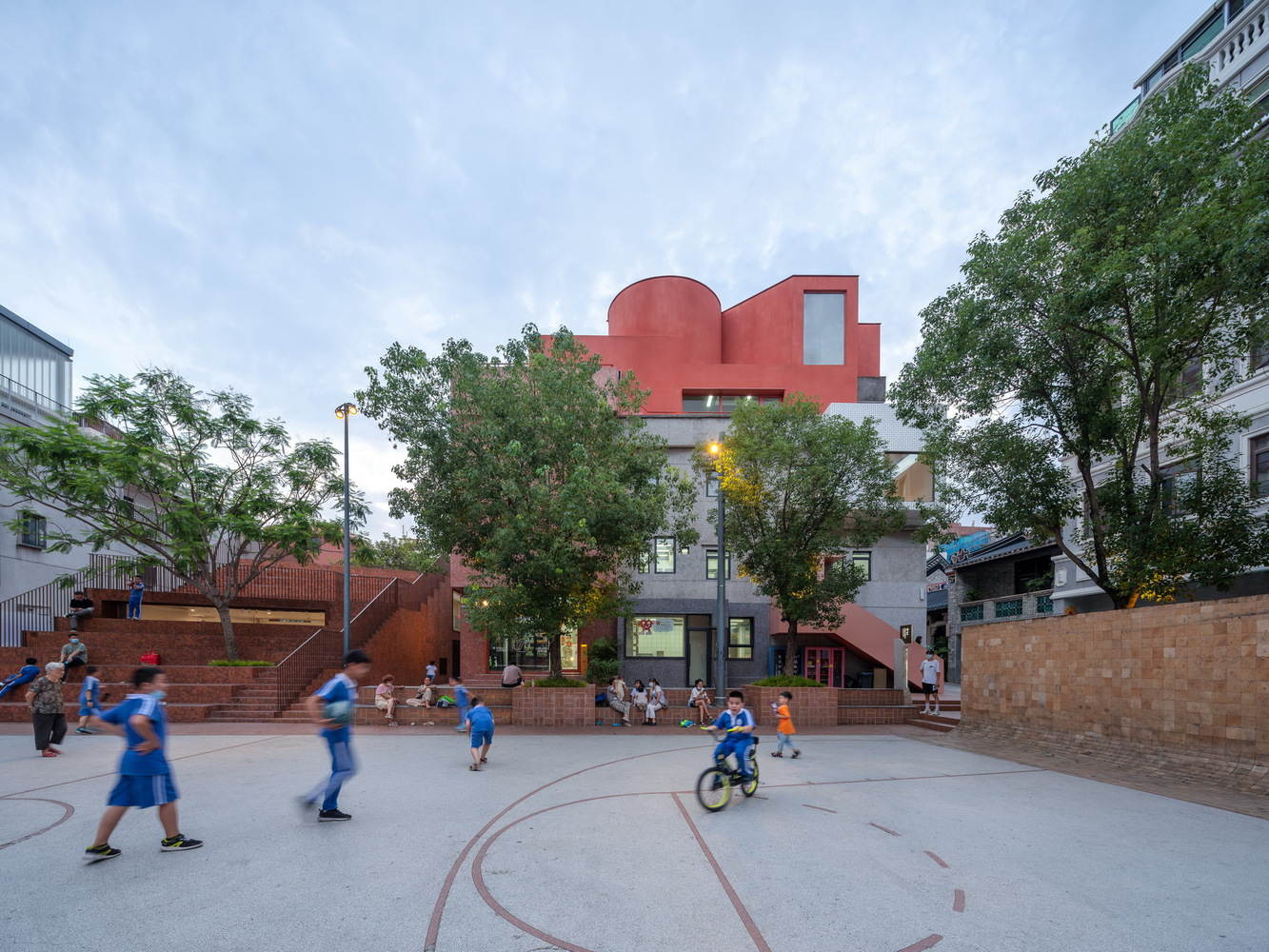
The five buildings used to have independent flow lines, with the first floor crowded with shops and stalls, providing rich functions and activity density for public places, forming a vibrant urban village style. After the renovation, the first floor retained the characteristics of the original small-scale storefront, added semi outdoor space, and had independent entrances on all four sides. In addition, the outdoor staircase of Linbaode Square has been renovated to allow direct access to the interior of the second floor of the building. The second to fourth floors were originally divided into 29 small and cramped residential units. By sorting out the internal spatial flow lines, connecting the spaces through existing openings, partially opened corridors, and newly added corridors, a closed "circular flow line" was formed. The interior of the building with height differences was fully connected, triggering public communication activities. The flexible indoor layout provides flexibility for future users.
五栋楼房原来流线独立,首层挤满了商铺和摊位,为公共场所提供了丰富的功能和活动密度,形成了充满活力的城中村风貌。改造后,首层保留了原有小尺度店面的特征,增加半室外空间,四个面设独立入口。另外,临报德广场的室外楼梯改造后可直接进入建筑二层室内。二至四层原分割为29个狭小逼仄的居住单元,通过梳理内部空间流线,利用原有洞口、局部打开通廊、新增连廊等方式串联空间,形成闭合的“环形动线”,存在高差的楼体内部被全部贯通,触发公共交往活动。室内布局灵活,给未来使用者提供了弹性。
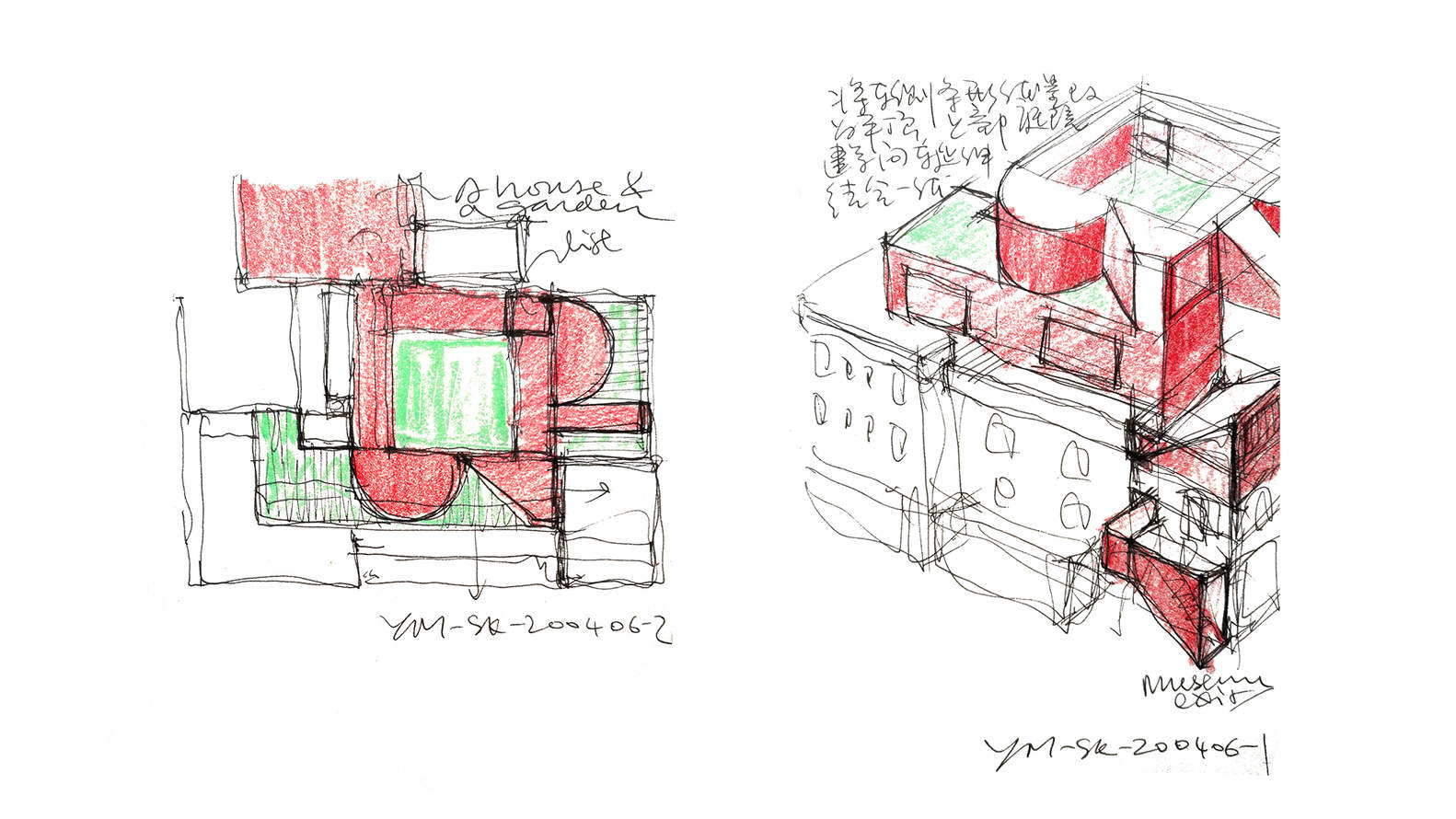
孟岩手绘草图
© 张超
© 张超
The exterior facade retains various materials of the original building, replacing or supplementing mosaics and colored coatings. The complexity of interlocking and nesting between new and old materials and various colors, showcasing the "true colors" of the hybrid building. The red semi-circular volume extends from the fourth floor to the fifth floor, juxtaposed with the green square volume with semi outdoor space on the roof platform. The elevated space and sky interact with the roof terrace, merging the four isolated roofs into a tranquil garden amidst the noisy urban village. From the first floor store, interior to the rooftop terrace, every turning point is full of tension, ultimately presenting an open 'vertical peach blossom garden'.
外立面完整保留原建筑的多种材料,置换或补充马赛克和彩色涂料。新旧材料和各种颜色拼贴,各体量间相互咬合嵌套的复杂性,展现出杂交楼“本色”。红色半圆形体量从四层延伸至五层,与拥有半室外空间的绿色方形体量在屋顶平台上并置,通高空间和天光与屋顶露台互动,原来四个孤立的屋顶融合成为一个置身喧哗城中村的静谧花园。从首层店铺、室内到屋顶露台,每一处转折都充满了张力,最终呈现出开阔的“垂直桃花源”。
© 张超
© 张超
The 'Hybrid Building' is a historical evidence that documents the growth of urban villages in Shenzhen. The hybrid building formed by transforming chaos into order has released an open micro complex that responds to social and cultural needs for the high-density Nantou Ancient City, providing a new type of vertical public space that combines public and accessibility for future urban villages. In the aggressive urban construction, optimizing and improving the survival opportunities of native species has become the only way to resist homogenization. The hybrid building is an experimental prototype of urban practice under the evolution theory of "urban symbiosis" in Nantou. It is not a technological innovation in construction, but an experiment in ideas and concepts.
"杂交楼"是一个纪录了深圳城中村生长的历史物证。化混沌为秩序而形成的杂交楼为高密度的南头古城释放了一个开放的回应社会文化需求的微型综合体,为未来城中村提供一个公共性和可达性兼具的垂直公共空间新类型。在大刀阔斧的城市建设中,优化从而提升原生物种的生存机会成了抵抗同质化的唯一出路。杂交楼是都市实践在南头“城市共生”进化论下具有原型意义的实验,它不是建造技术上的革新,而是一次思想和观念上的实验。
© 张超