Jiangshan Resort Wooden House/NOTA Architects
江山度假木屋 / NOTA Architects
项目概念与文化传承:该项目最令人印象深刻的亮点在于其对文化传承的深刻理解和巧妙运用。建筑师并非简单复制过去的形态,而是深入挖掘了“归家”这一概念背后的文化内涵。通过对传统农舍的改造,保留并融入了当地的夯土墙、天井等元素,并结合现代生活方式的需求,实现了传统与现代的完美融合。这种设计理念不仅是对古老智慧的致敬,也为当代乡居生活提供了新的可能性,它将乡愁、记忆、情感融入建筑,赋予了建筑生命力和灵魂,使其成为一个承载文化、传承情感的场所。
空间设计与材料运用:该项目在空间设计和材料运用方面展现了卓越的专业素养。建筑师巧妙地运用廊道串联新旧空间,营造出一种冥想般的氛围,引导居住者在不同功能区域之间自由切换。胶合木、碳化木、松木等天然材料的运用,营造出温暖、舒适的居住氛围,与周围的自然环境相得益彰。特别是对色彩的运用,深紫色的涂装、室内色彩的跳跃,都体现了对情感的细腻关照。定制家具、软装的选择也体现了对细节的极致追求,使得整个空间既具有现代感,又不失温馨和个性,真正做到了“人居合一”。
可持续性与本土化实践:该项目在可持续性与本土化方面也进行了积极的探索。建筑师在改造过程中,充分利用原有建筑,减少了资源浪费。同时,设计融入了当地的工艺和材料,体现了对本土文化的尊重。通过与周边环境的融合,例如将景观引入室内,设计了适合当地气候的结构等,使得建筑能够更好地适应环境,实现可持续发展。这种设计理念不仅体现了建筑师的社会责任感,也为未来的乡村建设提供了有益的借鉴,创造了一个既宜居又环保,同时又充满地方特色的美好家园。
© 梁山
© 梁山
For many people who leave their hometowns to study and immerse themselves in the city, turning points in life often evoke a longing for a more relaxed pace of life and a return to the place where their hearts belong. Our design commissioner, a middle-aged man from Jiangshan, Zhejiang, is no exception. After living and working in Hangzhou for more than 20 years, what he is looking for is not just a weekend healing home, but a spiritual homeland where he can live forever - returning home is a new life.
对于许多离乡求学、投身都市的人而言,人生的转折点往往唤起一种渴望:渴望更从容的生活节奏,和对心属之地的回归向往。我们的设计委任者,一位来自浙江江山的中年男士概莫能外。在杭州生活工作二十余载后,他寻找的不只是一处周末疗愈居所,而是一方可终老的精神原乡——归栖即新生。
© 梁山
分析图
© 梁山
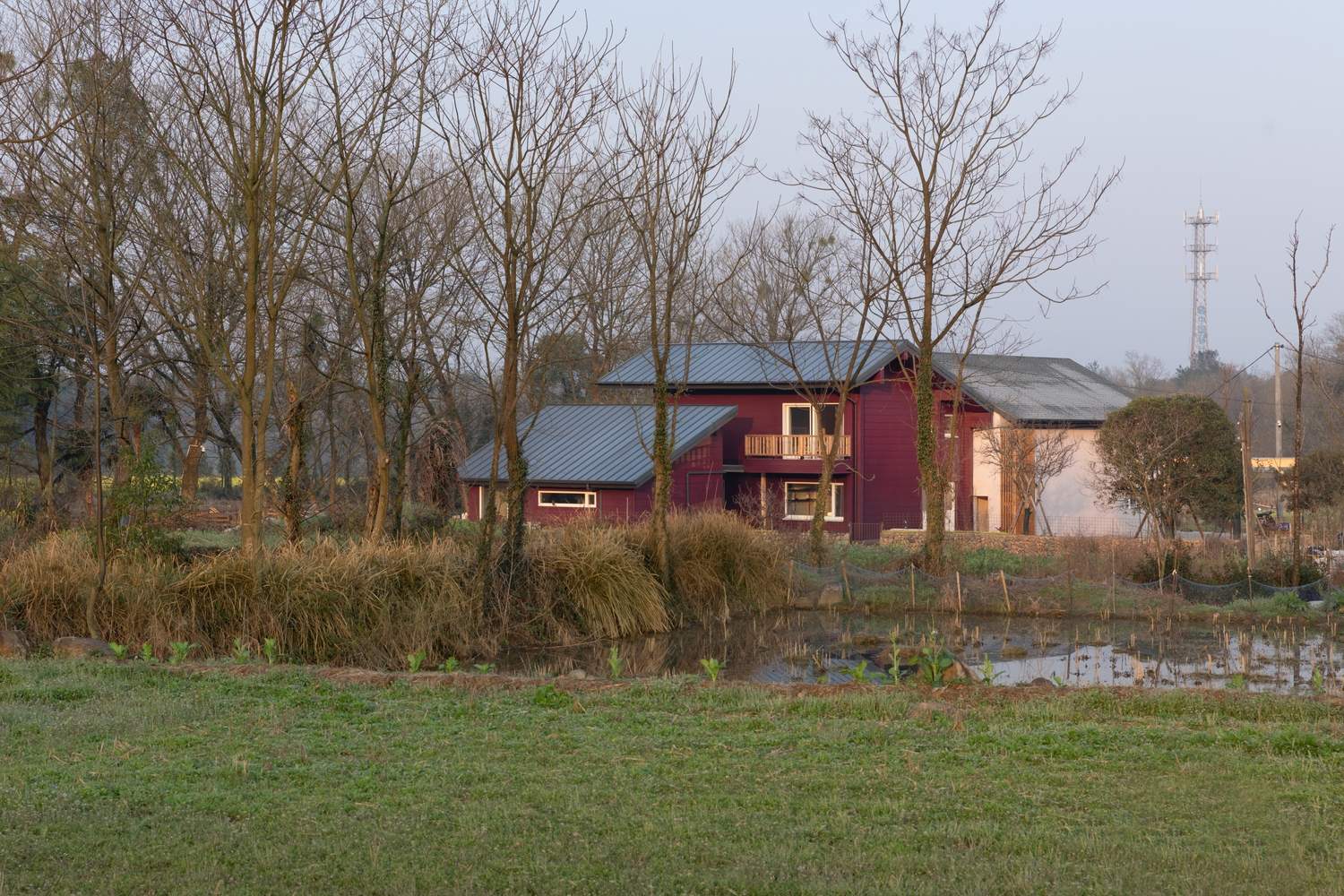
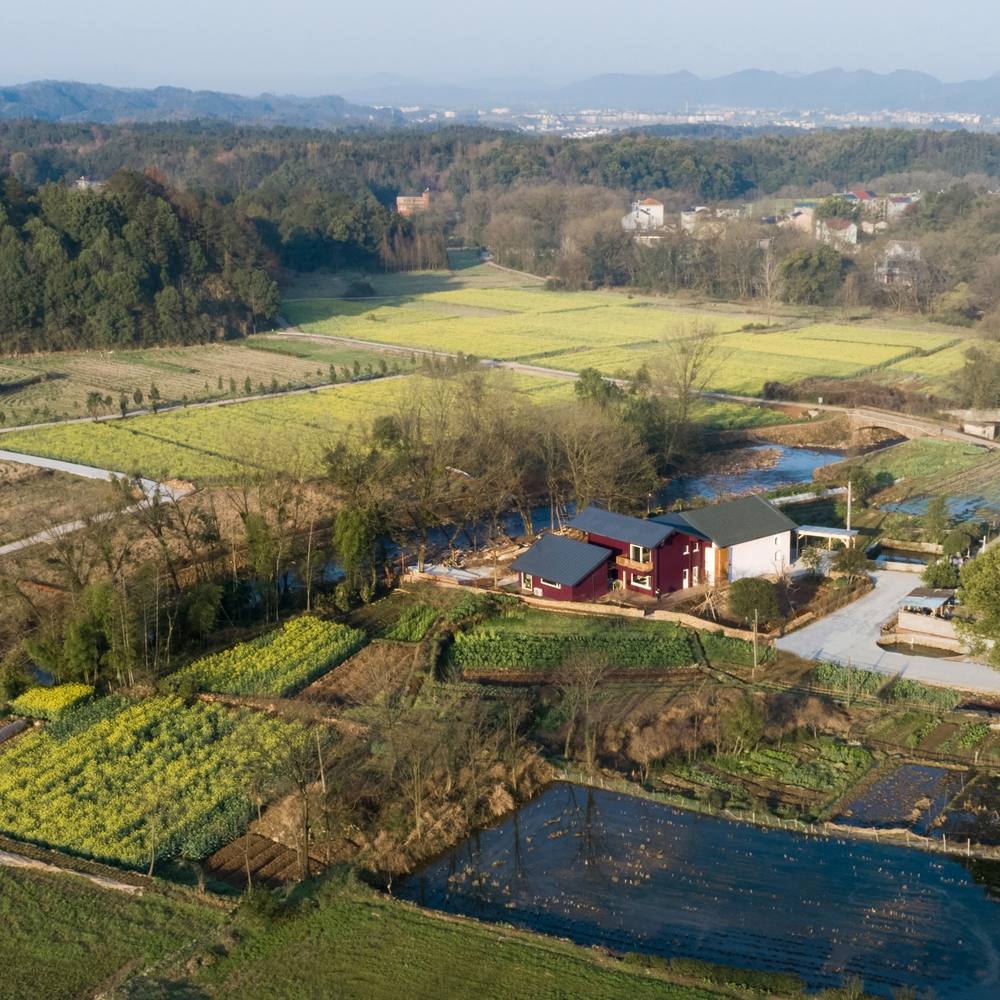
This rammed earth farmhouse, built in 1975 and sitting by the creek, has been abandoned for years and almost collapsed, but it exudes a peaceful and intriguing atmosphere. On our first visit, we listened to the "homesickness" on the rocks by the creek - childhood stories, memories of returning home, the beauty of "picking chrysanthemums on the eastern fence"... facing the helplessness of the vacant ancestral home. The so-called ancestral house is the common form of agricultural land and houses, which combines human habitation and animal husbandry into one - the origin of the Chinese character "home". The ancestral home carries a common memory and is the spiritual sustenance of the villagers. Can modern living standards be brought to ancestral homes? How to attract younger generations back? What will the new way of life be like? Is there a sustainable way to return farmland to residential areas? Design work begins with exploring these issues.
这栋临溪而坐、建于 1975 年的夯土农舍,虽经年荒置近乎倾颓,却自蕴一份宁静而耐人寻味的气息。初次造访时,我们在溪水边的石头上,倾听了纷纷的“乡愁”——儿时的故事、每每归来的念想、“采菊东篱”的美好……面对空置祖屋的无奈。所谓祖屋,是农耕田舍的普遍型制——人居和牲圈合为一体——中文“家”字的构成渊源。祖屋承载了共同的记忆,是乡亲的精神寄托。能否把现代住居品质带来祖屋?如何吸引年轻的后辈回来?新的生活方式会是怎样?是否有可持续的方式归园田居?设计工作始于对从这些问题的探讨。
© 梁山
© 梁山
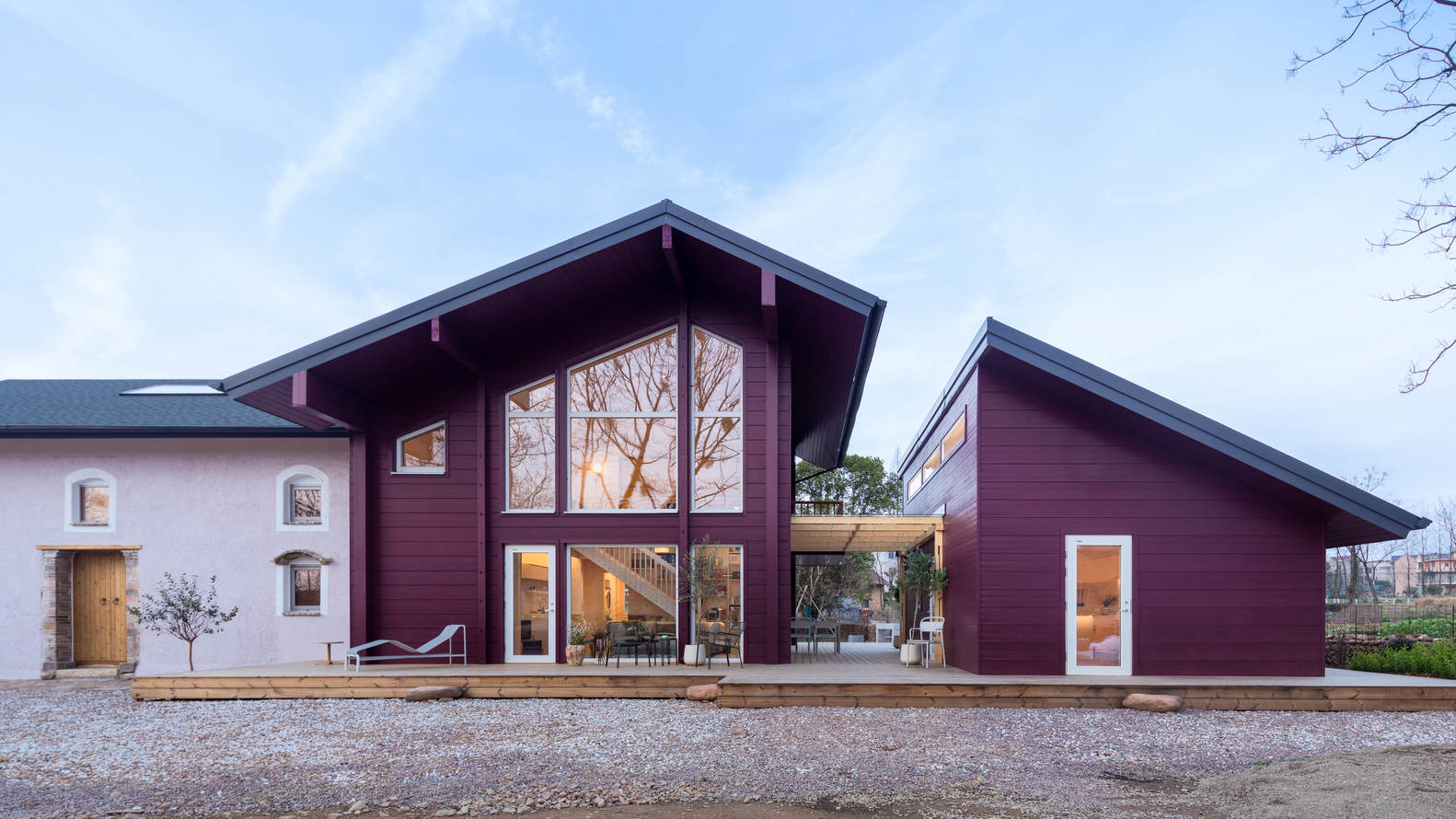
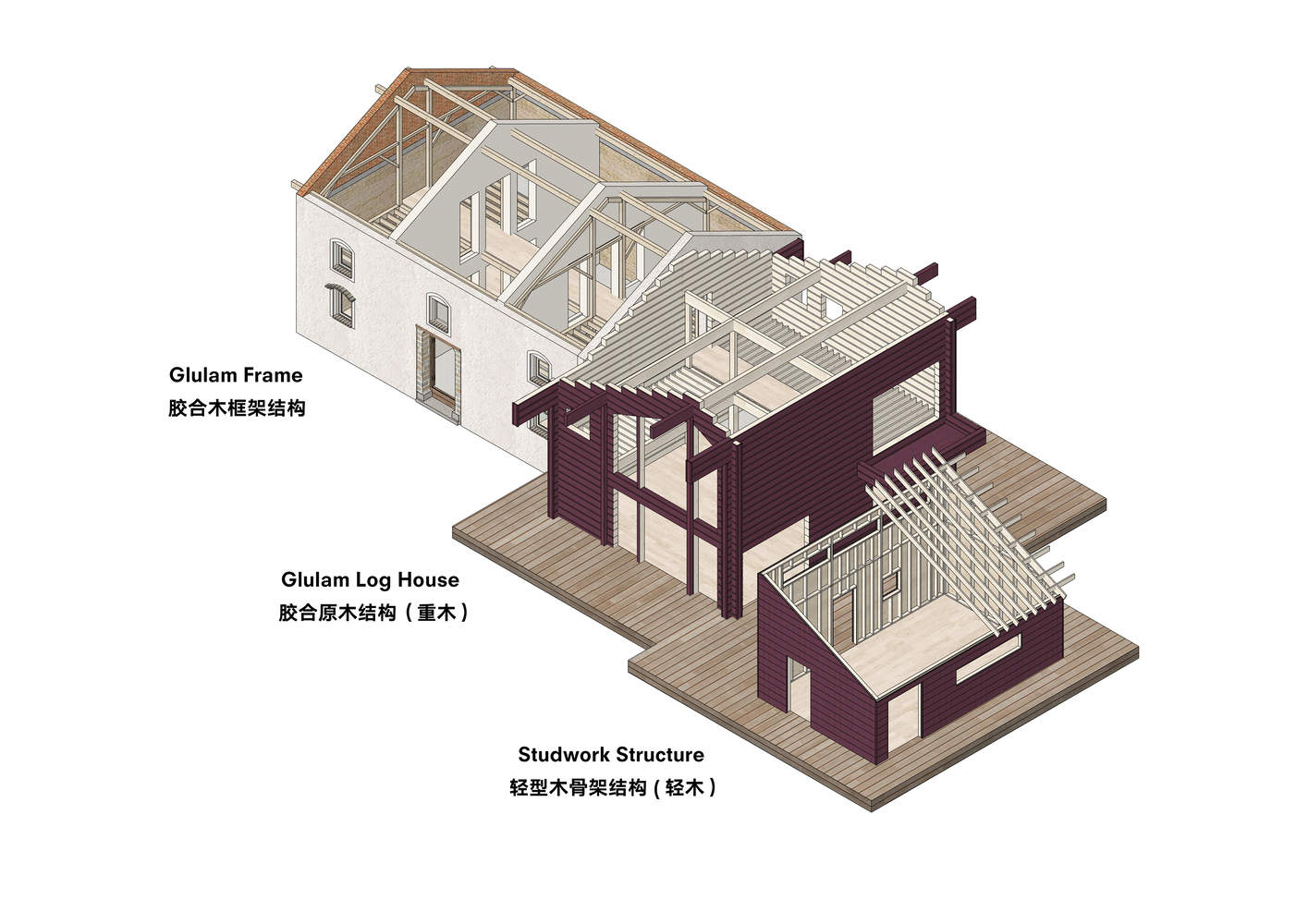
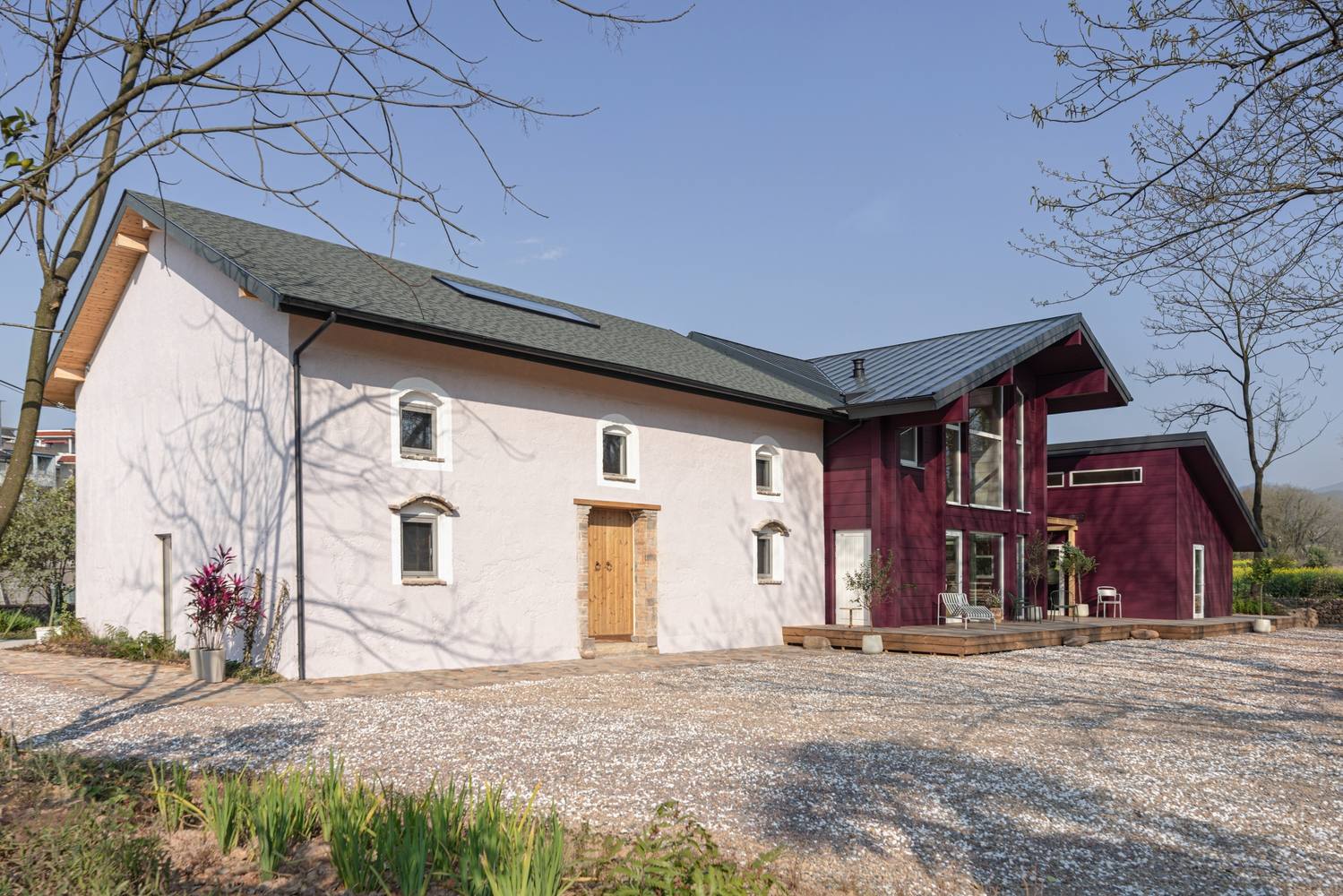
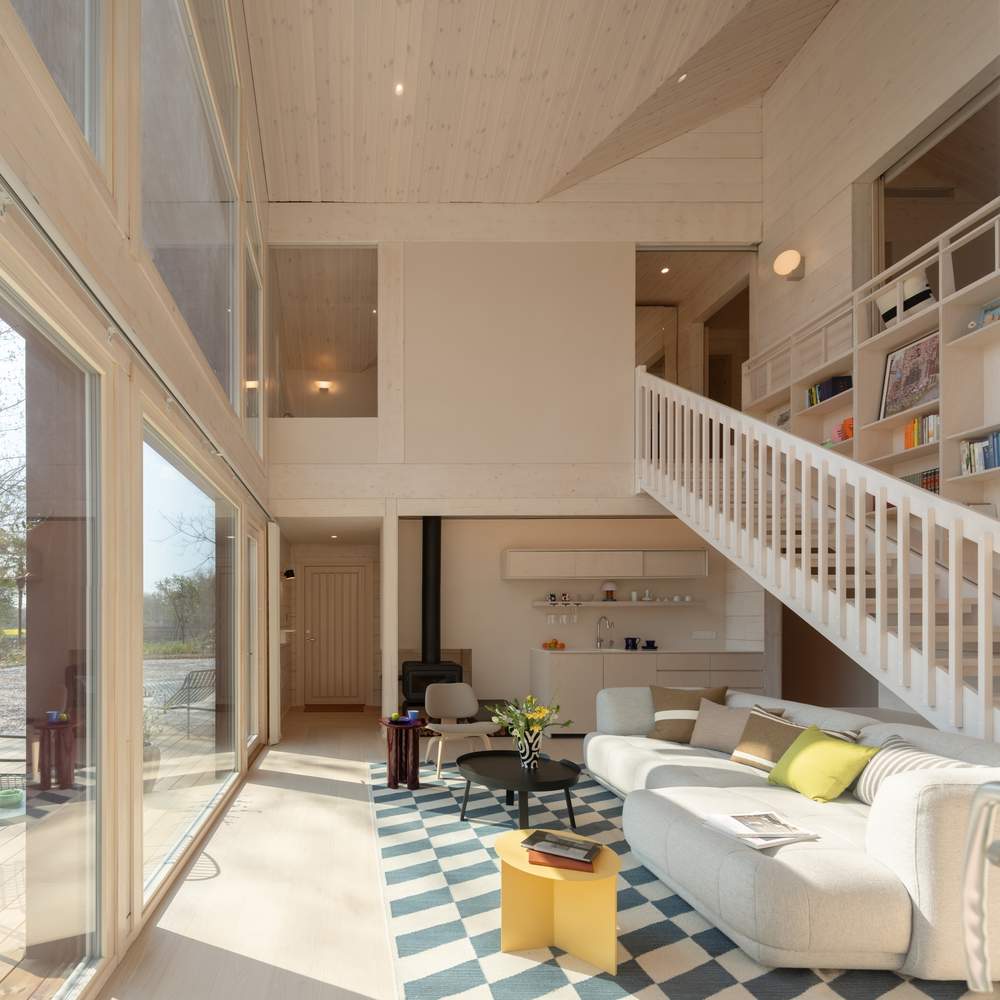
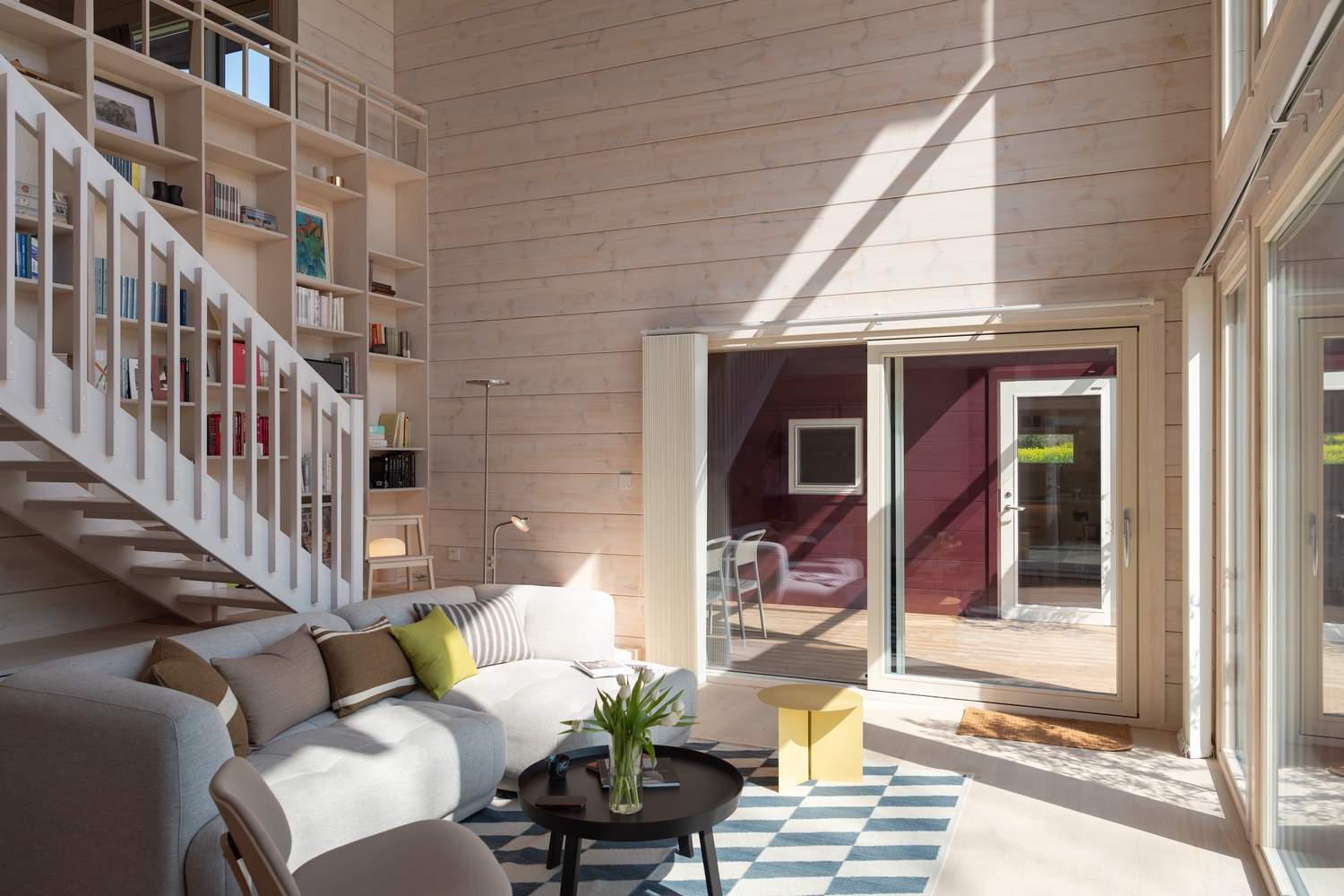
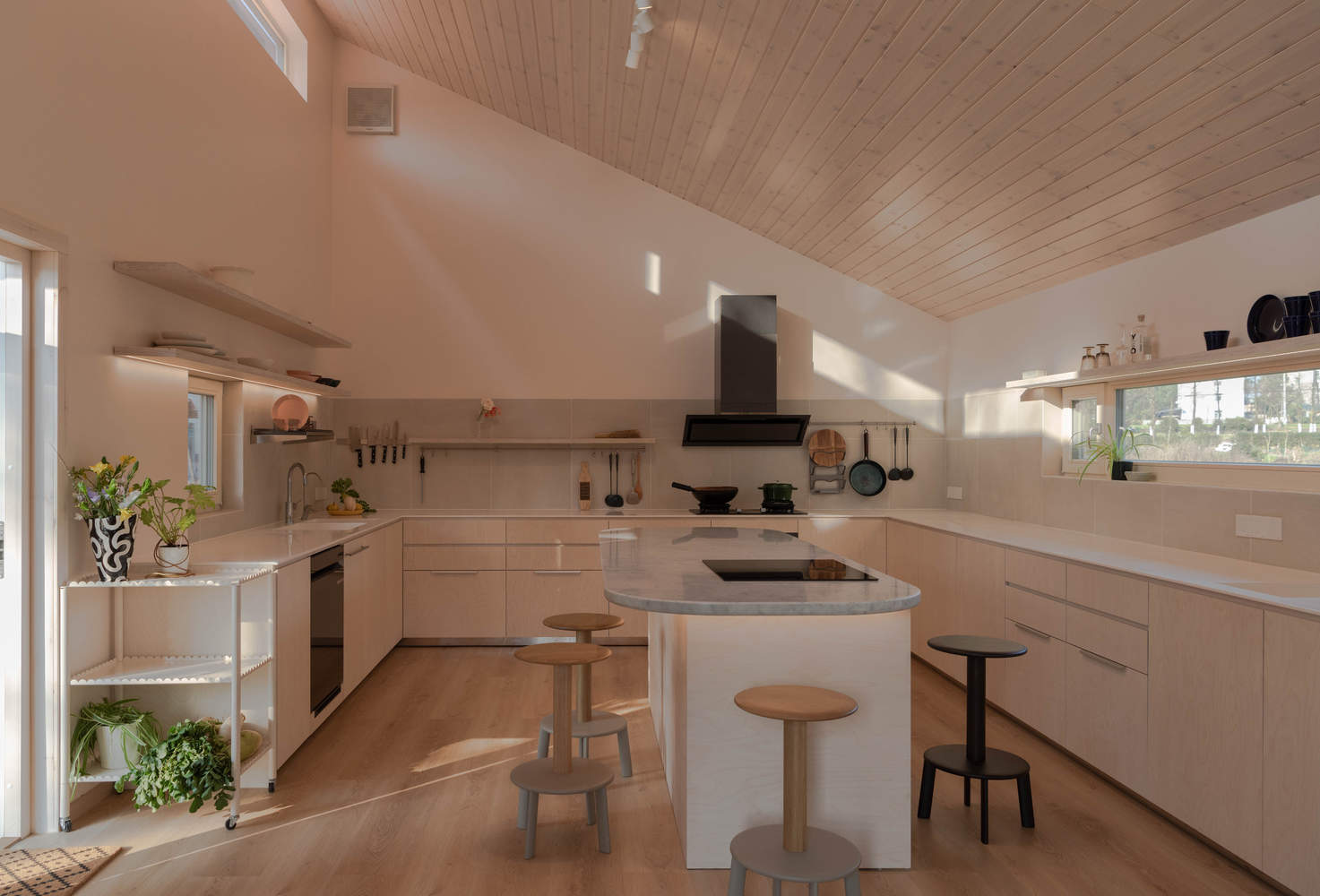
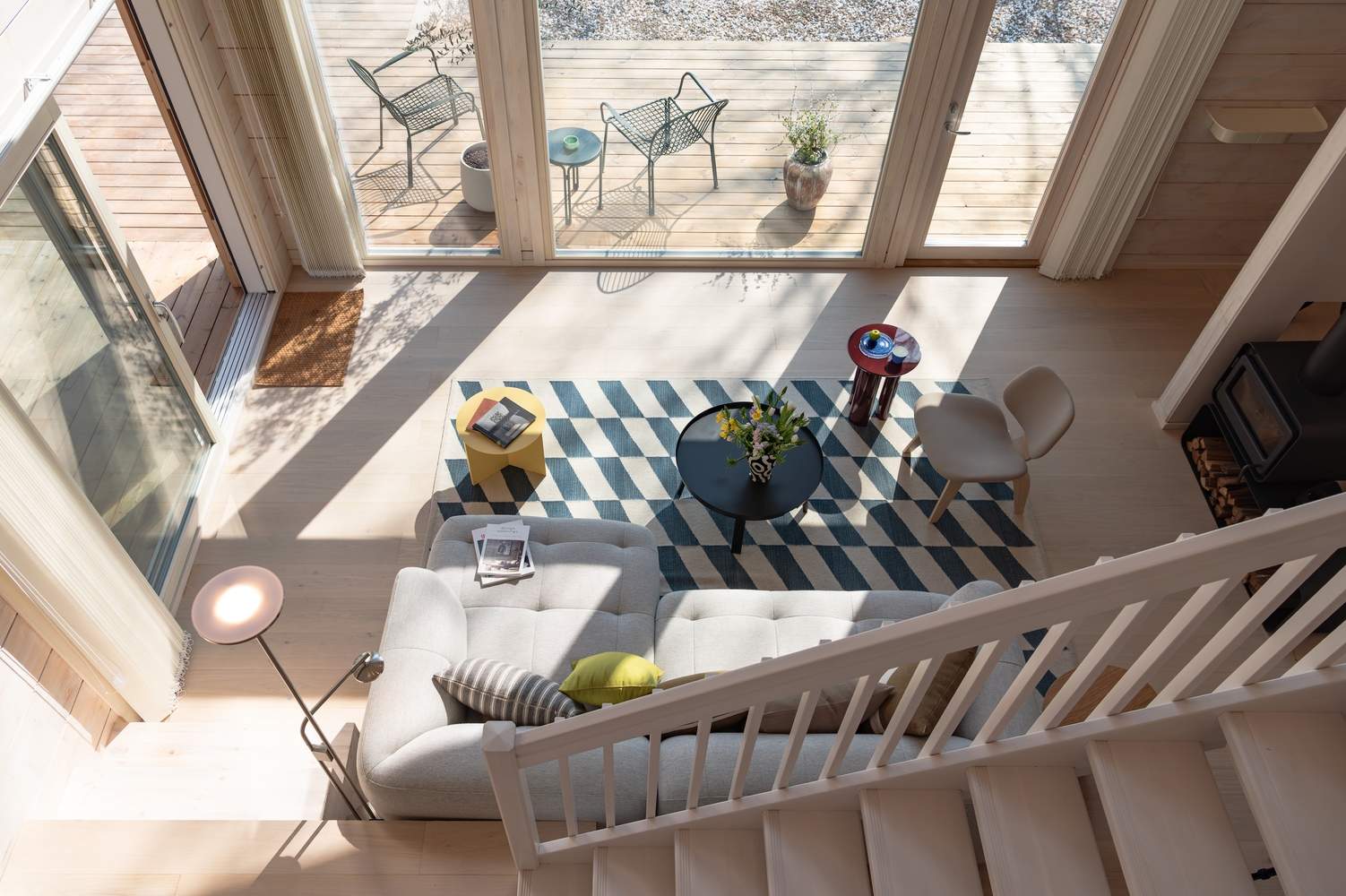
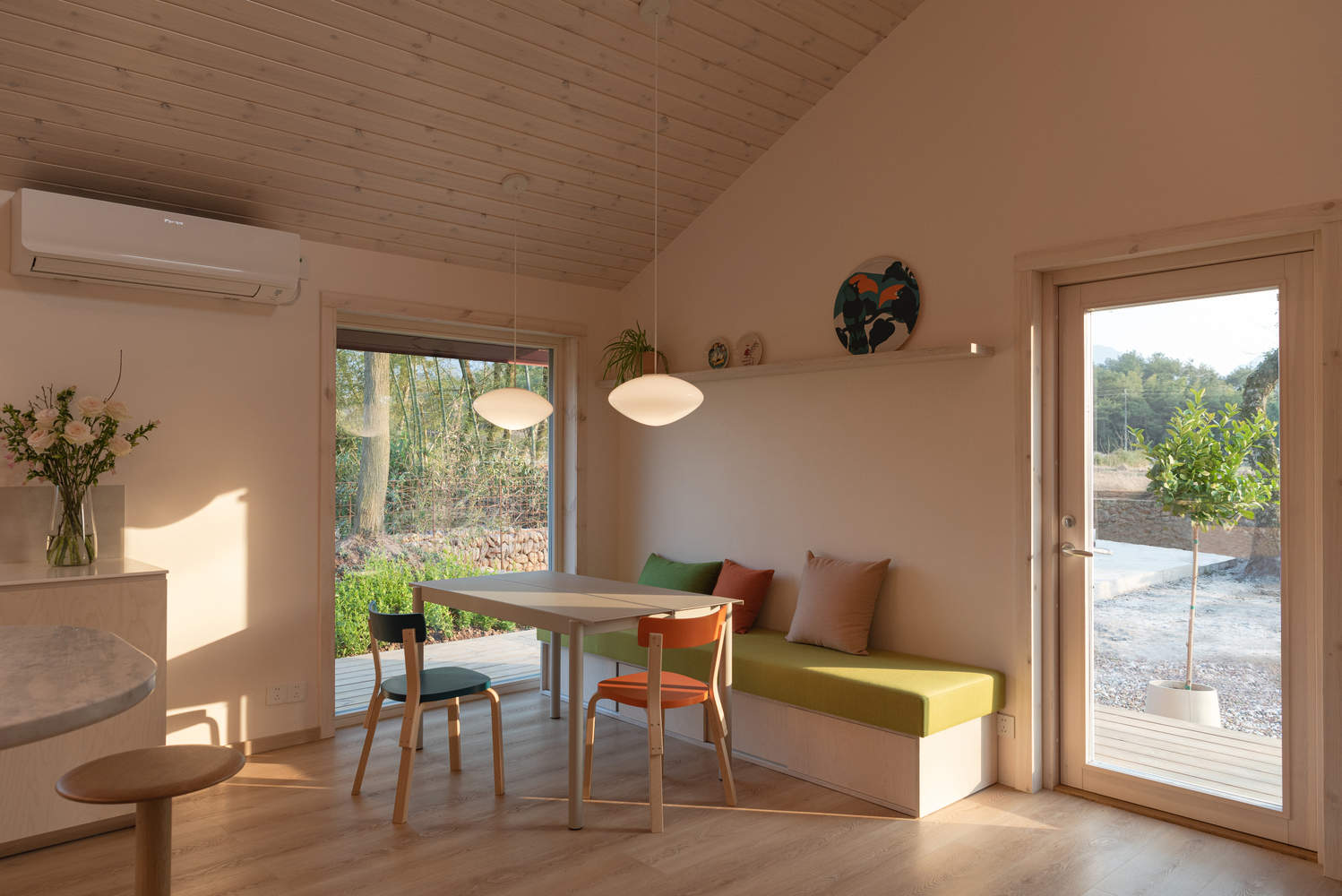
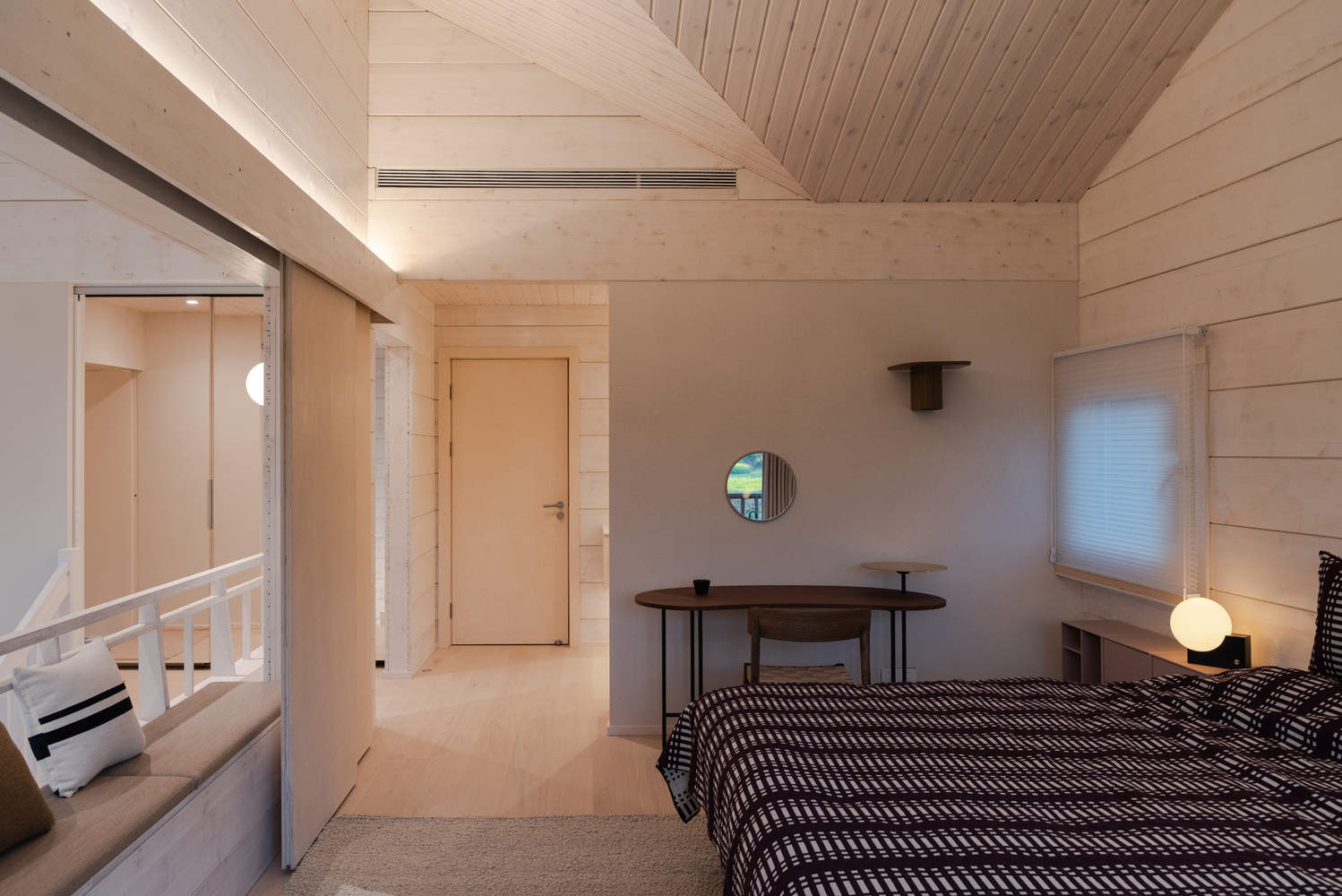
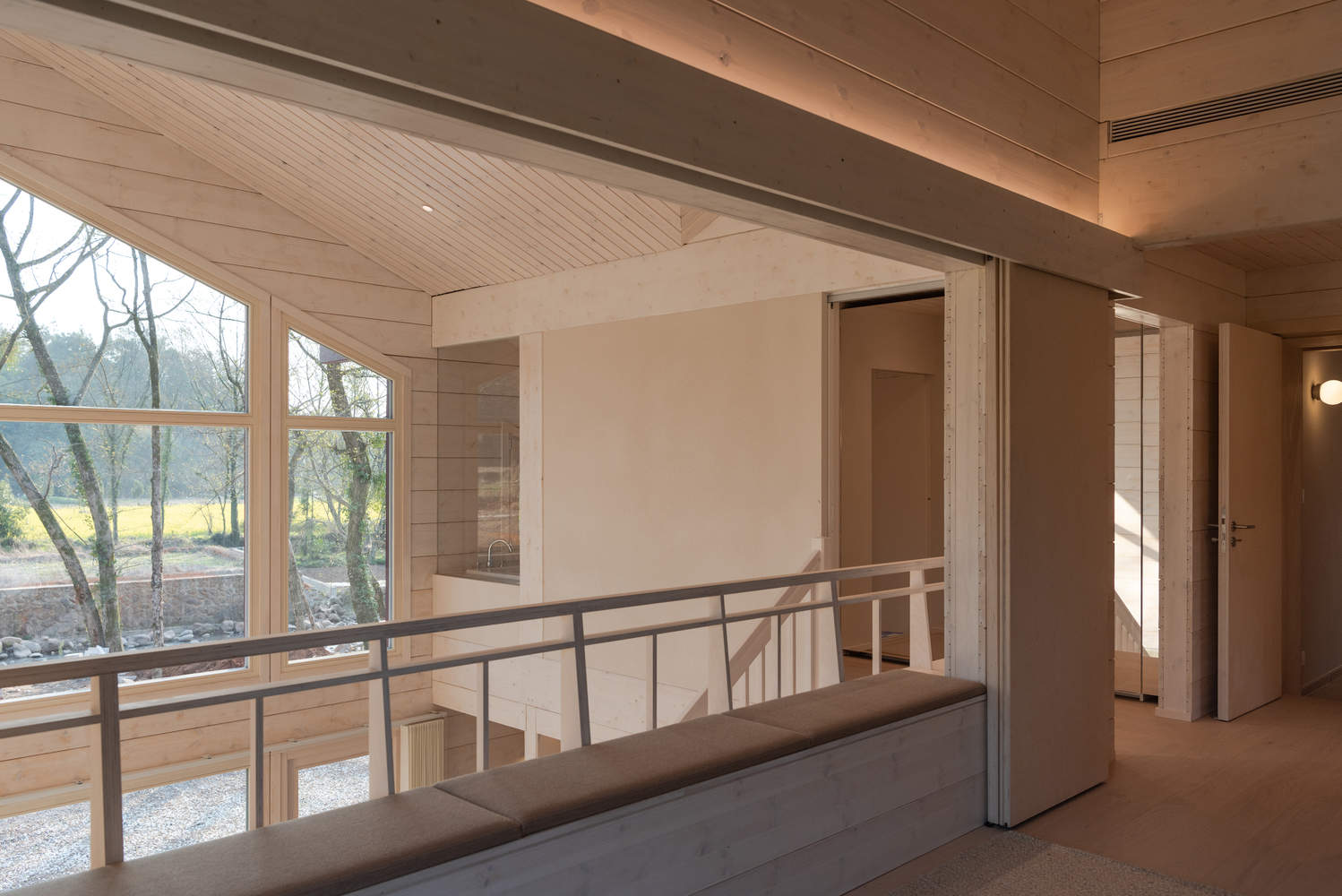
One third of the animal pens and toilets in the original building have been removed and replaced with a Glulam wooden house - designed in Shanghai, prefabricated in Finland, and built in Jiangshan - as the owner's private living space. A corridor runs through the entire building, connecting old and new spaces in a meditative manner: the main body of the old house preserved in the far end has been renovated into guest rooms and a hall for family gatherings. The smaller wooden structure adjacent to the wooden house is an extension of the main wooden house, serving as both a kitchen and a dining room. Surrounded by fruit trees and vegetable beds, the customized kitchen layout is suitable for diverse cooking needs that combine Chinese and Western elements. The two wooden structures are connected by a raised carbonized wood platform, and the deep purple color scheme originates from the beloved color of the owner's deceased mother - memories are gently integrated into the new home. Handmade plywood customized furniture, soft wood wax oil pine walls, and specially designed customized soft furnishings together create a relaxed and warm home atmosphere; In spaces such as study rooms and dining halls, the vibrant colors and bright fabrics, along with the greenery outside the window, bring a joyful and leisurely lifestyle.
原建筑中牲圈和厕所的三分之一体量被移除,取而代之的是一座胶合木(Glulam)木屋——上海设计、芬兰预制、江山建造——作为主人的私人起居。一条廊道贯穿整栋建筑,冥想似的串联新旧空间:远端保留的老屋主体被修缮为客房与家族聚会的堂屋。毗邻木屋的较小木结构是主体木屋的延伸,兼具厨房与餐厅,四周果树菜畦环抱,定制的厨房布局宜于中西结合的多样化烹饪需求。两座木结构体量通过抬升的碳化木平台连为一体,深邃的紫调涂装源自主人已故母亲钟爱的颜色——记忆被轻轻的融于新居。手工打造的胶合板定制家具、柔和的木蜡油松木墙面与特别设计定制的软装搭配共同营造出轻松温暖的居家氛围;在书房与餐廊等空间,跃动的色彩与明快的布艺与窗外的绿意一起,带来愉悦的生活逸趣。
© 钱诗韵
© 梁山
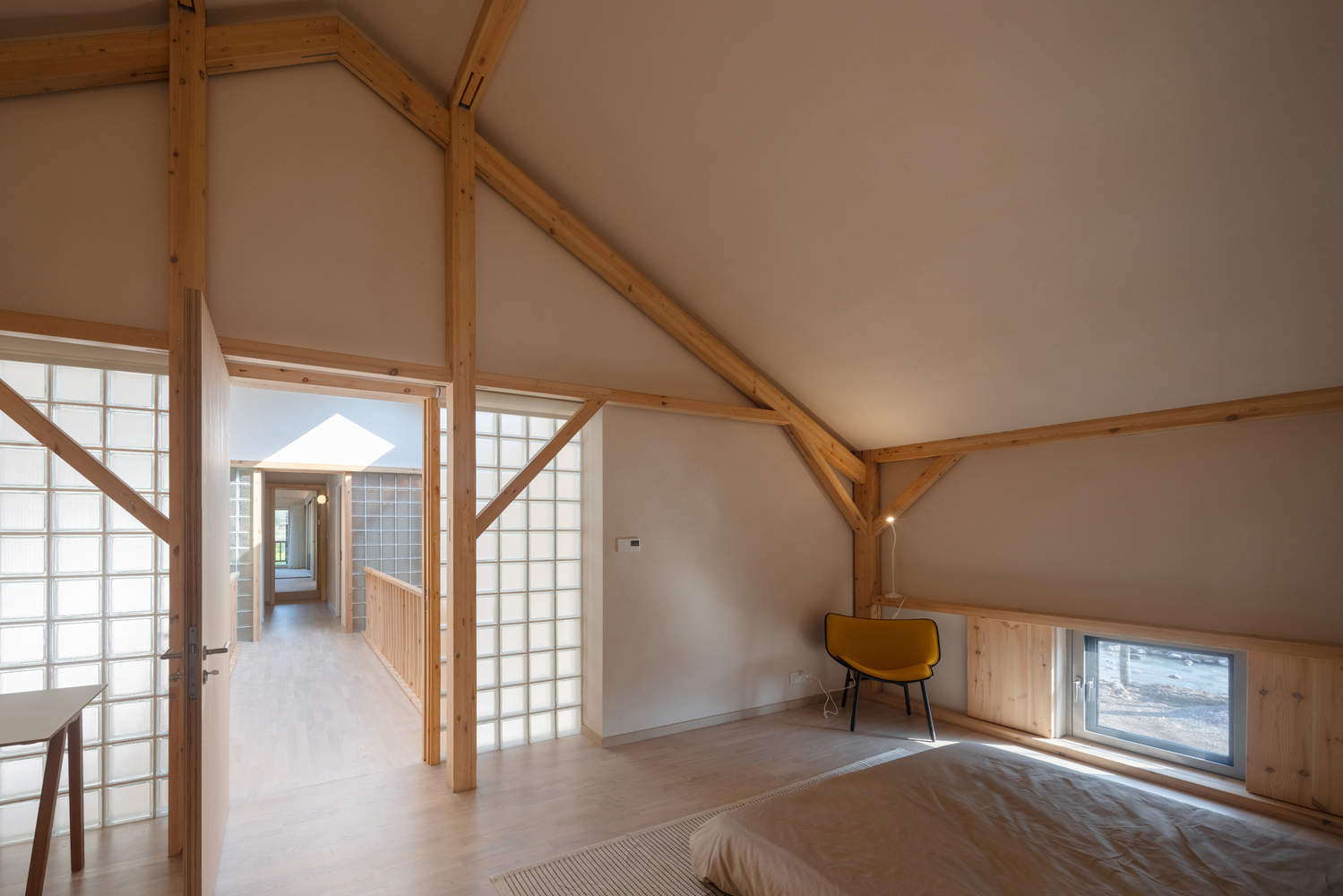
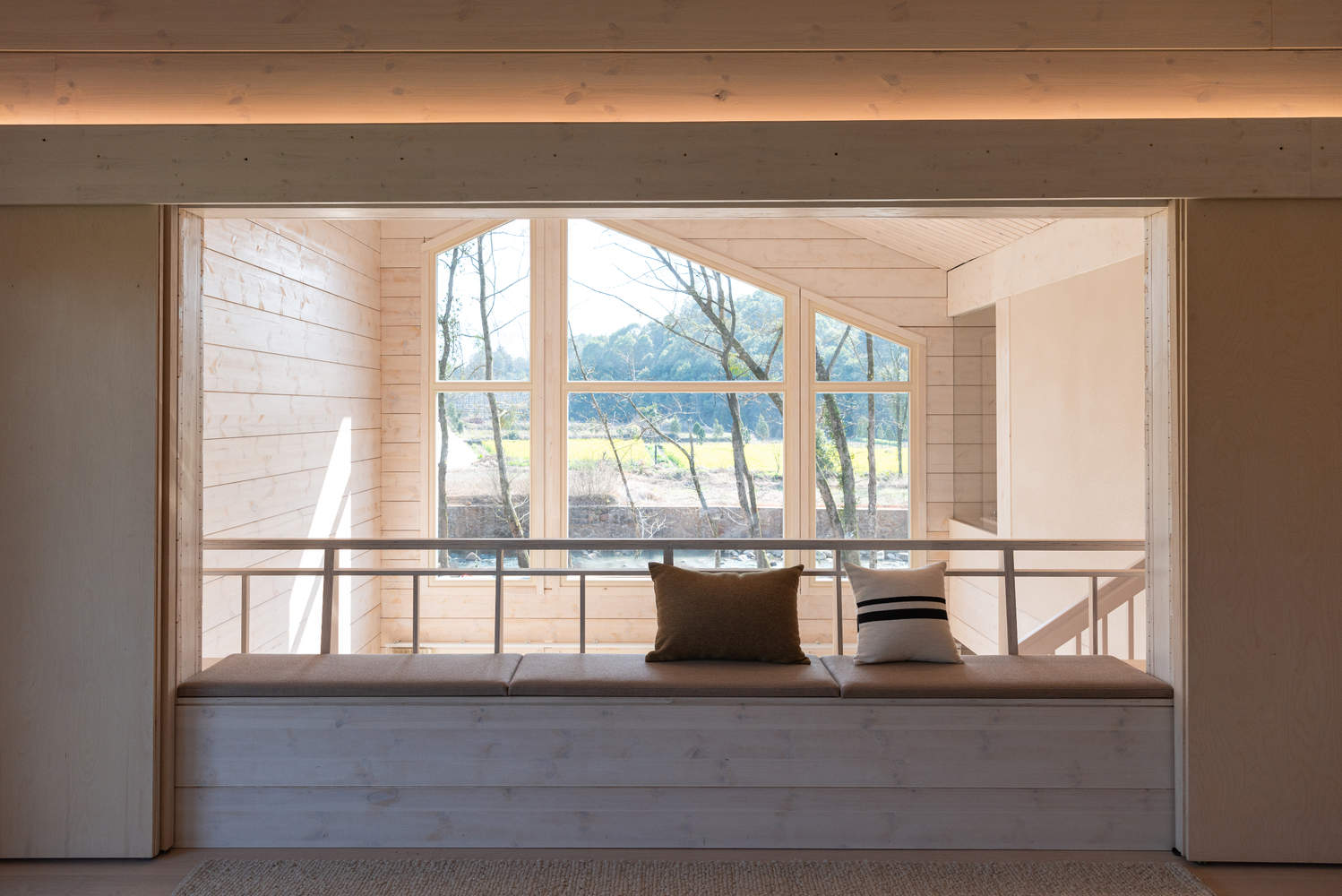
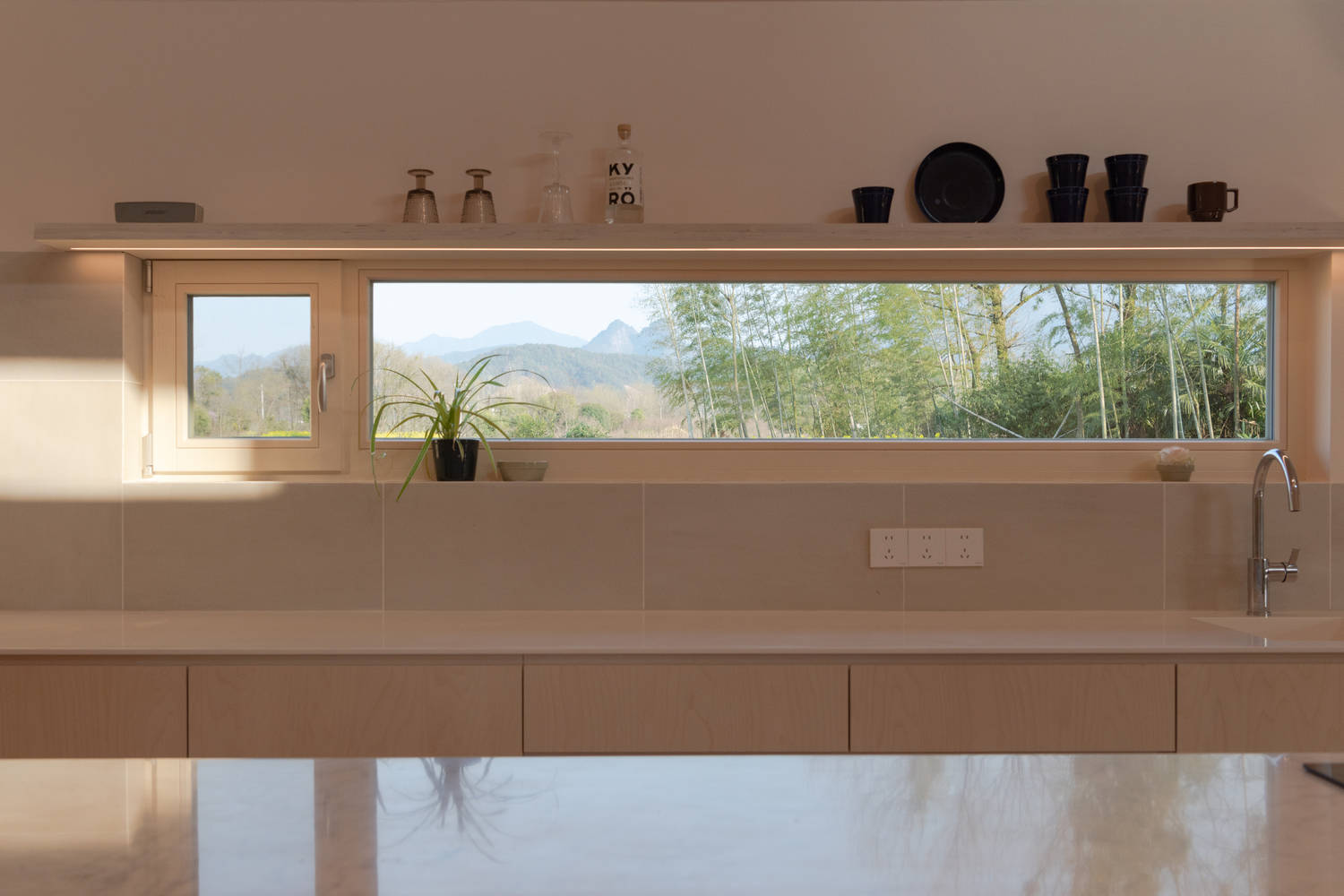
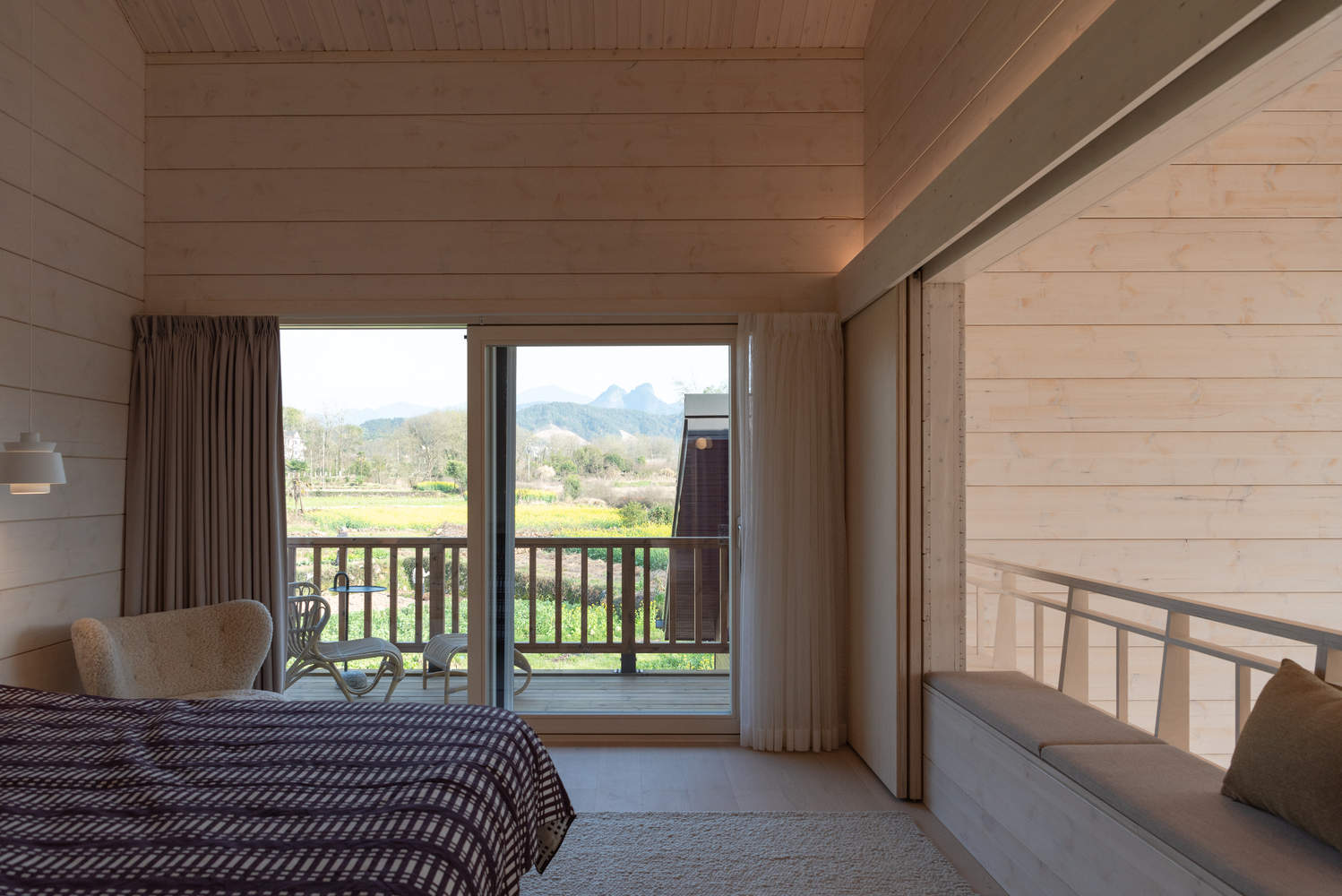
The main hall, wooden house, and kitchen all incorporate the genes of traditional Chinese courtyard residences into their respective volumes, and are reproduced in different languages in their respective scenes. The sliding doors of the master bedroom open into the courtyard where light overflows, directing the view towards the fields and streams. The reinterpreted 'Beauty Leans' lightly between them, framing Wanri and Gaolin. At breakfast, the silhouette of the distant mountains and the bamboo forest community turn into a vivid painting - a contemporary tribute to the "borrowing scenery" technique of Suzhou gardens.
堂屋,木屋,餐厨,三座建筑体量均融入了传统中国院落住宅的基因,在各自的场景以不同的语言再现。主卧室的对开移门通向光线漫溢的中庭,将视线引向田野与溪流。经过重新演绎的“美人靠”轻倚其间,框取晚日与高林。早餐时分,远山轮廓与竹林群落化作一幅活态画卷——是对苏州园林“借景”手法的当代致敬。
© 梁山
© 钱诗韵
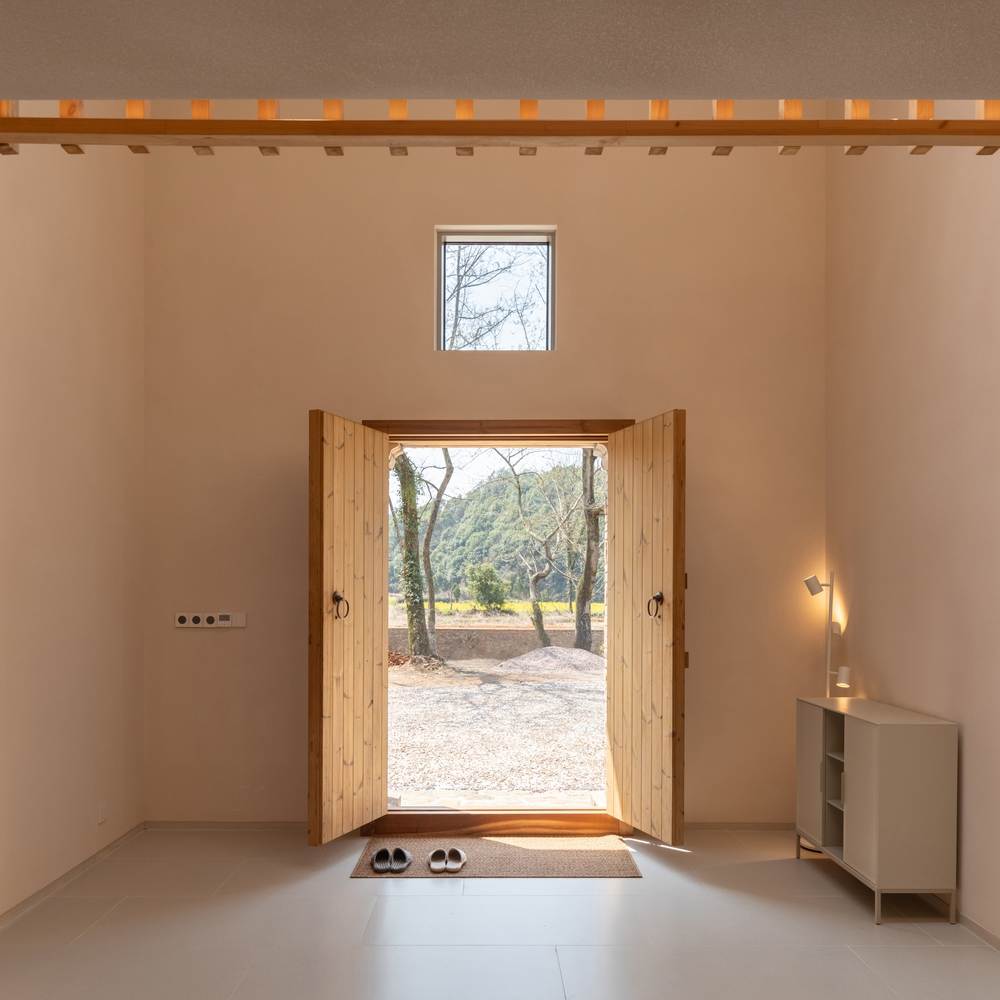
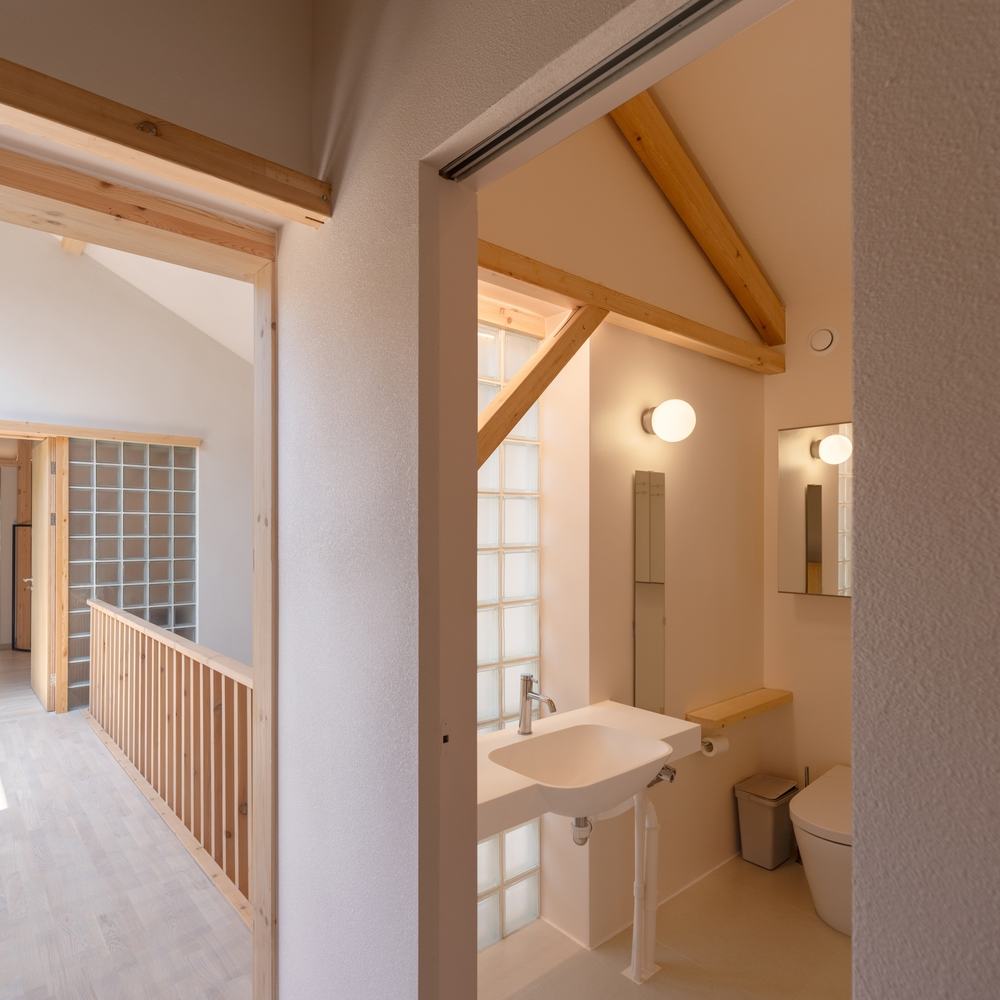
A skylight has been added to the central axis of the main hall, injecting natural light into the atrium. The spatial sequence of the former agricultural tools has been re planned to echo the original rhythm, while the rammed earth walls have been preserved, restored, and repainted with local craftsmanship. In the center of the main wall of the main hall, a section of primitive rough rammed earth wall has been preserved and framed as a circular "ancient painting", evoking a new image. The exterior facade of the hall entrance has also been rebuilt according to its original appearance, and the interior facade adopts a modern door frame method with airtight sealing. Both the door frame and the door are made of heat modified carbonized wood and closed with retro wood latches. The two-way moving windows in the room are also made of laminated wood, based on the traditional local moving window style, becoming a poetic medium for regulating natural light.
堂屋的中轴线上新增了一处天窗,为中庭注入自然光。昔日置架农具的空间序列经重新规划呼应原有的韵律,同时夯土墙得以保留、修复,并以当地工艺重新粉饰。堂屋正墙中央,一段原始的粗粝夯土墙被保留并被框为圆形“古画”,唤起故所新生的意象。堂屋入口外立面亦按原貌重建,室内立面采用了气密封闭的现代门框做法。门框和门都使用了热改性碳化木,并以复古木插销作为闭合方式。房间内的双向移窗同样采用胶合木制作,以本土传统移窗样式为基础,成为调控自然光的诗意媒介。
© 钱诗韵
© 钱诗韵
© 钱诗韵
Carrying my personal childhood memories, based on personal aesthetics and modern living design concepts, this modern residence is full of Nordic style, rich in functions, and fully integrated into nature and local customs. It provides me and my friends and family around me with a space to rest both physically and mentally, "said Mr. Zhu, the owner.
“承载了我个人的童年记忆,基于个人审美与现代居所设计理念,充满北欧风情,有丰富的功能也充分融入自然和当地生活习俗的现代居所,给我及我身边亲友提供了一个身心灵可以休憩的空间。” 业主祝先生如是说。
© 钱诗韵
© 钱诗韵
Jiangshan Vacation Wooden House is not a simple replica of the past, but a fusion of contemporary life and traditional Chinese values. It is a tribute to ancient wisdom and an exploration of the revitalization of local, life friendly, and sustainable lifestyles in contemporary China.
江山度假木屋并非对往昔的简单复刻,而是一处当代生活与中国传统价值的融合之所。它是对古老智慧的致敬,亦是对中国当代乡居中的在地性、亲生命与可持续生活方式共焕新生的探索。
© 钱诗韵
© 钱诗韵