Leon Fichte Street Residential Complex/FAR frohn&rojas
莱昂·费希特万格街住宅区楼群 / FAR frohn&rojas
© David Hiepler
© David Hiepler
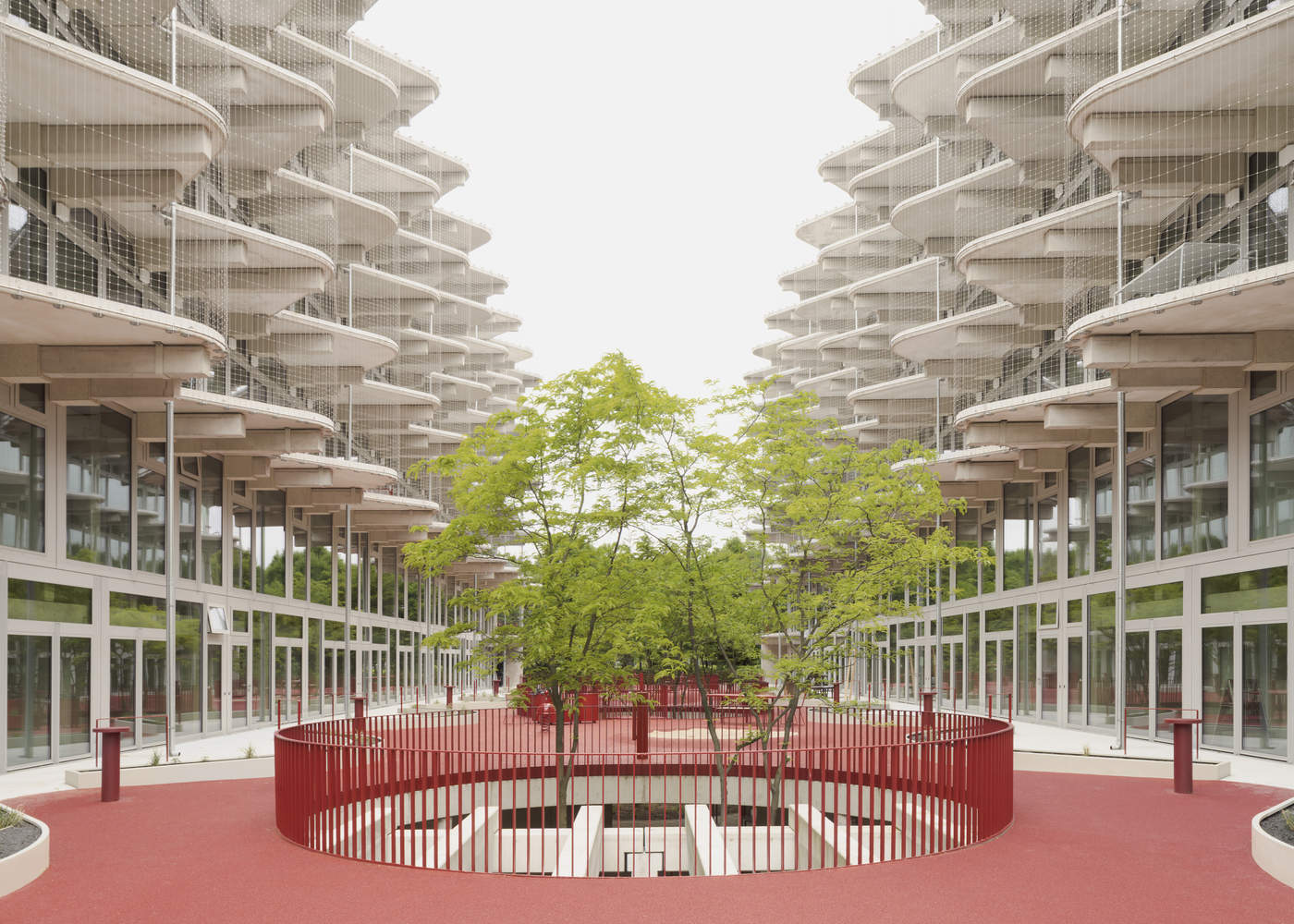
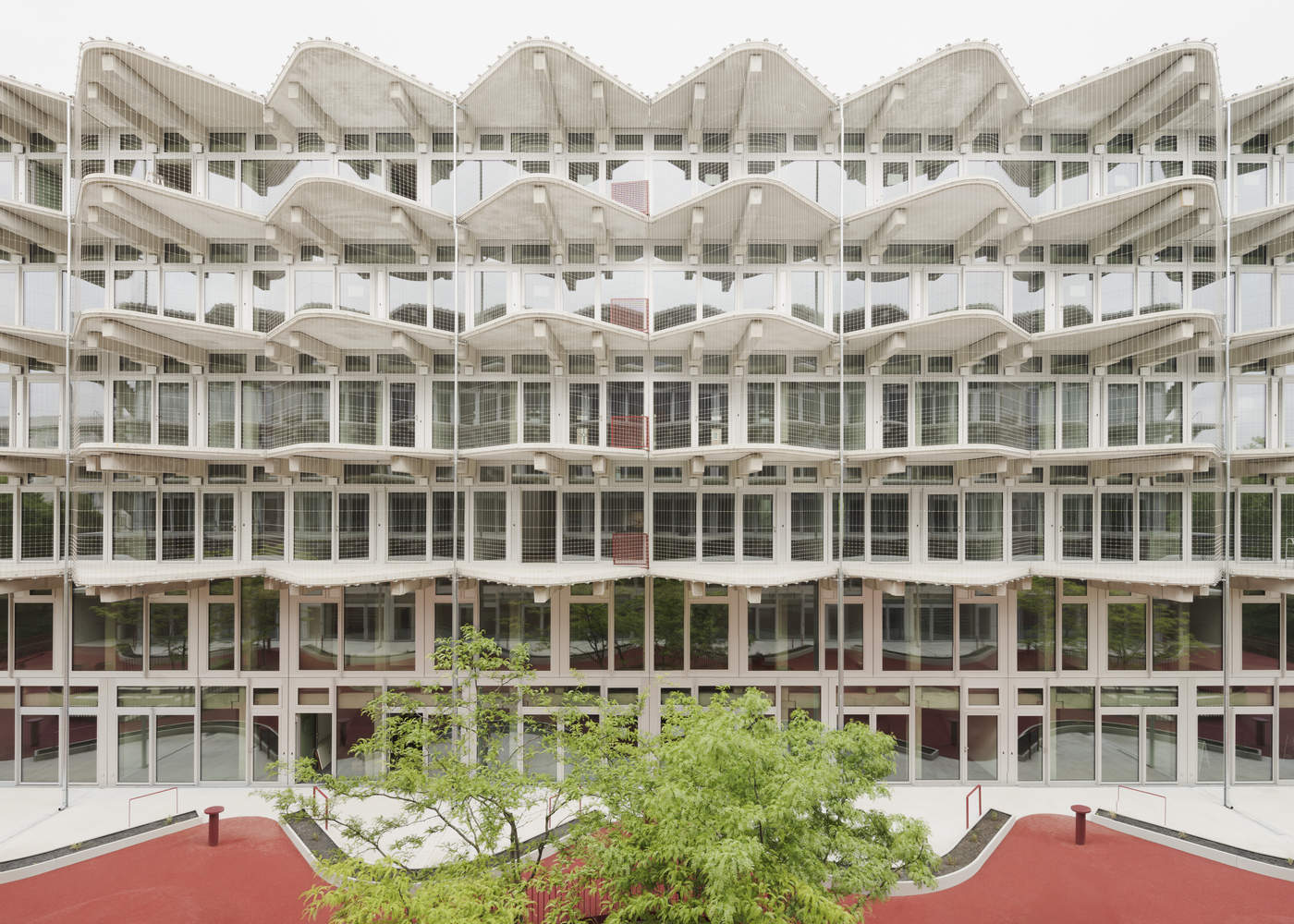
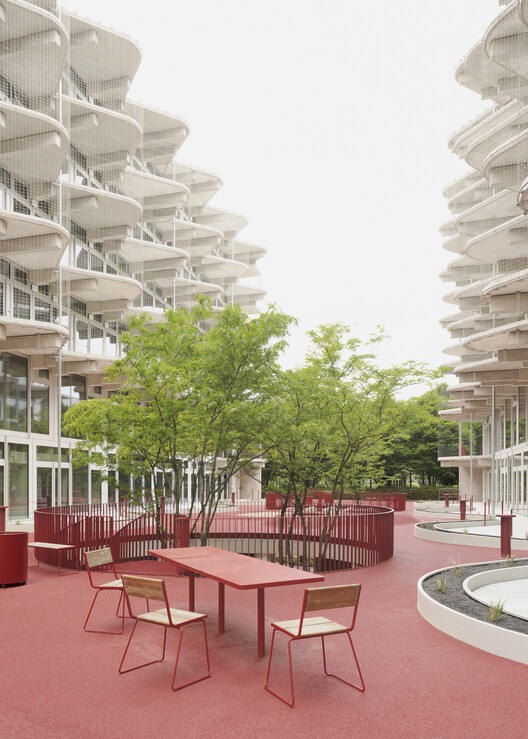
The intersection of two green axes - the Lion Feuchtwanger Strasse project is located at the intersection of two green axes that run north-south and east-west through the large former German residential area of Kaulsdorf Nord. Two six story residential buildings surround a raised garden platform designed as the central public area of the residential area, featuring leisure, play, and gathering spaces. Below the platform is a well lit transportation layer, equipped with more sports facilities, bicycle and car parking spaces, electric vehicle charging stations, and residential parcel stations. The project owner is the real estate developer Euroboden.
两条绿色轴线的交汇——莱昂·费希特万格街(Lion-Feuchtwanger-Strasse)项目地处两条绿色轴线的交汇处,这两条轴线以南北向和东西向贯穿卡尔斯多夫北(Kaulsdorf Nord)这片大型原民主德国住宅区。两栋六层住宅楼环绕着一个抬升的花园平台,该平台被设计为住宅区的中央公共区域,设有休闲、游乐和聚会空间。平台下方是采光良好的交通层,配备有更多体育设施、自行车和汽车停车位、电动汽车充电站以及居民包裹驿站。项目业主为房地产开发商欧博登(Euroboden)公司。
© David Hiepler
Series construction - The project is surrounded by prefabricated buildings from the 1980s, continuing the story of series construction. It uses a series of prefabricated concrete component skeletons to counteract the wall panels produced in bulk by surrounding prefabricated buildings, which are commonly used in industrial and commercial buildings. Based on this system, the project meets people's increasingly diverse expectations for their lifestyles and work styles. FAR frohn& Rojas Architects has demonstrated the potential of this construction method in the Wohnegal project in Moabit, Berlin.
系列化建造——该项目被 20 世纪 80 年代的预制建筑环绕,延续了系列化建造的故事。它以系列化预制混凝土构件骨架,对抗周边预制建筑批量生产的墙板,这些构件通常用于工业和商业建筑。基于这一体系,该项目满足了人们对于生活和工作方式日益增长的多样化期待。FAR frohn&rojas 建筑事务所已在柏林莫阿比特(Moabit)的“住宅货架”(Wohnregal)项目中展示了这种建造方式的潜力。
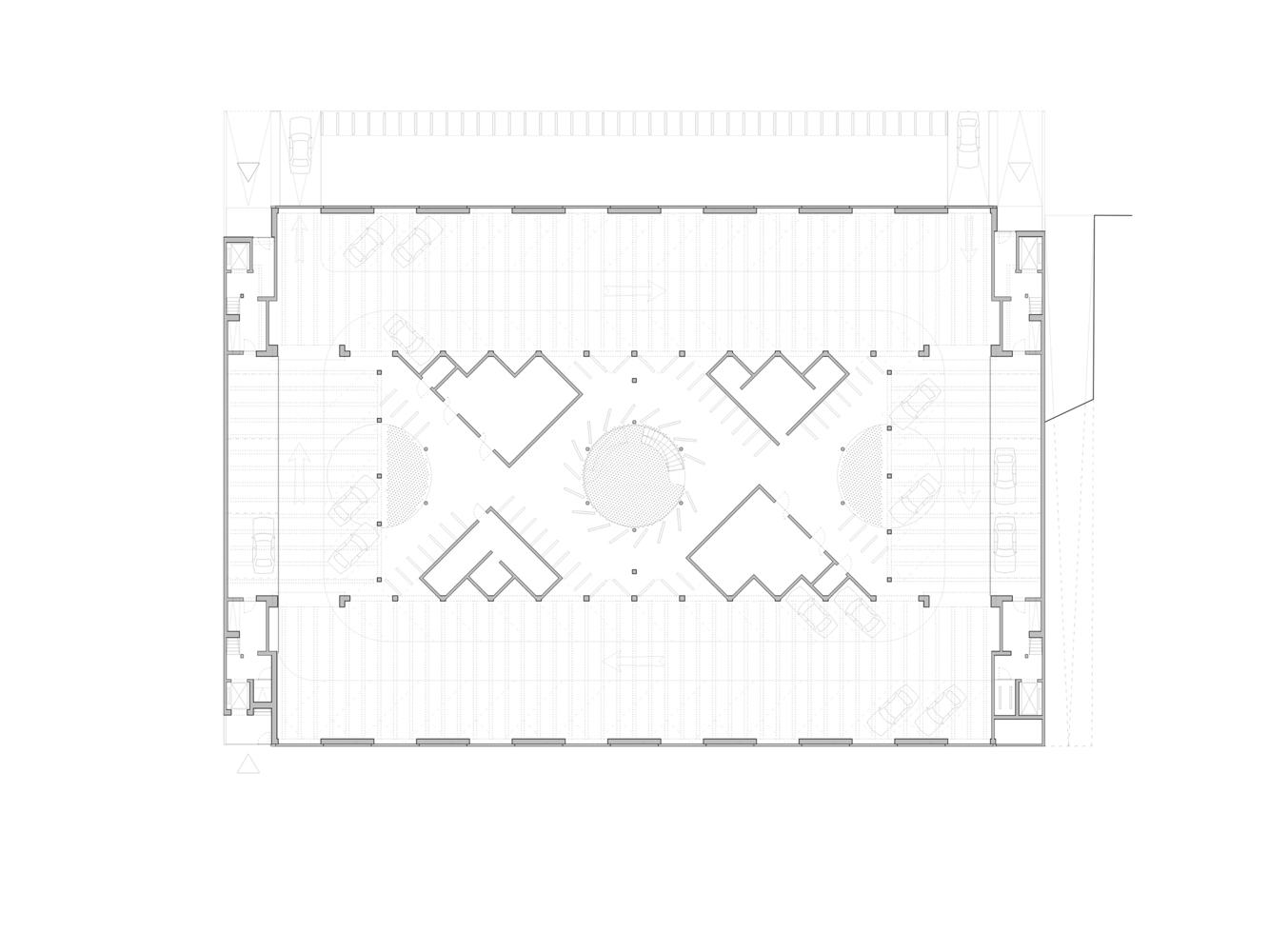
底层平面图——交通层
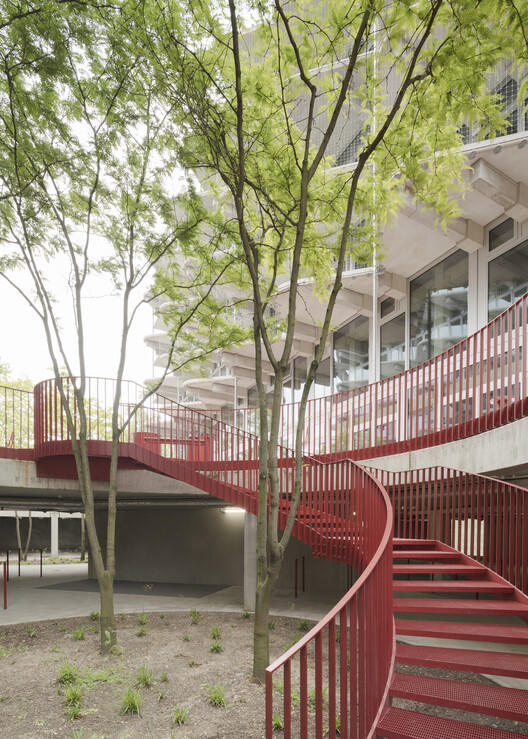
The traffic flow serves as a social space - two residential buildings face the central garden platform to form an open arcade, through which upper level apartments enter. They are both traffic flow lines and stopping places. The extended arcade creates a private wavy outdoor resting area in front of each apartment building, overlooking the garden platform. The exquisite stainless steel mesh not only serves as a guardrail, but also provides convenience for plant climbing.
交通流线作为社交空间 —— 两栋住宅楼朝向中央花园平台形成开放式拱廊,上层公寓通过这些拱廊进入。它们既是交通流线,也是停留场所。延伸的拱廊在每栋公寓前创造出一个私密的波浪形户外休息区,可俯瞰花园平台。精致的不锈钢网既作为护栏,也为植物攀爬提供了便利。
© David Hiepler
© David Hiepler
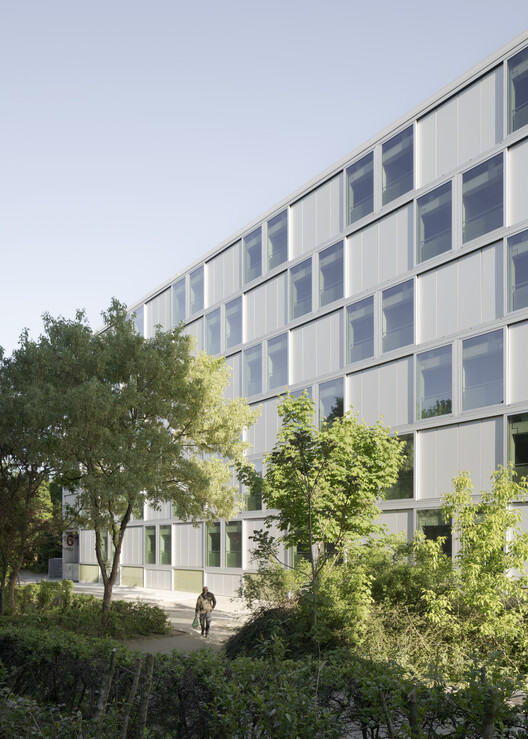
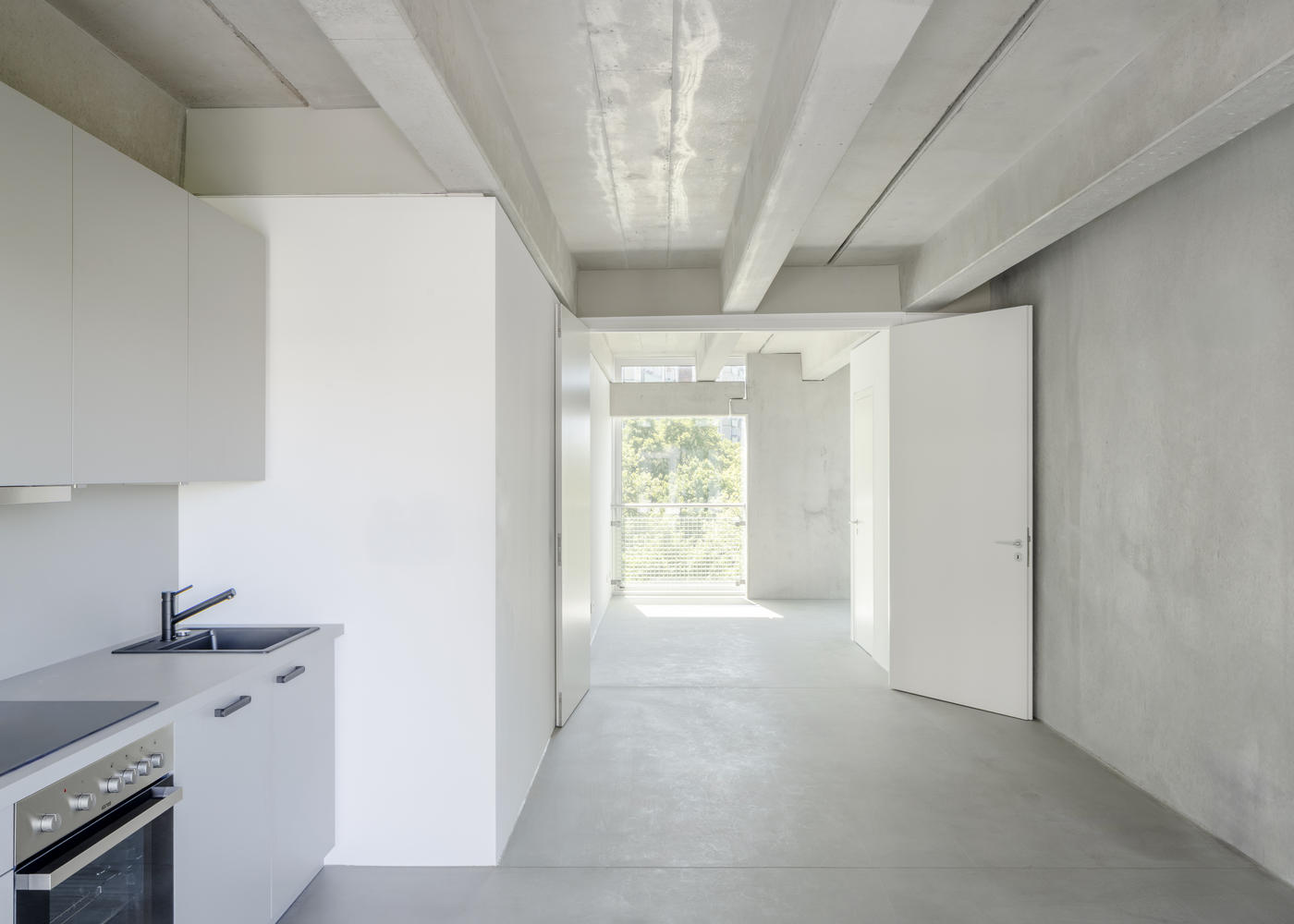
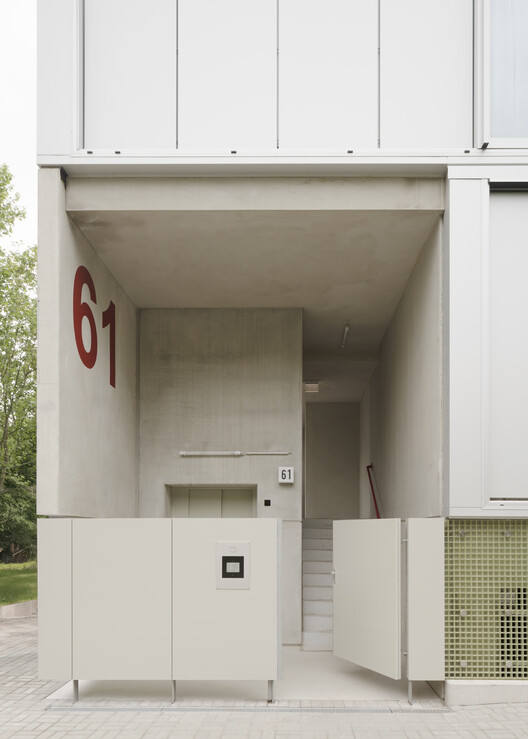
Residential diversity - facing towards the "outside", that is, the neighborhood side, both buildings are presented in a closed image, with French balconies and floor to ceiling sliding windows alternately arranged, interspersed with closed aluminum panels. All apartments are open to both ends of each building: facing both the garden platform and the adjacent external space. Its open plan layout allows residents to decide for themselves whether to face the more private living area towards the outside or the garden platform.
住宅多样性 —— 朝向“外部”、即邻里一侧,两栋楼均以封闭式形象呈现,法式阳台与落地推拉窗交替排列,并穿插有封闭的铝制面板。所有公寓均朝向每栋楼的两端开放:既面向花园平台,也面向邻近的外部空间。其开放式平面布局让居民可以自行决定将更私密的起居区域朝向外侧还是花园平台。
© David Hiepler
© David Hiepler
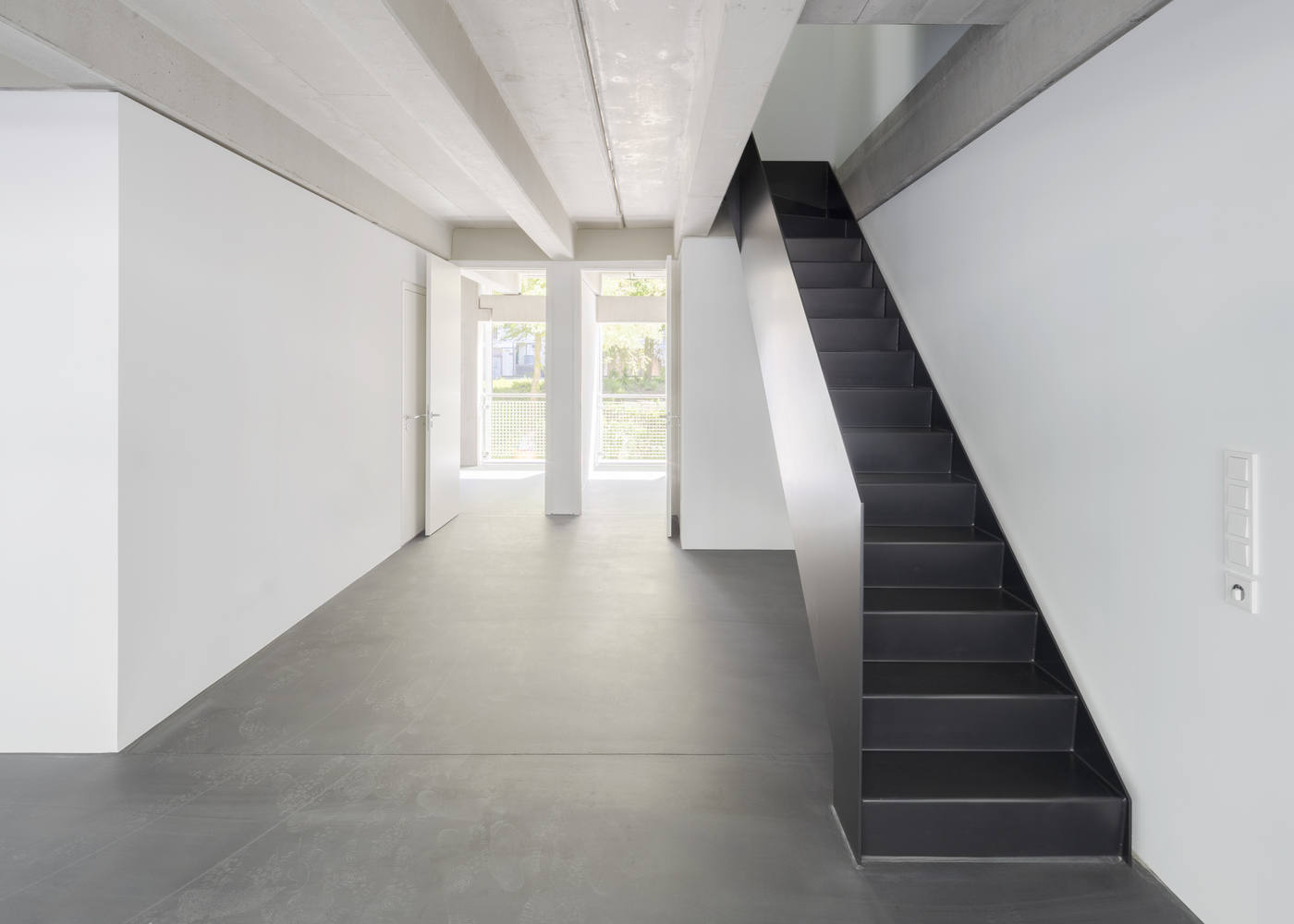
Within the basic serialized structural framework, the project offers a diverse range of residential types combinations. The two-story 'row house' located directly on the garden platform is designed specifically for families. The numerous different apartments upstairs are all single story structures.
在基本的系列化结构框架内,该项目提供了丰富多样的住宅类型组合。直接位于花园平台上的两层“联排别墅”专为家庭设计。楼上众多不同的公寓则均为单层结构。
© David Hiepler