Ritz Carlton Inn Jiuzhaigou Valley Scenic and Historic Interest Area Risaigu/WATG+CSWADI
九寨沟日赛谷丽思卡尔顿隐世酒店 / WATG + CSWADI
项目亮点:文化语境的深度融合:九寨沟丽思卡尔顿隐世酒店项目的核心魅力在于其对藏、羌地域文化的深刻解读与融合。设计师并非简单地复制传统元素,而是深入挖掘藏寨建筑的精髓,并将其巧妙地融入到现代酒店的设计中。这体现在建筑的布局、外观、材料、室内装饰等各个方面,例如,整体布局借鉴了传统藏寨散落式的风格,顺应地形,与环境和谐共生;建筑外观则融入了藏羌碉楼的雄浑与木制榻板房的质朴;室内装饰则大量运用了木结构,并融入吉祥纹样、藏式物件等,使得酒店充满了浓郁的地域文化特色。这种深度融合,使得酒店不仅仅是一个住宿场所,更是一个文化体验的载体,让客人沉浸在独特的文化氛围中。
项目精髓:空间序列的巧妙设计:该项目在空间序列的设计上展现出卓越的匠心。从落客区的“前院”到客房的“小院”,再到宽敞的私人露台,不同功能、不同尺度的院落空间创造出丰富的空间层次。这种空间序列的设计,不仅增强了酒店的私密性,也为客人提供了独特的体验。客房内部的设计同样值得称赞,精致的木门、稻草和夯土墙围合的私人院落,营造出温馨舒适的“归家”感。此外,项目还巧妙利用高差,设置不同标高的出入口,实现动线分离,互不干扰,保证了游客和后勤人员的顺畅通行。这些精心设计的空间序列,使得酒店的各个部分相互关联,形成一个有机的整体,给客人带来流畅而难忘的体验。
项目亮点:可持续与地域特色的和谐统一:该项目在可持续发展理念与地域特色的结合方面做得非常出色。设计中,建筑单体借鉴藏寨传统吊脚楼形式,通过吊层设置配套设备用房,既节约了空间,又保障了采光通风和景观体验。同时,项目注重材料的选择,大量使用夯土、木材等天然材料,与周围环境融为一体,减少了对环境的破坏。项目还积极响应当地文化,将藏式民居的院落空间融入设计,在细节处体现对地域文化的尊重。这种可持续发展理念与地域特色的完美结合,使得酒店在展现奢华品质的同时,也体现了对环境和文化的尊重,实现了经济效益、社会效益和环境效益的统一,为未来的酒店设计提供了值得借鉴的经验。
© 404NF STUDIO
© 404NF STUDIO
The Ritz Carlton Inn, located in Zhongchagou, Zhangzha Town, Jiuzhaigou Valley Scenic and Historic Interest Area, is the first "Inn" resort of Marriott International Hotel Group in China and the sixth in the world. The design is based on the cultural context of the Tibetan and Qiang regions, guided by the spirit of the place, and continues the design concept of "Sichuan style construction" to build a community of buildings rooted in nature and organically growing.
丽思卡尔顿隐世酒店位于九寨沟漳扎镇中查沟,为万豪国际酒店集团在国内的首家、全球第六家“隐世”系列度假酒店。设计以藏、羌地域文脉为建构基础,以场所精神为引导,延续“川派营建“的设计理念,建造根植于自然,有机生长的建筑群落。
© 404NF STUDIO
© 404NF STUDIO
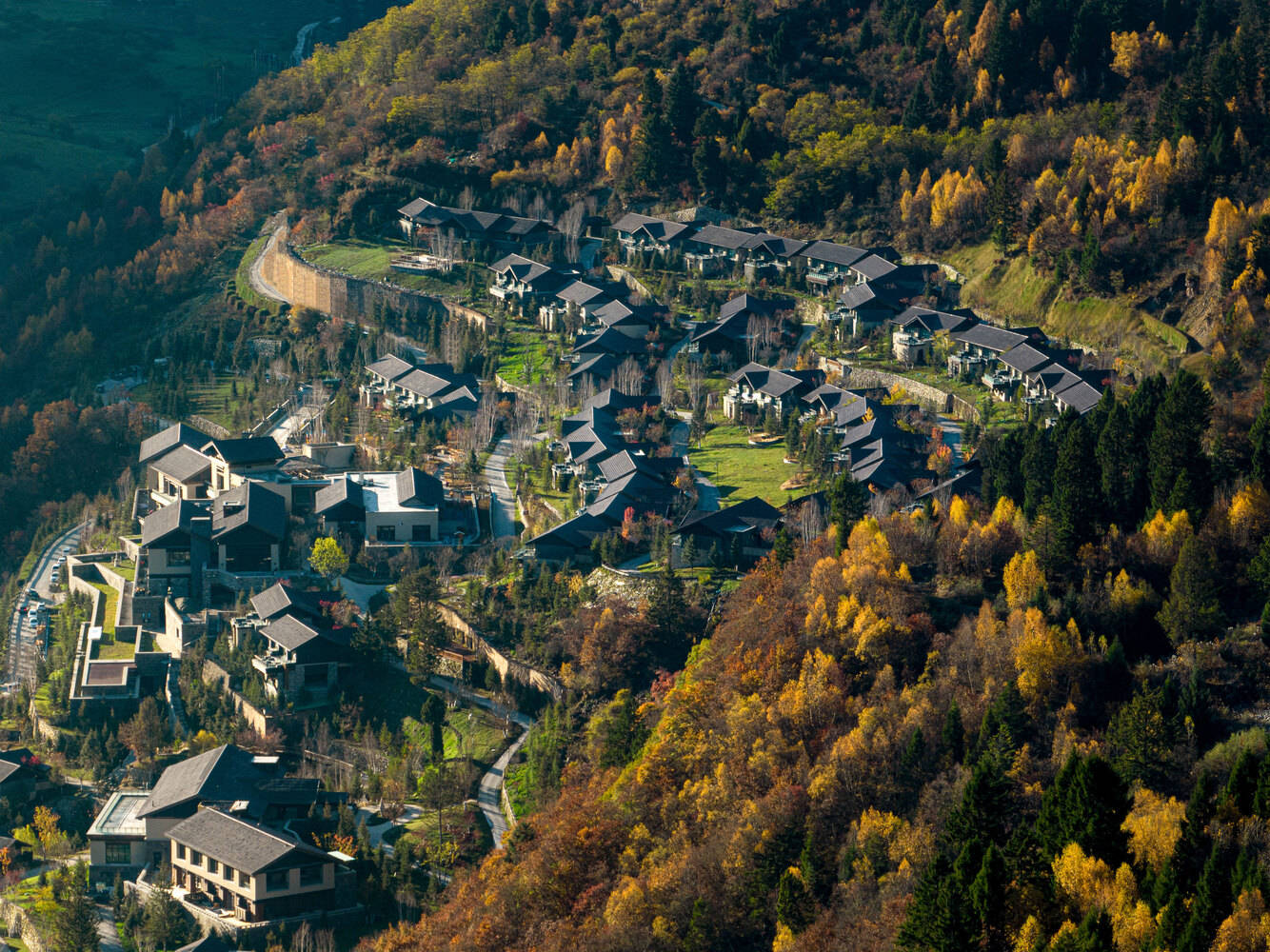
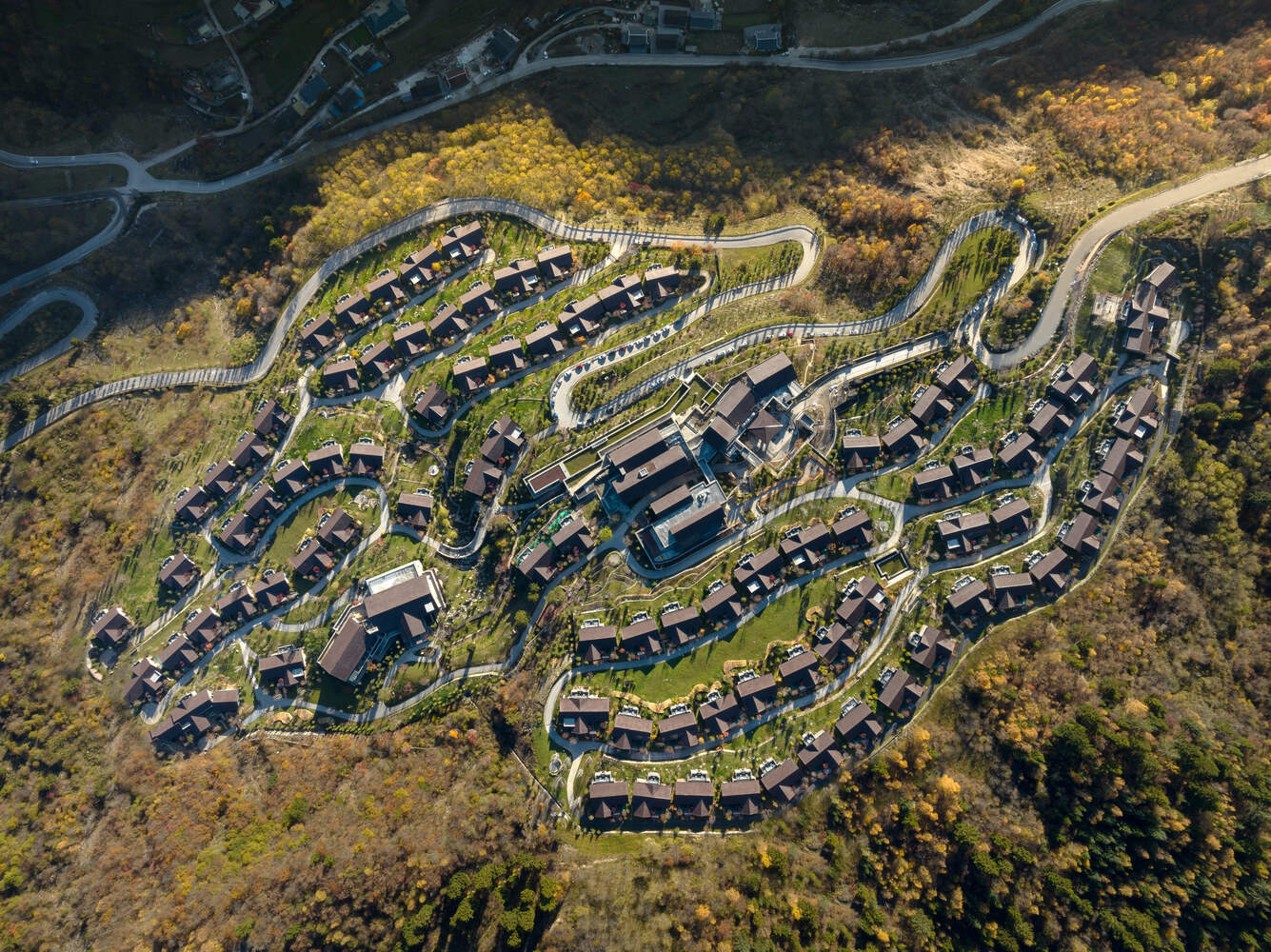
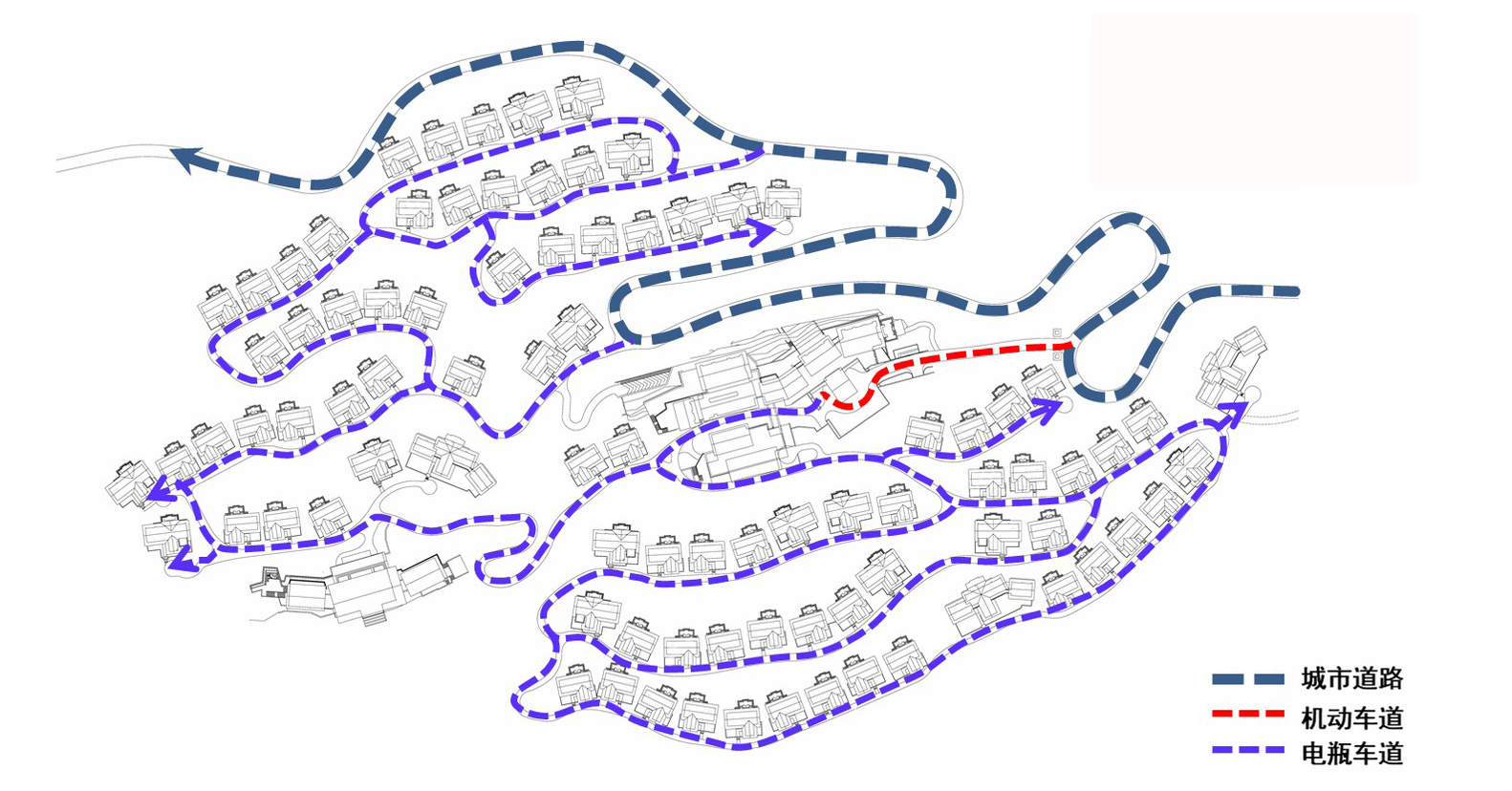
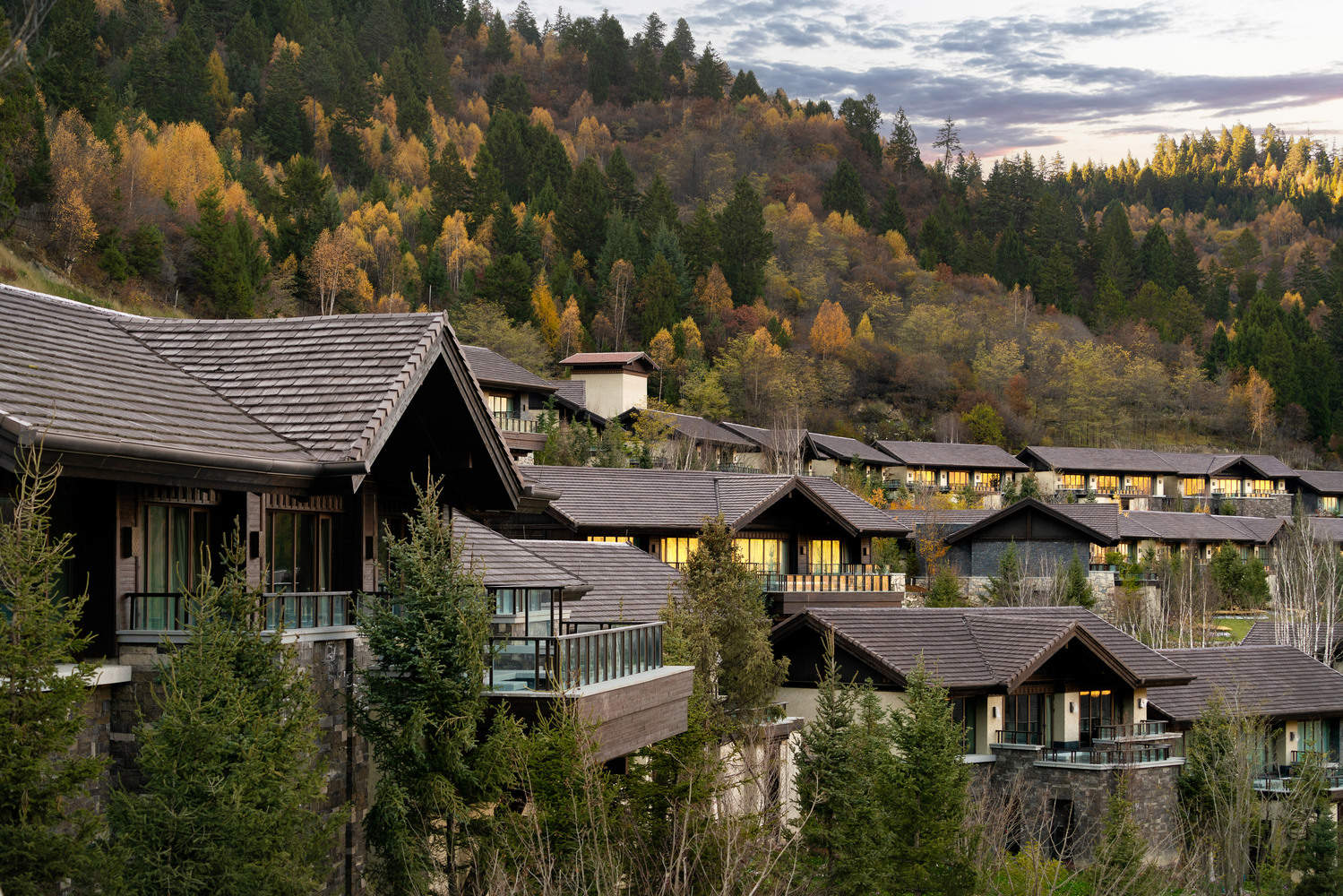
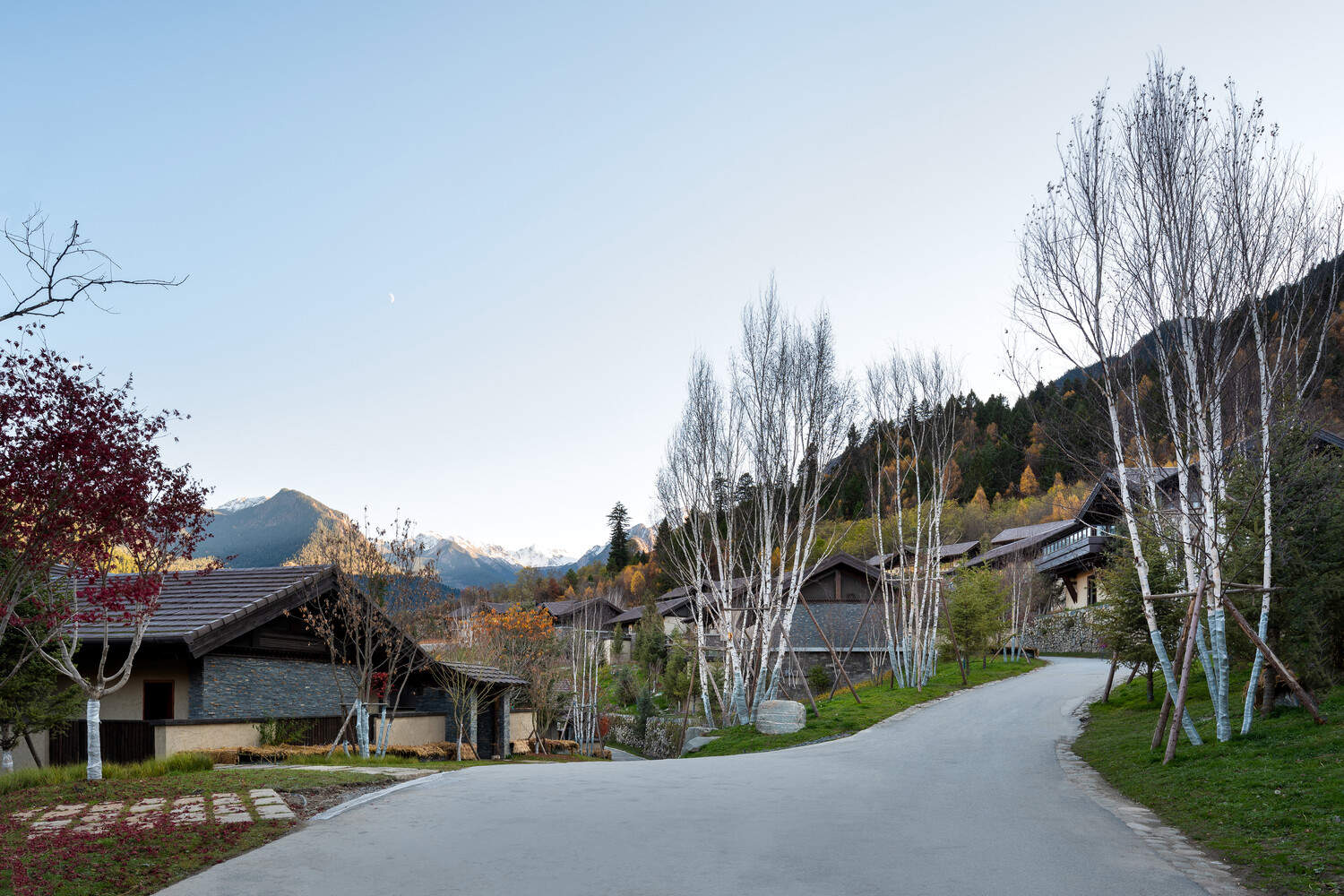
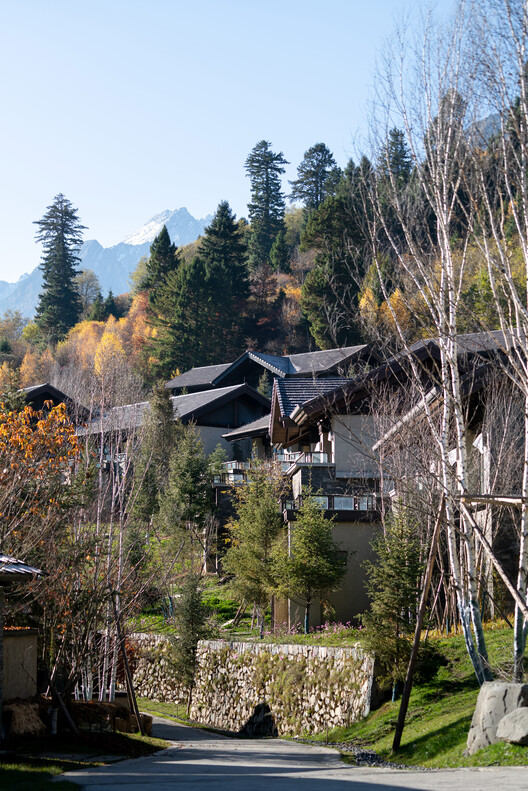
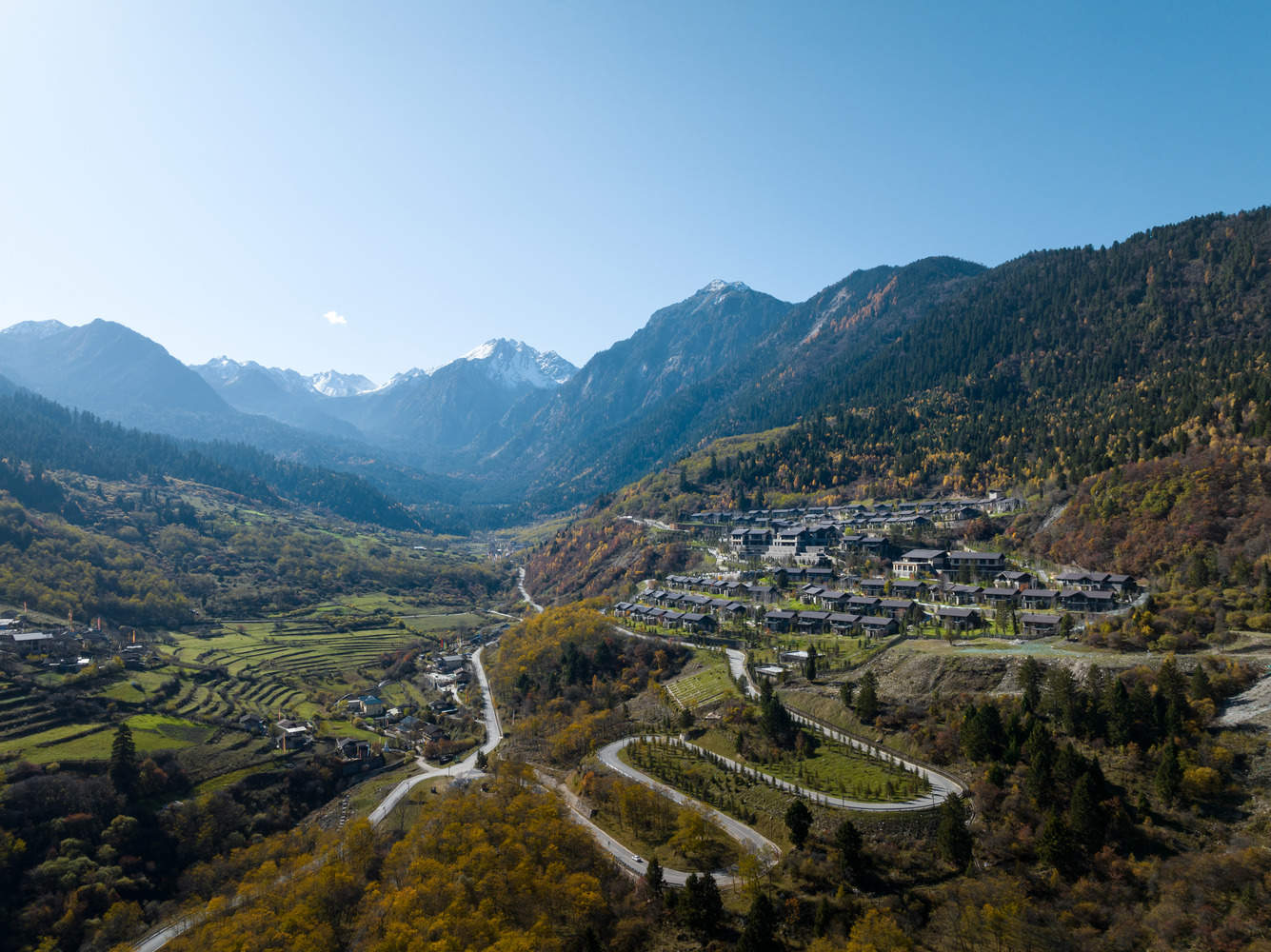
Rissai "means" village "in Tibetan, symbolizing a pure land built in a valley with a thousand years of cultural heritage. The formation of the spatial pattern of traditional Tibetan villages is closely related to terrain, climate, production and lifestyle, as well as religious culture. The overall layout of traditional Tibetan villages in mountainous areas is scattered, arranged in a staggered manner according to the mountain terrain, with watchtowers as the core and roads winding along the terrain. Residential buildings enclose courtyards, taking into account wind and cold prevention as well as defense. They are hidden in dense forests and blend harmoniously with mountains, forests, and streams. The hotel is located on the west side of the valley in the middle of Zhongchagou, with the entire site situated in the middle of a steep slope that is high in the west and low in the east. The highest point within the land has an elevation of 2400m, the lowest point is 2311m, and the maximum vertical height difference is 89m. To the east of the valley, there is the Tibetan village "Boryeo Village" hidden in the Zhongchagou Valley, with its original flavor. The overall planning of the hotel draws inspiration from the scattered layout of traditional Tibetan villages in mountainous areas, following contour lines and adapting to the situation. The project covers an area of 166088 square meters, with a total construction area of 36217 square meters, including 87 luxury private villas, hotel public areas, and SPA. The overall layout is centered around the public area in the central hinterland, with other buildings surrounding it in a row among the shallow mountains, living in harmony with the scenery, like a quaint village, echoing the "Borio Village" across the valley, truly a luxurious "hidden world". The hotel is connected to the outside world through a winding mountain road. After entering the hotel area, one can travel up the road to reach the public area, pass through a gate, and under the guidance of a private butler, transfer to a sightseeing bus to stay in the guest room.
“日赛”(Rissai)藏语意为寨子,寓意在山谷中以千年文脉筑起的一方净土。传统藏寨空间格局形成与地形气候、生产生活方式、以及宗教文化都有密切关系。山地传统藏族村寨总平呈散落式布局,依山势层级错落,以碉楼为核心,道路沿地形蜿蜒连通,民居围合院落,兼顾防风防寒与防御,隐立于密林之中,与山林溪流相融共生。酒店地处中查沟中部山谷的西侧,整个场地处于西高东低的山坡中部,地势陡峭。用地内最高点海拔 2400m,最低点 2311m,垂直高差最大处达 89m。正对山谷的东侧,则是隐藏在中查沟山谷中原汁原味的藏族村寨“波日俄寨”。酒店总体规划借鉴山地传统藏寨散落式布局,顺应等高线,随形就势。项目占地 166088㎡,总建筑面积 36217㎡,包括 87 栋豪华私人别墅、酒店公区和 SPA,总体布局以中心腹地的公区为核心,其余建筑围绕其周,鳞次栉比地环绕于浅山之间,向景而居,浑然天成,如同一座古朴村寨,与山谷对面的“波日俄寨”遥相呼应,名副其实的奢华“隐世”。酒店由一条蜿蜒的盘山公路与外界联系,进入酒店区域后,沿路而上到达公区,穿过一道寨门,在私人管家带领下,转乘观光车至客房下榻。
© 404NF STUDIO
© 404NF STUDIO
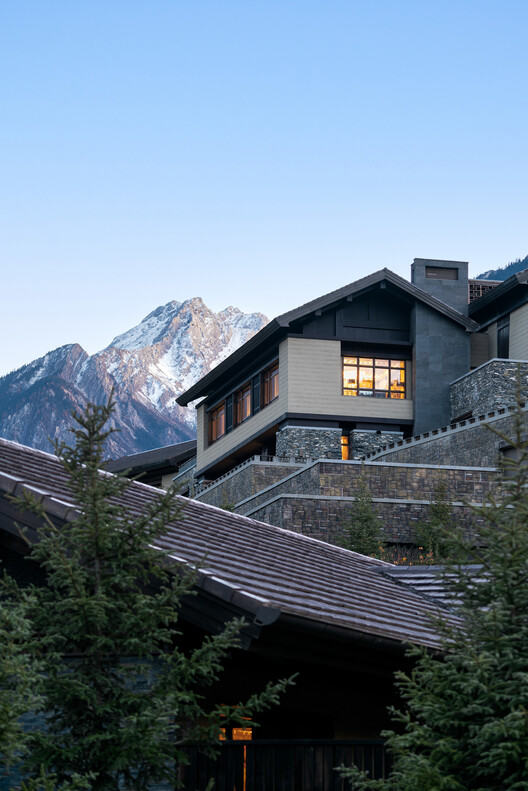
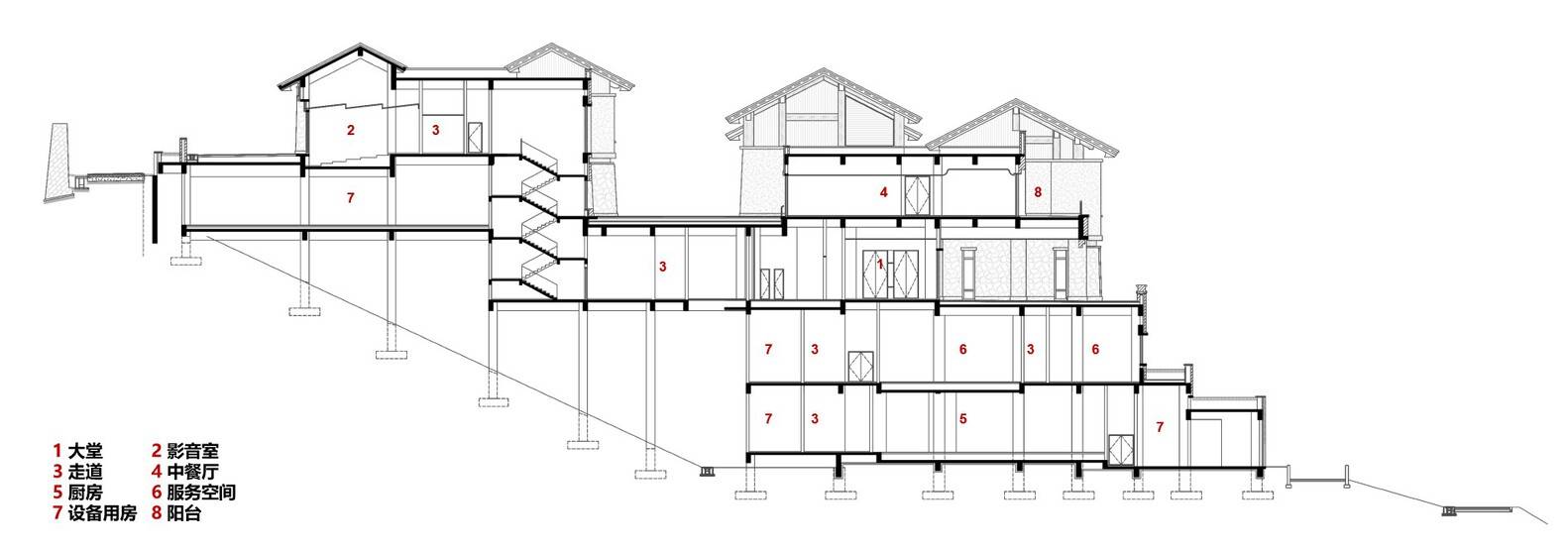
The architectural unit draws inspiration from the traditional form of suspended buildings in Tibetan villages, using suspended floors to set up supporting and equipment rooms. The guest rooms have one floor above ground and one suspended floor. The upper part serves as a residential area, ensuring natural lighting, ventilation, and a scenic experience. The lower suspended floor is used as a supporting or equipment room; The public area consists of two above ground floors and three suspended floors. The upper floor meets the needs of large spaces such as hotel catering and banquets, while the lower suspended floor provides auxiliary functions such as logistics and parking. Using the height difference to set up entrances and exits at different elevations, the tourist entrance is located in the center of the first floor, which is convenient and has a good landscape. The logistics entrance is concealed to achieve separation of flow lines and non-interference with each other. In addition, each guest room base is equipped with an eastward leisure terrace, and the front and rear rows of guest rooms maintain a height difference of about 7 meters, ensuring that each guest room has a good landscape view, overlooking the snow capped mountains and the original ecological ancient Tibetan village.
建筑单体借鉴藏寨传统吊脚楼形式,利用吊层设置配套、设备用房。客房为地上一层,吊脚一层,上部分为居住功能,保障采光通风与景观体验,下部吊层作配套或设备用房;公区为地上两层、吊脚三层,上部满足酒店餐饮、宴会等大空间需求,下部吊层承担后勤、停车等辅助功能。利用高差设不同标高出入口,游客入口位于首层中心位置,便捷且景观佳,后勤入口则隐蔽设置,实现动线分离、互不干扰。此外,每一栋客房基座之上均设置东向休闲露台,且前后排客房保持约7米高差,确保每套客房拥有良好的景观视野,远眺雪山近瞰原生态古藏寨。
© 404NF STUDIO
© 404NF STUDIO
While drawing inspiration from the traditional spatial layout of Tibetan villages, combined with the functional needs of modern hotels, the "courtyard" space of traditional Tibetan style residences is referenced. From the "front yard" of the drop off area to the "small courtyard" of the guest room entrance, from open to private, different functions and scales of courtyard spaces create different spatial atmospheres. The guest rooms focus on providing guests with a warm "homecoming" feeling, with exquisite and compact wooden doors welcoming them to the hospital. The private courtyard surrounded by straw and rammed earth walls adds a sense of seclusion. Passing through the entrance, living room, and bedroom, guests arrive at a spacious private terrace, facing the green fields and mountain streams in their private space, embracing antiquity.
在借鉴传统藏寨空间布局的同时,结合现代酒店功能需求,引用传统藏式民居的“院落”空间,从落客区的“前院”到客房的入户“小院”,从开放到私密,不同功能、不同尺度的院落空间营造出不同的空间氛围。客房注重为宾客提供温馨的“归家”感,精致小巧的木门迎宾入院,稻草、夯土墙围合的私人院落更具避世之感,穿过玄关、客厅、卧室来到宽敞的私人露台,让宾客在私密空间面朝绿野山涧,拥抱古朴。
© 404NF STUDIO
© 404NF STUDIO
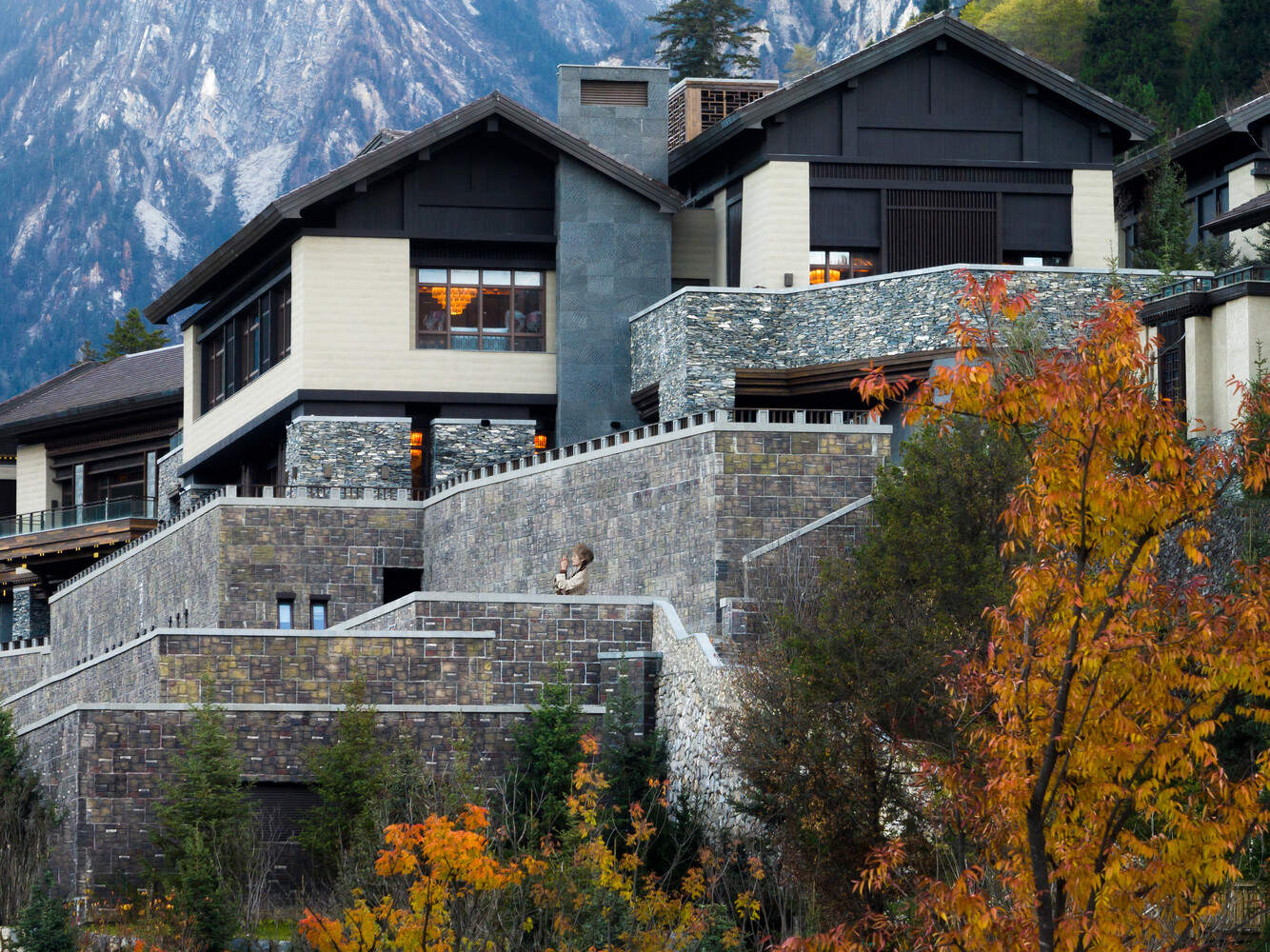
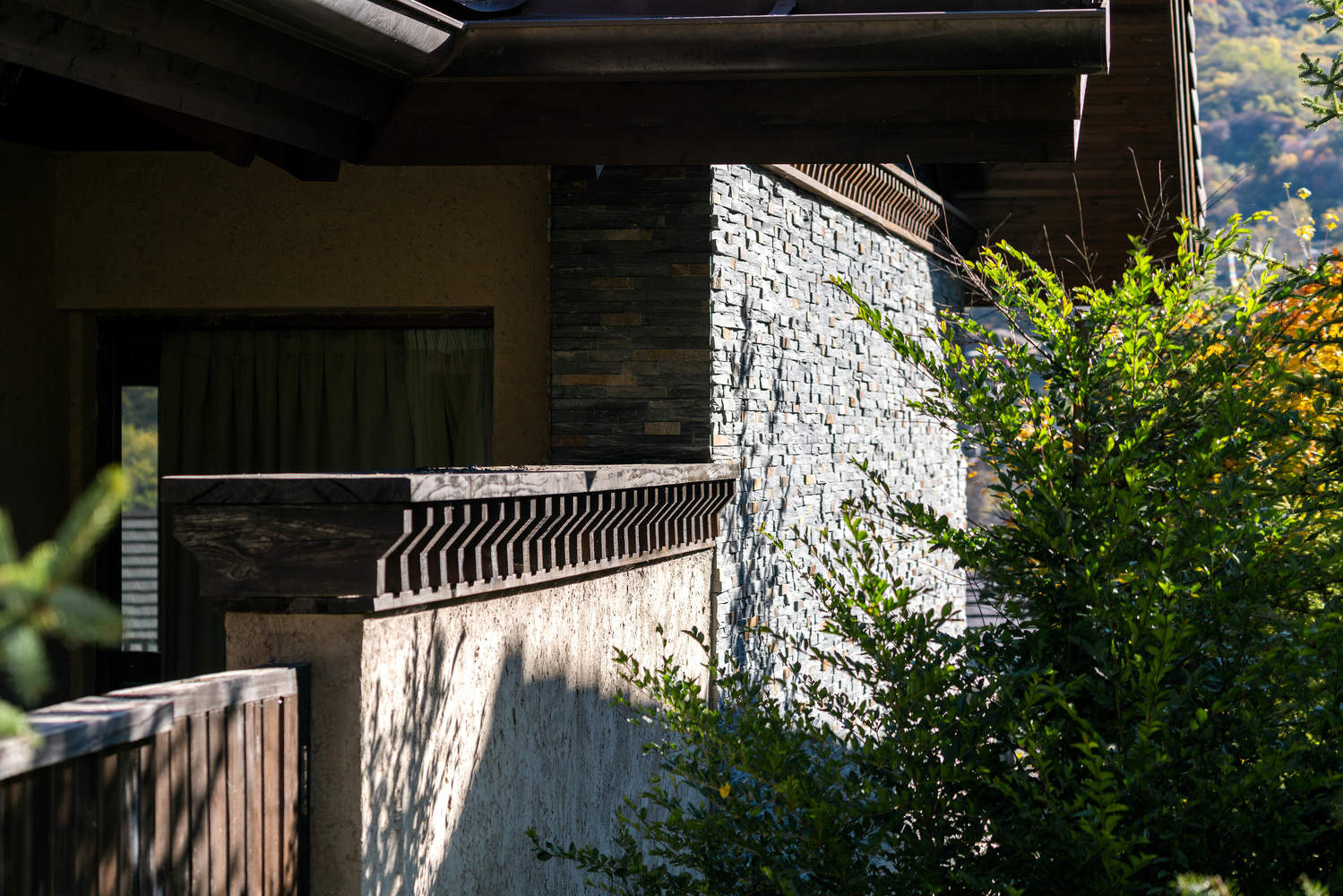
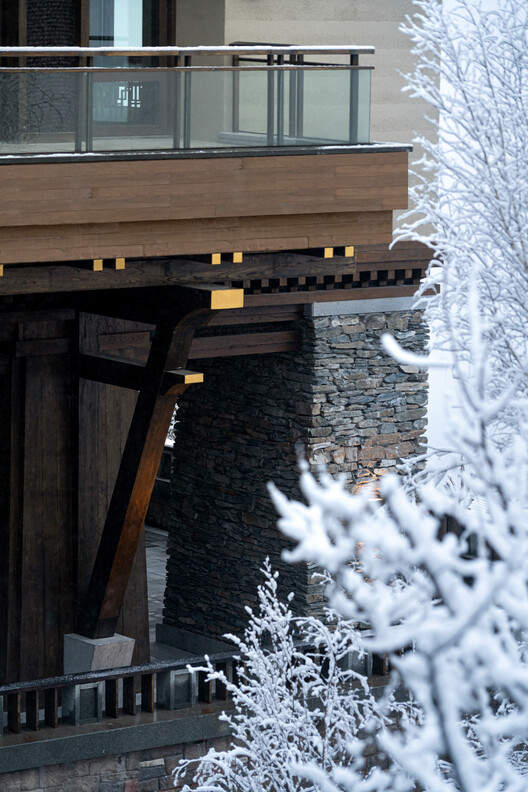
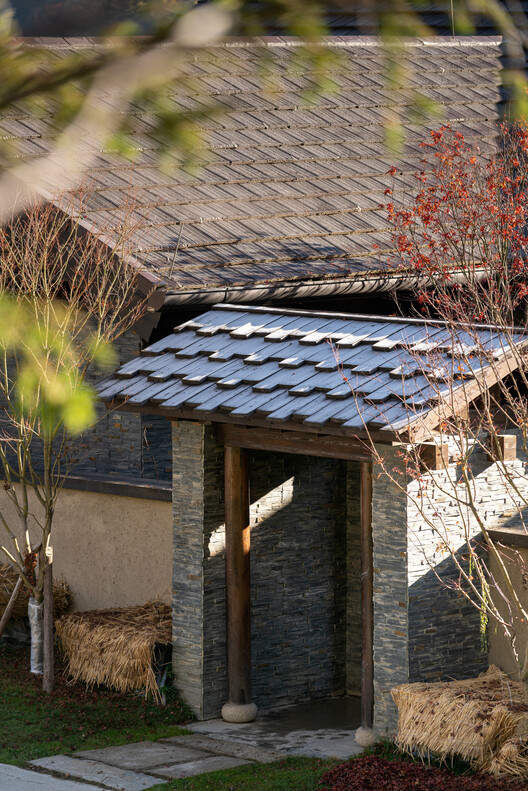
The architectural style draws inspiration from Tibetan and Qiang traditions, using the grandeur of Tibetan watchtowers and the primitive simplicity of Tibetan wooden tatami houses as a blueprint. The facade design incorporates a three part form, continuing the prominent suspended mountain roof, the ancient and wide rammed earth and wooden walls, and the well proportioned base. The architectural design extracts typical features and symbolic language of traditional Tibetan architecture, which are used in the decoration design of wooden components to interpret structural styles such as "Bianma Wall" for walls, "Feizi Wood" for window lintels, and "door bracket" for wooden doors. The height of the building ridge changes and interweaves, and the top lines of the building complex are dynamic and varied. Against the backdrop of towering snow capped mountains, the building and environment blend harmoniously, together outlining a beautiful natural picture. The interior design cleverly integrates Tibetan and Qiang culture, eliminates unnecessary decorations in the interior space, showcases the wooden structural system, and fully displays the beauty of the intersection of beams and columns and the rhythm of the arrangement of first-class rafters. The mirrored layout of the lobby functional area and the axis of guest rooms follow a central sequence. These visual orders all reflect the unique solemnity of Tibetan architecture. The lobby bar replicates the fire pit and chimney, restoring folk scenes; The headboard of the guest room is decorated with auspicious patterns, which are echoed by carpets and lintels. Lucky patterns are used as spatial separation elements in public areas. There are Tibetan objects placed indoors, many of which come from local villagers' homes and have been cleaned or repaired to become the finishing touch in the guest rooms. These symbols that condense regional genes allow Tibetan style to flow naturally from details.
建筑风貌从藏羌传统中汲取灵感,以藏羌碉楼的雄浑与藏式木制榻板房的原始古朴为蓝本,建筑立面设计融入三段式形式,延续了量感明显的悬山坡屋顶,古朴宽厚的夯土与木板墙身以及收分适宜的基座。建筑构造设计提取传统藏式建筑的典型特征与符号语言,用于木构件的装饰设计中,演绎围墙“边玛墙”、窗楣“飞子木”,木门”门斗“等构造样式。建筑屋脊高低变化、穿插组合,建筑群落顶部线条灵动多变,在巍峨雪山背景的映衬下,建筑与环境和谐相融,共同勾勒出一幅至美的自然画卷。室内设计巧妙融合藏羌文化,室内空间摒除多余装饰,展露木结构体系,完整显现梁柱穿插交接之美与一品品椽子排列的节律之美。大堂功能区镜像布局、客房入户轴线遵循中正序列,这些视觉秩序无不体现着藏式建筑特有的庄重感。大堂吧复刻火塘与烟囱,还原民俗场景;客房床头装饰吉祥纹,地毯、楣梁与之呼应,公共区域采用吉祥纹作为空间分隔元素。室内摆放着藏式物件,很多都来自当地村民家,经过清洁或修缮后成为客房中的点睛之笔。这些凝练着地域基因的符号,让藏式风情自细节处自然流淌。
© 404NF STUDIO