Supporting buildings of Tangshan Ape Man Cave Scenic Area in Nanjing/
南京汤山猿人洞景区配套建筑 /
适应性更新与功能织补:此项目最引人注目的亮点在于其对城市-乡村交界地带的巧妙适应与功能织补。设计团队并未将景区视为孤立的个体,而是将其与周边社区紧密相连。通过对交通流线的优化、公共空间的营造以及配套设施的完善,项目不仅提升了景区自身的品质,更有效地补充了周边社区的功能短板。主广场的开放、儿童乐园的设置以及特色餐厅的引入,都体现了对社区居民需求的深入理解,赋予了该地更强的活力与吸引力。这种将景区功能与社区需求相结合的设计理念,实现了经济效益与社会效益的共赢。
在地性材料与建造的对话:项目在材料选择和建造方式上展现了强烈的在地性。设计团队充分利用了当地的自然资源,如夯土、竹木等,并将这些材料与现代建筑技术相结合。夯土墙、工程竹框架等元素的运用,不仅营造出独特的建筑语言,也呼应了汤山地区的地域特色。通过对材料的精细加工与组合,建筑呈现出一种与环境对话的姿态。此外,装配式技术的应用也体现了对施工效率和环保的考量。整体而言,项目在材料的选择和建造方式上都体现了对在地性的尊重与创新,营造出一种朴实而富有深度的建筑体验。
建筑细节与环境的和谐共生:项目的精髓在于其对细节的极致追求,以及建筑与环境的和谐共生。从建筑的体量、布局到窗户的形态、水舌的设计,都体现了对环境的尊重与融入。例如,社区餐厅入口处的毛石矮墙、庭院中的内天沟设计、以及室外平台的设置,都营造了与自然的对话空间,并赋予了建筑独特的文化内涵。通过对光线、通风、景观的巧妙处理,建筑内部空间与外部环境实现了无缝连接,为使用者带来了丰富的感官体验。这种对细节的关注和对环境的尊重,使得该项目成为一个充满人文关怀的建筑典范。
东大院 ATA工作室
© Timeraw Studio
© Timeraw Studio
An adaptive update at the urban-rural junction
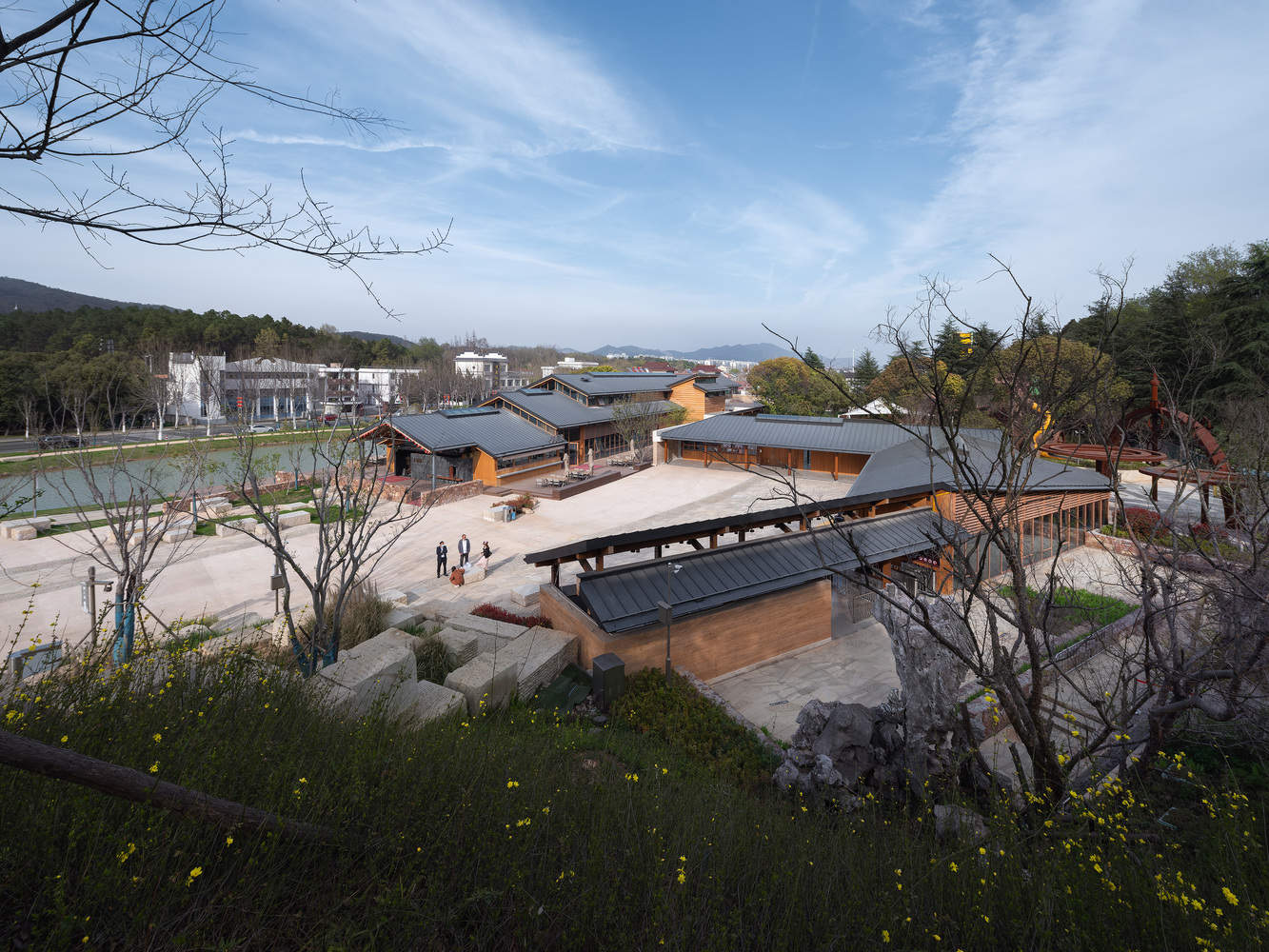
Tangshan Ancient Ape Man Cave Scenic Area is located in a valley east of Nanjing city. It is famous for the discovery of ancient ape man sites and has always been a famous tourist destination in the suburbs of Nanjing.. The area where the scenic spot is located belongs to the urban-rural junction and has always been an important transportation artery in history. An east-west road runs through the valley. Due to the close distance and limited space between the mountain and the road, as well as the presence of a drainage channel in the site, the scenic area, parking lot, and community public land are mutually constrained. As a result, the Yuanren Cave scenic area has been plagued by problems such as poor transportation, lack of prominent image, and insufficient service facilities.
一次城乡结合处的适应性更新
汤山古猿人洞景区位于南京市区以东的一处山谷之中,因发现古猿人遗址而闻名,一直是南京近郊的著名游览地。景区所在的地区属于城乡结合处,在历史上一直是重要的交通要道,一条东西走向的道路沿着山谷穿越而过。由于山体和道路之间的距离近、空间比较局促,再加上场地中有一条排水渠,使得景区用地、停车场用地、社区公共用地之间相互制约,猿人洞景区因此一直饱受交通不畅、形象不突出以及服务设施不足等问题的困扰。
© Timeraw Studio
© Timeraw Studio
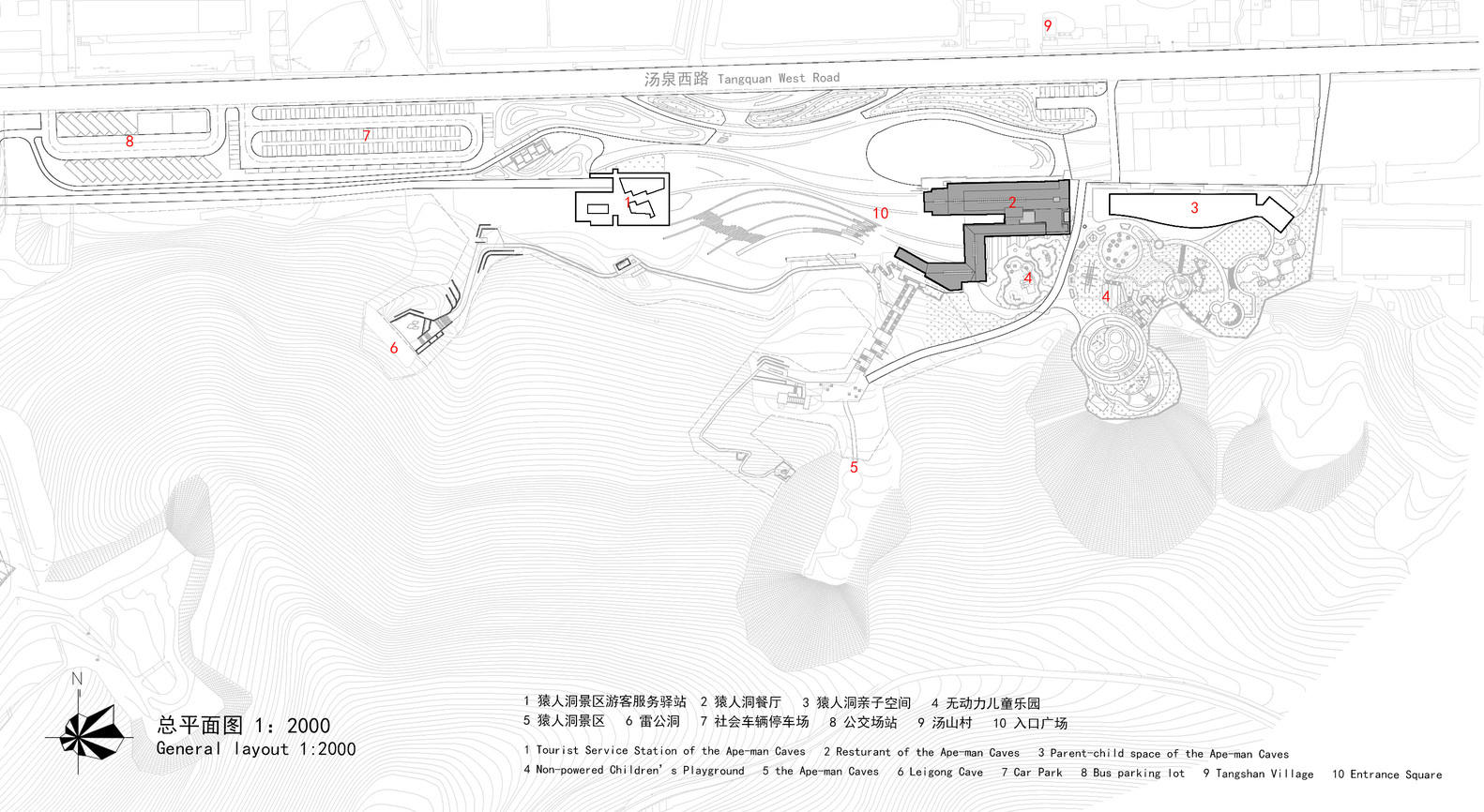
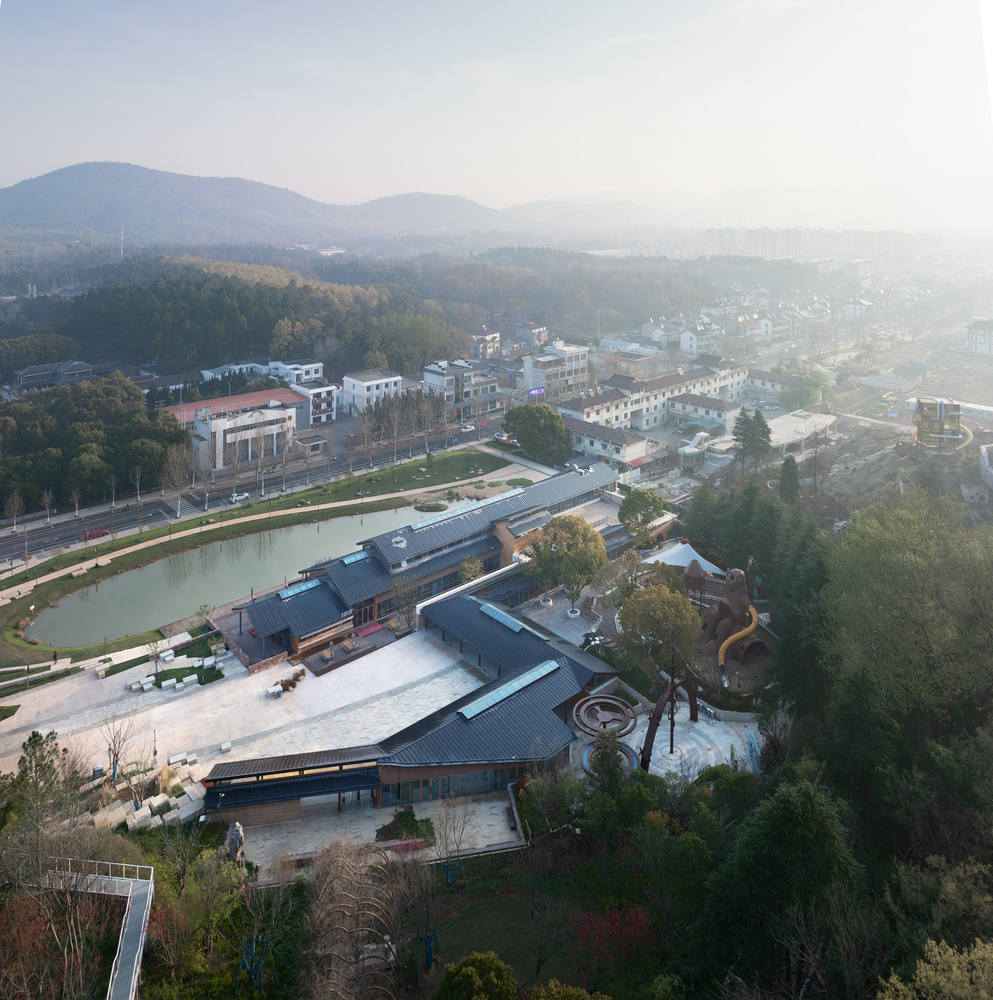
In 2017, the Tangshan Cultural Tourism Zone Management Committee carried out an overall update of the entrance area of the Yuanren Cave scenic area. The renovated main square of the scenic area is open to the road, and its streamlined spatial form that conforms to the mountain terrain is not only popular among tourists, but also a rare public open space that has become a daily gathering place for surrounding community residents. The bus parking lot and social parking lot have been rearranged on the west side of the main square, with independent entrances and exits, and dedicated pedestrian walkways along the water channel to guide visitors to the main square. This measure separates the flow of people and vehicles entering the scenic area, solving the traffic problem in the narrow entrance area. The entrance small square to the east of the main square is connected to the entrance of the scenic area on one hand, and on the other hand, it leads to an unpowered children's playground. In addition, two tourist service buildings have been updated in the entrance area, which are located on the foundations of two existing buildings. One is a tourist service point that has been rebuilt near the parking lot using the original ticket office land, including a public restroom. The other is a scenic area supporting service building that has been built using the original bus station office building land.
2017 年,汤山文化旅游区管委会对猿人洞景区入口区域进行整体更新。改造后的景区主广场面向道路开放,其顺应山势的流线型的空间形态不仅受到游客欢迎,这个难得的公共开敞空间同时也成为周边社区居民日常聚集的场所。公交停车场和社会停车场被重新布置在主广场的西侧,它们的出入口各自独立,并沿水渠设有专用人行步道将游人引导至主广场,这样的举措让进入景区的人流与车流得以分离,解决狭窄入口区的交通问题。主广场以东的入口小广场一方面连接着景区的大门,另一方面还通向一个无动力儿童乐园。此外,入口区还更新了两处游客服务建筑,它们分别坐落于两处原有建筑的基底之上,一个是靠近停车场利用原有售票处用地重新修建的包含公共卫生间的游客服务点,另一个就是利用原有公交场站办公楼用地修建的景区配套服务建筑。
© Timeraw Studio
总平面图
© Timeraw Studio
It is worth noting that the purpose of the renovation of the entrance area of the Ape Man Cave scenic area is not only to improve the facilities of the scenic area, but also to supplement the functions of this community located in a narrow valley. For example, the beautiful public open square has become a popular destination for local residents, and the non motorized children's playground will also be developed as a popular destination. At the same time, a specialty restaurant will be built to meet people's dining needs. This functional configuration that combines public welfare and commercial nature is based on considerations for the later operation of the project, that is, balancing the maintenance and management costs of scenic facilities through commercial profits, which is one of the key elements for the sustainable development of the project.
值得注意的是,此次猿人洞景区入口区域更新改造的目的,不仅是对景区设施的一次提升,同时也是对这块处于狭窄谷地的社区进行的一次功能织补。譬如环境优美的公共开放广场成为本地居民乐于前往的场所,无动力儿童乐园也将被打造为受欢迎的游玩目的地,同时配建一座特色餐厅来满足人们的聚餐需求。这种将公益性质与商业性质结合起来的功能配置是出于对项目后期运营的考虑,即通过商业盈利来平衡景区设施的维护和管理成本,这是项目能否可持续发展的关键要素之一。
© Timeraw Studio
© Timeraw Studio
Architecture serves as a boundary for land use
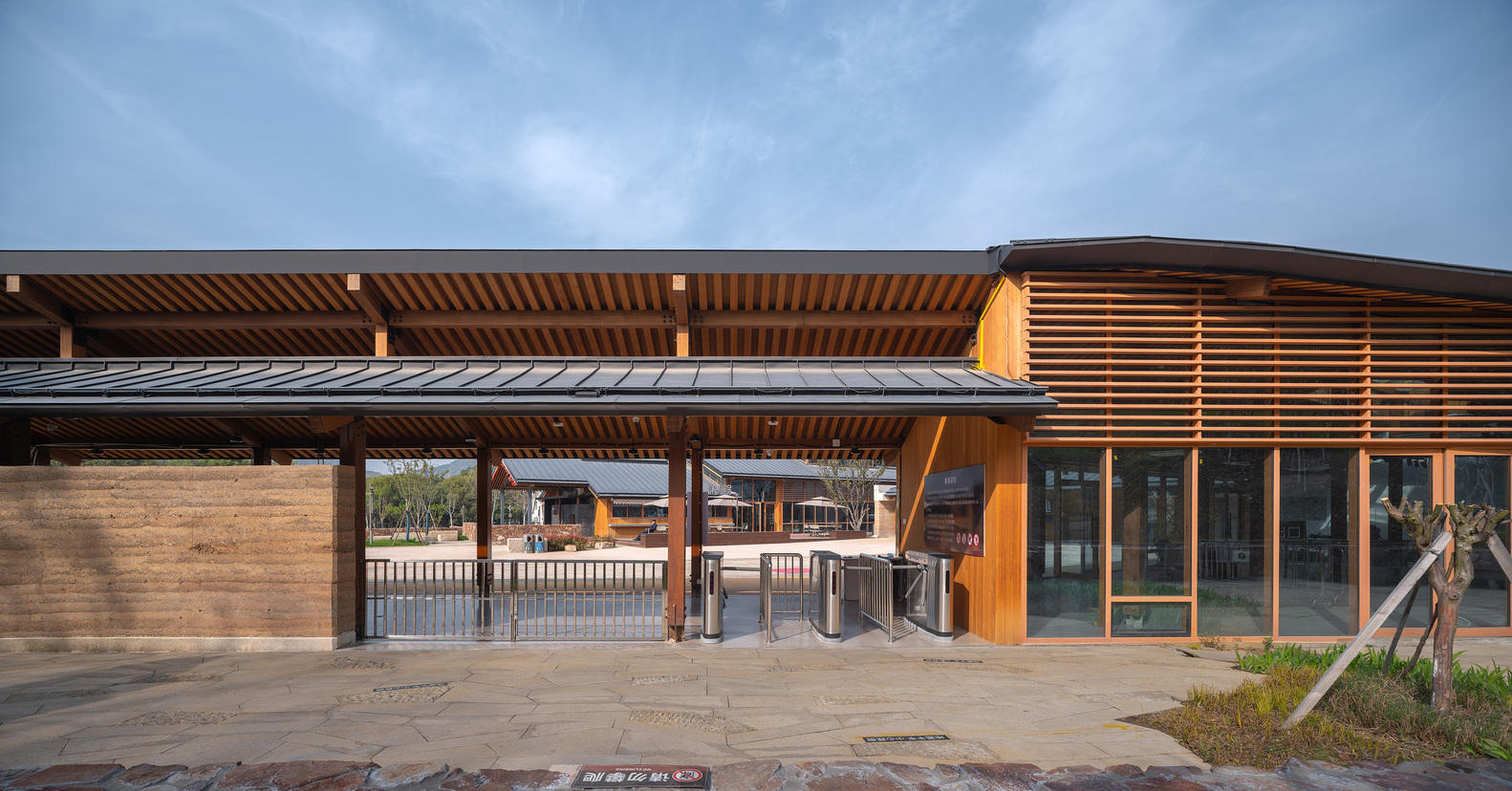
Usually, when delineating spatial boundaries in enclosed paid scenic areas, we see simple and direct methods such as adding gates and walls. However, the narrow geographical environment and diverse functional requirements of the entrance area of the Yuanren Cave scenic area attempt to give this spatial boundary more meaning and purpose..
建筑作为用地划分的界线
通常在封闭的收费景区进行空间界线划定时我们会见到大门加围墙这样简单而直接的方式,但猿人洞景区入口区狭窄的地理环境以及多诉求的功能需求,试图赋予这个空间界线以更多的涵义和用途。
© Timeraw Studio
© Timeraw Studio
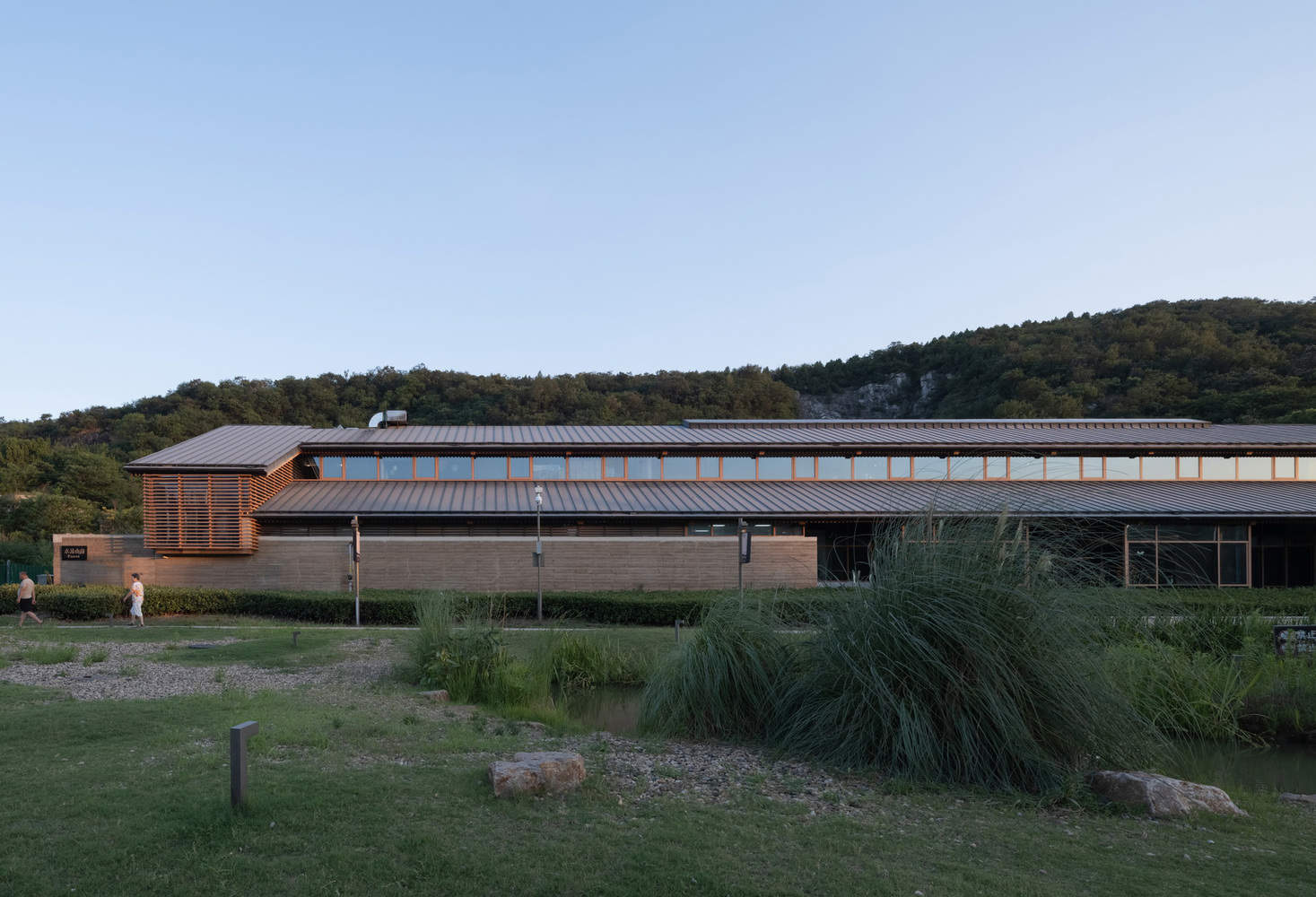
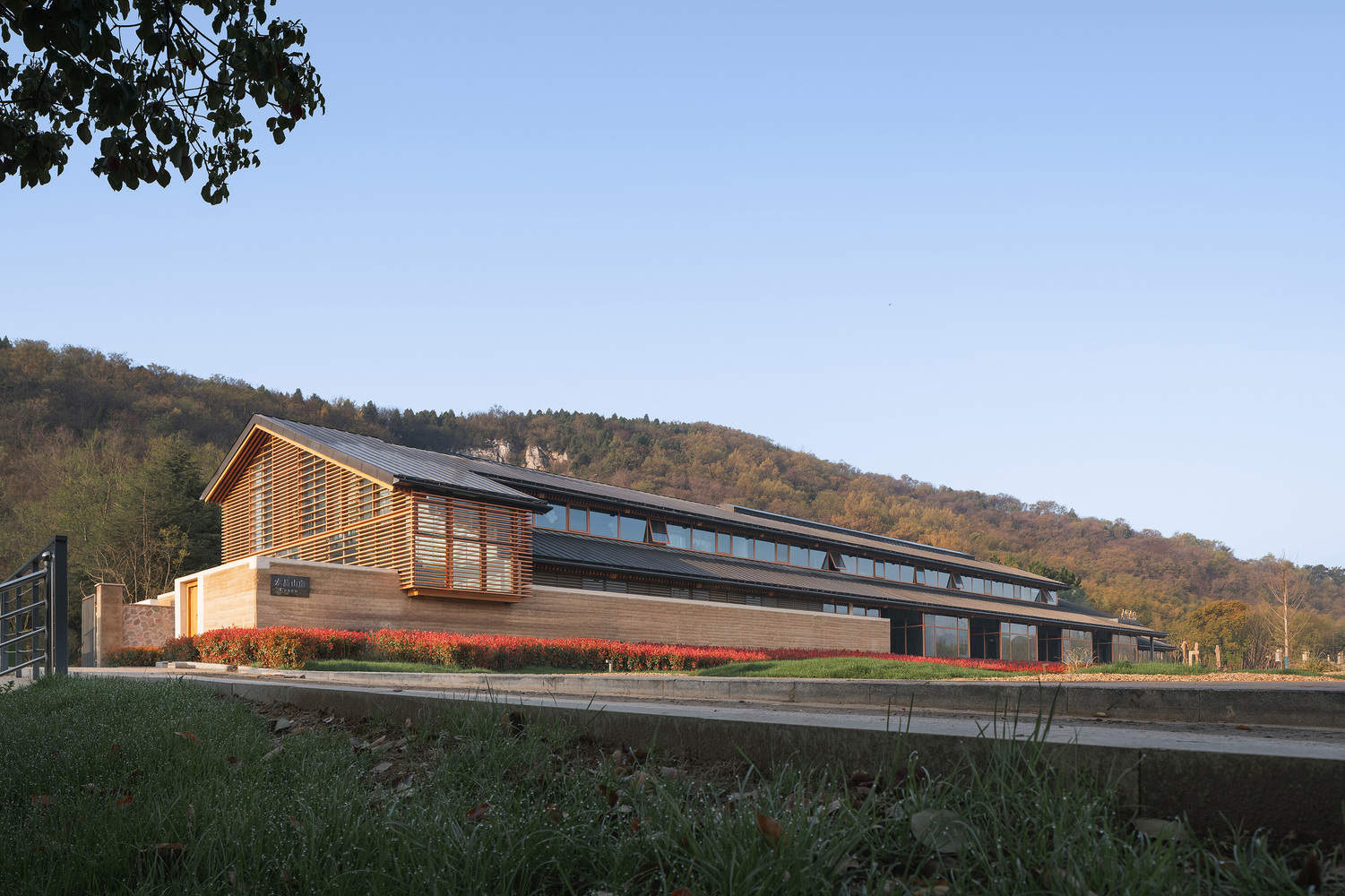
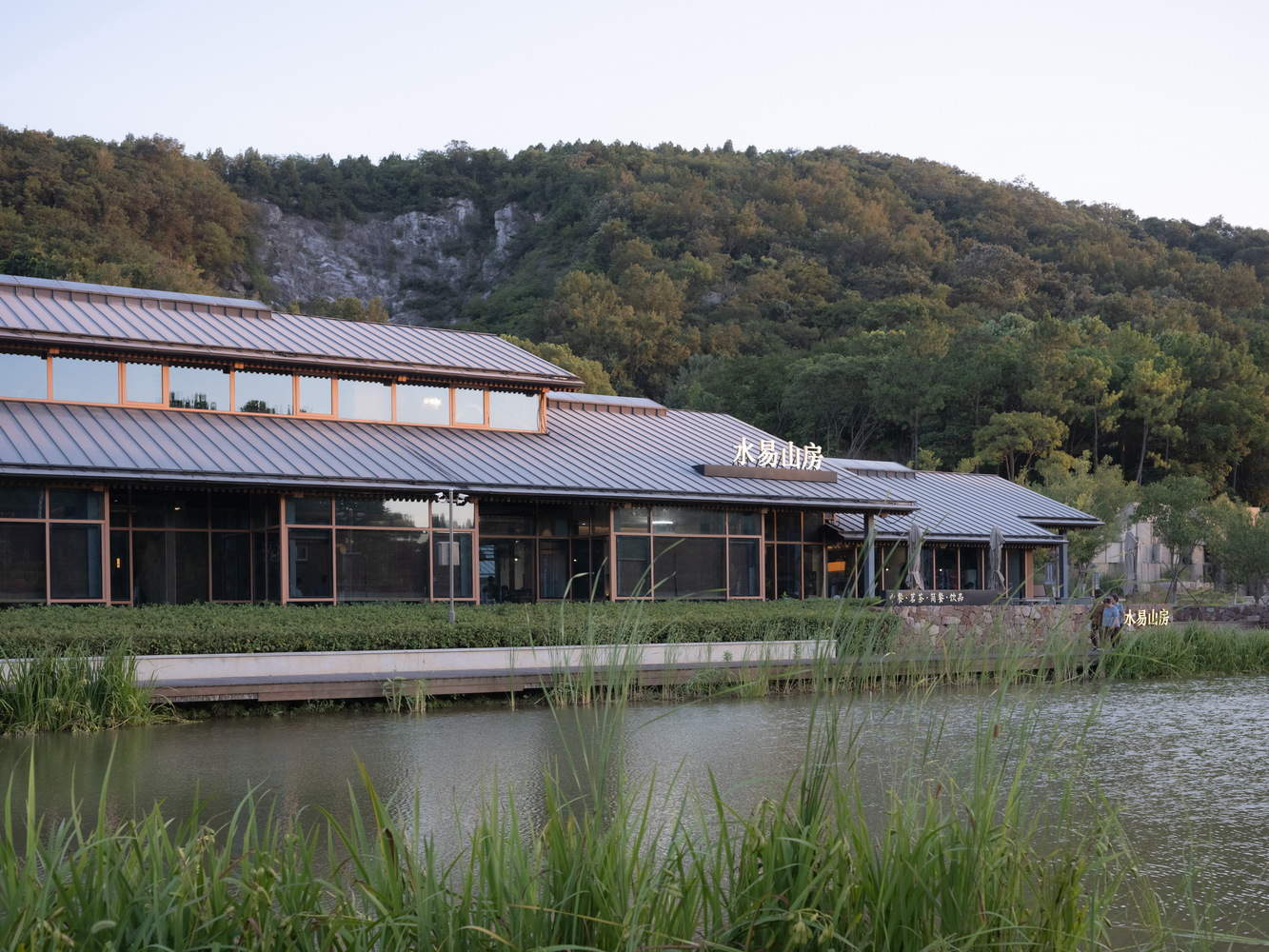
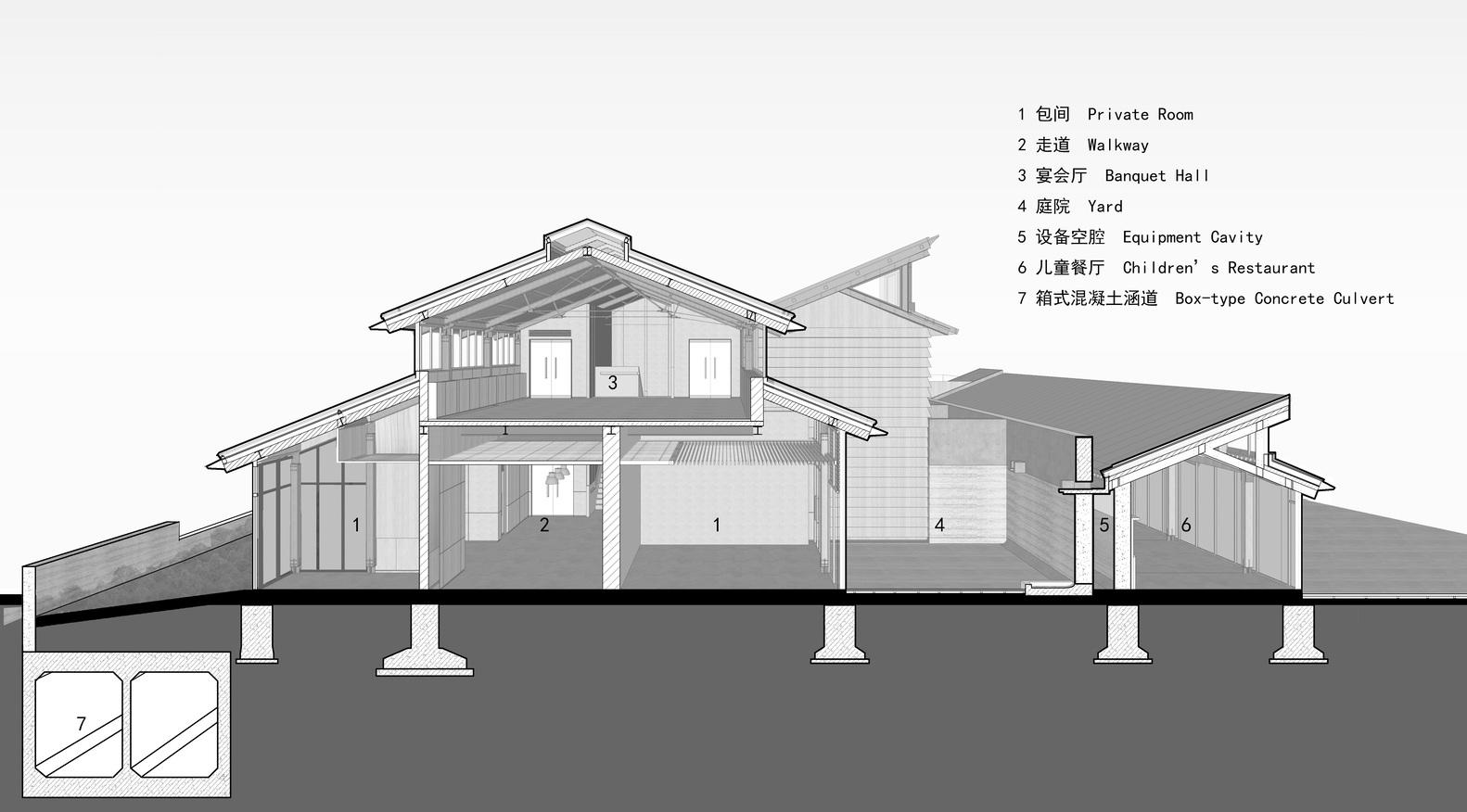
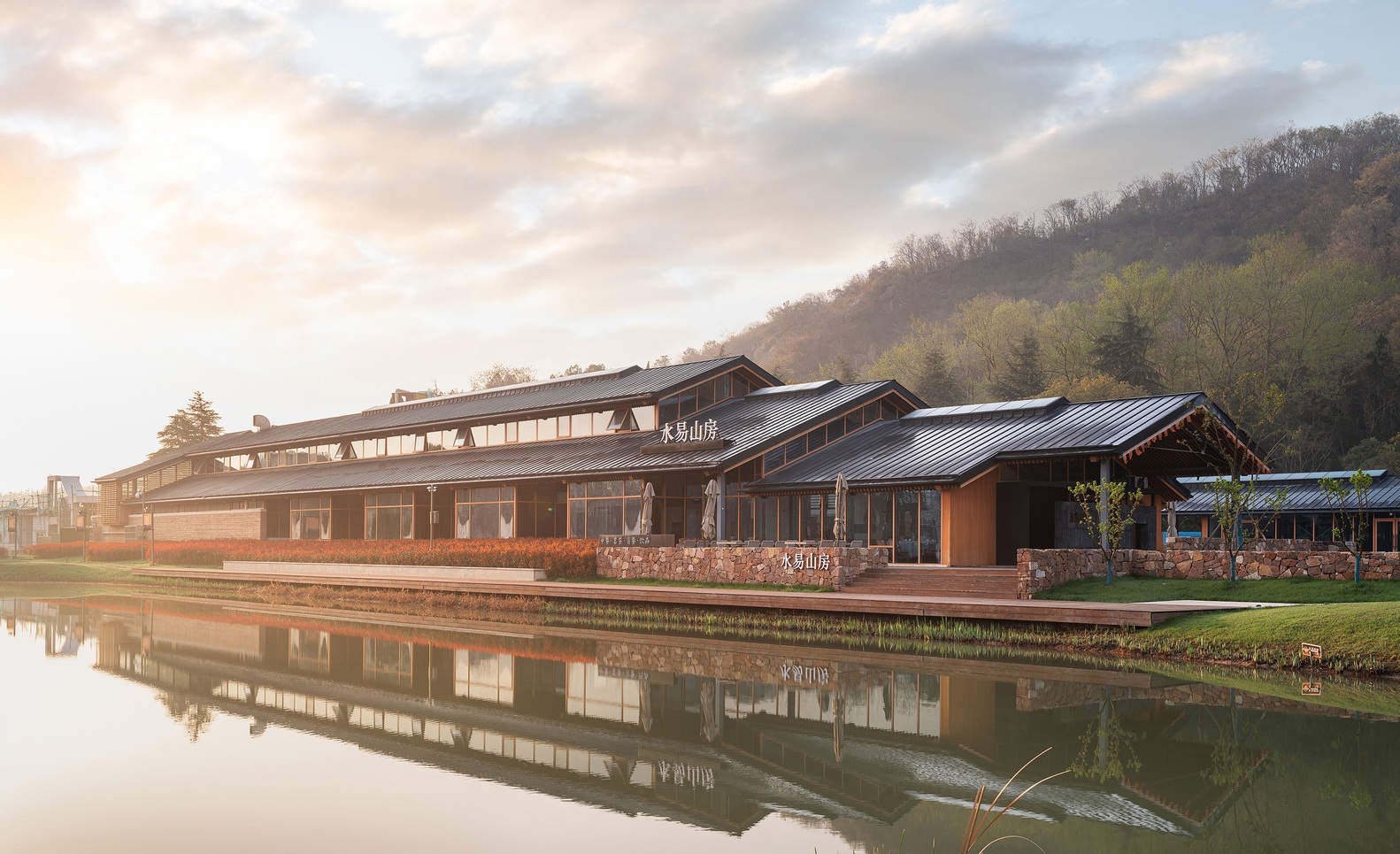
The original bus station office building in the site is a long, two-story brick and concrete structure. Its linear layout is mainly due to its construction along a drainage channel, while the other side of the building is a fan-shaped forest in the scenic area. Constrained by these conditions, the design relied on the foundation of the original building to rearrange a similarly laid out linear building. In consideration of catchment and flood discharge during rainstorm, the originally open drainage channel is transformed into an underground box culvert in this section of the building, and a landscape pond is used on the ground as the catchment of surface runoff. This newly built two-story high pitched rooftop building on the waterfront serves as a community restaurant. The first floor is for seating and private rooms, and the second floor is for a banquet hall, meeting the banquet needs of tour groups and locals.
场地中原有的公交场站办公楼是一个长条形的二层砖混结构建筑,它之所以呈线性布局主要是因为沿着一条排水渠修建的原因,而建筑的另一侧是景区内的一块扇形的林地。受制于这些条件,设计依托了原有建筑的基底重新布局了一座布局相似的一字型建筑。考虑到汇水以及暴雨时的行洪因素,原本敞开的排水渠在建筑这一段被改造成为地下的箱涵,地面上则利用一个景观水塘来作为地表径流的汇集水体。这个滨水的新建两层高坡屋顶建筑,其功能为社区餐厅,一层为堂座和包间,二层为可举办宴会的大厅,满足了旅行团及当地人的宴会需求。
© Timeraw Studio
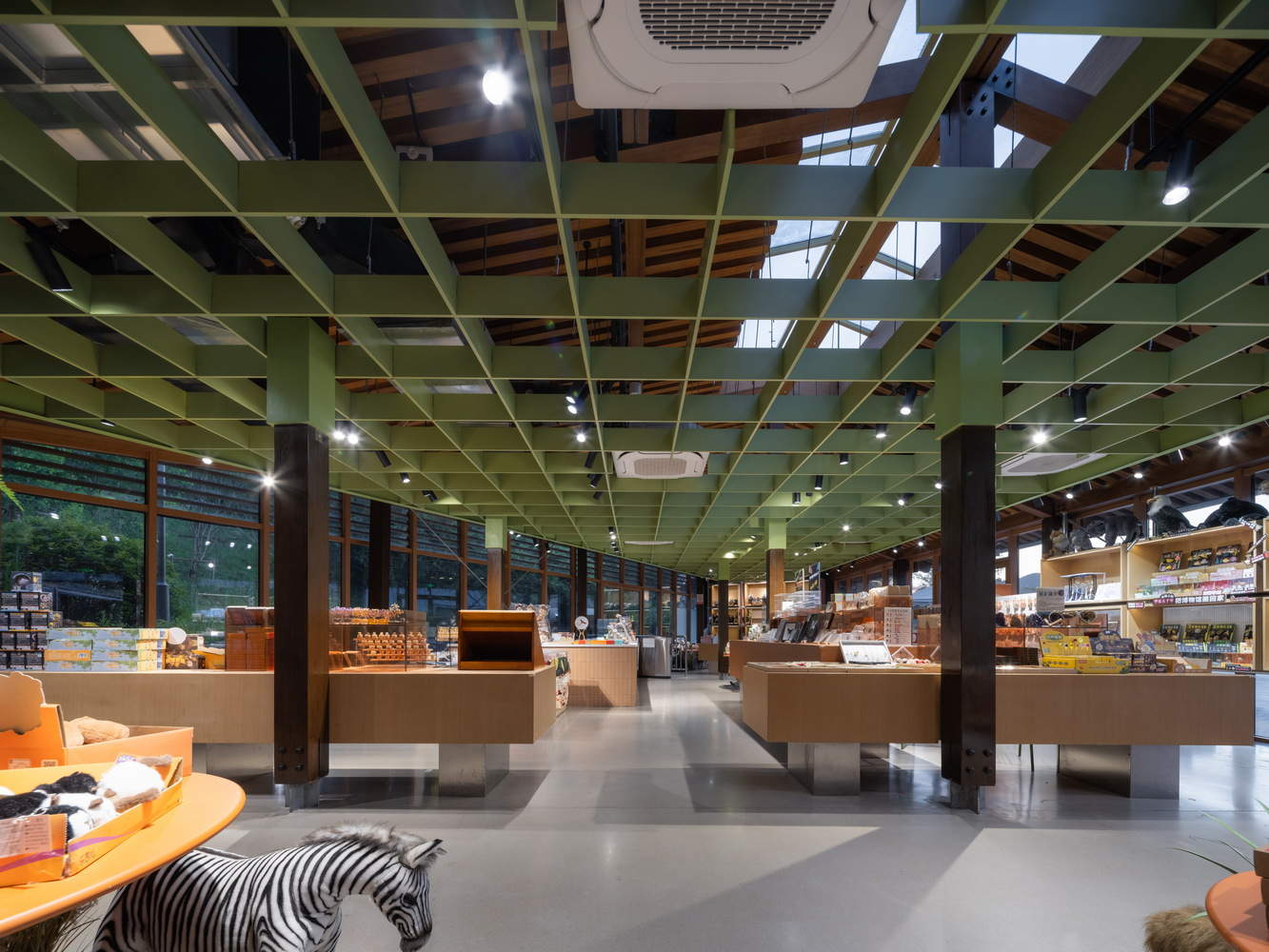
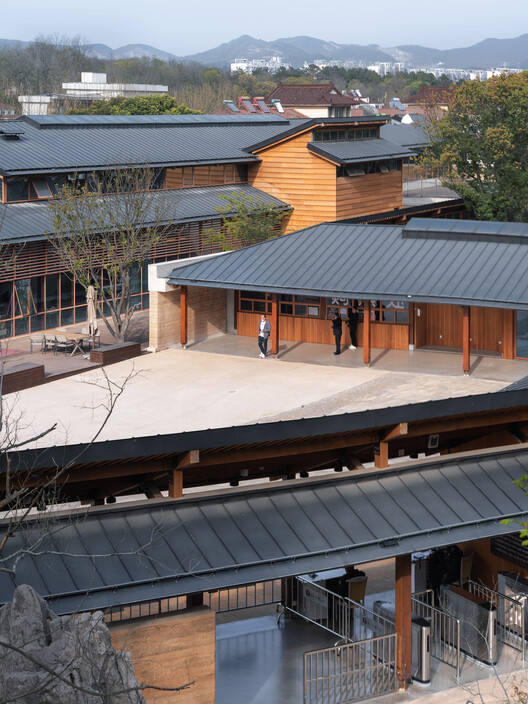
The fan-shaped area on the south side of the original office building has been developed into an unpowered children's playground under the forest. As the playground operates independently and requires closed management, a continuous Z-shaped strip-shaped building is used in the design to separate the site. A children's restaurant is used to enclose the physical space of the playground under the forest inward, and an entrance small square is enclosed together with the community restaurant outward to facilitate the gathering and gathering of tourists. The building is equipped with service rooms such as ticket offices and information centers facing tourists. The entrance and exit of the children's playground and the Ape Man Cave scenic area are set up on one side of the mountain, and a transparent souvenir shop is used to separate them.
原有办公楼南侧的扇形场地被建设成为一个林下的无动力儿童乐园,因为乐园是独立运营,需要对其进行封闭管理,因此设计上采用了一个连续的Z型的条状建筑来进行场地的分隔,向内利用一个儿童餐厅对林下的乐园进行了物理空间的围合,向外又与社区餐厅一起围合出了入口小广场,以方便游客在此集散,建筑面向游客来向布置了售票处、问询处等服务用房,靠山体一侧分别设置儿童乐园和猿人洞景区的出入口,两者之间用一个透明的纪念品商店来进行区隔。
© Timeraw Studio
© Timeraw Studio
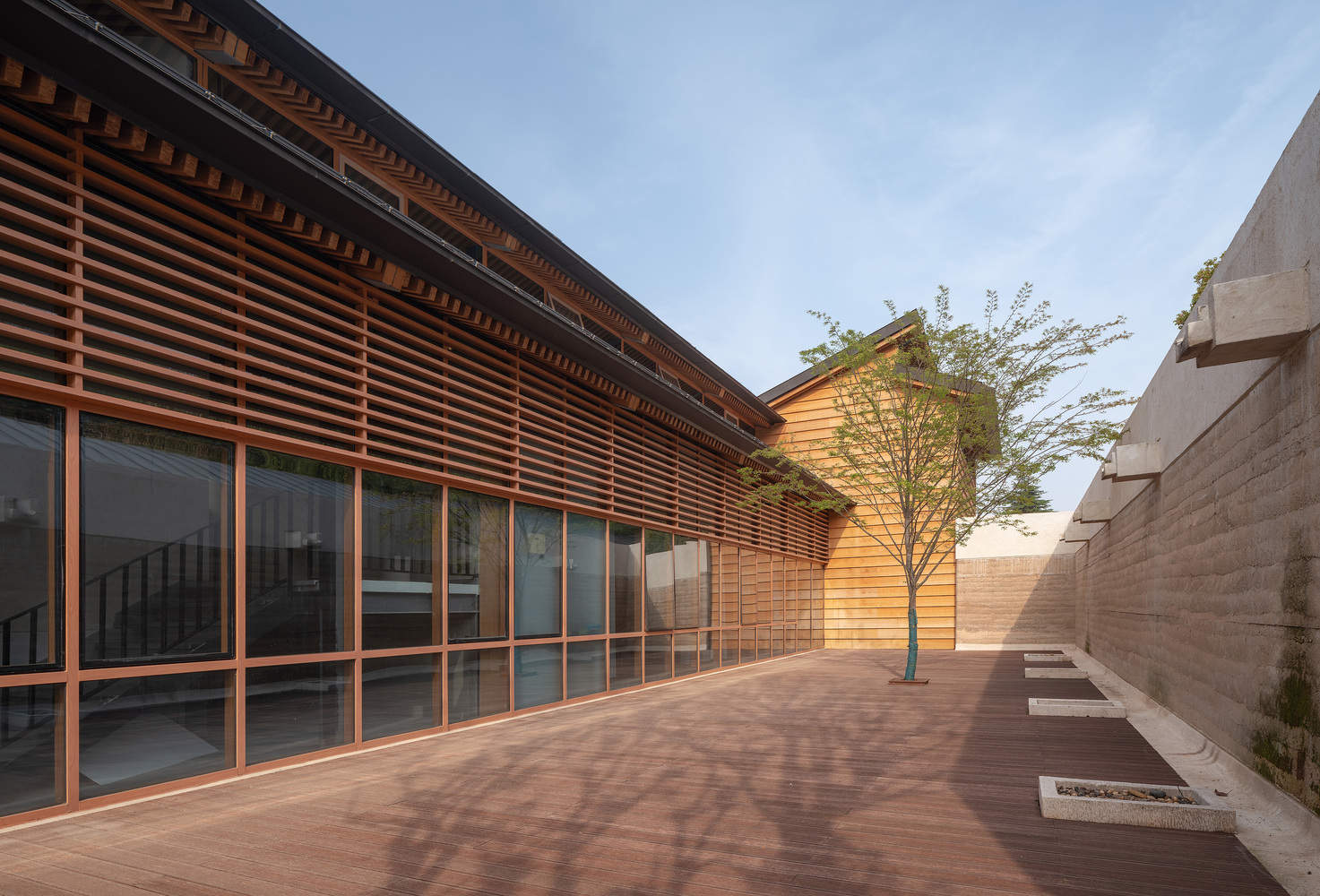
The Z-shaped building is separated from the straight shaped building by a narrow and long courtyard and a courtyard. The courtyard meets the ventilation and lighting needs of the first floor private rooms, while the courtyard is used to concentrate the placement of air conditioning outdoor units. The eastern end of the building is close to the entrance of the scenic area, so arranging the kitchen in this area is conducive to the transportation of goods. At the same time, the kitchen also connects the eastern ends of the linear and Z-shaped buildings together, serving as a common backcourt space for the community restaurant for external services and the children's restaurant for internal services.
Z 字型建筑与一字型建筑之间利用一条窄长的庭院和一个天井相互脱开,庭院满足了一层包间的通风采光需求,而天井则被用来集中放置空调外机。建筑的东端靠近景区的车行入口,因此将厨房布置在这个区域有利于货物运输,同时厨房也把一字型建筑和 Z 字型建筑的东端连接在一起,作为对外服务的社区餐厅和对内服务的儿童餐厅的共同的后场空间。
© Timeraw Studio
剖面图
用材料和建造重新定义场所
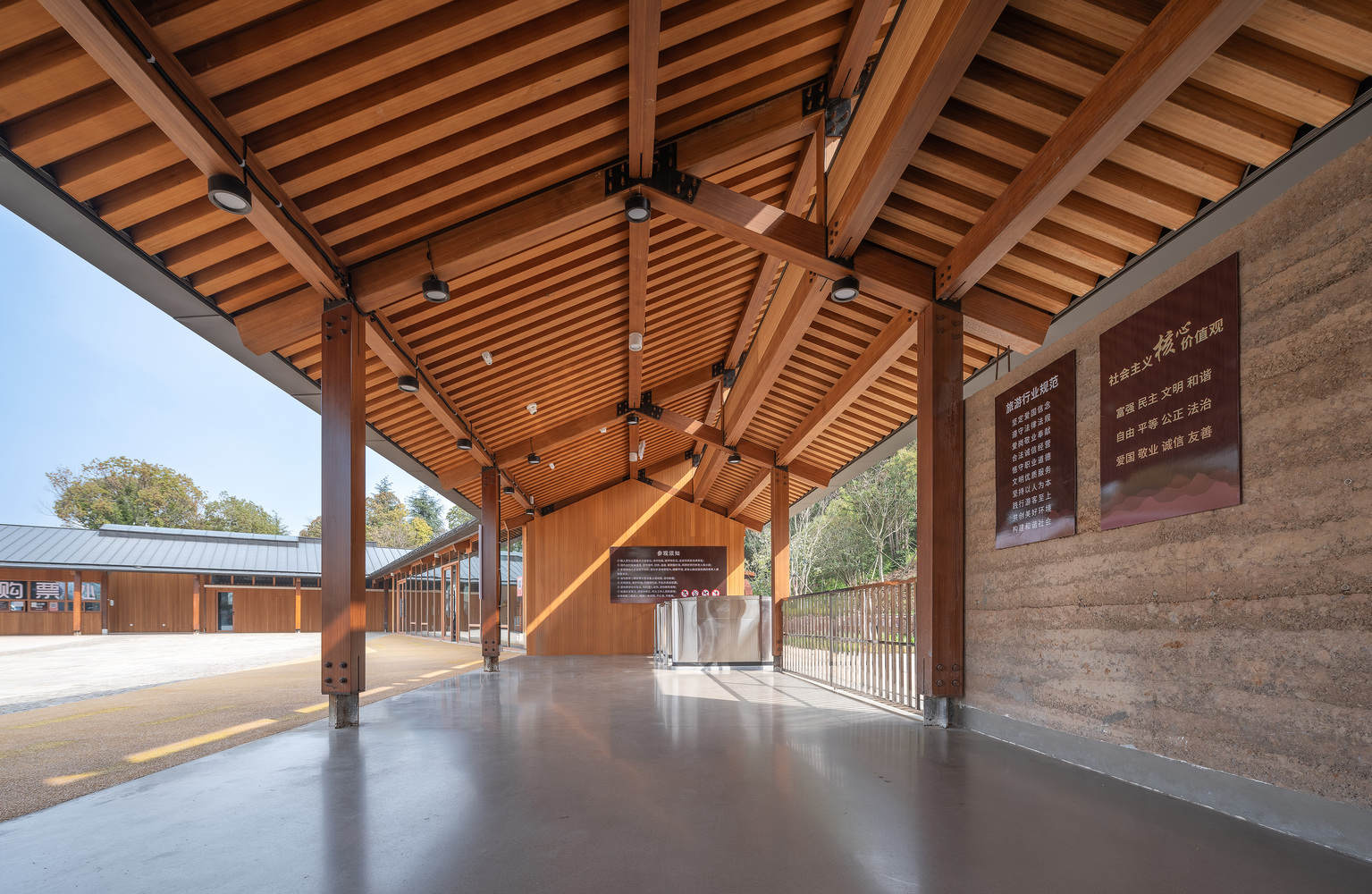
The Ape Man Cave is famous for the discovery of upright human fossils in caves on the mountain. The cave is the climax of the entire scenic area, so the buildings and structures in the front area should not appear in a noisy manner. How to coordinate with the gentle ridges and enhance their guidance is the primary issue that buildings need to consider. Therefore, the building is located at the foot of the mountain in a "lying" posture, without shaping itself into a shape that imitates caves or ancient architectural images. Because artificially shortening the time gap will only destroy the true value of historical relics, but through continuous eaves and corridors, the gray space makes the building look more like a "guide", welcoming and humble. The posture leads visitors into historical relics.
猿人洞因在山上的溶洞中发现直立人化石而闻名,洞穴是整个景区游线中的高潮部分,因此前区的建筑物和构筑物不应以喧宾夺主的姿态出现,如何与平缓的山脊相协调以及如何增强其引导性是建筑需要考虑的首要问题,所以建筑以“卧”的姿态坐落在山脚下,并没有将自身塑造成模仿洞穴的形态或者是仿古建筑形象,因为人为缩短时间的差距只会毁掉历史遗迹真正的价值,而是通过连续性的檐廊灰空间,让建筑看上去更像一位的“引导者”,以欢迎和谦逊的姿态带领参观者走进历史遗迹。
© Timeraw Studio
Meanwhile, architecture has its own way of being present, attempting to reflect its local characteristics through materials and construction methods. Tangshan is famous for its limestone geology, with the mountain covered in bamboo and wood. In addition to the 500000 year old ruins, natural materials such as soil, stone, and bamboo and wood were selected as expressions for the architecture. These materials were artificially processed to become strong, durable, and easy to construct, which may have been the purpose of prehistoric hominids using tools in caves.
同时建筑有着自己的“在场”方式,它试图从材料和建造方式上来体现自己的在地特征。汤山因其石灰岩地质而闻名,山体被竹木所覆盖,再加上距今 50 万年的遗址,因此建筑选取了土、石、竹木这样的自然材料来作为表达,这些材料经过人为的加工,从而变得坚固、耐久和易于施工,这或许也是史前时代的猿人在洞穴中使用工具的目的。
© Timeraw Studio
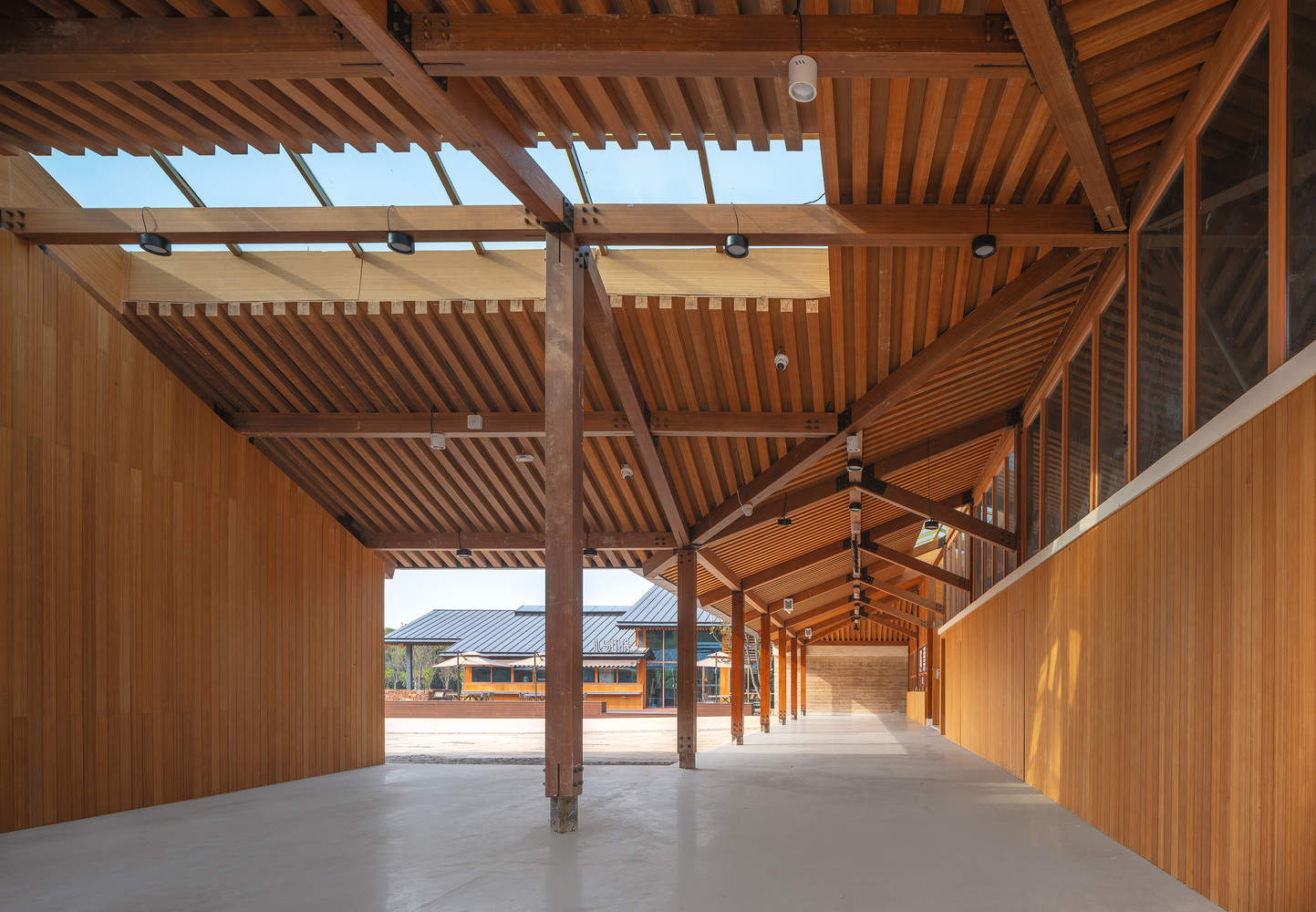
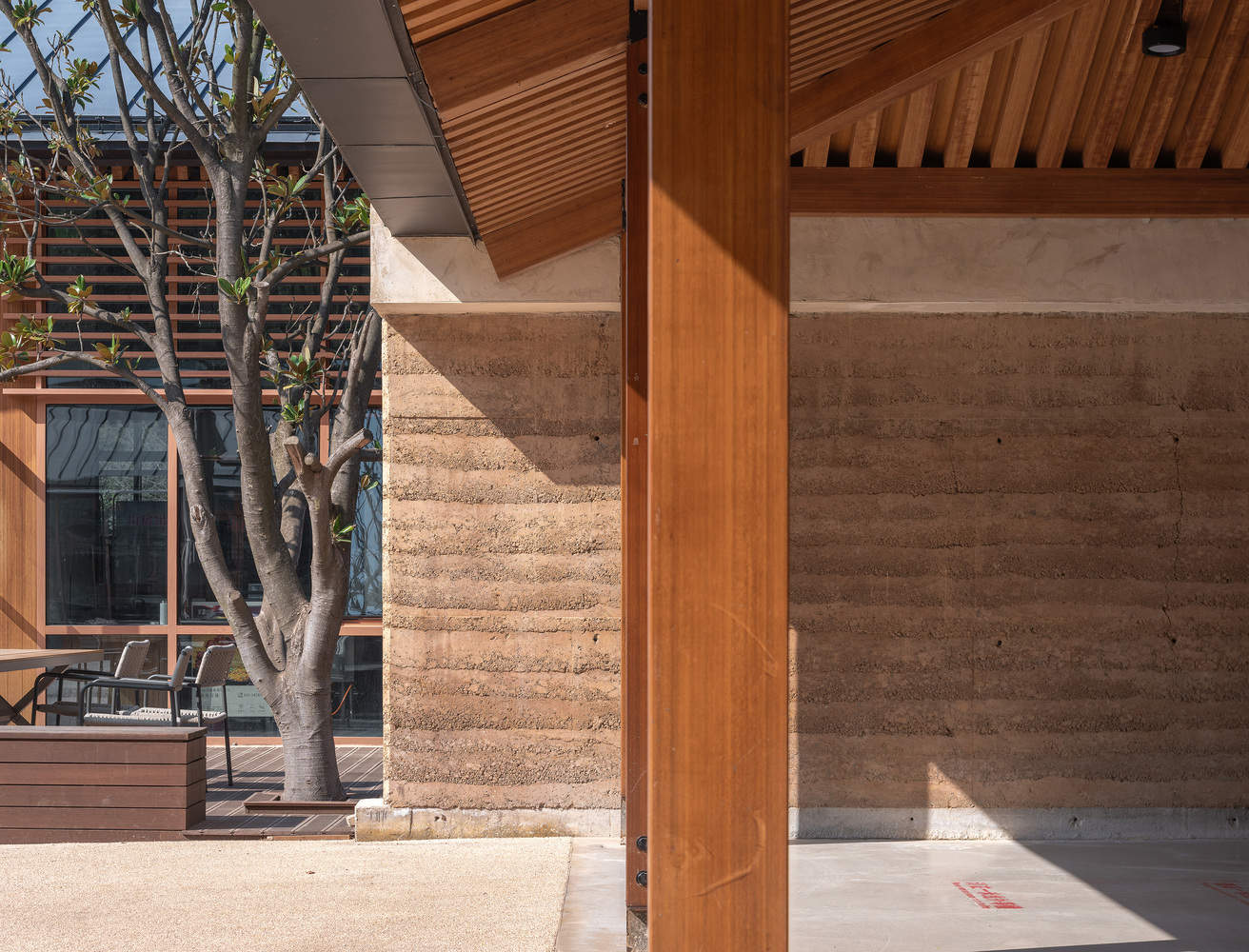
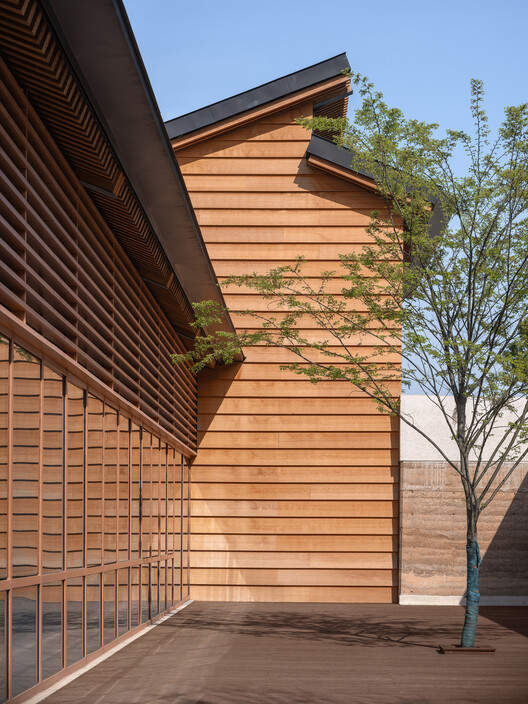
Rammed earth as a wall, even if it is not a simple enclosure, still plays an important role in architecture. After adding modern materials such as steel bars and cement, the crack resistance and waterproofing of rammed earth walls have been improved. With the coordination of longitudinal and transverse walls, the long rammed earth wall plays a role in physical space separation, like a main line, allowing other spaces to attach and grow on it. Engineering bamboo, as an industrialized laminated biomass material, has the characteristics of assembly through steel connecting plates. The frame structure of engineering bamboo is separated from the rammed earth wall, allowing the internal space to be flexibly separated according to its function. Due to the light weight and small foundation of the structure, it has excellent adaptability for construction on sites between water channels and forests.
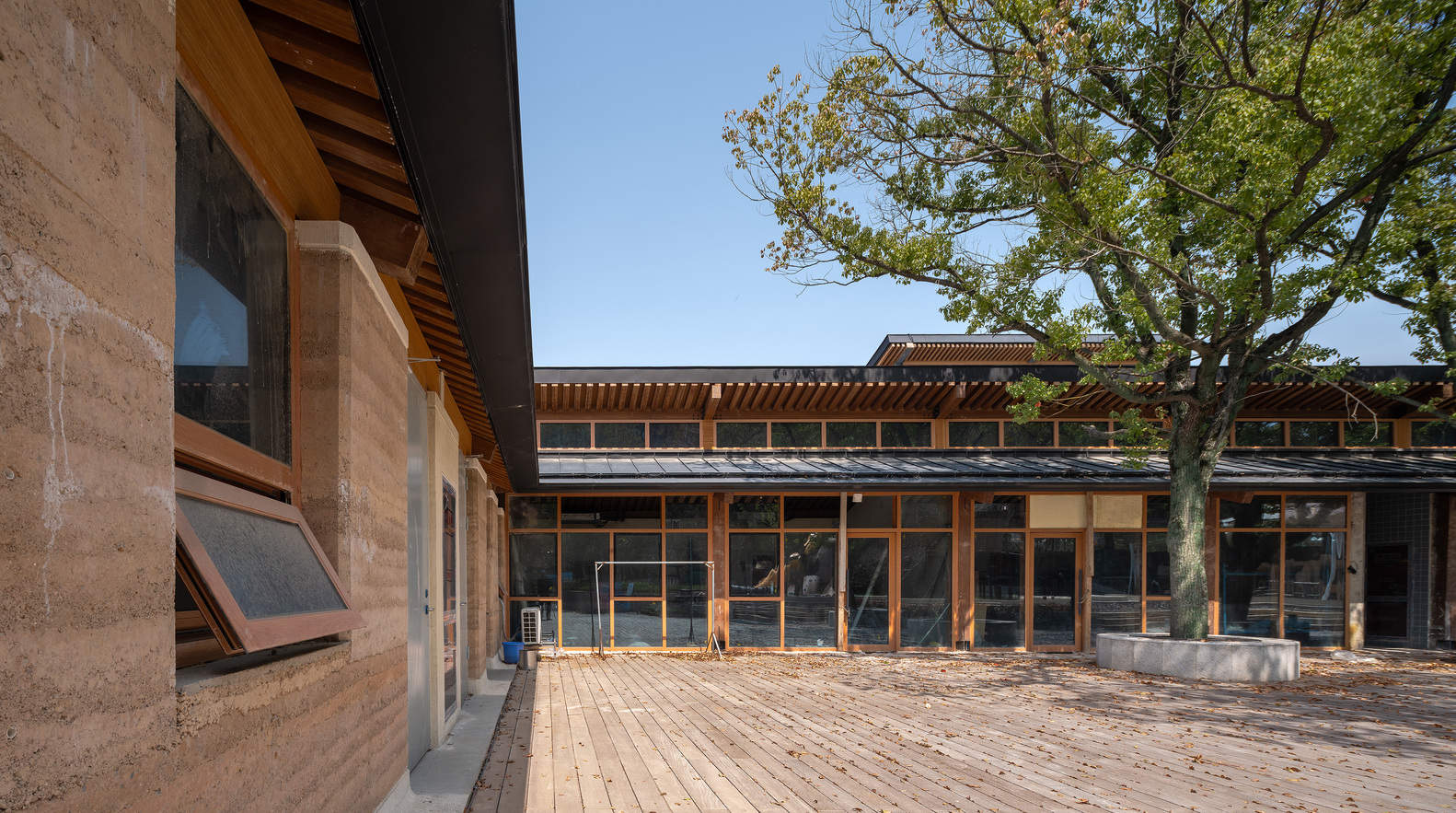
夯土为墙,即使不是简单的围墙,但墙依旧在建筑中扮演着重要的角色。在加入钢筋、水泥等现代材料后,夯土墙的抗裂性和防水性得到改善,在纵横向墙体的相互的配合下,长长的夯土墙起到了物理空间分隔的作用,也似一条主线,让其它的空间附着其上生长出来。工程竹作为一种工业化胶合生物质材,通过钢连接板,让其具备了装配式的特点,工程竹框架结构与夯土墙脱开设置,让内部空间具备了根据功能灵活分隔的可能,并且因为结构自重轻、基础小的特点,这让建筑在水渠和树林之间的场地施工时具备较为优秀的适应性。
© Timeraw Studio
© Timeraw Studio
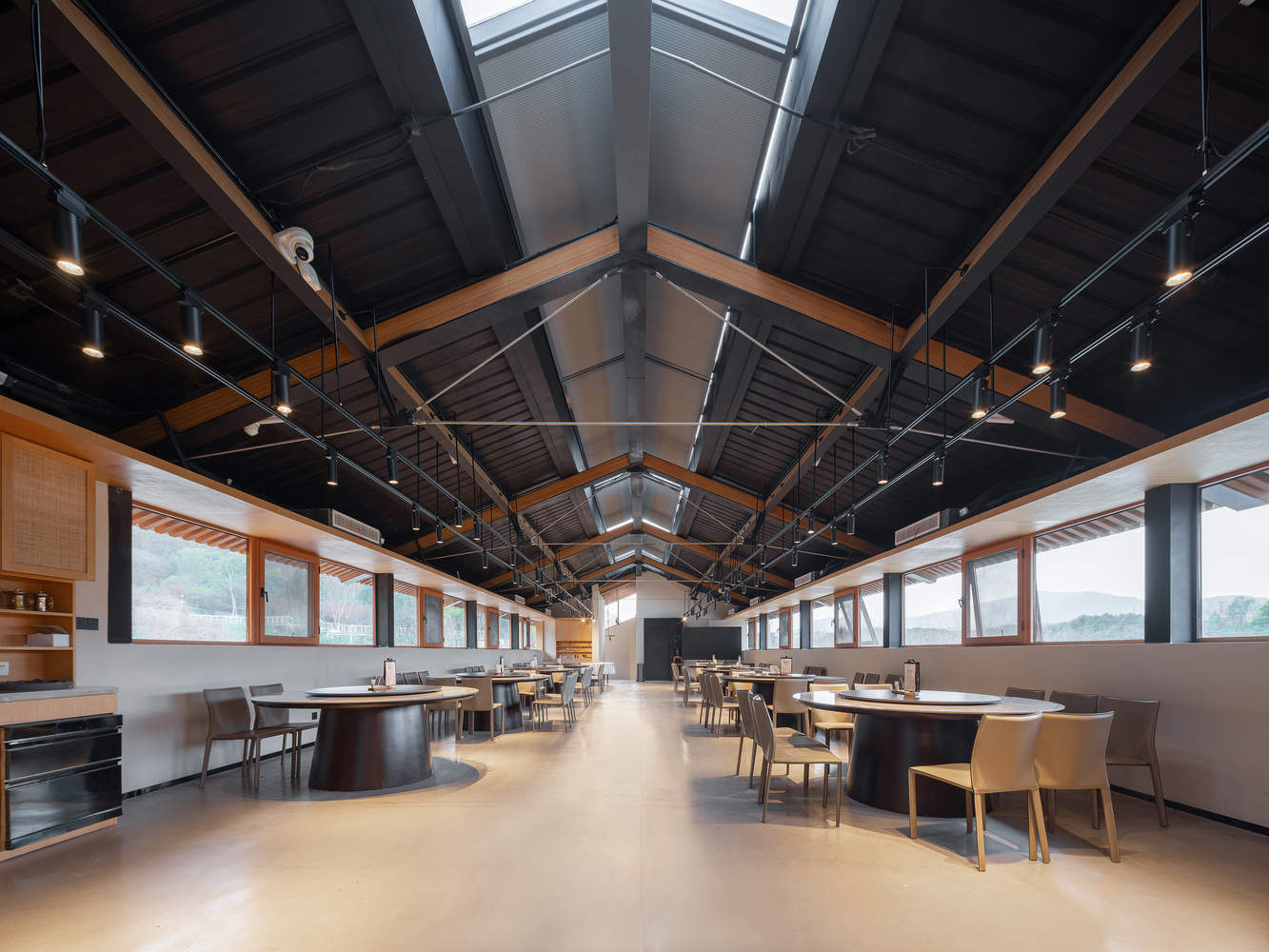
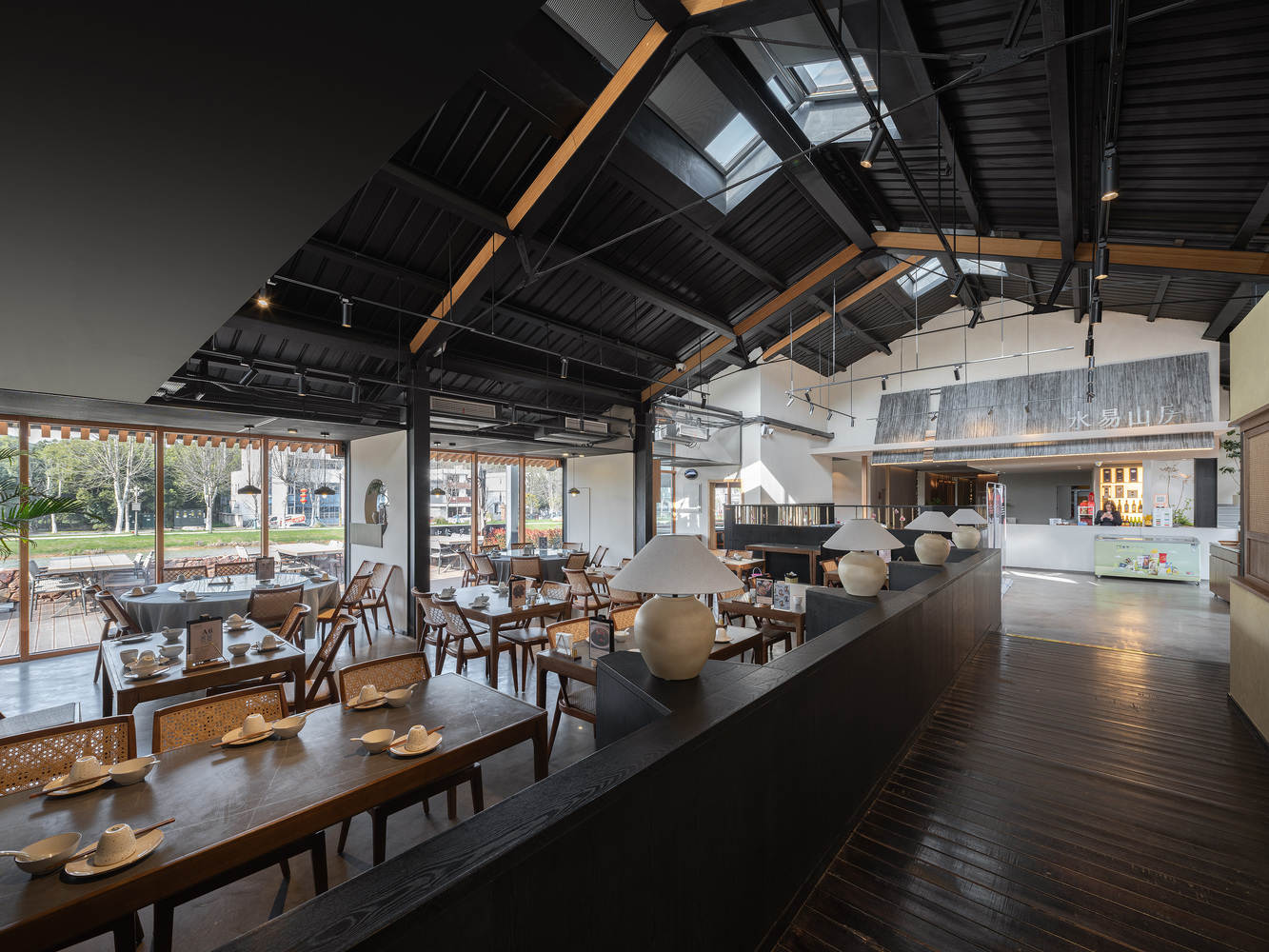
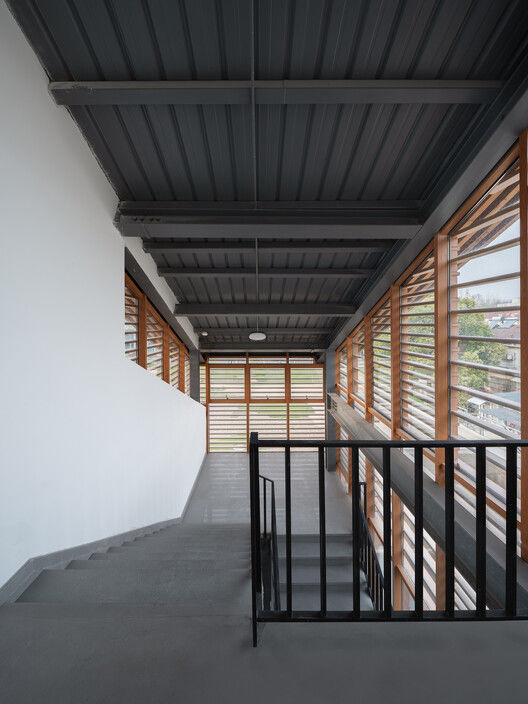
Small sized lightweight steel structures also have the characteristics of assembly. The elongated community restaurant adopts a steel frame structure system, and the transition from the roof of the porch on the first floor to the roof of the banquet hall on the second floor is carried out in a sequential lifting manner, which presents a double eave image in the direction of pedestrian flow. The roof truss adopts a chord beam structure to reduce the cross-sectional size of the steel beams. On the side facing the water pond, several private dining rooms are arranged under the long horizontal eaves, and the exterior wall of the kitchen is separated from the eaves by a rammed earth wall. The second floor roof also uses the shape of a staircase at the end to form a bite on the rammed earth wall. The combination of elements such as walls, eaves, and gardens in architecture reconstructs a new order of the place.
小尺寸的轻型钢结构同样具备装配式的特点。长条状的社区餐厅采用钢框架结构体系,建筑一层门廊的屋顶到二层宴会厅的屋顶之间采用了依次抬升的方式进行过渡,这让建筑在朝向人流的来向呈现出重檐的形象,屋架采用了张弦梁结构来减小钢梁的截面尺寸。而在临水塘一侧,长长的水平屋檐下阵列着几个临水餐厅包间,厨房的外墙则以一道夯土墙与屋檐脱开,二层的屋面也在尾段利用楼梯间的造型在夯土墙上形成一处形体的咬合。建筑利用墙、檐、园这些要素组合在一起重构出了场所的新秩序。
© Timeraw Studio
© Timeraw Studio
Architectural Details for Dialogue with the Environment
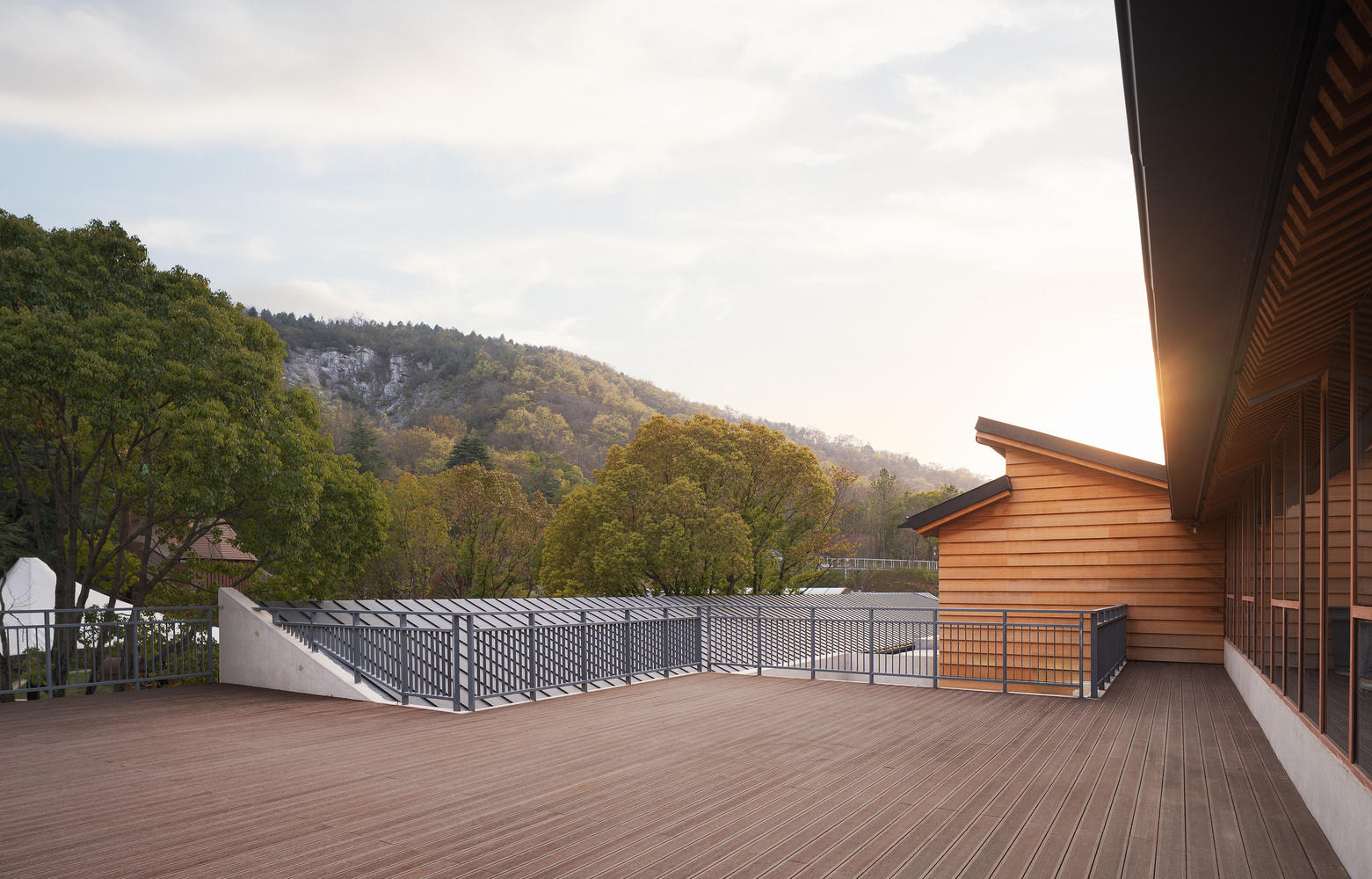
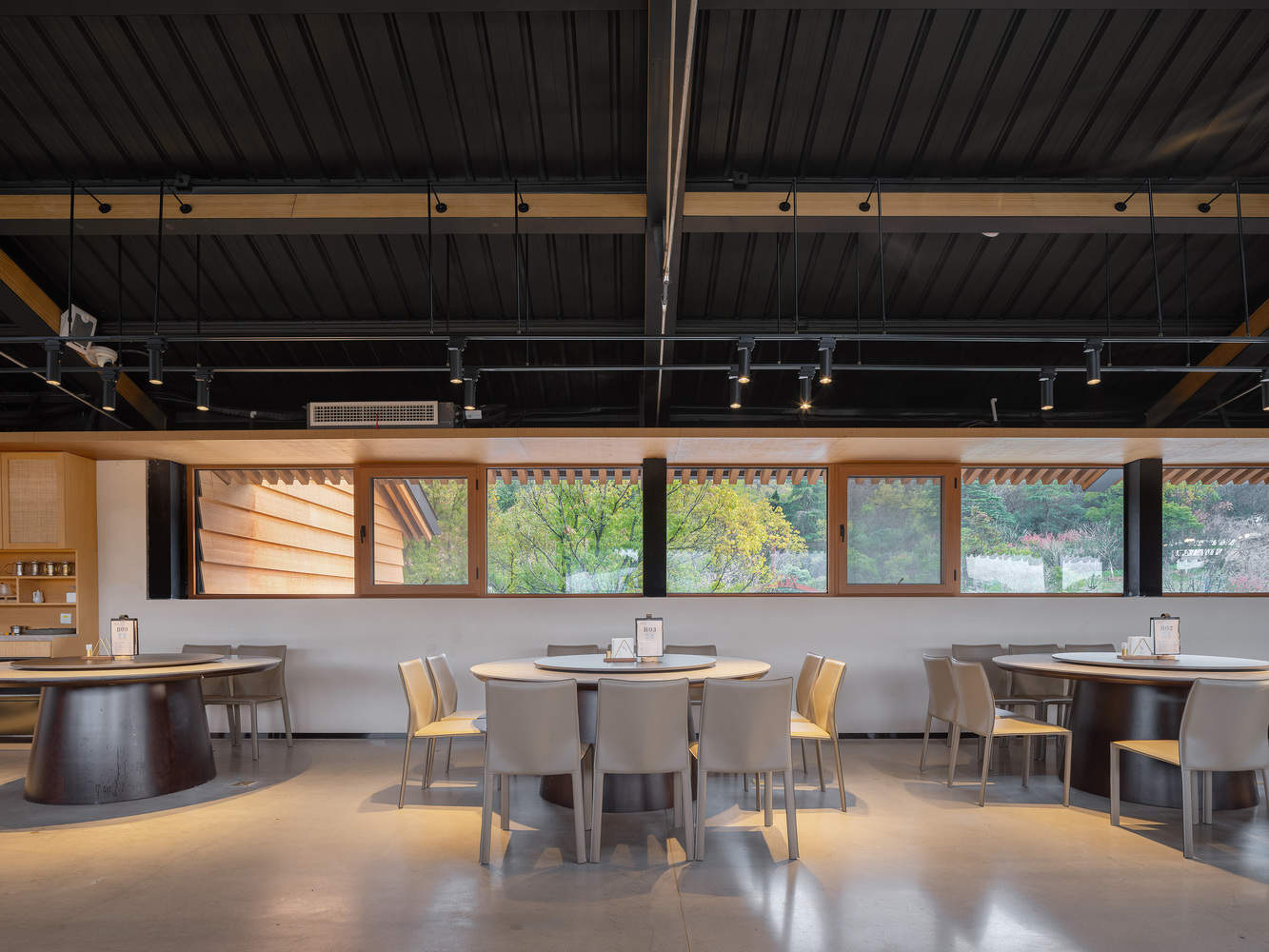
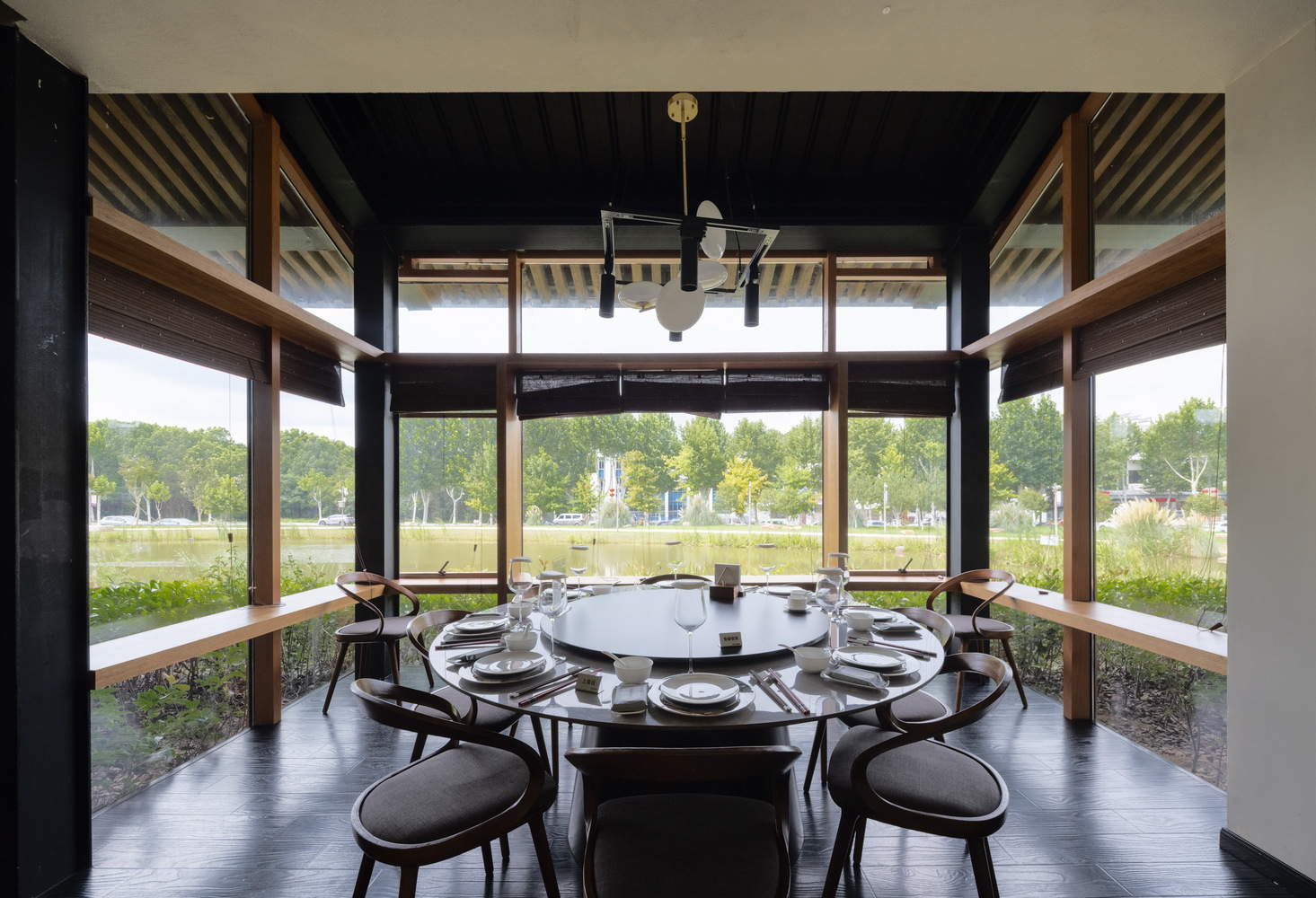
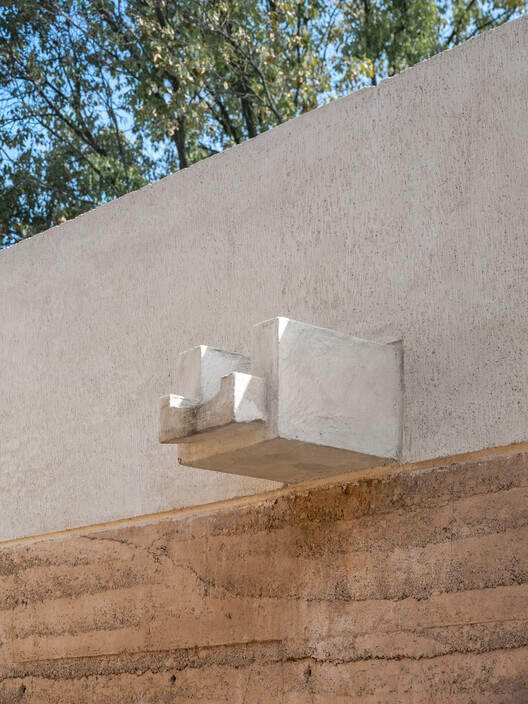
In addition to using small volume, transparency, and lightweight features to express a low disturbance intention to the site, architecture also reflects a posture of dialogue with the natural environment in local details.. The entrance of the community restaurant features several low walls made of rubble, defining two platforms that fall towards the water surface, creating a relaxed and comfortable outdoor space for the restaurant. The concrete roof of the rammed earth wall in the narrow and long courtyard extends in a row of water tongues towards one side of the courtyard, and on the other side, a full-length inner gutter protrudes towards the sloping roof of the children's restaurant on the first floor, which is precisely embedded between the wall and the engineering bamboo columns. The water tongue drains the rainwater from the inner gutter, and a concrete sink is used below to receive the falling rainwater. This "one spit, one receive" scene is highly symbolic of Chinese culture and has become a backdrop for the courtyard Chinese restaurant. The roof of the kitchen at the east end of the building is an outdoor platform that is close to the tree crown and overlooks the mountain of the Ape Man Cave, creating a pleasant outdoor dining atmosphere. Windows are a medium for indoor characters to perceive outdoor scenery, and the treatment of windows in this design presents different forms depending on their location. The private rooms on the first floor facing the pond use glass boxes separated from each other under the eaves to give diners a feeling of being enveloped by the outdoor environment. The banquet hall on the second floor adopts horizontal long windows, and the scenery of the mountains and forests seems to unfold along the interior like a painting. The black titanium zinc sheet metal roof contrasts with the light warm colors of rammed earth and bamboo wood at the bottom, and the top and high side windows on the roof provide opportunities for tree branches and light to appear at the top of the building interior. These measures are constantly promoting dialogue between indoor users and the outdoor environment.
与环境对话的建筑细部
建筑除了用小体量、通透感和轻质化的特征来表达对场地的低干扰意愿之外,建筑在局部细节上也体现出与自然环境对话的姿态。社区餐厅入口处的几道毛石砌筑矮墙,界定出两片朝水面跌落的平台,成为餐厅轻松惬意的外摆空间。窄长庭院里的夯土墙顶的混凝土压顶朝庭院一侧伸出一排阵列的水舌,另一侧面向一层儿童餐厅的坡屋面出挑一条通长的内天沟,天沟正好嵌在墙体和工程竹柱子之间。水舌排走内天沟的雨水,其下方利用混凝土水槽来承接落下的雨水,这“一吐一纳”的景象颇具中国人文象征性,也成为庭院中餐厅的对景。建筑东端厨房的的屋顶,是一个接近树冠并能眺望猿人洞山体的室外平台,这里营造出宜人的室外就餐氛围。窗,是室内人物认知室外景致的媒介,本设计中对窗的处理因其所处位置有异而呈现出不同的形式。朝向水塘的一层包间利用屋檐下相互脱开的玻璃盒子让用餐的人有一种被室外环境包裹的感觉,二层的宴会厅采用水平向的长窗,山林的景象仿佛一幅画卷沿室内展开。黑色的钛锌板金属屋顶与下部的夯土和竹木的浅暖色形成对比,屋顶上的顶窗和高侧窗,又为树梢、光影出现在建筑室内的顶部提供了契机,这些举措都在不断的促进室内的使用者与室外环境之间的对话。
© Timeraw Studio
Conclusion
The entrance space of the scenic area near the community is not only exclusive to the scenic area, but also nurtures the living habits and traditions of the local people. It is a common asset of the community residents. Therefore, in the treatment of the boundary of the scenic area, more ambiguity and sharing are needed to supplement some of the functional shortcomings of the community, while reducing the coldness caused by rigid isolation, creating more space for tourists to stay, and helping the building to integrate into the community as a living organism, integrate into nature, and become a place that encourages public behavior..
结语
靠近社区的景区入口空间,不仅仅是属于景区的专属品,其山、水、林也孕育着当地人的生活习惯和传统,是属于社区居民共有的资产,因此在景区边界的处理上,需要多一些多义性和共享性,补充一些社区的功能短板,同时降低生硬的隔离带来的冷漠感,为游览者创造更多停留的空间场所,将有助于建筑作为鲜活的机体融入社区、融入自然,并成为鼓励公共行为发生的场所。
© Timeraw Studio