Nanxi Tree House/Wang Hui Architecture Studio
南溪树屋 / 王晖建筑工作室
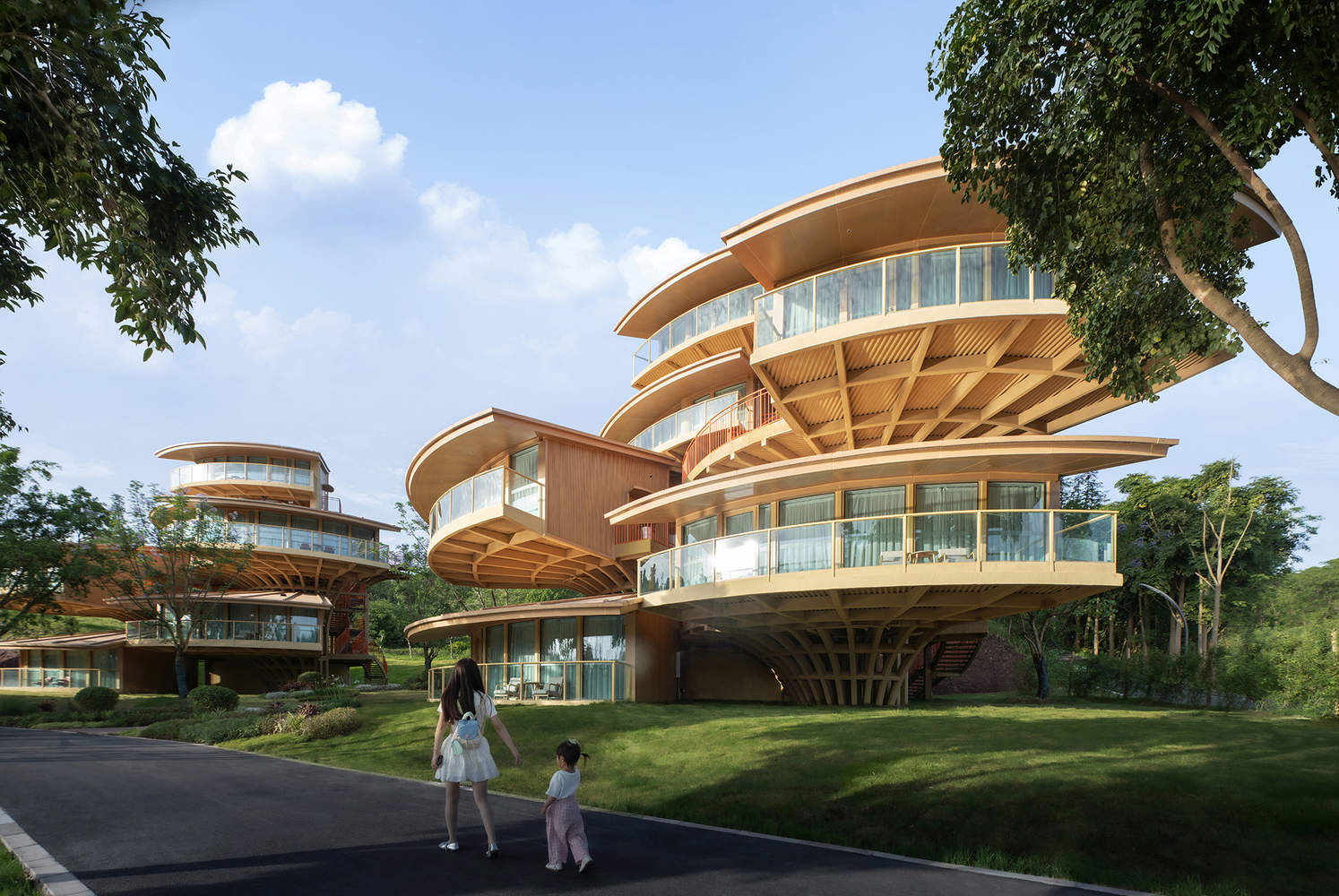
设计理念的升华与创新: 南溪树屋项目最引人注目的地方在于其设计理念的深刻升华。它并非简单地复制传统树屋的形态,而是从自然界中汲取灵感,将“树叶”这一元素抽象化、结构化。设计者敏锐地观察到银杏叶的结构,巧妙地将扇形平面、叉状脉络融入建筑设计中。这种从微观到宏观的转化,赋予了建筑独特的生命力和视觉冲击力。项目2.0版本的设计相较于1.0版本,更注重空中悬浮感,并利用结构创新解决大悬挑带来的问题,体现了对自然形态的深入理解和对建筑技术的巧妙运用,将建筑与自然完美结合。
结构与功能的完美结合: 该项目在结构设计方面展现出卓越的专业素养。设计师巧妙地利用三根钢柱和主梁构成的三角形结构,稳定地承载了整个建筑的荷载。叶脉状的结构柱对悬挑底板的支撑,以及扇形底面、屋顶和小型钢柱的结合,共同营造出悬浮的视觉效果,实现了结构与功能的统一。同时,错落有致的客房单元设计,不仅满足了观景需求,也避免了大型悬挑结构的微小震动干扰。两部疏散楼梯的巧妙布局,既满足了规范要求,又丰富了空间体验。这些都体现了设计者在技术层面的深厚功底和对细节的极致追求。
空间体验与自然融合: 南溪树屋项目的精髓在于其对空间体验的极致追求和与自然的和谐共生。客房单元的扇形平面设计,最大限度地利用了视野,使居住者能够沉浸在自然景观之中。内部空间布局简洁明快,满足了居住者的私密性和尺度感需求,而外侧的弧形阳台则提供了广阔的观景平台。建筑本身并未直接使用树木元素,却营造了“栖身枝头、浮游苍穹”的自然氛围,带给居住者独特的体验。这种对自然环境的尊重和对居住者心理的关注,使得该项目不仅是一栋建筑,更是一种生活方式的体现,也预示着未来建筑设计的发展方向。
© Prism Image
© Prism Image
The Tree House of Nanxi Happy Countryside Wild Fun Hotel is located in Nanxi District, Yibin City. For the design agency, this treehouse is the 2.0 version of the treehouse product, and its 1.0 version is the treehouse of Hangzhou Kaiyuan Senbo Resort Hotel built in 2019. Xianghu Tree House has received a warm response in the cultural and tourism market, recovering construction costs in a short period of time and continuing to make profits. It has also gained attention and coverage from domestic and foreign media, becoming a filming location for advertising and online dissemination. The famous American art website My Modern Met actively recommended this cultural and tourism product to the world through articles.
南溪欢乐田园野趣酒店树屋位于宜宾市南溪区。对设计机构来说这个树屋是树屋产品的2.0版,其1.0版是2019年建成的杭州开元森泊度假酒店树屋。湘湖树屋在文旅市场获得了热烈的反响,在短时间内便回收建设成本并持续盈利。它也获得了国内外媒体的关注与报道,成为广告拍摄与网络传播的取景地,美国著名艺术类网站 My Modern Met 主动撰文向全世界热情推荐了这个文旅产品。
© Prism Image
© Prism Image
Later, at the invitation of the owner of Nanxi in Yibin, WH studio undertook the design task of the new product for the treehouse. With the support of the owners, the studio has embarked on a brand new exploration of Treehouse 2.0. The 1.0 version highlights the fusion with natural elements, taken from the original image of "living quarters"; The 2.0 version emphasizes the abstract organic and suspended state in the air, particularly inspired by the structure of leaves. The leaves of plants may be the most common biological appearance on Earth, covering the largest surface as organisms. From a structural perspective, almost all leaves (except for phytoplankton) are cantilevered structures, and the contradiction that needs to be addressed is that larger overhangs not only bring more light exposure, but also greater vulnerability in wind and rain. During the long process of evolution, plant leaves have developed various leaf veins that provide nutrients while also serving as structural support for the leaves.
其后受宜宾南溪业主方的邀请,WH studio 承担了树屋新产品的设计任务。在业主的支持下,工作室进行了树屋2.0版的全新探索。1.0版本突出与自然元素的融合,取自原始的“巣居”意象;2.0版更强调抽象的有机与空中悬浮的状态,特别从“树叶的结构”中获得了启发。植物的叶片可能是地球上最普遍的生物样貌,作为有机体覆盖了最大的地表。从结构角度看,几乎所有的叶片(除了浮游植物)都是悬挑结构,需要解决的矛盾是,更大的悬挑既带来更多的受光量,也带来了风雨中更大的脆弱性。在漫长进化过程中,植物叶片发展出了多种叶脉,在提供养分的同时作为叶片的结构支持。
© Prism Image
© Prism Image
The leaf veins can be divided into three types in botany: forked veins, reticular veins, and parallel veins. Parallel veins are more common in slender leaves such as bamboo leaves; The reticular veins consist of a multi-level structure consisting of primary and secondary veins, and are a relatively common type; Fork shaped veins are evenly branched branches of leaf veins that emerge from the leaf base. Among them, forked veins are an ancient type that is rarely seen in seed plants, and the most typical representative is Ginkgo biloba.
叶脉在植物学上可划分为三大类型:叉状脉、网状脉和平行脉。平行脉多见于细长的叶片如竹叶;网状脉由主脉和次脉构成多级结构,是比较多见的类型;叉状脉是叶脉从叶基生出后,呈均匀的叉状分枝。其中叉状脉是古老的类型,在种子植物中已很少见,最典型代表的是银杏。
© Prism Image
In the eyes of designers, ginkgo leaves have a 'classical elegance'. As one of the oldest surviving tree species, Ginkgo biloba is known as the "living fossil of the plant kingdom". Its form has been maintained for over 100 million years and has survived countless changes and mass extinctions. The leaves of Ginkgo biloba are fan-shaped, with simple and clear leaf vein structures and symmetrical proportions, achieving a perfect balance between receiving sunlight and rain and resisting strong winds and rain.
在设计者的眼中,银杏树叶有一种“古典的优雅”。作为现存最古老的树种之一,银杏被誉为“植物界的活化石”,其形态已经维持了1亿年以上,经历了无数沧海桑田和生物大灭绝事件而顽强存活下来。银杏的叶片呈扇形,叶脉结构简洁清晰,比例匀称,实现了承接阳光雨露与抵抗狂风骤雨之间的完美平衡。
© Prism Image
© Prism Image
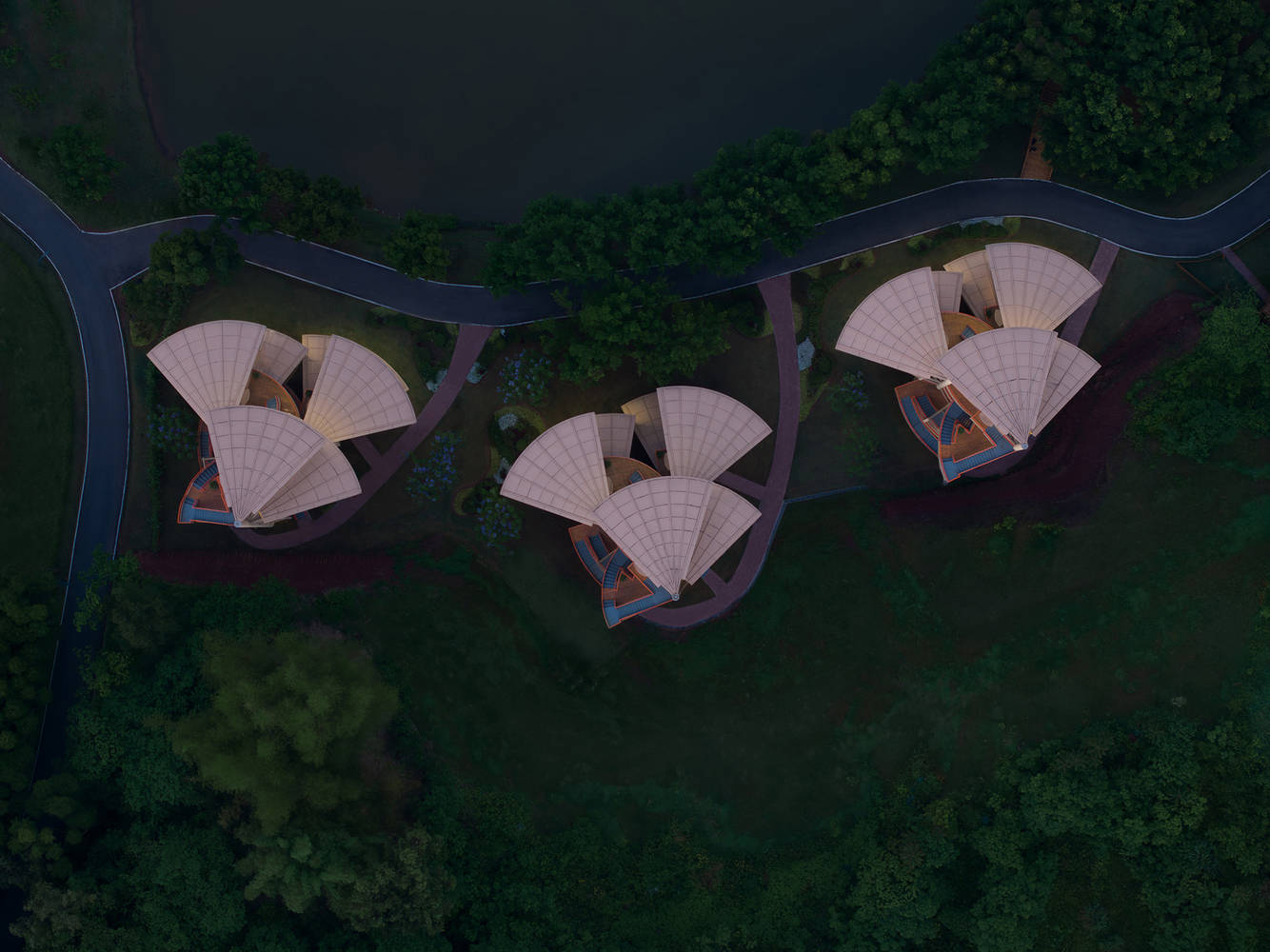
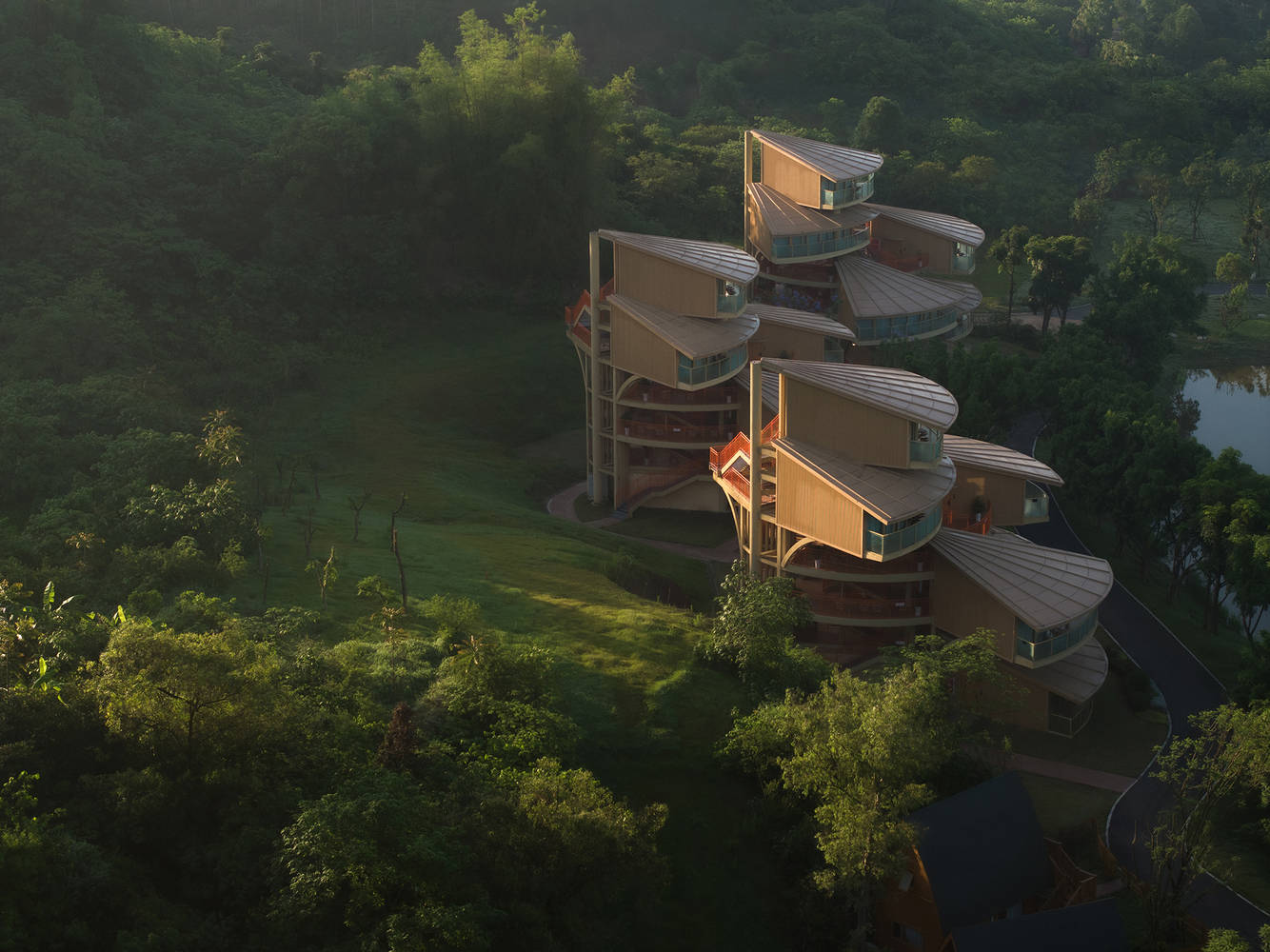
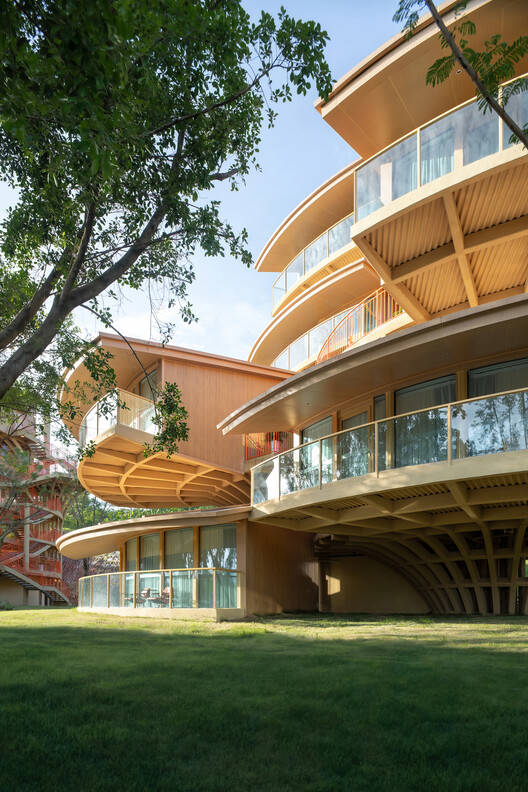
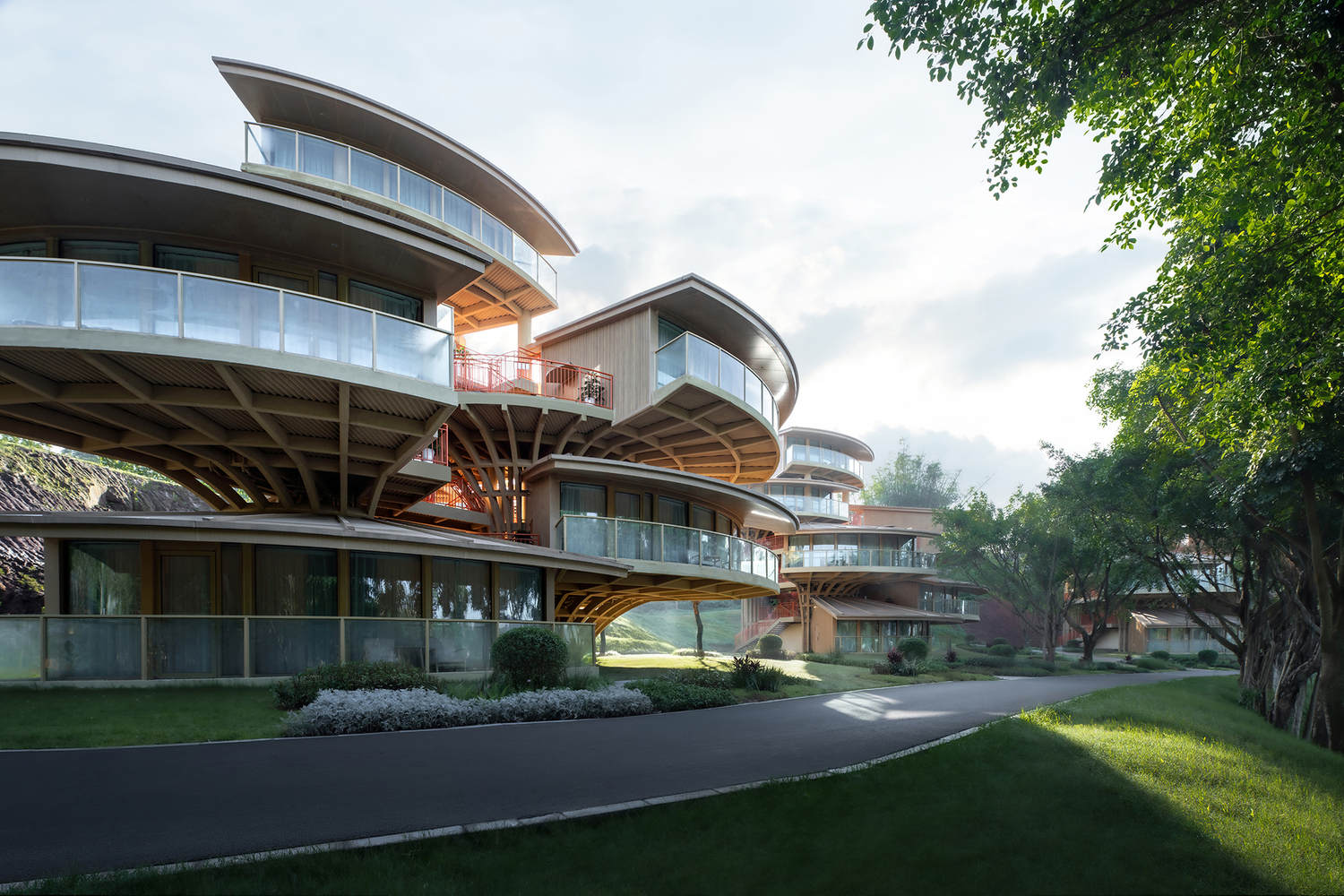
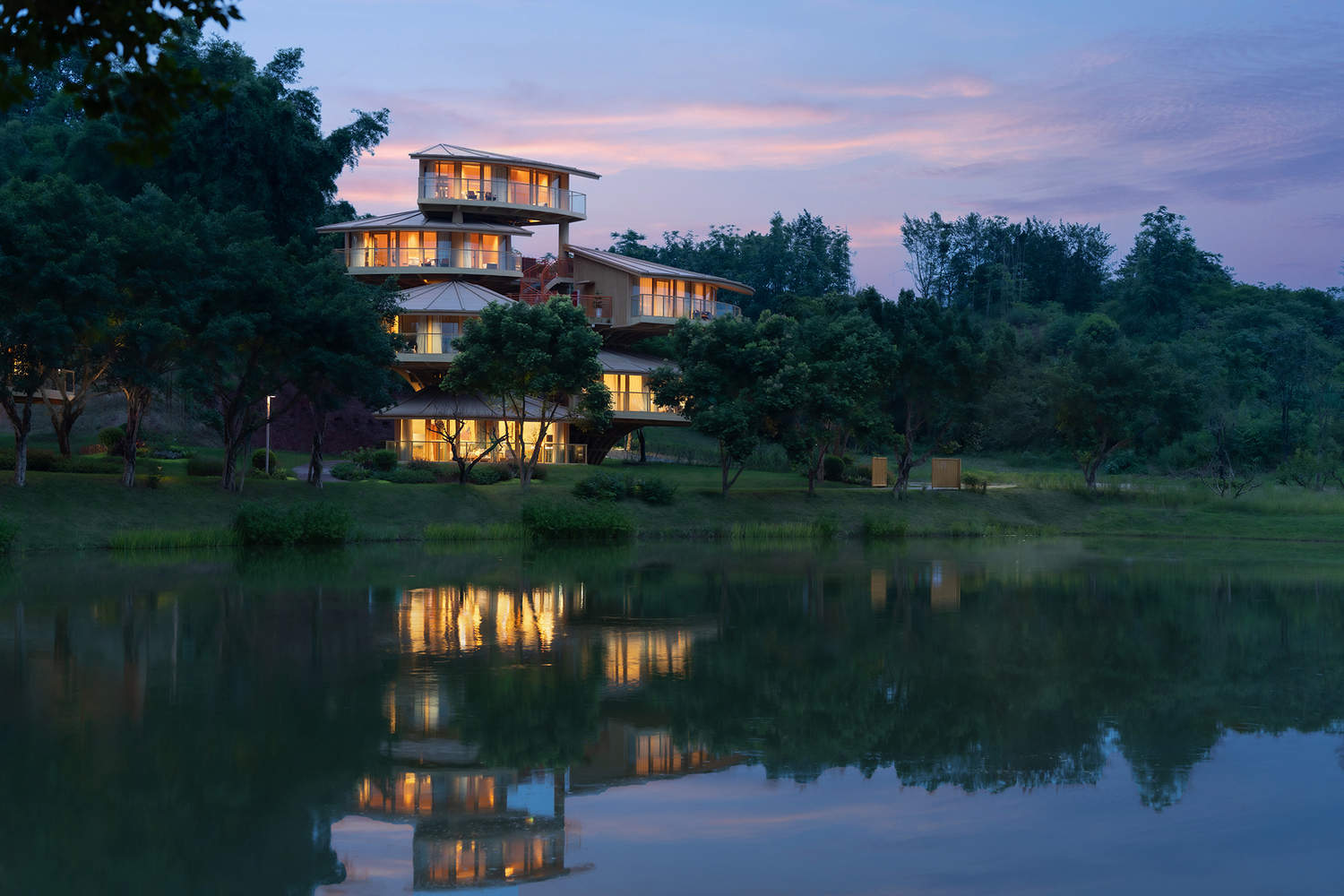
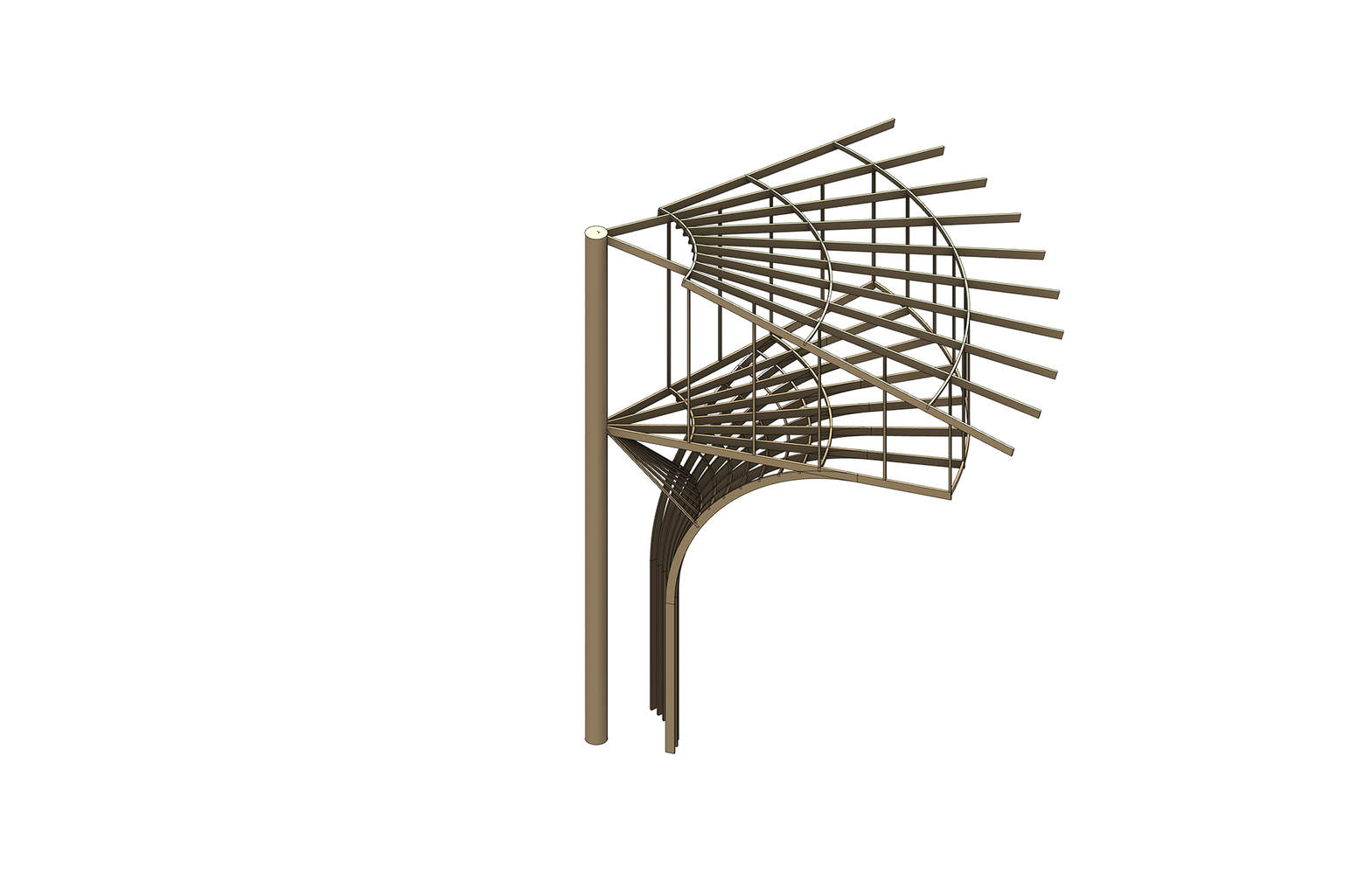
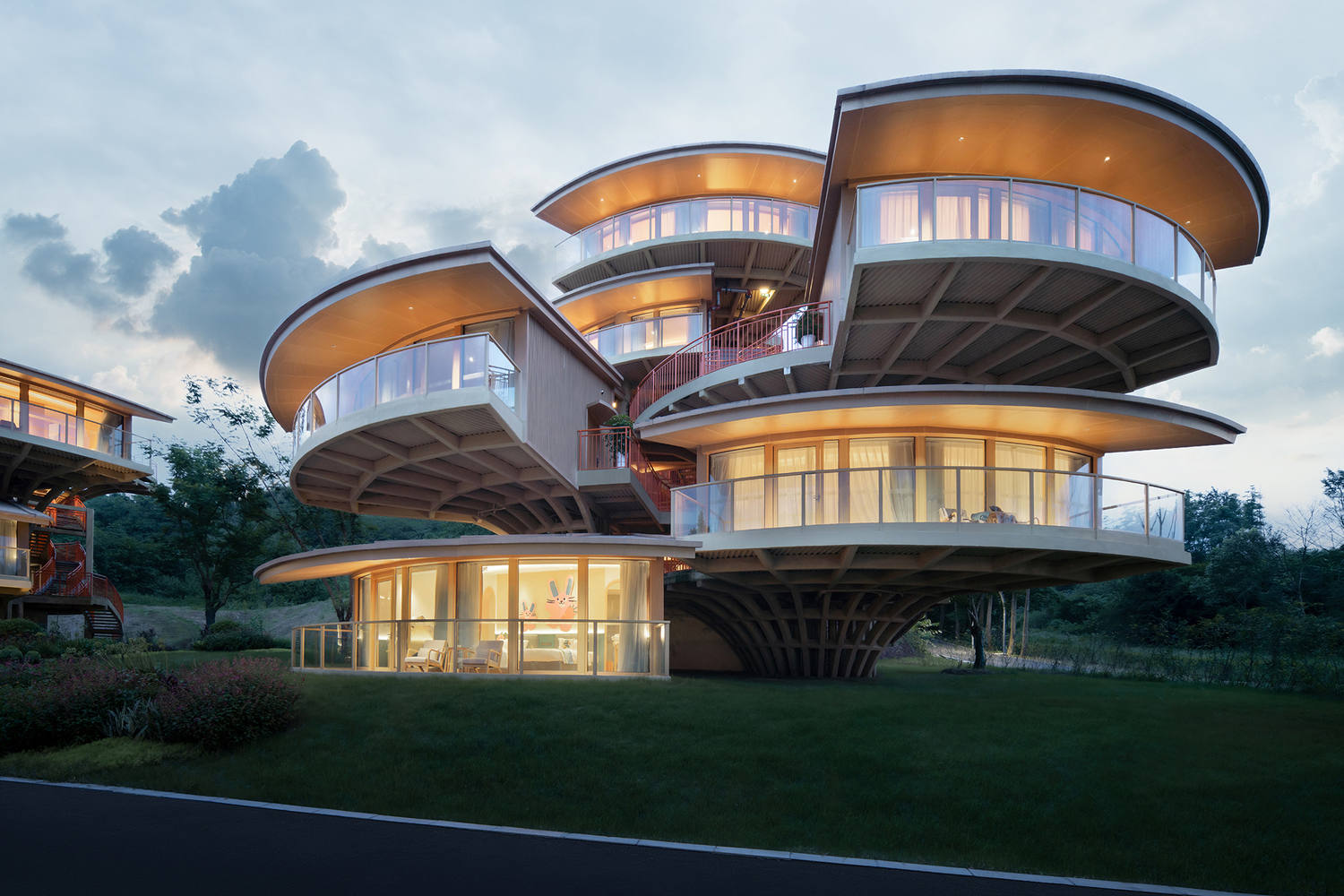
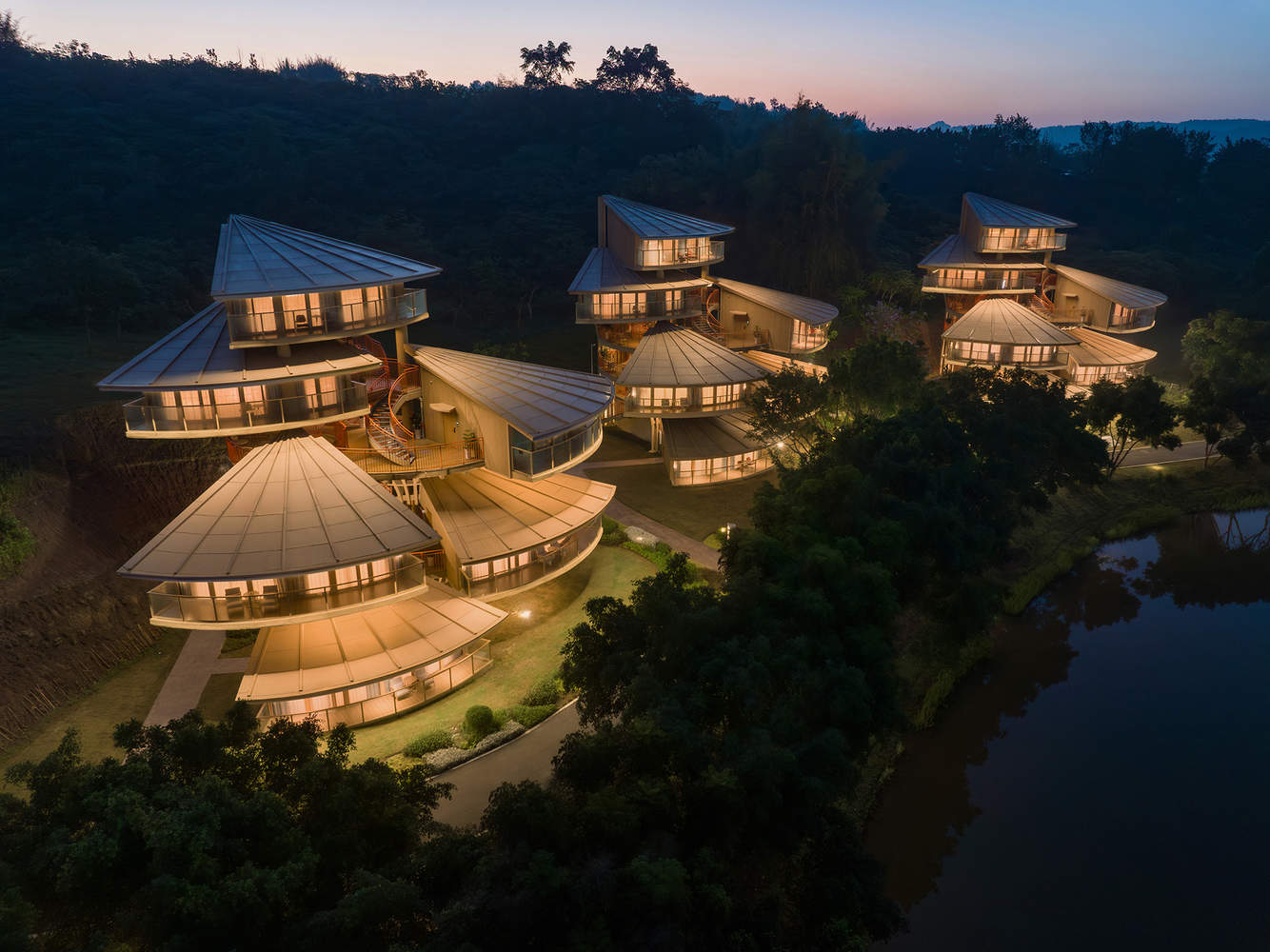
The basic unit of Nanxi treehouse is based on ginkgo leaves, with a structure similar to a forked vein. It starts from the root vein and disperses evenly outward, supporting a fan-shaped plane. Similar to appropriately offsetting the top and bottom of plant leaves to obtain a greater amount of light, the treehouse has set up staggered guest room units at different heights, roughly facing the main landscape surface but at different angles. The structure and space of each unit are independent of each other, presenting a natural and organic state while avoiding the interference caused by small vibrations of large cantilevered steel structures. Just like a tree trunk rooted in the earth and branches and leaves extending into the sky, the treehouse is composed of three steel columns and a main beam to form a stable triangular structure, carrying most of the load of the entire building; The leaf vein shaped cluster of structural columns plays an important supporting role in the cantilevered bottom plate. Its fan-shaped bottom surface, the fan-shaped sloping surface of the roof, and the small-sized steel columns (including window frames) between the two form a suspended structural unit.
南溪树屋的基本单元以银杏叶为原型,结构形式类似叉状脉,由根脉出发向外均匀分散,承托起扇形的平面。与植物叶片上下之间适当错开以获得更大受光量类似,树屋在不同高度设置了错落有致的客房单元,大致朝向主要景观面但角度各不相同。各单元的结构和空间相互独立,既呈现自然有机的状态,也避免了大悬挑钢结构的微小颤动带来干扰。就像树干扎根于大地而枝叶伸向苍穹,树屋整体以三根钢柱和主梁构成主体框架,形成稳定的三角形结构,承载了整幢楼的大部分荷载;叶脉状的一丛结构柱对悬挑底板起到了重要的支撑作用,它的扇形底面与屋顶的扇形斜面、以及二者之间的小尺寸钢柱(包括窗框)共同形成了悬浮的结构单元。
© Prism Image
分析图
© Prism Image
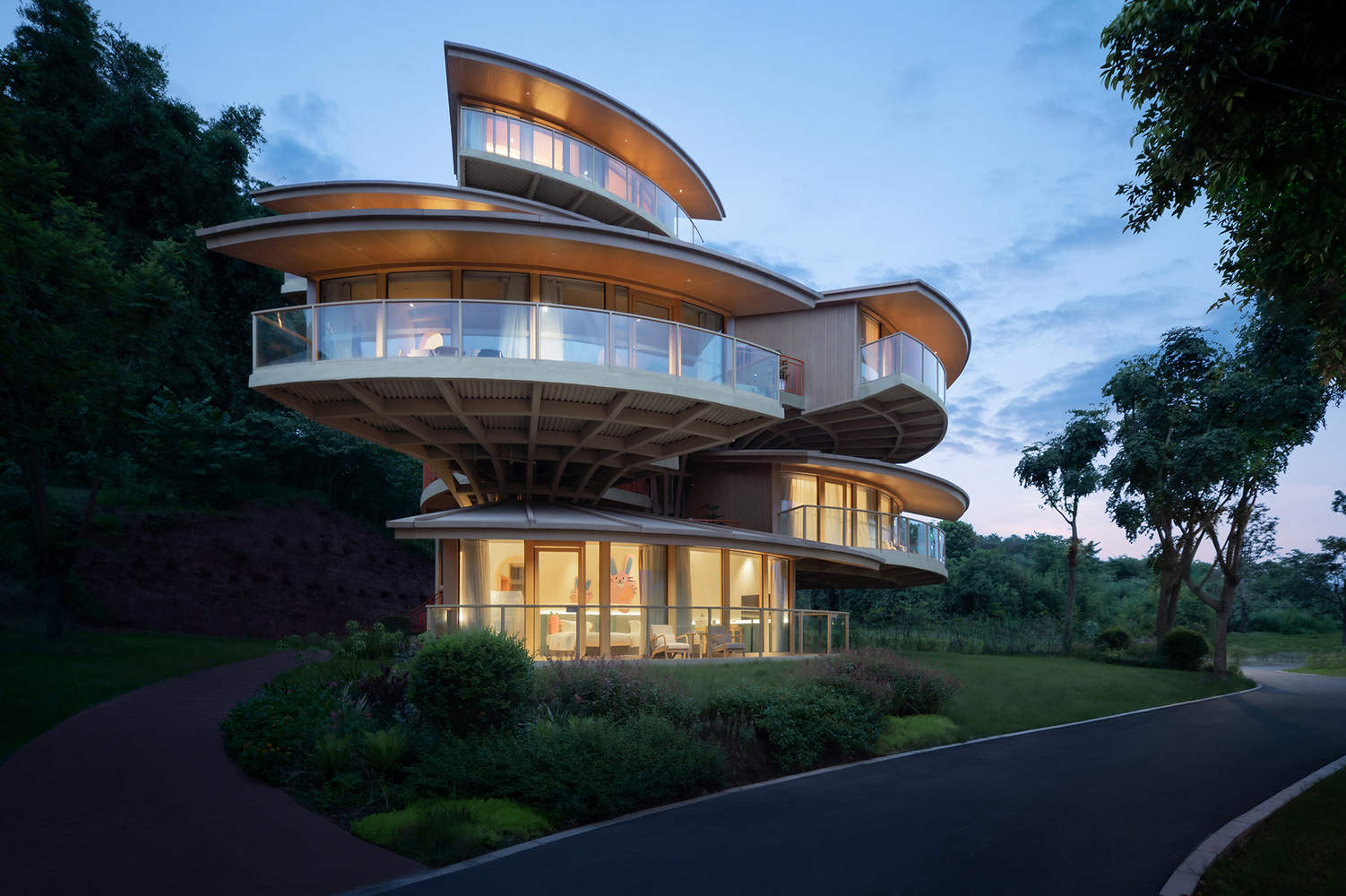
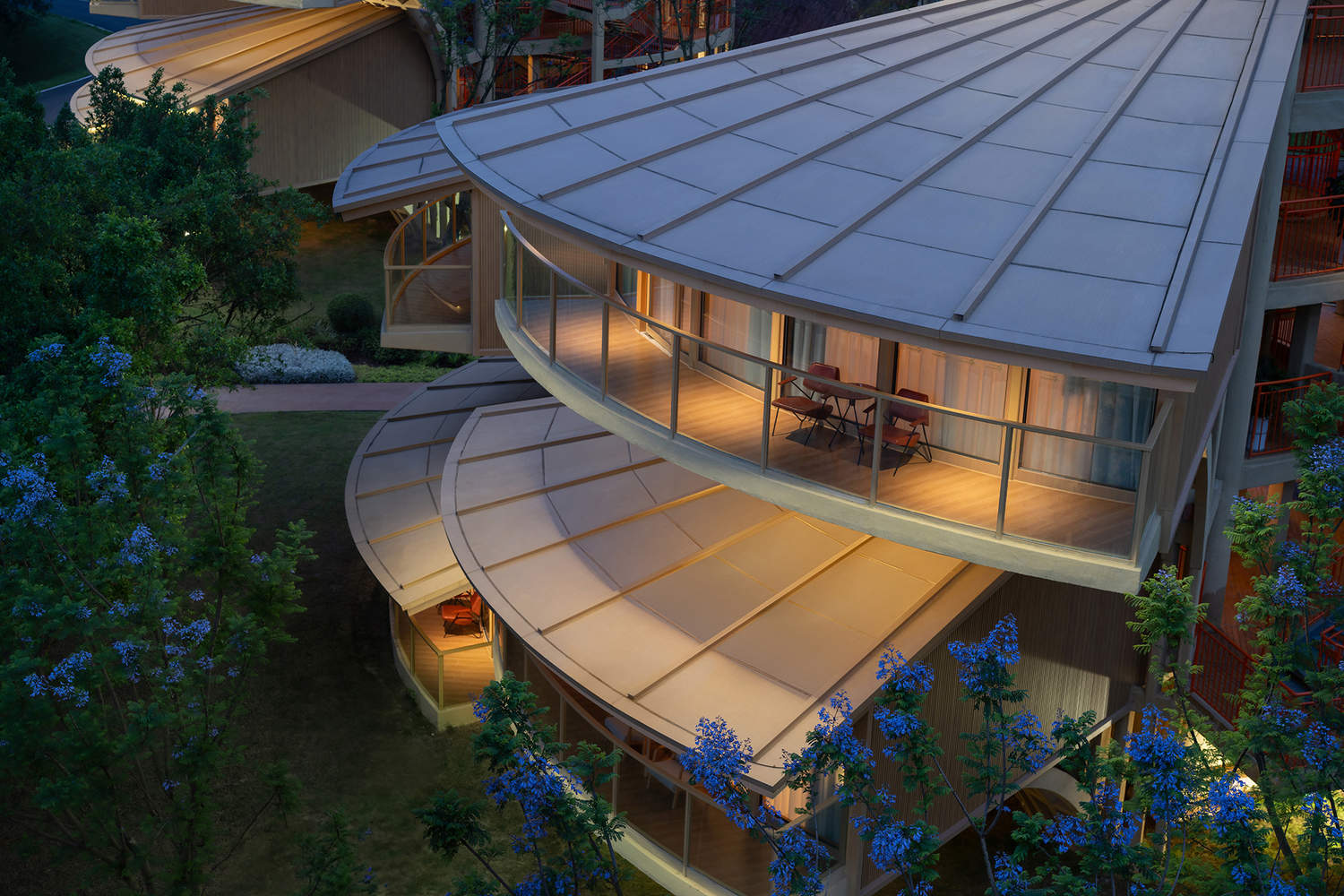
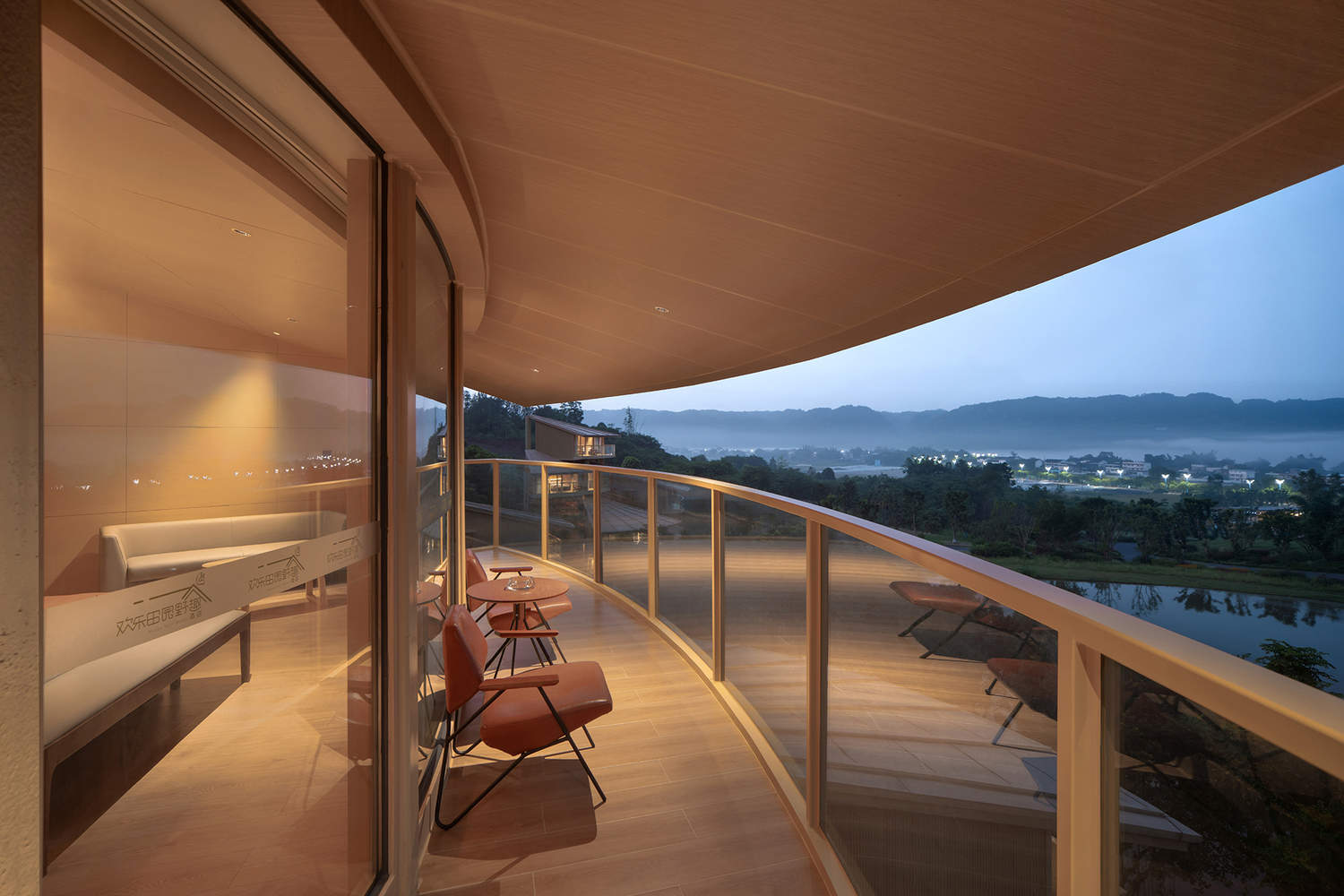
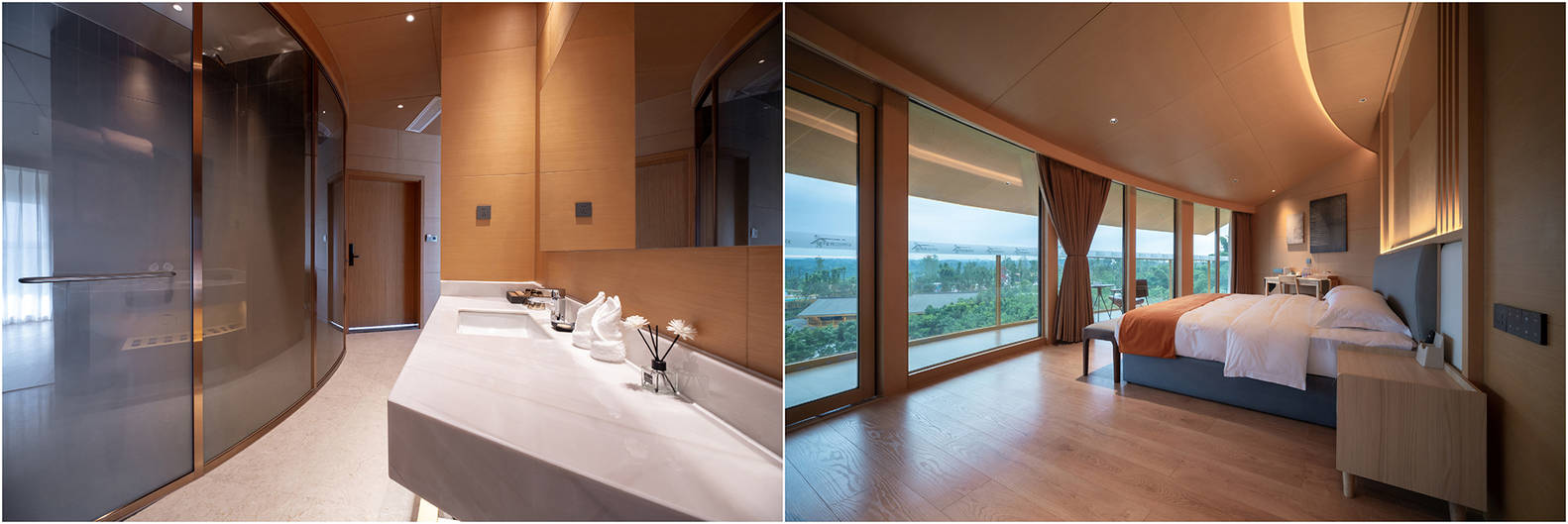
The fan-shaped floor plan of the guest room unit perfectly matches the viewing needs of the treehouse, and the internal space is composed of simplicity and brightness. The inner part is suitable for the privacy and sense of scale of the bathroom space. An independent straight wall separates the entrance space from the living space, forming a circular flow line. The curved balcony on the outer side, which is about 12 meters long, provides an extremely wide view. Leaves are both light and tough, with slender curved columns and large-scale overhangs creating a relaxed floating sensation. Although the building itself does not directly use specific tree elements, it still brings a natural atmosphere of "living on branches and floating in the sky" to the residents.
客房单元的扇形平面与树屋的观景需求十分契合,内部空间构成简洁明快。靠内侧的部分适合卫浴空间的私密性和尺度感,一道独立的直墙分隔了入口空间与居住空间,并构成了环形流线,外侧长约12米的弧形阳台提供了无比开阔的观景视野。树叶是轻盈的,也是坚韧的,纤细的弧形柱与大尺度的悬挑营造出轻松的漂浮感。尽管建筑本身没有直接使用具体的树木元素,仍然带给居住者“栖身枝头、浮游苍穹”的自然氛围。
© Prism Image
© Prism Image
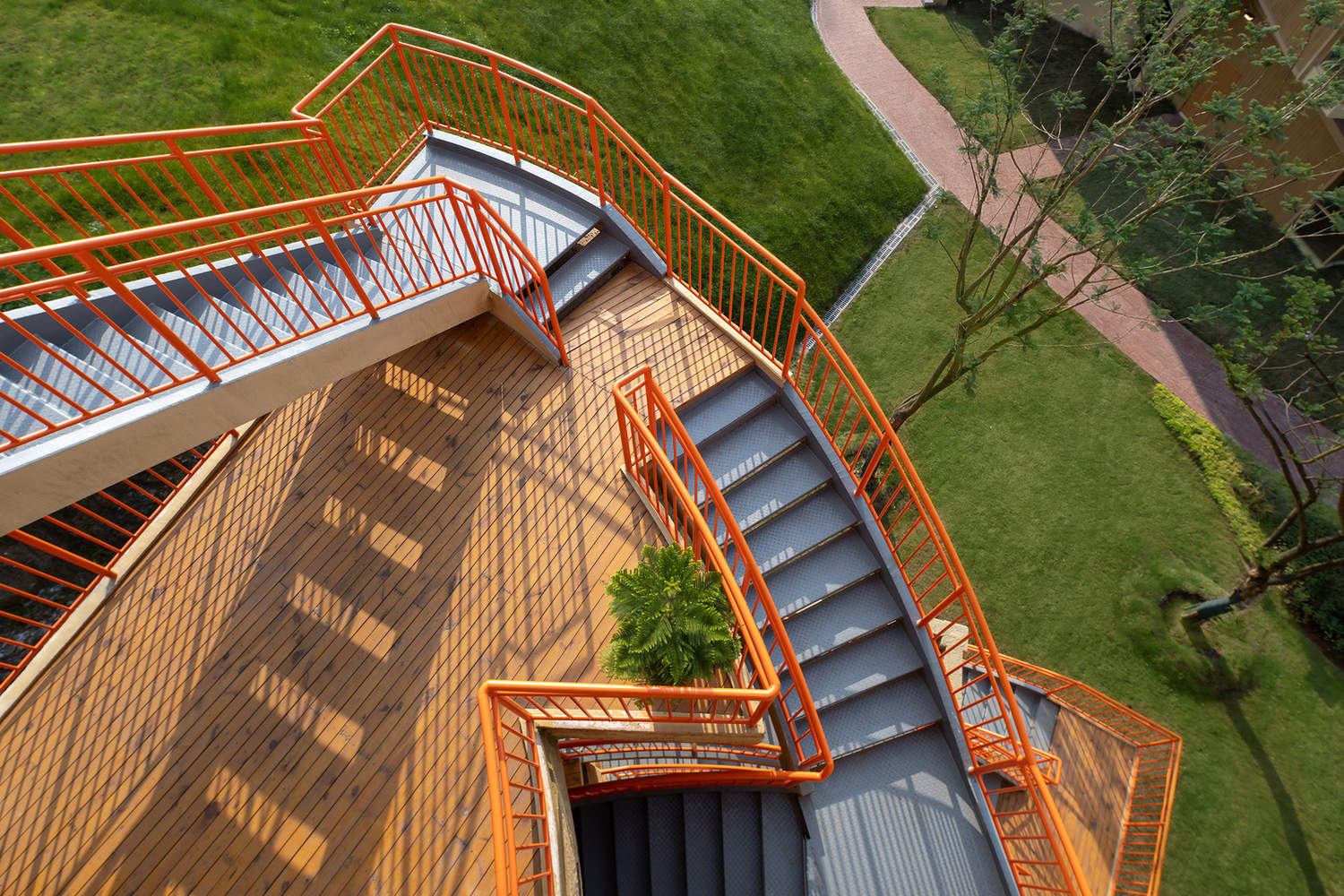
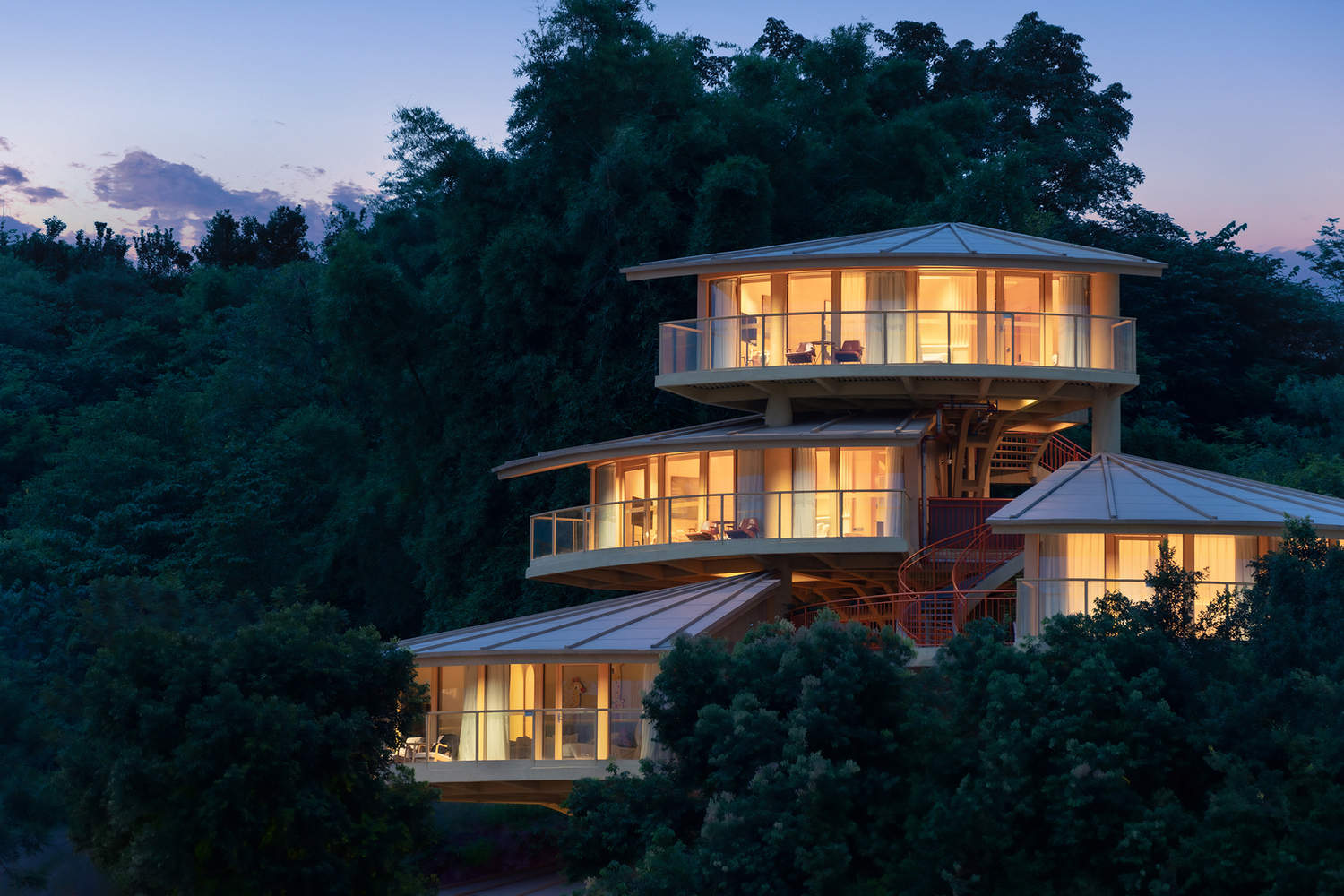
The three completed buildings each contain six guest rooms, located at different elevations, with the highest floor elevation being 14.4m. The drawing review department requires that each treehouse must have two evacuation staircases, which poses great challenges to the form and spatial treatment. In the final draft, two staircases are located inside and outside the main framework, providing two different climbing paths, one hidden and one visible. The outdoor platforms on each floor have different shapes, providing outdoor communication and parent-child activity spaces for guest rooms. As the ancients said, 'I want to ride the wind back, but I am afraid of the beautiful buildings.' The Heavenly Palace may be too cold at high places, but the experience of a tree house that is natural and neither inhabited nor alone may be more pleasant. Or lean against the railing and gaze into the distance, listening to the chirping of birds and the gentle breeze passing by your ears; Or a friend may hold a lamp in front of the wind, correspond with their neighbor from afar, and take a glimpse of the carefree realm of "coexisting with heaven and earth, and being one with all things" while wandering around in the wilderness.
建成的三幢建筑每幢包含六个客房,各自位于不同的标高,最高处的楼面标高为14.4m。图审部门要求每幢树屋必须设置两部疏散楼梯,给形态和空间处理带来了很大的挑战。最终定稿的方案中两部楼梯分别位于主体框架的内部和外侧,提供了一隐一显两种不同的攀登路径。每层的室外平台形态各异,为客房单元提供了室外交流和亲子活动空间。古人云,“我欲乘风归去,又恐琼楼玉宇”,天宫楼阁或许高处不胜寒,而取法自然、既非聚居也非孑然独处的树屋体验可能更为宜人。或凭栏远眺,听鸟鸣啾啾、清风过耳;或好友把盏临风,与邻人遥相应和,于熏然神游方外之际,一窥“与天地并生、与万物为一”的逍遥之境。
© Prism Image