Chongzhou Yongli Hongwa Plaza Banquet Hotel/Wuhe Architectural Firm
崇州永利红瓦广场宴会酒店 / 吾和建筑事务所
场地与环境的巧妙融合:该项目最显著的特点在于它对环境的尊重和利用。建筑师巧妙地将永利红瓦广场融入了四川崇州密布的苗圃森林之中,利用地形的幽静和私密性,创造了一个与喧嚣城市隔离的世外桃源。项目并没有试图在视觉上与环境对立,而是通过退让和融入,使得建筑与自然景观和谐共生。从入口处的几何形体设计,到接待中心的“白色谷仓”意象,再到餐厅包间与花园的结合,都体现了建筑师对环境的细致观察和精心布局。这种与自然的融合,是项目的一大亮点,也是其独特魅力的来源。
空间秩序与功能组织的创新:项目在功能组织上展现了建筑师的智慧。面对庞大而复杂的酒店功能,建筑师没有采取传统的简单堆砌,而是采用了抽象的聚落形态,将不同尺度的功能单元巧妙地组织在一起。例如,宴会厅的统一坡顶和低矮檐口,形成了一种连贯而富有节奏感的空间体验,同时框景成画,营造出步移景异的视觉效果。餐厅包间的独立建筑形体与花园的结合,则进一步丰富了空间层次,为客人提供了私密而舒适的用餐体验。这种对空间秩序的精心构建,既满足了功能需求,又创造了独特的空间氛围,是项目的核心竞争力。
细节处理与材料运用的精湛:项目的细节处理体现了建筑师对建筑品质的极致追求。例如,为了强化建筑的水平感,檐廊采用了无柱化的设计,通过钢结构悬挑技术实现了近百米长廊的开阔视野。这不仅提升了建筑的视觉效果,也增强了空间的通透感。在材料运用上,建筑师可能采用了红瓦、白色涂料等,与周围的自然环境形成了和谐的对话。通过对建筑语言的提炼、对细节的精雕细琢,以及对材料的精准运用,项目展现出一种精致而优雅的品质,使得永利红瓦广场不仅是一个宴会酒店,更是一件值得品味的艺术品。
© Hao Chen
© Hao Chen
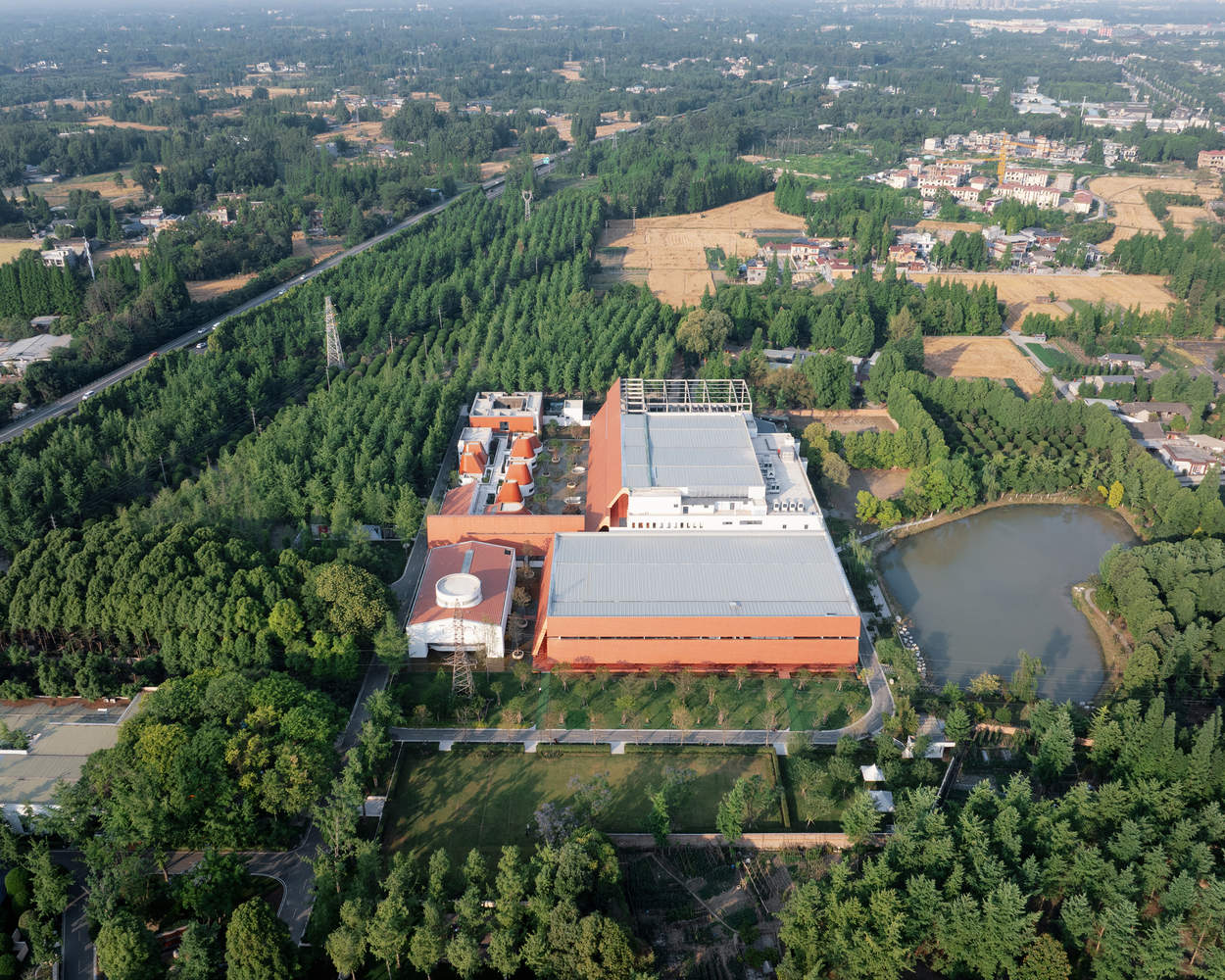
This group of buildings hidden in the forest is not a concrete representation of traditional manors, but a massive order constructed by architects. The project (Yongli Hongwa Plaza) is located in Chongzhou City, Sichuan Province. The land is surrounded by a large area of nursery forests, which are quiet and private. The land does not have any display surface to the city, only a long road in the forest can reach it.
这组隐匿于林间的建筑群并非传统庄园的具象再现,而是建筑师构建出的一组庞大的秩序。项目(永利红瓦广场)位于四川省崇州市,用地四周被大面积的苗圃密林环绕,幽静私密,用地对城市并没有任何展示面,只有密林中一条长长的道路可以到达。
© Hao Chen
© Hao Chen
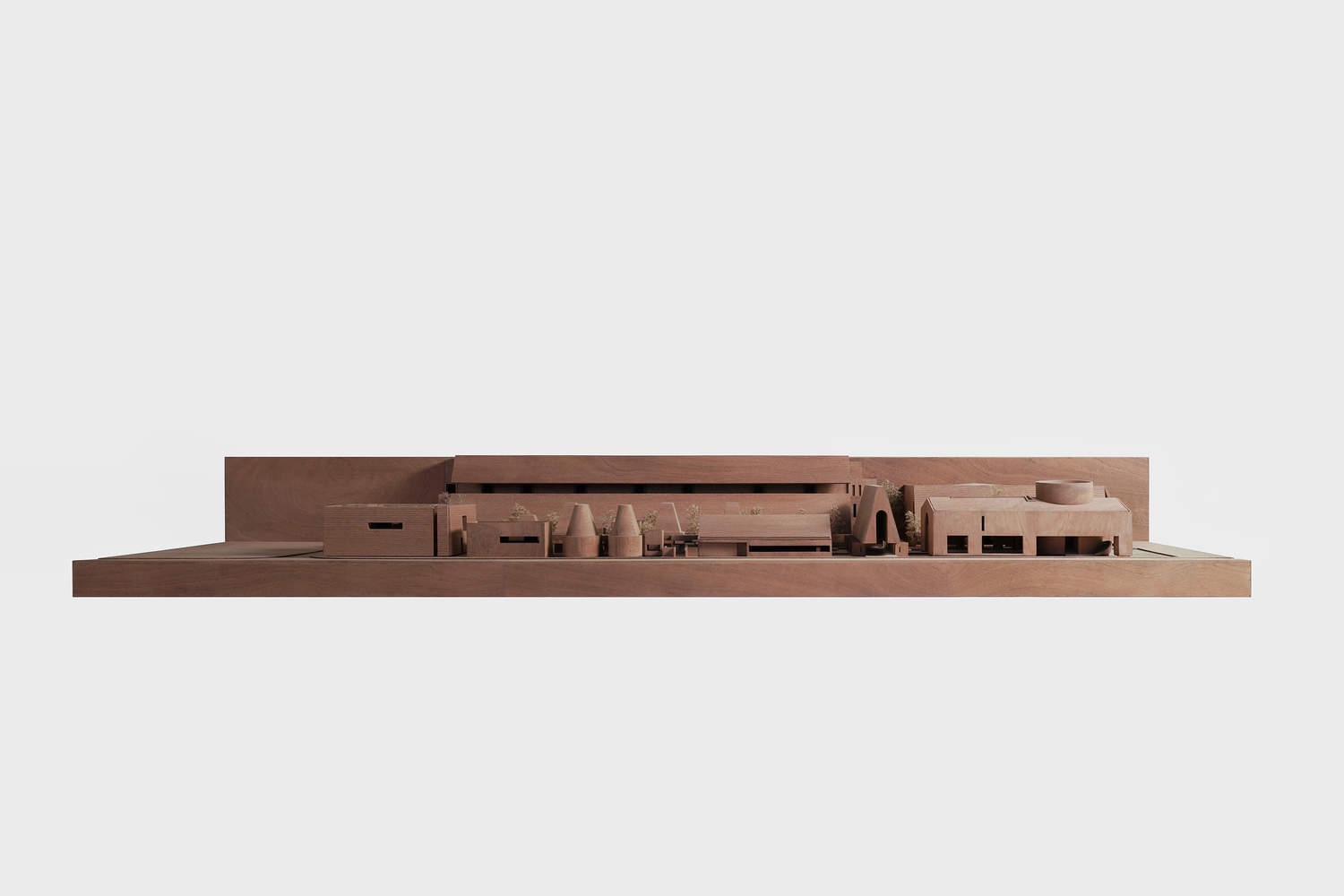
Architects choose to organize complex and massive hotel functions using a set of abstract settlement forms. The super large scale sloping roof eaves, mesoscale geometric shapes, and numerous small-scale functional units are juxtaposed together in an invisible order.
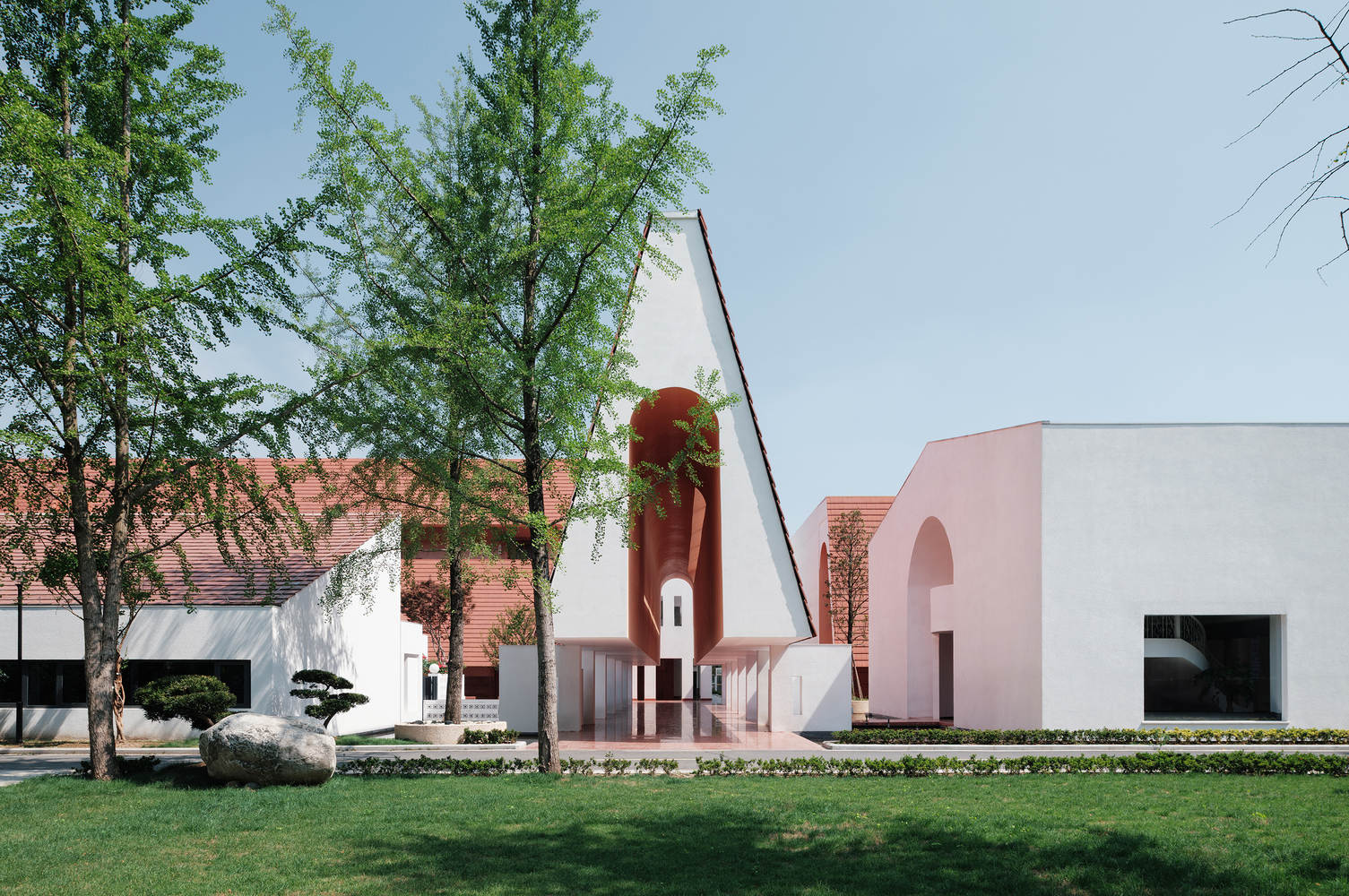
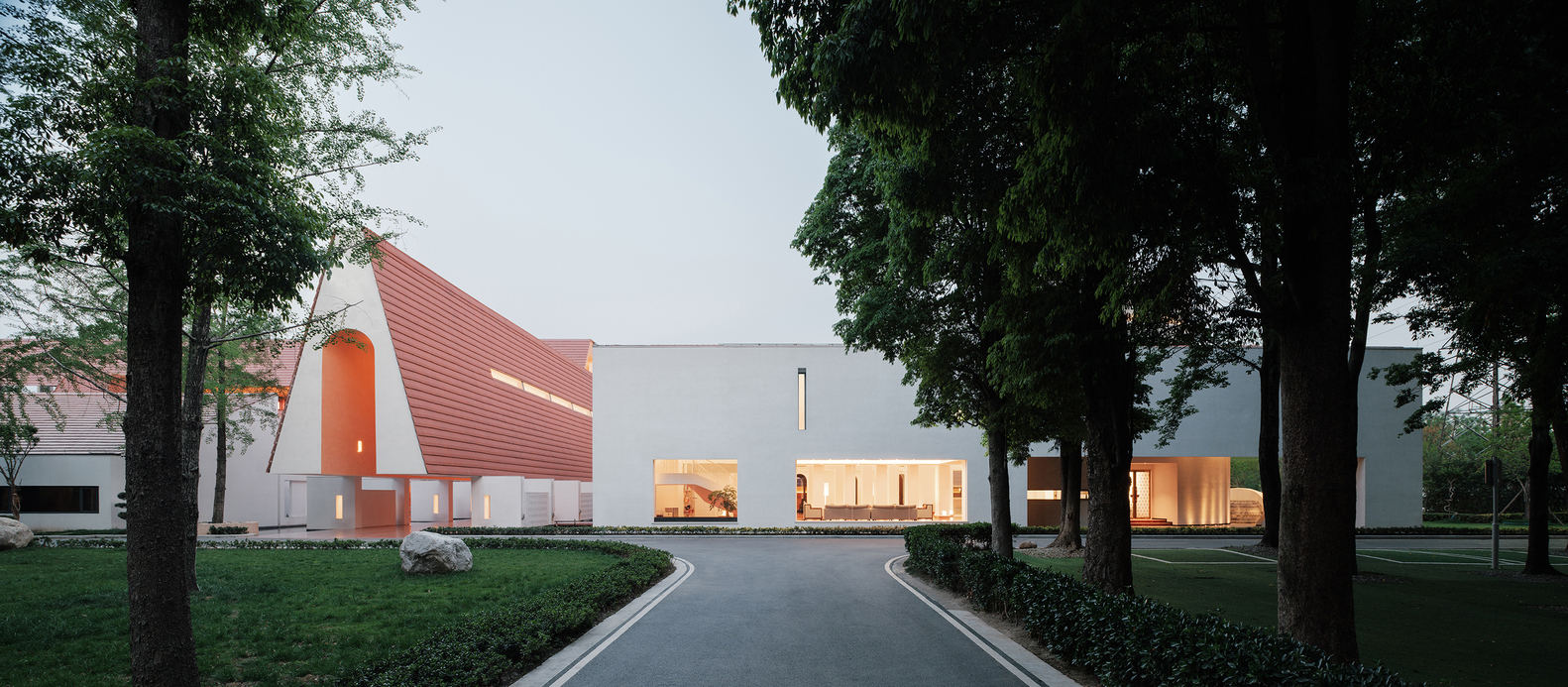
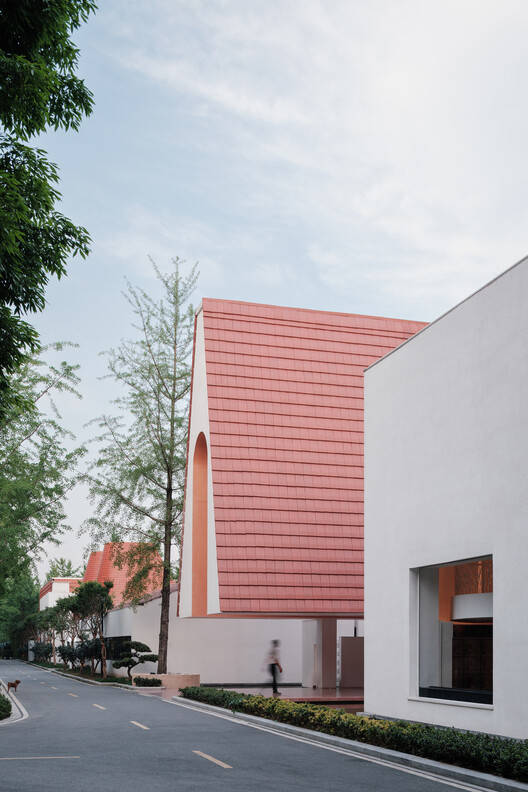
The main entrance is a geometric shape resembling a church, protruding from the surrounding volume with a 12 meter high gable that overhangs 4 meters outward, forming an attractive entrance corridor.
建筑师选择用一组抽象的聚落形态去组织起复杂且庞大的酒店功能。超大尺度的坡顶屋檐,中尺度的几何形体以及众多小尺度的功能单元,被一种隐形的秩序并置在一起。
主入口是一座犹如教堂一样的几何形体,从周围体量中探出,12 米高的山墙形体,向外悬挑 4 米而出,形成一个具有吸引力的入口廊道。
© Hao Chen
模型照片
© Hao Chen
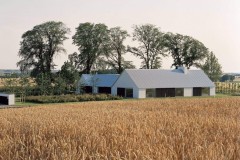
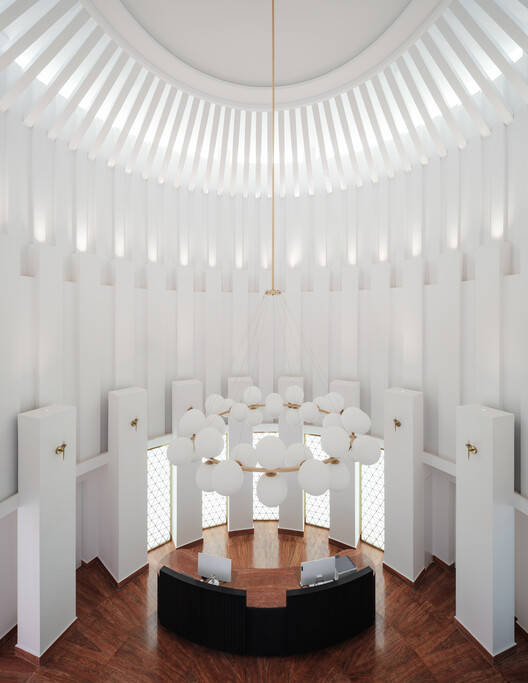
The reception center on the entrance side looks like a white barn in the woods, floating on the water and only accessible through the main corridor. In the huge opening of the mountain wall facing the guests, a curved bridge glides across the water. Guests can reach the art exhibition hall on the second floor through this bridge from the first floor lobby of the reception center.
入口一侧的接待中心看起像是树林中的一座白色谷仓,漂浮在水面之上,只有通过主廊道方可以到达。在迎着客人的山墙面巨大的开口中,一座弧形的桥梁,从水上划过。客人从接待中心的一楼大厅可以通过这座桥到达二楼的艺术展厅。
© Hao Chen
© Hao Chen
© Hao Chen
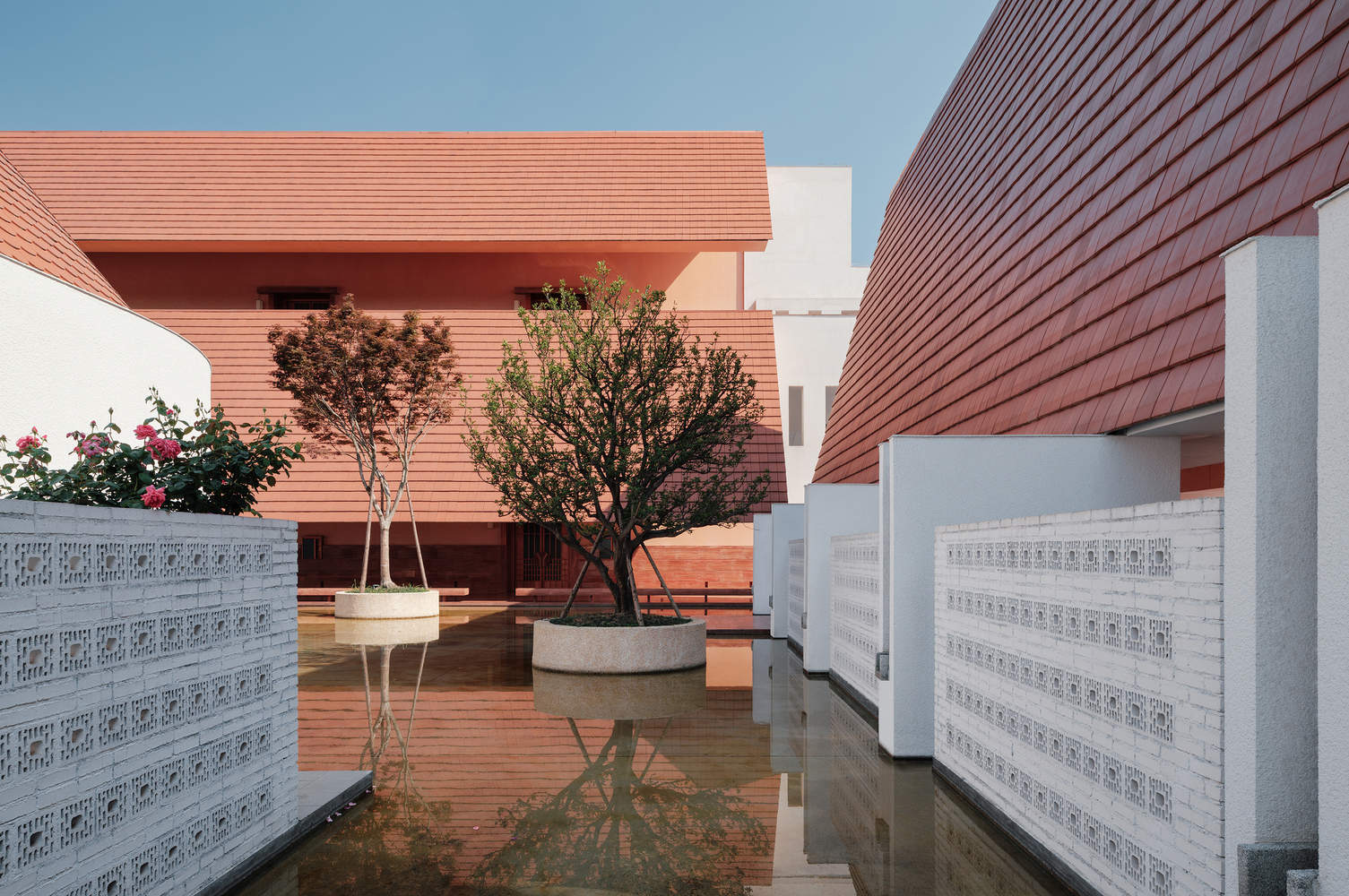
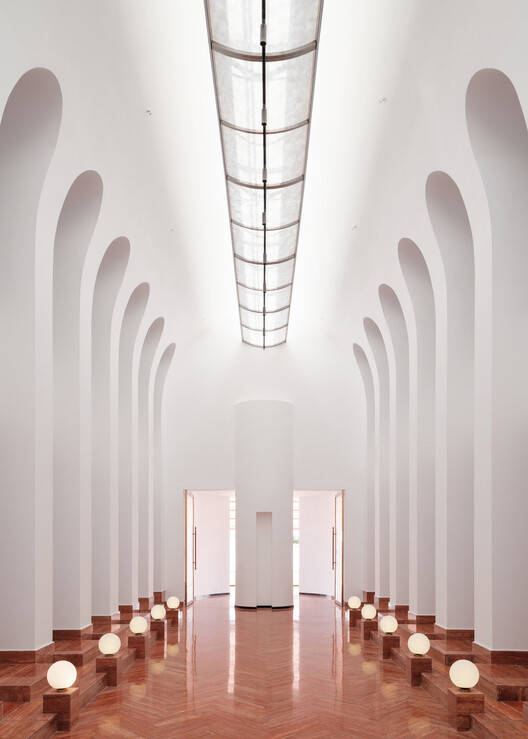
The restaurant adopts a layout structure of independent private rooms and garden corridors, with each private room designed as an independent architectural form. Form a private settlement in the dense forest by combining rooms of different sizes. Entering each private room requires passing through a small garden, with multiple small gardens connected by a corridor. The white corridor is surrounded by green trees and gardens, forming a relaxing and relaxing space together.
餐厅采用了独立包间和花园廊道的布局结构,每个餐厅包间,都被设计成独立的建筑形体。按照不同大小包间的组合,形成密林中一处私密的聚落形态。进入每个包间,需通过一个小型花园,多个小型花园被一条廊道串联起来,白色廊道被绿树和花园包裹着,共同形成一处休闲放松的空间。
© Hao Chen
© Hao Chen
© Hao Chen
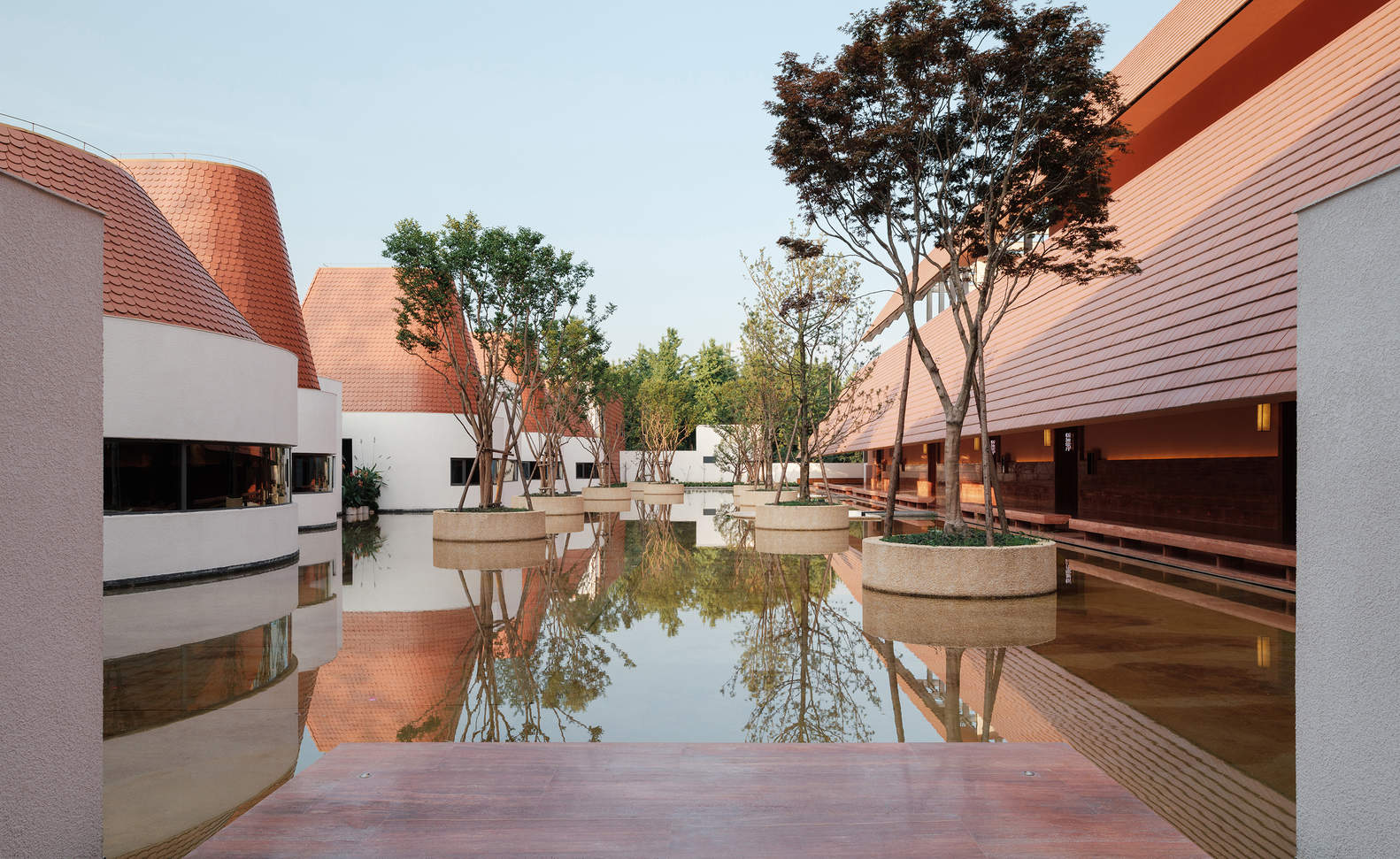
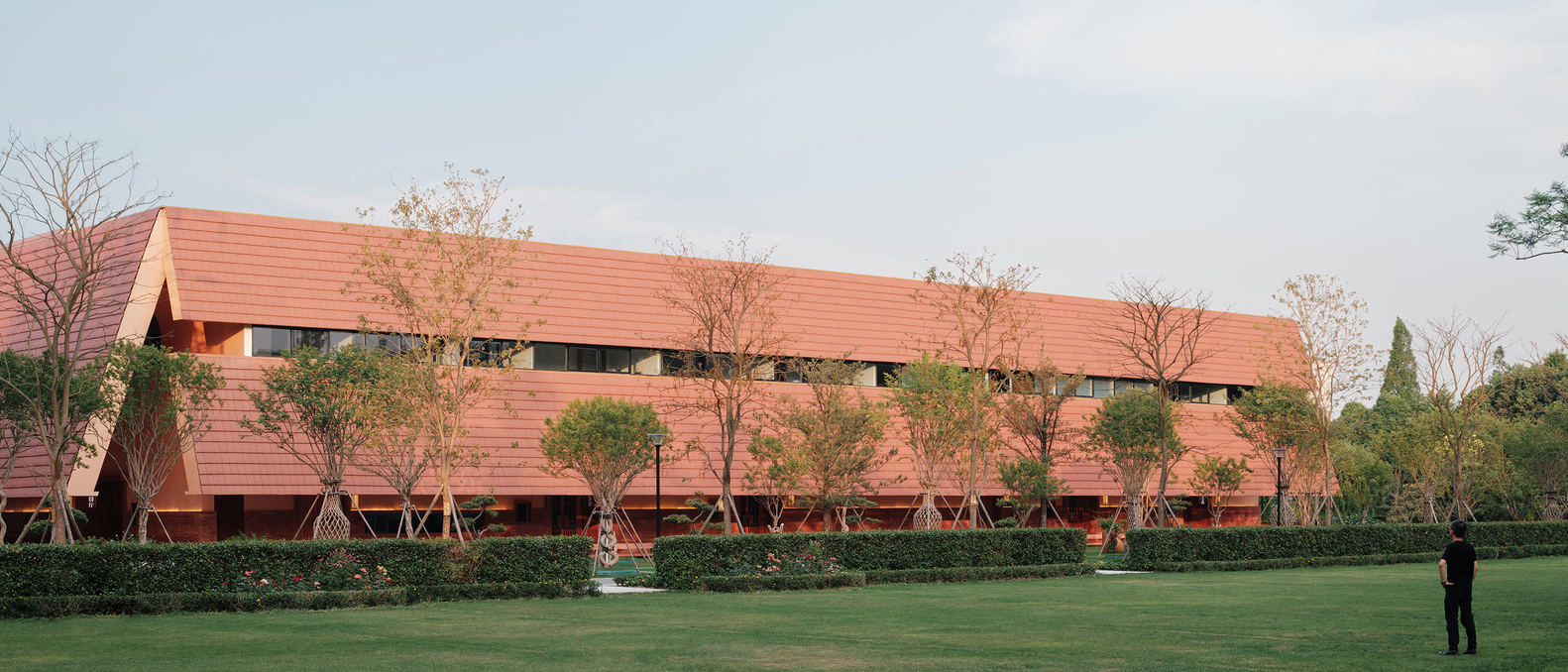
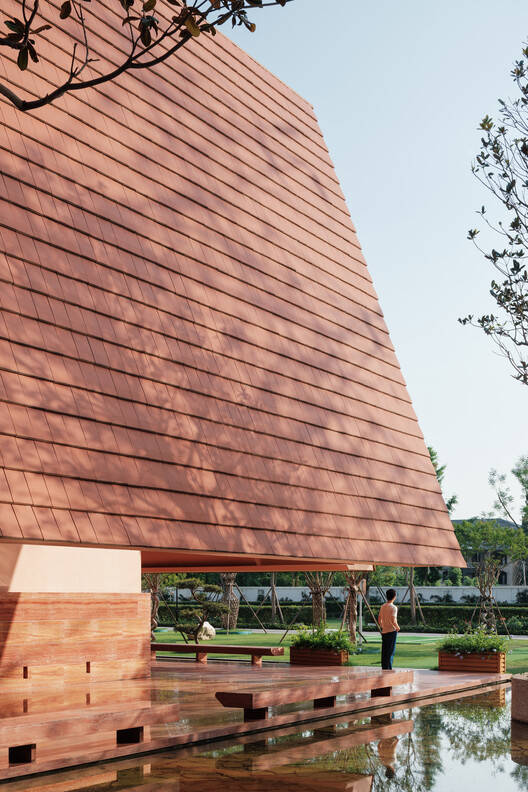
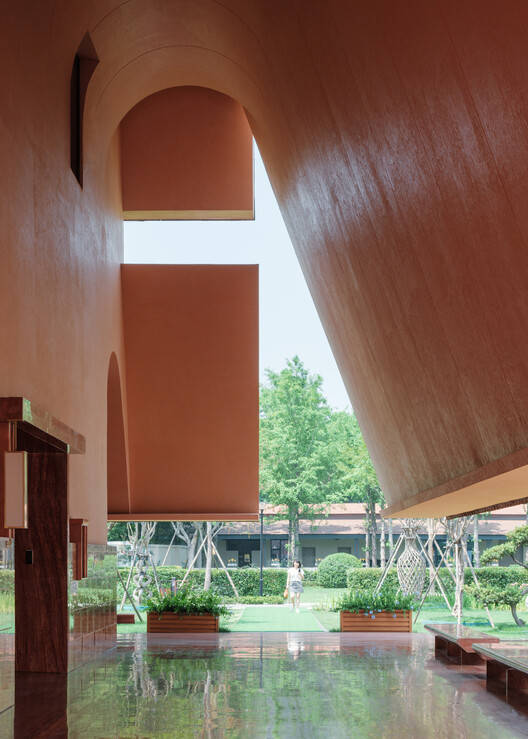
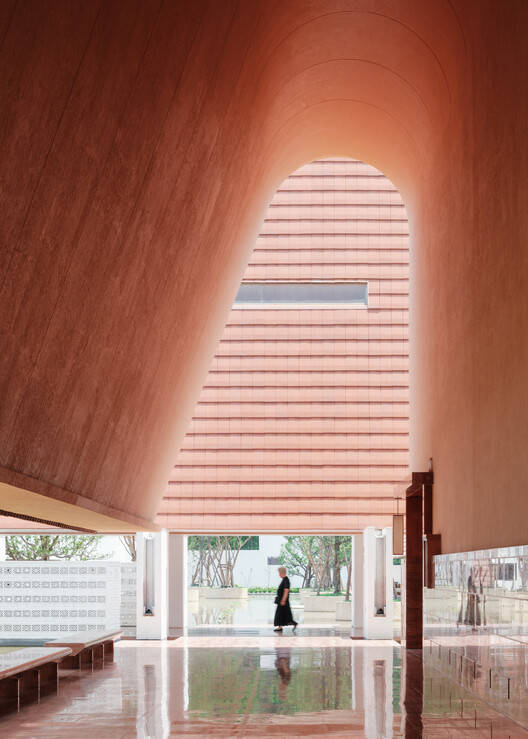
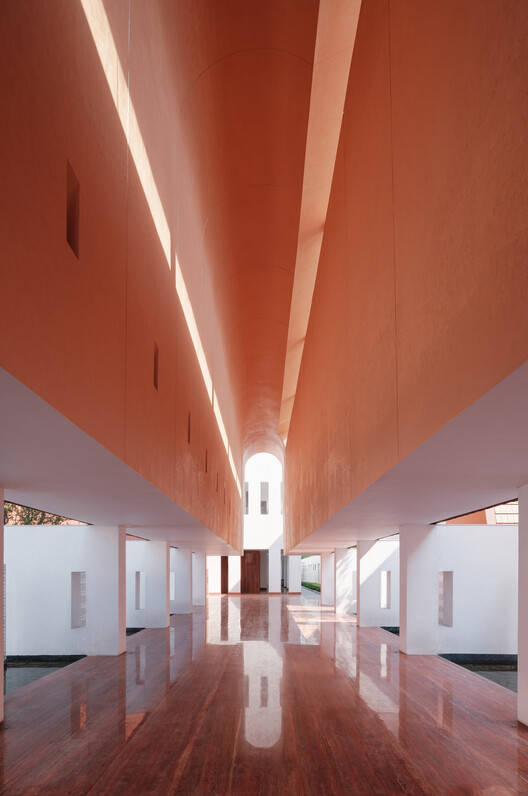
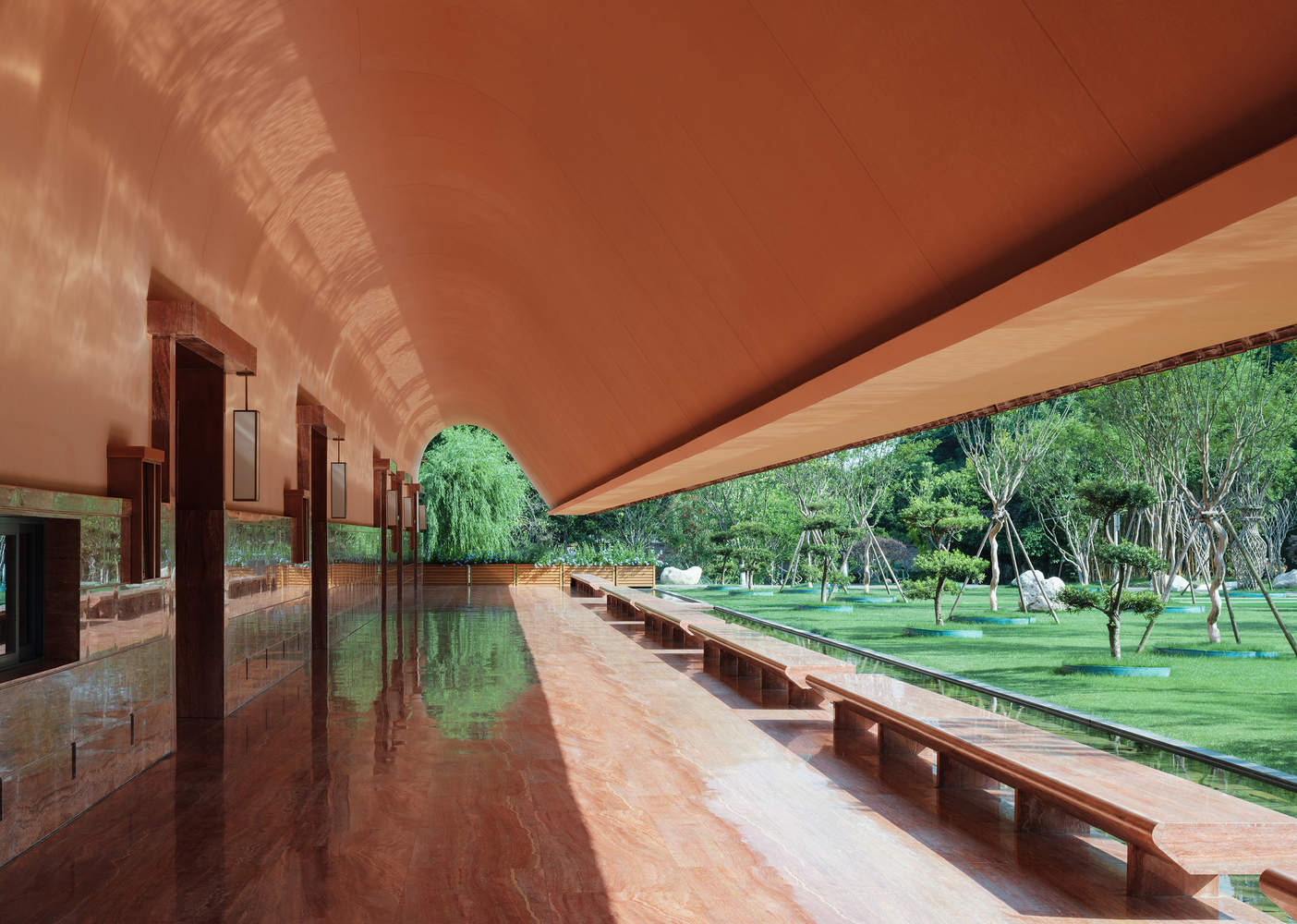
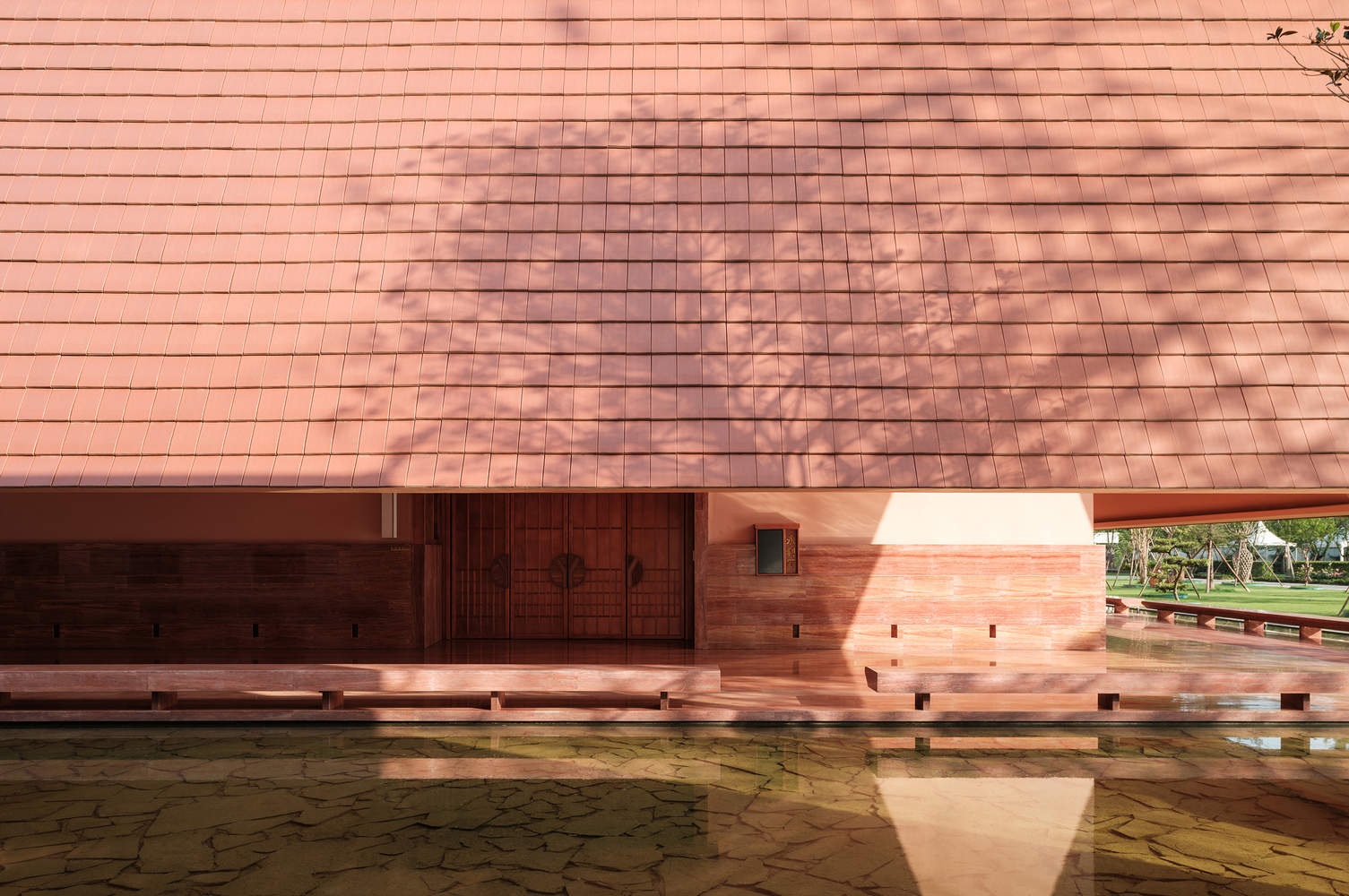
The core function of the hotel is the efficient and intensive arrangement of numerous large banquet halls. The banquet hall is uniformly covered by a large-scale sloping roof, and the eaves of these sloping roofs are uniformly lowered to a near human scale of 2350mm, forming a corridor space that naturally connects all the banquet halls. These corridors are separated from other individual buildings by large areas of water features. Guests walk in the corridors, and the low eaves frame huge water feature scrolls. People walk in the scrolls, and the scenery is different with each step.
酒店中的核心功能,大体量的众多宴会厅被高效集约布置。宴会厅统一被大尺度的斜坡屋顶覆盖,这些斜坡顶的檐口高度统一被降到 2350mm 的近人尺度,形成的廊道空间便自然串联起了所有的宴会厅。这些廊道和其他建筑单体之间,被大面积的水景相隔,宾客在廊道内行走,低矮的檐口便框出了一幅幅巨大的水景长卷,人在卷中走,步移景异。
© Hao Chen
© Hao Chen
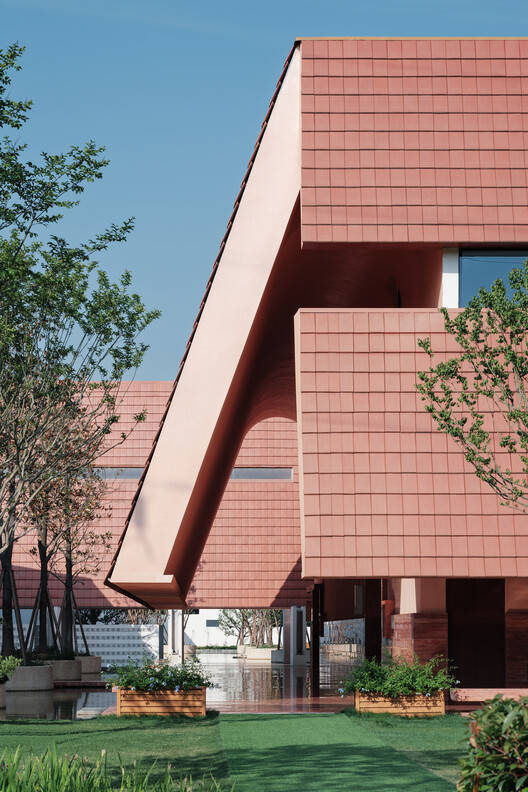
In order to enhance the ultimate horizontal sense of the building and make the eave corridor space more open, the architect removed the columns in the eave corridor space and achieved column free treatment of nearly a hundred meter long corridor through steel structure overhanging.
为了强化建筑的极致水平感,同时让檐廊空间更加开放,建筑师取消了檐廊空间的柱子,通过钢结构的悬挑,实现了近百米长廊的无柱化处理。
© Hao Chen
© Hao Chen