Shenzhen COFCO Qianhai Innovation Center/Goettsch Partners
深圳中粮前海创新中心 / Goettsch Partners
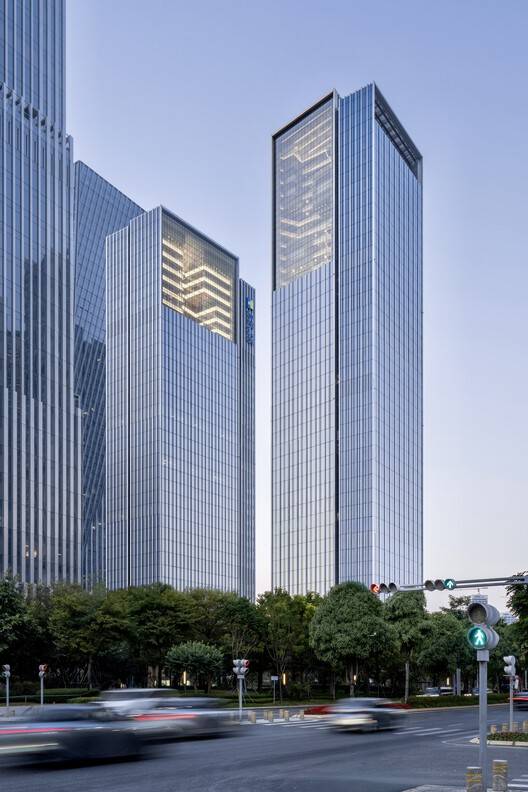
建筑设计理念的创新与致敬:中粮前海创新中心的设计巧妙地捕捉了深圳从一个小渔村蜕变为国际大都市的城市发展脉络。项目的设计灵感源于深圳“城中村”的独特肌理,通过“空中村落”的概念,将传统的办公空间转化为一个充满社区感和连接性的环境。两座高塔的顶部设计了大型玻璃封闭中庭,不仅是建筑的视觉焦点,更提供了灵活的公共空间,促进员工之间的交流互动。这种设计手法是对城市历史文脉的尊重,也是对未来办公模式的探索。矩形建筑的侧面略微收尖,有助于拓展视野,面向前海湾,将建筑融入城市景观。
可持续发展与工程技术的完美结合:该项目在可持续发展方面展现出卓越的实践。塔楼配备可开启窗户,结合双层低辐射中空玻璃和陶瓷点彩涂层,有效降低能耗。中庭内的空气循环系统利用自然冷空气,即使在深圳炎热潮湿的气候中也能维持舒适的室内环境。此外,地面层引入“海绵城市”系统,通过透水铺装、绿化和下沉式花园等措施,有效地管理雨水径流,降低城市排水压力。更值得称道的是,中庭采用创新的索墙系统,赋予建筑外立面动态响应能力,能够适应外部环境的变化,在美学和功能之间达到了理想平衡。
城市地标与未来办公模式的探索:中粮前海创新中心以其独特的双塔设计,在深圳天际线中树立了鲜明的形象,成为了城市的新地标。项目不仅仅是一个办公综合体,更是一个展示城市全球抱负的窗口。通过“空中村落”的设计理念,该项目致力于打造以人为本的办公环境,促进员工之间的沟通和协作。这种设计理念预示着未来办公空间的发展趋势,即更加注重社区感、可持续性和科技应用。项目也为其他优先考虑社区、可持续性及科技发展的项目提供了宝贵的经验和启示,树立了行业新标杆。
© CreatAR
© CreatAR
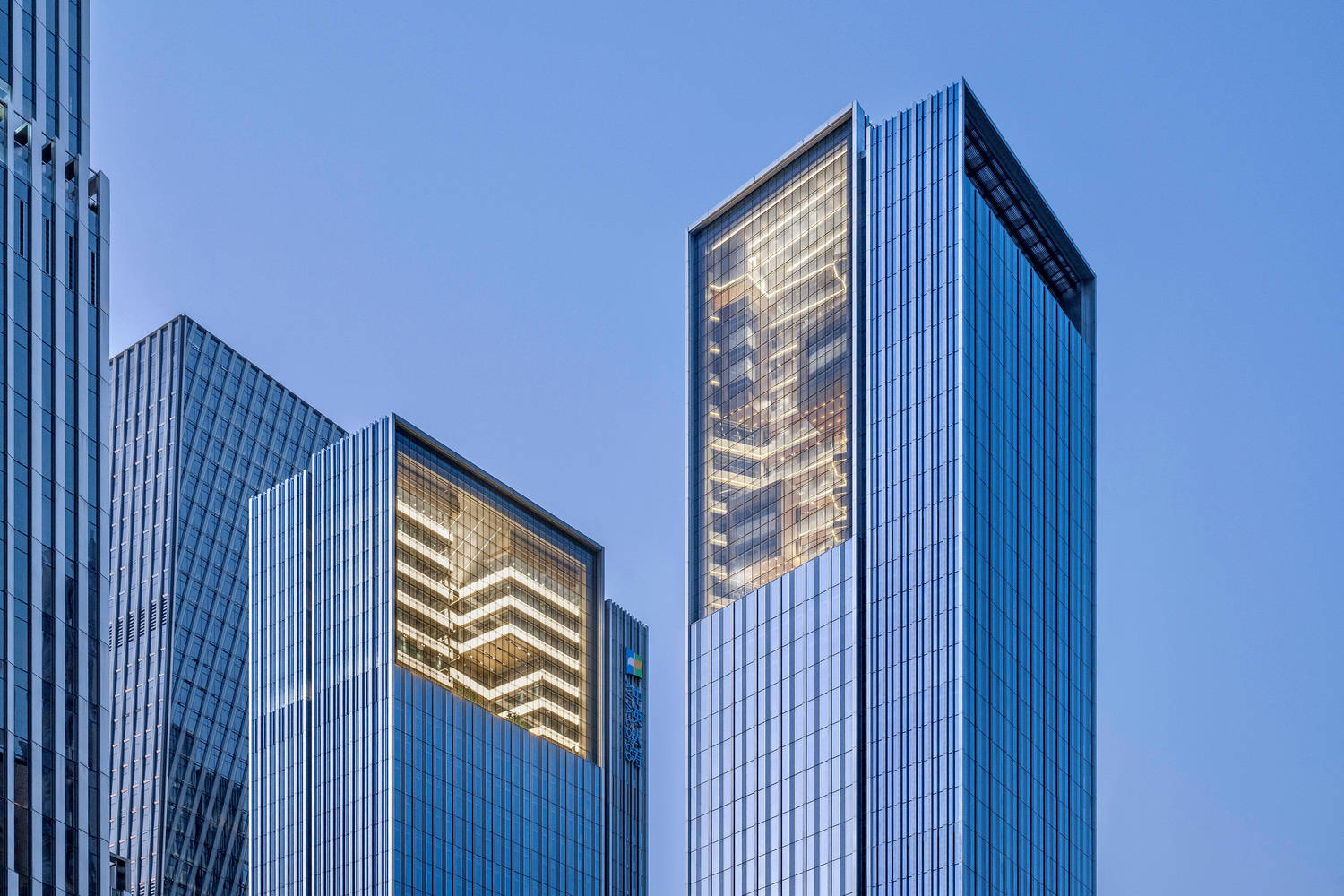
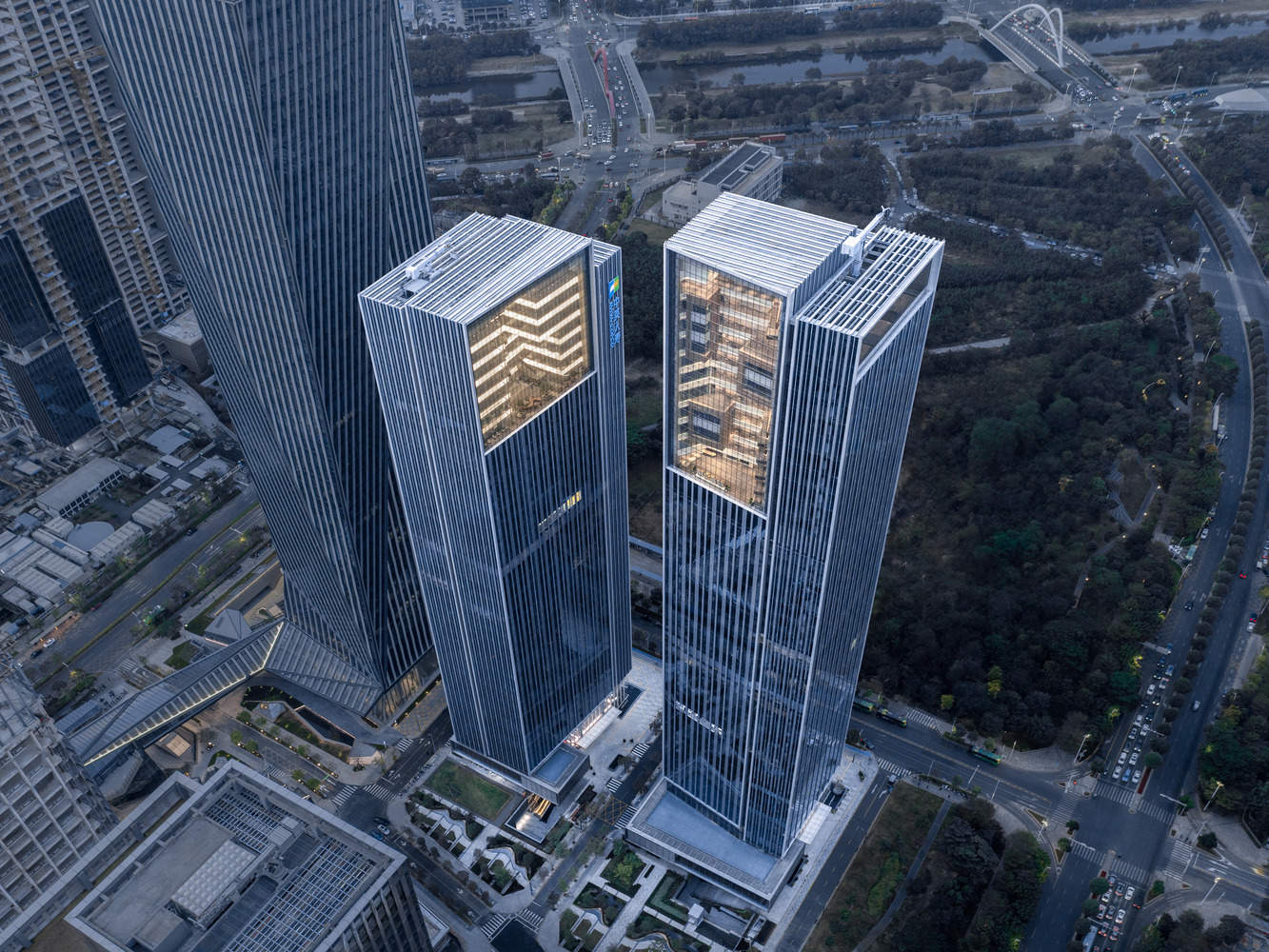
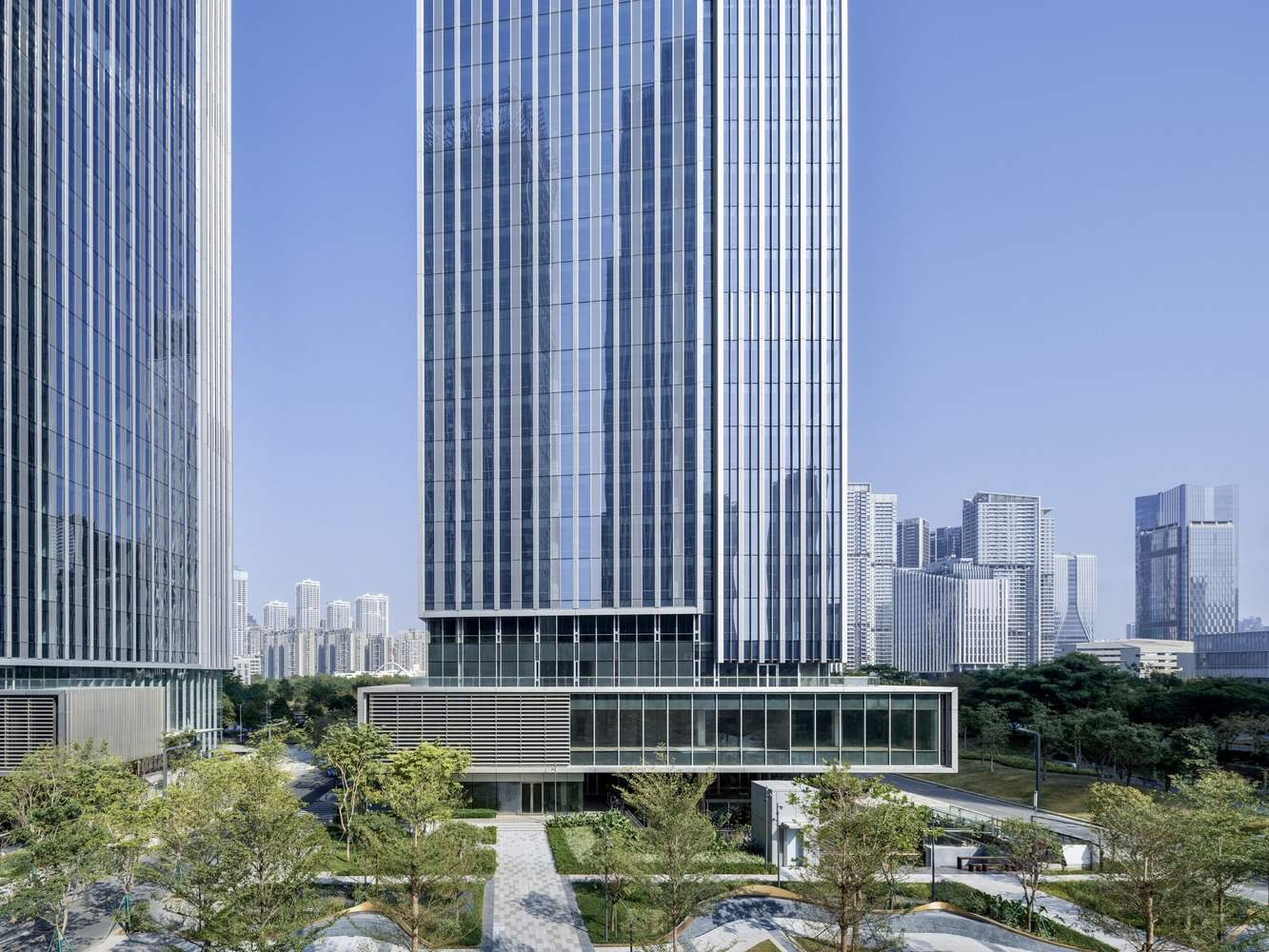
Goettsch Partners (GP), an international architectural firm, announced that the COFCO Qianhai Innovation Center located in Shenzhen, China, has been completed. This modern headquarters and multi tenant office complex has a total construction area of 190000 square meters, consisting of two almost symmetrical towers, each with a large glass enclosed atrium at the top. These two courtyards form a distinct recognition in the city skyline, serving as the headquarters symbols of COFCO Group and Aviva COFCO respectively. The tower stands at heights of 200 meters and 180 meters respectively, consisting of three slender sections. The upper floors of the tower retreat inward, revealing an open atrium and an aerial terrace, which are closely connected to the urban landscape. The project is adjacent to urban green spaces and local parks, with the tower facing the surrounding natural environment and harmoniously integrated with it. The architectural plan is rectangular, with one side slightly tapered to expand the view towards the front bay.
国际建筑事务所 Goettsch Partners(GP)宣布,位于中国深圳的中粮前海创新中心现已竣工。这座现代化总部与多租户办公综合体总建筑面积达 190,000 平方米,由两座几乎对称的高塔组成,每座塔楼顶部设有一个大型玻璃封闭中庭。这两个中庭在城市天际线中形成鲜明的辨识度,分别作为中粮集团与中英人寿保险公司(Aviva-COFCO)的总部象征。塔楼高分别为 200 米与 180 米,由三段纤细体量组成,其高层部分向内退让,露出开放中庭与空中露台,与城市景观紧密连接。项目邻近城市绿地与本地公园,塔楼朝向周边自然环境,并与之和谐融合。建筑平面为矩形,其中一侧略微收尖,以拓展朝向前海湾的视野。
© CreatAR
The design of COFCO Qianhai Innovation Center reflects the leapfrog development of Shenzhen from a small fishing village to an international metropolis with a population of 17 million. The design inspiration comes from the organic evolution of Shenzhen's "urban villages" - in these urban villages, residential units are constantly stacked over time, shaping the texture of the block. This project expresses this concept through the headquarters space of the 'Sky Village', creating a connected office environment similar to the Sky Village.
中粮前海创新中心的设计反映了深圳从小渔村成长为拥有 1700 万人口的国际化大都市的飞跃式发展。设计灵感源自深圳“城中村”的有机演变——在这些城中村中,住宅单元在时间中不断叠加,塑造了街区肌理。本项目通过“空中村落”的总部空间表达这一概念,塑造出如同空中村庄般的联通办公环境。
© CreatAR
一层平面图
© CreatAR
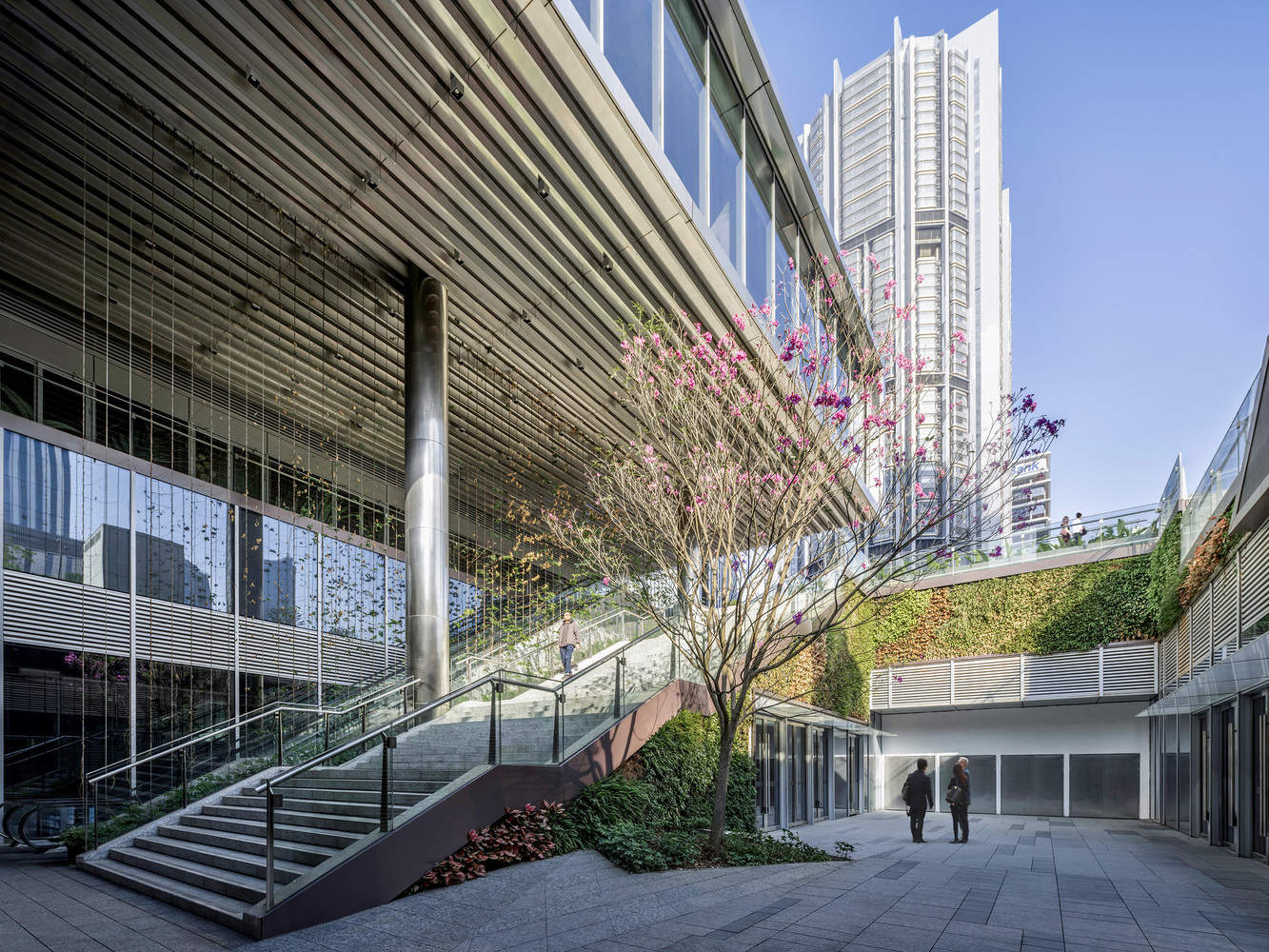
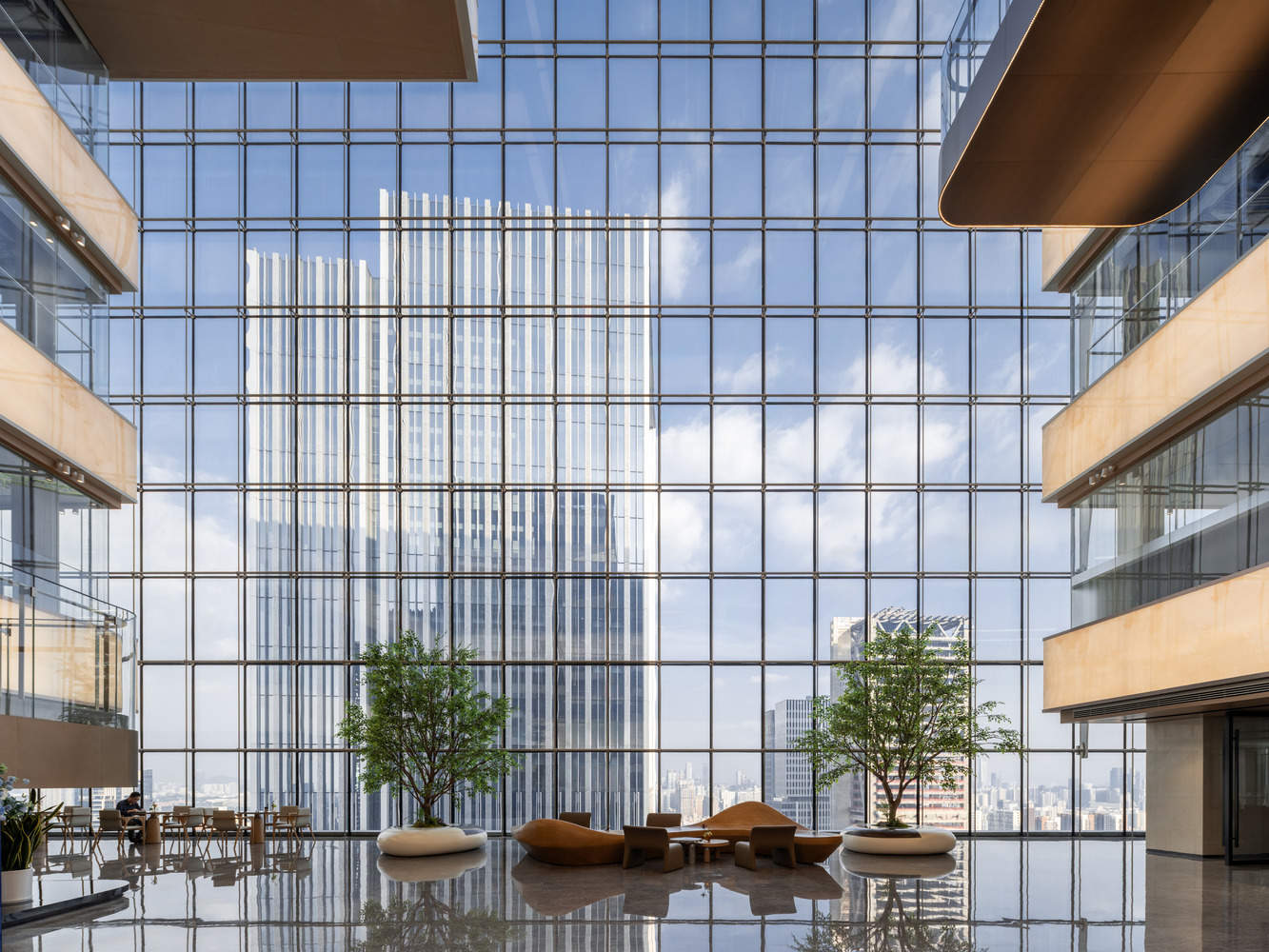
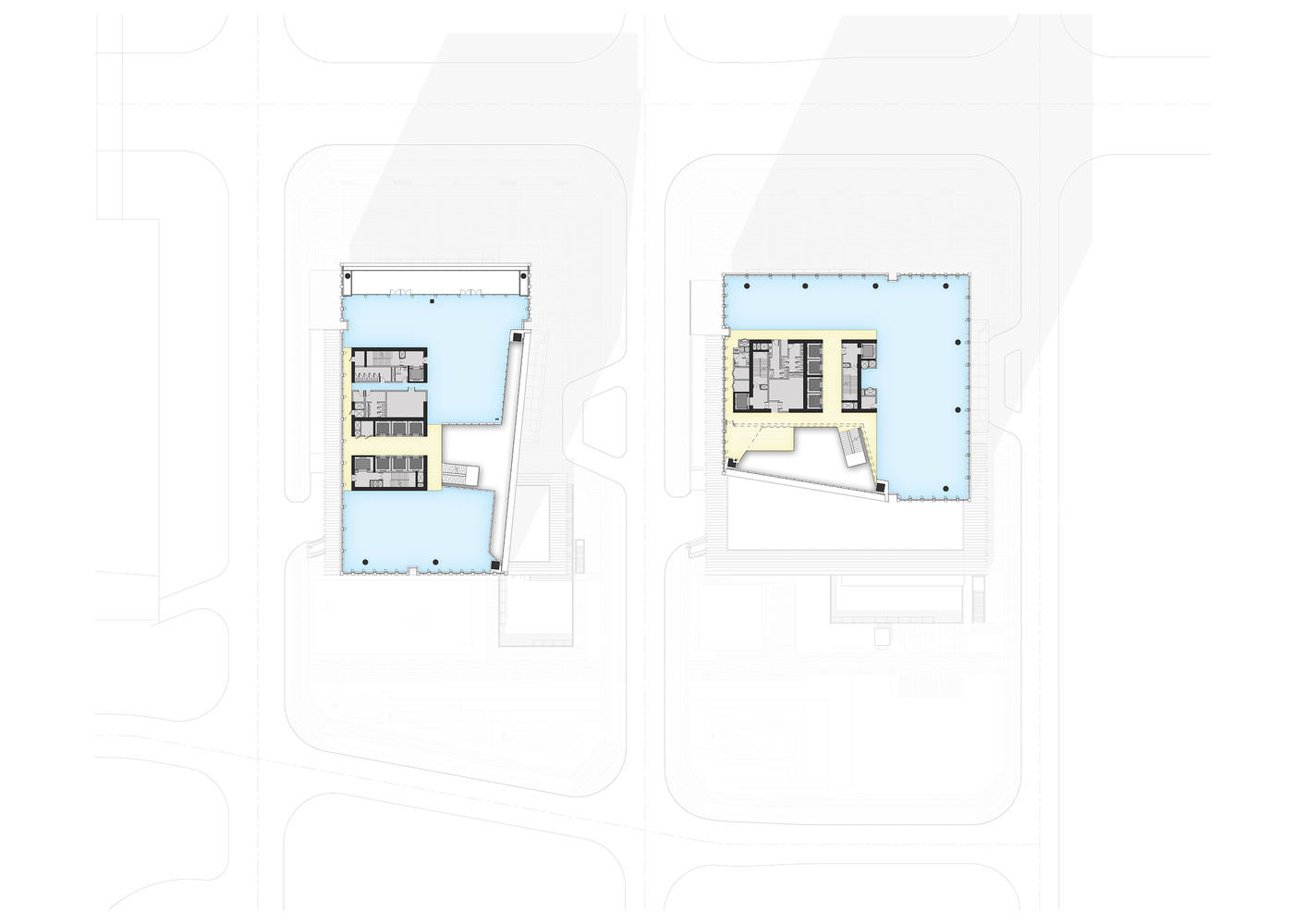
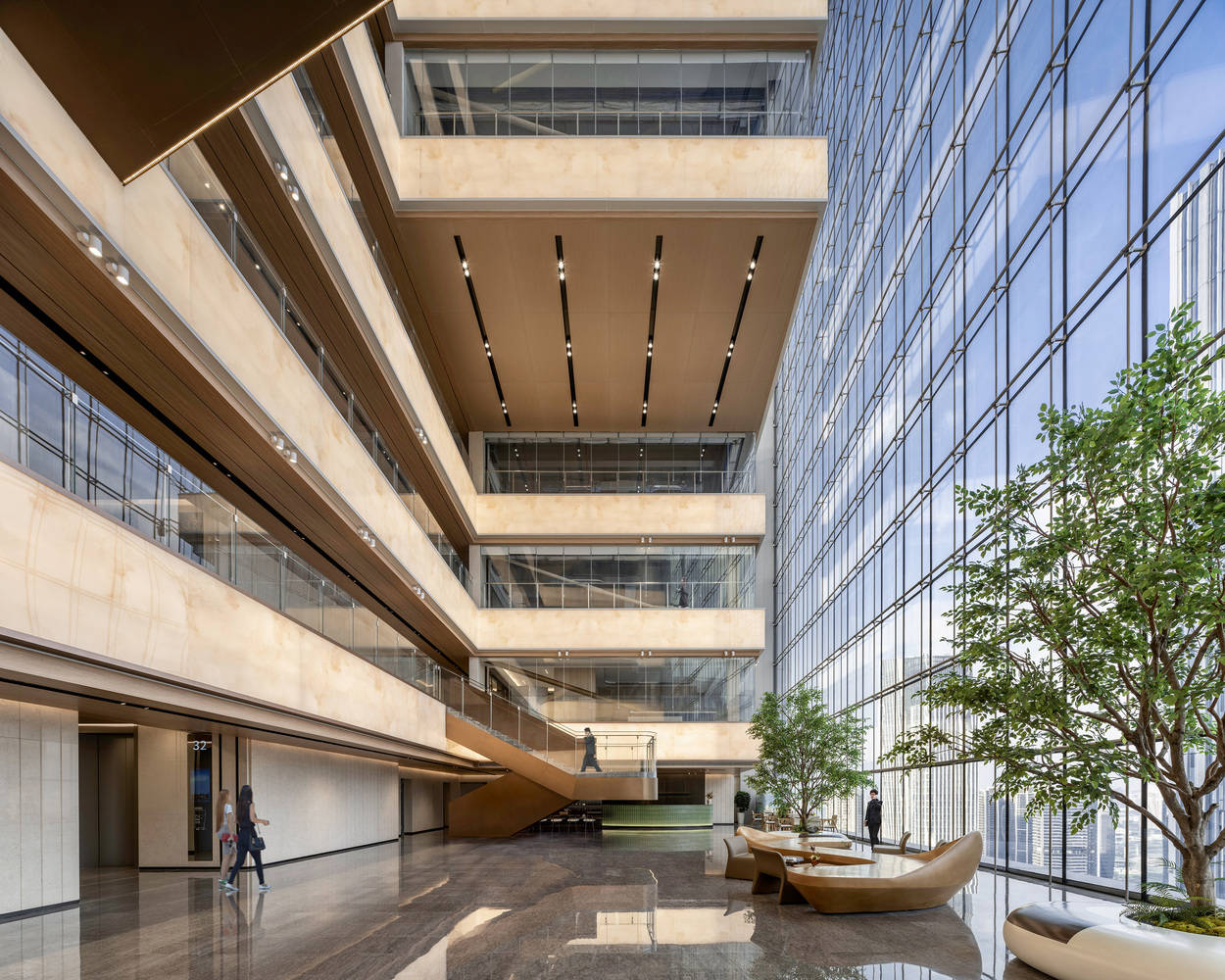
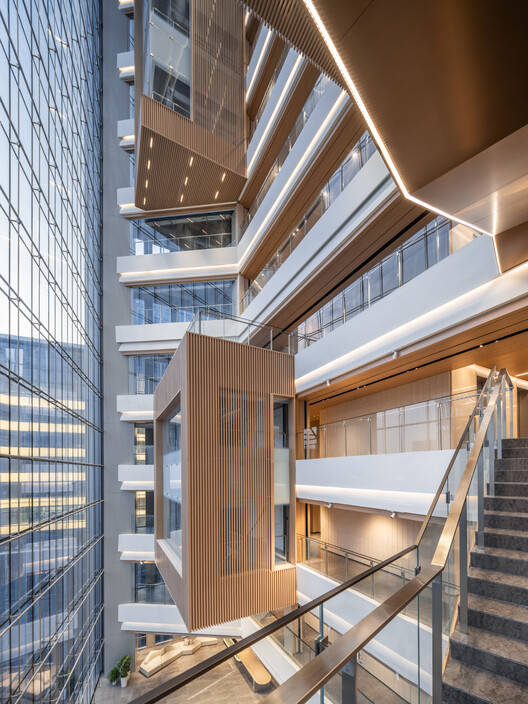
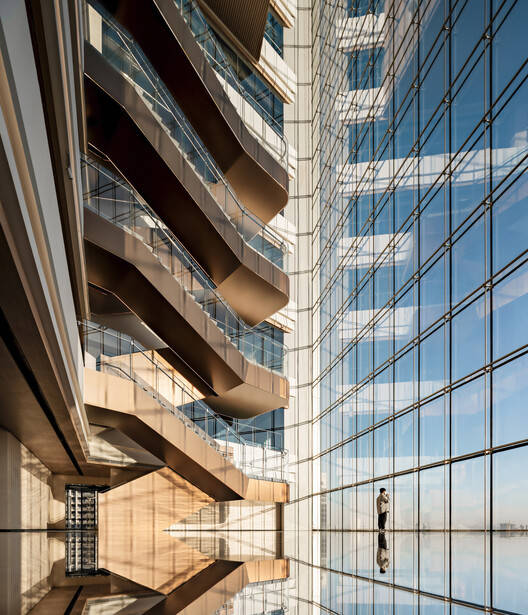
The atrium space at the top of each tower is not only the visual focal point of the building, but also serves as a dynamic and flexible public space, unifying the functional layout of the entire headquarters floor. The atrium is equipped with interconnected stairs, open corridors, and meeting rooms, encouraging formal and informal communication and interaction among employees. These grand spaces can also accommodate large-scale events of the entire company. Each atrium is surrounded by a highly transparent cable wall system, which blends the indoor and outdoor spaces together, visually connecting the "aerial village" with the "urban village" on the ground.
每座塔楼顶部的中庭空间不仅是建筑的视觉焦点,也作为动态且灵活的公共空间,统一了整个总部楼层的功能布局。中庭中设有相互连接的楼梯、开放式走廊和会议室,鼓励员工之间进行正式与非正式的交流互动。这些宏大的空间也可承载全公司规模的大型活动。每个中庭外围均采用高透明度索墙系统,使室内外空间相互交融,将“空中村落”与地面“城中村”在视觉上连结起来。
© CreatAR
中庭标准层平面图
The COFCO Qianhai Innovation Center has set a new benchmark for city headquarters, especially in China, "said James Zheng, CEO and President of GP (AIA, LEED AP)." While paying tribute to the origin of Shenzhen, it showcases the city's global aspirations with a distinct visual image
GP 的首席执行官及总裁 James Zheng(AIA、LEED AP)表示:“中粮前海创新中心为城市总部树立了新标杆,尤其是在中国。它在致敬深圳起源的同时,以鲜明的视觉形象彰显城市的全球抱负。”
© CreatAR
The cable wall system used in the atrium is a key engineering innovation that endows the building facade with dynamic response capabilities and the ability to adapt to changes in external environment and internal stress. Unlike traditional static curtain walls, the cable system is supported by outward sloping columns to form horizontal cables, and is supported back to the core tube by each floor slab. Vertical cables have elasticity, can absorb and disperse loads, thereby maintaining structural stability in different environments (including earthquakes).
中庭所使用的索墙系统是一项关键的工程创新,赋予建筑外立面动态响应能力,能够适应外部环境与内部应力的变化。不同于传统的静态幕墙,索系统通过外倾的柱体支撑水平索,并由每层楼板向核心筒回撑。垂直索则具备弹性,可吸收并分散荷载,从而在不同环境(包括地震)下保持结构稳定性。
© CreatAR
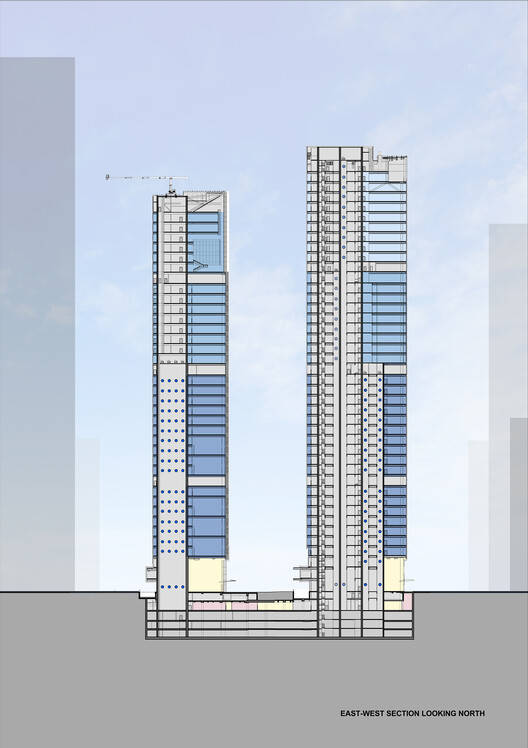
立面图
The tower is equipped with openable windows to achieve natural ventilation and reduce reliance on mechanical cooling. Double layer low radiation insulated glass combined with ceramic dot color coating effectively reduces the entry of solar heat and improves energy efficiency. The air circulation system in the atrium introduces cold air from the ground and directs it upwards to achieve passive cooling, maintaining a comfortable indoor environment even in the hot and humid climate of Shenzhen.
塔楼配备可开启窗户以实现自然通风,降低机械制冷的依赖。双层低辐射中空玻璃结合陶瓷点彩涂层,有效减少太阳热量进入,提高能效。中庭内的空气循环系统则从地面引入冷空气,并向上导流,实现被动降温,即使在深圳炎热潮湿的气候中也能维持舒适的室内环境。
© CreatAR
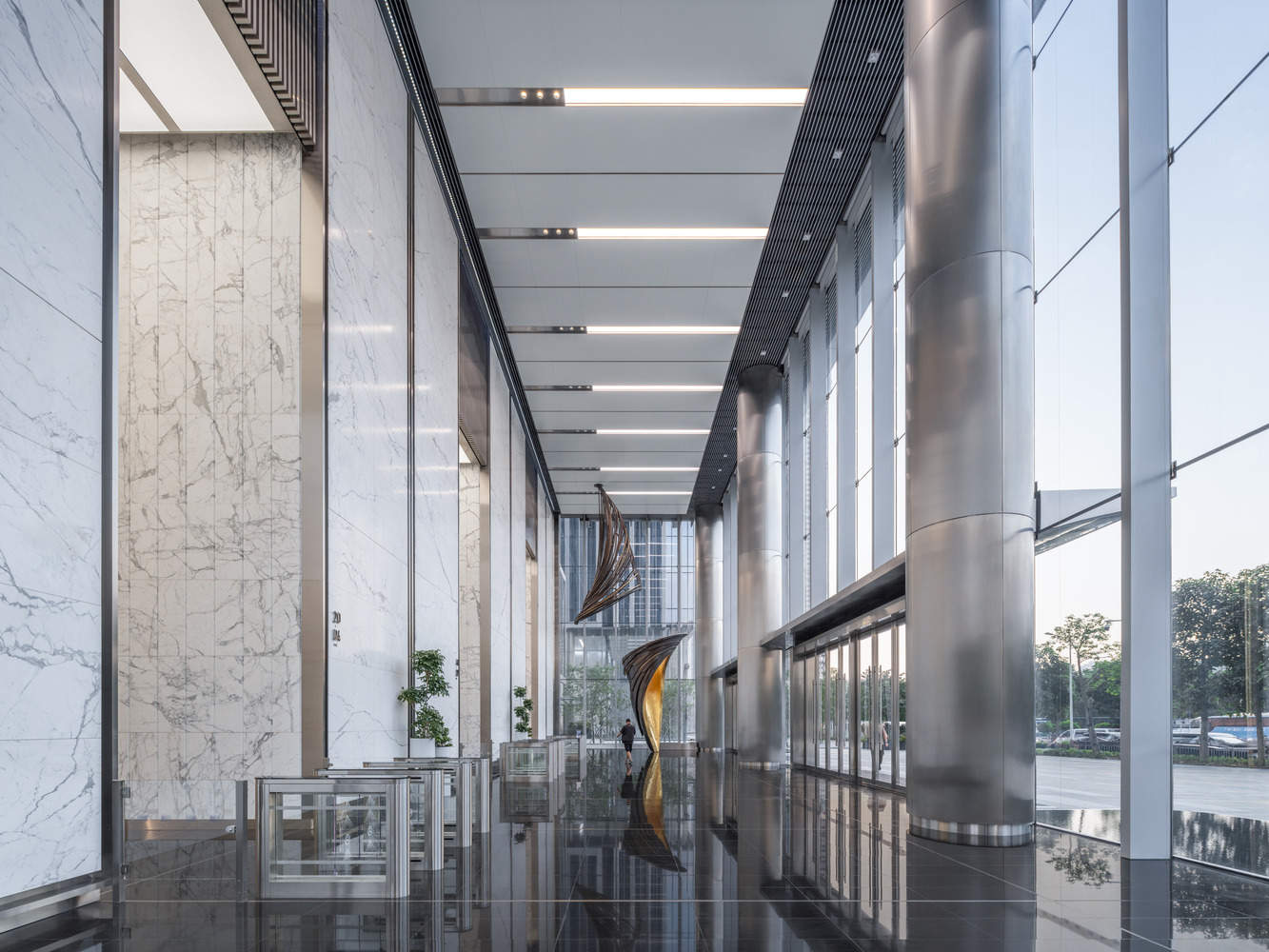
Travis Soberg, Director of Sustainable Design at GP (AIA, LEED AP), said, "The exterior of the project achieves an ideal balance between aesthetics and functionality, especially considering Shenzhen's subtropical climate. This elegant design result is a reflection of the close collaboration between the design and engineering teams, jointly promoting the balance between aesthetics and performance
GP 的可持续设计总监 Travis Soberg(AIA、LEED AP)表示:“项目外立面在美学与功能之间实现了理想平衡,尤其考虑到深圳的亚热带气候。这一优雅的设计成果,是设计与工程团队紧密协作、共同推动美感与性能并重的体现。”
© CreatAR
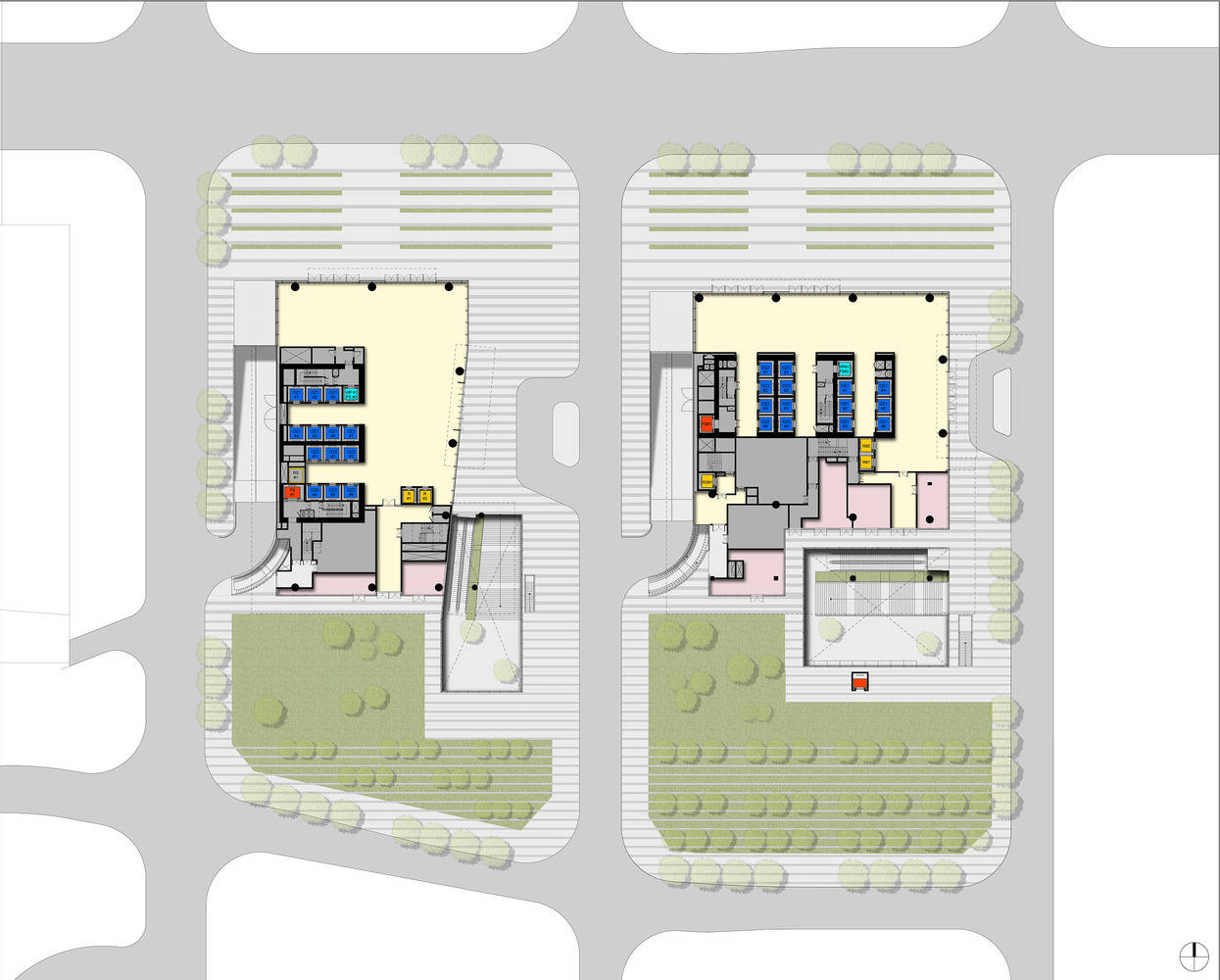
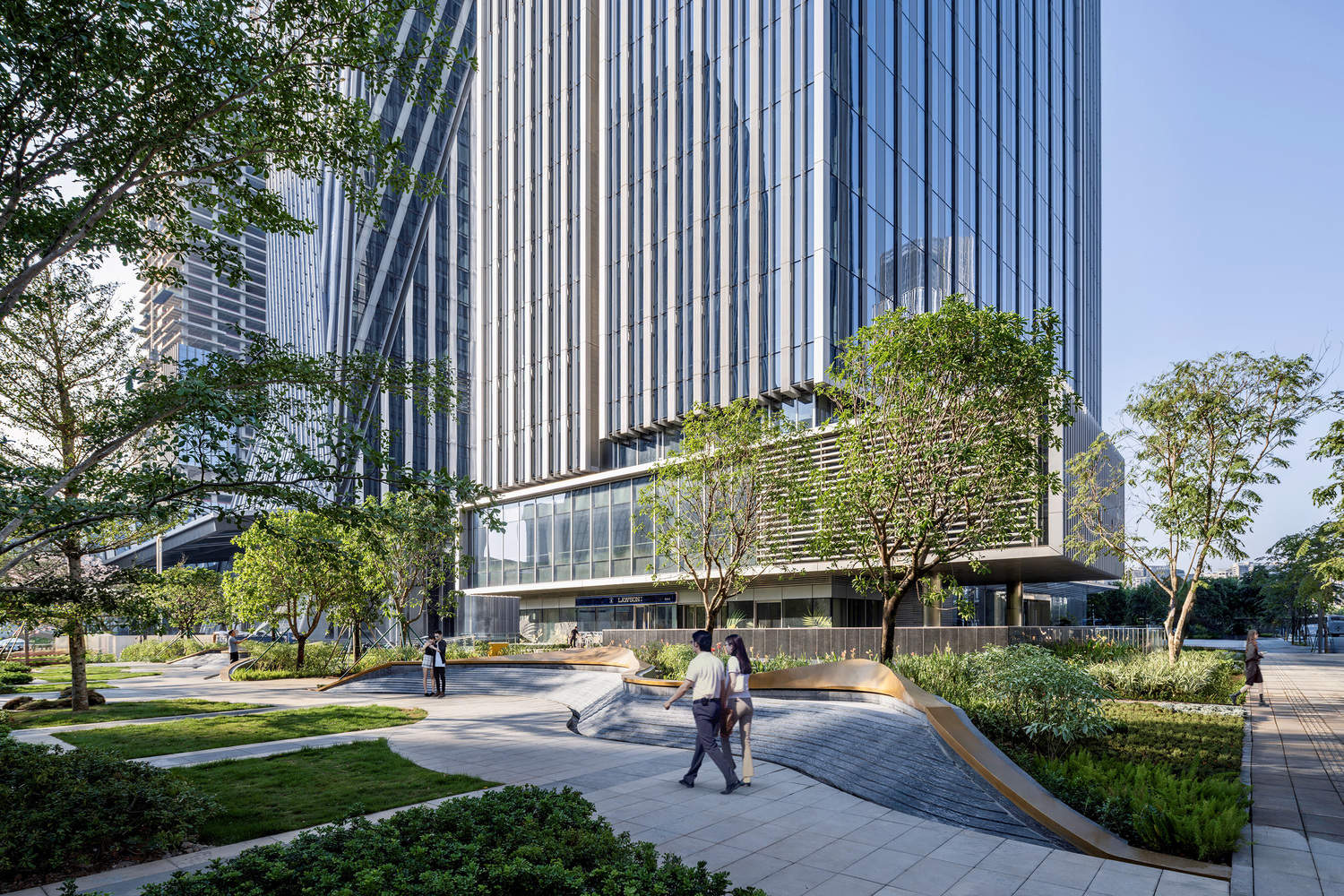
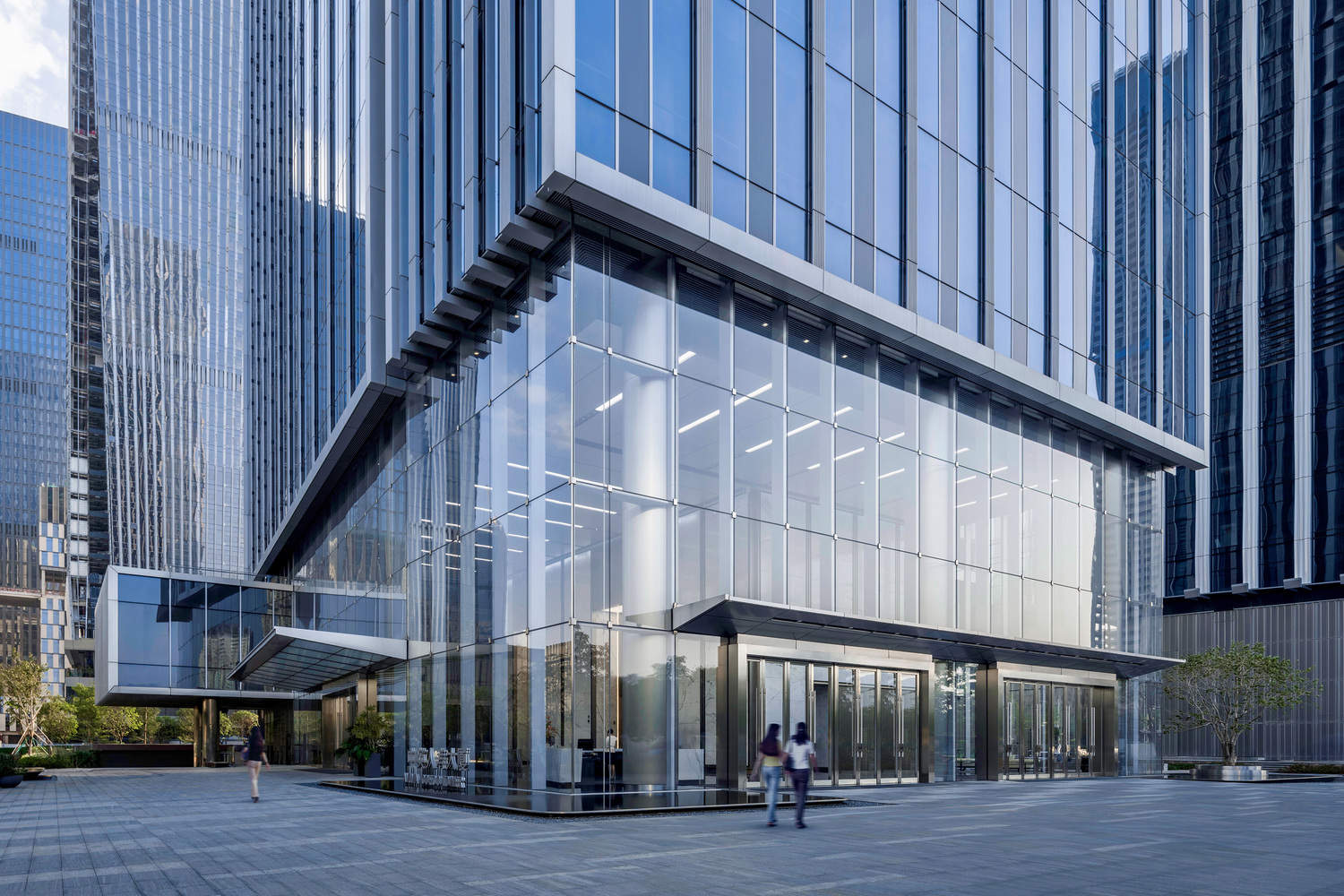
The project introduces multiple sustainable strategies on the ground floor to create a "sponge city" system to absorb rainwater. Permeable pavement and strategic greening can effectively manage rainstorm runoff and reduce urban drainage pressure and waterlogging risk. The sunken garden and pedestrian green belt further strengthen the connection between the building and the natural environment.
项目地面层引入多项可持续策略,打造“海绵城市”系统以吸纳雨水。透水铺装与策略性绿化有效管理暴雨径流,降低城市排水压力与内涝风险。下沉式花园与人行绿带进一步强化了建筑与自然环境的联系。
© CreatAR
COFCO Qianhai Innovation Center has set a new example for modern Shenzhen by integrating cutting-edge design, sustainable concepts, and cutting-edge engineering technologies. The concept of "aerial village" emphasizes a sense of community and connectivity, transforming high-rise office spaces into a more people-oriented environment. This project not only supports Shenzhen's vision of building a global innovation model city, but also provides inspiration for future projects that prioritize community, sustainability, and technological development.
中粮前海创新中心通过整合前沿设计、可持续理念与尖端工程技术,为现代深圳树立了新典范。其“空中村落”理念强调社区感与连接性,将高层办公场所转化为更加以人为本的环境。这一项目不仅支持深圳建设全球创新典范城市的愿景,也为未来优先考虑社区、可持续性与科技发展的项目提供了启发。
© CreatAR