元州洞建筑工作室/See Architects
Architecture Studio in Wonso-dong / See Architects
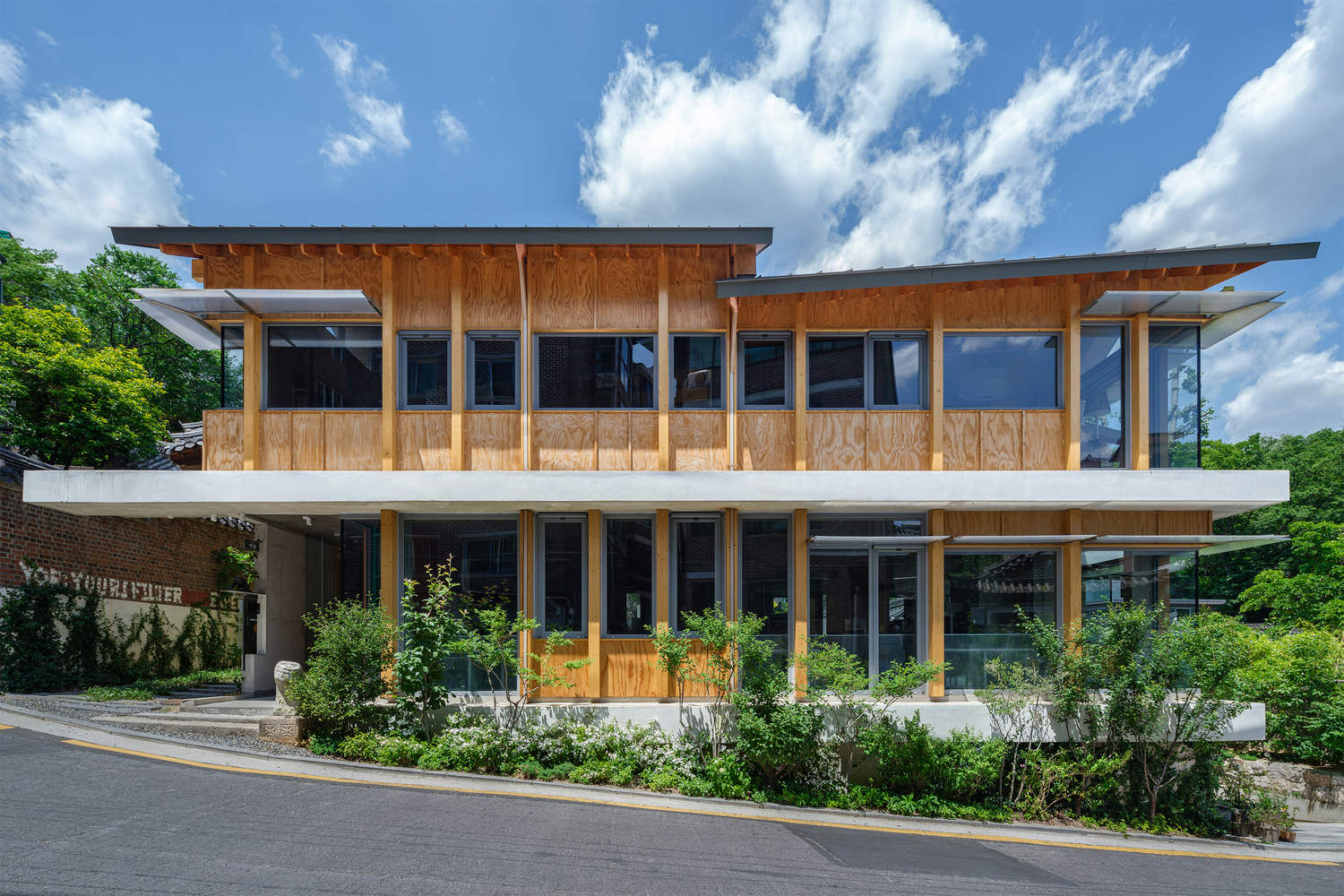
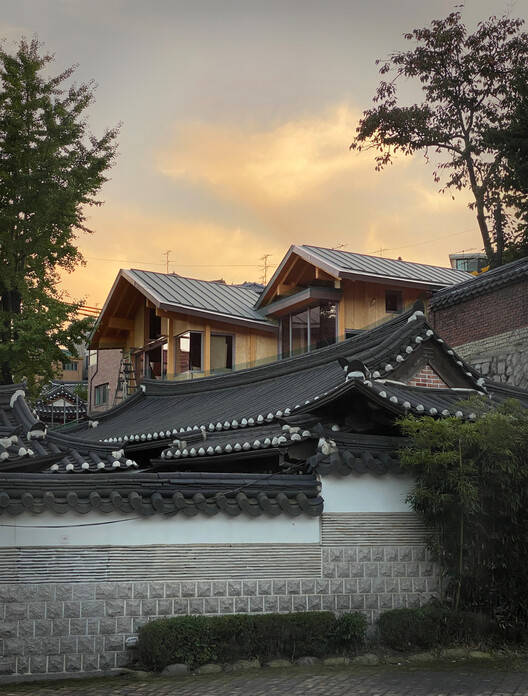
设计理念的精髓:该项目最引人注目的亮点在于其对传统韩屋建筑的深刻理解和创新性演绎。建筑师巧妙地从韩屋的屋顶形态中汲取灵感,设计出由不同大小和朝向的屋顶组合而成的“屋顶村落”概念。这种设计手法并非简单的复制,而是将传统元素融入现代建筑语汇,创造出独特的空间体验。柔和的屋顶曲线不仅呼应了韩屋的优雅,也使建筑更好地融入周围不规则的地形。这种设计理念的精髓在于对传统文化的尊重,以及在当代语境下对传统元素进行创造性转化的能力,赋予了建筑独特的个性和地域特征。
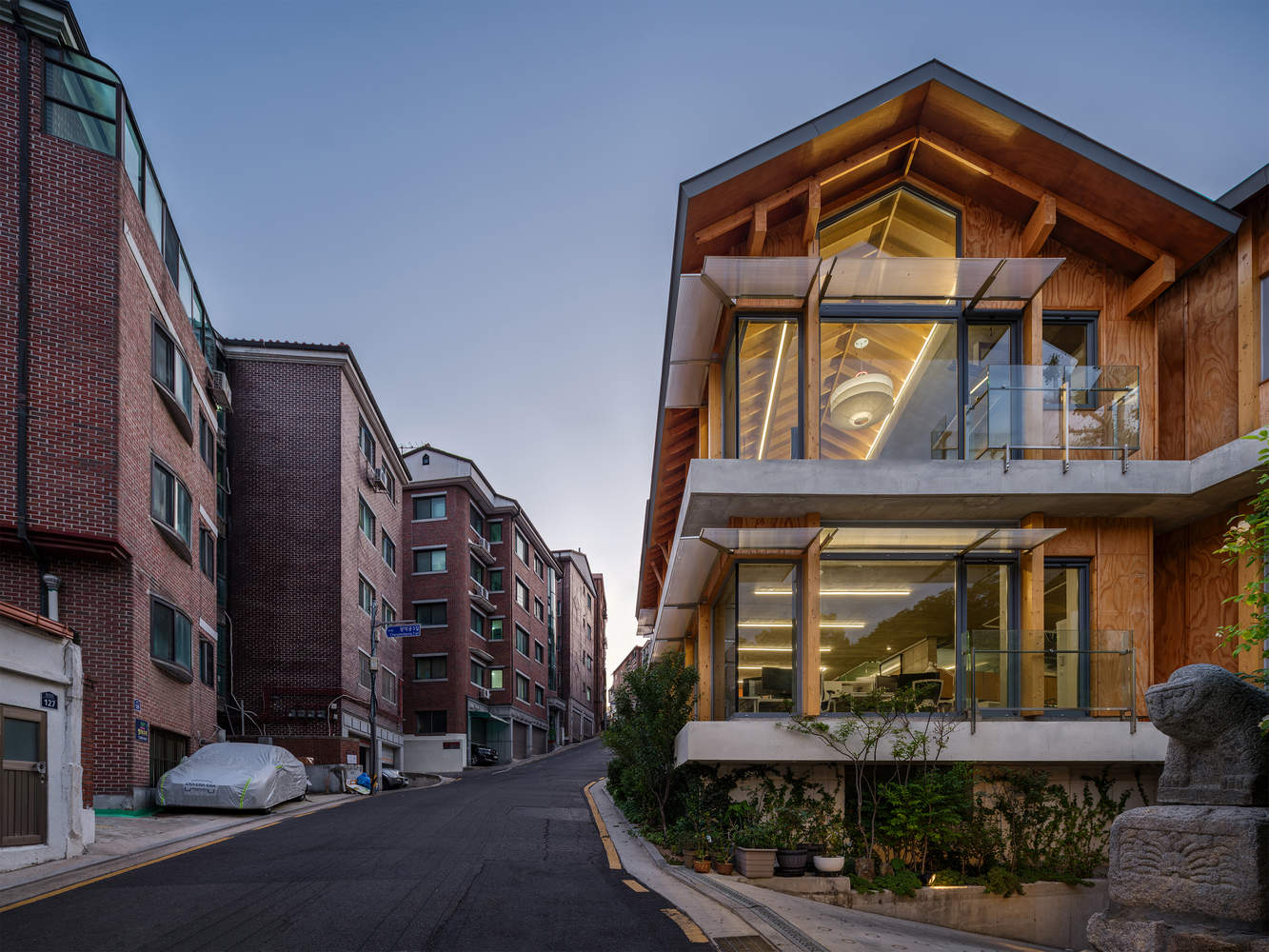
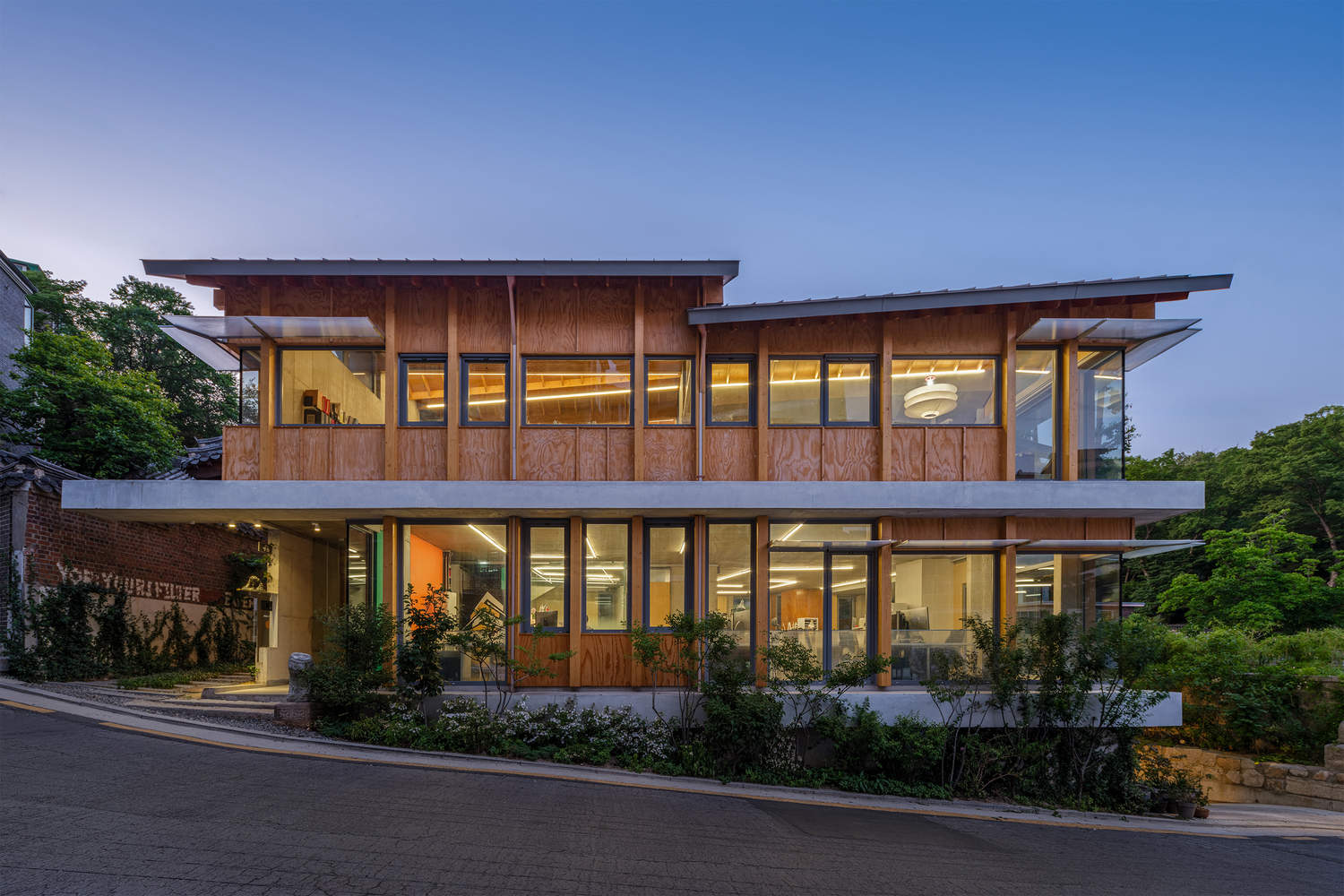
材料与结构的巧妙结合:项目在材料选择和结构设计上展现了卓越的专业素养。建筑师大胆地将钢筋混凝土、钢材和木材结合运用,既保证了建筑的耐久性,又营造出温暖、有机的空间氛围。混凝土的使用奠定了建筑的坚实基础,而木结构屋顶则赋予了空间轻盈感。在立面设计上,横跨两层楼的水平混凝土板和向上弯曲的屋顶线条,创造出一种动感,使得建筑在视觉上更具吸引力。东侧向外延伸的山墙屋顶,搭配大窗户,将周围的景观,特别是高惠东的房子和秘密花园纳入视野,实现了建筑与环境的完美融合,展现了对材料和结构之间关系的深刻理解。
室内设计的创新与可持续性:室内设计是该项目的另一个亮点,它将实用性、美学和文化内涵完美结合。设计师巧妙地运用外露的混凝土、钢材、木材和胶合板,创造出质朴而富有质感的空间。天然木柱和泥土色调与周围环境相协调,而丹青彩墙和韩纸等传统元素的融入,则体现了对韩国文化的尊重。更令人称道的是,室内设计具有高度的灵活性,可以根据使用需求进行调整。宽敞的楼梯兼作书架,既增加了空间的功能性,又提升了设计感。此外,项目在可持续性方面也表现出色,通过天然隔热材料的使用,最大限度地减少了能源消耗,体现了对环境的责任感。
© Kim Yongsung
© Kim Yongsung
Wonso-dong传统的当代诠释-位于首尔历史悠久的Wonso-doong,一家建筑师工作室将传统与现代完美融合。位于常德宫秘密花园附近的元州洞,历史上曾是朝鲜官员的居所,其建筑风格融合了韩屋和西式建筑。工作室位于这个过渡点,需要一个敏感的设计,尊重该地区的遗产,同时拥抱当代建筑。
A Contemporary Interpretation of Tradition in Wonso-dong – Located in Seoul's historic Wonso-dong, an architect's studio seamlessly blends tradition with modernity. Wonso-dong, near Changdeokgung Palace's Secret Garden, was historically home to Chosun officials and features a mix of hanok and Western-style buildings. The studio is situated at this transition point, requiring a sensitive design that respects the area's heritage while embracing contemporary architecture.
© Kim Yongsung
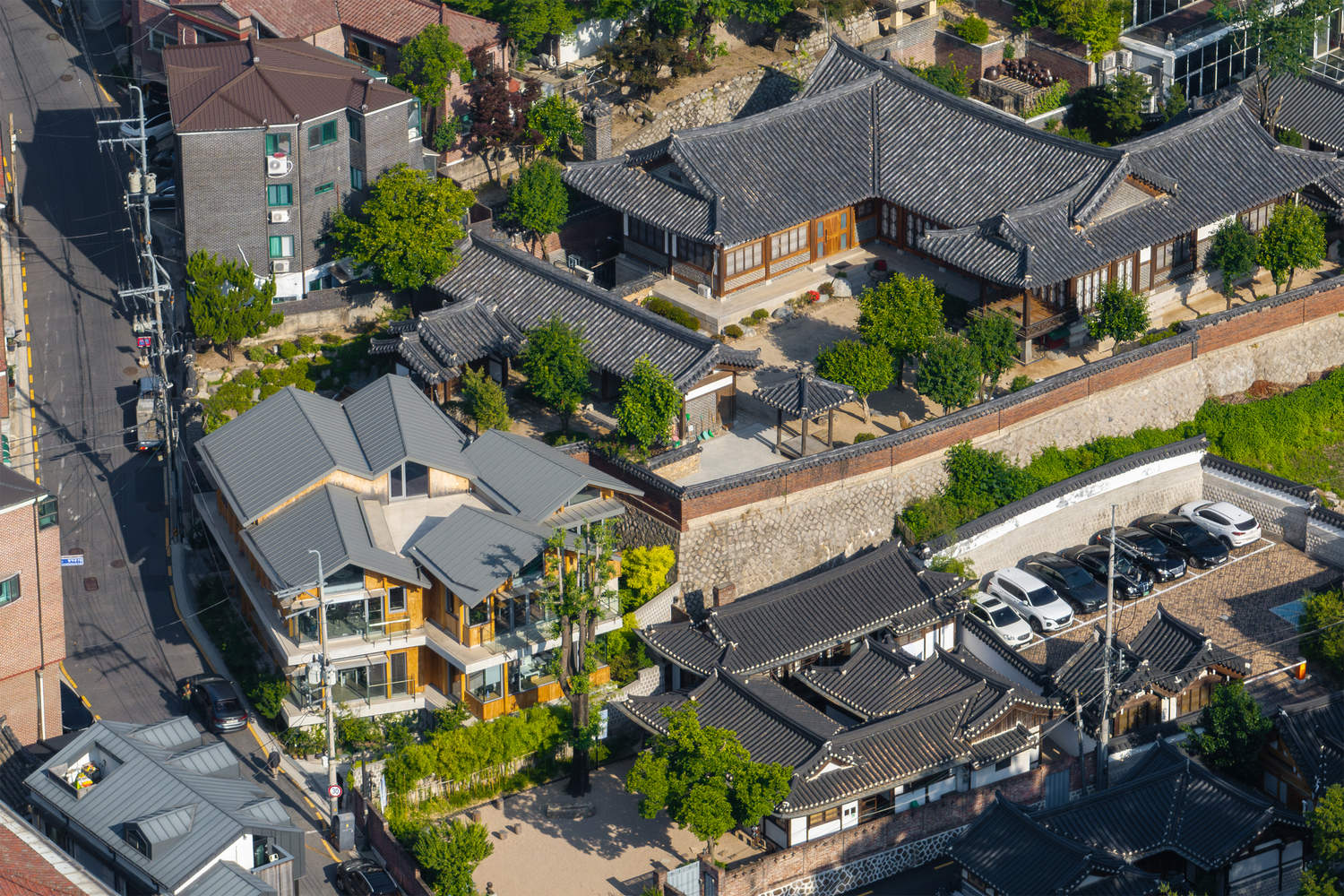
设计理念:屋顶之村-工作室的设计灵感来自hanokhanok屋檐,使建筑融入不规则的景观,同时与周围环境相得益彰。
Design Concept: A Village of Roofs – Inspired by hanok architecture, the studio's design integrates five distinct roofs of varying sizes and orientations around a central flat roof, evoking a small "Wonseo-village." The gently curved rooflines mirror traditional hanok eaves, allowing the building to blend into the irregular landscape while complementing its surroundings.
© Kim Yongsung
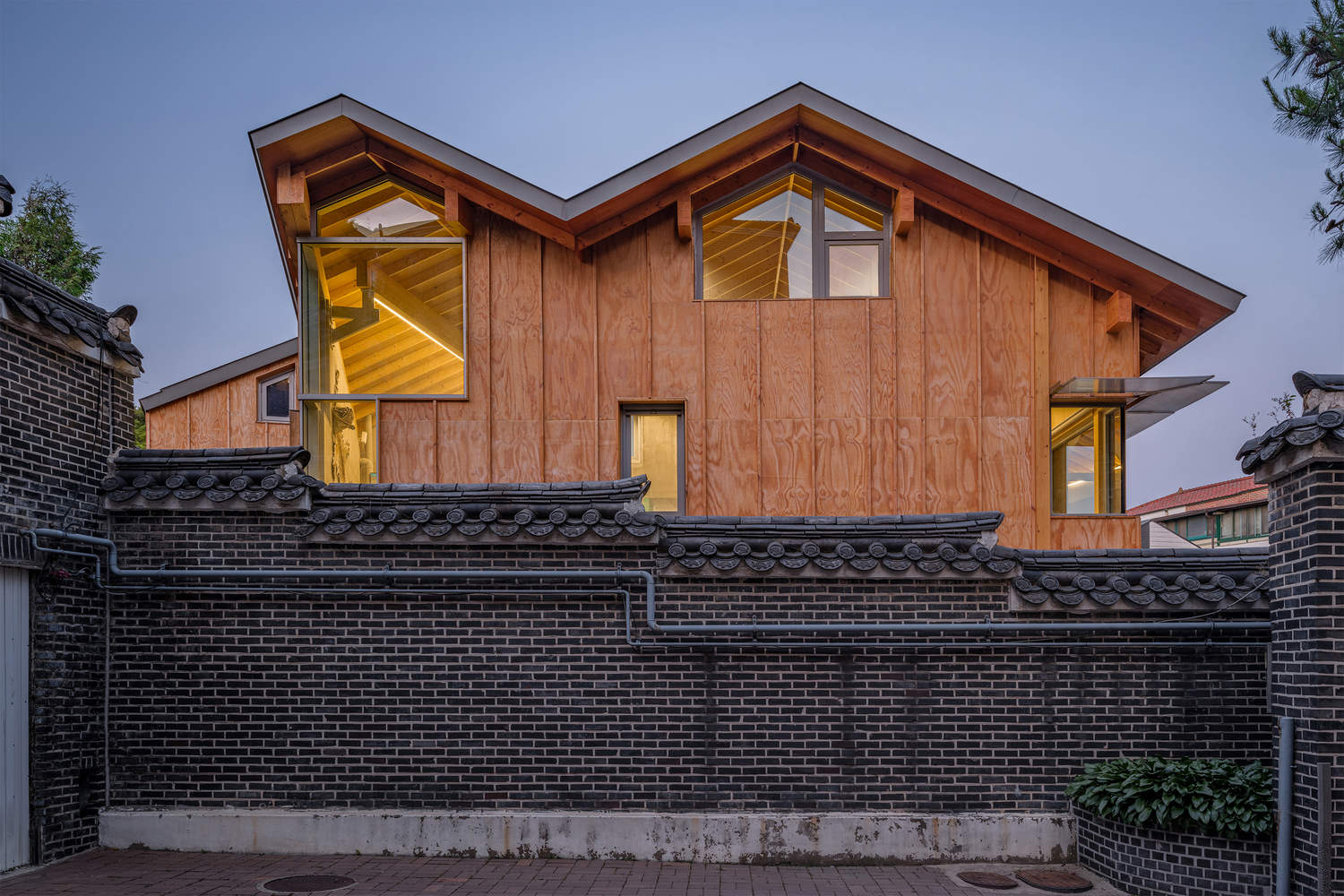
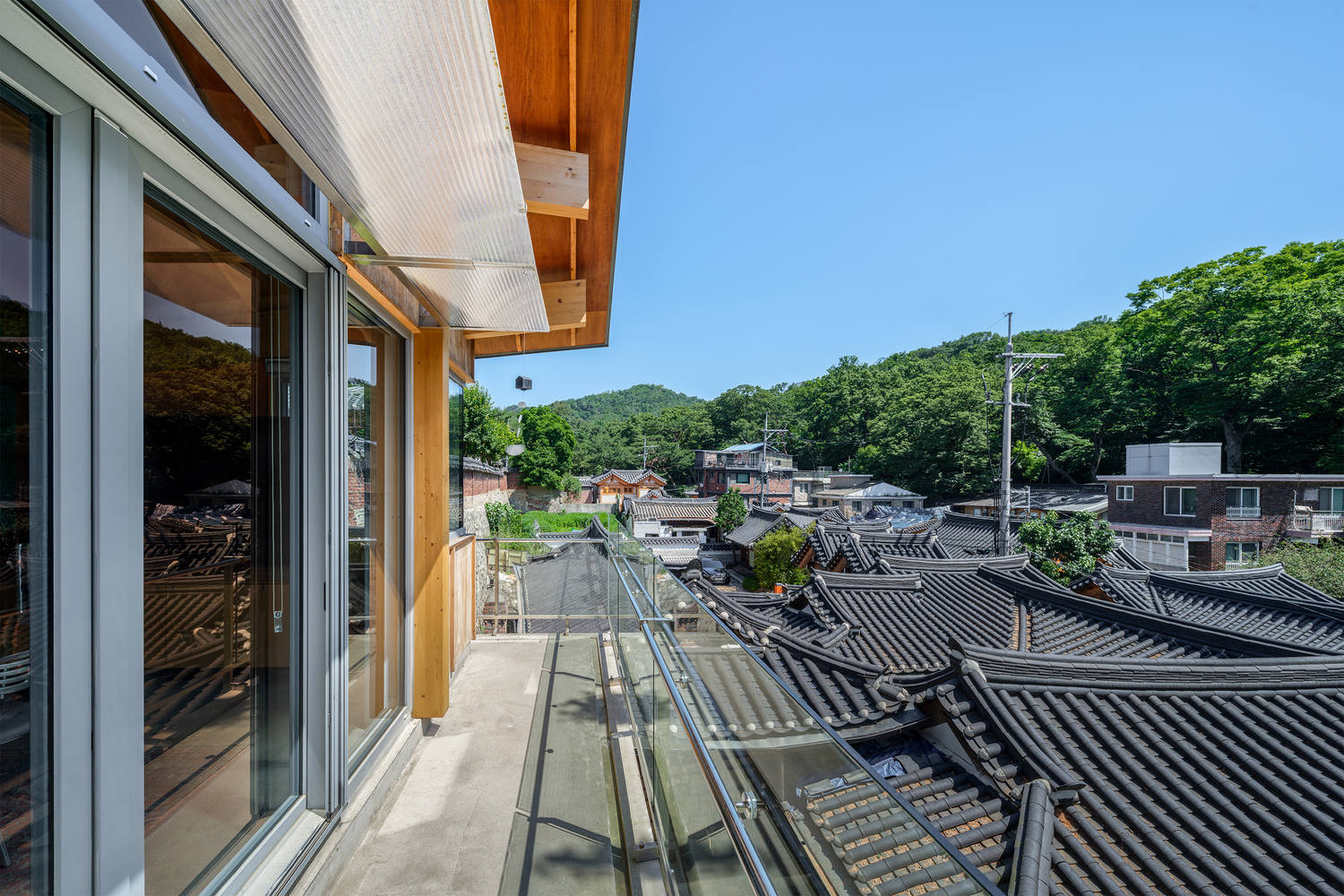
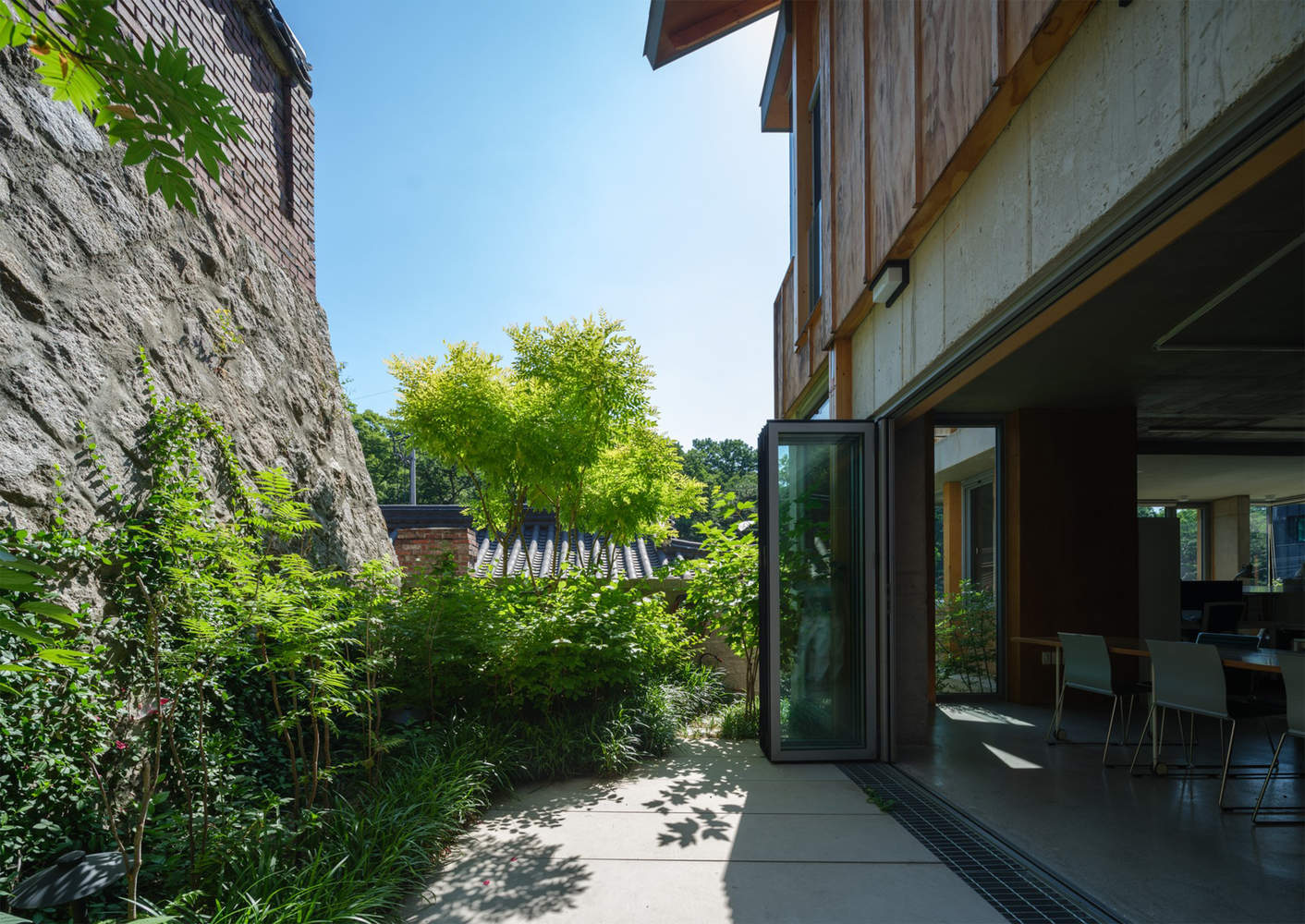
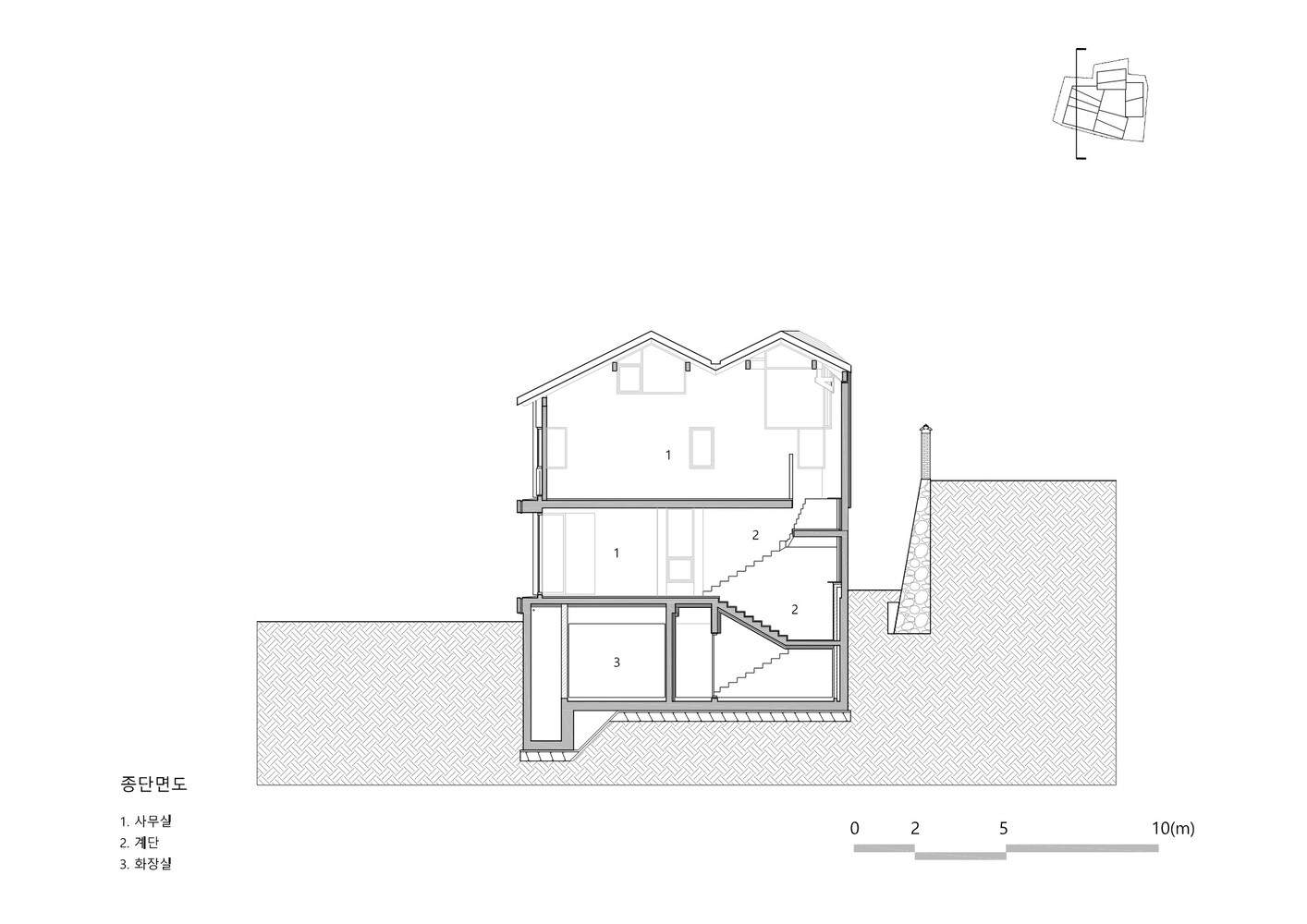
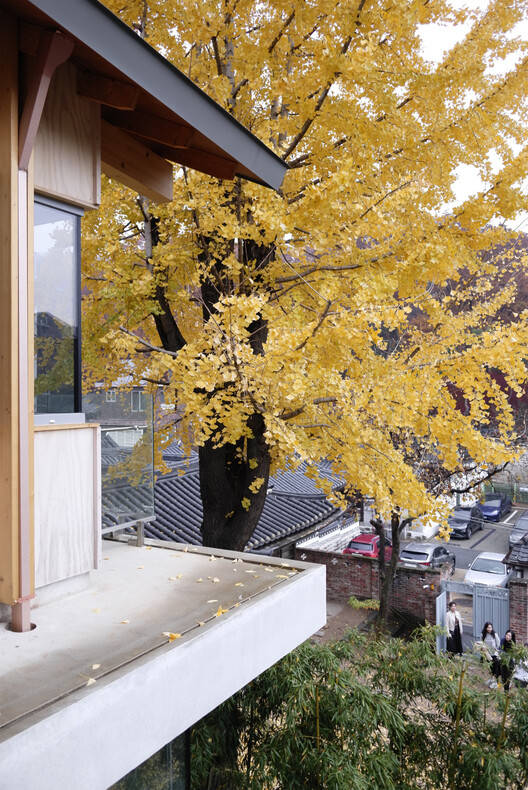
建筑特征和材料-朝南的立面以横跨两层楼的水平混凝土板为特色,向上弯曲的屋顶营造出一种运动感。该结构结合了钢筋混凝土、钢材和木材,确保了耐用性,同时保持了有机感。较低的楼层使用混凝土,而二楼则采用钢柱和木柱。木结构屋顶增强了温暖和轻盈。在东侧,三个山墙屋顶向外延伸,形成大窗户,可以看到高惠东的房子和秘密花园。这些窗户与附近的历史和文化地标形成了视觉联系。相比之下,北侧和西侧的窗户较少,确保了隐私和与周围建筑的凝聚力。
Architectural Features and Materials – The south-facing façade features horizontal concrete slabs extending across two floors, with an upward-curving roof creating a sense of movement. The structure combines reinforced concrete, steel, and timber, ensuring durability while maintaining an organic feel. The lower floors use concrete, while the second floor incorporates steel and timber columns. The timber-framed roof enhances warmth and lightness. On the east side, three gable roofs extend outward, framing large windows that offer views of Go Hui-dong's house and the Secret Garden. These windows foster a visual connection to the neighborhood's historical and cultural landmarks. In contrast, the north and west sides have fewer windows, ensuring privacy and cohesion with the surrounding buildings.
© Kim Yongsung
© Kim Yongsung
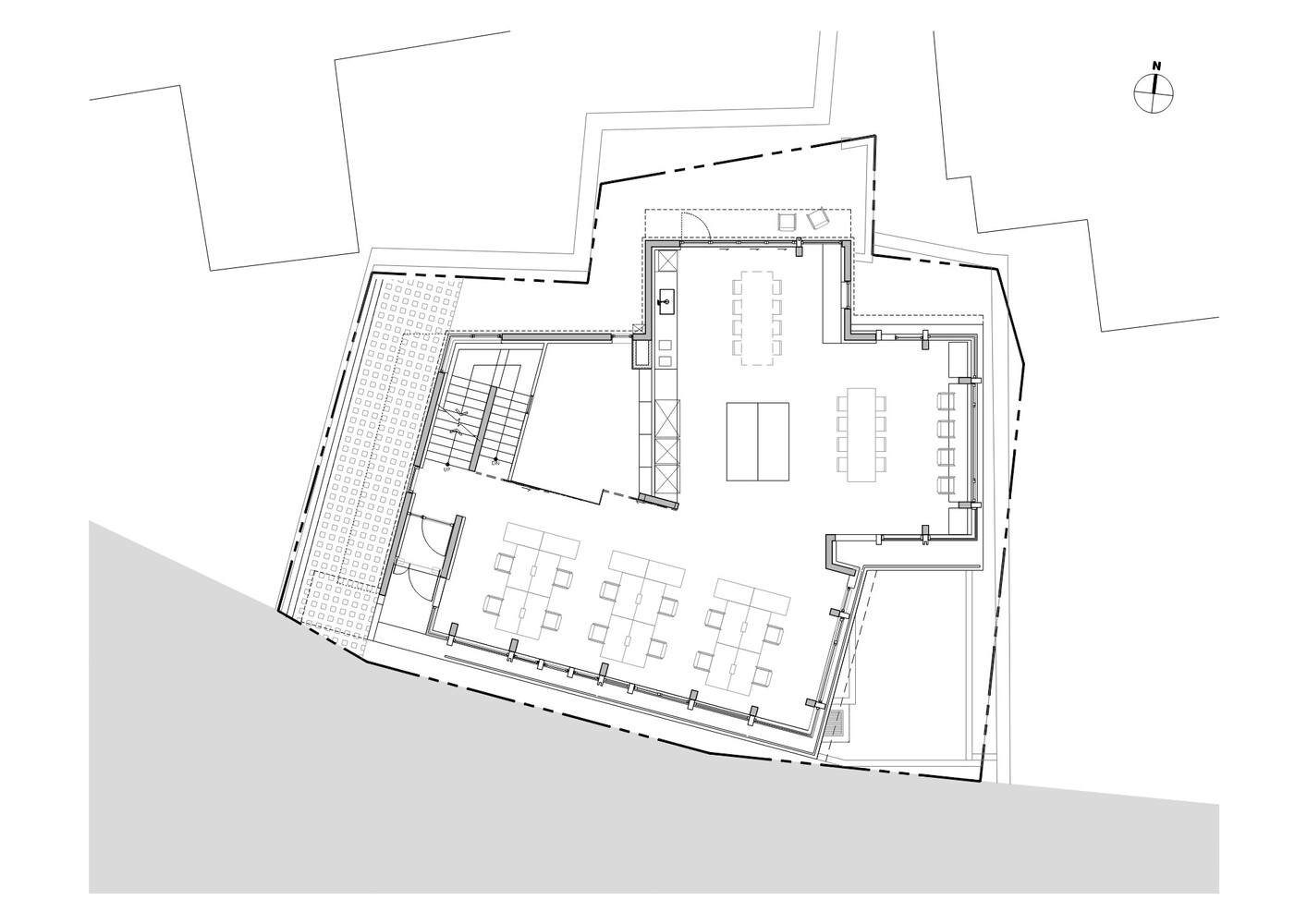
Floor Plan 1F
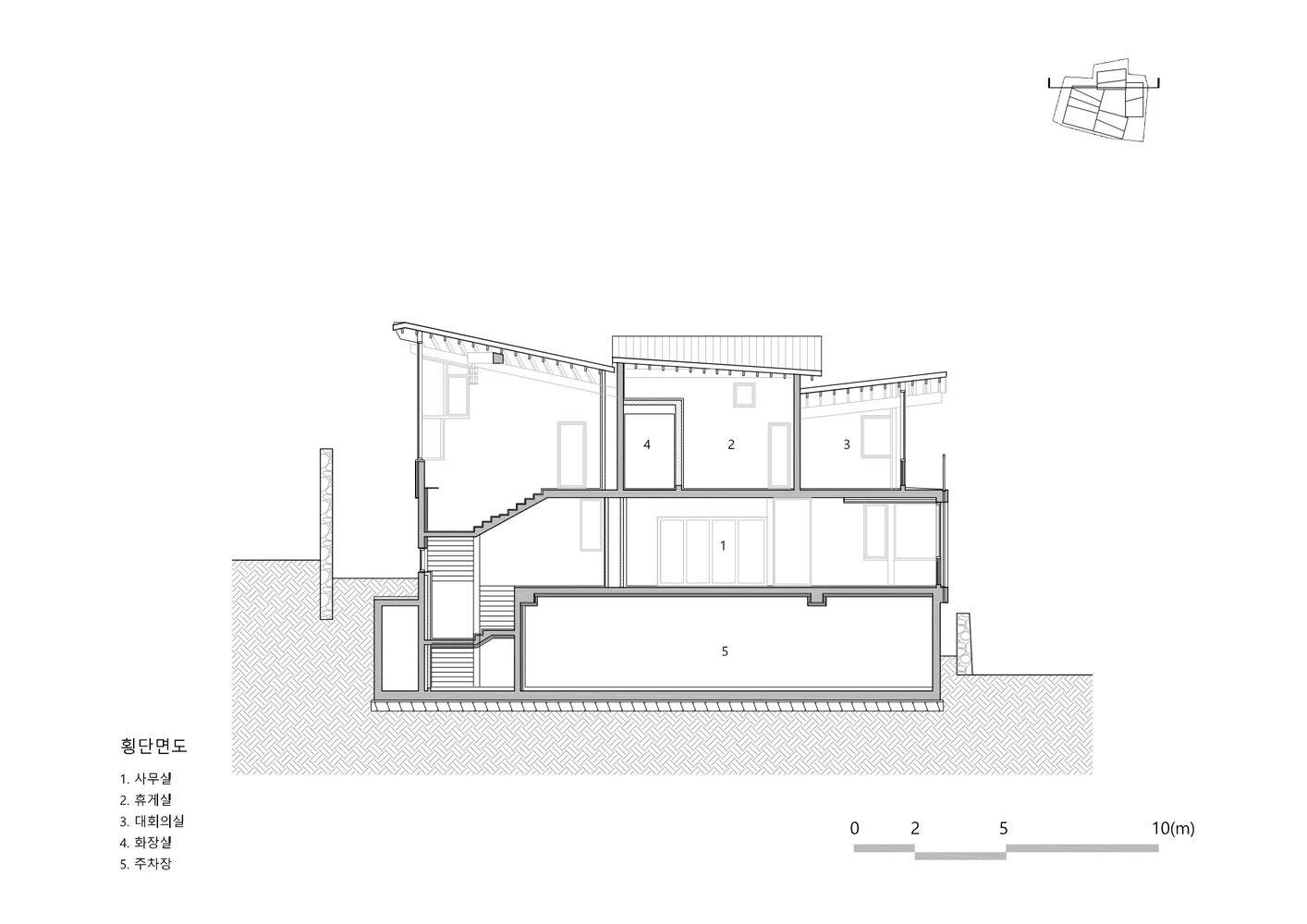
Section
© Kim Yongsung
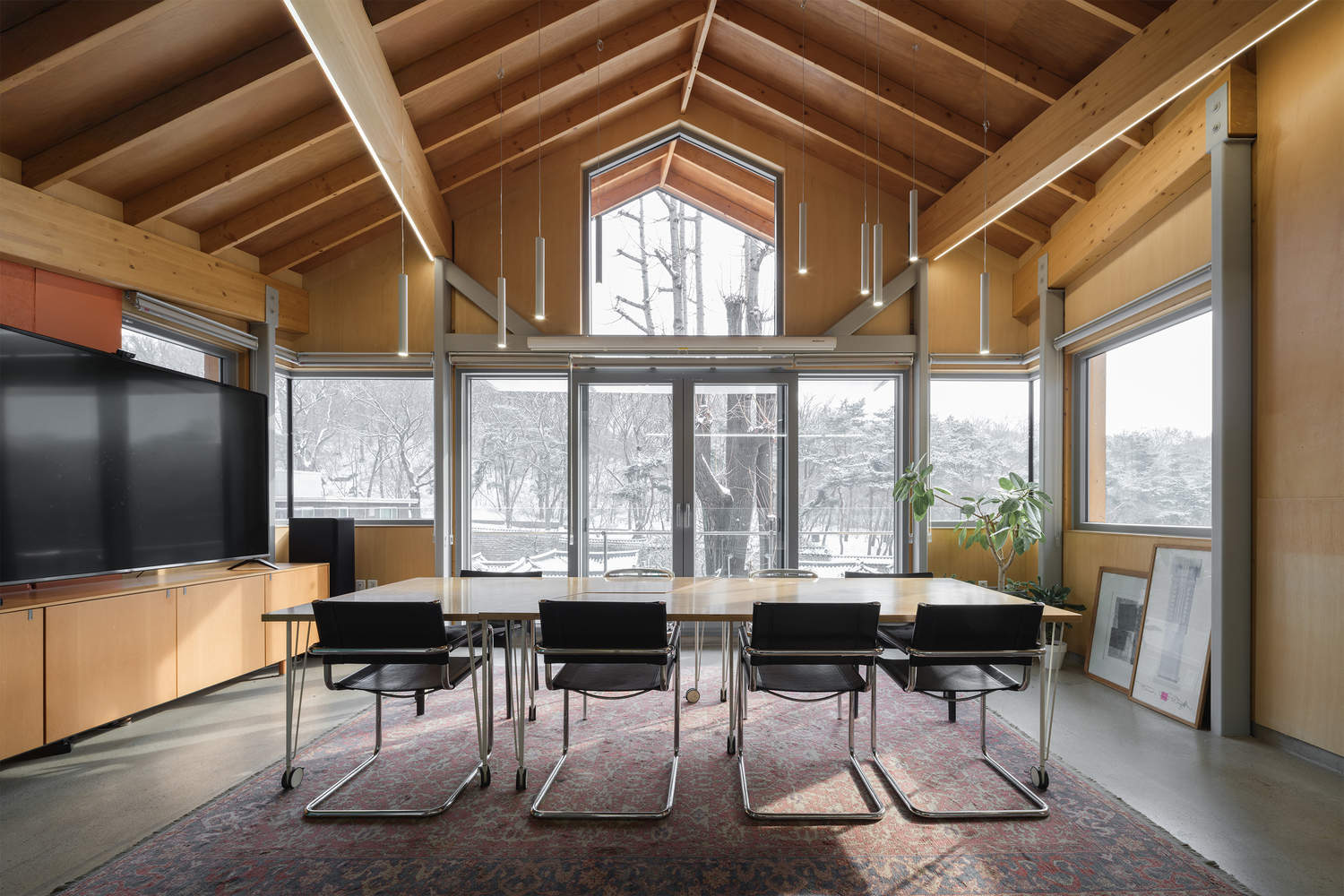
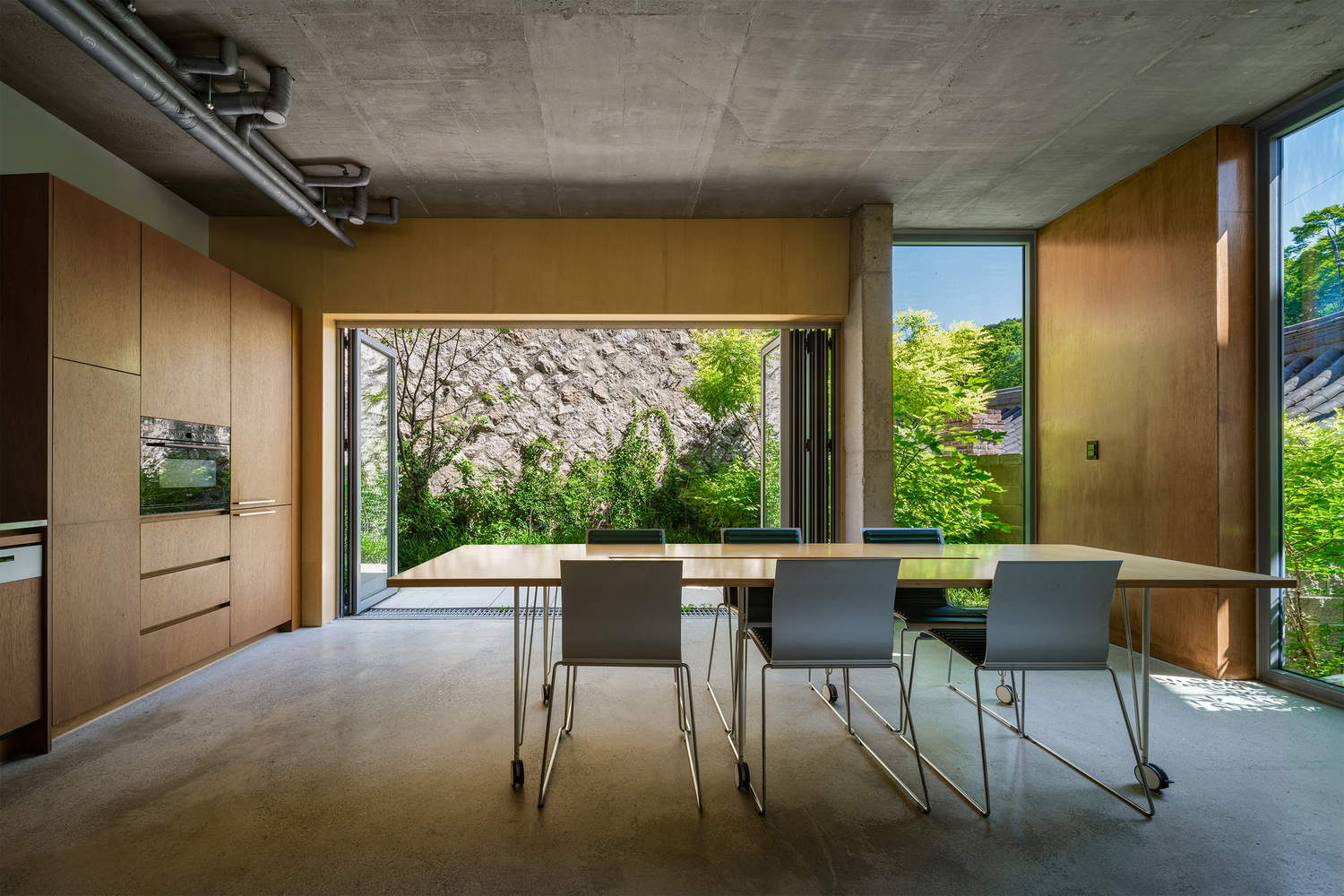
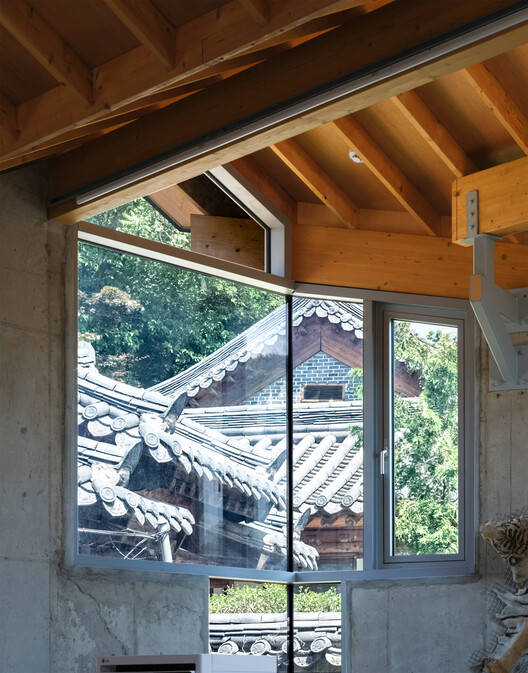
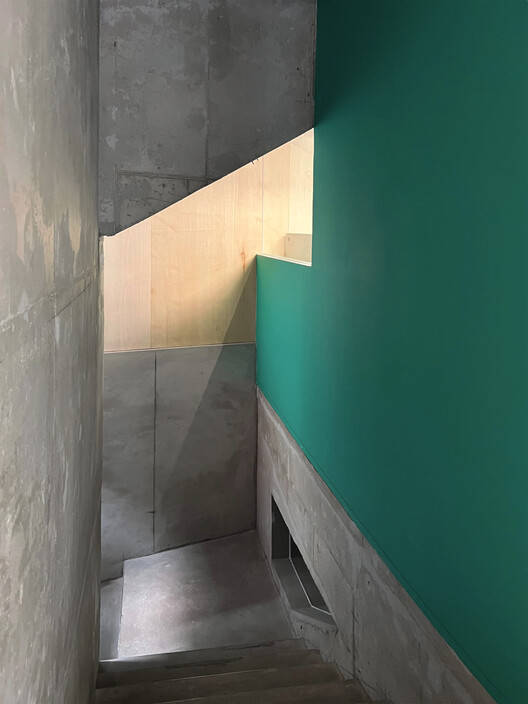
室内设计:温暖和灵活性-在室内,工作室融合了外露的混凝土、钢材、木材和胶合板,在实用性和美学之间取得了平衡。天然木柱和泥土色调与周围环境相得益彰,而传统的韩国元素,如丹青彩墙和汉字纸覆盖物,则反映了文化遗产。内部设计具有灵活性,具有随时间变化的适应性空间。加宽的楼梯兼作书架,将功能和设计融为一体。大角窗增强了开放性和自然采光,而延伸的屋檐提供了遮阳,提高了能源效率。
Interior Design: Warmth and Flexibility – Inside, the studio features a blend of exposed concrete, steel, wood, and plywood, creating a balance between practicality and aesthetics. Natural wood columns and earthy tones complement the surrounding environment, while traditional Korean elements like dancheong-painted walls and hanji paper coverings reflect cultural heritage. The interior is designed for flexibility, with adaptable spaces that evolve over time. The widened staircase doubles as a bookshelf, merging function and design. Large corner windows enhance openness and natural lighting, while extended eaves provide shading, improving energy efficiency.
© Kim Yongsung
© Kim Yongsung
可持续性和文化反思-该工作室代表了韩国传统与现代化之间不断发展的关系。它的设计尊重了hanok元素,同时融入了现代建筑和可持续发展原则。混凝土、钢材和木材的组合既经济又美观,而天然隔热方法有助于最大限度地减少能源使用。
Sustainability and Cultural Reflection – The studio represents the evolving relationship between Korean tradition and modernization. Its design honors hanok elements while incorporating modern construction and sustainability principles. The combination of concrete, steel, and timber is both economical and aesthetically pleasing, while natural insulation methods help minimize energy use.
© Kim Yongsung
Section
© Kim Yongsung
该项目体现了过去和现在之间的对话,展示了当代建筑如何在满足现代需求的同时保护文化遗产。它不仅是一个工作空间,也是韩国动态建筑演变的象征。
This project embodies the dialogue between past and present, demonstrating how contemporary architecture can preserve cultural heritage while meeting modern needs. It serves not just as a workspace but as a symbol of Korea's dynamic architectural evolution.
© Kim Yongsung
Wonso-dong工作室展示了现代建筑如何深思熟虑地重新诠释传统。通过将hanok风格的形式与当代材料相结合,该建筑为社区不断发展的建筑身份做出了贡献。工作室强调美学、可持续性和文化连续性,成功地弥合了过去和未来之间的差距。
The Wonso-dong studio exemplifies how modern architecture can thoughtfully reinterpret tradition. By blending hanok-inspired forms with contemporary materials, the building contributes to the neighborhood's evolving architectural identity. With its emphasis on aesthetics, sustainability, and cultural continuity, the studio successfully bridges the gap between the past and the future.
© Kim Yongsung