城市空间活化与连通性再造:该项目成功将原本利用率低下的分散空间,通过系统性的交通连接(地面至地铁站及空中步道网络),转化为高连接性的城市公共枢纽。这种策略性地重塑了场域在城市肌理中的地位,极大地改善了人流的可达性与流通性。新增室内多功能空间的设计,结合人文关怀和现代绿化理念,有效激活了社区活力,使其成为一个被公众广泛认可并获奖的城市绿洲典范。
被动式设计驱动的室内外融合与舒适度提升:建筑师通过移除实体围墙,最大化地引入自然通风,并在无空调条件下实现了室内环境的舒适性。核心的倒锥形设计不仅是视觉焦点,更是巧妙集成了采光和自然通风的性能。结合对流窗、落地玻璃和天窗等元素,实现了室内外空间的无缝融合,这种对被动式策略的精湛运用,体现了对气候适应性建筑的深刻理解和高效实践。
全生命周期考量的可持续材料与建造策略:项目在材料选择和结构构造上体现了高度的可持续性与资源效率。采用清水混凝土以减少后期装饰能耗;预制楼梯构件配合可重复使用的钢模板,显著降低了木材消耗;关键材料(如传统烧制物料、玻璃纤维树脂等)的采购半径被严格控制在800公里内,以最小化碳足迹。标准化构件(如圆形花槽)的应用,有效减少了建筑废料的产生,展现了从设计源头到建造过程的整体绿色思维。
Connecting Dispersed Spaces for Urban Revitalization
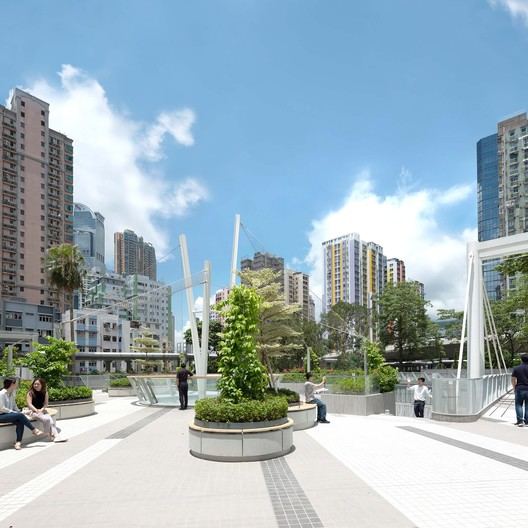
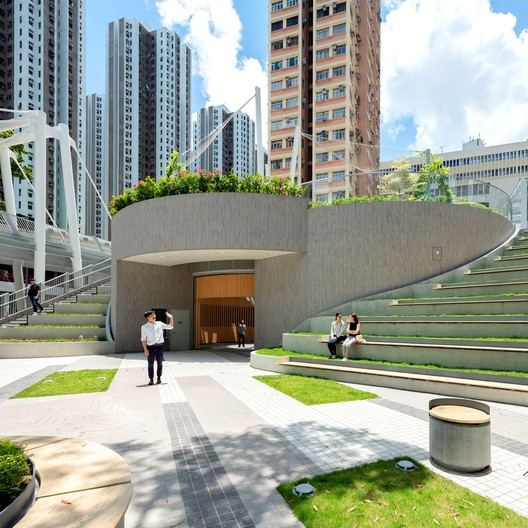
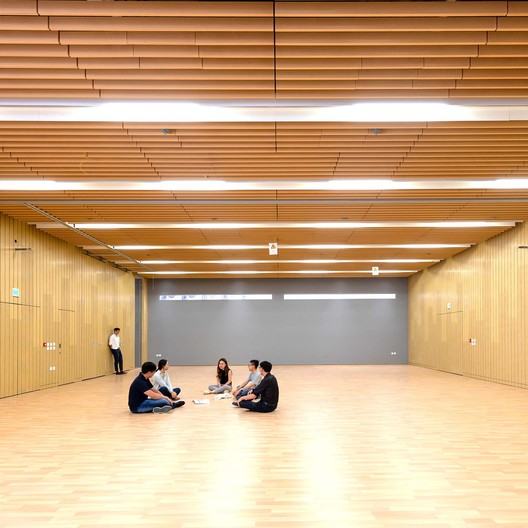
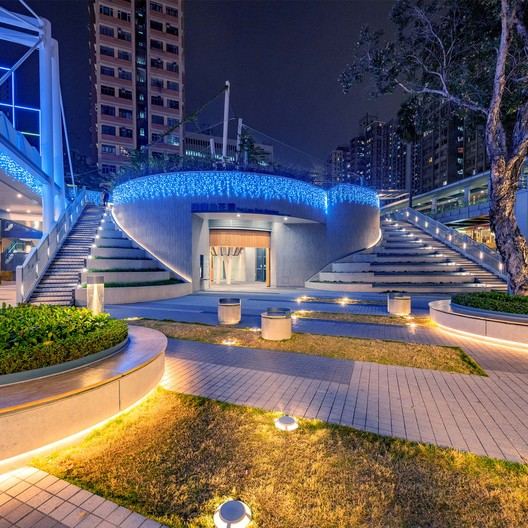
The Sai Lau Kok Garden Revitalization Project transforms previously unconnected public spaces into a highly connected urban oasis. Despite being located in the central area of Tsuen Wan, the garden originally had a very low utilization rate. The revitalization project turned the garden into an urban hub by connecting the ground level to the MTR station and the neighboring pedestrian bridge network, which improved pedestrian flow in the district. The newly added indoor multi-functional rooms, equipped with green concepts and comprehensive facilities, create a user-friendly public space and make the community more vibrant. This revitalization project has successfully gained public recognition and won several architectural awards, including the Silver Award in the '2019-2020 A' Design Award'.
连接分散空间以实现城市活化
西楼角花园重建项目将原本不连接的公共空间转化为一个高连接性的城市绿洲。即使位处于荃湾区中心,花园原来的使用率很低。重建项目透过连接地面至地铁站及邻近的行人天桥网络,将花园转变成一个城市枢纽,这改善了地区的行人流通情况。新增的室内多功能室配以绿化概念及齐全的配套设施,营造出人性化的公共空间,并把社区重塑得更生动。此活化项目成功获得公众的认可,更荣获了多个建筑奖项,当中包括「2019-2020 A' 設計獎」银奖。
© Image 28
© Image 28
Enhancing Comfort through Passive Design
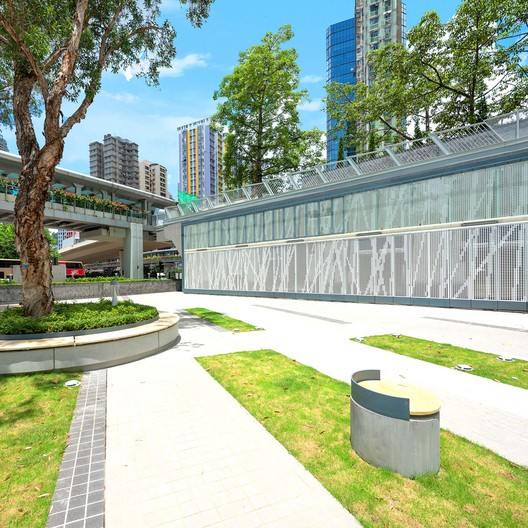
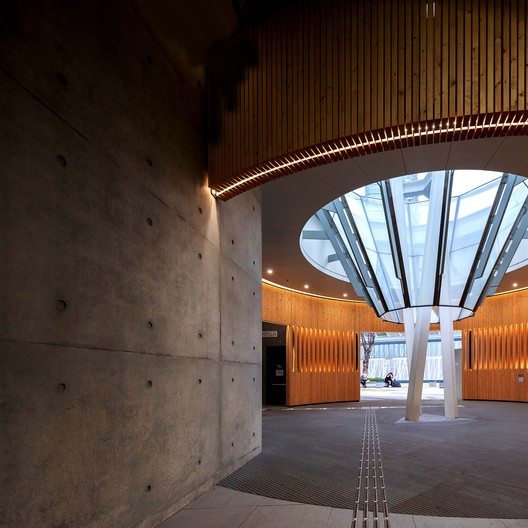
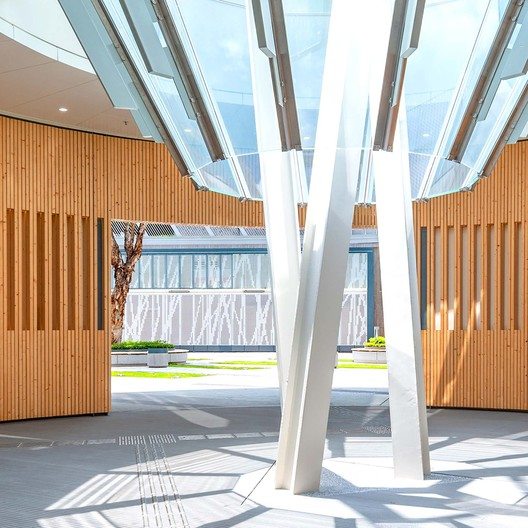
The architects removed the 2.5-meter high screen wall, allowing the garden to achieve natural cross-ventilation. The majority of the indoor spaces can maintain a comfortable temperature through natural ventilation without air conditioning. The inverted cone feature in the center of the open space not only serves as an indoor focal point but also functions as a skylight and enhances natural ventilation. It also achieves the effect of integrating indoor and outdoor spaces. Furthermore, design features in the multi-functional rooms, such as louvre windows, floor-to-ceiling glass, and skylights, effectively improve the quality of the indoor environment.
被动式设计提高舒适度
建筑师拆除了2.5米高的屏风围墻,令花园达至自然对流通风。在没有空调的情况下,绝大部分的室内空间亦能透过自然通风保持舒适温度。开放空间中央的倒锥形特色设计除了作为室内焦点,同时具有采光天窗及增强自然通风的功能。它亦能达至融合户内外空间的效果。此外,多功能室中的对流窗、落地玻璃和天窗等各项设计特点均有效地提高室内环境的质量。
© Image 28
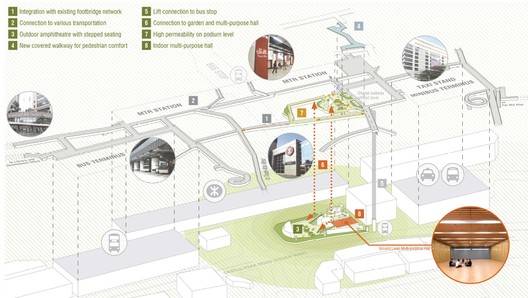
Axonometric Drawing
轴测图
Design Considerations on Material Selection and Structure
To enhance the project's sustainability, fair-faced concrete was used to reduce additional finishing processes. Prefabricated stair components utilized reusable steel formwork, significantly reducing the use of timber. Certified sustainable timber was selected for the flooring and feature walls. Furthermore, the source locations for construction materials used in the project, such as traditional Chinese kiln-fired materials, glass fiber reinforced resin, and metal products, are all within an 800km radius of the construction site, minimizing carbon emissions from transportation as much as possible. The metal mesh ceiling reduced the consumption of false ceiling materials. The standardized design of the circular planters maximized the reduction of construction waste.
有关选材和结构上的设计考量
为提高项目的可持续性,项目中使用了清水混泥土以减省额外的修饰工序。预制楼梯构件运用了可重复使用的钢模板,大大减少了木材的使用量。地板和特色墙选用已认证的可持续木材。除此之外,项目中使用的中国传统窯烧、玻璃纤维强化树脂和金属制品等建筑物料的来源地均在工地800公里范围内,尽量减少运输所产生的碳排放。金属网天花减少了假天花板的耗材。圆形花槽的标准化设计更可最大化地减少建筑废料。
© Image 28
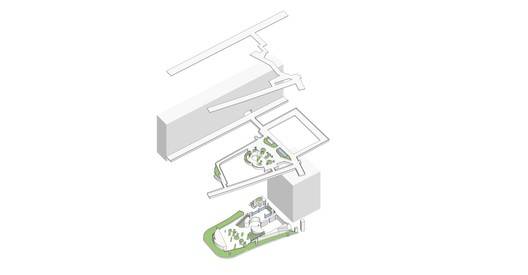
Exploded Axonometric Diagram
爆炸分析图
Operational Model for Energy Saving and Emission Reduction
The project employs equipment such as CO2 sensors and LED lighting to reduce energy consumption through demand control based on fresh air monitoring. Additionally, solar lamps are powered by photovoltaic cells, aligning with the goal of energy saving and emission reduction.
节能减排的营运模式
项目使用了CO2传感器、LED照明等设备,透过览测新鲜空气进行需求控制,从而降低能源消耗。另外,太阳能灯由光伏电池供电,配合节能减排的目标。
© Image 28
© Image 28
Greening, Mitigating Urban Heat Island Effect, and Improving Urban Ecology
To mitigate the urban heat island effect, a large amount of vegetation was incorporated into the building design, including 30 trees, 3,300 shrubs, 8,700 ground cover plants, and 40 square meters of lawn, creating an oasis in the city. The meticulous design and planning by the architectural team allowed for the preservation of 13 major trees on the original site, perfectly integrating them into the functional layout. Landscape architects selected native and flowering species to maintain biodiversity. Furthermore, the functional climbing plant net not only became an architectural landmark but also serves as a shading device for citizens in the garden.
绿化、减少热岛效应及改善城市生态
为了缓解城市热岛效应,建筑设计中加入了大量植物,种植了包括30棵树、3300株灌木、8700棵地皮植物和40平方米的草地,在城市中营造出一片绿洲。建筑团队精心的设计及规划使原址上13棵主要树木得以保留,并完美地融合到功能性的布局设计中。园景师选择了自本地植物及开花物种以保持生物多样性。此外,功能性的攀爬植物网不仅成了一个建筑地标,还可以用作花园中让市民遮阳的装置。
© Image 28