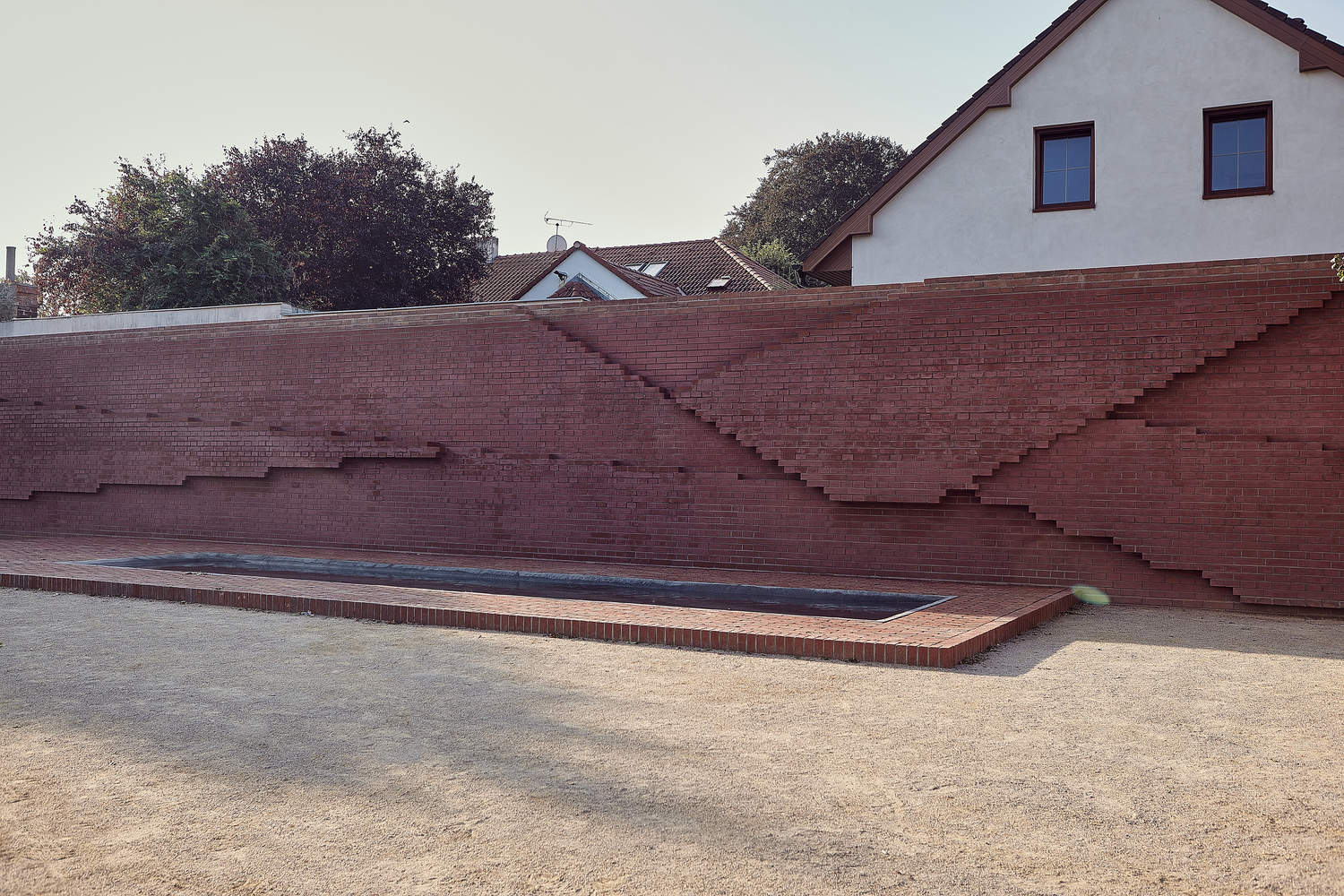
历史文脉的创新转化:该项目最精髓之处在于其对场地历史的深刻理解与创新性转化。建筑师将Hussite革命纪念公园前身——湖边村庄的记忆,通过砖砌浮雕墙体巧妙地重构。墙体上残留的坡屋顶轮廓被抽象为对角折叠的装饰图案,不仅是对历史痕迹的致敬,更是将传统砖结构工艺与当代设计语汇完美融合的典范。这种将“无形记忆”实体化的手法,赋予了围墙超越边界和遮挡的功能,使其成为场地历史叙事的强有力载体。
雕塑感与功能性的完美结合:“超能力墙”的设计不仅追求美学上的夸张和雕塑感,更融入了前沿的环保科技。它采用了纳米技术的透明涂层,富含光催化剂二氧化钛,能够在紫外线作用下净化空气,每年能有效清除数公斤的污染物。这种将纪念性艺术构筑物转化为积极环境干预手段的实践,体现了当代建筑对可持续性和社会责任的深刻思考。墙体本身成为了一个静默而高效的生态设备。
虚实相生的空间哲学表达:设计师通过材料的对比和空间意象的营造,探讨了可见与不可见、物质与记忆的关系。砖墙的实体厚重感与纳米涂层带来的空气净化“无形之力”形成对比,同时,墙面设计与XTOPIX工作室的水景相互呼应,深邃的表面象征着已被排干的湖床。这种设计语言强调了“重要的不是我们所看到的,而是我们无法看到的”,成功地在纪念公园中构建了一种富有层次感和哲学深度的空间体验。
© Bet Orten
© Bet Orten
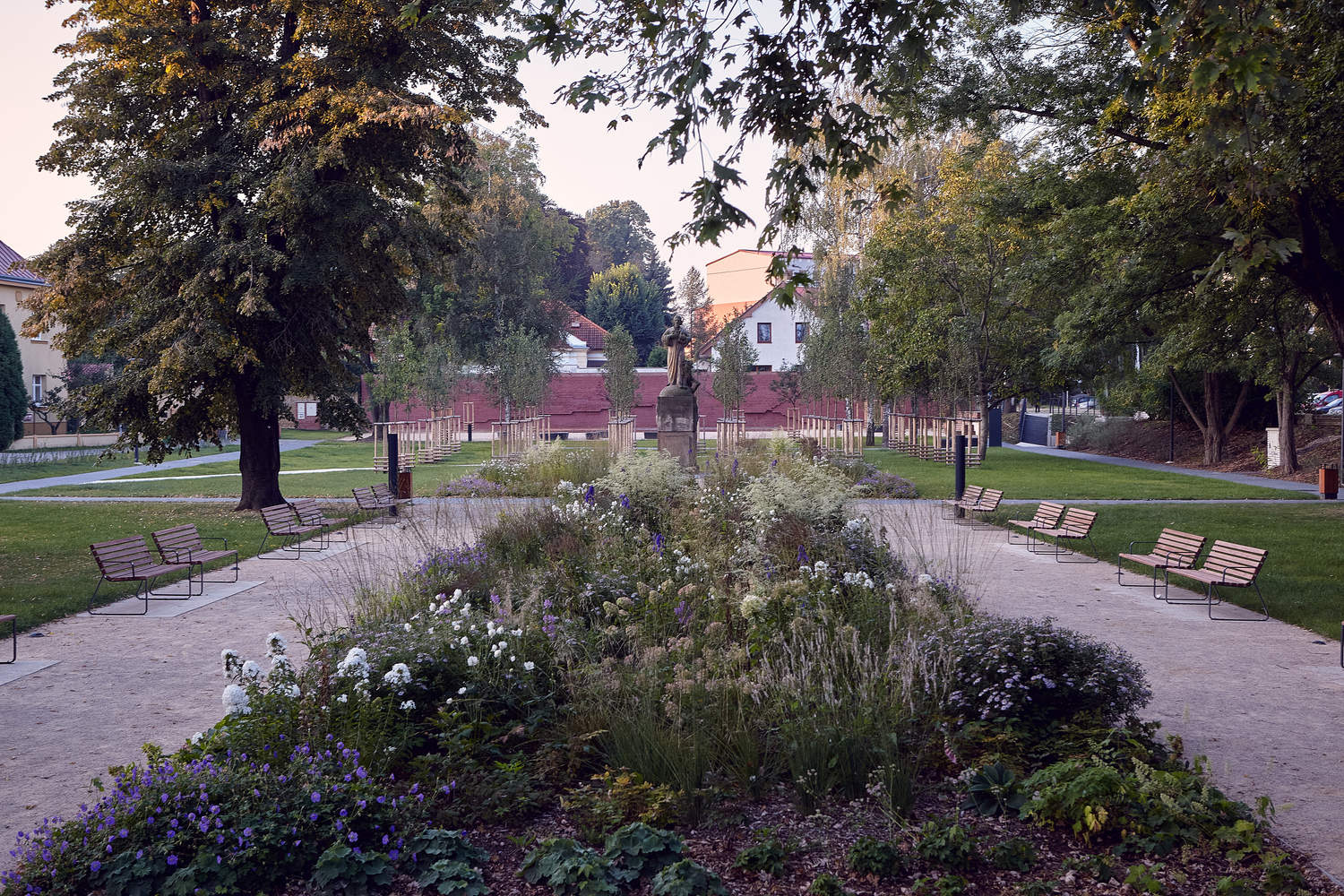
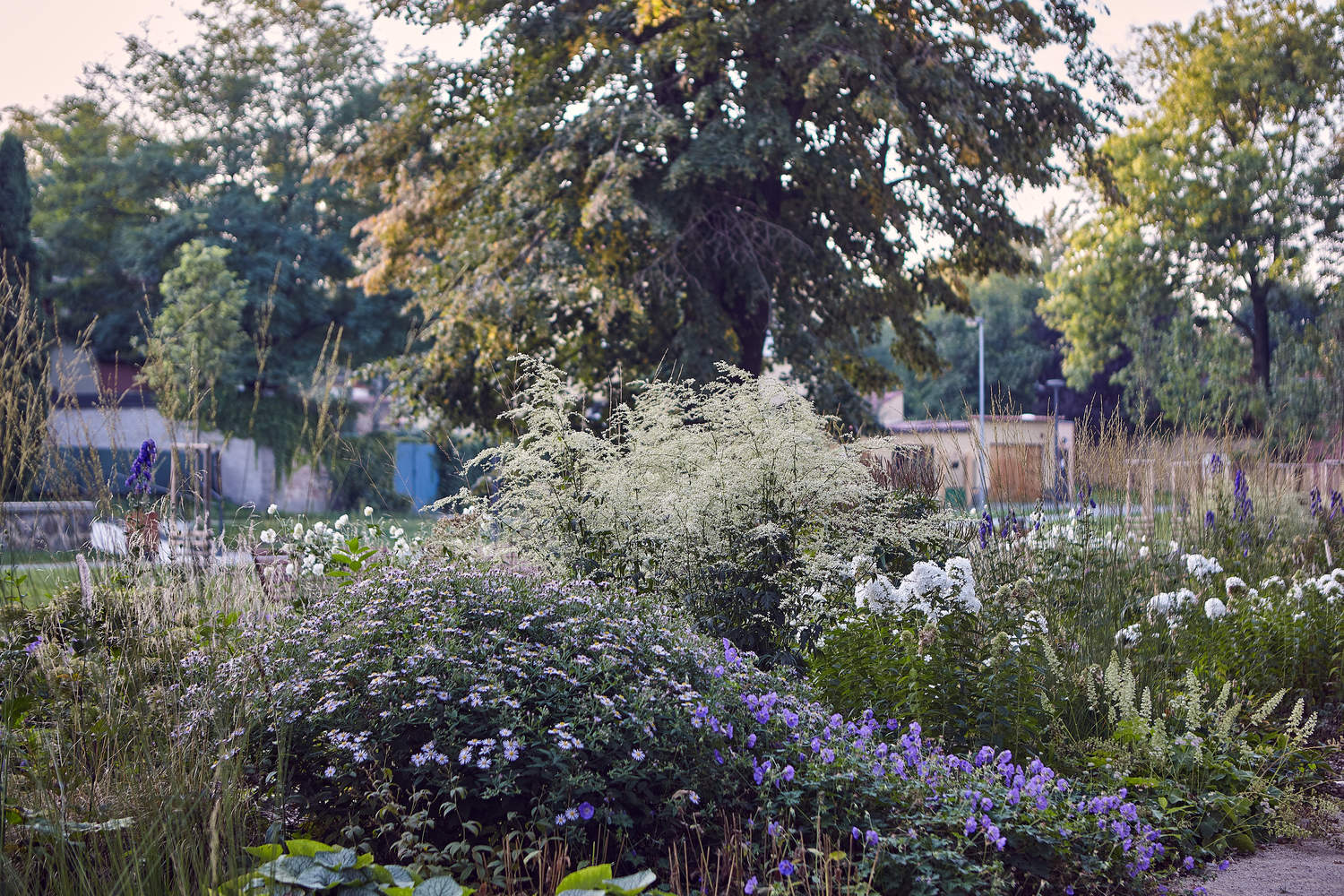
This Hussite Revolution Memorial Park in Čakovice was historically a natural village situated by a lake. During the period of the First Czechoslovak Republic, the lake was drained and the area transformed into a park, during which process the original houses by the lake were demolished.
这个位于 Čakovice 的 Hussite 革命纪念公园,在历史上曾是傍湖而居的自然村庄。在第一捷克斯洛伐克共和国时期,这里被排干了湖水转变成了公园。在当时的建设调整中,原湖边的房屋均被拆除。
© Bet Orten
© Bet Orten
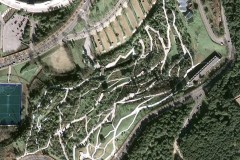
Site plan
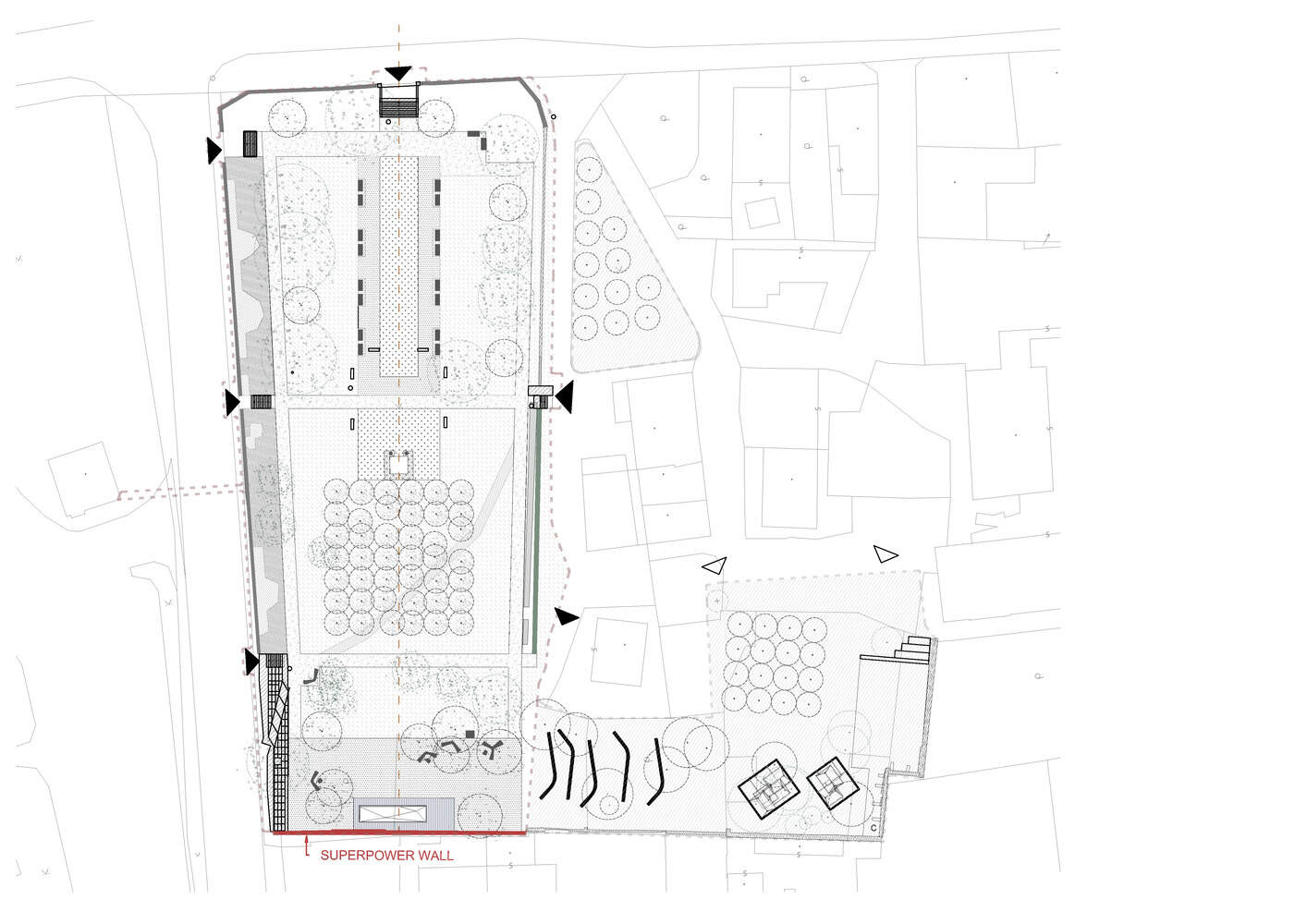
Reconstruction work was carried out here in 2019-2020, before which remains of the roofs and gables of some buildings were still visible. The park’s reconstruction was led by the Land05 landscape studio, headed by Martina Forejtová. The S K U L L studio was invited to participate in the design of the boundary wall on the south side of the park, ultimately creating this exaggerated, sculptural brick relief partition named the “Superpower Wall.”
直到2019-2020年对这里进行了重建,之前的一些建筑物残存的屋顶和山墙仍然可见。公园的重建由 Martina Forejtová 领导的 Land05 景观工作室主持。S K U L L工作室受邀参与了公园南侧围墙的设计,最终完成了这堵夸张的、似雕塑般的、名为“超能力墙”的砖砌浮雕隔墙。
© Bet Orten
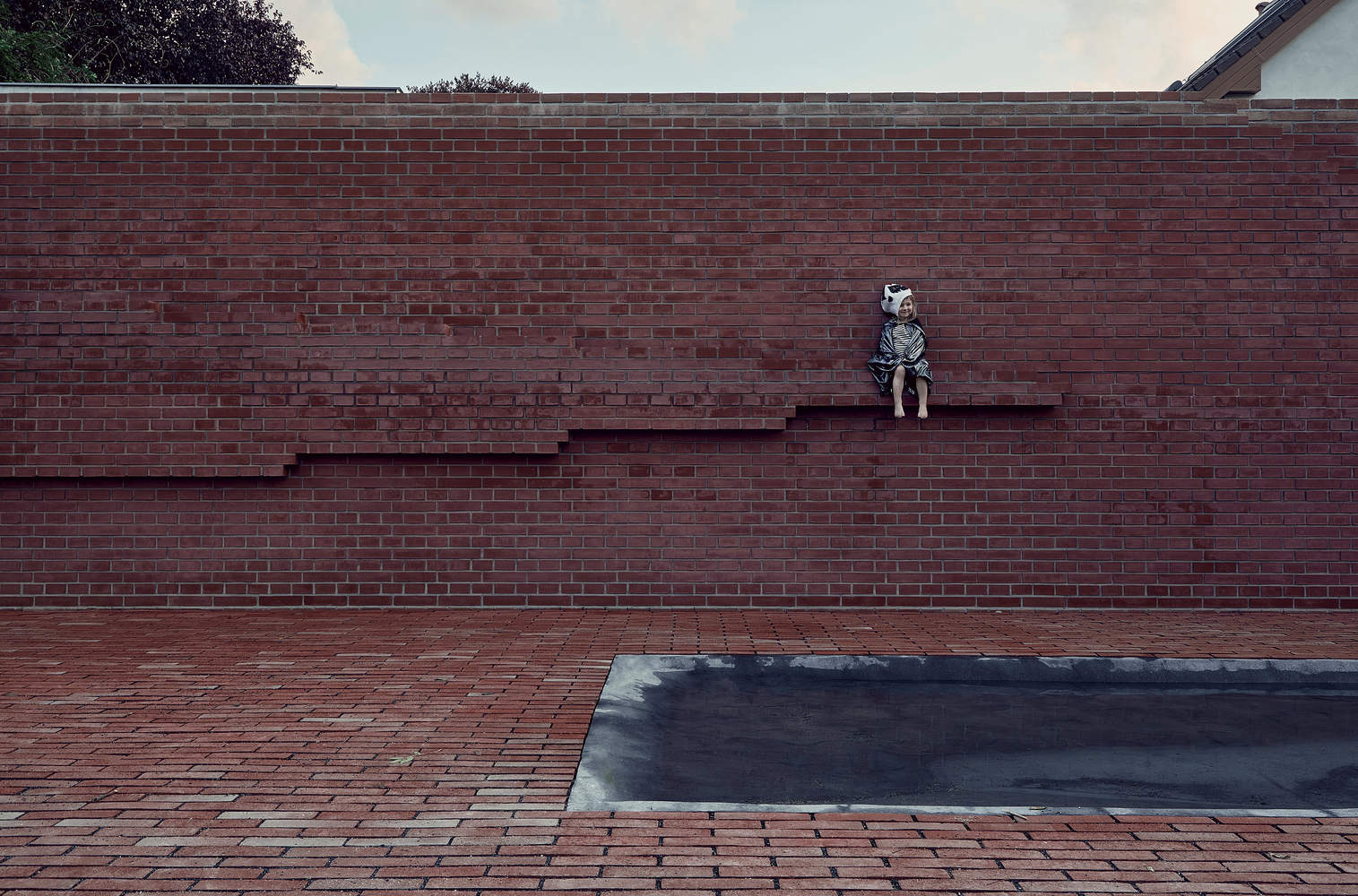
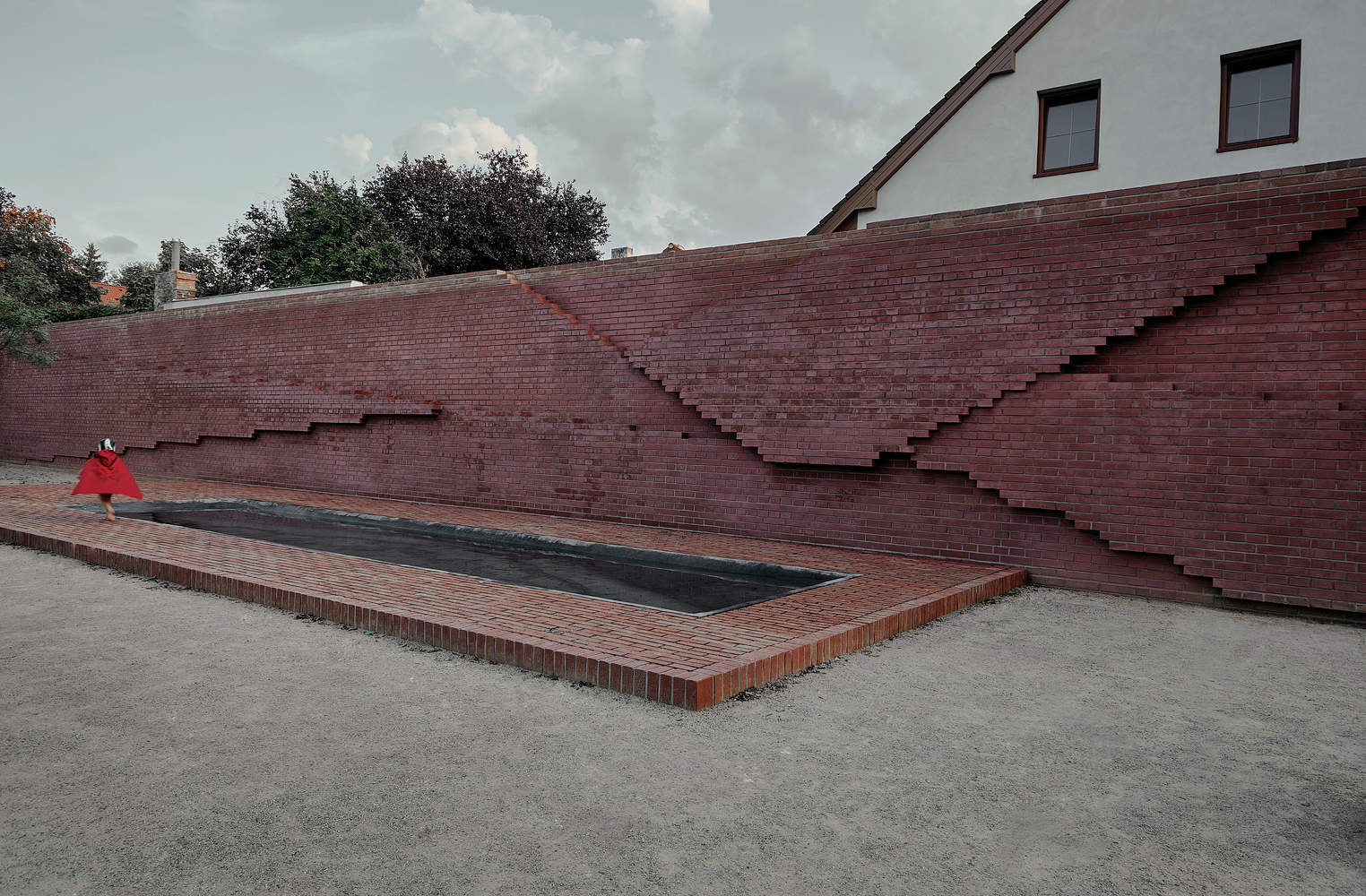
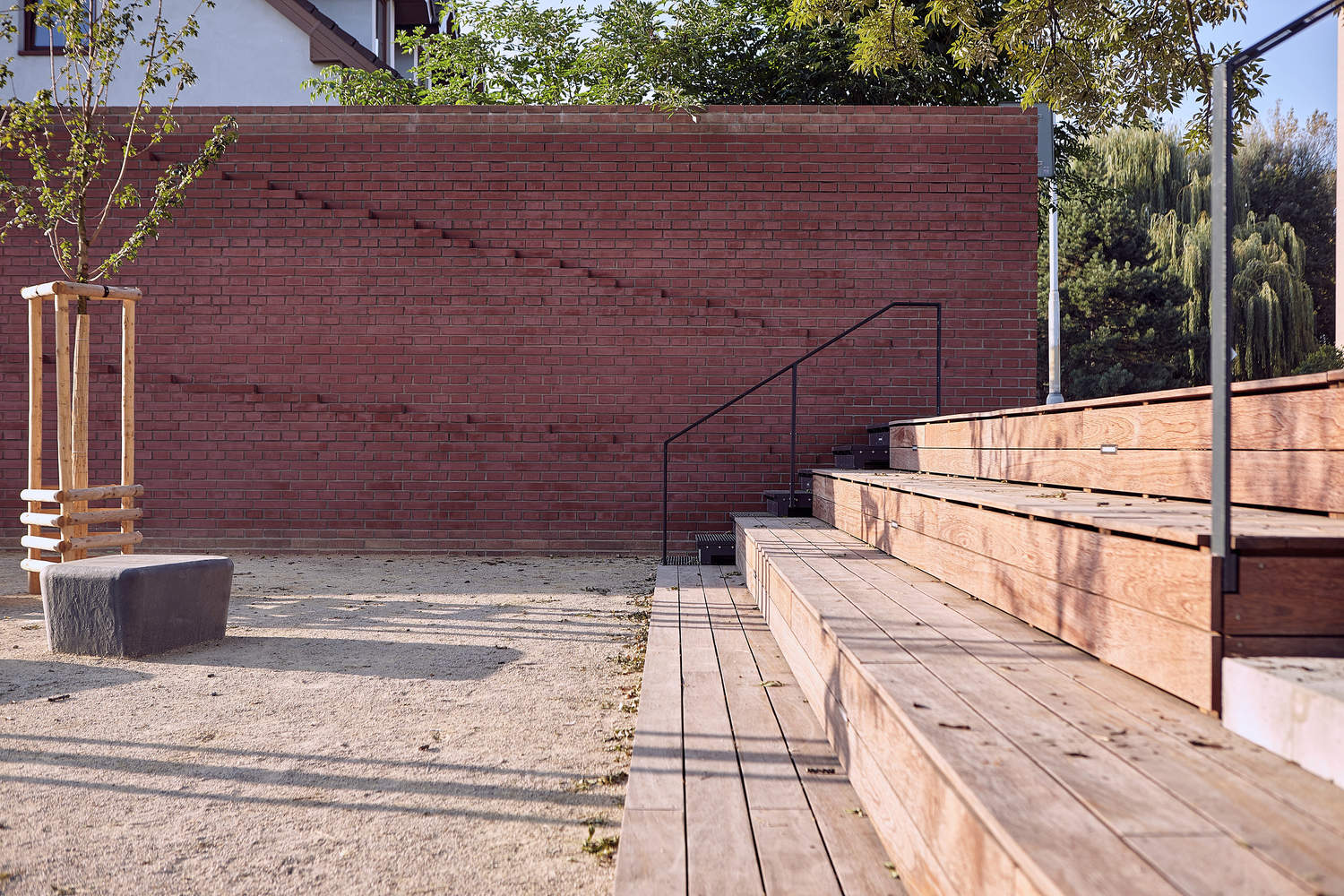
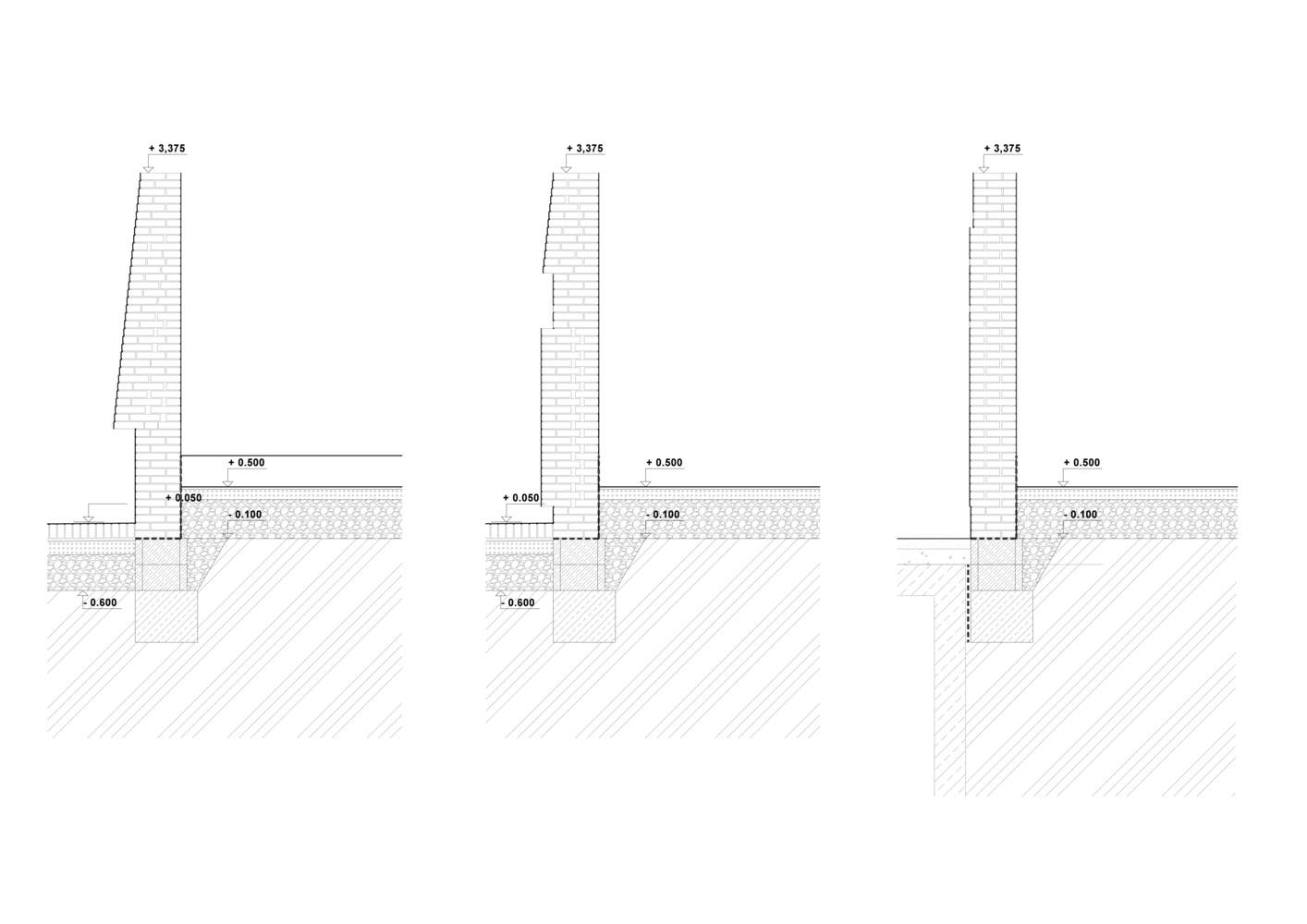
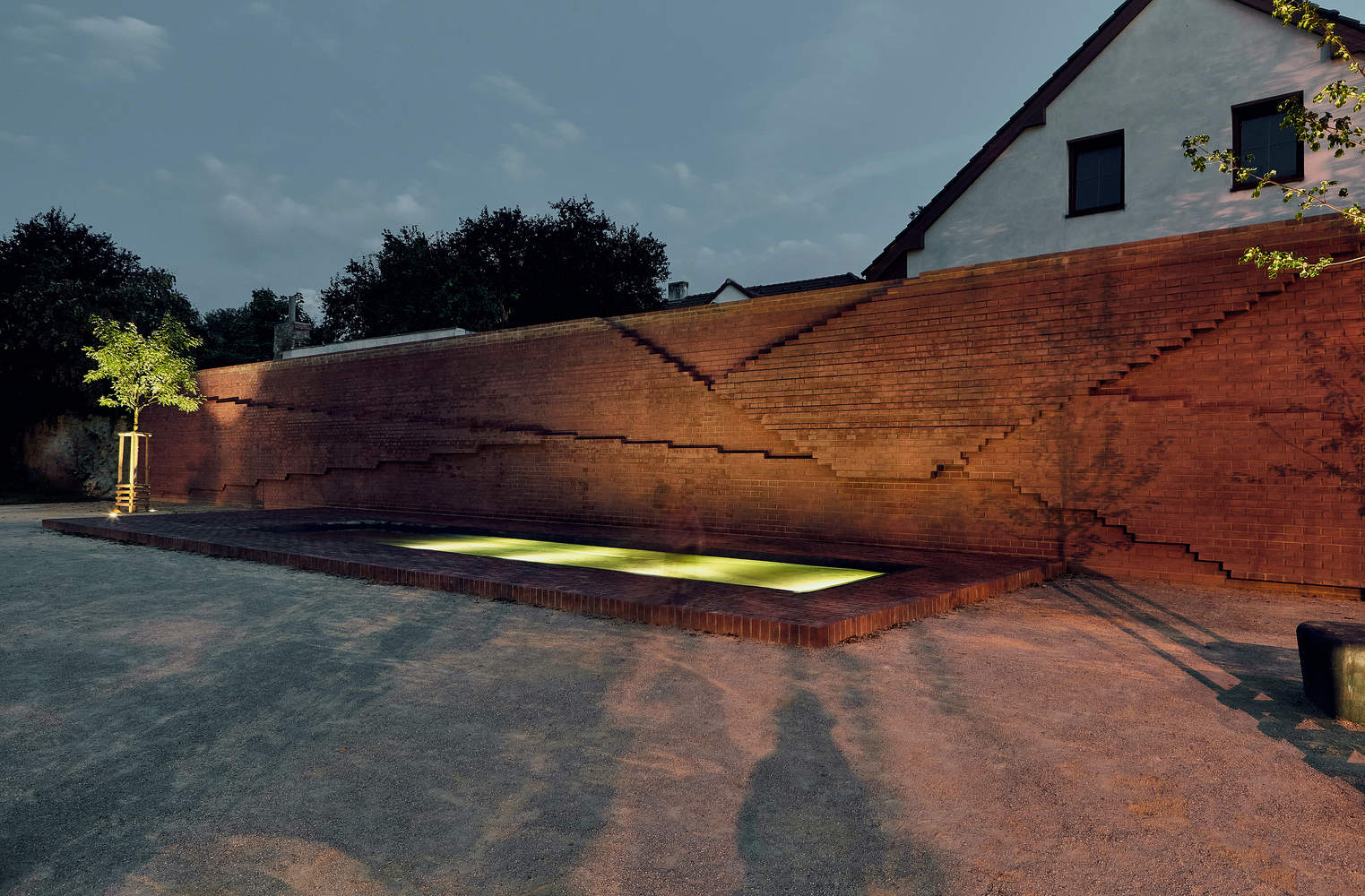
The outlines of the pitched roofs from the former village green are still imprinted on the park’s boundary wall after its transformation. These diagonally folded decorative patterns, traces of historical extension, form the basis of this brick relief wall, where classic brick structure techniques are applied to the actual design.
原来的村庄绿地改造后,坡屋顶轮廓仍然印刻在公园的围墙上。这些对角折叠的装饰图案,历史延展的痕迹,形成了该砖砌浮雕墙的基础,即经典的砖结构筑砌技术被应用到了现实设计。
© Bet Orten
Sections
The artist Matěj Hájek from the S K U L L studio, the designer of this wall, described it as: “It is a commemoration that, although no longer existing, still leaves its mark on the place and time.” Compared to traditional construction materials, the wall is equipped with a transparent coating featuring nanotechnology. Due to its photocatalytic properties, free of chemicals and waste, it purifies the surrounding air. The wall surface is impregnated with titanium dioxide, which works together with UV light to remove several kilograms of harmful substances per square meter annually. This unique technology was developed by scientists at the J. Heyrovský Institute of Physical Chemistry in the Czech Republic.
作为这堵墙体的设计者,来自 S K U L L 工作室的艺术家 Matěj Hájek 描述道:“这是一种纪念,虽然不再存在,但它仍在地点和时间上留下了印记。”与传统的建筑材料相比,该墙体配备了纳米技术的透明涂层,由于其不含化学物质和废物的光催化特性,可以净化周围的空气。墙壁表面浸渍有二氧化钛,与紫外线可以一起产生作用,每年可以在 1 平方米的表面上清除数公斤的有害物质。这项独特的技术由捷克 J. Heyrovský 物理化学研究所的科学家开发。
© Bet Orten
© Bet Orten
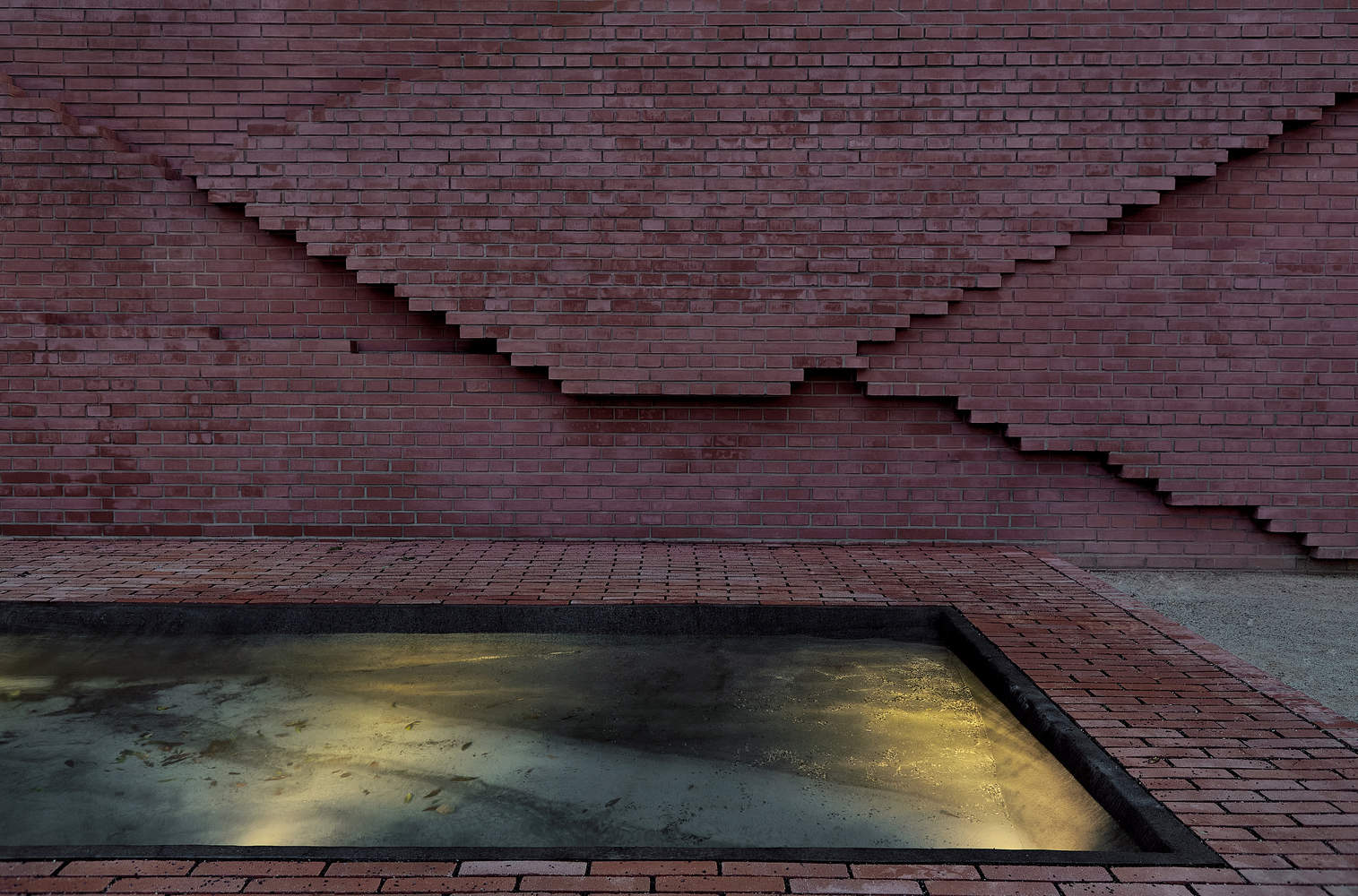
Hájek added: “The invisible plays a dual role here. On one hand, the nanotechnology coating that functions thanks to sunlight, and on the other, the fragments of memory that exist only in our imagination. What is important is not what we see, but what we cannot see.” The brick relief wall complements the water feature designed by the XTOPIX studio, whose deep surface is reminiscent of the former lakebed.
Hájek 补充道:“无形之物在这里扮演着双重角色。一方面是依靠阳光发挥作用的纳米技术涂层,另一方面是只存在于我们想象中的记忆碎片。重要的不是我们所看到的,而是我们无法看到的。”砖砌浮雕墙与 XTOPIX 工作室设计的水景相得益彰,其深邃的表面让人想起以前的湖床。
Text description from the designer
Translation by Zhang Zhongjing
文字描述来自于设计师
翻译 张中菁
© Bet Orten