遗址激活与城市韧性:该项目成功地将一座被遗弃的汉江人工岛屿,通过精巧的地形重塑和多层次的空间设计,转化为一个充满活力的城市公共空间。其核心精髓在于对“被遗忘”历史资产的再生,通过引入文化、创意和社交功能,使孤立的岛屿重新融入城市肌理,展现了城市设计在激活滨水空间和提升城市韧性方面的典范作用。
多功能垂直空间组织:设计巧妙地利用了岛屿的垂直维度,构建了两个核心层级:下层地面层集成了文化与创意设施,营造出“村庄般”的社区氛围;而上层平台则与现有大桥齐平,提供了开放的公共广场和观景视野。这种双层结构不仅最大化了岛屿的利用效率,也平衡了私密性与公共性,为不同用户群体创造了和谐共存的可能性。
生态修复与场所精神重塑:项目将可持续发展战略融入景观设计,通过恢复原有森林、为濒危物种创造栖息地,并升级混凝土结构为花园,实现了生态价值与历史文脉的统一。这种对自然环境的尊重与提升,使得弩督岛不仅成为一个功能性的文化场所,更成为了一个具有丰富社交体验和深厚场所精神的“世外桃源”,为未来的城市更新提供了宝贵的经验。
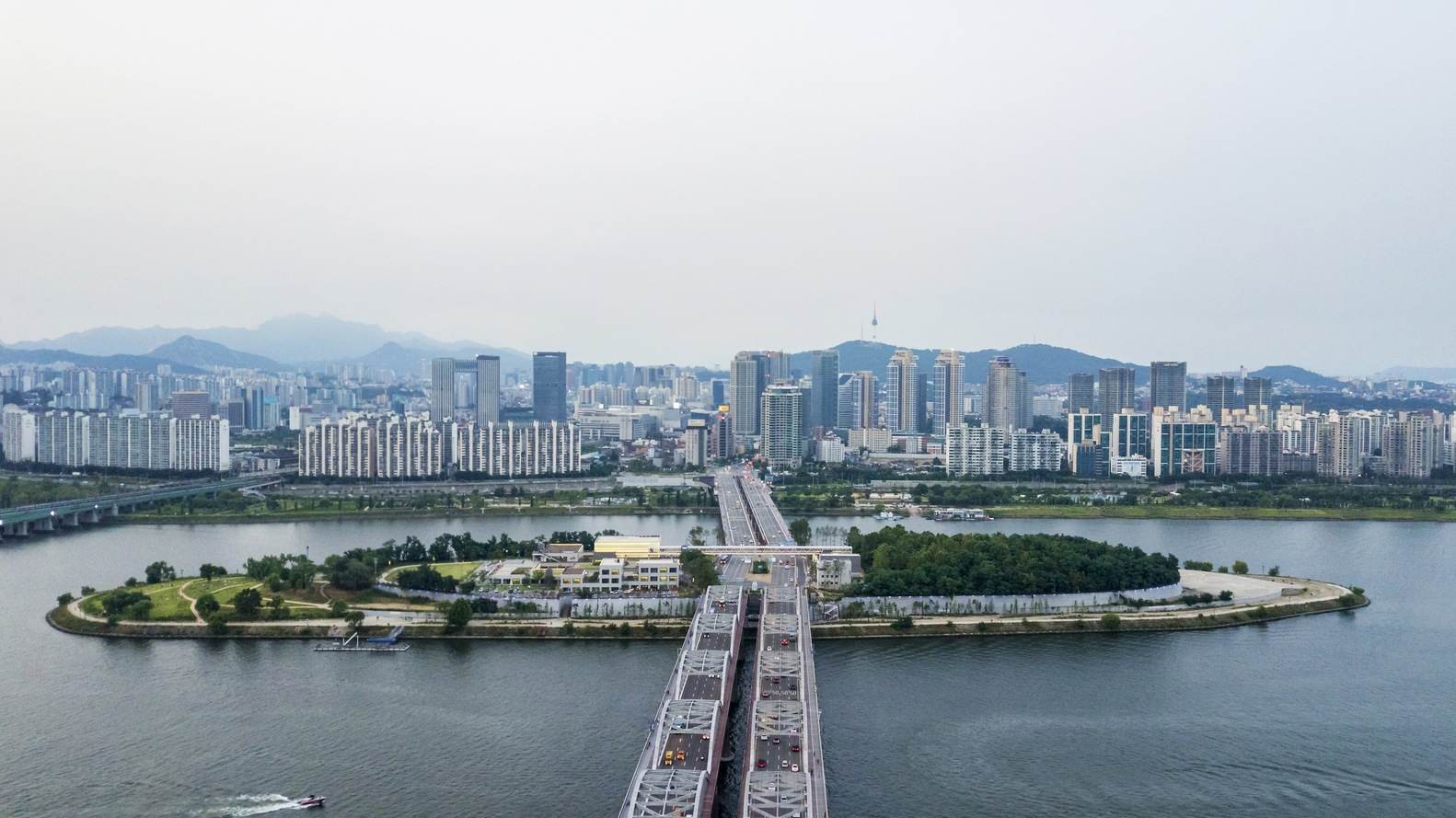
Nodeul Island is an artificial island in Seoul’s Han River that had been abandoned and forgotten for decades. It was originally constructed to support the Hangang Bridge (built in 1917) but became isolated over the years. Despite its beautiful scenery and proximity to the city center, its separation from the mainland made it difficult to become a vibrant public space. The project readjusts the island's topography into a multi-layered public space, featuring diverse cultural programs related to the island's history. It serves as an accessible sanctuary for the public, allowing citizens and tourists to enjoy a variety of activities while experiencing the harmonious atmosphere between the surrounding city and natural landscape.
弩督岛是一座首尔汉江之中的人工岛,被弃置并遗忘了数十年。它最初为承托汉江大桥(建造于 1917 年)而建造,但随年月变得形单影只。尽管它景色优美,临近市中心,但它独立于陆地而难以到达的特性使其难以热闹起来。项目将岛上的地形重新调整为多层的公共空间,设有与岛上历史有关的多种文化项目。它是个向大众敞开胸怀的世外桃源,市民与游客在体验多元化的活动项目的同时,也能感受到周遭城市与自然景观的和谐氛围。
© Hyun Jun Lee
Site Plan
© Cheong-O Yu
© Hyun Jun Lee
Section
© Hyun Jun Lee
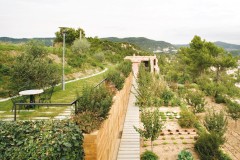
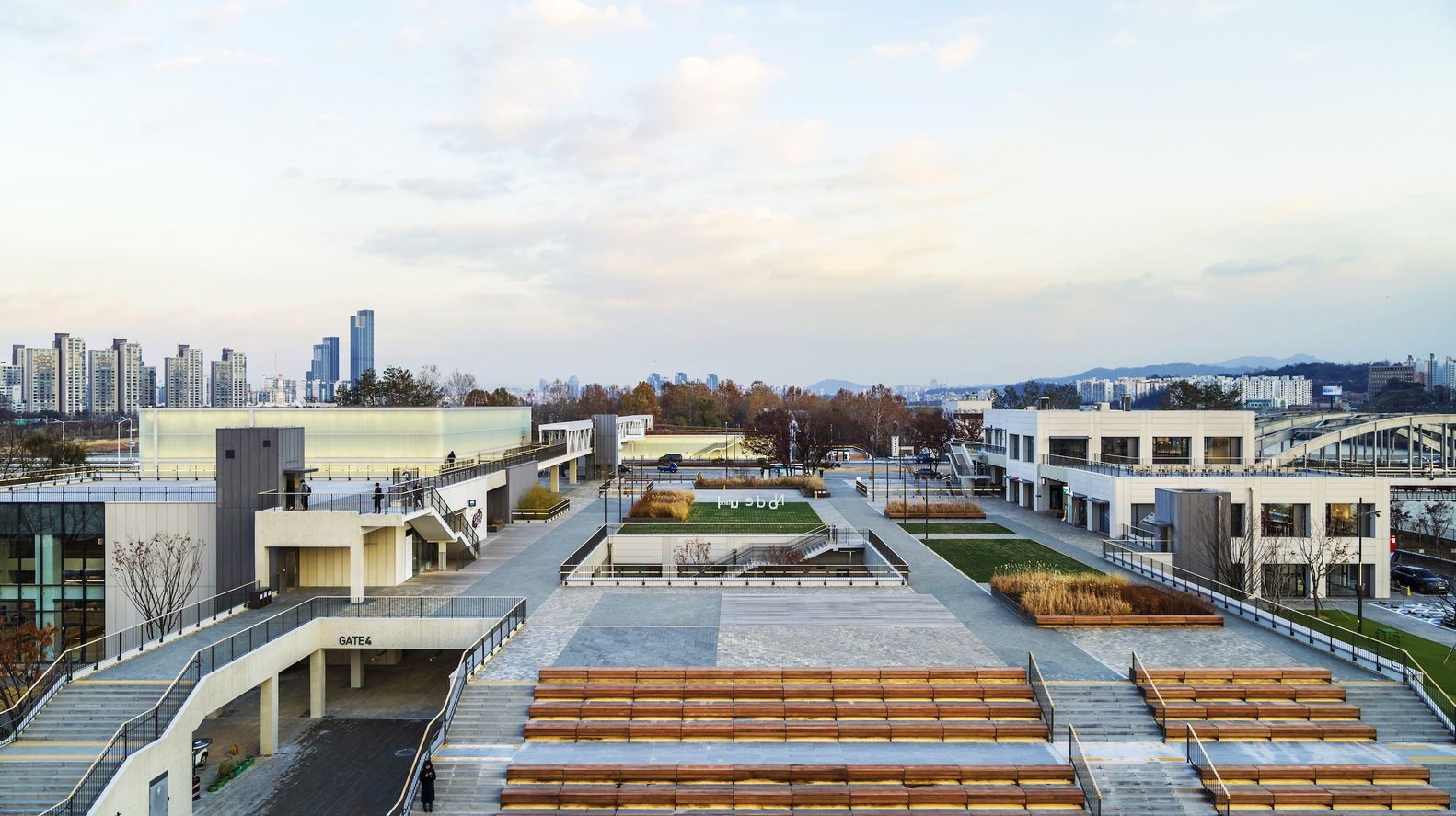
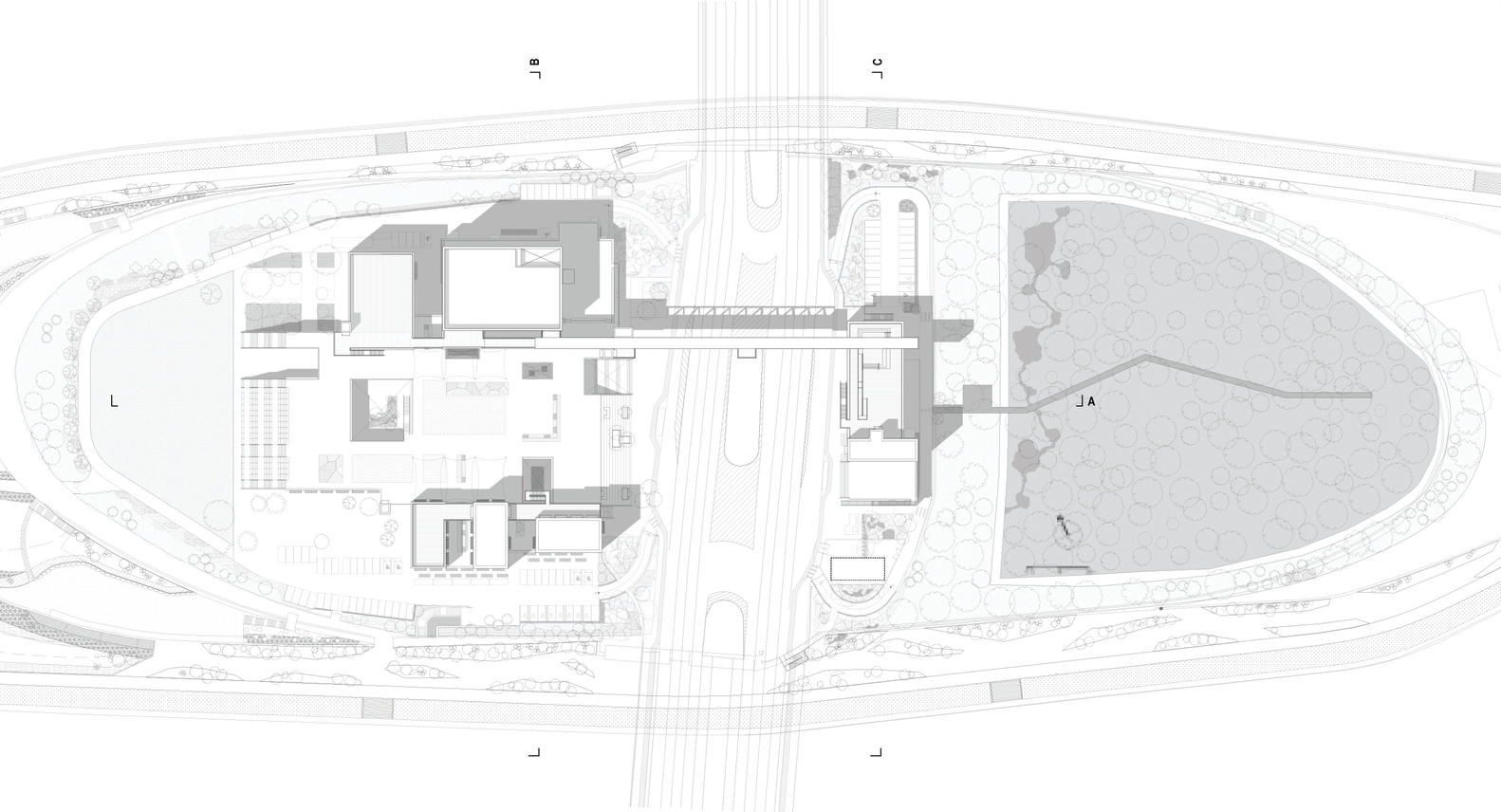
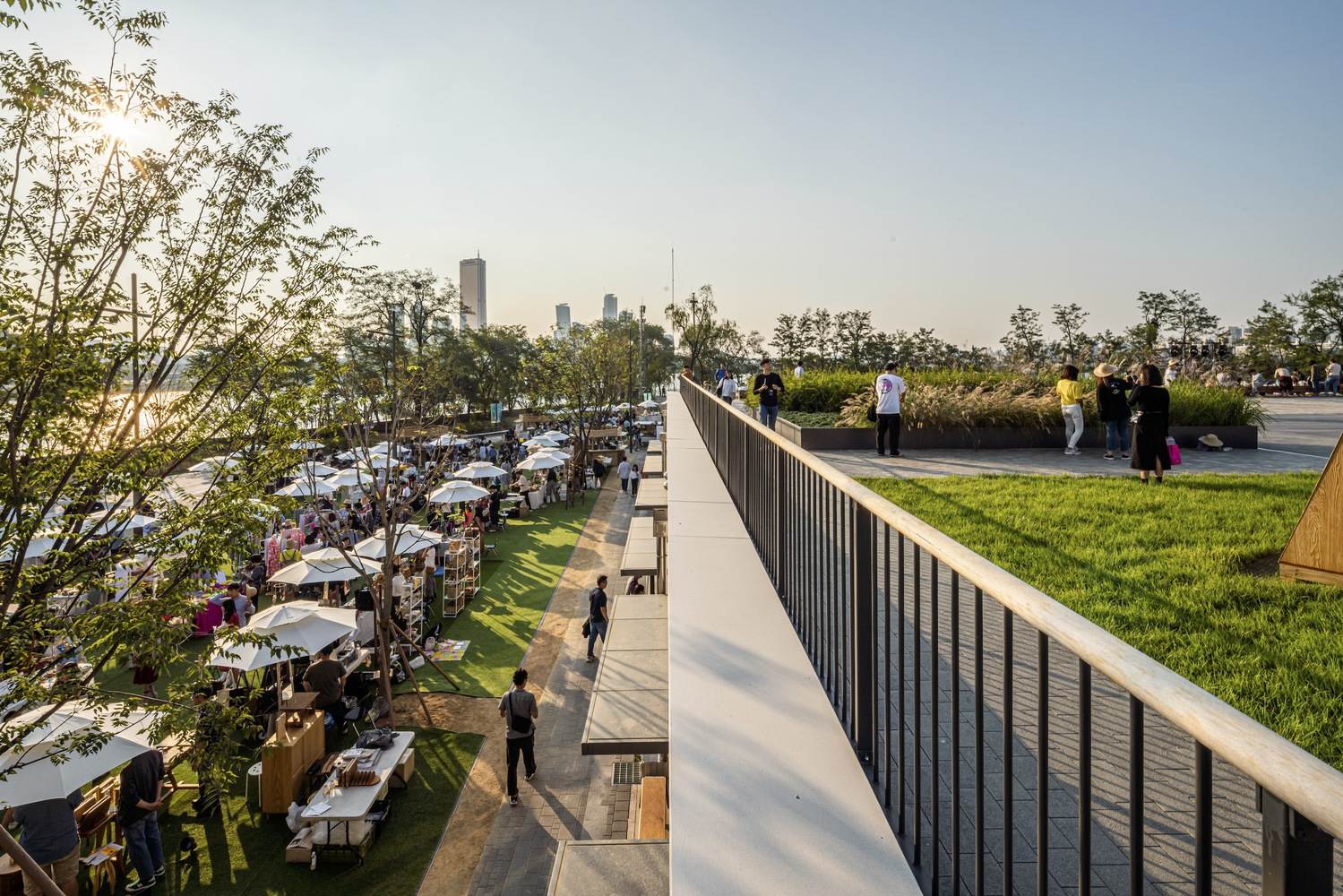
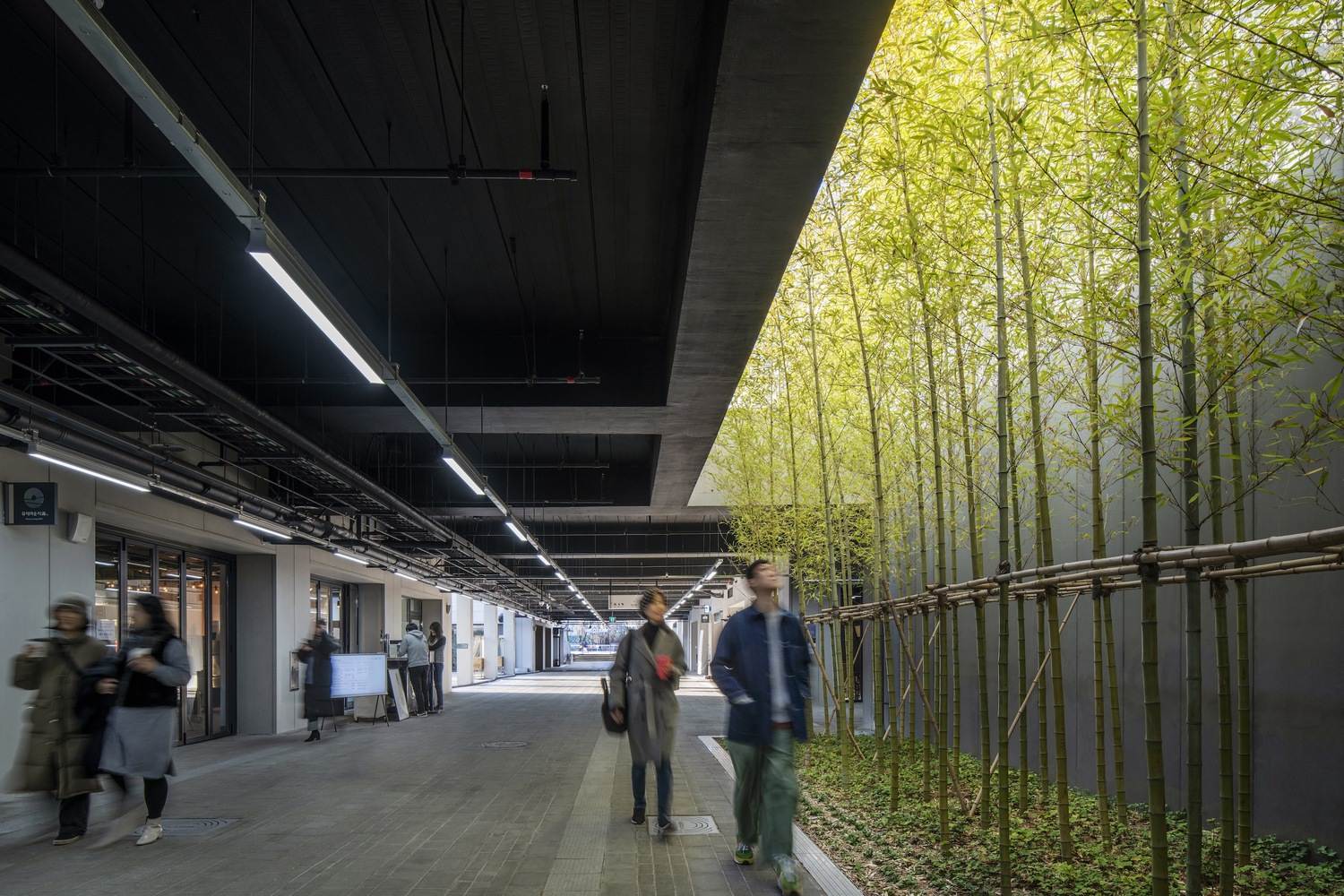
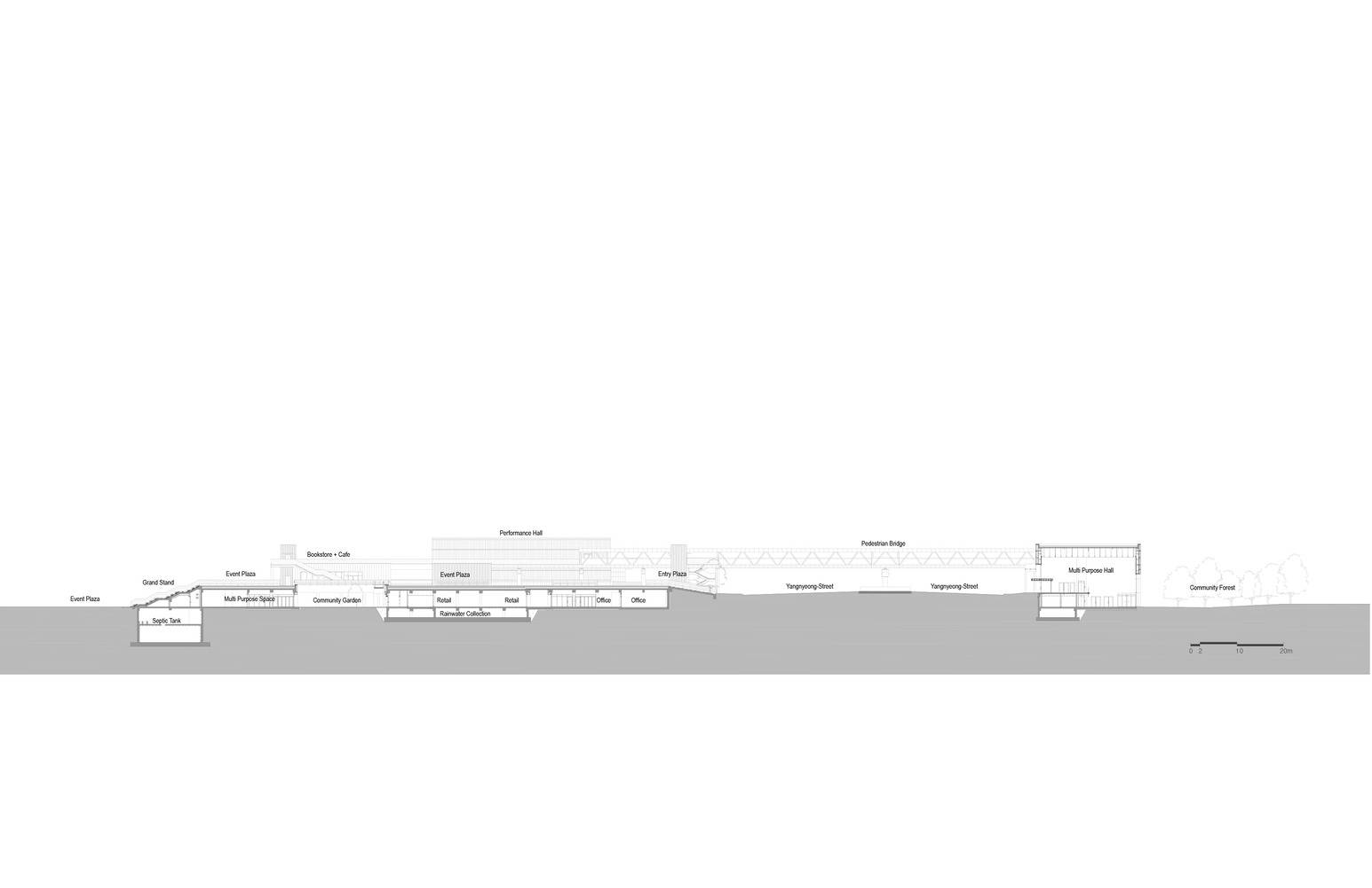
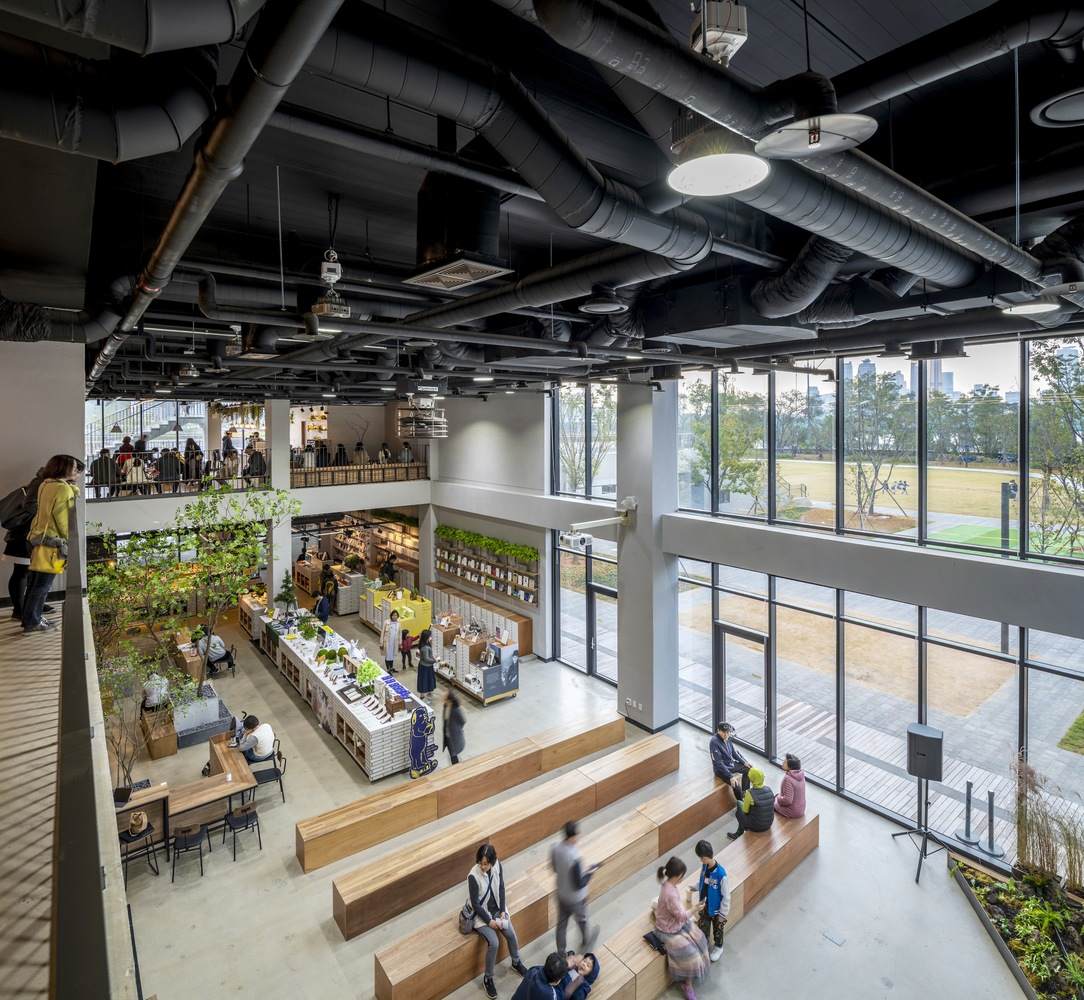
Nodeul Island is divided into two main levels: the existing ground level provides various cultural and creative venues, while the upper platform (level with the existing bridge) offers flexible public squares and viewing decks. Offices, shops, galleries, a bookstore, a multi-purpose hall, and a 450-seat theater are integrated into a village-like setting, forming a small community where different programs and user groups coexist harmoniously. The island's landscape also offers visitors a rich, park-like social experience. This new, vibrant, community-driven typology creates endless possibilities for both new and returning visitors, establishing a place full of historical depth and untapped potential.
弩督岛被分为两个主要的层级:原有的地面层提供了多种文化与创意场所,而上层平台 (与现存的大桥齐平) 则提供了灵活的公共广场与观景平台。办公室、商店、画廊、一个书店、一个多功能厅与一个可容纳 450 人的剧场被整合安排至村庄般的环境中,形成了一个不同项目与用户群体和谐共处的小社区。岛上的景观还给游客以一种公园般的,丰富的社交体验。这种全新的、富有活力的,社区驱动的类型学为新老游客创造了无限可能,建立了一个充满历史底蕴与无限潜能的场所。
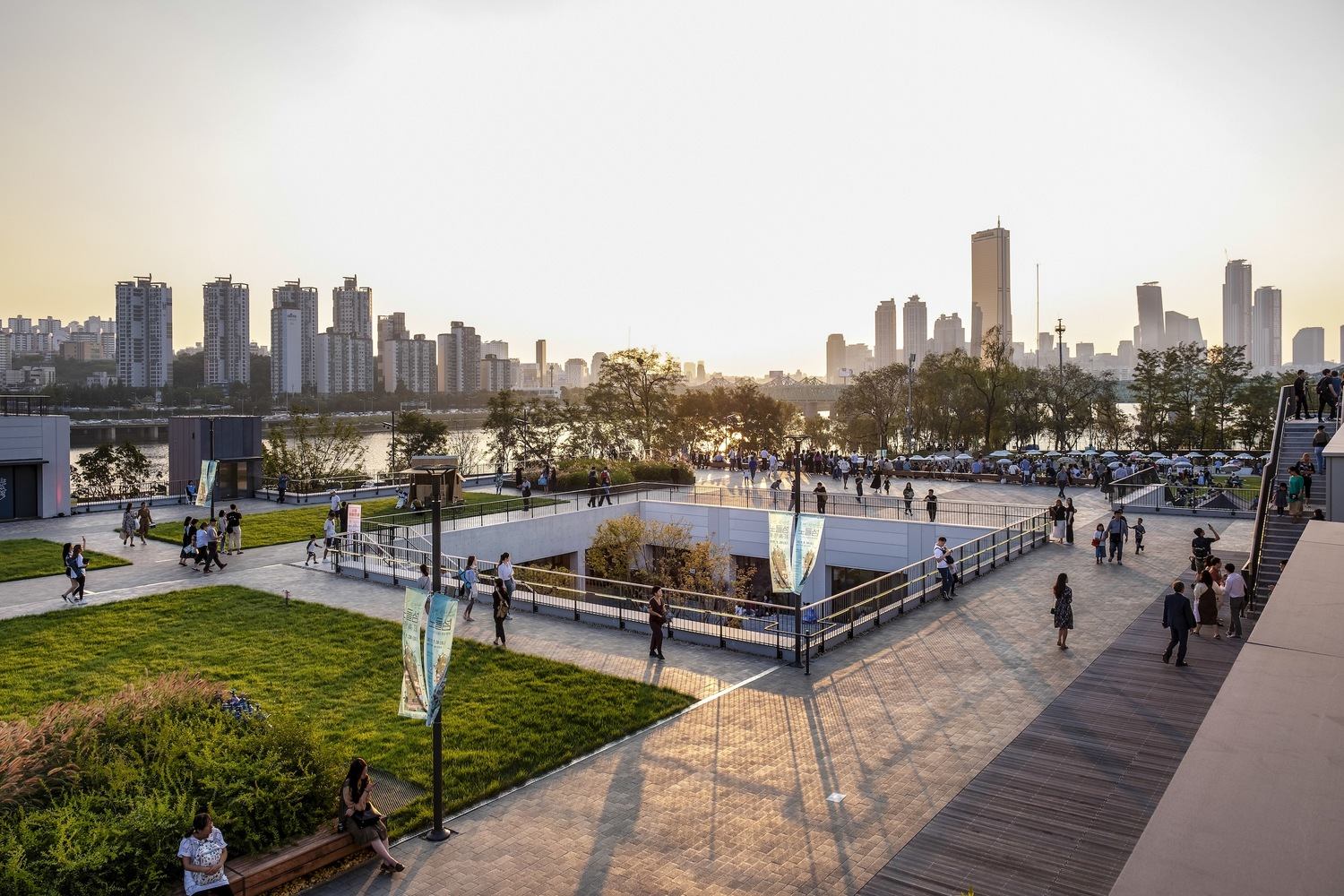
© Hyun Jun Lee
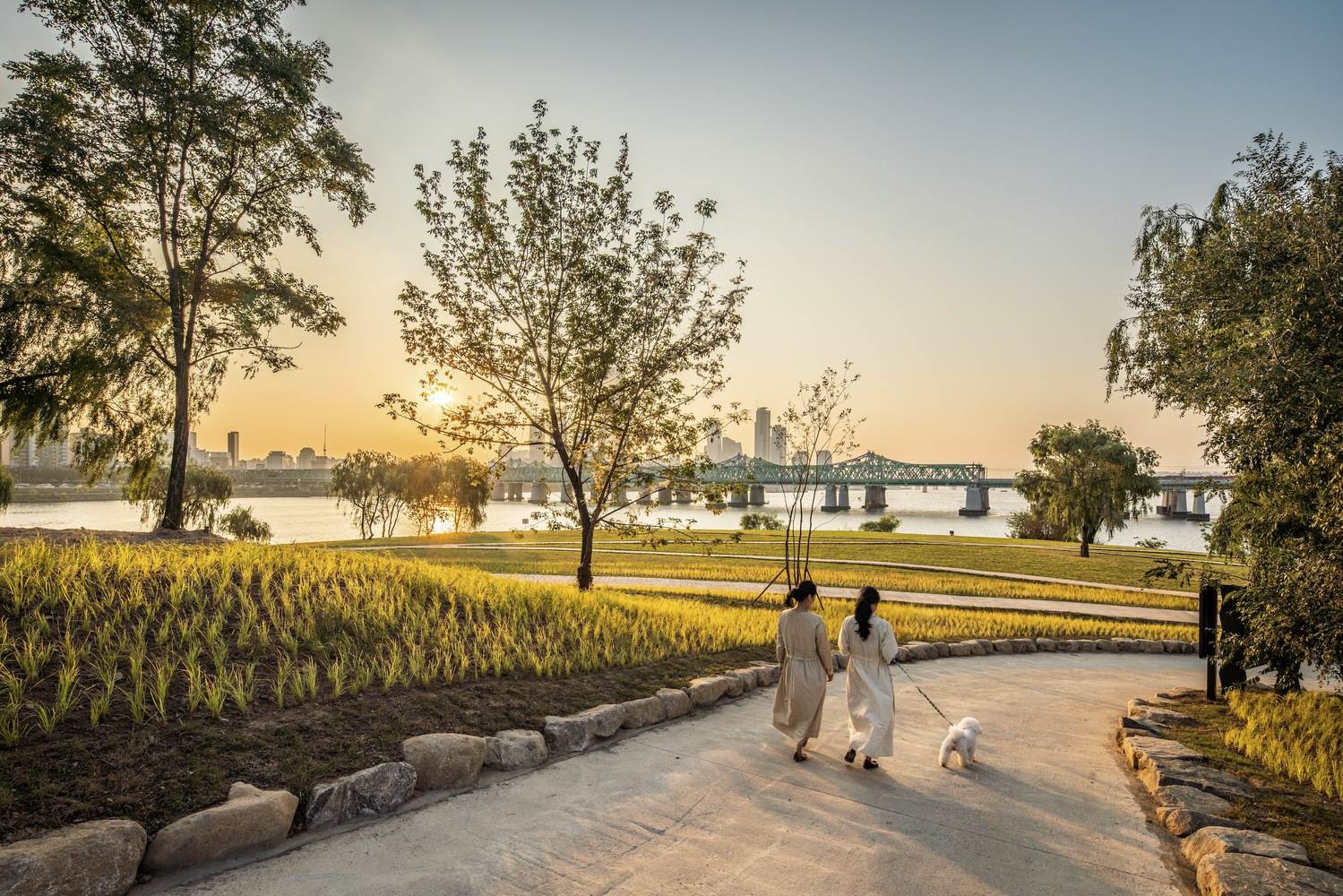
© Cheong-O Yu
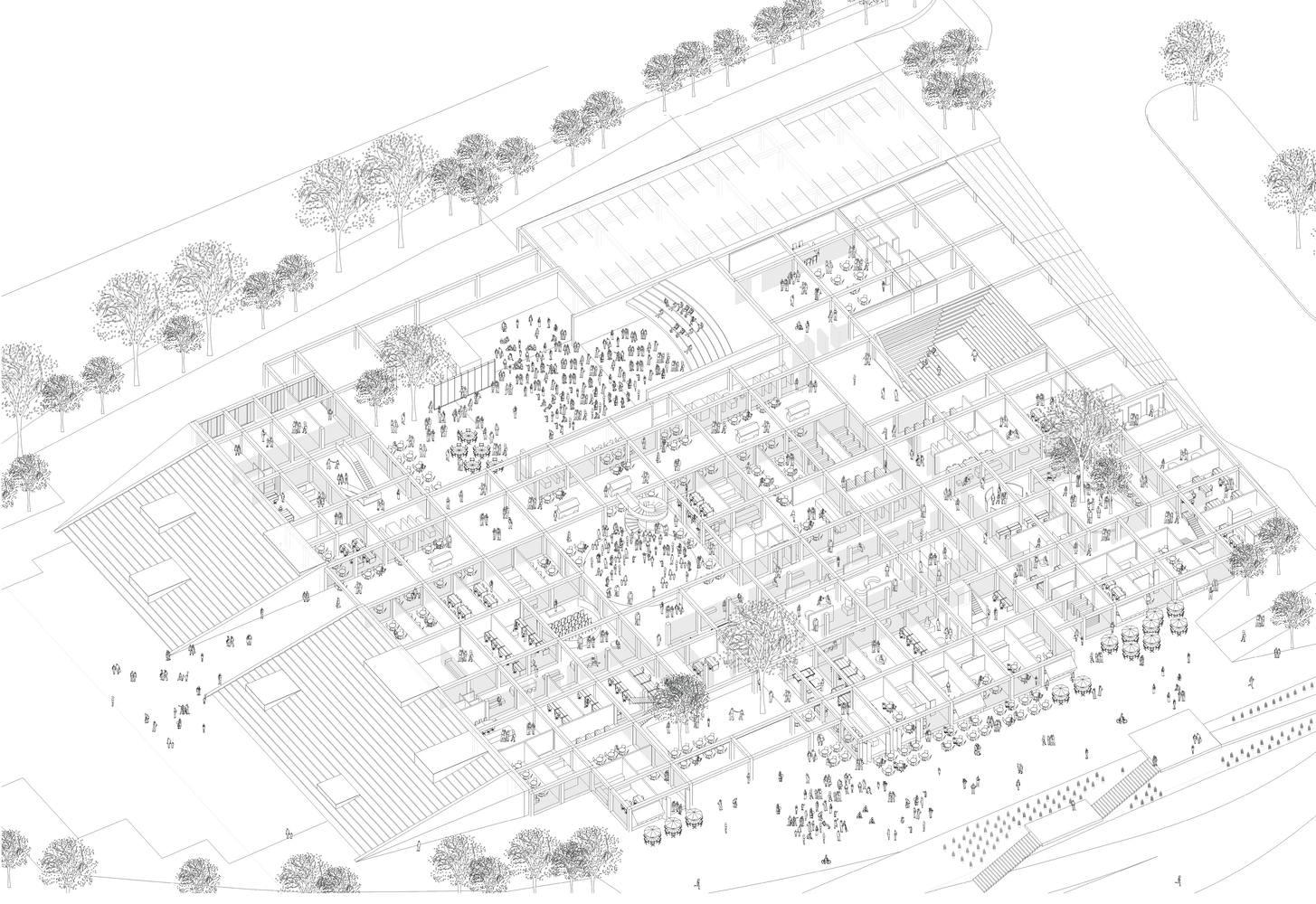
Axonometric 02
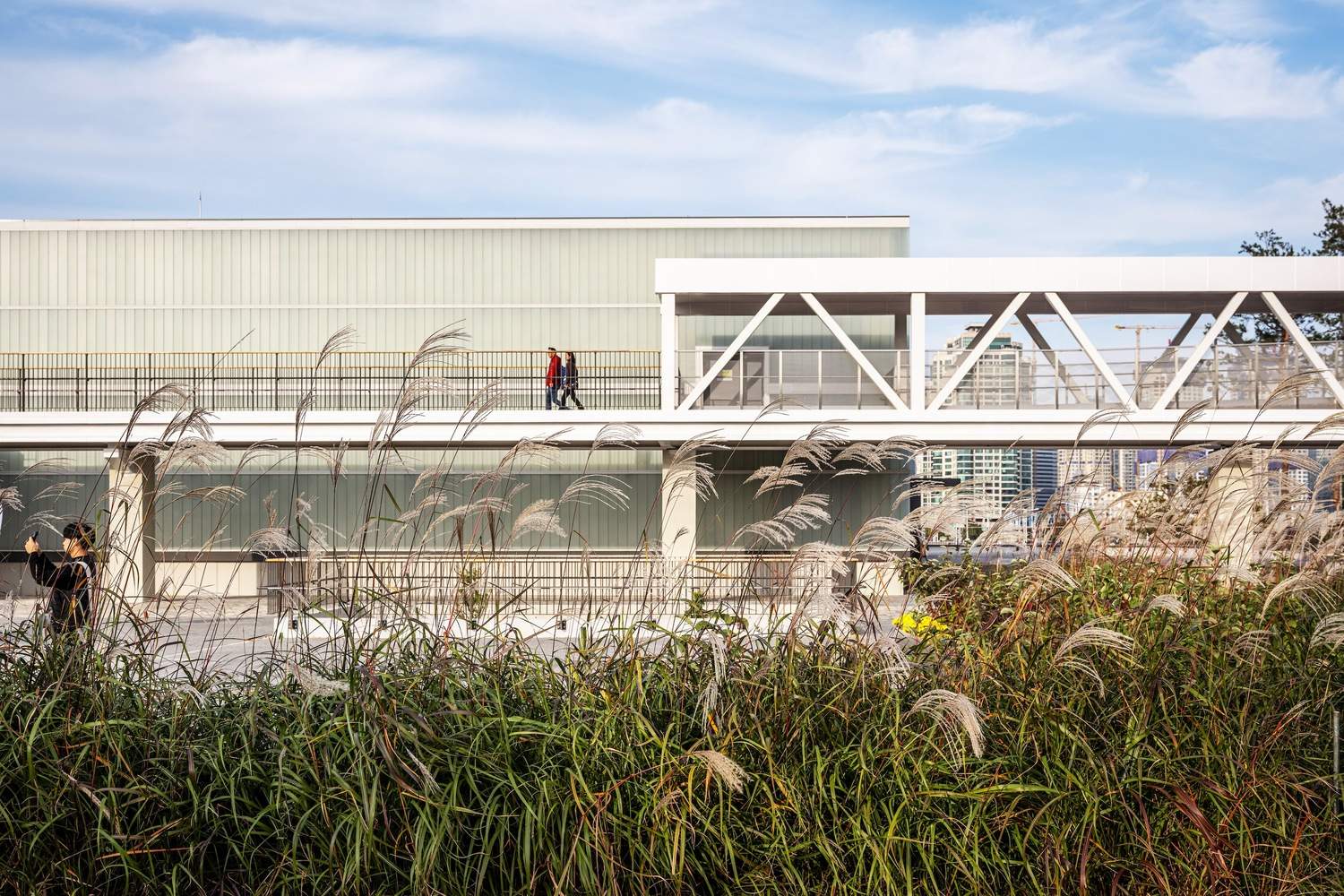
© Hyun Jun Lee
The existing forest on Nodeul Island was restored through a series of sustainable development strategies resulting from interdisciplinary collaborations. The forest, featuring viewing platforms, provides new ecological habitats for endangered species discovered on the island. After clearing withered plants and improving existing vegetation, a public walkway circling the lower area of the island was paved. The island’s concrete terraces and riverside areas were upgraded into a series of gardens, bringing the island’s history back to life. Nodeul Island has now returned to the city. This once-forgotten island has been transformed into a beloved park and cultural venue, and it will continue to evolve to meet the preferences of Seoul’s citizens and tourists. It will be a place that captivates and compels visitors, opening a new chapter in the city’s history.
弩督岛上原有的森林被一系列跨学科合作而成的可持续发展战略恢复。带有观景平台的森林为岛上发现的濒危物种提供了新的生态栖息地。在清除枯萎的植物,重新改善现有植被后,一条环绕岛屿下部区域的公共走道得以铺设。岛上的混凝土梯台与河岸区域被升级为一系列花园,令岛屿的历史重新焕发生机。弩督岛现已重归城市。这一度被遗忘的岛屿摇身变为一个备受喜爱的公园与文化场所,并将继续迎合首尔的市民与游客的喜好不断升级。它将令人流连忘返,欲罢不能,开启城市历史的新篇章。
Text provided by the architects
译者: Dale 李
© Hyun Jun Lee