灵活的六边形网格与模块化创新生态:该项目最精髓之处在于其基于六边形网格的布局,这为创业村提供了极高的灵活性和适应性,完美契合初创企业快速成长的需求。这种结构将模块化办公单元(“车库”)有机地组织起来,不仅提供了经济实惠的工作空间,更重要的是,它促进了跨学科的交流与协作,成为变革性想法的孵化平台。这种基于几何学的布局策略,巧妙地平衡了功能需求与社区活力,是当代商务园区设计的典范。
文化传承与现代开放性的对话:设计通过对当地于利希文艺复兴时期城堡历史的深刻致敬和当代转译,实现了历史文脉与未来愿景的无缝连接。如果说旧城堡是“保护的堡垒”,那么创业村则是“欢迎和拥抱”的姿态。公共中心建筑作为社区的心脏,其宏伟尺度和开放性设计(如滑动窗户和户外座位)与周边色彩鲜明的模块单元共同营造出一种热情好客的氛围,成功地将地方特色融入到现代创新社区的构建之中。
深度融合的可持续与生态韧性设计:该项目在建筑材料和场地生态方面展现了坚定的可持续承诺。模块单元主要采用本地木材建造,并采用了创新的无胶木钉固定方式,极大提高了能源效率。此外,通过绿色屋顶、丰富的落叶树植被以及鼓励自然通风的设计,项目不仅实现了夏季自然遮阳和雨水管理,更在场地内构建了一个生物多样性的栖息地。这种从材料选择到场地生态的全面考量,使创业村成为社区驱动型可持续创新的有力证明。
The Startup Village is a vibrant addition to the Brainergy Park, a 7-hectare “Energy Transition” business park forming part of the local shift away from a coal-dependent economy. The colourful and dynamically designed community stands in stark contrast to the square, white buildings found elsewhere in the park.
创业村是布雷纳格公园的一个充满活力的新增项目,这个7公顷的“能源转型”商务园区是当地从煤炭依赖经济转型的一部分。这个色彩丰富、动态设计的社区与公园中方正的白色建筑形成鲜明对比。
© Norbert Wunderling & Julius Taminiau
© Norbert Wunderling & Julius Taminiau
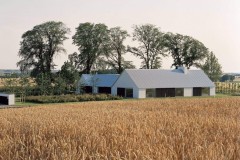
The Startup Village is laid out in a hexagonal grid, providing a flexible base for growth and adaptation. The first phase of construction has recently been completed successfully, with all modules fully let and enthusiastically received. This phased success paves the way for a second phase planned for completion in 2025/26. Each unit in the grid is equipped with modular office spaces designed to offer affordable workspaces for start-ups. These spaces act as launchpads for transformative ideas, much like the ‘garages’ where companies like Apple and Microsoft got their start. These ‘garages’ are clustered together to create a vibrant community environment where start-ups from diverse sectors can connect, collaborate, and inspire unexpected innovations. The Startup Village draws inspiration from the design of Jülich's Renaissance castle, reinterpreting this architectural heritage: where the original castle served as a fortress of protection, the Startup Village is designed to welcome and embrace all visitors.
创业村以六边形网格布局,为成长和适应提供了灵活的基础。第一阶段建设近期已顺利完成,所有模块均已出租完毕,反响极为热烈。阶段性的成功为预计将于2025/26年完成的第二阶段铺平了道路。网格中的每个单元都配备了模块化办公空间,旨在为初创企业提供经济实惠的工作空间。这些空间就像苹果和微软等公司起家的“车库”一样,成为变革性想法的发射台。这些“车库”聚集在一起,营造了一个充满活力的社区环境,让来自不同行业的初创企业能够相互联系、合作,并激发意想不到的创新。创业村借鉴了于利希文艺复兴时期的城堡设计,对这一建筑遗产进行了重新诠释。原城堡曾是保护的堡垒,而创业村的设计则是为了欢迎和拥抱各方来客。
© Norbert Wunderling & Julius Taminiau
© Norbert Wunderling & Julius Taminiau
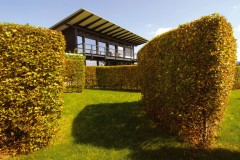
The main building serves as a spacious public centre, perfectly integrated into the grid layout, its grand scale and central position making it the heart of the community. With its large sliding windows and ample outdoor seating, the building encourages interaction, further embodying the village's openness and inclusivity. The colourful modular units echo the vibrant hues of nearby village houses, adding local character and visual warmth to the site. The main building features a green roof, while the extensive greenery and deciduous trees carefully integrated across the site provide natural shading in the summer, reinforcing the village's ecological ethos. Ultimately, this creates a ‘beehive’ environment where innovation, nature, and community thrive together. The harmonious blend of colourful modules, lush vegetation, and thoughtful design creates an environment that is both inspiring and welcoming, a place where people can gather, share knowledge, and spark inspiration in both formal and informal settings. It is a place where ideas flourish, connections are forged, and the seeds of a sustainable future take root.
主体建筑作为一个宽敞的公共中心,与网格布局完美融合,其宏伟的规模和中心位置使其成为社区的心脏。建筑拥有宽敞的滑动窗户和充足的户外座位,鼓励人们互动交流,进一步体现了村庄的开放性和包容性。色彩缤纷的模块化单元与附近村庄房屋的鲜艳色调相呼应,为村庄增添了地方特色和视觉上的温馨感。主体建筑采用了绿色屋顶,而整个场地内精心融入的绿色植被和落叶树则为夏季提供了自然遮阳,强化了村庄的环保理念。最终,这里形成了一个“蜂巢”般的环境,创新、自然与社区在此共同繁荣。色彩斑斓的模块、绿色植被以及周到的设计和谐融合,创造了一个既鼓舞人心又热情好客的环境,无论是正式还是非正式场合,人们都可以在此相聚、交流知识并相互启发。这是一个思想茁壮成长、建立联系以及可持续未来种子生根发芽的地方。
© Norbert Wunderling & Julius Taminiau
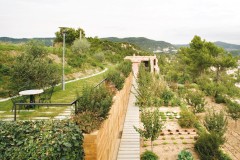
Sustainability is paramount in the design: each module is crafted primarily from local wood and features high levels of insulation for energy efficiency. The structures are joined with wooden dowels instead of glue, and large windows allow for natural cross-ventilation, reducing reliance on mechanical cooling. Green roofs and abundant vegetation throughout promote biodiversity, provide natural cooling, mitigate rainwater runoff, and purify the air. By integrating greenery within and around the central square, the aim is to create a biodiverse habitat, enhancing the site’s ecological footprint. The Jülich Startup Village is more than just a workspace; it is a catalyst for change and a testament to the power of community-driven, sustainable innovation.
设计以可持续性为首要考量:每个模块主要采用当地木材精心打造,并具备高度保温性能以提高能源效率。结构采用木钉而非胶水固定,同时大窗户可实现自然穿堂风,减少对机械制冷的依赖。绿色屋顶和遍布的丰富植被促进了生物多样性,提供了自然冷却效果,减缓雨水径流,并净化空气。通过在广场内部及周边融入绿植,我们旨在打造一个生物多样性丰富的生物栖息地,增强场地的生态足迹。于利希创业村不仅仅是一个工作空间,它是变革的催化剂,也是社区驱动型可持续创新力量的证明。
© Norbert Wunderling & Julius Taminiau