地形适应性与有机整合:本项目最显著的亮点在于其对复杂地形(特别是显著的高差和三角形地块)的精妙适应。建筑师并未试图对抗场地条件,而是通过一个核心的圆形体量,以阶梯式布局将功能空间有机地融入景观,成功化解了6米高差带来的连通性难题。这种策略不仅解决了场地边缘的限制,更实现了建筑与连续公园景观的无缝衔接,将原本破碎的区域重塑为一个具有叙事性和流畅性的公共空间,体现了高超的场地文脉理解能力。
生态优先的精细化设计决策:在诸多技术和功能挑战中,项目坚持“零砍伐”的生态目标,特别是对朱缨花树群的保护,是其专业精神的体现。通过精细的标高控制和建筑选址调整,设计成功规避了对重要植被根系的损伤,这在城市更新项目中尤为可贵。此外,通过在场地角落设置雨水吸收井,有效治理了长期存在的滑坡和内涝问题,验证了设计在应对极端气候(如2025年强雨季)时的韧性与前瞻性。
结构创新与空间复合利用:为实现功能多元化和空间效率,项目在圆形多功能厅采用了创新的结构体系——径向混凝土柱与辐射梁支撑的中央受压环。这一结构不仅支撑了屋顶,还为上层运动场地提供了坚实的基座,实现了功能的复合叠加。同时,设计的流线系统将场地低点与屋顶篮球场串联起来,创造了连续上升的体验,成功地将一个曾被认为高风险、低活力的边缘空间,转变为一个安全、多层次的社区活动中心。
The redevelopment project for the INFONAVIT Santa Fe housing complex, located on the western edge of Mexico City, represents one of the most complex scenarios AMASA Estudio faced in its 2024 intervention series. The complex exhibits a peculiar topography because it was built in a ravine area; the buildings follow the terrain, and significant elevation changes impede connectivity and accessibility between zones.
位于墨西哥城西缘的 INFONAVIT 圣菲住宅区(UH INFONAVIT Santa Fe)改造项目,是 AMASA Estudio 在 2024 年系列干预工程中面临最复杂场景的案例之一。该住宅区因建于冲沟地带而呈现特殊地形:建筑群依地势而建,显著高差导致区域间连通性与可达性受阻。
© Zaickz Moz
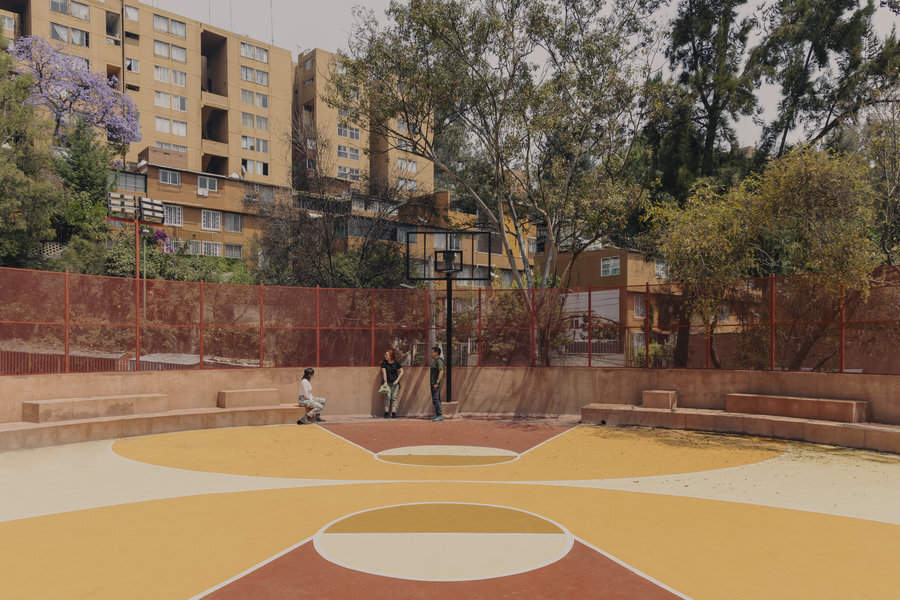
The intervention area is situated on the southern boundary of the housing complex, at the junction of two roads with significant elevation differences. Its triangular plot resembles an urban remnant, adjacent to public sports facilities, and features a terrain drop exceeding 6 meters. This, combined with physical decay due to long-term neglect, weak community belonging, and a strong sense of insecurity, formed an extremely challenging environment.
项目干预区域位于住宅区南界,地处两条标高差异显著的道路交汇处。其三角形地块形似城市残角,毗邻公共体育设施且存在超 6 米的地形落差,叠加场地长期荒废导致的物理衰败、社区归属感薄弱及强烈的不安全感,共同构成极具挑战性的环境。
© Zaickz Moz
© Zaickz Moz
The abandoned basketball court within the original site occupied the fragmented plot, nearly derelict due to outdated infrastructure and poor accessibility. Furthermore, the flow of pedestrians from the main east-west thoroughfare outside the complex intensified the perception of risk at night.
原场地内废弃的篮球场占据破碎地块,因基础设施陈旧且可达性差而几近荒废,而住宅区外东西向主干道的人流穿行更强化了夜间风险感知。
First Floor Plan
Second Floor Plan
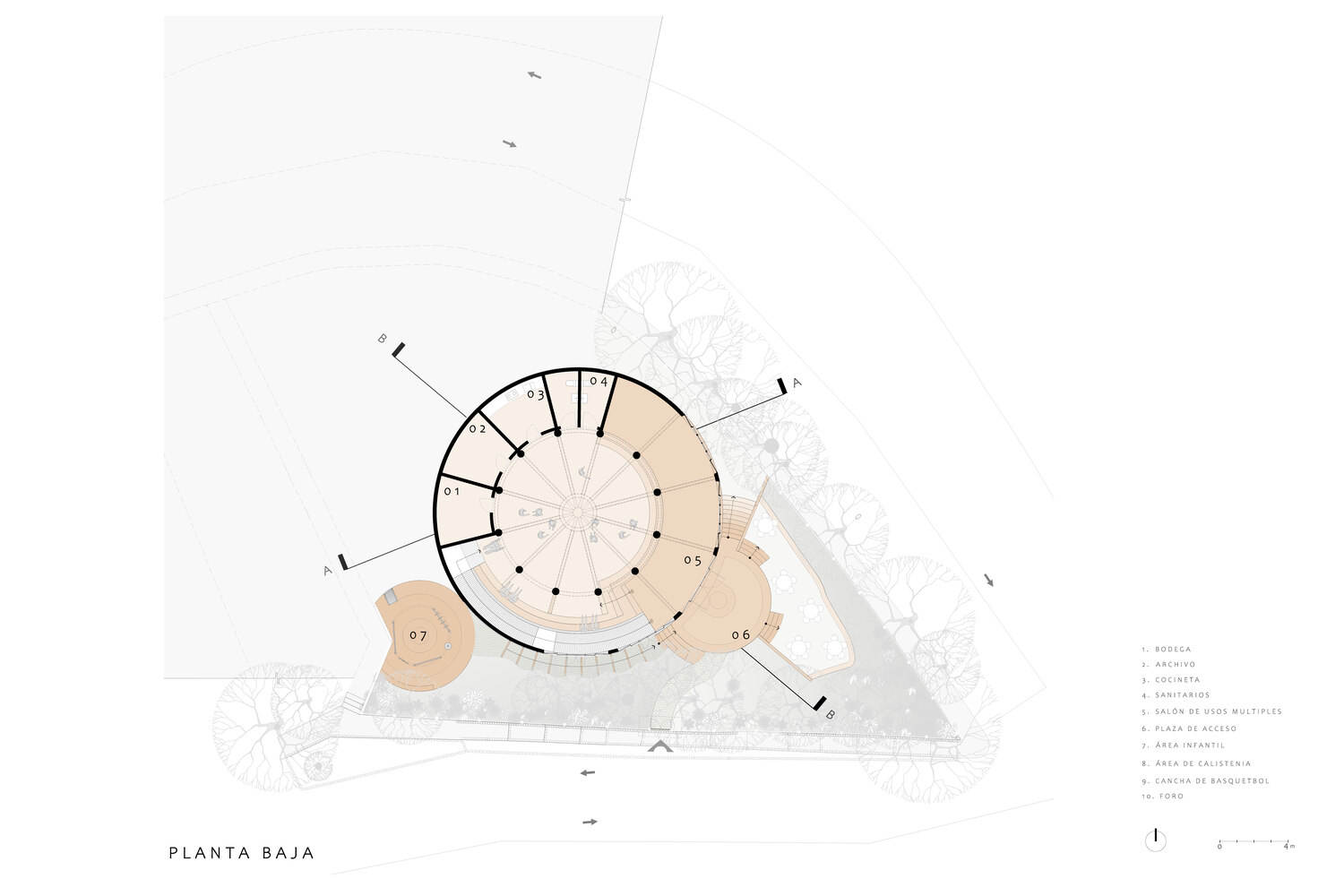
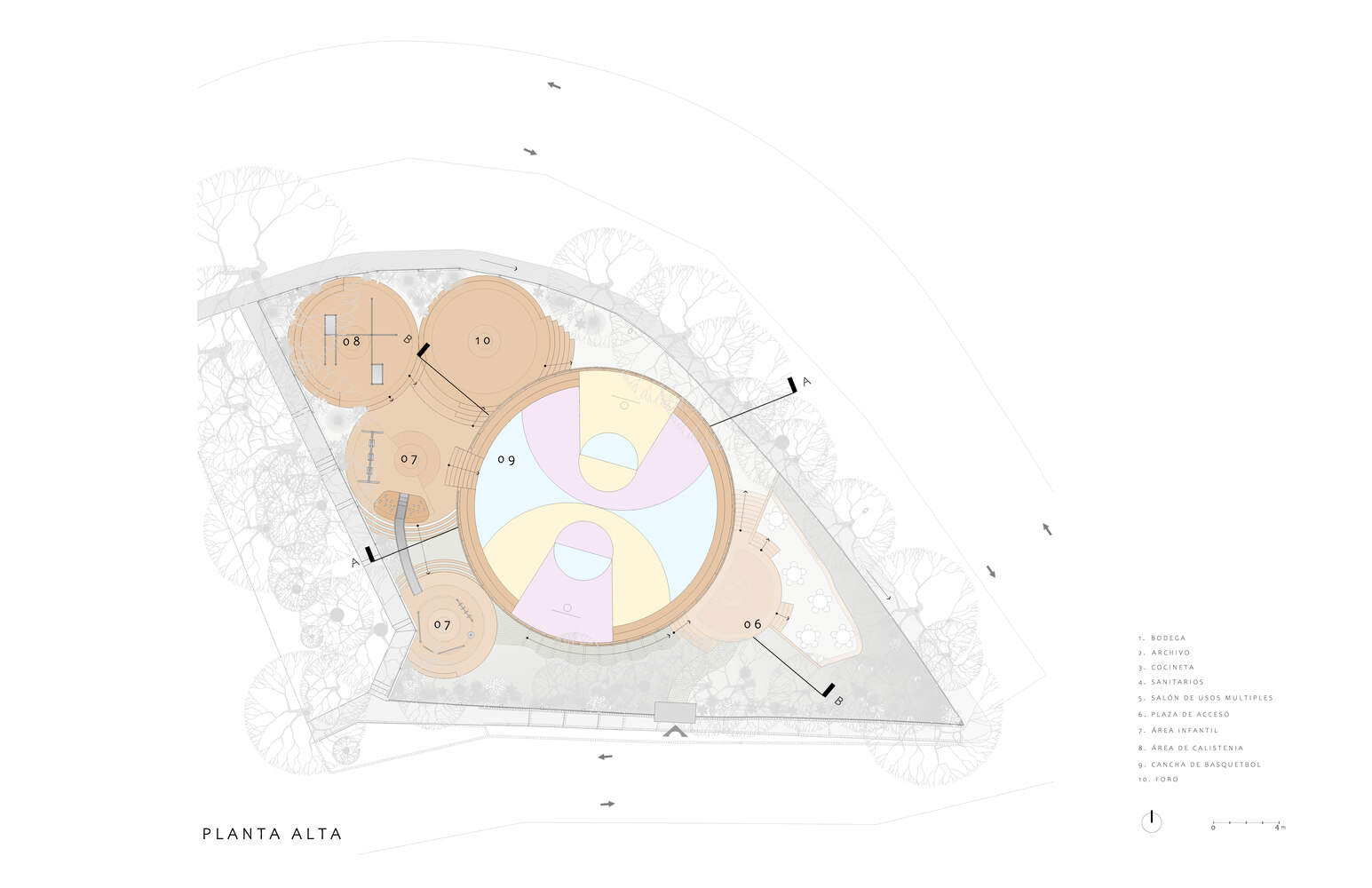
Faced with this situation, the renovation plan commissioned by INFONAVIT comprised four core elements: the construction of a new 230 sqm multipurpose hall, the restoration of the nearly demolished playground, the addition of a self-weight training area, and the renovation of the only sports field still in intermittent use.
面对此情境,INFONAVIT 委托的改造方案涵盖四大核心:新建 230 平方米多功能厅、修复几近拆除的儿童游乐区、增设自重训练空间及翻新唯一仍被间歇使用的运动场地。
© Zaickz Moz
The site's topography presented multiple technical challenges: poor rainwater runoff drainage led to frequent landslides, and low-lying areas accumulated silt. Moreover, the need to preserve dense vegetation, including Eucalyptus, Pine, and the vibrantly colored Inga (Colorines), further constrained design freedom. The original basketball court, built on inferior compacted concrete slabs lacking a drainage system, already showed cracks and slope instability, affecting pedestrian and vehicle access.
场地地形带来多重技术难题:雨水径流疏导不畅导致频繁滑坡,低洼处积水淤泥堆积,加之场地内桉树、松树及色彩艳丽的朱缨花(Colorines)等茂密植被需保留,进一步限制了设计自由度。原篮球场因建于劣质填方混凝土板之上且缺乏排水系统,已出现裂缝与边坡失稳,影响通行与车辆停放。
© Zaickz Moz
© Zaickz Moz
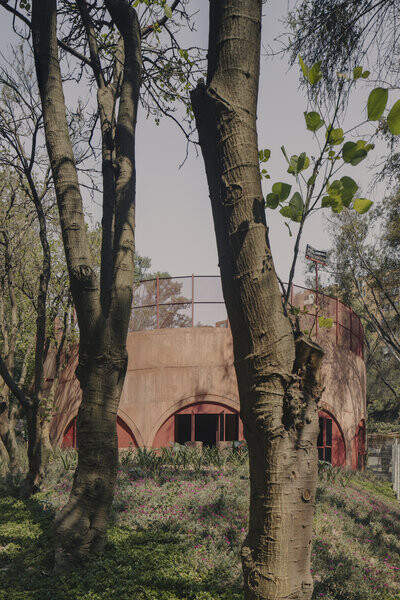
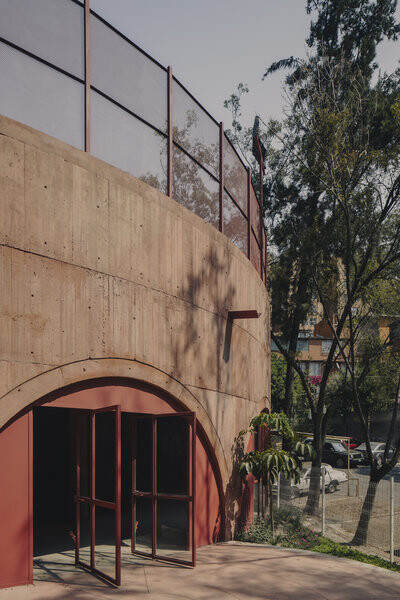
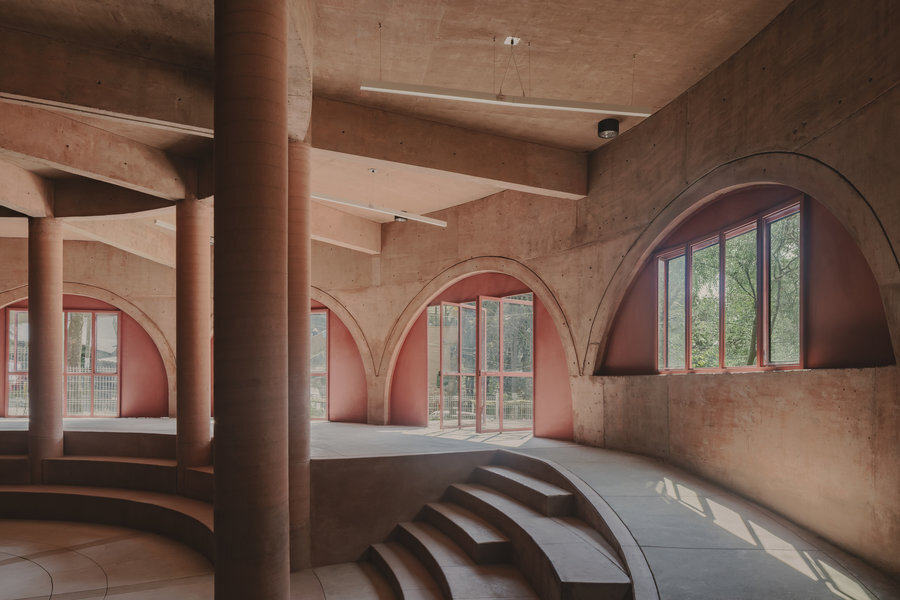
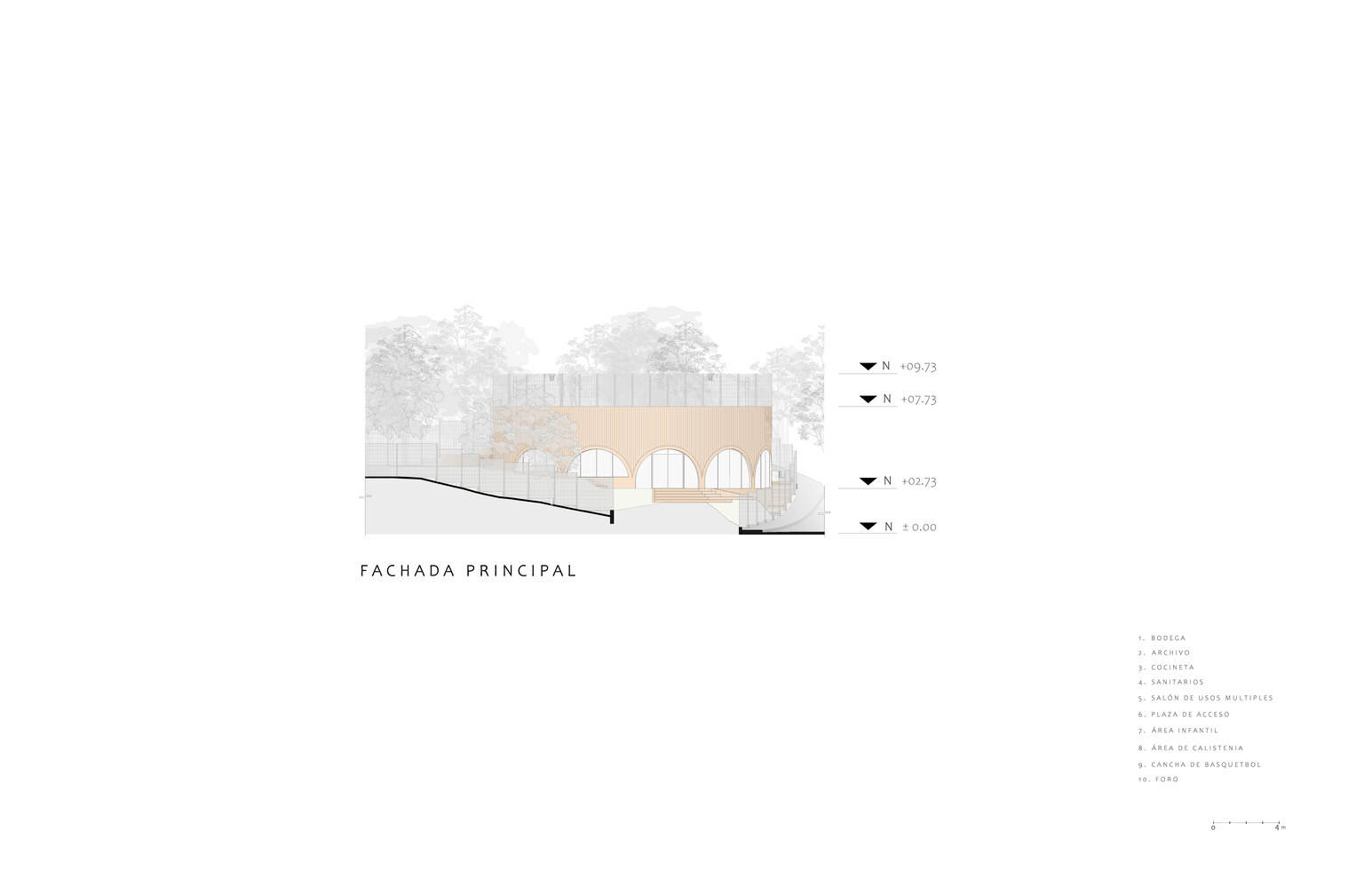
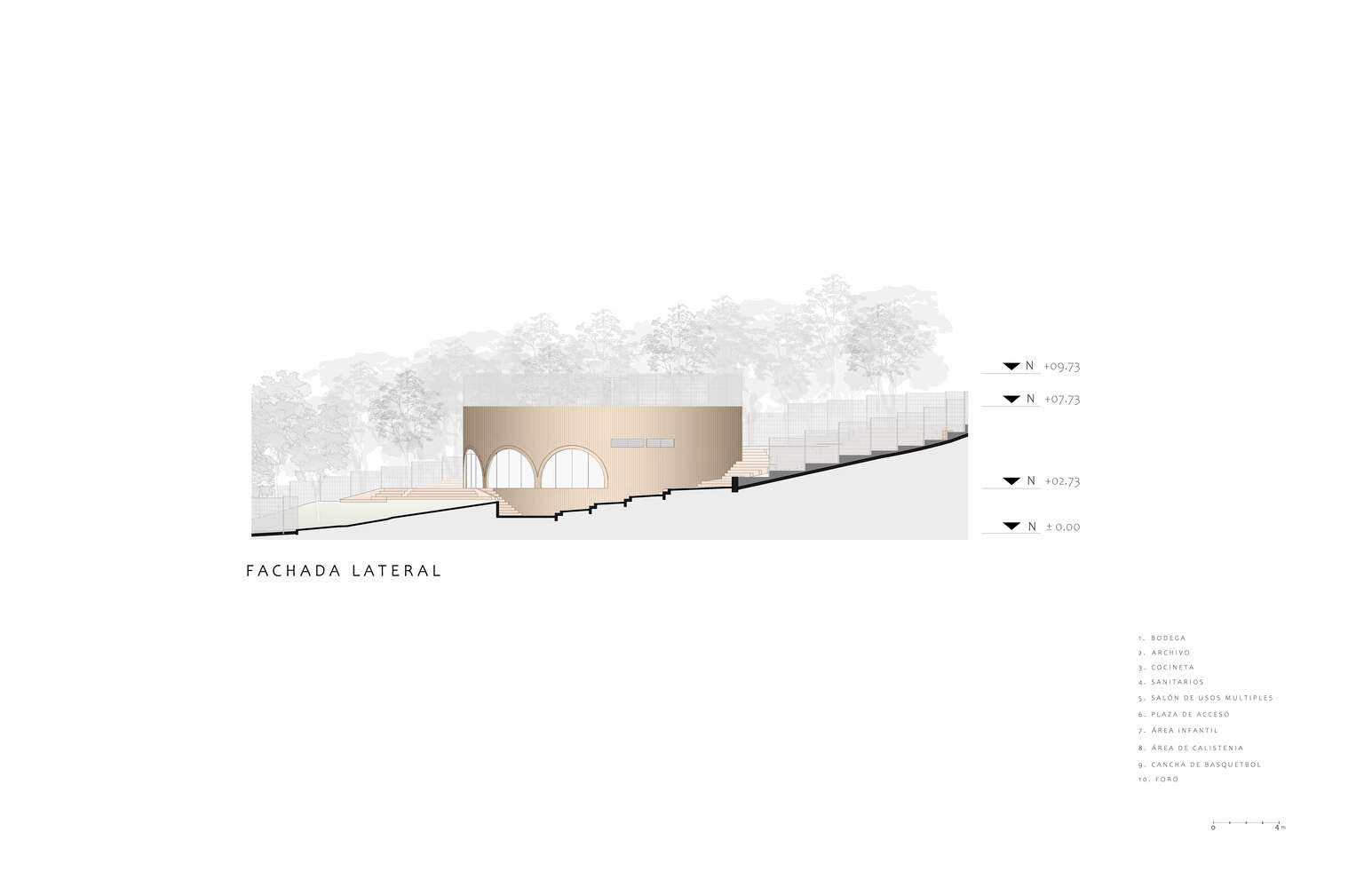
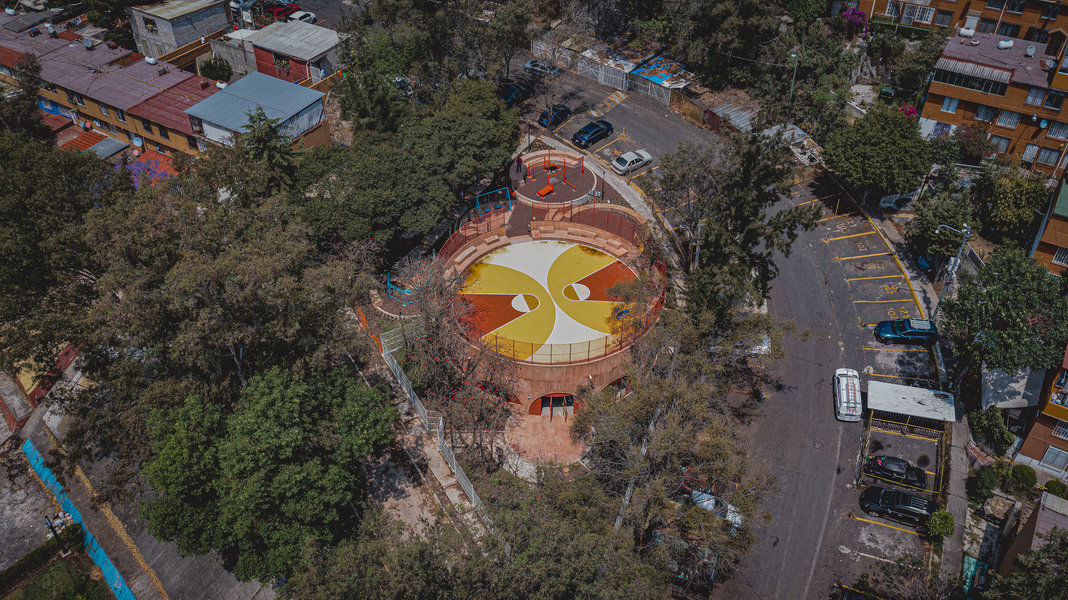
AMASA Estudio’s response centered around a circular volume precisely fitted to the terrain: this building is located in the center of the site, integrating functional spaces into the landscape via a stepped layout while maximizing the retention of green areas.
AMASA Estudio 的应对策略以一个精准适配地形的圆形体量为核心:该建筑位于场地中心,通过阶梯式布局将功能空间融入景观,同时最大化保留绿地。
© Zaickz Moz
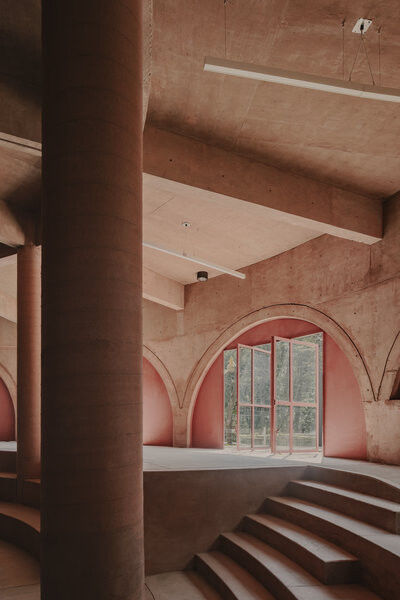
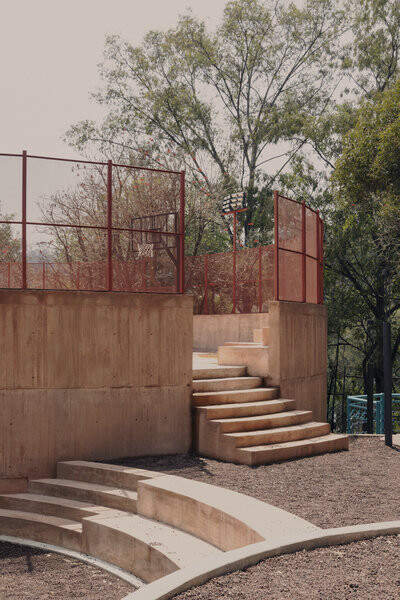
This design resolved three major conflicts: First, the triangular plot and the 6-meter height difference forced conventional layouts to either destroy vegetation or compromise surrounding functions; second, the circular form avoided blind spots generated by right angles, minimizing path detours caused by the building boundary touching the property line; third, an ascending circulation path extending from the main entrance at the site's lowest point connected the multipurpose hall, playground, and the rooftop basketball court, reinforcing spatial continuity.
这一设计解决了三大矛盾:其一,三角形地块与 6 米高差迫使常规布局要么破坏植被,要么影响周边空间功能;其二,圆形形态避免直角空间产生的视觉盲区,减少因建筑边界触及用地红线而被迫外移的路径;其三,从场地低点主入口延伸的上升流线,将多功能厅、游乐区与屋顶篮球场串联,强化空间连续性。
© Zaickz Moz
The choice of circular geometry not only achieved a technical breakthrough but also reconfigured the site's narrative: the former fragmented ravine has transformed into a continuously ascending park where the building and public space form an organic whole.
圆形几何的选用不仅实现技术突破,更重构了场地叙事:昔日破碎的冲沟地带蜕变为螺旋上升的连续公园,建筑与公共空间形成有机整体。
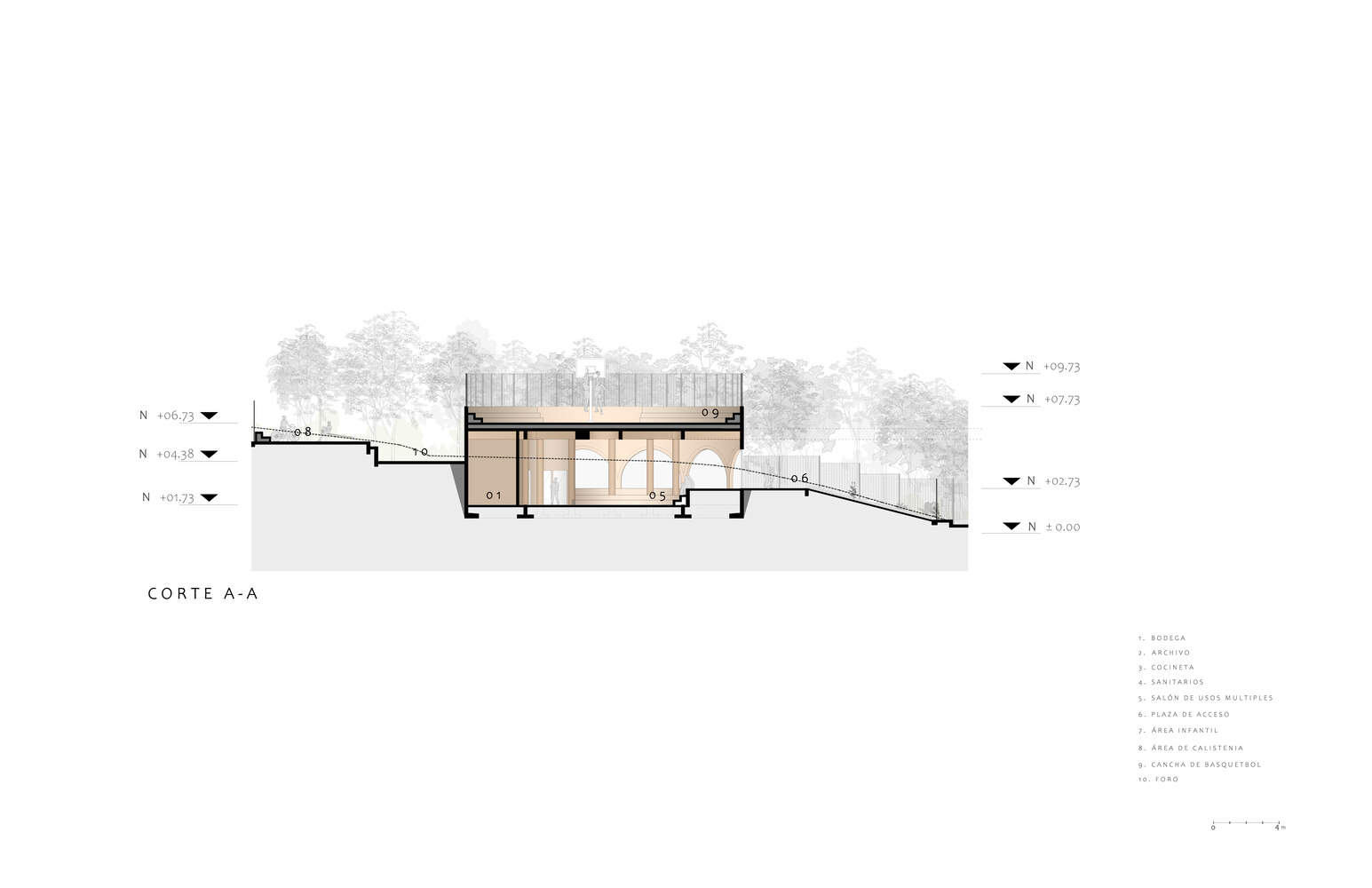
Section A-A
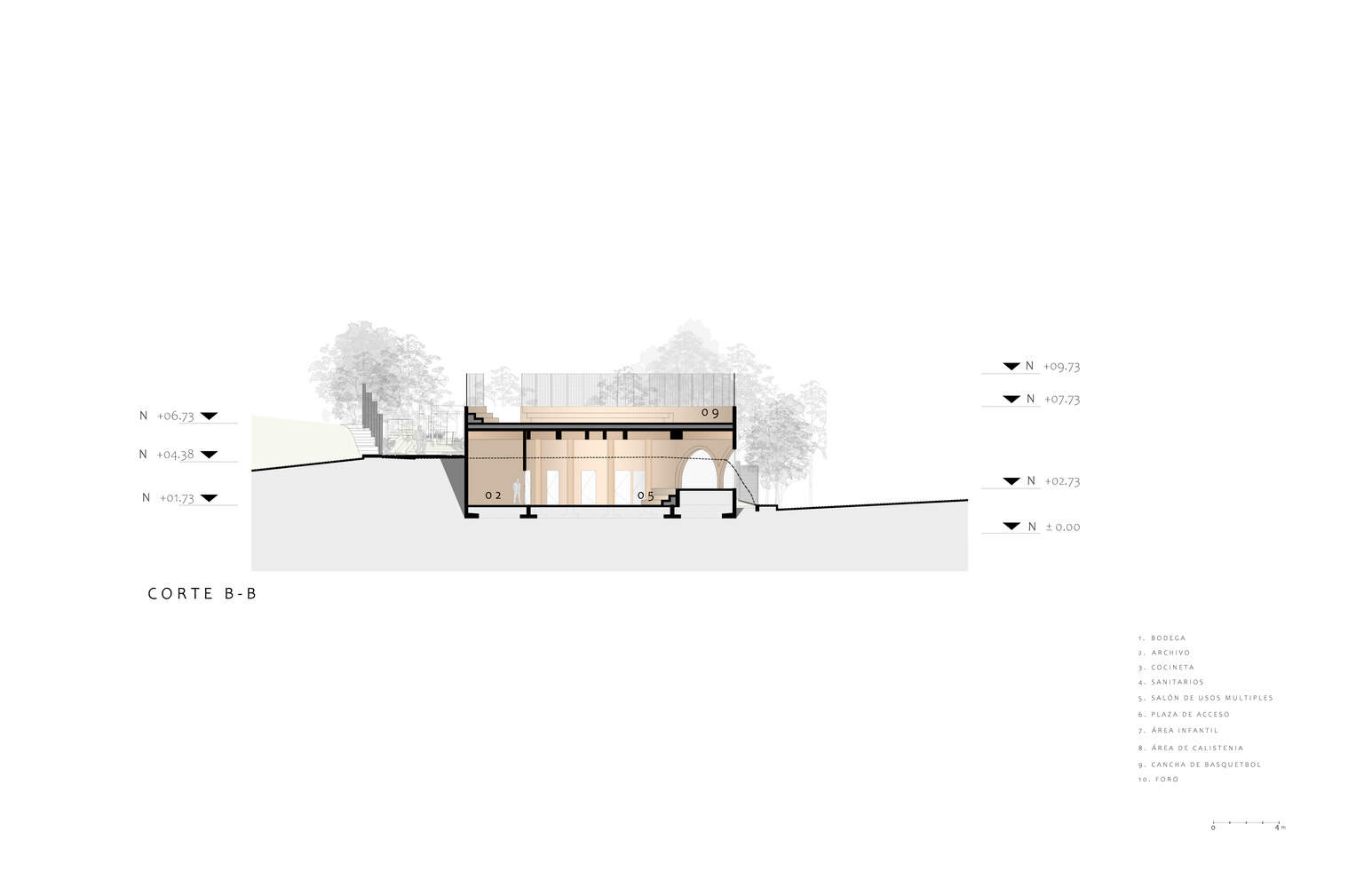
Section B-B
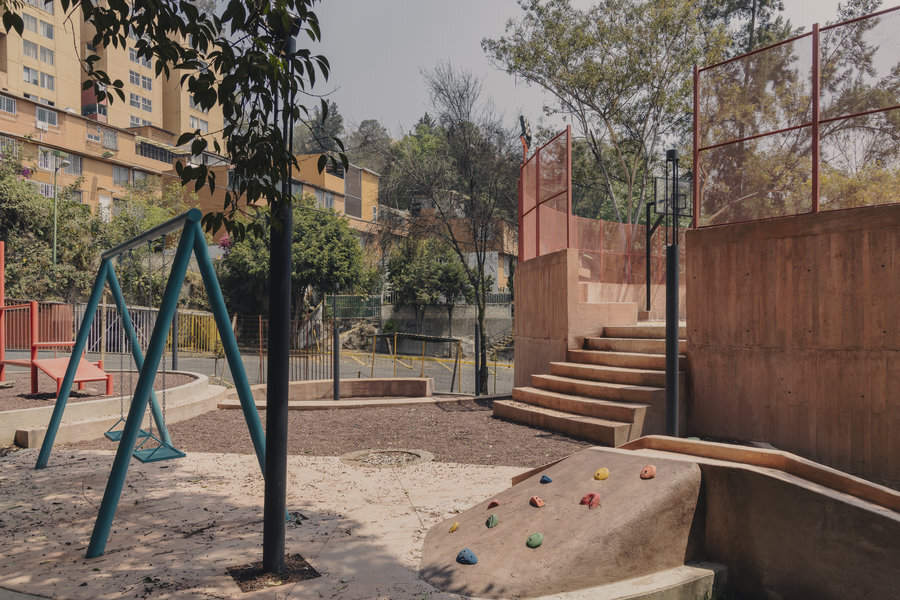
The most critical decision in the project was adjusting the building's originally planned location to protect the cluster of Inga trees. Through meticulous elevation control to avoid root damage, the goal of zero felling was ultimately achieved. It should be noted that the Inga trees are deciduous, and their "withered" appearance during photography was due to their natural growth cycle when they were not in bloom.
项目最关键的决策是调整建筑原定选址以保护朱缨花树群,通过精细化标高控制避免根系损伤,最终实现零砍伐目标。需说明的是,朱缨花作为落叶树种,拍摄时正值花期呈现"干枯"观感,实为自然生长周期所致。
© Zaickz Moz
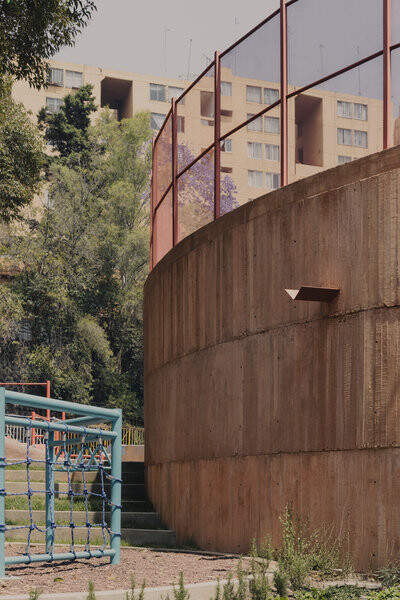
From a construction standpoint, this project was the most complex and costly of the four interventions due to the necessary terrain modification and adaptation for hillside foundations, further compounded by logistical challenges during the 2024 rainy season, highlighting the difficulty of its execution.
从施工层面看,该项目因地形改造与坡地基础适配需求,成为四项工程中复杂度与成本最高者,加之 2024 年雨季执行带来的物流挑战,更凸显其实施难度。
© Zaickz Moz
The design team strategically placed two rainwater absorption wells at the corner where the slopes meet, effectively draining surface runoff and alleviating the long-standing problems of landslides and waterlogging. The test of the strongest rainy season in Mexico City in two decades in 2025 further validated the adaptability of the design decisions.
设计团队在双坡交汇的场地角落设置两处雨水吸收井,有效疏导地表径流,缓解了长期存在的滑坡与内涝问题。2025 年墨西哥城遭遇二十年来最强雨季的考验,进一步验证了设计决策的适应性。
© Gerardo Reyes Bustamante
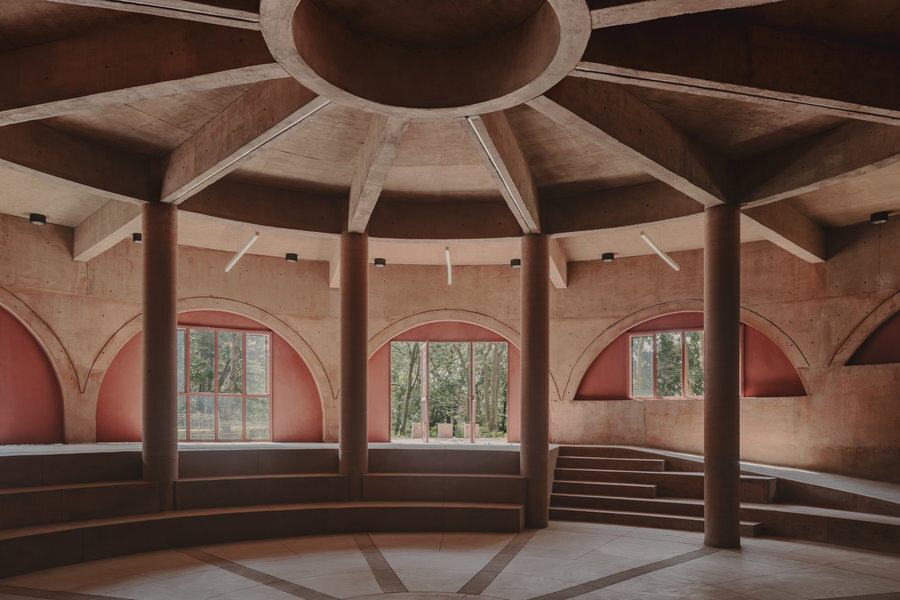
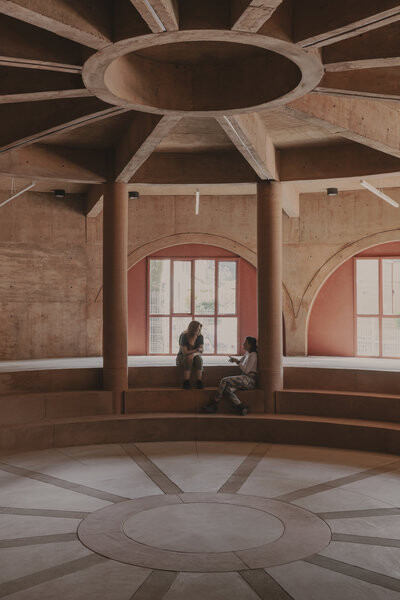
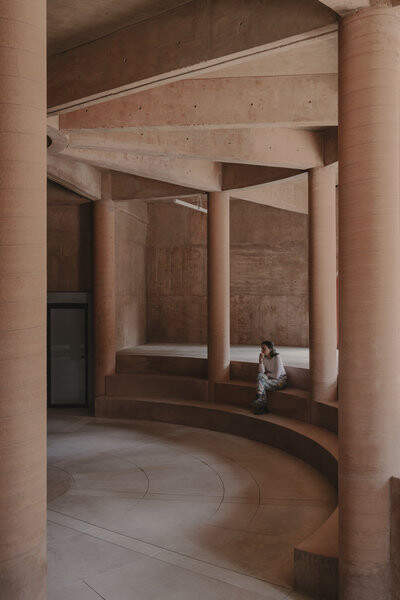
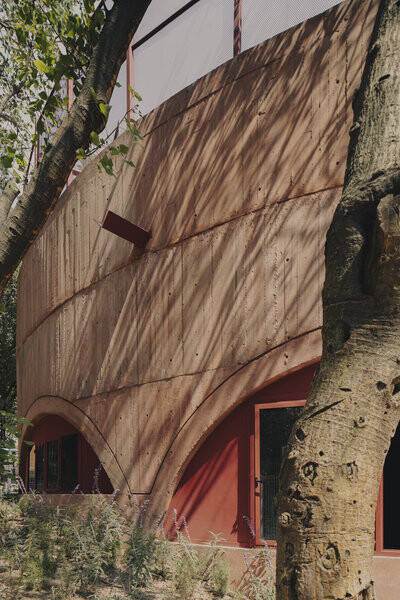
Inside the cylindrical building, the multipurpose hall can flexibly switch between a single space or two classrooms using a central compression ring structure supported by radial concrete columns and beams.
圆柱形建筑内部的多功能厅可通过径向混凝土柱与辐射梁支撑的中央受压环结构,实现单一空间或双教室的灵活切换。
Facade Detail
Facade Detail
This structural system supports the site-colored double-layer concrete slab roof while providing the structural base for the upper sports field.
该结构体系支撑起现场着色的双层混凝土板屋顶,同时为上层运动场地提供结构基座。
© Zaickz Moz
The project's success is attributed to the close collaboration between Desarrolladora de Ideas y Espacios (Alberto Cejudo's team), AMASA Estudio, and the structural engineers, balancing technical complexity with spatial precision under a very tight budget.
项目成功得益于 Desarrolladora de Ideas y Espacios(阿尔贝托·塞胡多团队)、AMASA Estudio 与结构工程师的紧密协作,在极紧预算下实现了技术复杂度与空间精准度的平衡。
© Zaickz Moz
The Santa Fe housing complex renovation proves that even in urban environments with complex topography and limited resources, sensitive design strategies can reshape forgotten spaces.
圣菲住宅区改造项目证明,即便在地形复杂、资源受限的都市环境中,敏感的设计策略仍能重塑被遗忘的空间。
Axonometric Analysis
Through terrain-conforming architectural layout, vegetation protection, and landscape path design, this intervention transforms a marginalized area into a safe and active park for gathering, play, and community life, providing a paradigm for resilient renewal in high-density urban settings.
通过顺应地形的建筑布局、植被保护与景观化路径设计,该干预工程将边缘化区域转化为供聚会、游戏与社区生活的安全活跃公园,为高密度城市环境的韧性更新提供了范式。
© Zaickz Moz