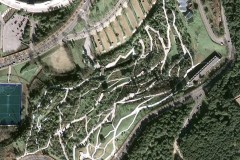
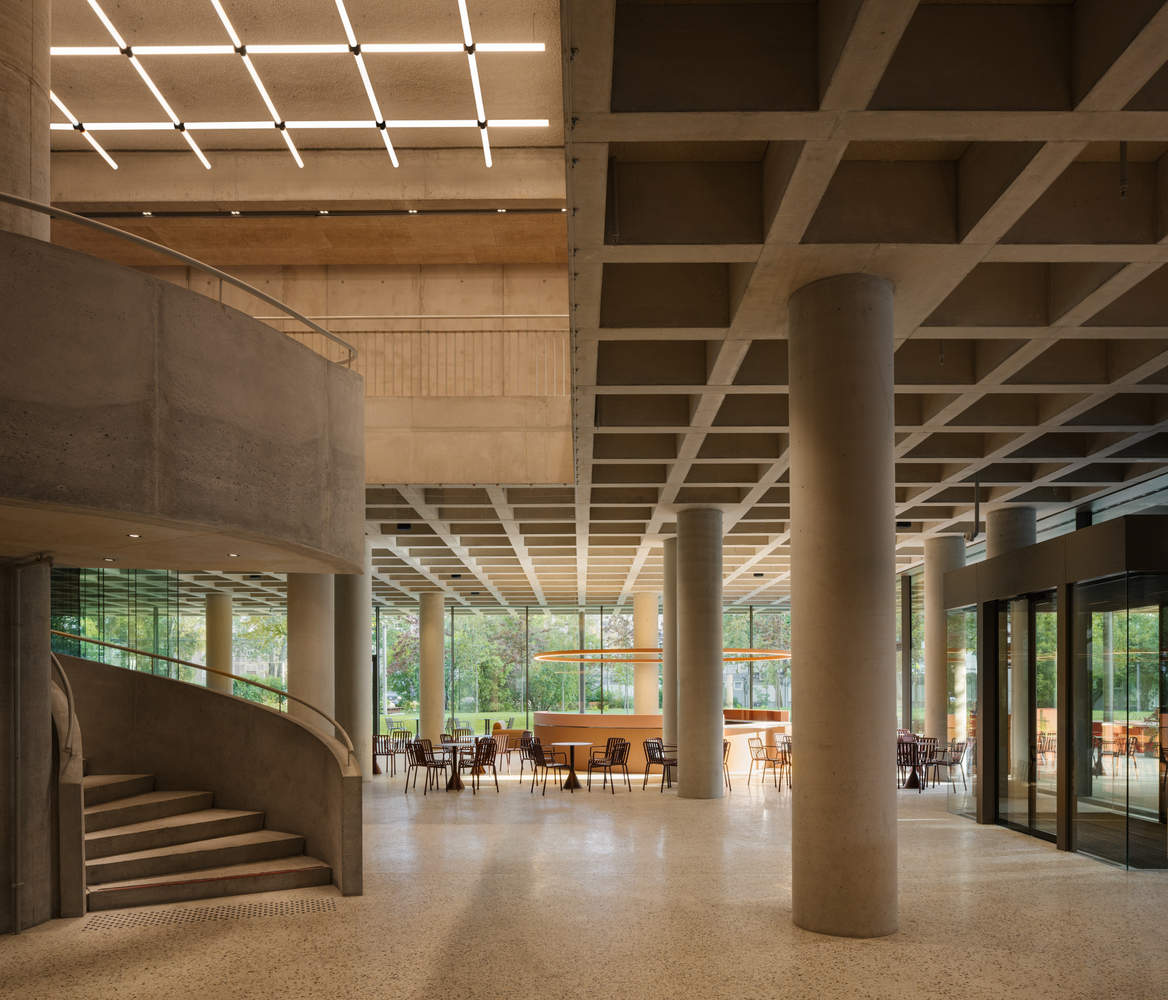
激活城市边界的公共门厅:该项目最精妙之处在于其底层设计,通过一个横跨整个底层的宽阔混凝土镂空顶棚,成功地在校园与城市之间创造了一个清晰而可渗透的“建筑阈限”。这个被精心界定的公共广场不仅提供了全年可用的遮蔽空间,集成了绿植、座椅和自行车停放区,更重要的是,它将建筑的底层积极地转化为城市公共领域的延伸。这种处理方式模糊了学术机构的边界,鼓励了学生、教职工与更广泛社区的自然融合与互动,体现了建筑作为社会连接器的深刻理解。
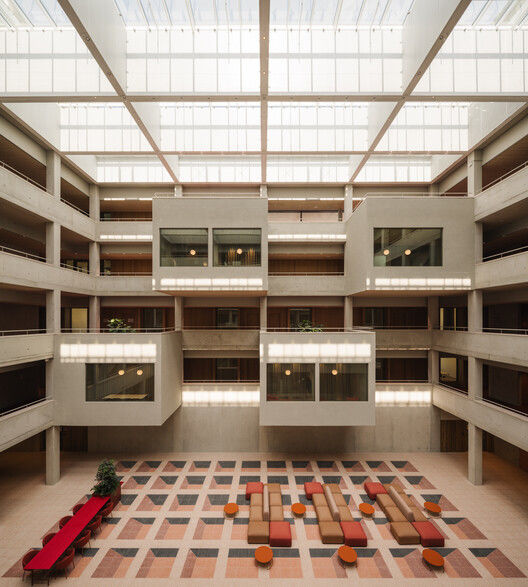
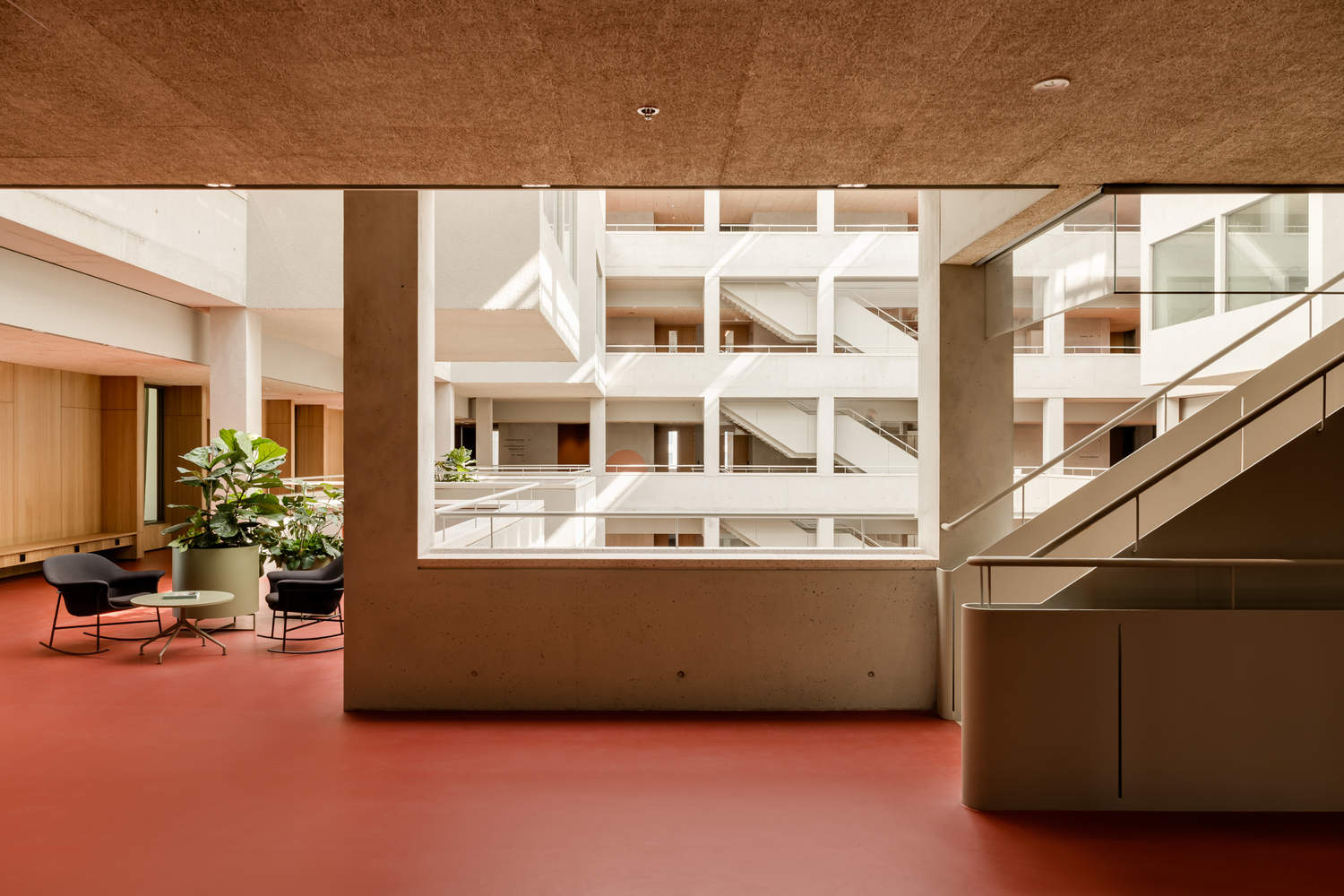
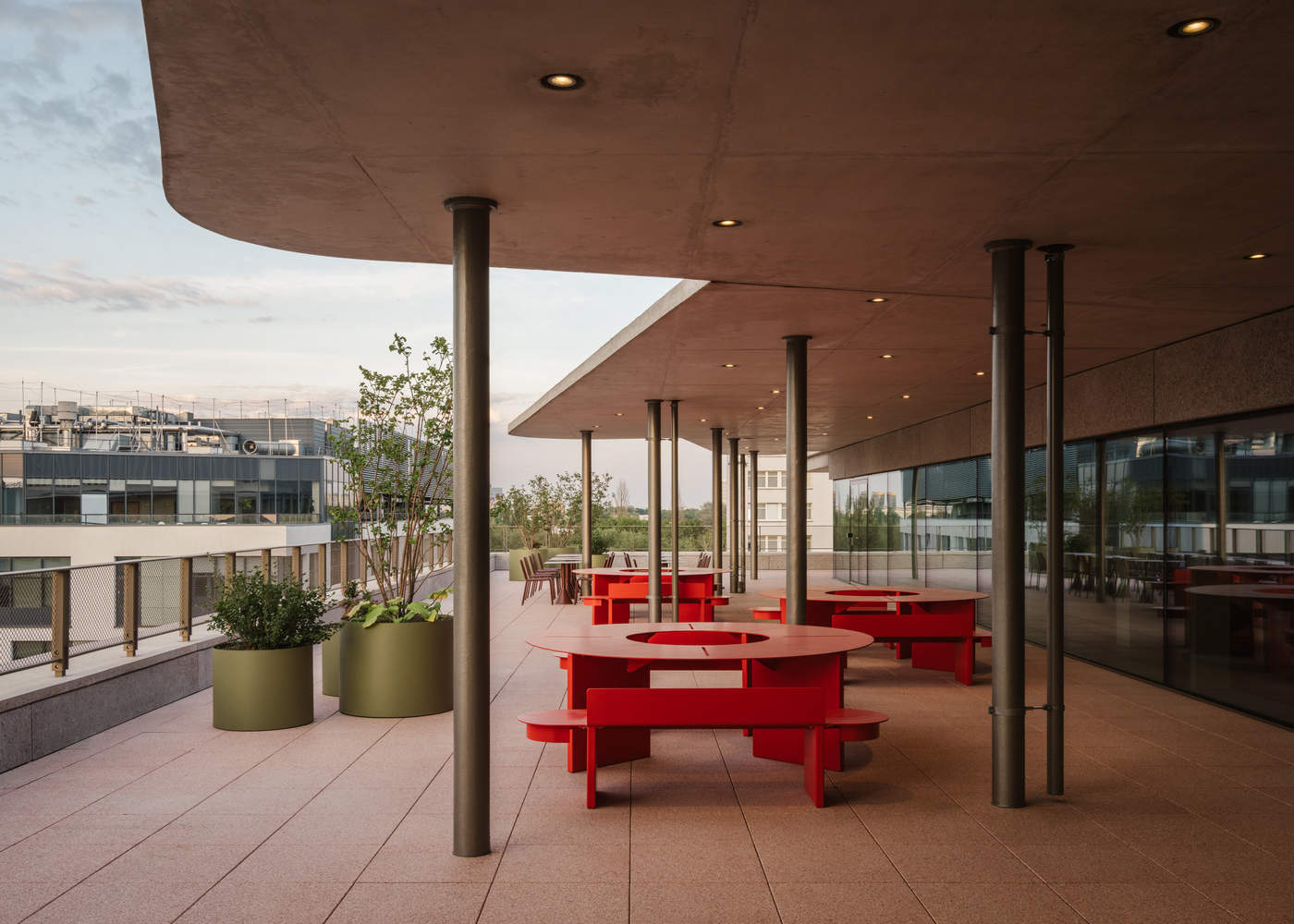
“双底层”的阶梯式空间序列:内部空间组织采用了创新的“双底层”策略。较低层作为高度活跃的公共核心,包含咖啡馆、食堂和礼堂等全天候使用的功能,确保了建筑的生命力。上方第二层则围绕一个明亮的中央中庭展开,用开放式画廊取代了传统的封闭走廊,连通了教室、实验室和图书馆。这种设计不仅增强了空间之间的视觉联系和非正式交流的可能性(通过设置壁龛和可达的屋顶露台),更在功能上实现了学术研究的私密性与社区共享的开放性之间的精妙平衡。
生态粗野主义与人性化介质的融合:项目在材料和美学上采用了“生态粗野主义”的表达,以裸露的混凝土结构奠定冷静、连贯的建筑语汇。然而,其精髓在于对这种粗犷基调的成功“柔化”与“人性化”。通过引入丰富的自然光、温暖的木质饰面,以及贯穿前后的茂盛植被(包括室内绿化和屋顶花园),建筑不仅实现了微气候调节和雨水管理等可持续目标,更在坚硬的结构中注入了生命力与宜居性,创造了一个既具纪念性又极具人文关怀的学习环境。
The New Faculty of Psychology Building for the University of Warsaw's Projekt Praga: Creating an Open and Social Academic Space
华沙普拉加项目(Projekt Praga)新心理学系大楼:打造开放社交的学术空间
Projekt Praga has completed the construction of the new Faculty of Psychology building at the University of Warsaw, conceived not just as an educational facility but as a social framework strengthening the bonds between students, staff, and the wider community. Located on the Ochota campus, the project emerged from a 2017 competition, embodying a broader vision to reconnect academic spaces with urban life.
普拉加项目(Projekt Praga)已完成了华沙大学新心理学系大楼的建设,该建筑不仅被视为一座教育设施,更是一个强化学生、教职工与更广泛社区之间关系的社会框架。该项目位于华沙大学的奥乔塔(Ochota)校区,在 2017 年的一场竞赛中脱颖而出,体现了将学术空间与城市生活重新连接的更广泛愿景。
© Nate Cook Photography
© Nate Cook Photography
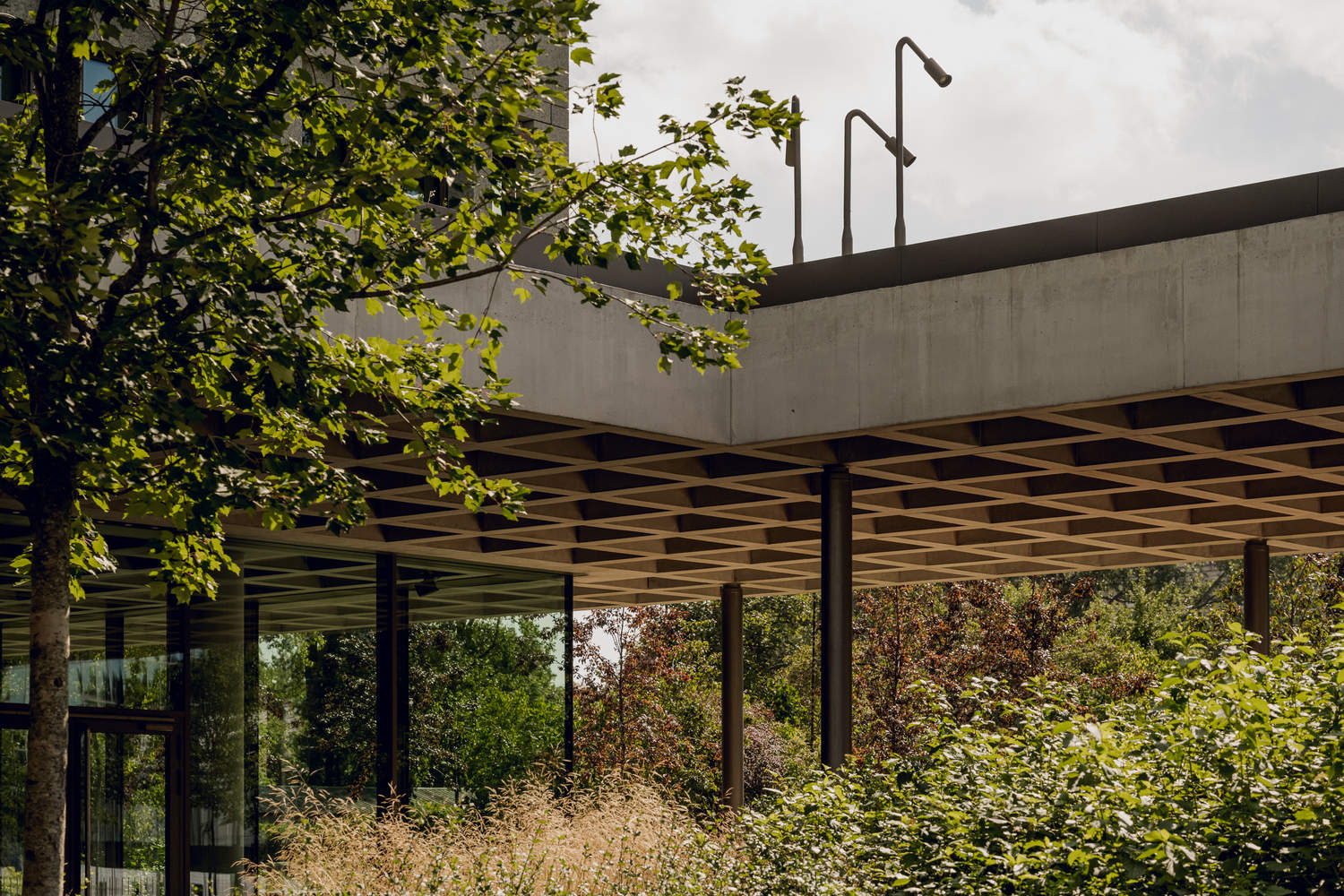
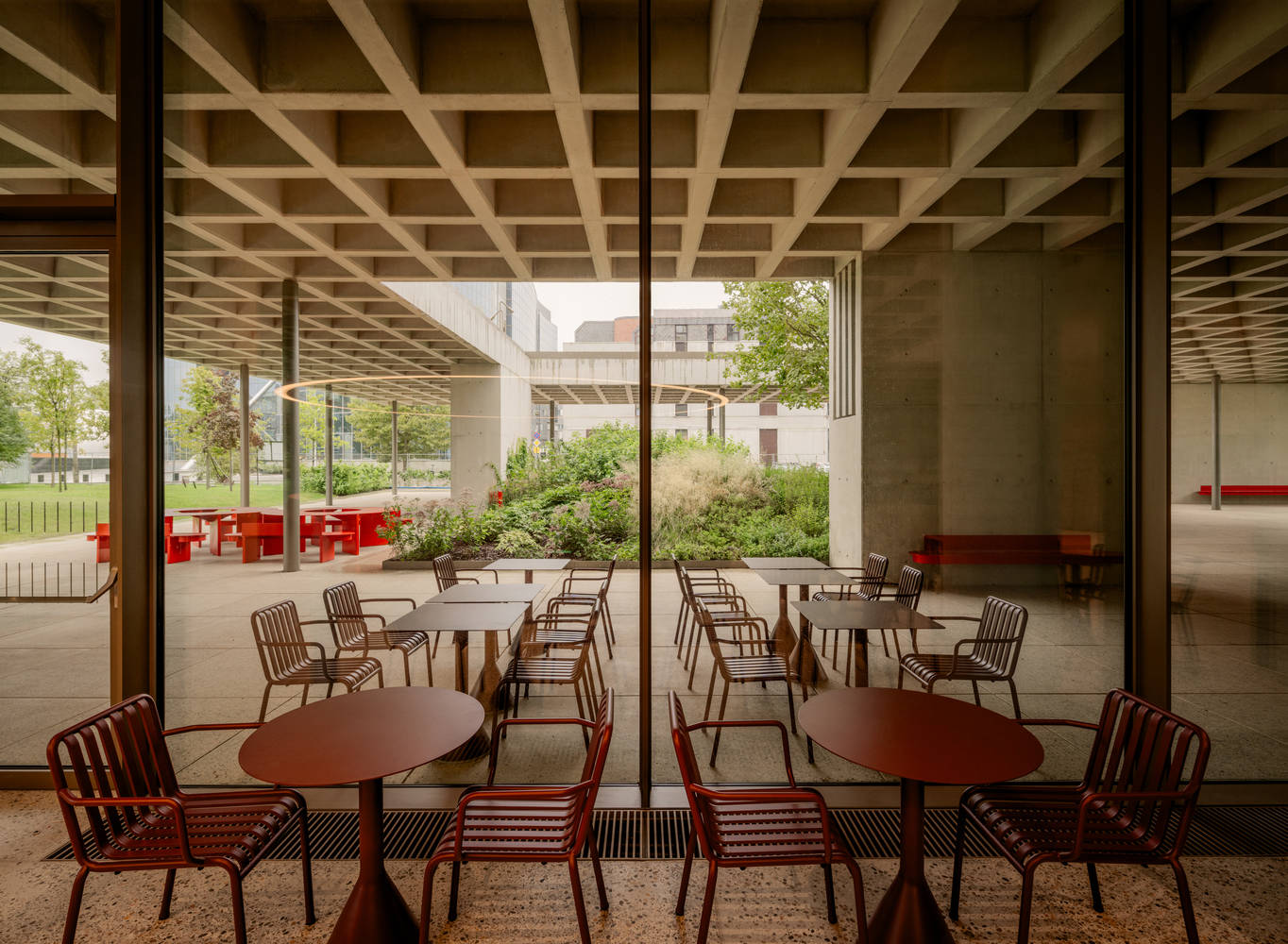
The project’s signature element is a vast, perforated concrete canopy spanning the entire ground floor. Visible from both inside and out, this canopy acts as an architectural threshold between the campus and the city, forming a spacious public plaza with greenery, seating, informal meeting areas, and bicycle parking. This sheltered environment encourages year-round use by students, staff, local residents, and visitors, treating the ground level as an active extension of the public realm.
该项目的标志性设计是横跨整个底层的宽阔混凝土镂空顶棚。从内到外都清晰可见的顶棚,作为校园与城市之间的建筑阈限,形成了一个宽敞的公共广场,广场上绿植环绕,设有座椅、非正式会面区域和自行车停放处。这一遮蔽环境鼓励学生、教职工、当地居民和游客全年使用,将底层视为公共领域的积极延伸。
© ONI studio
© Nate Cook Photography
Inside, the architects introduced the concept of a “double ground floor.” The lower level serves as a publicly accessible zone featuring a café, canteen, auditorium with glass walls, and a spacious lobby—spaces kept active even outside class hours. Above it, the second ground floor unfolds around a bright central atrium. Rejecting traditional corridors, the building utilizes open galleries leading to classrooms, labs, workplaces, and a double-height library accessible via a terrace. Numerous niches for individual study and rest encourage informal meetings, naturally supporting the department’s academic community.
在建筑内部,建筑师引入了“双底层”的概念。较低的一层作为公共可达区域,设有咖啡馆、食堂、玻璃幕墙的礼堂和宽敞的大厅 —— 这些空间即使在课余时间也保持活跃。在其上方,第二个底层围绕一个明亮的中央中庭展开。建筑摒弃了传统的走廊设计,采用开放式画廊通向教室、实验室、工作场所和一个两层高的图书馆,图书馆可通往露台。众多供个人学习和休息的壁龛鼓励非正式会面,以自然的方式支持着该学系的学术社区。
© Nate Cook Photography
© ONI studio
© Nate Cook Photography
© Nate Cook Photography
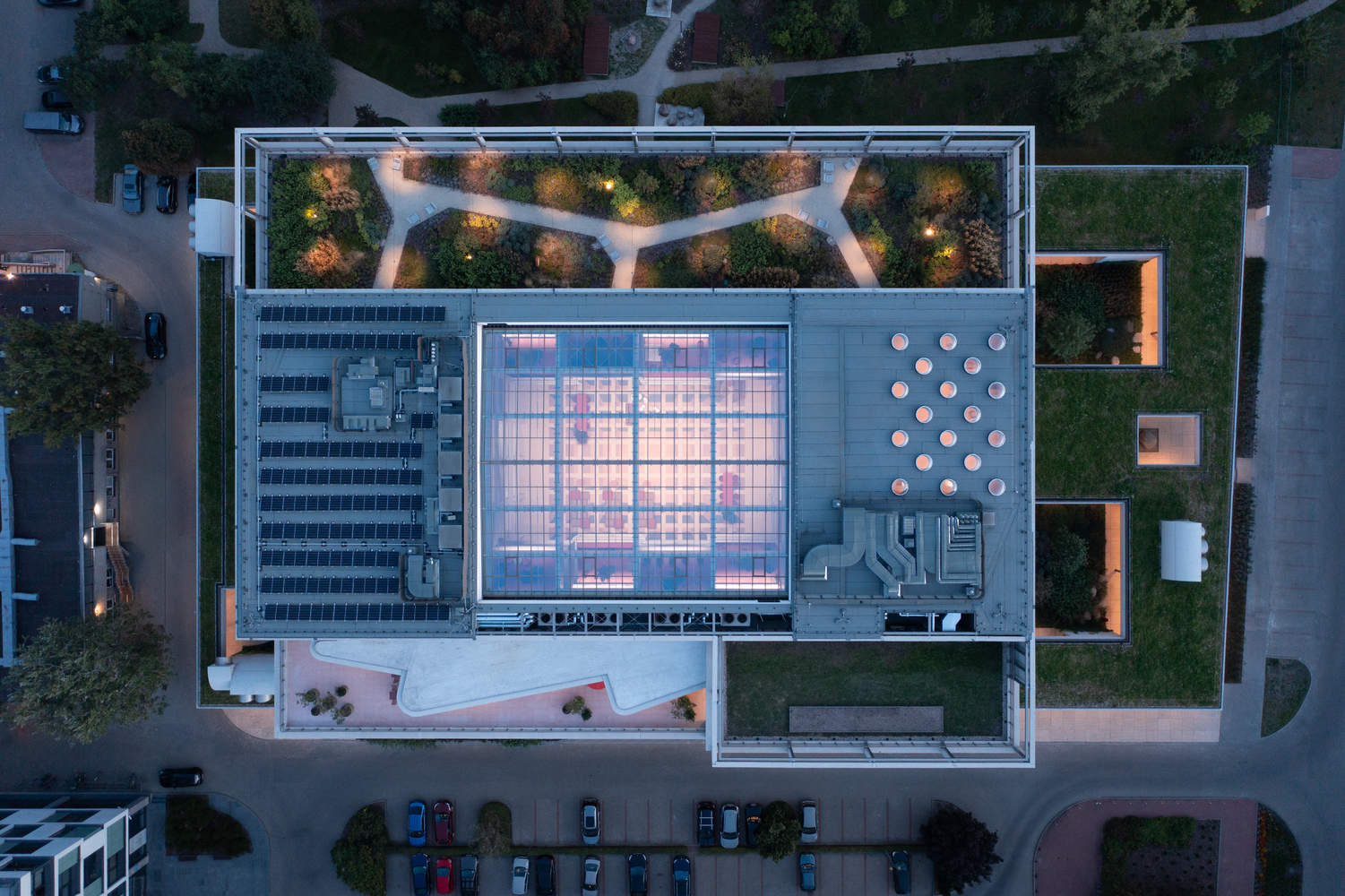
The building can be described as an example of ecological brutalism: exposed concrete surfaces create a calm and coherent spatial character, softened by natural light, wooden accents, and lush vegetation. Greenery is deeply integrated throughout—from the trees surrounding the structure to interior planting, a sea of flowers on the canopy, and a roof garden featuring walkways, seating, and outdoor classrooms. These elements regulate the microclimate, retain rainwater, and humanize the cool materiality of the concrete.
该建筑可被描述为生态粗野主义风格:裸露的混凝土表面形成了平静而连贯的空间特征,这种特征被自然光、木质装饰和繁茂的植物所柔化。绿色植物深深融入建筑之中 —— 从建筑周围的树木到室内植被,从顶棚上的花海到设有步行道、座椅和户外教室的屋顶花园。这些元素调节了微气候,保留了雨水,并在混凝土的冷峻材质中营造出人性化的氛围。
© Nate Cook Photography
© Nate Cook Photography
Sustainability strategies include geothermal heat pumps, photovoltaic panels, rainwater reuse systems, external shading blinds, and an insulating green roof. The building achieves universal accessibility with step-free access, induction loops, clear signage, and carefully designed facilities on every floor. Covering 21,000 sqm and serving nearly 2,000 users, the new Faculty of Psychology building aims to meet contemporary educational needs—balancing personal comfort with collaborative spirit and a sense of community belonging. It is more than a building; it is an open and inviting space that fosters a closer dialogue between academic life, public space, and the city.
可持续性策略包括地热热泵、光伏板、雨水再利用系统、外部遮阳帘和自然隔热的绿色屋顶。该建筑实现了无障碍通行,设有无台阶通道、感应环路、清晰的标识和每层精心设计的设施。新心理学系大楼拥有 21000 平方米的空间,服务于近 2000 名用户,旨在满足当代教育需求 —— 平衡个人舒适度与协作精神和社区归属感。它不仅仅是一座建筑,更是一个开放而宜人的空间,让学术生活、公共空间和城市之间展开了更紧密的对话。
© Nate Cook Photography