功能驱动的定制化空间重塑:本项目成功地将一个位于历史工业区(莫奥卡区)的现有仓库,转化为一个高度专业化和功能完善的陶瓷教育机构。设计的核心在于满足对宽敞工作室、多样化设备(架子、水槽、拉坯机)及完善基础设施的迫切需求。建筑师通过最小化对现有结构(外墙、屋顶)的干预,专注于内部系统和体验的植入,实现了从“仓库”到“功能学校”的精准转型,体现了对客户核心教育需求的深刻理解和高效响应。
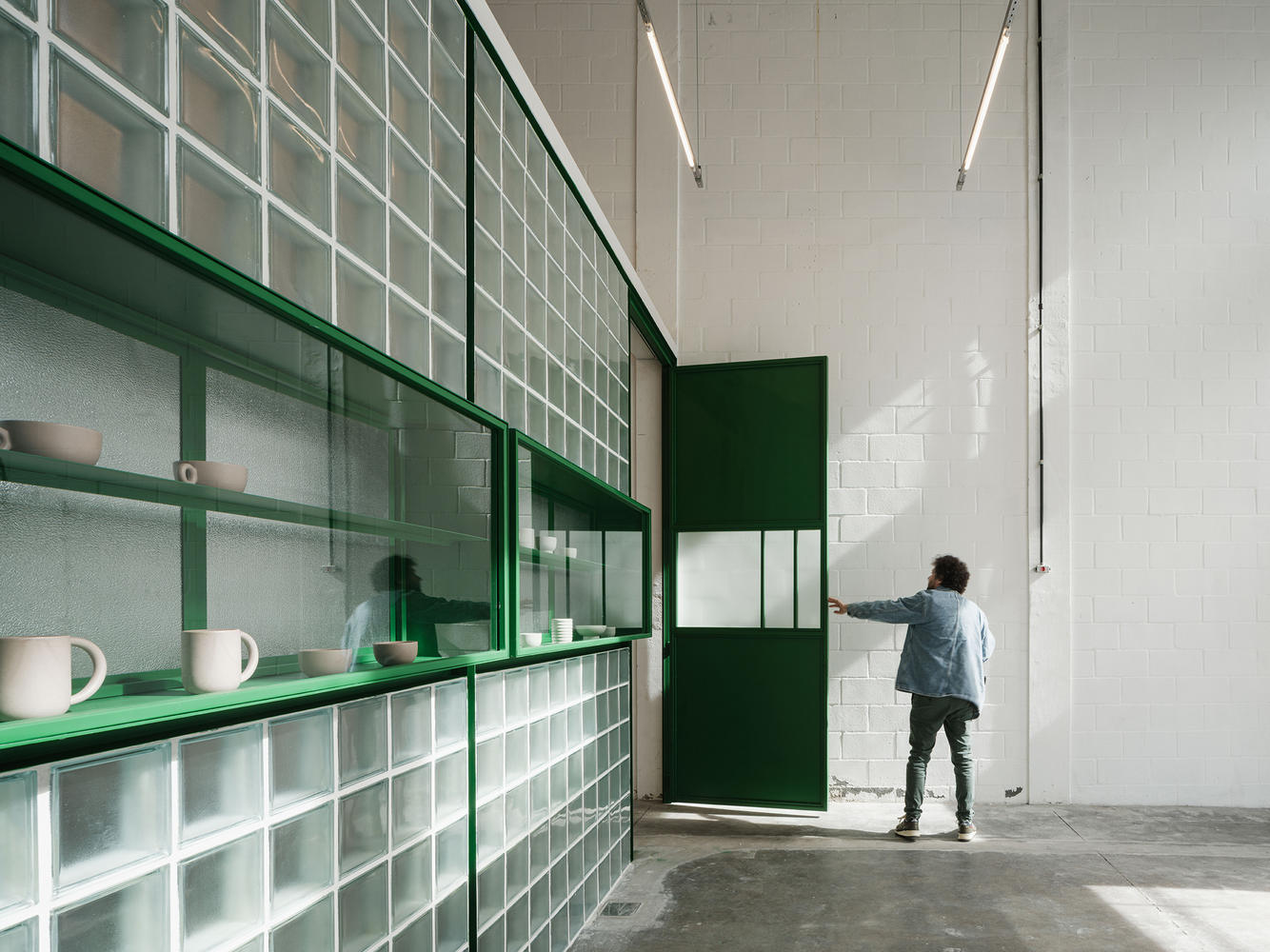
材料与光影的戏剧性对比与融合:建筑语汇上,项目通过引入具有强烈视觉冲击力的新增元素,与原有粗犷的工业背景形成了鲜明的对比。特别是高达3.20米的内部“第二立面”,由钢材和砌块构成,并巧妙地整合了展示窗和水力管线。这种“结构嵌入”的手法,结合用飘动尼龙窗帘和锤击铝板填充的非共面门框,创造了一个动态的、充满纹理和光影互动的材料景观,极大地提升了空间的艺术性和教育氛围。
垂直空间的高效利用与符号化设计:面对狭长的仓库空间,设计巧妙地利用了垂直潜力。在现有服务核心上方增设行政夹层,不仅优化了功能布局,更通过一座醒目的绿色金属“桑托斯-杜蒙特”楼梯实现了垂直交通的符号化表达,使其成为空间中的焦点元素。此外,充分考虑了专业场所的舒适性,通过定制化的镀锌型材灯具系统提供均匀照明,并在后场以荫生花园丰富了材料与生态的层次,确保了从工作到休憩环境的整体品质。
The starting point of this project stemmed from the desire to create a space entirely dedicated to ceramic education in São Paulo. Instead of opting to renovate an existing workshop, the client sought a warehouse that could be transformed into a school from the outset—one with spacious studios furnished with shelves, sinks, pottery wheels, workbenches, and tables to accommodate different activities simultaneously, in addition to having complete infrastructure and good accessibility.
该项目的起点源于在圣保罗打造一个完全致力于陶瓷教育的空间的诉求。客户并未选择改造现有工坊,而是寻求一处仓库,希望从一开始就将其改造成一所学校 —— 拥有宽敞的工作室,工作室里摆满架子、水槽、拉坯机、工作台和桌子,以便同时开展不同的活动,此外还需配备完善的基础设施和良好的通行条件。
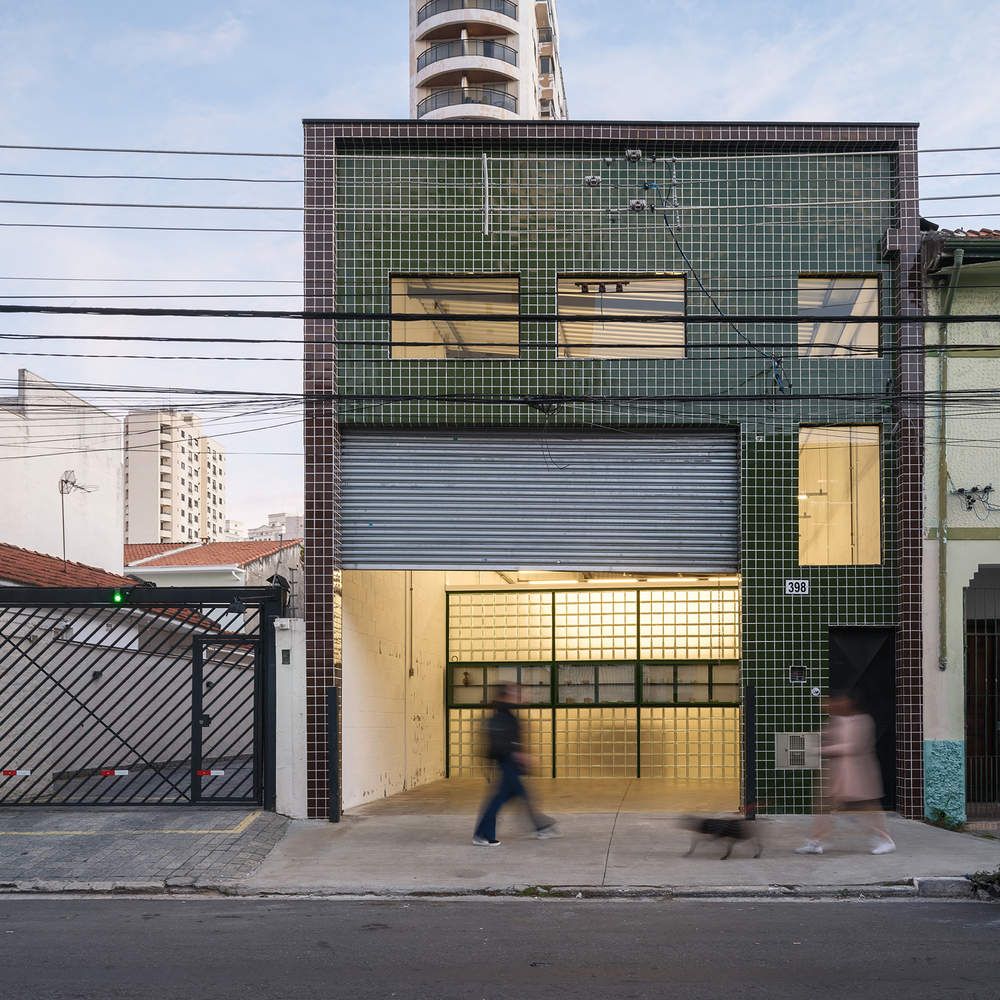
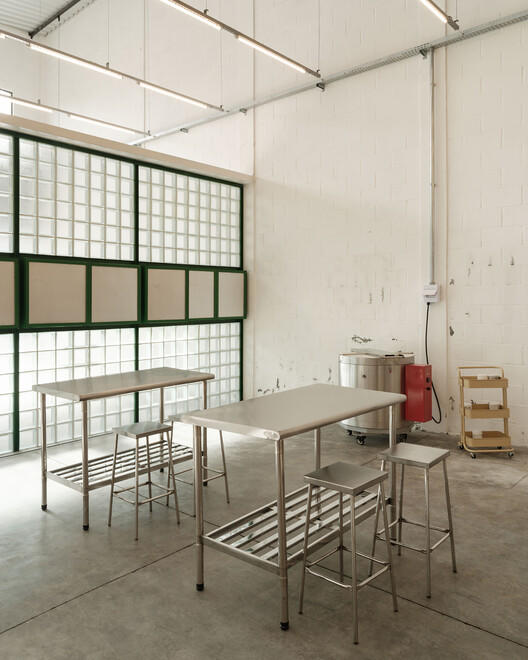
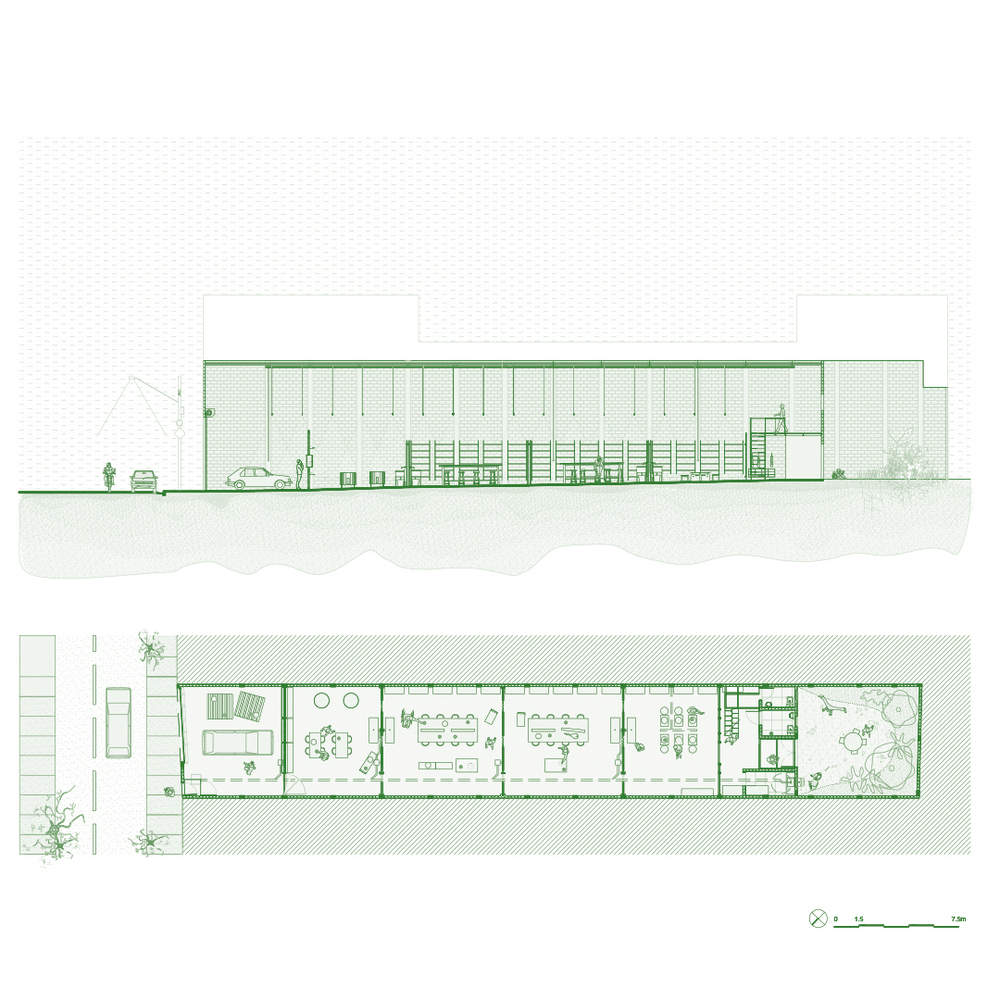
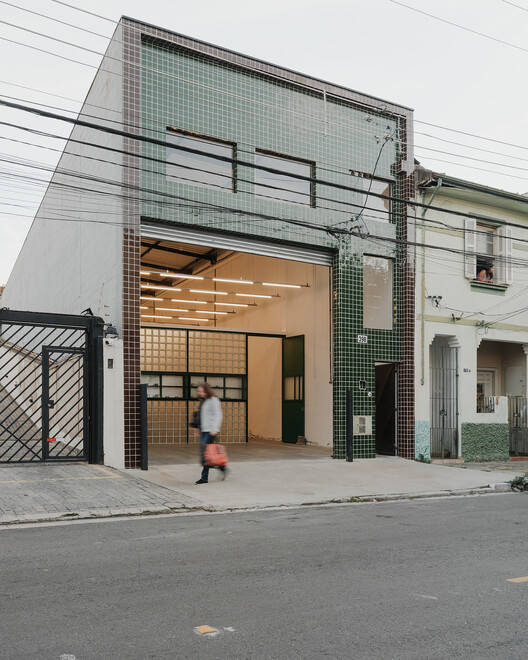
The selected warehouse measured 36.50 m × 6.50 m and is located in the Mooca neighborhood—an area historically marked by workshops, small factories, and industrial sheds, characteristics that still shape its urban fabric today. The warehouse was relatively new and well-preserved, retaining its original exterior walls, roof, and service core. Therefore, the project focused primarily on adding architectural elements with strong visual and chromatic expression that would integrate and occupy the vast space of the shed.
选定的仓库尺寸为 36.50 米 × 6.50 米,位于莫奥卡区 —— 该街区历史上以工坊、小工厂和工业仓库为标志,这些特征至今仍塑造着其城市风貌。该仓库相对较新且保存完好,保留了原有的外墙、屋顶和服务核心区域,因此项目主要聚焦于增添具有强烈视觉和色彩表现力的建筑元素,这些元素将融入并占据仓库的巨大空间。
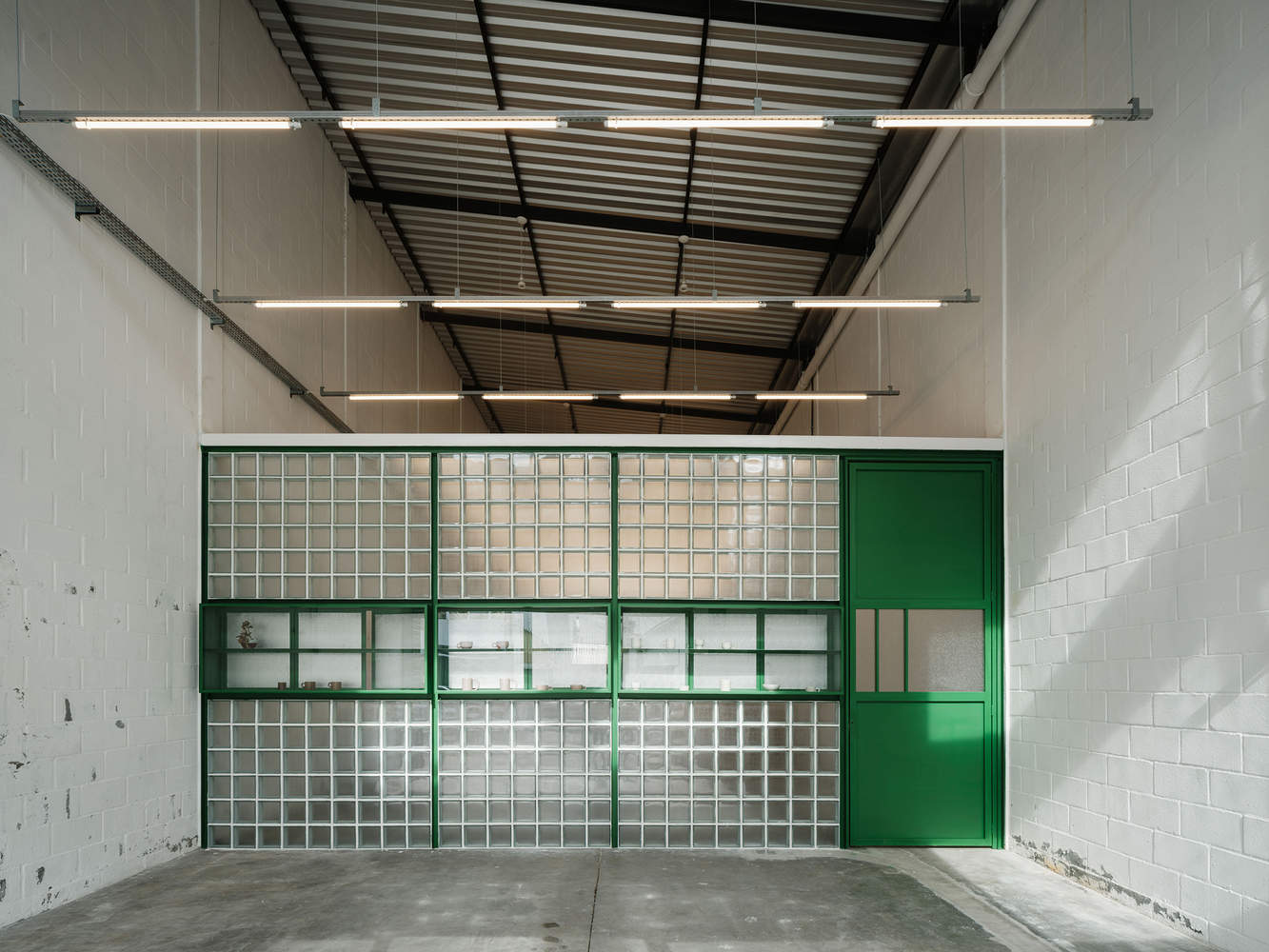
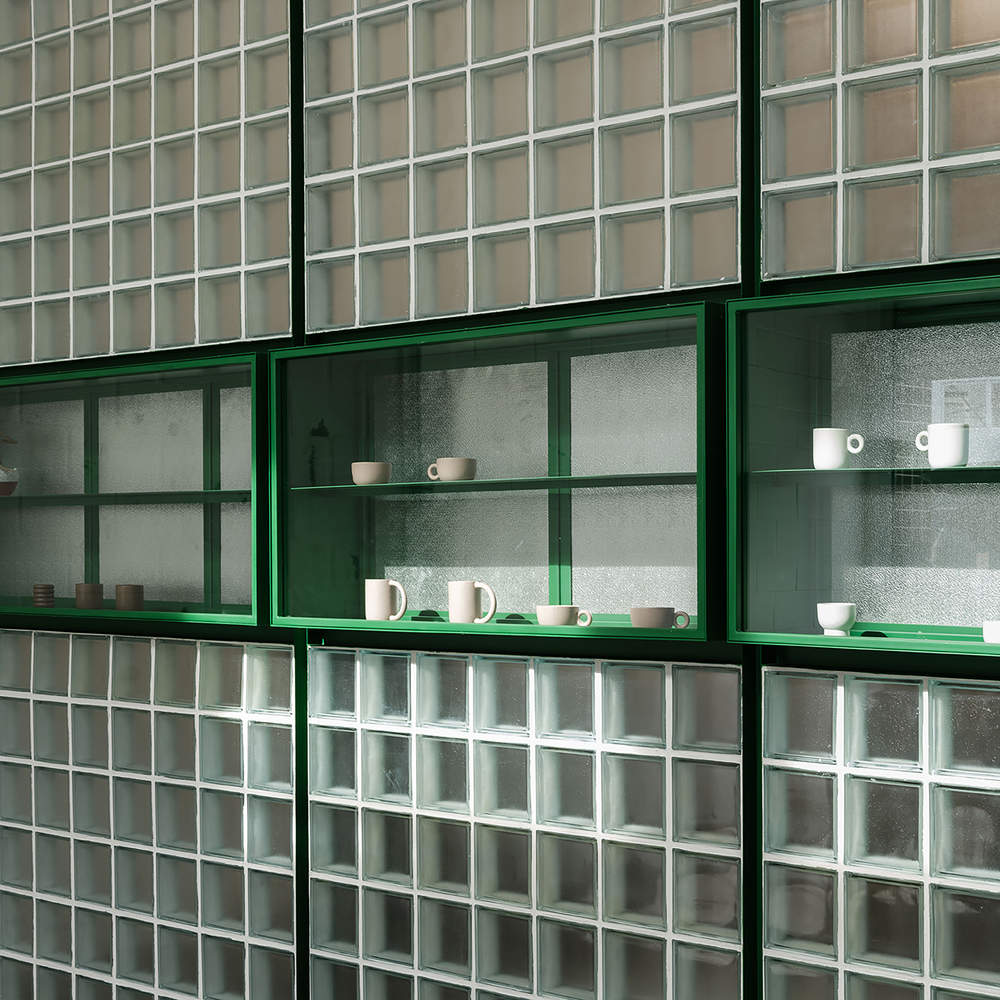
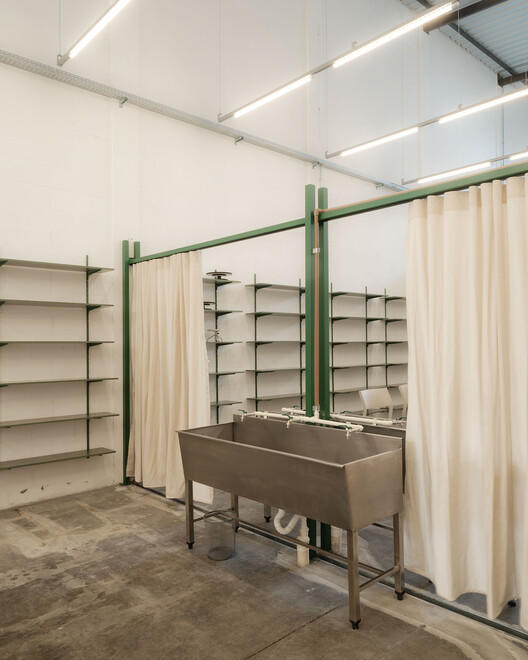
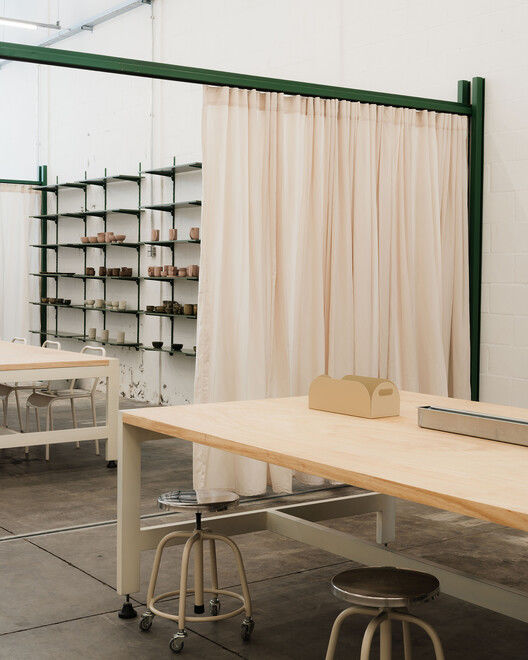
Among these new elements is an internal second facade, 3.20 meters high, constructed from steel, masonry, and metal profiles, featuring three large display windows to showcase the ceramic pieces made by the school. The interior layout revolves around a series of non-coplanar square metal door frames; the gaps between these frames are filled with flowing nylon curtains and hammered aluminum sheets, creating a vibrant material landscape. These frames also house the hydraulic connections for the ceramic studio sinks.
在这些新元素中,有一座高 3.20 米的内部第二立面,由钢材、砌块和金属型材构建而成,设有三个大型展示窗,用于展示学校制作的陶瓷作品。室内围绕一系列非共面安装的方形金属门框进行布局;门框之间的空隙用飘动的尼龙窗帘和锤击铝板填充,营造出充满活力的材料景观。这些门框还容纳了陶瓷工作室水槽的水力连接。
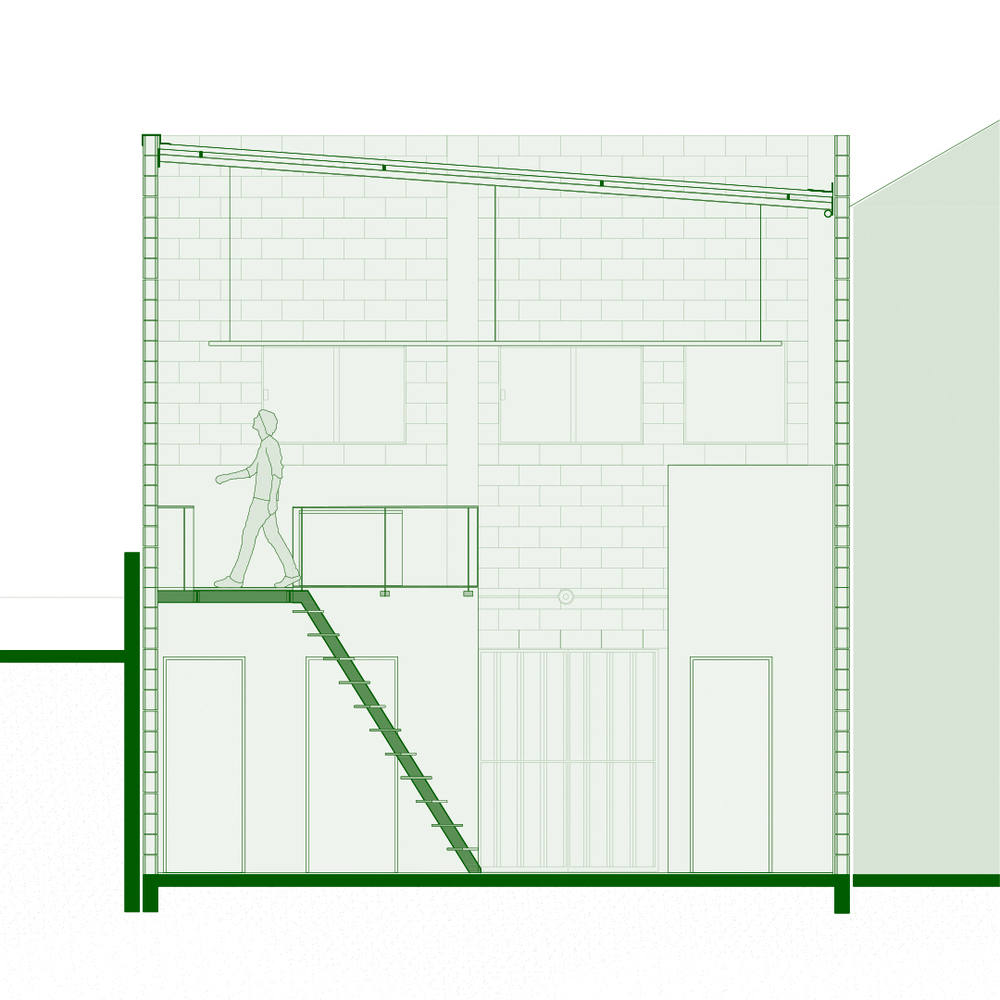
A mezzanine for administration was added above the existing sanitary core, accessed by a green metal Santos-Dumont staircase—another striking element integrated into the overall design. The lighting design aims to ensure the comfort of the users of this workshop-school, consisting of galvanized profiles and tubular luminaires spread throughout the space. At the rear of the lot, the outdoor area features a shade garden on a gravel floor, following the landscape design by architect Claudia Bresciani.
在现有卫生间核心区域上方,增设了一个夹层用于行政管理,通过一座绿色金属的桑托斯·杜蒙特(Santos-Dumont)楼梯进入 —— 这又是融入整体设计的另一引人注目的元素。照明设计旨在确保这所工坊式学校的使用舒适度,由遍布空间的镀锌型材和管状灯具组成。在场地后方,户外区域根据建筑师克劳迪娅·布雷西亚尼(Claudia Bresciani)的景观设计,在碎石地面上打造了一个荫生植物花园。
© Pedro Kok
© Pedro Kok
© Pedro Kok
© Pedro Kok
© Pedro Kok
© Pedro Kok
© Pedro Kok
平面图
剖面图
© Pedro Kok