历史文脉与城市激活的精妙融合:本项目最大的亮点在于其对场地的复杂文脉——特别是与历史悠久的保罗六世大楼(Pablo VI Building)的对话——处理得极为成熟和巧妙。建筑师通过构建一个低矮、线性的平台构型,既尊重了现有历史建筑的存在感,又激活了原先沉寂的第七大道城市边缘。平台的设计增强了校园的亲人尺度,并通过砖的使用与历史材料形成呼应,实现了新旧共存的和谐,同时,宽阔的塔楼则被策略性地置于场地北缘,作为视觉焦点而非对历史建筑的直接竞争者,成功界定了校园的新入口和身份。
功能性与结构适应性的前瞻性设计:从专业角度看,此项目展现了卓越的空间组织和结构智慧。平台部分通过植入“英式”庭院系统,极大地优化了内部实验室空间对自然采光和通风的需求,保证了高品质的学习环境。而塔楼的结构解决方案——采用四个核心筒与周边维伦德尔桁架相结合——不仅最大化了内部净空面积,更重要的是赋予了建筑极高的结构灵活性,使其能够轻松适应未来科学实验室不断变化的功能需求,体现了超越当前使用的长远眼光。
可持续的公共领域营造与绿色连接:设计的精髓还体现在对公共空间和环境策略的重视。通过在平台之上创造大面积的、可步行的公共屋顶空间,项目有效地将原本被建筑体量占据的地面释放出来,连接了校园的各个功能区域,创造了重要的户外社交和休闲场所。这种“以退让换取连接”的策略,使得建筑的实际占地面积控制在较低水平(不到30%),有力地促进了绿色校园理念的实施,极大地提升了整体校园环境的宜居性和福祉感。
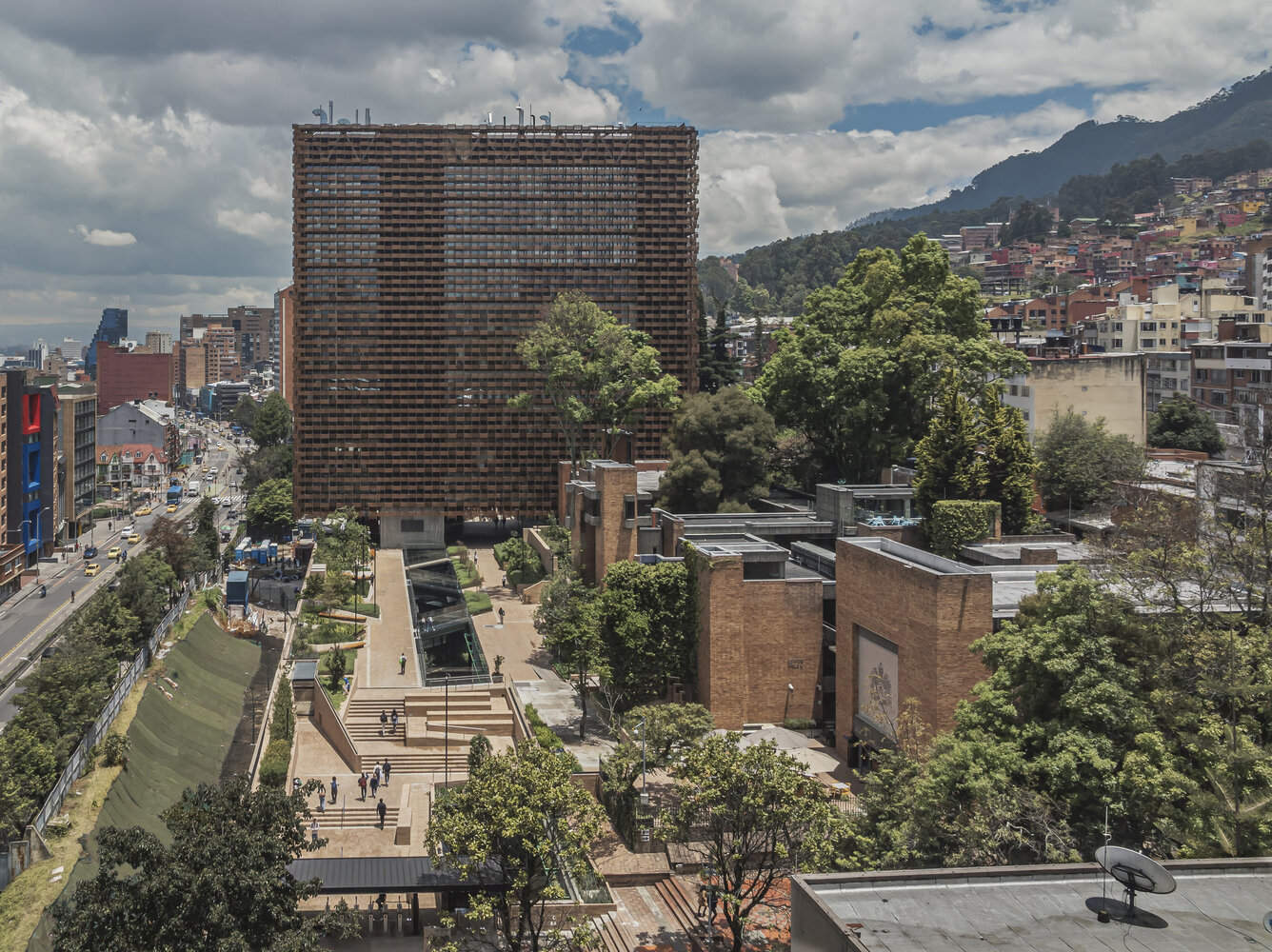
The design of the new Faculty of Sciences for the Pontifical Javeriana University faced unique challenges: harmonizing with the historic Pablo VI Building, activating the urban edge of Carrera Séptima, and unifying the different parts of the campus. This comprehensive project is structured around three fundamental components: A) constructing a linear platform along Carrera Séptima to create a human-scaled architectural facade; B) erecting a prominent tower with a wide, flowing base to define a new emblematic entrance for the campus; and C) implementing extensive landscaping and collective spaces to serve as connecting links between the different campus areas.
哈维里亚纳天主教大学新理学院的设计面临着独特挑战,例如需与历史悠久的保罗六世大楼(Pablo VI building)达成和谐平衡,激活第七大道(Carrera Séptima)的城市边缘地带,并使校园各部分连贯统一。这一综合性项目围绕三个基本组成部分展开:A)沿第七大道构建一条线性平台,打造人性化尺度的建筑立面;B)建造一座底部宽阔流畅的高塔,为校园定义新的标志性入口;C)实施大规模景观改造并打造集体空间,作为校园不同区域之间的连接纽带。
© Alejandro Arango
© Alejandro Arango
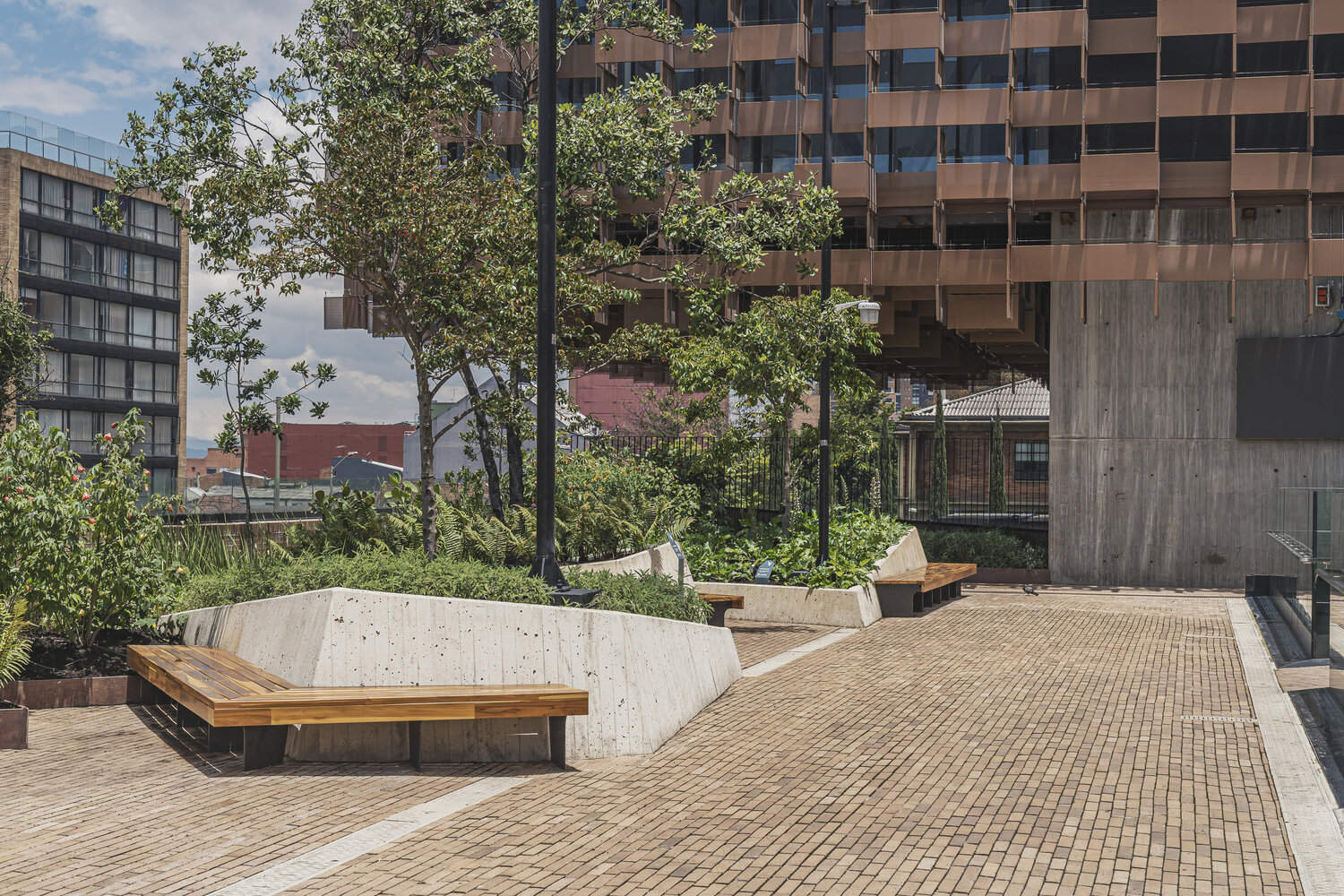
The platform/tower solution, defined by its simplicity and strength, not only highlights the presence of the Pablo VI Building (1967)—the only listed historic building in the university complex, designed by architect Aníbal Moreno—but further reinforces its value by integrating it into the overall layout. The platform extends northward, revitalizing the plaza in front of the historic building, providing an open space infused with vegetation, and emphasizing the extensive use of brick, its main material. The tower is strategically situated on the northern edge of the site, carefully avoiding a direct confrontation with the Pablo VI Building; instead, it serves as a visual backdrop, closing off the path that originates from the central library.
这一基于平台/塔楼组合的方案,其简洁性与力量感不仅突显了由建筑师阿尼巴尔·莫雷诺(Aníbal Moreno)设计、大学建筑群中唯一列入名录的历史建筑 —— 保罗六世大楼(1967 年)的存在,还通过将其融入整体布局,进一步强化了其价值。平台向北延伸,为历史建筑前的广场注入活力,提供一个融合植被的开放空间,并突显了其主体材料 —— 砖的广泛运用。塔楼则坐落于场地北缘,其位置巧妙地避免了与保罗六世大楼正面相对,而是作为视觉背景,闭合了始于中央图书馆的路径。
© Alejandro Arango
© Alejandro Arango
© Alejandro Arango
© Alejandro Arango
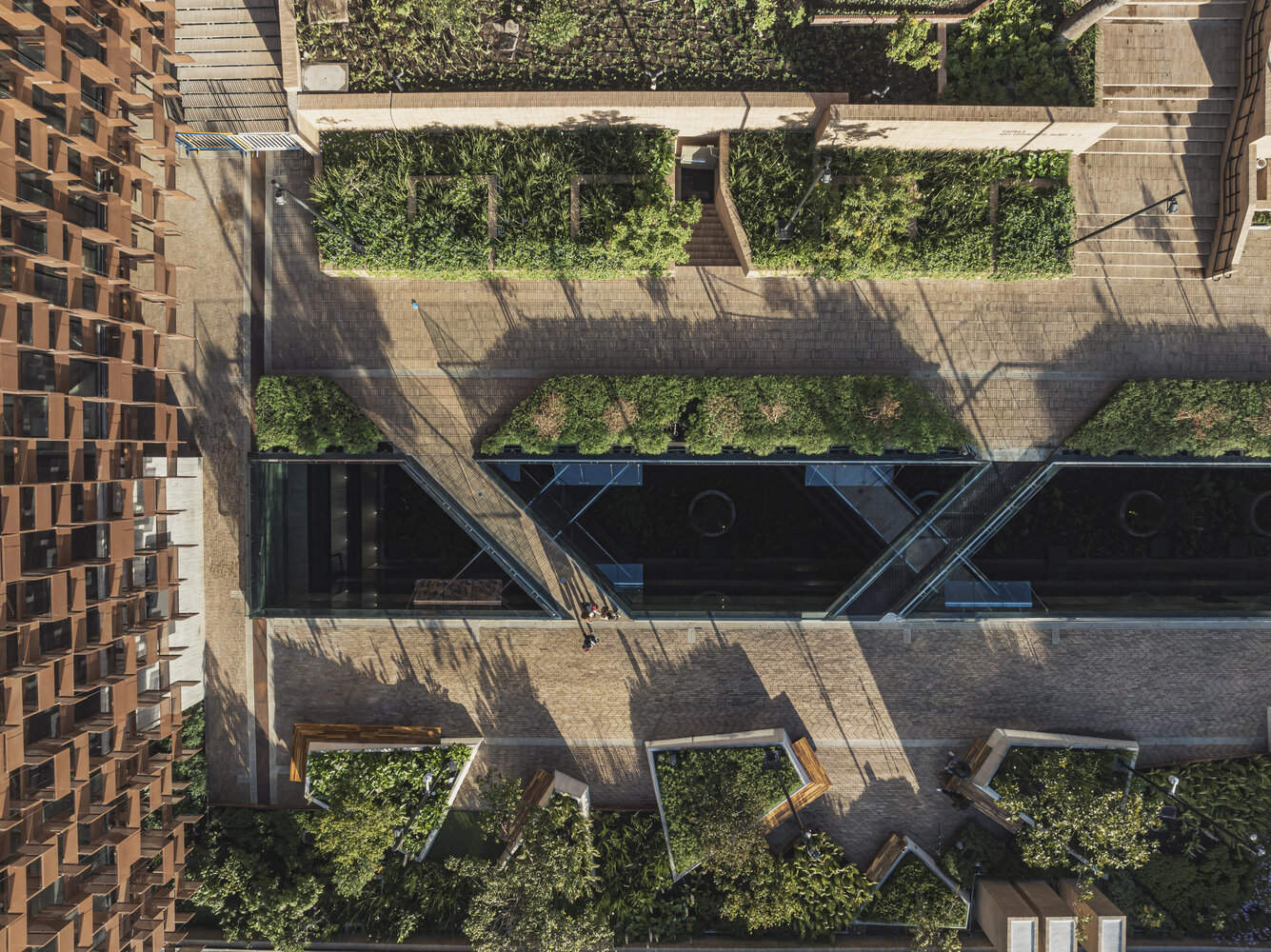
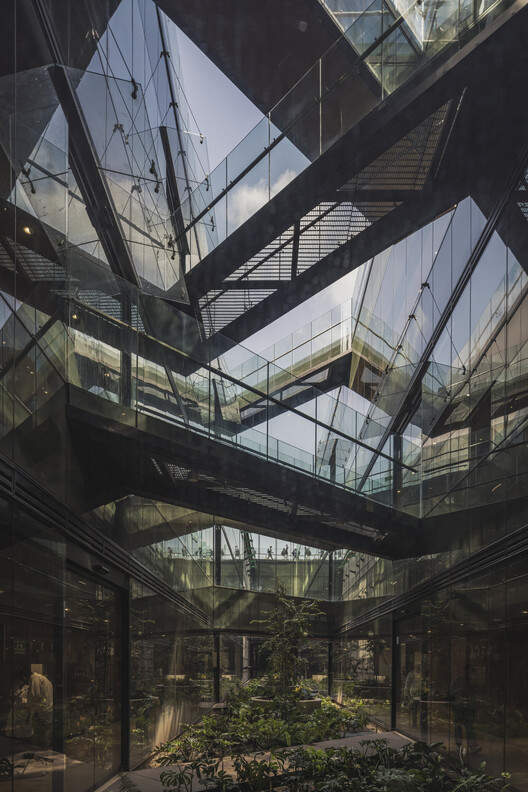
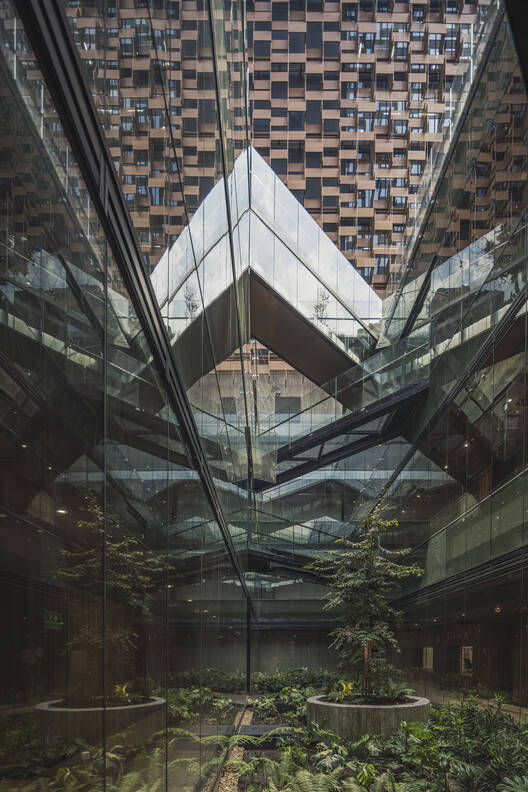
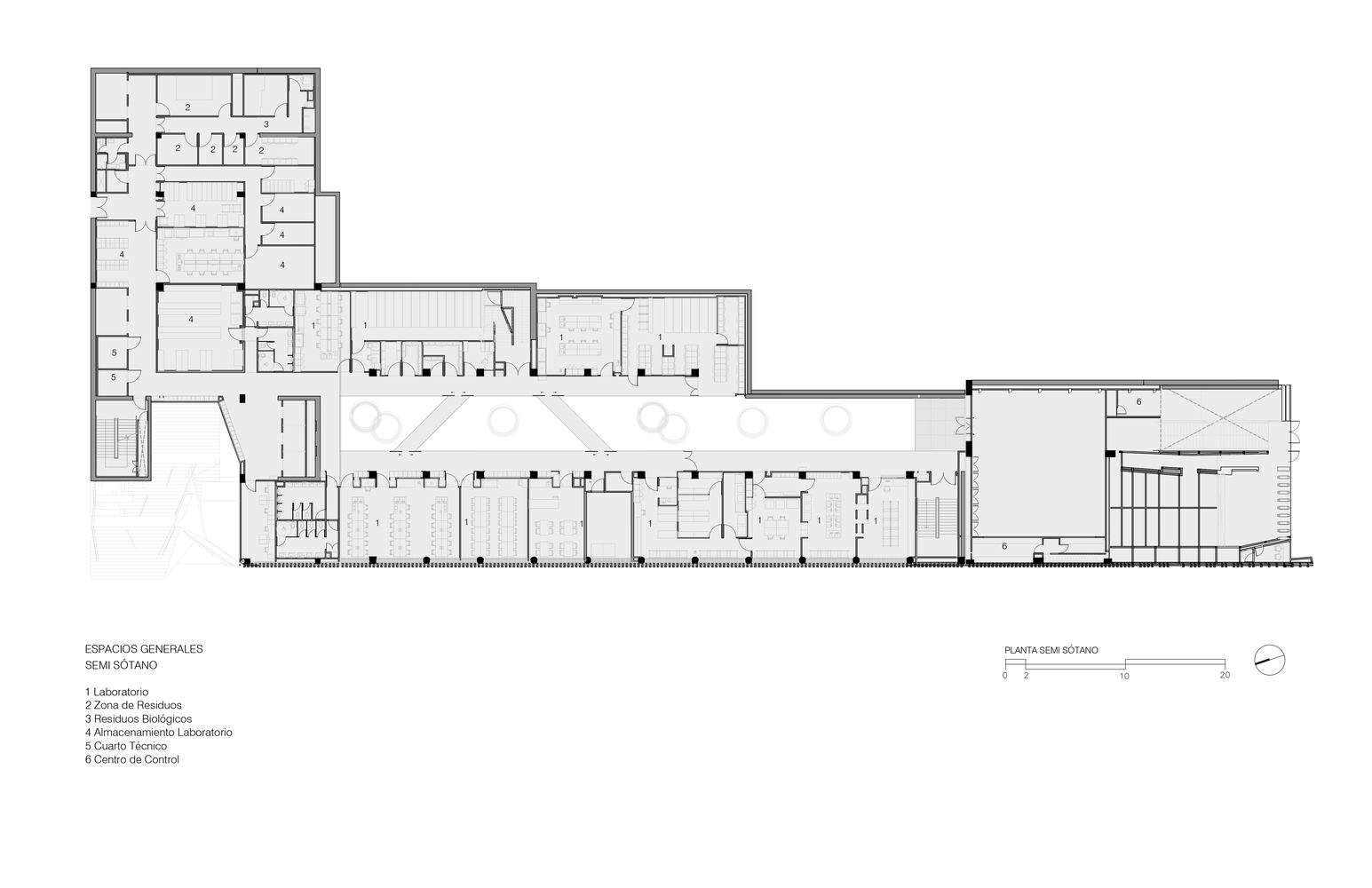
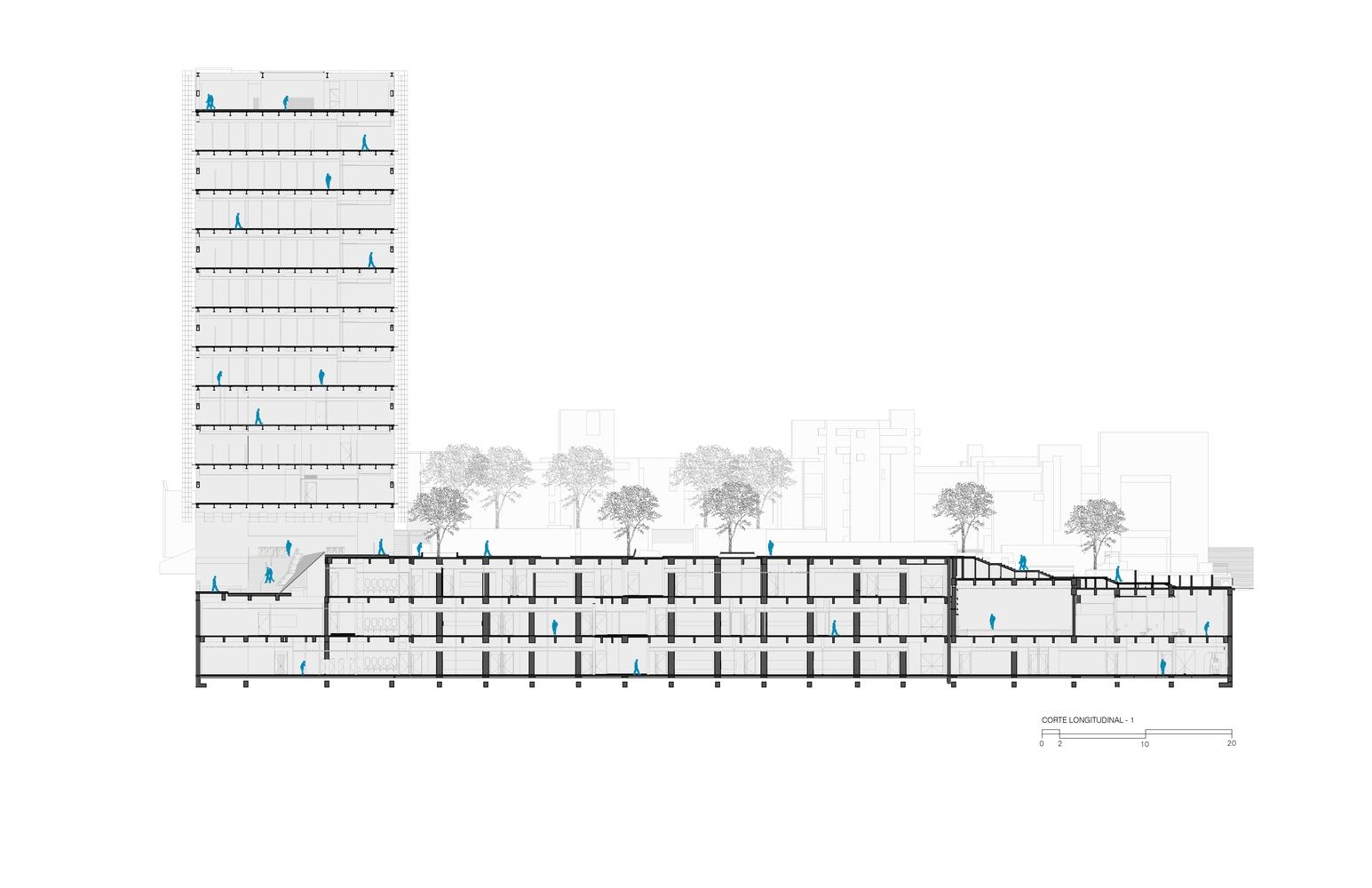
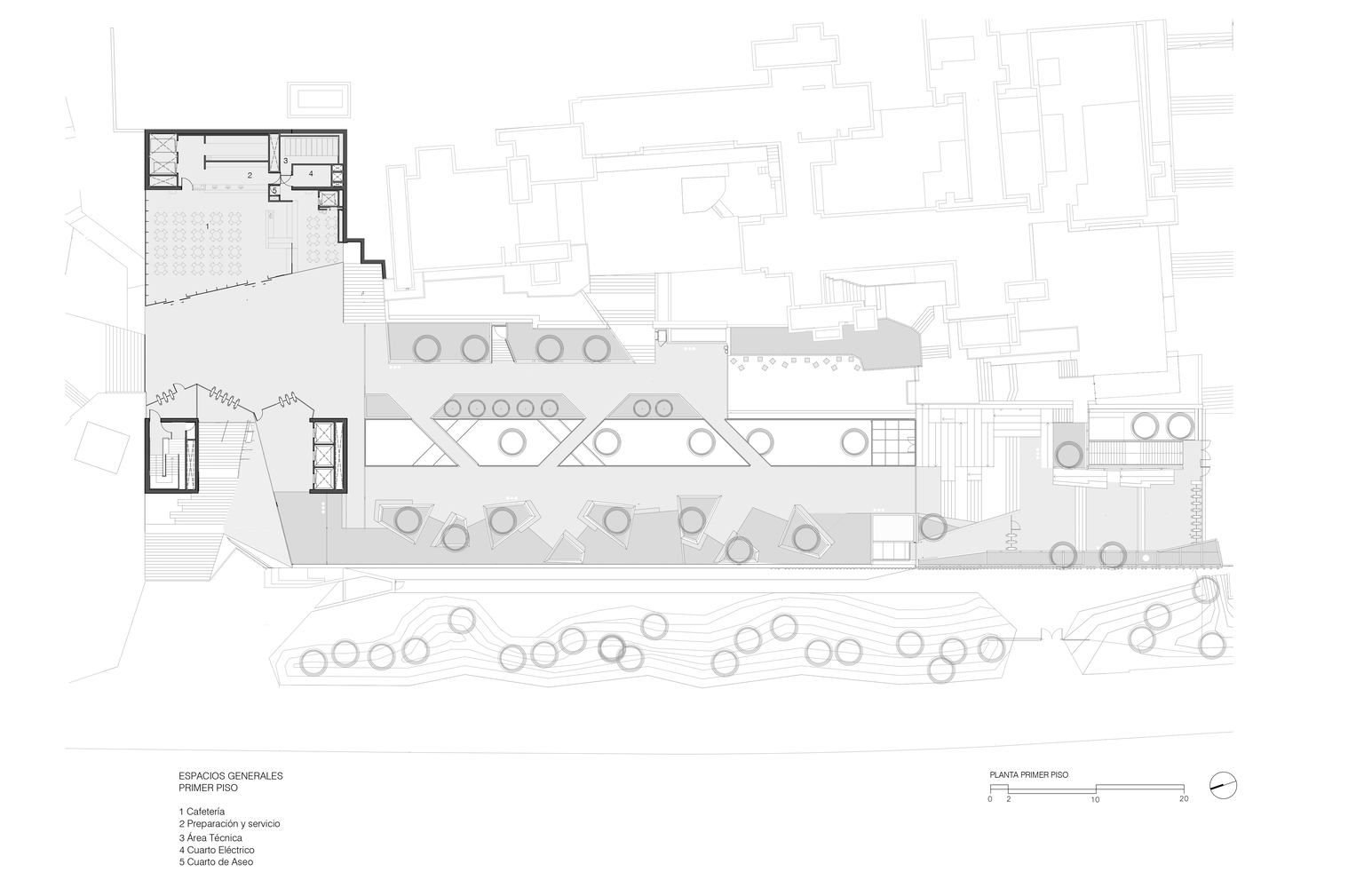
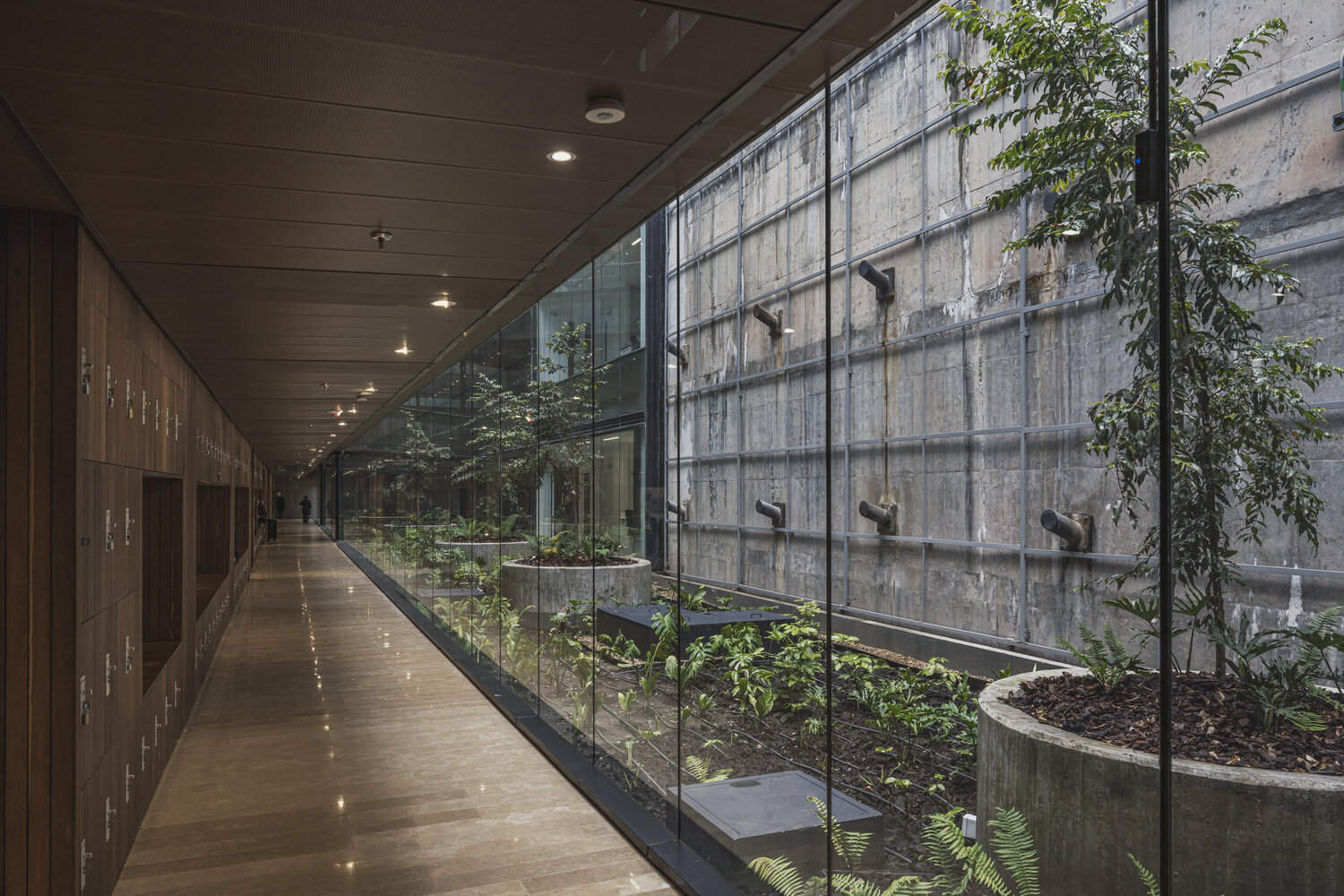
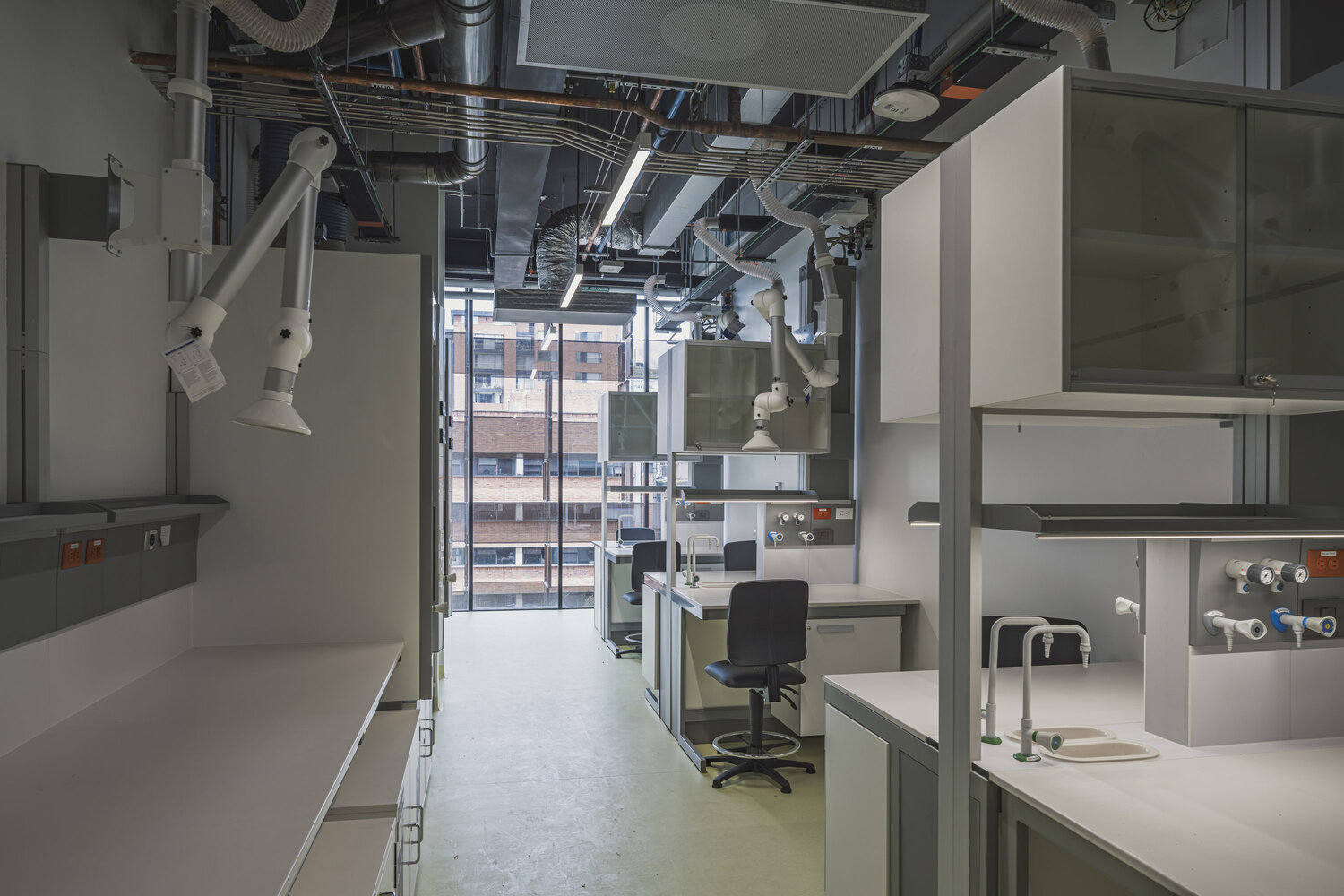
The linear platform defines and highlights the new facade facing one of Bogotá's iconic avenues while housing the training laboratory program. To ensure high quality in the internal spaces, natural lighting and ventilation are optimized through two "English courtyards," which form a longitudinal garden running through the building's interior.
线性平台为校园朝向波哥大标志性大道之一的一侧定义并凸显了新立面,同时容纳了培训实验室项目。为确保内部空间的高品质,通过采用两个 “英式” 庭院优化了自然采光与通风,这两个庭院形成了一条贯穿建筑内部的纵向花园。
Basement Plan
Longitudinal Section
Ground Floor Plan
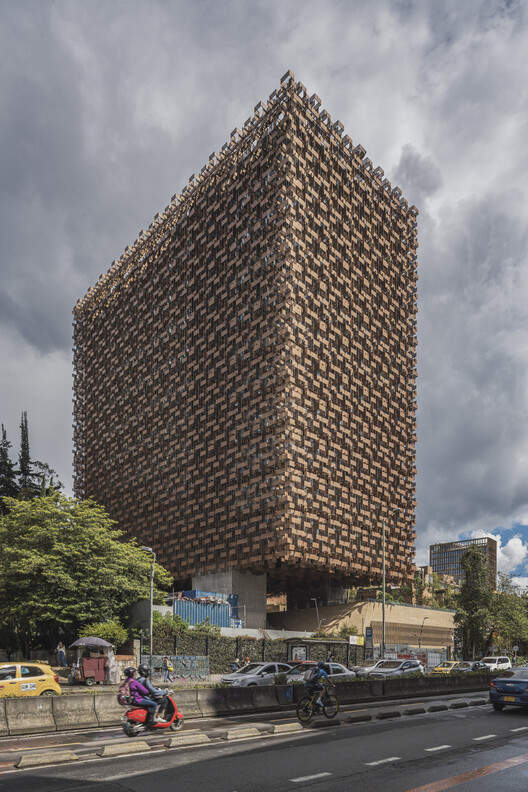
As for the tower, its structure is organized through four large concrete cores and a perimeter Vierendeel truss system, maximizing usable area and significantly enhancing design flexibility. This system facilitates the building's future adaptation to the changing needs of specialized laboratories. All four facades are covered with metal shading panels of variable micropore density, regulating solar radiation according to the orientation of each face while giving the building a unified appearance.
至于塔楼,其结构通过四个大型混凝土核心筒和周边维伦德尔桁架(Vierendeel trusses)系统组织,最大限度地提高了可用面积,并显著增强了设计灵活性。这一系统便于建筑未来适应专业实验室不断变化的需求。四座立面均覆盖有微孔密度可变的金属遮阳板,根据各立面朝向调节太阳辐射,同时赋予建筑统一的外观。
© Alejandro Arango
© Alejandro Arango
© Alejandro Arango
Finally, the large public space located on the platform's walkable roof connects the different areas of the campus, providing ample outdoor gathering and relaxation space. This strategy, which occupies less than 30% of the footprint, satisfies the functional needs of the project while promoting the concept of a green campus and enhancing university well-being.
最后,位于平台可步行屋顶上的大型公共空间将校园各区域连接起来,提供了宽敞的户外聚会与休闲空间。这一策略使得占用面积不到 30%,既满足了项目功能需求,又推广了绿色校园理念,提升了大学福祉。
© Alejandro Arango