“学习地景”的空间策略:该项目成功地将传统的学校建筑概念转变为一个富有层次感的“学习地景”。通过打破传统教室和走廊的线性束缚,设计了一个流动的、多层次的空间场域,以适应和鼓励强调好奇心、探索发现和动手实践的现代教育理念。这种空间重塑不仅支持了以学生为中心的学习模式,还增强了校园应对未来教育需求变化的灵活性,是教育建筑范式转变的有力体现。
模糊边界与场所营造:建筑师通过精心设计,极大地模糊了室内外空间的界限,将户外区域提升到与室内同等重要的学习场所地位。架空区域、可供使用的结构部件以及向外敞开的教室,为学生提供了摆脱传统课桌环境的机会,促进了动手实验和与自然的直接互动。同时,围绕“山”、“谷”、“滩”三大核心景观元素的构建,为不同年龄段的学生提供了尺度适宜、功能多样的聚集、表演和游戏探索空间,极大地丰富了校园生活的物质形态。
生态整合与城市贡献:在应对深圳城市环境挑战方面,该设计表现出前瞻性。通过整合绿色屋顶、退台空间以及校园植被,项目不仅为学生提供了降温、过滤污染物和隔绝噪音的微气候环境,还使校园成为城市公园的自然延伸。这种策略性的绿色设计不仅服务于教学功能,更积极缓解了周边高密度商业开发带来的城市热岛效应,展示了校园建筑在可持续城市发展中的积极生态角色。
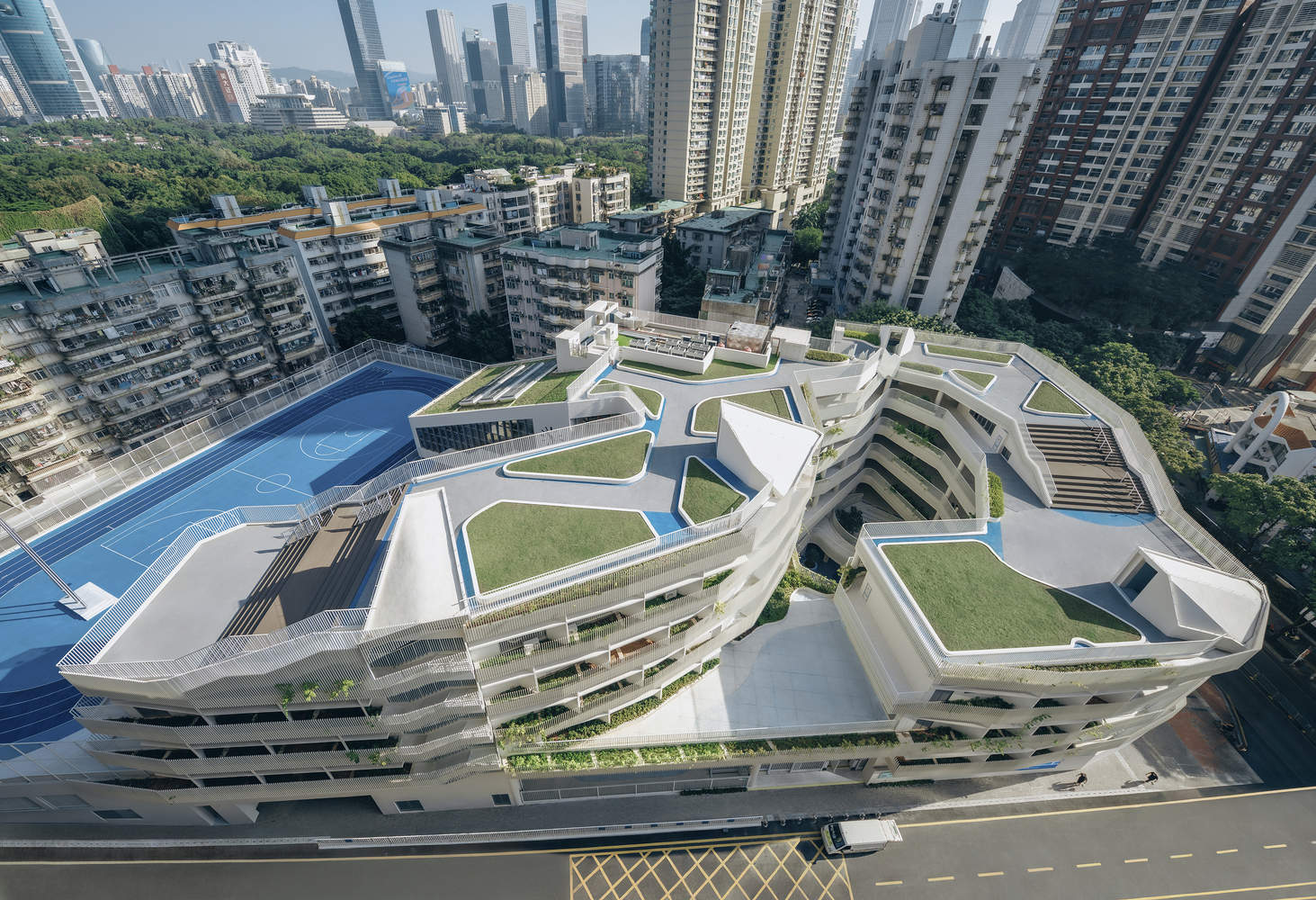
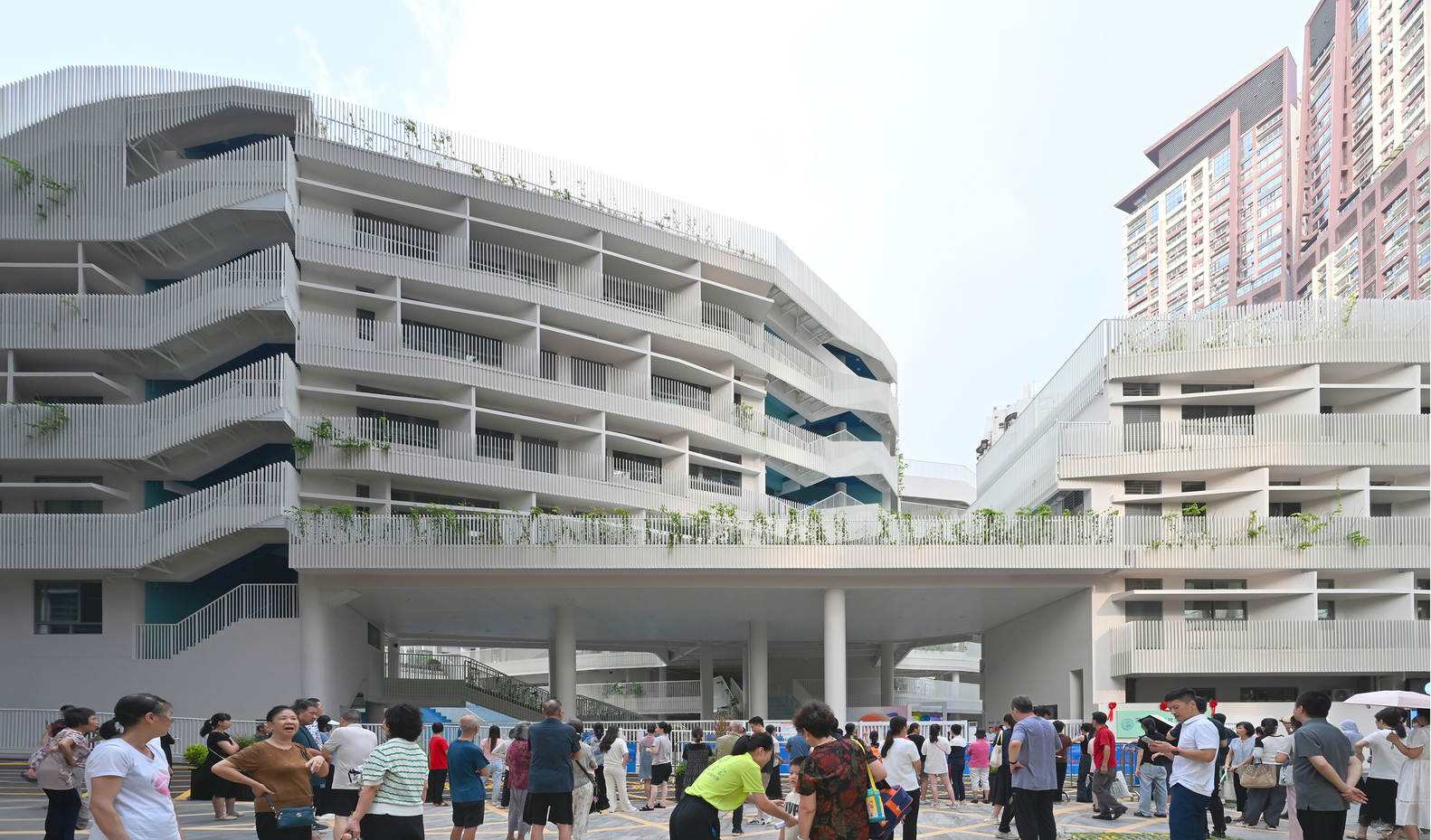
Wuzhou Elementary School is conceived as a learning landscape, a spatial environment that emphasizes curiosity, exploration, and hands-on practice. As Shenzhen transitions from an industrial economy to an innovation-driven one, the focus of education is shifting from "assembly line" learning models to those emphasizing creativity and playful exploration. Located in the heart of Shenzhen, Wuzhou Elementary School actively responds to this shift by re-examining how space shapes the daily educational experience.
明德五洲小学是一个学习的地景校园,是强调好奇心、探索发现和动手实践的空间环境。随着深圳从工业经济向创新驱动型经济转型,教育的重心正由“流水线”式的学习模式转向注重创造力与游戏化探索的学习模式。位于深圳市中心的五洲小学,通过重新审视空间如何塑造日常教育体验,对这一转变做出了积极响应。
© Yumeng Zhu
Layered Axonometric Drawing
分层轴测图
Courtesy of People's Architecture Office
Courtesy of 众建筑
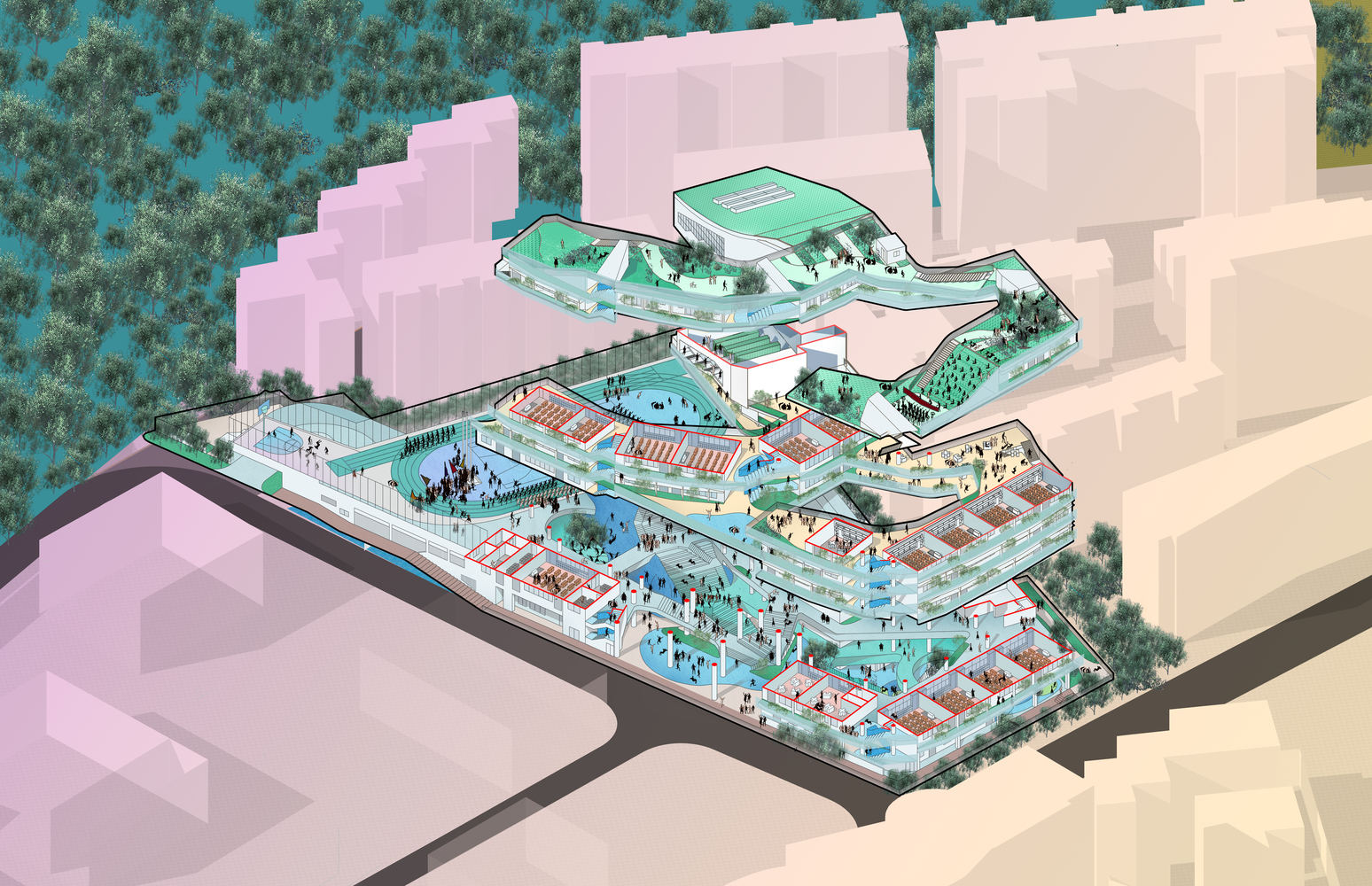
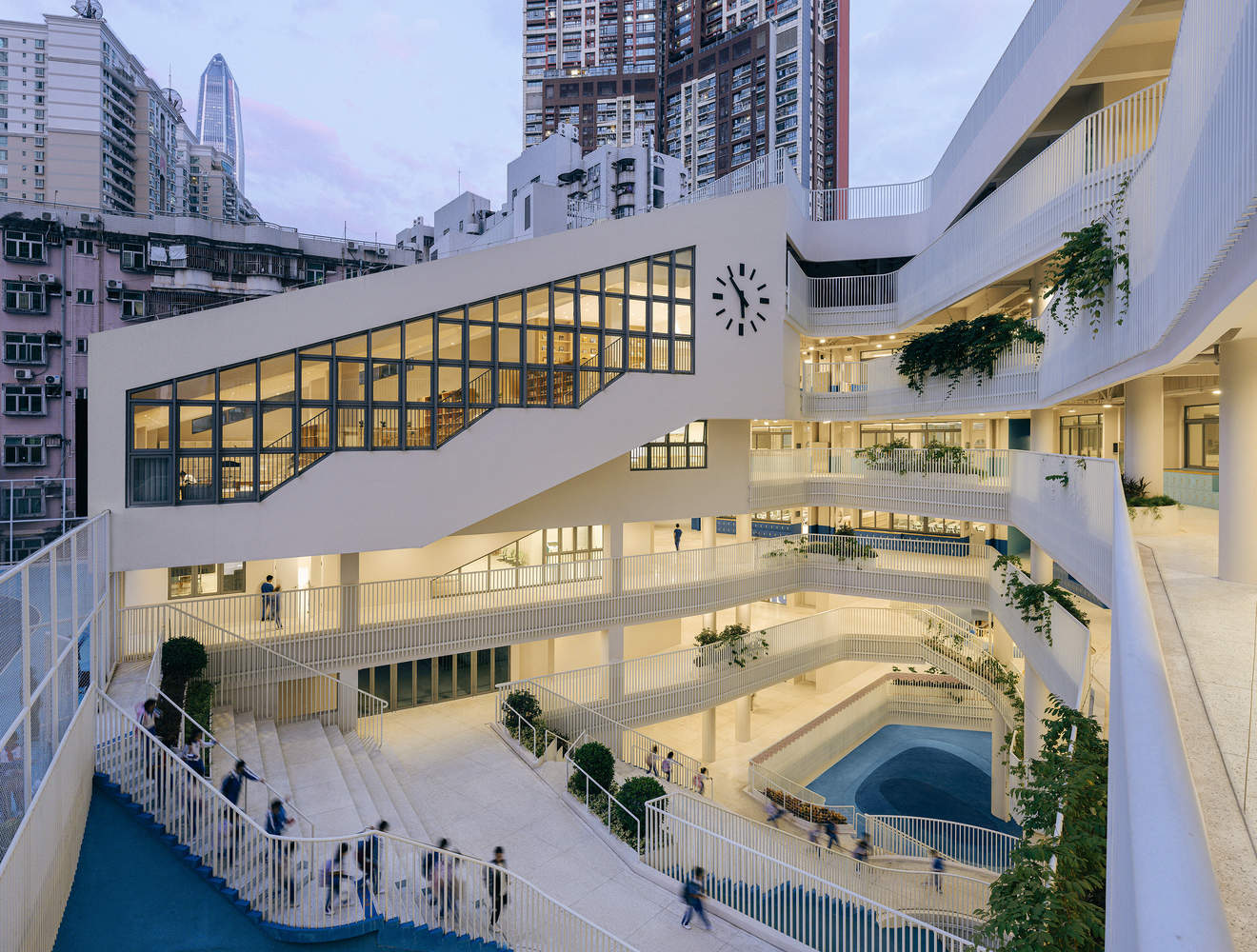
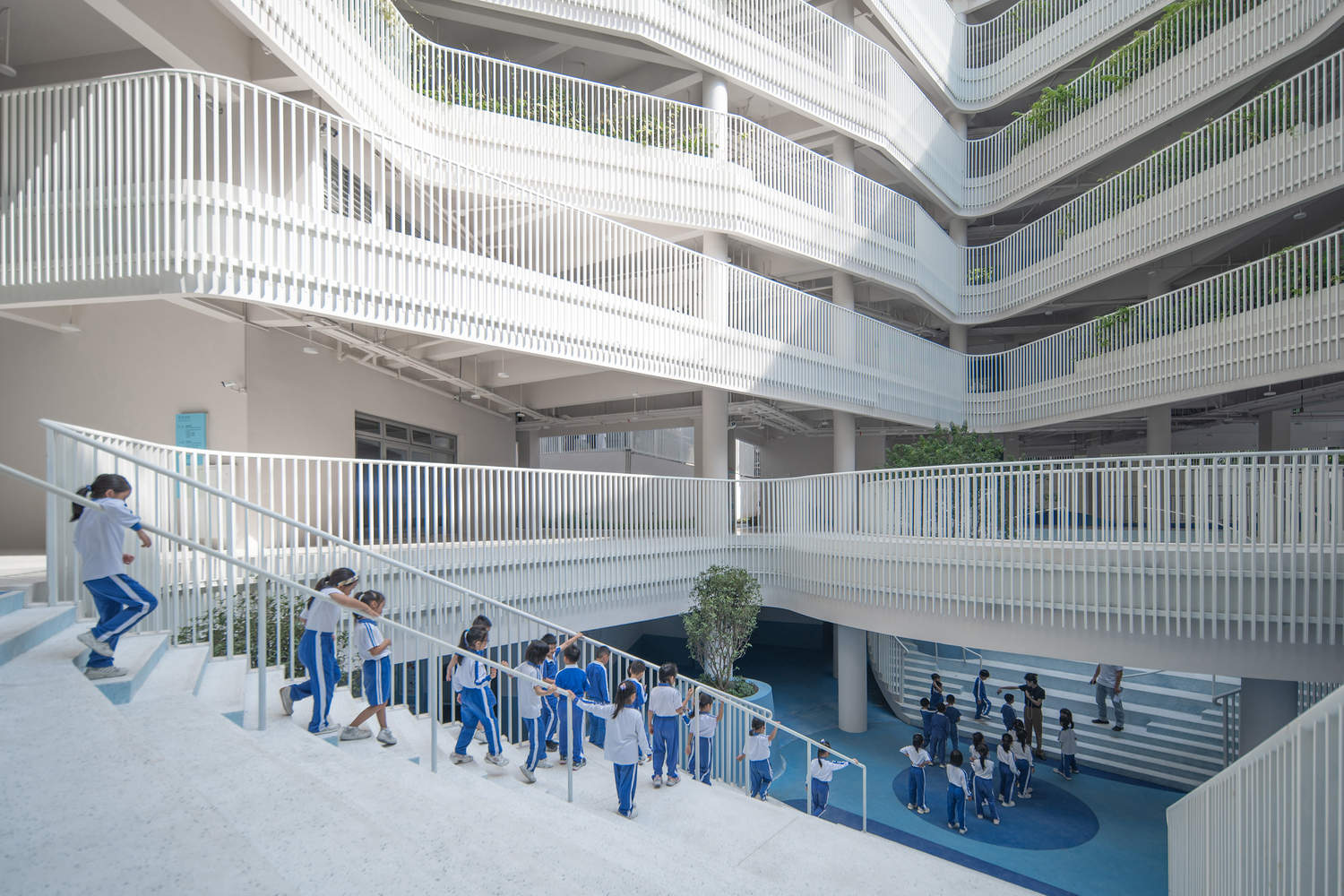
This public school is conceived as a three-dimensional "learning landscape," spatially echoing the pedagogical philosophy that emphasizes curiosity, discovery, and hands-on practice. Learning is no longer confined to rigidly arranged classrooms and corridors but occurs within a fluid field composed of diverse spaces. This multi-layered space supports various modes of learning and interaction, encouraging a student-centered approach while allowing the campus to flexibly adapt as educational needs evolve.
这所公立学校被构思为一个立体的“学习地景”,在空间上呼应了强调好奇心、探索发现和动手实践的教学理念。学习不再局限于刻板排列的教室和走廊,而是发生在由多样化的空间所构成的流动场域中。这种多层次的空间支持各种学习和互动模式,在鼓励以学生为中心的同时,也使校园能够随着教育需求的演变而灵活调整。
© Yumeng Zhu
Courtesy of People's Architecture Office
Courtesy of 众建筑
Courtesy of People's Architecture Office
Courtesy of 众建筑
The environment outside the classroom is treated as an equally important site for learning. Elevated outdoor areas, various usable architectural forms and components, and classrooms opening outwards blur the boundaries between indoors and outdoors. Outdoor learning allows students to break free from the constraints of desks, creating opportunities for hands-on experimentation and direct interaction with nature.
教室之外的环境被视为同等重要的学习场所。架空的户外区域、各种可供使用的建筑形体与部件,以及向外敞开的教室,模糊了室内与室外的边界。户外学习让学生们得以摆脱课桌的束缚,创造了动手实验以及与大自然直接互动的机会。
© Yumeng Zhu
Courtesy of People's Architecture Office
Courtesy of 众建筑
© Yumeng Zhu
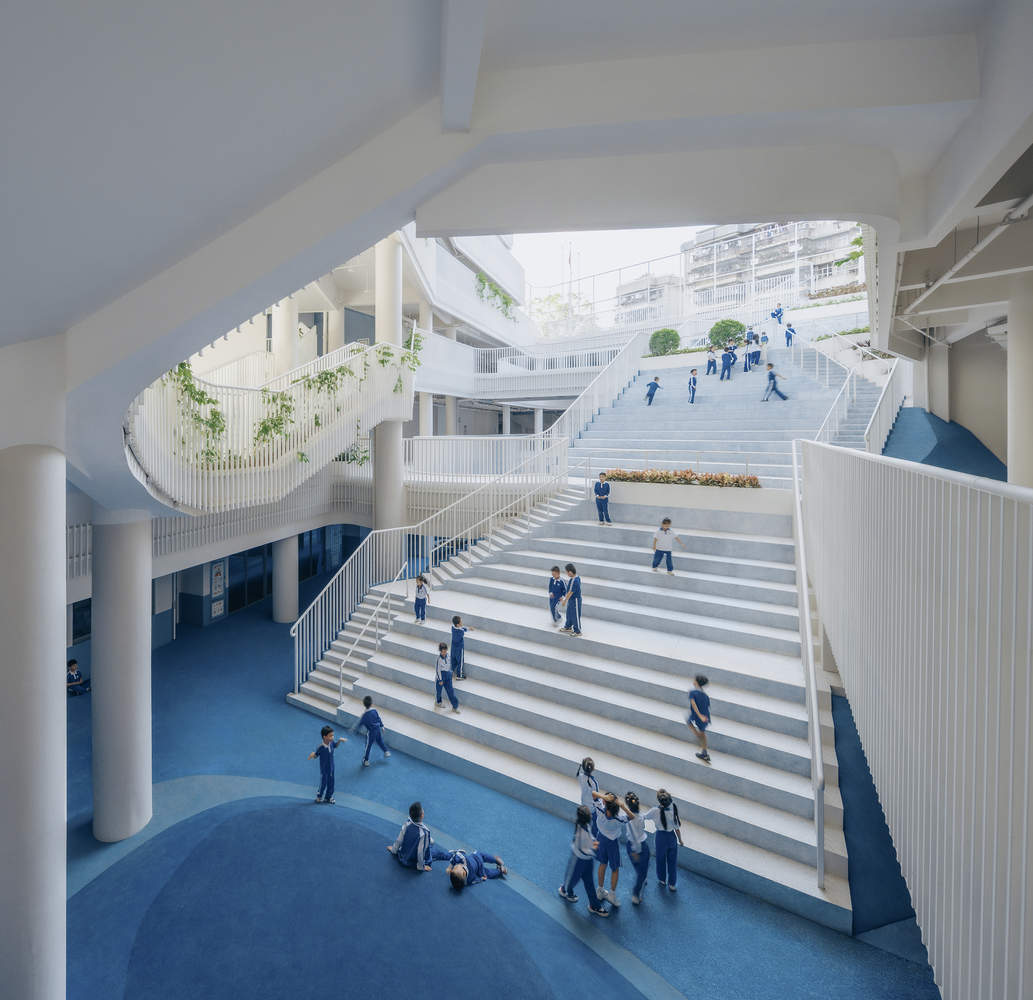
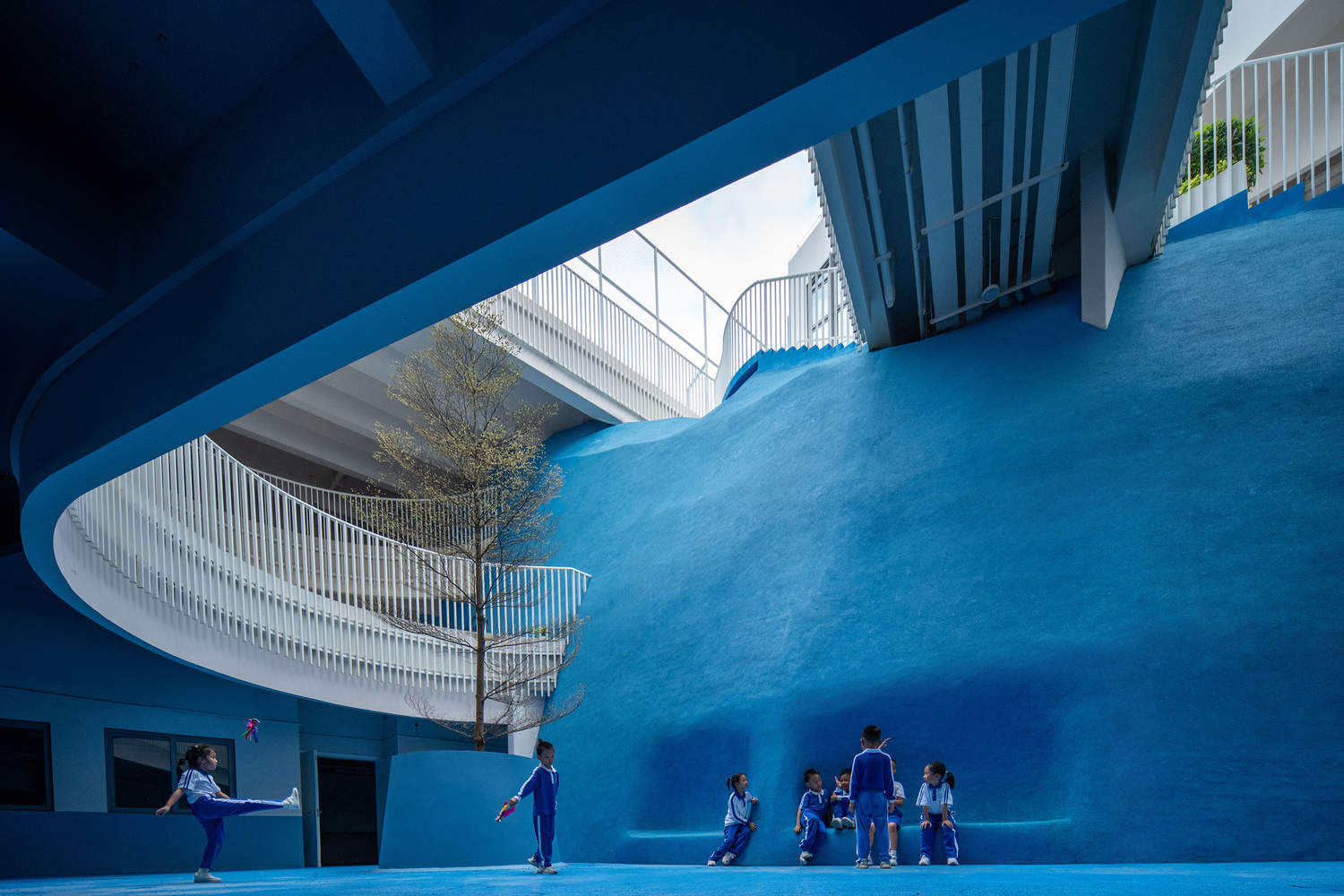
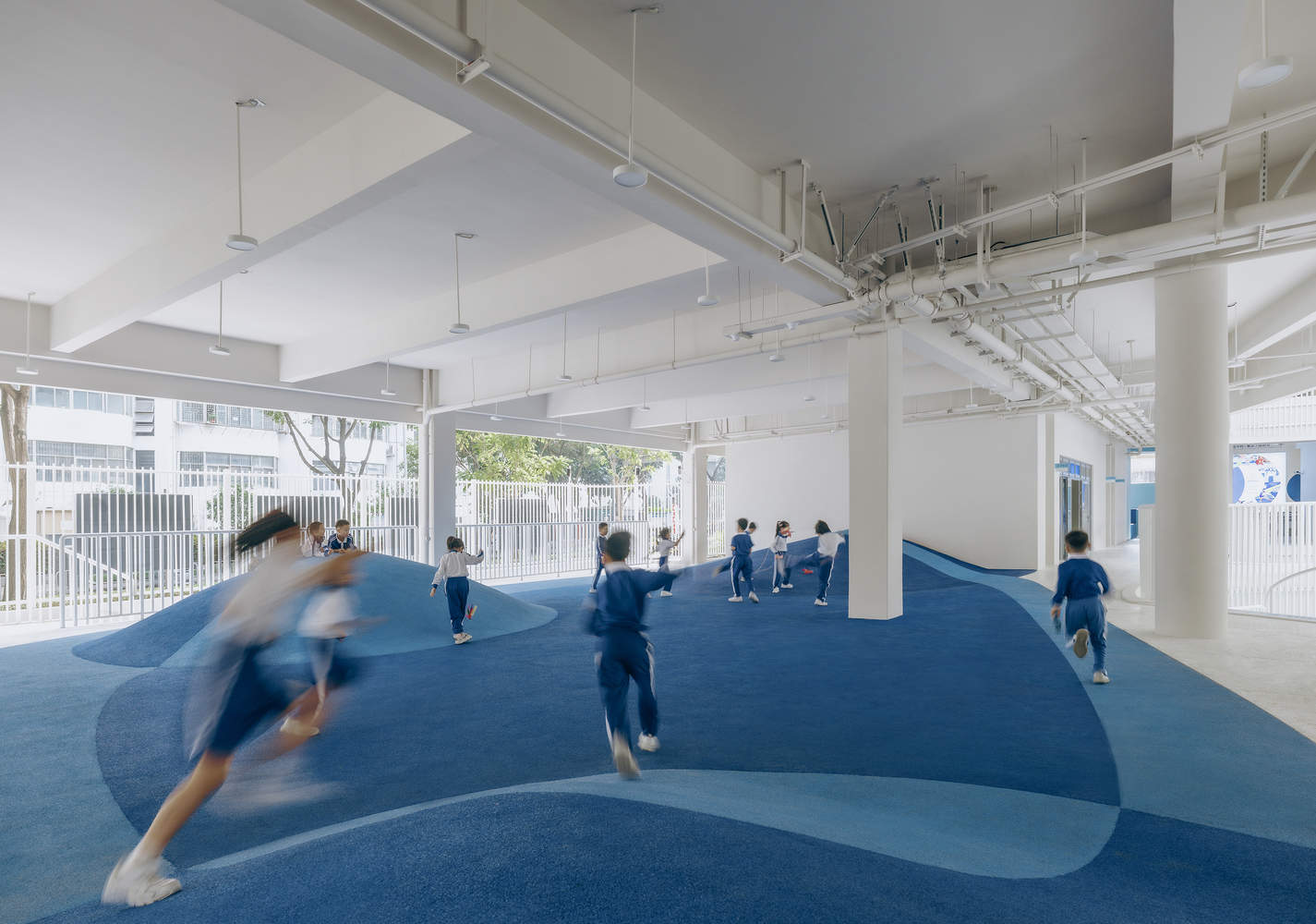
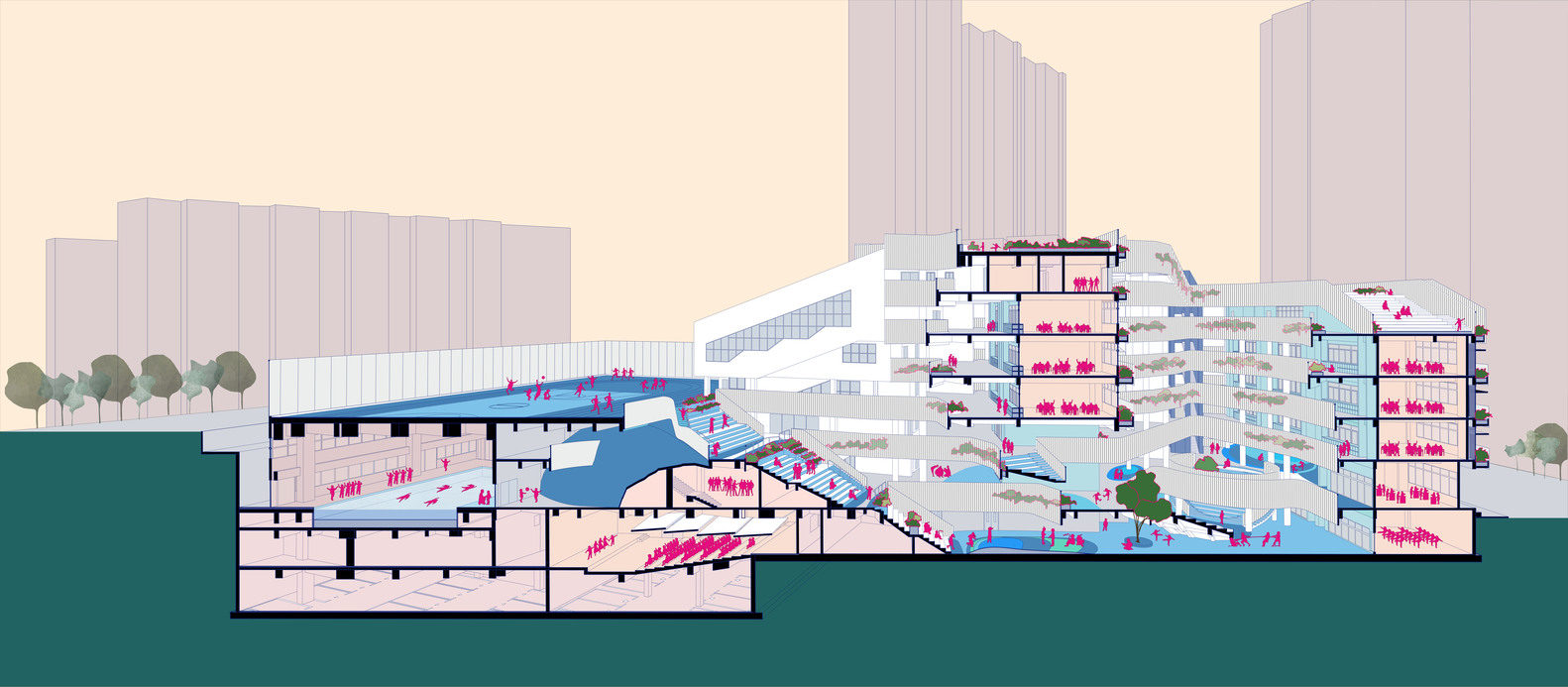
The "Learning Landscape" is structured around three core landscape elements: the "Mountain," the "Valley," and the "Beach." The "Mountain," located in the North Courtyard, houses the school's theater and cafeteria internally, while its terraced exterior provides vertical circulation and seating for rest. At its base, the raised terrain forms a stage for performances and activities. The "Valley," in the South Courtyard, is scaled specifically for younger students, with a layout logic similar to the "Mountain." Steps on both sides descend to a central mound, creating stepped seating suitable for informal gatherings. Adjacent to the "Valley" is the "Beach," a fun, undulating terrain designed to promote the physical development of lower-grade students and encourage open-ended play exploration.
“学习地景”围绕三大核心景观元素构建:“山”、“谷”和“滩”。位于北庭院的“山”内部容纳了学校的剧场和食堂,其阶梯状的外部形态则提供了垂直动线和休憩座位。在其底部,隆起的地形形成了一个用于表演和活动的舞台。“谷”在南庭院,尺度上专为低年级学生设计,布局逻辑与“山”相似。两侧的阶梯向下延伸至中央土丘,形成了适合非正式聚会的阶梯式座位。紧邻“谷”的是“滩”,这是一片由起伏丘陵组成的充满趣味的地形,旨在促进低年级学生的体能发展并鼓励开放式的游戏探索。
© Yumeng Zhu
Sectional Perspective
剖透视
© Yumeng Zhu
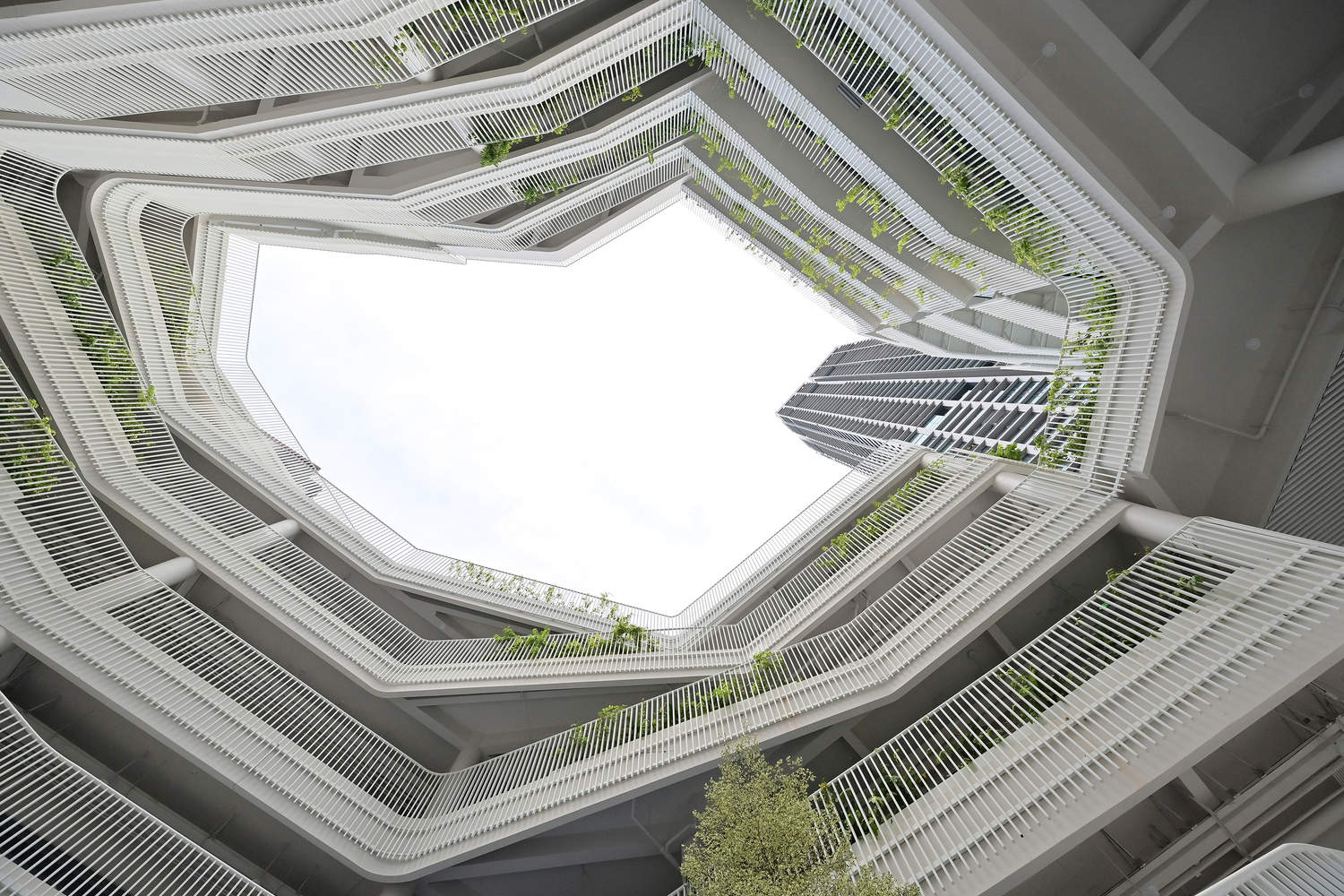
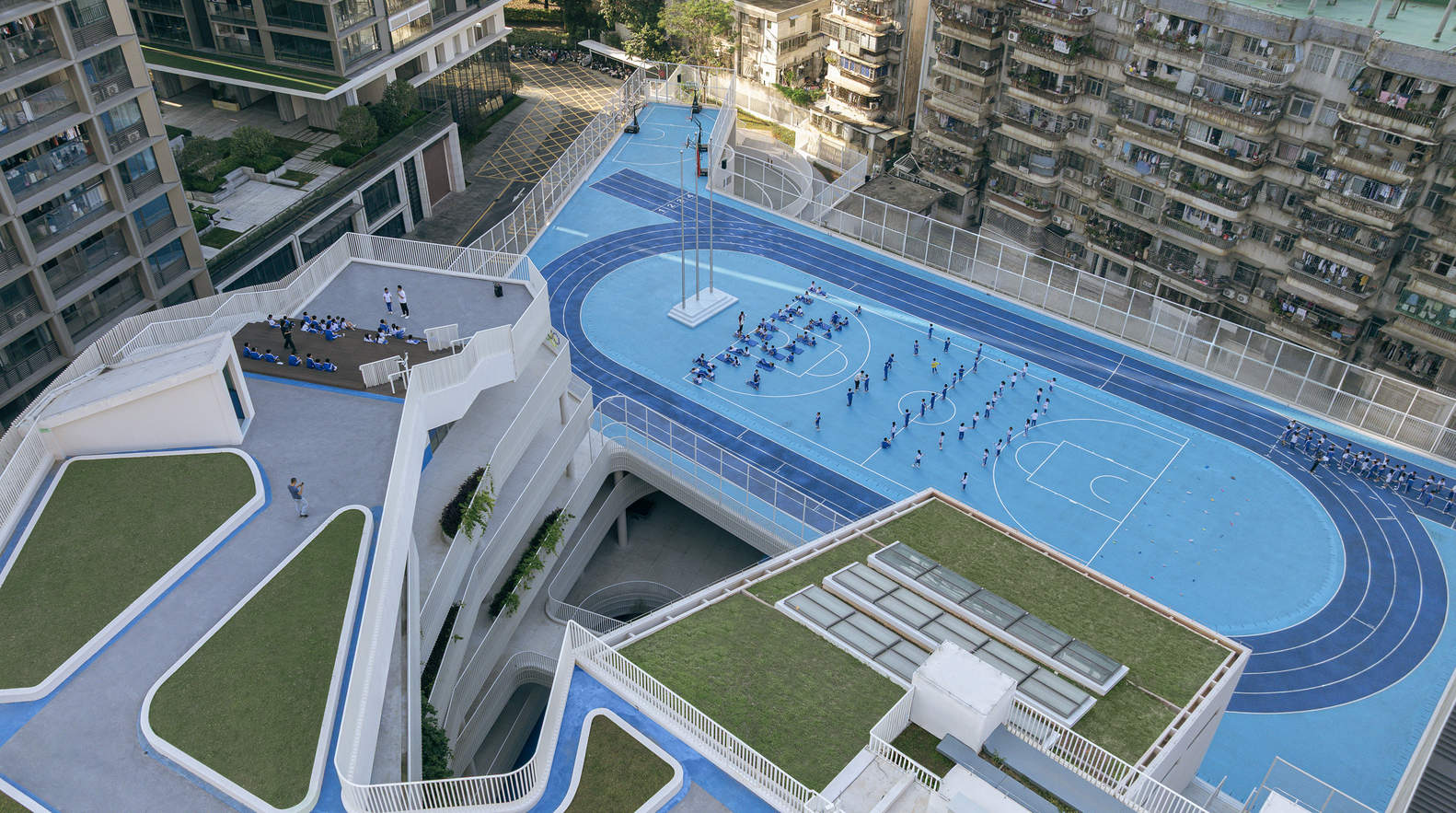
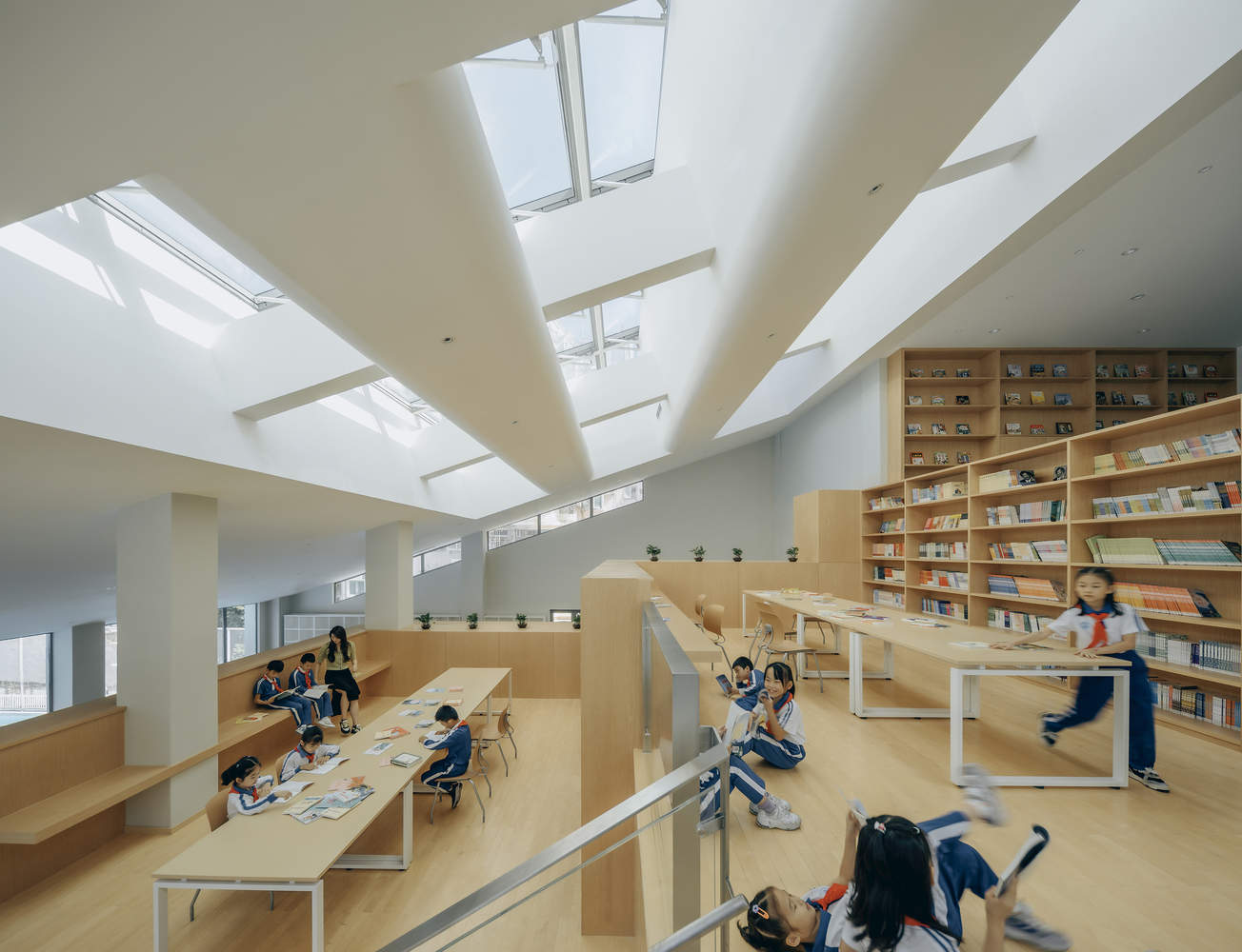
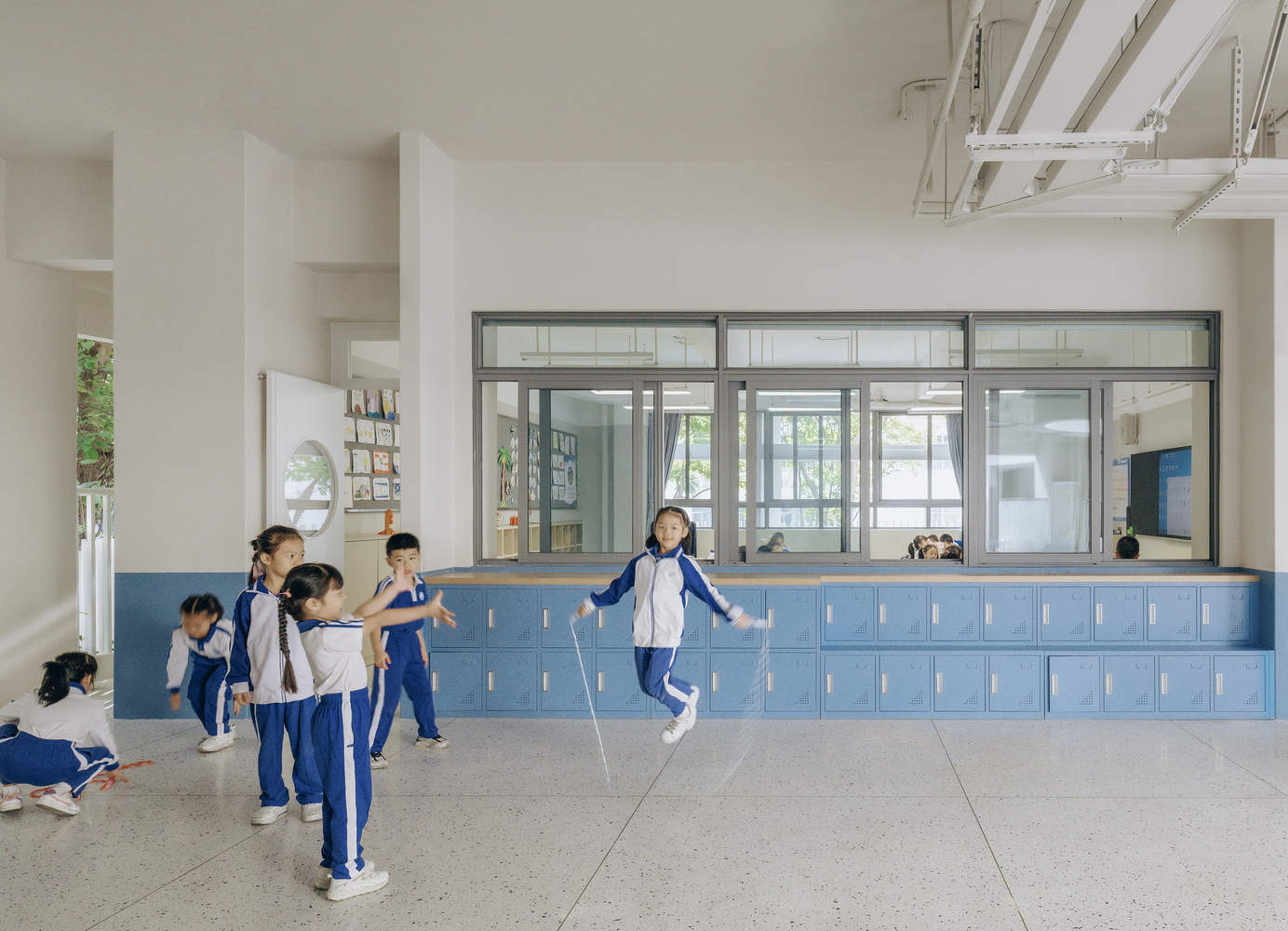
Throughout the campus, numerous spacious, open transitional areas support interdisciplinary learning, teamwork, and informal communication. Other stepped areas, including green roofs, the library, and sports facilities, connect different floors, enhancing visual and spatial continuity. Vegetation across the campus not only helps cool the tropical climate of Shenzhen, filter pollutants, and shield against noise from busy streets, but also serves as an object for students to learn about and care for. On an urban scale, the school is designed as a southward extension of the large park to the north. The cooling effect provided by the campus's natural greenery also helps mitigate the urban heat island effect caused by surrounding commercial development.
在整个校园中,大量宽敞开放的过渡空间支持着跨学科学习、团队协作和非正式交流。包括绿色屋顶、图书馆和体育设施在内的其他退台空间将不同楼层连接起来,增强了视觉和空间上的连续性。遍布校园的植被不仅有助于在深圳的热带气候中降温、过滤污染物并阻隔繁忙街道的噪音,同时也成为了学生们学习和养护的对象。在城市尺度上,这所学校被设计为北侧大型公园的南向延伸。校园自然绿化带来的降温作用也有助于缓解周边商业开发带来的城市热岛效应。
© Yumeng Zhu