棕地再生与生态敏感性:该项目最核心的亮点在于其对一处废弃采石场的成功再生。建筑师敏锐地捕捉到这片“棕地”独特的生态潜力,通过周密的设计,不仅消除了工业遗留负担,更重要的是,在建设过程中积极保护和促进了场地内原有的高生物多样性。建筑形态与陡峭的岩壁和层叠台地完美融合,通过保留并强化自然植被,为本地动植物创造了宜居环境,实现了对城市无序扩张的有效遏制和可持续城市发展的积极实践。
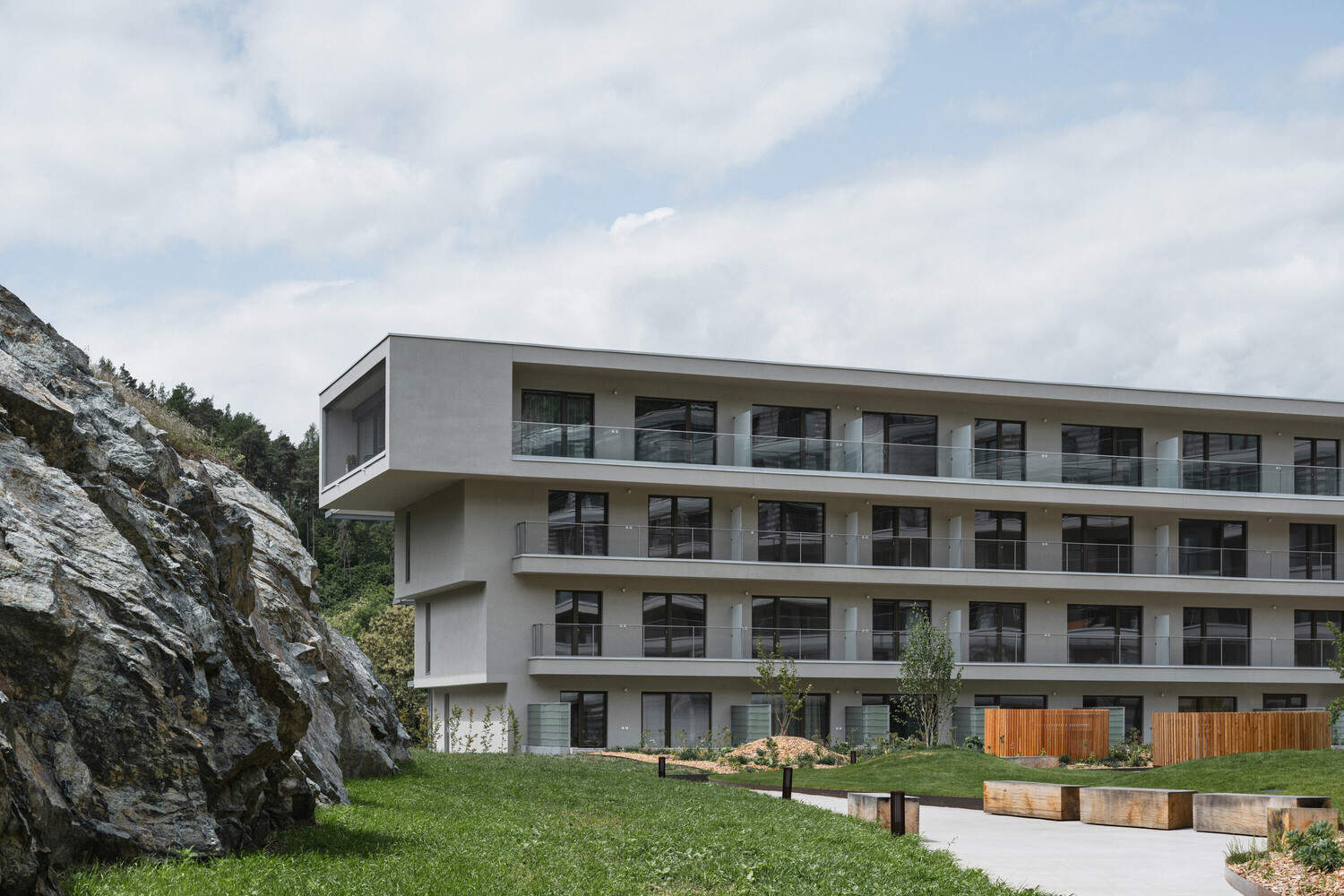
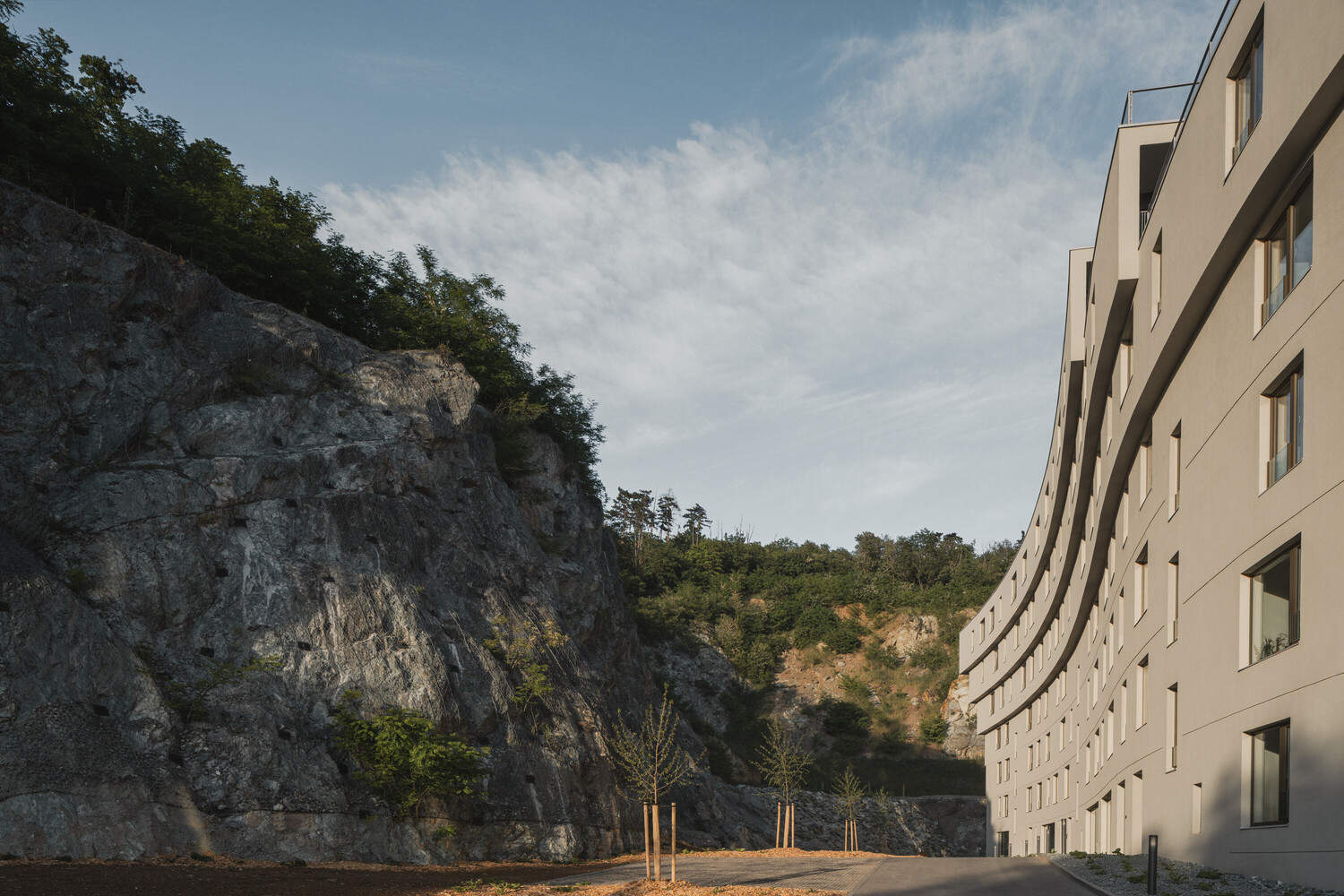
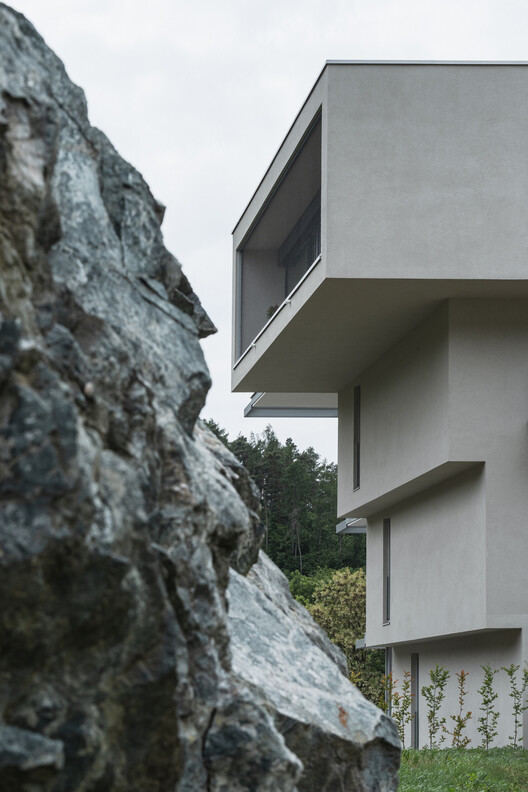
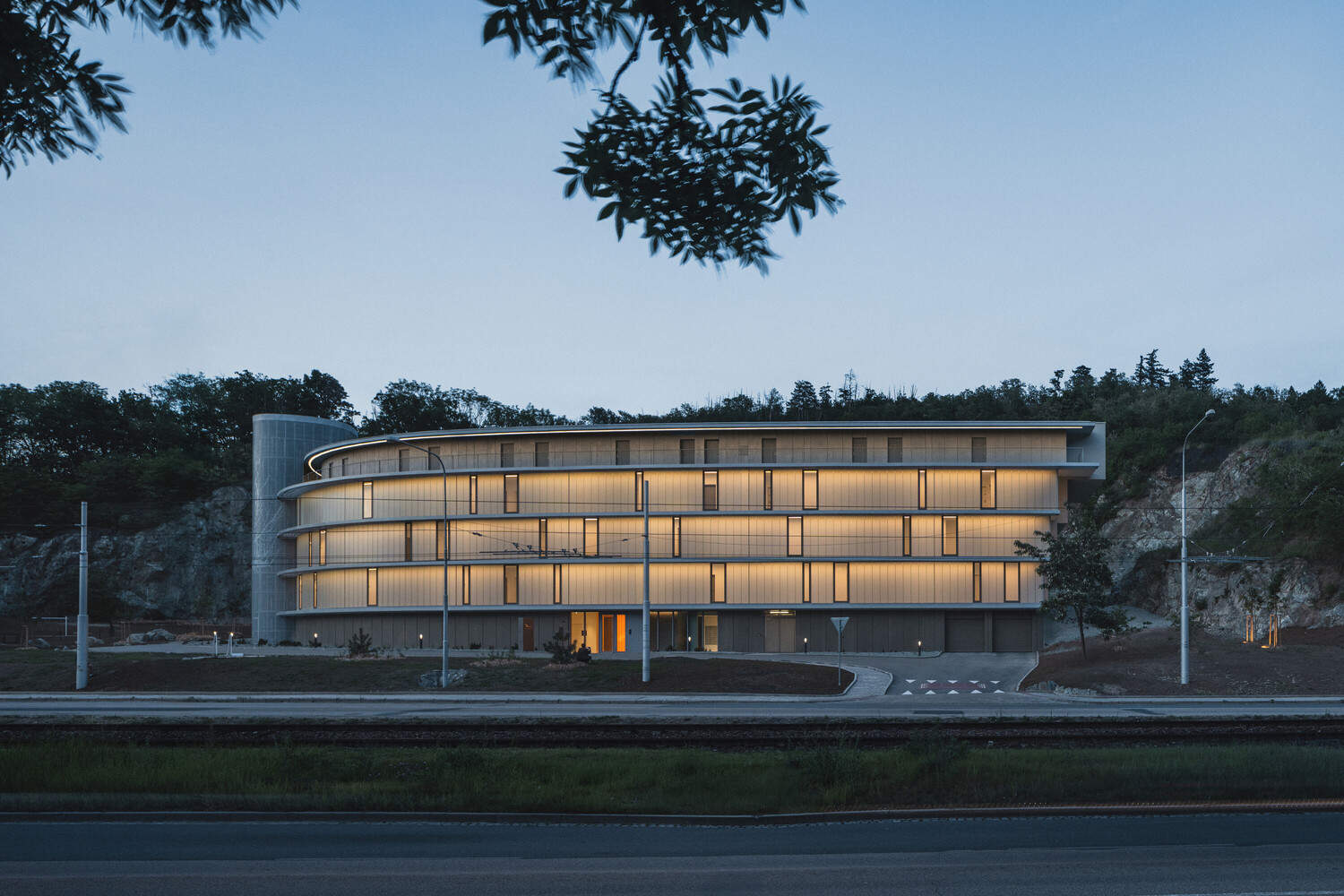
与地形深度融合的形态塑造:建筑师巧妙地利用了采石场多变的地形特征来决定建筑的体量和布局。建筑前部作为面向街道的隔音屏障,保障了内部庭院的静谧。设计上,建筑的曲线、灰泥色调以及乳白色玻璃幕墙与岩石肌理形成了和谐的对话,体现了建筑对场地文脉的尊重。地下车库设计特意保留了裸露的天然岩壁,使建筑的“根基”直接嵌入历史地质结构中,这是一种对场地本底的极致尊重和美学表达。
全方位的居住体验与技术集成:“迪奥里特”住宅在提供高品质居住体验方面表现出色。通过最大化共享绿色露台和朝向采石场景色的设计,确保了大多数单元都能享受优越的自然视野。技术层面,项目在能源效率和水资源管理方面达到了A级标准,采用了地源热泵供暖制冷,并建立了雨水收集灌溉系统,极大地降低了运营成本和环境负荷。智能家居系统的集成,进一步提升了现代居住的舒适性和可持续性。
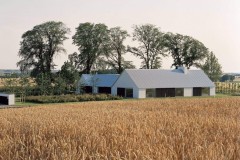
The newly built "Diorit" residential building is located on the site of a former quarry, a brownfield located in the narrow valley of the Svratka River, on the border between the Brno districts of Komín and Bystrc. Nature has gradually transformed this long-abandoned industrial environment into a vibrant ecosystem, which also includes rare species that would hardly find suitable living conditions in the surrounding landscape.
新建的“迪奥里特”(Diorit)住宅楼选址于一处昔日采石场的旧址之上,该地块为废弃用地,位于布尔诺市科明(Komín)区和拜斯特尔茨(Bystrc)区交界处、斯夫拉特卡河(Svratka River)狭窄的河谷地带。大自然逐渐将这片荒废已久的工业环境转变为一个充满活力的生态系统,其中还包括一些在周边景观中难以找到适宜生存条件的珍稀物种。
© Petr Polák
© Petr Polák
© Petr Polák
The architects independently discovered the potential of this plot and designed a residential building project aimed at revitalizing this brownfield, eliminating the environmental burden, while respecting the natural environment and protecting the site's exceptionally high biodiversity. They persuaded local authorities, national administration bodies, and project investors to recognize the significance of this project, and together successfully completed this development named after the mineral historically extracted from the plot. The building exemplifies the effort to limit urban sprawl without encroaching on open landscapes and the concept of promoting sustainable urban development by utilizing former industrial areas.
建筑师们独立发现了该地块的潜力,并设计了一个住宅楼项目,该项目旨在改造这片棕地(污染废弃地),消除环境负担,同时尊重自然环境并保护该地点极高的生物多样性。他们说服了地方当局、国家管理部门以及项目投资者,使其认识到该项目的重大意义,并携手成功完成了这一以该地块历史上所开采的矿物命名的开发项目。该建筑体现了在避免侵占开阔景观的前提下限制城市无序扩张的努力,以及利用原工业区推动可持续城市发展的理念。
© Petr Polák
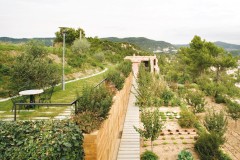
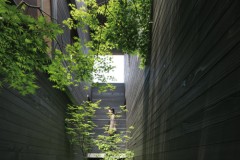
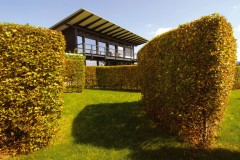
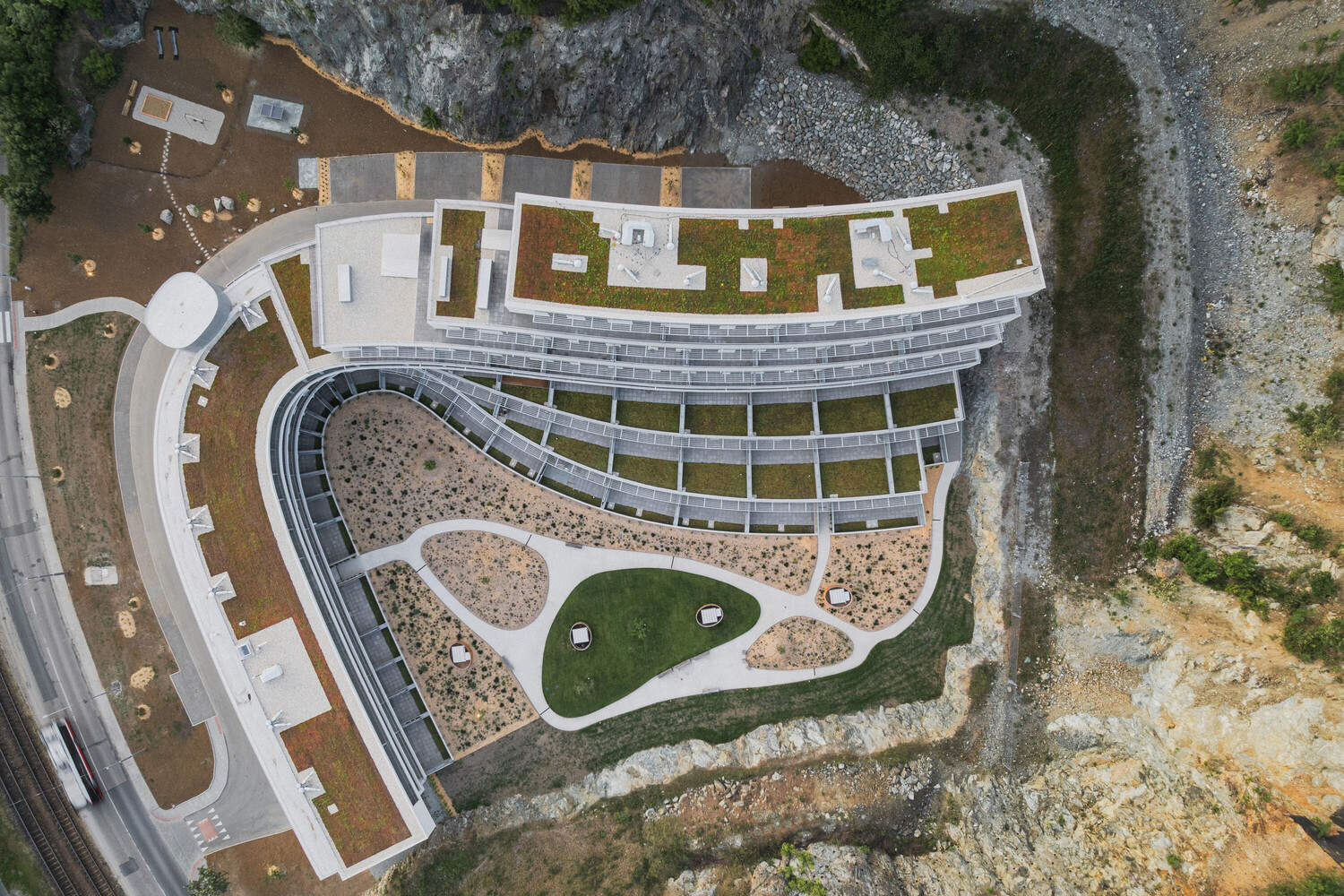
The building is situated in a topographically diverse area, with its form responding to the surrounding environmental conditions. The front of the building acts as a noise barrier along the street and smoothly transitions into the courtyard area, which follows the morphological features of the quarry’s original rock face—steep slopes and layered terraces. The architectural style harmonizes with the local topography—natural plaster tones, milky-white glass facades, fluid curves, and distinct fault lines are complemented by extensive greenery, creating a cohesive whole that highlights the perfect integration of the building with the regenerated, formerly industrial quarry environment. The landscape design respects the existing vegetation on the rock face, retaining some naturally grown plants and promoting biodiversity through new plantings. This creates natural habitats for birds, insects, and small mammals, enhancing the stability of the local ecosystem. The green roof park on top of the underground garage seamlessly connects with the vegetation on the rock face, creating a pleasant microclimate within the building complex.
该建筑坐落于地形多样的区域,其形态与周边环境条件相呼应。建筑前部作为沿街的隔音屏障,并自然流畅地过渡至庭院部分,庭院设计顺应了采石场原有岩壁的形态特征,即陡峭的坡面与层层叠叠的台地。建筑风格与当地地形相契合 —— 天然灰泥色调、乳白色玻璃幕墙、流畅的曲线与鲜明的断层相得益彰,再辅以大片的绿植景观,共同营造出一个和谐的整体,彰显出建筑与自然重生的原工业采石场环境的完美融合。景观设计尊重岩壁上的原有植被,保留了部分自然生长的绿植,并通过新增种植来促进生物多样性。这为鸟类、昆虫及小型哺乳动物创造了贴近自然的栖息地,增强了当地生态系统的稳定性。地下车库屋顶的休闲绿色屋顶公园与岩壁上的植被无缝衔接,在建筑群内部营造出宜人的微气候环境。
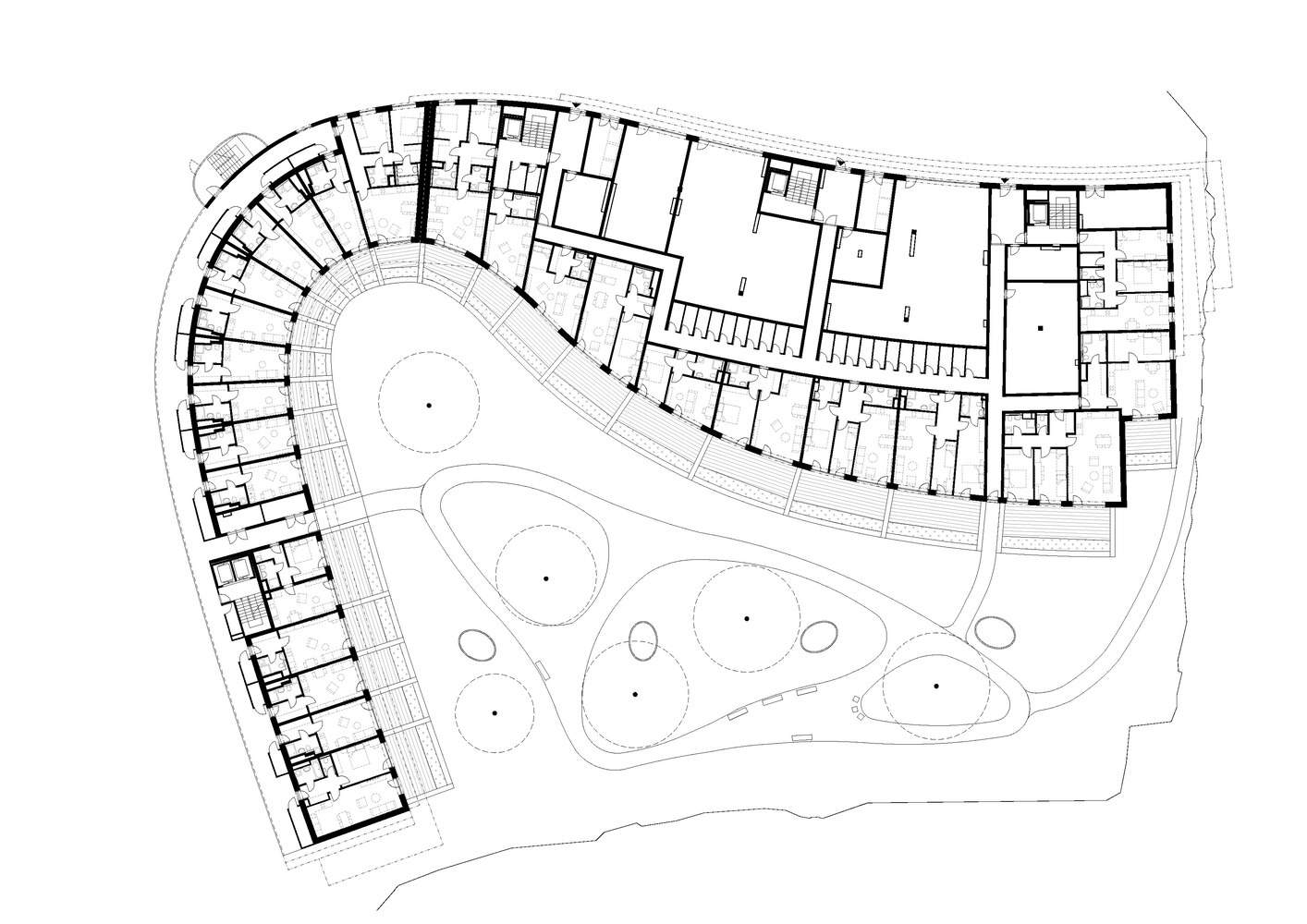
Ground floor plan
The building offers a diverse spatial arrangement, providing both exclusive high-end residential apartments and quality investment opportunities. The building includes various unit types, from studio apartments with kitchenettes to four-room apartments with kitchenettes; most apartments face the shared park via green terraces, offering unique views of the quarry's natural environment. Spacious apartments at the ends of each floor also feature large roof terraces overlooking the opposite side of the Svratka River valley. Shared facilities are also available within the building, including reception areas and commercial units offering various services. All apartments are equipped with a smart home server that controls ventilation, underfloor heating, cooling, and other optional systems.
该建筑空间布局丰富多样,既提供高档独享的住宅公寓,也带来优质的投资机遇。建筑内设有从带小厨房的单间公寓到带小厨房的四居室公寓等多种户型,大部分公寓通过绿色露台朝向共享公园,可饱览采石场自然环境的独特景致。每层楼端部宽敞的公寓还设有大面积的屋顶露台,可俯瞰斯夫拉特卡河谷对岸的景色。建筑内还配备了共享设施,包括接待区以及提供各类服务的商业单元。所有公寓均配备智能家居服务器,可控制通风系统、地暖、制冷及其他可选系统。
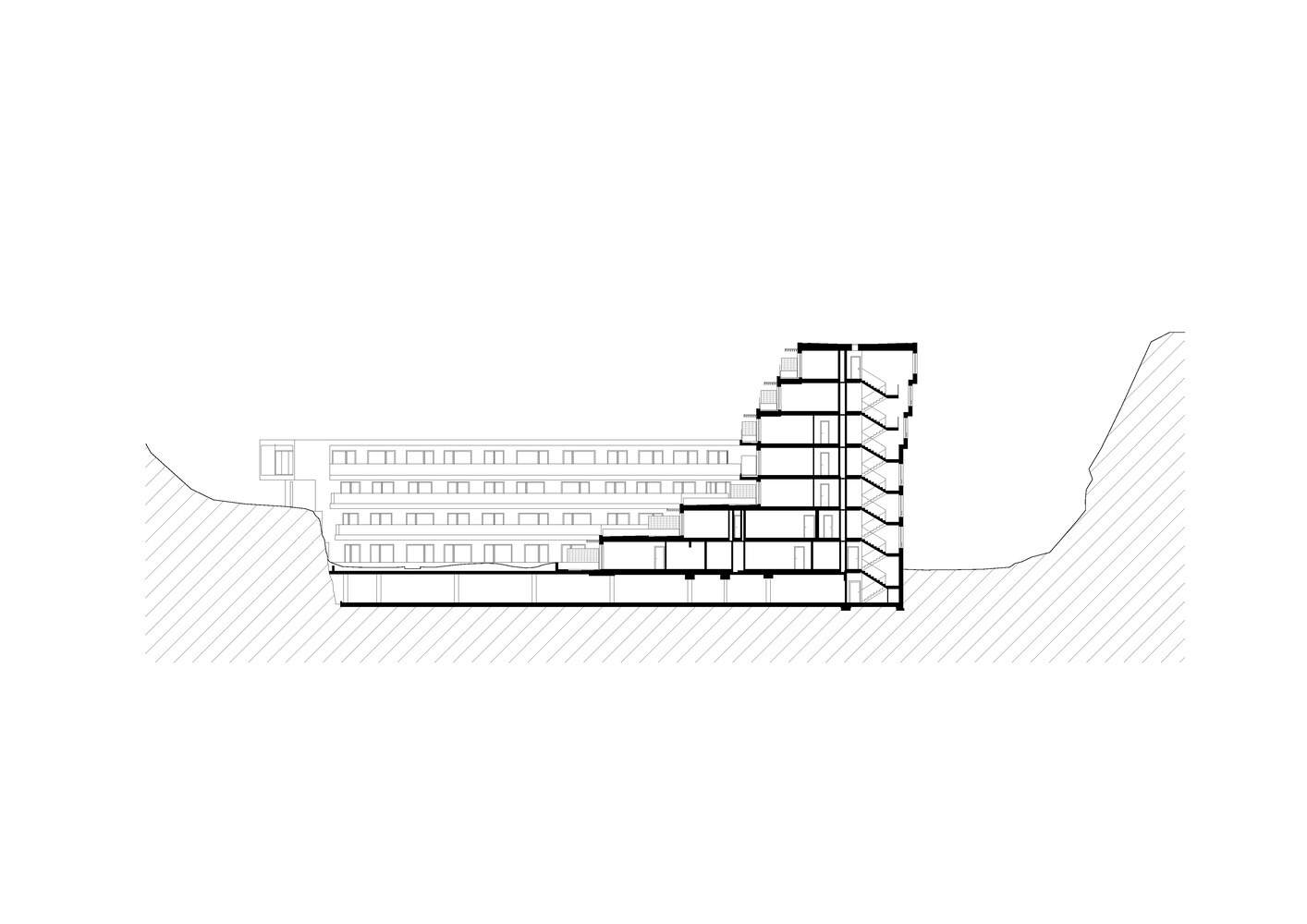
Section
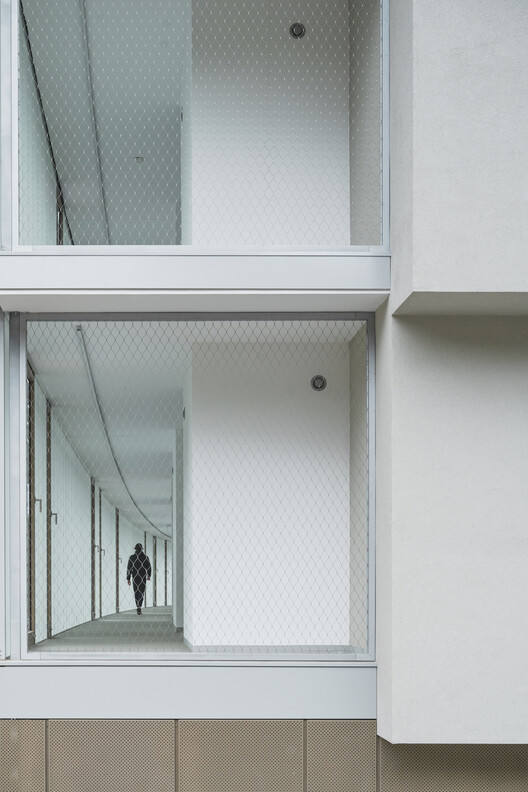
The vertical load-bearing structure of the building consists of reinforced concrete walls (both transverse and perimeter) and silicate brick blocks, complemented by monolithic floor slabs. The underground garage utilizes a monolithic frame structure, which allows the natural rock face to be preserved and exposed. The building layout combines staircases and corridors; the glass corridor facing the main road also functions as a noise barrier. Special attention was paid to the architectural planning of the common areas, emphasizing easy orientation through color differentiation in various zones.
该建筑的垂直承重结构由横向及周边钢筋混凝土墙与硅酸盐砖砌块构成,并配有整体式楼板。地下车库采用整体框架结构,使天然岩壁得以保留并裸露在外。建筑布局将楼梯段与走廊设计相结合,且面向主干道的玻璃走廊还兼具隔音屏障的功能。室内设计特别注重公共空间的建筑布局规划,强调通过不同区域的颜色区分来实现便捷的方位辨识。
© Petr Polák
In terms of energy efficiency and water management, the building is highly sustainable, rated Class A, with low operating costs and significant environmental features. The building uses a heat pump system, drawing energy from a deep well for heating and cooling. Rainwater is collected in underground tanks for garden irrigation, while excess rainwater during heavy storms is discharged directly into the river, avoiding burdening the public sewer system. This project demonstrates that architectural design can respect the natural environment, provide a comfortable living experience, protect the landscape from excessive urbanization pressure, while simultaneously possessing aesthetic value and long-term sustainability.
在能源效率与水资源管理方面,该建筑具备高度可持续性,获评 A 级标准,运营成本低且环保特征显著。建筑采用从深井汲取能量的热泵系统进行供暖与制冷。雨水被收集至地下水箱,用于花园灌溉,而暴雨期间的过量雨水则直接排入河流,避免给公共下水道系统造成负担。该项目表明,建筑设计能够尊重自然环境,提供舒适的居住体验,保护景观免受过度城市化压力的影响,同时兼具美学价值与长期可持续性。
© Petr Polák
© Petr Polák
© Petr Polák