立面统一与文脉重塑:gmp的设计核心在于通过最小干预实现对场地文脉的尊重与重塑。面对基地内风格迥异、跨越数十年建造的四栋建筑,设计师巧妙地提取了早期建筑的古典现代主义语言作为设计母题,并以统一的白色立面处理手法,将所有建筑整合为一个视觉上和谐的整体。这种策略不仅消除了不同年代建筑带来的杂乱感,更通过对宿舍楼装饰元素的简化和对食堂建筑关键历史细节(如门楣、雨棚挂饰)的精细修复,实现了对场地记忆的现代化转译与激活,展现了高超的城市有机更新能力。
可持续性与材料的再利用:本次改造秉持了可持续发展的理念,强调对现有资源的再利用。在内部空间设计中,贯彻了极简美学原则,并尽可能保留和修复了原有建筑材料。例如,教学楼内具有历史感的水磨石地面经过精心处理后重获新生,食堂的开放式屋架结构也得到了优化,这些措施不仅节约了资源、降低了碳足迹,同时也保留了建筑原有的空间质感和历史温度,使得新功能与老建筑的“皮肤”实现了深层次的对话。
清晰的导向性与景观整合:景观设计作为有机整体的重要组成部分,由WES魏斯景观设计事务所合作完成,其核心价值在于强化了校园的视觉通透性、空间导向性和清晰度。通过精心的场地布局和景观元素植入,使得原本可能略显零散的建筑群落获得了清晰的组织逻辑。同时,对场地内珍贵古树(如近70年的广玉兰和水杉树阵)的悉心保留,不仅保护了生态肌理,更通过这些“活着的历史”,深化了校园的空间精神和场所感,提升了整体环境质量。
The site was originally the Shanghai Metallurgical Machinery School, built in 1955 and later affiliated with the Shanghai University of Applied Technology. After the renovation is completed in 2024, this place will reopen as the Cao Bao Road Campus of Shanghai Business School, and will house the Sino-Swiss university cooperation project—the Shanghai Lausanne School of Hotel Management.
该基地原为建于1955年、后归属上海应用技术大学的上海冶金机械学校。2024年改建完成后,这里重启为上海商学院漕宝路校区,并设立了中瑞高校合作项目——上海洛桑酒店管理学院。
© Marcus Bredt
© Marcus Bredt
© Marcus Bredt
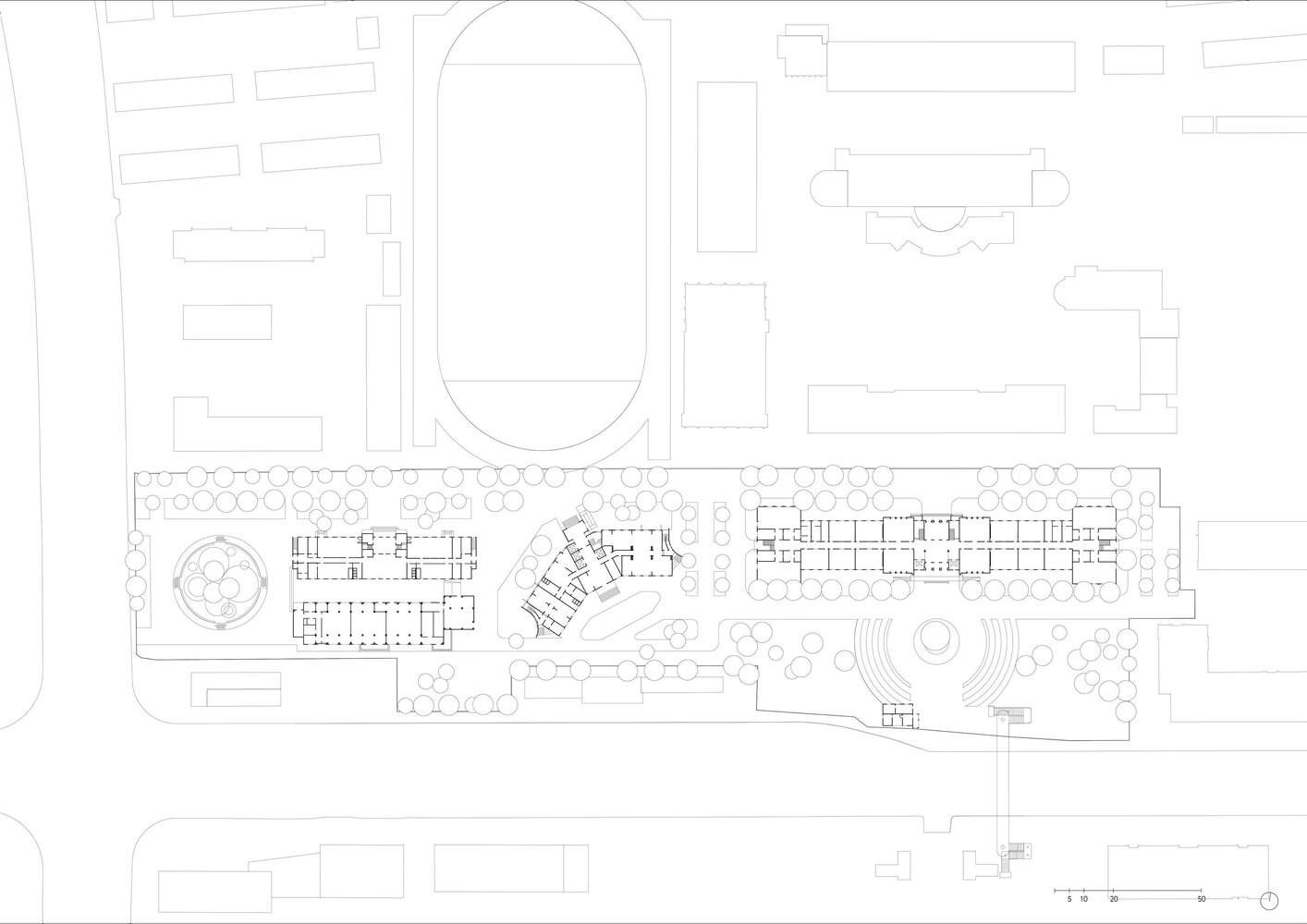
Floor Plan
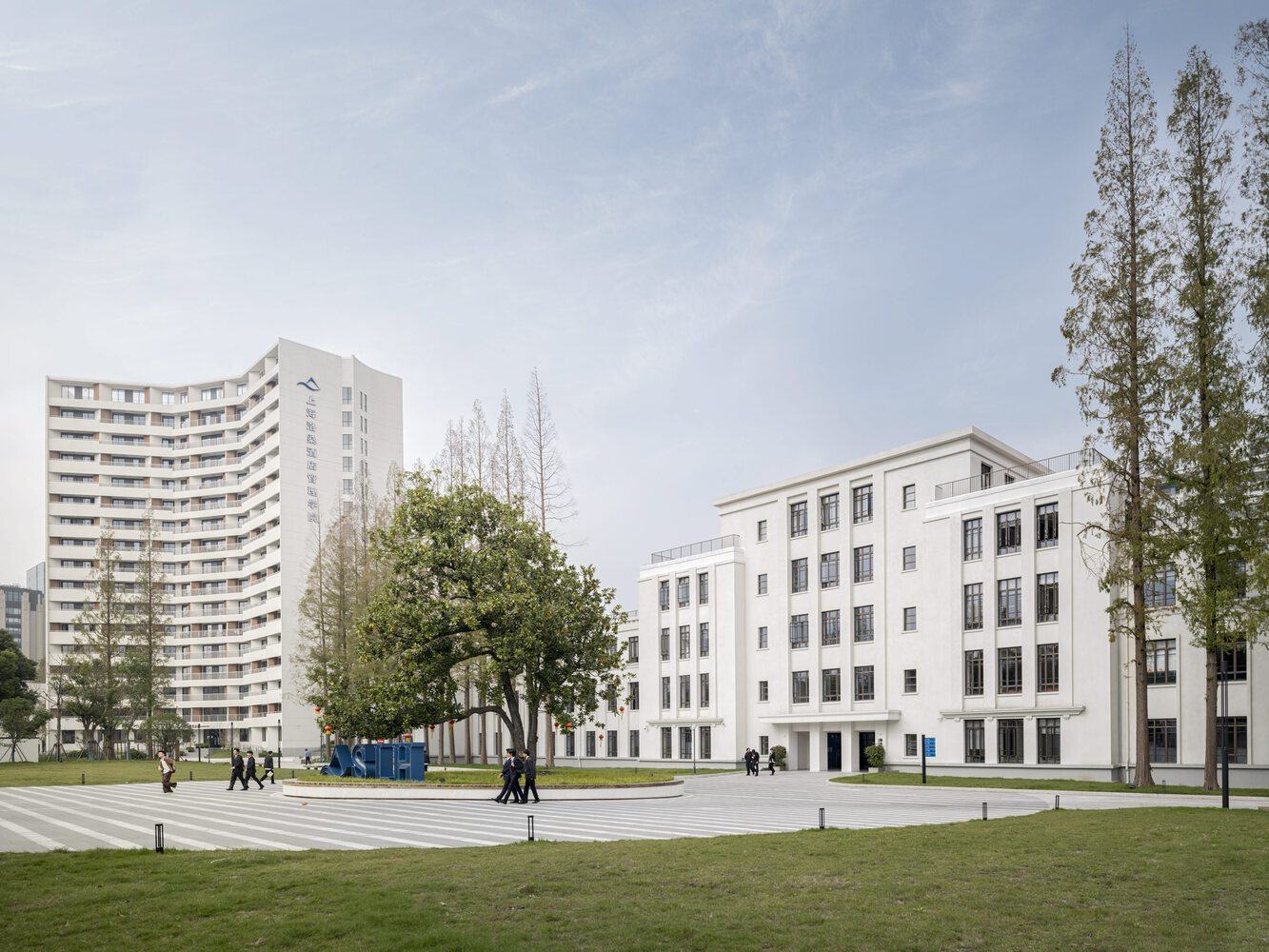
In the first phase of construction, the four buildings arranged linearly along Cao Bao Road were reactivated with minimal intervention: including the central teaching building, student dormitories, the canteen on the west side, and the ancillary building currently used as a library, study rooms, and conference rooms. The four buildings were constructed in the 1950s, 80s, and 90s, varying in style and volume. gmp’s design scheme takes the classical modernist language of the earliest building as a clue, reintegrating the differently styled buildings on the site into a unified whole. Upon completion of the first phase, the campus can accommodate the learning and accommodation needs of approximately 1,000 students.
在首期建设中,沿漕宝路呈线性布置的四栋建筑以最少的干预手段被重新激活:包括中央教学楼、学生宿舍、西侧食堂以及现作为图书馆、自习室和会议室使用的附属建筑。四栋建筑分别建于20世纪50、80与90年代,风格与体量各异。gmp的设计方案以其中最早期建筑的古典现代主义语言为线索,将场地内风格各异的建筑重新整合为统一的整体。首期工程完成后,校园可满足约1000名学生的学习与住宿需求。
Courtesy of gmp Architects
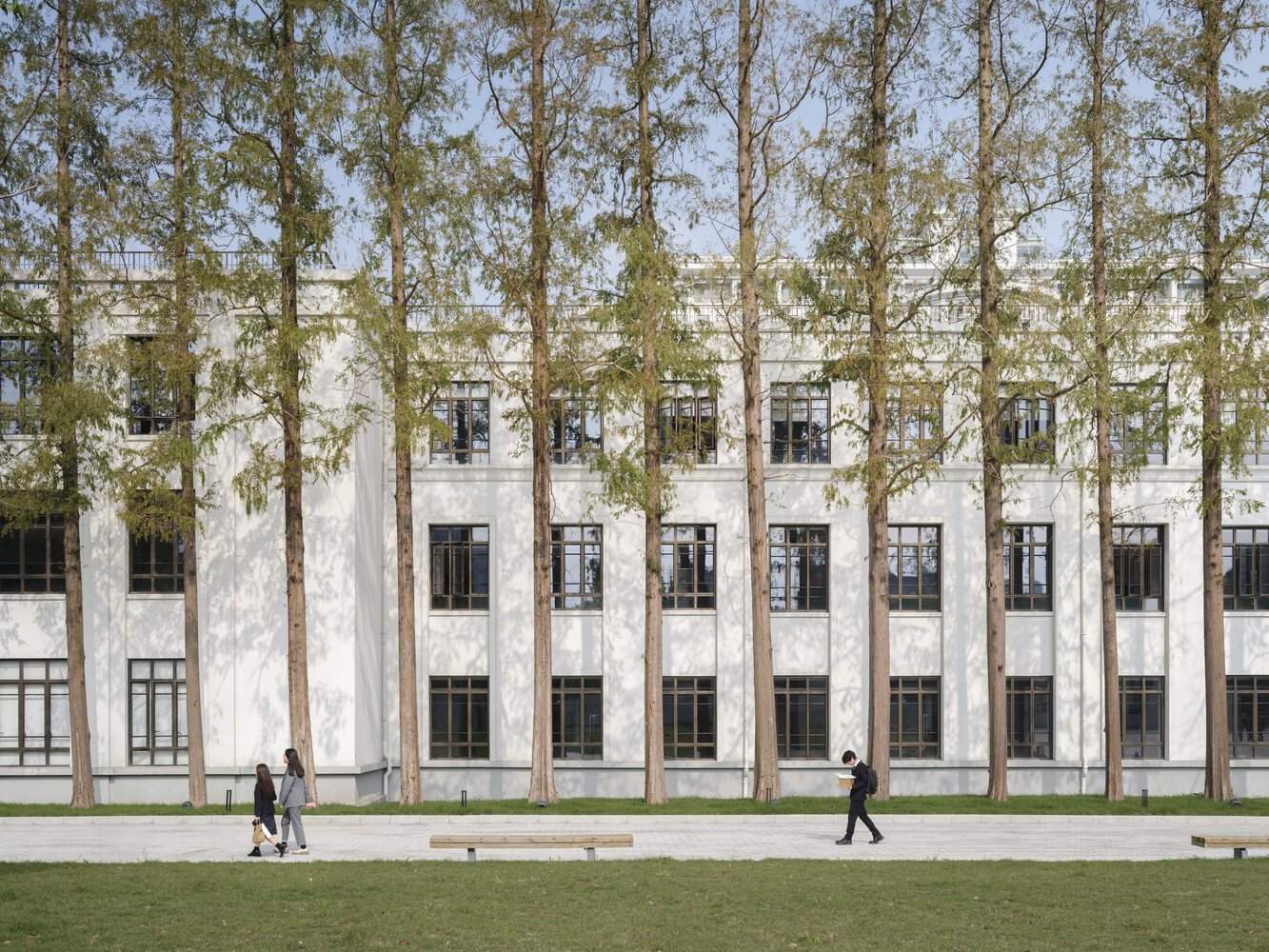
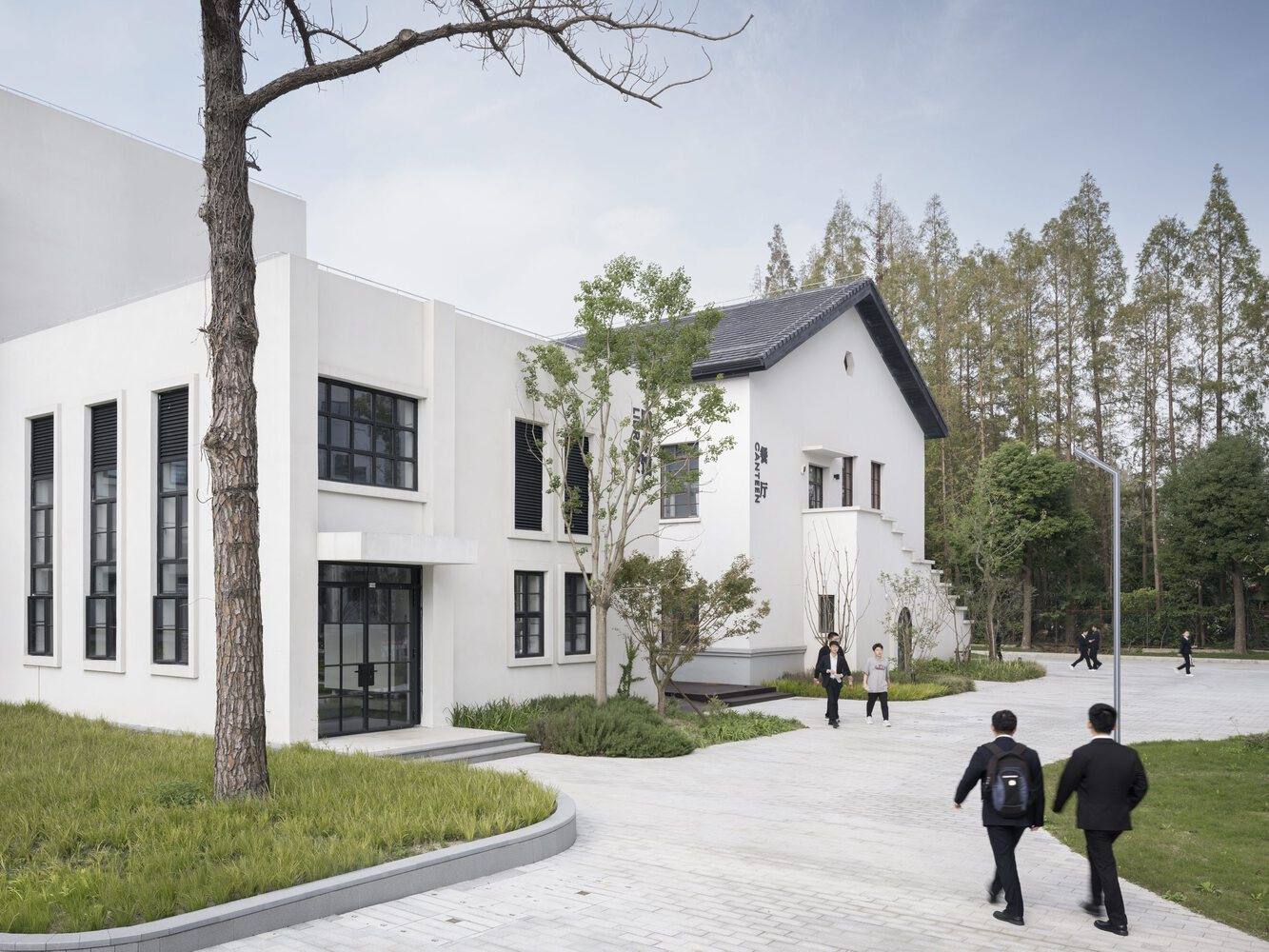
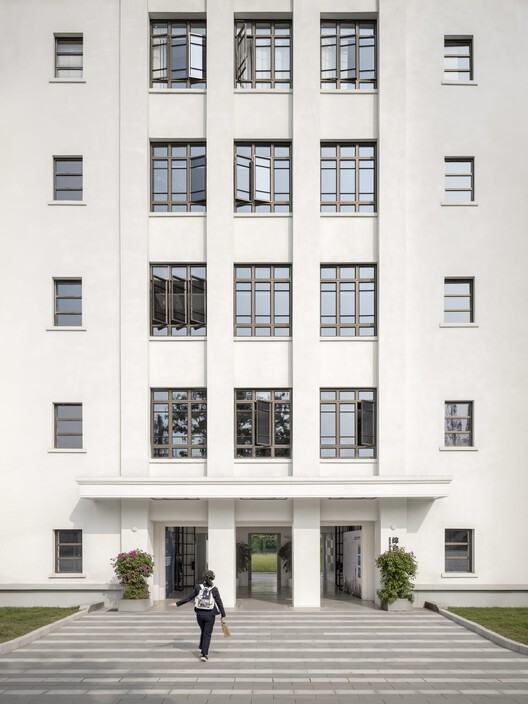
The focus of the renovation was the facade update, aiming to present the different buildings with a unified overall image. Decorative elements from the 1990s were removed from the dormitory building, and several details on the canteen building were restored based on original design drawings retrieved from the urban construction archives—including door lintels, steps, ornaments under the canopy, and the curved side doors at the side entrance. The uniform white facade creates a visual consistency across buildings from different eras.
改造的重点在于立面更新,旨在使不同的建筑以统一的整体形象呈现。宿舍楼去除了上世纪90年代的装饰元素,食堂建筑则依据从城建档案调取的原始设计图纸,对多处细部进行了修复——包括门楣、台阶、雨棚下的挂饰及侧入口的圆弧状侧门等。统一的白色立面使不同年代的建筑在视觉上形成一致。
© CreatAR Images
© Marcus Bredt
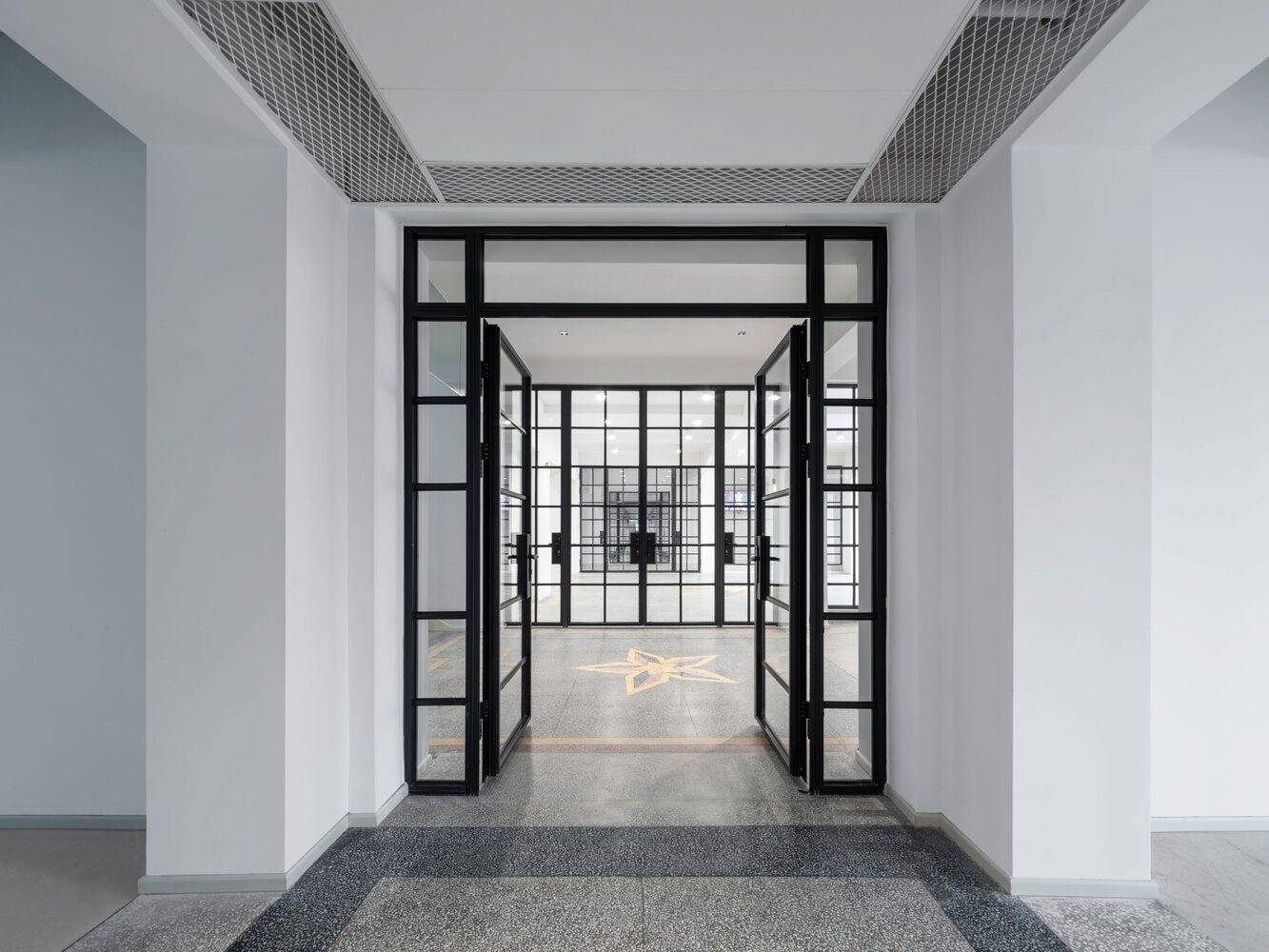
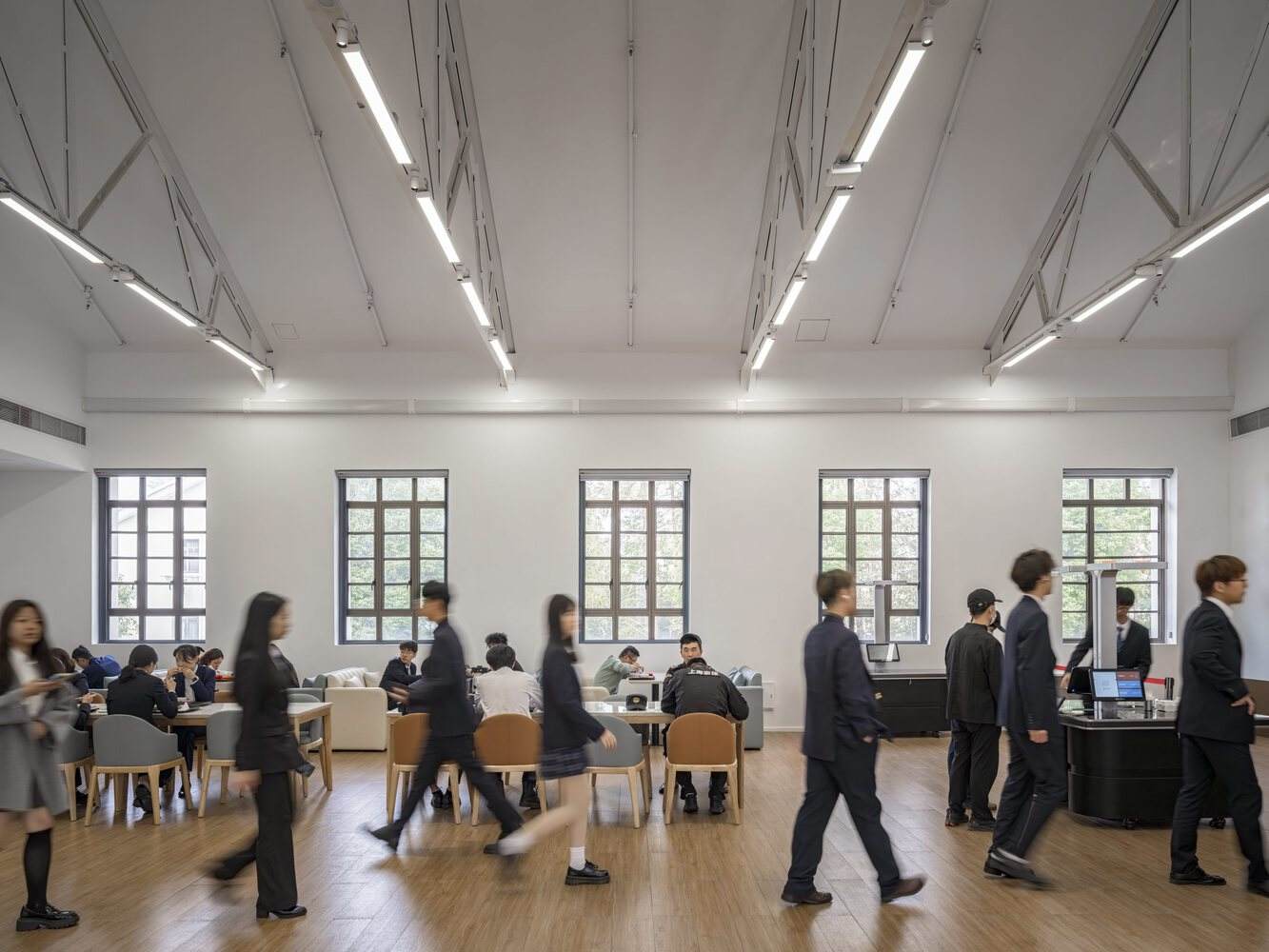
The interior design continues the minimalist aesthetic principles. Existing building materials were preserved and reused as much as possible where conditions allowed: the terrazzo floors in the teaching building were carefully restored; the open truss structure of the canteen was optimized.
内部设计延续了极简美学原则。原有的建筑材料在条件允许的情况下尽可能保留并再利用:教学楼内的水磨石地面经过了精心修复;食堂的开放式屋架结构得以优化。
© Marcus Bredt
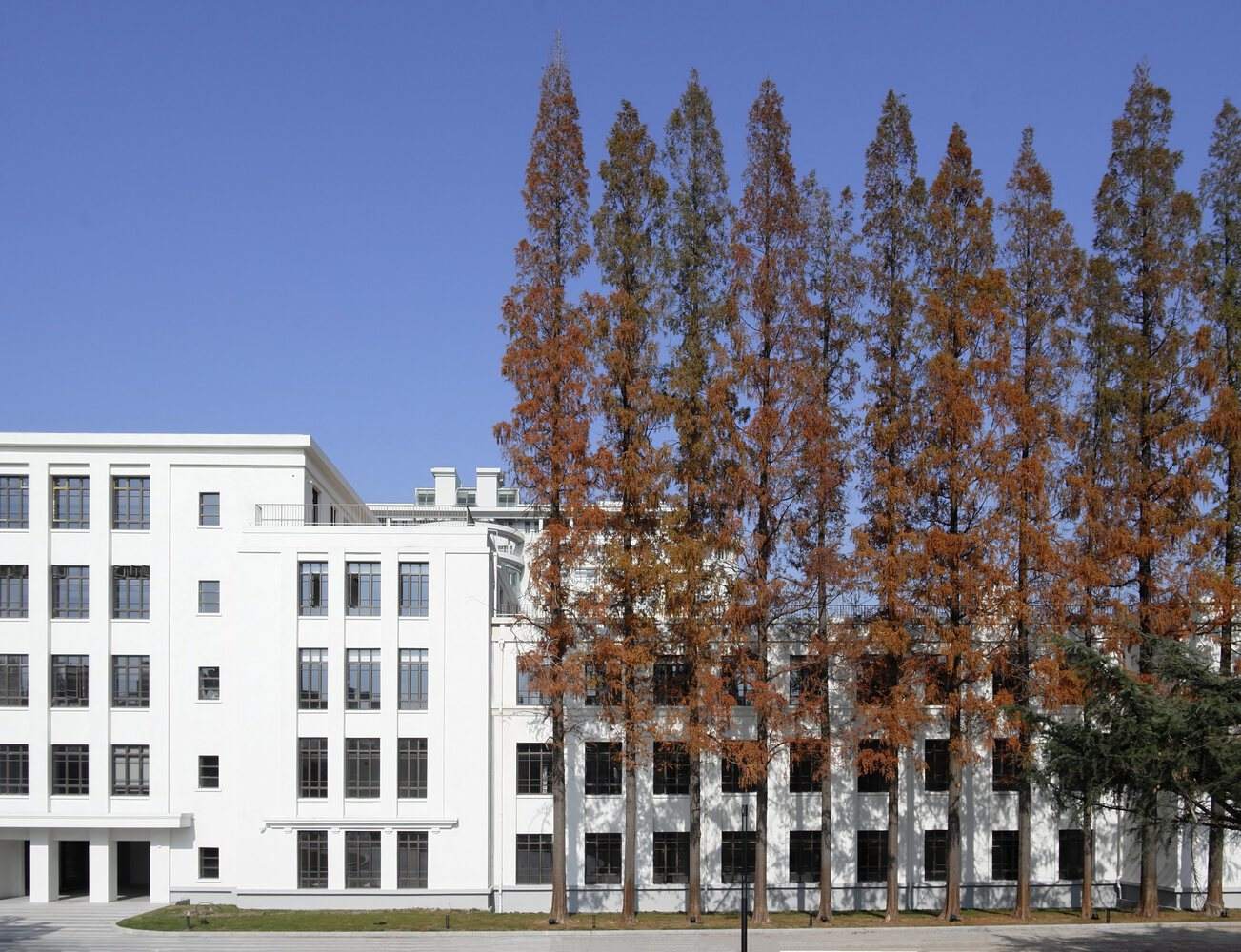
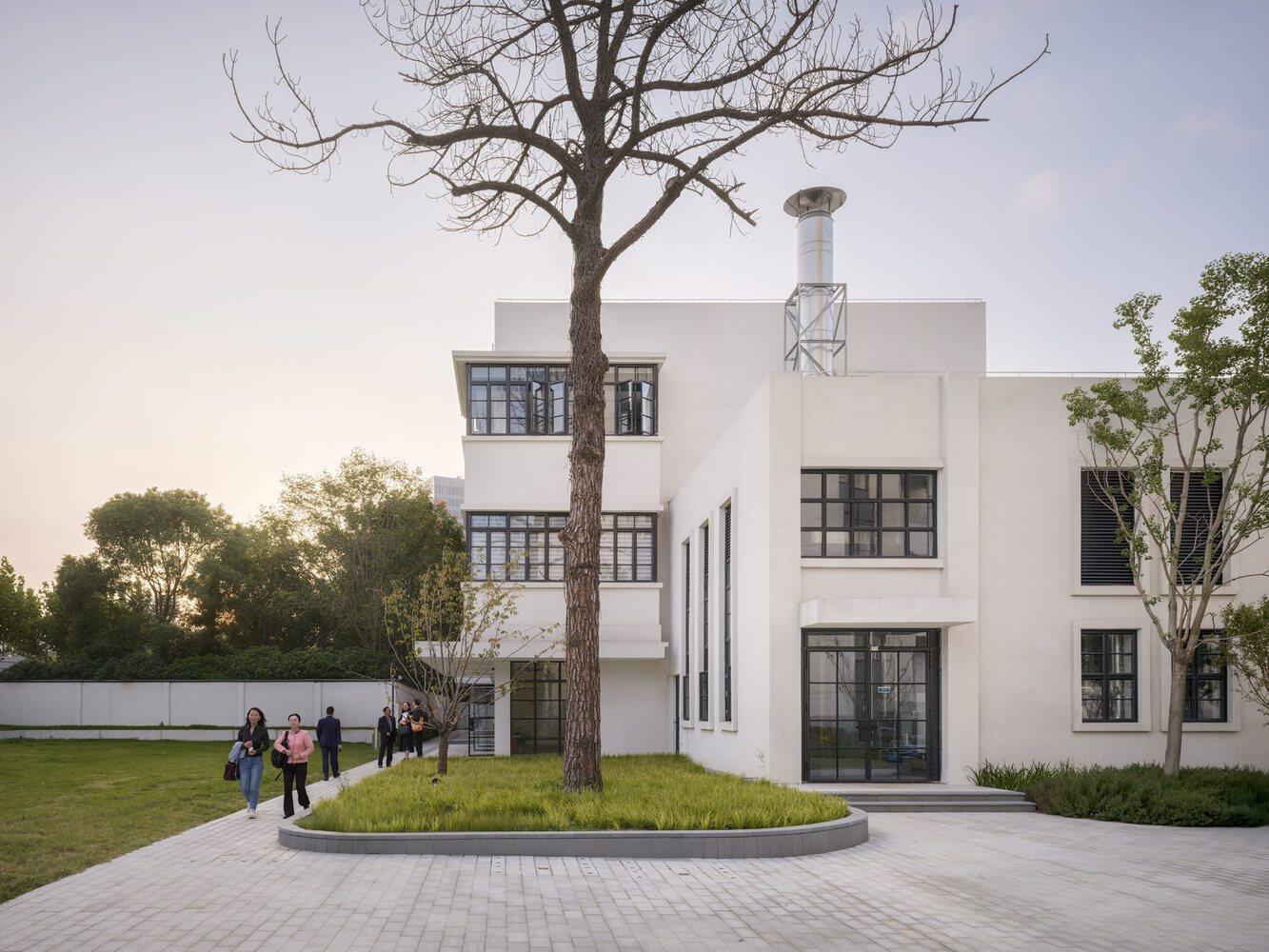
The landscape design, completed in collaboration with WES LandschaftsArchitektur, is an important component of the overall design, enhancing the visual permeability, orientation, and spatial clarity of the campus. Most of the old trees on campus were preserved, including the nearly 70-year-old Magnolia in the center of the south square and the rows of Metasequoia trees that match the spirit of the site.
景观设计由WES魏斯景观设计事务所合作完成,是整体设计的重要组成部分,强化了校园的视觉通透性、导向性与空间清晰度。校园内的古树基本得到保留,包括南广场中央的已年近70载的广玉兰以及契合场地精神的水杉树阵。
© Marcus Bredt