历史文脉的尊重与有机融合:本项目最精髓之处在于建筑师对场地历史文脉的深刻理解与尊重。面对建于1953年、带有显著理性主义风格的原大看台,设计团队并未采取割裂性的推倒重建,而是通过精细的结构修复和空间重组,延续了原有建筑的叙事性。特别是对理性主义立面的柱廊节奏的继承,以及对古典神话浮雕的保留,使得新旧建筑在时间维度上实现了无缝衔接。这体现了优秀建筑设计在面对历史遗产时的克制与对话能力,确保了建筑群的统一性和场所精神的延续。
新旧秩序的张力与平衡:设计通过在原有轴线上植入两座新的功能性建筑(CDUP总部及配套空间),成功地在理性主义的严格对称中引入了现代的流动与自由。新建筑在呼应原有节奏的同时,打破了绝对的对称,以更具动态感的姿态诠释了秩序。这种新旧秩序间的张力,既满足了现代功能需求(如优化观众体验、增加办公空间),又保持了对基地历史语言的尊重。屋顶的重新设计和观赛视线的优化,是功能性提升与形式语言转译的典范。
材质语汇的沉稳与细节:建筑在材料选择上体现出高度的成熟度。着色混凝土作为主要立面材料,延续了基地的克制感,并通过富有韵律的柱列和悬挑阳台,形成了富有节奏感的韵律。室内外材质的统一(混凝土立面延伸至室内),辅以陶土色的天花和地面,在沉稳的基调中注入了微妙的温度和活力。这种材质的纯粹性与细节处理,不仅强化了建筑的纪念性气质,也使其在视觉上与周围的自然肌理形成了精妙的对比与和谐。
The project, led by the University of Porto and designed by Crea - Arquitetos, aimed to renovate and expand the grandstand and headquarters of CDUP (University of Porto Sports Club). Located in Quinta do Campo Alegre, the stadium, originally built in 1953, underwent a lengthy renovation process, impacted by the pandemic, before finally reopening to the public. The design team faced the challenge not only of refurbishing the existing grandstand but also of integrating the new CDUP buildings, striving to create a complete and unified complex. The architecture needed to respect the site's historical context, establishing a temporal connection with the environment rather than severing the original background.
本项目由波尔图大学(University of Porto)主导,Crea - Arquitetos 负责设计,旨在对 CDUP(波尔图大学体育俱乐部)的大看台及其总部进行修复与扩建。体育场位于 Quinta do Campo Alegre,最初建于 1953 年,此次改造经历了较长的周期,并在疫情期间受到影响,最终得以重新向公众开放。设计团队的挑战不仅是对 原有大看台建筑进行翻新,还需整合 CDUP 的新建筑,力求打造一个完整且统一的建筑群。建筑应当尊重场地的历史文脉,与环境建立时间上的关联,而非割裂原有背景。
© Fernando Guerra | FG + SG
© Fernando Guerra | FG + SG
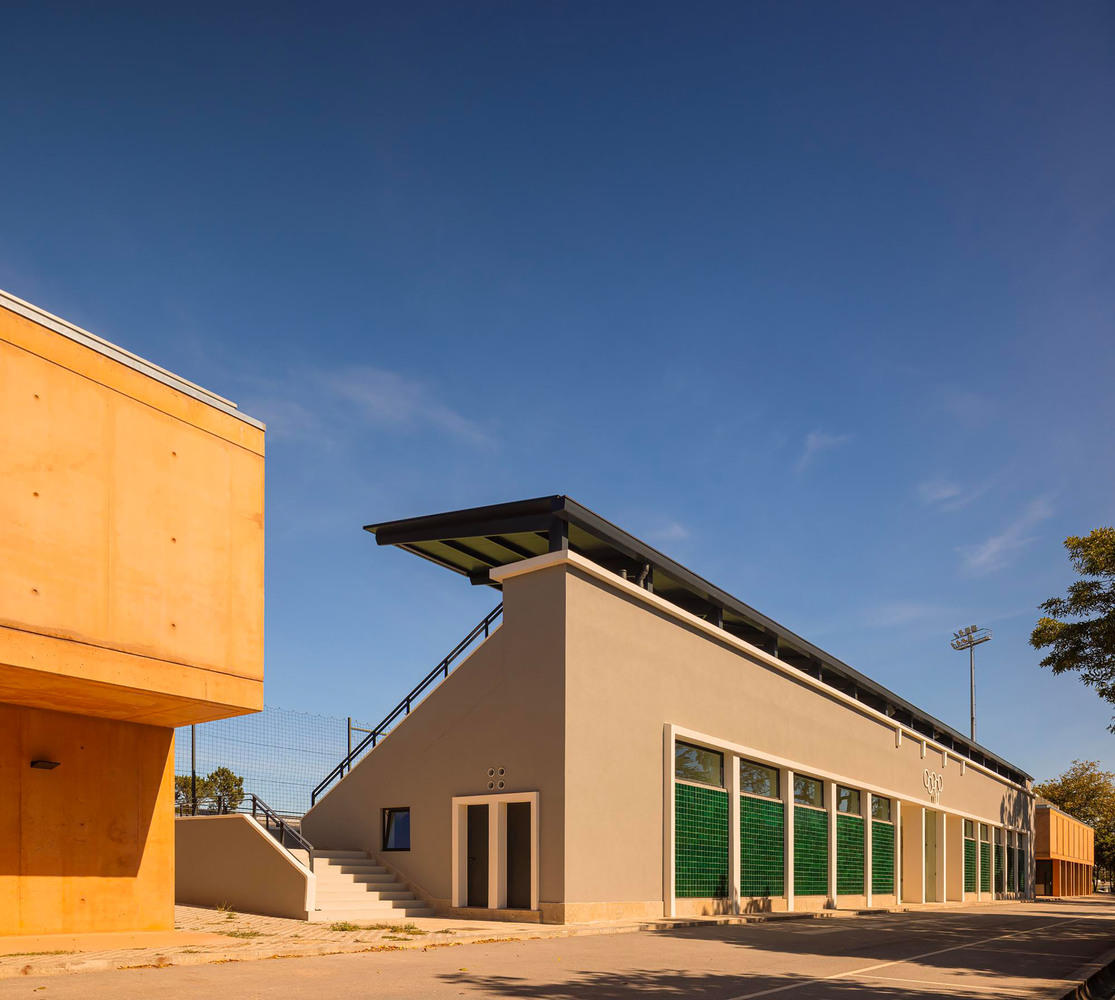
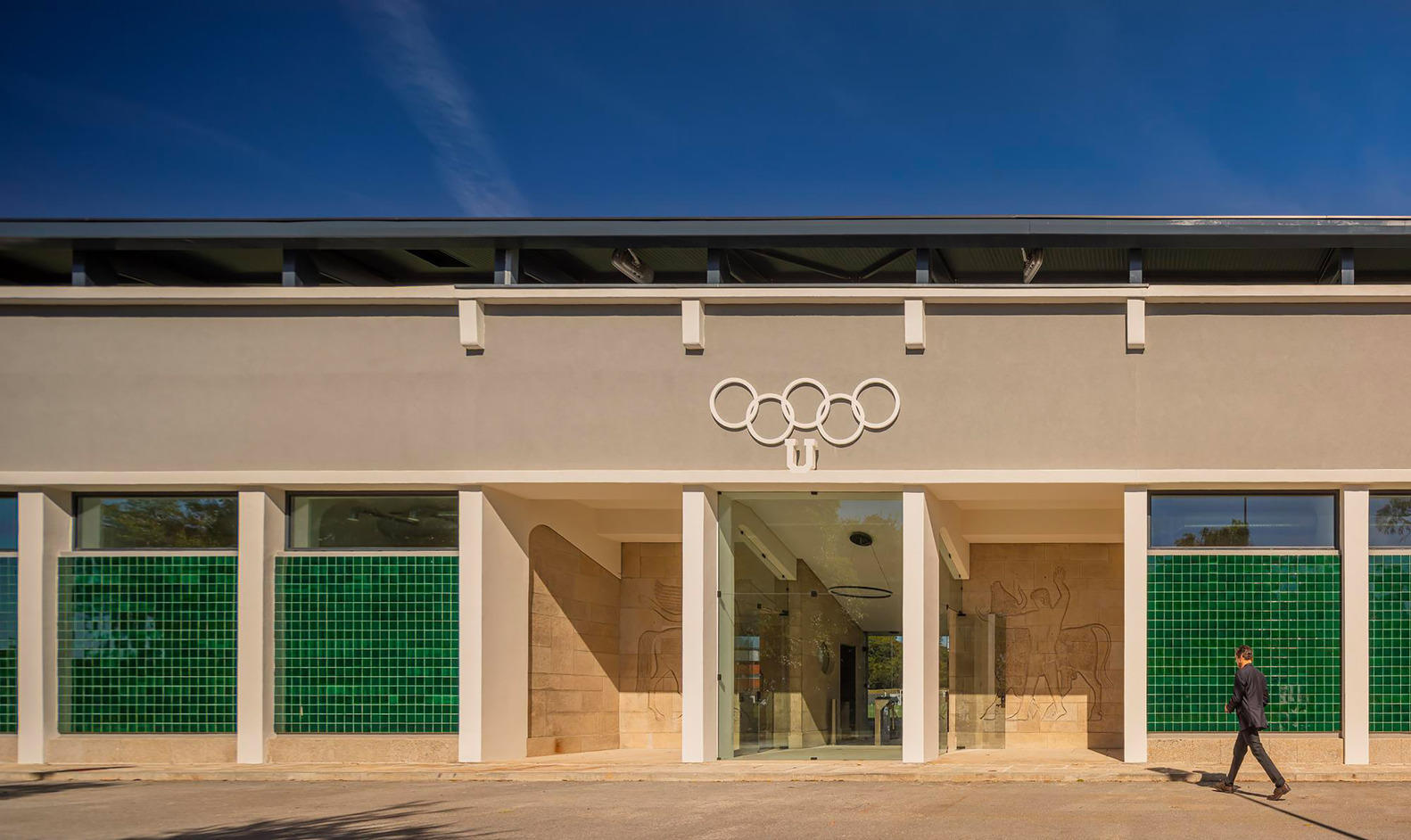
The original grandstand building was influenced by Rationalism, presenting a symmetrical and rigorous composition on the facade facing the main entrance, defined by a rhythm of columns culminating in the entrance loggia—a colonnade facing the street, serving as a transitional space into the stadium. Notably distinctive are the granite bas-reliefs on the building, featuring carvings inspired by classical mythology and ancient Olympic games, reinforcing the building’s historical narrative. Alongside structural repairs, the interior spaces were reorganized to accommodate the stadium’s support functions, with access points located centrally in the street-facing loggia to ensure direct accessibility to the sports field.
原有的大看台建筑受理性主义(Rationalism)风格影响,在朝向主入口的立面上呈现出对称而严谨的构图,其节奏由一系列立柱所定义,并最终汇聚于入口的门廊——一个面向街道的柱廊(Loggia),作为进入体育场的过渡空间。值得一提的是,建筑的花岗岩浅浮雕 极具特色,其雕刻图案取材于古典神话及古代奥林匹克运动,强化了建筑的历史叙事。在结构修复的基础上,室内空间重新组织,以适应体育场的配套功能,其出入口位于开放街道的中央门廊,确保运动场的直接通达性。
© Fernando Guerra | FG + SG
© Fernando Guerra | FG + SG
© Fernando Guerra | FG + SG
Planta - Localização
© Fernando Guerra | FG + SG
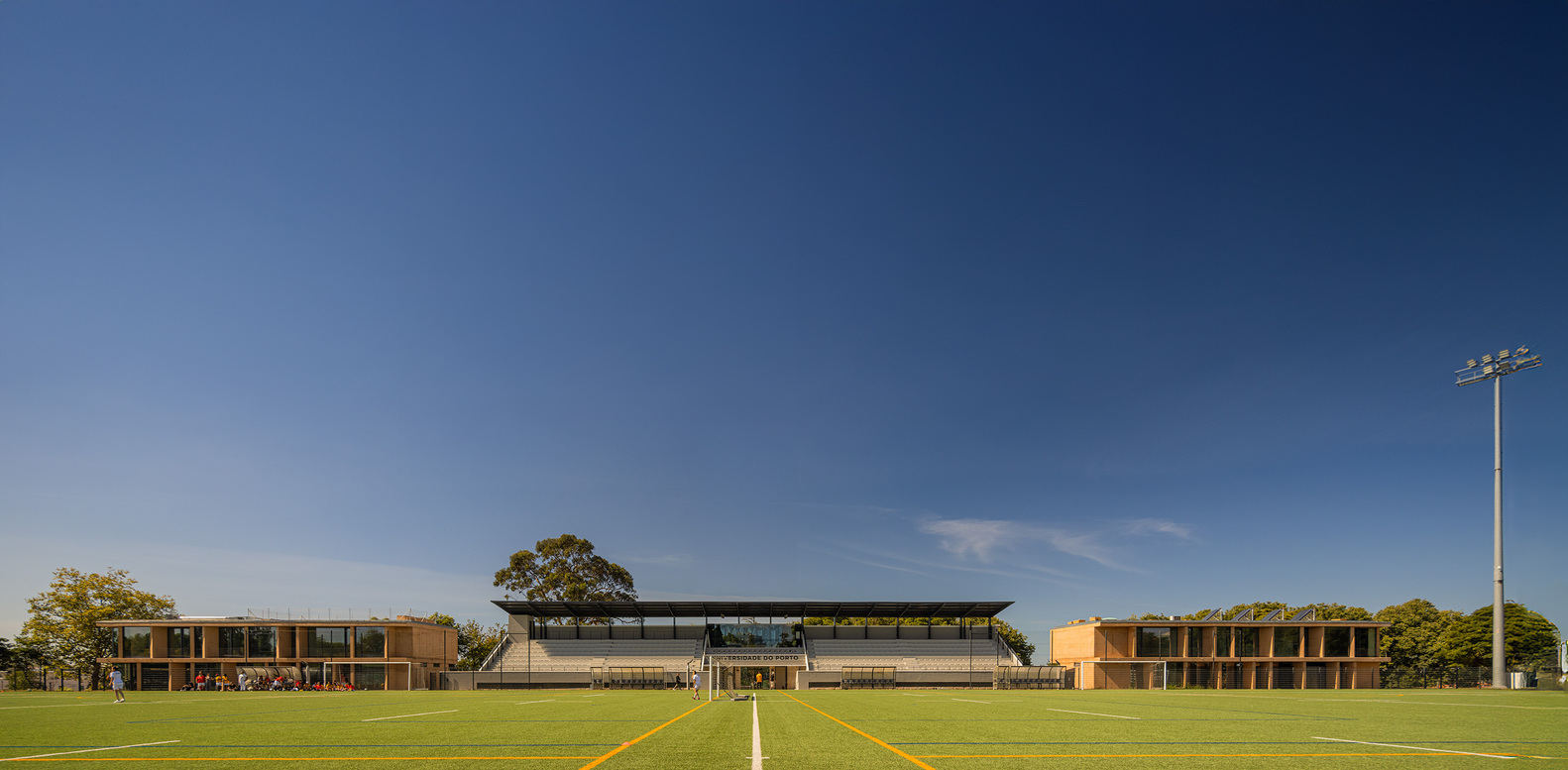
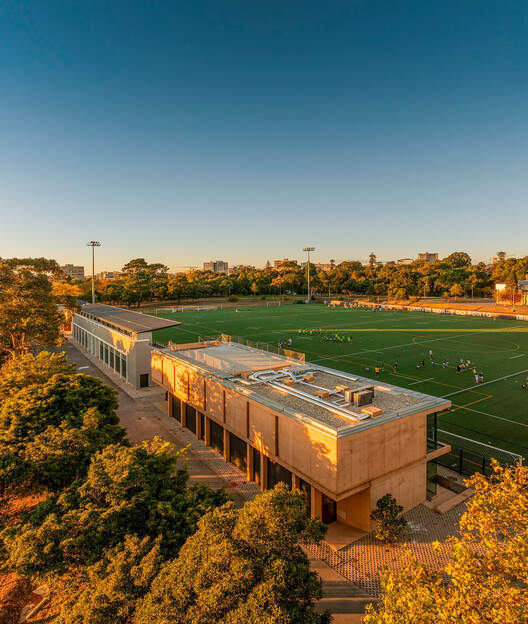
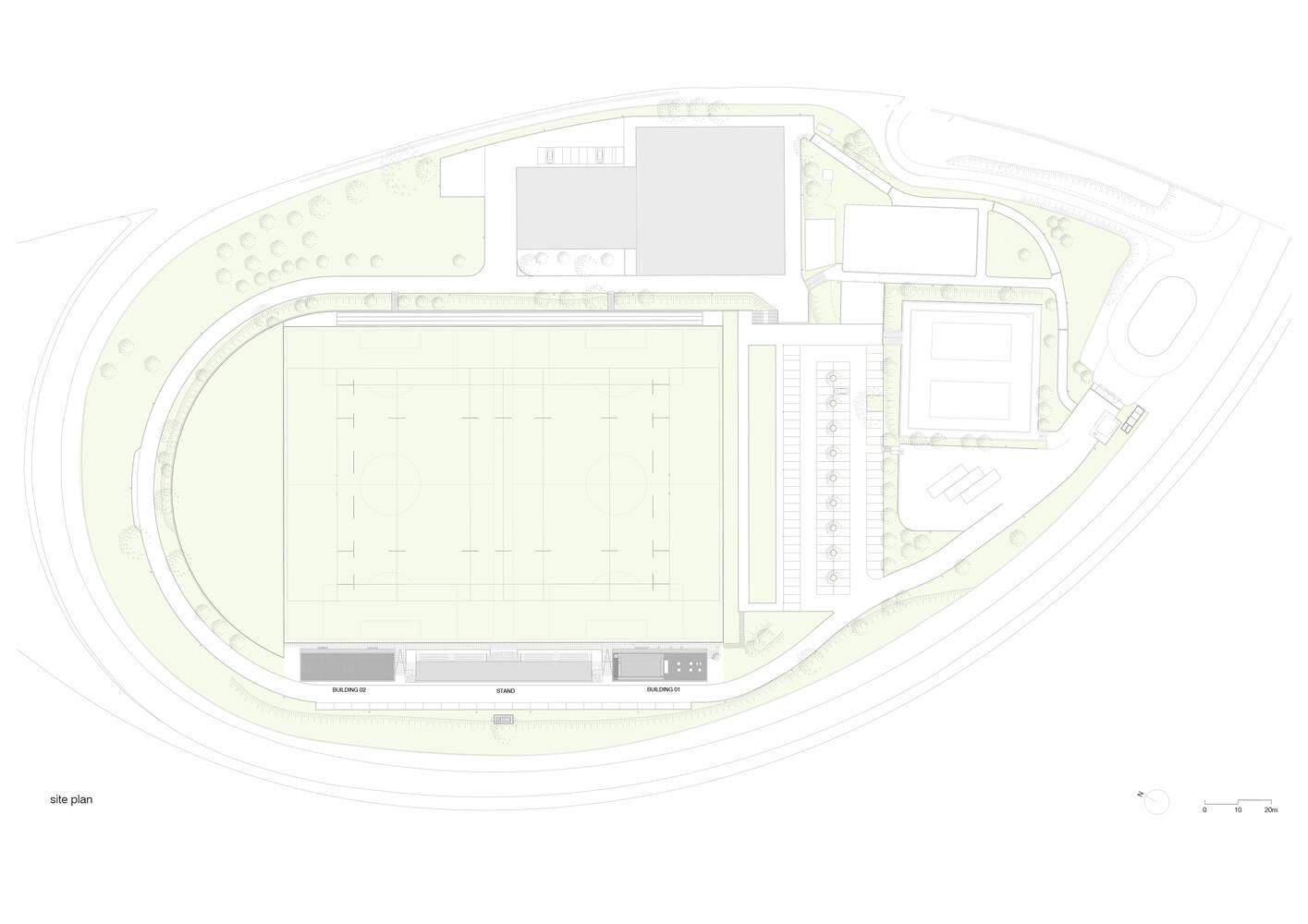
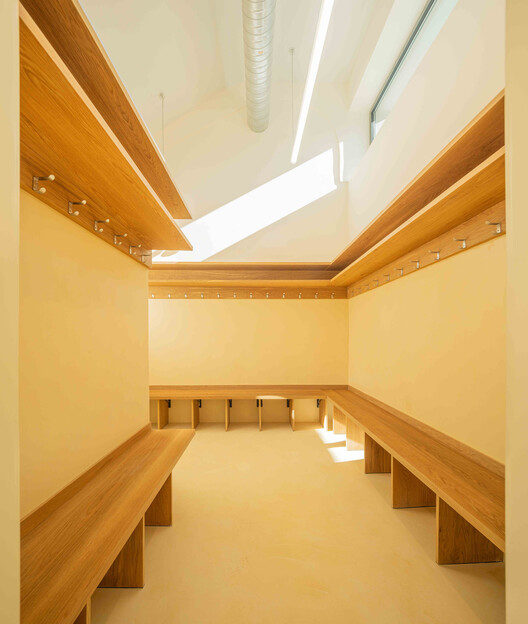
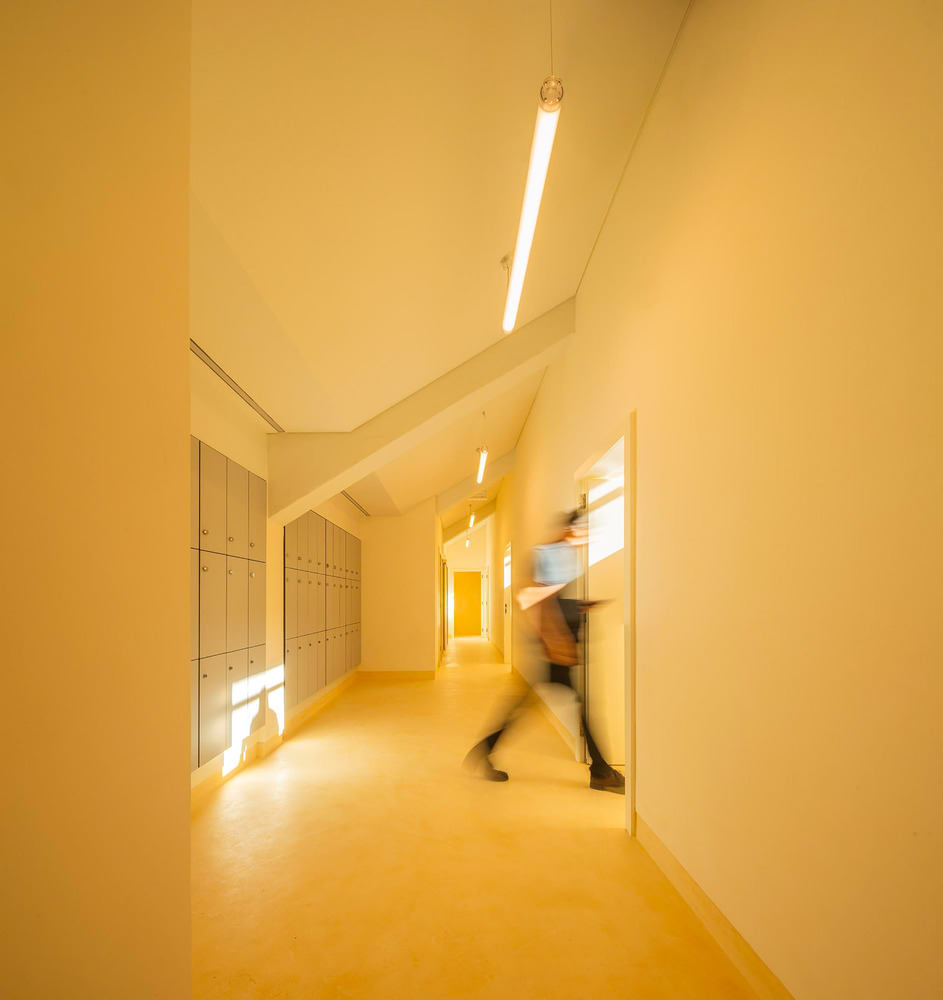
Spectators access the stadium via stairs located above the grandstand roof. The design team significantly enhanced the covered areas through roof redesign, thus improving the spectating experience. Concurrently, two new buildings were erected along the longitudinal axis of the stands, dedicated to the CDUP headquarters and student support facilities, encompassing offices, meeting rooms, social spaces, and multi-functional amenities. Formally, these new structures echo the compositional rhythm of the grandstand but break its strict symmetry, reinterpreting the original architecture’s order with a more free and fluid posture.
观众进入体育场需经大看台顶部的楼梯,而设计团队通过重新设计屋顶,大幅提升了遮蔽区域,改善了观赛体验。同时,在看台的纵向轴线 上,新建了 两座建筑,分别用于 CDUP 总部及大学生配套空间,包含办公区、会议室、社交空间及多功能设施。这两座新建筑在形式上呼应了大看台的构图节奏,但又打破了其严格的对称性,以更自由、流动的姿态 重新诠释了原有建筑的秩序。
© Fernando Guerra | FG + SG
© Fernando Guerra | FG + SG
© Fernando Guerra | FG + SG
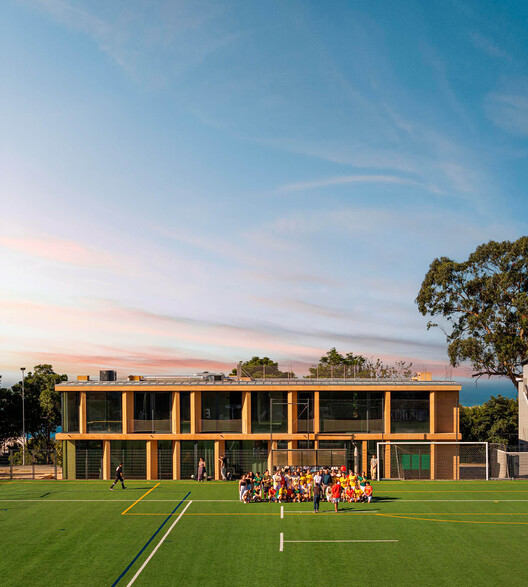
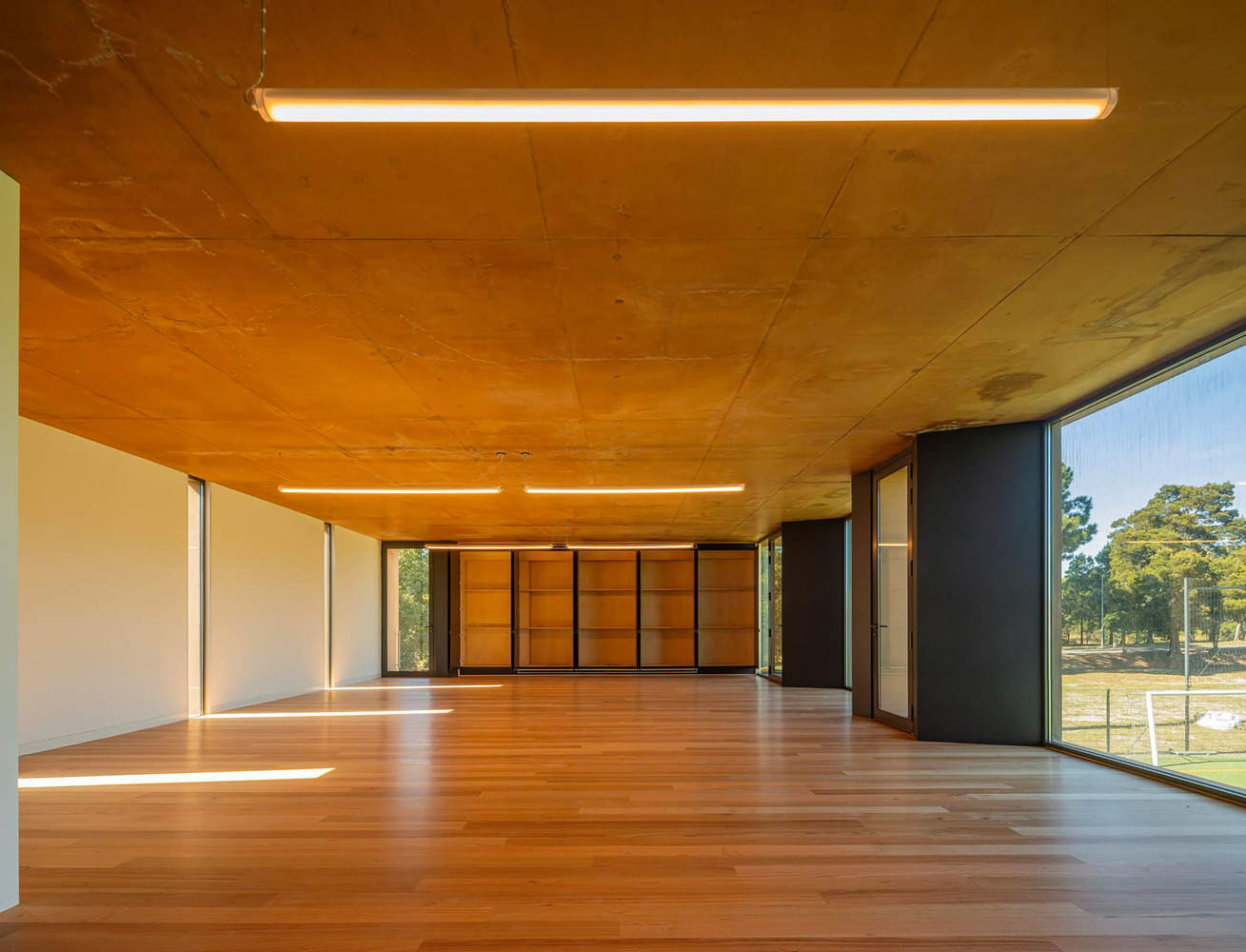
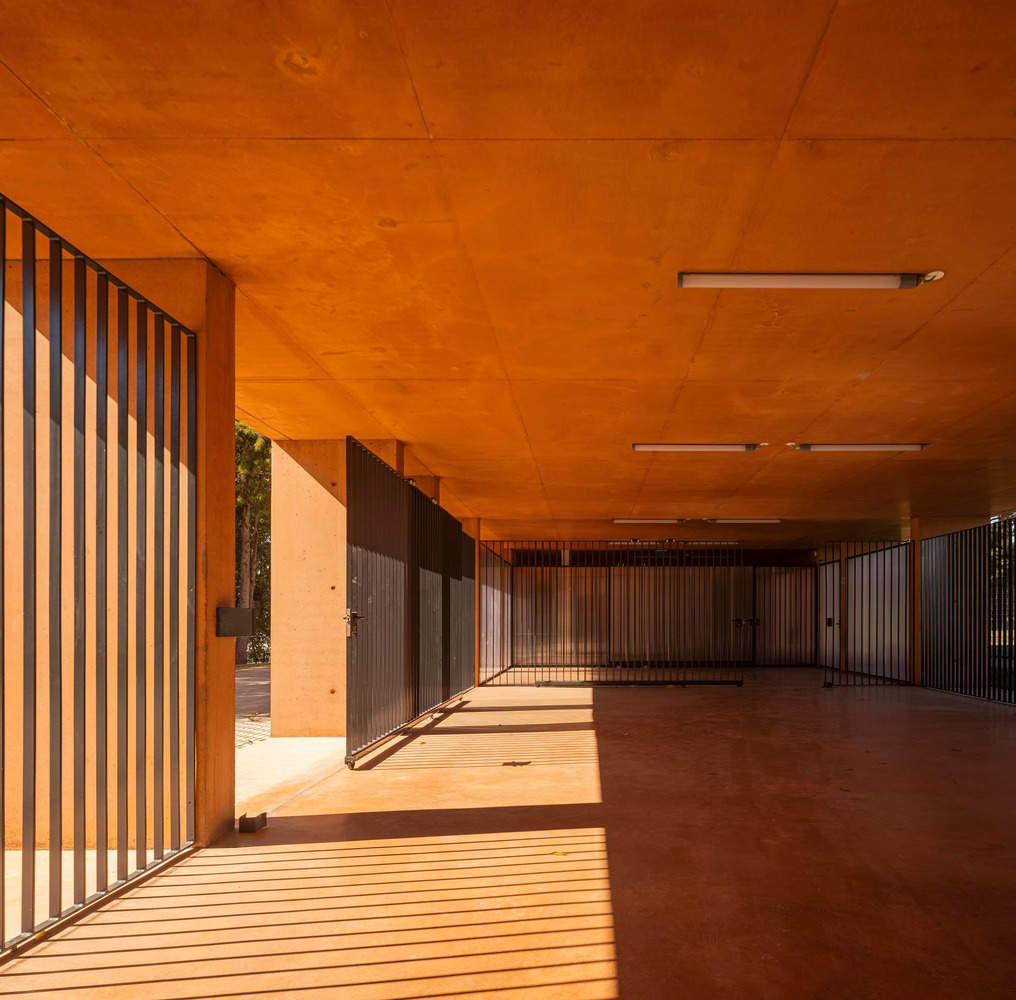
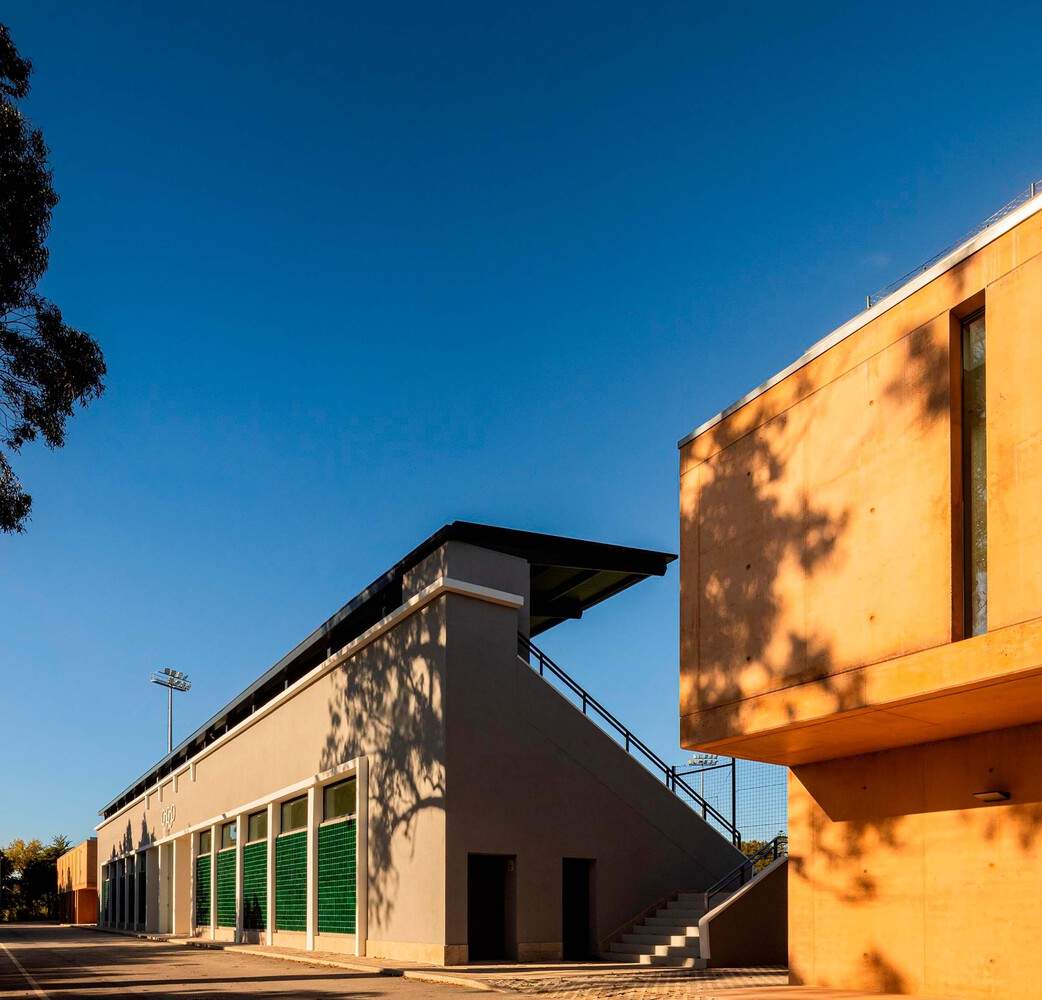
On the east side, the building volume extends towards the sports field, creating an open visual connection. Its concrete facade features a rhythmic composition of columns, some forming cantilevered balconies, others transforming into large-scale framing views that incorporate the green turf scenery. The overall project continues the restrained character of the original grandstand, refined and reinterpreted in the design language of the new structures. The building's exterior facade uses pigmented concrete, which extends into the interior spaces, where terracotta-colored ceilings and floors inject a subtle vitality into the sober base tone, creating a delicate contrast with the rational expression of the grandstand and the natural texture of the surrounding tree canopy.
在东侧,建筑体量向运动场方向展开,形成开阔的视觉联系。其混凝土立面 采用富有韵律的柱列构图,有些区域形成悬挑阳台,有些则转化为大尺度框景,将绿茵场景纳入视线之中。项目整体延续了大看台建筑的克制感,并在新建筑的设计语言中进行了提炼与转译。建筑外立面采用着色混凝土,并延续至室内空间,其中陶土色的天花与地面 在沉稳的基调中注入了一丝活力,与大看台的理性表达以及周围树冠的自然肌理形成微妙对比。
© Fernando Guerra | FG + SG