历史文脉的尊重与现代功能的重塑:该项目在对托尼·加尼耶的经典建筑进行全面翻新的基础上,成功地重塑了“运动员区”的未竟之作。设计师巧妙地运用了加尼耶标志性的 7.50 米网格,并对其进行加倍和移位处理,以精准地避开并保留了原始碎混凝土基础的文化价值,体现了对历史文脉的深刻敬意。通过将原有功能转化为面向公众、学生和专业队伍(LOU Rugby)的多功能体育综合体,项目实现了历史保护与当代城市活力的完美融合,确保了遗产价值的延续性。
结构逻辑与空间序列的韵律:设计通过三个主要建筑体量与中间区块的连接,创造了一个具有清晰空间层次感的结构序列。体量的渐升高度不仅烘托了历史游泳池和原有跳水台(现已升华为雕塑艺术品),更通过精心的体块布局,界定了室外水域空间并修复了看台。核心的暴露混凝土门廊设计是亮点,它不仅是对加尼耶混凝土应用传统的致敬,更以统一的结构逻辑支撑了细长横梁,为内部多样化的功能空间提供了极佳的灵活性和适应性。
可持续性与多维度的空间策略:在功能优化方面,项目体现了周到的设计考量。例如,通过将原始 5.40 米深的泳池深度调整为 1.80 米,显著降低了水体、能源及氯化物的消耗,实现了可持续运营的目标。同时,建筑立面通过门廊深度的变化(40厘米至1米)实现了对不同功能的需求响应,如南侧的遮阳和北侧的视觉分隔。这种对结构、立面、功能和资源效率的综合性控制,最终铸就了一个在形式、结构和用途上与场地历史保持高度连贯的统一建筑构图。
The Gerland Aquatic Center, built in 1932 by Tony Garnier, the architect of the 1899 Grand Prix de Rome winner, has recently undergone a complete renovation, having been listed as a protected monument by the French Historical Monuments Authority. Located within the Matmut Stadium de Gerland complex in Lyon, the design team re-imagined the "Athletes' Area" pioneered but left unfinished by Tony Garnier. Today, the project provides a sports complex for the public, students, and the professional rugby team Lyon Olympique Universitaire (LOU Rugby), incorporating a training and performance center, LOU Rugby's offices, and an aquatic wellness and fitness center, all redesigned to meet current needs.
热尔兰游泳池由 1899 年罗马大奖得主建筑师托尼·加尼耶于 1932 年建造,并被法国历史古迹管理局列为保护对象,最近刚经历了一次全面翻新。它位于里昂的马姆特·热尔兰体育场(Matmut Stadium de Gerland)综合体内,设计团队重新构想了托尼·加尼耶开创但未完成的“运动员区”。如今,该项目为公众、学生和职业橄榄球队里昂奥林匹克大学队(Lyon Olympique Universitaire,简称LOU Rugby)提供了一个体育综合体。项目包括一个训练表演中心、LOU Rugby 的办公区以及一个水上健康与健身中心,所有这些都经过重新设计,以满足当前的需求。
© Vladimir de Mollerat du Jeu
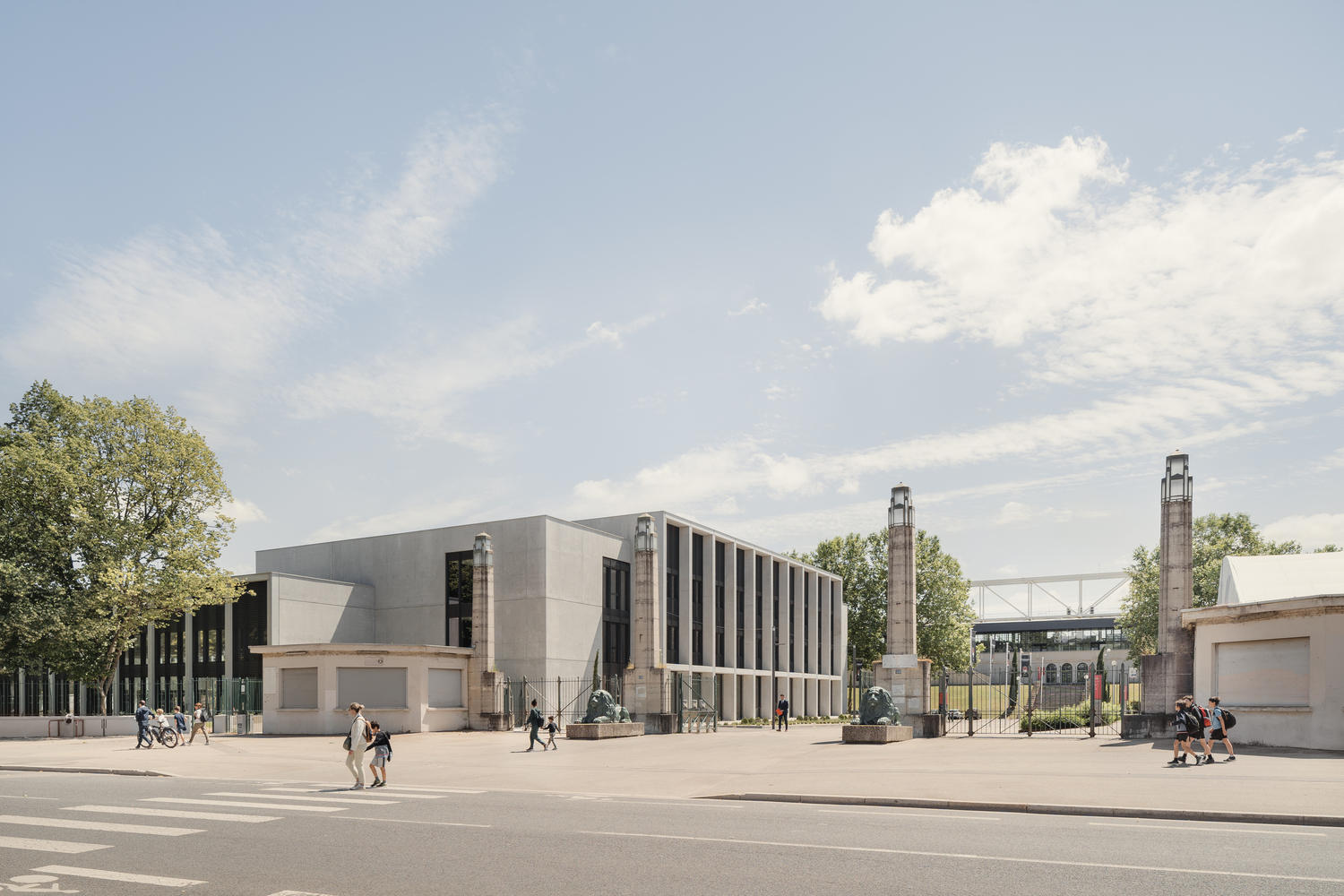
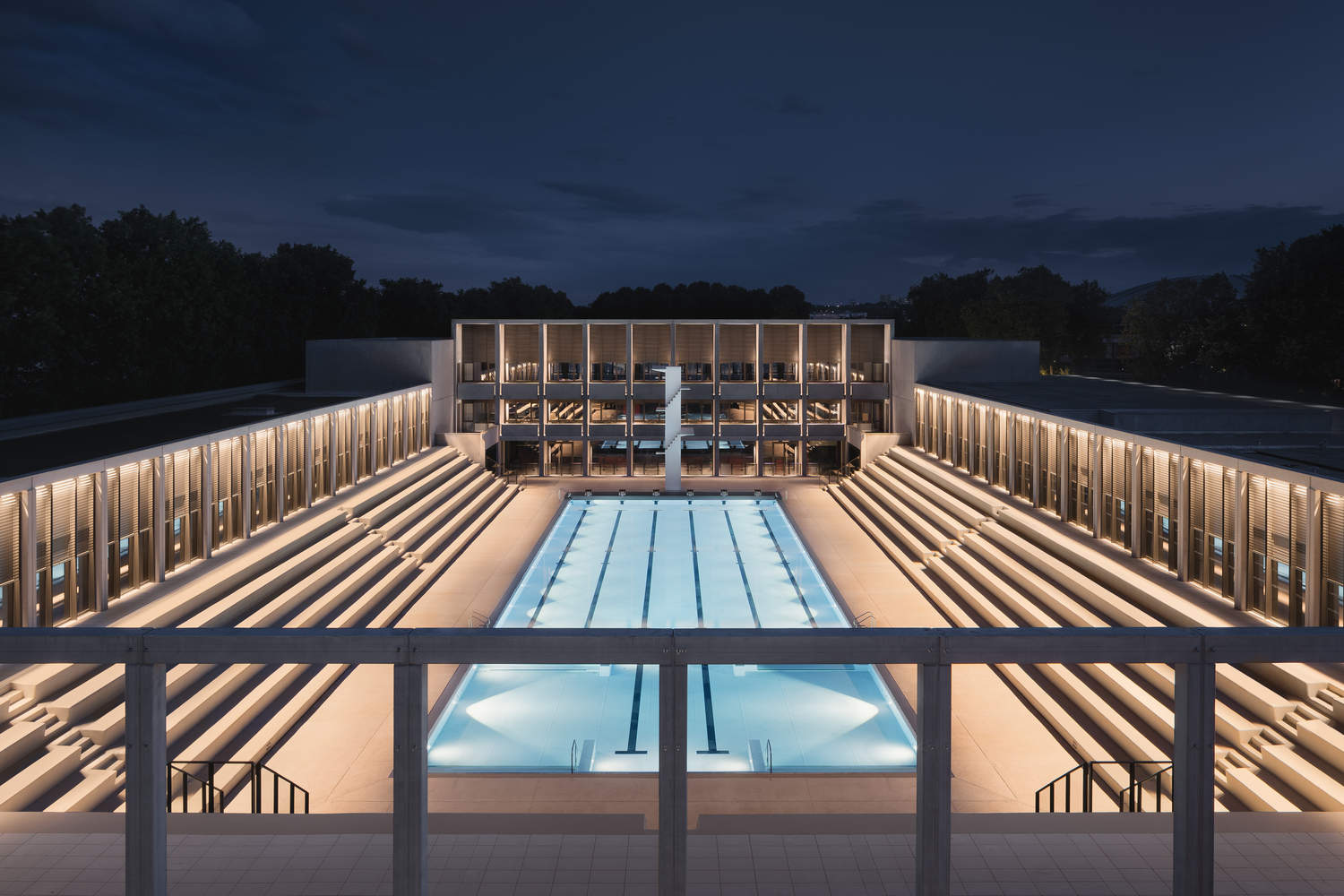
The focus of the project is the enhancement of this entrance, along with the existing pool, stands, and diving board. To implement this upgrade, three main building volumes are connected by a central block, creating a gradually increasing height. The highest volume serves as a backdrop to the swimming pool and the historic diving board, which has now been transformed into a sculptural piece. The two lower volumes frame the renovated stands.
项目重点在于提升这一入口以及现有的游泳池、看台和跳水台。为了实施这一提升项目,三个主要建筑体量通过中间区块相连,形成逐渐升高的高度。最高的体量作为游泳池和历史跳水台的背景,现在跳水台已转变为一件雕塑作品。两个较低的体量则框出了修复后的看台。
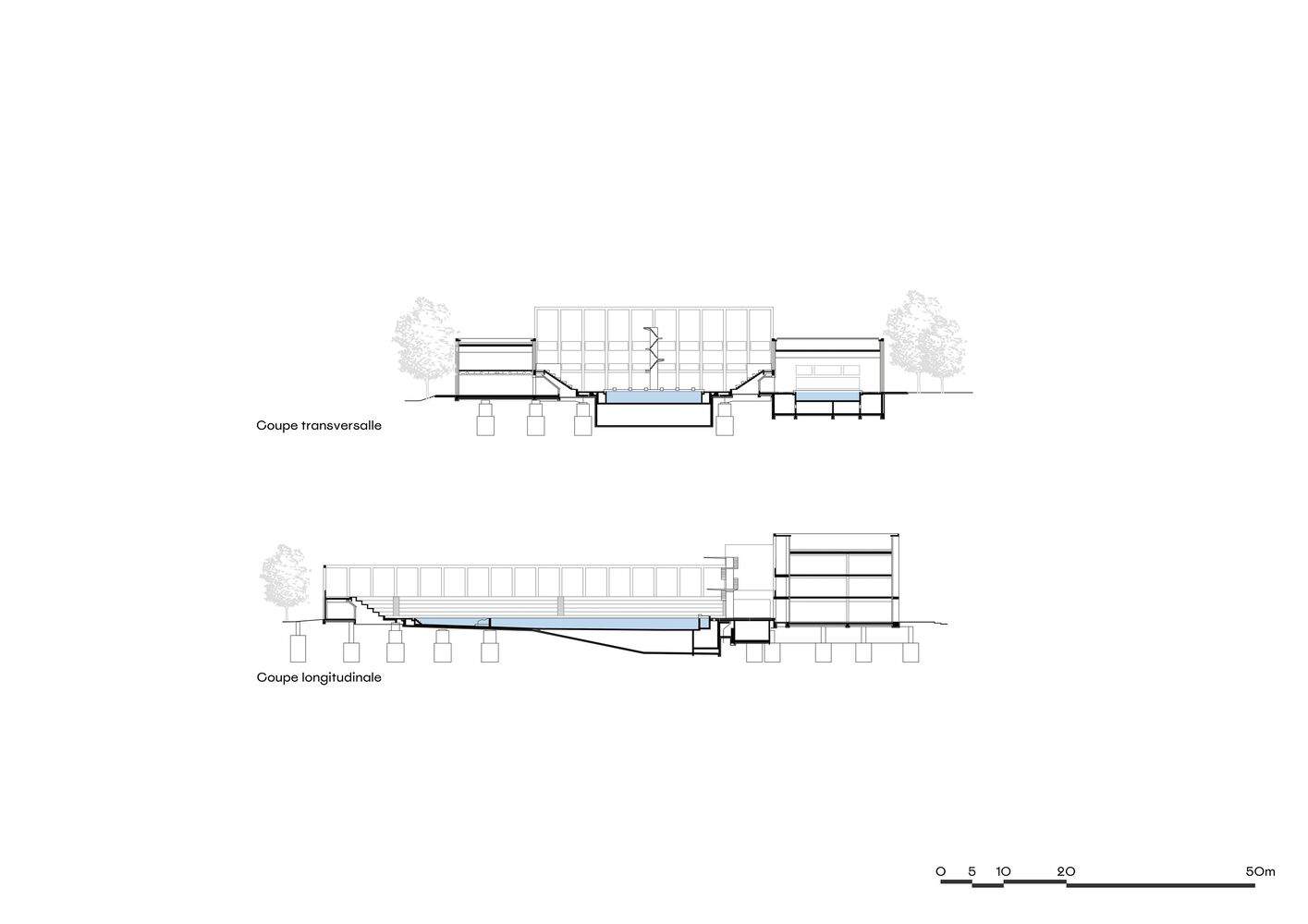
剖面图
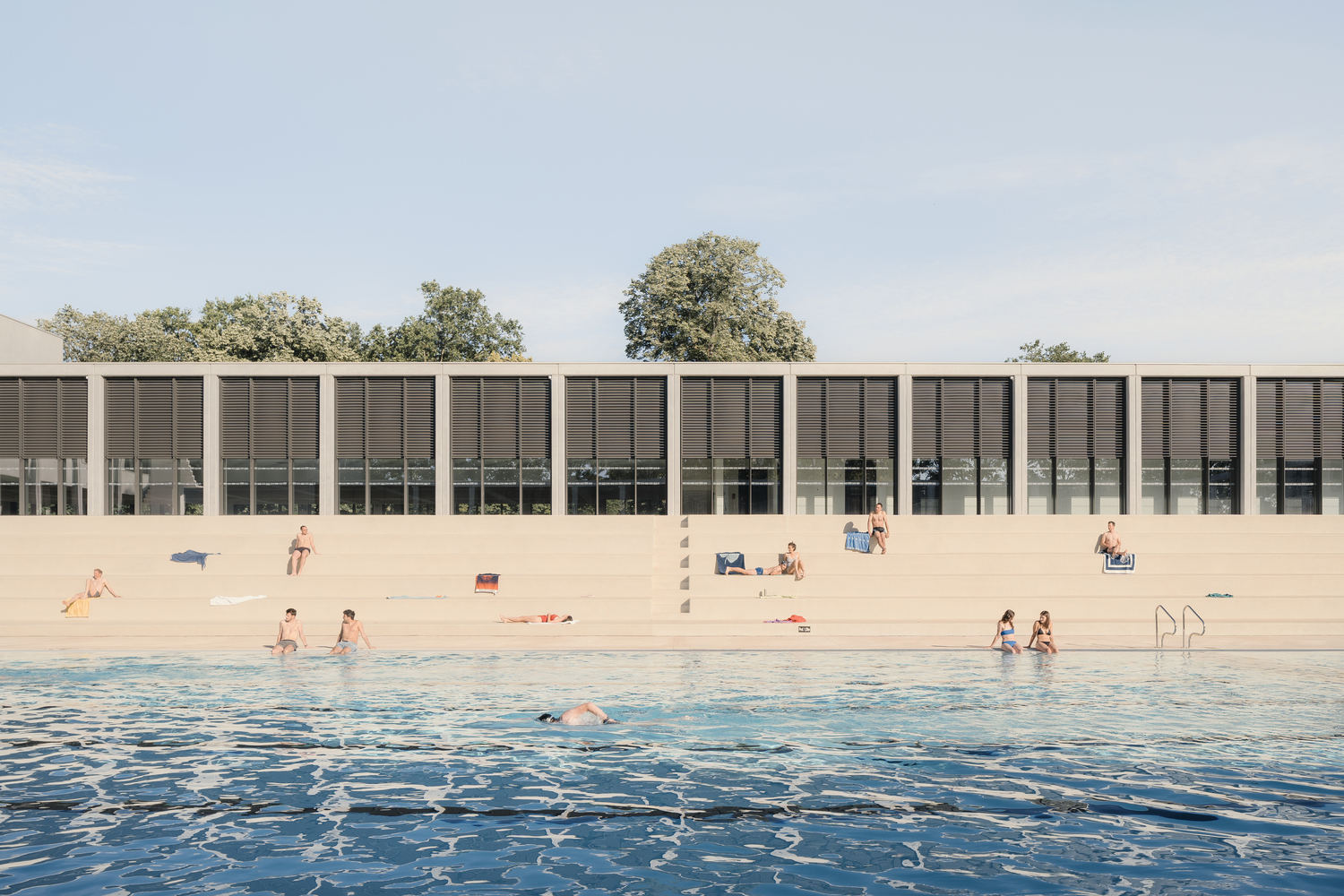
The new buildings are organized around an outdoor water area defined by the stands, creating an ideal environment for the existing swimming pool. Their design utilizes the 7.50-meter grid applied by Tony Garnier in all his projects on this site. This grid has been doubled and shifted to avoid disturbing the crushed concrete foundations of the former "Athletes' Area," preserved as a relic of the 20th century. The project aims to restore a presentation commensurate with the heritage value of the swimming pool. The redevelopment plan includes the restoration of the stands, foundations, and the existing diving board.
新建的建筑围绕着由看台划定的室外水域空间,为现有的游泳池创造了理想的环境。它们的设计利用了托尼·加尼耶在该场地所有项目中应用的 7.50 米网格。这个网格被加倍并移位,以避免破坏作为 20 世纪遗迹保留的前“运动员区”的碎混凝土基础。该项目旨在恢复与游泳池遗产价值相匹配的呈现方式。再开发计划包括修复看台、基础和现有的跳水台。
© Vladimir de Mollerat du Jeu
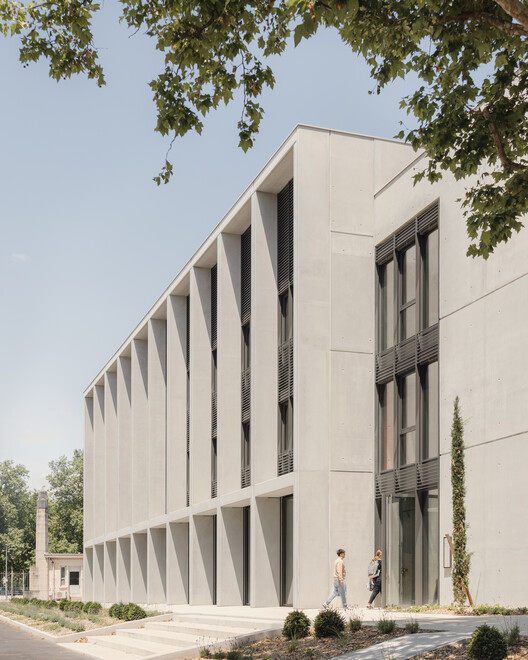
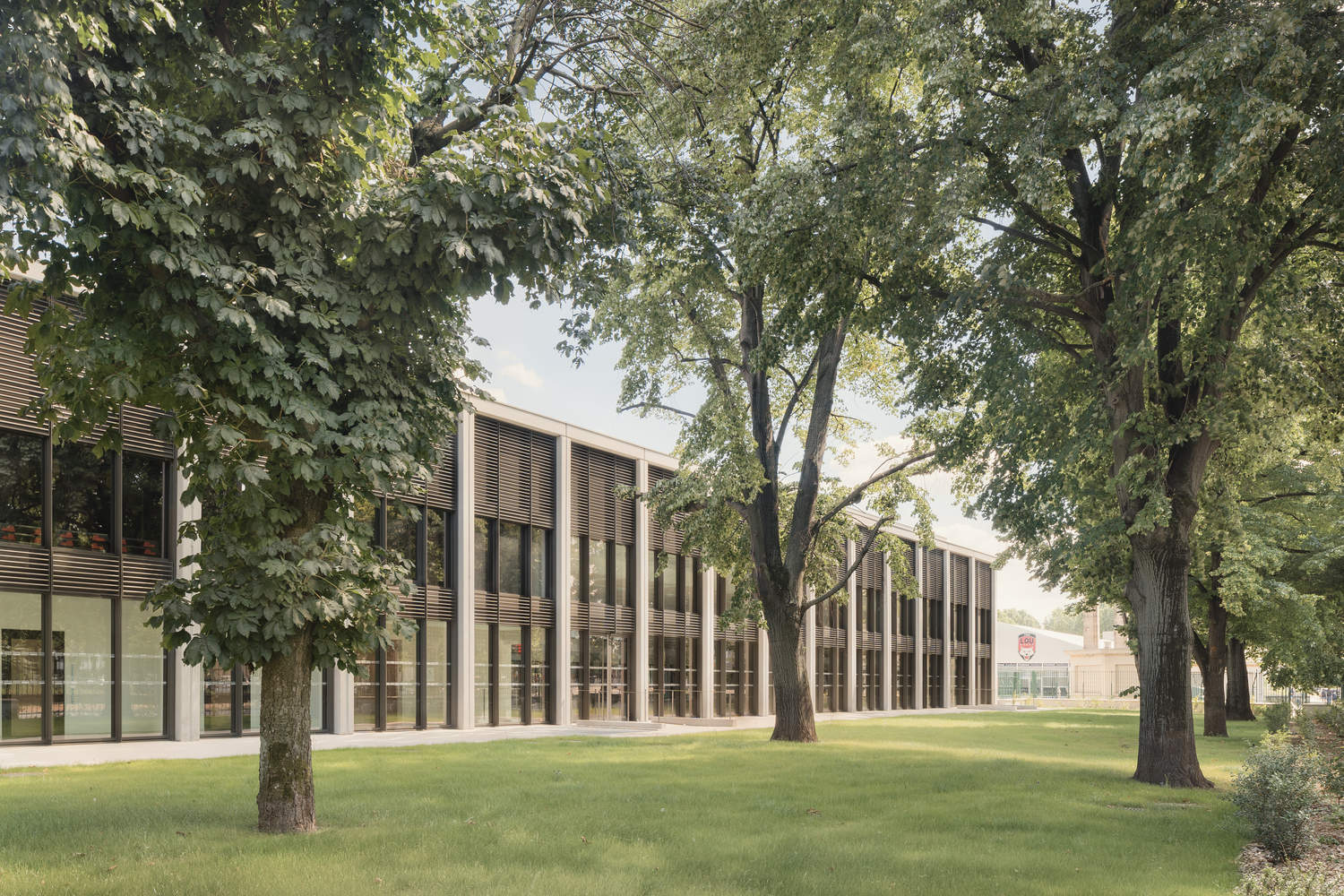
The use of concrete pays homage to Tony Garnier, a pioneer in its application. The architectural design of the project follows the principle of concrete porticoes, tracing a regular grid on the two main facades. These porticoes act as structures supporting slender beams, offering flexibility and adaptability for various uses such as offices, sports areas, and swimming pools. They present a visible unity in the foreground, while in the background, the depth of the porticoes varies between 40 cm and 1 meter to adapt to different uses: a curtain wall façade adaptable in use and orientation, sun shading on the south side, and a loggia on the north side creating a visual separation between offices and swimmers. South of the outdoor pool is a building housing the headquarters offices for LOU Rugby. Its bold architectural expression harmonizes with the history of the site and meets urban and architectural planning requirements. The imposing exposed concrete porticoes define the entrance to the stadium on Avenue Léon Blum, a neoclassical homage to Tony Garnier's original project.
混凝土的使用是对托尼·加尼耶这一应用先驱的致敬。项目的建筑设计遵循了混凝土门廊的原则,在两个主要立面上勾勒出规则的网格。这些门廊作为支撑细长横梁的结构,为办公室、运动区域和游泳池等多种用途提供了灵活性和适应性。它们在前景中呈现出可见的统一性,而在背景中,门廊的深度在40厘米至1米之间变化,以适应不同的用途:可适应用途和方向的幕墙立面、南侧的遮阳设施和北侧的门廊在办公室和游泳者之间创造了视觉上的分隔。室外游泳池南侧是一座建筑,作为 LOU Rugby 的总部办公室。其大胆的建筑设计既与场地的历史相和谐,也符合城市和建筑规划的要求。宏伟的暴露混凝土门廊定义了狮子大道上体育场的入口,这是对托尼·加尼耶原始项目新古典风格的致敬。
© Vladimir de Mollerat du Jeu
The West building, located on the ground floor, houses a learning swimming area, including a 25-meter pool with four lanes and changing rooms. The hall opens onto the outdoor pool, the surrounding beach, and the stands. The Nordic pool, 45 meters long with six lanes, was built within the pool designed by Tony Garnier, whose physical traces remain visible. It includes a swimming area and an aquatic wellness area. The original depth of 5.40 meters has been reduced to 1.80 meters to limit excessive consumption of water, energy, and chlorination products. The 10-meter diving platform, no longer in use, has been decommissioned and transformed into a sculpture. A wellness and fitness area, open to the public, is located on the 1st floor. A partial technical basement level houses the pools. The East building focuses on professional sports. The ground floor hosts training areas, running tracks, indoor artificial fields, and physiotherapy rooms; the 1st floor includes relaxation areas, video viewing rooms, and offices. Its architectural design is identical to that of the West building.
位于地面层的西楼设有一个学习游泳区域,包括一个四泳道的 25 米泳池和更衣室。大厅通向室外游泳池、环绕的沙滩和看台。45 米长、六泳道的北欧泳池是在托尼·加尼耶设计的泳池内建造的,其物理痕迹仍然可见。它包含一个游泳区和一个水上健康区。原始的 5.40 米深度已减少到 1.80 米,以减少过多的水、能源和氯化产品的消耗。不再使用的 10 米跳水台已被停用并改造成雕塑。1 层设有一个向公众开放的健康与健身区域。一个部分的技术地下室层包含了泳池。东楼则专注于职业体育。0 层设有训练区、跑道、人造室内球场和物理治疗室;1 层设有休息区、视频观看室和办公室。其建筑设计与西楼相同。
© Vladimir de Mollerat du Jeu
The transformation of the Gerland Aquatic Center presents a unified architectural composition that perfectly integrates into its environment while accommodating several nested programs. The project is a tribute to architecture: its porticoed architecture, exposed concrete, roof terraces, and the minimalism of its façade ornaments maintain coherence in form, structure, and use with all the buildings already constructed by Tony Garnier on this site.
热尔兰水上运动中心的蜕变呈现了一个统一的建筑构图,完美地融入了其环境,同时容纳了多个嵌套的项目。该项目是对建筑的致敬:其门廊建筑、暴露的混凝土、屋顶露台以及立面装饰的简约性,都与托尼·加尼耶在该场地已建的所有建筑在形式、结构和用途上保持了连贯性。
© Vladimir de Mollerat du Jeu