场地适应性与结构智慧:该项目最精髓之处在于其对复杂地形的巧妙回应与对原有结构的尊重。体育场选址于倾斜坡地上,设计团队通过新建周边步道,将新旧结构有机地整合,实现了功能流线的顺畅连接。结构上,最大的亮点是“轻盈通透”的新增结构与原有半地下式混凝土看台的和谐共存,通过最大限度保留现有结构和精准的结构干预(如在转角处采用混凝土与钢材的混合结构),既满足了容量提升和规范要求,又体现了对既有资产的节约与高效利用。
可持续性与材料革新:作为一座现代体育场,该设计在可持续性方面展现了前瞻性。核心在于对本地和可再生材料的大胆应用,特别是引入了1600立方米的智利辐射松层积木用于围护结构和屋顶,这不仅创造了独特的立面美学,更实现了超过1500吨的二氧化碳吸收,有力支撑了循环经济。结合能源优化、水资源管理及减量化策略,本项目成功地将高性能建筑需求与深度的环境责任结合起来。
多功能集成与用户体验提升:设计目标不仅是提升观众容量至20000人,更是将体育场转变为全年度可运营的多功能城市地标。通过优化矩形布局确保了95%的优良视线,同时在扩建部分精心布置了高端接待、媒体空间及多功能角落,使其能够在非比赛日继续发挥价值。轻盈的立面系统(集成LED照明、隔音和通风)和高效的观众流线设计,共同确保了技术、舒适度和接待服务标准的全面升级。
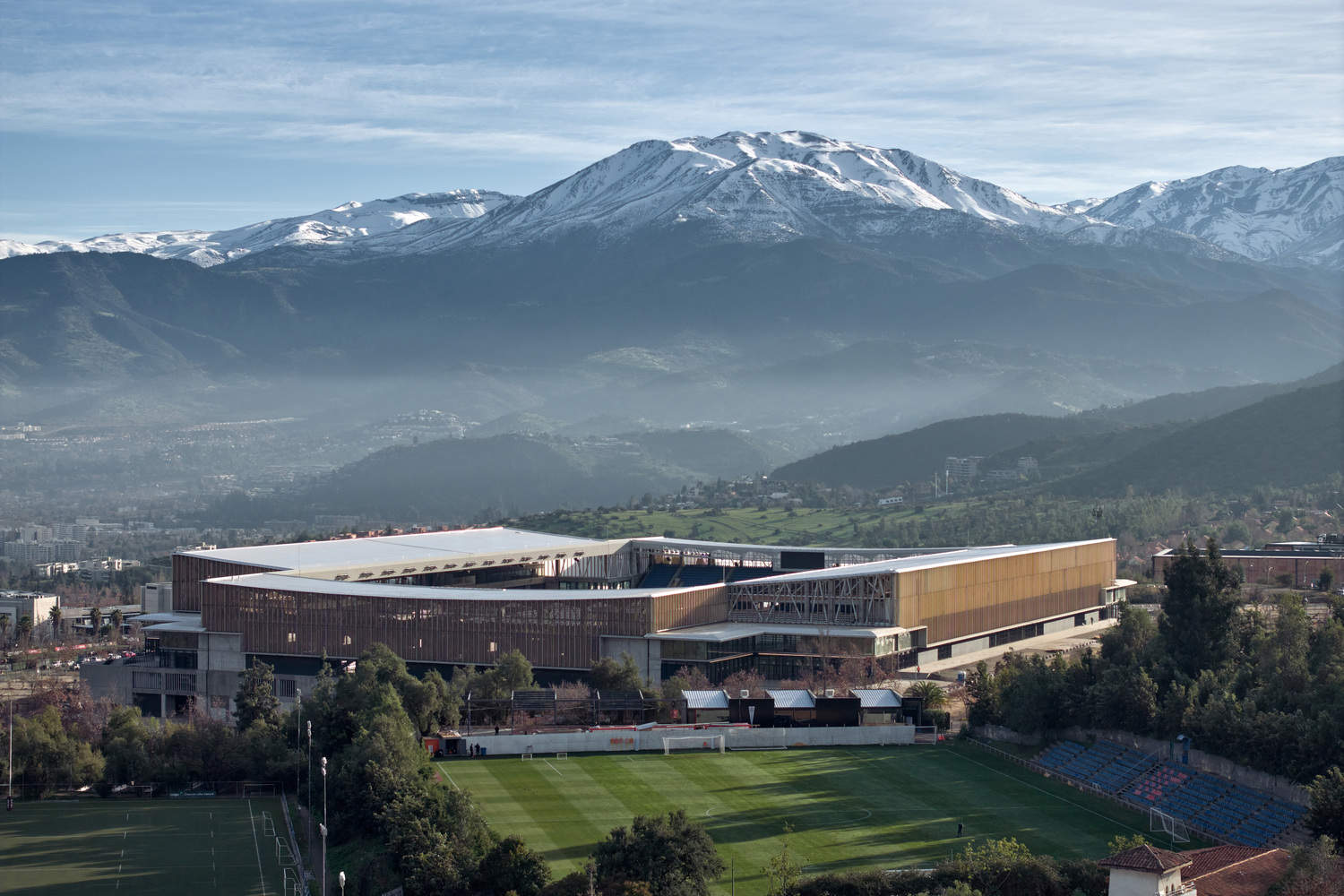
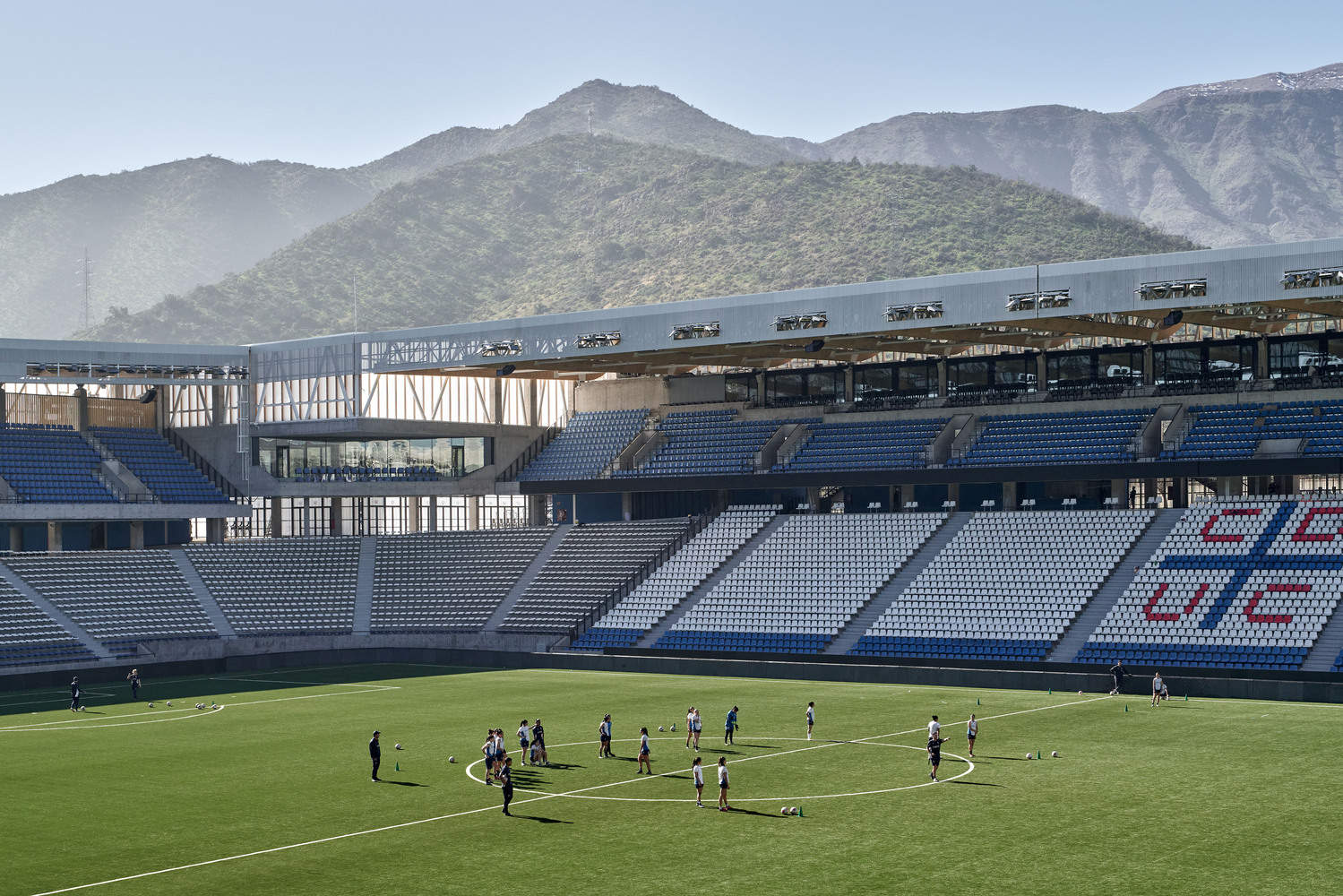
The Estadio San Carlos de Apoquindo (now Estadio Claro), inaugurated on September 4, 1988, is located in Las Condes, Santiago, the capital of Chile, situated on a slope overlooking the city and nestled against the Andes mountains, adjacent to Cerro Manquehue. Its original design featured a semi-underground layout, with distinct entrances on the east (FuiLoux sector) and west (Livingstone sector) sides.
圣卡洛斯·德阿波昆多体育场(现名为克莱罗竞技场),于1988 年 9 月 4 日正式启用,坐落于智利首都圣地亚哥的拉斯孔德斯市,位于一处朝向城市倾斜的坡地上,背倚群山,毗邻曼克维山。其原始设计采用半地下式布局,东侧(富伊洛克斯区)与西侧(利文斯通区)的出入口各具特色。
© Cristóbal Palma
© Cristóbal Palma
To meet the requirement of increasing spectator capacity from 12,000 to 20,000 and upgrading infrastructure, the club launched a competition to transform the stadium into a space compliant with contemporary football standards. The new design needed to meet various technical, sustainability, comfort, and hospitality requirements, while ensuring the stadium could remain in continuous use during non-match days, becoming a versatile building.
为满足将观众容量从 12000 人增至 20000 人并升级基础设施的需求,该俱乐部举办了一场竞赛,旨在将体育场改造为符合当代足球标准的空间。新设计需满足技术、可持续性、舒适度及接待服务等多方面要求,同时确保体育场在非比赛期间也能持续使用,成为一座多功能建筑。
© Cristóbal Palma
© Cristóbal Palma
© Cristóbal Palma
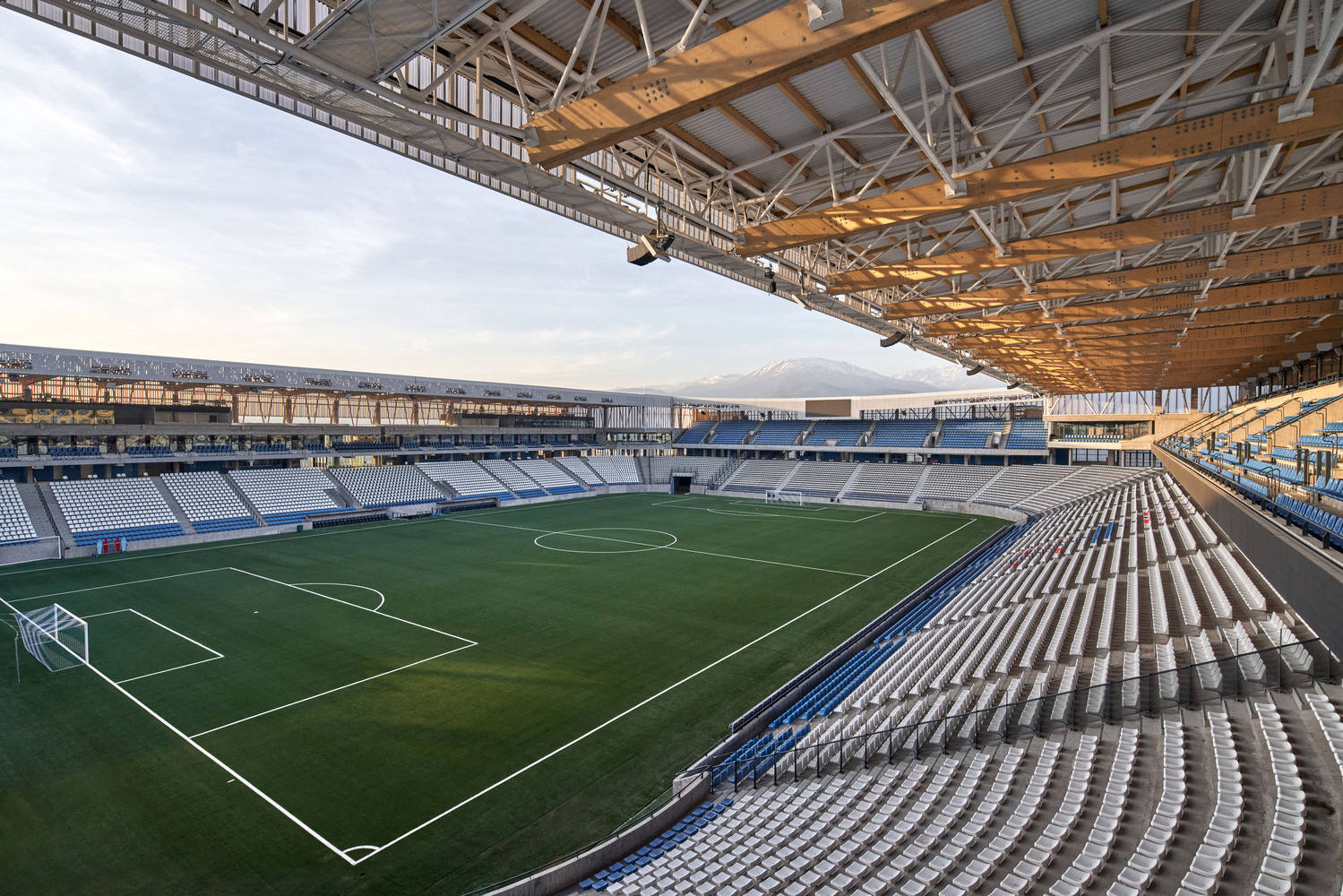
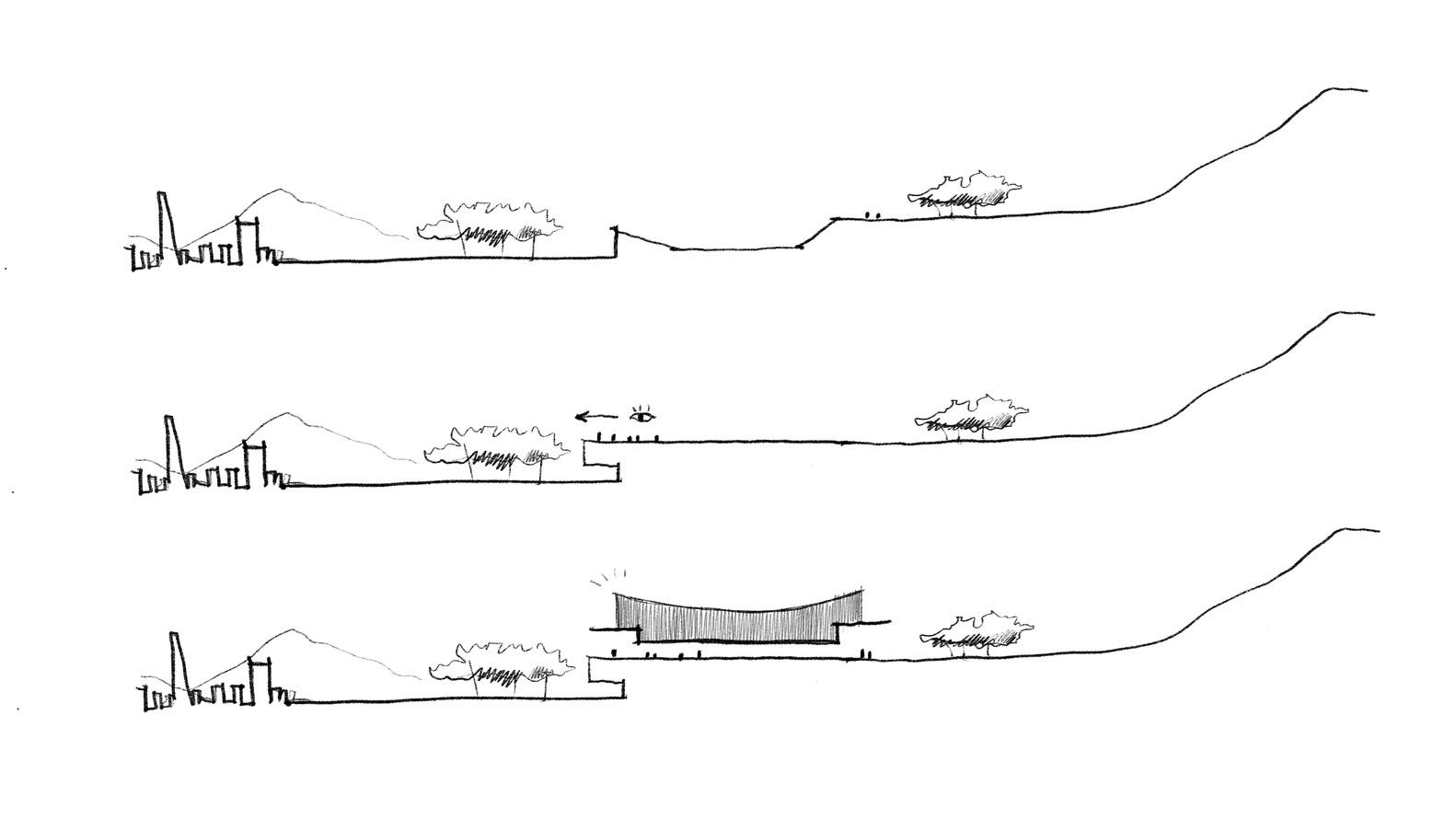
The project, meticulously crafted by IDOM, aimed to create a rational, efficient, and sustainable stadium, fully considering climate, energy, and comfort factors. The original stands were preserved almost entirely intact; upon this base, a perimeter walkway was built at the height of the FuiLoux sector to connect the different areas. Below the walkway lies the old stadium, while above it rises a light and transparent structure housing the expanded sections.
该项目由 IDOM 公司精心打造,旨在构建一座理性、高效且可持续的体育场,充分考虑气候、能源与舒适度因素。原有看台几乎完好无损地保留下来,在此基础上,于富伊洛克斯区高度建造了一条周边步道,以连接各个区域。步道下方是旧体育场,而上方则矗立起一座轻盈通透的结构,用于容纳扩建部分。
Fourth floor plan
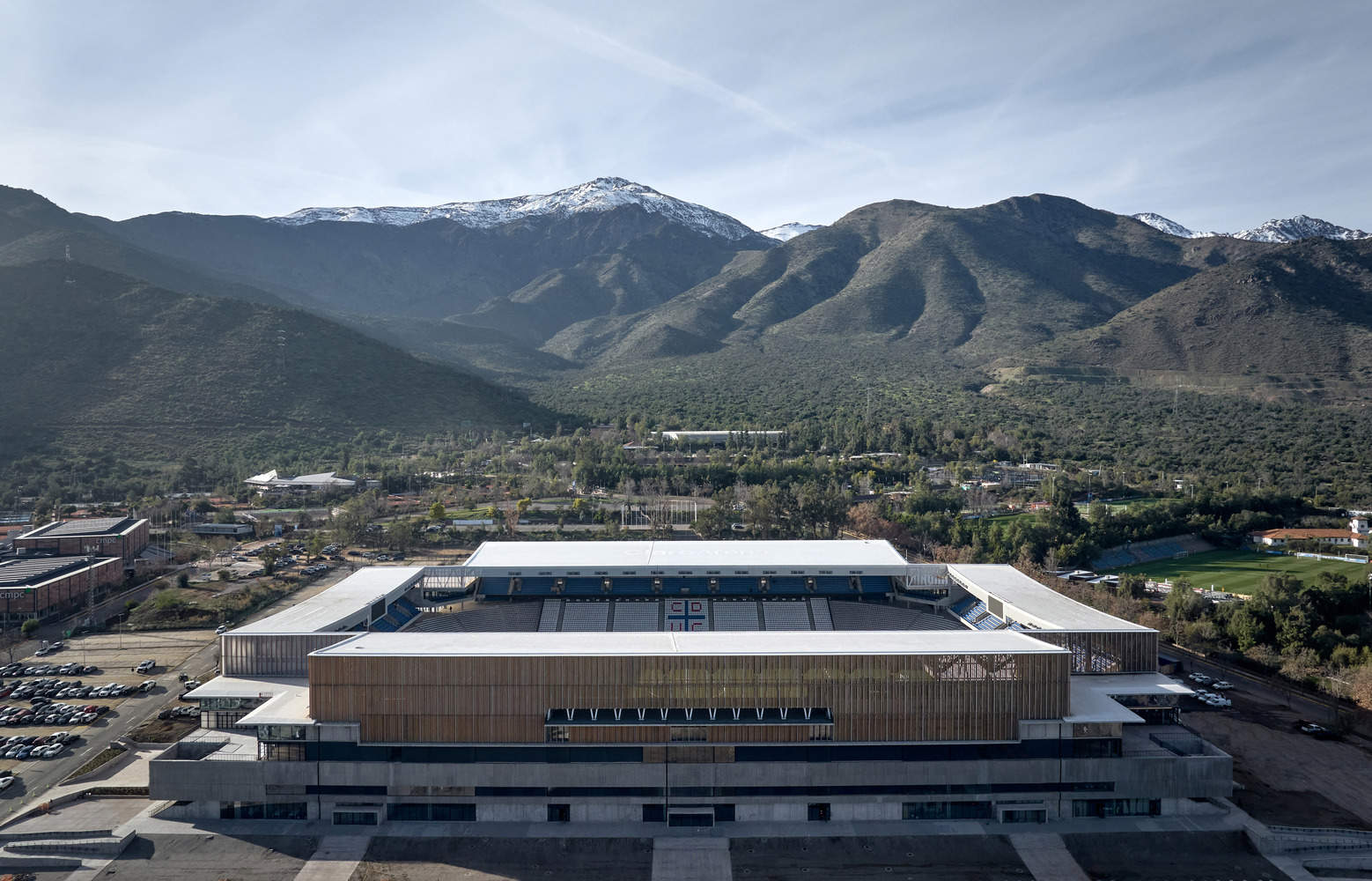
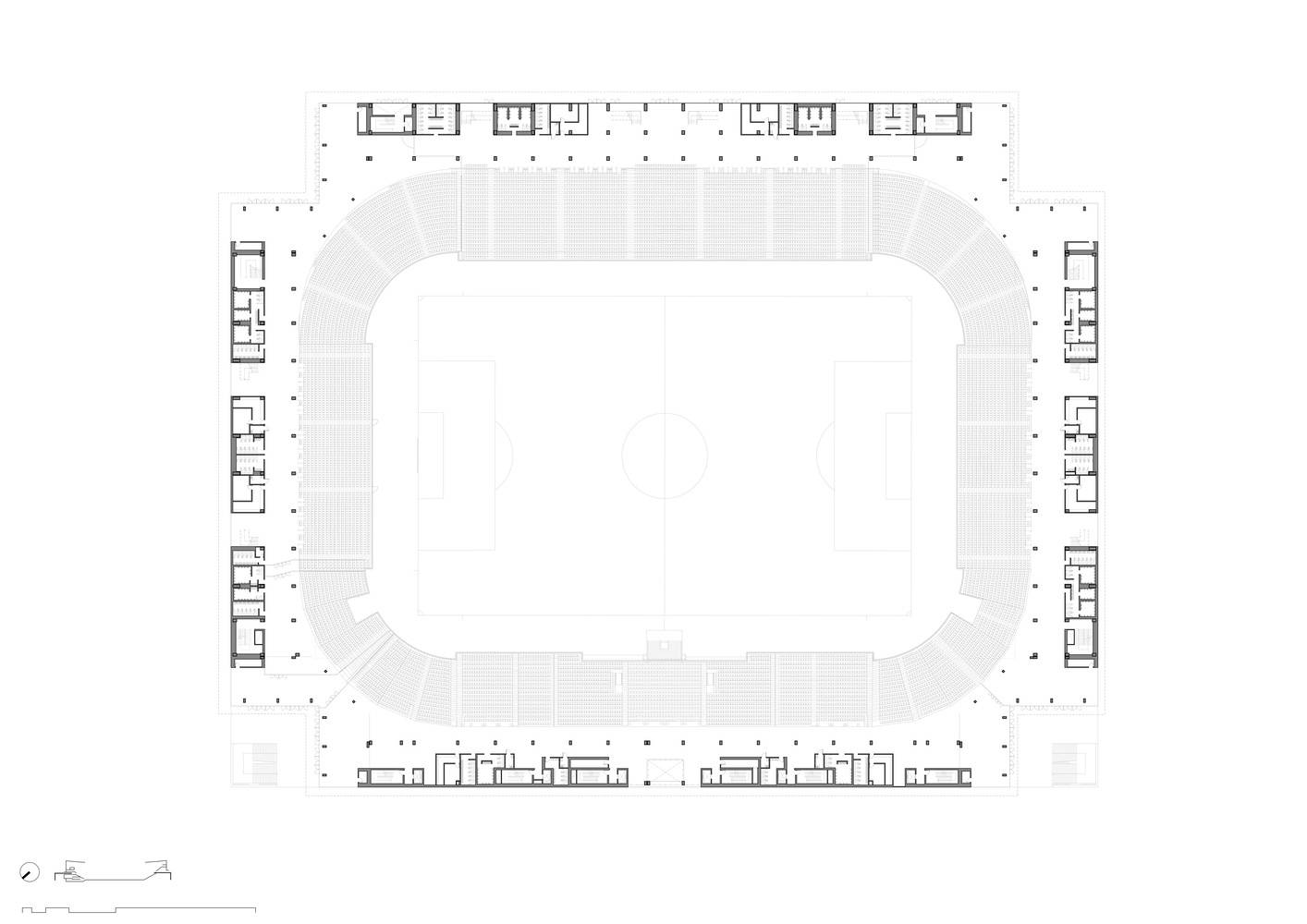
The stadium layout adopts a rectangular geometry, optimizing sightlines and functional distribution. The corner areas are designed as unique spaces that serve not only as entrance markers but also offer multi-functional rooms overlooking the landscape and the field, suitable for both matches and other activities.
体育场布局采用矩形几何设计,优化了视线与功能布局。角落区域被打造为独特空间,不仅作为出入口标志,还提供多功能房间,可俯瞰景观与球场,既可用于比赛也可用于其他活动。
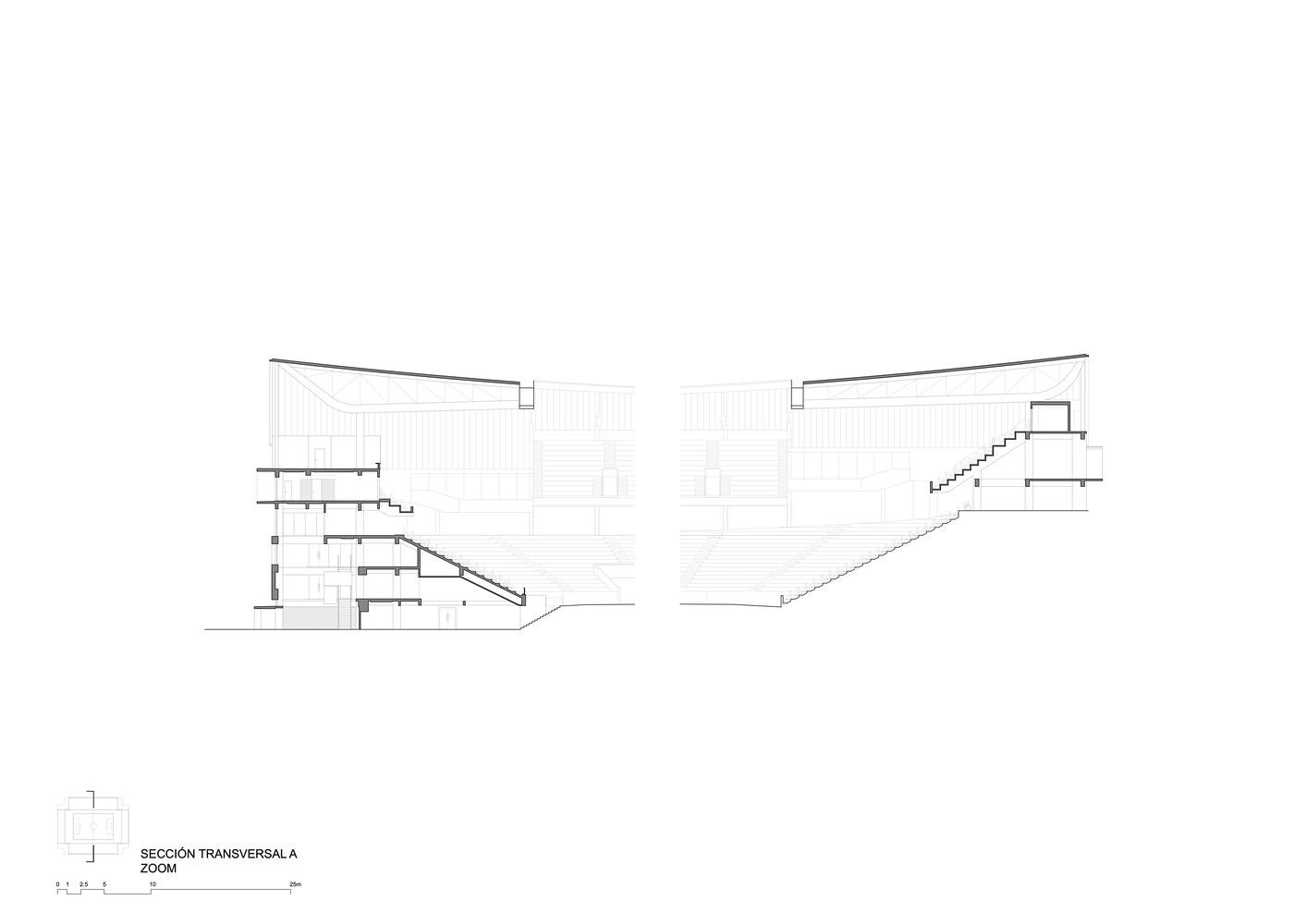
Cross section
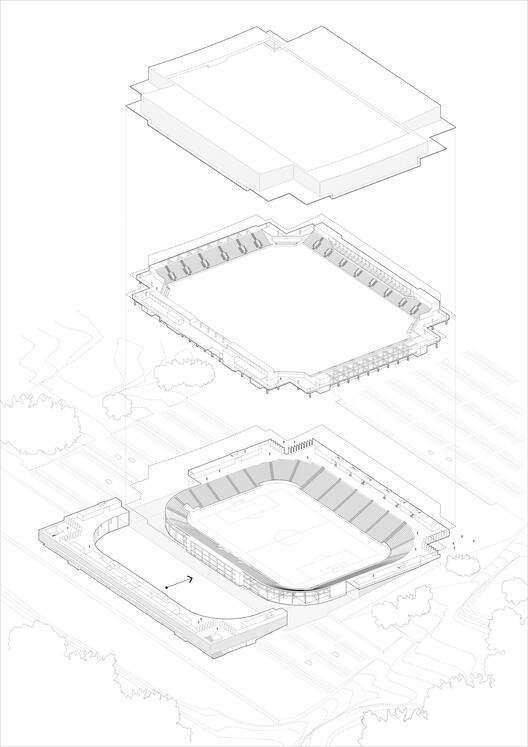
Axonometric view
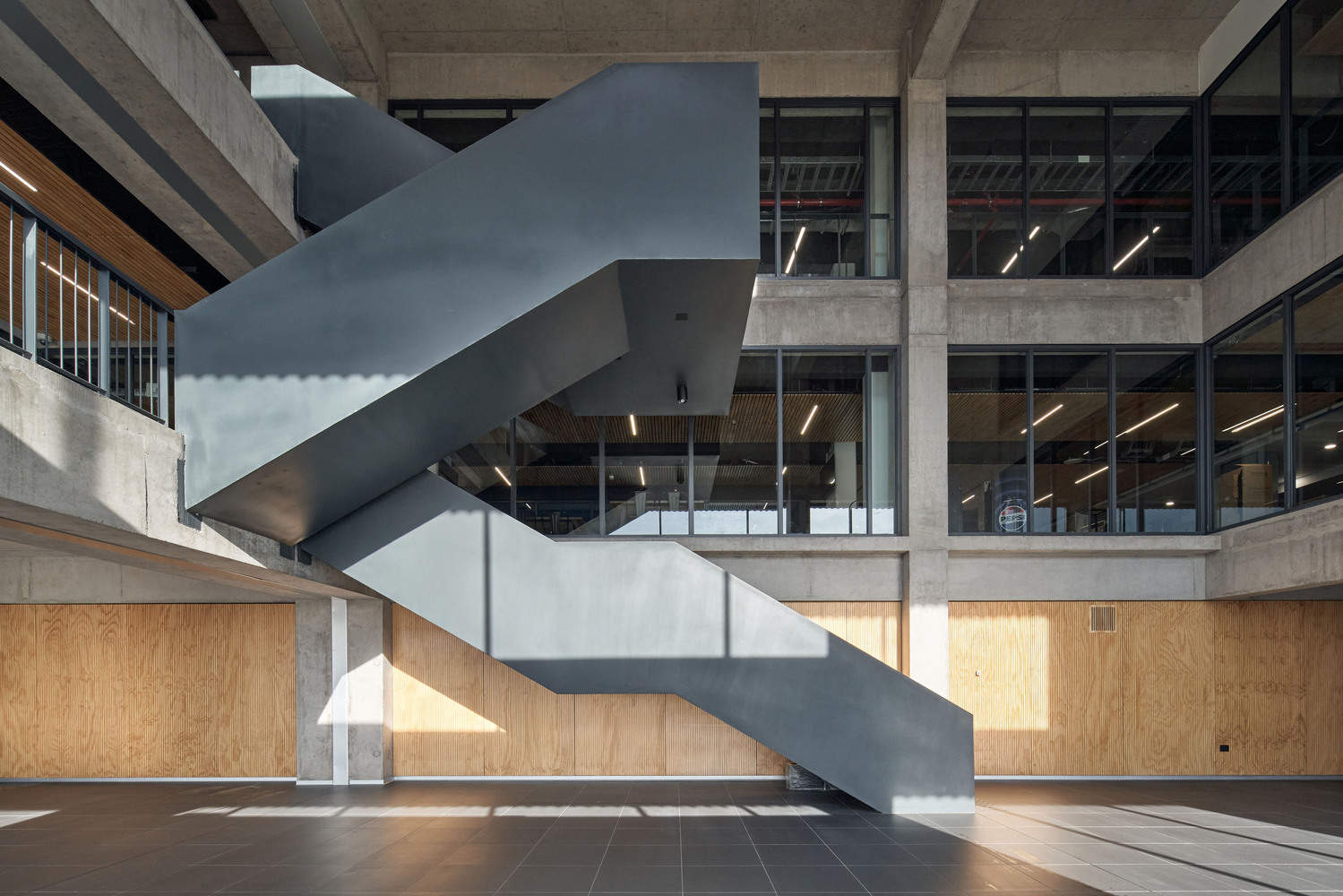
© Cristóbal Palma
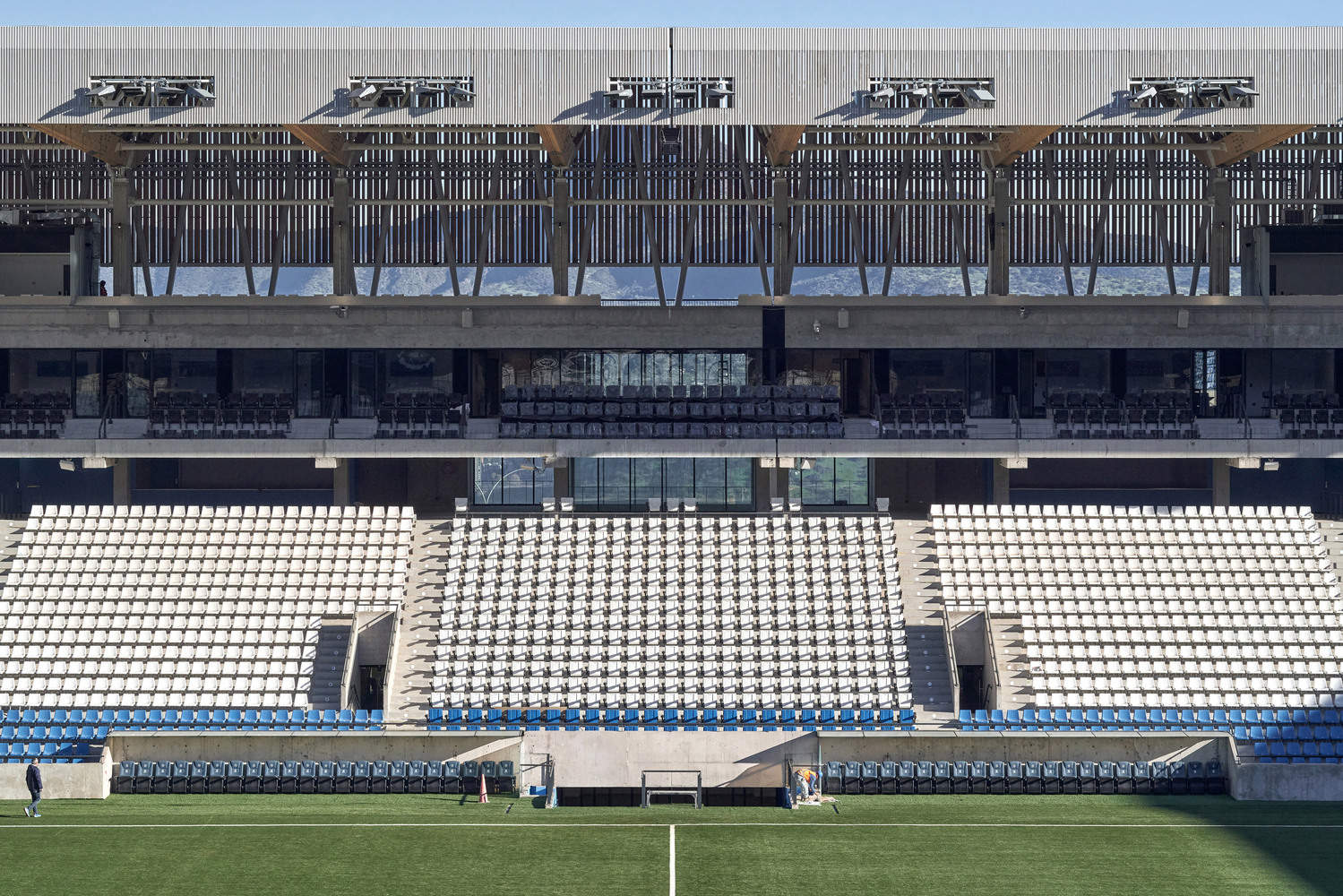
95% of the sightlines from the original stands were preserved. New public stands and VIP boxes were added above them. In the Livingstone sector, the expansion is integrated both below and above the walkway, incorporating changing rooms, press rooms, technical areas, high-end hospitality zones, and media spaces.
原有看台保留了 95% 的视线。其上方新增了公众看台与贵宾包厢。在利文斯通区,扩建部分既位于步道下方也位于其上方,集成了更衣室、新闻发布室、技术区域、高端接待区及媒体空间。
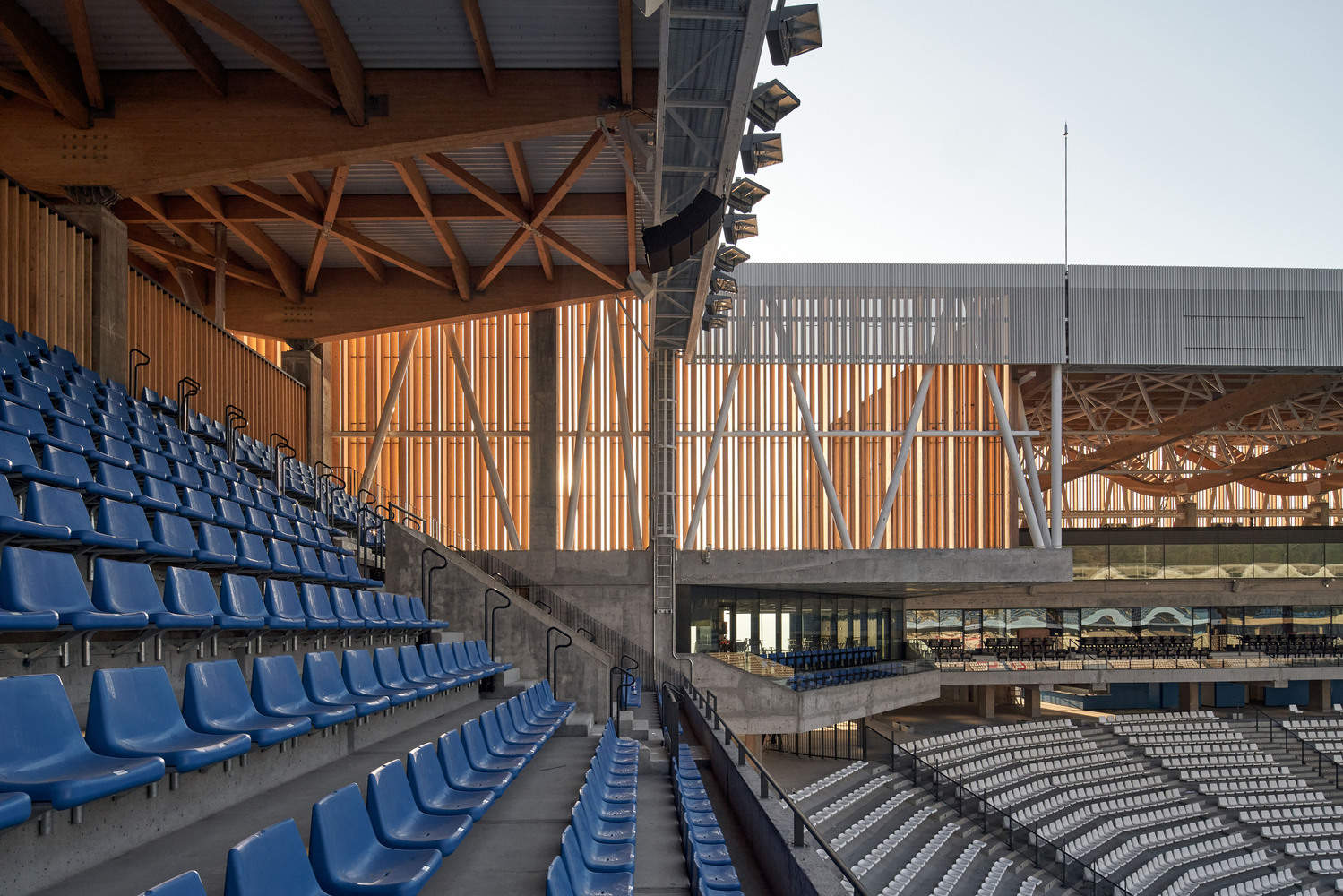
© Cristóbal Palma
© Cristóbal Palma
The building structure retained the original, intact, and functional concrete elements, minimizing intervention. The expansion is organized around the existing bowl-shaped stands, constructed with concrete beams and columns. The corners utilize a mixed structure of inverted concrete and steel to optimize load-bearing performance and meet regulatory height requirements.
该建筑结构保留了原本完好且功能正常的混凝土部分,将干预措施降至最低。扩建部分以现有碗状看台为中心进行布局,采用混凝土梁和柱构建。转角处采用倒置混凝土与钢材的混合结构,优化受力性能并符合规范高度要求。
© Cristóbal Palma
© Cristóbal Palma
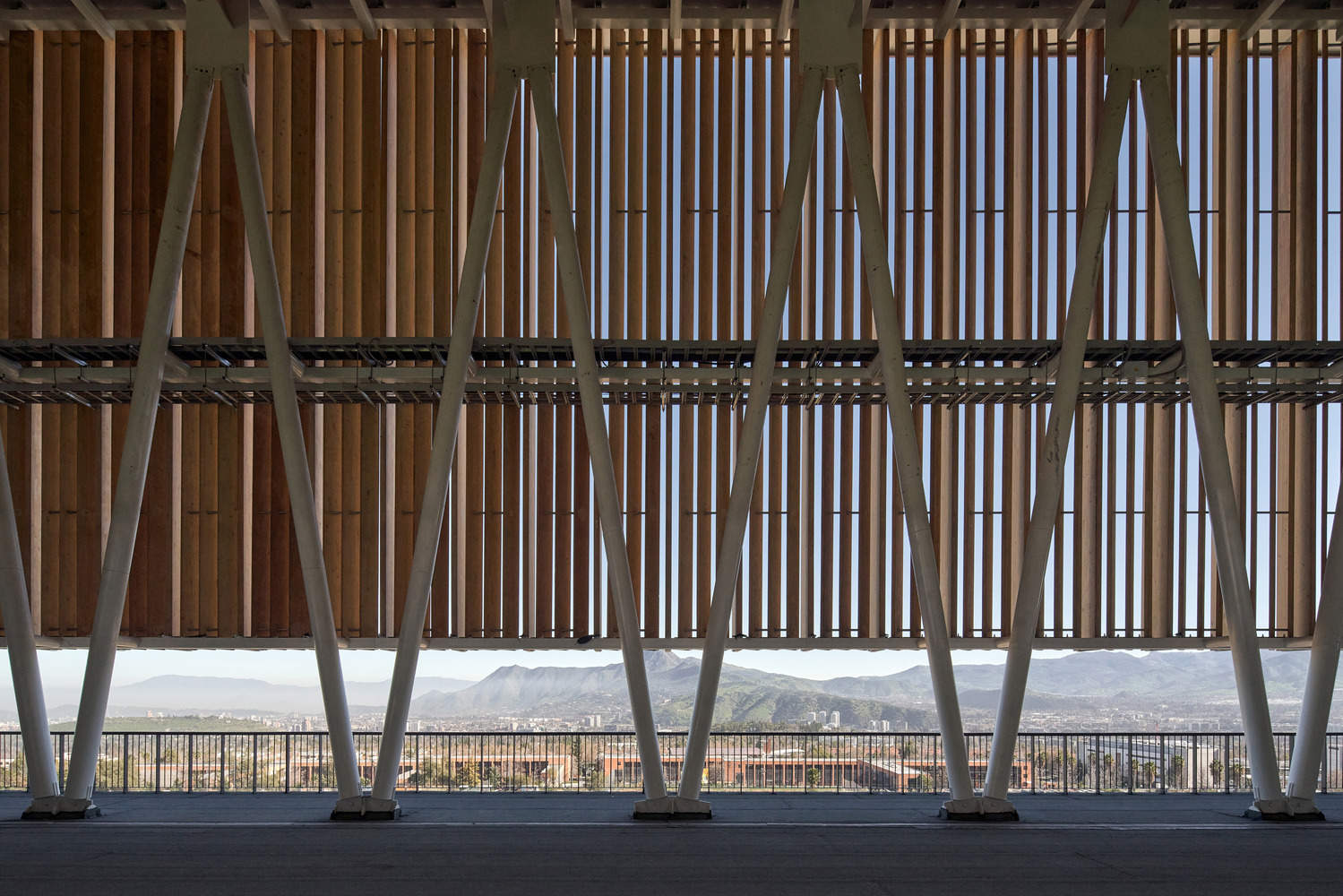
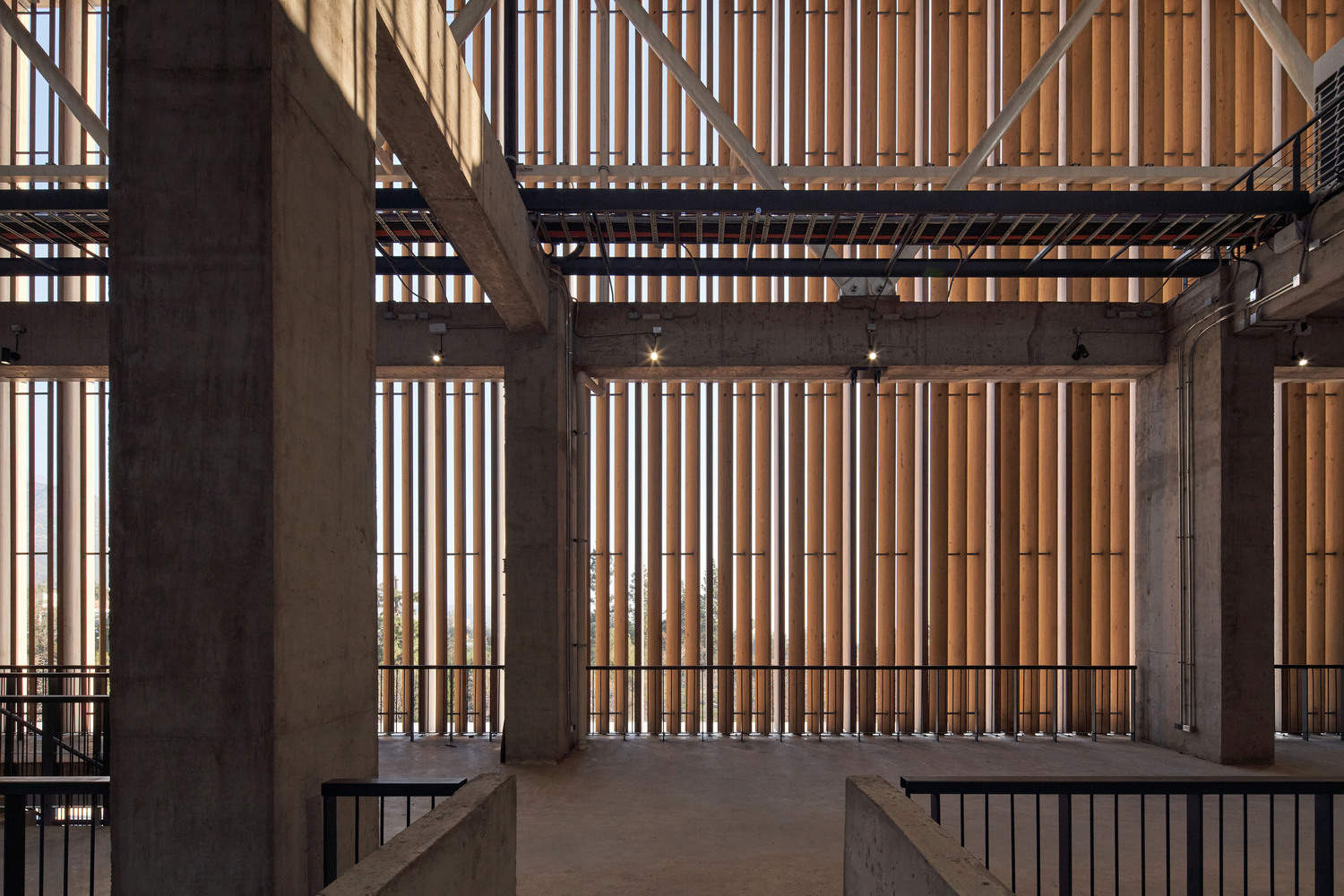
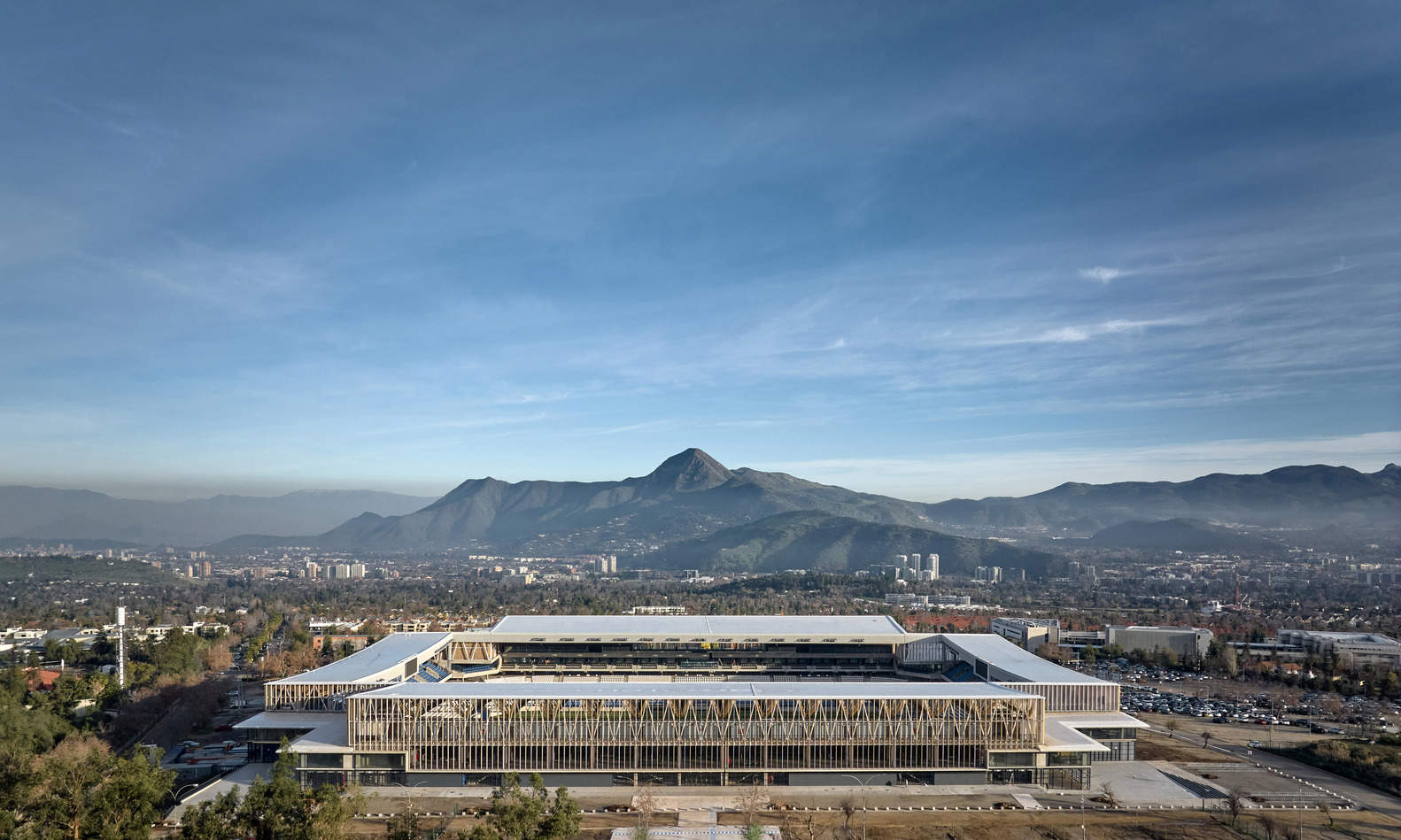
The stadium's enclosure system is designed to enhance environmental comfort in open, non-air-conditioned spaces. In the stadium expansion area (from the promenade level to the roof), vertical strips of Chilean Laminated Veneer Lumber (LVL) are placed every meter, integrated with LED lighting. Depending on the orientation, solar frames, acoustic panels, or ventilation openings are incorporated. A concrete band outlines the starting level of the façade, serving as a striking visual detail.
体育场的围护结构设计旨在提升开放且无空调空间的环境舒适度。在体育场扩建部分(从林荫大道层至屋顶),每隔一米便设置垂直的智利辐射松层积木条,并集成LED照明。根据朝向不同,融入了太阳能框架、隔音板或通风开口。一条混凝土带勾勒出建筑立面的起始位置,起到画龙点睛的作用。
Concept sketch
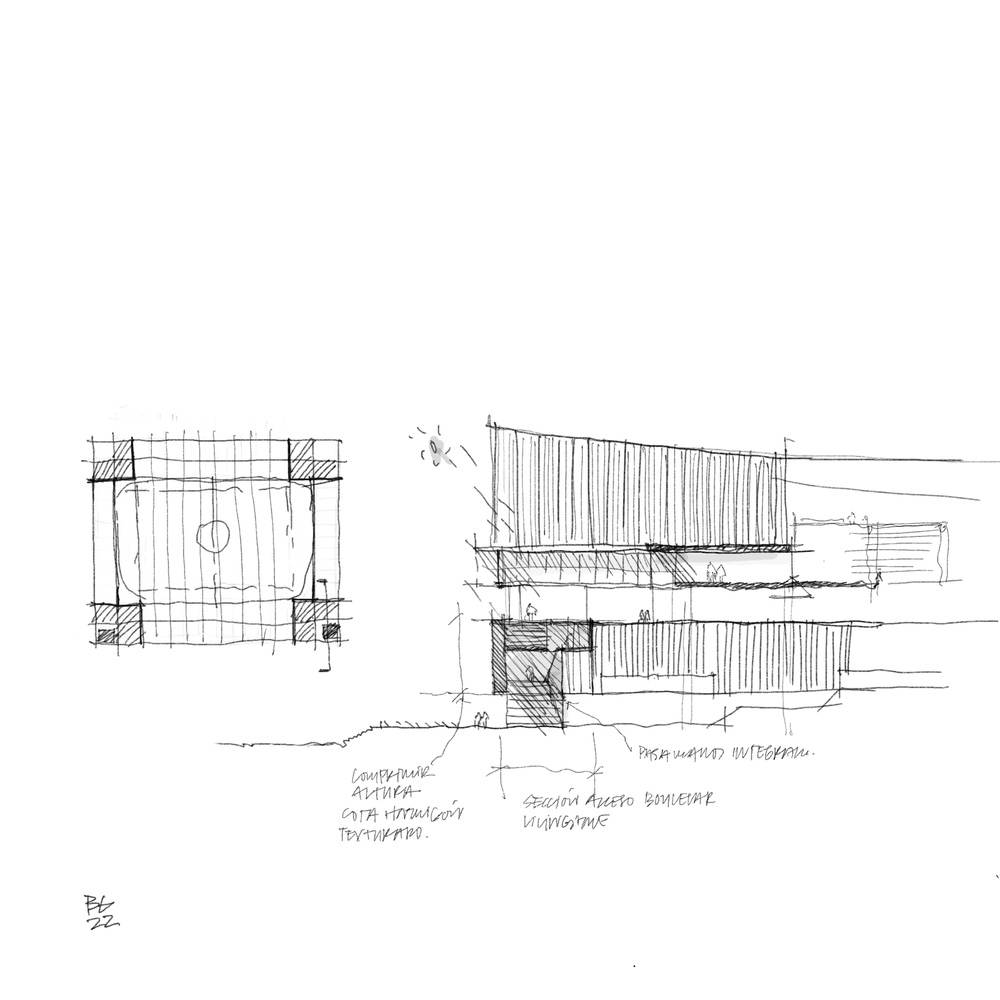
Concept sketch
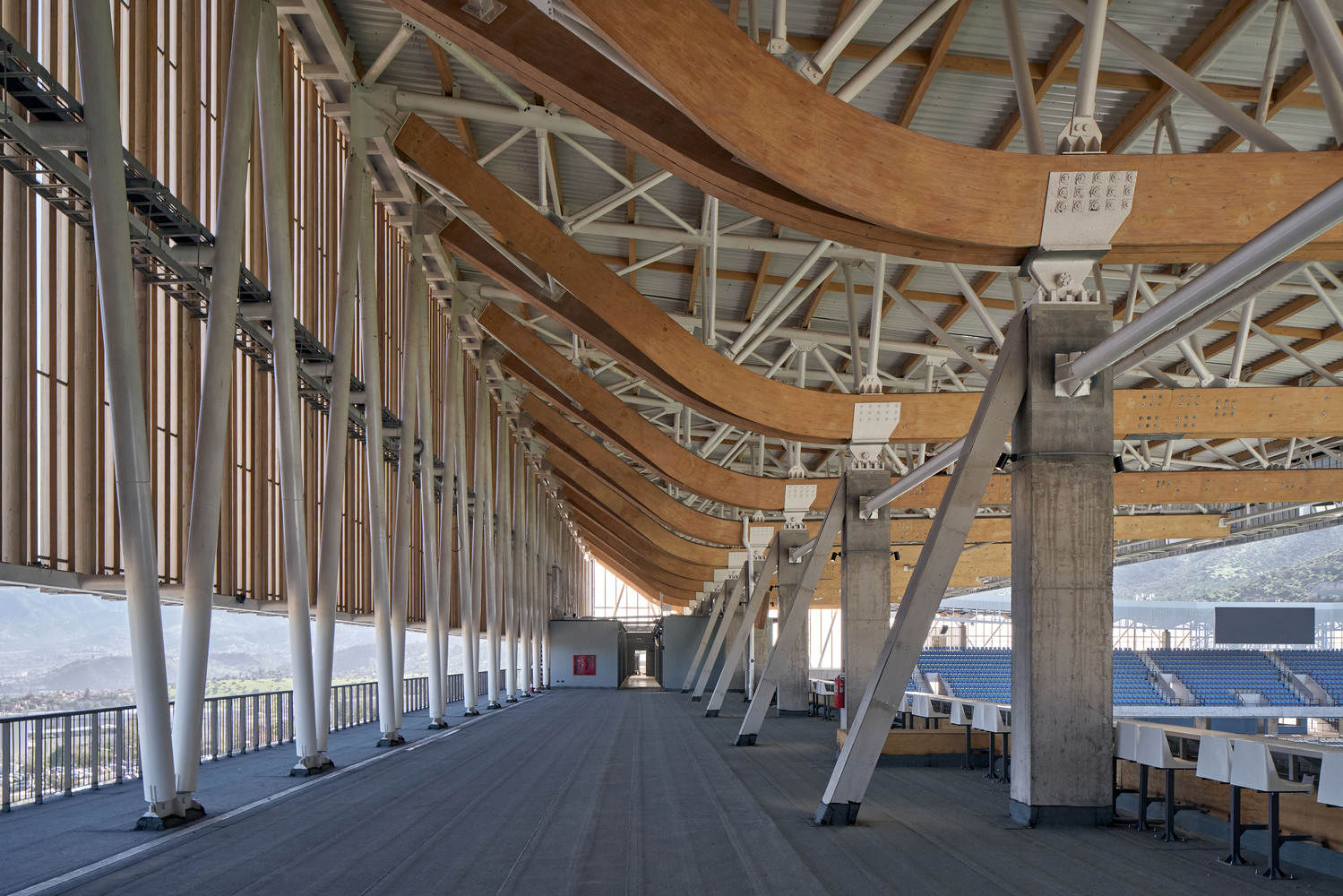
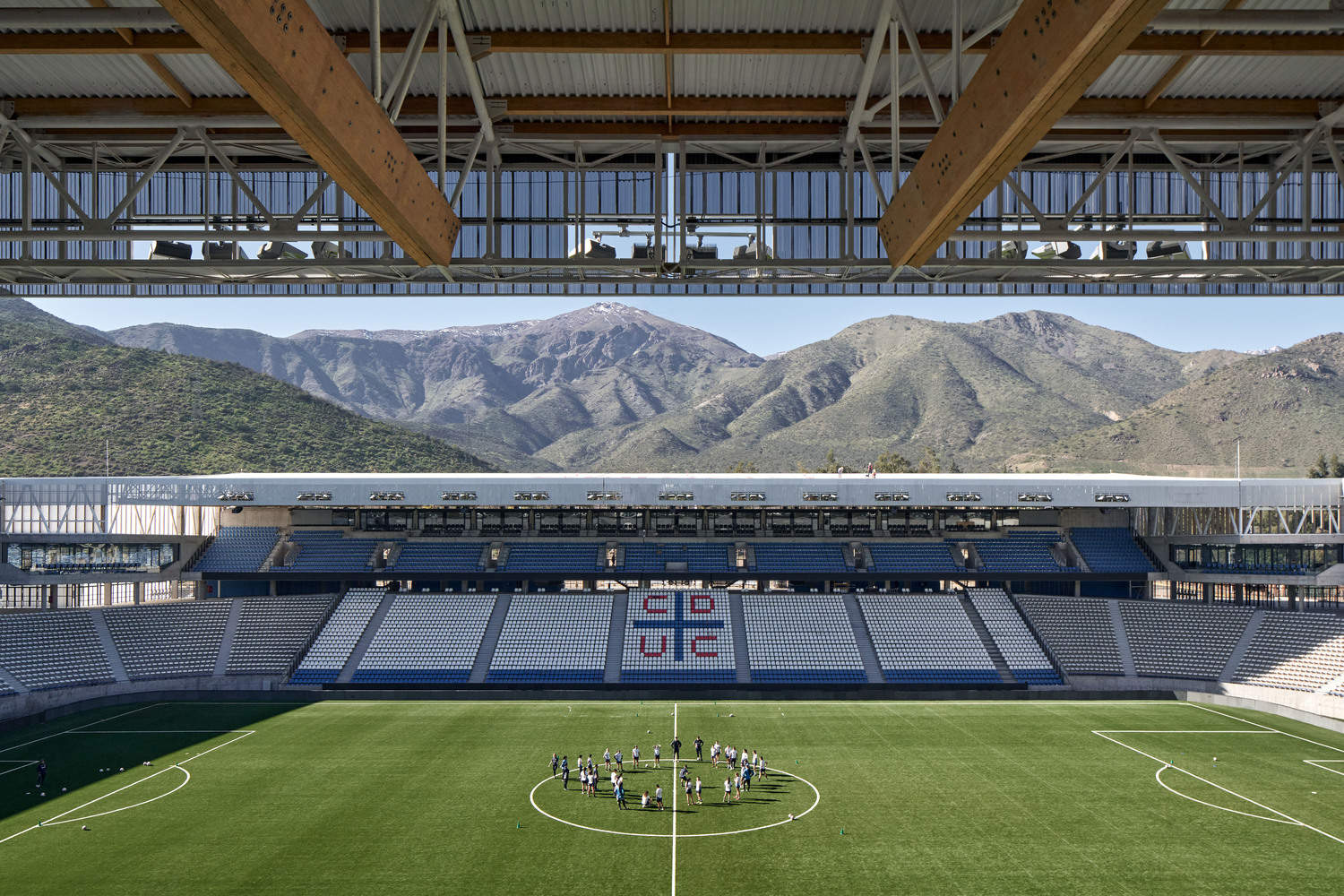
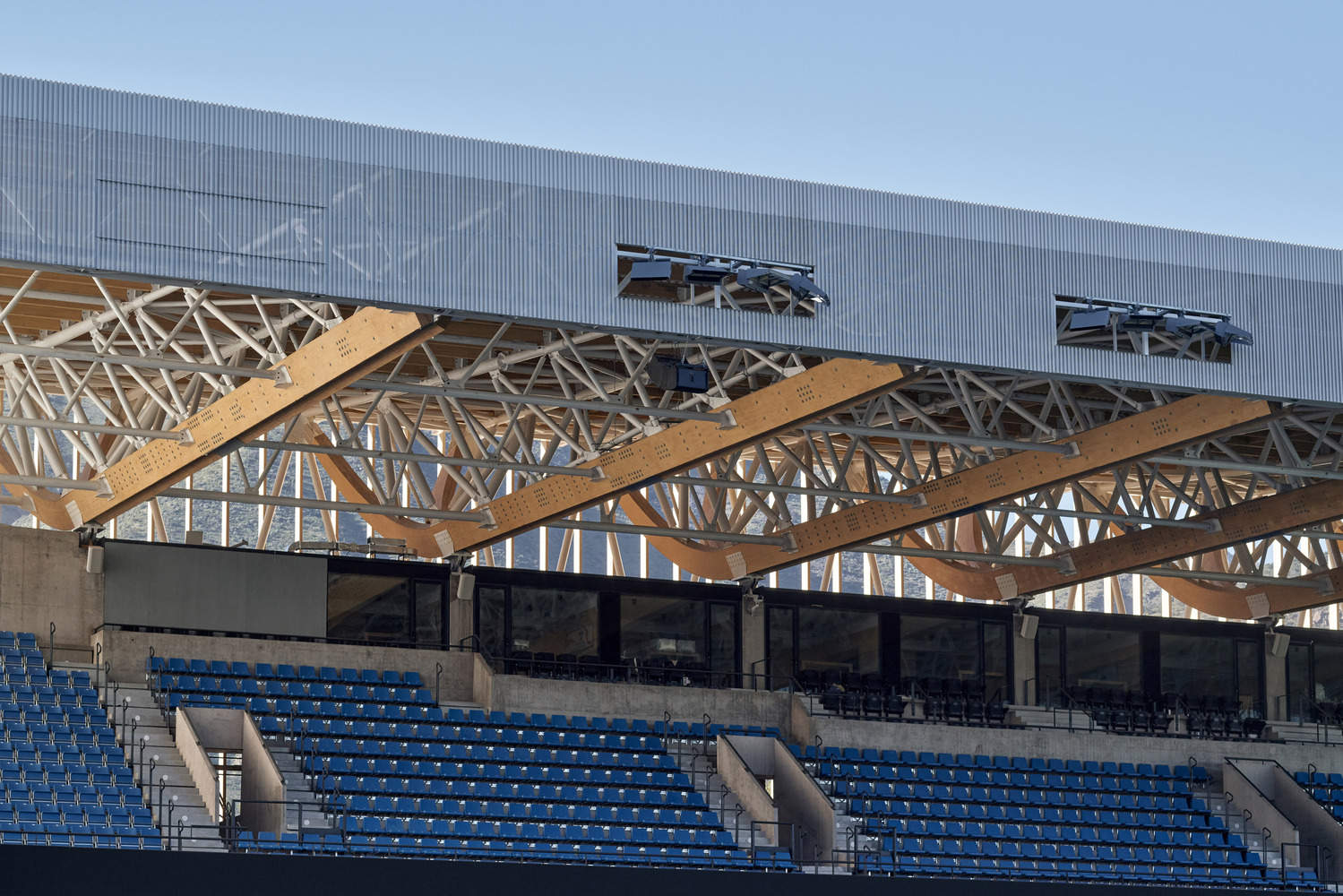
The roof design fully considers seismic requirements, utilizing a hybrid structure of wood and steel. At the rear, the LVL beams span 17 meters; on the sides, the three-dimensional structure spans up to 31 meters. The structural design maximizes the bending capacity of wood for force transmission while minimizing steel connections to optimize wood usage. The roof is clad with lightweight panels and waterproofed with TPO material.
屋顶设计充分考虑了抗震需求,采用木材与钢材的混合结构。在后方,层积木梁跨度达 17 米;在两侧,三维结构跨度则长达 31 米。结构设计充分利用木材的抗弯性能来传递受力,同时尽量减少钢材连接,从而优化木材的使用。屋顶铺设轻质板材,并采用 TPO 防水材料。
© Cristóbal Palma
© Cristóbal Palma
In terms of sustainability, the project relies on a cross-sectoral strategy implemented with partners from the steel, plastic, wood, and energy industries. The project adheres to the principles of reduction, reuse, and recycling: minimizing building surface area, optimizing energy and water consumption, reusing existing concrete structures, and recycling materials such as steel from the old roof and plastic from the seats. Furthermore, the project uses 1600 cubic meters of Chilean LVL, which can absorb over 1,500 tons of CO2, while simultaneously promoting local industry development and the circular economy.
在可持续性方面,该项目依托与钢铁、塑料、木材及能源等行业的合作伙伴共同实施的跨领域策略。项目遵循减量、再利用和回收的原则:尽量减少建筑表面积,优化能源和水资源消耗,重新利用现有混凝土结构,并回收旧屋顶的钢材和座椅的塑料等材料。此外,项目还使用了 1600 立方米的智利层积木,可吸收超过 1500 吨的二氧化碳,同时促进当地工业发展和循环经济。
© Cristóbal Palma