城市复兴与社区激活:该项目精准回应了奥林匹克社区在现代化住宅区中公共空间缺失的城市悖论。通过将一块闲置地块转化为社交活动的催化剂,它不仅为居民提供了急需的聚会场所,更是一项重要的“修复性举措”,旨在纠正区域性的不平等现象。设计深度融入了参与式流程,特别是关注了儿童和青少年的需求,成功地将空间优先权归还给市民,激活了社区的活力与凝聚力。
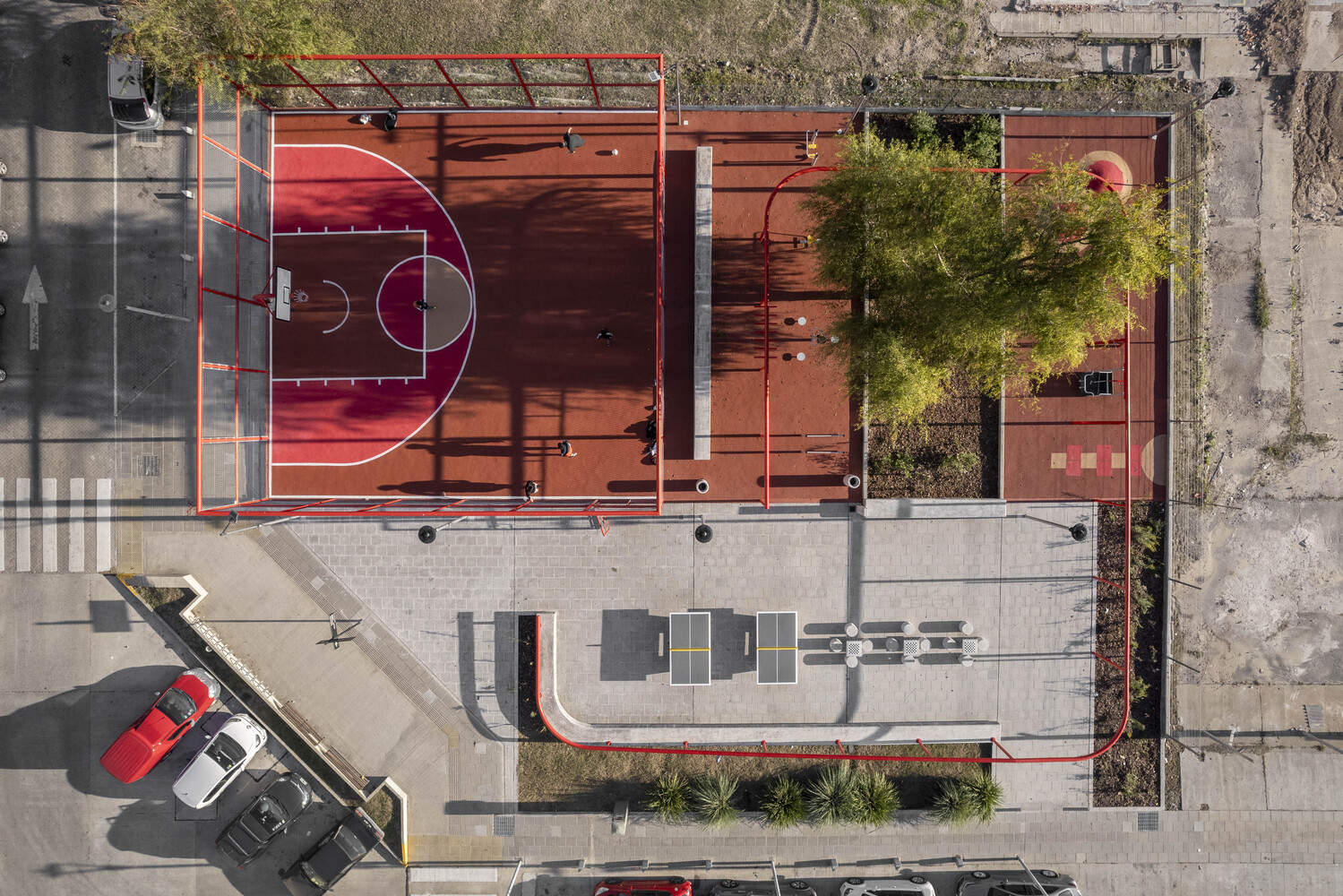
标志性结构与功能整合:设计的核心亮点在于其独特的红色金属管结构,该元素既是强烈的视觉地标,又巧妙地集成了游戏设施、城市家具和必要的标识系统。这种多功能集成策略极大地提升了空间的效率和趣味性。同时,设计严格遵循通用无障碍标准,通过清晰的功能分区(篮球场、训练区、儿童游乐区)和流畅的路径组织,创造了一个安全、包容且易于使用的全龄友好环境。
可持续材料应用与长效韧性:从材料选择上看,项目体现了对耐久性和环境友好的考量。采用透水性橡胶地面确保了安全性和地表水管理,而现场浇筑的混凝土长椅则在划分空间的同时保持了极简的开放性。技术上选用耐用、低维护的材料以适应高频使用,并结合本土植被,平衡了功能需求与生态舒适度,确保了广场在城市良性循环中具有持久的生命力。
In the City of Buenos Aires' District 8, within the Olympic Village—one of the legacies of the 2018 Youth Olympic Games—an urban paradox existed: modern residential infrastructure lacked vibrant public spaces. In response to the pressing need for gathering places, this community square was conceived, transforming a vacant lot into a catalyst for social activity.
在阿根廷布宜诺斯艾利斯的第 8 区,即 2018 年青年奥林匹克运动会遗产之一的奥林匹克社区,存在一种城市悖论:现代化的住宅基础设施却缺乏充满活力的公共空间。为回应居民对聚会场所的迫切需求,这座社区广场的设计应运而生,将一块空地转变为社交活动的催化剂。
© Luis Barandarián
© Luis Barandarián
This project is part of a broader urban strategy to equip the surrounding environment with amenities. Set against a backdrop of stark territorial inequality, the plaza functions as a reparative measure, offering a tangible option for enjoying public space in a historically marginalized area. Through a participatory design process, with special attention to children and adolescents, this intervention transformed an empty lot into an open space prioritizing the right to play, gather, and rest.
该项目是一项更广泛城市战略的组成部分,旨在为周边环境配备便利设施。在地域不平等现象显著的背景下,该广场作为一种修复性举措,为这一历史上被边缘化的地区提供了一个享受公共空间的切实可行的选择。通过参与式设计流程,并特别关注儿童和青少年,这一改造将一块空地转变为一个开放空间,优先保障人们玩耍、聚会和休闲的权利。
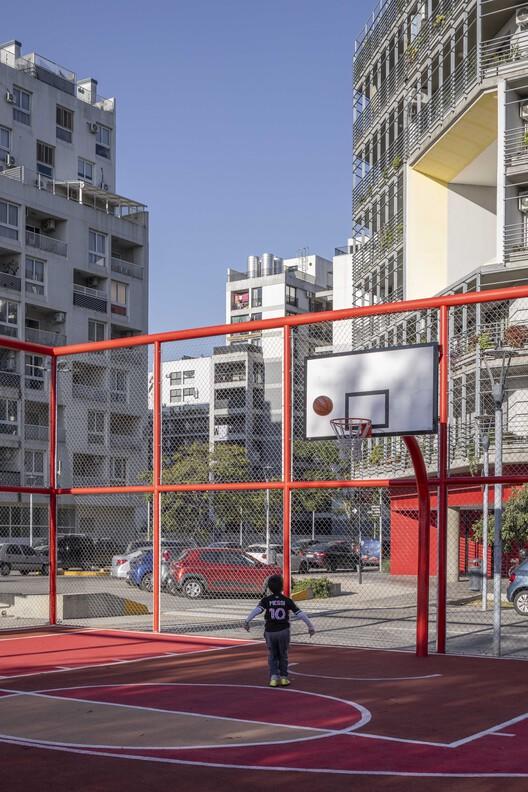
© Luis Barandarián
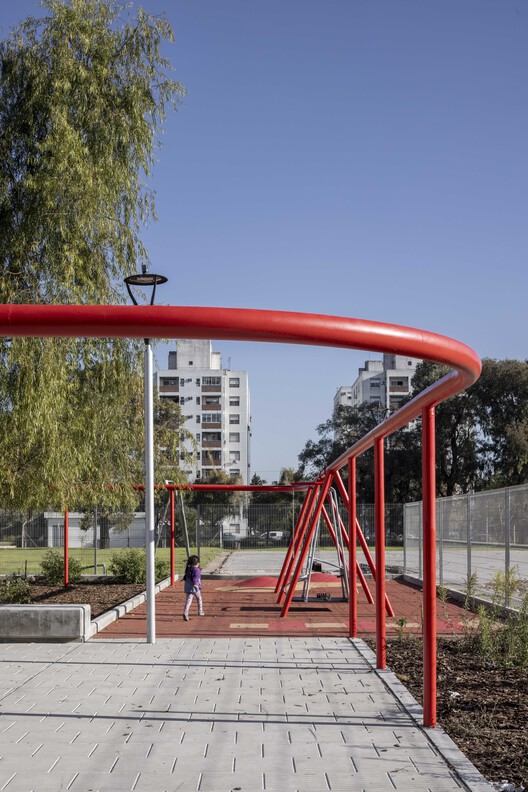
© Luis Barandarián
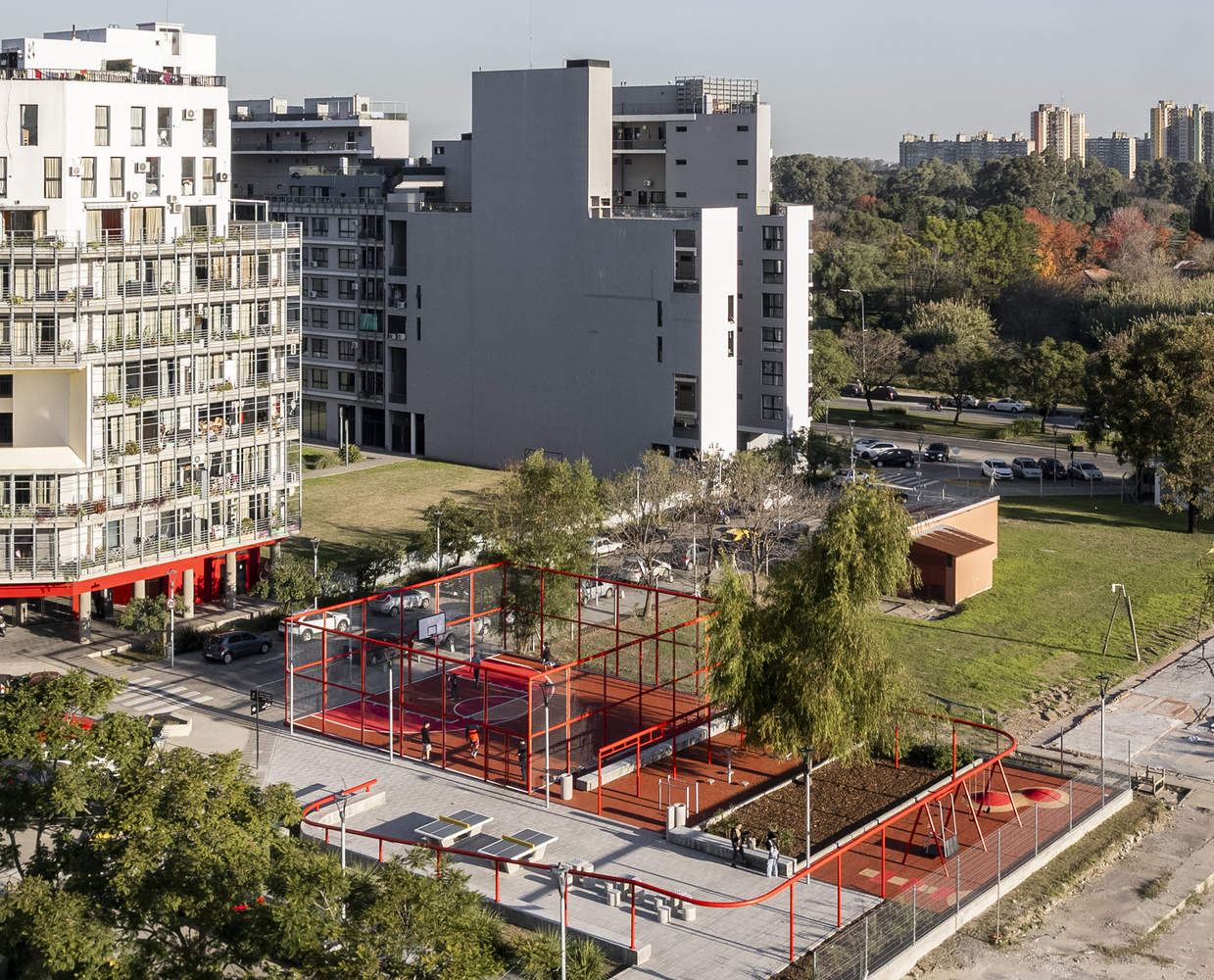
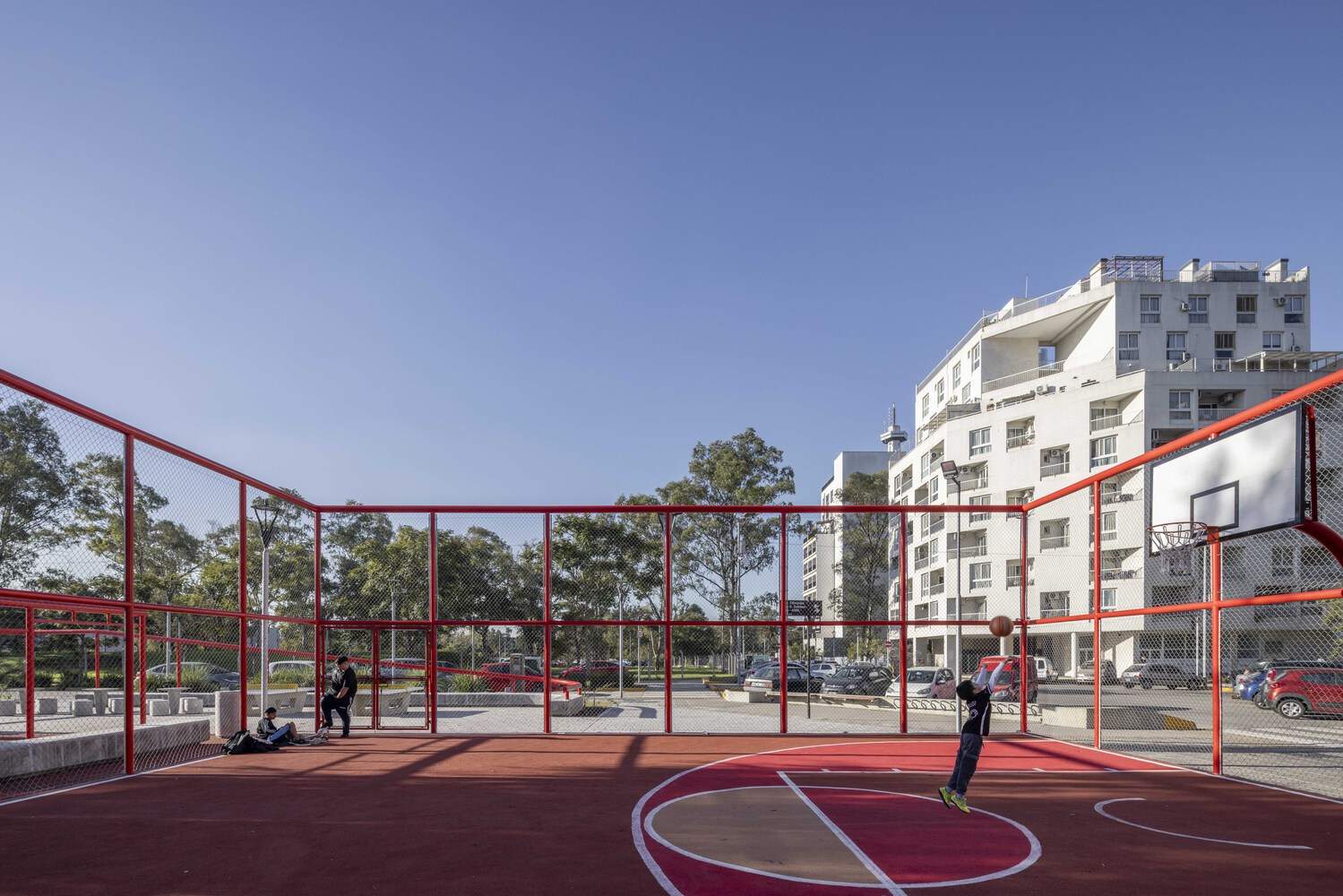
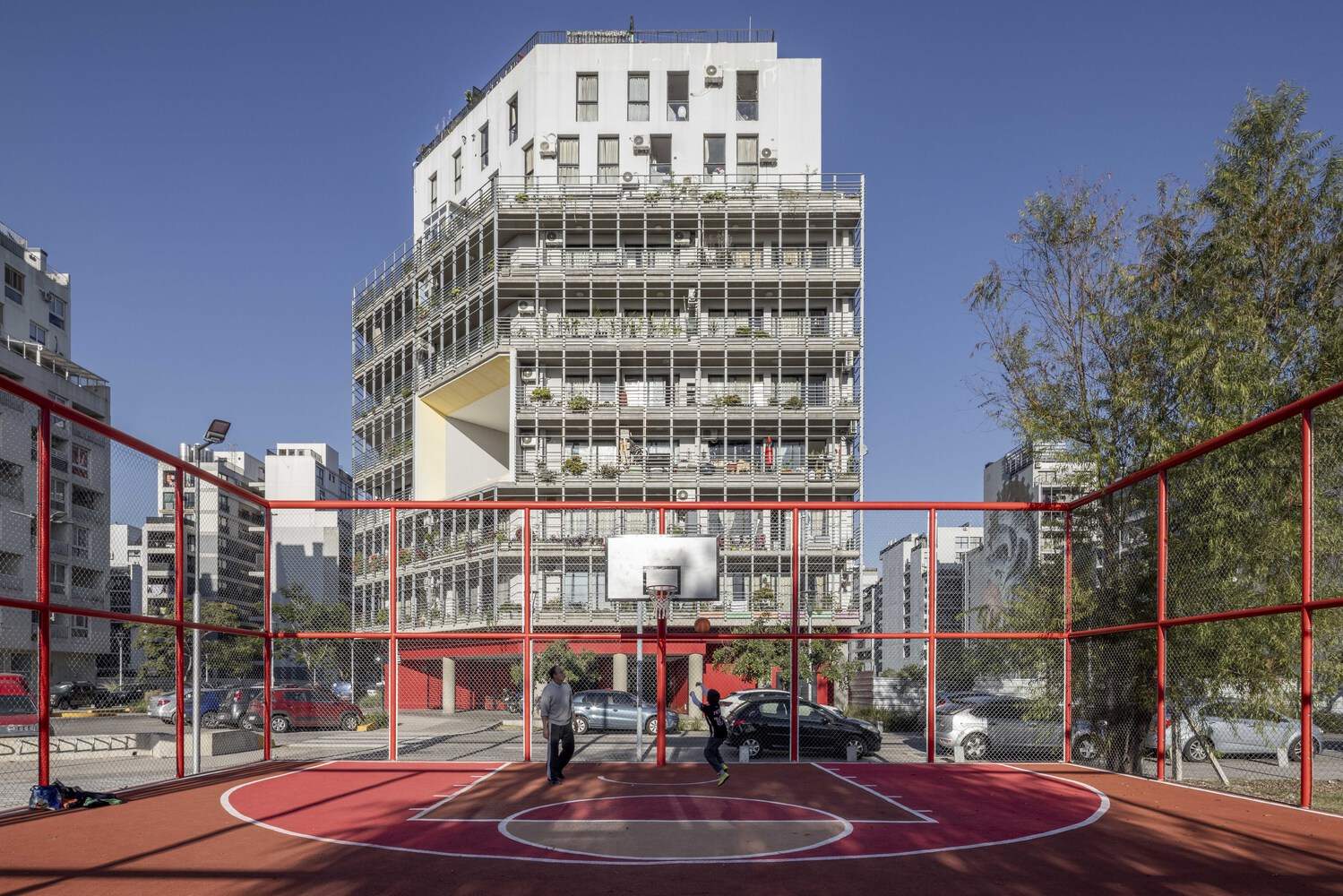
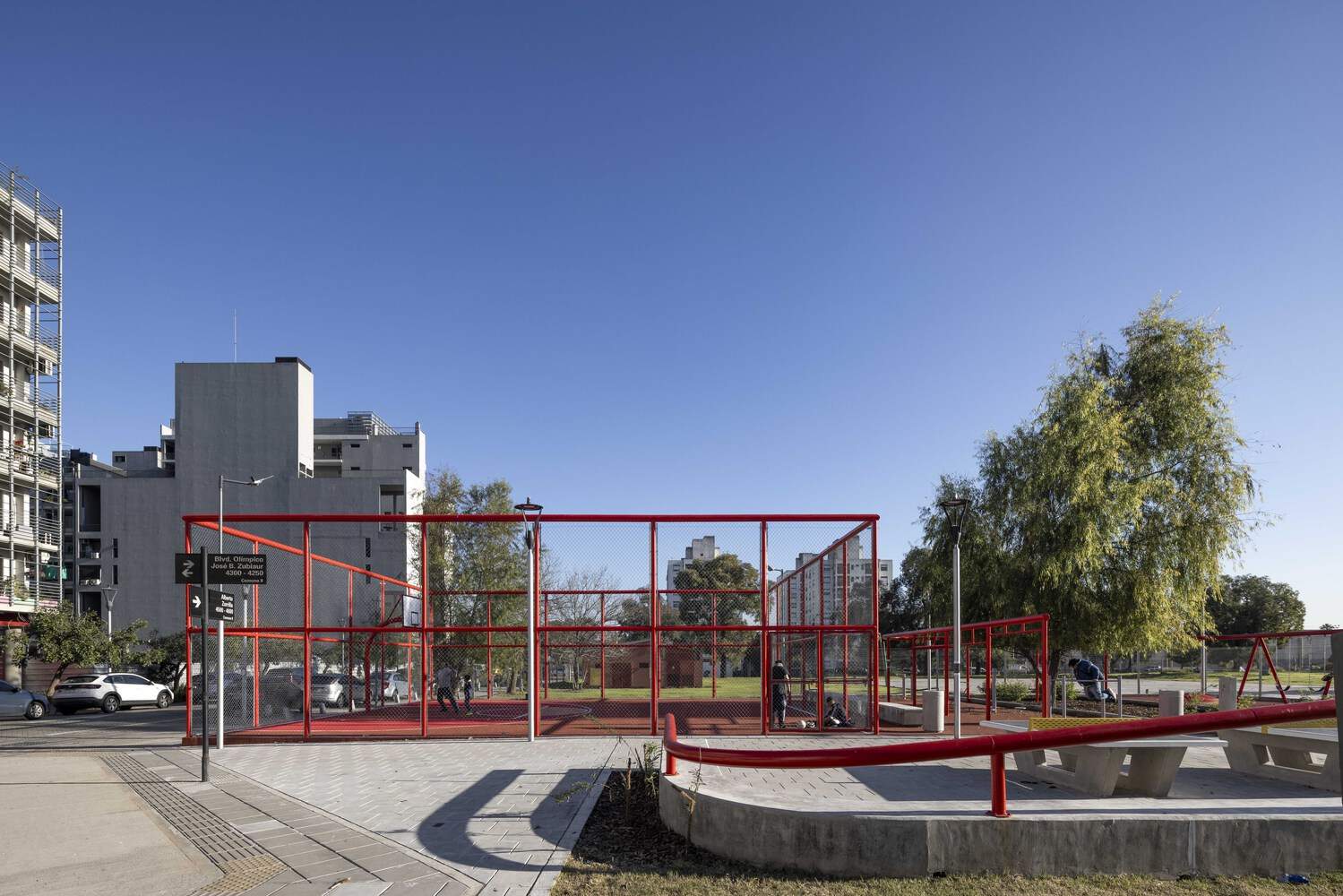
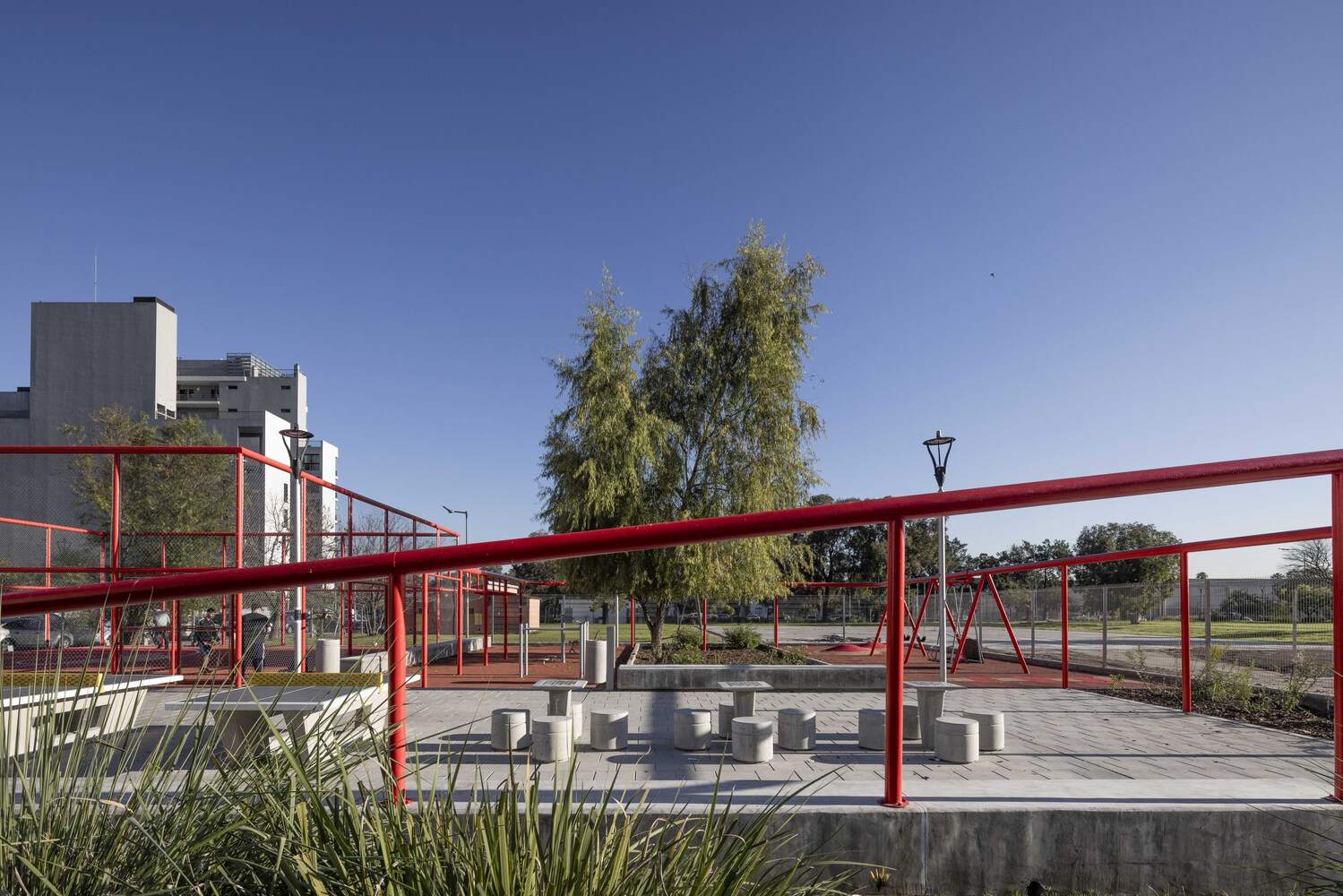
The design adheres to universal accessibility standards, aiming to create an inclusive and safe environment with dedicated areas for play, rest, and training. A key feature is a distinctive red metal tube structure that serves both as a strong visual identifier and as support for play equipment, urban furniture, and signage. Its layout defines pathways and organizes the plaza’s functional zoning, including a basketball court, a training area, and a children's playground.
设计遵循通用无障碍标准,旨在打造一个包容且安全的环境,设有专门的游戏、休息和训练区域。其核心特色是一个独特的红色金属管结构,既具有强烈的视觉辨识度,又同时作为游戏设施、城市家具和标识的支撑。其布局界定了路径,并组织了广场的功能分区,包括一个篮球场、一个训练区和儿童游乐区。
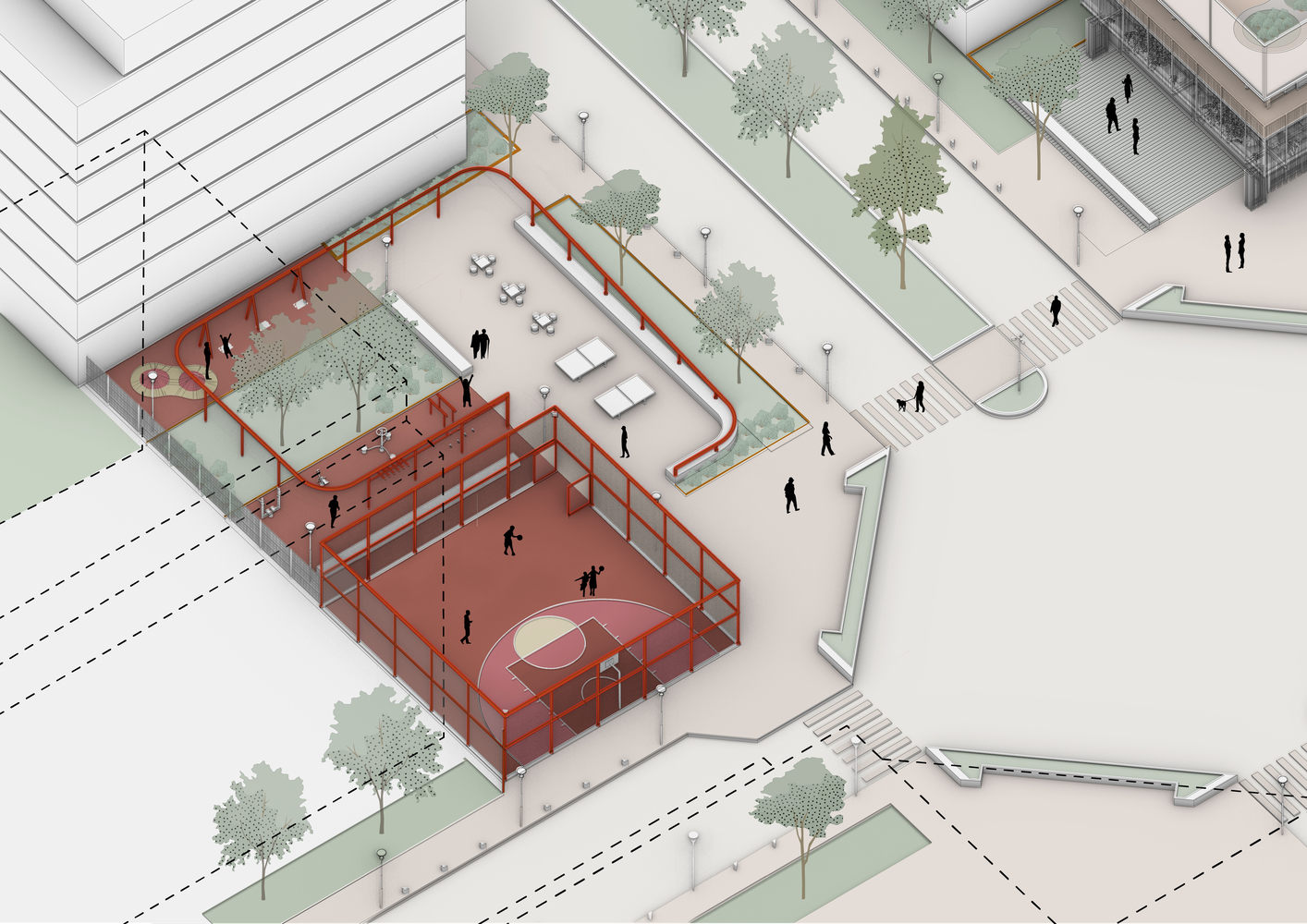
Axonometric view
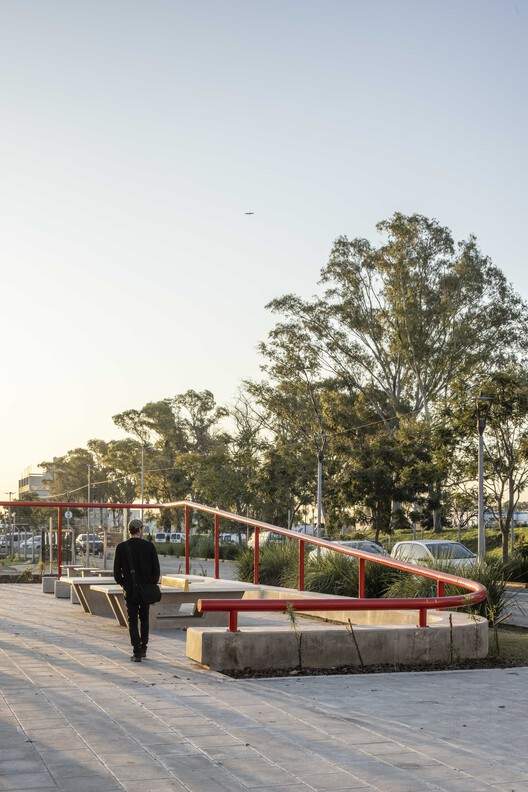
The material selection seeks to enhance the space's openness and durability. Permeable surfaces, such as continuous drainage rubber, were used to absorb impact and prevent soil waterproofing. Furthermore, in-situ concrete benches help delineate areas and encourage rest without the need for fences or barriers, reinforcing the space’s appropriability.
材料的选择旨在增强空间的开放性和耐久性。采用了连续排水橡胶等透水性表面材料,既能吸收冲击力,又能防止土壤防水化。此外,现场混凝土长椅被用来划分区域,促进休息,无需设置围栏或障碍物,强化了空间的适宜性。
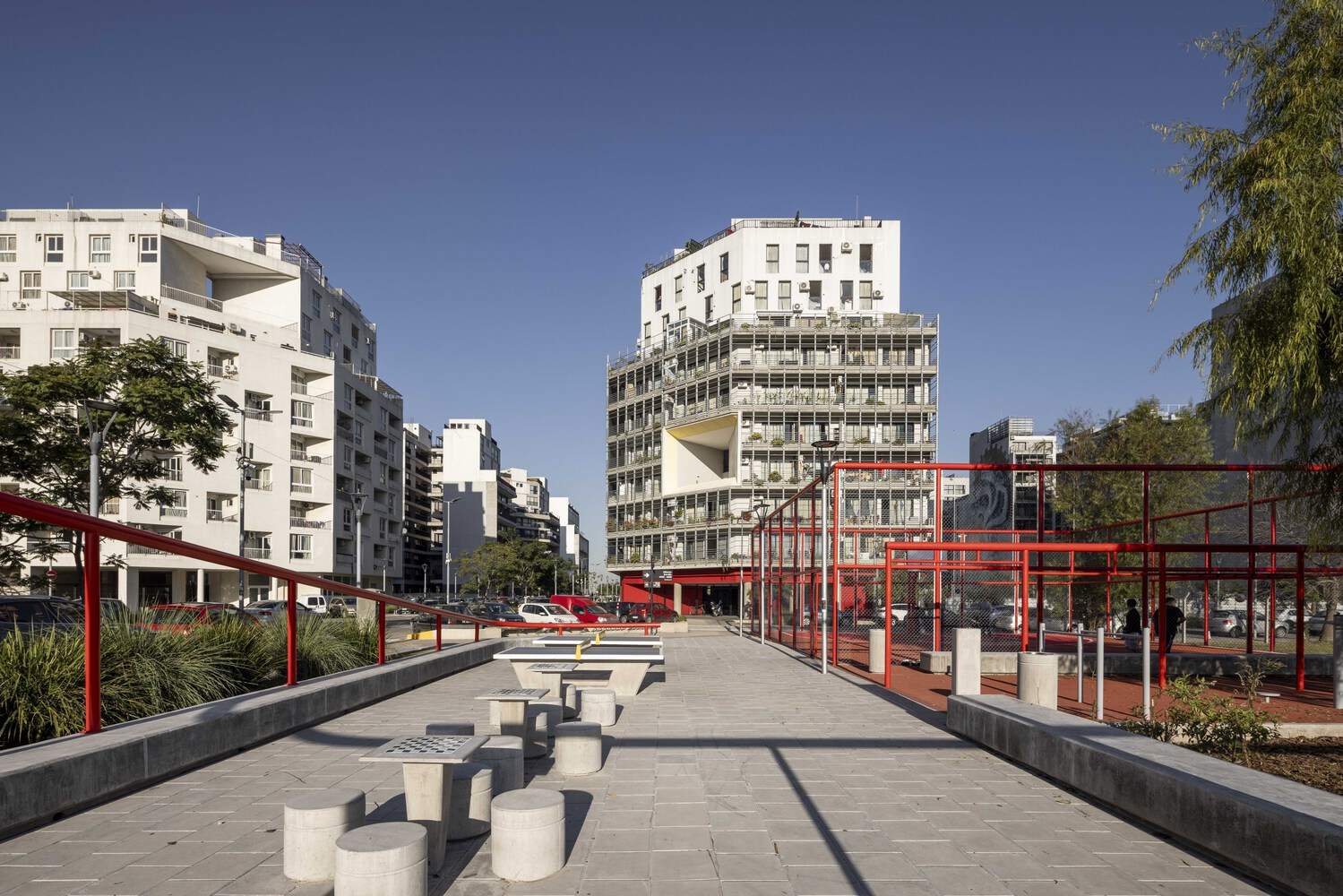
© Luis Barandarián
© Luis Barandarián
From a technical and environmental perspective, durable, low-maintenance, and high-strength materials were chosen to withstand intensive use. The integration of native vegetation and shaded areas contributes to environmental comfort and reduces the project’s ecological footprint.
从技术和环境角度来看,选用了耐用、低维护且高强度的材料,以适应高强度使用。本土植被和遮荫区域的融入,有助于改善环境舒适度,并降低项目的生态影响。
© Luis Barandarián
© Luis Barandarián
© Luis Barandarián
In a context where public space is increasingly privatized for leisure activities, the plaza is designed as a permanently open and accessible place for daily use. Its creation is part of a virtuous urban economic cycle: new public spaces drive future development, which in turn funds further community improvements. Since its inauguration, the plaza has been heavily used, becoming a new focal point and source of vitality for the community.
面对公共空间因休闲活动私有化而逐渐萎缩的现状,该广场被设计为一个日常开放且无障碍的场所。其建设是城市经济良性循环的一部分:新的公共空间推动未来发展,而这些发展反过来又为社区的进一步改善提供资金支持。自落成以来,该广场已被广泛使用,成为社区生活的新亮点和活力源泉。
© Luis Barandarián