场地文脉与遗产的优雅融合:本项目最精髓之处在于其对场地历史文脉的深刻理解与尊重。它不仅是一座连接两岸的桥梁,更是工业遗址(煤渣山和水塘)向当代休闲景观转型的象征性构筑物。设计巧妙地将采矿留下的独特地形转化为极具吸引力的骑行体验,使得历史叙事得以延续。浮桥的形态与曲线设计,避免了对现有景观的突兀干预,而是以一种谦逊而优雅的姿态融入环境,实现了遗产保护与未来功能需求的完美平衡。
斐波那契曲线驱动的沉浸式空间体验:项目在设计哲学上展现了高度的原创性,即引入斐波那契数列和黄金分割原则来指导桥梁的线性布局。这种数学上的精确美学转化为一条蜿蜒、有机的路径,而非简单的直线跨越。这种设计手法极大地提升了用户的体验质量,它通过控制行进速度和不断变化的视野,将一次简单的通勤或骑行转化为一段引人入胜的、序列化的景观叙事。桥梁因此从纯粹的交通设施升华为一种引导性的、具有节奏感的空间装置。
工程技术与动态适应性的完美平衡:在结构层面上,这座长达400米的浮动自行车桥体现了卓越的工程智慧。其模块化、铰接式的30个单元设计,赋予了结构强大的环境适应性,能够随高达1.3米的明显水位变化进行上下浮动,确保了全天候的使用可靠性。同时,通过精心的技术处理,有效地抑制了波浪引起的晃动,保证了骑行舒适度。这种在宏大规模下实现动态稳定性的挑战被成功克服,使得该桥不仅在美学上突出,更在技术实现上达到了世界领先水平。
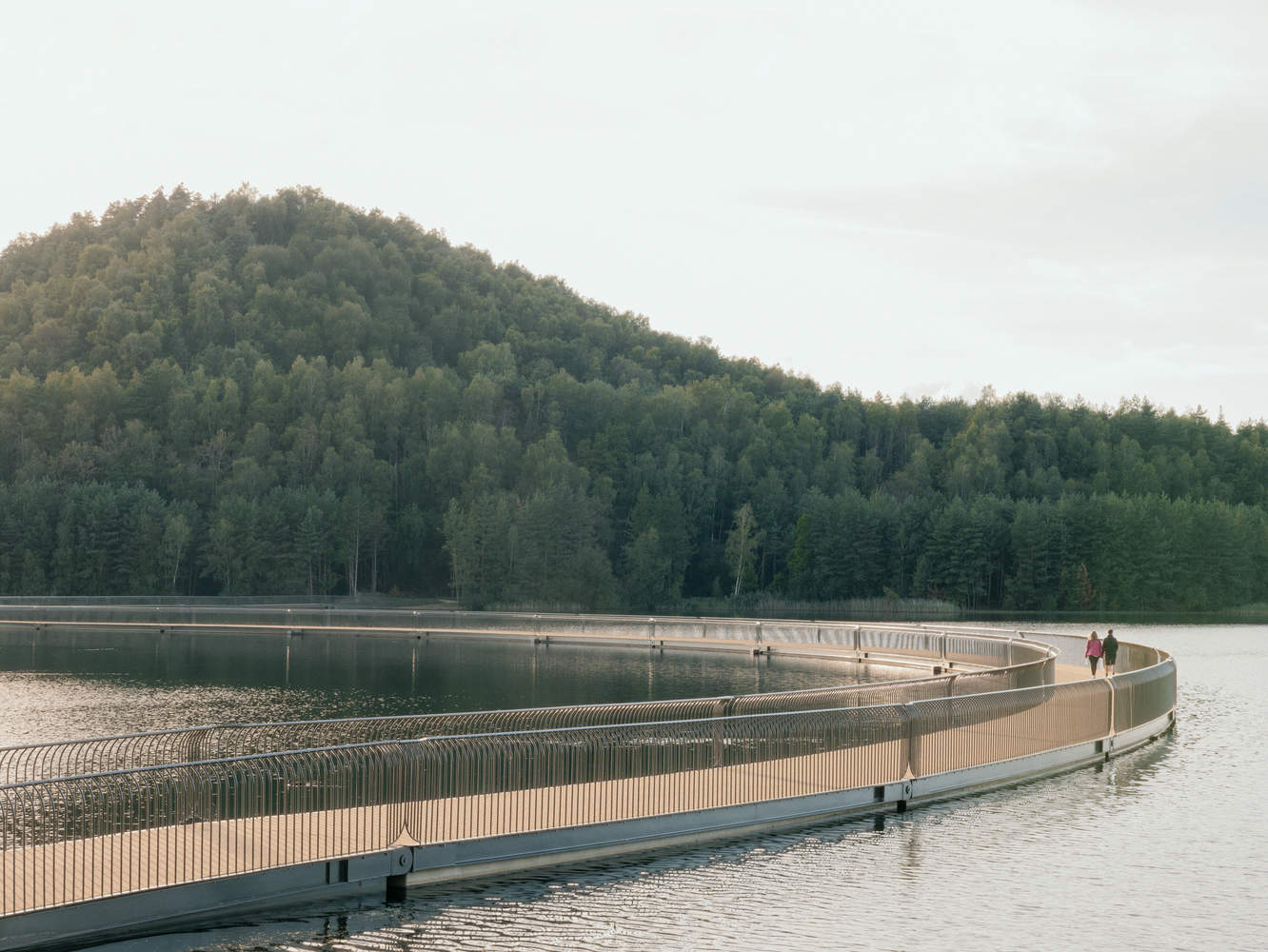
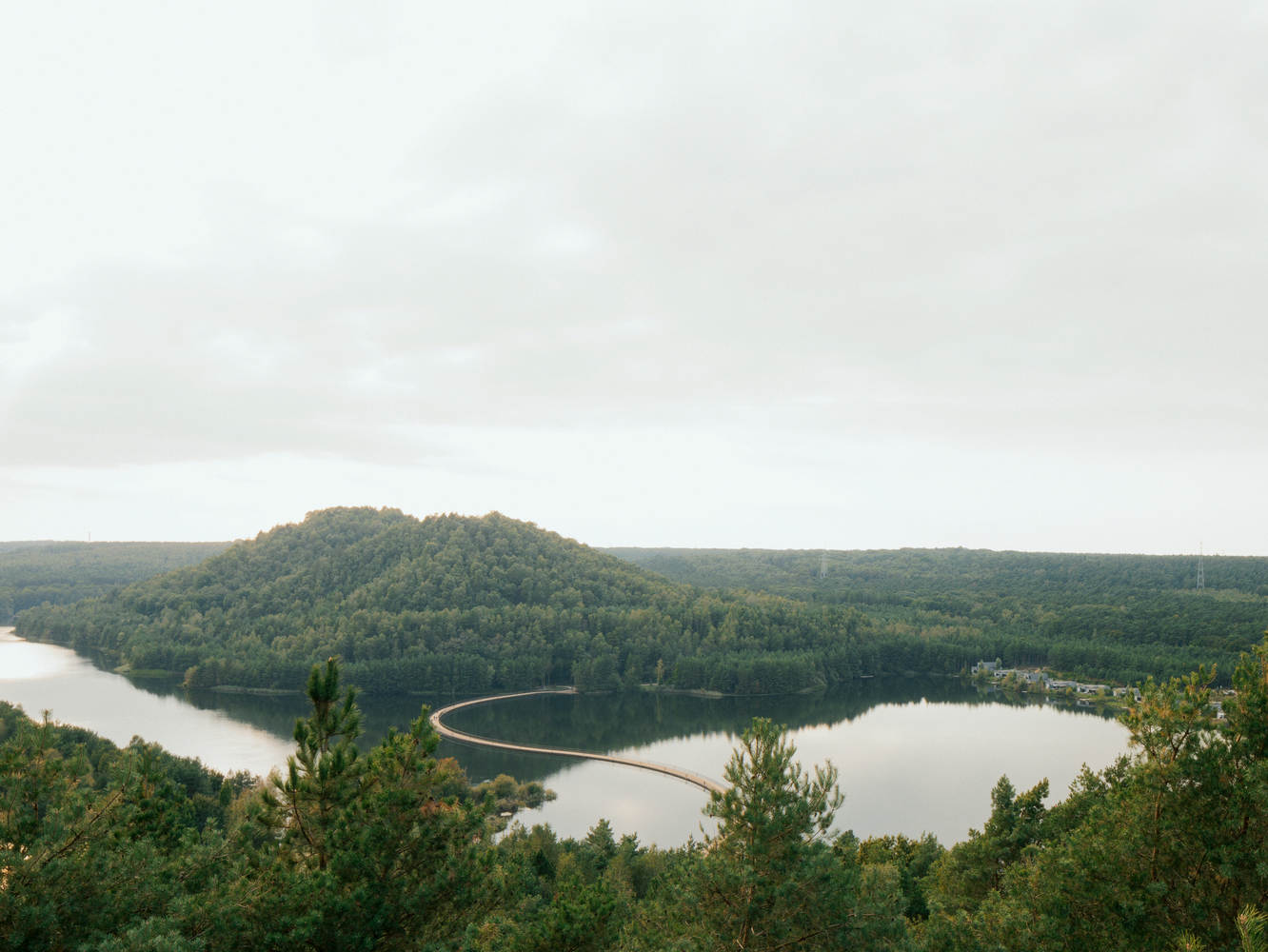
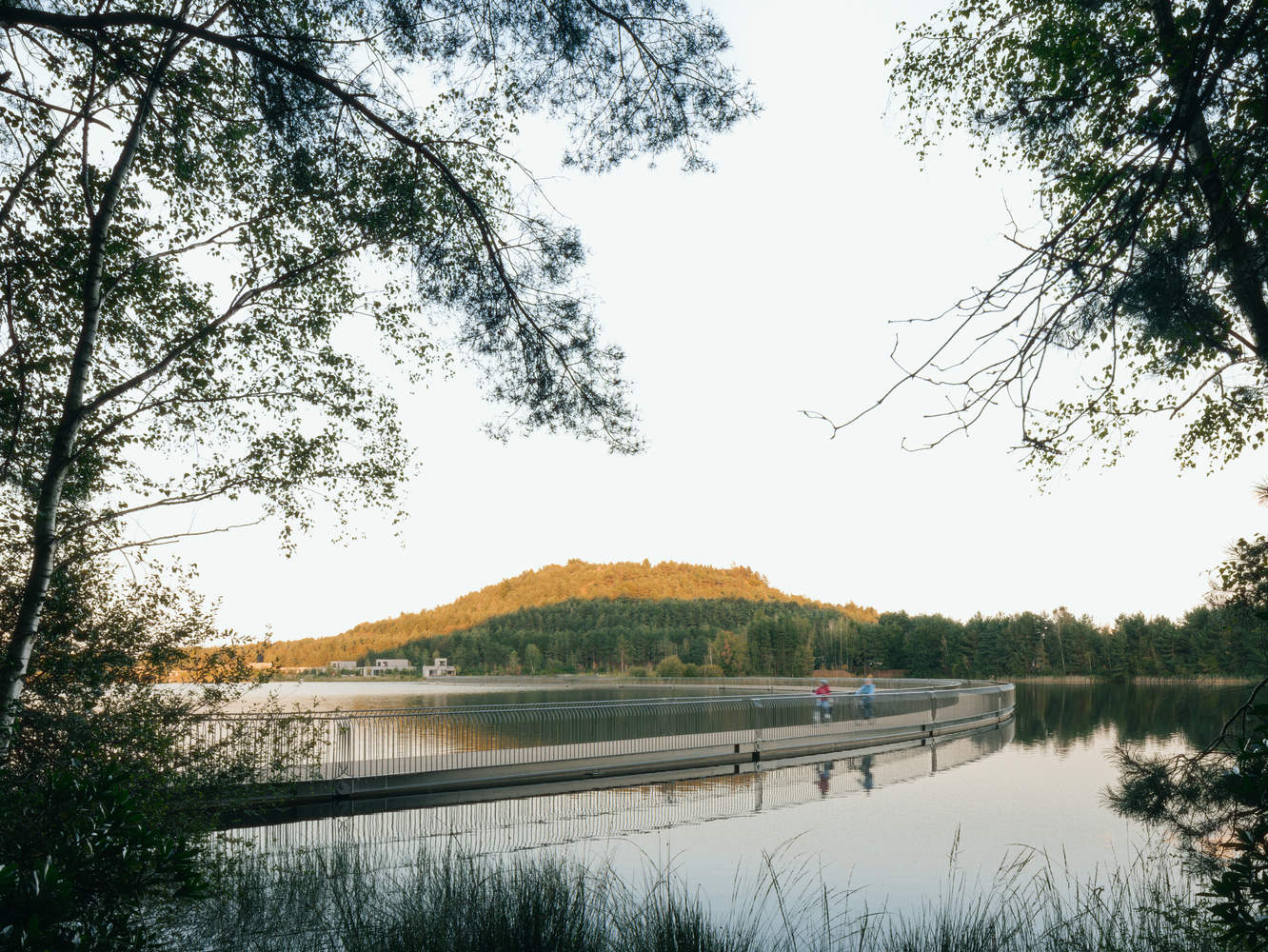
The former presence of the coal mine is still clearly visible on the edge of the slag heaps, where a floating bicycle bridge now stretches, gracefully gliding over the pond between two slag heaps. "Cycling Between Terrils" symbolizes a strong connection between nature, heritage, and the future.
煤渣山(矿渣堆)的水畔,煤矿的往昔仍清晰可见,一座浮动的自行车桥在此铺展,优雅地滑过两座煤渣山间的池塘。“煤渣山间骑行”象征着将自然、遗产与未来紧密相连。
© Pieter Rabijns
© Pieter Rabijns
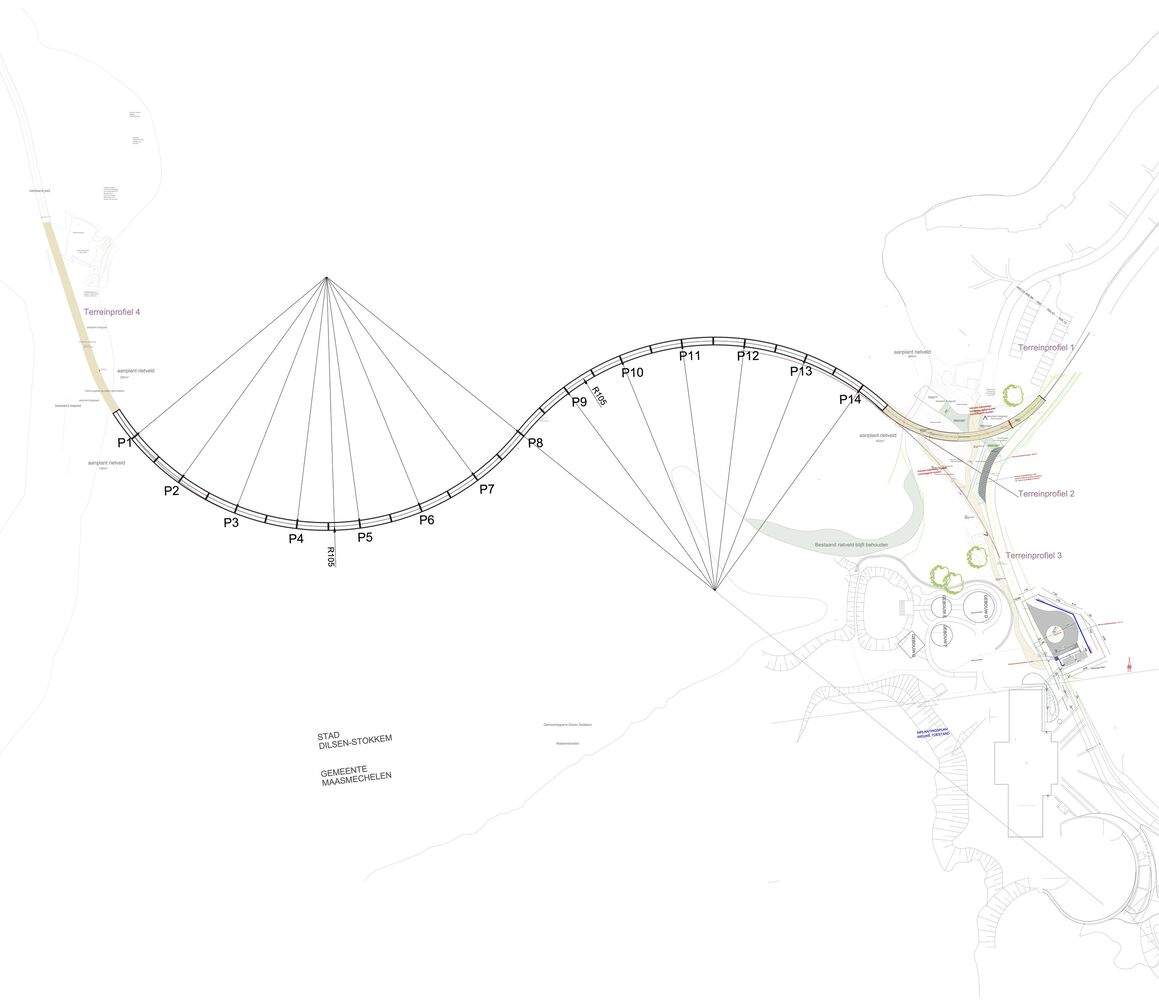
The floor plan
平面图
© Pieter Rabijns
"Cycling Between Terrils" is a pontoon bridge that spans the border between two municipalities with a significant mining history. In the 20th century, the region was radically transformed by underground coal mining, resulting in these slag heaps. Later, gravel was extracted in the area, creating a large pond between the two slag heaps. For decades, all this mining activity significantly altered the terrain, shaping a unique landscape. Today, raw materials are no longer extracted, but the slag heaps remain an iconic feature of the Limburg landscape. Since the 21st century, this landscape has been transformed into a place for recreation and experience, where cyclists and hikers play an important role.
“煤渣山间骑行”是一座横跨两个具有显著采矿历史市镇边界的浮桥。20 世纪,该地区因地下煤炭开采而发生巨变,形成了这些矿渣堆。后来,该区域又开采了砾石,在两座矿渣堆之间形成了一个大型水池。几十年来,所有这些采矿活动显著改变了地形,塑造出了一片独一无二的景观。如今,原材料已不再开采,但矿渣堆仍是林堡地区景观的标志性特征。从 21 世纪开始,这片景观被改造成了一个休闲与体验之地,骑行者和徒步者在这里扮演着重要角色。
© Pieter Rabijns
© Pieter Rabijns
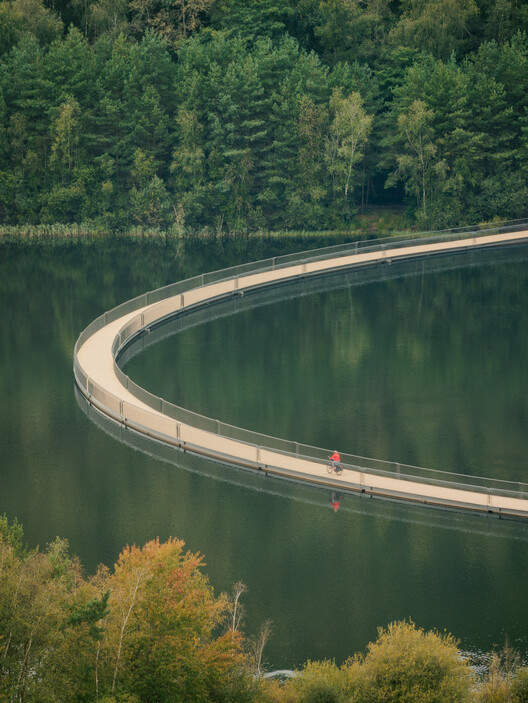
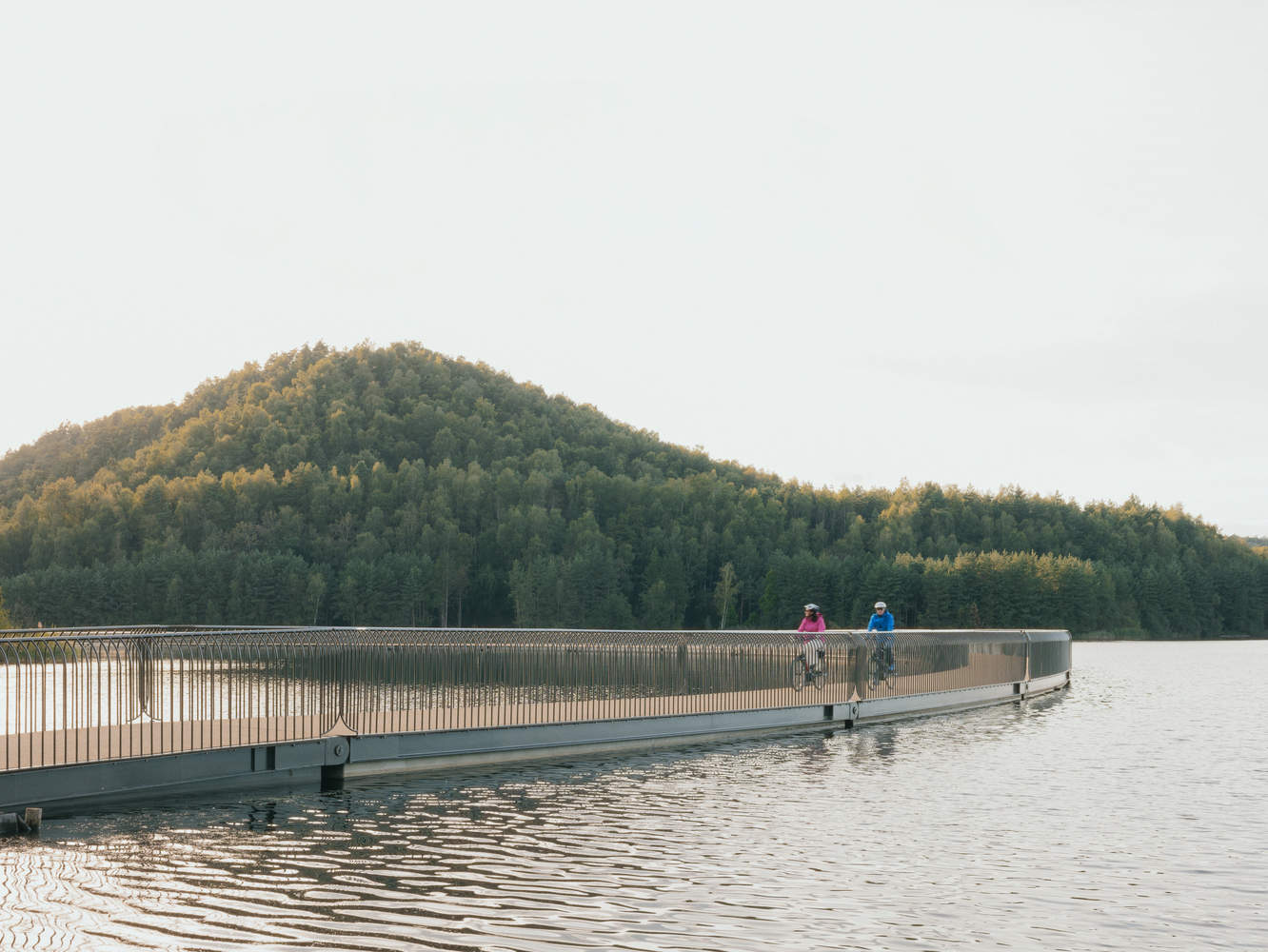
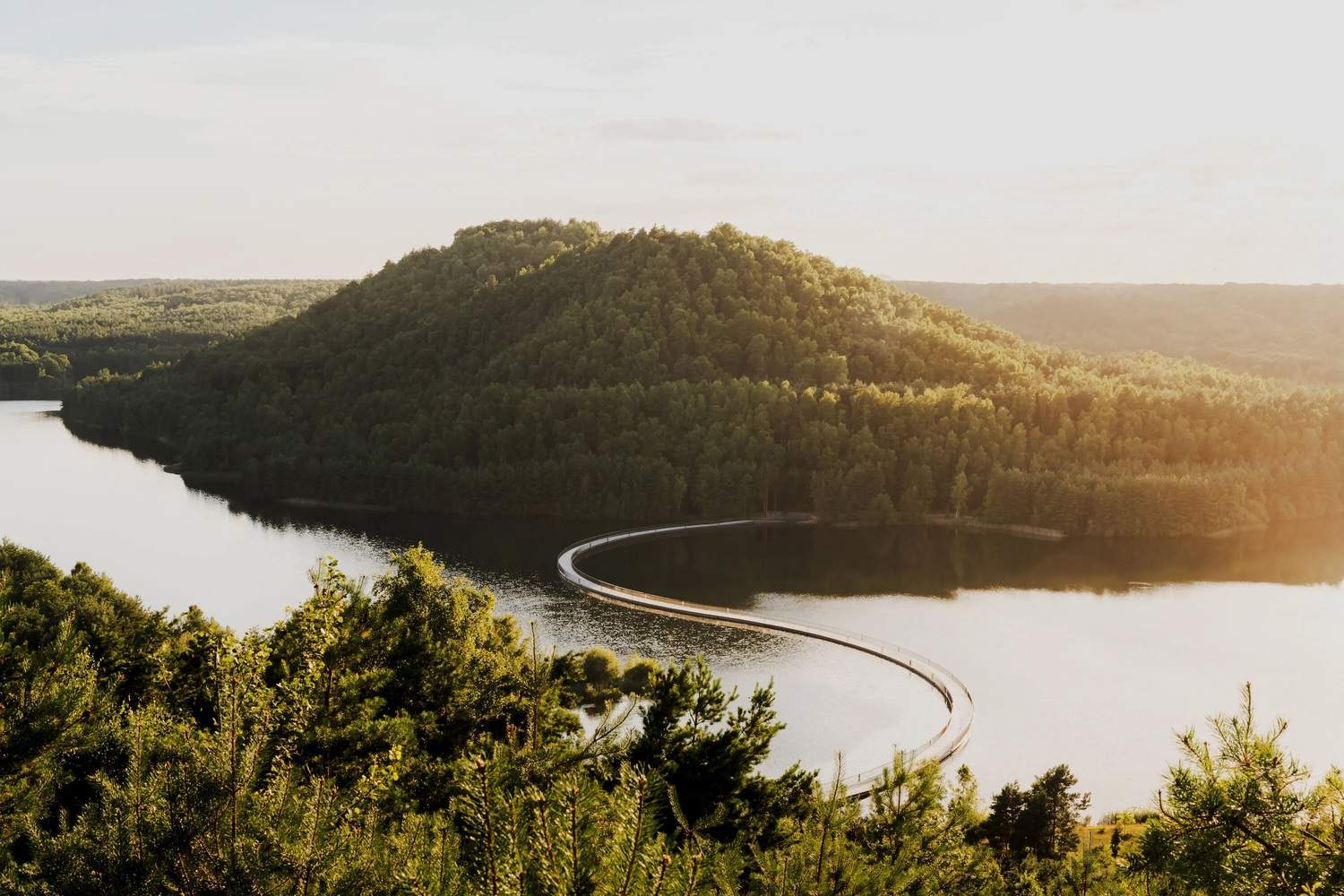
The project draws inspiration from the Fibonacci sequence—an ancient mathematical formula that has captivated artists and scientists for centuries. The fundamental principle of the golden ratio within Fibonacci theory inspired our design process. Instead of simply laying a straight path between the two banks, we translated this into a winding, natural curve that blends entirely into the landscape and adheres to the proportions of the golden ratio. This design slows down the cyclist and presents the user with an ever-changing sequence of views, creating a unique cycling and walking experience.
该项目的灵感源自斐波那契数列 —— 这一古老数学公式历经数个世纪,令艺术家与科学家们为之倾倒。斐波那契理论中的黄金分割这一基本原则,为我们的设计过程带来了启发。我们没有选择在两岸之间直线铺设桥面,而是将其转化为一条蜿蜒的自然曲线,完全融入景观之中,且遵循黄金分割的比例。这一设计减缓了骑行者的速度,为用户呈现出一系列变幻多姿的景致,营造出独一无二的骑行与徒步体验。
© Pieter Rabijns
The bridge transcends its role as a functional passage to become a symphony of architecture and landscape. Its fluid lines and organic form pay homage to the surrounding nature while offering cyclists and walkers an engaging path to appreciate the industrially rich land in a tranquil setting. The design does not stop at the bridge itself but extends into the impressive landscape, intertwining with its surroundings. As visitors walk or cycle across, they are drawn into an experience, marvelling at the connection between people and nature on display. At 400 metres long, the bridge is not only the longest floating bicycle bridge in Belgium but also unique worldwide. Its impressive scale not only makes it an architectural masterpiece but also provides a practical and functional solution for connecting two municipalities across the water.
这座桥超越了其作为功能性通道的角色,成为建筑与景观的交响乐章。其流畅的线条与有机的形态向周围的自然致敬,同时为骑行者和步行者提供了一条引人入胜的路径,让他们在静谧的环境中领略这片工业历史丰富的土地。但设计并未止步于桥本身,它还延伸至令人印象深刻的景观之中,与周围环境交织在一起。当游客步行或骑行过桥时,会被带入一种体验之中,为那里展现的人与自然之间的联系而惊叹。这座桥长达 400 米,不仅是比利时最长的浮动自行车桥,也是全球独一无二的。其宏伟的规模不仅使其成为一座建筑杰作,还为通过水域连接两个市镇提供了实用且功能性的解决方案。
© Pieter Rabijns
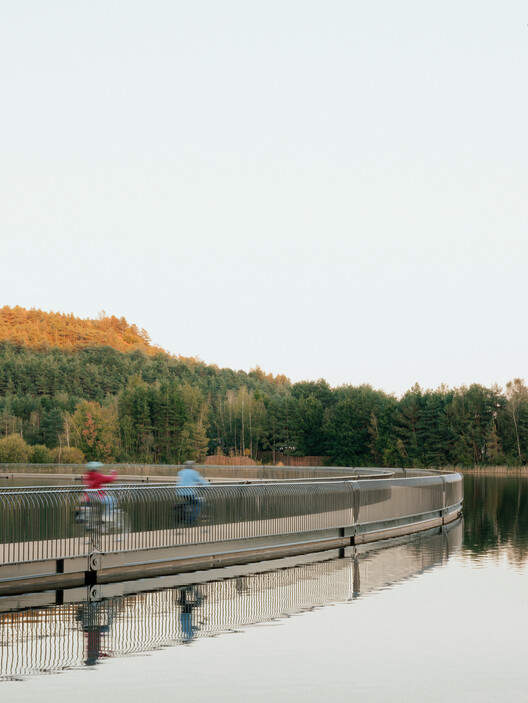
The bridge consists of 30 articulated elements, giving it flexibility to adapt to environmental conditions. This modular design allows the bridge to move up and down with the water level, which can fluctuate by as much as 130 centimetres. These dynamic characteristics enable the bridge to cope with changing water levels. The technical sophistication ensures the stability of the structure, preventing the bridge from moving with every wave and guaranteeing a comfortable ride. This pontoon bridge has become a new node in the Limburg cycle route network, an indispensable link in this extensive network, offering a unique experience for cycling enthusiasts. Furthermore, this walking connection will also be incorporated into the hiking network of the Hoge Kempen National Park.
该桥由 30 个铰接元素组成,使其具有灵活性,能够适应环境条件。这种模块化设计使桥能够随水位升降而上下移动,水位变化幅度可达 130 厘米。这些动态特性使桥能够适应不断变化的水位。技术上的精心设计确保了结构的稳定性,防止了桥随每一波浪而移动,并保证了骑行的舒适性。这座浮桥成为林堡自行车路线网络中的一个新节点,是这一广泛自行车路线网络中不可或缺的一环,为骑行爱好者提供了独特的体验。此外,这条徒步连接线路也将被纳入霍格肯彭国家公园的徒步网络之中。
© Visit Limburg