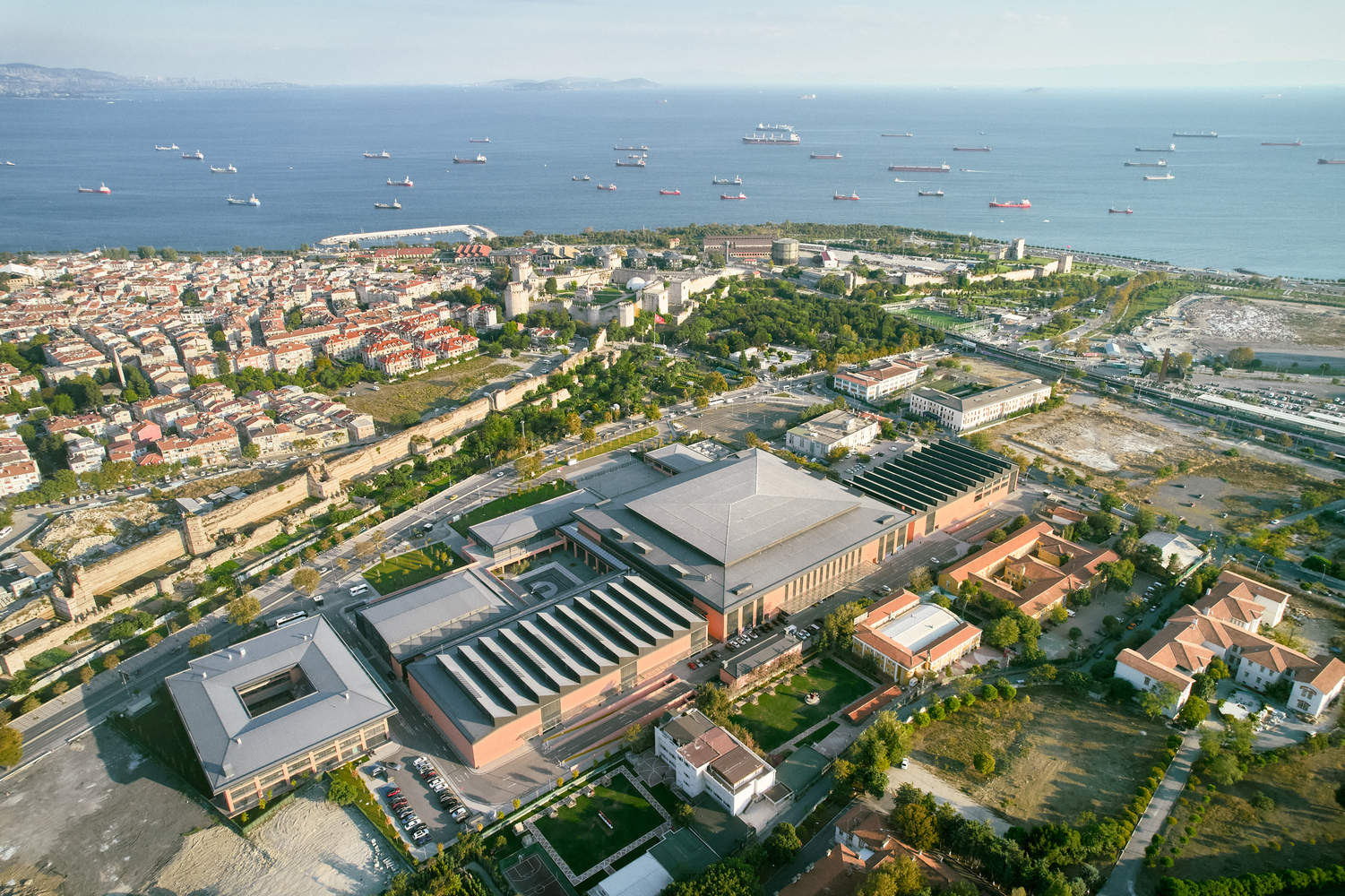
场地文脉的精妙融入与形态生成:该项目最显著的亮点在于其对伊斯坦布尔历史文脉的深刻理解和巧妙回应。设计巧妙地借鉴了毗邻的巴利克利希腊医院所确立的东方-西方网格体系,将自身形态融入到历史城墙与城市肌理之中,而非成为突兀的“巨型标志性”建筑。通过七个高低错落的独立体量,建筑群如同从历史城墙延伸而出,形成一个有机整体,这种策略极大地减轻了体量对周边环境的压迫感,实现了建筑与场地的和谐共生,体现了高水平的场地敏感性设计。
功能聚合下的内部街道化处理:项目成功地在紧凑的规划中构建了一个以主场馆为核心,并围绕其发展出“内部街道”的空间组织模式。这条内部街道不仅是交通流线,更是功能渗透的载体,柔和的曲线赋予了聚落从内部逐渐展开、时间性显现的叙事感。这种将公共交通流线转化为具有场所精神的内部公共空间的手法,有效打破了传统体育场馆封闭内向的弊病,促进了不同功能区之间的互动与连接,是空间设计上的精髓体现。
公共性与多维体验的拓展:建筑设计的精髓在于其超越纯粹体育训练功能的雄心。通过整合篮球博物馆、图书馆、餐饮区以及活动庭院等多元文化和社会元素,项目成功地实现了体育功能、商业功能与文化功能的平衡融合。更重要的是,设计将篮球体验从封闭的球场延伸至街道和广场,创造了鼓励广泛人群参与和互动的平台。这标志着设计者对当代城市体育综合体角色的重新定义,使其成为促进社区参与和体育文化传播的催化剂。
The Basketball Development Center (BDC) is situated at the junction of the historic Istanbul Walls and the Sea of Marmara, located in front of the Yedikule Gardens, nestled between the Balıklı Greek Hospital campus and the line of fortifications. The Balıklı Greek Hospital, organized around courtyards, squares, and an organic traffic network, establishes an East-West grid system, and the BDC, as a basketball campus, is strongly influenced by its setting, which shapes its form.
篮球发展中心(BDC)坐落于历史悠久的伊斯坦布尔城墙与马尔马拉海交汇之处,位于耶迪库勒花园前方,介于巴利克利希腊医院校区与防御工事线之间。巴利克利希腊医院以庭院、广场和有机交通网络为布局,确立了东西向的网格体系,而 BDC 作为一个篮球园区,深受其所处环境的强烈影响,形态由此塑造而成。
The core of the BDC is the main arena. Surrounding this central area, an internal street is formed, which accommodates various functions while exhibiting gentle curves. This compact planning approach gives rise to a settlement that unfolds gradually, revealing itself over time. Seven independent building volumes, with eave heights ranging from 4 to 21 meters, extend from the historic city walls, forming a continuous outer shell.
BDC 的核心是一座主场馆。围绕这一核心区域的空间构成了一条内部街道,该街道在容纳多种功能的同时,呈现出柔和的曲线。这种紧凑的规划模式催生出一个逐渐展开、随时间逐步展现的聚落。七个独立的建筑体量,檐口高度从 4 米到 21 米不等,从历史城墙处延伸而出,形成一个整体的外壳。
These building volumes are staggered in depth, integrating streets, squares, and green spaces between them, while the undulating rooflines mitigate the heaviness of the long street façade. Simultaneously, a series of moderately scaled roofs facing the fortifications rise sequentially, providing necessary space for technical equipment.
这些建筑体量前后错落,其间融入了街道、广场和绿地,而屋顶高低起伏的坡度则减轻了长条形临街立面的沉重感。与此同时,与防御工事相对而立的、一系列适度规模的屋顶依次升高,为技术设备提供了必要的空间。
As the inner and outer façades exhibit a balanced expression, the internal street and gallery levels, acting as secondary ground floors, create spatial transitions between the staggered building volumes both formally and functionally. This treatment of opposing façades and the overall plan reflects an architectural design approach shaped by context and function—a clear contrast to the self-referential, inward-looking, monumental sports buildings common around the city periphery.
随着内外立面展现出平衡的表达,作为次要地面层的内部街道和门廊层,在形式和功能上都为错落有致的建筑体量之间创造了空间过渡。这种对立面和规划的处理方式,反映了一种受环境和功能塑造的建筑设计方法 —— 与城市周边常见的、自我设定规则的巨型标志性、内向型体育建筑形成鲜明对比。
In addition to the multi-functional main arena, which can accommodate 10,000 spectators and host everything from international championships to events organized by world-renowned bodies, the BDC also includes three youth training halls, each with a capacity of 500 spectators.
除了可容纳 10000 名观众、能够举办从国际锦标赛到世界知名组织活动的多功能主场馆外,BDC 还包括三个青年训练馆,每个训练馆可容纳 500 名观众。
In another building, the Turkish National Team shares a roof with the Turkish Basketball Federation. Here, sports, technical, and administrative personnel carry out preparation and planning activities. This building also features another court with a capacity of 1,000 spectators, designed to meet the needs of championships and training courses, and is organized around the pre- and post-match needs of the athletes. The campus includes a camp center for professionals from Turkey and abroad, hosting workshops, congresses, gatherings, and seminars throughout the year.
在另一座建筑中,土耳其国家队与土耳其篮球联合会同处一檐之下。在这里,运动、技术和行政人员开展筹备和规划活动。该建筑还设有另一个可容纳 1000 名观众的球场,旨在满足锦标赛和训练课程的需求,并围绕运动员赛前赛后的需求进行布置。园区内设有一个营地中心,供土耳其及国外的专业人士居住,全年举办研讨会、会议、集会和研讨会。
The project's planning balances sporting functions with commercial and cultural functions, strengthening the project's connection to the city. The sports facilities are supported by a set of social and cultural elements: a basketball museum, a library, an event courtyard, and dining areas. This hybrid structure diversifies the user base and increases the frequency of their interaction with the space. Through a planning and spatial layout that extends basketball from the court to the streets and squares, the project provides a new foundation for broadening awareness and participation in sports across all ages and backgrounds.
该项目的规划平衡了体育功能与商业和文化功能,加强了项目与城市的联系。体育设施得到了一系列社会和文化元素的支撑:一个篮球博物馆、一个图书馆、一个活动庭院以及餐饮区。这种混合结构使用户多样化,并增加了他们与空间互动的频率。通过一种将篮球从球场延伸至街道和广场的规划和空间布局,该项目为扩大各年龄段和背景人群对体育的认知和参与提供了新的基础。
Concept Plan
概念规划图
Section AA
剖面图
© Egemen Karakaya