混合功能与城市融入的典范:坦梅拉混合功能足球场成功地将一个大型体育设施嵌入到密集的城市肌理之中,实现了体育、住宅和商业功能的有机结合。通过抬高的庭院和与周边建筑屋顶呼应的拱形屋顶设计,建筑师巧妙地消解了传统体育场的体量感,使其与周边环境形成了和谐的对话。特别是其作为芬兰首座混合功能球场的定位,体现了对未来城市公共空间多用途、高效率利用的前瞻性思考,极大地提升了场地的城市价值和使用韧性。
精妙的观赛体验与结构表现:设计对观赛体验的极致追求令人印象深刻。看台紧凑地从场地升起,确保了无遮挡的视野,符合高水平赛事(如欧足联四类)的基本要求。结构体系上,钢复合柱、钢筋混凝土梁与悬挂的钢制遮阳篷形成了轻盈而有力的构造美学。屋顶张力索和钢塔的设计不仅满足了荷载需求,更通过与住宅屋顶的融合,创造了独特的城市天际线,体现了结构逻辑与形态表达的高度统一。
可持续性与社区活力的驱动:项目在可持续性方面采取了积极策略,例如旧结构材料的再利用、鼓励公共交通以及接入区域冷热网络。更重要的是,设计通过地面层的商业空间和艺术家介入的光艺术装置(“帽子戏法”),将体育场从单纯的比赛容器转变为全年活跃的社区节点。这种以人为本、注重全年运营和文化植入的设计理念,是当代体育建筑实现城市价值最大化的关键所在。
The first hybrid stadium in Finland was completed in the Tammela district of Tampere in the spring of 2024. This new stadium has been eagerly anticipated by the city's residents. The project is the result of a decade-long collaboration between the City of Tampere, the construction company Pohjola Rakennus, and the architectural firm JKMM Architects.
芬兰首座混合功能足球场于 2024 年春季在坦佩雷市的坦梅拉区竣工。这座新球场一直备受该市居民的热切期待。该项目由坦佩雷市政府、Pohjola Rakennus 建筑公司以及 JKMM 建筑设计事务所携手合作,历经十多年的设计与施工。
© Tuomas Uusheimo
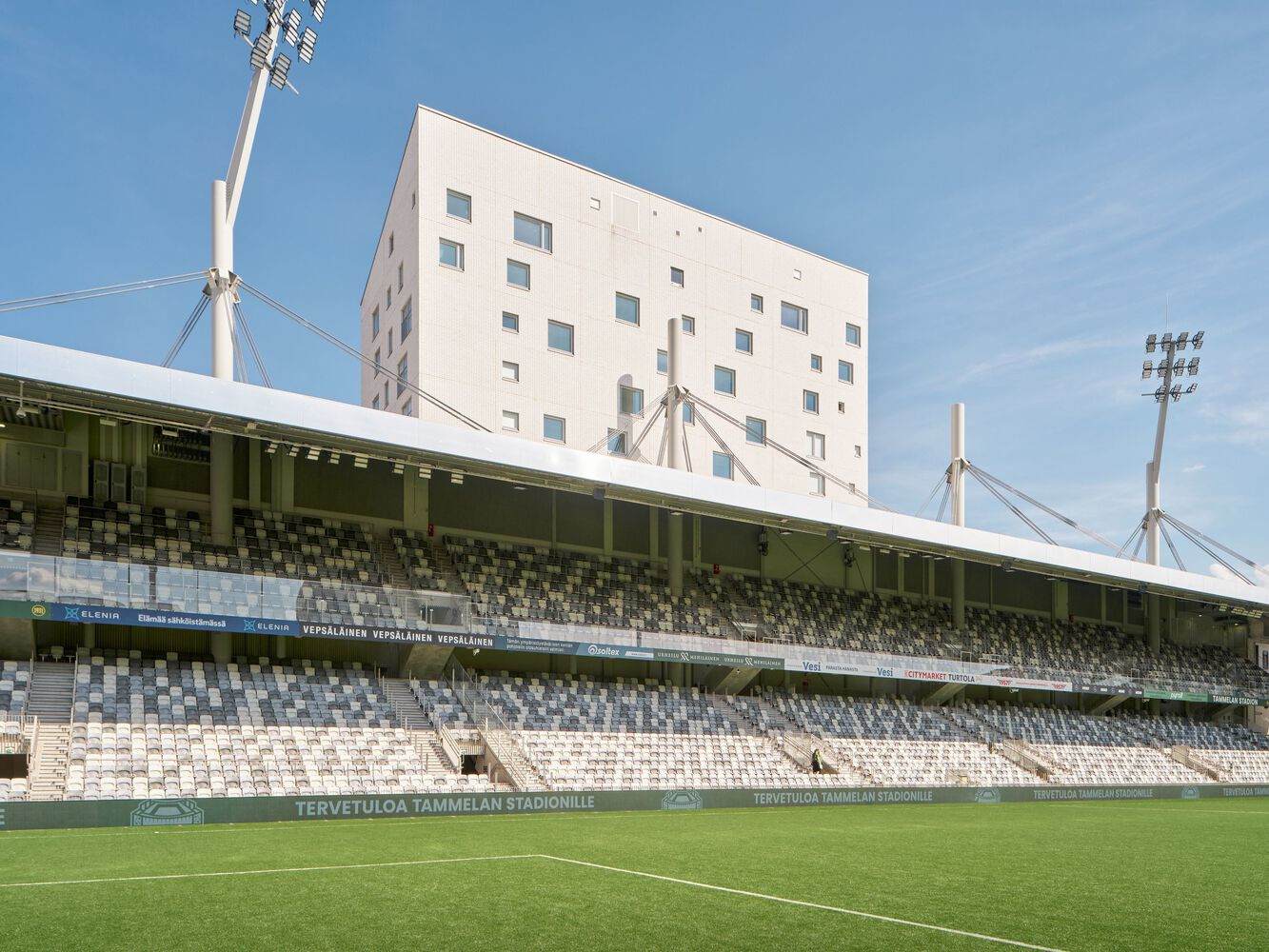
The stadium project covers an area of 13,500 square meters, offering high-quality facilities for residents' sports activities and top-tier football matches for 8,000 spectators. The stadium meets the main requirements for a UEFA Category Four venue, meaning it can also be used for competitions such as the UEFA Europa League and national team matches. Every seat in the stadium offers an unobstructed view of the entire pitch. Furthermore, the stadium can accommodate 15,000 people for concerts and other large events. Most importantly, the completed stadium serves as the home ground for the local football club, Ilves Tampere.
该球场项目占地 13500 平方米,为居民体育活动和 8000 名观众的高水平足球赛事提供了高质量的设施。球场满足欧足联(UEFA)四类球场的主要要求,这意味着它也可用于举办如欧足联欧洲联赛和国家队比赛等赛事。球场内的每个座位都能无障碍地观赏到整个球场。此外,该球场还能容纳 15000 人参加音乐会和其他大型活动。最重要的是,这座建成的球场是当地足球俱乐部坦佩雷伊尔维斯的主场。
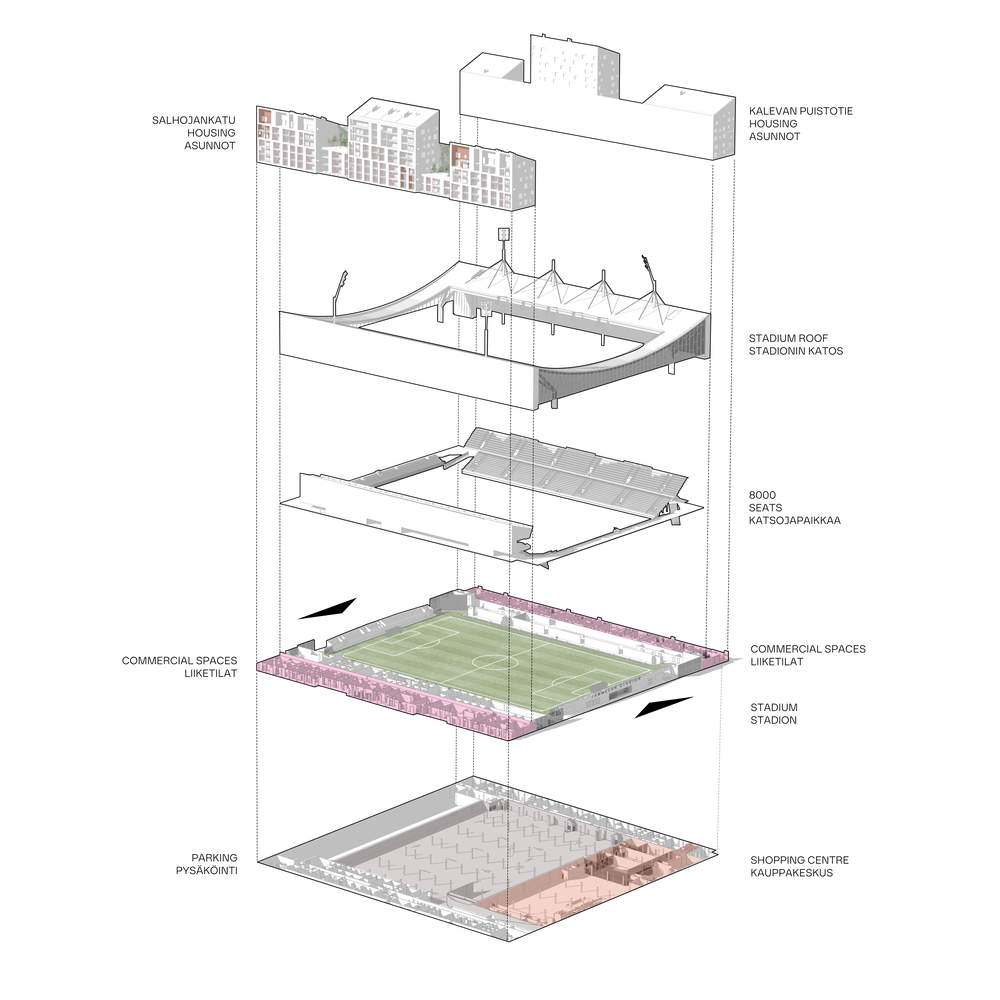
Exploded Axonometric View
爆炸轴测图
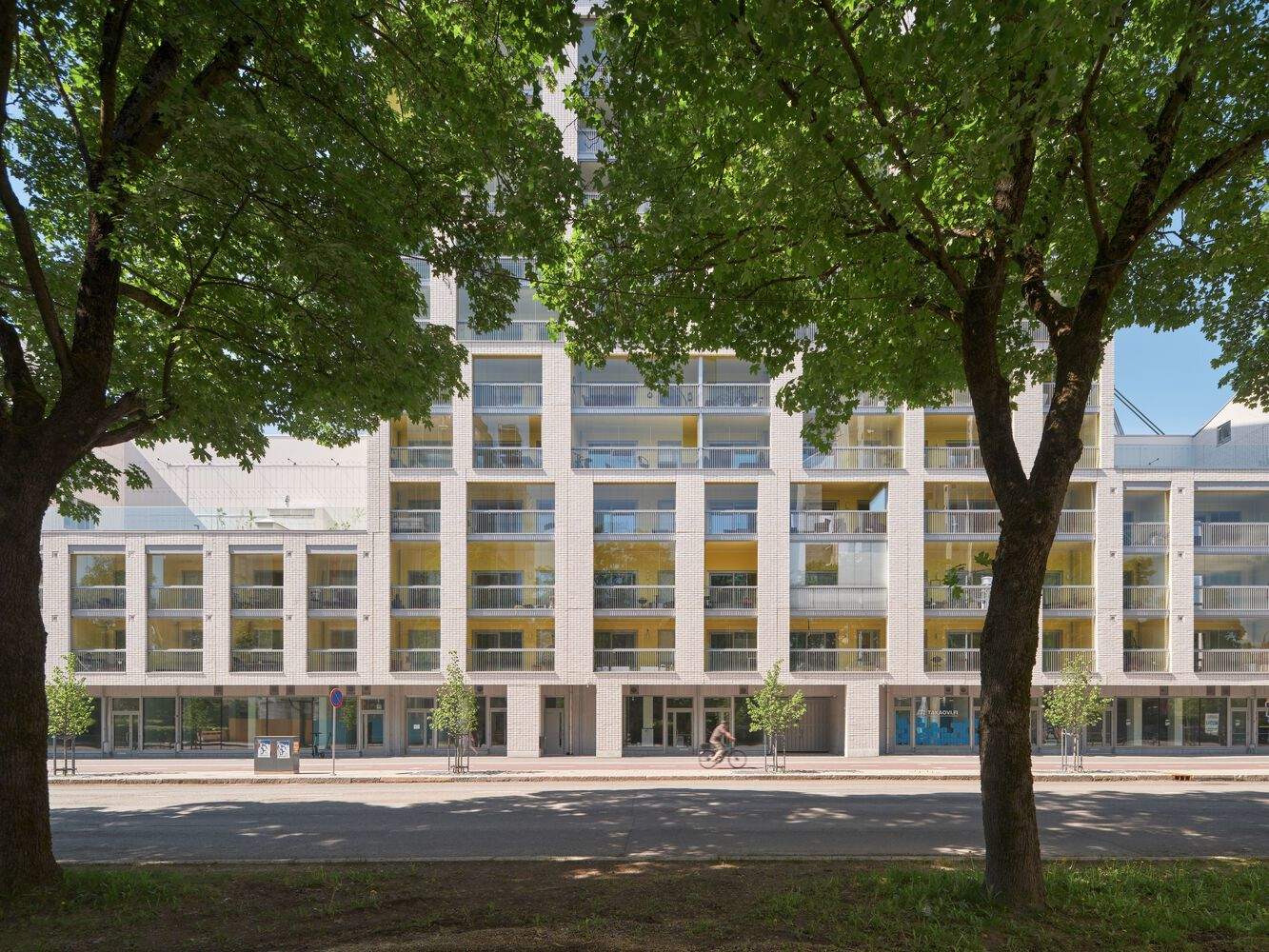
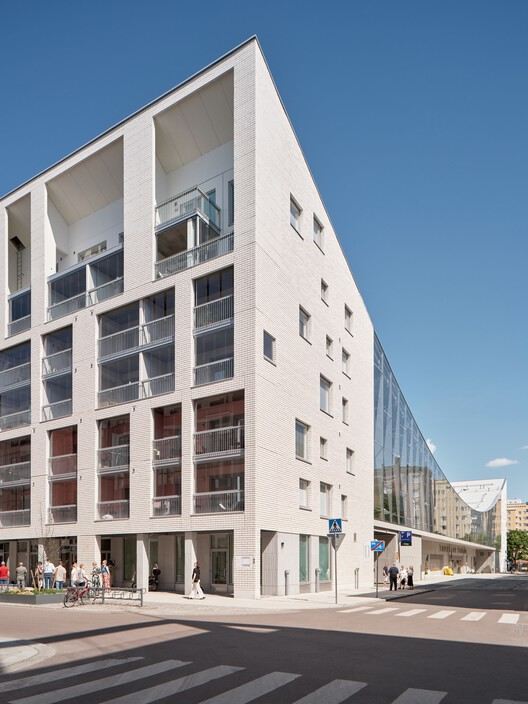
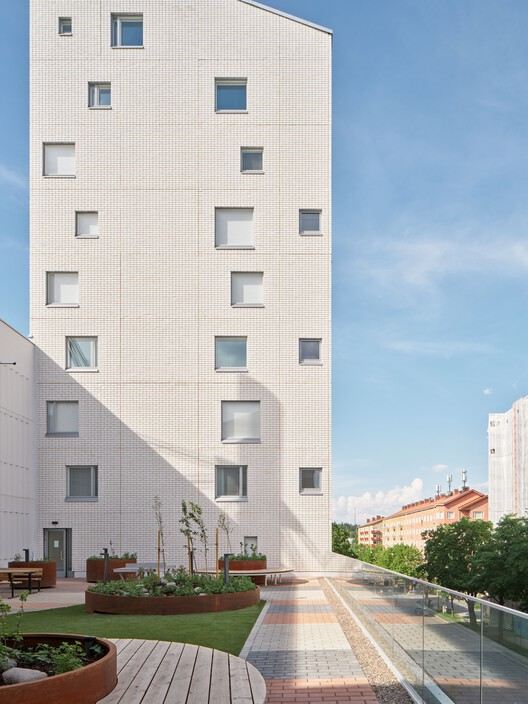
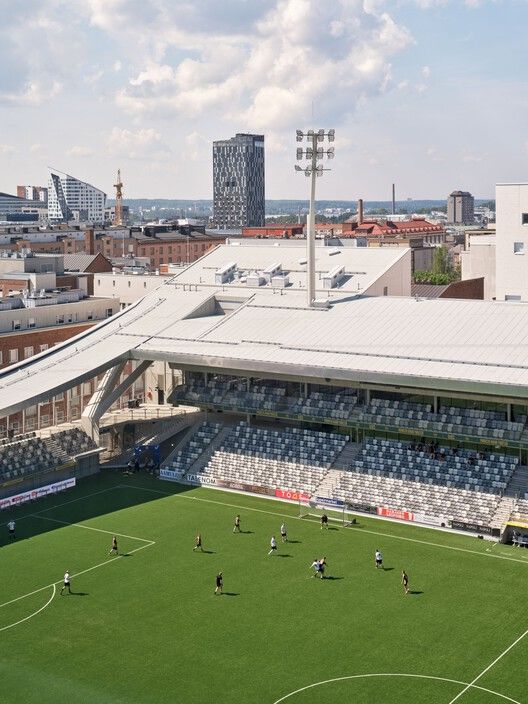
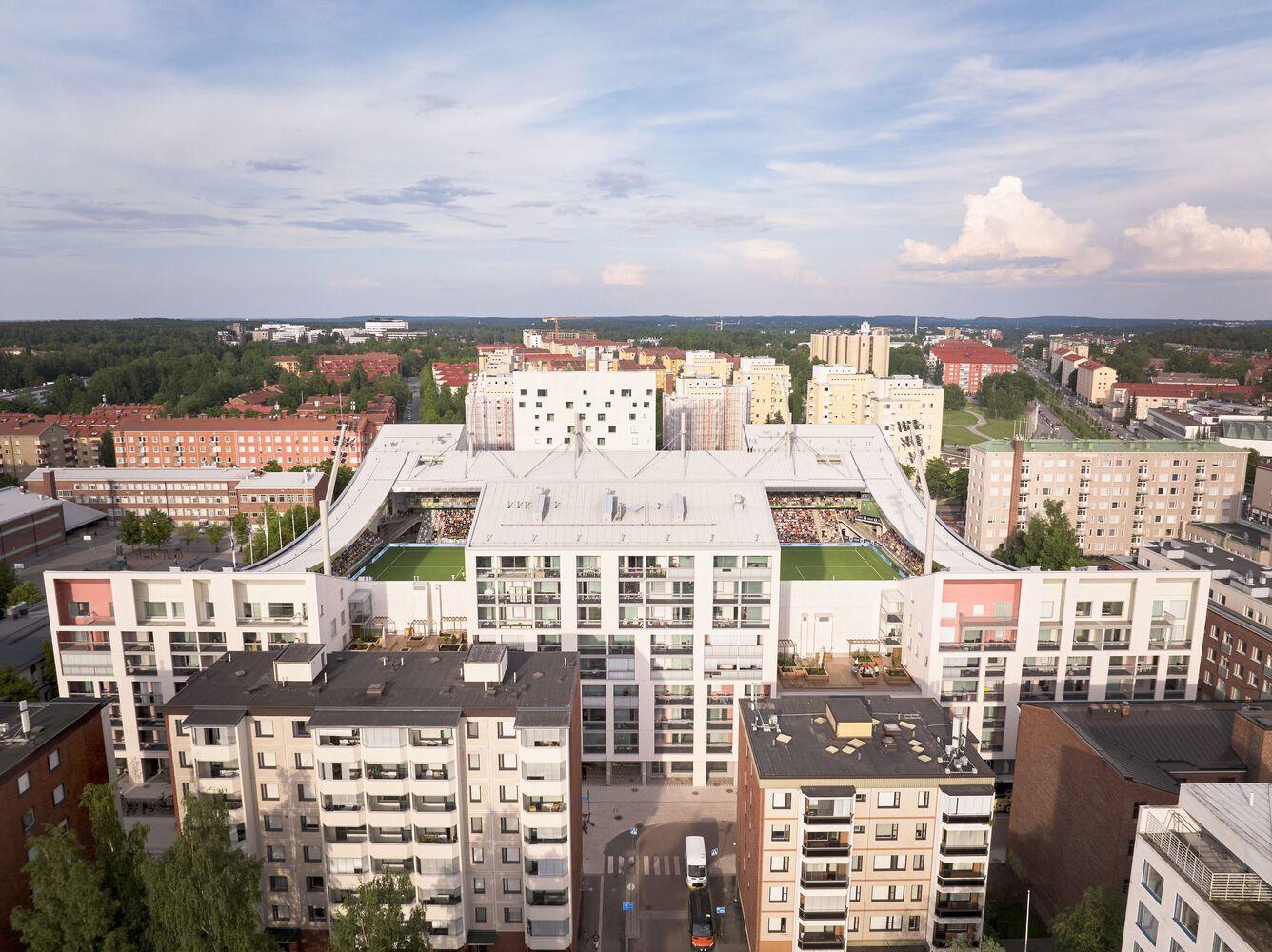
The stadium is surrounded by residential buildings with raised courtyards between them. The stands rise directly from the compact pitch, ensuring an unobstructed view for every seat. The glass-walled entrances shield the stadium from the wind while maintaining visual connectivity with the surroundings. The spectacular roof arches from east to west, with its suspended steel sunshades integrating with the residential roofs.
球场四周被住宅建筑环绕,建筑之间设有抬高的庭院。看台直接从紧凑的球场升起,确保每个座位都能无遮挡地观赏比赛。玻璃墙入口为球场挡风,同时保持与周边环境的视觉连通性。壮观的屋顶从东向西呈拱形延伸,其悬挂的钢制遮阳篷与住宅屋顶融为一体。
© Tuomas Uusheimo
© Tuomas Uusheimo
JKMM Architects' winning competition design, "Hattutemppu" (meaning "hat-trick"), integrates the stadium with a mixed-use block of nearly 50,000 square meters. This development includes five residential buildings, a commercial center, and parking facilities, tightly connected to the surrounding urban fabric.
JKMM 建筑设计事务所在竞赛中获胜的设计方案“Hattutemppu”(意为“帽子戏法”)将体育场与一个近 5 万平方米的混合区块融为一体。该开发项目包括五栋住宅建筑、一个商业中心和停车设施,与周边城区结构紧密相连。
© Tuomas Uusheimo
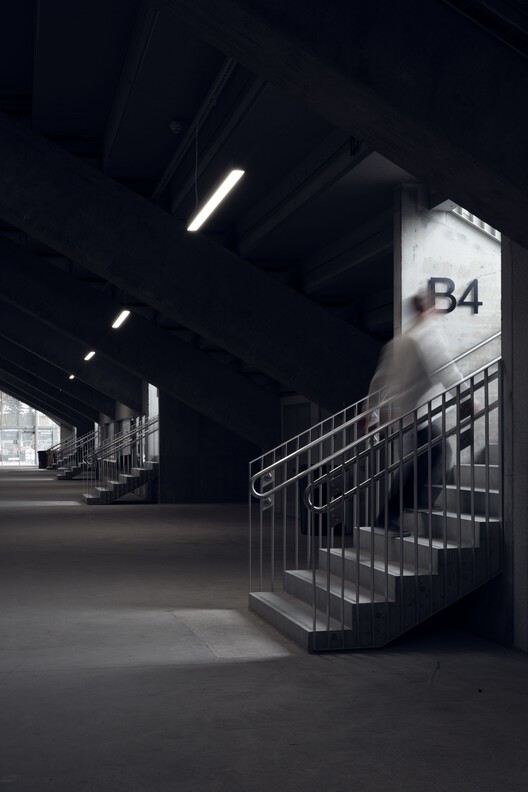
Apartments in the residential buildings feature varied layouts, with upper-floor units overlooking either the stadium or the surrounding city views. Public spaces surround the stadium, while light art installations by artists Tommi Grönlund and Petteri Nisunen animate the underside of the sunshades, displaying the energy of football through dynamic patterns.
住宅建筑中的公寓布局多样,上层公寓可俯瞰球场或周边城市景观。公共空间环绕球场,而艺术家 Tommi Grönlund 和 Petteri Nisunen 创作的光艺术装置则为遮阳篷底面增添了活力,通过动态变换的图案展现了足球运动的能量。
© Hannu Rytky
© Hannu Rytky
JKMM Architects prioritized sustainability in line with Tampere's urban renewal goals. Existing structures from the old stadium were repurposed for other city venues, minimizing waste. Located downtown, the stadium encourages public transport use, and the mixed-use block is connected to the regional heating and cooling network. The light-colored roof materials help reduce the urban heat island effect and air pollution, while the compact, mixed-use design maximizes land use efficiency.
在坦佩雷城市更新目标中,JKMM 建筑设计事务所将可持续性放在首位。旧体育场中的现有结构被重新用于其他城市场地,从而最大限度地减少了浪费。该体育场位于市中心,鼓励使用公共交通,同时该混合区块与区域供暖和供冷网络相连。浅色的屋顶材料有助于减少城市热岛效应和空气污染,而紧凑的混合设计则最大限度地提高了土地利用效率。
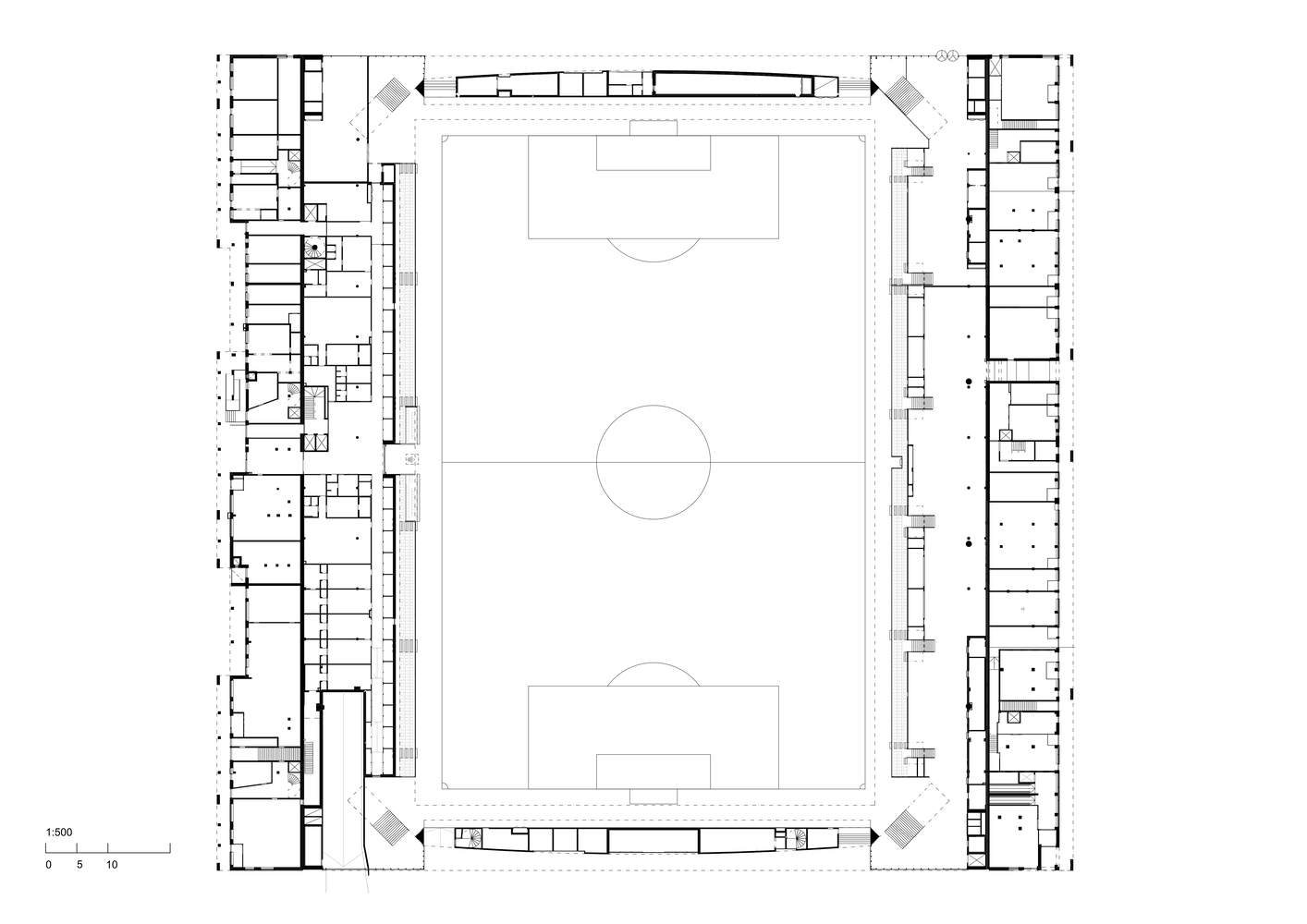
First Floor Plan
一层平面图
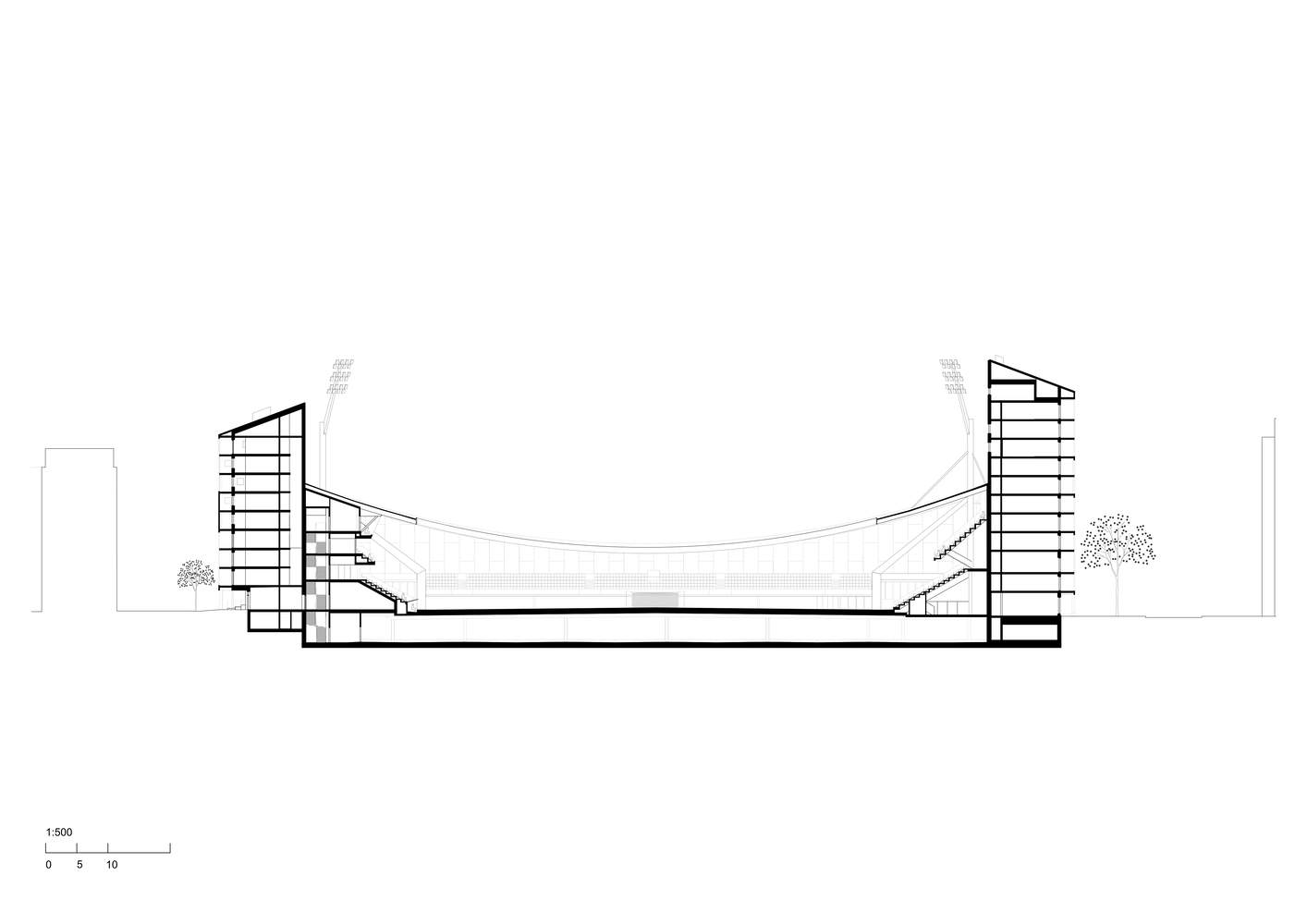
Section A
剖面图
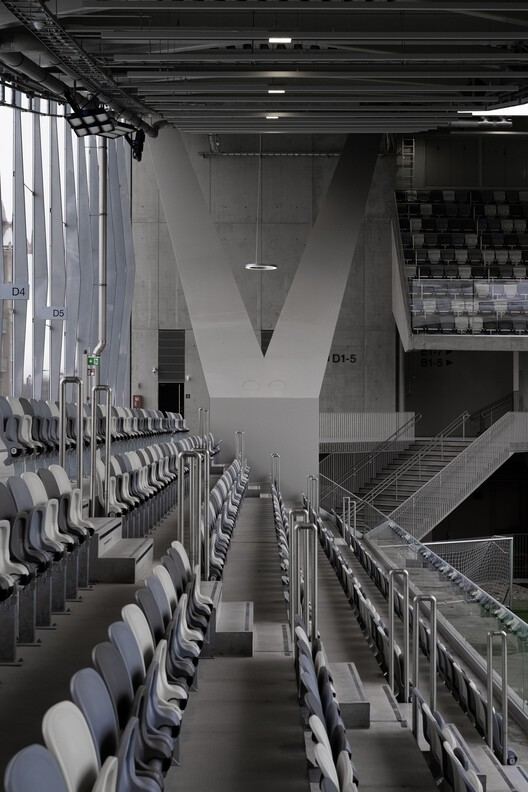
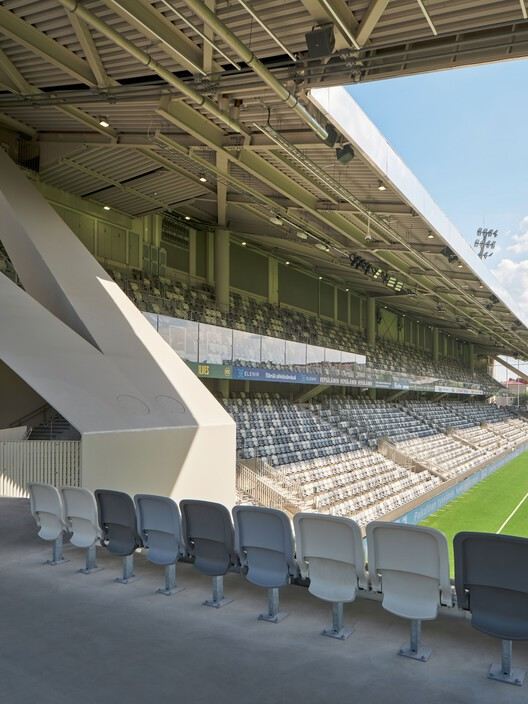
Tammela Stadium is notable for its construction method, where building and structural elements merge. Steel composite columns, reinforced concrete beams, and the suspended sunshade structure ensure the stadium is both robust and refined. The roof is supported by tension cables and steel towers, allowing for flexibility to handle snow loads and seasonal variations.
坦梅拉体育场的设计以其构造方法而著称,建筑元素和结构元素在此融合。钢复合柱、钢筋混凝土梁和悬挂式遮阳篷结构确保了体育场既坚固又精致。屋顶由张力索和钢塔支撑,能够灵活承受积雪荷载和季节性变化。
© Tuomas Uusheimo
© Tuomas Uusheimo
Lightweight materials such as perforated steel and glass define the stadium's exterior, while the green artificial turf, a symbol of Finnish football culture, occupies the center. Entrances for players, media, VIPs, and spectators are optimally arranged for smooth flow, with a dedicated northeast entrance for away supporters. Parking and service areas are located in the basement, preserving the vibrancy of the street level above. The stadium is open year-round, serving local clubs like Ilves Tampere and hosting various events. Commercial spaces on the ground floor inject vitality into the Tammela area, further solidifying its role as a community hub.
穿孔钢和玻璃等轻质材料定义了体育场的外观,而绿色的人造草坪则成为芬兰足球文化的象征,占据中心位置。球员、媒体、贵宾和观众的入口均经过优化布局,以确保人流顺畅,客队支持者则有专门的东北入口。停车场和服务区设在地下室,从而保持了上方街道的活力。该体育场全年开放,服务于当地俱乐部,如坦佩雷伊尔维斯,并举办各种活动。地面层的商业空间为坦梅拉地区增添了活力,进一步巩固了其作为社区中心的地位。
© Tuomas Uusheimo