重新定义教育空间与社区共享:本项目超越了传统“校舍”的刻板印象,通过创新的空间规划,将教学、公共活动及社区功能有机融合。设计师成功地将八间教室、多功能厅、餐厅及行政区域整合进一个统一的结构中,并巧妙地将屋顶运动场设计为与社区协会共享的资源。尤其值得称赞的是,项目通过扩大教室和公共区域取代了传统的“休闲中心”,实现了所有空间由学生和学龄前儿童共享,极大地提高了空间利用率和灵活性。这种对教育空间尺度的重塑,体现了在有限面积内实现最大化功能和包容性的设计智慧。
结构轴线与功能模块化的精妙组织:建筑布局以两条核心轴线——贯穿南北的大厅和东西向的教室街道——为骨架,形成了清晰且富有层次的空间序列。大厅被设计为“生活空间”,带有壁龛以支持多样化学习;教室街道则将设施划分为两个对称的单元,确保了功能的高效组织。两条轴线的交汇处被设计为一个大型内部活动区域,成为学校的真正核心,实现了多功能性,无论是作为学龄前儿童接待区、展览空间,还是恶劣天气下的操场补充。这种精确的几何组织不仅优化了流线,也为教学活动提供了灵活多变的场景支持。
对环境的深度承诺与本地化材料的运用:该项目在可持续性和尊重环境方面树立了典范。设计师坚持使用本地和生物源材料,例如采用产自工地附近 60 公里内的石材作为承重外墙,这不仅提供了优异的隔热性能,也赋予了建筑雕塑感,同时在教室间融入了泥砖。能源策略方面,屋顶光伏板实现了能源的自给自足甚至盈余,而植被屋顶则有效提升了热性能和雨水管理。通过庭院和双面采光的教室设计,保证了全年的自然采光、通风和舒适的湿度,真正将可持续性融入了建筑的每一个物理层面。
Le Penhuel Architectes & Associés has completed the construction of the Simone Veil school complex in Tremblay-en-France. This facility embodies the firm's philosophy of sustainably transforming educational spaces in response to the climate emergency. This innovative project rejects standardized design to reinterpret the concept of the "school building," and was honored this November with the 2025 Équerre d'argent Prize.
盖坦·勒佩努埃尔建筑事务所(Le Penhuel Architectes & Associés)已完成了位于法国特雷姆莱昂法兰西(Tremblay-en-France)的西蒙娜·韦伊(Simone Veil)学校综合体的建设。该设施体现了该事务所在应对气候紧急状况下,对教育空间进行可持续改造的理念。这一创新项目摒弃了标准化设计,重新诠释了“校舍”的概念,并于今年 11 月荣获了 2025 年度银尺奖(Équerre d'argent Prize)。
© Vladimir de Mollerat du Jeu
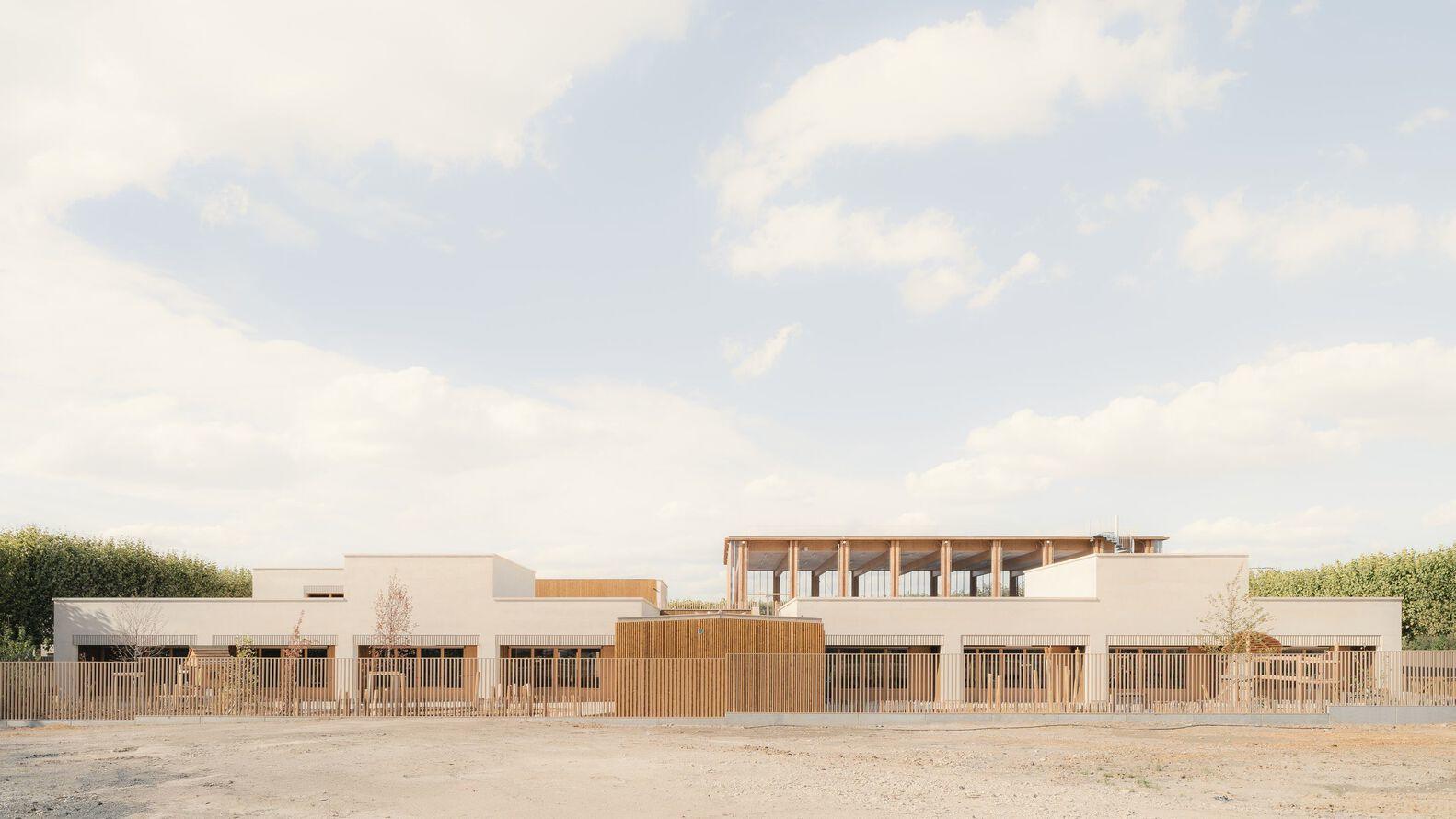
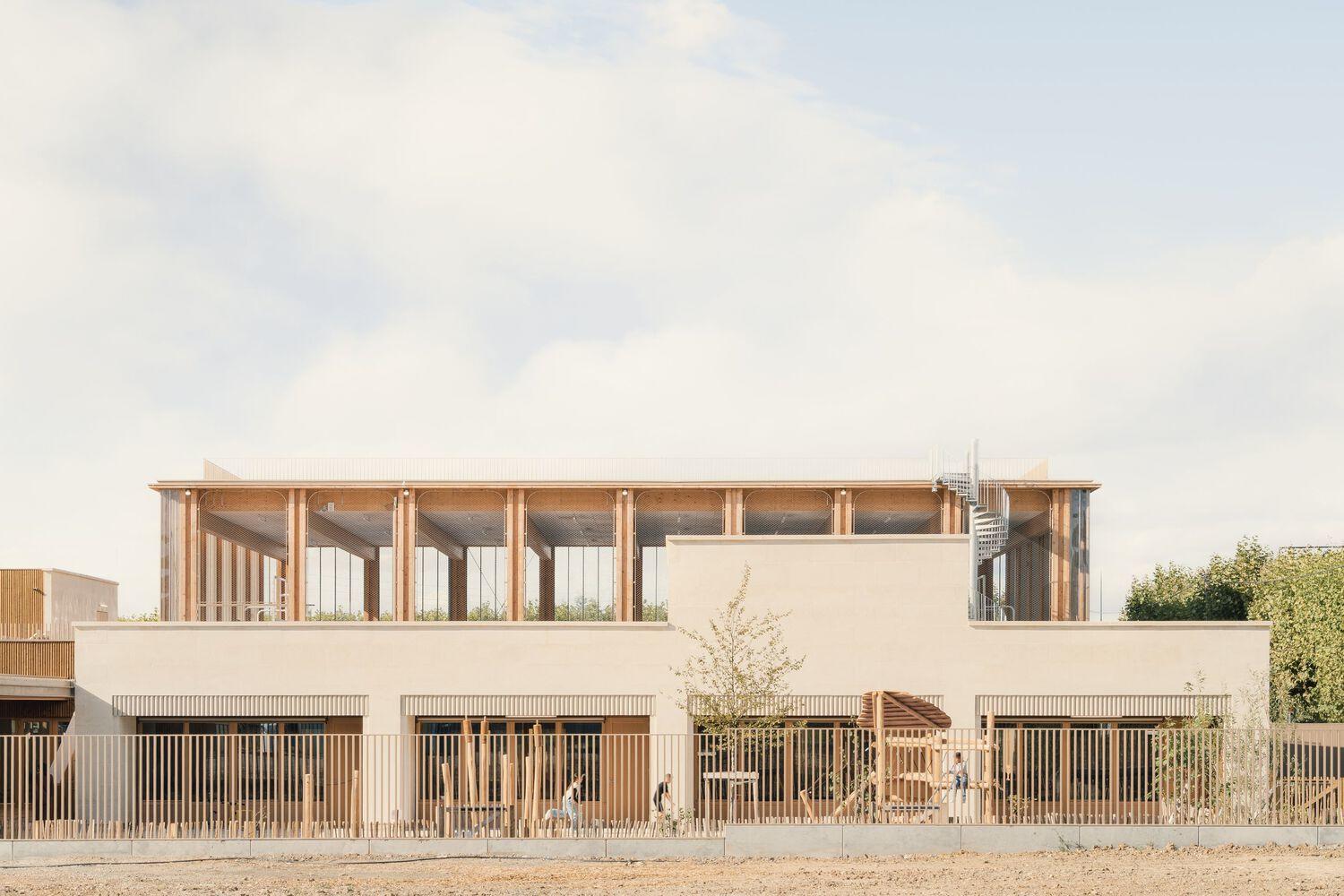
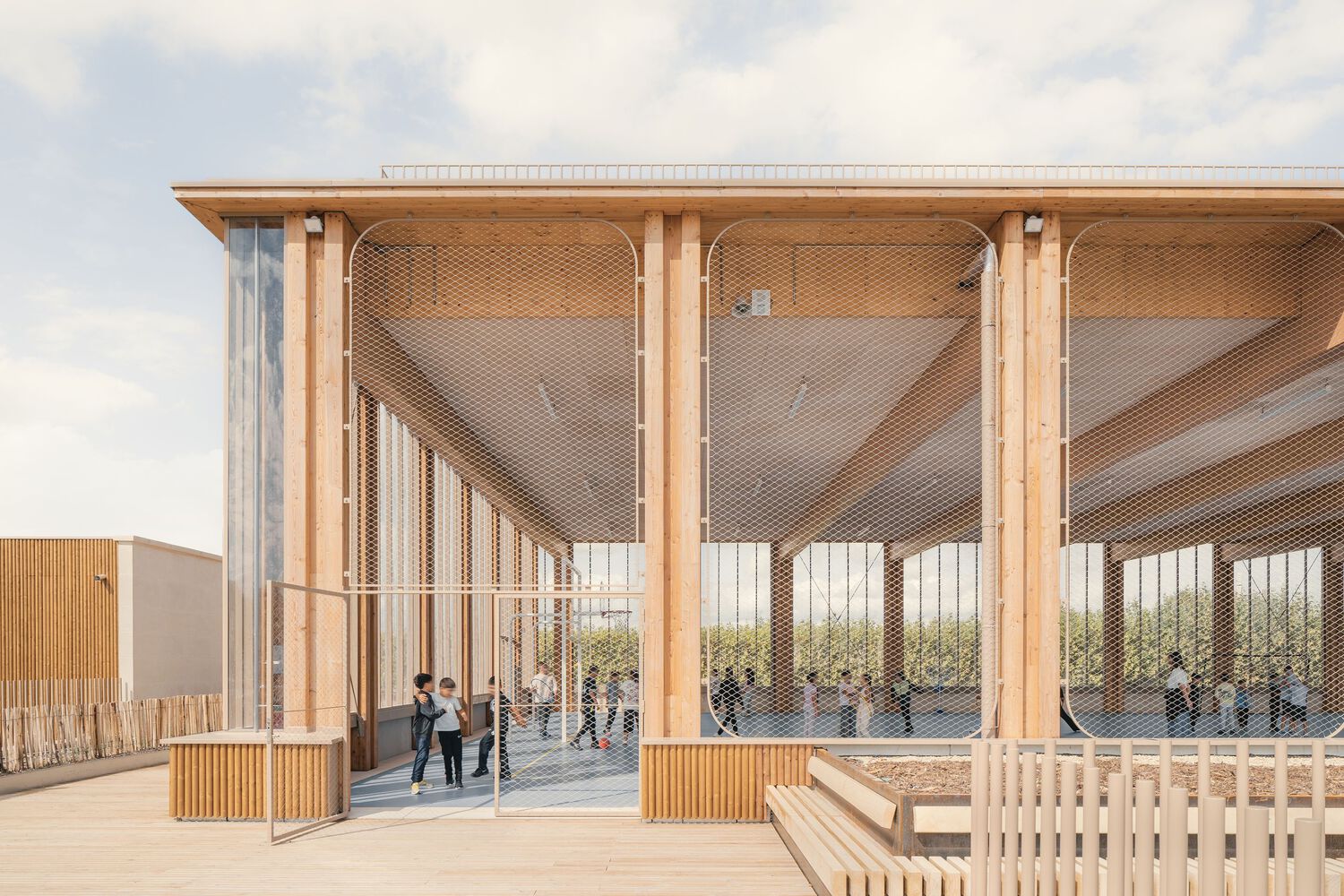
Situated on a quiet cul-de-sac of detached houses on the southern edge of the town, the Simone Veil school complex includes eight classrooms, a multi-purpose hall, a school canteen, an administrative area, and a caretaker's apartment. Its roof hosts a sports field shared with a community association.
西蒙娜·韦伊学校综合体坐落于该市南侧一片宁静的独立住宅区内,拥有八间教室、一间多功能厅、一个学校餐厅、一个行政区域以及一间管理员公寓。其屋顶设有一个与社区协会共享的运动场。
© Vladimir de Mollerat du Jeu
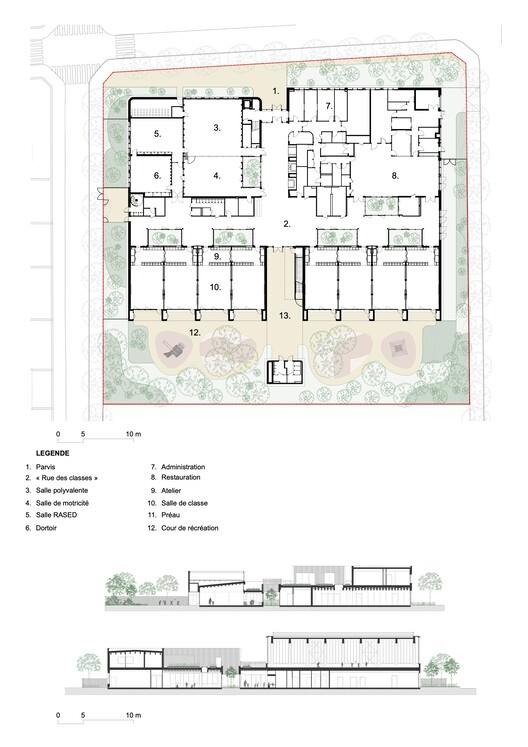
Ground floor plan at 1.500
The municipality's proposal aimed to replace the traditional concept of a "leisure center"—used to welcome children outside of class hours—with expanded classrooms and common areas. Consequently, all school areas are now shared by students and preschool children alike. The goal was to create a more spacious, comfortable, and modular facility while maintaining the same built area.
该市提出的方案旨在用扩大的教室和公共区域取代传统的“休闲中心”概念,该中心原本用于在课余时间接待儿童。因此,现在所有学校区域均由学生和学龄前儿童共享。其目标是在保持相同建筑面积的同时,打造一个更加宽敞、舒适且模块化的设施。
© Vladimir de Mollerat du Jeu
© Vladimir de Mollerat du Jeu
Shared Common Areas
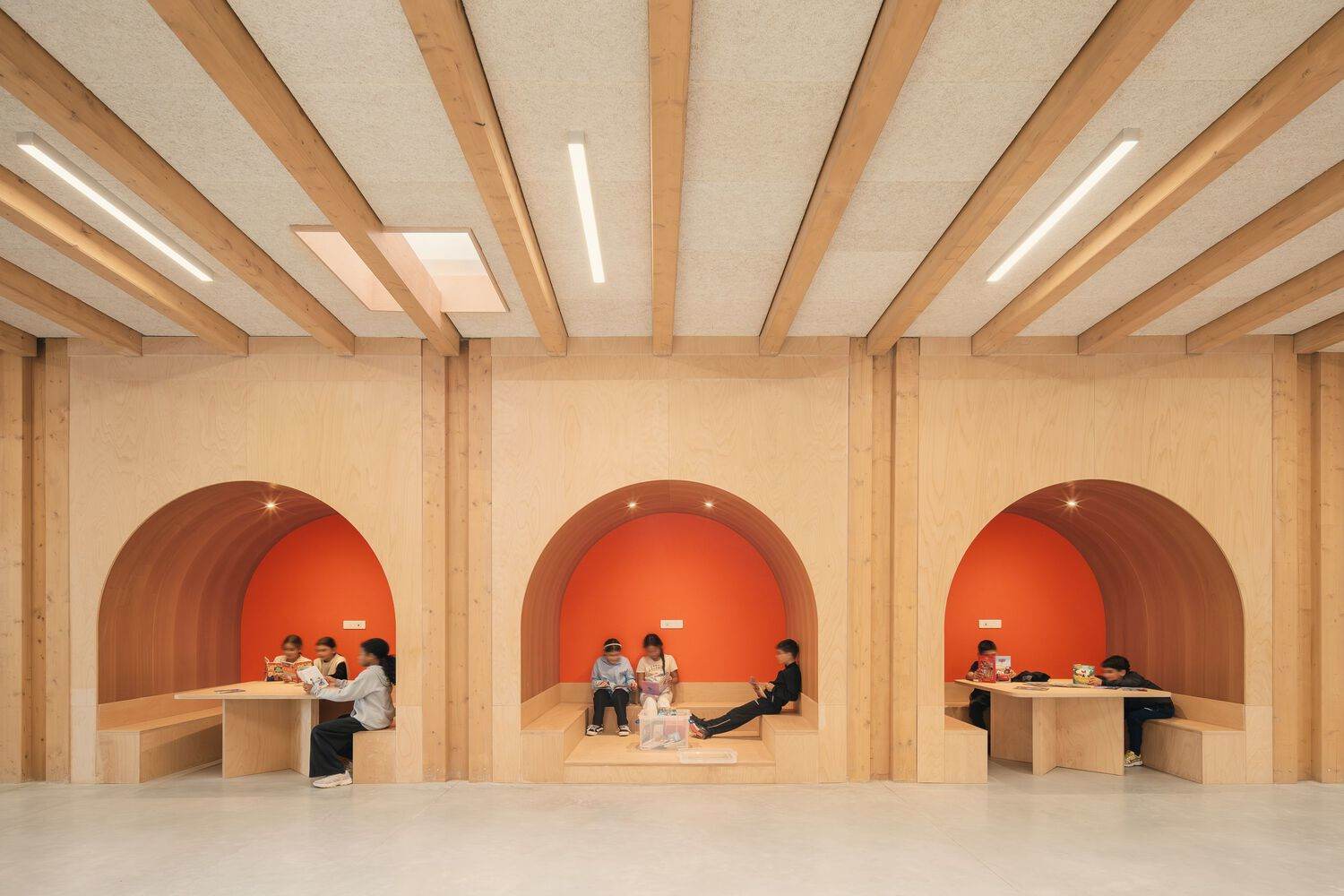
The school’s hall is centrally located within the institution, running north-south to serve the entire school down to the playground. It is designed not just as a simple common area, but as a real living space conducive to various forms of learning and exchange. Three differently arranged niches add possibilities for use, encouraging and supporting diverse learning methods.
共享公共区域
学校的大厅位于机构的中心位置,呈南北走向,服务整个学校直至操场。它不仅仅是一个简单的公共区域,而是被设计成一个真正的生活空间,有利于各种形式的学习和交流。三个不同布局的壁龛增加了使用的可能性,鼓励并支持多样化的学习方法。
© Vladimir de Mollerat du Jeu
The classroom street runs east-west throughout the facility, forming the other structural axis of the school. This axis is divided in two by an internal activity area, with four classrooms and a courtyard in each section. At the entrance to each classroom, there is a vestibule/cloakroom with play structures usable for teaching or recreation.
教室街道从东向西贯穿整个设施,形成了学校的另一条结构轴线。该轴线被内部活动区域一分为二,每部分均设有四间教室和庭院。每间教室入口处均设有门厅/衣帽间以及游戏架,可用于教学或娱乐目的。
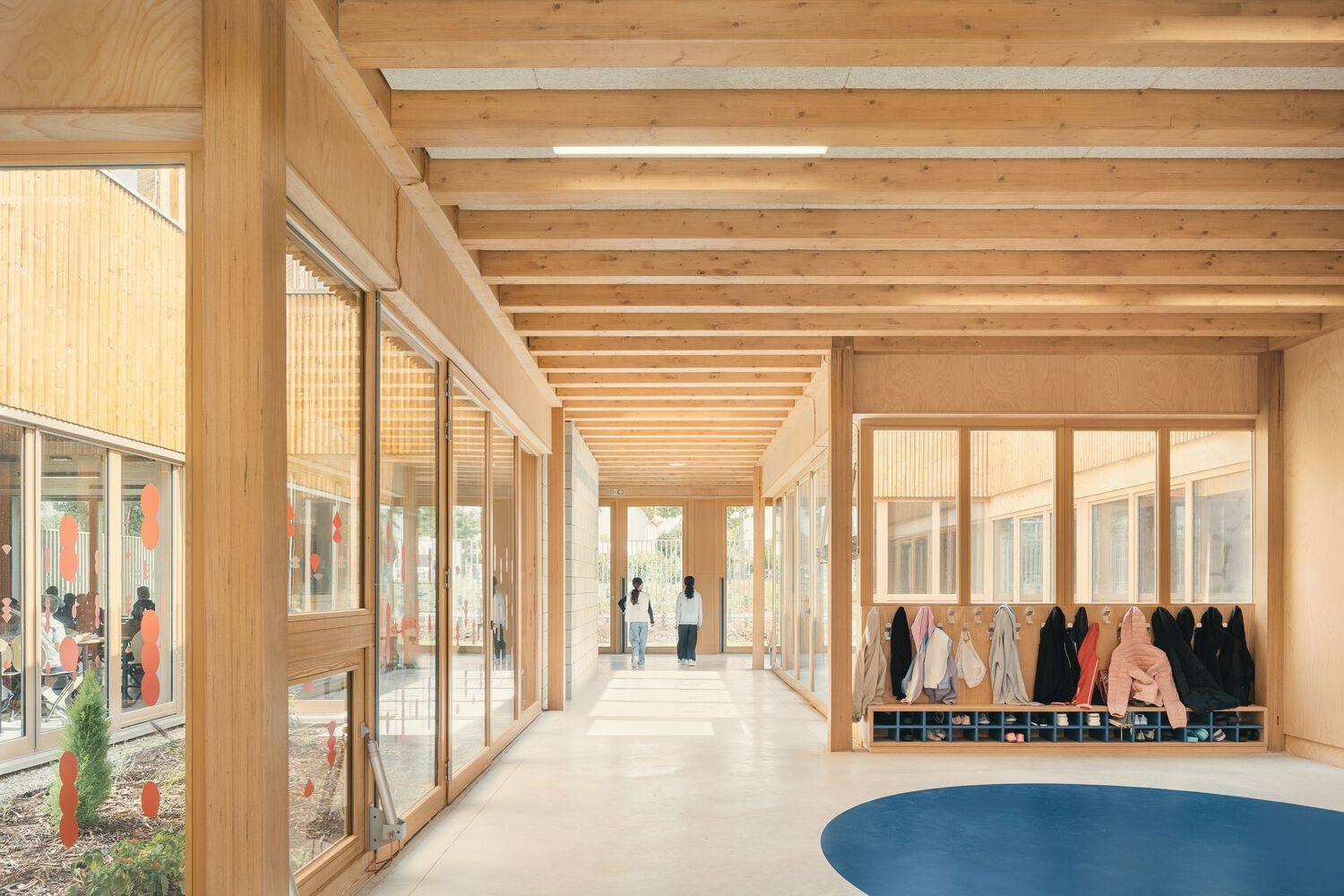
© Vladimir de Mollerat du Jeu
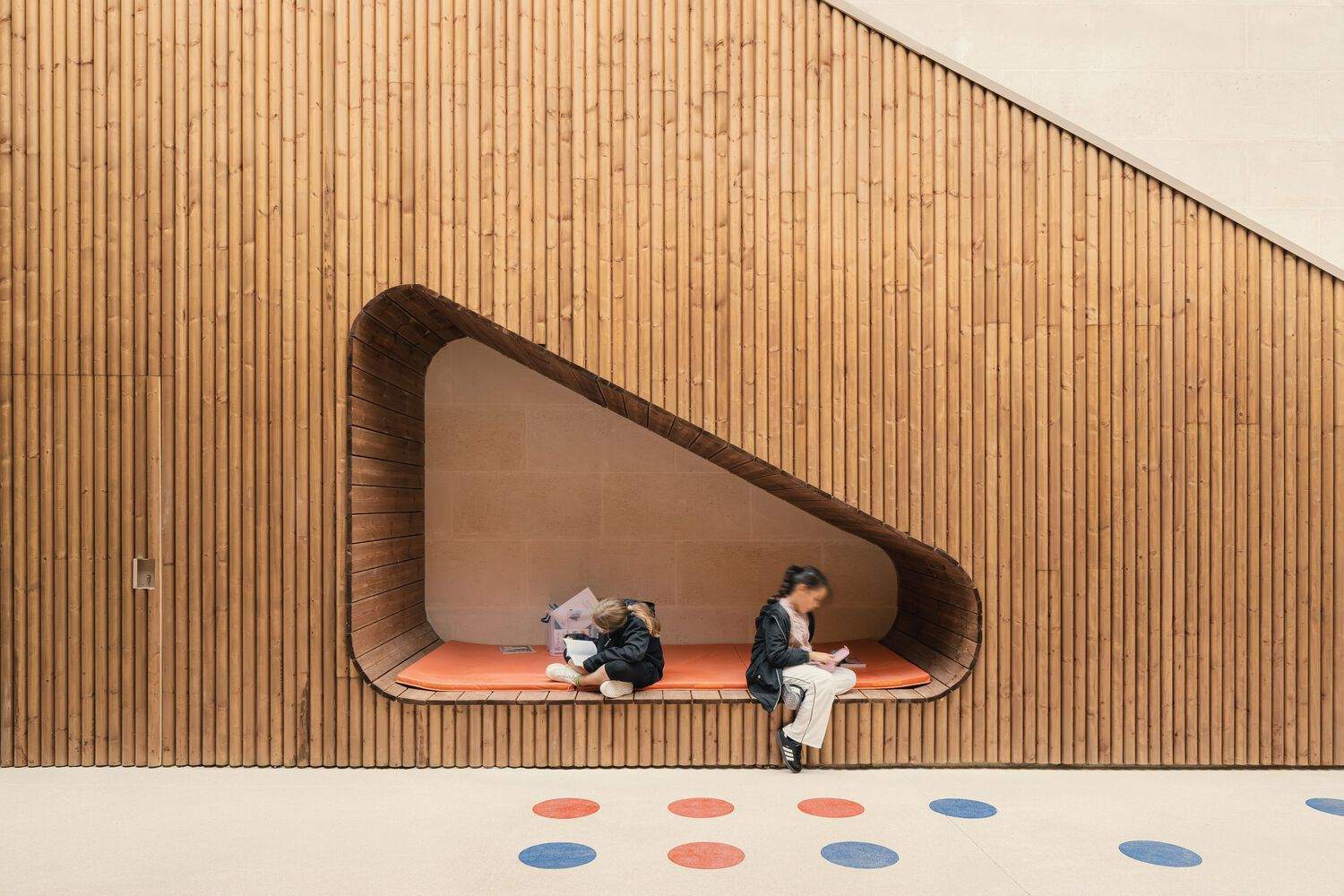
© Vladimir de Mollerat du Jeu
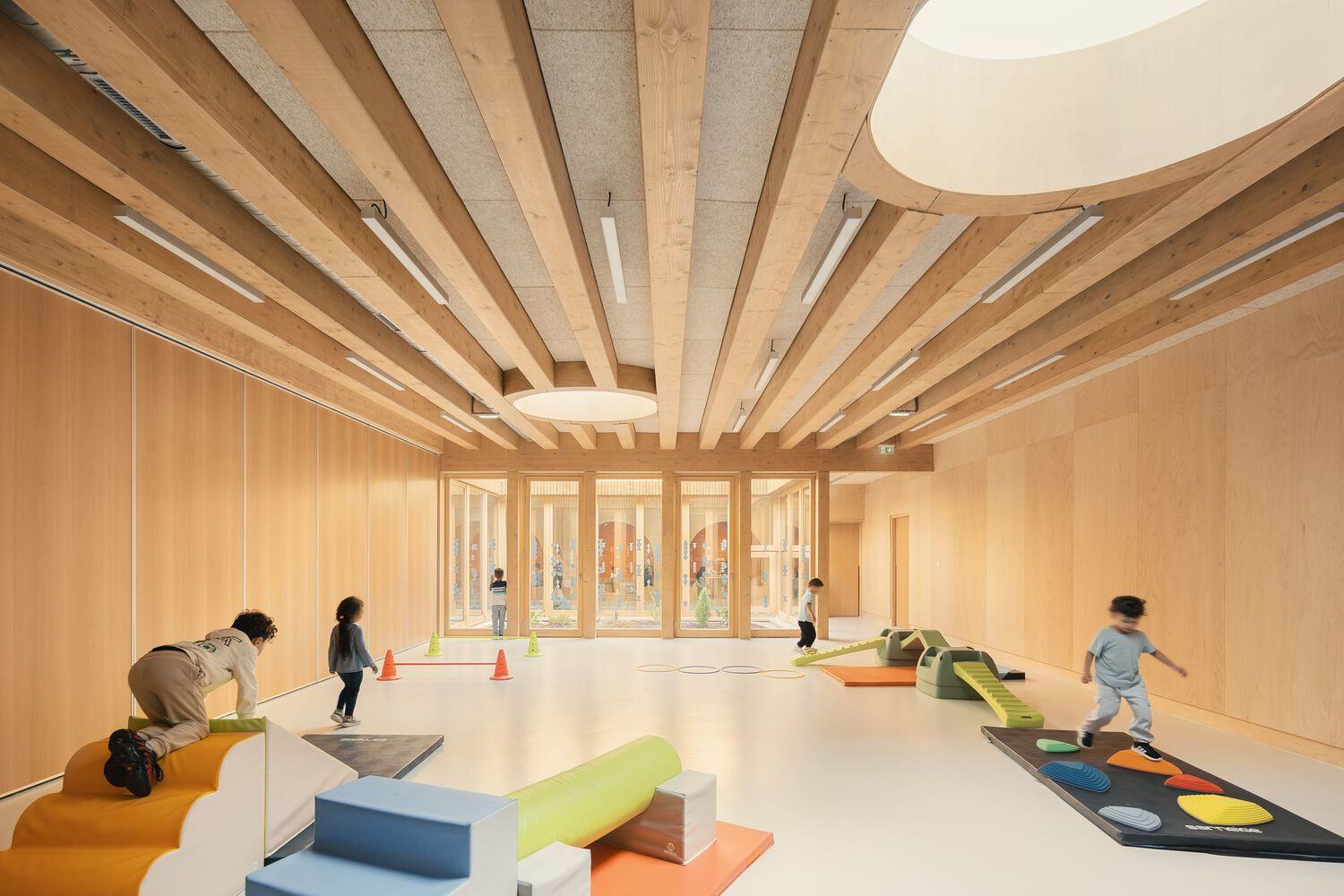
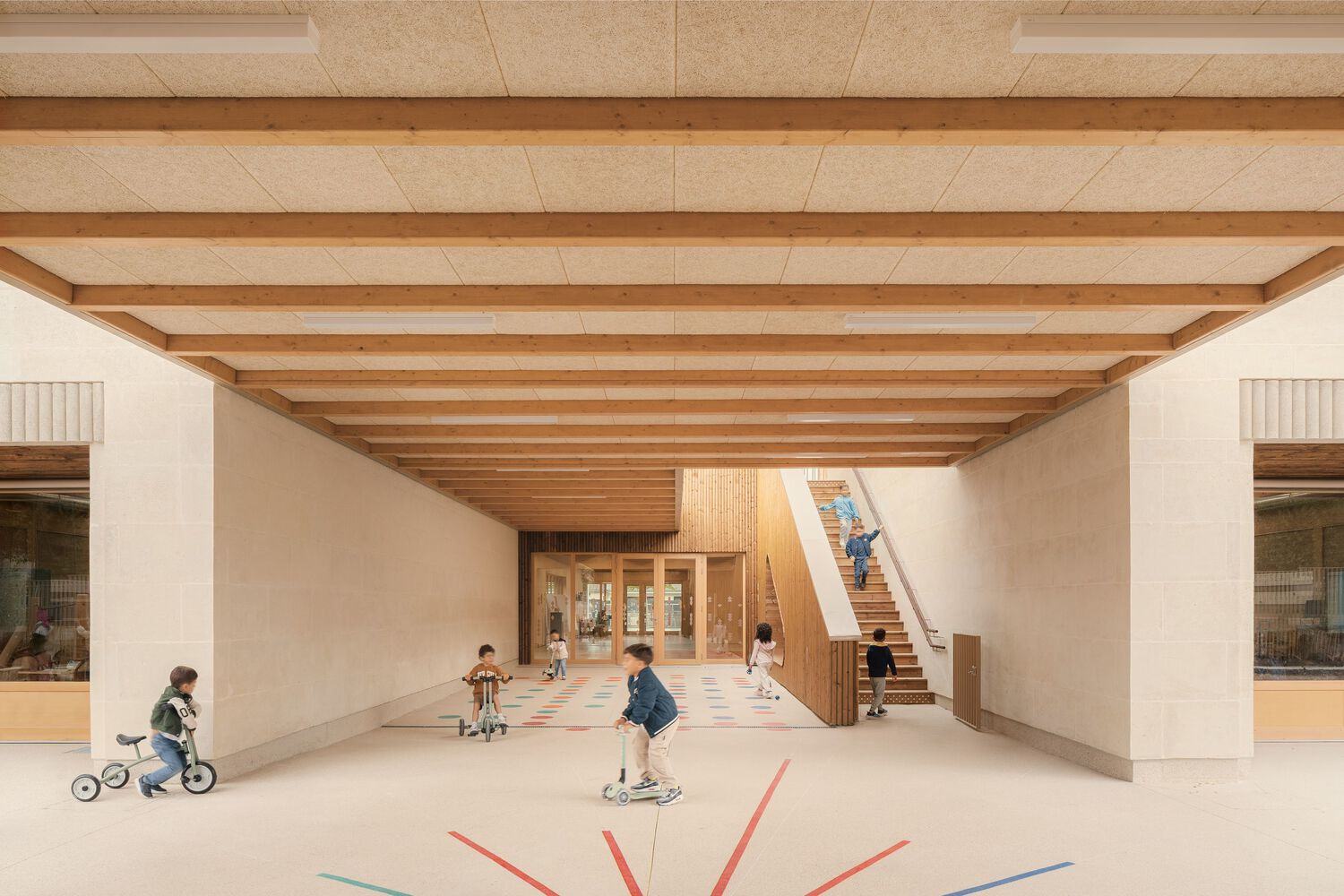
At the intersection of the two axes that structure the school, a large internal activity area serves as the true heart of the building, multiplying usage possibilities. This multi-purpose space, in addition to welcoming preschool children in the morning and evening, can be used with the multi-purpose hall and the motor skills room. It supplements the outdoor playground during heavy rain and can also host exhibitions and performances.
在构成学校结构的两条轴线的交汇处,一个大型内部活动区域成为学校的真正中心,增加了多种使用可能性。这个多功能空间除了在早晨和晚上用于接待学龄前儿童外,还可与多功能厅和运动技能室共同使用。在暴雨天气时,它可作为外部操场的补充,同时还可举办展览和演出。
© Vladimir de Mollerat du Jeu
Versatile Classrooms
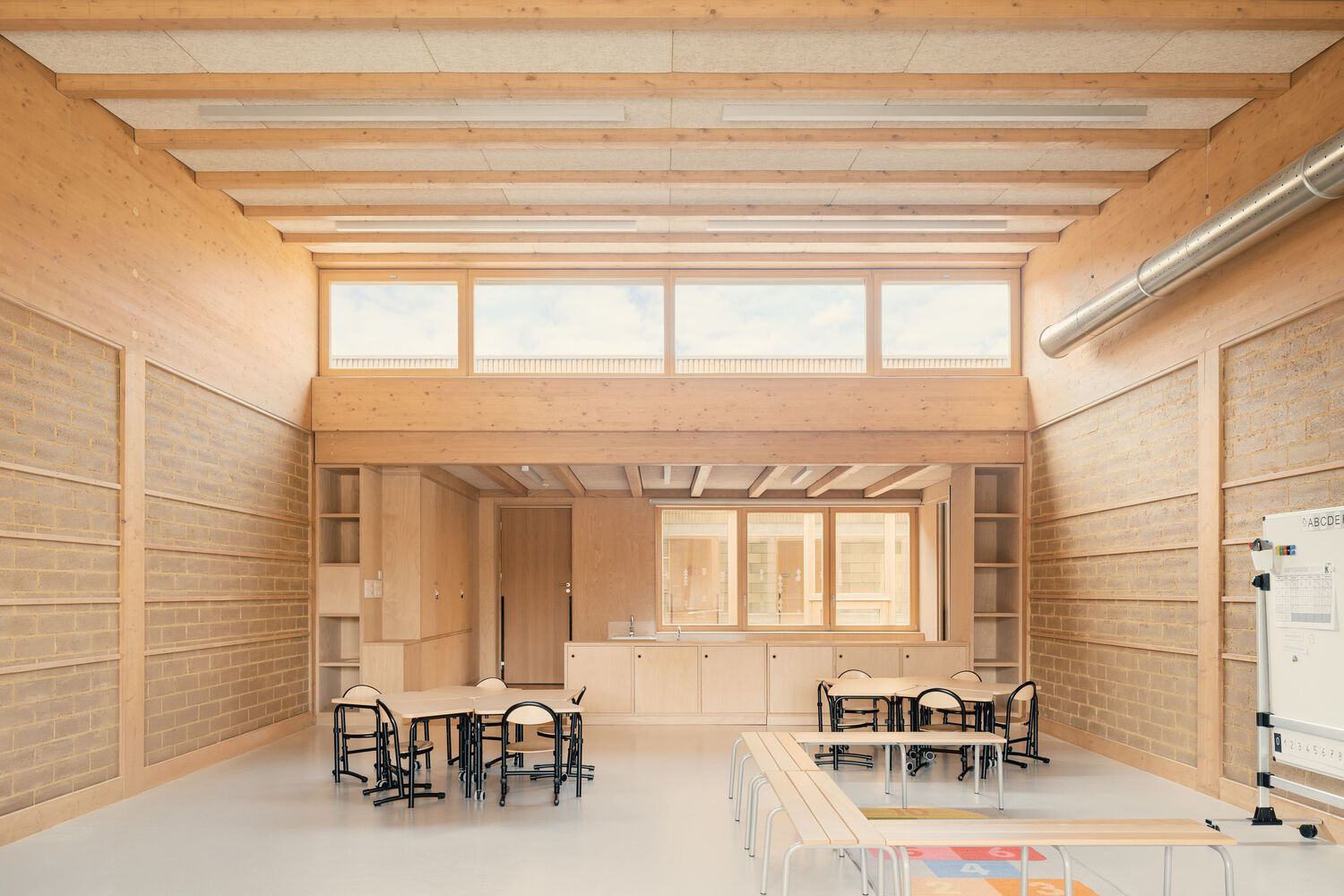
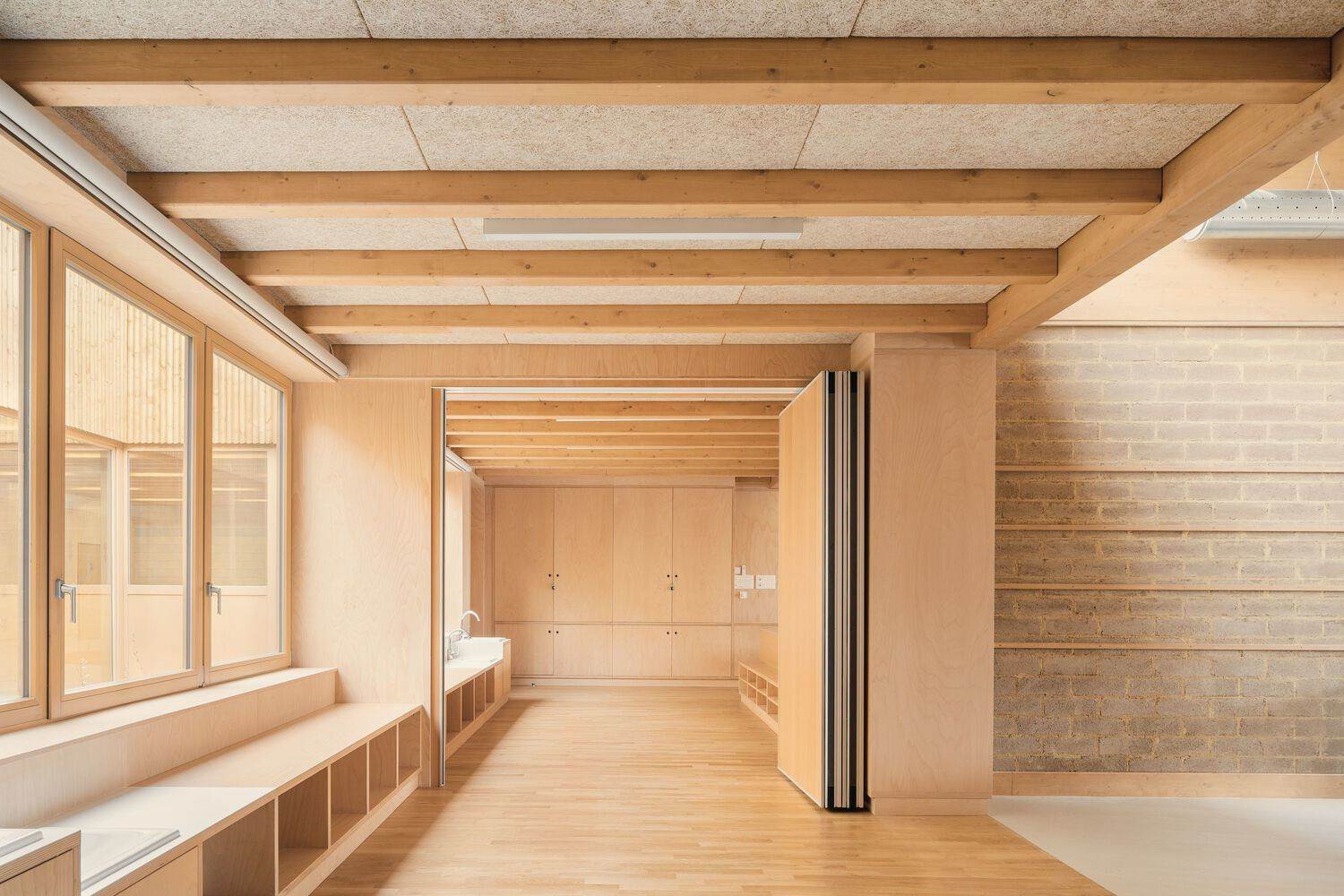
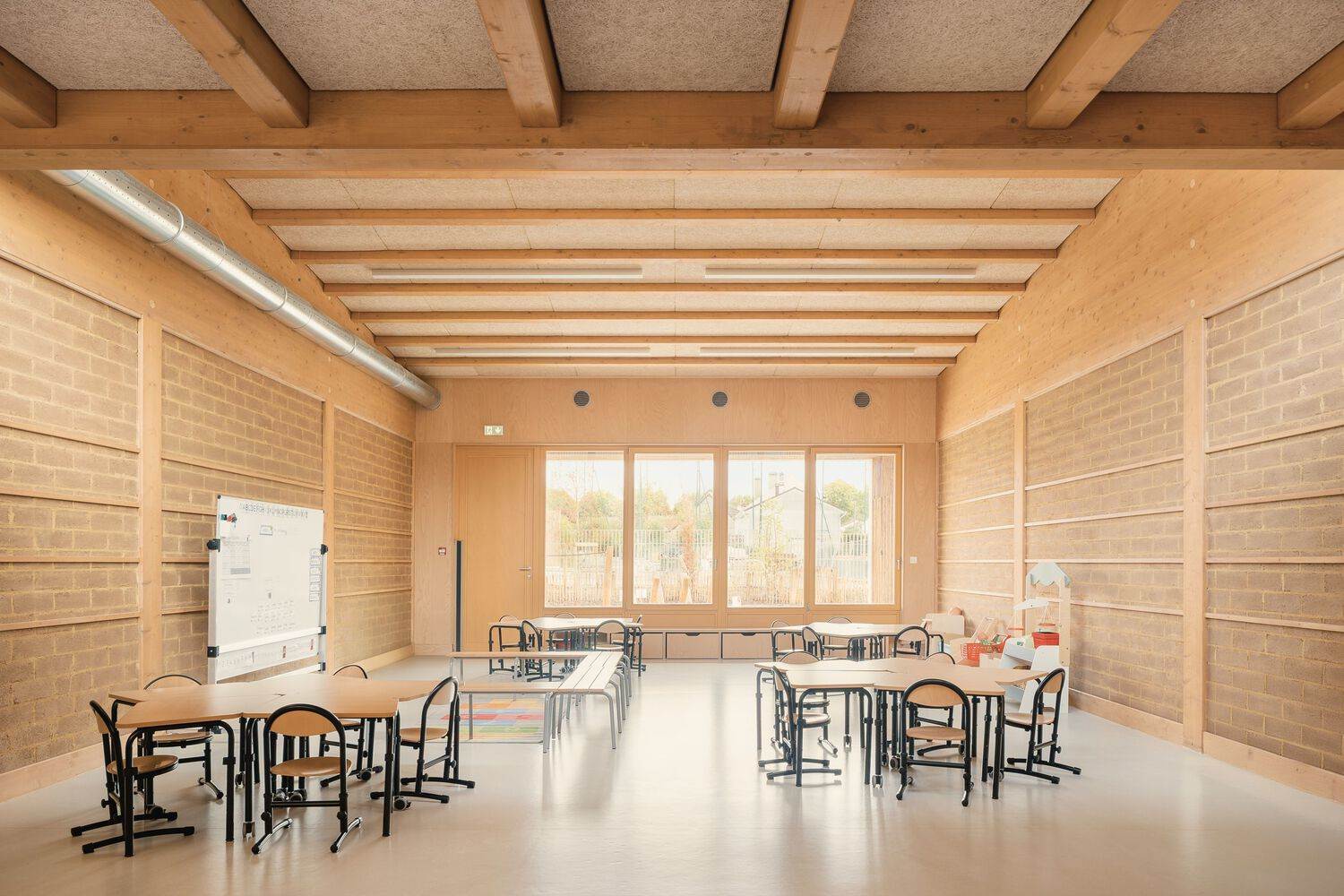
The dual-aspect classrooms benefit from multiple sources of natural light and good ventilation. Located between the northern courtyard and the southern school playground, they ensure different atmospheres within the same teaching room. To the north, light streams in through the courtyard, with a wooden shared space between two classrooms creating a calm and peaceful area. To the south, the spaces directly overlooking the playground are more open and collective. Each classroom also benefits from a "private" activity area overlooking the "public" playground.
多功能教室
双面采光的教室受益于多种自然光源和良好的通风条件。它们位于北侧庭院和南侧学校操场之间,确保同一教室内拥有不同的氛围。北侧,阳光透过庭院倾泻而入,两间教室之间由木质共享空间构成,营造出一个宁静而平和的区域。南侧,直接俯瞰操场的教室空间更为宽敞,更具集体性。每间教室还享有一个“私人”活动区域,俯瞰“公共”操场。
© Vladimir de Mollerat du Jeu
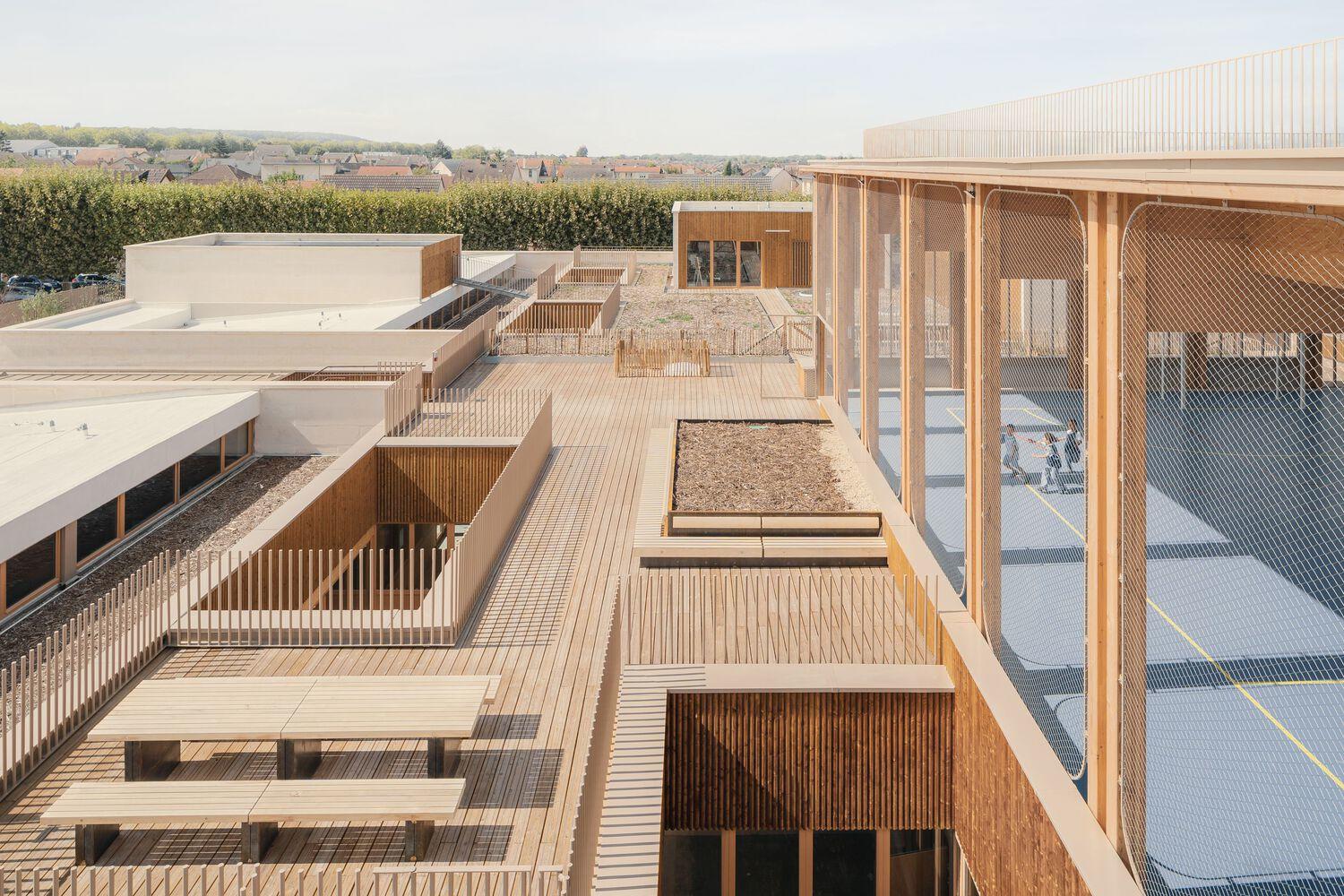
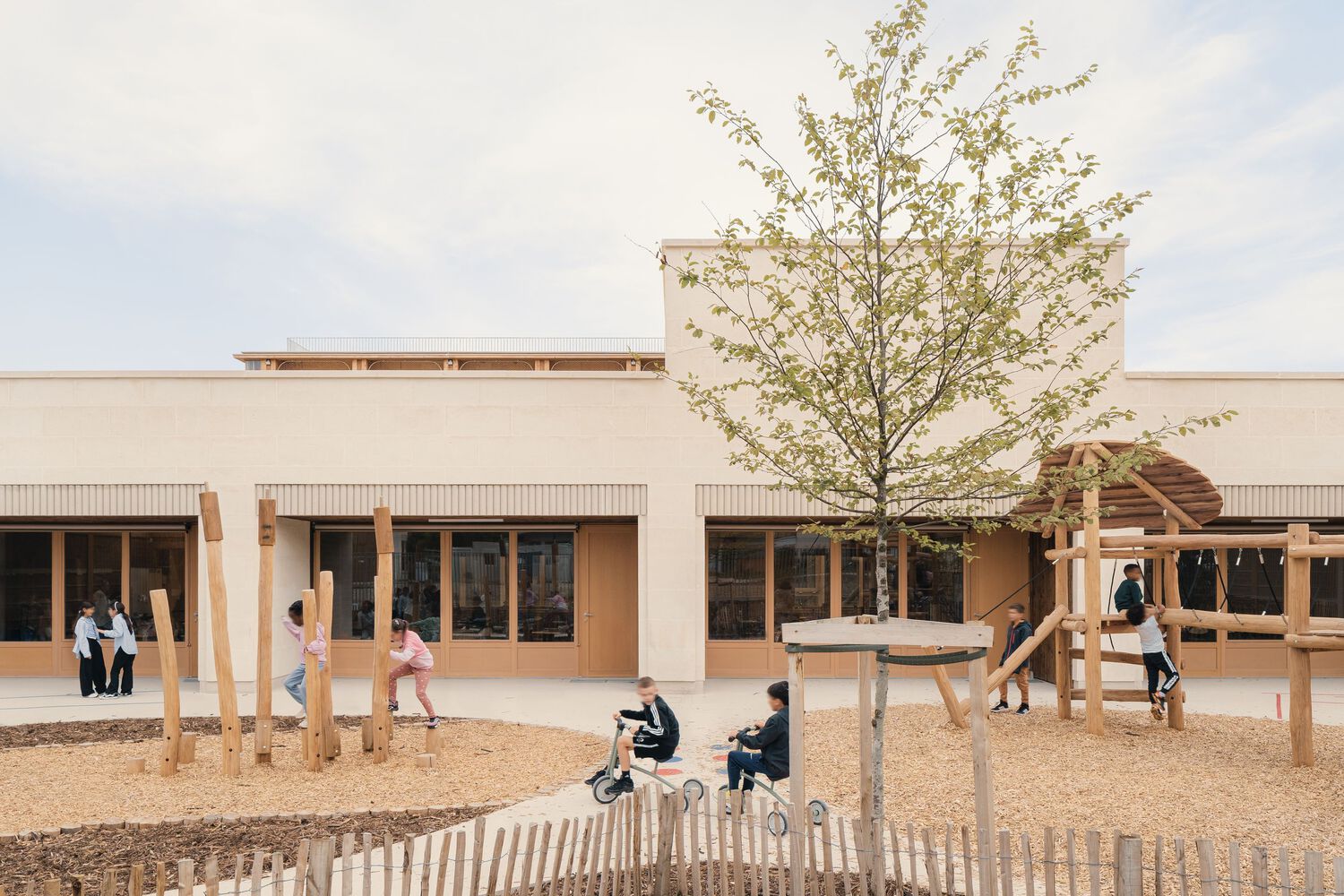
This shaded area improves the flow between inside and out, becoming a true extension of the classroom. The playground, shaded by a line of trees to the south, is shared by nursery and primary classes. It is a genuine green environment, ideal for exploring nature and outdoor play. The space specifically designed for biodiversity on the roof completes the external facilities. It includes containers for growing vegetables and large picnic tables to facilitate teaching activities related to the natural world. Finally, the sports field will also be open during breaks to encourage physical activity.
这个遮阳区域改善了室内外之间的流动,成为教室的真正延伸。操场位于南侧,由一排树木遮荫,供幼儿园和小学班级共享。这是一个真正的绿色环境,是探索自然和户外游戏的理想场所。屋顶上专门为生物多样性设计的空间完善了外部设施。它包括种植蔬菜的容器和大型野餐桌,有利于开展与自然世界相关的教学活动。最后,运动场也将在课间休息时开放,鼓励进行体育活动。
© Vladimir de Mollerat du Jeu
Respecting the Environment
By definition, school buildings must demonstrate their commitment to the environment. This principle is reflected both in the choice of materials and the building's functions. The school's load-bearing stone facade comes from the Bonneuil-en-Valois quarry, less than 60 km from the site. Its thickness ensures the building's insulation while enhancing the value of the facility's sculptural volume. Between the classrooms, earth blocks are added to the wooden structure, increasing the visibility of natural and bio-sourced materials in the building.
尊重环境
从定义上讲,学校建筑必须彰显其对环境的承诺。这一原则在项目的材料选择和建筑功能上均得到了体现。学校的承重石材外墙来自距离工地不到 60 公里的博讷伊昂瓦卢瓦(Bonneuil-en-Valois)采石场。其厚度确保了建筑的隔热性能,同时提升了设施雕塑般体量的价值。在教室之间,泥砖被添加到木质结构中,增加了建筑中自然和生物源材料的可见性。
© Vladimir de Mollerat du Jeu
© Vladimir de Mollerat du Jeu
The courtyards punctuate the common areas, allowing all spaces in the project to benefit from good natural light, fresh air, and comfortable humidity. Their layout naturally ventilates all areas designed for children, as well as the common areas, making them true living and learning spaces. The roof of the sports area is equipped with photovoltaic panels, generating more energy than the building consumes. The remaining roofs are vegetated, improving thermal performance and total rainwater retention, while also offering a pleasant view for surrounding residents.
庭院点缀着公共区域,使项目的所有空间都受益于良好的自然采光、新鲜空气和舒适的湿度。它们的布局自然通风了所有为儿童设计的区域以及公共区域,使其成为真正的生活和学习空间。运动区域的屋顶配备了光伏板,产生的能源超过建筑消耗量。其余屋顶则种植了植被,提高了热性能和雨水总量滞留能力,同时也为周边居民提供了宜人的景观。
© Vladimir de Mollerat du Jeu