本土生态智慧的现代演绎:该项目最精髓之处在于其对山梨县本土“葡萄藤棚架”这一传统农业设施的深刻洞察与现代建筑语汇的成功嫁接。建筑通过模仿棚架的通风、遮阳和采光策略,巧妙地将地域气候特征转化为建筑性能的核心驱动力。拉伸金属网天花板不仅实现了室内外空间的视觉渗透,更是功能性与象征意义的完美结合,体现了设计对在地文化和自然环境的尊重与回应。
能源自给与环境共生的典范:该总部大楼将“创造能源”作为设计目标,通过集成地源热泵、充分利用山梨县日照优势,实现了零能耗(能源产出大于消耗)的壮举。这种积极的能源策略超越了传统的节能减排,致力于实现建筑与环境的良性互动。同时,系统性地可视化能源消耗,强化了使用者对可持续性的认知,将建筑本身转化为教育和激励的载体。
融入地域水文的闭环系统:项目在水资源管理上展现了高水平的生态工程集成能力。它深度借鉴了山梨地区丰富的地下水资源,建立了从空调制冷到蒸发冷却、光导的“梯级利用”系统,确保了100%使用本地井水,并最终回归自然水循环。这一闭环设计不仅解决了建筑的冷热需求,还优化了室内环境质量,使建筑真正成为场地自然肌理的一部分,实现了对地方资源负责任的利用。
© Blue Hours_Hiroyuki Oki
© Blue Hours_Hiroyuki Oki
Eco-Architecture Drawing Inspiration from Grape Trellises
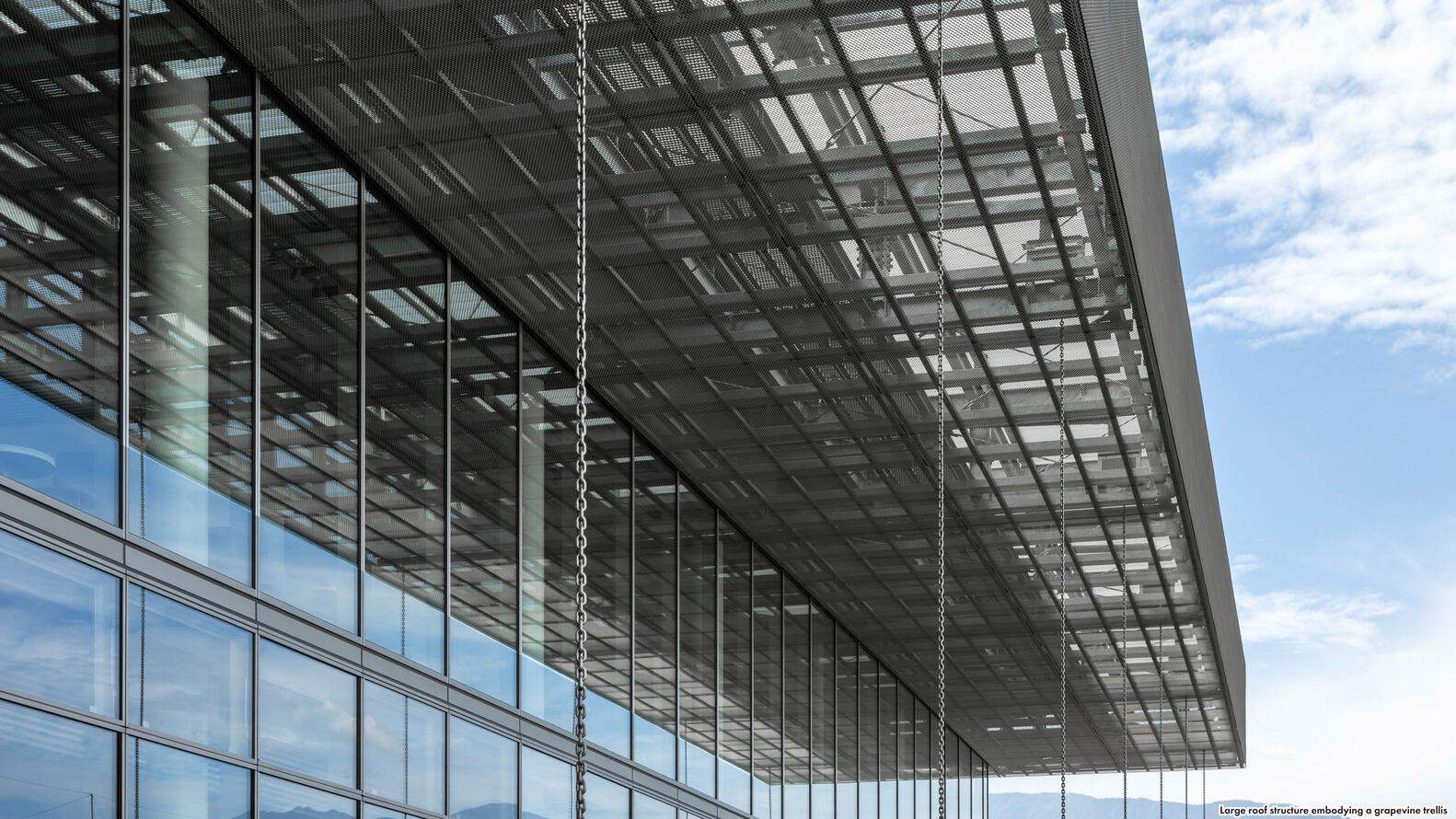
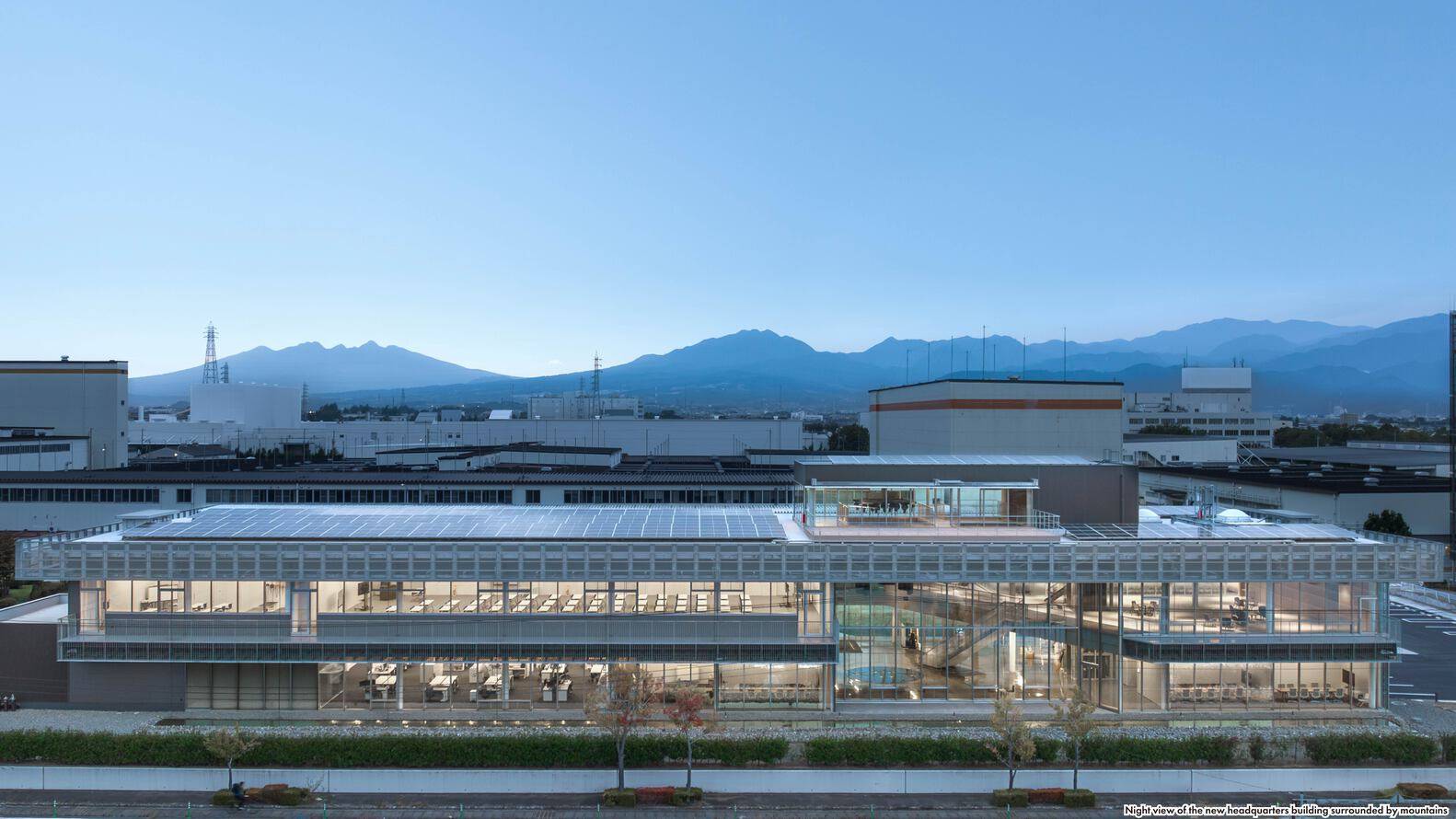
Yamanashi Prefecture is one of Japan's few inland basins, surrounded by numerous mountains, including Mt. Fuji, one of Japan's iconic mountains. With long hours of sunshine, low annual precipitation, large diurnal temperature variations, and abundant water resources, grape cultivation has flourished here since ancient times, and today, the land is covered with grape trellises.
借鉴葡萄藤棚架的生态建筑
山梨县被富士山(日本标志性山脉之一)等众多山脉环绕,是日本这个岛国中为数不多的内陆盆地之一。这里日照时间长、年降水量低、昼夜温差大且水资源丰富,自古以来葡萄种植便在此地蓬勃发展,如今,葡萄藤棚架遍布这片土地。
© Blue Hours_Hiroyuki Oki
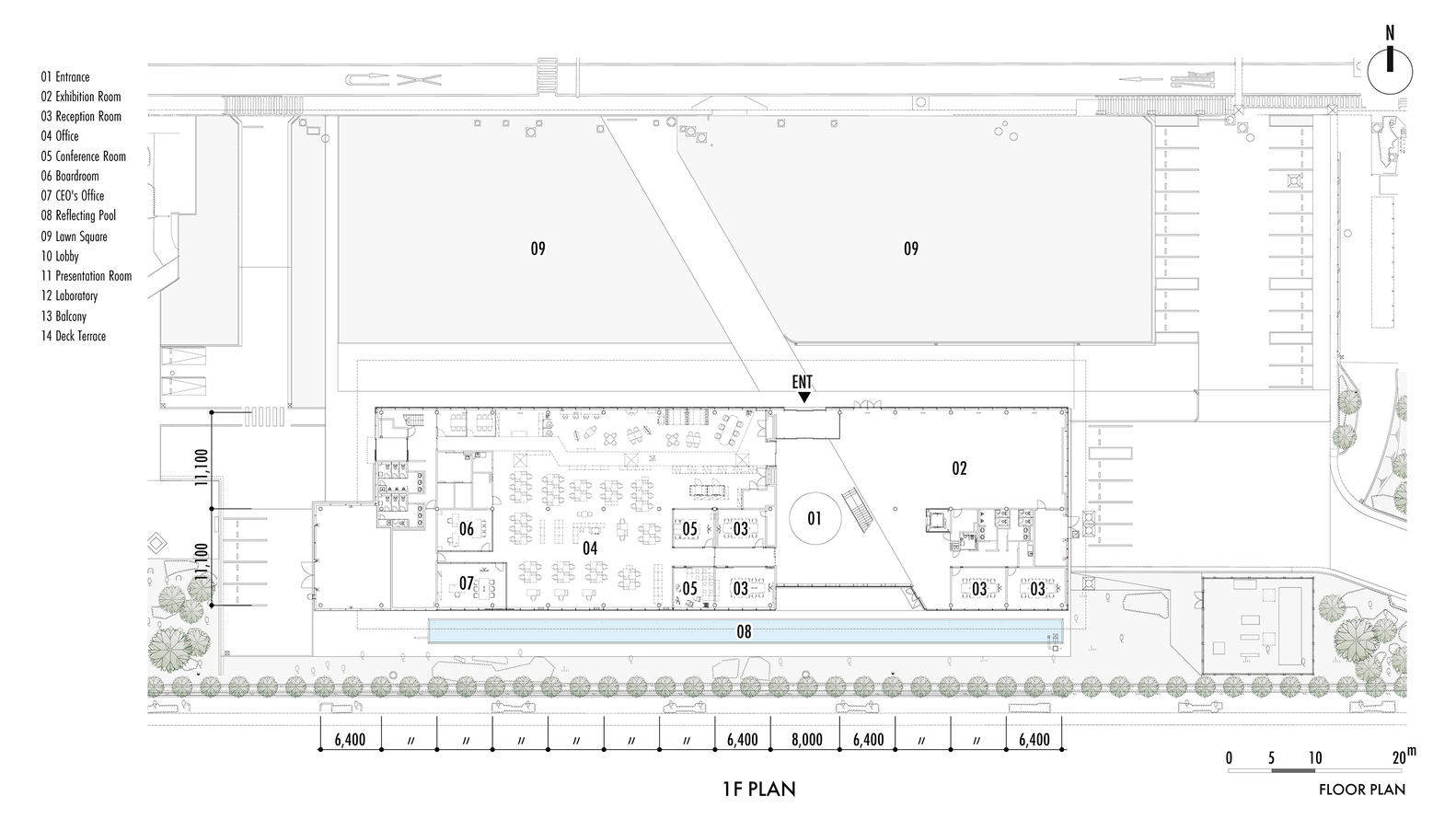
First floor plan
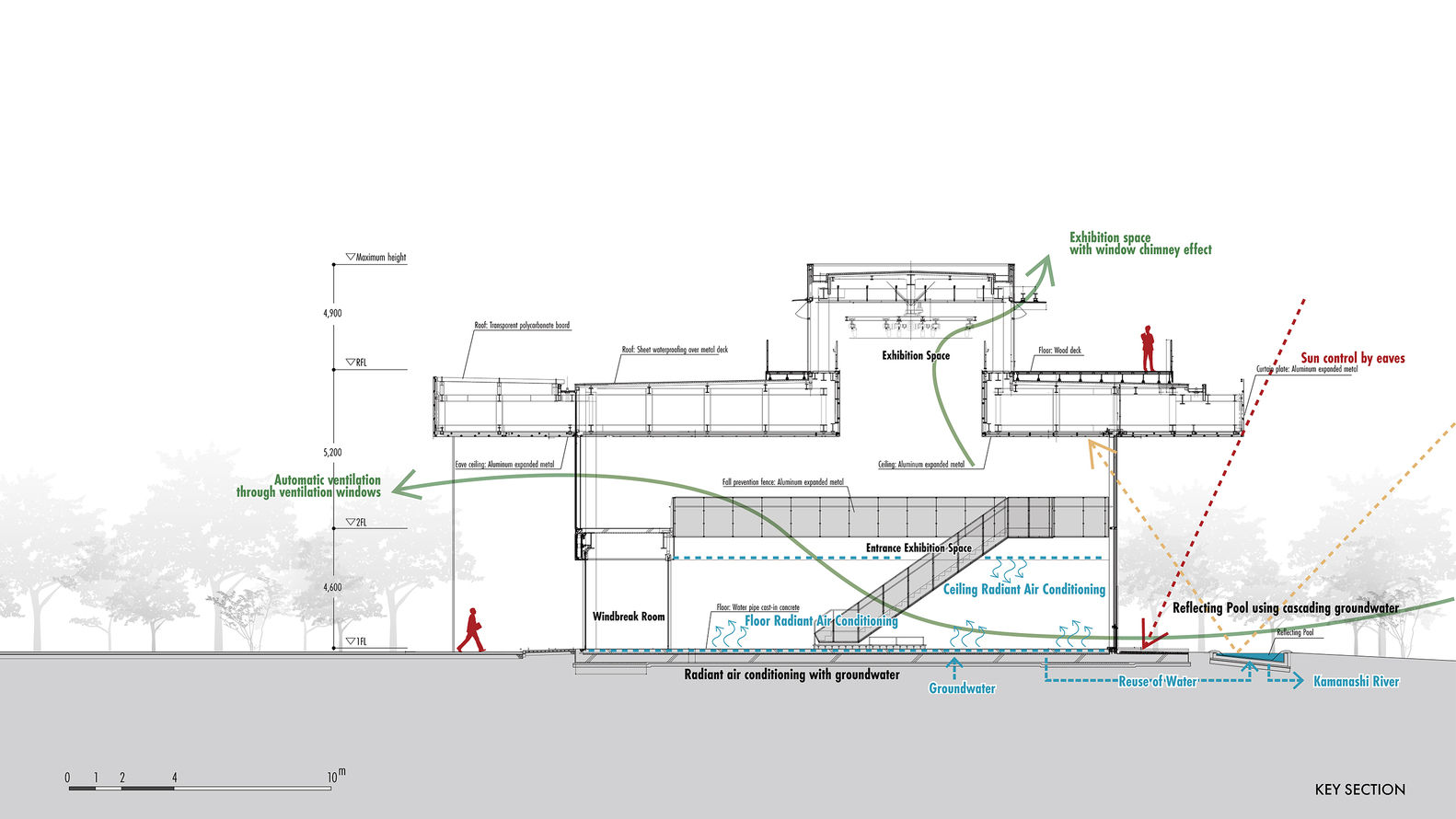
Section
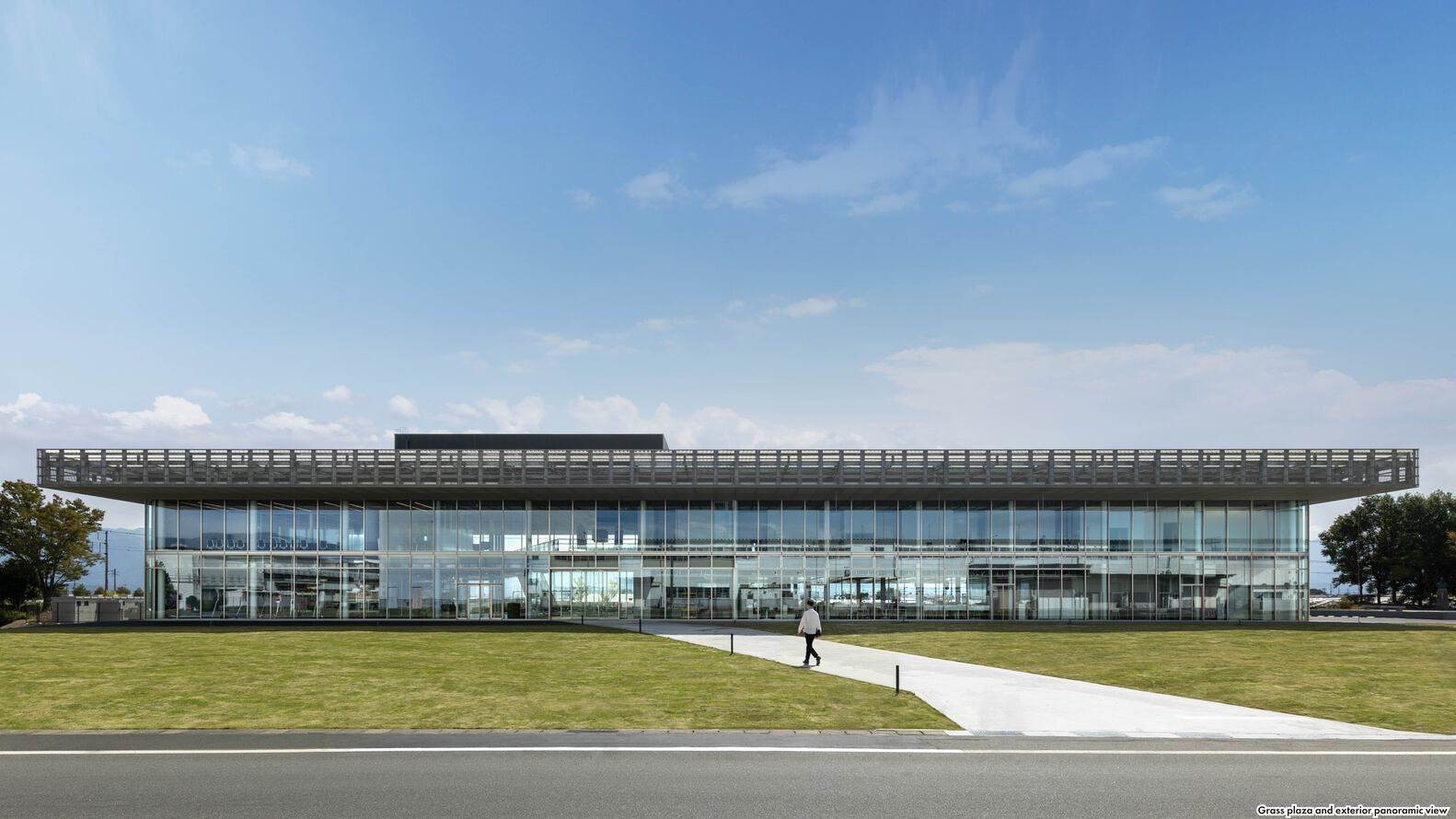
A manufacturer, which holds the top market share in the manufacturing and sales of material handling equipment such as cranes and chain hoists, planned its new headquarters building in this scenic basin surrounded by mountains. The building fully utilizes the rich environmental resources and wisdom of Yamanashi Prefecture, employing an underground water radiant air conditioning system, cascading use of water resources, and eaves made of stretched metal mesh for solar radiation control.
一家在起重机和链条葫芦等物料搬运设备制造与销售领域占据市场份额榜首的制造商,其新总部大楼便规划在这片群山环绕、风景壮丽的盆地之中。该建筑充分利用山梨县丰富的环境资源与智慧,采用地下水辐射空调系统、水资源的梯级利用以及由拉伸金属网制成的屋檐进行太阳辐射控制。
© Blue Hours_Hiroyuki Oki
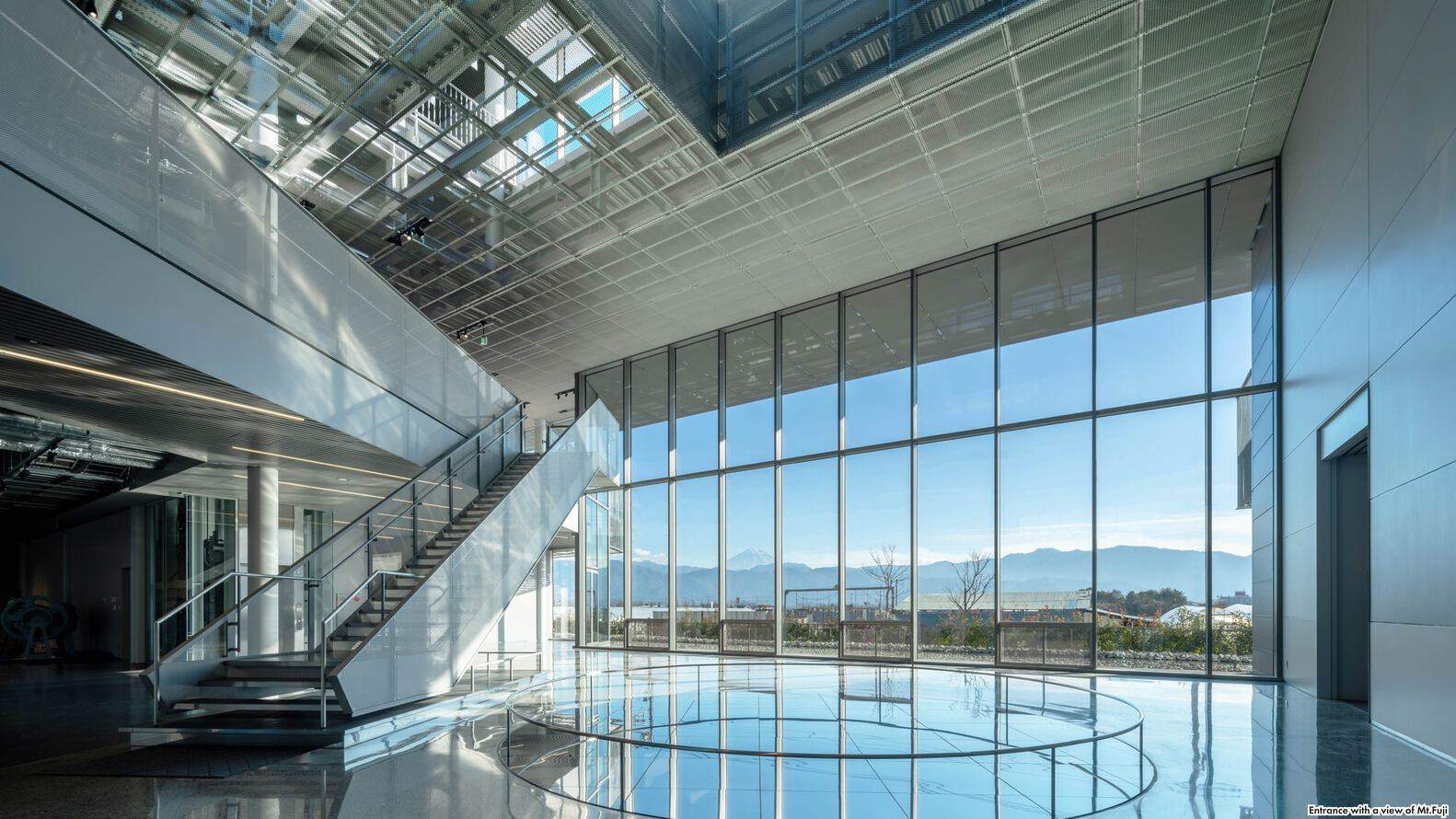
© Blue Hours_Hiroyuki Oki
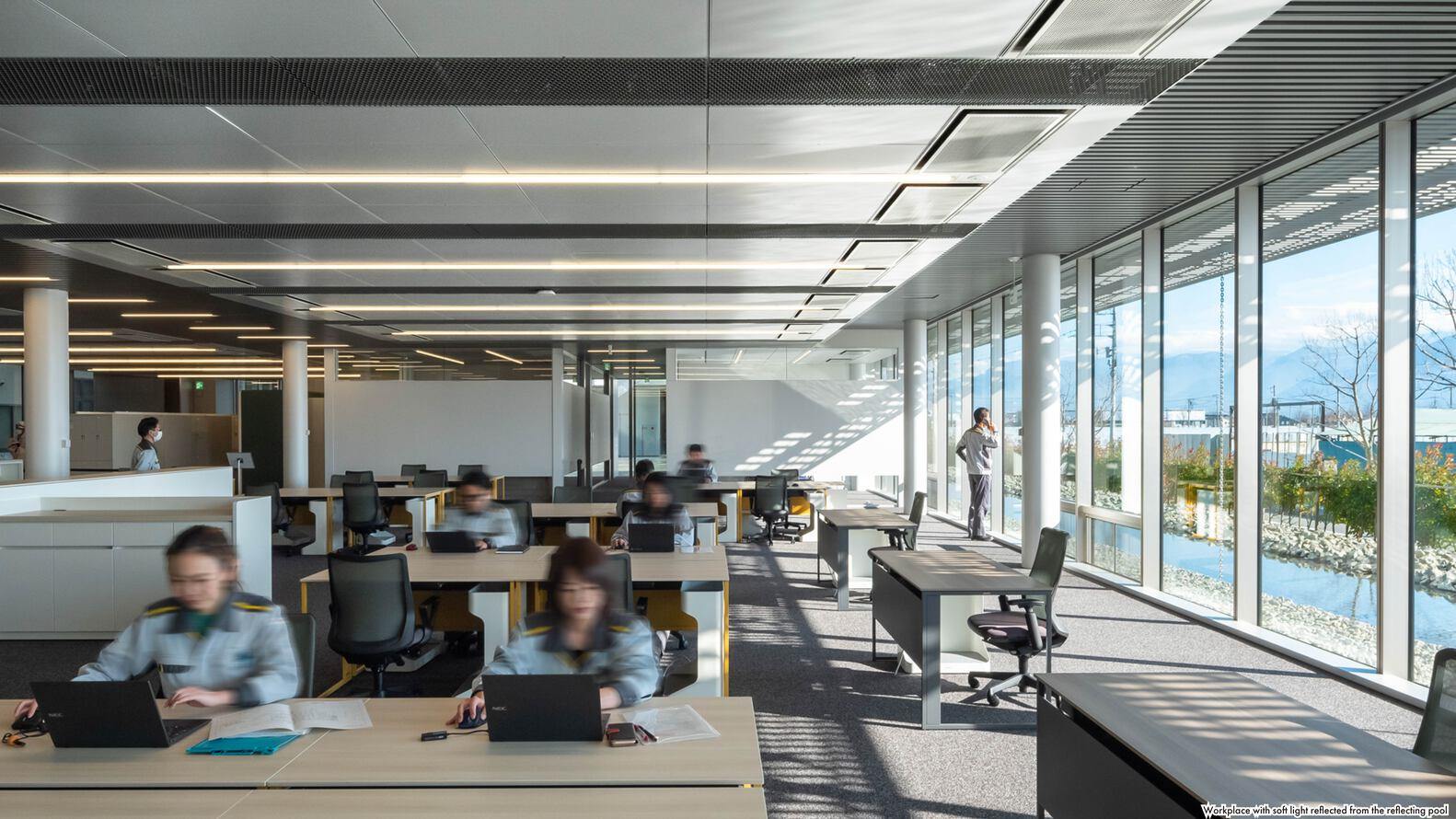
© Blue Hours_Hiroyuki Oki
Architecture that Generates Energy
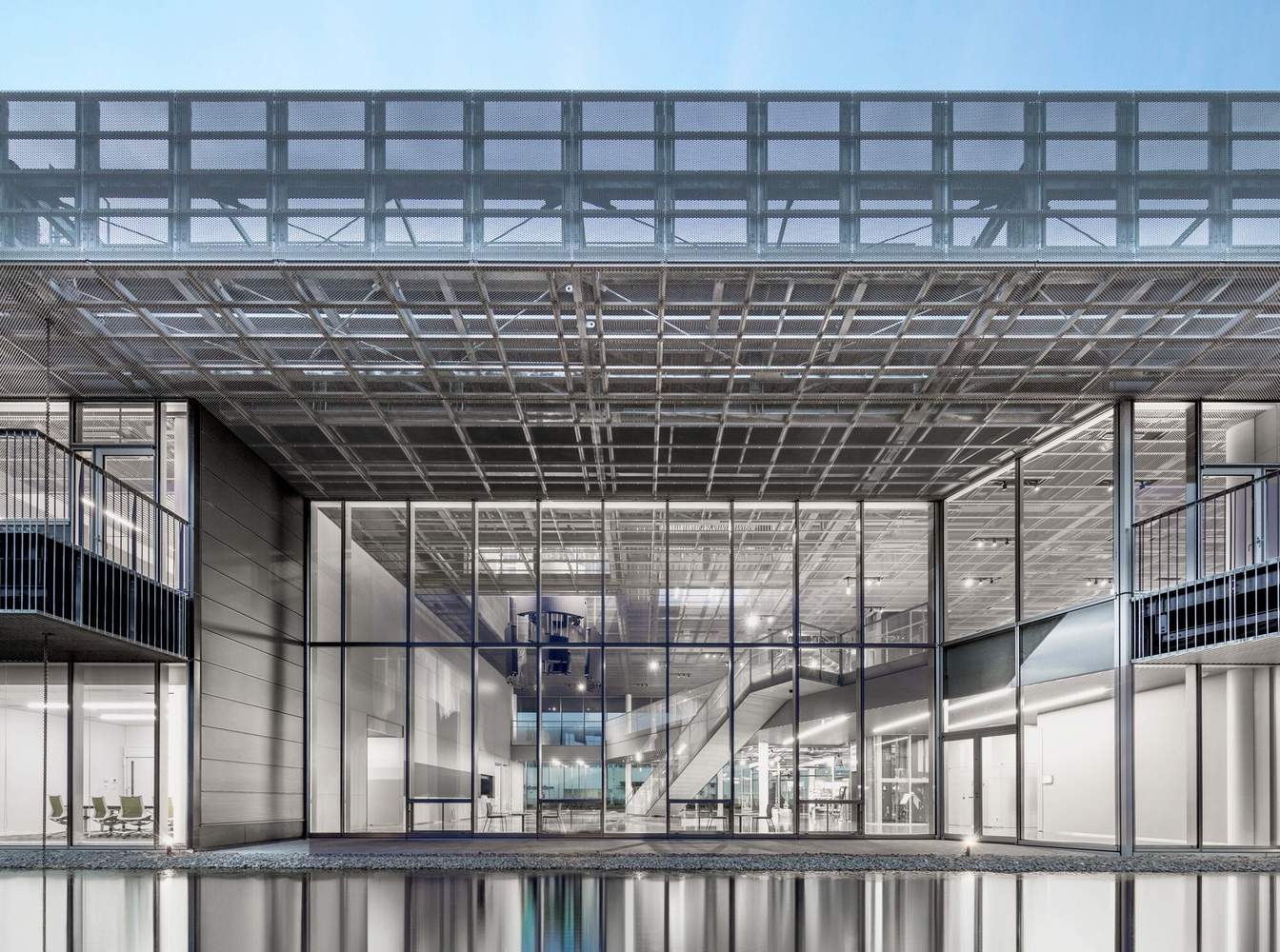
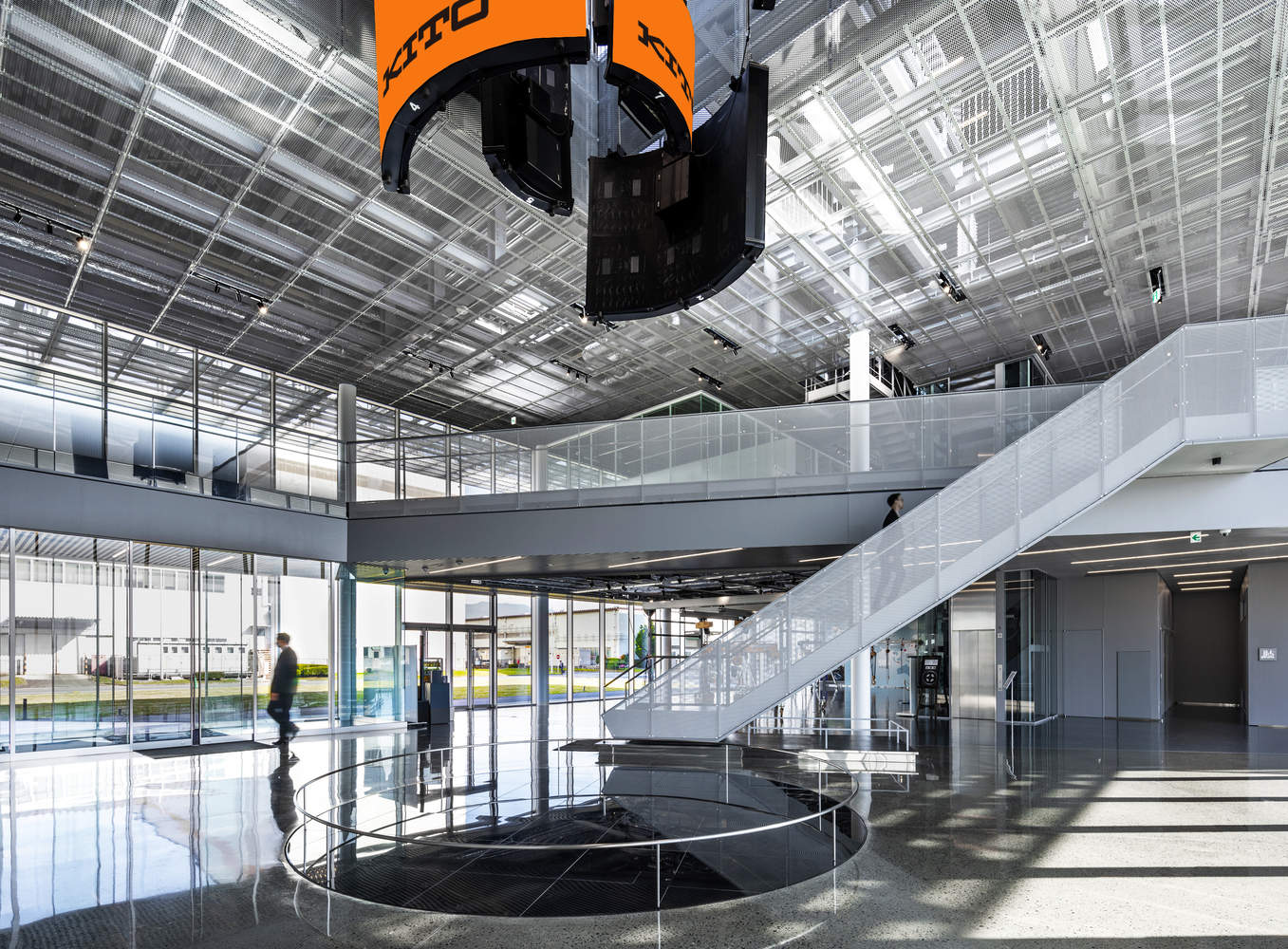
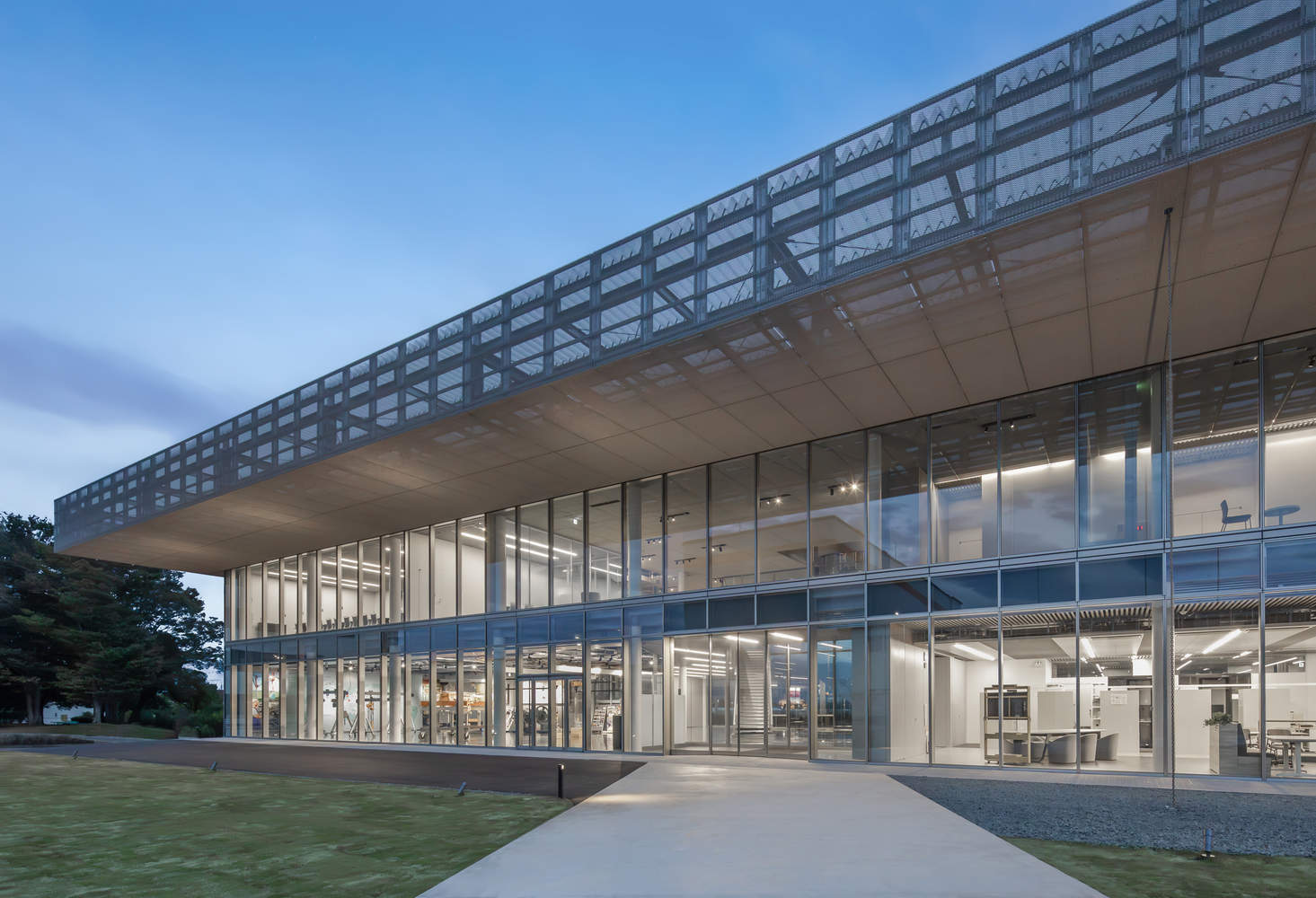
This new building will serve as the core functional area for the entire factory site, handling administrative and office tasks, while also functioning as an exhibition hall to attract visitors from both inside and outside the company. The space is designed to embody the landscape of "grape trellises" unique to Yamanashi Prefecture, allowing visitors to feel the surrounding environment and climate, and promoting communication. The ceiling is made of stretched metal mesh, creating a visual continuity between the indoors and outdoors.
创造能源的建筑
这座新建筑将作为整个工厂厂区的核心功能区,承担行政与办公事务,同时作为展示厅,吸引公司内外的各类人士前来参观。该空间旨在体现山梨县特有的“葡萄藤棚架”景观,让访客能够感受周边的环境与气候,并促进交流。其天花板采用拉伸金属网制成,营造出室内外的视觉连贯性。
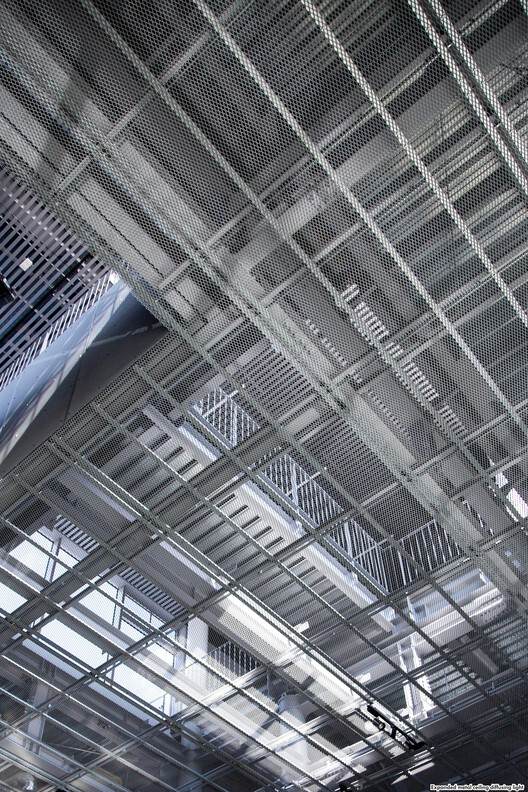
© Blue Hours_Hiroyuki Oki
The stretched metal mesh ceiling enables natural ventilation and lighting through environmental sensors, drawing inspiration from the "grape trellis" system designed for ventilation and humidity control in grape cultivation. Furthermore, the building utilizes renewable energy sources such as groundwater and solar power, aiming to reduce environmental impact and raise environmental awareness among the staff in the new building by visualizing energy consumption. Thanks to the long hours of sunshine, the building generates more energy than it consumes, achieving the goal of a zero-energy building.
拉伸金属网天花板通过环境传感器实现自然通风与自然采光,借鉴了为葡萄种植而设计的通风与湿度控制“葡萄藤棚架”系统。此外,该建筑利用地下水与太阳能等可再生能源,旨在减少环境影响,并通过可视化能源消耗来提高新建筑内工作人员的环保意识。借助长时间的日照,该建筑产生的能源多于其消耗量,实现了零能耗建筑的目标。
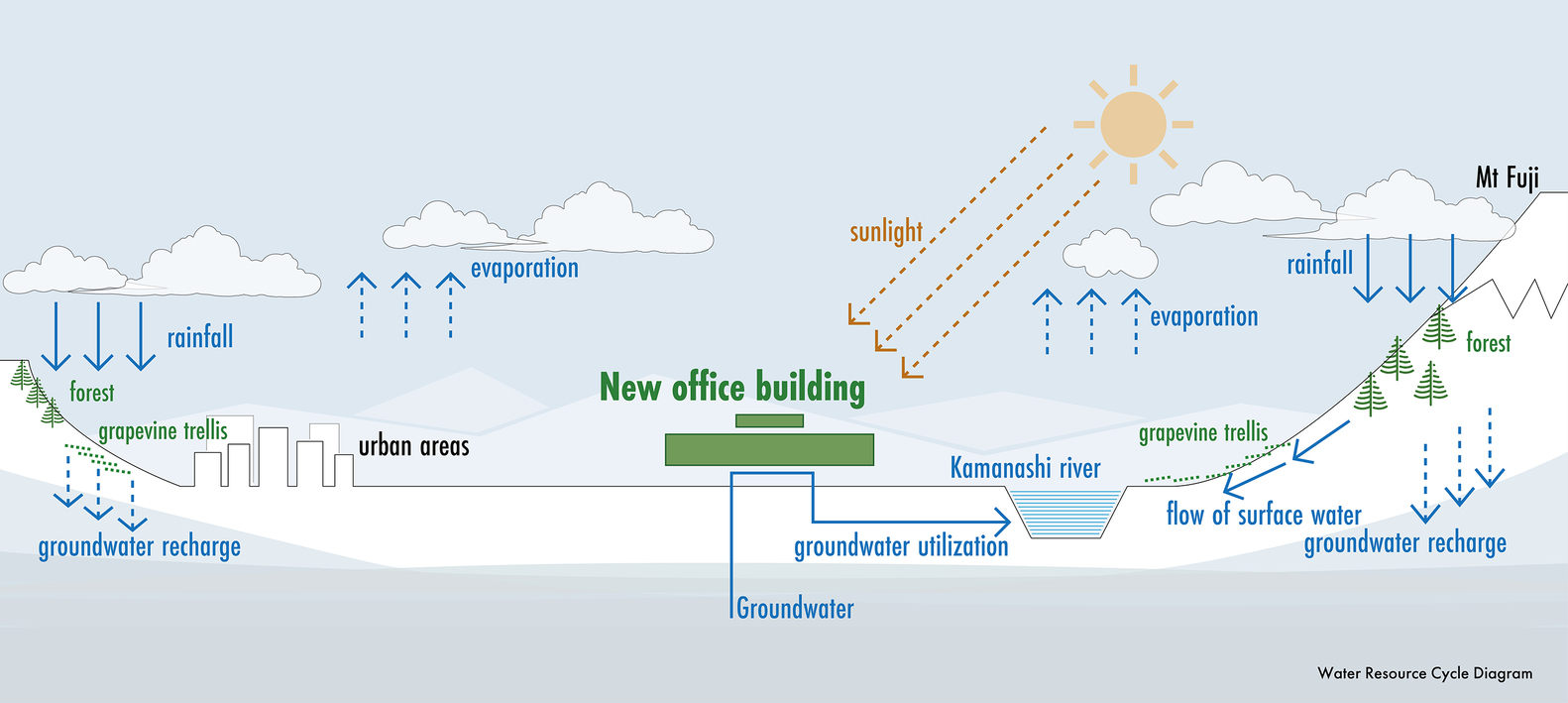
Water circulation diagram
Building System Integrated with Local Water Cycle
In this area, groundwater flows from the surrounding mountains, forming the cornerstone of daily life and local industry. The building aims to realize local production and local consumption of familiar resources by using 100% well water for the ground source heat pump air conditioning system, performing heat recovery, and then using it in stages as water basins with evaporative cooling and light guiding effects to provide a good light and air environment indoors, before finally discharging it into a nearby river.
融入当地水循环的建筑系统
在这一地区,地下水从周边山脉流淌而来,成为日常生活与地方工业的基石。该建筑旨在实现熟悉资源的本地生产本地消费,采用 100% 井水作为地源热泵空调系统,进行热回收,然后梯级利用,作为具有蒸发冷却和光导效应的水盆,为室内提供良好的光线与空气环境,最后排入附近的河流。
© Blue Hours_Hiroyuki Oki
© Blue Hours_Hiroyuki Oki
By integrating the new building's water circulation with the atmospheric and underground water cycles, an ecological building rooted in the natural environment of the site has been realized.
通过将新建筑的水循环融入大气与地下循环的水资源循环中,实现了根植于该场地自然环境的生态建筑。