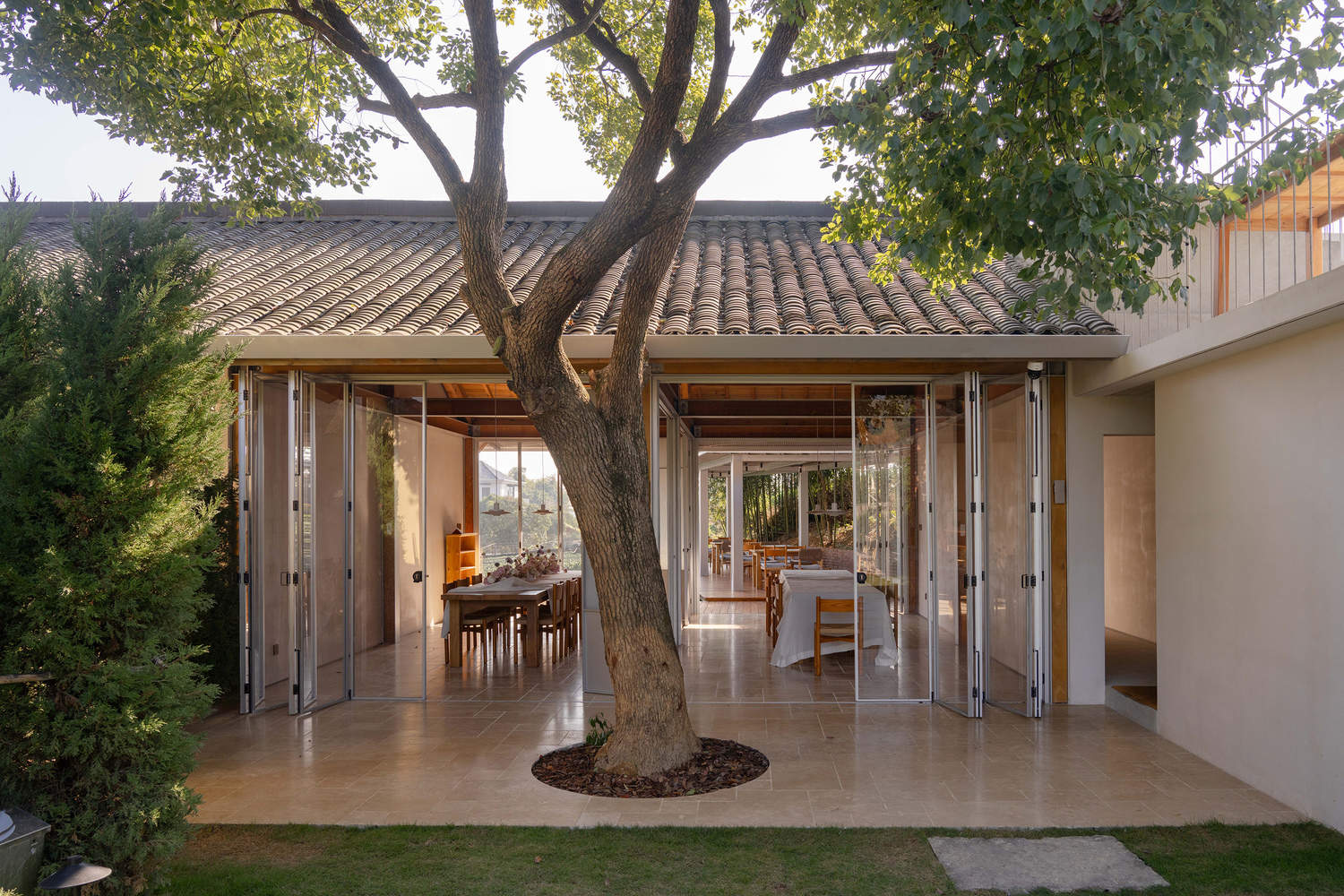
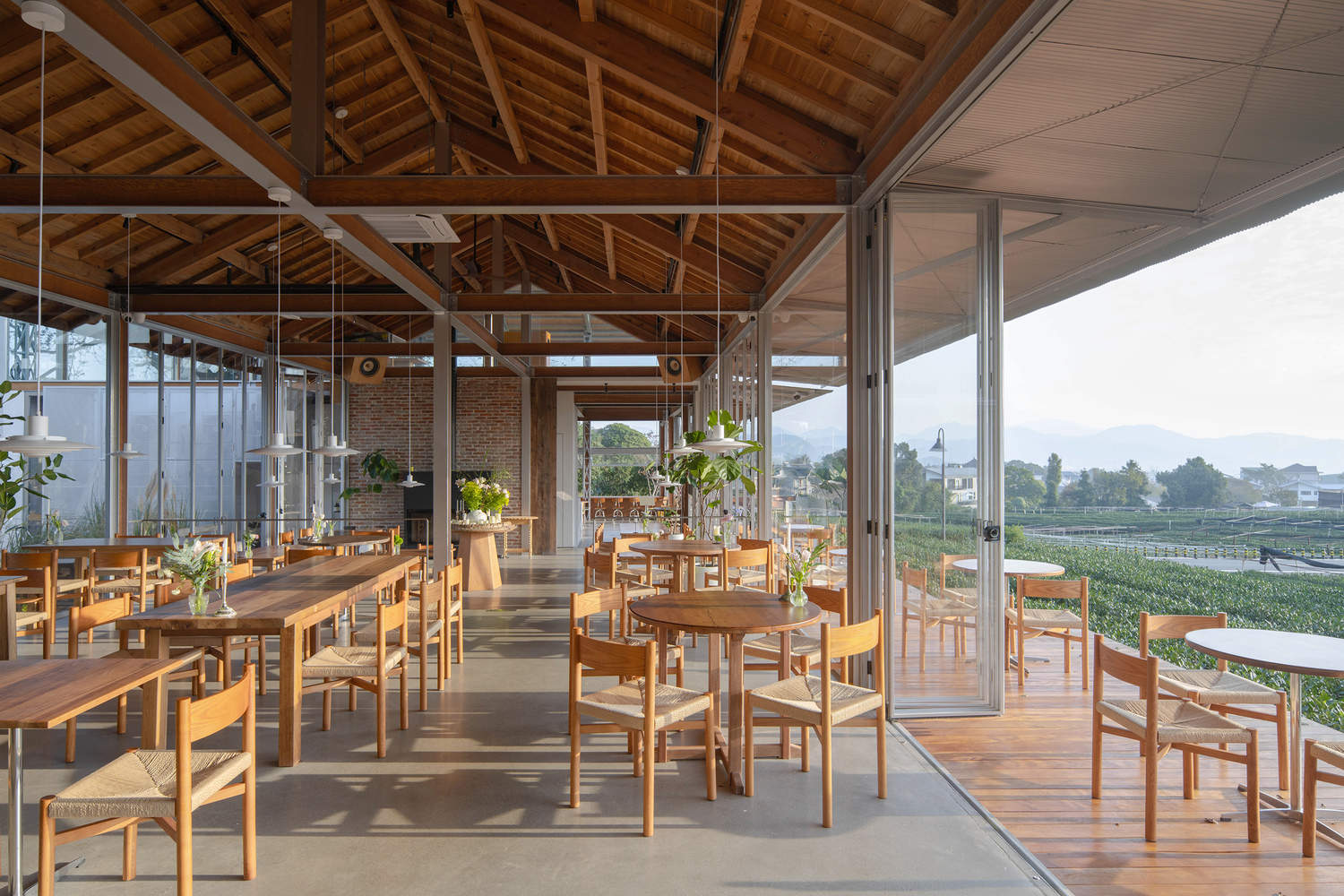
顺应场地文脉,实现景观最大化引入:该项目巧妙地利用了场地原有的高低体块组合,并根据功能需求(南侧厨房餐厅,北侧二层咖啡厅)进行了合理布局。设计充分尊重了周边优美的茶园景观,通过大面积的玻璃幕墙和折叠门窗,最大限度地实现了室内外的通透性,将自然景观无缝引入室内空间。同时,场地西侧的既有乔木被作为天然遮阳屏障,有效降低了夏季能耗,体现了对在地环境的尊重与整合。
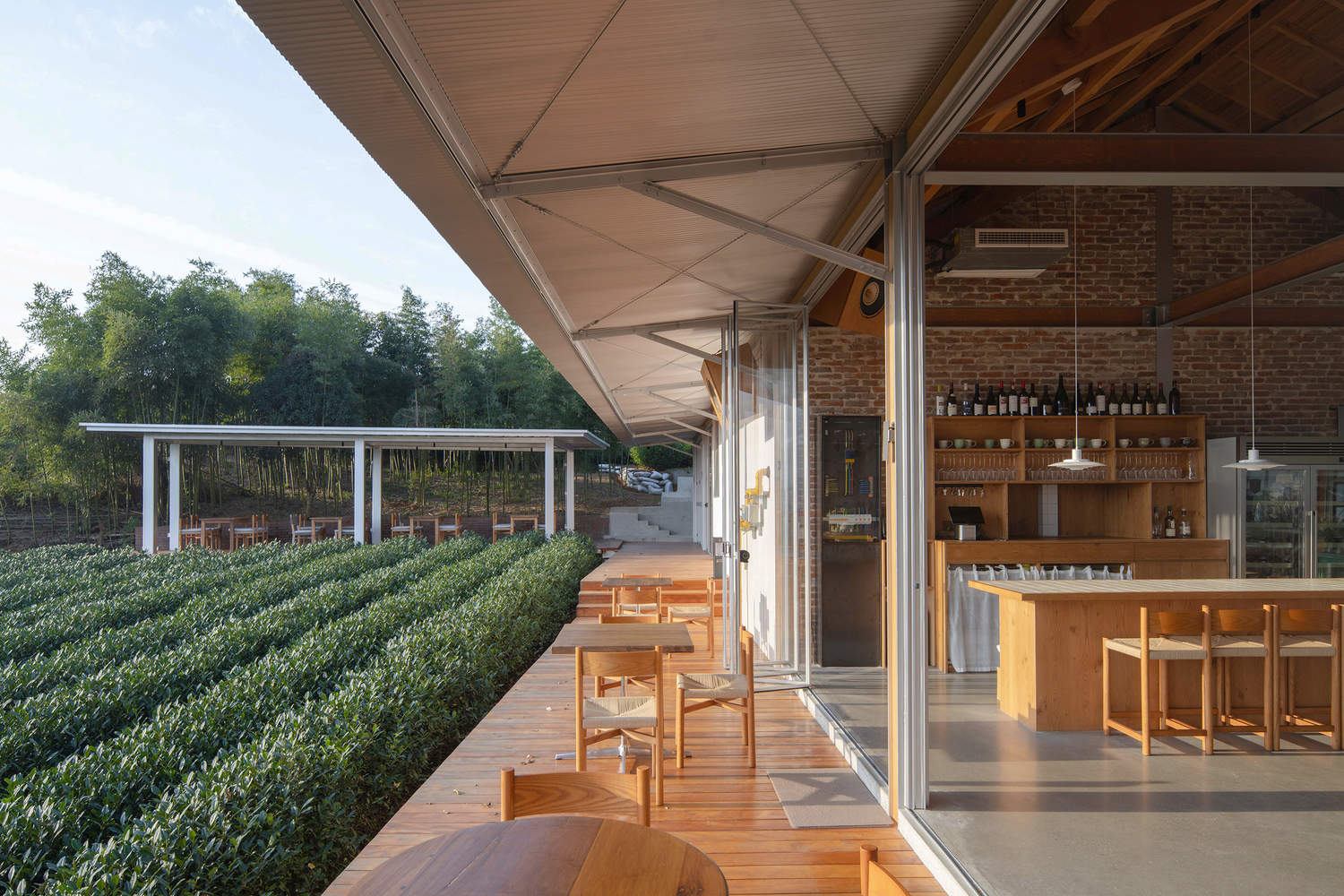
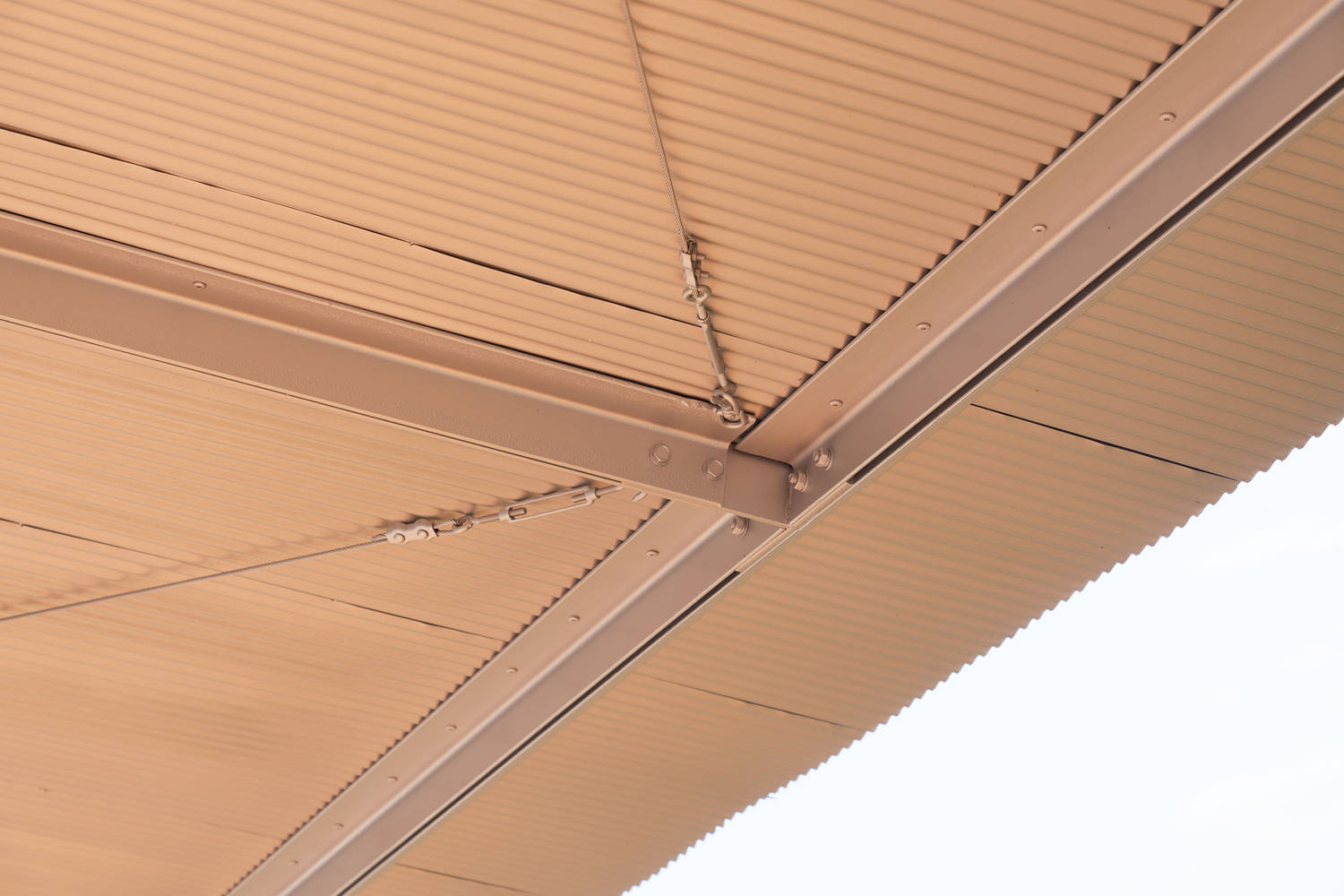
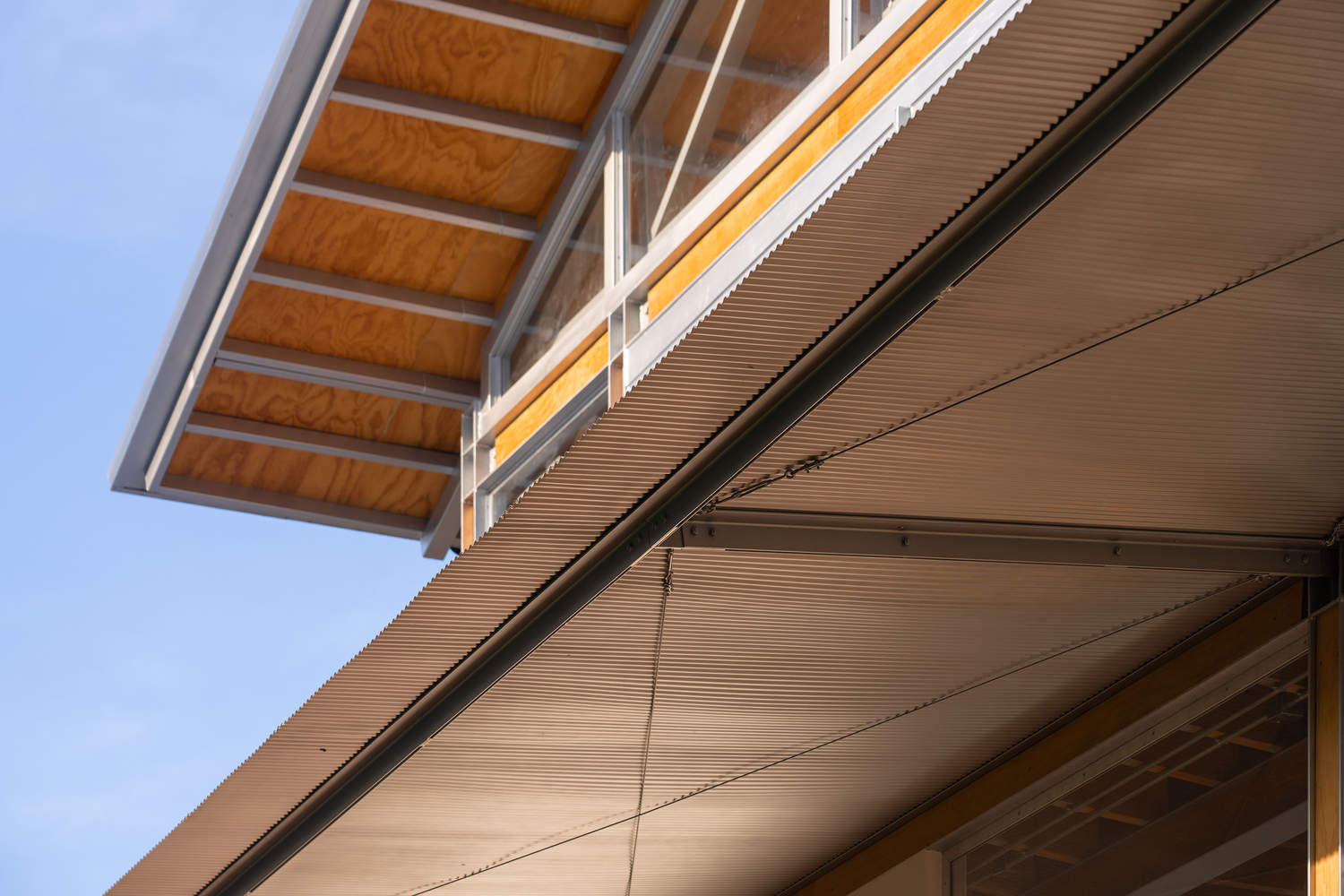
灰空间策略与空间复合利用:建筑东、北侧精心设计的金属悬挑屋檐构成了连廊空间,这一“灰空间”有效地起到了室内外的过渡作用,不仅丰富了建筑的层次感,还为餐厅提供了可扩展的户外用餐区,提升了空间的灵活性和使用效率。这种对过渡空间的强调,增强了建筑与自然环境的互动性,是适应地域气候和使用需求的重要设计手法。
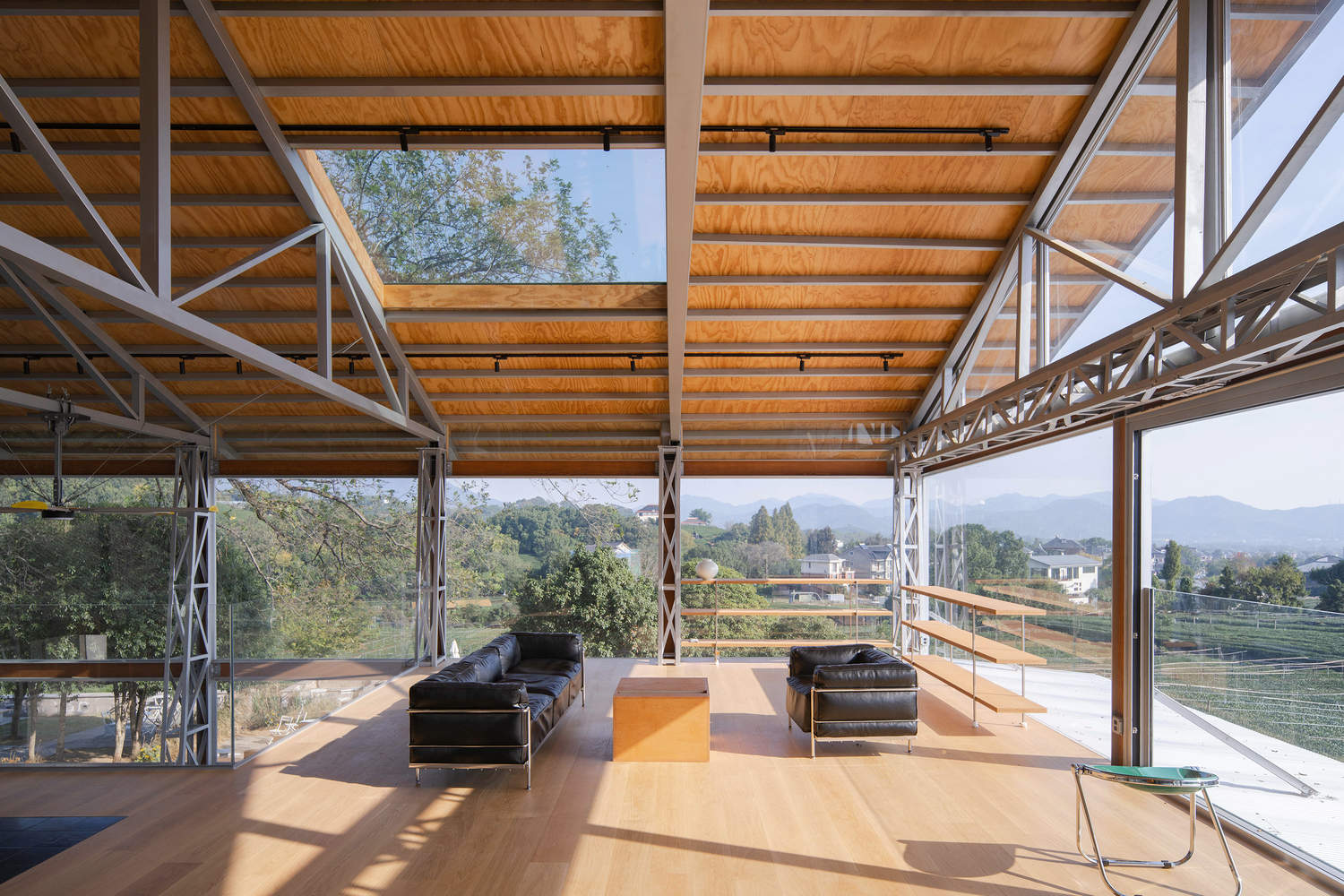
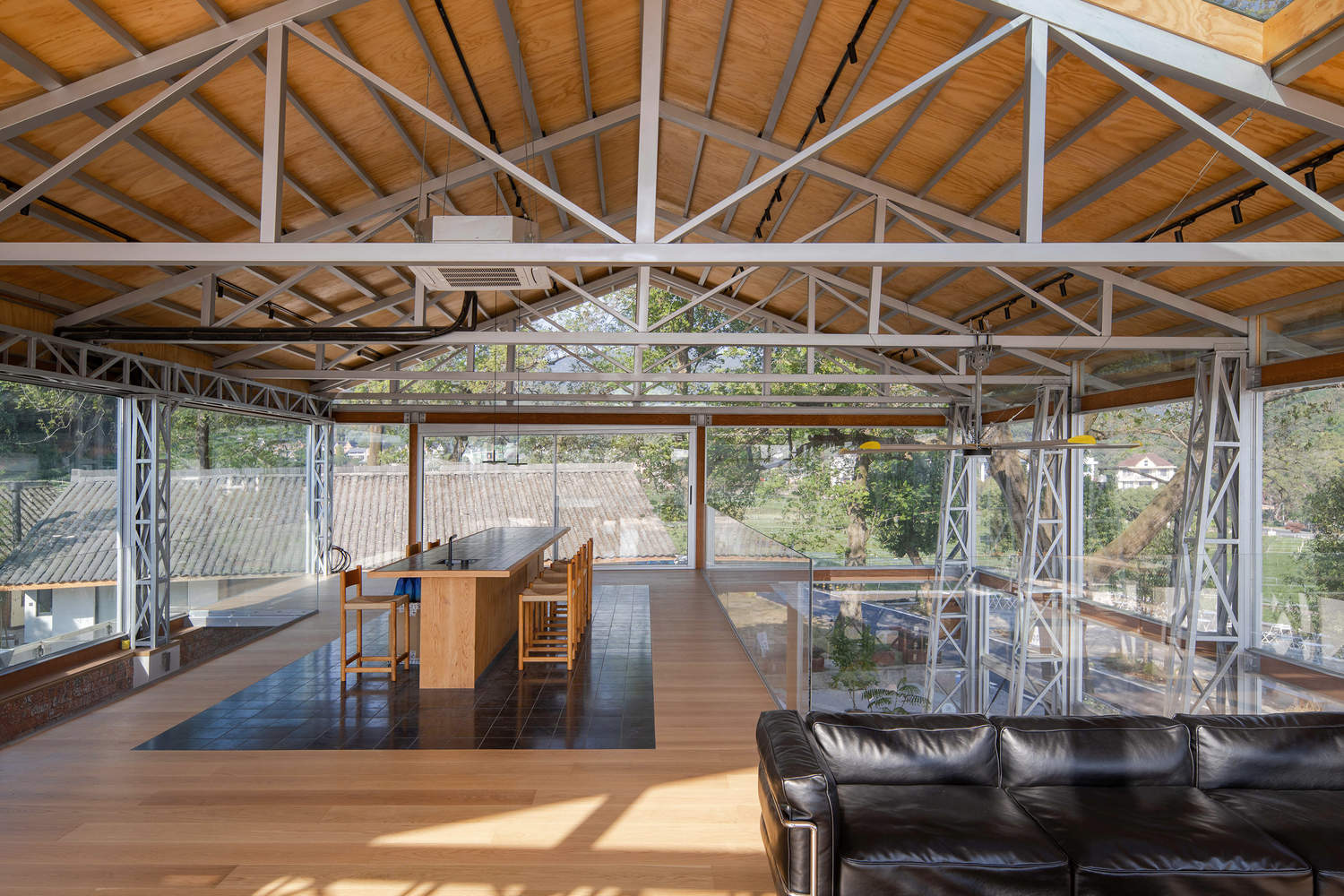
结构策略与新旧共生的对话:面对原有建筑复杂、不稳定的结构问题,设计团队采取了负责任且富于创意的“新旧共生”策略。在保留主体框架的基础上,植入了一套完整的、现代的钢结构体系,共同承担荷载。这种新旧结构交织的节点被提升为空间内部的视觉焦点和装饰元素,避免了简单粗暴的拆除重建。这种既保证结构安全,又展现历史痕迹的设计方法,是老旧建筑改造中极具价值的实践。
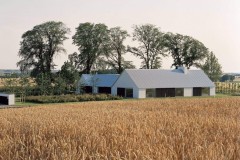
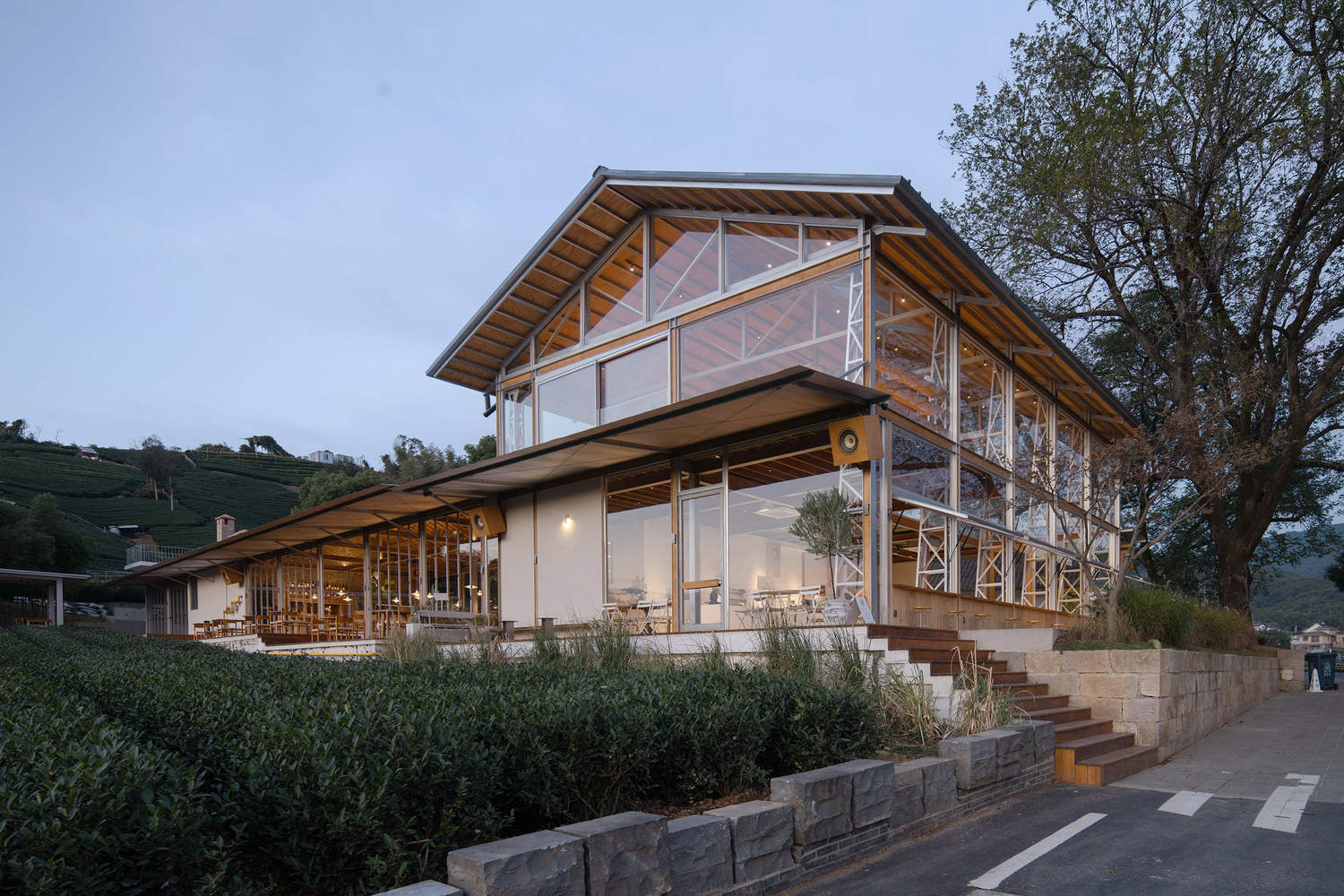
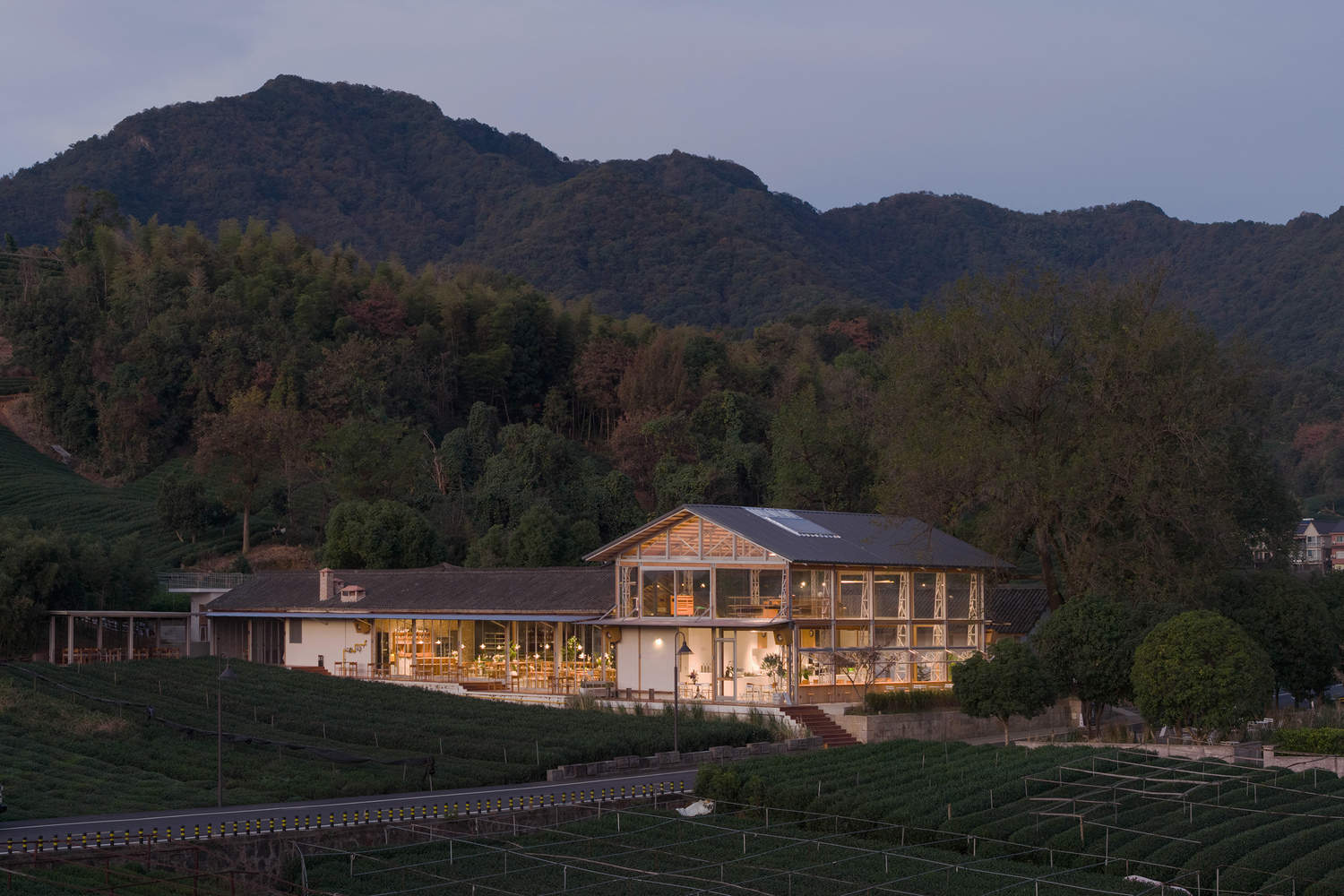
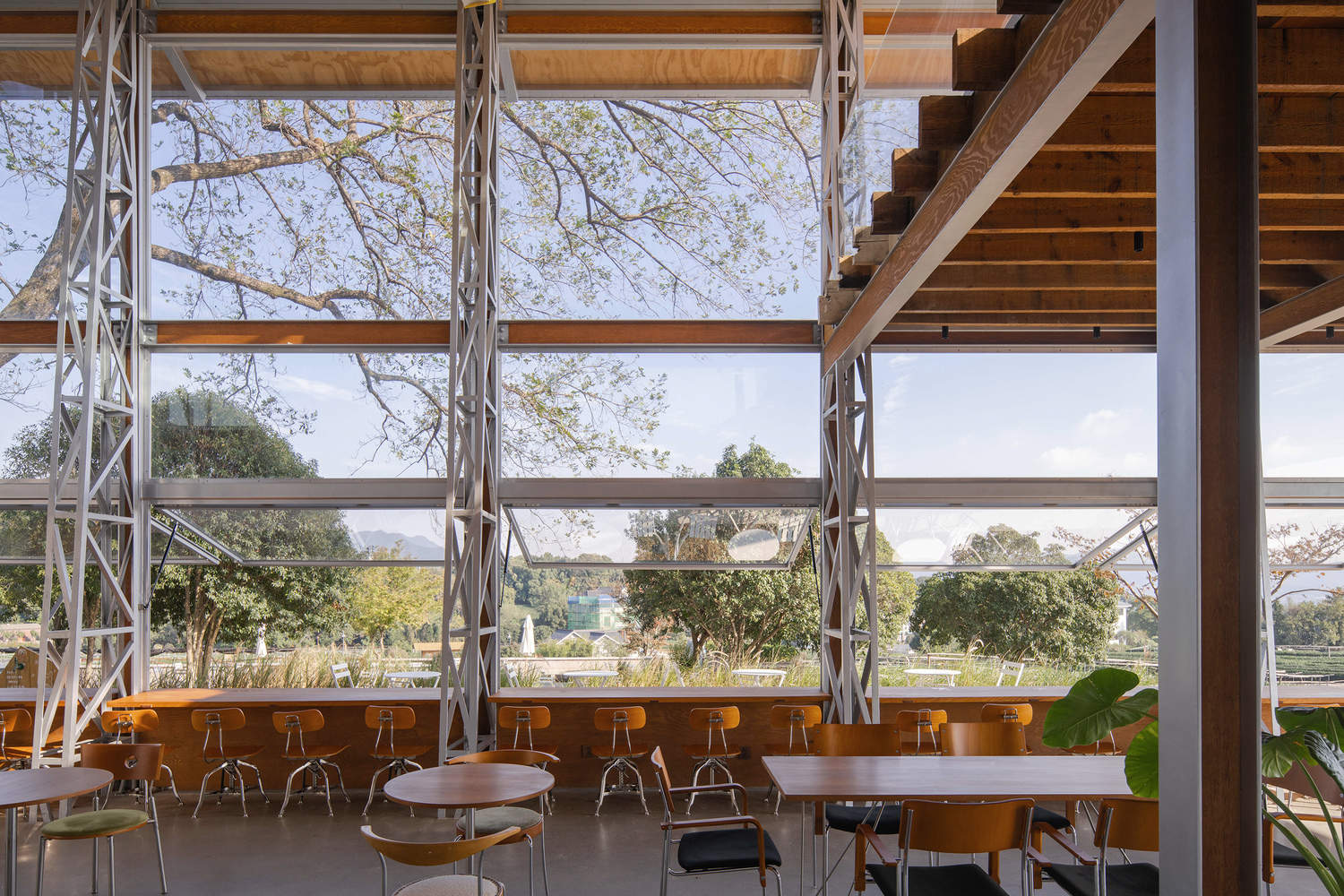
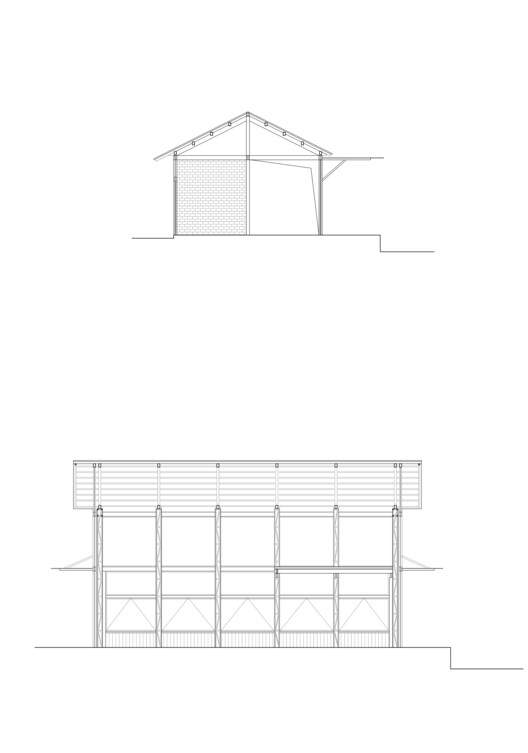
The building is a combination of high and low blocks arranged in a "T" shape, distributed from north to south. The single-story building near the low tea mountain to the south is designed as a kitchen and dining room, while the two-story building to the north, offering expansive views, is set up as a café. Several giant trees on the west side of the site serve as a natural sunshade barrier, reducing indoor energy consumption in the hot summer and creating favorable conditions for the design of large-area glass floor-to-ceiling windows. The northeast side of the building is lower, with uninterrupted views of vast tea plantations and distant villages.
建筑为高低并置呈 “丁” 字型南北分布的体块组合,南面靠近低矮茶山的一层建筑设计为厨房与餐厅,北面筑视野开阔的二层建设置为咖啡厅,场地西面的几颗巨大乔木作为建筑天然遮阳屏障可以在炎热的夏天降低室内能耗,为大面积玻璃落地窗的设计创造了有利条件。建筑东北面地势较低目之所及均为成片茶园及远处的村落。
© DONG建筑影像
© DONG建筑影像
© DONG建筑影像
© DONG建筑影像
© DONG建筑影像
© DONG建筑影像
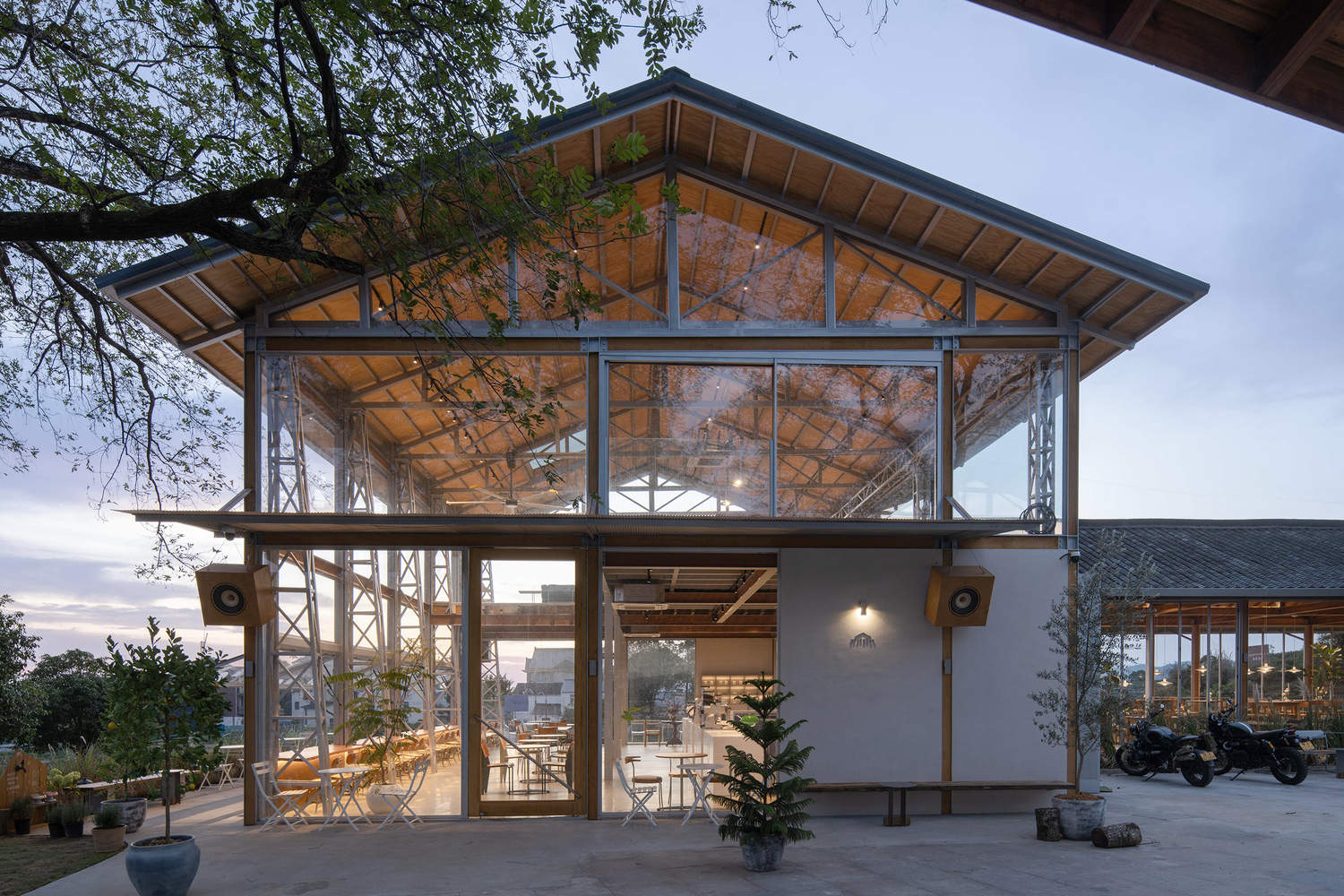
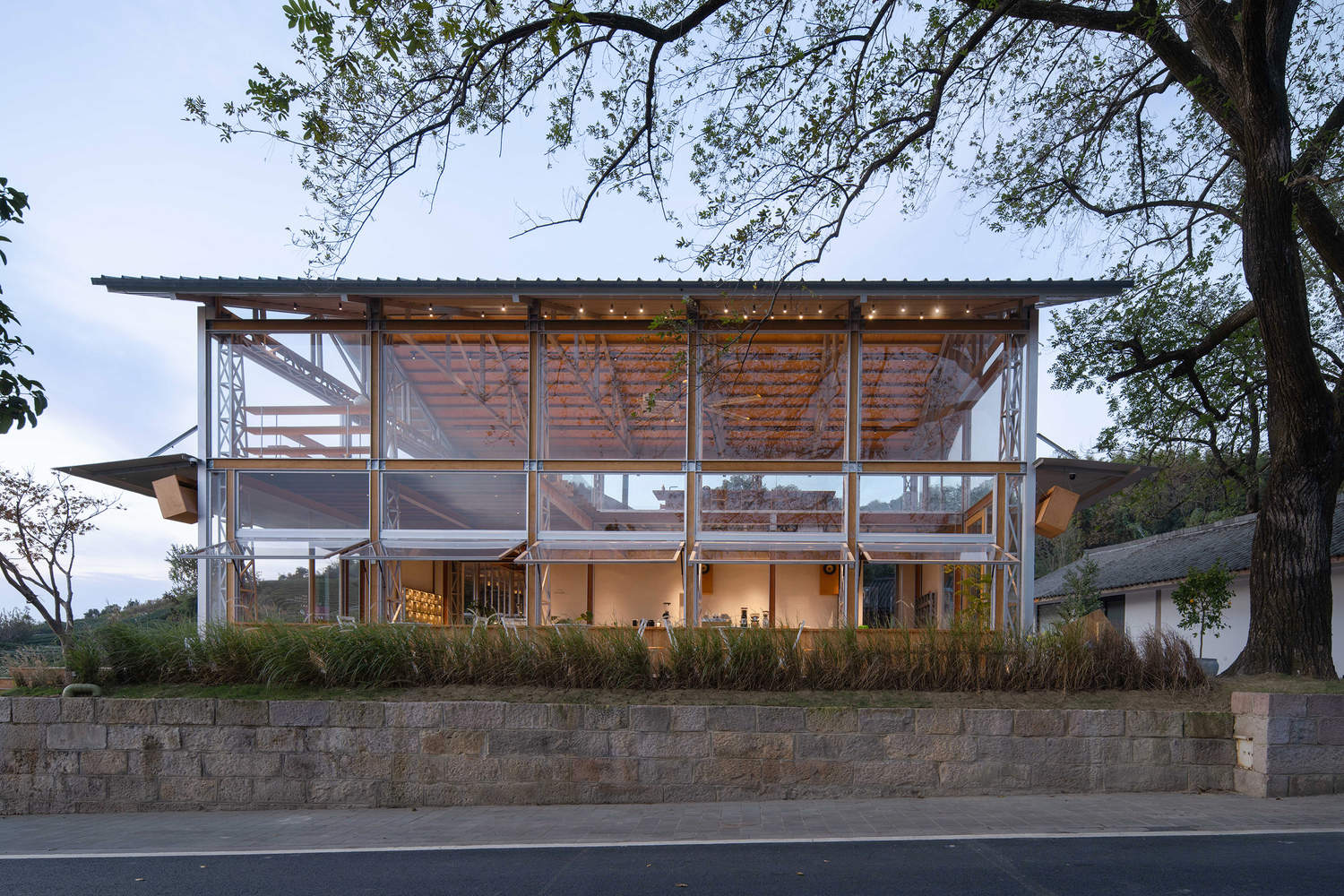
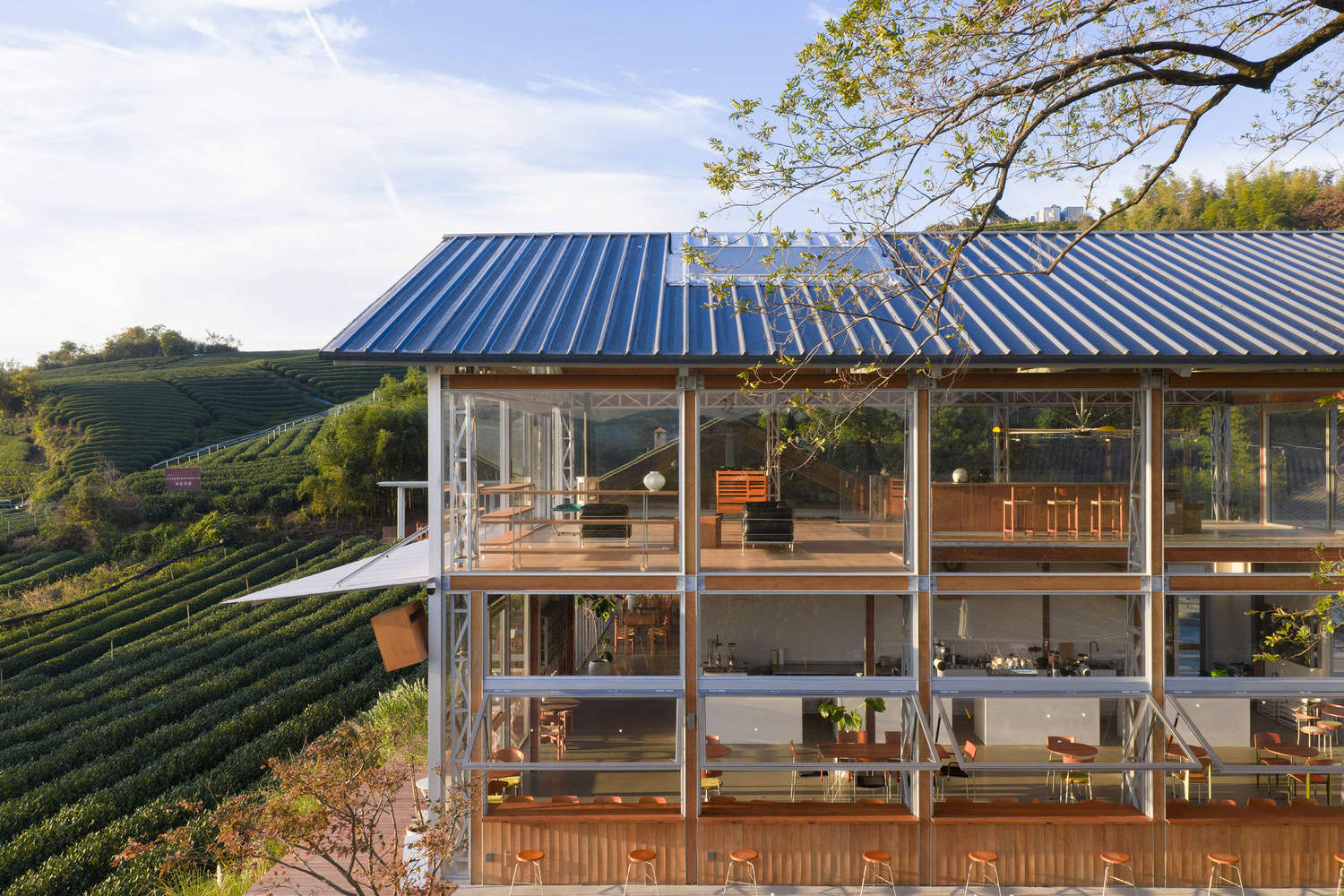
The beautiful tea garden landscape surrounding the building prompted the design to ensure the most transparent interior-exterior views possible, introducing the tea garden landscape into the interior without reservation. In the building design, apart from necessary structural frames and partial functional partition walls, the remaining walls are designed as highly transparent white glass partitions and folding doors and windows.
建筑周边优美的茶园景观使设计考虑尽可能的保证室内外通透的视野从而将茶园景观毫无保留的引入室内,建筑设计除了必要的结构框架及局部的功能性空间隔墙剩下的墙体均设计为高透的白玻璃隔断和折叠门窗。
© DONG建筑影像
© DONG建筑影像
© DONG建筑影像
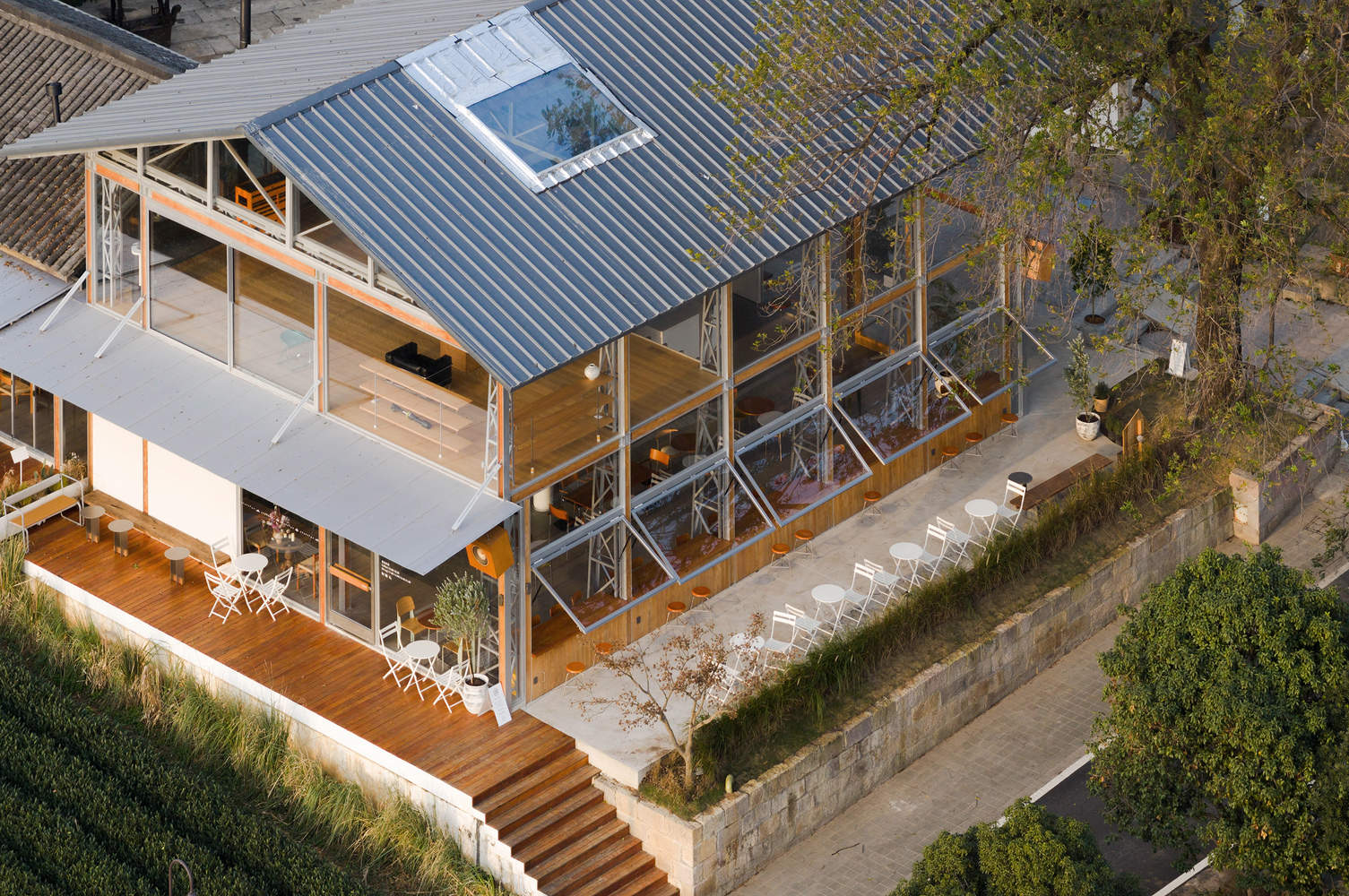
We designed metal cantilevered eaves on the east and north sides of the building to form a corridor space. This corridor acts as an intermediate transition space between the interior and exterior, and also increases the outdoor seating area for the restaurant, thus improving the utilization rate of the space.
我们在建筑东面和北面设计金属悬挑屋檐形成连廊空间 ,连廊作为室内外过渡灰空间也增加了餐厅外摆餐位提高了空间的使用率。
© DONG建筑影像
© DONG建筑影像
© DONG建筑影像
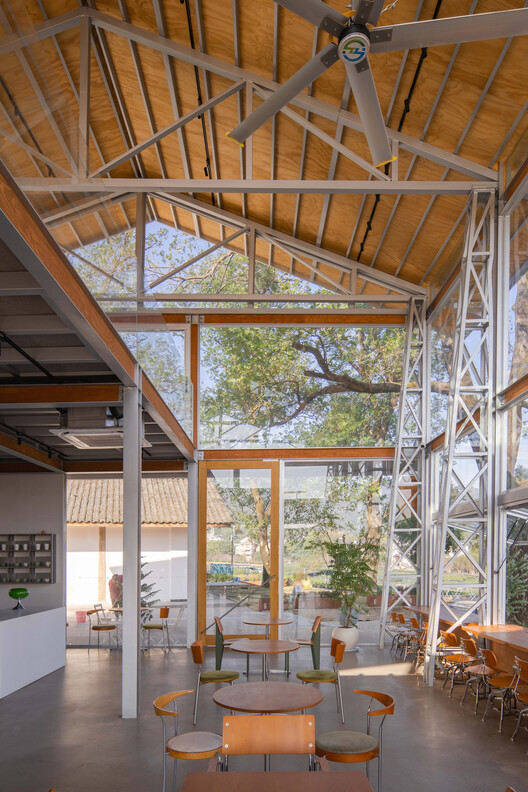
During the early stages of the design, on-site investigation revealed numerous issues with the original building: structural cracks in the walls, uneven ground floor uplifted by growing tree roots, roof leakage, and structural cracks in the second-floor slab. The structure had become very unstable due to multiple disorderly alterations. After the initial demolition, a secondary survey was conducted. After the renovation demolition, we were presented with a complex space interwoven with various structures: wooden floor slabs, brick partition walls, simple C-channel steel combined floor slabs, angle steel truss frames, and cast-in-place concrete slabs.
设计前期现场勘察原始建筑存在诸多的问题:墙面结构性裂缝、首层地面被树根生长顶的凹凸不平、屋顶漏水、二层地面结构裂缝等,建筑经多次无序改建结构变得十分不稳定,首次拆除工程后我们进行了二次测绘,装修拆除后展露在我们面前的是一个由木结构楼板、砖砌体隔墙、简易C型钢组合楼板、角钢格构框架、现浇混凝土楼板等各种构造看似无序交织在一起的综合空间体。
© DONG建筑影像
© DONG建筑影像
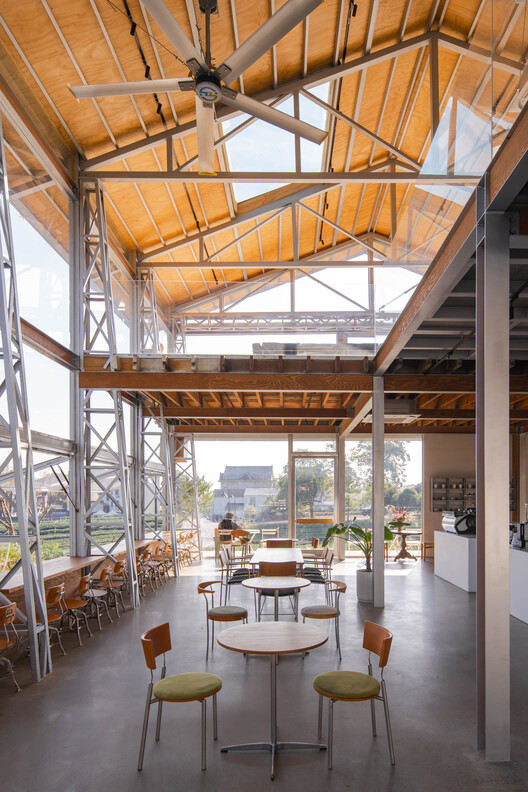
The spontaneous construction and modification of the original building, lacking strict design constraints, while deficient in standardization and safety, presented very vivid and interesting structural forms. During the design phase, after repeated communication with the client, we decided to retain the majority of the original structural framework. However, due to numerous uncertain safety risks in the existing structure, we added a complete set of steel structure system on top of the old framework. The new structure and the original structure jointly participate in bearing the load, creating a large number of nodes where new and old structures interweave inside the space. Through clever connections, these nodes become the best decoration in the space. The building's foundation and roof were recalculated and redesigned using more reliable materials.
原建筑缺少设计教条约束的自发搭建改造虽缺少规范性和安全感,但所呈现出的构造形式却十分生动有趣,设计阶段我们与甲方反复沟通决定保留建筑主体大部分结构框架,但由于原有结构框架存在诸多不确定的安全风险,所以我们在旧框架结构的基础上增加一套完整的钢结构体系,新结构与原建筑构造共同参与受力荷载,在空间内部形成大量新老结构交错连接的节点,通过巧妙的连接这些节点成为空间里最好的装饰,建筑的基础及屋面均重新计算设计替换为更可靠的材料。
© DONG建筑影像
© DONG建筑影像
© DONG建筑影像