场地文脉的有机嵌入与场所精神的重塑:该项目成功地将现代高层住宅设计与场地历史文脉进行了深刻对话。作为马加森公园四座塔楼之一,A-lab 的设计巧妙地围绕被保护的历史建筑——原马加森旧仓库展开,体现了对场地既有肌理的尊重与重塑。其有机的、不规则的外部网格形态,有效消解了传统塔楼的体量感和僵硬的几何边界,使其能够柔和地融入周边环境,而非突兀地对抗。通过与景观事务所Dronninga Landskap设计的户外空间的联动,建筑群形成了一个既独立又相互联系的整体,重塑了新区的人居场所精神。
创新的双层表皮系统与室内外体验的融合:项目最精髓之处在于其创新的双层表皮设计。内部温暖的木质立面与外部包裹的立体网格“外骨骼”形成张力,创造了一个功能性与美学兼备的过渡空间。这个缓冲层不仅是结构和围护,更是居住体验的延伸,它巧妙地将私人户外区域嵌入到生活空间(客厅/厨房)的外部,实现了室内与室外空间的无缝衔接。这种设计哲学极大地提升了高密度住宅的宜居性和亲密度,打破了传统公寓的封闭性。
可持续性材料的策略应用与立面雕塑感:建筑师在材料选择上体现了高度的社会责任感与设计巧思。外部网格结构采用包裹粉碎橄榄岩石材,赋予建筑独特的物理属性——吸附二氧化碳,将建筑外部转化为“自然空气净化器”。这种材料策略不仅有环境意义,也塑造了建筑独特的视觉语言。同时,网格框架内不规则凸起的窗洞设计,打破了立面的沉闷,为每个公寓提供了定制化的视野和私密性,最终通过顶层的倾斜光井设计收束,形成了富于雕塑感和地域识别性的垂直轮廓。
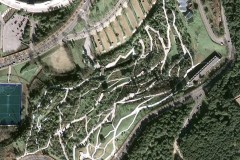
The Ski Tower is one of four towers planned for Magasinparken in Ski, a suburb of Oslo, Norway. Led by developer Solon Eiendom AS, the planned area, coordinated by the design team Code Arkitekter/Civitas, encompasses a total development scale of over 400 apartments, situated adjacent to the new hub of the Follo Line Ski station. A-lab was one of four invited firms to participate in the design, responsible for creating one of the four "point buildings" that encircle the site's historically protected building—the former Magasin warehouse (a former military site)—while also contributing to the planning of a new cluster of "urban villas." The four point buildings are distributed on the southwest side of the site, connected by beautiful outdoor spaces designed by landscape firm Dronninga Landskap. The other three towers are designed by architectural firms Reiulf Ramstad, R21, and Code, respectively.
Ski 塔楼是挪威奥斯陆郊外斯基镇(Ski)马加森公园(Magasinparken)四座塔楼之一。该项目由开发商索隆地产(Solon Eiendom AS)主导,规划区域由 Code Arkitekter/Civitas 设计团队统筹,总开发规模超过 400 套公寓,紧邻福洛线(Follo Line)斯基站新枢纽。A-lab 是受邀参与设计的四家事务所之一,负责打造环绕场地内历史保护建筑——原马加森旧仓库(旧军事区遗址)的四座“点式建筑”之一,同时参与规划新建的“城市别墅”住宅群。四座点式建筑分布于场地西南侧,由 Dronninga Landskap 景观事务所设计的优美户外空间串联。其余三座塔楼分别由 Reiulf Ramstad、R21 和 Code 三家建筑事务所设计。
© Ski+Aerial's
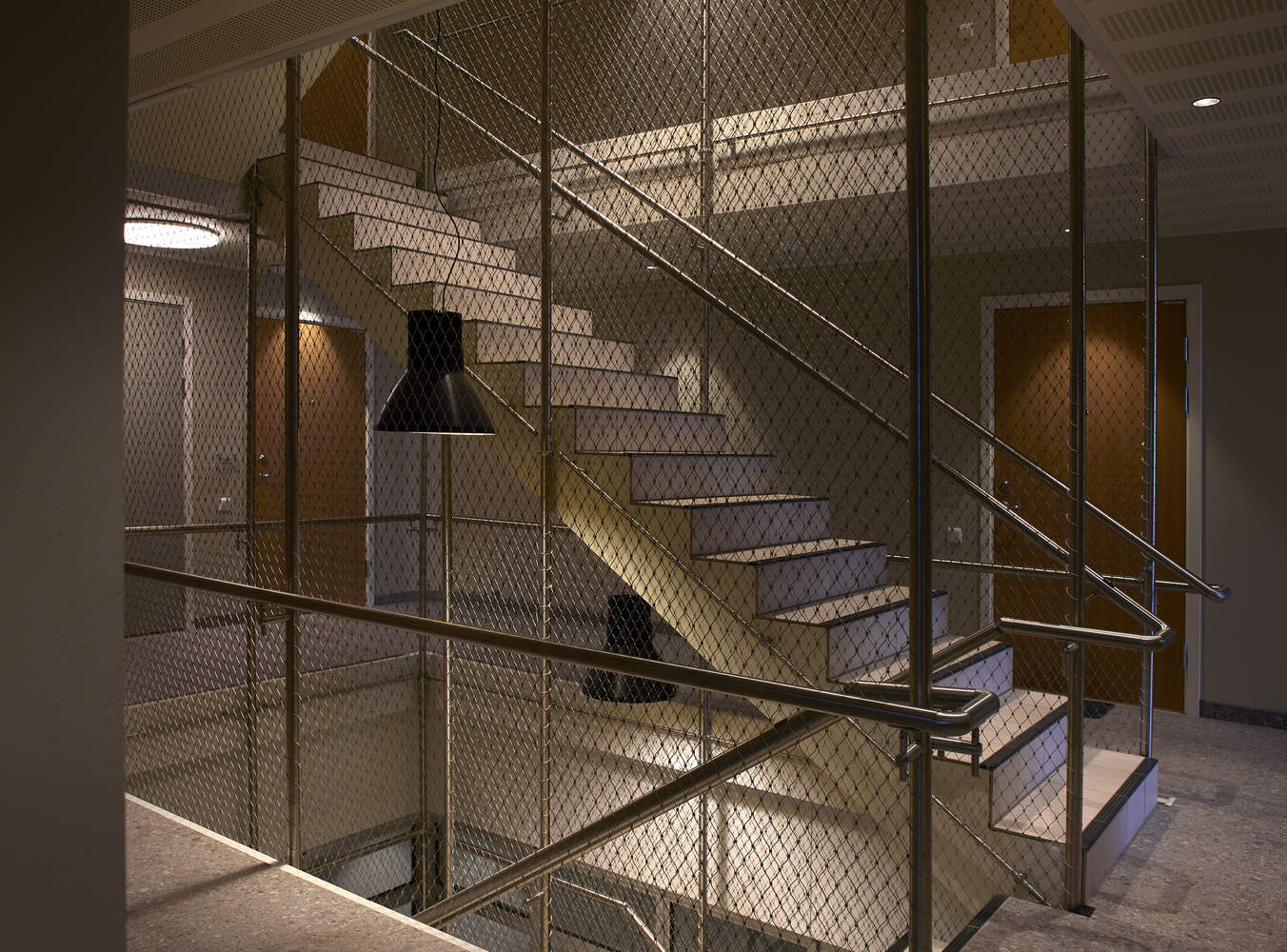
The Ski Tower designed by A-lab stands out with its unique external frame structure—a three-dimensional grid system enveloping the entire building, which imparts an organic and soft form, dissolving the clear boundaries between the front and rear facades typical of traditional architecture. The tower has 9 floors, each accommodating 4 to 6 apartments based on the unit layout, with the top floor featuring a private roof terrace. The building employs a double-skin facade design: a warm wooden facade internally, wrapped by a grid-like "exoskeleton" structure externally. This outer frame creates a buffer space between the facade and the building's exterior wall, cleverly extending private outdoor areas to the living room, lounge, and/or kitchen, thus creating a seamless transition experience between indoor and outdoor living.
A-lab 设计的 Ski 塔楼以其独特的外部框架结构脱颖而出——这一环绕整栋建筑的立体网格体系,赋予建筑有机而柔和的形态,消解了传统建筑中前后立面的明确界限。塔楼共 9 层,每层根据户型布局设置 4 至 6 套公寓,顶层配备私人屋顶露台。建筑采用双层表皮设计:内部是温暖的木质立面,外部包裹着网格状“外骨骼”结构。这一外层框架在立面与建筑外墙之间形成缓冲空间,巧妙地将私人户外区域延伸至起居室、客厅及/或厨房,打造出室内外无缝衔接的居住体验。
© Ski+Aerial's
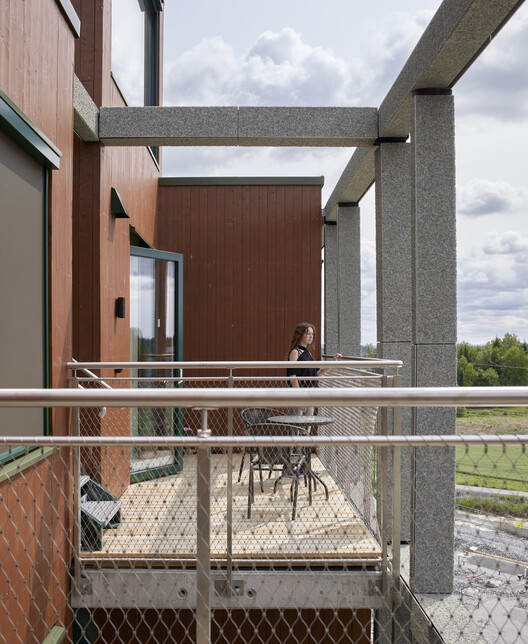
The grid structure cladding is covered with crushed olivine stone, a natural mineral with the property of adsorbing carbon dioxide, giving the outdoor areas the function of a "natural air purifier." The grid framework presents an apparently random form, and the irregularly protruding window openings on each floor break the monotony of the building's facade. The location of these window openings is closely related to the design of different apartment types, shaping varied interior spatial structures while also acting as a natural barrier separating adjacent terraces.
网格结构的覆层采用粉碎橄榄岩(Olivine)石材包裹,这种天然矿物具有吸附二氧化碳的特性,使户外区域被赋予“自然空气净化器”的功能。网格框架呈现看似随机的形态,各楼层不规则凸起的窗洞打破建筑立面的单调感。这些窗洞的位置与不同户型设计紧密关联,既塑造出富有变化的室内空间结构,又作为分隔相邻露台的天然屏障。
© Ski+Aerial's
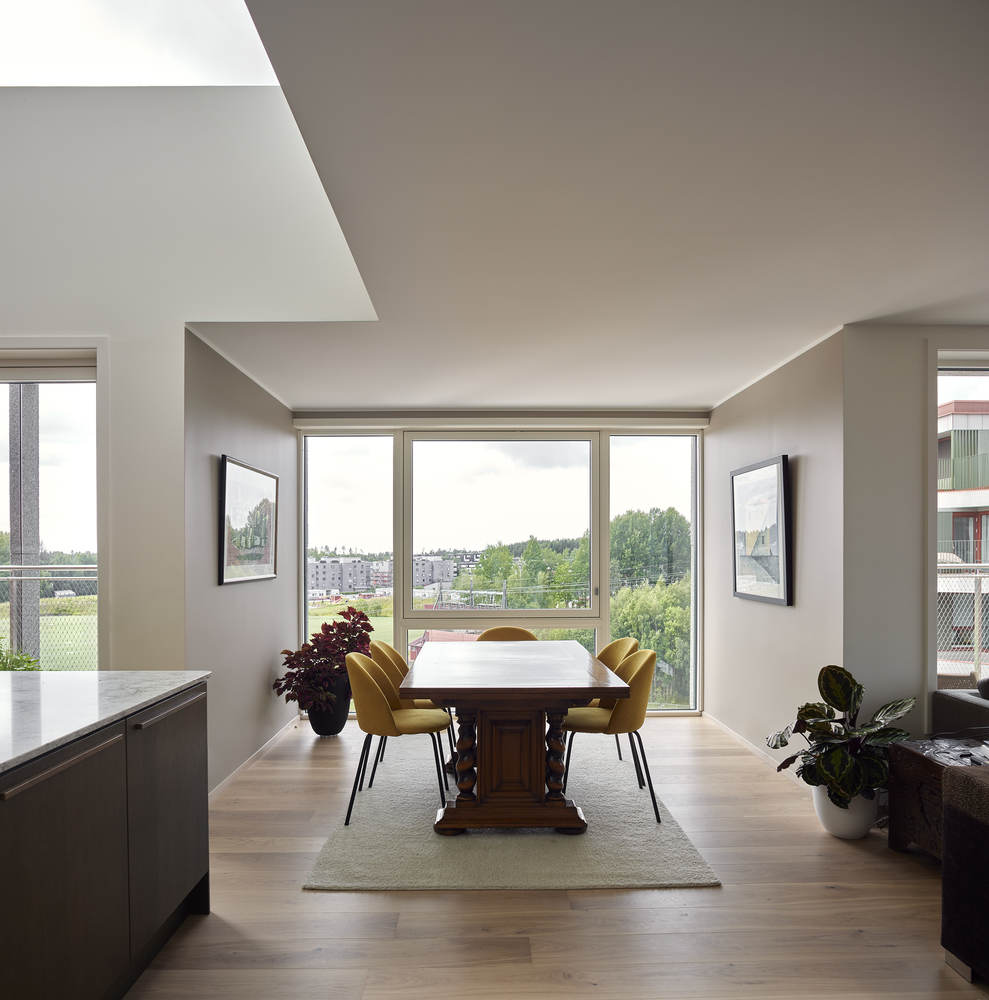
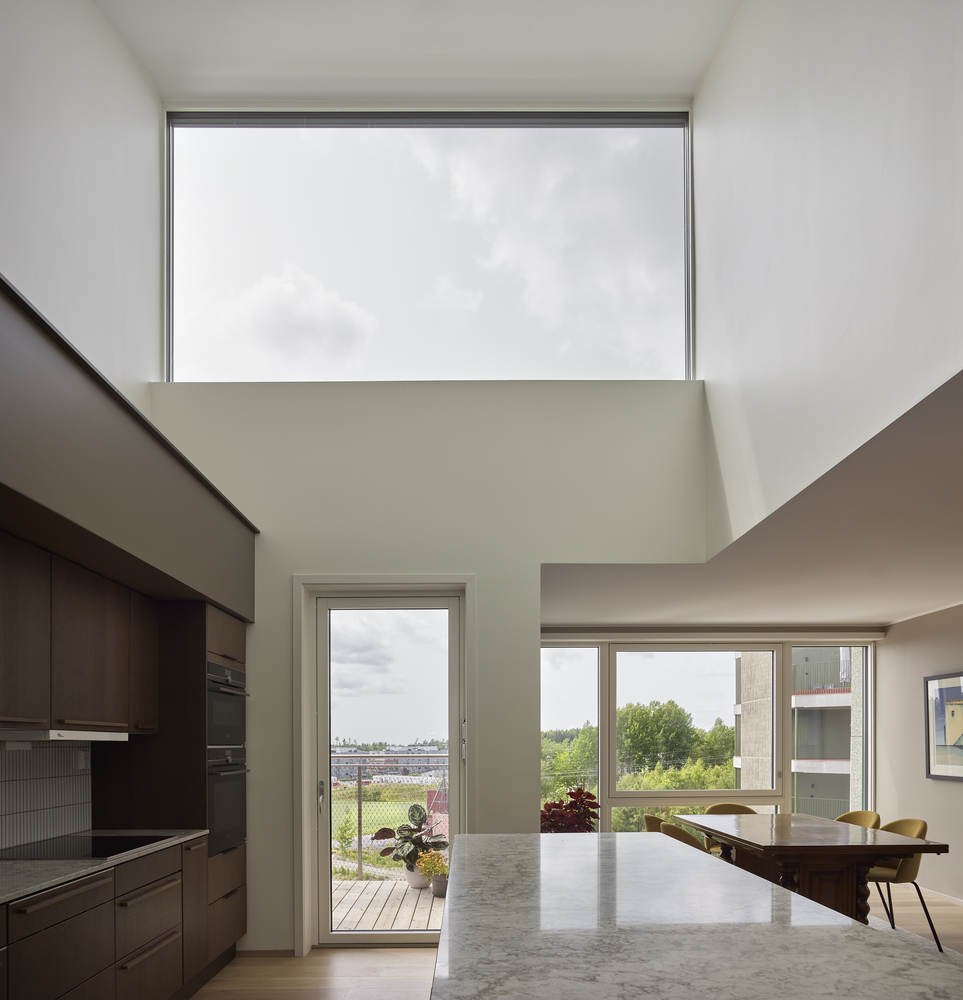
Four light wells belonging to the top-floor apartments break through the roof and extend upwards along the exoskeleton structure, outlining a unique vertical tapering silhouette for the building. The Ski Tower faces southeast; the inclined design of the light wells allows natural light to shine directly onto the dining table during the day, and at night, these wells transform into stargazing windows, giving the building a distinct identity.
四座属于顶层公寓的光井突破屋顶与外骨骼结构向上延伸,为建筑勾勒出独特的垂直收束轮廓。Ski 塔楼朝向东南方位,倾斜的光井设计使自然光在白昼直射餐桌,而夜幕降临时,这些光井又化作观星窗口,赋予建筑鲜明的个性标识。
© Ski+Aerial's