屋顶驱动的再生与空间叙事:本项目最精髓之处在于其“从屋顶开始设计房屋”的颠覆性策略。面对一栋纵深大、与周边环境隔绝的顶层公寓(宛如犰狳外壳),设计师巧妙地将原有复杂、老旧的屋顶结构转化为设计的核心驱动力。通过结构性加固和战略性开孔,设计师不仅引入了关键的自然光和通风,更重要的是,将屋顶的坡度和木梁形态融入室内空间序列,使居住体验与马德里的“委拉斯开兹天空”紧密关联,实现了空间形态与自然元素的深度对话。
模糊界限的连续性与功能弹性:内部空间设计摈弃了传统的房间分割,转而追求一个连续、流动的整体。通过避免实体墙体划分,仅依赖地板材质(木材到陶瓷)的变化来暗示功能区域的转换,极大地增强了空间的灵活性和适应性。这种处理方式极大地呼应了现代家庭生活对于共存与不同时态的需求,创造出一系列可适应性强的大空间,让家庭成员的集体与个人活动得以在模糊的边界中自由展开,体现了对居住本质的深刻理解。
“天空下的居所”与时间体验的场所化:该项目成功地将一个原本与城市脱节的顶层空间,重塑为一个专注于“天空”的居所。200平方米的复杂屋顶系统成为了一个巨大的气候调控装置,而天窗和尽头的露台(含按摩浴缸)则成为捕捉光线、体验时间的焦点。这种对光影、空气流动和钴蓝色天空的强调,超越了简单的居住功能,将“CIEL”(天空)的概念物化,为家庭提供了一个可以容纳不同生活阶段,并能持续感受时间流逝的独特场所。
The owners, Marion and Paul Franck, are a couple with three young children (Leo, Romeo, and Zöe). Previously, due to Paul's work in the aviation industry, the family had lived in Toulouse for five years, Réunion Island for two, Washington for one, and London for four. Unlike previous destinations, Madrid now seems to have become their place for permanent settlement.
业主马里昂(Marion)和保罗·弗兰克(Paul Franck)是一对育有三个年幼孩子(利奥 Leo、罗密欧 Romeo 和佐伊 Zöe)的夫妇。此前,由于保罗在航空业工作,他们一家曾在图卢兹生活五年,留尼汪岛两年,华盛顿一年,伦敦四年。与以往的目的地不同,马德里如今似乎已成为他们选择永久定居的地方。
© Imagen Subliminal
© Imagen Subliminal
© Imagen Subliminal
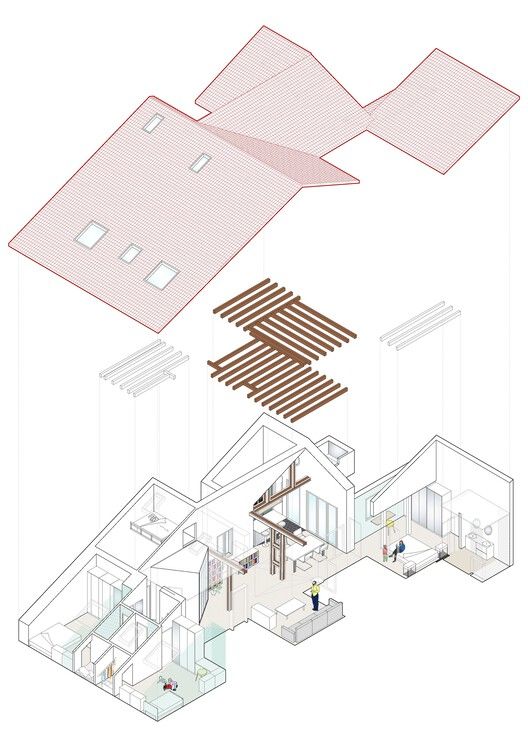
For this purpose, they purchased a 151 m² dwelling on the top floor of an early 20th-century residential building in Madrid’s central Justicia neighborhood, adjacent to Gran Vía and Chueca. This dwelling has a significant depth and a floor plan organized around three courtyards; however, despite being a penthouse, it had very little connection to the surrounding urban fabric. Instead, it resembled the shell of an armadillo, closed off and isolated. As a result, it possessed a vast roof: composed of 7 roofs of different slopes and lengths, totaling 200 m², covered with undulating and opaque tiles supported by wooden beams, many of which were blackened, in poor condition, and hidden behind false ceilings.
为此,他们购置了一套位于马德里市中心胡斯蒂西亚(Justicia)社区一栋 20 世纪初建造的住宅楼顶层的 151 平方米住宅,该住宅毗邻格兰大道(Gran Vía)和楚埃卡区(Chueca)。这栋住宅纵深显著,平面布局围绕三个庭院展开,然而,尽管身为顶层公寓,它却与周边的城市风貌并无显著关联。相反,它宛如犰狳的外壳,封闭且与外界隔绝。为此,它拥有一片广阔的屋顶:由 7 个不同坡度和长度的屋顶组成,总面积达 200 平方米,覆盖着起伏且不透明的瓦片,由木质梁架支撑,其中许多梁架已发黑、状况不佳,且隐藏在假天花板之后。
© Imagen Subliminal
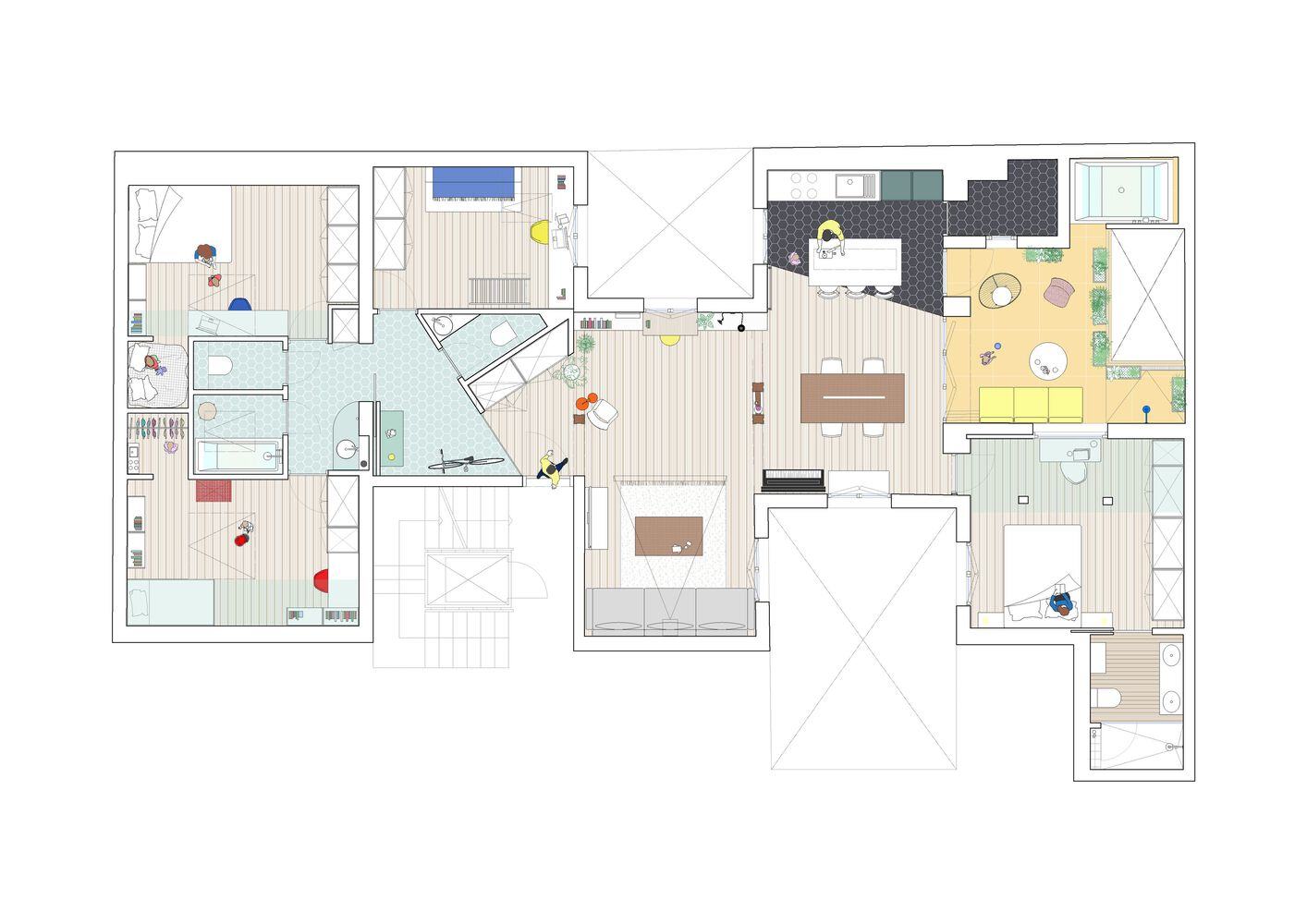
Floor plan
© Imagen Subliminal
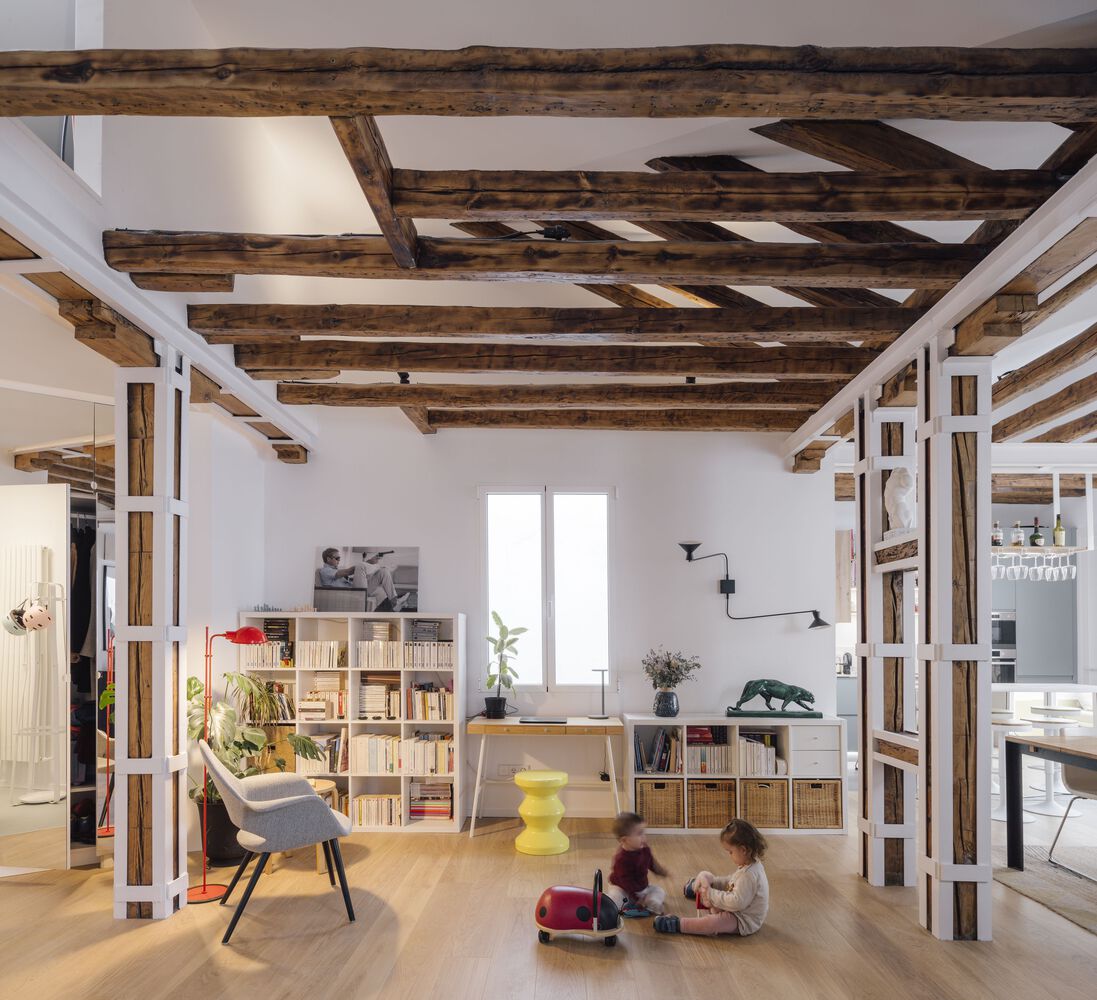
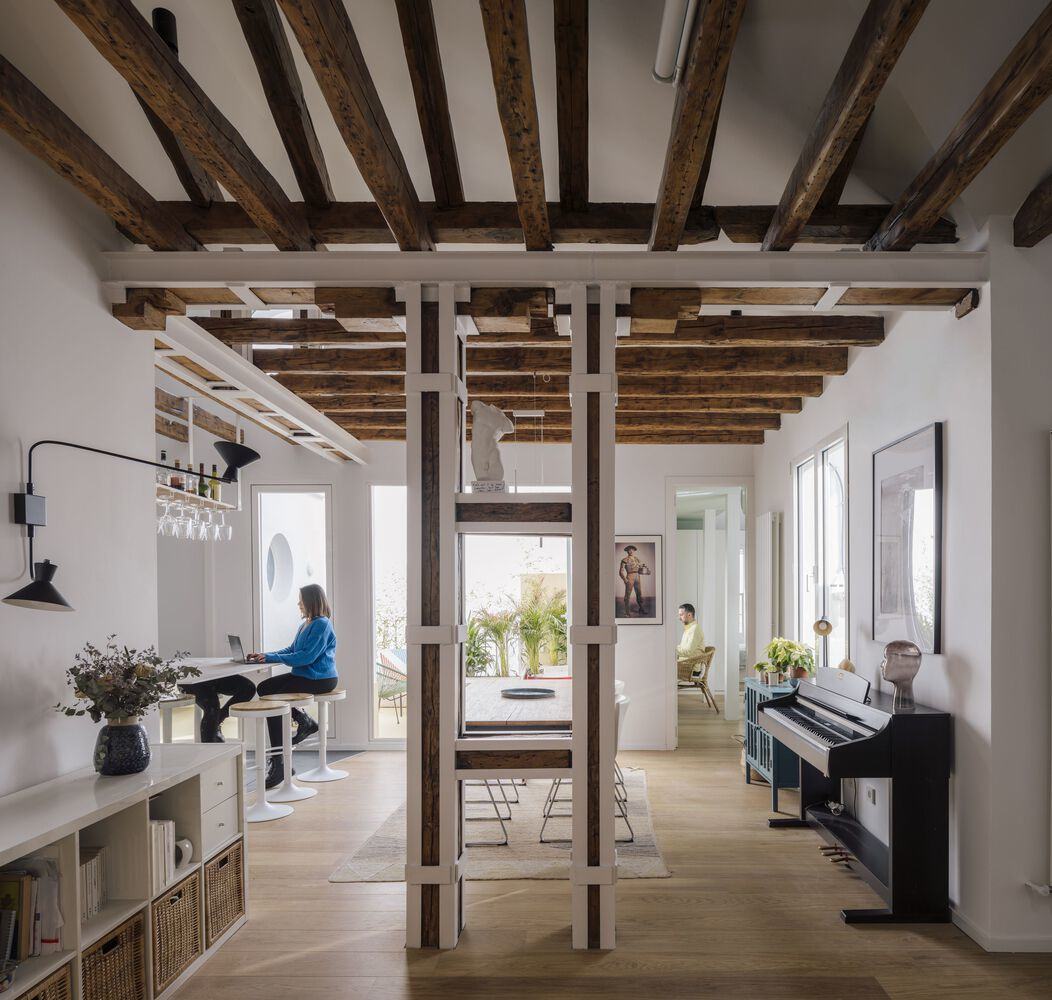
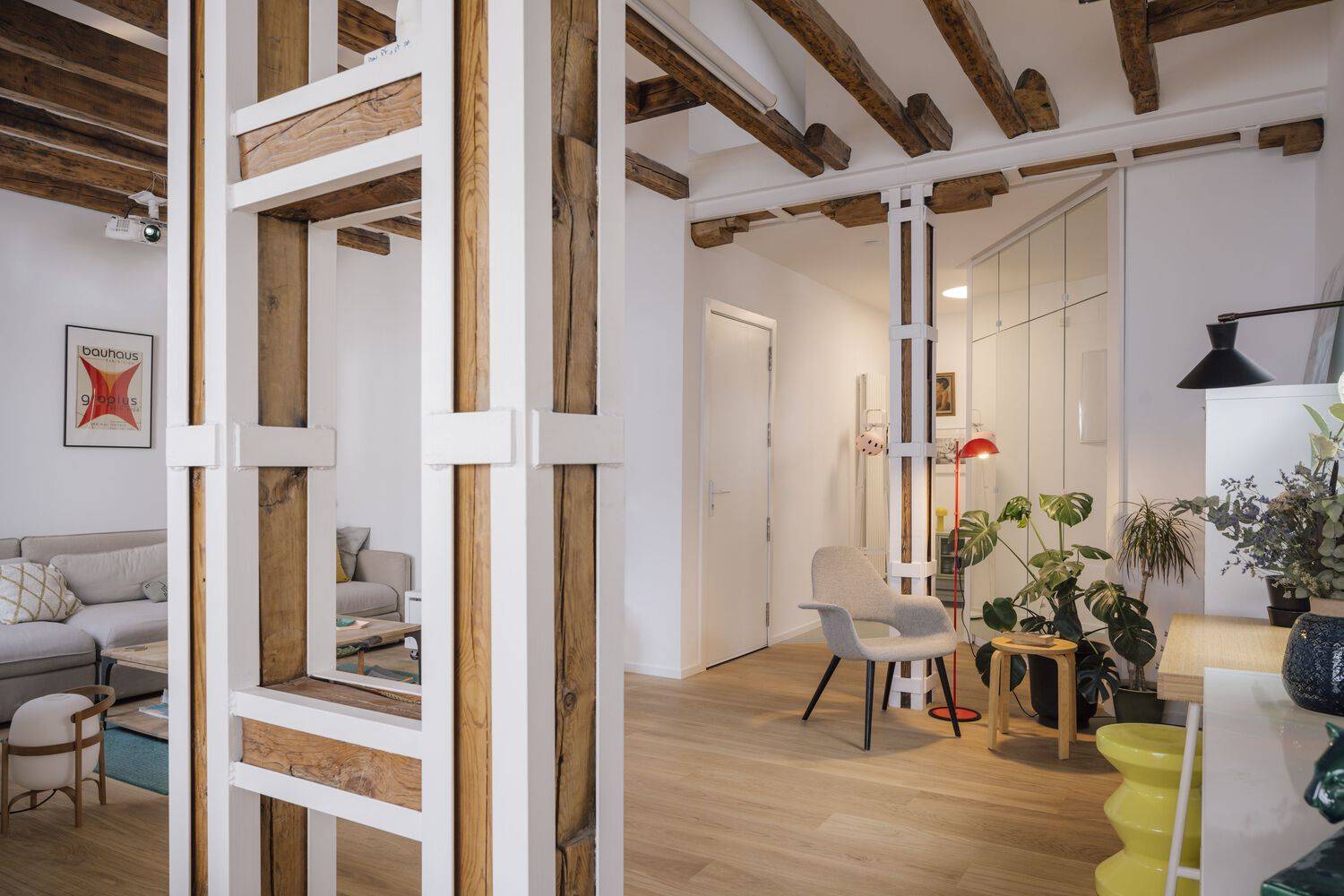
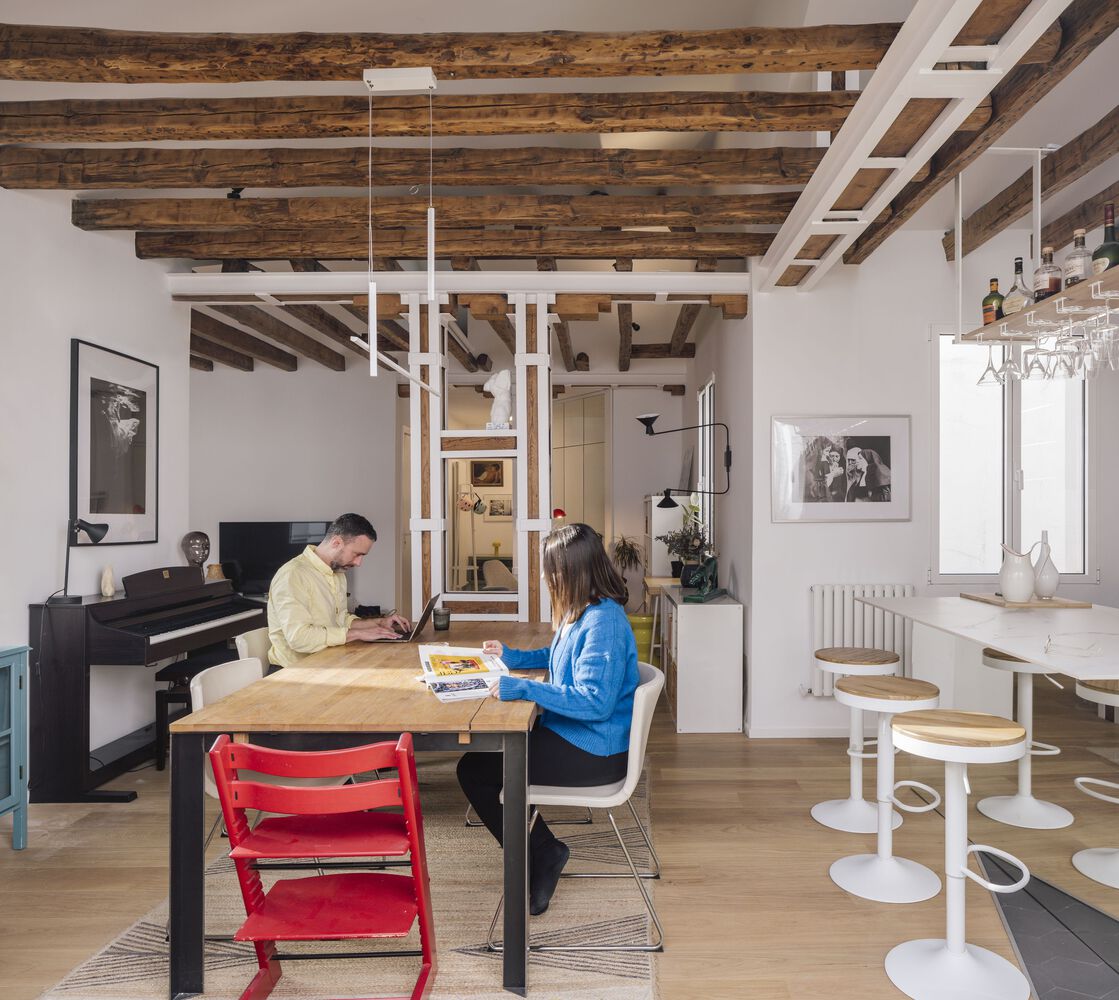
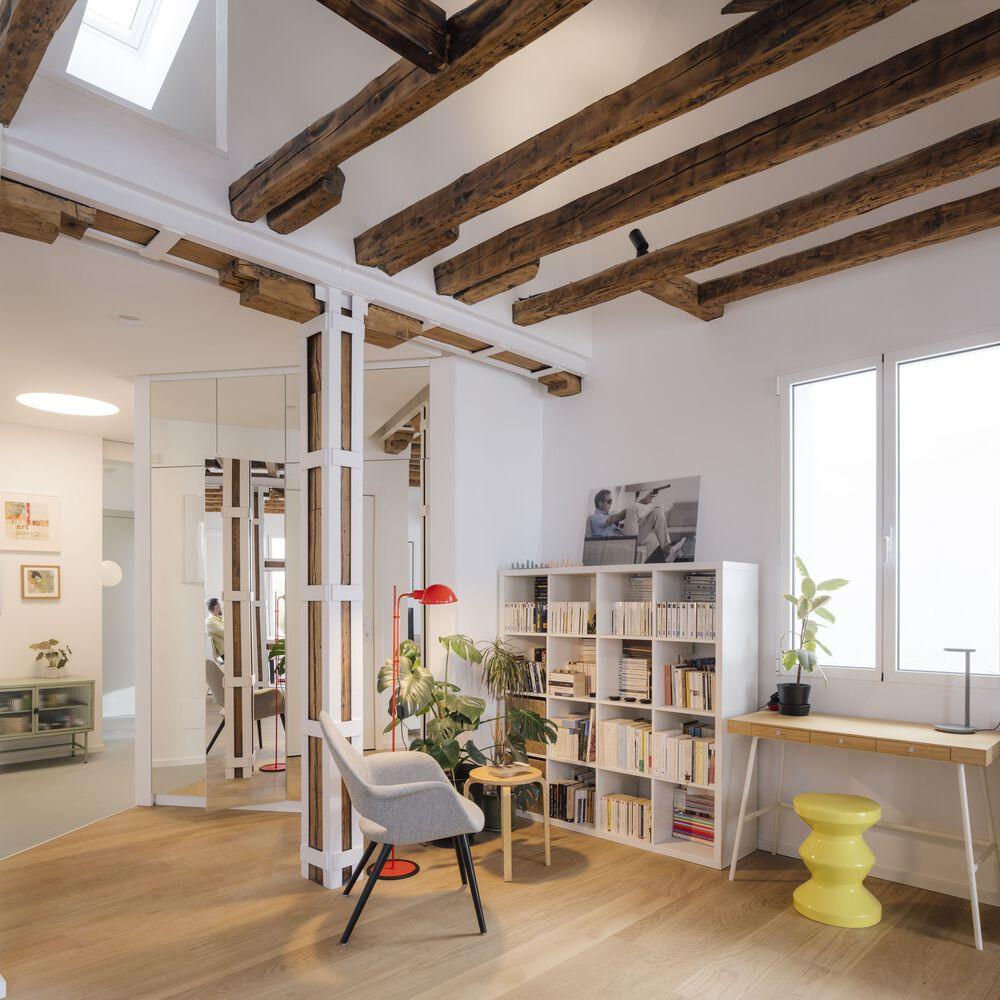
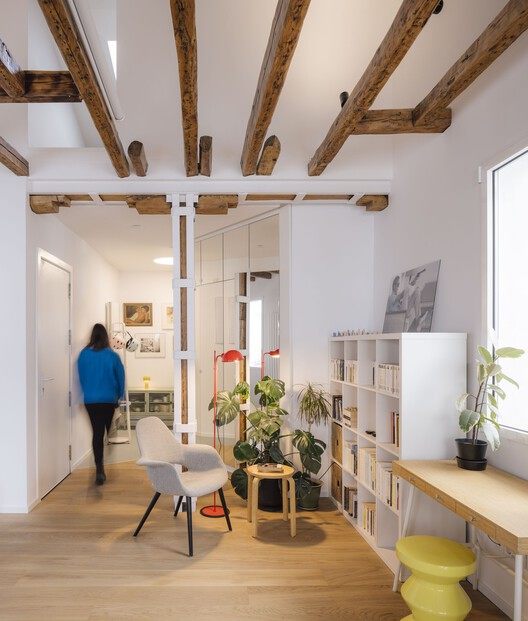
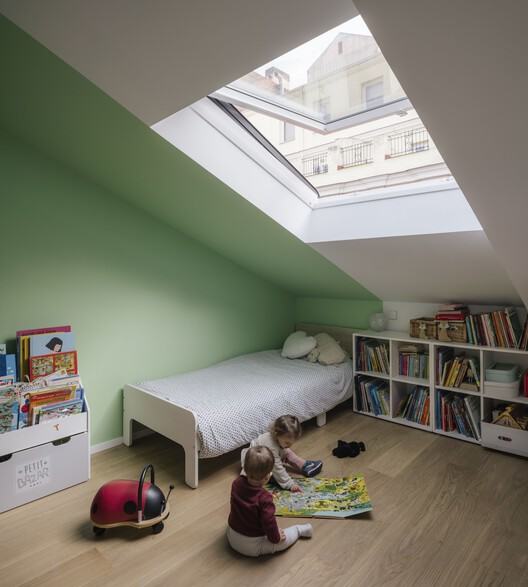
This condition, rather than being a disadvantage, was capitalized on as an opportunity to design the house, one could say, starting from the roof. The renovation proposal was based on a spatial and structural understanding of this specific roof, aiming to restore the prominence of every space within the home. Firstly, the roof was repaired with metallic reinforcement, followed by a series of strategic openings to introduce natural light and ventilation, allowing for a deeper sensation of air movement, and ultimately, the passage of time. The transformation beneath the roof converted spaces that were dark and divided into small rooms and corridors into a brighter, more fluid environment; a space whose interior was defined by the exterior; a new landscape and domestic space revealed through varying heights and changing light that subverts and connects every room with Madrid’s unique Velázquez sky.
这一状况非但未成为劣势,反而被加以利用,成为设计房屋的契机,可以说,是从屋顶开始设计房屋。房屋的改造方案基于对这一特殊屋顶的空间和结构理解而制定,旨在让房屋的每一个空间都重获往日风采。首先,通过金属加固修复屋顶,随后进行一系列战略性开孔,引入自然光和通风,让人更深刻地感受到空气的流动,即最终感受到时间的流逝。屋顶下的改造将原本黑暗、被分割成小房间和走廊的空间,转变为一个更加明亮、流畅的空间;一个由外部定义内部的空间;一个通过可变高度和变化光线展现的新景观和家居空间,它颠覆并关联着每一个房间与马德里独特的委拉斯开兹(Velázquez)天空。
© Imagen Subliminal
© Imagen Subliminal
Axonometric analysis
© Imagen Subliminal
Section
© Imagen Subliminal
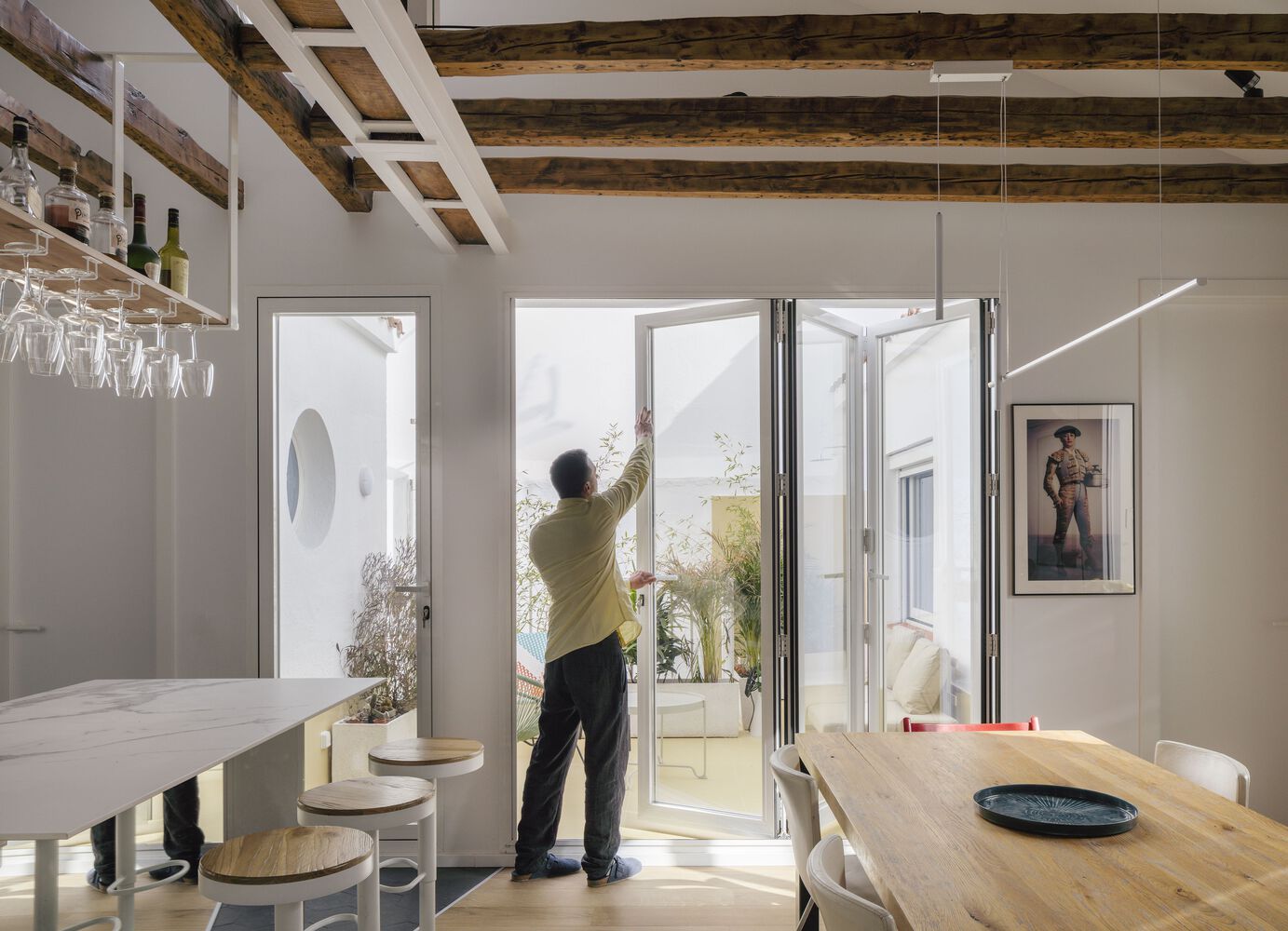
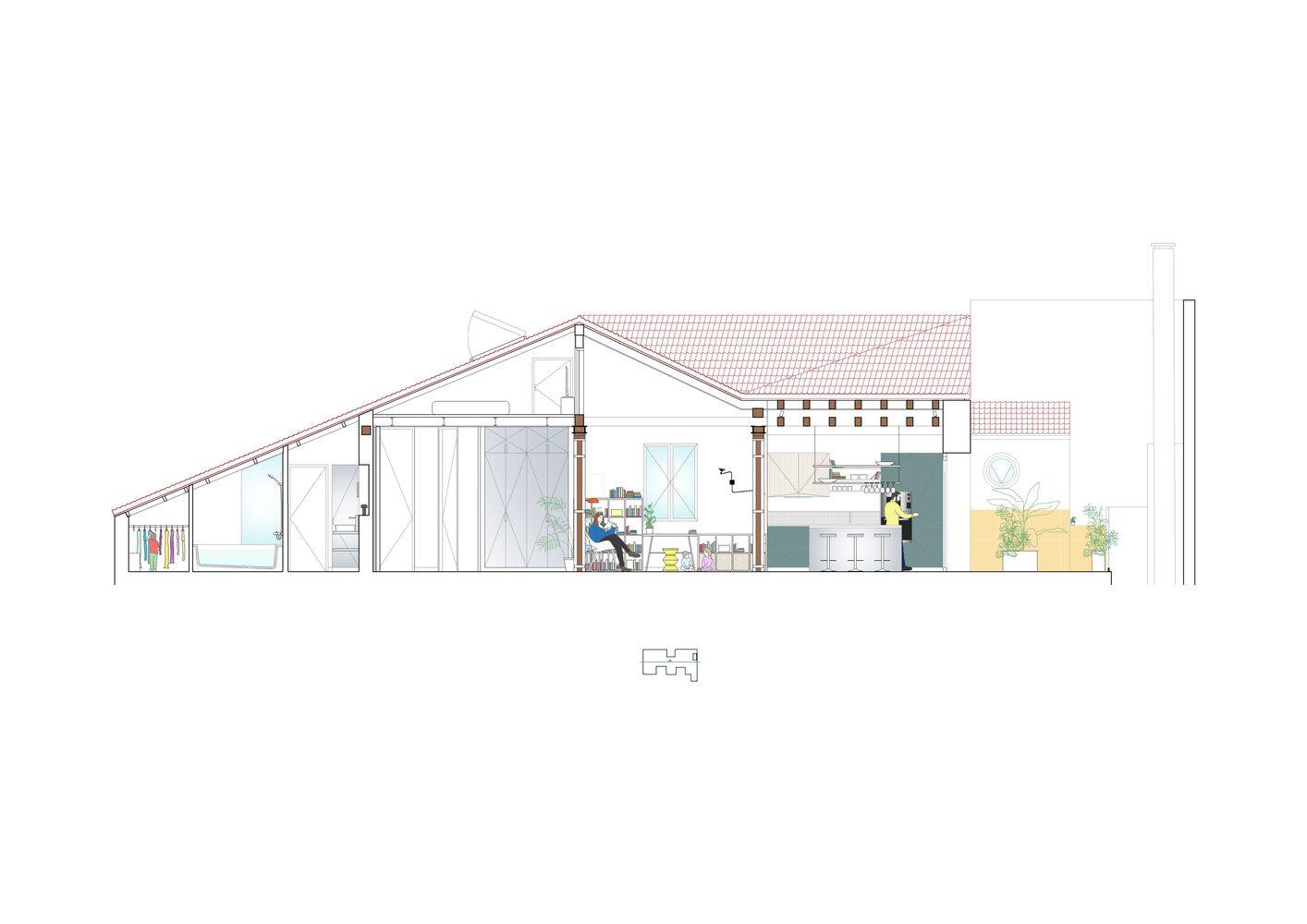
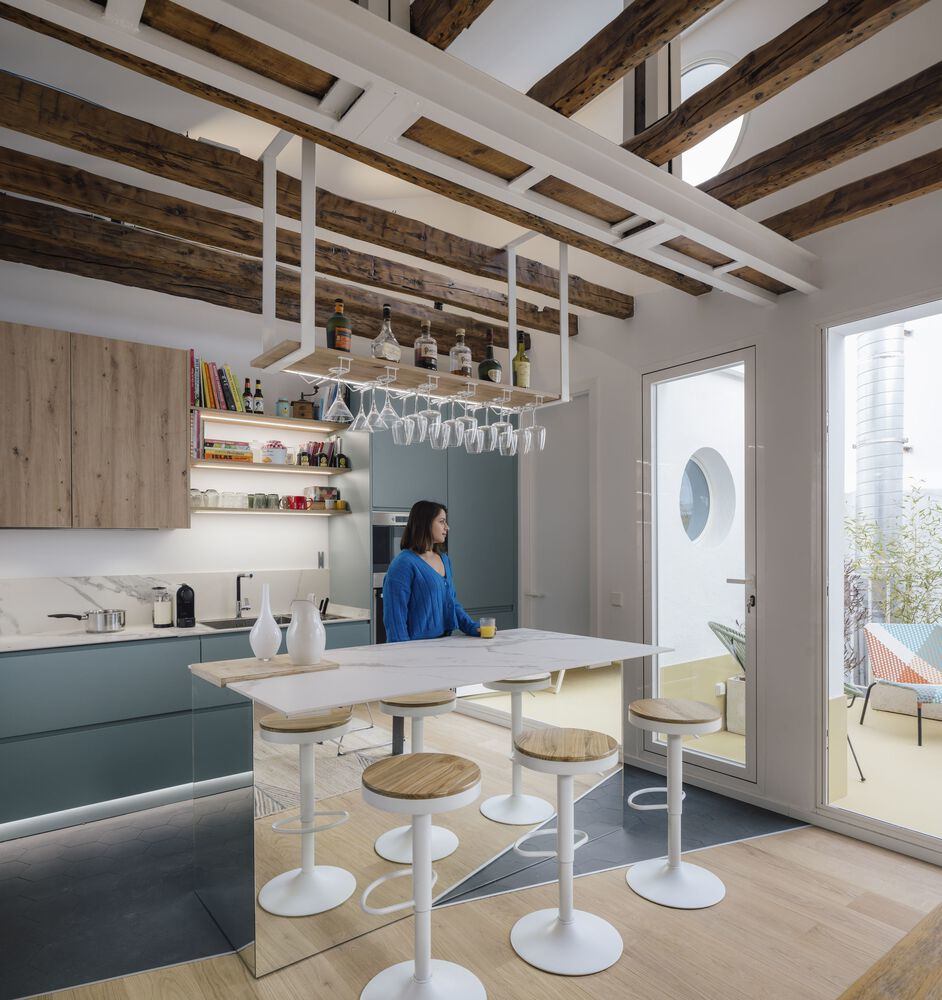
Inside the house, extending lightly under the vast roof formed by the inclined planes, the wooden beams, and the skylights, it is planned as a continuous space where the boundaries between public and private areas are deliberately blurred. Only the change in flooring material, from wood to ceramic, marks the function and use of each room. The domestic life is designed to account for coexistence and different timeframes in daily routines, presented as a series of large rooms where the daily actions of each family member, individually or collectively, unfold.
房屋内部,在倾斜的平面、木质梁架和天窗构成的巨大屋顶下轻盈延伸,被规划为一个连续的空间,公共与私人区域之间的界限模糊不定。唯有地板材质的变化,从木质到陶瓷,才标志着每个房间的功能和使用方式。家居生活的设计考虑到了日常生活中的共存与不同时态,呈现为一系列大房间,每个家庭成员的日常行动,无论是个人还是集体,都在此展开。
© Imagen Subliminal
© Imagen Subliminal
Axonometric analysis
© Imagen Subliminal
Section
© Imagen Subliminal
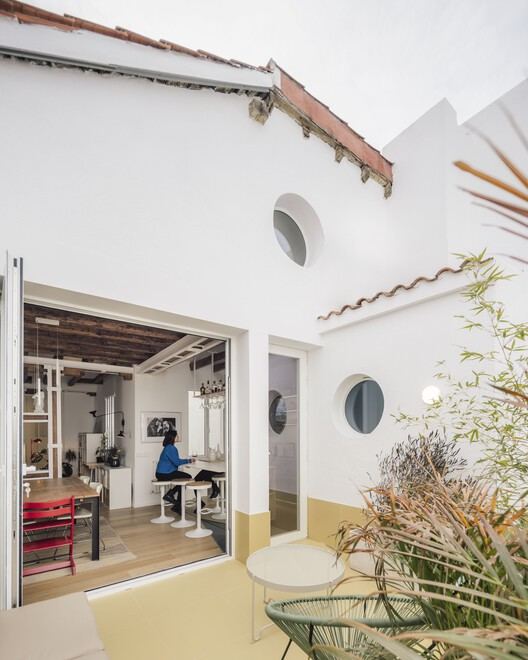
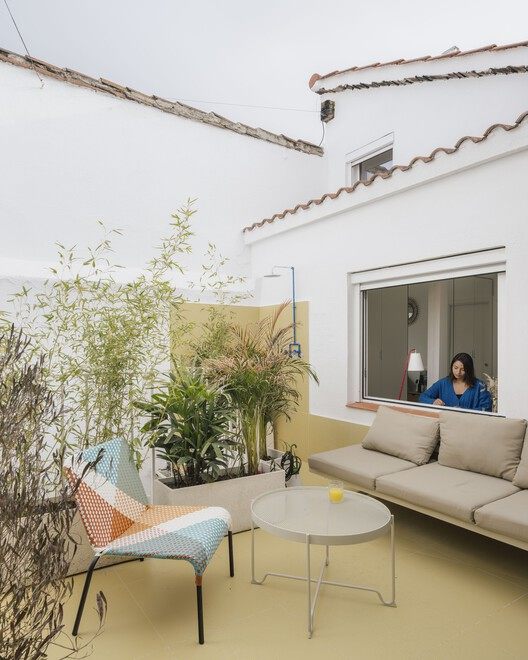
The terrace, located at the end of the 21-meter linear length of the house, spanning 15 m², along with the skylight, becomes the most direct source of light illuminating the entire interior. Furthermore, the terrace serves not only as a meeting space but also features a jacuzzi usable in both winter and summer. The scale of the furniture inside the house reflects the different experiences of living in various places by Marion and Paul Franck; it is a collection of items acquired from different locations, ranging from antiques like a 19th-century chair to classic 20th-century designs and products from IKEA.
露台位于房屋 21 米直线长度的尽头,面积 15 平方米,与天窗一同成为照亮整个室内的最直接光源。此外,露台不仅是一个聚会空间,还设有冬季和夏季均可使用的按摩浴缸。房屋内家具的规模,反映了马里昂和保罗·弗兰克在不同地方生活的不同经历;这是一套从各地购置的物品,其中既有像 19 世纪椅子那样古老的物件,也有 20 世纪的经典设计,还有来自宜家的产品。
© Imagen Subliminal
© Imagen Subliminal
The CIEL project is a response to a unique and common urban condition where the dwelling does not interact decisively with the city but connects with the sky; it is a house with a large technical roof; ultimately, it is a shadow that houses a domestic plan organized in a flexible way under climate-controlled conditions, allowing a family to live there for a time, for years, or a lifetime, enjoying the passage of time and its variations under the hypnotic cobalt blue tones of Madrid’s unique sky.
CIEL 项目是对一种独特而常见的城市状况的回应,在这里,房屋并未与城市产生决定性互动,而是与天空产生联系;这是一座拥有大型技术设计屋顶的房屋;归根结底,它是一个阴影,能够在气候控制的环境下,容纳一个以灵活方式组织的家居计划,让一个家庭可以在此生活一段时间、几年或一生,享受时间的流逝及其在马德里独特天空下那如催眠般的钴蓝色调中的变幻。