创新性的模块化预制与格鲁吉亚建筑的突破:该项目最大的亮点在于其概念性的模块化结构设计,特别是采用了在格鲁吉亚尚属新兴技术的场外预制构件。这不仅是对当地传统建筑实践的一次重大创新与挑战,也预示着高效建造和质量控制的新方向。通过模块化,建筑师成功地将复杂的功能需求转化为可重复、可控的构建系统,体现了先进建造技术与地域需求的完美结合,为未来城市高密度开发提供了可借鉴的范例。
“花园住宅”理念对城市居住模式的重塑:项目深度融合了詹姆斯·怀恩斯和布罗德斯基等大师作品中的人文关怀,将“带有花园的住宅”概念垂直化。通过在城市高密度建筑中植入宽敞的露台和鼓励户外种植的设计,项目实现了在紧凑城市肌理中提供郊区式私密性、日光和绿意的目标。这种对传统公寓类型的挑战,强调了空间宽敞度、自然光与景观连接的重要性,是构建健康、个性化垂直社区的精髓所在。
法规驱动下的空间优化与形态生成:设计巧妙地应对了严格的开发管理规划(DRP)限制和消防安全法规(如500平方米的面积限制)。消防法规催生的建筑垂直三分结构,不仅合规,更意外地促进了用户体验的优化,减少了共享空间并培育了半私密的住宅集群。此外,利用斜坡地形隐蔽停车场,以及通过平面与曲面交替的立面设计,展示了建筑师将外部限制转化为塑造雕塑感和功能高效性的决定性设计元素的精湛能力。
The seven-story building was conceived as a conceptual modular structure, where all components (but not every complete module) were prefabricated off-site. This represents a major innovation in Georgian architecture, as off-site prefabrication is still an emerging technology in the country.
这座七层建筑被构思为一种概念上的模块化结构,所有构件(但并非每个完整模块)均在场外预制。这在格鲁吉亚建筑领域是一项重大创新,因为场外预制在该国尚属新兴技术。
© Grogorii Sokolinskii
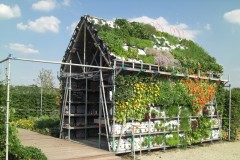
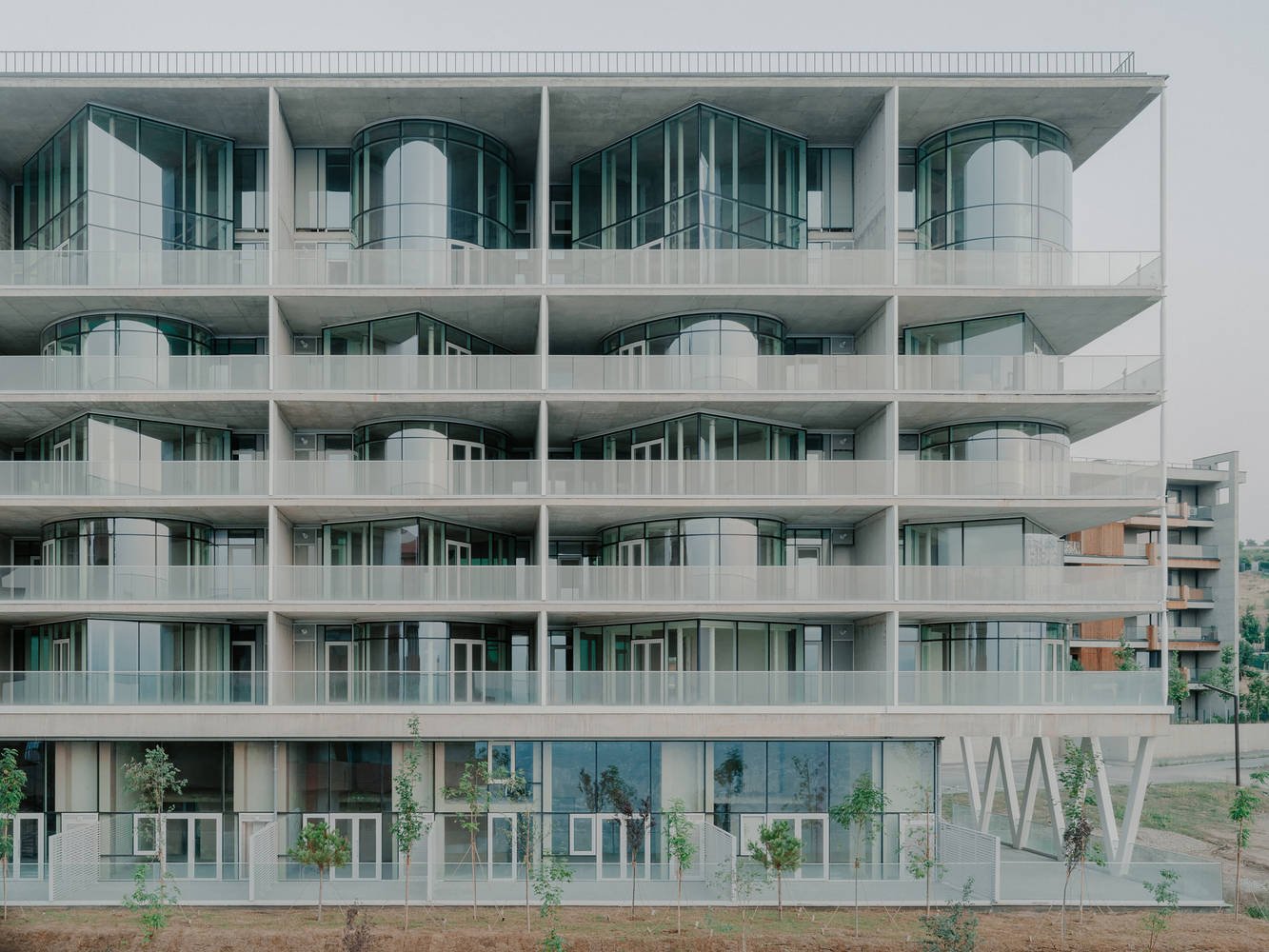
The design is inspired by James Wines’ collage Highrise of Homes, with its greenhouse-like living spaces, and Brodsky & Utkin’s Columbarium Habitable. The scheme envisions stacking garden homes into a single residential tower. Modular living rooms alternate between oval and rectangular volumes, creating a vertical rhythm on the facade grid. As an evolution of Wines’ vision, the garden residences incorporate generous terraces encouraging outdoor planting and extending living space into the landscape. The core of the project is to assert individuality within a collective framework—a vertical community where residents enjoy the privacy, daylight, and greenery typically associated with suburban living, yet within a compact urban setting. It challenges the traditional apartment typology by prioritizing spatial generosity, natural light, and seamless connection to the outdoors.
该设计灵感源自詹姆斯·怀恩斯(James Wines)的拼贴画作品《家居摩天楼》(Highrise of Homes),其温室般的居住空间,以及布罗德斯基与乌特金(Brodsky & Utkin)的《可居住的骨灰龛》(Columbarium Habitable)。方案设想将带花园的住宅堆叠成单一的住宅楼。模块化客厅在椭圆形与矩形体量间交替,在立面网格上形成垂直韵律。作为怀恩斯愿景的演进,花园住宅融入了宽敞的露台,鼓励户外种植,并将生活空间延伸至景观之中。项目核心在于在集体框架内彰显个性 —— 一个垂直社区,居民既能享受郊区生活通常所具有的私密性、日光和绿意,又处于紧凑的城市布局之中。它通过优先考虑空间宽敞度、自然光和与户外的无缝连接,挑战了传统公寓类型。
First Floor Plan
Located in the Saburtalo district northwest of Tbilisi, the project sits on a sloped hillside near Lisi Lake, offering panoramic city views. The Garden Residences is one of several 5 to 7-story residential buildings within a master plan curated by several international firms—Architects of Invention, Ricardo Bofill, and UN Studio—situated alongside private houses.
项目位于第比利斯西北部的萨布塔洛(Saburtalo)区,坐落于利西湖(Lisi Lake)附近的斜坡山腰,可俯瞰城市全景。在由多家国际事务所 ——发明建筑师事务所(Architects of Invention)、里卡多·波菲尔(Ricardo Bofill)和 UN Studio共同策划的总体规划中,花园住宅是几栋 5 至 7 层住宅楼之一,与私人住宅并排而立。
© Grogorii Sokolinskii
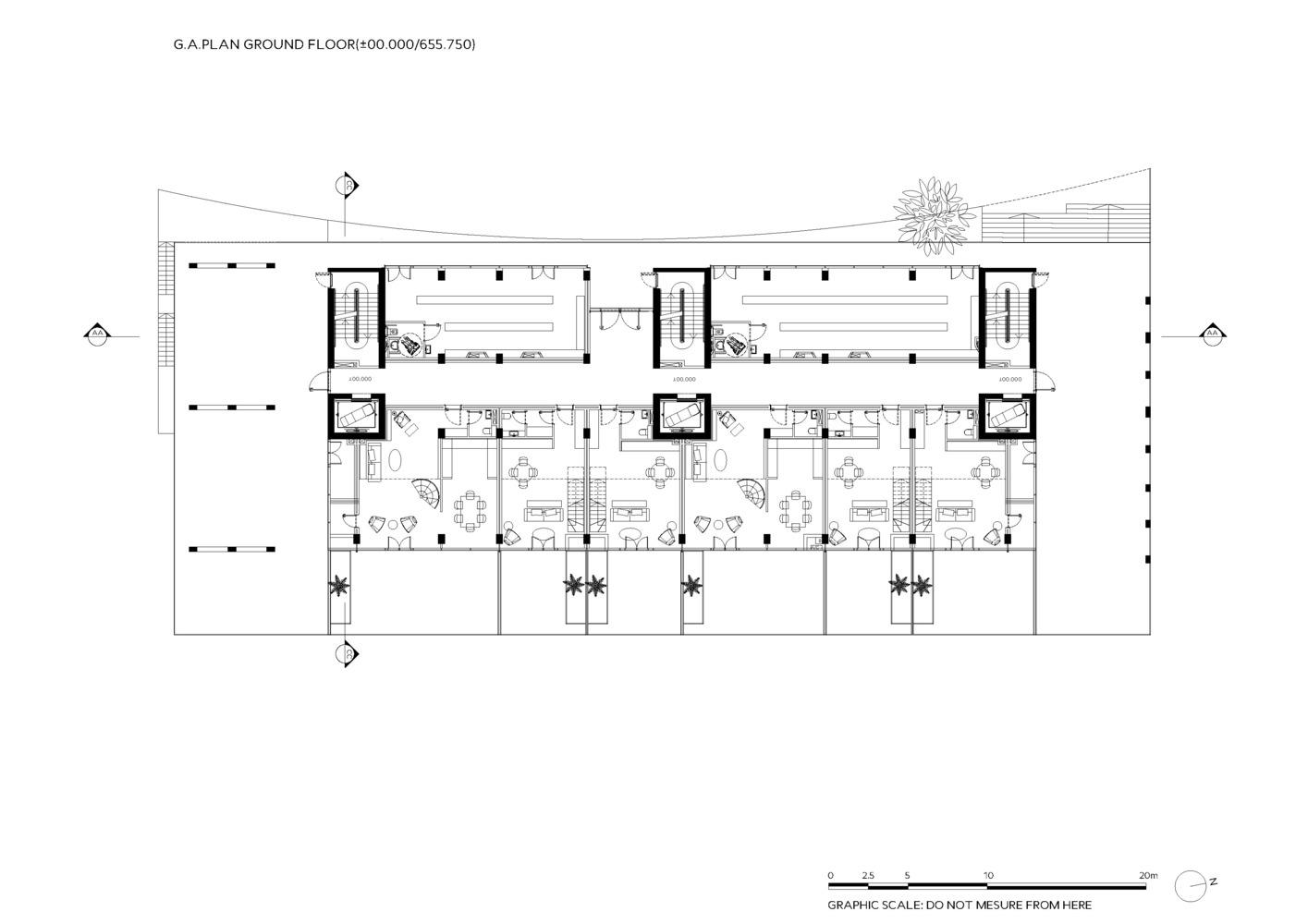
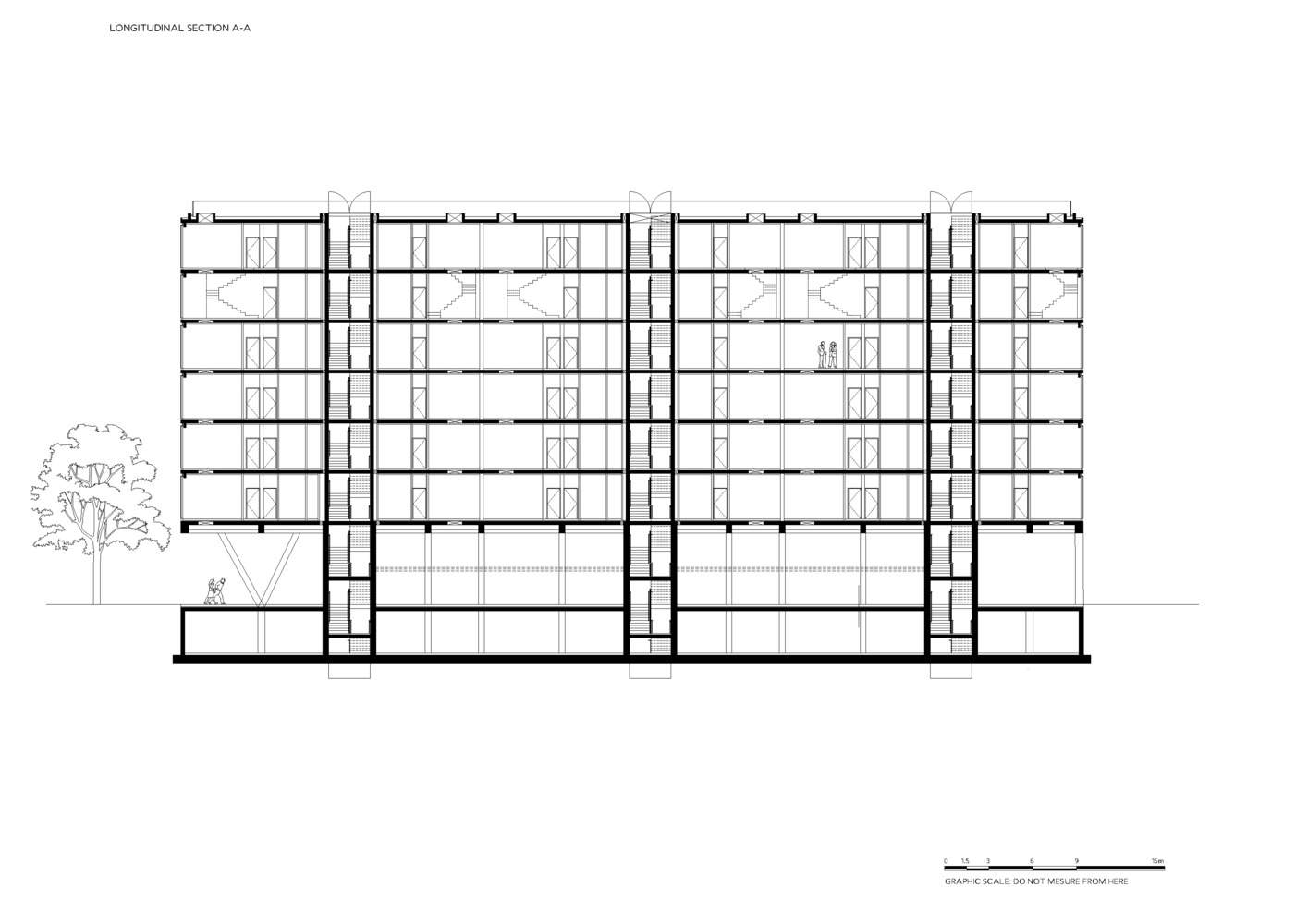
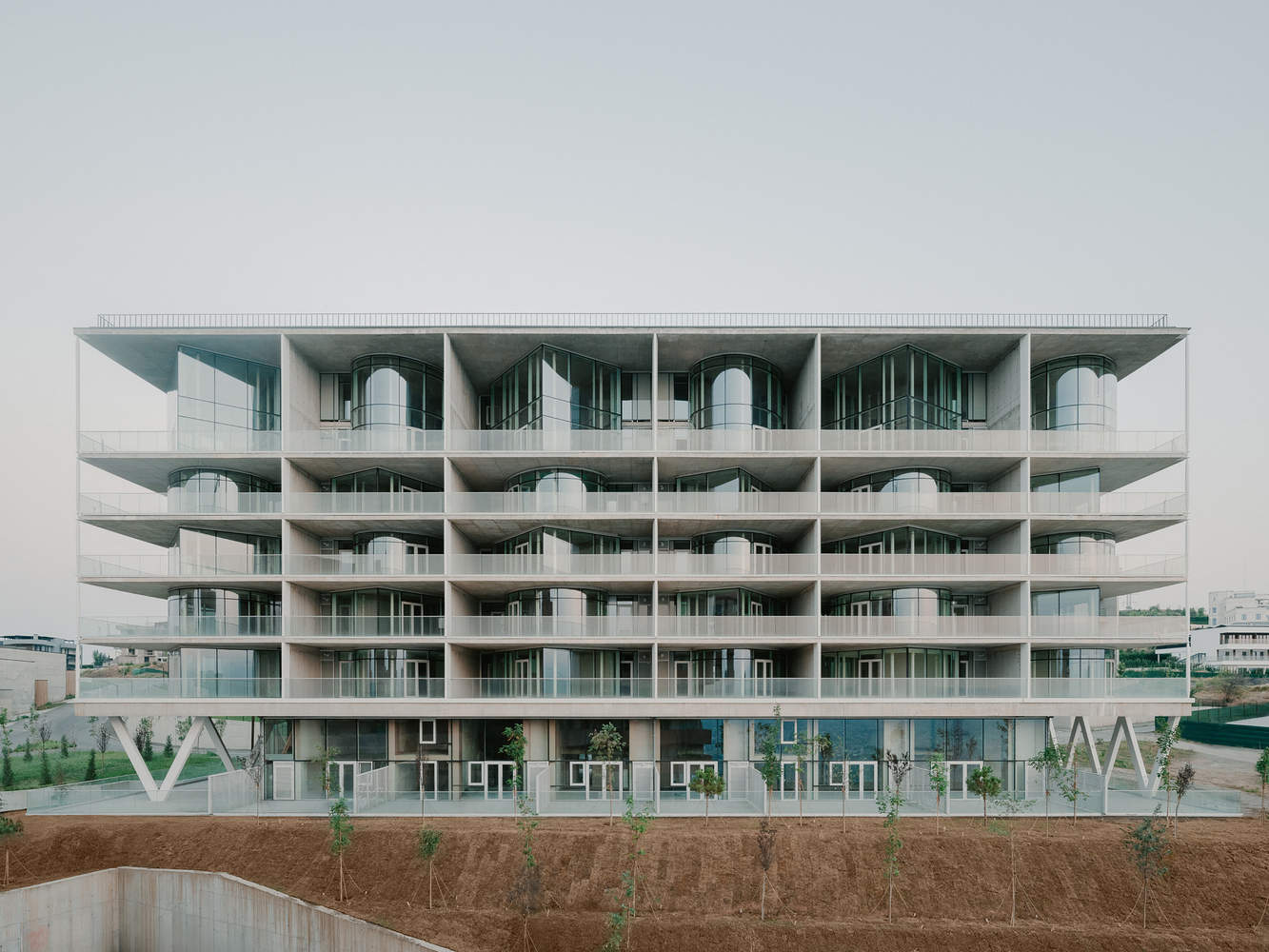
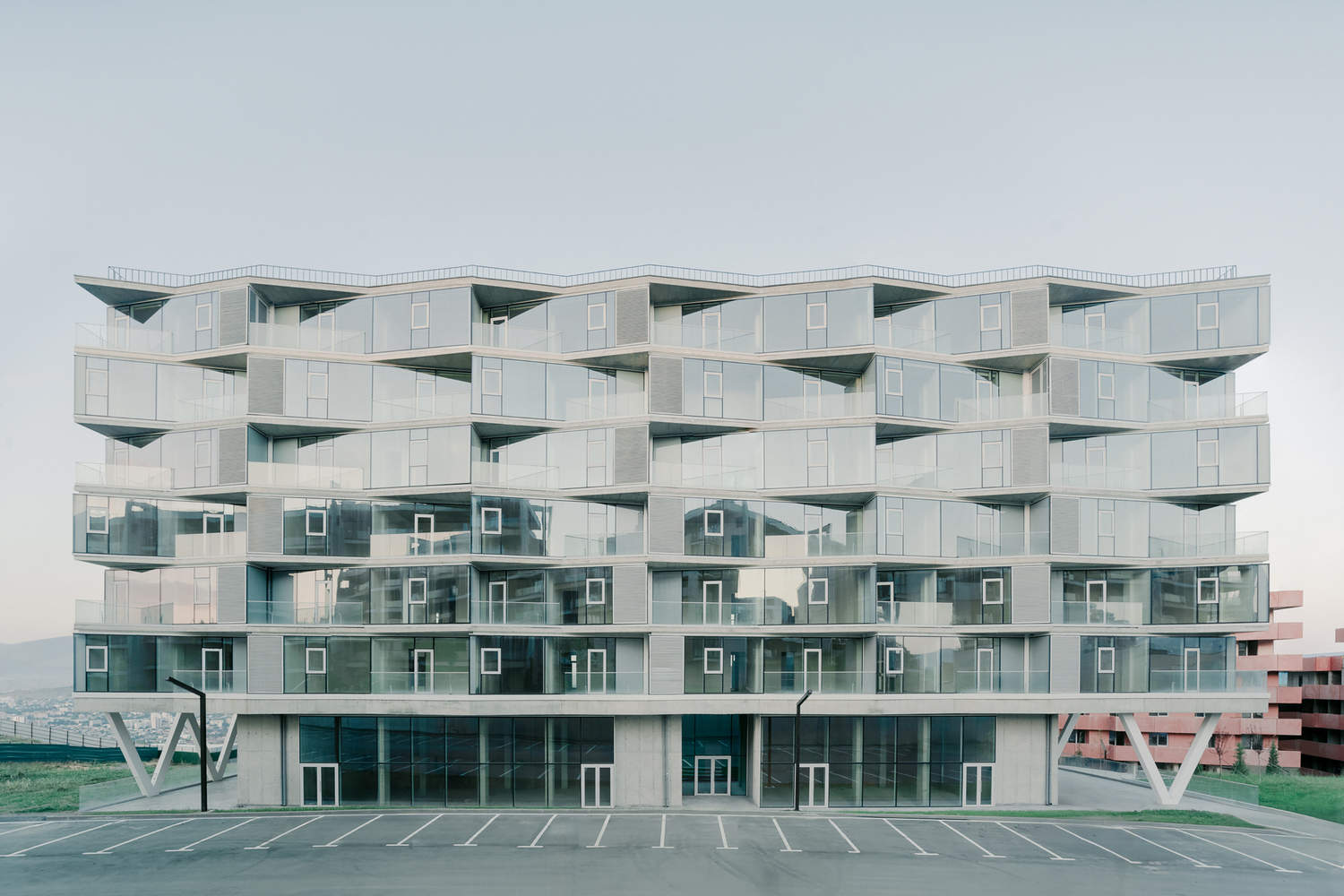
The building contains 42 units distributed across seven distinct residential floors, with commercial space on the ground floor and parking underground. The building is vertically divided into three blocks, each served by a stair and elevator core, servicing two units per floor. Typical apartments offer dual-aspect views to the east and west, while higher levels feature more generous duplex residences. The orientation maximizes panoramic views towards Tbilisi and the Western Mountains. The facade alternates between planar and curved geometries, presenting a sculptural appearance that shifts with the light throughout the day.
该建筑包含 42 个单元,分布在七个不同的住宅楼层,底层为商业空间,地下为停车场。建筑垂直划分为三个单元块,每个单元块包含一部楼梯和一个电梯核心筒,每层服务两个单元。典型公寓提供东西双向景观,而高层则设有更宽敞的复式住宅。建筑朝向最大化地利用了面向第比利斯和西山的全景视野。立面在平面与曲面几何形状间交替,呈现出雕塑般的、随光线变化的外观,全天候变换。
© Grogorii Sokolinskii
The project was developed within the Development Regulation Plan (DRP) framework, requiring adherence to strict parameters regarding height, footprint, and massing. Within these constraints, the design team adopted a solution that satisfied the regulations while reimagining density through the elegant stacking of modular “garden residences,” each optimized for daylight, ventilation, and outdoor space. Fire safety regulations, specifically the 500 sqm maximum allowed per escape core, prompted the vertical tripartite division of the building. This regulation-driven move also improved the user experience by reducing shared circulation spaces and fostering semi-private residential clusters.
项目在开发管理规划(DRP)框架内开发,需遵循关于高度、占地面积和体量的严格参数。在这些限制条件下,设计团队采用了一种既满足法规要求,又通过优雅堆叠模块化 “花园住宅” 重新构想密度的方案,每座住宅均针对日光、通风和户外空间进行了优化。消防安全法规,特别是每个逃生核心筒允许的最大面积 500 平方米 —— 促使了建筑垂直三分的设计。这一由法规驱动的举措还通过减少共享流通空间和培育半私密住宅集群,改善了用户体验。
Section
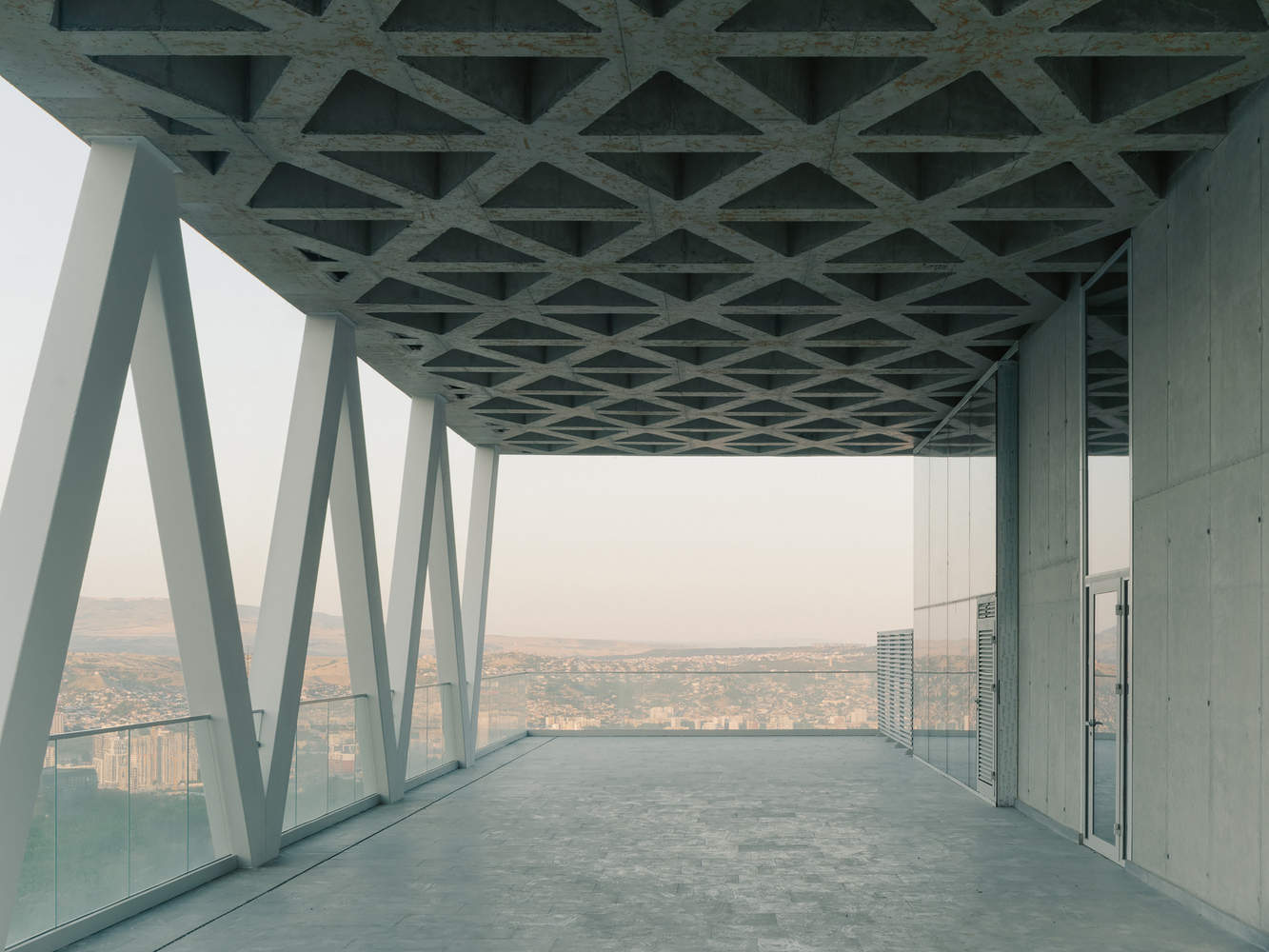
The dual-aspect layout ensures every apartment benefits from natural cross-ventilation and contrasting urban and mountain views. Semi-enclosed ‘glass rooms’ facing the city provide year-round outdoor space, while large balconies, negotiated with the developer, became a signature element of the project. The sloped topography allowed for the discreet integration of parking and elevated the residential floors to enhance views, resulting in a modular yet expressive building that balances environmental responsiveness, regulatory compliance, and residential quality.
双向布局确保每间公寓都能受益于自然交叉通风和对比鲜明的城市与山景。面向城市的半封闭“玻璃房”提供全年户外空间,而大型阳台经与开发商协商完善,成为项目的标志性元素。斜坡地形使停车场得以隐蔽整合,并抬升住宅楼层以增强视野,最终形成一座模块化却富有表现力的建筑,平衡了环境响应性、法规要求和居住品质。
© Grogorii Sokolinskii
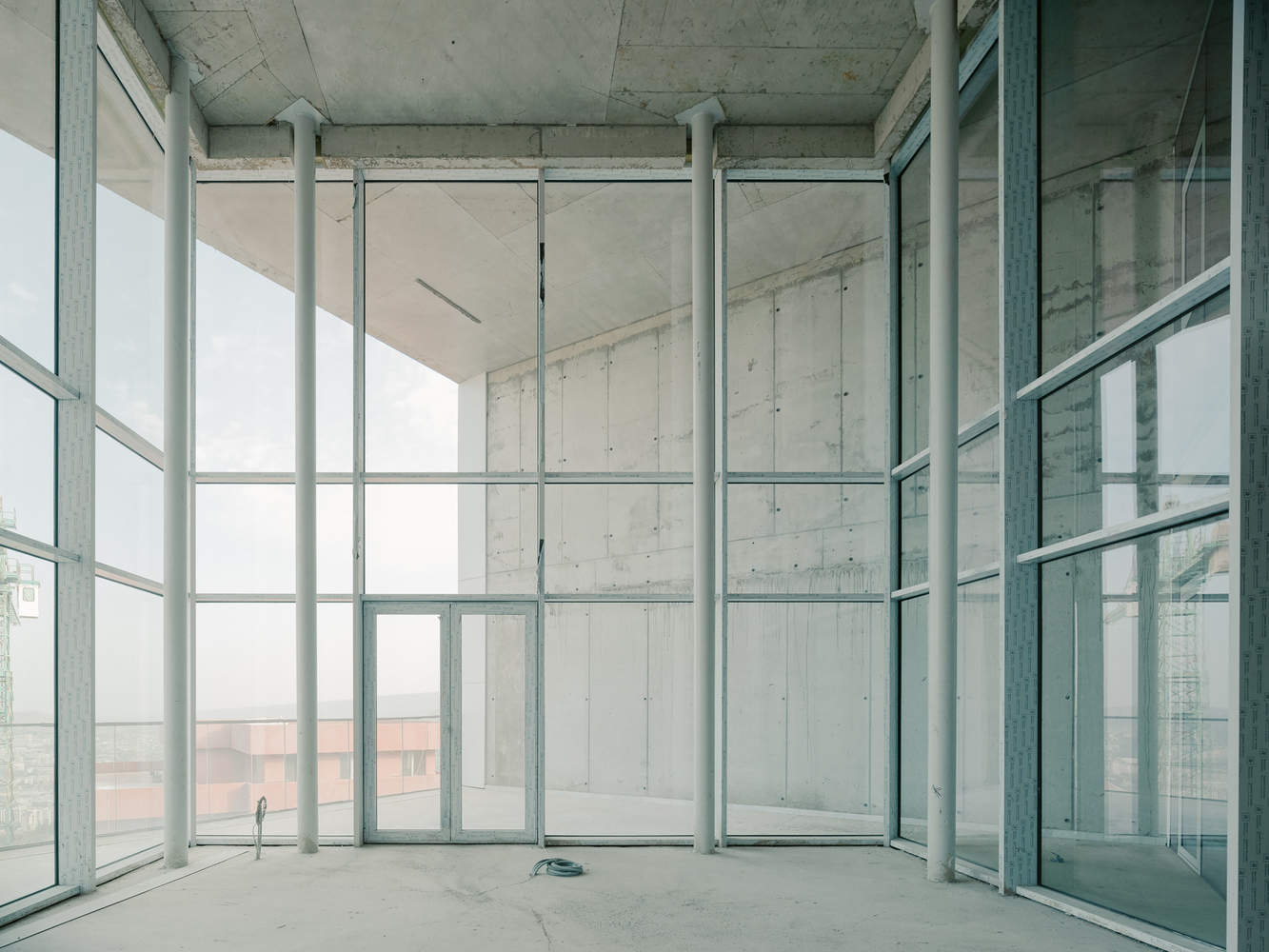
Lisi Garden Residences employs a hybrid concrete and steel structural system. Three reinforced concrete cores stabilize the building, while triangular concrete waffle slabs reduce material use, improve load performance, and add thermal mass for passive energy regulation. The facade combines finely framed double-glazed aluminum panels with exposed concrete and back-painted glass areas necessary for visual continuity. White marble slabs clad the terraces, reinforcing a minimalist yet durable material palette. Sustainability is addressed through off-site prefabrication, waste reduction, and long-term material durability. The structural clarity, efficient envelope, and low-maintenance finishes position the building as a contemporary, sustainable model for housing in Georgia.
利西花园住宅采用混凝土与钢结构混合体系。三个钢筋混凝土核心筒稳定建筑,而三角形混凝土华夫板减少材料使用,改善荷载性能,并增加热质量以实现被动式能源调节。立面结合了细铝框双层玻璃面板,以及为保持视觉连续性而必要的裸露混凝土和背面涂漆玻璃区域。白色大理石板铺就露台,强化了简约而耐用的材料调色板。可持续性通过场外预制、减少浪费和长期材料耐久性得以体现。建筑的结构清晰性、高效围护结构和低维护饰面,使其成为格鲁吉亚住房的当代可持续典范。
© Grogorii Sokolinskii