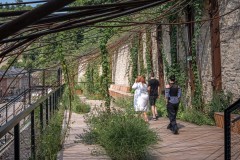
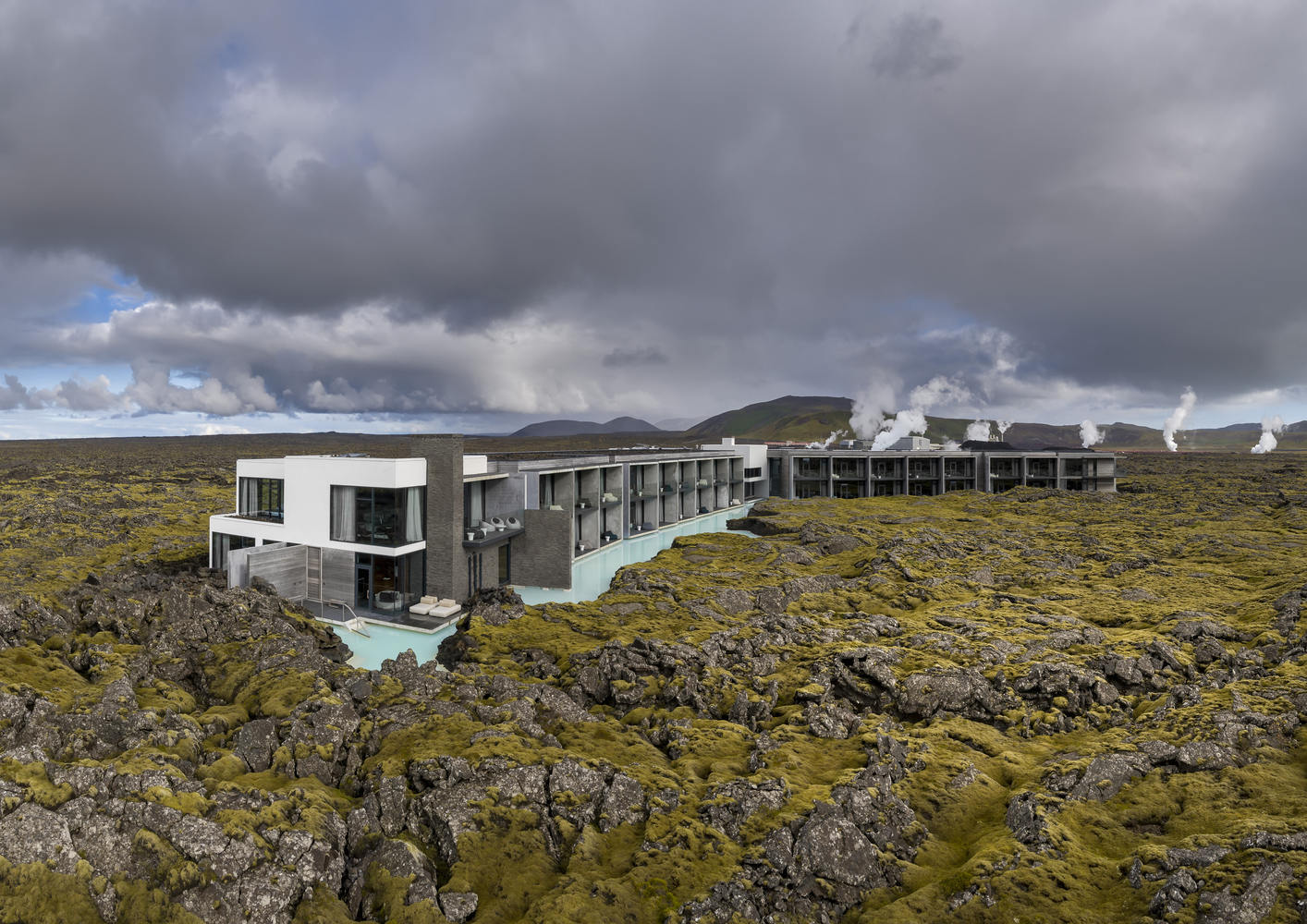
极致的在地性与文脉融合:该项目最核心的亮点在于其对冰岛独特地质文脉的深度尊重与无缝融合。建筑主体直接嵌入拥有 755 年历史的冷却熔岩流之上,模糊了自然、建筑与体验的界限。设计师通过对场地进行深入探索,以“裂纹”与“缝隙”的概念指导功能布局,使建筑的形态与边界被崎岖的熔岩场定义,最大限度地保护了脆弱的环境。这种“因地制宜”的被动式设计策略,将熔岩、地热资源和蓝湖水体本身,转化为建筑的结构性元素与核心体验,实现了真正的在地性表达。
可持续的能源自给与材料回应:项目在可持续性方面展现了前瞻性,不仅利用地热资源为度假村提供电力,更与斯瓦辛基地热能公园紧密结合,凸显了对可再生资源的依赖。在材料选择上,设计采取了高度的在地化策略,主体使用预制混凝土,其纹理模仿了裸露的熔岩墙,而深色水磨石地板则由当地熔岩沙和石块制成。穿孔外立面和屏风巧妙地呼应了熔岩中的气穴,这种从地质构造中提炼出的设计语言,确保了材料的真实感和对场地环境的最小化影响,体现了可持续设计的高级形态。
“即兴”过程与疗愈的感官体验:建筑师在设计与建造过程中展现了对传统工作模式的突破,接受了施工中发现的熔岩地层信息,将“意料之外”的发现融入最终设计,这是一种高度协作和富有耐心的“即兴创作”。这种灵活的过程最终成就了强烈的感官体验:通过粗犷的熔岩石、温暖的木材和富有矿物质的水景的对比并置,为住客创造了“蚕茧”般的舒适感。此外,引入以人为本的照明设计,精准地调控光线氛围,协助游客逐步调整身心状态,最终实现与冰岛原始自然力量的深度连接。
The Retreat at Blue Lagoon creates a unique experience that revives Icelandic bathing culture. The architectural design aims to blur the boundaries between nature, architecture, and experience, thus crafting a place where guests can feel connected to Iceland's magnificent natural landscape.
冰岛蓝潟湖度假村(The Retreat at Blue Lagoon)打造了一种独特的复古冰岛沐浴文化体验。其建筑设计的目的则在于突破自然、建筑、体验间的界限,以此构造一个可以让住客感受到与冰岛壮丽自然景观联系的场所。
© Ragnar Th Sigurðsson/Arctic Images
© Ragnar Th Sigurðsson/Arctic Images
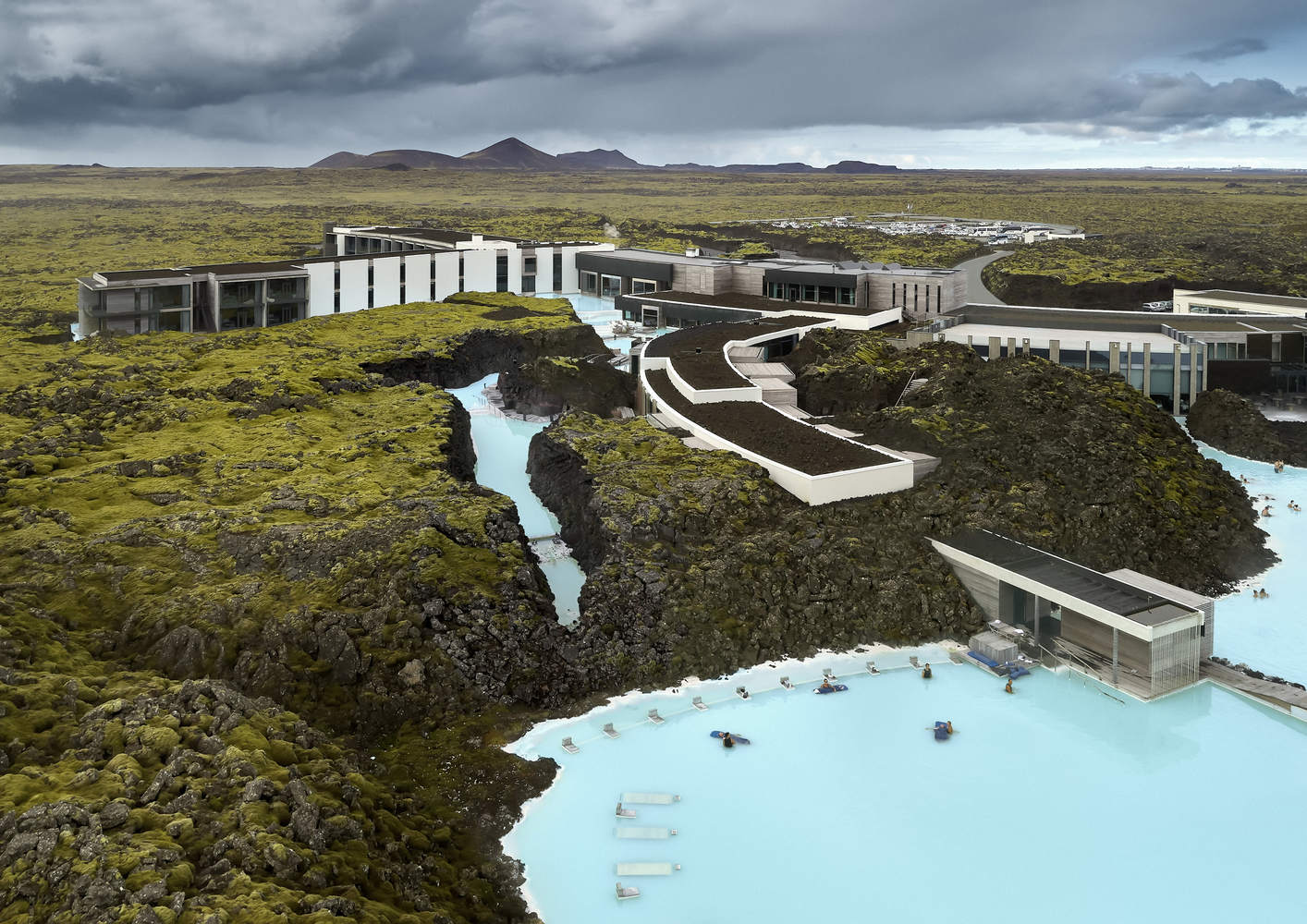
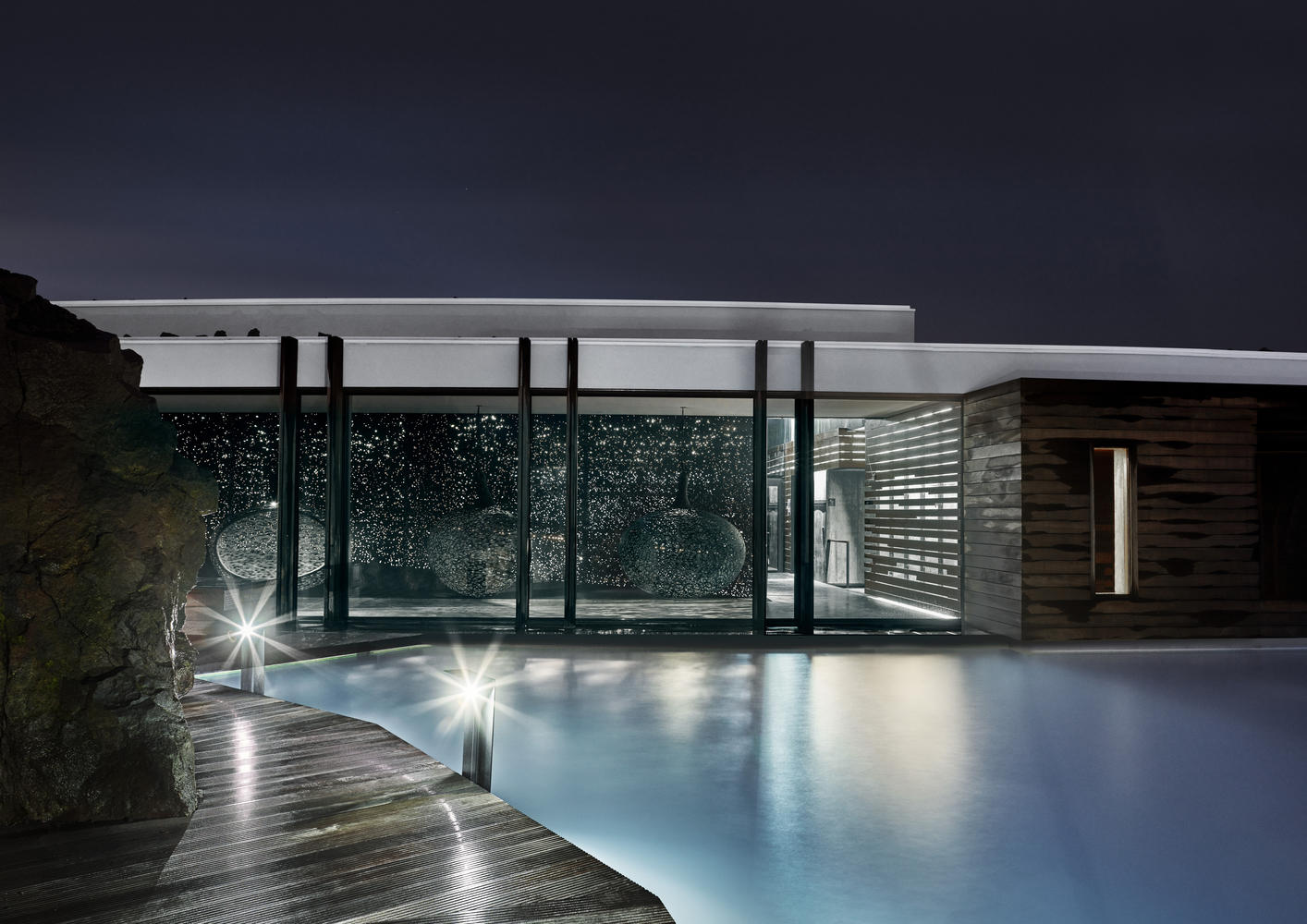
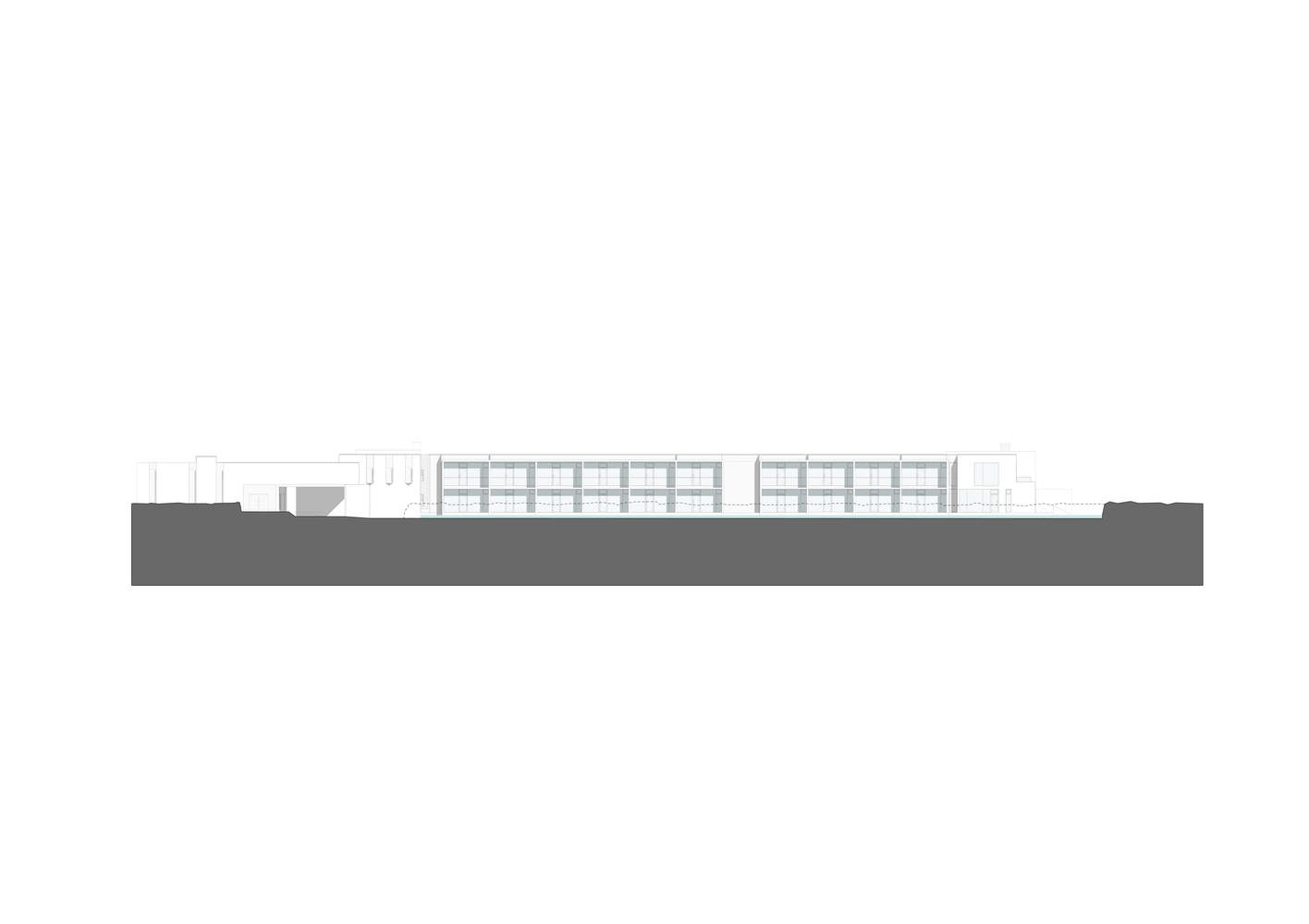
This resort is an extension of the main Blue Lagoon complex. The main structure of the resort is built directly into a 755-year-old cooling lava flow at the heart of the Reykjanes UNESCO Global Geopark, encompassing an underground spa, a geothermal lagoon, a restaurant, and 62 hotel suites surrounded by the iconic colored seawater of the Blue Lagoon.
这一度假村是蓝潟湖主建筑群的延伸。度假村的建筑主体直接建立在雷克雅内斯联合国教科文组织世界地质公园(the Reykjanes UNESCO Global Geopark)中心的一个具有 755 年历史的冷却熔岩流中,其中包括了地下水疗中心、地热泻湖、一家餐厅、以及被蓝潟湖具有标志性色彩的海水所环绕的 62 间酒店套房。
© Ragnar Th Sigurðsson/Arctic Images
Site Plan
© Ari Magg
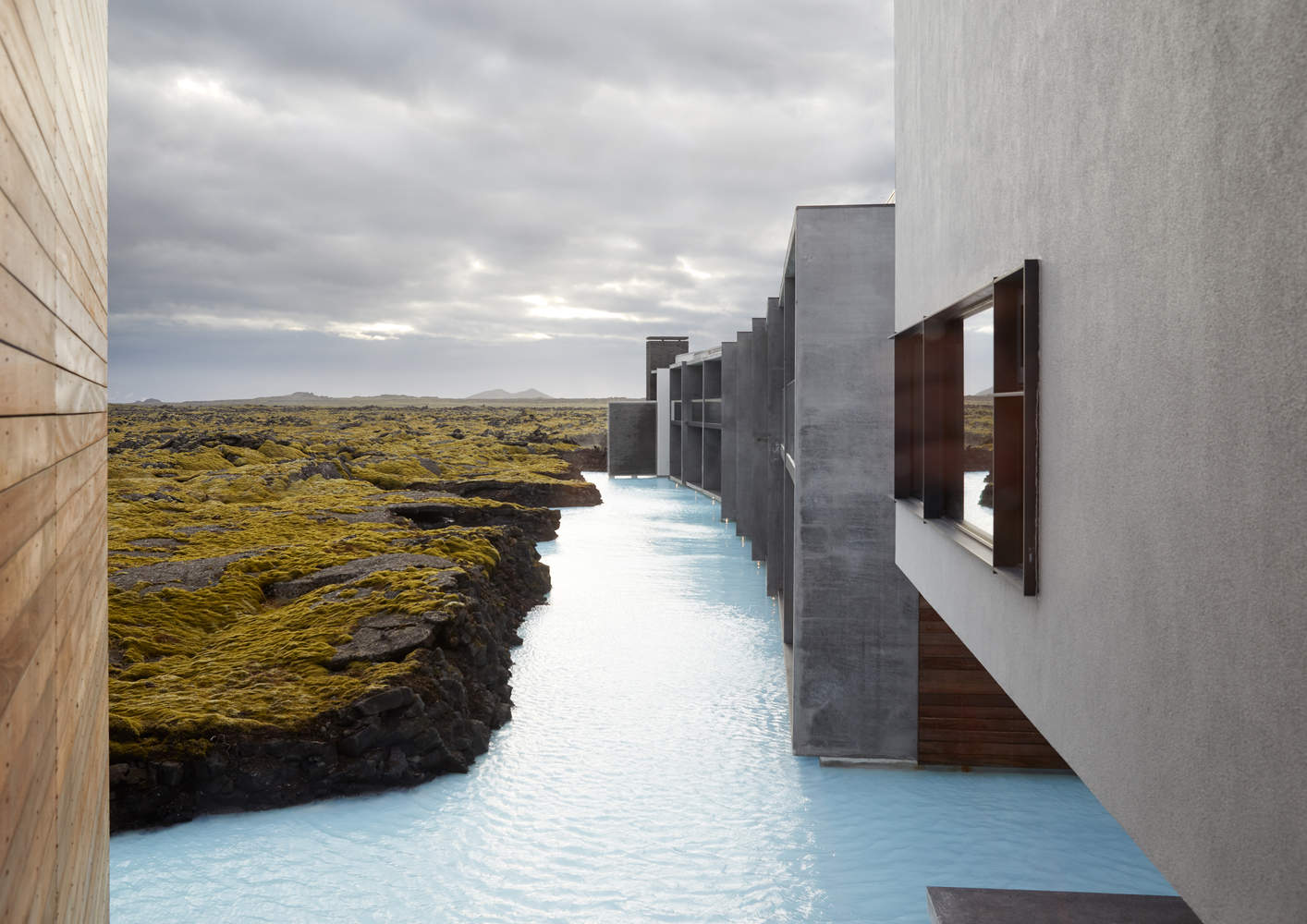
The design of this thermal hotel fully incorporates the "healing waters" of the Blue Lagoon and utilizes geothermal resources to power the resort. Furthermore, the site's Svartsengi Resource Park is a leading facility globally for the sustainable utilization of geothermal resource flow, meaning the resort’s restorative design is intrinsically linked to this source of renewable resources.
这一温泉酒店的设计充分融入了蓝潟湖的“治愈之水”,并利用了地热资源为度假村提供电源。此外,场地的斯瓦辛基地热能公园(Svartsengi Resource Park)是全球领先的地热资源流可持续利用设施,因此度假村中疗愈身心的设计也与这一公园所带来的可再生资源源泉有着密不可分的关系。
© Ari Magg
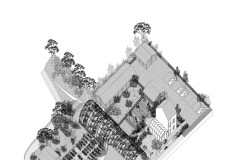
Axonometric Plan
© Cindy Rún Xiao Li
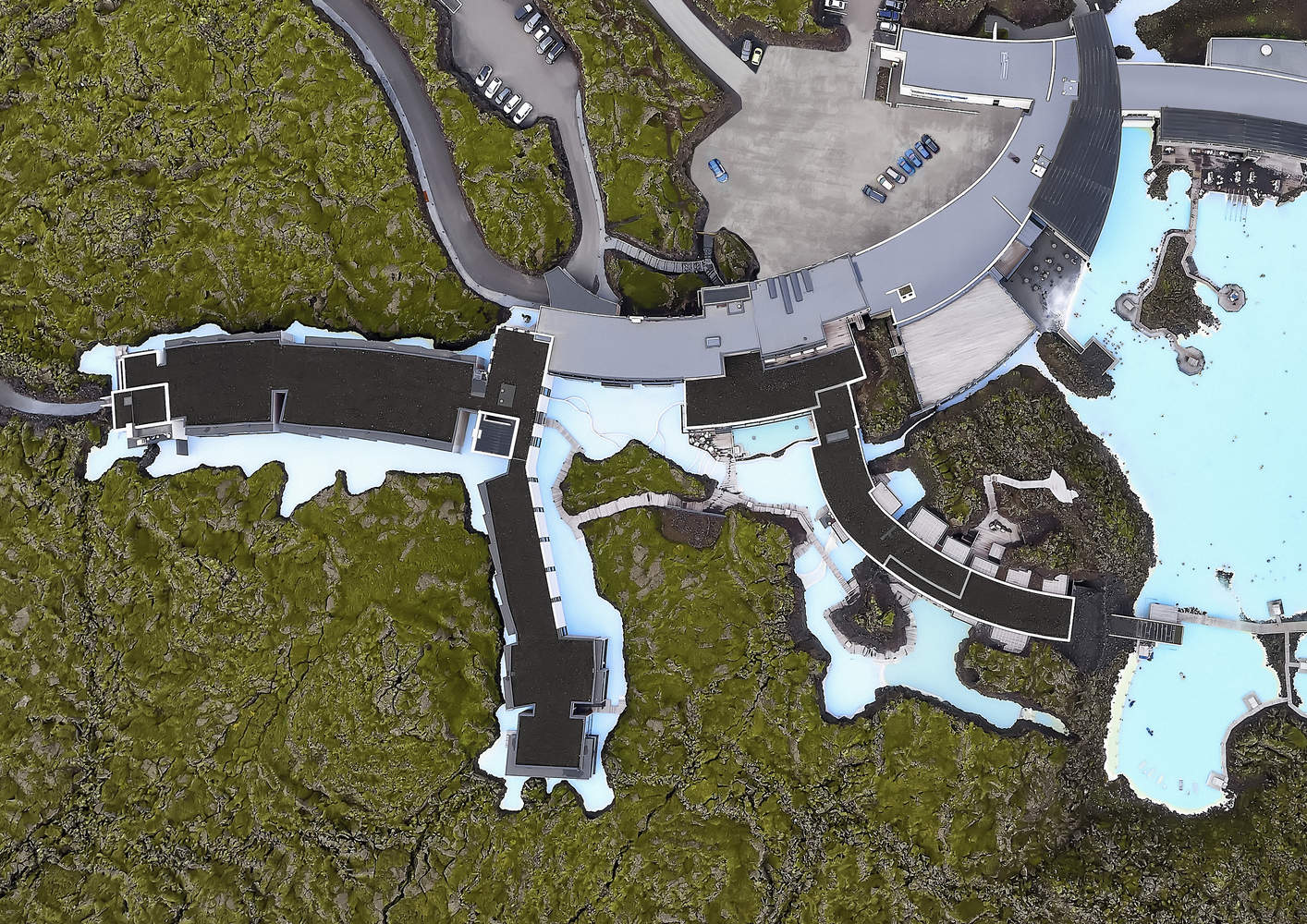
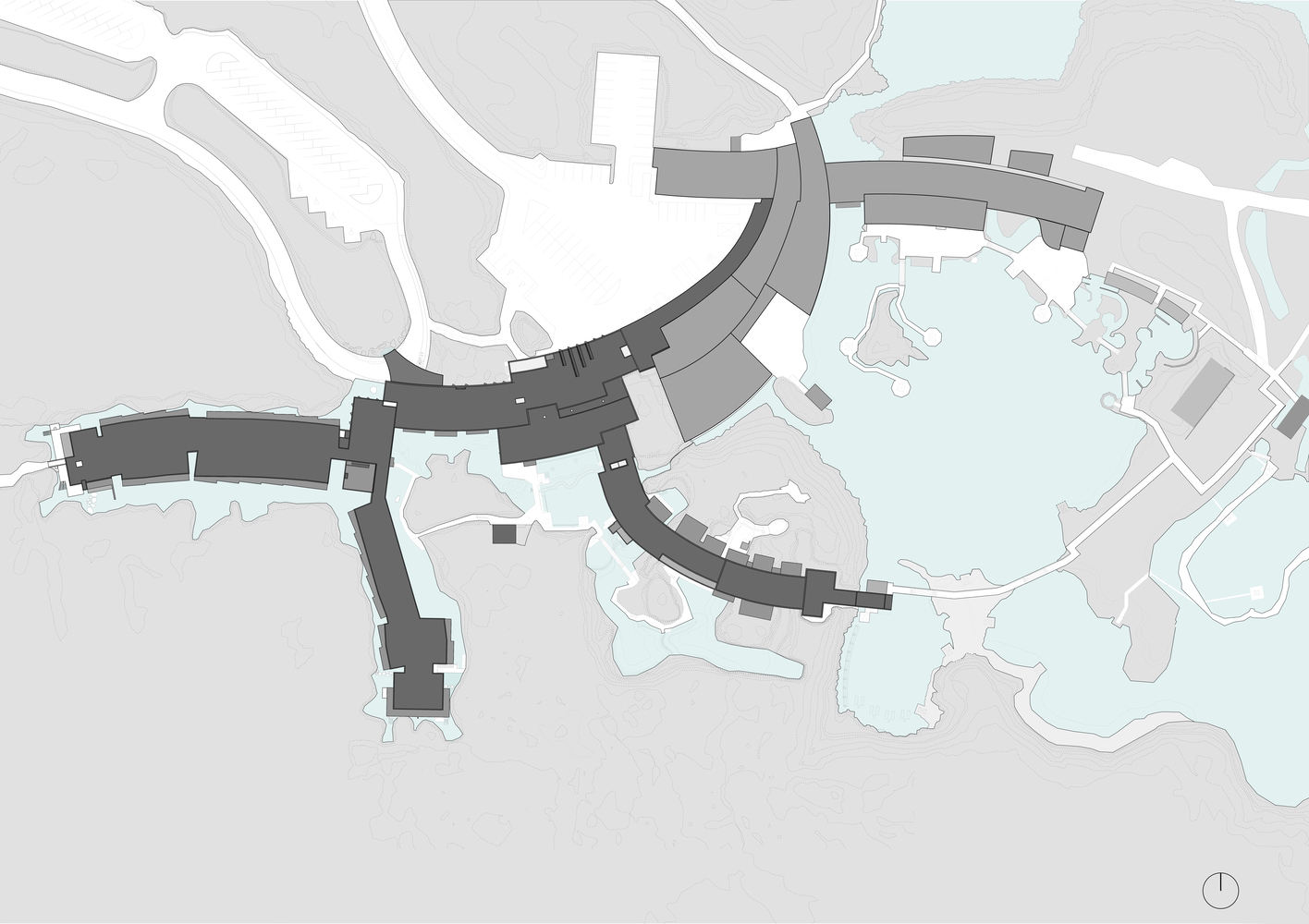
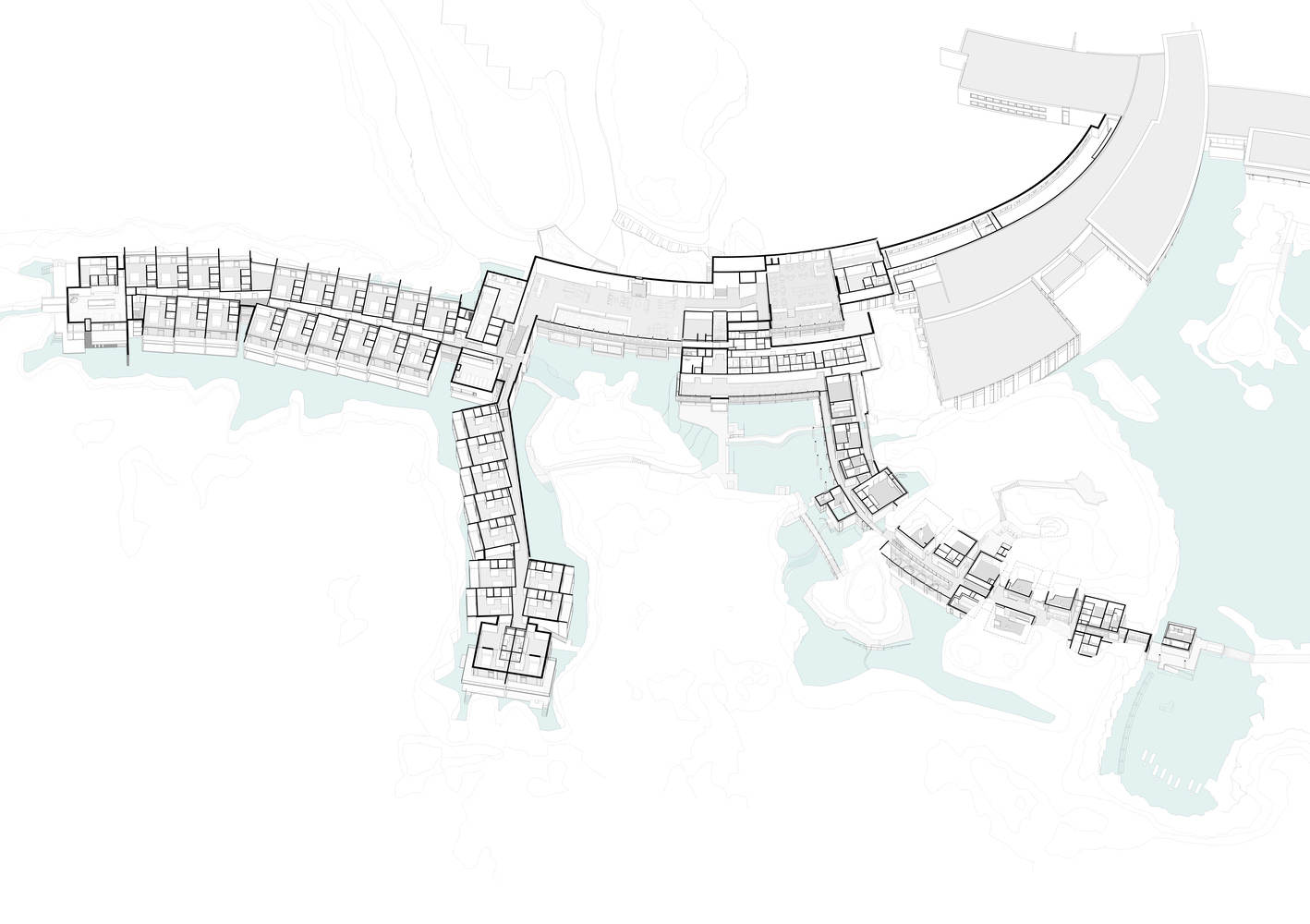
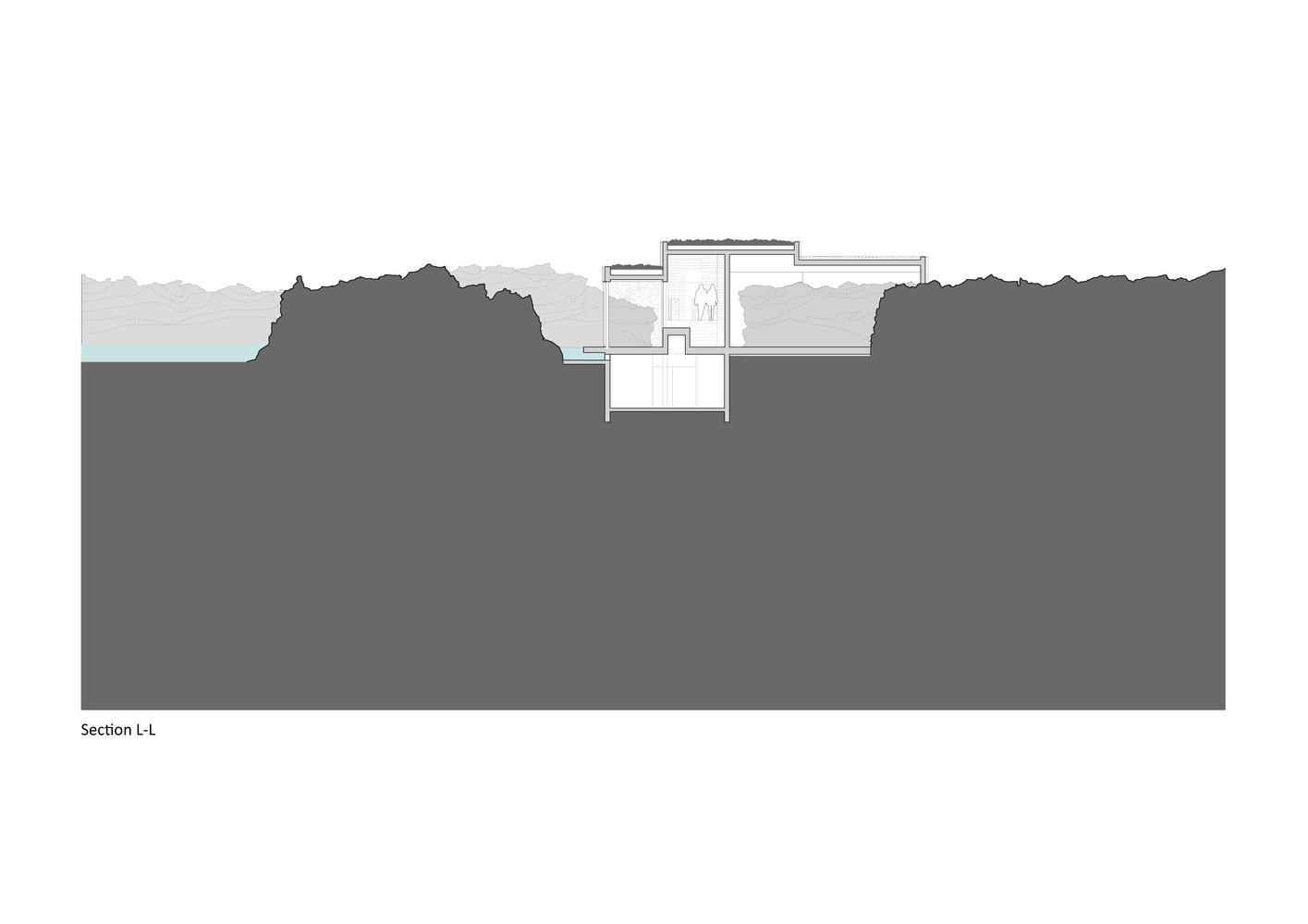
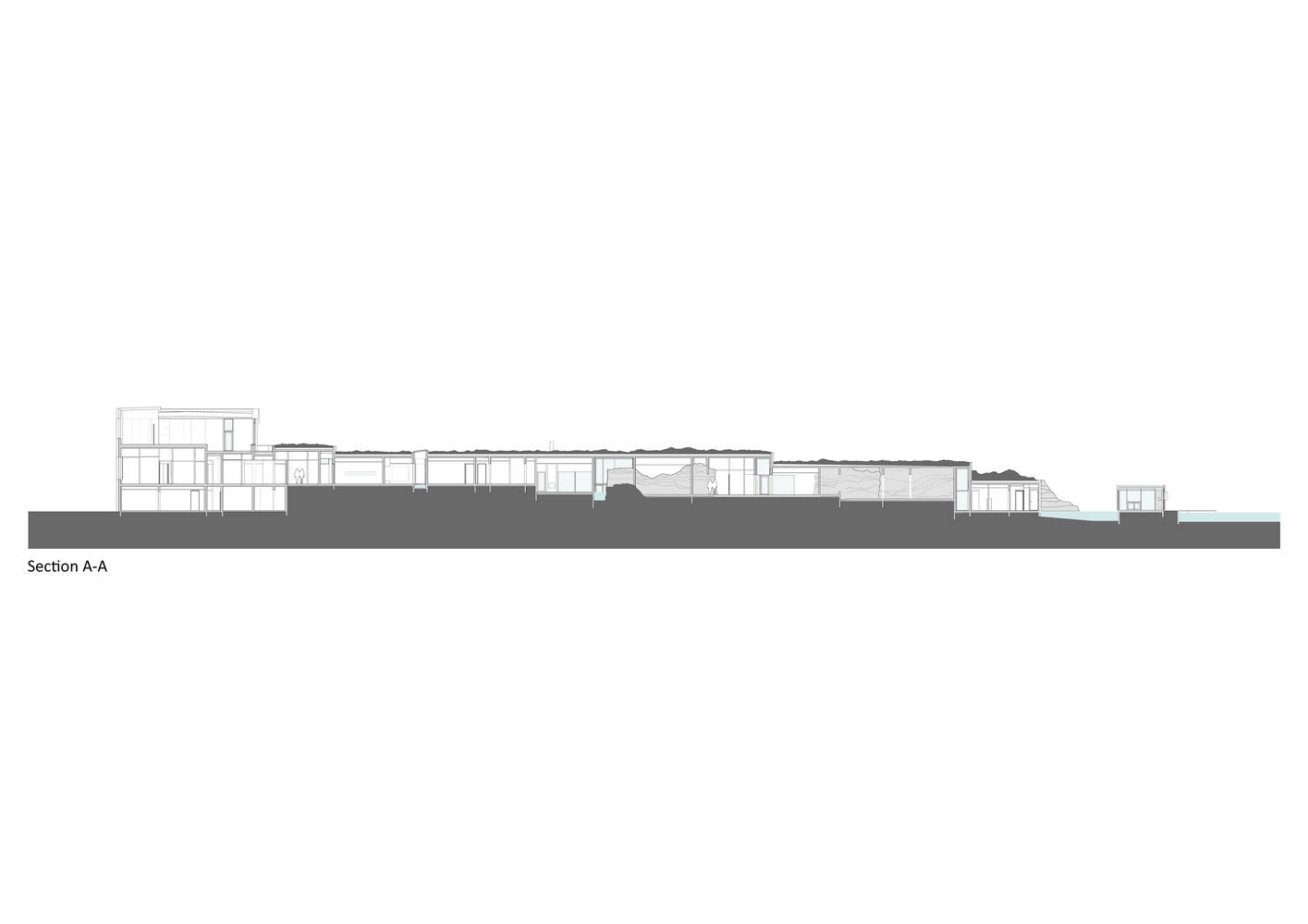
In the initial design phase, the architects spent considerable time exploring the site and researching the soil environment, ultimately manifesting the optimal functional layout of the resort through the concept of "cracks" and "fissures." Consequently, the building appears like a one-to-one string drawn across the rugged cooled lava field, defining the architectural constraints and thereby protecting the fragile environment from destruction during construction and operation. Moreover, during earthworks, the architects uncovered interesting lava stratum information, "compelling" them to revise the original design to integrate these "unexpected" elements into the final result. Thus, the foundation construction work, in a sense, influenced the final interior finishing and landscape design.
在设计之初,建筑师花费了许多时间探索场地、研究土壤环境,并最后通过“裂纹”与“缝隙”的概念展示最佳的度假村功能布局。最后,这一建筑就好像在崎岖的冷却熔岩场上所绘制的一对一字符串,并由此定义了建筑的限制边界,从而在施工及运营过程中保护脆弱的环境免受破坏。同时,在土方工程期间,建筑师发现了有趣的熔岩地层信息,因此他们“被迫”修改原本的设计,从而将这些“意料之外”的元素融入最终的设计之中。由此,在某种程度上,地基的建设工作也影响了最终的室内装修及景观美化设计。
© Ari Magg
Section L-L
© Ari Magg
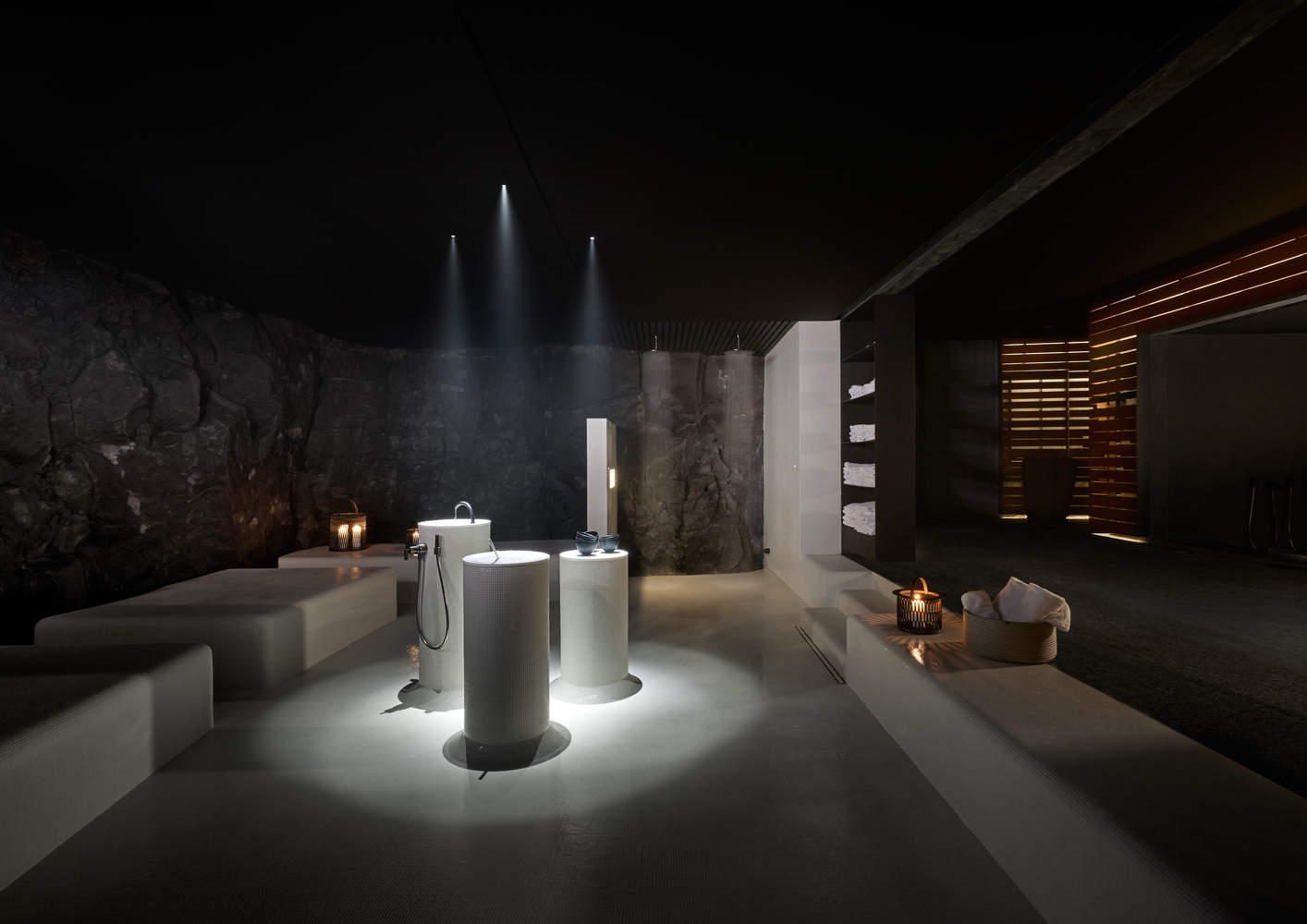
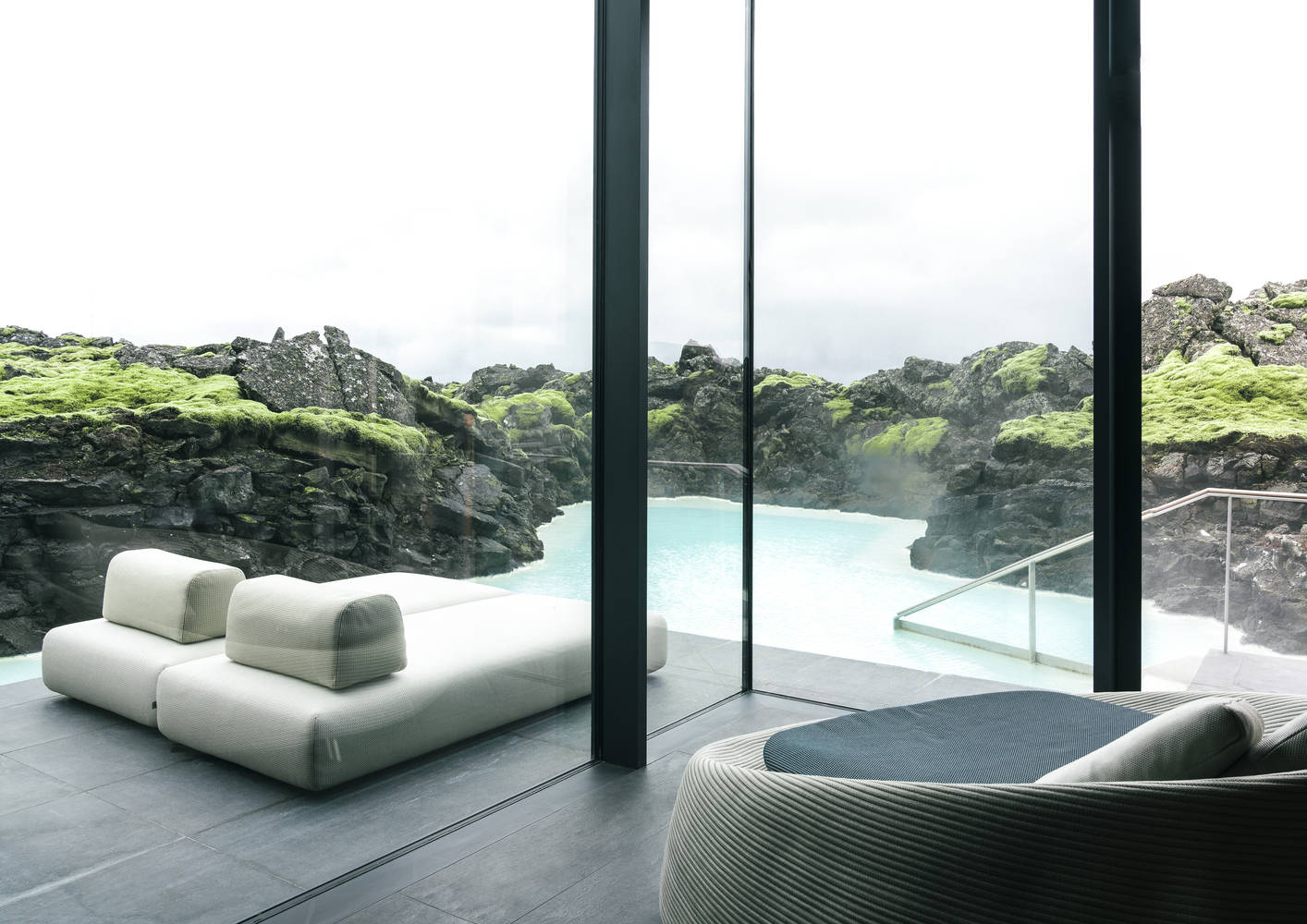
In traditional architectural design processes, on-site drawing changes and design experiments are usually difficult to accept. Therefore, the "improvised" design process experienced by The Retreat at Blue Lagoon is relatively contrary to typical construction work models, and its design and construction process is unique: all stages required the participation of designers, owners, and contractors to patiently and respectfully realize their shared vision. Furthermore, the mineral-rich water, rugged cooled lava, and centuries-old moss are the "treasures" of this site, becoming the core of every space in the resort's architecture. The architects skillfully employed these elements to help visitors gradually adjust their state within the space, ultimately allowing them to experience a cocoon-like comfort in the resort and connect with the raw power of the Icelandic natural landscape.
在传统的建筑设计过程中,施工期间的图纸变化与设计实验通常是难以被接受的,因此蓝潟湖度假村所经历的“即兴创作”设计过程与典型的建筑工作模式是相对的,同时,它的设计与建造过程也是独特的:所有阶段都需要设计师、业主、承包商等各方的参与,以此抱有耐心与尊重地将他们共有的愿景付诸实践。此外,富有矿物制的水、崎岖的冷却熔岩、以及有着百年历史的苔藓作为这个场地的“宝藏”,他们也成为了度假村建筑中每个空间的核心:建筑师将这些元素巧妙地运用,以此帮助游客在空间中逐渐调整状态,最终让他们在度假村感受到如“蚕茧”中蜗居般的舒适,并与冰岛自然景观的原始力量相连接。
© Ragnar Th Sigurðsson/Arctic Images
North Elevation
© Ragnar Th Sigurðsson/Arctic Images
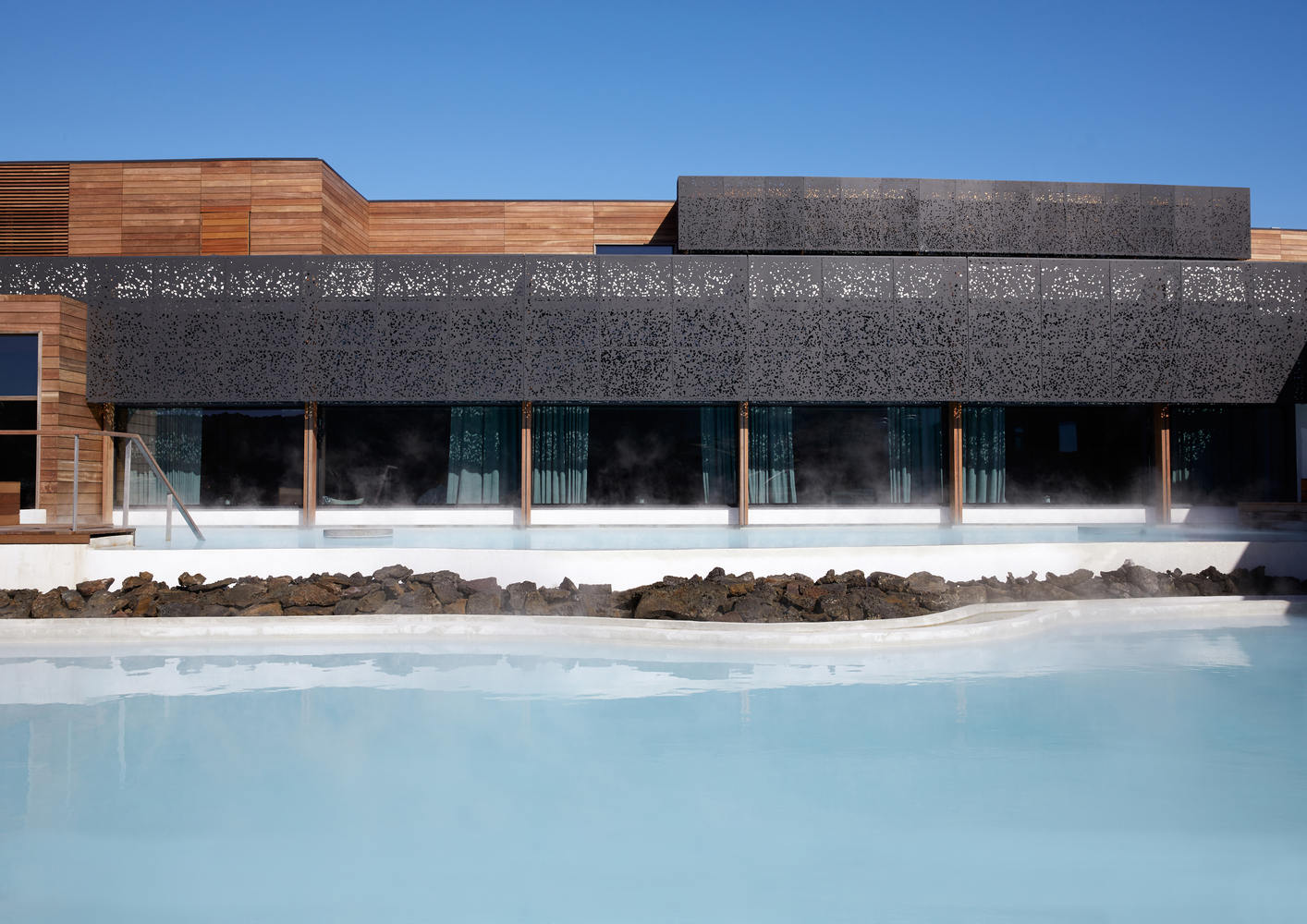
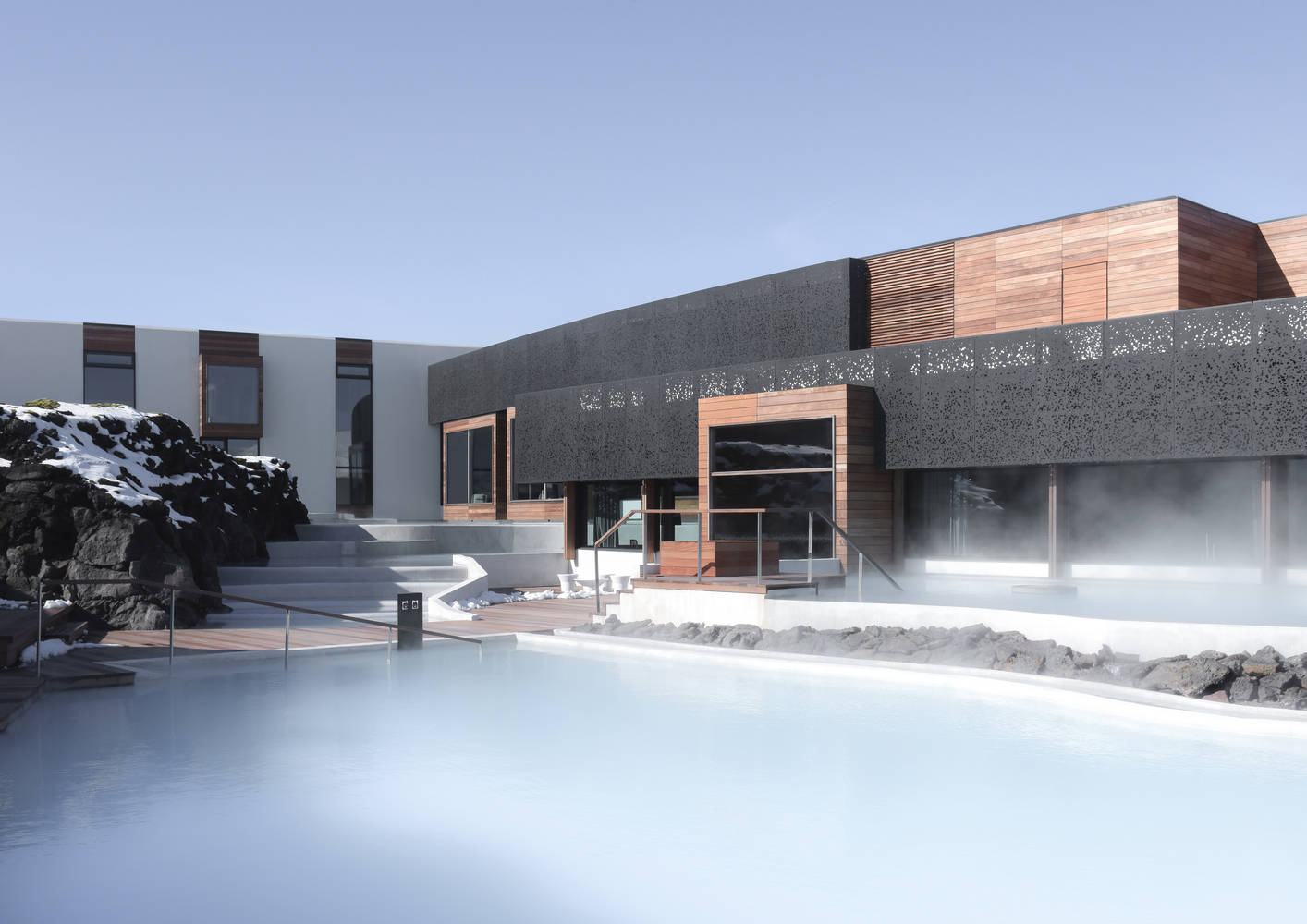
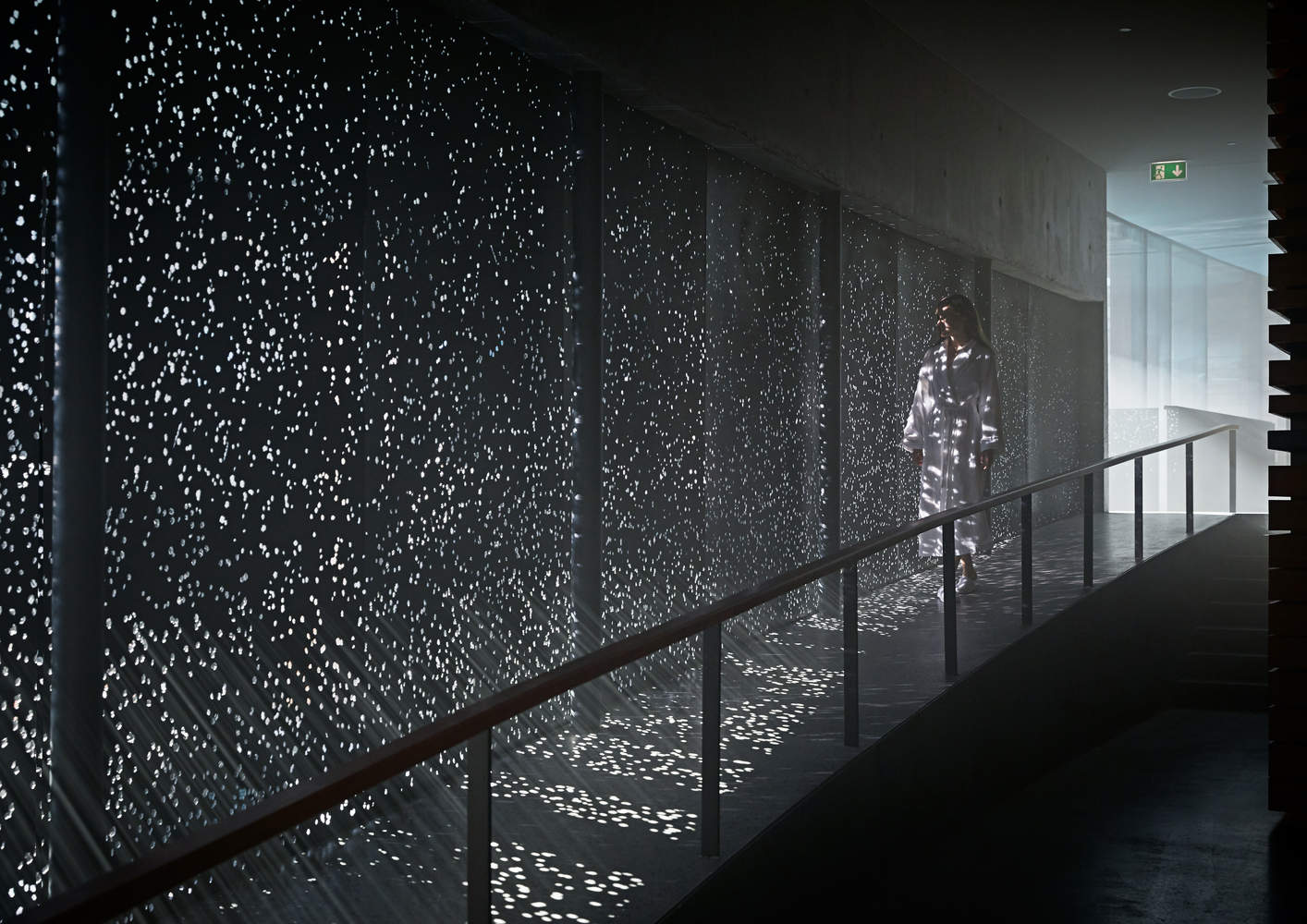
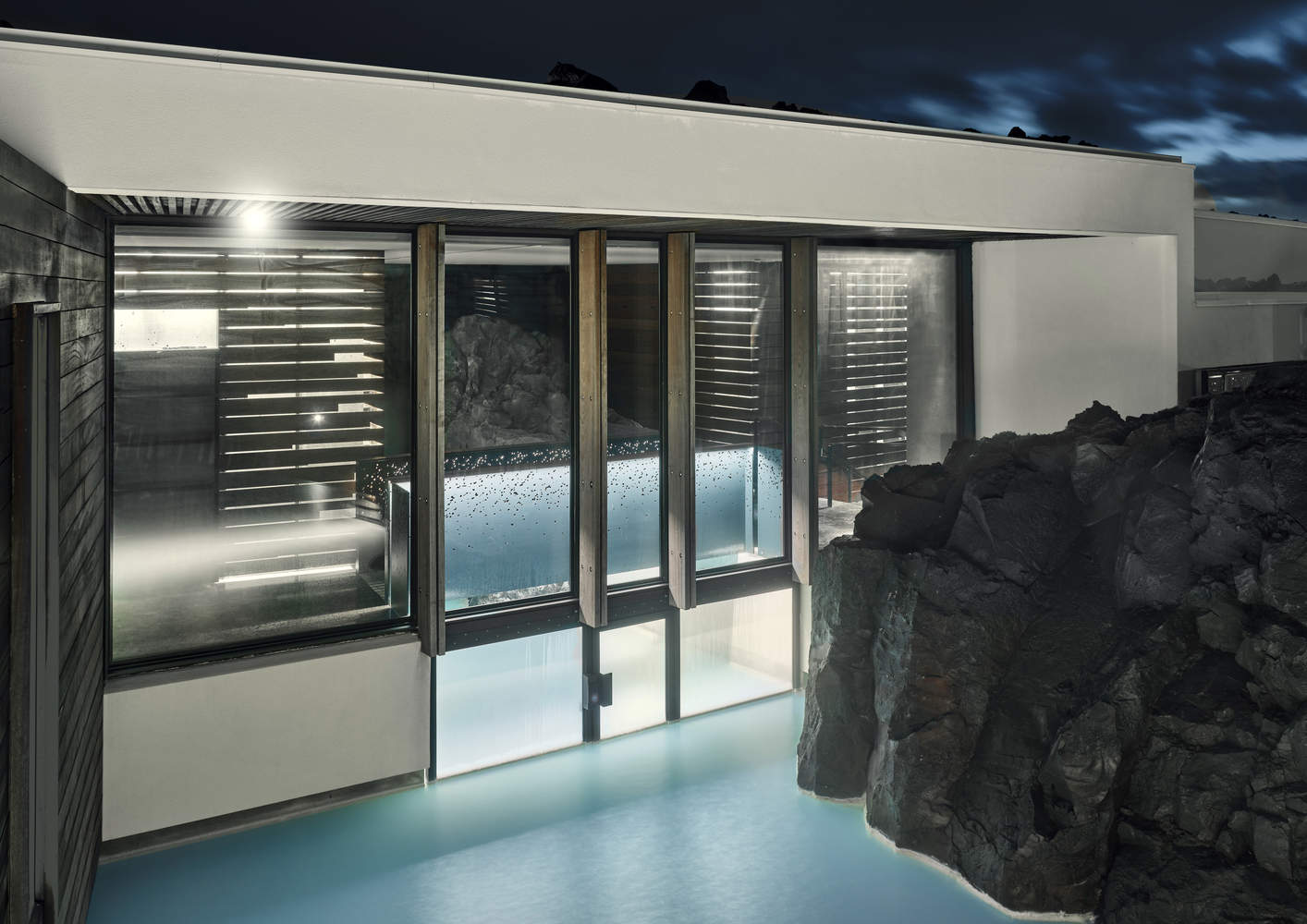
The architecture of The Retreat at Blue Lagoon is primarily constructed from concrete, with most components being prefabricated to reduce the pressure and damage to the site environment from on-site construction. Whether it is the concrete with gray-white textured variations in the lobby or the dark gray concrete deep within the spa area, they constantly echo the native exposed lava walls in the building. Throughout the resort complex, the perforated facades and interior screens reflect the natural textures faintly revealed when the air pockets within the lava stone are exposed. Furthermore, the dark terrazzo floors are made from local lava sand and stones. Meanwhile, the active components of the Blue Lagoon water—silica, blue-green algae, and mineral salts—have proven through extensive practice and research that many traditional building components struggle to survive in such an environment; these natural substances also restrict the color palette available to the architecture and shorten the lifespan of many materials.
蓝潟湖度假村建筑主要由混凝土打造,其中大部分构件都是预制的,从而减少了现场施工对场地环境的压力与破坏。无论是大厅中有着灰白色纹理变化的混凝土、还是水疗区深处的深灰色混凝土等都时刻呼应着建筑中原生的裸露熔岩墙。在整个度假村建筑群中,穿孔外立面与室内屏风则映照出当熔岩石内的气穴暴露在外时所渺渺升起的自然纹理。此外,深色的水磨石地板则由当地的熔岩沙及石块制成的。同时,蓝潟湖水的活性成分为二氧化硅、蓝绿藻和矿物盐,因此在多次实践及调研的证明下,许多传统建筑构件难以生存在这样的环境中,这些天然的物质也限制了建筑所能拥有的色彩、并缩短了许多材料的使用寿命。
© Giorgio Possenti
Section A-A
© Ari Magg
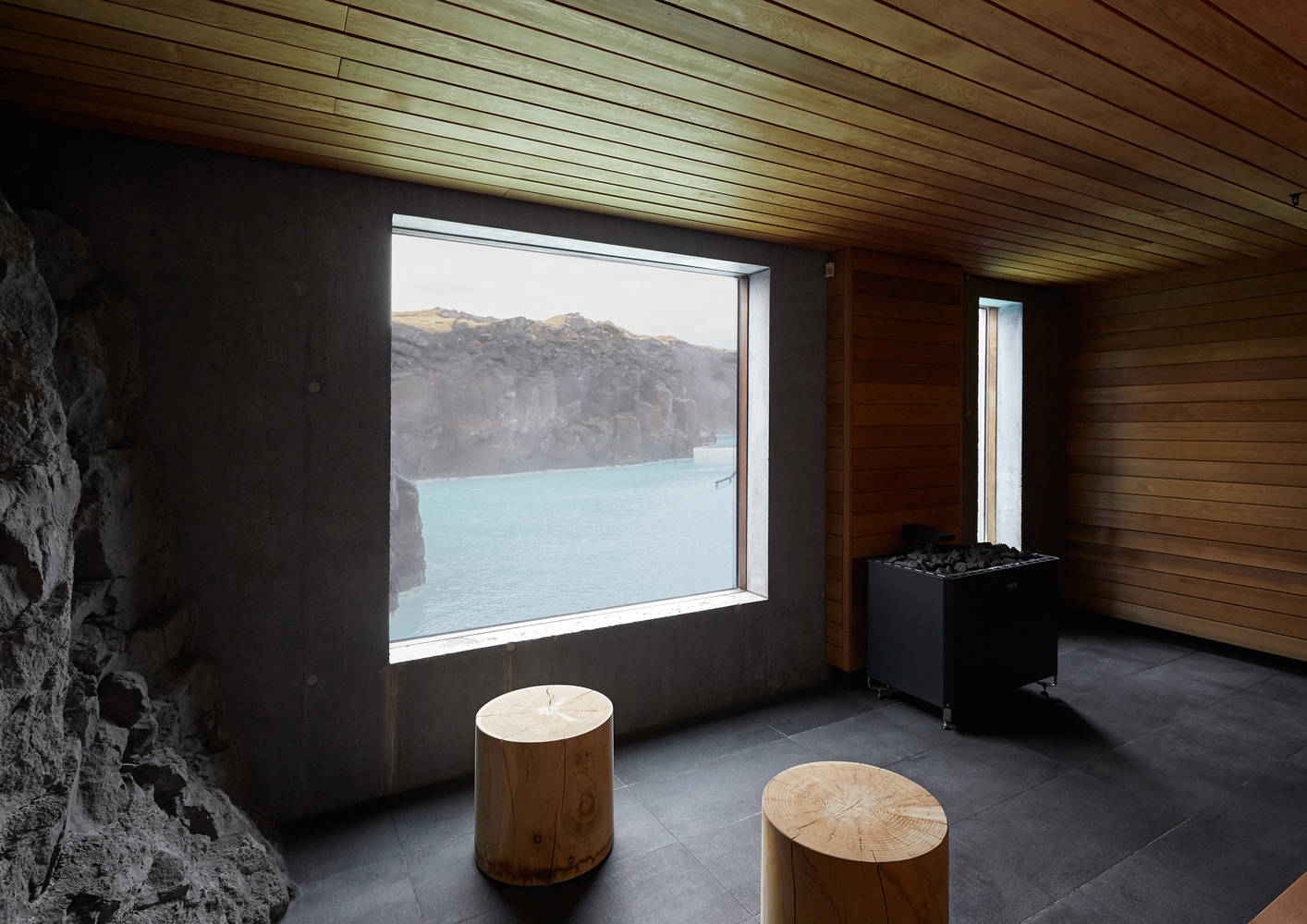
The contrast between the warm wooden textures and the rugged surfaces of concrete and lava stone creates an authentic and inviting resort atmosphere. The raw, tactile natural materials subtly permeate every detail of the architectural design, resulting in a deeply comfortable domain inspired by the natural landscape. Human-Centric Lighting (HCL) preserves the wonderful qualities of Icelandic natural light while also creating artificial lighting that can be vibrant, relaxing, or interactive.
温暖的木质纹理与混凝土及熔岩石粗犷的表面并置,营造了真实、诱人的度假氛围。原始、拥有丰富触感的天然材料微妙地渗透入建筑的每个细节设计中,由此创造了一个受自然景观启发而设计的深度舒适领域。以人为本的照明设计(Human Centric Lighting)则为住客保留了冰岛自然光线的曼妙,同时也构造了或充满活力、或放松、或具有互动性的人造光线。